
Tag: 2020

  • Craig Williams – 2020 Speech on the Trade Bill

    Craig Williams – 2020 Speech on the Trade Bill

    Below is the text of the speech made by Craig Williams, the Conservative MP for Montgomeryshire, in the House of Commons on 20 May 2020.

    It is a great privilege to take part in this debate. This Bill and this policy area will be one of the most important for my rural constituency of Montgomeryshire. Trade with the outside world and continuing trade with the EU is incredibly important to my agricultural community, as it is to other services and to manufacturing goods.

    At the outset, I would like to welcome the 20 continuity trade agreements we have already rolled over. I would very much welcome an update from the Minister on the remaining, with an honest assessment of trade treaties, perhaps with Canada and other countries. I would also like to take this opportunity to pay tribute to David Frost, Sir Tim Barrow and the Parliamentary Office of Science and Technology in Brussels for their continuing ​work. People talk about a lack of scrutiny, but it took me less than 20 seconds to check the update on that particular treaty, check the draft legal texts that are published on the website and read the most recent correspondence from David Frost to his counterparts. I cannot see a treaty being dealt with in so much light as that one currently is.

    I want to focus my contribution on agriculture under the scope of the Bill and on trade policy going forward. We have not done trade policy directly as a Parliament, as a Government or as a country for some 40 years. We devolved or evolved or passed that power over to the European Union. Any Member or person in the United Kingdom who wants to hold up the European Union as a body one would want to replicate in terms of scrutiny obviously has not been participating in public discourse over the past five years.

    I welcome much of what is in the Bill, but I seek reassurances on agriculture in particular. We produce high quality produce in this country and we are proud of our exports. We are proud of what our farmers are doing in the current covid-19 crisis to supply our domestic suppliers. I think public discourse on food supply is changing. Public discourse is changing on the robustness and the resilience of our supply networks. We have seen first-hand, through the work of the International Trade Committee, what has happened to some trade deals when national Governments have looked at their domestic supplies of pharmaceuticals and food stuffs during this crisis. We need to be very mindful of that as we put new trade deals in place.

    Trade is vital for carcase balancing, the ability to sell cuts that the UK market does not want, and for dealing with demand shocks and seasonal issues. Trade is hugely important to my farmers, but I feel that because this subject has been dealt with in the European Union over the past 40 years there is a lot of misinformation. There is not a great deal of clarity on trade policy or how trade deals are put together. I implore the Minister and the Government to put in place some kind of communication package to explain what it means now that we have these important powers and what it means to be negotiating with the world as UK plc.

    Last week there was a conflation of import standards with domestic standards and tariffs. It was hugely complicated and hugely frustrating to deal with that conflation of information. In a domestic Bill dealing with import standards, and sanitary and phytosanitary issues on top of that, we need to be clear with our constituents and our businesses what standards we are talking about and what impact the deals will have on our agricultural communities. I implore the Minister not just to engage with the farming unions—the Farmers’ Union of Wales and the NFU Cymru in my case; and I know the Minister has been on Zoom with them this week—but to build a relationship directly with farming communities, too. The unions of course conduct a great political campaign to promote their members’ views, but we need to engage directly. The unions of course conduct a great political campaign to promote their members’ views, but we need to engage directly.

    We must maintain our import standards. I very much welcome the Minister’s public commitments, made at the Dispatch Box, to maintain the bans on chlorine-washed chicken and hormone-injected beef. We must be clear that those import standards are staying and that we have the ​back of the agricultural community in this country. While we look at the resilience of our supply chains and the great opportunities that new trade deals with the outside world present, we must reassure and earn trust. Minister, I have to report back that, in the agricultural community, mainly because of misinformation and miscommunication, we are looking to you to earn that trust and make us some great deals.
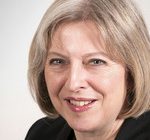

  • Theresa May – 2020 Comments About the Behaviour of Dominic Cummings

    Theresa May – 2020 Comments About the Behaviour of Dominic Cummings

    Below is the text of the comments made by Theresa May, the Conservative MP for Maidenhead, on 29 May 2020.

    The Prime Minister and Dominic Cummings have both made statements about Mr Cummings’ actions.

    What this matter has shown is that there was a discrepancy between the simple messages given by the Government and the details of the legislation passed by Parliament.

    In these circumstances I do not feel that Mr Cummings followed the spirit of the guidance.

    I can well understand the anger of those who have been abiding by the spirit of the guidance given by the Government and expect others to do so.

  • Rishi Sunak – 2020 Statement on the Coronavirus

    Rishi Sunak – 2020 Statement on the Coronavirus

    Below is the text of the statement made by Rishi Sunak, the Chancellor of the Exchequer, on 29 May 2020.

    Good evening.

    I’m joined here in Downing Street by Professor Steve Powis, Medical Director of NHS England.

    Let me begin with the latest figures:

    4,043,686 tests have been carried out in the UK, including 131,458 tests yesterday

    271,222 people have tested positive, an increase of 2,095 cases since yesterday

    sadly, of those who tested positive for coronavirus, across all settings, 38,161 people have now died

    that’s an increase of 324 fatalities since yesterday

    Our thoughts, as always, are with the family and friends of those who have lost their lives.

    Today’s figures confirm what the PM has said:

    We are past the peak. We are flattening the curve. We have protected the NHS and the number of deaths is falling.

    Over the coming weeks, we can now take careful but deliberate steps to reopen our economy.

    Across the country, office lights will be turned on and windows thrown open.

    Work clothes and school uniforms will be pulled out of the wardrobe.

    Shops and factories will start to hum with activity.

    As we enter this new phase, things will change.

    Businesses will need to become Covid secure to protect staff and customers.

    We will all need to stay alert as we go about our daily lives.

    And, as Britain returns to work, we need to adapt the emergency programmes we put in place to bridge through the crisis.

    Because of those programmes, our economic prospects are better than they otherwise would have been.

    We have provided:

    tens of billions of pounds of tax cuts, tax deferrals, cash grants and discounted loans for businesses.

    income protection for millions of the self-employed

    a strengthened safety net to protect millions of our most vulnerable people

    And our job retention scheme has now supported more than 8 million jobs and over a million businesses.

    No British Government, Labour or Conservative, has ever done anything like this.

    I believe it has made a real difference.

    But as we reopen the economy, there is broad consensus across the political and economic spectrum:

    The furlough scheme cannot continue indefinitely.

    Two weeks ago, I outlined the principles of my approach:

    the furlough scheme will remain open all the way until October

    we will ask employers to start contributing, as we also introduce flexible furloughing

    and employees will see no change to their level of support

    As promised, I can provide more details today.

    I believe it is right, in the final phase of this eight-month scheme…

    …to ask employers to contribute, alongside the taxpayer, towards the wages of their staff.

    But I understand, too, that businesses and employers have been through an incredibly difficult time.

    So I have decided to ask employers to pay only a modest contribution, introduced slowly over the coming months.

    In June and July, the scheme will continue as before, with no employer contribution at all.

    In August, the taxpayer contribution to people’s wages will stay at 80%.

    Employers will only be asked to pay National Insurance and employer pension contributions…

    …which, for the average claim, account for just 5% of total employment costs.

    By September, employers will have had the opportunity to make any necessary changes to their workplaces and business practices.

    Only then, in the final two months of this eight-month scheme, will we ask employers to start paying towards people’s wages.

    In September, taxpayers will pay 70% of the furlough grant, with employers contributing 10%.

    In October, taxpayers will pay 60%, and employers will contribute 20%.

    Then, after eight months of this extraordinary intervention…

    …of the government stepping in to help pay people’s wages, the scheme will close.

    The biggest request I’ve heard from businesses large and small, right across our country, is to have the flexibility to decide what is right for them.

    So, to protect jobs, and help businesses decide how quickly to bring their workforce back, we are introducing a new, more flexible furlough.

    This is a critical part of our plan to kickstart the economy.

    The financial security of the furlough scheme has been a relief for many, but at the same time people want to work.

    No one wants to be at home on furlough. No one wants to feel unable to contribute.

    So HMRC and the Treasury have worked hard to put the flexible furlough in place not from August 1st, as originally planned, but from July 1st – one month early.

    From July 1st, employers will have the maximum possible flexibility to decide on the right arrangements for them and their furloughed staff.

    For instance, if you are watching at home and on furlough, your employer could bring you back two days a week.

    They would pay you for those two days as normal, while the furlough scheme will continue to cover you for the other three working days.

    To allow us to introduce this new, flexible furlough from July 1st, we will need to close the old scheme to new entrants on June 30th.

    Employers wanting to place new employees on the scheme will need to do so by June 10th…

    …to allow them time to complete the minimum furlough period before then.

    Alongside the furlough scheme for employees, our economic response has also supported the self-employed:

    2.3 million people have now applied for our income support scheme.

    I know people have been waiting to hear whether the scheme will be extended;

    I understand people have been anxious.

    I can confirm today:

    The self-employment income scheme will be extended, with applications opening in August for a second and final grant.

    The final grant will work in the same way as the first did, paid out in a single installment covering three months’ worth of average monthly profits.

    To maintain the sense of fairness alongside the job retention scheme…

    …the value of the final grant will be 70%, up to a total £6,570.

    Otherwise, there will be no changes and no further extensions to the schemes, which continue to be some of the most generous in the world.

    Our economic response to coronavirus was designed to keep people in work, protect people’s incomes, and support businesses.

    All to give us the best chance of recovering quickly as the economy reopens.

    These measures have been on a scale unmatched by any government in recent history.

    But I do want to acknowledge that we haven’t been able to support everyone in the exact way they would want.

    I understand some people have felt frustrated. But you were not and have not been forgotten.

    Even if you don’t qualify for the furlough or self-employment schemes, we’ve provided a wide range of support…

    …from discounted loans, to tax cuts, mortgage holidays and enhanced welfare.

    Now, our thoughts, our energies, our resources must turn to looking forward, to planning for the recovery.

    And we will need the dynamism of our whole economy as we fight our way back to prosperity.

    Not everything will look the same as before.

    It won’t be the case that we can simply put the key in the lock, open the door, and step into the world as it was in January.

    We will develop new measures to grow the economy, to back business, to boost skills, and to help people thrive in the new post-Covid world.

    Today, a new national collective effort begins: to reopen our country and kickstart our economy.

    Thank you.

  • Damian Collins – 2020 Speech on the Trade Bill

    Damian Collins – 2020 Speech on the Trade Bill

    Below is the text of the speech made by Damian Collins, the Conservative MP for Folkestone and Hythe, in the House of Commons on 20 May 2020.

    I wish to speak in support of the Bill, but also to address the importance of scrutiny by Parliament of digital trade provisions in proposed future UK trading agreements. This is a vital and fast-moving sector that is very important to the British economy. Technology touches almost all aspects of our national life, as indeed these proceedings themselves make clear.

    One of the most important new trade agreements being negotiated right now is the one with the United States, but we need to make sure that the digital trade provisions of a deal do not impact on other areas of domestic law, in particular our ability to legislate to create new responsibilities for large social media companies to act against harmful content online. The example of the recently negotiated trade deal between the USA, Canada and Mexico, which I understand is the basis for the start of the American approach to negotiations with the UK, shows how the danger can lie in the detail of these agreements.

    The agreement states that the signatories shall not

    “adopt or maintain measures that treat a supplier or user of an interactive computer service as an information content provider in determining liability for harms related to information stored, processed, transmitted, distributed, or made available by the service, except to the extent the supplier or user has, in whole or in part, created, or developed the information.”

    What that means, in short, is that while a social media platform can be used to disseminate harmful content, and indeed the algorithms of that platform could be used to promote it, the liability lies solely with the person who created that content, and it could be impossible to identify that person, except perhaps through data held by the social media platform they have used. In this context, the harmful content being shared on social media could include a wide range of dangerous material from content that promotes fraud, violent conduct, self-harm, cyber-bullying or unlawful interference in elections. This provision was included in the US-Canada-Mexico trade agreement, despite opposition from prominent members of the United States Congress, including the Speaker, Nancy Pelosi, and Senators Mark Warner and Ted Cruz.

    The provision is based on the provisions in US law known as section 230 of the US Communications Decency Act. Section 230 provides broad unconditional immunity ​to internet platforms from civil liability for unlawful third-party content they distribute. This sweeping immunity gives internet-based entities an unnecessary and unfair commercial advantage over various law-abiding bricks-and-mortar businesses and content creators. Section 230 immunity is unconditional. The platform can even be designed to attract illegal or harmful content, to know about that illegal or harmful content, have a role in generating and editing it, actively increase its reach and refuse to do anything about it, profit from it and help hide the identity of third-party lawbreakers, and still not be civilly liable.

    The grant of immunity for online services under section 230 was supposed to be in exchange for the act of voluntary filtering in a proactive and effective way, yet we all know that there are constant complaints about the failure of major tech companies to act as swiftly as we would like to see against content that could cause harm to others. If such a provision were required in the UK-US trade agreement, it would severely limit our ability to tackle online harms, as we would be prevented from creating legal liabilities, or to tackle companies failing in their duty of care to act against harmful content.

    This prompts the question whether international trade agreements should be used to fix such important matters of domestic policy. There is growing cross-party consensus on that point in the US Congress as well. In the UK, these should always be matters on which Parliament has the last word. Indeed, in America, those who have advocated the inclusion of section 230 provisions in trade agreements, do so knowing that they will make it harder for them to be removed in US law itself. The Secretary of State for International Trade has assured me that the Government will not accept trade agreements that would limit the scope of Parliament to legislate to create responsibilities to act against harmful content online. I agree with her that that should be our priority, but we need to understand that that will require a different approach to the negotiations on digital trade from that which was followed by Canada with America. We should not include the provisions based on section 230 in a UK-US trade agreement.

    Having trade agreements for digital services, data and technology with other major markets around the world is greatly in our national interest, but we need to make sure that they give us the freedom to act against known harms and the freedom to enforce standards designed to protect the public interest, just as we would seek to do in any other industry.

  • Mark Hendrick – 2020 Speech on the Trade Bill

    Mark Hendrick – 2020 Speech on the Trade Bill

    Below is the text of the speech made by Mark Hendrick, the Labour MP for Preston, in the House of Commons on 20 May 2020.

    Several of my hon. Friends have made the point that current parliamentary procedure is totally inadequate if we are ​to scrutinise properly and have proper parliamentary oversight of trade deals negotiated by the Government. We are, of course, supportive of mechanisms that will enable the UK to transition from being a member of the EU so that we can enter into our own trade agreements and into international trade conventions through organisations such as the WTO. This Bill, however, does nothing to promote transparency or that proper scrutiny that this House and the country deserve. Therefore, I, and many of my right hon. and hon. Friends will not support the Bill.

    The fact that the Bill is being pushed through in the middle of the coronavirus pandemic means that the importance that would normally be attached to such legislation is being overlooked. The current life-and-death crisis, which has been exacerbated by this Government’s bad management, is totally overshadowing it. The crisis not only overshadows this Bill, but will overshadow much of the legislation that will pass through this House in the coming weeks and months. In addition, the inevitable negative economic impact of a Brexit cliff edge, following the end of the EU exit transition period, can easily be pinned on the coronavirus crisis.

    The Bill will lead to trade deals that will have huge implications for our economy and our global alliances well into the future. At the moment, the current and planned continuity trade talks between the UK and the EU are taking place at the same time as preliminary discussions between the UK and the United States. The crisis provides perfect cover from view, so those discussions can happen with little scrutiny by this House and little attention from the media to inform the public.

    As much as I would like to see a good trade deal with the EU, I am not one of those arguing for an extension of the transitional period. If I thought that the Government wanted anything that looked like a good trade deal with the EU, an extension would probably be a good idea, but I do not think they do. Many Conservative Back Benchers and some of those on the Government Front Bench do not want a deal with the EU and would be quite happy to throw their lot in with any trade deal with the United States—the right hon. Member for Wokingham (John Redwood) is among them.

    If the Conservative party wanted a good EU trade deal, it could have had an agreement with the Labour party last year when we were debating our EU exit, and the path would have been set—but the Government did not want that. Now, of course, in the Government’s proposals for a comprehensive free trade agreement with the EU, they are asking for many of the benefits of EU membership without the costs that that membership brings. Having said that, there will still be a large divorce bill running into billions of euros for the UK to cough up, and the clock is still ticking. My bet is that any agreement on trade with the EU will be a fig leaf to hide the embarrassment of the years of discussion and negotiation.

    The elephant in the room is, and always was, the United States and what the current President wants for the future. I ask myself, “Why are there two sets of trade discussions—UK-EU and UK-US—going on at the same time?” The Secretary of State for International Trade may claim that the fact that the discussions with the EU are already under way might give the UK some leverage to get better terms from the US in specific ​areas but, in a likely no-deal outcome or the fig-leaf agreement that I mentioned earlier, any discussions seem extremely unlikely.

    In addition, for the moment, the US under President Trump will probably seek only a preliminary agreement that he can wave around for re-election purposes in November. However, if Trump wins again, he will demand that the UK has minimal trading arrangements with the EU and that the UK conforms with US norms through mutual recognition agreements, replacing EU regulations on goods, services and agricultural products, for example. This Bill is leading the UK down the slippery slope of a Government who are becoming less accountable to Parliament and the people of this country, trade relations that are not in the best interests of the people of this country and an economic future over which we have less and less control.

  • John Redwood – 2020 Speech on the Trade Bill

    John Redwood – 2020 Speech on the Trade Bill

    Below is the text of the speech made by John Redwood, the Conservative MP for Wokingham, on 20 May 2020.

    You do not need to pay to trade: I welcome the policy behind this legislation and the Bill itself, which makes it very clear that the United Kingdom wishes to be a positive trade partner with as many countries around the world as would like a free trade agreement with us. This Bill ensures that we can carry across the FTAs that the EU has with a range of countries that naturally fall to transit to us as well as to it. Many of us were told that we were wrong when we argued that during the referendum and afterwards, but the Government have proved us right in that of course those countries wish to roll over those agreements. In one or two cases, they wish to go considerably further than the agreements we already have. I welcome the Government’s positive response to that to see what more can be added so that we can have a better deal as we leave the European Union than we had when we were in it.​

    We must see the policy background to this Bill as including the most important letter written this week by our trade negotiator to Mr Barnier about the parallel negotiations for a possible UK-EU free trade agreement. It is an admirably lucid letter which makes it very clear that, just as in this Bill, we are not sacrificing our fish, offering special payments or agreeing to accept the laws of other countries in order to create a free trade agreement with them, and neither should we do so in the case of the European Union. We voted very clearly to leave the single market and to leave the customs union. Many of us who voted that way strongly believed then, and believe even more so today, that we want a free trade-based agreement with the European Union if that is also its wish, but we would rather trade with it under WTO rules and the excellent new tariff we have set out for external trade if it wishes instead to claim that we need to be some kind of surrogate member taking its laws, paying its bills and accepting many of its views on matters like our fish resources.

    It is more likely that we will get a free trade agreement from a reluctant European Union just before the deadline at the end of the year if we have made great progress in negotiating free trade deals elsewhere. That is why the Government are absolutely right to respond very positively to the United States of America, to Japan, to Australia, to New Zealand and to the Trans-Pacific Partnership. In each of those cases, the counter-party is very willing. In each of those cases, there are precedents for good agreements between other parts of the world and those countries, and we can build on those and our own models for a positive free trade arrangement.

    The EU will see how relatively easy it is to make such progress with those countries we have agreements with. When we were in the EU, the EU had not got round to having agreements with some of those countries—big countries such as the United States of America. When we are outside the EU, that will make the EU even keener to want to have a free trade agreement with us. Rather reluctantly, it will have to admit that it has been making a mistake over these past years in trying to make our exit so protracted and so difficult, and claiming that you do need to pay for trade.

    I will vote for the Bill as vindication that, of course, many countries wish to trade with us on as free a basis as possible. I will vote for it as part of a much bigger package of a free trade loving United Kingdom driving a free trade agenda around the world. I will vote for it because it sends a clear message to the European Union that it is negotiating in the wrong way and running the danger of ending up without a free trade agreement that is rather more in its interests than ours, given the asymmetry of our trade.

    Free trade is a good way to promote prosperity. It is even more vital now we need to recover our economies from the covid-19 crisis. I urge the EU to understand that and to co-operate sensibly, just as I give the Government full support to press ahead in negotiating deals with all those great countries and regions of the world that think Britain is a hugely important future partner, and where we see fast-growing trade that can enrich both sides.

  • Darren Jones – 2020 Speech on the Trade Bill

    Darren Jones – 2020 Speech on the Trade Bill

    Below is the text of the speech made by Darren Jones, the Labour MP for Bristol North West, in the House of Commons on 20 May 2020.

    According to research from the Harvard Kennedy School’s Growth Lab, British exports have been declining, concentrating into a smaller number of products and acting as a drag on our economic growth. Remarkably, in the past decade the UK has added only two new export products, and, perhaps embarrassingly, our main new export has been bovine, sheep and goat fat. I declare my interest as an amateur vegan, but I suggest that an economy that is as complex and capable as ours really ought to have done better.

    We know that economic growth can be driven by export diversification, but to do that we need an active industrial strategy that works with the market to make clear what we actually want to achieve while investing in workers with the skills to do it. Some colleagues will say, “Ah, but it was the European Union’s job, and now that we are taking back control, it will be much better and the Bill will help us do that.” I would respectfully compare the UK’s record to, for example, that of France, which is, of course, a member of the European Union. During the same timeframe in which the UK majored on bovine, sheep and goat fats, and added around $2 per capita, with a total UK market of $104 million, France has managed to add 10 new projects, creating a new $1.9 billion market and growing GDP per capita by $28. It has therefore been a question of intent and ability, not a question of power.

    Based on current capacity, the UK has a pretty good spread of manufacturing capabilities, from chemicals and machinery to automotive, gas turbines and aerospace, but the bulk of our goods-based growth has come from aerospace and automotive, whose capacity relies on European supply chains. Based on current Brexit negotiations, those supply chains are at risk, as well as under added pressure from the pandemic. The Government have largely relied on services-based growth in our economy, which of course is an important part of what we do as a country, but they took their eye off the ball in respect of British manufacturing, resulting in a weaker and more exposed market for goods, exports and economic growth.

    That is the context for this Bill, because the questions that we are considering today have been with us in one form or another for the past four years. Most of the provisions in front of us today first came before the House a few months after I was elected in 2017. By any measure, this legislation has taken too long. The priorities ​given force in the Bill, and which even now run through all the arguments on trade made by those on the Treasury Bench, are the same arguments we have heard over the period of trading inadequacy that I have just set out. The economy is in recession and we are on the cusp of a once-in-a-century collapse in output. The key test is whether the Government are committed to bringing back British manufacturing as a core component of the British economy.

    In closing, I would like to ask the Minister to answer a number of questions when summing up the debate. First, will he set out for the House whether Parliament will be given the right to full and transparent scrutiny of the trade negotiations, and confirm whether that will be by a new or existing Committee of this House? As a former member of the European Scrutiny Committee, I note that we had such a function when the European Union was negotiating trade deals, but that does not seem to be replicated in the Bill.

    Secondly, local government leaders are in the process of setting out recovery plans post pandemic. What conversations is the Department having with city leaders to ensure that those leaders on the ground have input into decisions made in Whitehall?

    Thirdly, Ministers have long said, whether in Brexit or trade debates, that the Government will stand by their commitment to human rights, workers’ rights and environmental protections, but this Bill does not mention climate change or workers’ rights at all. Britain has an opportunity to set the global expectation on these issues. I would like to understand why the Government have not included such provisions. There is a significant opportunity to couple climate diplomacy with export opportunities as we work to help other countries to transition to net zero. I hope the Minister will confirm that these opportunities are also being considered by the Department.

    As an anti-modern slavery champion for the Commonwealth Parliamentary Association, I have seen first hand the risks of global supply chains that do not have adequate protections and transparency built in. No work or business in the UK wants to be associated with illegal trafficking and exploitation of some of the most vulnerable people on the planet. I hope the Minister can set out how the Government intend to ensure that these protections are included in all future trade deals.

  • Mark Menzies – 2020 Speech on the Trade Bill

    Mark Menzies – 2020 Speech on the Trade Bill

    Below is the text of the speech made by Mark Menzies, the Conservative MP for Fylde, in the House of Commons on 20 May 2020.

    It is my great privilege to follow my friend and Chair of the International Trade Committee in this incredibly important debate. The Leader of the House said earlier that these proceedings sometimes appear stilted and scripted when done remotely. It is my challenge over the next five minutes to prove him wrong.

    In my part of Lancashire, international trade is critical for jobs and prosperity. I am host to fabulous, world-class companies, such as BAE Systems and Westinghouse, the nuclear fuels manufacturer, and smaller companies such as Tangerine Holdings. The Bill is very much about the whole nature of international trade—getting that right and building a framework that will stand the test of time—and that is one reason I support its Second Reading today.

    It is also my privilege to serve as one of the Government’s trade envoys. Indeed, the Secretary of State, in her opening remarks, referred to Chile as an example of one of the 48 countries with which a continuity agreement has been put in place. I would say to her that some of my other countries, through the Andean trade continuity agreements, such as Peru and Colombia, also have arrangements to ensure a smooth transition when the UK eventually leaves the EU at the end of this year.

    T hat has not happened by chance. Those agreements are in place because of the dedication and hard work of people in the Department, not just in London, but especially in post. I take this opportunity to pay tribute to the men and women, many of whom are nationals of the countries they represent, who work tirelessly and understand the nature of their countries in a way that is sometimes difficult to comprehend from London. Their dedication and hard work have got us to where we are today. That sometimes gets missed.

    We also have to recognise that the Trade Bill is only part of the picture. Measures such as the many double taxation agreements—there is one in place with one of my countries, Colombia—are really important to ensuring a smooth transition and the financial flows that will come from trade. The Government have been working very hard on that in the last couple of years, but there is still more work to be done in other key markets across the globe.

    There has been much fixation in recent years on trade deals, but they are only part of the picture; much of this is about a smooth transition from the EU arrangements to what comes next. If we are unable in this House to demonstrate to our key countries and partners across the globe that we can pass a piece of legislation, why on earth should we be asking our officials and trade envoys to make representations to senators and presidents to get agreements in place so that when we leave we can have that smooth transition? I therefore urge the House to get behind the Bill and to give it a Second Reading unamended.

    I would like to take this opportunity, however, to challenge the Government on how we plan to use some of the data-collection powers in the Bill. For example, I would like to see some of the data sharing in HMRC to be used to reshape and rescope bodies such as UK Export Finance, because in all of my key markets we only ever reach a tiny percentage of the credit facilities that we say are available. Given that London is the global capital ​of fancy credit mechanisms, I urge the Minister—it is great to see him in his rightful place—to use some of the expertise in the City and to challenge whether UK Export Finance needs to be given the opportunity to evolve in order to take advantage of some of the real opportunities that are out there.

    Madam Deputy Speaker, I have followed your example and set a timer, so in my closing seconds let me just say that free trade is important, not just as a sign of national prestige, but because it creates jobs and generates the wealth to pay for public services at home and, more importantly, abroad. At a time of rising unemployment, my goodness, we need free trade more than ever, so I will be supporting this Bill in its passage through Parliament.

  • Stewart Hosie – 2020 Speech on the Trade Bill

    Stewart Hosie – 2020 Speech on the Trade Bill

    Below is the text of the speech made by Stewart Hosie, the SNP MP for Dundee East, in the House of Commons on 20 May 2020.

    May I start by agreeing with the Secretary of State that it is absolutely vital that we keep trade open and recognise the importance of the supply chain, and that it is absolutely essential that we stand against protectionism? We need to do that, because right now there are three main threats to trade. The first is self-evidently from the covid crisis, which the World Trade Organisation has suggested might cause a fall in global trade of something in the order of 13% to 32%. That is a substantial reduction, no matter where on the scale one looks. The second is the impact of Brexit. Assessments suggest that the UK could lose a substantial chunk of its global trade. The third is the more systemic problem that the right hon. Member for North Somerset (Dr Fox), the ex-Trade Secretary, was speaking about, which is the continued implementation of new and the continuation of existing trade restriction measures, with tariffs valuing somewhere around $1.6 trillion in force.

    I am not confident that those problems will be resolved any time soon, not least because there is as yet no cure for coronavirus and restrictions of one sort or another may well remain in force for some considerable time, because of the highly publicised lack of progress on the Brexit negotiations, and also, sadly, because of the absence of a functioning World Trade Organisation appellate body. This Trade Bill does not address any of those matters, other than perhaps at the margins, by trying to roll over and maintain the trade the UK has with third countries via membership of the EU and thereby minimise the losses from Brexit.

    The Bill does do a number of other things, as the Secretary of State set out. It creates procurement obligations arising from membership of the GPA—the agreement on Government procurement; it creates the Trade Remedies Authority; and it gives powers to Her Majesty’s Revenue and Customs to collect and share data. However, it is not without its problems. Let me deal with the powers relating to the devolved Administrations first. The previous Trade Bill, which was under consideration in the previous Parliament, contained provision for regulation-making powers to be available to the UK Government within areas of devolved competence. That Bill also contained a provision that prohibited devolved Administrations from using powers to modify retained direct EU legislation or anything that was retained EU law by virtue of section 4 of the European Union (Withdrawal) 2018 Act in ways that would be inconsistent with any modifications made by the UK Government, even in devolved areas. As a result, the Scottish Government could not consent to that, and that view was shared by the Scottish Parliament Finance and Constitution Committee.​

    That Trade Bill did not complete its passage and fell, and the good news is that those provisions have been removed from this reintroduced Trade Bill. However, there remains no statutory obligation for the UK Government to consult or seek the consent of Scottish Ministers before exercising the powers they have in devolved areas. However, during the partial passage of the previous Trade Bill, the UK Government made a commitment to avoid using the powers in the Bill in devolved areas without consulting and ideally obtaining the consent of Scottish Ministers. The then Minister of State at the Department for International Trade, the right hon. Member for Bournemouth West (Conor Burns), subsequently restated those commitments in his letter to Ivan McKee, the Scottish Trade Minister, on 18 March, and I hope that the Minister we hear from today will restate these non-legislative commitments.

    The Bill is not without its problems, and they do not relate simply to the devolved Administrations. It allows the UK Government to modify retained direct principal EU law, and it appears to me that there are no legislative limits on such modifications. The second problem is the description of an “international trade agreement” in clause 2(2)(b), which states that it may be

    “an international agreement that mainly relates to trade, other than a free trade agreement.”

    As we know, modern agreements are as much about regulation, standards, conformance, dispute resolution or food safety as they are about quotas and tariffs. Many people will uncomfortable that Ministers can modify existing agreements in the way in which this Bill permits, particularly without scrutiny and consent.

    That leads me to the fundamental problem with the Bill. The absence of parliamentary scrutiny and a parliamentary vote on significant changes or modifications, or, indeed, in the future, on new trade deals as may be envisaged by the Government, is a huge problem. Modern democracies need to have full scrutiny of trade agreements, from the scope of the negotiating mandate right through to implementation. That is absent from this Bill, as is any provision for scrutiny other than through the voluntary scrutiny proposed by the Government in the Command Paper published in the previous Parliament, to which I will return briefly at the end of my speech.

    These issues also highlight the absence of any formal input into trade deals or significant modification of existing ones by the devolved Administrations—a problem replicated in the membership of the Trade Remedies Authority, where no formal ability exists for the devolved Administrations to propose or nominate a member with expertise in regionally or nationally significant trade.

    I shall turn briefly to the Command Paper that was published in 2019 and covered the previous Trade Bill. Does it still apply? Does the commitment to publishing our negotiating objectives and scoping assessments still exist? Even if it does, does the Minister recognise that that still does not give Parliament or the devolved Administrations any role in approving them? Is it still the intention of the UK Government to provide sensitive information to a scrutiny Committee? Would that be the Select Committee on International Trade, which is ably chaired by my hon. Friend the Member for Na h-Eileanan an Iar (Angus Brendan MacNeil)? If it is, will any papers provided be publishable, or will they be restricted? ​If they are restricted, that will still leave Members of Parliament, exporting businesses and other interested third parties none the wiser about the Government’s real intentions. I am conscious of the limited time, Madam Deputy Speaker, so let me end simply by saying—

    Madam Deputy Speaker (Dame Rosie Winterton)

    Order. I ask the hon. Gentleman to bring his remarks to a close. I thank him for his contribution, but we must move on. I am now introducing a time limit of five minutes, and I advise hon. Members who are speaking virtually to have a timing device visible.

  • Liam Fox – 2020 Speech on the Trade Bill

    Liam Fox – 2020 Speech on the Trade Bill

    Below is the text of the speech made by Liam Fox, the Conservative MP for North Somerset, in the House of Commons on 20 May 2020.

    I will not go over the detailed points in relation to the Bill so eloquently made by my right hon. Friend the Secretary of State—I have to say that I recognised some of the phraseology in her arguments—but I want to deal with the context in which it is being brought forward.

    During the long gestation of the Bill, a lot has changed. Not only have we had the covid crisis, which will have a fundamental effect on the global economy, but in 2019 we saw the culmination of many of the predictions that were made by the Department for International Trade. We predicted that we would see first a slowdown in the growth of global trade and then potentially a contraction of global trade itself. We watched through 2019 the WTO make predictions on global trade growth, down ​from 2.8% to 2.2% and 1.4%. It finally came in at 0.7%. The key element was that it contracted in Q4, which has generally in history presaged a downturn in the global economy.

    That happened for a number of reasons. The US-China trade dispute had a general effect on global trade, and in particular we saw the shortening of global supply chains, as people sought to onshore and shorten global supply chains by minimising the import of intermediate goods. We saw the inevitable consequence of the trend over the decade of the G20 countries applying more and more non-tariff barriers to trade—quadrupling them in the first half of this decade—and they all matter. A bit of consumer protection here, a bit of environmental protection there and a bit of producer protection here are all justifiable in themselves, but they all add up. They have all resulted in a silting up of the global trading system, and the skies over the global trading system are now darkening with those chickens coming home to roost.

    Why does it matter? It matters because a free and open trading system has been our route to the reduction in global poverty, with more than 1 billion people taken out of abject poverty in just one generation. There is another reason it matters, which is that access to prosperity, political stability and security are part of the same continuum. It is unthinkable that the wealthiest countries in the world should pull up the ladder behind us, stopping developing countries gaining access to the same levels of prosperity. It is absurd to believe that we can do that without seeing disruption in global security. If we deny people access to prosperity, do not be surprised if we see more mass migration and more radicalisation. We need to understand that we cannot separate the concepts. Those who wish to introduce protectionism into the global economy will have to bear the consequences of the actions they are currently embarked upon.

    I want to see us, through this Bill and beyond, doing more on global trade liberalisation. Going back to where we were pre-covid will not be enough, because global trade was contracting. I was a proud Brexiteer, but I have never been a little Englander. My objection to the European Union in the era of globalisation was not the absurd notion that it was foreign, but that it was not foreign enough. It did not have global aspirations that were in tune with what we as a country wanted to see. Post covid, all the challenges we face together will be bigger, and we will have to work with all those who believe in free trade to put them right.

    The UK exports 30% of our GDP. Germany exports 48% of its GDP, and OECD data shows that the trade slowdown has hit the European Union hardest of all in the global economy, with exports from the EU contracting by 1.8% in the third quarter of 2019, even before global trade itself contracted. That is the scale of the challenge that we face.

    The Government’s proposed tariff regime reform is to be hugely welcomed, although it could be even more liberal yet. The new FTAs and the roll-over agreements allowed through the Bill are also to be welcomed. Those who put obstacles, political and otherwise, in the way of both the roll-over agreements and the new FTAs through largely pointless and irrelevant arguments need to understand the consequences to the wider global economy, as well as to our domestic prosperity, of doing so.​

    My right hon. Friend was right when she talked about the bigger picture and how we must champion World Trade Organisation reform. Without it, we will be unable to maintain the rules-based system, which is already substantially under threat. The alternative to a rules-based system is the survival of the strongest, and that will have the biggest impact on the poorest countries. This is an area where we can give a lead as a country not only economically, but morally.