Tag: 2016

  • Sajid Javid – 2016 Speech to Automotive Summit

    CBI Conference

    Below is the text of the speech made by Sajid Javid, the Secretary of State for Business, Innovation and Skills at the SMMT International Automotive Summit 2016 held in London on 29 June 2016.

    As the apocryphal Chinese curse says, “May you live in interesting times”.

    Well, it has certainly been an interesting seven days in Westminster.

    If nothing else, our nation’s political journalists are enjoying themselves tremendously!

    The past week has produced millions of words of comment, analysis and discussion.

    There’s been endless Parliamentary parlour games and Westminster whispers.

    But none of that should distract us from the very real, very serious issues at hand.

    Since Friday morning we’ve seen instability in the stock market.

    We’ve seen the pound drop to a 31-year low.

    We’ve heard talk of major employers making plans to move jobs out of the UK.

    There’s no question about it, this is a challenging time for British business.

    The nation and the economy are facing a situation is that completely without precedent.

    Literally nobody has been here before.

    There is no instruction manual.

    And I know it’s a situation the SMMT had hoped to avoid.

    Like me, three-quarters of your members wanted Britain to remain a member of the European Union.

    Just last week Mike called it “critical” for the future of British car-making.

    From multinationals to small specialist suppliers, the industry was unambiguous in its support for Remain.

    Now I’m not going to pretend the past couple of months never happened.

    I’m not about to start backtracking on some of the warnings that were made.

    I don’t doubt that there will be difficult times ahead for Britain, particularly for British employers.

    We’re entering a period of uncertainty and – let’s be completely honest – we don’t have a good idea how long it will last. But you can only play with the cards you’ve been dealt.

    The people of the United Kingdom have issued their orders.

    And as a Cabinet Minister it’s my job to put those orders into action.

    So I won’t be sitting around complaining, pointing fingers, or reflecting on what might have been.

    The UK will be leaving the European Union.

    I have to make sure that happens in a way that works for British business.

    A way that works for you.

    The easiest thing in the world would be to stand on the sidelines throwing rocks.

    But I’m not that kind of politician.

    And if there’s one thing I’ve learned in my time as Business Secretary, it’s that you’re not that kind of industry.

    You’re forward-thinking.

    You’re innovative.

    You don’t shirk from challenges, you rise to them.

    Those qualities helped you become one of Britain’s most successful manufacturing sectors.

    And those are the qualities that will help all of us to make it through the days to come.

    So where do we go from here?

    What happens next for Britain, for manufacturing, for the automotive industry?

    Well, this decision may make conditions more challenging.

    But it won’t make things impossible.

    It creates a number of large, complex issues to overcome.

    But we can overcome them.

    And yes, we are sailing into unchartered waters.

    But we are far from rudderless.

    Contrary to some of the more alarmist headlines, the business of government continues.

    Since Friday I’ve been in regular touch with heads of some of our biggest companies to reassure them and talk about next steps.

    Cabinet met on Monday and we agreed to set up a cross-government Europe taskforce.

    Yesterday I met with Britain’s business leaders, including Mike, to hear their views and set out our plans.

    Through all that, my message for British business has been clear and simple.

    Britain remains open for business.

    This is not time for hasty decisions or rushed judgements.

    The markets are volatile right now.

    But this volatility has not come as a surprise.

    All the experts predicted it.

    And the government, the Bank of England and the Financial Conduct Authority have spent the past few months putting in place robust plans to deal with it.

    The Treasury has been working with the major financial institutions to make sure they are able to deal with just this situation.

    Swap lines had been arranged in advance, so the Bank of England can lend in foreign currency if needed.

    The Bank of England stands ready to provide up to £250 billion to support banks and the smooth functioning of markets.

    And the Chancellor has been in contact with G7 and European finance ministers, with the IMF, and with central bank governors around the world.

    Most important of all, Britain’s economy is fundamentally strong.

    And for that, much of the credit must go to our Prime Minister.

    When David Cameron arrived in Downing Street in 2010 he inherited an economy that was on the brink.

    The deepest recession in living memory, spiralling debt, a deficit that was out of control.

    It speaks volumes about the Prime Minister that, just six years later, the economy is almost unrecognisable.

    We’ve gone from a record-breaking recession to record employment.

    During the last Parliament more jobs were created in Birmingham than in the whole of France.

    The country is home to more private sector businesses than at any point in history.

    The deficit is down from 11 per cent of national income to just three per cent.

    Even after this week’s shock, the UK is still one of the biggest economies in the world.

    And in a sky full of stars, your sector shines brighter than most.

    The past few years have been incredible for the UK’s automotive industry.

    A vehicle rolls off our production lines every 16 seconds, most destined for export.

    Last year we built more cars than at any point in the past decade.

    From the consumer forecourt to Formula One gird, the UK’s automotive expertise is clear to all.

    And from apprenticeships to the Automotive Council to the Advanced Propulsion Centre, automotive has been a model of co-operation between government and industry.

    The politicians and the engineers coming together to do what’s right for business.

    What’s right for jobs.

    What’s right for the people of Britain.

    That is how we achieved the level of success the sector is experiencing today – and that is going to continue no matter what.

    So although I’m here today to talk, I’m also keen to listen.

    What can we do for you right now and in the future?

    What do you need from the negotiations to come?

    What does Britain’s motor industry want our new relationship with Europe to look like?

    The decision the British people made last week will undoubtedly create many challenges.

    But it also gives us a unique opportunity.

    An opportunity to build from the ground up in a way that really works for Britain’s employers and employees.

    And I want you to be a part of that.

    I want to hear from you in the weeks and months ahead.

    You know your sector, your suppliers, your investors better than anyone.

    And remember this.

    We are still a member of the European Union.

    We are still inside the single market.

    None of that is going to change overnight.

    There’s a lot of negotiation to come, a lot of difficult decisions to make.

    But let me reassure each and every one of you that I will be fighting each and every day to secure a settlement that works for British business.

    We’ve all worked too hard to get our economy growing again.

    Top of my list will be securing the tariff-free access to markets that are so important to Britain’s automotive industry.

    I also want to make sure Britain continues to attract the best design and manufacturing talent from across Europe and around the world.

    And I want the UK to remain a leading destination for international investment in manufacturing.

    Because we cannot afford to turn our backs on the world.

    Last Thursday we saw a vote to have more control over immigration.

    Not a vote to put up the “closed” sign.

    It’s almost 175 years since a young German named William Siemens arrived in Britain to set up what would become one of the world’s biggest engineering firms.

    In a letter to his brother he wrote that “England is the place if anything is to be done.”

    Long before the EU, long before the Common Market, the world knew that Britain was the place to do business.

    That is not going to change.

    Britain is open for business, and Britain will remain open for business.

    Thank you.

  • David Cameron – 2016 Statement on EU Council Meeting

    davidcameron

    Below is the text of the statement made in the House of Commons by David Cameron, the Prime Minister, on 29 June 2016.

    With permission, Mr Speaker, I will make a statement on yesterday’s European Council.

    This was the first Council since Britain decided to leave the European Union. The decision was accepted and we began constructive discussions about how to ensure a strong relationship between Britain and the countries of the EU.

    But before the discussion on Britain, there were a number of other items on the agenda. Let me touch on them briefly.

    On migration, the Council noted the very significant reductions in illegal crossings from Turkey to Greece as a result of the agreement made with Turkey in March. But it expressed continued concern over the central Mediterranean route and a determination to do all we can to combat people smuggling via Libya.

    Britain continues to play a leading role in Operation Sophia with HMS Enterprise. And I can tell the House today that Royal Fleet Auxiliary Mounts Bay will also be deployed to stop the flow of weapons to terrorists, particularly Daesh, in Libya.

    On NATO, Secretary General Stoltenberg gave a presentation ahead of the Warsaw summit and the Council agreed the need for NATO and the EU to work together in a complementary way to strengthen our security.

    On completing the single market, there were important commitments on the digital single market, including that EU residents will be able to travel with the digital content they have purchased or subscribed to at home.

    And on the economic situation, the President of the European Central Bank (ECB) gave a presentation in the light of the outcome of our referendum.

    Private sector forecasts discussed at the Council included estimates of a reduction in eurozone growth potentially between 0.3% and 0.5% over the next 3 years. One of the main explanations for this is the predicted slowdown in the UK economy, given our trade with the euro area.

    President Draghi reassured the Council that the ECB has worked with the Bank of England for many months to prepare for uncertainty, and in the face of continued volatility our institutions will continue to monitor markets and act as necessary.

    Mr Speaker, returning to the main discussions around Britain leaving the EU, the tone of the meeting was one of sadness and regret. But there was an agreement that the decision of the British people should be respected.

    We had positive discussions about the relationship we want to see between Britain and our European partners, and the next steps on leaving the EU, including some of the issues that need to be worked through and the timing for triggering Article 50.

    Let me say a word about each.

    First, we were clear that while Britain is leaving the European Union, we are not turning our backs on Europe – and they are not turning their backs on us.

    Many of my counterparts talked warmly about the history and values that our countries share and the huge contribution that Britain has made to peace and progress in Europe.

    For example, the Estonian Prime Minister described how the Royal Navy helped to secure the independence of his country a century ago. The Czech Prime Minister paid tribute to Britain as home for Czechs fleeing persecution.

    Many of the countries of Eastern and Central Europe expressed the debt they feel to Britain for standing by them when they were suffering under communism and for supporting them as they joined the European Union.

    And President Hollande talked movingly about the visit that he and I will be making later this week to the battlefields of the Somme, where British and French soldiers fought and died together for the freedom of our continent, and the defence of the democracy and the values that we share.

    So the Council was clear that as we take forward this agenda of Britain leaving the European Union, we should rightly want to have the closest possible relationship that we can in the future.

    In my view this should include the strongest possible relationship in terms of trade, co-operation and of course security, something that only becomes more important in the light of the appalling terrorist attack in Turkey last night.

    Mr Speaker, as I said on Monday, as we work to implement the will of the British people, we also have a fundamental responsibility to bring our country together. We will not tolerate hate crime or any kind of attacks against people in our country because of their ethnic origin. And I reassured European leaders who were concerned about what they had heard was happening in Britain. We are a proud multi-faith, multi-ethnic society – and we will stay that way.

    Turning to the next steps on leaving the EU, first there was a lot of reassurance that until Britain leaves, we are a full member. That means we are entitled to all the benefits of membership and full participation until the point at which we leave.

    Second, we discussed some of the issues which will need to be worked through. I explained that in Britain there was great concern about the movement of people and the challenges of controlling immigration, as well as concerns about the issue of sovereignty.

    In turn, many of our European partners were clear that it is impossible to have all of the benefits of membership without some of the costs of membership. And that is something that the next Prime Minister and their Cabinet is going to have to work through very carefully.

    Third, on the timing for Article 50, contrary to some expectations, there wasn’t a great clamour for Britain to trigger this straight away. While there were 1 or 2 voices calling for this, the overwhelming view of my fellow-leaders was that we need to take some time to get this right.

    Of course, everyone wants to see a clear blueprint appear in terms of what Britain thinks is right for its future relationship with the EU. And as I explained in my statement on Monday, we are starting this work straightaway with the new unit in Whitehall, which will be led by a new Permanent Secretary Oliver Robbins.

    This unit will examine all the options and possibilities in a neutral way, setting out their costs and benefits so that the next Prime Minister and their Cabinet have all the information they need with which to determine exactly the right approach to take and the right outcome to negotiate.

    But the decisions that follow from this – including the triggering of Article 50 – are rightly for the next Prime Minister and the Council clearly understood and respected that.

    Mr Speaker, I don’t think it’s a secret that I have, at times, found discussions in Brussels frustrating. But despite that, I do believe we can be proud of what we have achieved.

    Whether it is putting a greater focus on jobs and growth, cutting the EU budget in real terms for the first time and reducing the burden of red tape on business, or building common positions on issues of national security, such as sanctions to stop Iran getting a nuclear weapon, standing up to Russian aggression in Ukraine and galvanising other European countries to help with the lead that Britain was taking in dealing with Ebola in Sierra Leone.

    In all these ways, and more, we have shown how much we have in common with our European partners, as neighbours and allies who share fundamental values, history and culture.

    It is a poignant reminder that while we will be leaving the European Union we must continue to work together, for the security and prosperity of our people for generations to come.

    And I commend this statement to the House.

  • Richard Fuller – 2016 Speech on Bedford Hospital

    Below is the text of the speech made by Richard Fuller, the Conservative MP for Bedford, in the House of Commons on 28 June 2016.

    It is a pleasure and an honour to have secured this debate to talk about the future of Bedford hospital and, in doing so, to praise the efforts and work of the clinicians, nurses, porters, cleaners, caterers and management at our hospital. It is also an opportunity for me to talk about some of the experiences that have affected the hospital over the six years I have been a Member of Parliament. In that time, the most significant impacts have come as a result of actions taken by those within the senior NHS structures.

    On the basis of my six years’ grassroots experience, I want to talk about the impacts of some of those processes on my local hospital. In doing so, I am joined in spirit by the Minister for Community and Social Care, my right hon. Friend the Member for North East Bedfordshire (Alistair Burt), who, because of his ministerial responsibilities, cannot speak today. As a Health Minister—although not the Minister responsible for hospitals—he is somewhat constrained in what he may say publicly, but he has provided tremendous support to me and the hospital as it has traversed difficult times in recent years, so I want to put on the record my thanks to him.

    Right at the start of my time as an MP, when we were considering the future of hospitals and possible reorganisations, my right hon. Friend, who has been a Member of Parliament, whether for Bedfordshire and for Bury, for 20 or 30 years—so he has a long perspective on this—made an observation to me that the Minister might want to reflect on. He said that in his time organisational fads had come and gone. At one time, the fad might be to centralise, but wait long enough and the fad will be to decentralise services, and that affects not just the health service but many other aspects of public service management.

    I want to talk about Bedford hospital and its performance. I am personally extremely grateful to the hospital. I was born there and went there when sick with pneumonia—and as the House can see, I made as full a recovery as I could have wished. I am grateful to the hospital for being there at important times in my life, and I know that many of my constituents feel likewise. It is not a big hospital in the grand scale of things, but neither is it a small hospital; it is one of those that many of our constituents would recognise as that local district general hospital that is such a feature of many towns across the United Kingdom.

    In my time as an MP, there has been one dramatic moment, where, because of poor guidance, the deanery removed junior paediatric doctors from the hospital. In the past when that happened, the deanery never put junior doctors back, but for the first time in its history it did, because it recognised the level of support and the need for paediatric services in Bedford. The turnaround was a signal achievement by the hospital and came within six months of its positive review by the Care Quality Commission.

    A few years later—in fact, earlier this year—the CQC came back to do its overall report for Bedford hospital. It provides a grid, Madam Deputy Speaker, and you may have seen them at your hospital area reviews, when lots of different services and functions are described and coloured yellow, green, red and blue. Blue is best, as of course it always is, and then we go down through green and yellow to red. Bedford hospital had no reds—not even one of 30 or 40 measurements taken by the CQC. Everything and every aspect of the organisation of our local hospital was working at a level that may have required some improvement, but that provided a level of care in which we in the Bedford community could have trust. Overall, the hospital achieved the same ranking as three quarters of our hospitals do—“requires improvement”—but Bedford hospital was right in the upper quartile of those quality ratings.

    The hospital has shown itself able to recover from its problems and it has demonstrated that it delivers good care outcomes. What it has also demonstrated is its ability to start to meet some of the financial challenges that many hospitals in the country have. Two years ago, the hospital had a very substantial deficit, and I shall come on later to a nearby hospital that had an even more significant one.

    In the financial year ending in April this year, Bedford hospital met its target of losing only £18 million and it is now on target to achieve its next benchmark of reducing the losses to £10 million. I would, of course, like the hospital to be in surplus, but the direction of travel and rate of progress being made are something from which we can take some comfort. I hope that the Minister will be able to talk about the experience of other hospitals across the country in reducing their deficits and say whether Bedford is moving at the right pace and in the right direction in comparison with many other hospitals.

    It is interesting to note that between 2013 and 2015-16 the number of A&E admissions in Bedford went up from 13,600 to 19,300—a very significant increase. As the Minister knows, it is often the case with hospitals that the more A&E admissions they have, the bigger the strain on their finances. The improvement in Bedford hospital’s finances is coming at a time when more and more A&E work is being carried out. Interestingly, the A&E performance of Bedford hospital last winter was in the top 10% of hospitals in the country as a whole.

    My final point of praise for Bedford hospital is about the level of connection and support it has in the community. We have a vibrant Friends of Bedford Hospital, as well as a strong charity that raises considerable sums—millions of pounds—for the hospital, including money to support the development of a cancer unit. This is not public money provided by the NHS, but money provided through the strength of charitable giving in Bedford, Kempston and across Bedfordshire by people who know and love their hospital. It is perhaps not unique in the country, but the level of charitable support in place for the hospital is certainly something of note.

    If the hospital had been left on its own and the doctors had been left to work out their clinical pathways and to meet the challenges of ever-increasing demands for better care quality as well as the financial challenges of achieving a surplus, I think it would have done very well indeed. There is no resistance to change. The other feature of my six years as an MP, as it affects our hospital, however, has been an ongoing, going-nowhere review that started off as a review of five hospitals back in 2011 and has now been reduced to a review of two hospitals—at Bedford and Milton Keynes.

    The five hospital review was rather ambitiously called “Healthier Together”, but after the Corby by-election, it got relabelled as “Healthier Together; Happier Apart” because of the strength of feeling of local people about the performance of the review of hospitals in Northamptonshire. The review of Bedford and Milton Keynes has gone on essentially for a significant number of years, but with very little progress indeed. This has come at a considerable cost. The costs of the “Healthier Together” five-hospital review were anticipated to be £2.2 million. The subsequent review, just between Bedford and Milton Keynes, cost £3.2 million in its first phase and is expected to cost a further £1.3 million this year. In the context of a hospital that is trying to reduce its costs —whether or not this money is funded out of the hospital, the CQC, Monitor or NHS England does not matter—these are considerable sums that have been spent on reviews that have not delivered.

    I want to talk about why they have not delivered. The first reason is that despite, perhaps, the best efforts of people on the ground, the original structuring of the Bedford and Milton Keynes review never had any public support. Many people in Bedford understand that their loved ones will go to other hospitals if they need extra care: if you get a heart attack in Bedford, you go straight past Bedford hospital to Papworth; if your child is very sick, they may go to Great Ormond street; if you are pregnant and have a very difficult pregnancy, you may well find that the last stage of your pregnancy and birth take place at Luton and Dunstable. But in very few regards do the people of Bedford look for their health care towards Milton Keynes.

    So the original structuring of this review failed to understand where public support might naturally come from, which is why in the general election—I know the Minister, my friend, is aware of this—I was strongly of the view that it made sense for people in Bedford and Bedford hospital to look for ties with Addenbrooke’s, a well-regarded hospital which many in Bedford understand. Many people think it delivers the quality of care they need at the high end and believe it would form the core of a much stronger and better and more appropriate alliance than a forced-together merger with Milton Keynes.

    That would not have been the only clinical partner, but it could have been the core partner if those in charge of the review had so permitted. I also think that not only did the review lack public support, but this pushing together of Bedford and Milton Keynes importantly also lacked clinician support—support from the doctors and the consultants, who are the ones we would look to to say, “What is the right way for us to achieve those higher quality standards in care?” Their eyes would also have looked elsewhere than this review of Bedford and Milton Keynes. These issues did not arise at the last minute. They arose and were known about for many, many years, and I want to talk in a little while about why on earth the review continued with that lack of support from both the public and clinicians in Bedford.

    It is fair to say that when the initial numbers came out and people looked at the financial models for these reviews, there was a series of errors, so much so that they had to go back and redo all their analysis, further undermining public confidence in this review. Some of the options presented were quite scary: “Should we close A&E in one hospital and move it to another?” or “Should we drop maternity services and paediatrics in one hospital?” These are scary options that those doing a full analysis will of course want to be able to model, but at the slightest change of certain assumptions, they would flip completely from saying, “Yes, we should keep maternity and paediatrics” to “No, we shouldn’t.” The sensitivities in some of these important decisions suggest too heavy a reliance on financial modelling, rather than on the instincts of the clinicians and the local public about how they feel care quality targets can be set. Yes, that will be within a financial envelope, but this over-reliance on financial modelling was another error in this review, and perhaps one that carries on into other reviews across the country.

    This review has been going on since June 2011, with all these weaknesses in terms of errors, sensitivities, lack of clinician support and lack of public support. One would have hoped the message would have got through, but unfortunately it did not. The review was essentially, as I have called it a number of times, a “zombie” review; no matter how much people would say, “This has no future prospects”, and however much it would be knocked back, the “zombie” review would rise up and continue to walk forward.

    The problem with that was that it created such an enormous amount of doubt and uncertainty. I think that our hospital in Bedford could do with a restructuring of its A&E department, so that patient flows work even better than they do now. Less stress would be placed on our doctors and nurses who work in A&E, because it would be easier to move patients through the hospital. Such an investment would be very worthwhile. It would not cost the Treasury a significant amount, and it would pay its way in a few years—not even a double figure. However, it cannot be considered while a question mark may still be hanging over our hospital’s future. I pay enormous tribute to its staff, who have held together strongly and with great spirit in the face of that doubt and uncertainty.

    That brings me to my more immediate reason for raising this issue with my hon. Friend the Minister. Let me begin by making a point about joint clinical commissioning groups. CCGs hold our budgets and, on our behalf, spend money on healthcare in our local communities, whether it is primary care or acute care. As we know, they must make certain decisions about where the money should go, but they are also empowered to make some structural decisions. A few years ago, we introduced a statutory instrument under which, instead of making decisions on their own and only for their areas, CCGs could create a framework that would allow them to make a decision together, rather than a decision having to be endorsed by the constituent CCGs one by one in the knowledge that it was right for their individual areas.

    Of course, that sets up the potential for mischief as well as the potential for good decision making. If a strong CCG feels that it can dominate a broader group, the interests of the minority can be pushed to one side. That is why I forced that decision on to the Floor of the House. In the last Parliament, I was the only MP on the Regulatory Reform Committee to vote against the creation of joint CCGs. I did so because I could see the potential for mischief. Although I would not say that the members of the Bedfordshire and Milton Keynes joint committee have been mischievous, I do think that the process casts further doubt on the wisdom of putting that system together.

    Two weeks ago, the final straw broke the camel’s back. The joint committee produced a report containing its recommendations, which was given full publicity. A very worrying headline was splashed across my local newspaper, saying that maternity services in Bedford were to close. When our local media—BBC Three Counties Radio, or another of our local papers—wanted to talk to those who had produced that very scary report, they were told, “We cannot talk to you, because of purdah.”

    What goes through the minds of people who are entrusted with our healthcare, and who think that it is OK to throw a report out into the public domain and then back away and say, “We cannot say anything about it”? What logic says that publishing a report is not a breaking of purdah, but talking about it is? It seems to me that those people did not know what they were doing. I am very grateful to Simon Stevens, the chief executive of NHS England, who wrote back to me on 27 June. Referring to those two points, he said:

    “With hindsight, the meeting should not have been scheduled during the purdah period and the report should not have been released.”

    For me, that is the final straw. I have experienced the final straw a number of times in this regard, but I do not think that the public can possibly have confidence in a group of people who will do something that is so scary and then run away—and when the head of NHS England describes it as a great and grievous error, it is time for the joint committee to be dropped. But no! This has not ended; it has paused. How long do we have to wait for this review to reach its bitter end and to be closed?

    I want to hear from the Minister today what the logic is behind continuing the Bedford and Milton Keynes healthcare review. It has no local support from the people or the local clinicians of Bedford. It has no respect for the public, given the way in which it puts out pronouncements and then runs away. It does not even fit with NHS national strategy. In those circumstances, a pause is not good enough. It is time this review was killed off—ended, kaput, no more! The people who go to our hospital want to know that they can look to and trust a single process in relation to the future of that hospital, and the people who work in that hospital want to have the confidence that they can control its future on behalf of their patients. The nonsense of the review carrying on is affecting my constituents and my local doctors. It is also disrupting the national strategy of the NHS.

    The Minister will be aware of the comprehensive programme reviewing the implementation of the NHS five year forward view. It is called the sustainability and transformation plan—the STP—and it is a pretty good plan. I read the “Five Year Forward View”—as I know you did, Madam Deputy Speaker—before the election. It was an important document that we should all read, and it was a good document because it pointed in the right direction in relation to the needs of an ageing population and the importance of integrating care in the community with our acute services. The plan is the sort of plan that people, politicians and clinicians can get behind. The direction of travel was made clear, and the STP is the implementation tool that is being used to achieve that across the country. It will not satisfy everyone—indeed, I am sure that it will come up with some challenging solutions—but it is consistent with the national strategy and I believe that it is the right approach to take nationally.

    In my own region, the STP involves not only Bedfordshire but Luton and Milton Keynes. Importantly for our area, it is being led by an extremely capable hospital chief executive, Pauline Philip. She is the chief executive of Luton and Dunstable University hospital. She will of course have to balance her interests as the head of a hospital that would naturally like to take more under its own control with the understanding that there is a responsibility to keep a sustainable acute services area and, most importantly, to gain the support of local authority areas.

    I am reflecting on why that other review is still paused, given its inadequacies and lack of fit, so here are some observations that I hope the Minister will respond to. In my experience, in discussions about this over the past six years, there has been too much bureaucratic infighting between Monitor and the NHS Trust Development Authority, which seemed to think, prior to its merging into NHS Improvement, that the hospitals in its arm of the health service were the ones to protect, regardless of the consequences for hospitals in the other arm. Milton Keynes hospital, the other hospital affected by this review, was frequently seen to be being indulged, while more severe restrictions were placed on Bedford hospital. For example, while Bedford hospital was achieving a reduction in its losses, Milton Keynes hospital was being indulged for increasing its losses. Where is the fairness in that?

    I also want to ask why the boundaries were selected in this way. It appears to me that the boundaries relating to Bedford and Milton Keynes were drawn in a way that was perhaps correct for locating the problem, but that they had no chance of being the right set of boundaries for finding the solution. That is fine. When we look at problems, we often set up boundaries to understand them. I understand that, but what I have observed as a Member of Parliament is intransigence in those who have been running this process to understand that although they may have the correct boundaries for the problem, they need to be creative beyond those boundaries to find a solution. Year after year, square pegs were shoved into round holes. It was not working, and yet there was an intransigence in those who managed the system just to keep on keeping on, wasting millions of pounds in the process and reducing not increasing public trust in the NHS.

    I would therefore ask Simon Stevens, who I think has the right strategy, what is going on in the mid-tier of NHS management. Who is in charge? It seems that there is one plan in the STP, which is Simon Steven’s plan, but somebody else must have a dog in the hunt as well, because that is the only explanation for why the Bedford and Milton Keynes review has not been killed but paused. It is time to hold to account those who started the review and who have kept it going at the cost of millions of pounds beyond the point of there being any confidence in it. I do not mean our local CCGs; I mean the mid-tier of NHS England. I want the Minister to say today that he will examine the matter and ask probing questions about how inertia in bureaucratic processes can go unchecked for so long, causing so much uncertainty, with so little logic. Even when it is apparent, as it is today, that it strikes against the structure of the national NHS strategy, implemented through STPs, it was paused, not cancelled.

    I have seen something in the past few weeks that does have congruence with the national strategy and does have the support of local people. It is a plan that was put together by Bedford Borough Council. The mayor and I disagree on many things, but he has done a first-class job together with councillors from all parties. I want to make particular mention of Councillor Louise Jackson, the Labour councillor for Harpur ward, and Councillor John Mingay, the Conservative councillor for Newnham. They put together a plan that drew in the resources of PwC, which had done a similar review of Tameside. They specified something that could happen and work for their hospital and their community, and then gave it to the STP and to the national process for evaluation. It is a plan that the people of Bedford can get behind. It is certainly a plan that carries my support and the support of all local politicians and the Minister for Community and Social Care, my right hon. Friend the Member for North East Bedfordshire (Alistair Burt).

    The future of Bedford hospital is strong and positive. It wants to change and to meet the challenges set by NHS England. The most important thing that we have to look after as Members of Parliament is the health and wellbeing of our constituents. Our interests are in their wellbeing, not in any institution, and in patients’ futures. People must be able to expect the right level of quality services in A&E, paediatrics and maternity to be available in their local community in a town the size of Bedford, which is growing at a rate. The hospital has such deep connections with the community and such strong charitable support, and there has been such positive action even during this period of doubt and uncertainty. I hope that the Minister will reflect not only on the national impact, but on his ability to bring that period of doubt and uncertainty to an end.

  • David Cameron – 2016 Press Conference after EU Referendum Result

    davidcameron

    Below is the text of the press conference held by David Cameron, the Prime Minister, in Brussels on 28 June 2016.

    Good evening everyone. I’ve been coming to these European Councils for 6 years now, and barring an emergency council, of which there have been many in the last 6 years, this will be my last one. They can often be long and frustrating and difficult, but when I’ve attended these councils I’ve always remembered that this is an organisation and this is a formula that has brought together countries that not that many years ago were in conflict, and in spite of all the frustrations I’ve always found it very reassuring that we had found a way to talk and to work together and to resolve our differences in dialogue and in argument. And so as I leave the European Council, probably for the last time, I pay tribute to all of the presidents and prime ministers and everyone who works here who have made these meetings as successful as they have been.

    Tonight obviously was an important meeting. It’s the first time that the European Council have met since the British people voted to leave the European Union, and there was universal respect for this decision, and this decision will be carried through in Britain and it is understood that it will be carried through here in the European Union.

    But of course the tone of the meeting was one of sadness and regret. Our partners in the European Union are genuinely sad that we are planning to leave this organisation, and that was very much the tone of the discussions at the dinner tonight. But they were very constructive discussions, they were very positive, they were very calm, they were very understanding that Britain should seek and Europe should seek the closest possible relations as Britain leaves the EU. Close relations over trade, over cooperation, over security. While Britain is leaving the European Union, it will not, it should not, and in my view it won’t turn its back on Europe.

    In many ways, I wish the people at home had been able to hear some of the discussion we had at dinner tonight. The countries, our partners, our friends, our allies, talking about the values that we share, the history that we share and the things that Britain has brought to Europe. The Estonian Prime Minister talking about how the Royal Navy helped to secure the independence of his country a hundred years ago. The Czech Prime Minister talking about how Britain had been a home for Czechs fleeing persecution in their own country in 1948, in 1968. Those countries of Eastern and Central Europe that feel such a debt to Britain for standing by them when they were suffering under communism and for supporting them as they joined the European Union. The French President, talking about the visit that we will be making later this week to the battlefields of the Somme, where British and French soldiers fought and died together for the freedom of our continent and for democracy and the values that we share. As I say, it was – the Maltese Prime Minister, talking about the extraordinary history between our countries. The Irish Prime Minister pointing out that between the 11th century and for centuries to follow, England and Ireland had been in conflict, but recently – and he said now – our relationship has never been closer, and that what a good partner we had been to them, both inside the European Union and today.

    So, as I say, a positive, constructive, calm, purposeful meeting about how we should now take forward this agenda of Britain leaving the European Union but wanting to have, I think rightly, the closest possible relationship that we can in future. There was a lot of reassurance that until Britain leaves, Britain is a full paying member of this organisation and so is entitled to all of the benefits of membership and full participation until the point at which we leave.

    I think there were some very important messages tonight. Obviously messages that the economic problems and challenges that we face in Britain are also problems and challenges that are going to be faced in the rest of Europe. A very important message that, while we seek the best possible partnership that we can after leaving the European Union, it is impossible to have all of the benefits of membership without some of the costs of membership. That is something the next British government is going to have to think through very carefully.

    And also, while I think what you might have read and seen about a clamour for Britain to trigger Article 50 without delay, that was not the mood of the meeting, that was not what the clear majority of my colleagues and partners said. But of course everybody wants to see a clear model appear in terms of what Britain thinks is right for its future relationship with Europe. That is work that I can start as Prime Minister today with the new unit that we’re setting up in Whitehall. We can examine all the different options and possibilities in a neutral way, and look at the costs and the benefits, but it will be for the next British Prime Minister to determine – and the next British cabinet to determine – exactly the right approach to take and the right outcome to negotiate, and that decision to trigger Article 50 will be for the next British Prime Minister and the next cabinet, I would suspect, after they’ve made that decision about the outcome they want to pursue.

    As I said earlier today, when I look around that table, when I think of Europe, I think of our neighbours, I think of our allies, I think of our friends, I think of our partners, and we should be trying to find the closest relationship we can from outside the European Union to work with them over the things that are in our joint interest. Trade, our economies, making sure that we can have prosperity and success for our citizens, keeping our countries safe, keeping our people safe, and it’s particularly important to say that tonight again when there has been another hideous terrorist attack in Turkey. Working together in all the ways that I suggested. That is what I think we should be aiming for.

    As I said at the start of this statement, this is probably my last European Council after 6 years of coming here. As I said, obviously there have been frustrations and councils that have been more successful than others, but I would say we’ve made huge progress on driving jobs and growth, and that has benefited the United Kingdom, as we’ve created over 2 million jobs in the last 6 years. We have actually managed to reduce the quantity of red tape and bureaucracy that is coming out of Brussels. When it has come to the foreign policy of building common positions, whether that is putting sanctions against Iran to prevent it having a nuclear weapon, a strong approach against Russian aggression in Ukraine, or indeed galvanising other European countries to help with the lead that Britain was taking in dealing with Ebola in Sierra Leone, there have been many good things that we have been able to drive forward that have been good for Britain, good for Europe, and I would argue good for the wider world.

    But let me finish again where I began. Britain will be leaving European Union, but we will not be turning our backs on Europe. These are our friends, our allies and partners. I feel that very personally with the people I’ve been working with for the last 6 years, and I’m sure that my successor will want to have a strong relationship with the European Union and strong bilateral relations with all those prime ministers and presidents who sit around the table. We have a huge amount in common with each other in terms of the values, of democracy and freedom, and human rights, and wanting to see progress and sharing the challenges that we face as European nations.

    Thank you very much for coming.

    Question

    Prime Minister, you’ve given a very clear defence of your decision to call this referendum, but given what’s happened since to Europe, to your country, to your party and to your career, is there a small part of you that wishes you’d never done it?

    Prime Minister

    Well, obviously I wish I’d won the referendum. That goes without saying. But I came to believe, for very good reasons, that this issue of Britain’s relationship with Europe and our position in the European Union was something that we needed to try and settle. It has dogged our politics, and I think it was right to, with this question, instead of leaving it to Parliament, to raise it to the people themselves. Because of course, in the time I’ve been active in politics, we’ve had the Nice Treaty, the Lisbon Treaty, the Amsterdam Treaty and all the rest of it. And you cannot go on changing the arrangements under which the British people are governed without asking them about whether they approve of those arrangements.

    Now, I’m sorry we lost the referendum. I think we made a very strong case. But you have to accept the result of the British people, accept the verdict. I’m a democrat, and so of course I regret the outcome, but I don’t regret holding the referendum. I think it was the right thing to do. I’ve been immensely proud to be Prime Minister of our country for 6 years. It’s been a huge honour. But at the end of the day, you fight for what you believe in, and if you win, good; if you lose, then you have to accept the verdict. And the verdict I accept is not only that Britain has voted to leave the European Union, but it is right for a fresh leader to come along and take on that challenge of the next chapter in our country’s story, that someone new needs to come and take us to the next destination. What I think I can do is provide the stability we need right now, and start the work of setting out what the options are, so the new Prime Minister can come in and make those decisions.

    Question

    There are young people at home right now who are very worried about what you and your party have done to the country. There are parents who are worried about what you and your party have done to their jobs. There are employers who are worried about what you and your party have done to their businesses. What would you say to them?

    Prime Minister

    Well, I would say that we had a very full debate about Britain’s future in Europe – whether to stay or whether to leave. I threw everything into that debate, and made the arguments I think as clear as I possibly could. But I’m a democrat and we are a democratic country and the British people have decided the direction in which we should go, and I think we have to accept that and put it into place. As we do so, we should make sure that Britain remains as close as it can to the countries and partners in the European Union, and that we act to provide the economic stability that we need. But at the end of the day, you know, you cannot simply leave to Parliament decisions about the nature of the way in which we’re governed; those are ultimately, I think, decisions for the people, particularly when there’s been so much change. And I’ll make that point that when Parliament actually had the opportunity to vote on the referendum, it voted by a margin of 6 to 1 to hold that referendum, and I think that’s an important point to make too.

    Question

    Did you go into any detail with your European partners on perhaps why you lost the referendum, and did you have any advice for them on perhaps areas that played a huge part in the campaign, such as immigration, freedom of movement, for the deal which your successor will now have to do?

    Prime Minister

    Yes, I did talk about what I think happened in the referendum. I think people recognised the strength of the economic case for staying, but there was a very great concern about the movement of people and immigration, and I think that’s coupled with a concern about the issues of sovereignty and the ability to control these things. And I think, you know, we need to think about that, Europe needs to think about that, and I think that is going to be one of the major tasks for the next Prime Minister.

    I think obviously it is a difficult thing, because the European Union sees the single market as a single market of goods and services and capital. These things go together.

    Question

    Can you give us any more indication of the timing for triggering Article 50? You said that it should be after the Cabinet has decided what the options should be. Do you see any sort of backstop of when that ought to be?

    Prime Minister

    Well, that would be a matter for the new Prime Minister. It’s a sovereign decision for Britain. The sense I was getting from our partners and colleagues upstairs was there’s a lot of understanding – of course there are some people who say, “look, this should be triggered straight away, it’s the only way to leave the European Union.” You know, there are 1 or 2 people saying that, and I totally understand that.

    But I’d say the overwhelming view is we need to get this right. We shouldn’t take too much time. Triggering Article 50 will really work better if both sides know what they’re trying to achieve in the negotiation that’s about to begin. And I think there does need to be some intensive work by first of all the Civil Service and myself, and then by the new Prime Minister, whoever he or she is, to then decide on what the negotiating aims are for Britain, the type of model that we want to achieve, and then it’ll be a decision for the British Prime Minister to take. So I can’t put a time frame on that, but I think that is the right approach, I think that makes sense.

    Question

    A friend of yours I believe, an ally of yours, Mark Rutte, the Prime Minister of the Netherlands, had a very stark verdict. He said, “England has collapsed politically, monetarily, constitutionally and economically.” What do you say to that?

    And can I ask you on a much more personal basis, having followed you all the years you’ve been Prime Minister, I sense this is a sad night for you personally. Do you feel a sadness, a wistfulness, perhaps even an anger and regret that when you leave tonight, for the first time in our nation’s history, there will be an empty chair, Britain will not be represented at a major international summit?

    Prime Minister

    Well, first of all of course, there won’t be an empty chair until Britain leaves the European Union. We remain full members all the way up to the point at which Britain leaves.

    In terms of your first question, we are the fifth largest economy in the world; we have fundamentally strengthened our economy over the last 6 years. We are members of the UN Security Council; members of NATO, which will be meeting shortly; members of the G7, which has just met; members of the G20 that’ll be meeting in September; a leading member of the Commonwealth, and of course we will be hosting the Commonwealth Conference in 2018. Britain is still one of the best connected nations anywhere in the world.

    Now, what we have to do is to work out, now we’re leaving the European Union, how we maintain a strong relationship both with the European Union and with the countries that make it up. And that’s going to be a challenge, it’s not going to easy, but it is perfectly possible to do. We have to obey the will of the British people and get that right.

    So, I mean, as I said, of course it’s a sad night for me, because I didn’t want to be in this position; I wanted Britain to stay in a reformed European Union, and that hard-won negotiation, which took a lot of hard work, that now is not operative. So getting out of ever closer union, getting a deal to restrict welfare for people coming into the UK, cutting bureaucracy and all the rest of it – those things aren’t going to happen, which obviously again I’m personally sad about, because I think that was a far better outcome than the status quo, and better than leaving.

    At the end of the day, I’m a democrat. I fought very hard for what I believed in. I didn’t stand back and say, “Well, either outcome is interesting, one’s slightly better than the other.” I threw myself in, head, heart and soul, to keep Britain in the European Union, and I didn’t succeed. And in politics, you have to recognise that you fight, and when you win you carry out your programme, but when you lose, sometimes you have to say, “Right, I’ve lost that argument, I’ve lost that debate, it’s right to hand over to someone else who’ll take the country forward.”

    Now, of course I’m sad about that, but frankly I’m more concerned about Britain getting its relationship right with Europe. That is a far bigger thing than whether I’m Prime Minister for 6 years or 7 years or what have you. Actually getting that relationship right is far more important. And one of the things I said to my colleagues tonight is that obviously I won’t be the Prime Minister that’s going to complete this negotiation, but I’ll certainly do everything I can with the relationships I have – with prime ministers and presidents in Europe and with the European Council and Commission, everything I can to try and encourage a close relationship between Britain and the European Union and the countries of the European Union, and I will do everything I can back in Britain to make sure that we argue for that close relationship.

    Now, that will involve compromises. I don’t want to set out what I think those will be – that’s going to be a matter for the next Prime Minister – but I think that whether you are listening to young people, or businesses, or constituent parts of the United Kingdom, or our friends and allies around the world from Bangladesh to New Zealand, all of those countries will want to see Britain have a strong relationship with the European Union, and we need to make those arguments in our own domestic politics, as well as around the chancelleries of Europe, and that’s something that I will certainly do even after I have stopped being Prime Minister.

    Can I thank you all very much indeed for coming. Slightly better attended press conference than some of the ones I’ve done over the last 6 years, but you’re all very welcome. Thank you.

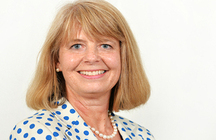
  • Harriett Baldwin – 2016 Speech on EU Referendum Result

    Harriett Baldwin
    Harriett Baldwin

    Below is the text of the speech made by Harriett Baldwin, the Economic Secretary to the Treasury, at the BBA Retail Banking Conference on 29 June 2016.

    On Thursday, the people of the United Kingdom took the decision to vote to leave the European Union;

    It is not the decision I, or the government, wanted.

    It was a clear democratic decision on a higher turnout than in a general election.

    Because that decision has been taken,

    And now we must look forward.

    As anticipated, the markets have been volatile,

    But Britain’s financial services sector has been through trying times before.

    I saw these first-hand during my 22 years working in financial services,

    The crash of 1987, the ERM crisis, Long Term Capital Management’s collapse, the tech bubble and the banking crisis.

    Financial markets are capable of weathering challenges.

    They adapt quickly. They find new opportunities

    They price in and offer ways of managing risks like these.

    I think British banks are well placed to manage the uncertainty resulting from the last week’s vote.

    Since the financial crisis in 2008, both the government and the industry have been working hard to ensure that the UK has a safer and stronger banking sector.

    There have been fundamental reforms to our regulatory architecture to put the Bank of England back at the centre of the UK’s economic and financial systems,

    And compared to pre-crisis, there is significantly more capital in the system to guard against difficult times – UK banks have raised over £130 billion of capital, and now have more than £600 billion of high quality liquid assets.

    So our institutions have enough capital and liquidity to withstand a period of severe market volatility;

    The Bank of England’s most recent stress tests show this.

    In short, we are prepared.

    The government and financial regulators have spent the last few months putting in place robust contingency plans for the immediate aftermath in the event of a “leave” vote.

    We’ve worked systematically with each major financial institution to make sure they’re ready to deal with the consequences of this outcome.

    Swap lines were arranged in advance so that the Bank of England can lend in foreign currency if needed,

    And the Bank was ready to make an immediate statement the next morning.

    As you know, the Governor was clear that the Bank of England stands ready to provide £250 billion of funds, through its normal facilities, to continue to support banks and the smooth functioning of markets.

    The Chancellor has discussed our co-ordinated response with the Finance Ministers and Central Bank Governors of the G7.

    And the Chancellor and the Governor have continued to be in regular contact on contingency plans to be used if needed.

    So not only is the industry prepared for this outcome, policy makers are ready to respond to it.

    Now I don’t need to tell you that the UK’s financial system is intricate and complex.

    But behind all the technical terminology and statistics is a critical social determinant – confidence.

    Confidence in our financial system and confidence in its institutions.

    We must not let that confidence be shaken.

    The UK is the most international, most experienced financial centre in the world.

    London consistently leads the rankings as the world’s global financial capital.

    It has the best business environment;

    The most impressive infrastructure;

    The best human capital;

    A very strong regulatory framework;

    And the top overall reputation.

    The UK also has natural strengths in financial services; a central time zone, the English language.

    And our country boasts an unrivalled pool of investors

    Not only in terms of size, but in quality and international experience,

    And this is supported by world leading legal and professional services.

    It is for these reasons that I am confident that we will adjust and overcome the challenges presented.

    The government is now focused on preparing for the negotiations with the EU.

    For my part, I want us to agree an economic relationship with the rest of Europe that provides for the best possible terms of trade in financial services.

    Only the UK can trigger Article 50, and as the Chancellor made clear on Monday, we should only do that when our new Prime Minister has spelled out a definite view about the new arrangement we are seeking with our European neighbours.

    In the meantime, and during the negotiations that will follow, there is no change to people’s rights to travel and work, and to the way our goods and services are traded, or to the way our economy and financial system is regulated.

    Let’s not forget that Britain is the strongest major advanced economy in the world.

    Growth has been robust, employment has reached record levels.

    The budget deficit has been brought down from 11% of national income, and was forecast to be below 3% this year.

    And today, I want to leave you with this message- the British economy is fundamentally strong, we are highly competitive and we are open for business.

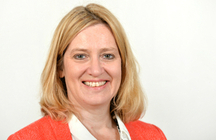
  • Amber Rudd – 2016 Speech on the Referendum Result

    amberrudd

    Below is the text of the speech made by Amber Rudd, the Secretary of State for Energy and Climate Change, in London on 29 June 2016.

    The decision to leave the EU is of historic significance.

    To be clear, Britain will leave the EU.

    The decision of the British people was clear.

    The key challenge now, as the Prime Minister and the Chancellor have stressed, is to work towards a settlement that is in the best interests of Britain.

    As a Government, we are fully committed to delivering the best outcome for the British people – and that includes delivering the secure, affordable, clean energy our families and business need.

    That commitment has not changed.

    Because while the decision to leave the EU is undoubtedly significant, the challenges we face as a country remain the same.

    How do we protect the strong economy that we have built over the past 6 years?

    How do we ensure we build the infrastructure we need to underpin our strong economy?

    How do we ensure people have good jobs that pay them well?

    The challenges to our environment remain the same.

    How do we make sure people can have respite from the daily grind in safe, clean green spaces near their home?

    How do we ensure we protect our most precious species?

    How do we ensure our green and pleasant land is protected both to respect the efforts of generations past and as a responsibility to generations to come?

    In particular, I want to underline our commitment to the issue over which I have primary responsibility; climate change.

    Climate change has not been downgraded as a threat. It remains one of the most serious long-term risks to our economic and national security.

    I was lucky enough to lead the world-class team of British diplomats at last year’s Paris climate talks. Our efforts were central to delivering that historic deal.

    And the UK will not step back from that international leadership. We must not turn our back on Europe or the world.

    Our relationships with the United States, China, India, Japan and other European countries will stand us in strong stead as we deliver on the promises made in Paris. At the heart of that commitment is the Climate Change Act.

    Its success has inspired countries across the world, and its structure of 5-yearly cycles inspired a core part of the Paris deal.

    I know many of you are keenly awaiting the outcome of our deliberation on the 5th Carbon Budget. You can expect the Government’s decision tomorrow.

    It is an important building block of our economy’s future and you would expect us to take our time to ensure we got the decision right.

    And however we choose to leave the EU, let me be clear: we remain committed to dealing with climate change.

    The Act was not imposed on us by the EU.

    The Climate Change Act in 2008 underpins the remarkable investment we have seen in the low carbon economy since 2010.

    Investment in renewables has increased by 42% since 2010.

    In 2014, 30% of all of Europe’s renewable energy investment took place in the UK.

    Annual support for renewables is expected to double during this Parliament to more than £10 billion.

    Last year I set out a clear vision for the future of our energy system.

    We said that security of supply would be our first priority. Since then we have consulted on changes to the capacity market which has further secured our position.

    We are likely to see significant investment following the auction later this year.

    Beyond that, we will continue to invest in clean energy.

    We have agreed to support up to 4GW of offshore wind and other technologies for deployment in the 2020s – providing the costs come down.

    At the same time we made tough decisions on support for renewable energy, reflecting our core belief that technologies should be able to stand on their own two feet.

    We remain committed to new nuclear power in the UK – to provide clean, secure energy.

    Government has prepared the ground for a fleet of new nuclear stations. Three consortia have proposals to develop 18GW of new power stations at six new sites across the UK.

    These will support more than 30,000 jobs across the nuclear supply chain over the coming years.

    We have announced record investment in new heat networks, to enable new and innovative ways of heating our homes and businesses.

    And we made a commitment to closing unabated coal-fired power stations – a commitment that was praised by leaders across the world.

    All these commitments remain in place. They will help us rebuild our energy infrastructure.

    And I am certain that future investment in this sector will continue to flow to Britain’s strong economy.

    As the Chancellor made clear earlier this week, thanks to the reforms of this Government, the United Kingdom approaches the challenges of leaving the EU from a position of strength.

    Growth has been robust.

    The employment rate is at a record high.

    And the budget deficit has been brought down from 11% of national income, and was forecast to be below 3% this year.

    Britain remains one of the best places in the world to live and do business: the rule of law; low taxes; a talented, creative, determined workforce; a strong finance sector.

    We have to build on the strengths of our economy, not turn away from them. We have to enhance our scientific leadership including our co-operation with other countries.

    These factors – a clear energy policy framework and a strong, investment-friendly economy – combine to make the UK an ideal place to attract energy investment.

    Whatever settlement we decide on in the comings months, these fundamentals will remain.

    At the heart of the approach I set out last autumn is our commitment to innovation in energy – and I am delighted this topic is top of your agenda today.

    We do not yet have all the answers to addressing climate change.

    We must nurture new technologies and industries that will make our future energy system both cheap and clean.

    In energy, we are leading the way.

    Last autumn as part of the Paris talks, Britain committed to Mission Innovation – a global partnership to encourage greater support for innovation. It was complemented by the Breakthrough Energy Coalition: 29 wealthy investors pledging to invest in energy research and development.

    I met Bill Gates earlier this year to discuss this and we agreed the need for a transformation of our energy system.

    We also agreed that the transformation would only happen if we could find technologies which are reliable, clean and cheap.

    We are doing our part. That is why, as a Government, we have committed more than £500 million over this Spending Review to supporting new energy technologies.

    This means supporting entrepreneurs as they look to develop the innovations of the future – in storage, in energy efficiency, in renewables.

    As part of that programme, we will build on the UK’s expertise in nuclear innovation. At least half of our innovation spending will go towards nuclear research and development. This will support our centres of excellence in Cumbria, Manchester, Sheffield and Preston.

    Our nuclear programme will include a competition to develop a small modular nuclear reactor – potentially one of the most exciting innovations in the energy sector.

    Let’s be honest, as the Chancellor said we now face a period of uncertainty. The decision on Thursday raises a host of questions for the energy sector, of course it does.

    There have been significant advantages to us trading energy both within Europe and being an entry point into Europe from the rest of the world. Europe has led the world on acting to address climate change.

    The economic imperative that drove those relationships has not changed, an openness to trade remains central to who we are as a country.

    As the Prime Minister said, we will work towards the best deal possible for Britain.

    Securing our energy supply, keeping bills low and building a low carbon energy infrastructure: the challenges remain the same.

    Our commitment also remains the same.

    As investors and businesses, you can be confident we remain committed to building a secure, affordable low carbon infrastructure fit for the 21st Century.

  • Theresa Villiers – 2016 Speech on the Somme Centenary

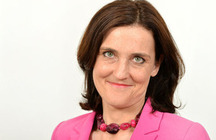
    Below is the text of the speech made by Theresa Villiers, the Secretary of State for Northern Ireland, in Belfast on 29 June 2016.

    I am very grateful to you for coming here this morning and for providing me with an opportunity to reflect on events of 100 years ago.

    Before I do that, however, I thought it right to address the situation following the EU referendum.

    The people of the United Kingdom gave their verdict last Thursday and voted to leave the European Union.

    But I fully appreciate the need to bridge the divisions which emerged during the referendum in recognition of the many millions who voted remain, including a majority here in Northern Ireland.

    So I want to give these re-assurances.

    First, there will be a careful and detailed negotiation to determine how we implement the decision taken last Thursday.

    I and the whole government are determined to get the best deal for all parts of our United Kingdom.

    And I will do everything possible to ensure that Northern Ireland’s interests are protected.

    In the negotiations to come, the Prime Minister has promised that we will involve the Northern Ireland Executive as well as the other devolved administrations.

    We will also be engaging with the business and farming community in Northern Ireland on this important task on which we are embarking.

    And we are already working with the Irish Government. We both want to keep the open border for people and business.

    The UK has always been an open and outward looking country, a great global trading nation. And that is what we intend to remain.

    So we are committed to securing a long-term economic relationship with the rest of Europe that provides for the best possible terms of trade in goods and services.

    And we will look to put in place the strongest possible economic links with friends like the United States, and the Commonwealth, and other important partners like China.

    Opening up important new potential opportunities for Northern Ireland.

    There will inevitably be some adjustments and the Government is ready to take any appropriate action needed to deal with those.

    But as the Chancellor made clear in his statement on Monday, thanks to the difficult decisions we have made, the UK economy is fundamentally strong.

    We have robust growth, our deficit is down and employment is at record levels.

    So we should take confidence from the fact that the UK is ready to deal with whatever the future holds from a position of strength.

    Finally I would like to say this.

    This Government remains fully committed to the Belfast Agreement and its successors and to the institutions they establish.

    The Assembly, the North-South Ministerial Council and the British-Irish Council will all continue to reflect the unique political relationships throughout these islands.

    In fact as a result of the result last week, more decisions than ever before that affect Northern Ireland will be taken in Northern Ireland with your devolved institutions one of the main recipients of the powers to be brought back from Brussels.

    Following the result last week some have called for a border poll.

    The Belfast Agreement is very clear on this.

    I am obliged to call such a poll if at any point I believe there is a majority here for a united Ireland.

    I do not believe that to be the case.

    All tests of opinion point to continuing strong support for the current political settlement, including Northern Ireland’s position within the United Kingdom.

    So this Government will continue to provide stability and govern in the interests of the whole community.

    We remain determined to do the best for Northern Ireland and the UK as a whole.

    Although the referendum has dominated the news headlines since Thursday, this should not mean we overlook the importance of the centenary which takes place on Friday 1st July.

    On that day I will have the privilege of joining the Prime Minister, members of the Royal family, political colleagues and thousands of members of the public at services in France to mark the 100th anniversary of the first day of the Battle of the Somme.

    First of all, we will gather at Thiepval at the site of Lutyens’ magnificent Memorial to the Missing which bears the names of over 72,000 British and South African soldiers killed at the Somme but who have no marked grave.

    Then along with many of Northern Ireland’s elected leaders I will go on to the Ulster Tower, near to the site of the Schwaben Redoubt which was the object of the Ulster Division’s assault on that fateful July morning one hundred years ago.

    As many of you will know, the Ulster Tower is modelled on Helen’s Tower at Clandeboye where so many members of the 36th Ulster Division drilled before they set off for France.

    This will be my third visit to the Somme as Secretary of State and these annual ceremonies are without doubt one of the most poignant and moving events that I attend as part of my official duties.

    The Battle of the Somme began at 7.30am, on a sunny morning and was to last for 141 days.

    It has left an indelible mark on our nation’s history.

    It is deeply ingrained in the national consciousness of the whole United Kingdom, with barely a community, village, town or city untouched by the sheer horror what happened there.

    In total the British Army sustained some 57,000 casualties on the first day.

    Almost half the 120,000 men in the 143 battalions who went over the top were cut down by a lethal blizzard of machine gun, rifle and artillery.

    It is widely viewed as the darkest day in British military history.

    By the time the Battle ended on 18 November casualties had risen to 419,655 men.

    And the furthest the British and French forces advanced during those four months was 8 miles along a 20 mile front.

    No doubt the debate will continue to rage about the tactics that involved slaughter on an industrial scale, though as one distinguished historian put it recently:

    “If there was a way of fighting the First World War that did not involve trying to smash frontally through formidable enemy defences, neither side discovered it”.

    This centenary gives us a chance to reflect once again on whether anything was achieved. Though it can be argued that by relieving Verdun, the battle saved France from collapse, substantially weakened the German army, and prepared the way for the victory which occurred two years later.

    But what is not in doubt is the shattering scale of the sacrifice that took place to achieve this, with so many first-hand accounts recounting the pain, the suffering and the horror.

    So it is only right that this week we come together as a nation to remember those who fell.

    And of course the centenary has particular resonance for many in Northern Ireland because the deeds of the 36th Ulster Division on the first day of the Somme have passed into legend.

    After going over the top, the Ulster Division was one of the few that actually succeeded in meeting its objectives that day.

    By a combination of astute tactics and speed, not matched on other parts of the battlefield, they had entered the Schwaben Reboubt by 8am and taken over 400 German prisoners.

    But the inability of other Divisions to make similar advances left them cut off from reinforcements and massively exposed to a ferocious German counter-attack.

    The more the Ulstermen advanced, the more cut off they became, until eventually they were forced to retreat and abandon their gains.

    And their initial success came at a huge price, with the Division sustaining over 5,500 casualties.

    The heroism they displayed was remarkable.

    One war correspondent described their initial attack as:

    “one of the finest displays of human courage in the world”.

    While Captain Wilfred Spender of the Ulster Division’s HQ Staff famously said:

    “I am not an Ulsterman but yesterday, the 1st. July, as I followed their amazing attack, I felt that I would rather be an Ulsterman than anything else in the world.

    My pen cannot describe adequately the hundreds of heroic acts that I witnessed”.

    Of the nine Victoria Crosses awarded on the first day of the Somme, four went to Ulstermen.

    Theirs were stories of truly astounding levels of courage.

    And I was privileged to be present at Bushmills with Her Majesty the Queen yesterday when she unveiled a statue of one of them, Robert Quigg.

    Yet the history of Ireland and the Great War is not just about the 36th Division.

    We must also remember the incredible heroism of the 16th Irish Division.

    Mainly nationalists drawn from the pre-war Irish Volunteers, they sustained an agonising 4,300 casualties in successfully capturing Guillemont and Ginchy in September 1916.

    Just as in Great Britain, so across the island of Ireland there was virtually no corner left unaffected by the Battle of the Somme.

    In total it is estimated that well over 200,000 men from across the island served in the British Army during the course of the war.

    And it is worth remembering that nearly three quarters of them were volunteers, with conscription never extending to Ireland.

    Around 35,000 Irishmen, Protestants and Catholics, unionists and nationalists were killed in World War One.

    Their contribution and their sacrifice was immense and we should never forget it.

    Yet in the decades following partition, the Irish contribution to the Somme and to the First World War more generally often seemed largely hidden.

    And I believe that part of the reason for that lies in the consequences of another seminal event in Irish history that took place a matter of months before the Somme and which has also been extensively commemorated this year.

    I refer of course to the Easter Rising that began at the GPO in Dublin on 24 April 1916 and which by the time the surrender occurred five days later had resulted in nearly 500 deaths and 2,600 injured.

    While the Rising did not achieve its immediate objectives it is entirely understandable why so many see it today as leading directly to the birth of the Irish Free State and ultimately to the foundation of the Republic of Ireland.

    In the post-independence era, two conflicting narratives of the year 1916 began to take shape.

    For many unionists, the rising was an illegitimate insurrection by a small number of unrepresentative rebels, at a time when the war on the western front was going particularly badly.

    This was in stark contrast to the supreme sacrifice that Ulstermen made at the Somme fighting for King and country.

    In nationalist eyes the men and women of Easter 1916 gained a revered status, bordering on the mythological.

    A citizens’ army fighting for Irish freedom against the might of the greatest Empire the world had ever seen.

    And over time, those Irishmen who heeded the call by nationalist leader, John Redmond, to enlist in the British Army and who fought on the western front tended to be disregarded and overlooked.

    If anything, in the period after the Second World War and during the long years of the Troubles, these attitudes hardened.

    It is one of many examples of the power history has to sustain long held divisions and antagonisms on this island.

    In recent years, however, against a backdrop of the significant political progress here in Northern Ireland and the greatly strengthened relationship between the United Kingdom and the Republic of Ireland a number of pre-conceptions and stereotypes have begun to break down.

    There is now a much greater focus on the complexities of Irish history during the turbulent decade from 1912 to 1922.

    So, for example, we learn of what motivated men like Emmet Dalton.

    He was an Irish Volunteer who joined the British Army in 1915, fought with distinction with the 16th Irish at Ginchy during the Somme, reached the rank of Major, and was awarded the Military Cross.   On demobilisation in 1919, he joined the IRA and became one of Michael Collins’ closest associates.

    Or there is Martin Doyle, of the Royal Munster Fusiliers.

    He was awarded the Victoria Cross in September 1918, joined the IRA in 1920, and later served with the pro-Treaty forces during the civil war.

    The role of women has been more clearly acknowledged, not just those who took part in and supported the Easter Rising, but also the 234,046 women who signed the Declaration supporting the 1912 Ulster Covenant opposing Irish Home Rule.

    And while it is the radicals who campaigned for votes for women who tend to be remembered today when we consider that decade of suffragette agitation. Perhaps those really responsible for the expansion of the franchise were the millions of women who took on roles and responsibilities on the home front in factories and farms and offices which had previously been the exclusive preserve of men.

    Ireland’s role in the Great War has been rediscovered and at long last it has been fully recognised.

    The changing view of our history was illustrated by a series of historic events in recent years.

    These include the unveiling of the island of Ireland Peace Tower at Messines by Her Majesty the Queen and the then President of Ireland, Mary McAleese on 11 November 1998.

    The visit of the Prime Minister and the Taoiseach to the Menin Gate and the Peace Park at Messines in 2013.

    And the resumption of the laying of a wreath by the Irish Ambassador, Dan Mulhall, at the cenotaph in Whitehall on Remembrance Sunday.

    In March 2014 along with Jimmy Deenihan, who was culture minister at the time, I helped lay the foundation stone for the Cross of Sacrifice at Glasnevin Cemetery in Dublin. And I was honoured to be present when this monument was later dedicated to the thousands of Irishmen who gave their lives in the two world wars.

    And in August 2014, the Irish President and Taoiseach and his ministers were right at the heart of commemorations to mark the outbreak of war.

    I strongly welcome the fact that the Irish Government has organised its own programme of commemoration of the Battle of the Somme, including an event at the Irish National War Memorial at Islandbridge next month.

    All of this is in tune with the approach with which the Irish Government marked the centenary of the Easter Rising earlier this year.

    It is widely accepted that tensions around the 50th anniversary in 1966 raised tensions within Northern Ireland and between Northern Ireland and the Republic of Ireland and probably contributed to the outbreak of the Troubles shortly afterwards.

    By contrast the Irish Government’s commemorations on Easter Sunday showed it is possible to mark events which are still sensitive and contested a hundred years after they took place in ways which are both dignified and inclusive.

    I applaud them for that, and for events such as the service to remember those members of the British military who lost their lives during the rising.

    The same inclusive approach was demonstrated at the Rising to Reconciliation event I attended in Dublin’s Abbey Theatre in April thanks to the kind invitation of Minister Charlie Flanagan and the Department of Foreign Affairs and Trade.

    And at the Imagining Ireland concert at London’s Royal Festival Hall later the same month hosted by the Irish Embassy.

    Much of the credit for this changed tone is, of course, down to professional historians, uncovering new facts and providing fresh interpretations of past events.

    I’ve also been very impressed by the Creative Centenaries # Making History 1916 exhibition at the Ulster Museum and the Reflections on 1916 exhibition at Belfast City Hall.

    And by the work of the Community Relations Council and Heritage Lottery Fund to develop and embed the set of important principles which underpins all of this work in Northern Ireland.

    Talking to the people behind these initiatives, it is clear that every word has been scrutinised, every picture the subject of negotiation, every display carefully weighed up for accuracy.

    All with a view to ensuring that everyone can feel comfortable visiting the exhibition, whatever their background.

    Creative Centenaries, who I first met in April at the Nerve Centre in Londonderry, have also produced some excellent resources for schools.

    But as well as the historians, I believe the politicians too have played a part in changing the way we look at the events of 100 years ago.

    At the beginning of the so-called ‘decade of centenaries’ in 2012, the UK and Irish Governments both recognised the potential for sensitive events like the Ulster Covenant, the Easter Rising or the Somme to be hijacked by those seeking to use them to re-open old wounds and promote discord and division.

    After all that has been achieved both here in Northern Ireland, and in UK-Irish relations, we therefore determined to work closely together in an effort to prevent this.

    While it is never easy to view history with complete objectivity and impartiality, both administrations have been clear that we seek to put historical accuracy and mutual respect for different perspectives at the heart of our approach.

    To promote education and greater shared understanding without asking everybody to agree or abandon strongly held positions.

    And so far, while acknowledging that even more difficult anniversaries lie ahead, I think we have been successful.

    It is an approach that we will continue to pursue as we look ahead to the centenaries of other seminal events, the ‘coupon’ election of 1918 and its aftermath, and of course the Treaty and partition in 1921 and 22.

    We have seen all too well how history can divide.

    Our ambitious goal throughout this decade is seek to use history to unite.

    To build on the political progress that has been made here.

    To strengthen further the strong bilateral relationship that exists between the United Kingdom and Ireland, a relationship that will endure long beyond the UK’s exit from the EU.

    And to bolster the special ties that exist throughout these islands as we look forward to our next century of co-operation, partnership and friendship.
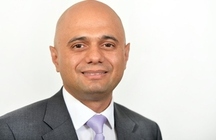
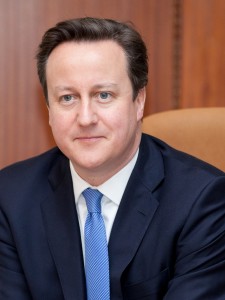
  • Patrick McLoughlin – 2016 Speech on Infra-Structure

    Patrick McLoughlin
    Patrick McLoughlin

    Below is the text of the speech made by Patrick McLoughlin, the Secretary of State for Transport, at the ExCel centre in London on 28 June 2016.

    Introduction

    Thank you for having me here today.

    Everyone in this room knows these are unpredictable times.

    So it’s nice to be able to get back to the hard certainties of concrete and steel.

    And it’s encouraging that so many have come here to discuss exactly those things.

    European referendum

    Now, I want to address the events of the last week directly.

    I passionately wanted Britain to remain part of the European Union.

    But the people of the United Kingdom delivered their verdict.

    Now the entire government and I will work to deliver their instruction.

    Yes, we face a period of adjustment; economic, social and political.

    But as we step out into our new place in the world, I sincerely believe we do so from a position of strength.

    We have spent the last 6 years delivering a plan that today means Britain is the strongest major advanced economy in the world.

    Employment is at a record high.

    Growth has been robust.

    And the fundamentals of our economy are strong.

    Many of you in this room have helped make it so.

    Together we’ve got Network Rail’s (NR) orange army improving our railway tracks.

    And we’ve rebuilt those key hubs such as Birmingham New Street and Manchester Victoria, to improve the daily commute.

    Together we’ve delivered dozens of major road improvement projects, to give our roads the capacity to handle future growth.

    And we are working on dozens more.

    Together we’re nearly at the finishing line on Crossrail, which will transform London’s rail network and link our largest airport with our largest financial district.

    So it’s thanks to your efforts that we enjoy some of the best infrastructure of any developed nation.

    It means we have the best possible tools to tackle the challenges ahead.

    And as we face up to the enormity of our task, be reassured.

    Our work is not yet done.

    The business of strengthening Britain’s economy continues.

    HS2 will rebalance our economy and generate colossal benefits for the supply chain.

    As the National Audit Office confirmed today, this project is on track.

    We are making progress on HS3, or Northern Powerhouse Rail, which will transform the north, alongside the £13 billion we are spending improving transport in the area.

    We are transforming northern roads, and electrifying northern railways.

    The first ever Road Investment Strategy will shortly be backed up by a second, delivering the largest spend on our roads for a generation.

    And on the railways, we have the most ambitious rail plan since the Victorian era.

    We are electrifying over 850 miles of railway, and delivering a better service for passengers through a franchising system that is reaching maturity.

    Altogether, transport spending will rise by 50% in this parliament.

    Because those who control the budgets know exactly how vital this programme is.

    And as we address the future and the consequences of our vote to leave the European Union (EU), one thing is certain.

    Investment in the long term infrastructure we need, has become more important, not less.

    Passenger demand is increasing; we are making twice as many journeys as we did in 1970.

    And so is the demand for economic growth.

    Let me give you two examples.

    One from the beginning of the last government, and one that struck me this week.

    In 2010, one of the first decisions that landed on George Osborne’s desk was the recommendation that he cancel Crossrail.

    The argument was clear:

    Our economy is in crisis and Crossrail will cost billions

    Thank goodness the Chancellor saw it differently.

    Yes, we could have used the Crossrail funding to pay down our debt.

    But diverting that investment would only create new problems down the line.

    The economic boost and extra capacity that Crossrail is bringing is badly needed.

    And backing out would’ve shown the short-termism that got us into an economic mess in the first place.

    Now no one’s arguing that we shouldn’t have done it.

    Even the Public Accounts Committee has called it:

    A textbook example of how to get things right

    The case for Crossrail that we came across in 2010 is the same case for new infrastructure now.

    Yesterday we formally opened a new station at Kirkstall Forge in Leeds.

    It’s the second new station we’ve opened in and around Leeds in recent months.

    Kirkstall Forge station cost the government less than £10 million to build.

    But it’s the catalyst for a £400 million investment in the area by the private sector, leading directly to a thousand new homes and a world-class new business park.

    There are countless examples of investment like this across our country.

    And be certain: the investment will continue.

    Yet there are also important questions ahead for the UK, as well as big opportunities.

    Take aviation capacity in the South East.

    We remain committed to expansion.

    And we remain committed to delivering runway capacity on the timetable set out by Sir Howard Davies.

    This remains one of the most important decisions for the government to take.

    All sides will have their views.

    Mine is this: as we make decisions about our future in the coming weeks and months, it is vital that the UK is seen to be open for business and building the infrastructure it needs to compete.

    So yes, there are things we don’t yet know the answer to.

    Things still to work through.

    But the instructions we received from the British people were clear.

    And as we deliver those instructions we proceed with confidence.

    Confidence that our infrastructure is fit for the future.

    That our economy is fundamentally strong.

    And that business and government will pull together to deliver the best for Britain.

    It’s a winning formula.

    And it means that Britain is ready for the challenges of the future.

    Thank you.

  • Sajid Javid – 2016 Speech to Business After EU Referendum Result

    CBI Conference

    Below is the text of the speech made by Sajid Javid, the Secretary of State for Business, Innovation and Skills, in London on 28 June 2016.

    Good afternoon everyone, and thank you all for coming.

    Following last week’s historic decision by the British people, I’ve just chaired a meeting of the chairs of UK’s largest business organisations, and CEOs and senior representatives from many of our biggest employers.

    My message for them was very clear. Britain is open for business.

    Yes, the financial markets are still reacting to the result.

    But the fundamental facts remain unchanged.

    The UK is still a member of the European Union, and still a member of the single market.

    Employment is still at a record high.

    And this government is still 100% committed to making the UK the best place in Europe to start and grow a business.

    None of this has changed on Friday morning.

    None of this will change overnight.

    This is not the time for hasty decisions that will be regretted later.

    Rather, it is the time for government to work with businesses large and small up and down the country so they don’t just deal with the challenges that the result brings, but are also able to embrace the opportunities that it creates.

    The biggest issue raised was the need to secure continued access to the single market.

    While I’m not in a position to make promises, I assured everyone that my number one priority will be just that in the negotiations to come.

    I also set out the wide-ranging, globe-spanning process of engagement that has been underway at my department since the result became known.

    I’ve personally been in regular contact with many CEOs and business leaders, a process that will continue in the days and weeks that lie ahead.

    Trade Minister Lord Price is in contact with many of Britain’s biggest inward investors.

    Over the next few months he will be visiting key overseas markets including China, Hong Kong and Brazil and reminding firms there that the UK is still very much open for business, just as before.

    My department already has a single, named contact minister for more than 80 of Britain’s top inward investors and exporters.

    I’m ensuring that they will make contact with all of their companies over the next few weeks.

    Similarly, the Prime Minister’s business ambassadors and trade envoys, drawn from across the business world and political spectrum, are out there representing the UK in the key markets and sectors around the world.

    UK Trade and Investment (UKTI) our international trade promotion body, has a presence in more than 100 markets around the world.

    I’ve instructed all the heads of UKTI to engage with the key investors locally to reassure them that the UK remains open for business and an attractive inward investment destination.

    Between now and the end of the year I will be leading a series of trade missions in order to communicate that message myself.

    Our unrivalled network of ambassadors and high commissioners have been reaching out to their local governments.

    In the past 48 hours we’ve heard senior politicians in Australia and South Korea calling for immediate talks on trade deals with the UK.

    Of course, the impact of last week’s vote will not just be felt among exporters and foreign investors.

    Across the country there are millions of businesses, large and small, that are not directly trading into EU, but who also have questions.

    In the weeks to come my ministerial team and I will be visiting businesses right across the country.

    This is not just about big business and not just about London.

    And I’m delighted that at today’s meeting the heads of the largest business organisations – the CBI, IoD, FSB, BCC and EEF – they all agreed to work together with the government to provide consistent support and advice for their members.

    As I’ve said before, we have to collaborate to ensure the best outcomes.

    Unions also have an important role to play.

    And I will be speaking to the TUC’s Frances O’Grady this afternoon to discuss the best way to engage and work with them.

    Over the past few days the main aim has been to reassure business.

    But we’ve also received plenty of reassurance from business.

    Investors have reaffirmed their commitment to the UK.

    For example, Huawei has today confirmed to government that its planned £1.3 billion investment in the UK will go ahead.

    The referendum will make no difference to that commitment.

    Numerous other companies have offered us staff to help with negotiations.

    We’ve had offers of support with surveys and intelligence gathering.

    Again and again we have heard business leaders mirroring the government’s position – that they are determined to make this work.

    Although many were shocked by the result, they are all doing what British businesses have always done.

    They are adapting, they are innovating, they are rising to the challenge.

    Finally, let me remind all of Britain’s businesses that, even in the face of market volatility, our economy remains fundamentally strong.

    The deficit is down, employment is up, Britain is home to more private businesses than at any point in its history.

    There will be challenging times ahead, of course, but we are more than well-placed to get through them.

    There is much more to be done in the weeks and months that lie ahead.

    And I look forward to working with businesses of all sizes.

    Thank you.

  • Jeremy Corbyn – 2016 Statement on No Confidence Vote

    jeremycorbyn

    Below is the text of the statement issued by Jeremy Corbyn, the Leader of the Opposition, on the no confidence vote being held on his leadership on 28 June 2016.

    In the aftermath of last week’s referendum, our country faces major challenges. Risks to the economy and living standards are growing. The public is divided.

    The Government is in disarray. Ministers have made it clear they have no exit plan, but are determined to make working people pay with a new round of cuts and tax rises.

    Labour has the responsibility to give a lead where the Government will not. We need to bring people together, hold the Government to account, oppose austerity and set out a path to exit that will protect jobs and incomes.

    To do that we need to stand together. Since I was elected leader of our party nine months ago, we have repeatedly defeated the Government over its attacks on living standards.

    Last month, Labour become the largest party in the local elections. In Thursday’s referendum, a narrow majority voted to leave, but two thirds of Labour supporters backed our call for a remain vote.

    I was democratically elected leader of our party for a new kind of politics by 60% of Labour members and supporters, and I will not betray them by resigning. Today’s vote by MPs has no constitutional legitimacy.

    We are a democratic party, with a clear constitution. Our people need Labour party members, trade unionists and MPs to unite behind my leadership at a critical time for our country.