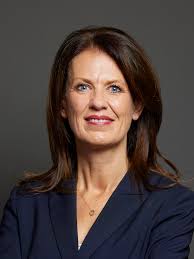
The speech made by Monica Harding, the Liberal Democrat MP for Esher and Walton, in the House of Commons on 29 April 2025.
No issue in my constituency demonstrates more the inertia and failure of the previous political leadership than the problem of overstayed, wrecked and abandoned boats that have been left to proliferate along the banks of the Thames for the last decade. I am pleased to have the opportunity today to bring this issue to the attention of the House and the Minister.
Esher and Walton is a river community. The Thames forms our boundary with London; its waters have brought Vikings to raid Walton and kings to live in Hampton Court, and it is loved by my constituents. We have rowing clubs in Molesey and Walton that generate home-grown Olympians, the Ajax and Viking sea scouts, and wild swimming groups. We have riverside businesses that contribute to our local economy and provide residents and tourists with access to the most famous river in our land. All these activities have been impacted by the sunken, wrecked and abandoned boats, alongside unlicensed overstay boats. They line the entire length of my constituency, from the Dittons through Molesey and down into Walton-on-Thames.
There are wrecked vessels, half sunk and rusting, on the banks opposite Hampton Court Palace, visible to the hundreds of thousands of tourists who visit. Next door, there are overstay boats which one constituent described as a “small village”; it is Dickensian. The overstay boats are almost always unregistered. They turn up, moor, and then stay for months, sometimes years. In addition to this impunity, they generate litter and waste. Some boats apparently operate as Airbnbs. Others have erected fences: they have fenced off public land on the towpath, put up “Keep out” and “Private” signs, and intimidated residents. Stretches of land—our riverbank, enjoyed for centuries by my constituents—have become no-go areas characterised by drug use and antisocial behaviour.
Jim Shannon (Strangford) (DUP)
I commend the hon. Lady for introducing this debate. I spoke to her beforehand to hear her thoughts on what she hopes to achieve. I represent a constituency that is equally as nice as hers, and I can well understand the desire to stay and take advantage of the lovely locations on the River Thames. However, the people she describes are taking advantage and preventing others from having enjoyment that is meant for all. Does she agree that we must have regulations in place that allow for reasonable enjoyment, without people taking advantage?
Monica Harding
The hon. Gentleman makes the main point that I want to make today: I will speak about regulations and who is accountable.
One resident told me:
“In the past few years, my neighbours and I have been subjected to constant harassment, including threats of physical harm, theft of property, firing of catapults, fly-tipping, dog fouling and antisocial behaviour.”
That is profoundly unfair on my constituents. Residents who pay their taxes have lost the river as they know it.
Rowing clubs and boat hire and paddle board companies are unable to launch. Residents with boats who want to take them out and moor alongside riverside restaurants and cafés are unable to do so. The Molesey regatta, which has been a fixture of my community since 1867 and in which I declare an interest as an honorary president, has been required to alter the course of its race.
In October, a single clean-up of one stretch of riverbank populated by these boats yielded more than 1 tonne of waste. The Environment Agency has failed to get to grips with the situation over a period of years, meaning that the number of such boats in Elmbridge has risen steadily. At the last count, the tally was approaching 250.
Mr Joshua Reynolds (Maidenhead) (LD)
In Maidenhead, the local authority and generous individuals have taken matters into their own hands and have been able to get rid of many sunken boats along our stretch of the Thames. The EA has regarded owners of land as being responsible, but lots of riverbank owners are not known—we do not know who lots of the mooring owners are—and that causes significant delays and costs. Does my hon. Friend agree that it is time for the Environment Agency to step up and take responsibly? It should be supporting our community, rather than trying to pass on responsibility to unknown landowners.
Monica Harding
My hon. Friend is absolutely right. In my constituency, the sense of frustration and disappointment with the Environment Agency is palpable. When a highly visible problem goes unaddressed year after year, as it has for a decade, and when a situation is allowed to deteriorate, it creates a deep sense of disappointment and frustration, and it undermines the faith that people have in the Government to deal with the things that affect people’s day-to-day lives.
David Chadwick (Brecon, Radnor and Cwm Tawe) (LD)
I recognise the frustrations and problems that my hon. Friend is having getting the relevant supervisory authorities to pay heed. In Brecon, we have a similar issue: the canal might run dry following Welsh Water’s decision to start charging the Canal & River Trust for the water it extracts, yet none of the relevant authorities have responded to our request for a meeting. Does my hon. Friend agree that in instances like that, it would be helpful for the Minister whose Department is implicated to pay attention? They should come to Brecon and help us to find a solution.
Monica Harding
I thank my hon. Friend for his intervention, but I would like the Minister to come to Esher and Walton first, although I appreciate his desire for her to visit his constituency as well.
My predecessor in Esher and Walton, a previous Deputy Prime Minister, brought the former Environment Secretary to see the problem for herself. They committed to the permanent removal of these boats, but nothing happened: yet another broken Conservative promise. Either my predecessor was uninterested or he was ineffective. Like many, I had hope that the new Government would bring change. I wrote to the newly appointed Secretary of State and the chief executive of the Environment Agency as soon as I was elected, asking for action. At that point, there were 180 boats. I was pleased with the Minister’s reply, which acknowledged that the EA, as the navigation authority along the non-tidal Thames, was committed to managing the situation and to delivering a detailed action plan laying out clear steps for enforcement. I was assured that EA officials wished to regain the trust of the community.
As a result of that letter, the EA towed away two of the largest and longest staying boats during an enforcement day—hooray! Elmbridge borough council housing department joined the operation and modelled a joined-up approach with the police and the Environment Agency to respond to any homelessness issues. My local council is ready and willing to play its part, but it is frustrated that the EA is not playing its part.
The enforcement success in the autumn should have marked the beginning of renewed energy and action, with a long-term plan to finally get to grips with the problem. Instead, it was followed up with almost nothing, and the situation has since deteriorated.
That is despite months and months of advocacy and regular meetings with the EA, in which I have heard again and again about its intention to clear the boats. It has consistently overpromised and underdelivered.
I was promised a survey of abandoned vessels before comprehensive removals and a long-term strategic enforcement plan as a prelude to making progress in the spring. Well, it is spring now, but both documents were endlessly delayed. Last month, the EA finally produced the survey, but it was presented so confusingly that the council found it almost useless, and I am now told that the EA cannot resource any of it. When the plan came, it was manifestly insufficient.
In today’s letter, the Minister referenced that document—the Thames waterways compliance and enforcement plan for Elmbridge—which I have read. It runs for 10 pages and makes one minor mention of taking action to reduce the number of unauthorised and unregistered boats, which should have been the central focus. As one of its tactical objectives, the plan promises to develop a clear and tactical plan. We have yet another promise, but no plan.
All in all, the document marked a dramatic roll- back of previous ambitions. It has an almost complete lack of measurable targets, metrics and accountability mechanisms. In other words, there is no way to assess the progress of the EA in delivering outcomes against agreed objectives or on key concerns, such as the number of boats removed, the number of registration offences or the rubbish cleared. In fact, at our last meeting, the area manager suggested that the problem had become so big that it was too expensive to fix.
Lincoln Jopp (Spelthorne) (Con)
I am grateful to my constituency neighbour for giving way—rivers have two banks, and we share one of them. I congratulate Spelthorne borough council, the EA and the police on doing such a good job on the Spelthorne side. I offer my support to the hon. Member in her endeavour to make her side of the river better. If we can give any assistance, we will of course do so.
Monica Harding
I am grateful to my constituency neighbour. I would love to work with him, the Environment Agency, our relevant borough councils and the police in order to fix this problem.
Dr Ben Spencer (Runnymede and Weybridge) (Con)
I thank the hon. Lady for giving way in such an important debate. I entirely share her frustrations about progress with these boats. This issue affects many of my constituents not just in Weybridge, but across my constituency. I am sure that she will come on to this point. Given the nature of rivers, does she agree that a positive step forward would be working with me, my hon. Friend the Member for Spelthorne (Lincoln Jopp), the hon. Member for Maidenhead (Mr Reynolds) and the Minister to try to get a group together so that rather than pushing the boats on, we can tackle the issue once and for all?
Monica Harding
I thank the hon. Member, my constituency neighbour, for that point. I have no intention at all of pushing the boats down to his constituency: I want them gone. There can be nothing more powerful for our constituents than us working across parties in order to fix this problem.
The BBC picked up on this story this morning. The EA gave a statement to BBC Radio Surrey in which it claimed to be taking
“firm, lawful and proportionate action”.
That is manifestly not the case: the action is not firm or proportionate. It also said that the current situation highlights the need for a “more sustainable, systemic response” and pledged a “longer-term approach”. This is the same hot air that we have heard for years and years, waffling on about the need for long-term plans while the situation deteriorates.
All in all, this is a sad indictment of the poverty of ambition, application and competence in a body charged by taxpayers with protecting our waterways. Indeed, it is hard to overstate the disappointment of my constituents at the seeming inability of the Environment Agency to deliver results, even against objectives that it or the Secretary of State has set. This is the endless cycle: the most basic promises made to residents, the council or me are jettisoned after months of prevarication; the goals that remain are without measurement or accountability.
I worry from the Minister’s letter to me this afternoon that, regrettably, nothing will change, apart from her very kind ask of the Environment Agency to review its enforcement approach and her commitment to strengthening the EA’s approach. I am keen to hear how she intends to follow up on those points. I was deeply frustrated that much of the letter repeated what I, my residents and the council have being hearing from the EA for months and years: promises of new plans and more joined-up working, and recognition of past disappointments and the need for change. The Environment Agency says that it wants to regain the trust of my constituents. That trust is at rock bottom. What is needed now is far greater oversight—ministerial if necessary —and accountability against specific and deliverable goals.
I recently attended a public meeting with residents of Hurst Park and Molesey on a Friday night that was packed to the rafters with constituents deeply upset and justifiably angry with the situation. The essence of what people call broken Britain is the sense that the public realm is incapable of solving problems, even the most egregious and obvious ones—those that people and businesses see and feel every single day. The Prime Minister and members of the Government have spoken repeatedly about the need to rebuild trust in the state, rebuild its capacity, and show the people that systems can work and achieve things. Something that my residents and I have found particularly frustrating is the difficulty of attaching any accountability at all to anyone at any point, despite failure after failure. A failure to act deprives these people who I am privileged to represent—those who play by the rules and pay for public services—of the land, peace and natural beauty that they have always enjoyed.
I ask the Minister to give this matter her personal attention, and to work with me to solve it as a matter of priority. I would like her to work with me to show the people of Esher and Walton that good politics makes things better. Boats listed by the Environment Agency as wrecked or abandoned can, and should, be cleared immediately. Doing so quickly and forcefully, rather than piecemeal, removes one of the permanent risks of those boats—namely, that a change in river conditions could dislodge vessels and transform them into immediate hazards. Clearing overstayed boats requires taking legal steps, and it is vital that this work is consistently and properly resourced. Taking a start-and-stop approach is not an option, because many enforcement mechanisms unlocked by serving initial notices on boats must be completed within a certain period of time. Letting opportunities disappear sets everything back to square one.
The local police and the local council are ready and eager to help, and have put resources aside to do their part. As such, will the Minister commit personally to driving forward meaningful action on this issue through the Environment Agency and the Department for Environment, Food and Rural Affairs; to providing the necessary energy and resources; and to giving me a point of contact with officials in her department to co-ordinate our work? Will she also commit to meeting me, either in this place or in my constituency—where the problem can be seen and believed—to discuss the progress that we can make together? The problem of overstayed and sunken boats should not be intractable; everyone can see the problem, and the solution is obvious. It is time to show that collectively, we can deliver.