Blog

  • NEWS STORY : Councillor Arthur Lamb Dies at Age of 31

    NEWS STORY : Councillor Arthur Lamb Dies at Age of 31

    STORY

    Arthur Lamb, the youngest councillor on Cumbria County Council, has died at the age of 31. He had been elected onto the council in 2017 and was the Conservative’s Shadow Cabinet member for Customers, Transformation and Fire & Rescue. Hilary Carrick, the Conservative group leader on the council, said in a statement:

    “There are no words to describe my sadness at hearing the tragic news of Arthur’s untimely passing. Quite simply, he was an amazing young man who was universally loved and respected. He was a very talented politician and hugely effective County councillor who worked tirelessly for the local community that he loved. Arthur had a maturity and wisdom that exceeded his years and his considered contributions, positivity, dedication, enthusiasm and cheeky grin will be hugely missed. Our thoughts and heartfelt condolences go out to his family and friends at this very difficult time”.

    The funeral will take place on 6 February 2023 at Distington’s Church of the Holy Spirit.

    North Cumbria Integrated Care NHS Trust, who Arthur worked for, said in a statement:

    “Our Arthur worked at West Cumberland Hospital in the information team and had recently taken on a secondment as a deputy service manager. He will be very sadly missed by his colleagues at the trust and our thoughts are with his family, many friends and colleagues at this very difficult time. His colleagues have shared their tribute – Just over seven years ago Our Arthur walked into the information office at the West Cumberland Hospital – a unique wonderful gentle giant of a young man at 6ft 2in (Arthur always reminded us of the two inches).

    Over the years we have had many happy memories of our time together with Arthur, debating and discussing issues about work, cricket and politics – the odd friendly disagreement too which Arthur thoroughly enjoyed with a twinkle in his eyes. Arthur was a kind generous dedicated person in all aspects of his life from coaching young players at Whitehaven Cricket Club to running out of the office to quickly help a member of staff who was struggling with IT issues.

    Every Friday we would go to the canteen (his favourite place) and he’d laugh about his squeaky shoes which could be heard along the corridor and everyone who passed knew him. Arthur will never be far from our thoughts, we will miss him terribly and treasure our time together with him. Thank you Arthur for being you and for being our friend”.

    RESOURCES

    Press Release from Cumbria County Council

    EXTERNAL NEWS LINKS

    BBC News Story

    Cumbria Crack News Story

  • PRESS RELEASE : Sad passing of Cllr Arthur Lamb – Tributes from Cumbria County Council [January 2023]

    PRESS RELEASE : Sad passing of Cllr Arthur Lamb – Tributes from Cumbria County Council [January 2023]

    The press release issued by Cumbria County Council on 24 January 2023.

    It is with great sadness that the death is announced of Cllr Arthur Lamb, the Conservative member for Cleator Moor and Frizington. Cllr Lamb, who died suddenly on January 22, was the youngest member on Cumbria County Council, at just 31.

    Cllr Lamb was elected to the county council in 2017, his division including the parishes of Arlecdon & Frizington, Cleator Moor, Ennerdale & Kinniside, and Lamplugh. He was Shadow Cabinet member for Customers, Transformation and Fire & Rescue.

    Cllr Lamb, who worked for the NHS, was a keen cricketer, described as “a cornerstone” of Whitehaven Cricket Club, who, among many of his duties, coached the club’s juniors. A dedicated, popular and principled councillor, Cllr Lamb was a highly popular member of the county council.

    Conservative Group Leader, Cllr Hilary Carrick, said: “There are no words to describe my sadness at hearing the tragic news of Arthur’s untimely passing.  Quite simply, he was an amazing young man who was universally loved and respected. He was a very talented politician and hugely effective County councillor who worked tirelessly for the local community that he loved. Arthur had a maturity and wisdom that exceeded his years and his considered contributions, positivity, dedication, enthusiasm and cheeky grin will be hugely missed.  Our thoughts and heartfelt condolences go out to his family and friends at this very difficult time.”

    Cllr Stewart Young, Leader of Cumbria County Council and speaking on behalf of the Labour Group said:

    “News of Arthur’s untimely death came as a huge shock to everyone.  He was well known and well liked on the County Council.  His election in 2017 in what was previously a safe Labour seat, came as a surprise even to Arthur, but he threw himself into the role and was an able and effective representative. Members from all sides of the political divide will join his family and friends in mourning his passing.”

    Cllr Peter Thornton, Deputy leader for Cumbria County Council and speaking on behalf of the Liberal Democrat Group added:

    “It seems unbelievable that someone with such a zest for life should be taken so young.  It is a tragic loss for Arthur’s family, friends and the people he represented so well in Cleator Moor East and Frizington.  We offer our deepest sympathies to his family and friends at this sad time.”

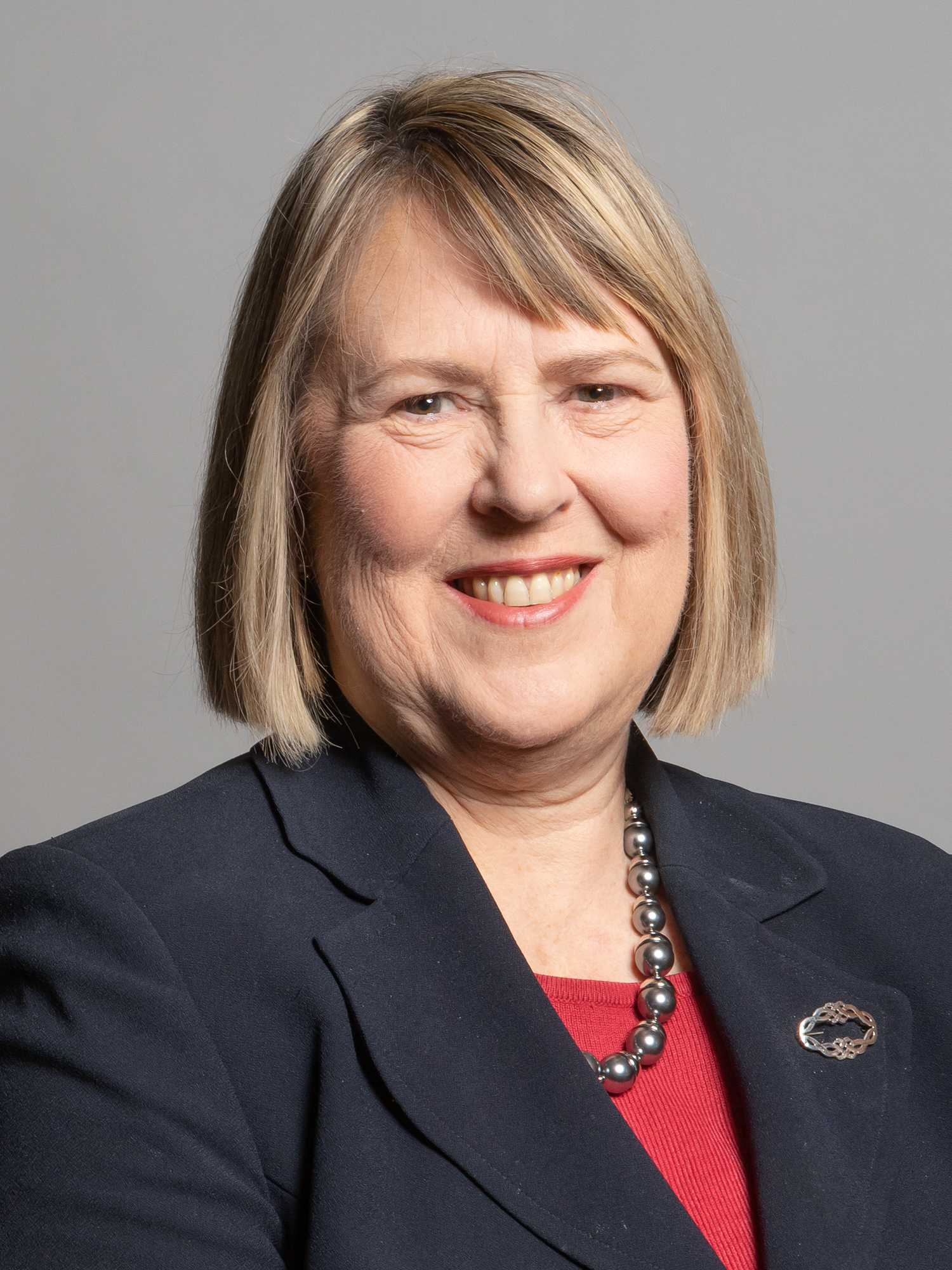
  • Fiona Bruce – 2023 Speech on Holocaust Memorial Day

    Fiona Bruce – 2023 Speech on Holocaust Memorial Day

    The speech made by Fiona Bruce, the Conservative MP for Congleton, in the House of Commons on 26 January 2023.

    This week, holocaust survivor Manfred Goldberg spoke movingly in the Foreign, Commonwealth and Development Office about the “hell on earth” he experienced under the Nazis. The tragedy is that there have been a catalogue of horrors since the Nazis perpetrated their genocidal acts. In the ’70s there was Pol Pot’s terror in Cambodia. In the ’80s there was Saddam Hussein’s desecration of Kurds in Iraq. In the ’90s there were attempts to systematically exterminate Tutsis in Rwanda, while Bosnian non-Serbs suffered a similar fate.

    There have been atrocities inflicted across the world, including in Asia, the middle east, Africa and Europe, and on victims from a range of religions and races—Muslim, Buddhist, Jewish, Christian and others. Still, in the 21st century, we see further atrocities where elements of the definition of genocide are present, including targeting of the Rohingya Muslims in Myanmar, of the Uyghur Muslims in Xinjiang, and of the Hazaras in Afghanistan. In my work as the Prime Minister’s special envoy for freedom of religion or belief, I have heard many survivors speak of unspeakable suffering. They relay the same message as survivors of the holocaust: we must not only call out evil, but act to prevent it from happening again.

    One way we can act is by formally recognising the genocide against the Yazidis and Christians in Iraq and Syria by Daesh, as the lower house in Germany did just last week. Recognition of genocide is one of the most significant things we can do as part of the UK’s atrocity prevention strategy. Another is to identify where there is risk of genocide. We must equip our diplomatic teams across the world to spot the early warning signs where a nation is at risk of genocide. The UK can be a leader among our allies and partners in setting up early warning mechanisms, and in using our diplomatic reach—a reach that is still much regarded internationally, as I know from my work as the Prime Minister’s special envoy—to resolve disputes and tensions where we are able to do so.

    The International Development Committee’s recent report, “From Srebrenica to a safer tomorrow: Preventing future mass atrocities around the world” sets out a road map for the Government to follow. I welcome the Government’s positive response, not least the development of the mass atrocity prevention hub, and look forward to further progress to fulfil our manifesto commitment to implement the Truro review fully, including recommendation 7, which states:

    “Ensure that there are mechanisms in place to facilitate an immediate response to atrocity crimes, including genocide, through activities such as setting up early warning mechanisms to identify countries at risk of atrocities, diplomacy to help de-escalate tensions and resolve disputes, and developing support to help with upstream prevention work.”

    I highlight Nigeria as one country with close links to the UK where I fear the risk of genocide is growing. Around 90 hon. Members attended the Open Doors 2023 world watch list launch here last week and heard how Nigeria is now the sixth highest country for persecution of Christians; indeed, it would be top if the list were based just on the number of recorded deaths. We must condemn in the strongest possible terms the ongoing attacks against Christians and moderate Muslims by Islamic extremists in that country, and call out the Nigerian Government’s repeated denial of any such targeted religious persecution and their failure to act adequately to address it and protect the targeted.

    Finally, we must do more work on educating the next generation about the importance of freedom of religion or belief, so that “never again” becomes a reality for their generation in a way that, sadly, as I have said, it has not for ours. This is the ultimate upstream prevention work, and it is vital. One of the main takeaways from last year’s ministerial conference on freedom of religion or belief, which I was privileged to co-host, was the inspiration of the development of education toolkits for teachers to use in primary schools, to give even the youngest children an understanding of freedom of religion or belief and of the vital importance—

    John Cryer (Leyton and Wanstead) (Lab)

    Will the hon. Member give way?

    Fiona Bruce

    Certainly.

    John Cryer

    In the context of what the hon. Member is saying about education, will she join me in congratulating the HET, the CST and other organisations on educating people and also on combating antisemitism, including, sadly, in my own party and in other institutions?

    Fiona Bruce

    I thank the hon. Member for his intervention. I will indeed congratulate the Holocaust Educational Trust later in my speech.

    It is vital that we teach even the youngest children about the importance of not discriminating against others on account of their beliefs, just as they understand so well the importance of not discriminating against others on account of disability.

    I have the privilege of chairing the International Religious Freedom or Belief Alliance, a growing group of 42 countries whose Governments, like ours, have formally committed to protecting and promoting freedom of religion or belief around the world. It is our aspiration to see the toolkit that I mentioned, when it is developed, used in schools across our 42 countries. I am proud that the toolkit is currently being piloted in the UK, including in a school in my constituency.

    As the years go by and our brave, inspirational holocaust survivors, with their testimonies, diminish in number, we must ensure that their voice is sustained, not least with young ambassadors. I pay tribute to the Holocaust Educational Trust for the excellent work that it does in that regard.

    The alliance I chair is promoting the connection of young freedom of religion or belief ambassadors around the world. We are working towards a 2023 virtual global conference engaging young FORB ambassadors, and we want to involve three groups of young people: first, young people from democratic societies like our own who have not personally experienced persecution but care about the issue and want to do more; secondly, young people in the diaspora here in the UK with ties in countries such as Nigeria and direct concerns to relay; and, thirdly and critically, young people who live in countries where there is persecution and are experiencing it themselves—places such as Myanmar, where there is already strong interest from young people, and Hong Kong, where oppression on account of religion is an increasing concern.

    As we plan this virtual global conference, I would welcome contacts from colleagues, all-party parliamentary group country chairs and others with young people from across the world who may be interested in engaging with the event late in 2023. This is a way in which we here can act. Indeed, we can all do something to make “never again” a reality for the next generation, and it is so heartening that, in this Parliament, elected Members right across the political spectrum are determined to do so.


  • PRESS RELEASE : Hundreds of thousands more workers to receive job support boost in spring [January 2023]

    PRESS RELEASE : Hundreds of thousands more workers to receive job support boost in spring [January 2023]

    The press release issued by the Department for Work and Pensions on 30 January 2023.

    Helping more people progress into higher paid jobs will support the UK’s labour market and economic growth.

    • More working people on income-related benefit will receive additional help from the end of February to boost their earnings, helping families improve their prospects and finances
    • Over 120,000 more low-income workers will receive tailored support and be supported to earn more

    New regulations which come into force on Monday (30 January) mean more than 120,000 working people on Universal Credit across Great Britain will receive a job support boost this spring.

    The Administrative Earnings Threshold (AET) determines which group a Universal Credit claimant is placed in based on how much they earn. This in turn impacts the level of support they receive to find work and develop a career, and the types of activities they must undertake, such as searching for opportunities to take up more or better paid work or researching new career options.

    From the end of February, an increase to the threshold will mean more Universal Credit claimants will be moved from the ‘Light Touch’ group to the ‘Intensive Work Search’ group, helping them to get better-paid work and boost their long-term prospects. Combined with a previous increase in September, this will mean around a quarter of a million more people will have been moved into ‘Intensive Work Search’.

    New claimant commitments will be tailored to individual circumstances and will consider caring responsibilities and any health conditions.

    Secretary of State for Work and Pensions, Mel Stride MP said:

    A hallmark of a compassionate society is giving those on low incomes the tools to progress and earn more. It is important that we continue to deliver targeted support so that those in work have access to the expertise and guidance of our dedicated work coaches.

    By raising the Administrative Earnings Threshold, we are forging a robust labour market building on positive changes we have already made and supporting even more people to progress in the workplace.

    Additional claimants will benefit from more face-to-face time with a work coach, allowing them to access opportunities to increase their earnings, whether that is developing their skills, progressing in their current sector, or by starting a new role.

    The new AET is the equivalent of an individual working 15 hours per week, or a couple working 24 hours per week between them, at the adult National Living Wage rate.

    This year, the Government will also be driving forward an agenda to ensure the labour market remains robust, reviewing workforce participation at pace to understand what action can be taken to drive down economic inactivity.

    In 2021 the Universal Credit taper rate was reduced from 63% to 55% and the Work Allowance was increased by £500 per year so claimants can keep more of what they earn. The National Living Wage is also increasing by 9.7%, bringing it to £10.42 an hour from April.

    This rise to the AET will build on this work to ensure work pays and will be complemented by a new In Work Progression offer which will be rolled out to all Jobcentres by the end of March, focused on helping claimants in the ‘Light Touch’ work group to progress.

    People impacted by the change will be contacted with more details via their Universal Credit journal. Claimants will receive this journal message at the end of their first full assessment period after Sunday 26 February.

  • PRESS RELEASE : Minister unveils plans to start closing the pensions inequality gap [January 2023]

    PRESS RELEASE : Minister unveils plans to start closing the pensions inequality gap [January 2023]

    The press release issued by the Department for Work and Pensions on 30 January 2023.

    Minister for Pensions Laura Trott announces shake-up of private pensions to create fairer, more predictable, and better-run pensions.

    Measures include consultation on new Value for Money framework, defined contribution scheme charge cap reforms, further work on small pots, and extension of Collective Defined Contribution (CDC) pension schemes.

    • These plans will help address the pension inequality gap which has risen since the decline of Defined Benefit (DB) and the emergence of Defined Contributions (DC).

    Minister for Pensions Laura Trott has today (Monday 30th January) unveiled a package of measures to deliver value for savers and boost fairness, predictability, and adequacy across the private pensions sector.

    The measures include a consultation on a new and much anticipated Value for Money (VFM) framework, developed in partnership with The Pensions Regulator and the Financial Conduct Authority, which sets out how schemes will be expected to provide savers with better value from their investments and a quality level of service.

    Minister for Pensions Laura Trott MP MBE said:

    There is a pension inequality gap between those who had secure retirements thanks to DB, to much more uncertainty now. Since 2012, Automatic Enrolment has transformed the pensions landscape in the UK for the better, but we know there’s more to be done to ensure a fairer future for savers.

    Being in an underperforming pension scheme can lead to someone missing out on thousands of pounds. The Value for Money framework and our new measures will improve security and create better returns for savers, so they can enjoy the retirement they’ve worked so hard for.

    Today’s proposals include plans for:

    • Schemes to disclose their investment performance, costs and charges, and quality of service via clear and comparable metrics to the benefit of savers;
    • Reforms to the charge cap, giving schemes more flexibility to invest in so-called “illiquid assets” such as start-up companies, renewables and infrastructure;
    • Feedback on workable solutions to tackle the issue of small pots;
    • An extension of Collective Defined Contribution (CDC) schemes, most significantly to include multi-employer models

    Executive Director of Regulatory Policy, Analysis and Advice at The Pensions Regulator, David Fairs said:

    Ensuring every pound that savers put into their DC pension pot delivers value for money is vital to help people achieve the best possible retirement. The measures announced as part of this far-reaching reforms package deliver on our commitment to put savers at the heart of all we do.

    Our joint Value for Money framework will drive greater transparency and standardisation of reporting across the DC pensions market, allowing trustees to make more informed decisions and improve long term outcomes for savers. I urge the industry to take part in these important consultations.

    Executive Director of Markets at the Financial Conduct Authority, Sarah Pritchard said:

    Pensions are complex, and savers need to be able to trust that their providers have the information they need to make the right choices. These proposals will help ensure that they take a wide ranging and long-term view – value for money is not just about costs and charges.

    We will continue to work with Government, other regulators, and industry to deliver long term value and support savers in their retirement.

    Value for Money

    The VFM framework will improve transparency, comparability, and competition between defined contribution pension schemes and help deliver the best possible value and long-term outcomes for pension savers.

    It will require pension schemes to disclose key metrics and service standards shifting focus from a dominant consideration of costs only, to enable a holistic assessment of VFM.

    Illiquids

    These measures – due to come into force in the Spring – will require schemes to provide transparency to savers over their approach to illiquid assets and disclose information on their overall investment asset allocations.

    This will unlock the potential for savers to see improved returns over a longer period, while also providing a boost to UK growth initiatives.

    Small Pots

    The average worker will have around 11 jobs over the course of their career, meaning they may accrue multiple small pension pots. This creates a risk of members losing track of their pension savings and creates cost and inefficiency in the system. The call for evidence will seek feedback on workable solutions, enabling savers to achieve better outcomes at retirement.

    CDCs

    The introduction of CDC schemes last year– which see both the employer and employees contributing to a collective fund from which individual retirement incomes are drawn – was a landmark moment for UK pensions.

    The new consultation, launched following discussions with a wide range of stakeholders and interested organisations, will explore what new types of multi-employer CDC schemes should look like and how to maximise their benefit for UK savers.

  • PRESS RELEASE : NHS to expand services to keep vulnerable out of hospital [January 2023]

    PRESS RELEASE : NHS to expand services to keep vulnerable out of hospital [January 2023]

    The press release issued by the Department of Health and Social Care on 30 January 2023.

    Tens of thousands of elderly and vulnerable people will receive tailored support at home as part of a new NHS plan to improve waiting times for emergency care.

    • Community services including falls and frailty teams will be scaled up, with up to 50,000 people a month supported by clinicians at home in high-tech ‘virtual wards’
    • Urgent community response teams will be scaled up to provide more patients with support at home within two hours, in recognition of the pressures facing A&E
    • The government and NHS England will publish an Urgent and Emergency Care Plan tomorrow to reduce waiting times and improve care for patients.

    Tens of thousands of elderly and vulnerable people will receive tailored support at home each month as part of a new NHS plan to curb unnecessary trips to hospital, help at-risk patients receive faster treatment and improve ambulance response times.

    It comes as the government and the NHS publish a new Urgent and Emergency Care Plan. Demand on the NHS is rising, driven by a number of factors including an ageing population with increasingly complex needs. A key part of the plan will be reforming the way the NHS provides services to adapt to the population’s changing needs, including by expanding care outside of hospitals

    Falls and frailty teams mainly consists of nurses and while already in existence, this plan goes further and will see the standardisation and scaling up of these services. Building on learnings from this winter, it will ensure more services are in place in time for next winter, with local areas developing plans to do this. These teams join up care by connecting hospital expertise with emergency services and use technology to reduce the risk of falls by remotely monitoring patients. With an ageing population, falls are becoming increasingly common and some people are less able to cope and recover from accidents, physical illness or other stressful events which can lead to serious injuries, hospital admission, and subsequent moves into long term care. These services support vulnerable patients at home and in the community to remain living independently for longer, with up to 20% of emergency hospital admissions avoidable with the right care in place.

    The NHS has already rolled out virtual wards – treating patients from the comfort of their own homes – with growing evidence that these are a safe and efficient alterative to hospital care, particularly for frail patients. These see patients supported by clinicians to recover in the comfort of their own home, rather than in hospital – and has increased the number of patients that can be cared for in this way by 7,000, a 50% increase since last summer. Another 3,000 ‘hospital at home’ beds will be created before next winter and the plan will include an ambition to see up to 50,000 people supported a month.

    High tech virtual wards currently support frail elderly patients or those with acute respiratory infections and cardiac conditions. Patients are reviewed daily by the clinical team who may visit them at home or use video technology to monitor and check how they are recovering.

    Health and Social Care Secretary Steve Barclay said:

    The health and care service is facing significant pressures and while there is no quick fix, we can take immediate action to reduce long waits for urgent and emergency care.

    Up to 20% of hospital admissions are avoidable with the right care in place. By expanding the care provided in the community, the most vulnerable, frail and elderly patients can be better supported to continue living independently or recover at home.

    This includes rolling out more services to help with falls and frailty as well as supporting up to 50,000 patients a month to recover in the comfort of their own homes. Not only will patients benefit from better experiences and outcomes, it will ease pressure on our busy emergency departments.

    NHS Chief Executive Amanda Pritchard said:

    The NHS has faced unprecedented pressure this winter – with the “twindemic” of flu and Covid becoming a reality, alongside surging demand for all services, from GP appointments to A&E attendances and ambulance call outs.

    Our extensive planning ahead of winter has helped to boost capacity – from extra 111 and 999 call handlers, to new falls services and more beds – and we now aim to build on that progress to help speed up care and improve the experiences of patients.

    Boosting care in the community and treating more people at home is key to recovery – it is better for patients and their families, as well as easing pressure on NHS services.

    Urgent community response teams will also be scaled up to increase the number of referrals and patients seen by a range of health and social care professionals within two hours, with services running 12 hours a day. According to the latest data, across the country, over 80% of patients referred were seen within two hours. These teams work with 111 and 999 services to provide urgent care to people in their homes, avoiding the need for hospital admissions and enabling people to live independently for longer, backed by a planned £77 million investment to support systems to continue to improve community health services in 2023-24.

    Falls and frailty services have already been shown to improve patients’ experiences and reduce pressure on urgent and emergency departments. For example, South Warwickshire University NHS Foundation Trust has rolled out an integrated frailty service linking up emergency services and hospitals.

    As part of this, ambulance crews who are with the patient at their home can arrange a remote consultation with input from a consultant to agree the best course of action – from monitoring on a virtual ward to a face-to-face assessment. Thanks to this approach, there has been a 16% reduction in the number of patients aged over 75 being taken to hospital in an ambulance, enabling frail older adults to recover at home where that is best for them.

    Taken together, these measures will help improve experiences for patients across the country and make it easier to access the right health or social care, all while reducing pressure on hospitals and preparing the NHS for future challenges. This will be backed by up to £14.1 billion available for health and care services over the next two years – the highest spend in any government’s history – which was announced in the Autumn Statement.

    Cllr James Jamieson, Chairman of the Local Government Association, said:

    We are pleased to see the focus on expanding community health and care services and the recognition of the importance of therapy and recovery support to get people back home following discharge.

    Collaboration and a focus on outcomes will be key to successful delivery of the plan.

    Sarah McClinton, President of ADASS said:

    We recognise the importance of expanding and joining up health and care in people’s homes to stop them needing to go into hospital and enabling people to leave hospital safely with therapies and support to recover. Key to achieving this will be co-producing plans across health and social care and investment in the workforce in social care and community services and we look forward to engaging with this.

    Case studies:

    • In October 2022, London Ambulance Service rolled out a pilot where paramedics and nurses from community health providers in south-west London respond to elderly and frail patients at home. By 8 January 2023 the new team had treated 838 patients with around 35% taken to hospital, compared to the usual 70%, freeing up resources for those who most need to be in A&E. The scheme is now set to be expanded to parts of North London.
    • Hull Fall First is a falls pick up and wellbeing response service involving the local ICS, fire and rescue service, ambulance service, local authority and community services provider. A team of firefighters received clinical training from healthcare experts, along with safeguarding training and safety awareness. The service has reduced the number of A&E attendances and provided a better patient experience for those who have had a fall. Since April the service has attended 622 people, avoiding ambulance call outs and potential A&E attendances, and provided follow up care and support on falls prevention to people living in their own homes and local care homes.

    More information:

    • Falls teams provide assessment, advice and exercise regimes for older people who are at risk of falling. The services aim to prevent unnecessary hospital visits and to rebuild strength and balance if a fall occurs.
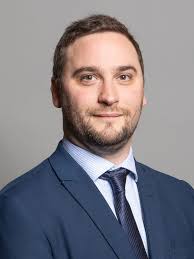
  • Christian Wakeford – 2023 Speech on Holocaust Memorial Day

    Christian Wakeford – 2023 Speech on Holocaust Memorial Day

    The speech made by Christian Wakeford, the Labour MP for Bury South, in the House of Commons on 26 January 2023.

    I would like to thank my right hon. Friend the Member for Barking (Dame Margaret Hodge) and my friend the right hon. Member for Bromsgrove (Sajid Javid) for their contributions to today’s debate, as well as all those who have spoken before me. In particular, I want to thank my hon. Friend the Member for Stretford and Urmston (Andrew Western), who gave a magnificent maiden speech—although I disagree with his choice of football club.

    I would like to thank and pay tribute to the Holocaust Educational Trust, as many Members have, and the Antisemitism Policy Trust for their vital work. I also thank the Community Security Trust, in particular Amanda Bomsytyk and Jonny Newton, for continuing to provide protection to the Jewish community not just in my constituency, but across the country. I thank The Fed in my constituency for their “My Voice” project, which publishes the life stories of holocaust survivors and refugees who have made Britain their home. I hope to raise that in Parliament later this year, and I hope for the support of colleagues. On a final note of thanks, I pay particular tribute to Karen Pollock and Danny Stone, whose counsel is widely sought and respected across this entire Chamber, and indeed across both Houses. Their impact on me and my education should not be underestimated.

    We are all ordinary people who today can be extraordinary in our actions. We can all make decisions to challenge prejudice, stand up to hatred and speak out against identity-based persecution. That is the message of the Holocaust Memorial Day Trust this year, and it was the story of so many during the holocaust. Genocide is facilitated by ordinary people. Ordinary people turn a blind eye, believe propaganda and join murderous regimes. Those who are persecuted, oppressed and murdered in genocide are not persecuted because of crimes they have committed, but simply because they are ordinary people who belong to a particular group. This is true of genocide the world over, but particularly in the case of the holocaust.

    During the rise of Nazi Germany, ordinary people had choices. Many ordinary people were in positions of power, using Jewish people to advance their disgusting ideology and taking advantage of the economic circumstances following the first world war. Many of those in power believed this ideology, but many others were ordinary people obeying orders given to them by evil people. Ordinary people were, for instance, policemen involved in rounding up victims, secretaries typing the records of genocide, and dentists and doctors carrying out evil selections.

    Those who were persecuted were ordinary people too, whether Jews, Soviet civilians and prisoners of war, disabled people, Romani people, gays or many, many others. Like us, they all had families, hopes and dreams, and a want and need to get on in life, find opportunities, be happy, and to give and feel love. They wanted to read and write, to contribute and maybe even hold high office, to represent their families and communities and feel free—things we all take for granted today.

    Ordinary people also stand by as genocide happens around them. They do not partake, but they also do not speak out, preferring to turn a blind eye and pretend they have not seen it. They were keen not to get involved in case they were next, watching as Jews were snatched from their homes, with anxiety heightened and thoughts swirling around their head: “I hope they don’t come for me next.” What the holocaust showed is that they will. Never in this Chamber or out there must we walk on the other side when it comes to racism and injustice. As a famous civil rights activist once said:

    “We do not need allies more devoted to order than to justice”.

    I imagine Jews around the world would agree that antisemitism is the oldest racism and that it needs all of us here today to lead from the front and stand against those who wish to fan the flames of hatred and division to enhance their racist agenda.

    We should all follow in the footsteps of the ordinary people who did not stand by—the righteous among the nations. Many of them will say that they are not extraordinary people, despite having done extraordinary things. They will say that they did not show superhuman bravery; they just did what was right. When Sir Nicholas Winton rescued 669 children from Czechoslovakia and brought them to the UK, thereby sparing them from the horrors of the holocaust, he simply said:

    “Why are you making such a big deal out of it? I just helped a little; I was in the right place at the right time.”

    I disagree with Sir Nicholas. He saved innocent children from a life of unimaginable trauma, torture and almost certain death, and gave them a life that at the time seemed impossible. I am sure we all agree that there can be no greater gift than the saving of a precious life.

    We stand on the shoulders of giants in this Chamber today. Every single one of us, as leaders in our communities and constituencies, should wake up every day channelling the spirit of Sir Nicholas; doing the right thing, making the right choices, helping those who need it and standing tall in their corner when they need us. Leadership is about ordinary people rejecting division and hate. Leadership is about showing bravery in the face of adversity. Leadership is about choosing virtue over evil.

    Earlier this week I visited the Terezín ghetto in Prague with the European Jewish Association. While there I heard at first hand from Gidon Lev, a survivor of Terezín, about how it was the site of the original propaganda from the Nazis. When media gathered to the ghetto, the Nazis were keen to stress that while, yes, it may be a ghetto, people were actually being looked after, and children were being educated and fed. Of course, this was all a front for the despicable treatment that was really happening to Jewish people. It was only following the work of the Red Cross that what was truly happening was uncovered.

    Fake news is something we must stand shoulder to shoulder against with our Jewish brothers and sisters, from the rapid development of artificial intelligence, the digital doctoring of pictures and videos of the time, to the holocaust denial spreading like wildfire across social media. Ordinary people are still duped by fake news about the number of people murdered in the holocaust. Decades-old theories—in some cases, centuries-old—that Jewish people are somehow puppeteers of the world’s events, that they run our media, music industry and our sport and are somehow plotting against us, continue to put Jewish lives at risk.

    We must never lose sight of the story of the holocaust and how ordinary people in power systemically dehumanised Jewish people so that other ordinary people could murder them on a scale that is simply hard to fathom. In short, we must always remember, and never forget. It must never happen again—not to Jews, not to anybody, not on our watch.

  • PRESS RELEASE : Six weeks for developers to sign contract to fix unsafe buildings [January 2023]

    PRESS RELEASE : Six weeks for developers to sign contract to fix unsafe buildings [January 2023]

    The press release issued by the Department for Levelling Up, Housing and Communities on 30 January 2023.

    Contract requires developers to fix buildings and reimburse taxpayers, with an estimated £2 billion expected to be committed to fund repairs.

    Developers today received legally binding contracts that will commit them to pay to repair unsafe buildings.

    The government has set a six-week deadline for developers to sign the legal agreements and is warning that companies who fail to sign and comply with the terms of the contract will face significant consequences.

    Legislation will be brought forward in the spring giving the Secretary of State powers to prevent developers from operating freely in the housing market if they fail to sign and comply with the remediation contract.

    The contract, which has been drawn up by the Department for Levelling Up, Housing and Communities, will protect thousands of leaseholders living in hundreds of buildings across England. These innocent households would otherwise face costly repairs for serious safety defects, including non-cladding related issues.

    Under the contract, developers will commit an estimated £2 billion or more for repairs to buildings they developed or refurbished over the past 30 years. This means that together with the Building Safety Levy, industry is directly paying an estimated £5 billion to make their buildings safe.

    The contract also requires developers to reimburse taxpayers where public money has been used to fix unsafe buildings.

    This follows Secretary of State for Levelling Up, Housing and Communities, Michael Gove, demanding developers are held to account, which led to public pledges from 49 of the country’s leading developers that they would take responsibility to fix their own buildings, which will now be turned into legally binding commitments.

    Secretary of State for Levelling Up, Housing and Communities, Michael Gove, said:

    Today marks another significant step towards righting the wrongs of the past and protecting innocent leaseholders, who are trapped in their homes and facing unfair and crippling costs.

    Too many developers, along with product manufacturers and freeholders, have profited from these unsafe buildings and have a moral duty to do the right thing and pay for their repair.

    In signing this contract, developers will be taking a big step towards restoring confidence in the sector and providing much needed certainty to all concerned.

    There will be nowhere to hide for those who fail to step up to their responsibilities – I will not hesitate to act and they will face significant consequences.

    Dean Finch, Group Chief Executive at Persimmon, said:

    Persimmon was proud to lead the industry two years ago with our original pledge to protect leaseholders. Since then, we have been making good progress on remediation and aim to be on site on all developments by the end of the year.

    The publication of the developer remediation contract is the culmination of many months of hard work on all sides and we are pleased to confirm our intention to sign the final document in the near future, becoming the first developer to do so.

    The terms of the contract are entirely consistent with our existing commitment to protect leaseholders in multi-storey buildings we constructed from the costs of remediating cladding and life-critical fire-related safety issues. We are pleased to reaffirm this commitment today and that we were able to work constructively with the Government to secure the agreement.

    Under legislation to be brought forward this spring, a Responsible Actors Scheme (RAS) will be created, allowing the Secretary of State to block developers who have not signed the contract or failed to comply with its terms from carrying out development and from receiving building control approval. This will prevent them from operating as normal in the housing market for as long as they do not resolve the problems of the past.

    The Levelling Up Secretary will also take action to ban managing agents and freeholders from taking commissions when they take out building insurance. This is in response to a report from the Financial Conduct Authority that suggested commissions make up almost a third of premiums.

    Government will also bring in further measures to make service charges more transparent and empower leaseholders who want to challenge their bills.

    This follows confirmation from six major lenders that, from earlier this month, they will once again consider mortgage applications on properties that are covered by the leaseholder protections in the Building Safety Act, or where the building is eligible for a government or developer remediation scheme.

    Once the contract is signed by developers, leaseholders will benefit from a common framework of rights and responsibilities that will get their buildings fixed without them having to pay, and will require developers to inform residents in affected buildings how they will be meeting these commitments.

  • PRESS RELEASE : Joint Foreign Ministers Statement on use of Chemical Weapons in Douma, Syria [January 2023]

    PRESS RELEASE : Joint Foreign Ministers Statement on use of Chemical Weapons in Douma, Syria [January 2023]

    The press release issued by the Foreign Office on 28 January 2023.

    The Foreign Secretary has made a joint statement on a report which found the Assad regime responsible for the deadly chemical weapons attack on Douma in 2018.

    The following is a statement from James Cleverly, Secretary of State for Foreign, Commonwealth and Development Affairs, United Kingdom, Antony Blinken, Secretary of State, United States of America, Catherine Colonna, Minister of Europe and Foreign Affairs, France, and Annalena Baerbock, Federal Foreign Minister, Germany:

    Today, the Organisation for the Prohibition of Chemical Weapons (OPCW) released a report that found the Assad regime responsible for the deadly chemical weapons attack on Douma on April 7, 2018. The report refutes the Russian claim that it was an opposition attack.

    The report concludes that there are reasonable grounds to believe that, around 19:30 local time on April 7, 2018 at least one Mi-8/17 helicopter of the Syrian Arab Air Force, departing from Dumayr airbase and operating under the control of the Tiger Forces, dropped two yellow cylinders which hit two residential buildings in a central area of the city releasing chlorine killing 43 named individuals and affecting dozens more.

    This report marks the ninth instance of chemical weapons use independently attributed to the Assad regime by UN and OPCW mechanisms.

    Our governments condemn in the strongest terms the Syrian regime’s repeated use of these horrific weapons and remain steadfast in our demands that the Assad regime immediately comply with its obligations under the Chemical Weapons Convention (CWC) and relevant UN Security Council resolutions. Syria must fully declare and destroy its chemical weapons program and allow the deployment of OPCW staff to its country to verify it has done so.

    The report also points out that the OPCW’s Investigation and Identification Team (IIT) received credible information, corroborated through multiple sources, that Russian forces were co-located at Dumayr airbase alongside the Tiger Forces. The IIT also obtained information that, at the time of the attack, the airspace over Douma was exclusively controlled by the Syrian Arab Air Force and the Russian Aerospace Defence Forces.

    We call on the Russian Federation to stop shielding Syria from accountability for its use of chemical weapons. No amount of disinformation from the Kremlin can hide its hand in abetting the Assad regime. In the aftermath of Syria’s chemical attack on April 7, 2018, Russian military police helped the Syrian regime obstruct OPCW access to the site of the attack and attempted to sanitise the site. Russian and Syrian troops also staged photographs later disseminated online in an attempt to support its fabricated narratives of this incident.

    We commend the independent, unbiased, and expert work of the OPCW staff, and condemn the use of chemical weapons anywhere, by anyone, under any circumstances. We also reaffirm our commitment to hold accountable the perpetrators of all chemical weapons attacks in Syria and beyond.

  • Stephen Crabb – 2023 Speech on Holocaust Memorial Day

    Stephen Crabb – 2023 Speech on Holocaust Memorial Day

    The speech made by Stephen Crabb, the Conservative MP for Preseli Pembrokeshire, in the House of Commons on 26 January 2023.

    It is a pleasure to follow the new hon. Member for Stretford and Urmston (Andrew Western). I congratulate him on an excellent maiden speech, delivered in the very best traditions of the House. We wish him all the very best for his time serving his constituents.

    It is a privilege to speak in this debate to mark Holocaust Memorial Day, a date that has become hugely important in our national life and in our parliamentary calendar. I congratulate my right hon. Friend the Member for Bromsgrove (Sajid Javid) on leading the debate and on his outstanding contribution, which struck exactly the right tone as we gather to remember the victims of the holocaust. I also want to put on record my thanks to him for the work he did in a succession of ministerial roles. He was consistently excellent and consistently reliable in fighting antisemitism. I think of his work in support of the Community Security Trust. I think of the work he did to ensure that Hezbollah was proscribed in its entirety. He has been a consistent champion for this cause and it is fitting that he opened the debate.

    I also want to put on record my thanks and pay tribute to the tireless work of the Holocaust Educational Trust, the Holocaust Memorial Day Trust and other organisations that work in this area, as well as the remarkable survivors who are prepared to recall the tragic and unimaginable experiences that they endured to ensure that the horrors of the past are not repeated and that lessons continue to be learnt.

    Holocaust Memorial Day is a moment to remember again the 6 million Jewish men, women and children murdered by the Nazis and their collaborators, and all those who were murdered by the Nazis, including Roma and Sinti people, gay men, disabled people, political opponents and many others. We use this day to remember all those killed in subsequent genocides in Cambodia, Rwanda, Bosnia and Darfur.

    As Members have highlighted, the theme for this year’s Holocaust Memorial Day is ordinary people. That is a thought-provoking theme when we think about some of the survivors we have met in this House and the stories we have learnt about what people endured. There is nothing ordinary about that period of history; nothing ordinary about the scale of the suffering or the depth of the evil visited on Jewish people at the time. As we have heard, what really comes out from listening to the testimony of the survivors and listening the stories about family members, as described by the right hon. Member for Barking (Dame Margaret Hodge) in her contribution, is that these were all ordinary individuals from ordinary families living in ordinary communities.

    It was an honour to be at the Foreign, Commonwealth and Development Office on Tuesday to hear the very moving testimony given by Manfred Goldberg, who spoke incredibly powerfully about the events of that period. He spoke about his family, his mother and father, and he spoke in detail about what he personally endured. What came across in his speech was his extraordinary spirit, his extraordinary capacity to hope and to survive, and his capacity, like so many of the survivors we have met, to look back not with bitterness but with grace and forgiveness, and to look forward to the future and play his part in helping to ensure that future generations of young people are informed, are taught and learn the truth about what happened during the holocaust.

    In June, the all-party parliamentary group on holocaust memorial hosted Mala Tribich MBE in Portcullis House. I know a number of Members were there in that room when we listened to her testimony of what she endured, surviving Nazi deportation and finally being liberated from Bergen-Belsen. I listened in awe to her testimony, which was really powerful and remarkable—ordinary people enduring extraordinary evil and coming through it with extraordinary grace, strength and optimism for the future.

    It is important that we put on record those survivors of the holocaust who sadly passed away this year. We remember Iby Knill BEM, Freddie Knoller BEM, Freda Wineman BEM and, most recently, Zigi Shipper BEM, to whom my right hon. Friend the Member for Bromsgrove referred. They all worked incredibly hard with the Holocaust Educational Trust to share their stories. May they rest in peace. We thank them for their courage and bravery for sharing their experiences.

    We in this House have an extraordinarily privileged position and it is right that we mark Holocaust Memorial Day with debates such as this. It is right that we attend events, light candles and wear badges. That is all part of the collective remembering and marking of the event. It is our responsibility, I believe, to ensure that this is not just a one-day affair, but that every day that follows we try to use our extraordinarily privileged position to ensure that the horrors of the past are never repeatedly, and to face down and tackle antisemitism. That goes for all forms of discrimination, wherever it occurs, at a national level and most particularly in our own communities and constituencies—in our own parties, even. We must use our voices and actions to that end.

    I would like to finish in that spirit by urging the Government to press ahead with the commitments they have made in this field. I am delighted to see the Minister in her place. I know from our discussions that she takes these issues to heart and shares the strong commitment that the Government should continue to fight antisemitism and all forms of discrimination. I would encourage her to press ahead with the work on legislation to clamp down on boycotts, divestment and sanctions and the pernicious use of those avenues, because I believe they can be antisemitic. I look forward to seeing that legislation.

    I do not want to make a contrarian point, given the remarks of the Father of the House, my hon. Friend the Member for Worthing West (Sir Peter Bottomley), but I do believe that the national holocaust memorial and learning centre should be built in Victoria Tower Gardens. There is a very strong cross-party consensus that that should be done.

    There are other issues. Iran has effectively declared war on the Jewish people in Israel, and we should be doing everything we can with our international partners to ensure that Iran never acquires a nuclear weapon. There are so many other fields where there is practical action that we as a Government and we as politicians can take. It is a privilege to contribute to this extraordinarily important debate.