Blog

  • PRESS RELEASE : £1 million fund for fresh ideas to boost health at work [January 2023]

    PRESS RELEASE : £1 million fund for fresh ideas to boost health at work [January 2023]

    The press release issued by the Department for Work and Pensions on 30 January 2023.

    Government launches competition for businesses to bid for share of £1m to stimulate innovation in Occupational Health.

    • Organisations to receive up to £100,000 to help with challenges small businesses and self-employed face with ill health at work
    • Projects to focus on research and development to increase access and capacity in Occupational Health

    A £1 million fund for new ideas to boost health and welfare at work for Small and Medium Enterprises (SMEs) and the self-employed was launched today.

    Successful bidders will receive up to £100,000 to back their projects from 19 May 2023, with the Government looking for innovative solutions to drive better access for SMEs and the self-employed to Occupational Health (OH) services. Applicants are being encouraged to demonstrate how they would deliver improvements to OH, harnessing technology such as artificial intelligence or data collection, to deliver better health outcomes for employees of SMEs.

    Better health provision for staff helps employers look after their workforce, meaning more are likely to stay in work. While larger employers often have better access to OH services, for smaller businesses and the self-employed the lack of support for people with health needs can potentially lead to more people becoming economically inactive.

    Applications can be from those who work alone or with others from business, research organisations, research and technology organisations or the third sector, with the Government looking for proposals to:

    1. Discover new and innovative ways for the OH market, which supports people to stay well in work, to deliver services that drive better access for SMEs and self-employed
    2. Discover new and innovative ways that the OH market can deliver services and better serve the demand for OH
    3. Deliver innovations that can be scaled up for businesses to have an impact in the OH market through new services and better use of technology

    The competition is a joint venture between the Department for Work and Pensions (DWP) and The Department for Health and Social Care (DHSC), as part of the Joint Work and Health Unit, and in conjunction with Innovate UK, an arm of UK Research and Innovation. The fund will be open to applications from 30 January 2023 and run until 15 March 2023.

    Minister for Disabled People, Health and Work, Tom Pursglove MP, said:

    Good occupational health within workplaces is vital in supporting our overall health and standard of living. We spend so much of our lives at work, and it is imperative that our employers can give us the support we need to maintain our physical and mental health. This in turn means we can give our best at work.

    Through the launch of our new £1 million fund, I look forward to seeing innovative, workable solutions to help SMEs deliver the best for their employees, creating healthier, welfare-driven working environments that will ultimately drive growth and improve people’s working lives.

    The new Fund to Stimulate Innovation in Occupational Health (OH) competition will be delivered in the form of a Small Business Research Initiative, a well-established, output driven funding tool run by Innovate UK.

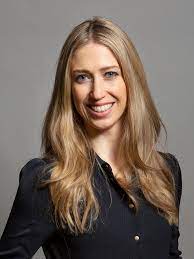
    Minister for Care, Helen Whately, said:

    This new £1 million fund will help us find better ways to support the health of our workforce – especially looking at small businesses and the self-employed.

    Making sure people stay well enough to work is so important – it means a bigger workforce, boosted productivity, and better quality of living.

    Successful bidders will look at innovative new ways to support people in their field of work, help them to live healthier, happier lives while driving growth in our economy.

    For more details about the Fund to Stimulate Innovation and how to apply, please visit this link.

  • Laura Trott – 2023 Speech to the Pensions and Lifetime Savings Association

    Laura Trott – 2023 Speech to the Pensions and Lifetime Savings Association

    The speech made by Laura Trott, the Pensions Minister, to the Pensions and Lifetime Savings Association on 30 January 2023.

    Good afternoon, it’s great to be here at the PLSA, as we launch further measures to ensure people saving into a workplace pension are treated fairly, are properly protected and can enjoy the secure retirement they expect and deserve.

    Today’s measures are just one part of our wider reforms to the private pensions sector. Reforms, which, together, recognise and respond to a sector that has undergone significant change over the past few decades.

    The move we’ve seen from Defined Benefit to Defined Contribution schemes means it is individuals who now shoulder greater responsibility for growing their pension pot.

    It is a structural shift that has led to stark generational differences between those who can expect a predictable level of retirement income – guaranteed by their employer – and those for whom there are no such guarantees.

    There is increased risk and uncertainty compared to decades previously and often less adequacy.

    The introduction of Automatic Enrolment in 2012 under the Conservatives was a game-changer.

    For over ten years, it has been embedding a culture of retirement saving for a new generation within a new pensions landscape.

    Millions more people are now saving into a workplace pension – with 10.8 million workers enrolled so far and £33 billion more saved in real terms in 2021 than in 2012.

    But as well as coverage, we also need to focus on quality and outcomes.

    Having created a new generation of savers, it’s only right that we help them maximise the value of their hard-earned retirement in later life.

    Pension Freedoms have provided more flexibility for people to choose how and when to access their pension savings.

    Alongside a record number of workplace pension savers and assets, there’s more choice and more freedoms.

    But with more choice, comes increased variability in terms of the retirement outcomes that schemes are delivering for savers.

    More freedoms put more decisions into the hands of individuals to make.

    As scheme members, many feel they are navigating through a hugely complex financial world.

    There is more that we can do to help. My plans for reform focus on three pillars. Increasing are Fairness, Adequacy and Predictability.

    On Fairness, if your scheme is underperforming and you don’t know about it, you could be losing out on thousands of pounds.

    When I started this role, I was shocked to see analysis showing a difference in returns between schemes over a 5-year period of up to 48% in some cases.

    This means that a saver with a pot of £10,000 will have notionally lost £5,000 over a 5-year period from being in a lowest performing scheme.

    This simply isn’t fair. Bringing fairness to our new system is the first pillar of my vision for pensions.

    All savers deserve to be confident that their pension scheme is working hard on their behalf and on track to deliver fair and predictable outcomes – reassurance that the generations that proceeded them would have had from their Defined Benefit pensions.

    To date, we have introduced “value for members” assessments which came into force in 2021.

    Today I am announcing that we will be going further, with a new Value for Money framework.

    The consultation I am launching today will seek your views on proposals to require all occupational pension schemes to publish a full assessment of the value their scheme is delivering relative to others.

    But what does value for money mean?

    When I talk about Value for Money, I don’t just mean low costs. Value for money means that savings are invested well, they are not being eroded by high charges and that schemes are helping members make the right decisions throughout their accumulation period.

    The consultation has been jointly developed with The Pensions Regulator and the Financial Conduct Authority. It proposes a framework that will increase transparency, comparability, and drive competition across the pension market.

    It will help to deliver long term value for hard-working savers, and it proposes giving the regulator the powers they need to tackle underperforming schemes.

  • BOOK REVIEW : The War on the Old by John Sutherland

    BOOK REVIEW : The War on the Old by John Sutherland


    The War on the Old is a book published in 2016, shortly after the Brexit referendum result, written by John Sutherland. It’s a short book which is a slightly whimsically written title with a serious message that the elderly population is being treated badly by the Government and by society. There’s a clever touch throughout the book where everyone who is quoted has their age in brackets. This is of course irrelevant, but that’s the point of the mechanism, to show that people shouldn’t be judged by their age but instead by the quality of their arguments and contributions.

    There is a relevance to Brexit here as the author argues that the post-referendum debate was framed to suggest that the elderly population voted in a way that was to the cost of the young and the author wanted to re-examine the logic behind that. He is critical of Giles Coren who wrote in an article that “the referendum shows that old folk can’t be trusted with big decisions. They’re always wrong about everything”. He also notes that baby boomers have been said to have “trouble as their middle name”. He is right to pull up journalists on these lazy tropes, even if Coren was intending to be deliberately provocative.

    The book does address serious points, including the Southern Cross debacle where one of the largest care home companies in the country collapsed following poor decision making and the racking up of debt. The ultimate losers, just as when pubs were purchased in vast numbers by corporate giants, were the customers, which were the elderly in the case of the care homes. Although written in 2016 and using examples from newspapers at the time, these type of problems still persist and care home scandals are a recurring and unfortunate reality today.

    However, the book does feel a little unstructured and doesn’t always particularly flow well as if it has been a long article that has been extended. The author complains when health checks were expanded so that everyone between 40 and 74 could visit their GP every five years, as if this was somehow unfair to those over 74. It would have been, but those over that age are entitled to checks every year, a case noted by GP surgeries up and down the land, so the point seems unclear.

    The author makes an underlying point that the elderly are being put in a dangerous position by Government policies and how they are treated. This is no doubt true in many cases and during lockdown it was the situation that those in care homes weren’t always treated with the respect that they should have been. But, giving Part II the title of “Final Solution” and a section header of “Mein Kampf” are odd and sit uncomfortably. The whimsical nature of the book doesn’t sit well with using Holocaust related terminology, especially when there is no serious effort made to explain with clarity why those terms are being used.

    The book’s underlying premise is though one that should be explored and John Sutherland is an impressive author with a long career in ensuring a message is put across clearly to readers. There aren’t a lot of solutions offered and the author comments that the “pension triple lock is trivial financially”. However, the cost of pensions have gone from £70 billion in 2010 to £105 billion in 2021 and making no comment in this review on whether that is right or wrong, there should perhaps be some explanation in the book of how the author would deal with the challenges of an ageing population simply in terms of financing it.

  • Julian Lewis – 2023 Speech on Holocaust Memorial Day

    Julian Lewis – 2023 Speech on Holocaust Memorial Day

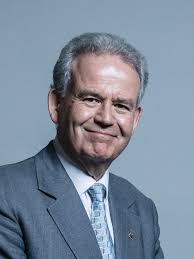
    The speech made by Sir Julian Lewis, the Conservative MP for New Forest East, in the House of Commons on 26 January 2023.

    In a debate featuring successive powerful speeches, the one that we have just heard from the hon. Member for Warrington North (Charlotte Nichols) has to rank among the most powerful, and I congratulate her on it. I also congratulate the Holocaust Educational Trust, because it is a sign of its success that in these debates, held year after year, such enormously influential contributions are made by new generations of MPs such as the hon. Lady, who I believe has been in the House only since 2019. Clearly the process is working.

    I have spoken in two of these debates previously. I find that, as I age, time seems to race along more and more quickly, so it was with surprise that I found that it was fully 10 years ago that I last told the story of two ordinary people caught up in the holocaust. I think I may be forgiven for telling it again, after this lapse of time; I have the permission of my researcher, Nina Karsov.

    Some people may see Nina around the Estate, not particularly noticing anything about this petite lady that would ever make them think that, at the age of two, she was thrown by her parents from a train on its route to Treblinka in an attempt to save her life. Somehow the three of them leapt from the train. There was deep snow. Nina, a toddler, landed in it and was badly frostbitten. Her mother was killed instantly in leaping from the train, and it took her father some time to find her in the snow. They got back to Warsaw, and were taken in by separate gallant Polish non-Jewish families.

    When the Nazis were closing in on the part of Warsaw where the father was in hiding, he, in order to protect those people who would have been killed if they had been caught with him in hiding, made his way across the square to the top of another building and threw himself off it so that he could not be forced to divulge where he had been kept. Nina, however, was kept safely through the war, and many years later, was able to secure for the lady she called her Polish mother recognition amongst “the righteous”, which was clearly an honour richly deserved. It has to be said that both her Polish mother and Nina herself were then persecuted by the communist regime, Nina spending two years of a three-year sentence in a communist jail before Amnesty International successfully campaigned for her to come to this country. So that is one ordinary person whom one might bump into on the Commons Estate without knowing much about her.

    One person who cannot be bumped into on the Estate is my cousin Chana Broder, who now lives in Israel. Chana, her parents Abraham and Rachel, and her grandmother Rivka were holed up in a ghetto in Siemiatycze in November 1942 when they were tipped off that the ghetto was about to be cleared, so they made a run for it. The grandfather was killed, but the other four got away. They were turned away from one place after another, and eventually somebody gave them shelter for a little while, but the people who saved those four lives, as I told the House on a previous occasion, were the Kryński family.

    The father was Konstanty, the mother was Bronisława and the children were Krystyna and Henryk. They were a poor farming family, and they had known my cousins before the war. My cousins had had a little convenience store in the main square of Siemiatycze, and I visited it a few years ago—it is now a flower shop. The Kryński parents went to the shop in the days before the war and, because they were very constrained economically, my cousins would sometimes say, “Mr and Mrs Kryński, take what you need for now and pay us when you can,” little imagining that, a few years later, those acts of simple kindness would be rewarded by an act of outstanding bravery.

    The Kryńskis took them in for months. They hid them while their farm was occasionally searched by German troops, and they got away with it because they had constructed a bunker underneath a barn, in which the grandmother, the two young parents and my four-year-old cousin, Chana, were able to stay throughout the day. They could not stand up, so they would just sit and wait until they could come out at night.

    This went on for months, until the Russians overran the area. The family were able to get out, and they were then taken in by Canada. The grandmother sadly passed away very soon after liberation, but the young parents and the little girl were able to go to Montreal, where my cousin graduated from McGill University. Both she and her mother subsequently moved to Israel, and she is still alive today.

    Chana’s mother’s book, originally published in 1967 as “Out of the Depths” because of how the family had hidden underground, was republished in 2020 as part of the Azrieli Foundation’s holocaust survivors’ memoirs programme as “Daring to Hope.” For anyone who is interested in seeing how one ordinary family came through an extraordinary experience with the help of outstandingly brave people—the Kryński family were honoured with the presentation of the Righteous Among the Nations award in Siemiatycze on 24 May 2016—it is all there in black and white.

    I hope not to have to tell this story again for another 10 years, and I do not think I will, because this debate has been so well informed by so many MPs of older and younger generations that we are in no danger at all of forgetting what happened.

  • Charlotte Nichols – 2023 Speech on Holocaust Memorial Day

    Charlotte Nichols – 2023 Speech on Holocaust Memorial Day

    The speech made by Charlotte Nichols, the Labour MP for Warrington North, in the House of Commons on 26 January 2023.

    It is an honour to rise today to commemorate Holocaust Memorial Day, both personally as a proud Jewish parliamentarian, and on behalf of my constituents in Warrington North, many of whom have made Warrington their home after fleeing the horrors of the holocaust and subsequent post-war genocides in Rwanda, Darfur, Cambodia and Bosnia, which we also commemorate today.

    This Shabbat, Jews in synagogues around the world will be reading Parashat Bo, a Torah portion described by the former Chief Rabbi, Lord Sacks of blessed memory, as

    “among the most revolutionary in the entire history of ideas”

    and

    “one of the most counterintuitive passages in all of religious literature.”

    In the passage—Exodus 10 to 13:16—Moses is addressing the Israelites before their release from Egypt. But his address is not about the freedom they will soon see, or the society they will have to build, but—repeatedly—about education and the duty of parents to educate their children about what they experienced in Egypt. The passage reads:

    “Vayomer Moshe el-ha’am zachor et-hayom hazeh asher yetzatem mi Mitzrayim”.

    That is:

    “And Moses said to the nation: Remember this day, when you went out from Egypt”.

    What does “zachor”—to remember—mean? The Jewish concept of remembering is not passive, but active. We tell the Exodus story to our children. We re-experience it and understand it through the elaborate rituals of the Pesach Seder. We reflect on it in our recitation of the central daily prayer, the Shema, in the laying of tefillin—a physical ritual with which to commemorate liberation from Egypt daily—and in the mezuzah, which we hammer to our doorframes. To truly remember is to act. That is as true for the story of the Exodus as it is for the genocides that we come together to commemorate today.

    The theme of this year’s Holocaust Memorial Day is “ordinary people”. We reflect on the fact that its victims were ordinary people, each with their own inherent human dignity, loves, hopes, fears and aspirations—not nameless, faceless statistics, which our inability to fully comprehend the enormity of these atrocities can reduce them to. We reflect that those who committed these genocides were ordinary people, that this capacity for evil is indeed in all of us, and it is a choice, just as courage is a choice. And we reflect on the indifference of ordinary people who stood by while it happened, which was necessary for that kind of industrial-scale murder and the mechanics of genocide to be sustained. There are, of course, stories of bravery, with the kind of heroics that we see commemorated at Yad Vashem by the “righteous among the nations”, but what makes these people extraordinary is the very fact that the vast majority of people—the ordinary people—did not care enough to stop genocide taking place.

    However, to reflect on the holocaust, and on the genocides in Rwanda, Bosnia, Darfur and Cambodia, is not in and of itself true remembrance. This week I had the honour of sharing a platform with the holocaust survivor Joan Salter MBE, who has been turning reflection into action through her advocacy for contemporary refugees and her work with Freedom from Torture. We cannot commend historical actions such as the Kindertransport in debates like this and not condemn the inflammatory and hateful rhetoric used in this place and in the media about those fleeing persecution today, or about the LGBT+ and Gypsy, Roma and Traveller communities.

    I was also honoured, in my capacity as an ambassador for the charity Remembering Srebrenica, to sit with members of the Movement of Mothers of Srebrenica and Žepa Enclaves. As they spoke to me about the trauma of their sons, brothers and fathers murdered in the Bosnian genocide, they also told me about their fight for justice. Many of the bodies have still never been recovered. One mother told me that she felt “lucky”, as they had found one bone of their youngest son to bury. Many of the mothers do not even have that, as mass burial pits were excavated and moved to evade detection, which prolonged the agony of those left behind. One mother spoke at the International Criminal Tribunal for the Former Yugoslavia to plead for clemency for the soldier who she knew had murdered her family, for he had recently had a son and she did not want another child growing up without a father.

    We cannot remember without justice, and a full and true accounting of all the decisions before, during and after a genocide, to learn, to change, and to ensure that “never again” is not an empty maxim, but a series of actions to which we can all commit ourselves. We know of cases—such as that of the “butcher of Slomin”, Stanislaw Chrzanowski—in which war criminals have evaded justice because of active collusion by the British police, the Crown Prosecution Service and the security services, who protected them and allowed them to live among the rest of us as “ordinary people”. It is time for an inquiry: the Board of Deputies of British Jews has called for one, but the Government have so far ignored its call. How can we have confidence that these things will not happen in future—perhaps with Russian war criminals—if we cannot account for how and why they happened before?

    This is why education, and the education of children in particular, is so very important—from Moses and the Israelites in Parashat Bo to our contemporary society. The holocaust is rapidly fading from living memory, and so too, one day, will the genocides that followed it. The testimony of survivors, which the sterling work of the Holocaust Memorial Day Trust and the Holocaust Educational Trust allows so many to access and experience, is an important part of our collective memory, but the survivors cannot be expected to bear this responsibility themselves and to bear this burden alone. While Elie Wiesel was right when he said that if the holocaust was forgotten

    “the dead will be killed a second time”,

    we remember not for the sake of the past, but for the sake of the future.

    The message from today, and from this week’s sedra from Exodus, must be this: through education we can aspire towards liberation, solidarity and community, and build empathy and understanding as we march together with all people on the path out of Egypt and refuse to go back. We observe, we remember, and, inspired by our histories and our faiths, ordinary people across all our communities will act. It is in education that a good society is won or lost.

  • PRESS RELEASE : Mine-hunting ‘mother ship’ arrives in Plymouth [January 2023]

    PRESS RELEASE : Mine-hunting ‘mother ship’ arrives in Plymouth [January 2023]

    The press release issued by the Ministry of Defence on 30 January 2023.

    A specialist ship to support Royal Navy operations – a mother ship to launch drones to find and destroy undersea threats – has arrived in Plymouth today.

    • New ship to host autonomous mine hunting systems arrives at HMNB Devonport.
    • Vessel to undergo a period of modification before joining the Royal Fleet Auxiliary.
    • Intended to be operational in Spring 2023.

    A specialist ship bought to support Royal Navy mine-hunting operations – a mother ship to launch drones to find and destroy undersea threats – has arrived in Plymouth today.

    When deployed, the platform will support the safeguarding of UK waters from the threat of mines at sea, operating a range of uncrewed systems that will help keep personnel at a safe distance.

    Based at His Majesty’s Naval Base Clyde, the 96.8 metres long vessel – the length of two Olympic swimming pools – will work side-by-side with autonomous mine-hunting systems already operated by the Royal Navy out of Faslane under Project Wilton.

    Purchased from Island Offshore, the vessel – currently named MV Island Crown, but due to be renamed as it joins the fleet – arrived at HMNB Devonport, where it will undergo minimal conversion work, primarily to support installation of military communication systems and Royal Fleet Auxiliary (RFA) operations, before being handed over to the RFA later this year.

    Defence Procurement Minister, Alex Chalk KC, said:

    This is another significant step forward in the modernisation of Royal Navy capabilities and use of autonomous systems to complement our crewed fleet.

    This vessel will play a crucial role in the detection of undersea threats, keeping our personnel out of harm’s way while they conduct vital operations.

    Delivered at pace, the capability will assure freedom of access for the UK ships and submarines (including the Continuous At Sea Deterrent), while crucially reducing risk to personnel.

    Operated by specialist teams on board, these innovative systems will allow the Royal Navy to protect UK waters, also providing support to the North Atlantic and European waters if required.

    Commodore Steve Prest, Director Navy Acquisition, said:

    The delivery of this ship is an important step in the Navy’s transformation to conducting mine countermeasures using distributed offboard systems-of-systems.

    The ship will be used to extend the range of our Maritime Autonomous Systems from coastal waters to conducting offshore survey operations in Defence of the homeland.

    The uncrewed systems will include the joint French-UK Maritime Mine Counter Measures (MMCM) system, the Combined Influence Sweep (SWEEP) system and Medium Underwater Autonomous Vehicles (MAUVs).

    The purchase of the £40 million ship was carried out by Defence Equipment and Support (DE&S), the procurement arm of the MOD.

    DE&S Director General Ships, Vice Admiral Paul Marshall, said:

    Our team undertook extensive research and market analysis to identify a vessel for the Royal Navy that would meet the vital capability it needs, and could be delivered at pace whilst also provide value for money to the taxpayer.

    The result of that agile working is the delivery of a highly effective ship which will be converted to purpose at HMNB Devonport. Once militarised, it will play a key role in countering the evolving threats posed by mines at sea.

    The ship is intended to enter service in Spring 2023.

  • PRESS RELEASE : Birmingham scaffolder, David McGuinness from Sutton Coldfield, given 11-year ban for abuse of Covid-19 financial support [January 2023]

    PRESS RELEASE : Birmingham scaffolder, David McGuinness from Sutton Coldfield, given 11-year ban for abuse of Covid-19 financial support [January 2023]

    The press release issued by HM Treasury on 30 January 2023.

    David McGuinness, 41 of the Sutton Coldfield area of Birmingham, was sole director MC-Dalt Scaffolding Services Ltd, which was incorporated in 2017 with its registered office in Erdington in Birmingham.

    In May 2020, McGuinness applied for and received a Bounce Back Loan of £50,000 on behalf of the company. Bounce Back Loans were a government scheme to help keep businesses afloat during the Covid-19 pandemic, whereby companies could apply for loans of up to 25% of their 2019 turnover, up to a maximum of £50,000.

    He then applied to dissolve the business two months later, which led to the Insolvency Service opening an investigation.

    Investigators found that McGuinness had stated the company’s turnover as nearly £300,000 when its accounts for 2019 showed turnover of less than £20,000. The company would therefore have only been entitled to a Bounce Back Loan of around £4,000.

    Compounding this, instead of using the Bounce Back Loan money for proper company use, the day after receiving the funds he instead transferred nearly £15,000 out of the company’s account, with the bank reference ‘Dave’. A further £35,000 was transferred to various third-parties.

    When applying to dissolve the company, McGuinness was legally required to notify interested parties and creditors, such as a bank with an outstanding loan, within seven days and that a failure to do so could result in a criminal prosecution. He did not follow this advice however.

    On 13 December 2022 the Secretary of State for Business, Energy and Industrial Strategy accepted a disqualification undertaking from David McGuinness after he did not dispute he had abused the Bounce Back Loan scheme by claiming money to which his business was not entitled.

    His ban lasts for 11 years and began on 3 January 2023. The disqualification prevents him from directly or indirectly becoming involved in the promotion, formation or management of a company, without the permission of the court.

    Peter Smith, Deputy Head of Insolvent Investigations at the Insolvency Service, said:

    The Bounce Back Loan scheme was set up to support businesses in genuine need during the pandemic, and David McGuinness clearly abused it by making false declarations to his company’s bank.

    This lengthy disqualification is a sign that we take such abuse extremely seriously and will act to tackle wrongdoing by these directors.

  • Amanda Spielman – 2023 Speech at the Big Conversation

    Amanda Spielman – 2023 Speech at the Big Conversation

    The speech made by Amanda Spielman, the Chief Inspector of Ofsted, on 28 January 2023.

    Hello, and welcome to this year’s Ofsted Big Conversation.

    It’s my first Big Conversation speech since the pandemic, and I’m delighted to be back and talking to you all again.

    Thank you all for coming and for contributing to this hugely valuable event. And thanks to the organisers for all your efforts in bringing it together.

    But I also want to thank you for what you do the other 364 days a year. Because I know it’s been an exceptionally difficult year.

    We published our Annual Report last month, and in it we recognised some of the pressures you’ve been facing.

    The effects of missing early education

    We reported on the longer-term effects of the pandemic including the effects that missing early education has had on some children.

    We now have a clearer picture of where children have fallen behind, and of the difficulties you all face in helping them to catch up.

    Some children’s speech and language are delayed, as well as their wider development. These children often take longer to settle into a nursery or with a childminder.

    And it means some children are less prepared for Reception when they start school.

    But we’ve also seen great examples of the work you are all doing to help children catch up.

    These include creating more opportunities for children to interact. You’ve been rebalancing your curriculums towards language and communication.

    You’re reading to children more, and emphasising social skills in day-to-day routines.

    You’re giving children lots of chances to mix with each other. They’re simple changes, but they can have a significant impact.

    But taking these steps, does need stable and skilled staff. We know that’s also something that many of you are struggling with.

    Our Annual Report noted that it is still difficult to recruit and retain qualified staff. And of course, this can lead to a lack of continuity and consistency for children.

    So far, staffing problems have not affected the national profile of inspection judgements, but of course it is something we are very aware of.

    Apprenticeships

    Apprenticeships could be part of the solution to recruiting enough qualified early years staff. But unfortunately fewer young people are even beginning these programmes at the moment.

    The number of people starting relevant apprenticeships fell from just over 27,000 six years ago, to just over 16,000 last year. We hope this trend can be reversed.

    It is also important to use apprentices in the right way. They can be a huge help, and on-the-job training is a big part of their professional development.

    But we have also seen cases of employers not always releasing apprentices for off-the-job training. This may seem like a short-term fix, but it can delay or disrupt their training and cause problems down the road.

    We’ve also seen some providers using apprentices to replace skilled, experienced practitioners. This can’t be a long-term solution and it isn’t fair to the apprentices, or to children.

    We’re awaiting the results of the consultation on updating and improving the Level 3 criteria for Early Years Educators. I know many of you will have responded to the consultation.

    It’s important that these criteria capture the right things and are brought up to date to reflect current thinking and research.

    It’s so important that people coming into the sector get off to the right start, and this means equipping them with the knowledge they need. We hope this update process can be completed quickly.

    Against this difficult background, it is all the more impressive that so many childminders, nurseries, and pre-schools are rated good or outstanding.

    But we also know that we cannot be complacent. You don’t need me to tell you that children only get one childhood and deserve the best start.

    Best start in life

    And that is why our Ofsted strategy makes a priority of giving children ‘the best start in life.’

    We are really emphasising the first 5 years and especially language and communication.

    We know that many children do well in the early years.

    But last year over a third didn’t reach a good level of development by the age of 5. And that figure is up a lot since before the pandemic.

    This is clearly concerning on its own. But it’s even more concerning, when you consider how this may set them back throughout their education and later life.

    You might have seen that we have now published the first of our early years research reviews.

    It points out that, in early education, children explore the building blocks of the knowledge, in that they will go on to study at school. (And when I talk about knowledge, I do mean in its fullest sense, not disconnected facts.)

    Obviously, preparing children for school is not the only purpose of early education. But it is an important one.

    Later this year we will be publishing more parts of this research review.

    They will explore all 7 areas of learning in the Early years foundation stage (EYFS), with a particular focus on language and communication.

    Language and communication

    Spoken language is such an important channel for learning in the early years, before children can become independent learners through reading at school.

    Language and communication are the most vital areas of learning for the early years, and the hardest to catch up on later. Without them, all other learning becomes more difficult.

    We understand that the EYFS goes beyond and into reception, but we want these reviews to be as useful as possible to you, and have designed them with you, the preschool sector, in mind.

    In developing and evaluating our approach, we consider a range of research and viewpoints. And we look further afield and consider what other countries do.

    This could be the subject of a speech all on its own, especially as no 2 countries have the same approach. But there’s always something to learn when looking at other countries’ arrangements.

    Just as in England, nearly every country has one strand of thinking about childcare and another about early education. In some countries one is more prevalent than the other. Not that anyone is wrong or right, but there are many approaches.

    But almost all countries agree that they want children to be competent readers by about age 7.

    In terms of learning to read and write, English is at the more difficult end of the spectrum, because it has more complex and overlapping relationships between letters and sounds. This complicated code means that literacy takes longer to build in English than in many other languages.

    For you, this reinforces the importance of developing language and communication in the preschool years.

    It sets children up well for starting to learn to read in reception. You can all play a major part in that.

    So, what should you do? I know that might sound like a daunting question. But it can also be remarkably simple. Sticking to the basics will serve you well and serve your children well.

    After all, learning gets lost if you try to overcomplicate it. This applies just as much to young children as to older ones.

    Working out what level of learning children can cope with is important. It’s not about coming up with more exciting and elaborate activities. It’s about working out what you want children to learn and then thinking about the best way for them to learn it. This is something you do every day of course.

    However, there is a balance.

    In the jargon, some cognitive load is required – but cognitive overload should be avoided.

    An approach of little and often, of planning your teaching in small chunks, will help children learn now and set them up for future learning.

    Learning does require effort. But that becomes easier as the young child gathers more knowledge.

    Early years curriculum

    Our research review identified some features that high quality early years education may have.

    It should start with a carefully considered curriculum. I know that word, ‘curriculum’, can be misunderstood or make people think of something more complicated than is actually needed.

    An early years curriculum should consider what children need to learn over time as well as the end goals.

    It should be coherently planned and well sequenced.

    It does not need to include formal subjects, but it should prepare children for that. And it should enable all children to make progress.

    Once you have decided what you want children to learn, you need to think about the best way to teach it.

    Again, the word ‘teaching’ can be so misunderstood. We’re not talking about chalk and blackboards.

    In the education inspection framework (EIF) handbook we define teaching like this:

    Teaching is a broad term that covers the many different ways in which adults help young people learn.

    In the early years, that should be a balance of play, guided activities, and direct teaching.

    Much of children’s learning comes through your interactions with them during planned and child-initiated play and activities.

    But of course, sometimes it’s right to show or tell children what to do through explicit teaching.

    For example, when they are learning something for the first time such as tying their shoelaces or using scissors.

    Judging what, when and how to teach is a key part of your role. Experimenting at the water tray is a great way for children to learn about floating and sinking.

    But nobody expects a child to learn how to use a microwave by discovery. That would lead to broken microwaves and ruined food.

    And we don’t expect children to discover the names of shapes, colours or numbers for themselves. We teach those things explicitly.

    But sometimes we don’t do the same with the wider world and the things around children.

    It is important to consider a child’s interests and work with them to make your teaching engaging.

    For example, if they ask for the name of a flower, naming it and then pointing out the parts of a plant could be a great way to add to their knowledge and vocabulary.

    They will never soak up new words and new ideas faster than when they’re with you, so it’s a wonderful window of opportunity.

    But it is also important to not just to be led by children’s interests and what they ask about. If you do, you may miss essentials.

    So again, there’s a balance to be found, and that’s a big part of your role. You should encourage children to take part in all kinds of play, not just those that fit with their previous experience and preferences.

    Teaching doesn’t mean treating your children as though they are already in school, but it should include making sure that they are ready for that environment by the time they leave you.

    That includes making sure they can communicate and engage with other children and adults.

    It can also include practical skills such as preparation for writing. You don’t need to teach letter formation, but you could start with a good, relaxed pencil grip when drawing.

    It can also be the daily things that you may not consider teaching.

    Even very young children enjoy simple routines and structures, feeling that they know how things work, and that they can do things.

    Activities like laying and setting a table or tidy up time can of course instil good habits and routines for later in life and build social skills.

    And they can also make children feel good, feel that they are contributing, and feel pride in doing something for other people.

    Little routines throughout the day like putting their bags in cubbies, hanging their coats on pegs, and saying please and thank you, also stand children in good stead for when they start school.

    Many of you already do these things so well and they’re so important.

    These are just some examples.

    But of course, finding how and when to teach most effectively will always rely on your professional judgement.

    Setting the right ambitions and plans in your curriculum will make sure you are on the right path.

    I hope you enjoy the rest of today’s programme – I know my colleagues Wendy Ratcliff and Kirsty Godfrey are looking forward to it!

    Thank you again for joining the Big Conversation, and for all that you do.

  • Stuart Andrew – 2023 Speech at Westminster Insight Conference on the Future of Women’s Sport

    Stuart Andrew – 2023 Speech at Westminster Insight Conference on the Future of Women’s Sport

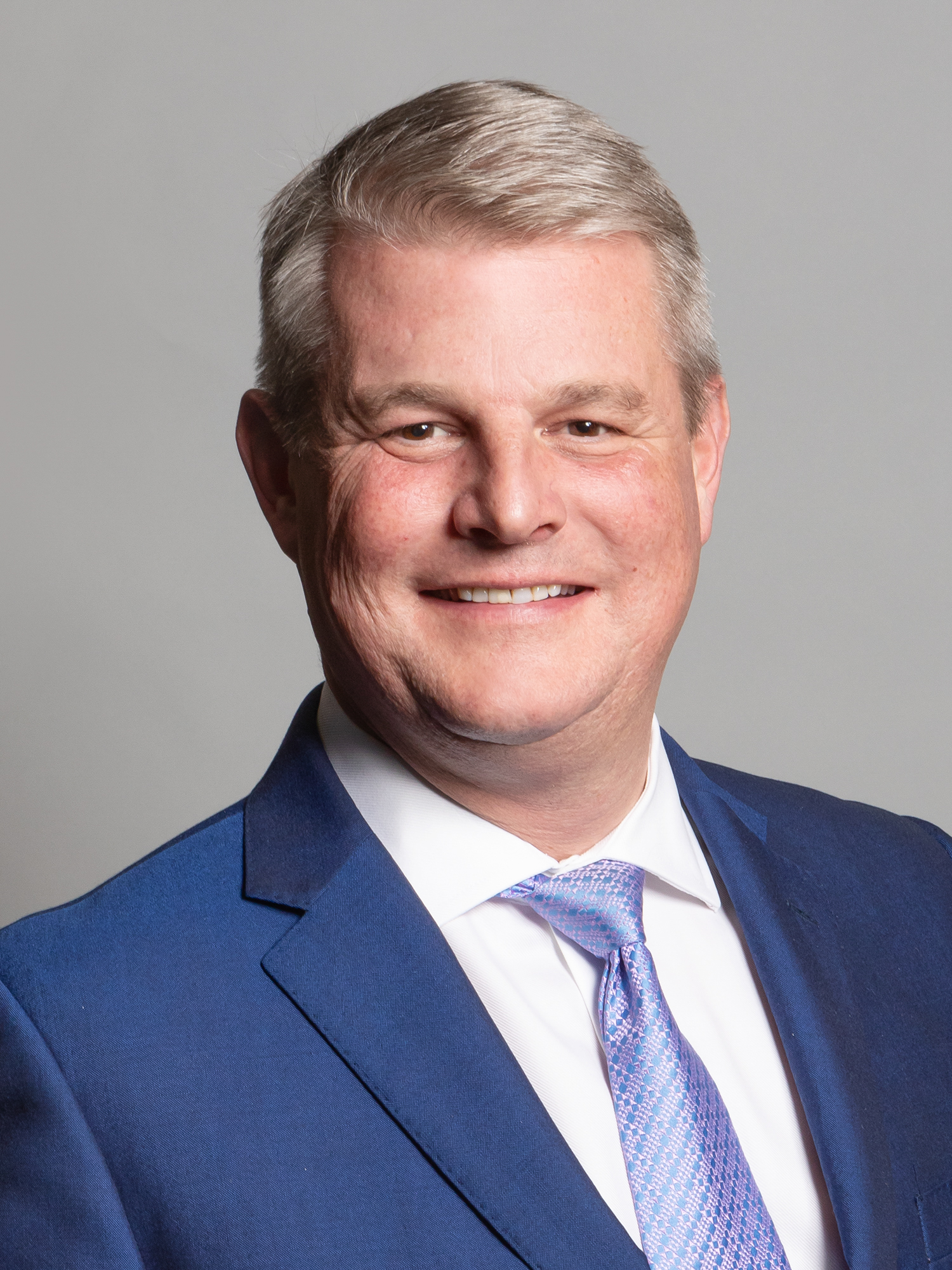
    The speech made by Stuart Andrew, the Sports Minister, at The Institution of Structural Engineers in London on 30 January 2023.

    Thank you for inviting me to speak to you today and giving me the opportunity to outline my priorities for women’s sport.

    It is great to see so many of you here which reflects the genuine interest and enthusiasm surrounding this important area.

    I am delighted to have taken on the role of Minister for Sport at such an exciting time and I look forward to making real progress on issues that I personally feel very passionately about, such as equality and diversity.

    The Lionesses win at the Women’s Euros last Summer firmly shone the spotlight on women’s sport.

    The success of England’s Red Roses reaching the final at the Women’s Rugby World Cup and the success of many female athletes at the Commonwealth Games, including Eilish McColgan’s outstanding performance in the 10,000m to name just one example, have also built on that momentum.

    I feel privileged to have witnessed first hand some amazing achievements in women’s sport since I have been in post, such as Great Britain reaching the semi finals of the Billie Jean King Cup for the first time in 41 years and most recently seeing Beth Mead, the Lionesses and Sarina Wiegman being honoured at the BBC Sports Personality of the Year Awards.

    There is no doubt that the media profile of women’s sport is continuing to rise too with events such as the US Open, the Women’s Euros, the Women’s Rugby World Cup and the Women’s World Cup being made available to a wider audience on free to air television.

    The Rugby League World Cup, which was hosted across England last year, put the Men’s, Women’s and Wheelchair tournaments on an equal platform – hosting all three tournaments at the same time and all players receiving equal participation fees.

    I want to build on this momentum ensuring that women’s sport continues to get the media attention it deserves and in turn inspire the next generation.

    Audiences for women’s sport are also growing, for example, a record 23.3m UK viewers tuned in to watch the Women’s Euros final on BBC platforms and in November the Women’s Rugby World Cup Final was watched in the UK by 1.7m at 6.30am.

    Figures published by Women’s Sport Trust in December showed that 43 million people watched three minutes or more of women’s sport in 2022, and a total of 325 million hours viewed.

    This is in stark contrast to 2012, when London hosted the Olympic and Paralympic Games, where there were 20.1 million people watching women’s sport and 19.1 million hours viewed.

    This is fantastic and shows that there is a real appetite for women’s sport, something we should continue to capitalise on.

    Landmark sponsorship deals, such as Barclays’ investment of over £30 million in the Women’s Super League, have injected money into the system and allowed certain sports to professionalise.

    Record breaking and innovative sponsorship deals are also being struck such as Amazon Prime Video re-investing a seven figure sum from sharing the broadcast of the US Open into boosting girls’ participation in tennis.

    This is all good news but we recognise that a number of challenges remain.

    In terms of participation, men are still more likely to be active compared with women and the latest Active Lives Children data released in December shows that boys are more likely to be active than girls.

    It is clear that more work needs to be done to continue to break down those barriers that prevent women and girls from being active such as fear of judgement, safety concerns and lack of time.

    We want to ensure that everybody in this country has the opportunity to play and enjoy sport and that includes ensuring more women and girls have the opportunity to get active in a way which suits them.

    We also want to continue to raise the profile of women’s sport and encourage more commercial investment into women’s sport.

    It’s fantastic to see elite women’s sport getting better coverage but there is more to do to drive up audience figures tuning in to watch women’s sport and to build the case for further investment in women’s sport.

    On the subject of governance, I am pleased that the strengthened Code for Sports Governance requires all National Governing Bodies (NGBs) in receipt of public funding to agree a diversity and inclusion action plan with Sport England and UK Sport.

    This is a welcome step forward but we need to keep pushing – to make sure women are fairly represented on the boards of our sporting organisations.

    We also want to make the most of opportunities that come our way.

    Building on the success of the Women’s Euros we will continue to invest in grassroots sport to bring on the next generation of Lionesses and work with the Department for Education to ensure girls have equal access to sports.

    We are also working with the Football Foundation and FA to name sites after the Lionesses – in towns and cities which shaped their careers.

    The Women’s World Cup in the summer will again shine a light on women’s football and we want to be ready to embrace the renewed interest that this will inevitably generate.

    The UK is also hosting the International Working Group on Women and Sport until 2026. This is a great opportunity not only to share the fantastic work we are doing but to learn from other countries too.

    In addition, we are refreshing our overarching sport strategy at DCMS and it’s clear that women’s sport needs to be a central part of this.

    We are also working with UK Sport to identify future events we could support including the 2025 Women’s Rugby World Cup and the 2026 Women’s T20 World Cup which I am pleased to say will both be held in England.

    And following the work by Tracey Crouch and her fan led review of football governance, we are carrying out an in-depth review of domestic women’s football led by Karen Carney to examine issues affecting the game at elite and grassroots level.

    We need to maintain an emphasis on improving participation, employment opportunities, commercial investment and visibility in the media. The Review of Women’s Football will support the continued growth and development of the women’s game, to ensure it has a strong and sustainable future.

    This is a defining period for women’s football, and this thorough review will be at the heart of that.

    I am also keen to engage further on transgender participation in sport and the Secretary of State and I will host a further meeting with sports shortly to understand what work national governing bodies are doing in this area.

    We want to ensure that everybody in this country has the opportunity to play and enjoy sport, but when it comes to competitive women’s sport, the Government believes that fairness has to be the primary consideration.

    So in conclusion, we want to continue to build on recent successes such as the Women’s Euros and the good work already being done.

    As I said at the beginning, this is an area that I care about passionately, and inclusion in sport is a priority for me. We also need to look ahead and be prepared to take advantage of opportunities and find ways to overcome challenges.

    I look forward to working with you to ensure that all aspects of women’s sport continue to flourish, and to hearing your ideas for how we can make Britain a great place for women’s sport.

    Thank you.

  • NEWS FROM 100 YEARS AGO : 30 January 1923

    NEWS FROM 100 YEARS AGO : 30 January 1923

    30 JANUARY 1923

    The French widened their policy of arresting all German officials in the Ruhr Valley who failed to help them in their occupation of the area. All officials who refused to help were not just subject to arrest, but also expulsion from the region.

    Numerous bombs went off in Dublin along with a number of residential properties which were firebombed. There were also attacks on the National Guards at City Hall and at the Central Telephone Exchange.

    Ramsay MacDonald, the Leader of the Labour Party, demanded that Parliament be recalled so that the crisis in the Ruhr Valley could be discussed and debated by Parliamentarians.

    A number of hunger marchers from Scotland raided hotels and restaurants in Brighton demanding food for which they said they wouldn’t be paying for. The authorities said that 11 people were arrested for the crimes.

    British authorities confirmed that Germany had ordered 300,000 tons of coal and that the orders would be fulfilled.