Blog

  • Stewart McDonald – 2023 Speech on the Budget

    Stewart McDonald – 2023 Speech on the Budget

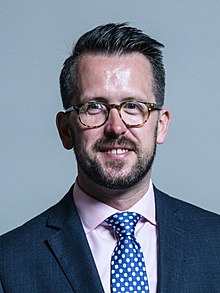
    The speech made by Stewart McDonald, the SNP MP for Glasgow South, in the House of Commons on 20 March 2023.

    Thank you, Madam Deputy Speaker. It is a sign that God is shining on the House to see you back in the Chair—healthy and feisty as ever, I am sure. You will recall that, when I joined the House in May 2015, Conservative Members would regularly cheer the Chancellor and various Front-Bench Ministers when they uttered the words “long-term economic plan”. That was the No. 1 talking point of the Cameron Government, but of course, as we have seen since that Government left office, the Conservative party had no such thing. Indeed, it is somewhat telling that, in last week’s Budget, the Chancellor stood at the Dispatch Box, content to let the applause wash over him because

    “the UK will not now enter a technical recession this year.”—[Official Report, 15 March 2023; Vol. 729, c. 833.]

    Such is the mess that the Conservative party has created that it is managing to celebrate a slightly lower level of decline for the economy.

    The Chancellor’s myopia is what worries me most, because he stood at the Dispatch Box like a sailor patching a leaky tap, not quite matching the moment in the way that one would expect from Britain’s Finance Minister. By stark contrast, the United States steams ahead with almost $400 billion of green subsidies to rewire its economy for the 21st century in the shape of the Inflation Reduction Act. The short-sightedness of this year’s Budget has instead condemned the United Kingdom to another year of falling living standards and slow economic decay. Closer to home, the European Union also announced bold and strategic plans in the shape of the Net Zero Industry Act, which will similarly mobilise billions and billions of euros to reshape the economy of the world’s largest single market so that it can produce at least 40% of the technology it needs in order to achieve its own climate and energy targets. While two of the world’s major economic powers set out plans to meet the moment, this Government instead celebrate—I quote again—that

    “the UK will not now enter a technical recession this year.”

    Rather than championing a bold economic plan to improve living and working conditions, the Chancellor—clearly unable to meet the moment—settled for tax breaks for research and development, urging us to cheer on his efforts to turn the UK into a life science superpower. While that aim is entirely laudable, and one that every single Member of the House could undoubtedly sign up to, the Chancellor needs to engage with the reality here in this country. As I mentioned earlier, the gulf between ambition and reality was summed up by the Manchester-based Nobel prize winner Andre Geim when he said that the reason that researchers are not staying in the UK or being attracted to the UK is the low living standards here. They can come here and suffer higher costs and lower salaries, or go elsewhere for better opportunities.

    That neatly sums up the running theme of this Conservative Government, who seem oblivious to the fact that firms and institutions are made up of human beings—human beings who need modern public services, a healthy public realm, and a Government who can offer them the prospect of a bright future. What the reality looks like has been mentioned in this debate: to quote Torsten Bell from the Resolution Foundation,

    “the worst parliament on record for living standards. By a country mile.”

    The numbers were laid bare in today’s Financial Times. The Office for Budget Responsibility is predicting that UK households’ real income per person will still be below pre-pandemic levels in 2027-28, meaning hardly any improvement in living standards for the better part of 20 years. Jumana Saleheen, the chief economist at Vanguard Europe, has said that, on three key measures of living standards—household income, gross domestic product per capita, and real wages—

    “we’ve seen stagnation over the last 15 years.”

    According to the Office for National Statistics, average UK real household income is broadly unchanged since 2007. Paul Johnson, the director of the Institute for Fiscal Studies, has said:

    “We are in the middle of a decade in which incomes are barely rising at all, with very feeble growth for two…decades.”

    UK wages adjusted for inflation increased by 23% in the eight years to 2008, but fell by 5% in the following eight years, again according to the ONS.

    Having the ambition to be a life science superpower is one thing. It is perfectly laudable, and all of us can agree and sign up to it. However, so long as we have living standards in this country that are grossly behind our western European counterparts—we have higher costs, higher prices, lower wages and a public realm that physically just does not work, if we are completely honest—the Government can completely forget being a superpower in anything other than a brain drain. If anything that Ministers have said from the Dispatch Box is to mean anything, they need to fix the living standards problem every household is dealing with.

  • Andrew Bridgen – 2023 Speech on the Budget

    Andrew Bridgen – 2023 Speech on the Budget

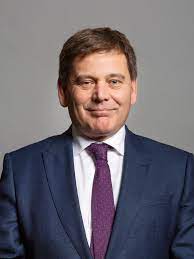
    The speech made by Andrew Bridgen, the Independent MP for North West Leicestershire, in the House of Commons on 20 March 2023.

    I remind the Chamber of my entry in the Register of Members’ Financial Interests. For 22 years before coming to this place, I was the managing director and chairman of a food processing company. I am also a qualified transport manager, and I remain the equal largest shareholder in that company.

    First, I want to highlight an aspect of the Budget that is of particular interest to my constituency of North West Leicestershire, which is fuel duty. The level of fuel duty is of immense importance to my constituents, given two facts: the first is that public transport is extremely limited—in fact, my constituency does not have access to any main line railway station, or any railway station at all. The second is that, since North West Leicestershire is the centre of the population of the UK, with good communication links with the M42 and the M1, a third of all jobs in North West Leicestershire are in distribution or are logistics-related. As such, the freeze on fuel duty that was first put in place in 2011 has been extremely significant to the huge economic growth we have seen in North West Leicestershire.

    To think tanks such as the Social Market Foundation that complain that the Treasury has forgone money to benefit the rich, I say, “Why do you think we should penalise my constituents who have to use a car to get to work?” The fuel duty freeze is the right thing to do to maintain economic growth, and my constituents will certainly support it—and not just my constituents. We already have 1.2 jobs for everyone of working age in North West Leicestershire, so a lot of people have to travel in from surrounding constituencies to work in my constituency. I am sure those people will be very grateful for the tax freeze as well.

    With regard to the lack of a railway station, I cannot help but give a push for the reopening of the Ivanhoe line, which Network Rail said would be the most beneficial reopening of a railway line that it currently has on the books. That line would link the great town of Burton upon Trent with Leicester, and would pass through North West Leicestershire and South Derbyshire, benefiting all of our constituents. It has cross-party support, including from the Members from Leicester.

    Turning to energy and science, I would like to mention an energy source that I have been promoting for some time, which is small modular nuclear reactors. Only in November last year, I said to the Secretary of State that renewables cannot be relied on to provide all our energy needs, due to their intermittent nature. It is clear that we need to add more reliable baseload capacity, and nuclear is the favourite for that. Hundreds of my constituents work at Rolls-Royce, and many of them work on the development of small modular reactors. Therefore, I very much welcome the announcement in the Budget of a competition through Great British Nuclear to build small modular reactors in the UK, and the inclusion of nuclear energy in the green zero carbon taxonomy. I am sure that my skilled worker constituents at Rolls-Royce in Derby will step up to the mark, and that we will see reliable baseload energy produced from that source sooner, rather than later.

    Next, I turn to investment zones, and I note that the Treasury has identified the proposed east midlands mayoral combined county authority to deliver that policy. I feel that I have to point out that the ongoing issue we have in Leicestershire, and indeed in Leicester, is the veto being exercised by the current Mayor of Leicester, which is preventing Leicester and Leicestershire from joining that authority and creating that critical mass in the east midlands. That has particular relevance to the topic of the debate, as Leicester is home to the National Space Centre and has many space and science-related companies around it. Indeed, my own constituency of North West Leicestershire is home to a space company in the form of Zeeko, which makes ultra-precision polishing solutions for the optics for satellite cameras. Quite honestly, it would be an outrage if our county and the city of Leicester were to miss out on an opportunity to be involved in this situation because of the intransigence of the city Mayor. I wish all those in the city seeking to abolish the mayoralty very well in the May elections.

    Energy security and scientific innovation are key to the future of the UK’s economy and stimulating economic growth. There are many measures in this Budget that will help us to maintain and improve our place in the world when it comes to science, and this Government have demonstrated their commitment to that goal. In the area of energy and security, this Government are being realistic, and it is clear that nuclear has a significant part to play in achieving that goal in the future. Picking up on some points that have been made by the Opposition, I would add that the relationship between business and our excellent research establishments—our universities—has certainly improved, but more progress needs to be made. If we could harness all the innovations in research that we have at our great universities, we would be really accelerating our economic growth. We must work towards that endlessly.

  • Chi Onwurah – 2023 Speech on the Budget

    Chi Onwurah – 2023 Speech on the Budget

    The speech made by Chi Onwurah, the Labour MP for Newcastle-upon-Tyne Central, in the House of Commons on 20 March 2023.

    This was a business-as-usual Budget, but after 13 years of economic failure, what my constituents desperately need is change. In the north-east of England, wages in real terms are on average 3% lower today than when Labour left office in 2010. I would like the House to think about that for a moment. Over 13 years of Conservative Government, my constituents have got poorer. Politicians are often asked if we know the price of a loaf of bread, so let me take that as an example. In May 2010, it was £1.16. In January this year, it was £1.39, a rise of 20%. How about a pint of milk? In May 2010, it cost 44p. In January this year, it was 69p, a rise of 57%. Prices have gone up, and wages have not kept pace.

    Last Friday, I visited Atkinson Road Primary Academy in my constituency and heard from the absolutely wonderful students there. Over their entire lives, they have seen their parents, their aunts, their uncles, their brothers and their sisters all getting poorer. There are Conservative Members of Parliament representing seats in the north-east, and I ask them this: did they set out to make people poorer, or did it just happen through incompetence and arrogance?

    It did not have to be this way. If the Conservatives had mirrored Labour’s rate of growth, workers in the north-east would be £11,000 a year richer. What a difference that would make. We would not have half the children of Newcastle growing up in poverty and we would not have 100,000 people in the north-east forced to use food banks. Tory MPs and Government Ministers are offering the public budgeting advice when they have constructed an economy where the majority of people do not benefit from the wealth that innovation creates.

    In addition to lower wages, £300 million-worth of cuts to Newcastle City Council mean our city has poorer public services. On Newcastle’s streets, lone women are left stranded at 11 pm because we have lost 15% of our region’s bus services in a single year. Of those buses we have left, just a fifth turn up on time. Businesses cannot open, because their workforce are delayed on different bus services. Across the board, and across our country, people are paying more for shoddy services. Regulated train fares have seen the highest increase since 2013 and, with the scrapping of HS2’s eastern leg, northern communities are paying the price for broken Tory promises. More than 7 million people are waiting for NHS treatment, often in pain and discomfort. Do not even think about trying to get an NHS dental appointment. In December, the north-east saw the longest wait times for accident and emergency, at four hours. The longer the Conservatives are in power, the longer people wait.

    In a statement last week, the Chancellor tried to claim that inflation was the root cause of strikes. Perhaps he forgot that it was his party, and this Government, who crashed the economy and left working people to pay for their mess. This Budget was a chance for the Government to unlock Britain’s promise and potential—a chance to reverse 13 years of low growth, low productivity and low wages, and a chance to spread and deliver opportunities to people in Newcastle Central. What did we get? Just a handout for the richest 1% and their pension pots.

    The Chancellor likes to talk about making the UK a science superpower, yet he failed to mention Horizon Europe in the Budget. At €90 billion, it is the world’s largest science funding programme, but his Government have left our scientists out of it. At the same time, research and development tax credit policy is changing almost as fast as Chancellors, but with even less preparation. The Chancellor gave back only a fraction of the £4.5 billion he took from innovative small and medium enterprises in the autumn statement. The Federation of Small Businesses has, in its own words, been “left feeling mystified” by the changes.

    The great businesses of Newcastle Central deserve a Government they can partner with to deliver jobs, growth and innovation. Fantastic life sciences start-ups and scale-ups, such as AMLo Biosciences, LightOx and NunaBio, and long-established innovative manufacturers, such as Spincraft, all deserve better. Labour will secure the highest sustained growth in the G7 through our long-term industrial strategy. A Labour Government will unleash the potential of the north-east. This Government just starve it.

  • Kate Kniveton – 2023 Speech on the Budget

    Kate Kniveton – 2023 Speech on the Budget

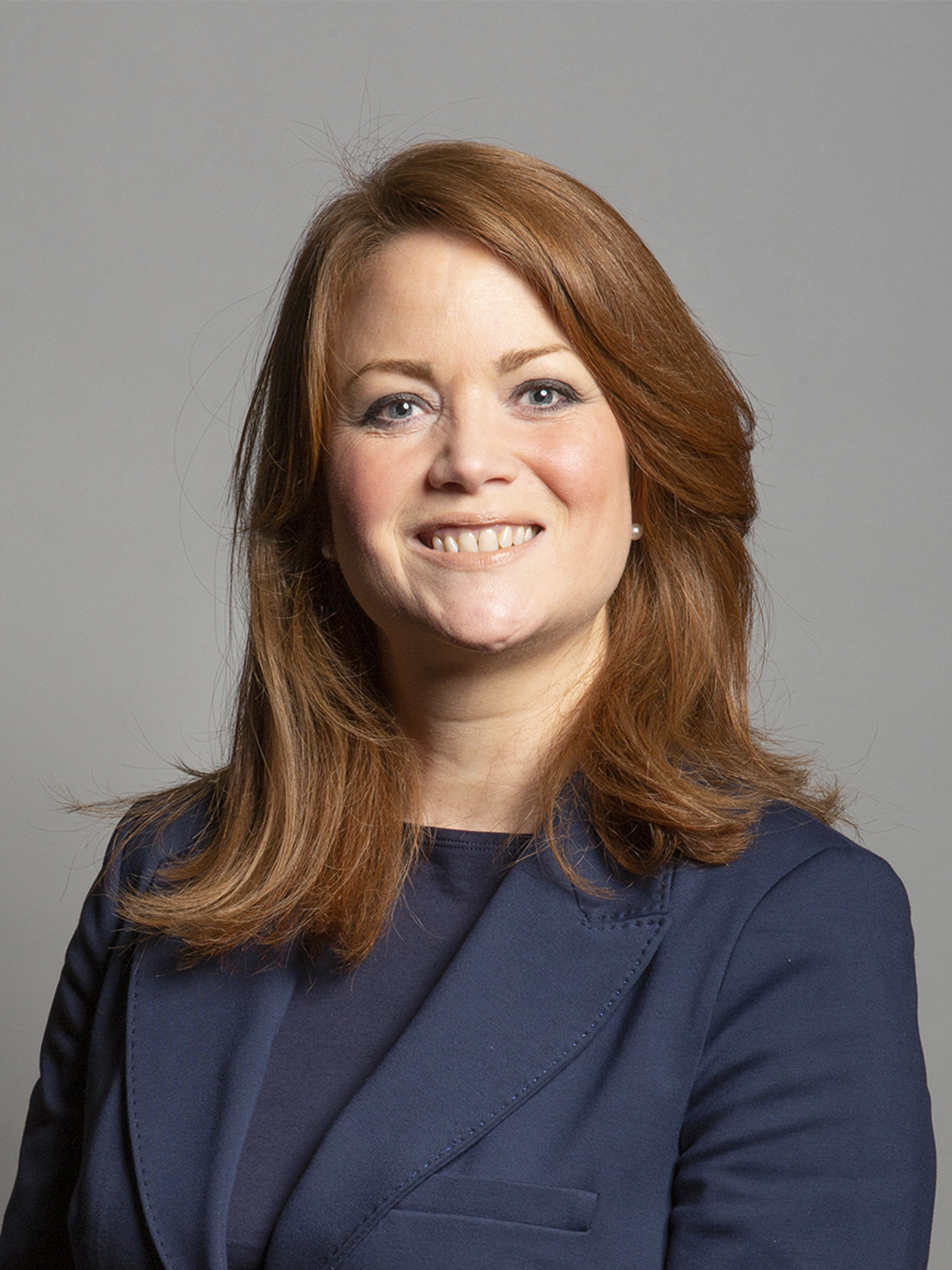
    The speech made by Kate Kniveton, the Conservative MP for Burton, in the House of Commons on 20 March 2023.

    I rise in support of the Chancellor’s spring Budget and today’s debate, focused on technology and science. On this topic, I am delighted to represent a constituency that offers huge potential to help us harness British ingenuity and make us a science and technology superpower. This Budget takes important steps towards achieving that goal, and my constituency of Burton and Uttoxeter in the heart of the north midlands manufacturing corridor is key to unlocking the vital growth that this country needs. I refer Members to my entry in the Register of Members’ Financial Interests.

    In Staffordshire, we have world-class businesses along the corridor driving the hydrogen technology revolution, including JCB in my constituency. We also have Toyota, Alstom and Rolls-Royce nearby. These technologies will play a vital role in contributing to our net-zero goals and advancing our manufacturing industries. The recent announcement that JCB has become the first construction equipment company to develop a fully working hydrogen internal combustion engine is a fantastic development that has the potential to transform the way we power heavy machinery, but these companies, and others along the corridor, want to do more. There is so much potential ready to be unlocked, but the infrastructure to support these industries is not matching the pace of their technological breakthroughs.

    The Chancellor and Government colleagues have heard me banging on about my role as project champion for the north midlands manufacturing corridor and the importance of upgrading the A50/A500, and I make no apology for that. Delays along the A50/A500 corridor are costing the economy £8 million each year. Without improvements, increasing congestion could threaten growth and hold back investment. The Government, as they strive for growth in these sectors, need to upgrade this vital corridor as a priority. These improvements could create more than 12,000 jobs, generate £12 million for the economy and further solidify the UK as a global leader in the development of hydrogen technology.

    I urge the Chancellor to look at the work of Staffordshire County Council, Midlands Connect and the Midlands Engine in supporting the creation of a hydrogen technologies valley investment zone in Staffordshire around this vital corridor. Major investment will enable the area to be a centre for innovation, design, manufacturing and the export of hydrogen products. This investment in Staffordshire—in Burton, Uttoxeter and surrounding areas—will mean economic growth, job creation and improved transport links, allowing these businesses to keep showing why they are world-class and helping establish us as a science and technology superpower. I fully support the Chancellor’s Budget. It is only by embracing innovation and investing in our future that we can build a stronger, more prosperous Britain for generations to come.

  • NEWS FROM 100 YEARS AGO : 22 March 1923

    NEWS FROM 100 YEARS AGO : 22 March 1923

    22 MARCH 1923

    A debate took place in the House of Lords on the country’s preparedness in the matter of air defence.

    The Royal Commission on London Government rejected the scheme for one central administration of local governance in the capital, but recommended an equalisation of rates over urban areas within ten miles of Charing Cross.

    The Minister of Labour set up a committee to look into the present conditions as to the supply of domestic female servants.

  • PRESS RELEASE : Armed Forces Families Fund grants improving lives for Service Families [March 2023]

    PRESS RELEASE : Armed Forces Families Fund grants improving lives for Service Families [March 2023]

    The press release issued by the Ministry of Defence on 22 March 2023.

    Further funding programmes will open from April 2023.

    Funding includes:

    • £2 million awarded to 54 projects specifically for Service pupils across the UK to deliver real change for Armed Forces communities.
    • £900K for 18 projects enhancing early years learning for Service children aged 0-5.
    • £500K for 12 projects that will make a difference for the partners of our serving personnel, addressing their particular needs and challenges.

    In January 2022, the MOD published the Armed Forces Families Strategy 2022-2032, a 10-year strategy for improving support to Armed Forces families.

    Following the launch of the strategy, the MOD created the Armed Forces Families Fund, a dedicated fund to deliver against the eight themes of the strategy: Family Life, Service Life, Family Home, Education, Health and Wellbeing, Childcare, Support to Partners and Spouses, and Non-UK families.

    Addressing the challenges Service children face

    54 projects from across the UK were awarded a total of over £2 million to help address the challenges that Service children can face in conjunction with meeting the objectives set out in the Armed Forces Families Strategy.

    This impactful programme will deliver real change to Armed Forces communities by improving the educational pathway of Service children.

    Stanchester Academy’s project, ‘Safe Space and Support’, will provide a bespoke, supervised safe space for Service children. It will also be used as a meeting place, homework room and dining area, as well as a location for an additional Emotional Literacy Support Assistant (ELSA) to provide one-to-one tutoring.

    The project was designed following consultation with parents and pupils who ranked a safe space and Emotional Literacy Support, alongside one- to-one tutoring, as being the most impactful where Service families are concerned.

    Case study: Stanchester Academy (ODT248 KB)

    Transforming Service children’s futures

    Headteacher Gregg Mockridge said:

    We would like to thank The Armed Forces Covenant Fund Trust and the Armed Forces Families Fund and mention how grateful we are to receive this grant. These grants are allocated for very specific projects, and we are delighted to have the opportunity to transform the futures of our Service children.

    Teacher Rebecca Hendry was delighted to be awarded the funds, saying:

    We have a high number of pupils that transfer to our secondary school in later years or mid-way through the year. Many of our students experience having a parent deployed or based elsewhere and away during the week. By funding a specialist ELSA staff member and offering them extra tuition combined with a safe space, we can ensure that they have all the support needed to help them.

    As part of this project, a member of staff will also be trained as a ‘Bounce Forward Armed Forces Resilience Champion’, who will lead ‘Building resilience within military families’ sessions and other community events to help improve the lives of Service children and their families.

    Supporting Service children’s wellbeing

    Peter Davis, Head of the Armed Forces Families Team, said:

    We are really pleased with the breadth of work funded in this round of the Education Support Fund. Service pupils’ needs and the challenges they face have been properly considered in each of the 54 projects that will take place across the UK. From tackling the negative effects of separation, to allowing Service children the best chance of building resilience and developing their academic skills against a backdrop of mobility; these projects will make a positive difference to the wellbeing of Service children in many valuable ways and will contribute significantly to the implementation of the MOD’s Armed Forces Families Strategy.

    Further funding available from April 2023

    The Armed Forces Families Fund will reopen for applications from April 2023.

    The Service Pupil Support Programme will open in early April.

    This programme will award grants to projects that meet one of the three key aims:

    • Addressing the needs of SEND pupils through early identification and intervention using a collaborative and coordinated approach.
    • Closing the gap in attainment between Service and non-Service pupils, using data-led evidence.
    • Identifying and addressing the needs of small cohorts of Service pupils within educational settings.

    Further rounds of the Early Years Programme and Supporting Partners programme will open in Summer 2023; along with a specialist programme that will award a small number of strategic grants linked to themes within the wider Armed Forces Families strategy.

    Find out more

    For a full list of all projects funded under the Armed Forces Families Fund, access the Trust’s website, www.covenantfund.org.uk

  • PRESS RELEASE : Mayor of London statement following Baroness Louise Casey Review [March 2023]

    PRESS RELEASE : Mayor of London statement following Baroness Louise Casey Review [March 2023]

    The press release issued by the Mayor of London on 21 March 2023.

    The Mayor of London, Sadiq Khan, said: “Following a series of scandals, I asked for this independent review to be conducted by Baroness Louise Casey because I was deeply concerned about the cultural issues and systemic failings within the Met.

    “The evidence is damning. Baroness Casey has found institutional racism, misogyny and homophobia, which I accept. She has described the Met as defensive, resistant to change and unwilling to engage with communities.

    “As Mayor, I’ve already acted to put the Met on a path of far-reaching systematic and cultural reform, with the appointment of a new Commissioner and leadership team who acknowledge the scale of the problems and are committed to change. But clearly much more needs to be done, and fast.

    “I have been determined as Mayor to shine a light on the true extent of the cultural problems in the Met as this is the only way to properly address the deep-rooted issues and regain the trust of Londoners. This review simply must be a turning point and I expect all the recommendations to be implemented quickly and in full.

    “I want to assure Londoners that I’ll be unflinching in my resolve to support and hold the new Commissioner to account as he works to overhaul the force. The Met has many committed, professional police officers and staff who want to be part of this change. I see police reform as a critical part of my mayoralty and I will not be satisfied until Londoners have the police service they deserve – one that is trusted, representative and delivers the highest possible service to every community in our city as we work to build a safer London for everyone.”

  • PRESS RELEASE : Mayor brings back beavers in Ealing, bees in Bexley and bats in Barnes as he sets out plans to rewild London [March 2023]

    PRESS RELEASE : Mayor brings back beavers in Ealing, bees in Bexley and bats in Barnes as he sets out plans to rewild London [March 2023]

    The press release issued by the Mayor of London on 20 March 2023.

    • 22 London projects, covering an area five times the size of St James’s Park, receive funding from the Rewild London Fund to return nature to the city
    • Mayor’s London Rewilding Taskforce identifies 11 potential 100 hectare ‘rewilding opportunity zones’ to be explored as London’s first dedicated rewilding area on top of ‘on top of the £1.45m invested so far through the Rewild London Fund’
    • Mayor commits another £1m this year to deliver more rewilding in London

    On World Rewilding Day (Monday 20th March), The Mayor of London, Sadiq Khan has reiterated his support for restoring London’s natural biodiversity by committing a further £1m to rewilding the capital.

    The new funding comes as the Mayor announces the 22 recipients of his Rewild London Fund. The £850,000 fund, delivered by the London Wildlife Trust with commitment from Amazon’s Right Now Climate Fund, will go to projects focusing in and around London’s Sites of Importance for Nature Conservation (SINCs). These include:

    • Bringing Beavers Back to Ealing: Citizen Zoo, alongside Ealing Wildlife Group, Ealing Council and Friends of Horsenden Hill is reintroducing beavers back to West London after a 400 year absence. The chosen site in Ealing will be transformed into a flourishing and immersive wetland, combatting the climate crisis and creating a biodiverse ecosystem for plant and animal diversity. Rewild Funding will help drive the project forward.
    • Thamesmead Pollinator Corridor: a partnership project between North West Kent Countryside Partnership (NWKCP), The Ridgeway Users Group, University Of East London, Bow Arts and Bumblebee Conservation Trust (BBCT) working with communities to create a pollinator corridor through Thamesmead. The project aims to boost numbers of the rare Shrill Carder Bee and other pollinator species by increasing the amount  of forage plants and nesting sites needed by these species.
    • Palewell Beverley Brook Restoration: Barnes Conservation, part of Barnes Common Limited, is improving 1.25km of the Beverley Brook to encourage natural processes along the waterway and improve habitat for insects, fish, bats and birds as well as increasing connectivity between Richmond Park National Nature Reserve and Barnes Common Local Nature Reserve.
    • Yeading Brook Unbound: as part of the Crane Valley Partnership and in collaboration with local groups and volunteers, Harrow Council’s ambitious, large-scale Yeading Brook Unbound project will make lasting changes – both major and minor – to the brook, its margins and adjoining areas within SINCS, parks and neighbouring allotments along the watercourse.
    • Beckton Park Meadows: This project is kick-starting delivery of opportunities to create more space for nature in Beckton Park that were identified through  feasibility and community design work funded by the Mayor’s Green and Resilient Spaces Fund. 3,000 square metres of wildflower meadow will be created. The improvements are part of a wider masterplan for Beckton Parks that will increase biodiversity and help to tackle climate change.

    All together, these 22 projects will enable around 116 hectares of priority habitat to be restored or created, the equivalent to five St James’s Parks.

    Today’s further £1m funding will build on this success by establishing a new competition for rewilding projects that restore habitats and support species reintroduction, as well as supporting the creation of a pilot large-scale rewilding scheme. This will be a site of at least 100 hectares (the equivalent of 140 football pitches) designated for the reintroduction and restoration of nature and wildlife.

    Areas that could be suitable for the pilot rewilding scheme have been identified by Mayor’s London Rewilding Taskforce in their recommendations report, launched today. They include the Colne Valley and Ruislip Woods in the west, Enfield Chase in the north, the Thames Marshes in Bexley and Havering in the east and the Croydon and Bromley Downs in the south of the capital.

    The recommendations of the Taskforce emphasise the role that rewilding can play to help reframe the relationship between people and the urban nature around them. The Taskforce emphasises that allowing nature to recover will bring positive outcomes to Londoners, ranging from health and well-being benefits, providing nature-based solutions to challenges like air pollution and flooding, and addressing the climate and ecological emergencies.

    The Mayor of London, Sadiq Khan said: “We are now facing dual climate and ecological emergencies worldwide, which further threaten our ability to survive on our planet. Despite the harm inflicted on the natural world, we have the power to make amends, and I am committed to ensuring that London is at the vanguard of efforts to reverse the trends of declining biodiversity and the destruction of nature.

    “Rewilding allows nature to take the lead and is an exciting way to create healthier ecosystems and allow humans and wildlife to live together more harmoniously. I’m proud that London is leading the way once again and excited to see what can be achieved with this further £1m of funding. We’re cleaning up our city, re-establishing lost species and reconnecting people and nature as we build a greener, fairer city for all Londoners.”

    Mathew Frith, Director of Research and Policy at London Wildlife Trust, Rewild London Fund partner and Rewilding Taskforce membersaid:  

    “This funding enables an exciting tranche of biodiversity projects to further progress nature’s recovery in the capital. They will help strengthen, enhance and extend the important network of over 1600 Wildlife Sites* that forms the foundations of nature conservation in London, and thereby contribute to a wilder, greener city.

    “London Wildlife Trust is pleased to have partnered with the Mayor of London and Amazon to both set the ambitions of the Fund and select the successful projects. We look forward to overseeing the delivery of these which should raise the bar for the critical restoration of priority wildlife habitats and the recovery of populations of species, from harvest mouse to tawny owl, and bumblebees to beetles, to make London a better place for nature, which people can experience close to hand.”

    Nick Swallow,  Citizen Zoo Fundraising Operations Officer said: “Across Europe and North America, beavers are known to thrive alongside urban communities. Bringing a range of benefits from increasing resilience to the challenges of climate breakdown to enriching people’s daily lives, as they encounter these magnificent mammals in their local greenspaces. With the GLA’s support and alongside our partners Ealing Wildlife Group, Ealing Council and Friends of Horsenden Hill, we hope to challenge the perceptions of Londoners and demonstrate how London too, can embrace these ecosystem engineers as we strive for a healthier, wilder future in which our Capital can become a leader in urban rewilding, which will greatly benefit not only wildlife populations but local communities too”

    Nicky Gavron, co vice-chair of the London Rewilding Taskforce said: “This is such an exciting initiative. It has been a pleasure and a privilege to work with such an accomplished Taskforce and GLA team on this report. From the Green belt to our iconic parks, riverbanks, gardens, balconies and window boxes, there’s an opportunity to let nature lead and wildlife – from bumblebees to beavers, thrive in our city. Ensuring wild nature is at the centre of how we design, live, play, and work within cities is fundamental to improving our spaces, health, and quality of life for all London’s communities.”

    Ben Goldsmith – co vice-chair of the Taskforce said: “There is no good reason why all people should not have ready access to nature, whether or not they live in our largest cities. Each one of us needs nature for our physical, mental and spiritual wellbeing. The Mayor has shown great leadership in launching our London Rewilding Taskforce, which seeks to weave nature back through the fabric of our city. I can’t wait to witness the recovery of an array of plants and wildlife across London!”

    Zak Watts, Director, EU Sustainability, Amazon:  “These projects will provide a much-needed boost to biodiversity in the city, while new woodlands, wetlands, ponds and meadows aim to increase resilience to the effects of climate change. For Londoners, these projects offer a vital way to discover and reconnect with nature.”

    “This is all part of a wider commitment through Amazon’s Right Now Climate Fund, as we invest in ways to accelerate nature’s recovery in communities where we live and work. We’re excited to see the positive results they bring.”

  • PRESS RELEASE : Mayor announces further £2m funding for vital rough sleeping services in London [March 2023]

    PRESS RELEASE : Mayor announces further £2m funding for vital rough sleeping services in London [March 2023]

    The press release issued by the Mayor of London on 17 March 2023.

    • Mayor awards an additional £2 million to end rough sleeping for up to 500 people in London
    • Extra support to help people sleeping on London’s transport network
    • Latest CHAIN figures reveal that the number of people sleeping rough in the capital has increased by 21 per cent in the same period last year
    • Announcement comes as Mayor visits pan-London Youth Hub in Islington

    The Mayor of London, Sadiq Khan, has committed to helping a further 500 people off the streets by pledging an extra £2m to support charities and support services for rough sleeping Londoners.

    Sadiq has made tackling rough sleeping a personal priority for his Mayoralty and since 2016, more than 13,500 people have been helped off the streets by City Hall commissioned services.

    However, the latest figures from the Combined Homelessness and Information Network (CHAIN) show that rough sleeping in London has increased by a staggering 21 per cent year on year [1]. Charities and campaigners have attributed much of this rise to the current cost of living crisis, London’s housing crisis and a lack of Government support. Therefore, the Mayor is once again stepping up to increase the level of support available to those sleeping rough.

    Charity partners, including St Mungo’s and Thames Reach will receive funding to deliver a range of support including:

    • Ending rough sleeping for up to 500 people through the provision of urgent accommodation and dedicated support to find long-term routes out of homelessness.
    • Expanding the Mayor’s efforts to support those sleeping rough on London’s transport network, with increased outreach on London’s night buses and the night tube.
    • Extra funding for the StreetLink and Clearing House services to support their vital work identifying people sleeping rough and bringing them in to support services.

    The announcement comes as the Mayor visits the pan-London Youth Homelessness Accommodation Hub in Islington, after securing up to three years of further funding for the service from the Department for Levelling Up, Homes and Communities (DLUHC).

    The Hub accommodates up to 26 young people aged 18-24 in short-stay accommodation, during which time they will receive personalised, holistic support from charity partners Depaul and New Horizon Youth Centre to prepare them for independent living and to re-establish their lives away from homelessness.

    The Mayor is doing all that he can to protect Londoners from the threat of homelessness, including spending more than £80m this year to help those struggling with the cost of living and using money raised through his 2022 Winter rough sleeping campaign to fund London youth rough sleeping services.

    However, without urgent action from Government to address the root causes of homelessness, the huge progress City Hall has so far made helping people off the streets could be reversed.

    The Mayor continues to call on Ministers to get a grip on the spiralling cost of living, restore the social security safety net which stops people becoming trapped in a cycle of homelessness, end no fault evictions for private renters and invest in new council and genuinely affordable homes to help prevent more Londoners from becoming homeless in the first place.

    The Mayor of London, Sadiq Khan, said: “Whilst I’m extremely proud of the huge progress City Hall has made so far helping people sleeping rough off our streets, there is still a long way to go to end homelessness in the capital for good.

    “This is a cause I strongly believe in, which is why I’m awarding a further £2m to continue the important and transformative work that St Mungo’s and Thames Reach provide on a daily basis.

    “It’s imperative the Government does more to end the root causes of homelessness and I will continue to call for greater accountability from our leaders on this issue as I work to build a better, safer, more prosperous London for everyone.”

    Emma Haddad, Chief Executive of St Mungo’s, says: “This funding will help us to continue our vital work, ensuring that people sleeping rough spend as little time as possible on the streets. We will be able to continue providing emergency accommodation as well as support, so that people in London don’t return to the streets. This funding from the London Mayor means that we can help more people on that journey into a place they can call home.”

    Bill Tidnam, Chief Executive of Thames Reach, said: “This increase in funding for homelessness services is welcomed, as it will enable our services to continue our work to support people away from rough sleeping in London. At a time of significant financial pressure, the need for our services is greater than ever and this funding will enable us to ensure that people are located and supported into realistic and suitable routes out of street homelessness.”

    Dan Dumoulin, Director of Rough Sleeping at Depaul UK, said: “I am delighted to hear that this additional funding will be directed to services supporting rough sleepers in the capital. We have seen a 12% increase in people using our specialist service for young rough sleepers in London over the past two years. This funding will help us move a step closer to ending youth homelessness.”

    Phil Kerry, Chief Executive of New Horizon Youth Centre, said: “As we see by the huge number of young people coming through our doors every day, the cost-of-living crisis continues to push more Londoners into homelessness and onto the streets. We are pleased to see this additional funding from the Mayor and we’re joining his calls to general government to invest in proven solutions. The Youth Hub is a great example that can be rolled out further to make sure no young person faces a night on the streets.”

  • PRESS RELEASE : Deputy Mayor leads London trade mission to India [March 2023]

    PRESS RELEASE : Deputy Mayor leads London trade mission to India [March 2023]

    The press release issued by the Mayor of London on 10 March 2023.

    • Deputy Mayor for Business Rajesh Agrawal joined by 10 London businesses on four day mission
    • London attracts more investment projects from India over last decade than any other European or American city

    London’s Deputy Mayor for Business, Rajesh Agrawal will visit New Delhi and Bengaluru next week (March 13th – 16th) as he leads a trade mission to promote stronger trade and investment links with India.

    Rajesh will be joined by 10 London tech companies including Electric Miles, Guider, OneID and Softools (full list below). The trade mission will provide opportunities for these companies to create business partnerships and explore investment and growth opportunities in India. Delegates will meet with representatives from Indian tech companies including Wipro and HCLTech, as well as Indian industrial giant Tata. The Deputy Mayor will also meet Indian venture capitalists and investors with an interest in expanding to London. This is the first in-person trade mission run by the Mayor’s International Business Programme to India since 2019.

    Indian companies continue to choose London as a top destination to expand their operations outside of India, with new data showing that London is the number one European city for Indian foreign direct investment. According to figures published by London’s business growth agency, London & Partners1, the UK capital also ranked as the number two city globally for Indian companies looking to grow their footprint internationally.

    The research revealed that in the past 10 years London has attracted 174 investment projects from India – significantly more than any other European city and the likes of Singapore (150) and New York (53). 2

    Over the past 10 years, investment from Indian companies has provided a major boost to London’s economy, with the data showing that Indian foreign direct investment has led to the creation of 7,853 additional jobs in the UK capital.

    A number of well-known Indian companies have expanded their operation in London in recent years, including Indian IT giants Wipro and Infosys, as well as Indian unicorns upGrad, Ola and Oyo. Between 2012-2022, Mumbai and Bengaluru were the top cities for business investment from India into London.

    Rajesh Agrawal, London’s Deputy Mayor for Business said: “London and India have longstanding cultural and economic links and these latest figures offer further proof that business ties between our two regions continue to grow from strength-to-strength.

    “Indian cities rightly look to London as the perfect launchpad to grow their business internationally. London and cities such as Mumbai and Bengaluru share mutual strengths in sectors such as finance, life sciences and technology – creating huge opportunities for business partnerships.

    “As one of the world’s fastest growing economies, India is also a major market for ambitious London companies. I am delighted to be joined on my visit to India by some of London’s fastest growing businesses.

    “Our trade mission will continue our work in helping London companies to maximise business and investment opportunities in India.”

    Laura Citron, CEO of London & Partners added: “India is an important trade and investment market for London. It’s no surprise to see that London is one of the top global cities for Indian companies looking to expand outside of their home market.

    “We continue to receive lots of enquiries from Indian companies looking to setup and expand in London. As India’s digital economy continues to grow, there is particularly strong interest in London from high growth Indian companies in sectors such as fintech, ecommerce and climate tech.

    “This trade mission will further strengthen economic ties between London, New Delhi and Bengaluru. We look forward to continuing our support to help companies do business across both regions.”

    Vipul Lakhani, Director of Softools, a London company joining the trade mission added: “I am excited that Softools has been chosen to be one of the participants of the Mayor’s International Business Programme trade mission to India.

    “We see India as a thriving and exciting market with rich talent, amazing innovation and enormous potential. With the help and support of London & Partners we look forward to forging partnerships to help Indian companies benefit from the speed and simplicity of our zero code application platform.”