Blog

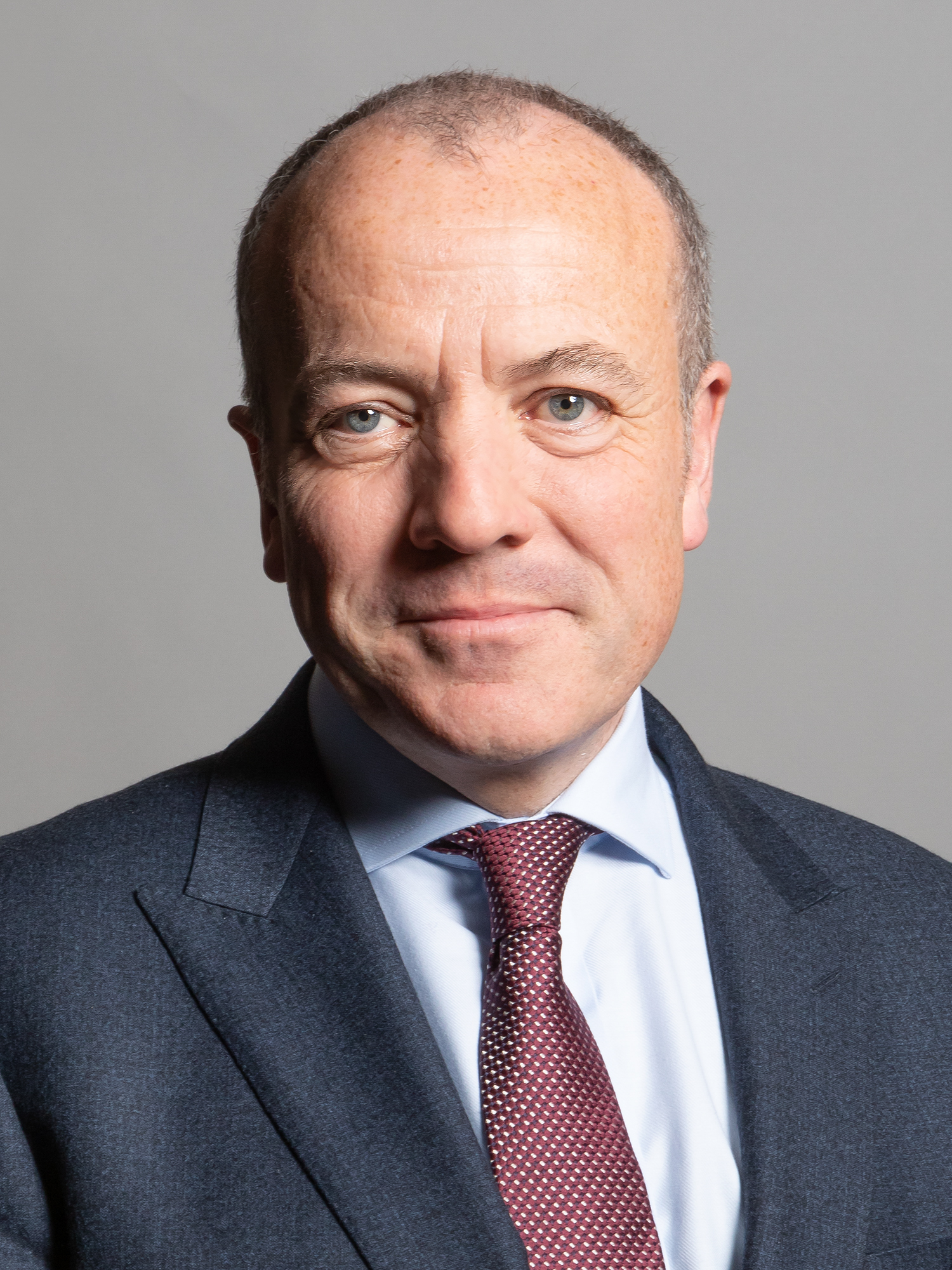
  • Mike Kane – 2023 Speech on the Budget

    Mike Kane – 2023 Speech on the Budget

    The speech made by Mike Kane, the Labour MP for Wythenshawe and Sale East, in the House of Commons on 20 March 2023.

    It is a pleasure to follow the hon. Member for Hazel Grove (Mr Wragg). I look forward to catching up once again at our annual meet-up at the carnival in July, and I wish him all the best with his therapy.

    The Secretary of State mentioned the great British invention of tarmac. John Loudon McAdam was a Scottish engineer in the 17th and 18th centuries who added coal tar to stone surfaces. That became tarmac, or “tarmacadam”—that is where the name comes from. I thought it was an odd reference for the Secretary of State to make, though, as we cannot get enough money for our crumbling roads and the potholes that we all face.

    Every day, I hear residents and businesses in Wythenshawe and Sale East talk about the harsh realities of the cost of living at the moment: old-age pensioners are afraid to put on their heating; more and more working families are using food banks; nurses, teachers and firefighters are struggling with household bills as costs go up and their pay stays the same; people are unable to meet private rents or manage rising mortgage rates; and local businesses are closing down because of overheads.

    Last Wednesday, the Chancellor had a chance to show that he is on the side of Britain’s people and businesses with a Budget that offered real support and serious solutions, but that is not the Budget we got. Instead, what the Chancellor offered was a Budget that did worse than deny people’s realities: it insulted them, with a £1 billion pension cut for the richest 1%; a stealth tax freezing income tax levels, meaning workers will see their pay squeezed further; and an overarching message that the Government’s plan was working and the economy was not that bad, at the same time as the OECD announced that the UK will be the only—the only—G7 economy to shrink this year.

    Where the Chancellor came closest to offering real support, he did so by stealing ideas from others, yet bungled the detail. The hon. Member for Bassetlaw (Brendan Clarke-Smith) mentioned the expansion of free childcare. Sadly, we will not see that crucial support to help parents get back into work introduced in full until September 2025. As it stands, the subsidy from childcare providers is so high that it threatens to put them out of business.

    I welcome the extension of the help with energy bills. The Government again capitulated to what Labour and campaign groups have been calling for, for months. But with an extension of just three months and more limited support, what we are seeing is more sticking-plaster politics. Where is the investment in green energy, which is the only way we will achieve true energy security? Then there was more of the same, with recycled ideas and empty promises from the many Tory Chancellors and Prime Ministers of the past. To level up, the Chancellor announced plans for the Truss-Kwarteng “investment zones”. Forget HS2, Northern Powerhouse Rail or solid regeneration projects for Wythenshawe town centre and Sale town centre, all of which have been delayed or denied by the Government. Instead, they think these low-tax, reduced regulation, potential Canary Wharfs will generate jobs and skills in left-behind communities. These are far from the serious solutions that Britain needs. What the Chancellor put forward is a Budget that denies reality, delivers little and borrows heavily; a Budget from a Government who are out of touch, out of ideas and quickly running out of time.

    Under this Government, people are getting poorer. People are being supported into work, but getting paid less and taxed more, while public services struggle to cope—all the hallmarks of an economy in managed decline. Our people and businesses deserve more. We need a Budget that delivers for people, communities and businesses like those in Wythenshawe and Sale East: 1,600 homes for Wythenshawe town centre, if we had got our levelling up bid; 250 homes for Sale town centre; investment to regenerate Wythenshawe hospital, but with the hospital building programme stuck in the muck we could build 1,000 homes on that site with the right release of investment; an HS2 station near my constituency and an extended Metrolink loop line; a station on the mid-Cheshire line; scrapping business rates; and a proper plan to address skills gaps that are holding back our small and large businesses.

    What we need is a Budget that acknowledges reality and the scale of the challenge head-on, but meets them with the hope, ambition and determination needed to get Britain back on the path to growth. But for that style of Budget, it seems we will have to wait longer still.

  • PRESS RELEASE : UK net zero start-ups keen to tap into Malaysia’s tech ecosystem [March 2023]

    PRESS RELEASE : UK net zero start-ups keen to tap into Malaysia’s tech ecosystem [March 2023]

    The press release issued by the Foreign Office on 22 March 2023.

    10 UK net zero start-ups pitched their technologies for up to $1 million investment and entry into an accelerator programme for green start-ups.

    The UK-Malaysia Digital Innovation Programme Demo Day kicked off in Sunway City, Kuala Lumpur today where 10 UK net zero start-ups pitched their technologies in-person for up to US$1 million investment and entry into the Sunway iLabs’ Net Zero Lab, an accelerator programme for green start-ups. The initiative also saw UK tech companies connecting and exploring opportunities with the wider tech ecosystem including Malaysia government bodies and venture capital funds.

    The event was attended by Minister of Economy YB Rafizi Ramli, His Majesty’s Trade Commissioner for Asia Pacific Natalie Black, Deputy British High Commissioner David Wallace as well as Sunway Group’s Group Chief Executive Officer of Digital and Strategic Investments Evan Cheah.

    The programme is held in partnership with Sunway Innovation Labs (Sunway iLabs), the innovation arm of Sunway Group, MyDigital Corporation and the Malaysia Digital Economy Corporation, and delivered by IoT Tribe. Through the programme, UK start-ups will be able to pilot and scale their innovative solutions alongside Malaysian corporates to digitalise analogue systems, optimise energy use through AI and improve food security. The initiative will also help realise Malaysia’s digital ambitions towards a fully digitalised economy as outlined in the MyDigital Blueprint and the 4IR policy.

    YB Rafizi Ramli, Minister of Economy said:

    The first step to instilling a culture of innovation is understanding that innovation is simply looking at a day-to-day problem, and asking, ‘How can I make this better?’

    All the best creations in the world start from that simple question. And programmes like the UK-Malaysia Digital Innovation Programme could help shape a society where its people are comfortable with asking that question, and seeing themselves as creators rather than just passive consumers. This is one step forward in mainstreaming the culture of innovation.

    David Wallace, Deputy British High Commissioner to Malaysia said:

    The UK’s bilateral trade with Malaysia totals £5.9 billion with digital, technology and cyber being the fastest growth sector. By connecting UK digital tech businesses with leading Malaysian corporates, and aggregating complementary strengths and resources, the Programme is a catalyst for commercial partnerships and investments.

    Natalie Black, His Majesty’s Trade Commissioner for Asia Pacific, said:

    With its fast-growing technology sector and strategic location in ASEAN’s booming digital economy, Malaysia is a top destination for cutting-edge tech companies looking to expand and diversify their reach within the region.

    That’s why we’ve brought 10 UK Net Zero tech businesses here for the UK-Malaysia Digital Innovation Programme Demo Day, bringing to fruition the innovative partnership we started with Sunway during last year’s London Tech Week.

    Today’s event marks the final stretch of our inaugural UK-Southeast Asia Tech Week and an exciting new chapter for collaboration between our two tech ecosystems.

    Matt van Leeuwen, Chief Innovation Officer of Sunway Group and Director of Sunway iLabs, said:

    Sunway is committed to achieving net zero carbon emissions in line with the Malaysian government’s commitment of being carbon-neutral by 2050. This is a really ambitious target, which means we have to think and act differently in order to achieve this. In addition to our internal initiatives, Sunway is looking to partner with global startups to co-create solutions that can be tested and validated in our extensive ecosystem, with the ultimate objective to scale these in the Malaysian and wider Southeast Asian market. We launched the Sunway iLabs’ Net Zero Lab, a cross-border investment programme, to source and accelerate climate tech innovations that have a positive and sustainable impact on our communities and the planet.

    Sunway iLabs is committed to supporting Malaysia’s green transition. It recently launched the Net Zero Labs and is increasing investments in climate tech solutions, such as carbon storage and utilisation, and large-scale implementation of renewable energy. This programme is supported by Khazanah, Japanese External Trade Organization Kuala Lumpur (JETRO KL), Deep Tech Labs and the Department for Business and Trade.

    Through the UK-Malaysia Digital Innovation Programme, Sunway hopes to instigate some of that so they can start investing in some of the solutions they see coming out of the UK, to help them achieve their goals by 2050.

    The UK-Malaysia Digital Innovation Programme is part of the wider UK-Southeast Asia Tech Week held across Jakarta, Bangkok and Kuala Lumpur. The week’s activities brought together cutting-edge UK tech companies and business and government representatives from across the region.

    The leading UK start-ups shortlisted to showcase their disruptive technologies in Malaysia include Agave Networks, Filia, Inferrix, Informed Solutions, Permia Sensing, ProtectBox, Singular Intelligence, Voltvision, Voyage Control, Wootzano.

    The event was well attended by over 100 stakeholders from across the Malaysian tech ecosystem. Besides senior representatives from Sunway Group, the event attracted other Malaysian corporates, investors and Malaysian government agencies such as MyDigital Corporation and MDEC. The event provided a valuable opportunity for exchange between UK and Malaysia as both countries move forward together towards a net zero future.

  • PRESS RELEASE : UK-Kuwait inaugural Strategic Dialogue 2023: joint communiqué [March 2023]

    PRESS RELEASE : UK-Kuwait inaugural Strategic Dialogue 2023: joint communiqué [March 2023]

    The press release issued by the Foreign Office on 22 March 2023.

    The UK Foreign Secretary and the Foreign Minister of the State of Kuwait held the inaugural UK-Kuwait Strategic Dialogue in London on 20 March 2023.

    The Secretary of State for Foreign, Commonwealth and Development Affairs of the United Kingdom and Northern Ireland, the Rt Hon James Cleverly MP, and the Foreign Minister of the State of Kuwait His Excellency Sheikh Salem Abdullah Al-Jaber Al-Sabah, held the inaugural UK-Kuwait Strategic Dialogue in London on 20 March 2023.

    The two Ministers reviewed key areas of collaboration between the United Kingdom and the State of Kuwait, noting the breadth and depth of the bilateral relationship as well as the shared history and the strong people-to-people links that underpin this.

    The UK and Kuwait reaffirmed the importance of the bilateral defence and security partnership. They welcomed the longstanding bilateral cooperation to bolster cyber defences against the growing threat posed by state and non-state actors. The Foreign Secretary reiterated the UK’s commitment to Kuwait’s security and territorial integrity, as well as to peace and stability around the world, and commended the positive role that Kuwait plays in regional security and beyond.

    UK and Kuwait share a strong trade and investment relationship. The total volume of trade almost doubled last year, while the London based Kuwait Investment Office, a stalwart of the City’s financial sector, marks its 70th anniversary this year. Ministers explored priorities for future areas of investment. The recent announcement that Kuwaiti nationals may travel visa-free using the UK’s Electronic Travel Authorisation (ETA) scheme from February 2024 will further strengthen business, tourism and people-to-people links.

    The two Ministers exchanged views and explored opportunities on a number of key foreign policy priorities, including Yemen, the Occupied Palestinian Territories (OPTs), and Ukraine.

    They discussed ongoing peace talks that seek to end the conflict that has ravaged Yemen for over eight years. Discussing the OPTs, both Ministers expressed grave concerns at the rising level of violence and instability and stressed the need to resolve this longstanding conflict on the basis of the two-state solution.

    On Ukraine, the two Ministers welcomed the overwhelming international support for last month’s UNGA Resolution calling for Russia to end hostilities and withdraw from Ukraine, and humanitarian assistance, including supporting reconstruction efforts.

    The Strategic Dialogue complimented and built on the work of the longstanding UK-Kuwait Joint Steering Group, the 19th session of which was co-chaired on 14 February 2023 by Lord (Tariq) Ahmad of Wimbledon, Minister of State for the Middle East and North South Asia, the UN and the Prime Minister’s Special Representative on Preventing Sexual Violence in Conflict, and His Excellency Mansour Al-Otaibi, Deputy Foreign Minister of the State of Kuwait.

  • Alan Lovell – 2023 Speech at the Worshipful Company of Water Conservators

    Alan Lovell – 2023 Speech at the Worshipful Company of Water Conservators

    The speech made by Alan Lovell, the Chair of the Environment Agency, at the Worshipful Company of Water Conservators on 22 March 2023.

    The biggest challenge of our era is climate change. How people experience the physical impacts largely depends on how well we manage we manage water. That means:

    • In flood – when there is too much water
    • In drought – when there is not enough
    • And when water is polluted.

    Of these three, I am most concerned about water resources. But to grip the existential risk of supply and demand we will need to ask the public to do two things:

    • Save water, and
    • Pay more for it.

    Getting people to make these changes means we must also discuss water quality – because we cannot ask for public cooperation unless the water sector can prove it is cleaning up its act.

    The Environment Agency’s National Framework for Water Resources showed that by 2050: the amount of water available in England could be reduced by 10 to 15 percent, and some rivers could have between 50 and 80 percent less water during the summer.

    Climate change and population growth mean the need for significant action grows every year. This risk is more acute in some areas than others: the South-East is already the driest part of the country. As more people choose to move there, we face difficult questions about the distribution of national resources.

    2022 was the warmest year on record. During the 40-degree heatwave, demand for water increased by up to 50 percent and this led to short-term supply issues. If significant action is not prioritised, by 2050 around 4,000 million extra litres of water will be needed every day.

    There are reasons to be optimistic. Since the early 2000s, Statutory Water Resources Management plans have helped us save over 300 million litres a day, despite seeing population rise by over 6.5 million during that time.

    Also, water companies’ Water Resources Management Plans show ambitions to maintain supplies in extreme 1 in 500-year drought events by 2040. This is before the need for emergency measures such as rota cuts or standpipes.

    I am also grateful for the water companies’ collaboration with the Environment Agency as part of the National Drought Group. But the pace of change now requires much more significant long-term investment to increase supply and reduce demand.

    Everyone has a role: water companies, government, farmers, regulators, and the public. All must work together.

    Water companies must:

    1. Invest in capacity

    The last reservoir opened in England, Carsington in Derbyshire, was in 1991 and the next one, Havant Thicket, isn’t planned to open until 2029. I grant that some others have been expanded in the meanwhile, but nevertheless this 38-year gap has left us more exposed to heatwaves and population growth. We also need to invest in transfers of water between regions of the country.

    I’m glad that the Environment Agency is part of the Regulators’ Alliance for Progressing Infrastructure Development, set up in 2019, to improve regulation and help the sector respond to long term water resources challenges.

    I am delighted that the draft plans for expenditure in AMP8 are significantly more ambitious in terms of the action and ambition required. I am aware that there are challenges around supply chains. We will work together with government and the sector to find solutions, but I am clear that the need for significantly more investment is pressing and absolutely necessary.

    1. Accelerate action to reduce leakage

    Water companies in England lost an average of 2,923.8 million litres of water a day in 2021-22, over a trillion litres over the year. Sorting this involves better management, preventative engineering, and the increased use of technology to spot leaks faster.

    1. Regain the public’s trust.

    We need people to change their habits. This is notoriously difficult.

    The government is clear that if we want to ask the public to act, water companies must first get a grip on leakage. But, to meet future resource pressures, people need to reduce their water use by 33 litres a day – from 143 litres per day to 110.

    England’s population is forecast to be around 67 million by 2050. 67 million people reducing average water usage down to 110 litres per person per day would save approximately 2,211 million litres of water per day. Roughly half of the 4,000 mega litres needed by 2050.

    Water companies can help by imposing hosepipe bans earlier in hot, dry years. It’s essential that people reduce their water use and make water efficient decisions. Hosepipe bans make savings and also alert more people to the fact that water is a limited and precious commodity.

    Water companies can also make metering, preferably smart-metering, compulsory where possible. Metering is proven to make people pay more attention to the amount of water they use. In the Environmental Improvement Plan the government has committed to increased smart metering for households and businesses through accelerated investment between 2020 and 2030. At the same time, families must be protected from unexpectedly large increases in bills.

    The government also has a key role to play and has committed that it will promote using water wisely with mandatory water efficiency labelling of products like dishwashers and showers.

    People could be encouraged to harvest rainfall. For individuals this could mean having a water butt in the garden or improving drainage. Last summer supplies of water butts in Cornwall ran out in days after South West Water made the excellent move of offering free water butts.

    For farmers, it means improving farming practices, including irrigation and, where appropriate, building more on-site reservoirs. As we look to increase resilience, nature-based solutions can help deliver wider benefits across catchments. Farmers have a big role in delivering this. The wider agri-food industry should do more to help farmers with on-site expenditure for the types of behaviours their customers would like to see.

    Regulators must also improve.

    Ofwat can allow bill increases, while ensuring the economically vulnerable are shielded from the cost-of-living crisis with strong social tariff protection. But bill increases are necessary for the infrastructure we need.

    Yesterday’s announcement that Ofwat will now require companies to take account of environmental performance when deciding whether to pay dividends is also a good step.

    The Environment Agency should be much clearer about how we are managing abstraction to balance multiple, current needs with the protection of nature. We also need to modernise regulation and, where appropriate, carry a big stick.

    We will continue to pursue large criminal fines in the courts. We are also very encouraged by possible changes affecting our ability to levy penalties, as opposed to fines set by the courts. This would bring us more in line with the penalties which Ofwat can impose and include a massive increase from the current level of £250,000 as well as hypothecating the proceeds – as indicated by the Chancellor.

    Our largest ever criminal regulatory investigation is currently underway. We are seeking to determine the extent of any non-compliance of environmental permit conditions. All wastewater treatment works are in scope and more than 2,200 sites are being scrutinised. But water companies don’t need to wait for us to conclude this investigation. They need to sort this now.

    The biggest challenge facing the water environment today is supply and demand, but without public action to save water and pay more for it, we are all lost at sea. Restoring trust is vital. Water companies can rebuild trust. To do so they must:

    1. Stop defending the indefensible
    2. Start fixing the problems (for one: resolve leakage)
    3. Be transparent
    4. Be much more careful with executive salaries and bonusses
    5. Improve compliance.

    For the Environment Agency’s part, as a regulator we will be fair and recognise good performance. I commit to personally celebrating good work when I see it, including in the next Environmental Performance Assessment.

    Today, the political will exists to implement change. We must capitalise on this moment to drive action that will better protect England’s water resources. The water sector must prove to the public that it is up to the considerable challenges ahead.

  • PRESS RELEASE : UN HRC52 – Statement on situation of human rights in Belarus [March 2023]

    PRESS RELEASE : UN HRC52 – Statement on situation of human rights in Belarus [March 2023]

    The press release issued by the Foreign Office on 22 March 2023.

    UK Statement for the Interactive Dialogue on the situation of human rights in Belarus, delivered by UK Human Rights Ambassador Rita French.

    Thank you, Mr President.

    Thank you, Deputy High Commissioner, for your report reminding us once again how Lukashenko’s brutal and systematic campaign of repression continued unabated throughout 2021 and 2022.

    Individuals exercising their human rights are systematically detained, intimidated and harassed by the Lukashenko regime. The number of political prisoners now surpasses 1400.

    Civil society and independent media continue to be targeted, with lengthy sentences delivered after closed trials or trials in absentia. The UK strongly condemns the recent sentences handed down to Nobel Peace Prize Laureate Ales Bialiatski and the leader of the Belarusian democratic opposition, Sviatlana Tsikhanouskaya. Both of whom I have had the privilege to meet in person.

    This repression continues and increases in 2023. Lukashenko has signed new laws, allowing the regime to confiscate property of those who engage in “unfriendly activities” and expanded the scope of the death penalty to include crimes of high treason by state or military officials.

    The UK also urges the Belarusian authorities to end their support for Russia’s illegal war.

    Deputy High Commissioner,

    How can the international community support those championing human rights in Belarus in the midst of continued, severe repression?

    Thank you.

  • PRESS RELEASE : HRC52 – Interactive Dialogue with High Commissioner on Venezuela [March 2023]

    PRESS RELEASE : HRC52 – Interactive Dialogue with High Commissioner on Venezuela [March 2023]

    The press release issued by the Foreign Office on 22 March 2023.

    Statement for the Interactive Dialogue with the High Commissioner for Human Rights on Venezuela.

    Thank you, Mr. President.

    Thank you High Commissioner for your recent visit to Venezuela and for your important update.

    The UK shares your serious concerns about the human rights situation in Venezuela. Civic space remains significantly curtailed and freedom of expression restricted. Prisoners, particularly human rights defenders, unlawfully and arbitrarily detained, and restrictions on the rights of women and LGBTI people persist. However, we welcome the recent decision by the Supreme Court of Justice to decriminalise same-sex relationships in the military.

    The proposed NGO and International Cooperation bills, which would limit further the civil and democratic space, are deeply concerning. We urge constructive dialogue with the international community to ensure this space is protected in accordance with Venezuela’s international obligations.

    Human rights are also about the millions of vulnerable Venezuelans unable to access adequate health care, nutrition and water; this crisis will have long-term impacts on the lives of all Venezuelans.

    We call for the respect of human rights and an end to impunity for perpetrators of human rights violations. This will be particularly important ahead of elections in 2024.

    High Commissioner, how can the international community support access to justice for victims of human rights violations?

    Thank you.

  • PRESS RELEASE : HMRC publishes simplified VAT guidance for overseas sellers [March 2023]

    PRESS RELEASE : HMRC publishes simplified VAT guidance for overseas sellers [March 2023]

    The press release issued by HM Treasury on 22 March 2023.

    HMRC has published new simplified VAT guidance for overseas sellers sending goods to the UK.

    HM Revenue and Customs (HMRC) has published simplified VAT guidance for overseas sellers, with a new translation aimed at Chinese retailers that sell goods online into the United Kingdom.

    The guidance, Selling goods using an online marketplace or direct to customers in the UK has been translated into simplified Mandarin to support sellers exporting goods from China to comply with UK import and VAT regulations.

    In 2022, the UK imported £83.3 billion in goods and services from China and Hong Kong. Online shopping accounted for 26.5% of all UK retail sales in 2022, with a substantial number of goods being bought from international sellers via online marketplaces.

    HMRC is encouraging UK agents and shipping companies to share the simplified guidance with their customers.

    The information explains when and how VAT and import duties must be charged to customers by international sellers. It explains the different processes for direct to customer sales, and for sellers using online marketplaces.

    Marc Gill, HMRC’s Director for Individuals and Small Business Compliance, said:

    We have been working closely with international partners to better understand what information overseas sellers need in order to comply with their UK tax obligations.

    We have acted on feedback from businesses to simplify and compile this online guidance into one, easily accessible place on GOV.UK. We have also recently published a simplified Mandarin translation of our guidance following research conducted with Chinese businesses.

    By making our VAT and import duty rules easier to understand, we will be able to increase tax compliance levels for online sellers. We are asking UK freight, customs and shipping agents to help us reduce the tax gap by sharing this simplified guidance with their customers. By working together, we can help everyone pay the right amount of tax at the right time.

    HMRC’s updated guidance has been published following detailed consultation and research with overseas sellers and brings together all relevant guidance in one place on GOV.UK. By making the process clearer and easier to follow, it will support overseas sellers to comply with their tax obligations and help HMRC to reduce the tax gap.

    In 2018, HMRC signed an updated Memorandum of Understanding (MOU) with the General Administration of Customs China (GACC). During the 10th UK-China Economic and Financial Dialogue in 2019, HMRC agreed to provide Chinese businesses with appropriate tax and customs guidance.

    In 2020, HMRC commissioned research with Chinese online sellers. The report, Knowledge and attitudes of online sellers in China to UK tax compliance, was published in 2021. Recommendations from that research led to the development of new guidance and its translation into simplified Mandarin.

  • William Wragg – 2023 Speech on the Budget

    William Wragg – 2023 Speech on the Budget

    The speech made by William Wragg, the Conservative MP for Hazel Grove, in the House of Commons on 20 March 2023.

    On the earlier theme, it is important that I declare that I do not have a science degree, but it would impress the shadow Secretary of State, the hon. Member for Manchester Central (Lucy Powell), to know that my degree, being as it is, does indeed come from the University of Manchester.

    I put in to speak in the debate less on the allocated subject matter and more in the forlorn belief that the best time to speak in a Budget debate is after a set of Sunday newspapers, because they often allow the detail to percolate through. To the credit of my right hon. Friend the Chancellor of the Exchequer, very little seems to have come up in them to trip him up.

    We have had all sorts of talk this afternoon of macroeconomic forces, my right hon. Friend the Member for Haltemprice and Howden (Mr Davis) spoke of banking crises across the world, and we have heard a great deal about artificial intelligence—presuming that is what “AI” stands for—but, in the age-old Back-Bench tradition, I want to talk about very parochial matters.

    I know that the House will have noted with great enthusiasm and interest, on page 72 of the magnificent Budget document, the announcement of a new community hub in Stockport—the Marple leisure hub. There was some bashfulness at the talk of swimming pools during the speech by my right hon. Friend the Chancellor of the Exchequer. I am not fussed about swimming pools in Richmond, Yorkshire, or indeed about general donations from the Treasury to keep the pool temperature in different leisure centres toasty warm; what I am concerned about is the success—finally—in securing the Marple leisure hub.

    The hub will be a magnificent boost for Marple and surrounding districts in my constituency. It will deliver a gym, a fitness studio, a new library, a community space and a five-lane swimming pool. When I saw the artist’s plan at an earlier stage, I noted that there were only four lanes, but we have achieved five—a massive 25% productivity increase, delivered overnight by my right hon. Friend the Chancellor of the Exchequer. I am absolutely enthused. The artist’s impression even has an inflatable flamingo. What could go wrong?

    In all seriousness, I am very pleased that that levelling-up bid was successful for my constituency. I should pay credit—those on the Opposition Benches may enjoy this—to the then Labour minority-led Stockport Council, which agreed with me that that was the right bid for the Hazel Grove constituency. It will not surprise the House—I cannot spot any Liberal Democrats in the Chamber—that a few more have claimed credit for it who had, it is fair to say, very little to do with it. I will tone down my language for the sake of Hansard, but success has many parents and failure has fewer—let us put it that way.

    I have been quite cheerful so far—those on the Treasury Bench must think, “What on earth has happened?”—but in the time remaining to me I will speak briefly about something else that lurks in the Budget document: Greater Manchester devolution. I am a contrarian. I can see many colleagues from Greater Manchester on the Opposition Benches. They must rejoice when the Mayor is given further powers and the ability to exercise them—

    Mike Kane (Wythenshawe and Sale East) (Lab)

    Hallelujah!

    Mr Wragg

    Indeed, indeed. Whether he exercises them wisely is a matter for debate—I think even some Opposition Members would concede that point.

    All I ask is that the Government pay attention to those of us who have the great honour to represent parts of Greater Manchester. Having been to a so-called briefing meeting with my right hon. Friend the Secretary of State for the Department for Levelling Up and whatever else it is called these days, I was somewhat perturbed and worried that I was, in the words of his WhatsApp message to the former Health Secretary, my right hon. Friend the Member for West Suffolk (Matt Hancock), simply in a therapy session, whereby our concerns would be heard but no action would be forthcoming.

    In the spirit of cheerfulness, I simply say to the Government that if I and my colleagues from Greater Manchester are simply to be subjected to therapy sessions, then I shall make sure that I turn up at Delegated Legislation Committees in the same cheerful vein to argue against aspects of this so-called deal. I urge the Government to pay attention to Greater Manchester Conservative MPs—indeed, to any Member of Parliament from Greater Manchester—when they bring forward this tranche of powers that have no legitimacy and very little demand.

  • Mary Glindon – 2023 Speech on the Budget

    Mary Glindon – 2023 Speech on the Budget

    The speech made by Mary Glindon, the Labour MP for North Tyneside, in the House of Commons on 20 March 2023.

    I am sorry that I cannot be as enthusiastic about the Budget as the hon. Member for Bassetlaw (Brendan Clarke-Smith), but it is good to see somebody so upbeat about something.

    Personally, I am very disappointed with the Budget. I had expected more from a Chancellor who had been a Secretary of State for Health, and subsequently Chair of its scrutiny Committee, with responsibility for one of our biggest and most treasured public institutions—the NHS. There was nothing in this Budget to address the staff crisis in the health service, and no mention of the long-awaited workforce plan. While the controversial decision to remove the lifetime pension allowance may or may not encourage senior doctors to put off retirement, there was no confirmation of a pay award for the health workers, or the thousands of other skilled and hard-working public sector workers across the board, who have had no option but to take strike action after 13 years of pay cuts and a fall in real wages. The OBR confirms they will fall again this year. Paul Nowak, the general secretary of the TUC, in commenting on the Budget, was right to say:

    “The Chancellor spoke about a high-wage and high-skills economy but did nothing to deliver it. The UK is still in the longest pay squeeze for more than 200 years. And our public services are still run-down and understaffed.”

    Childcare is important to the Budget and the economy, not just in North Tyneside but across the country. It is a massive issue for parents in North Tyneside and for nursery providers, and we know it will be a priority for an incoming Labour Government. The Chancellor’s increase in funding for childcare is welcome, but the two-year phasing in programme does nothing to solve the immediate need. Where does that leave families struggling to find and fund adequate childcare now? How does it help the childcare providers struggling to pay ever-increasing overheads and meet salaries for existing staff, when the increase in Government funding for free childcare places still falls far short of the hourly rate of pay for those staff? That is not to mention the problems attracting new recruits to the profession; the salary hardly seems appropriate for years of training and the prospect of working long hours when people can earn more money working in unskilled jobs.

    Save the Children says that we also need a strategy for investing in skills development for childcare workers. High-quality childcare must be about enabling every child to have the best start in life. That does not seem to be a priority for the Government. Reducing the ratio of adults to children, for example, just sends out the wrong signal.

    Our seven local authorities, including North Tyneside, have welcomed the north-east devolution deal, which will bring £4.2 billion of investment into our region over 30 years and see additional powers transferred from Whitehall to local people. However, the Chancellor did not mention the all-important trailblazer status that was agreed with the Secretary of State at the signing of the north-east authority agreement.

    North Tyneside itself was short-changed in the Chancellor’s Budget. The council will get £500,000 in pothole funding, but that is only £1 of every £8 the Government have cut from the pothole budget since 2021. North Tyneside will not receive any of the regeneration funding that has been announced and will still have to bid as a lower-priority area in the next round of the levelling-up fund. While I congratulate South Tyneside Council on its new levelling-up partnership funding, I am concerned—and, I confess, a little jealous—that there is no such funding for North Tyneside.

    I continue to be worried about the future of small businesses in North Tyneside. The Federation of Small Businesses says that the Chancellor missed the chance to bring in measures that could have jump-started a new era of growth and productivity. For years, small business have been the backbone of the economy. The Chancellor would do well to listen to the FSB.

    With the cost of living crisis still bearing down on households in North Tyneside and across the UK, the Chancellor provided little comfort other than extending the energy price guarantee for a further three months and a few more crumbs from the table. For my constituents and people across the country, times have always been hard under the Tories, and that will continue while they remain in power. It is time for Labour to take the reins.

  • Brendan Clarke-Smith – 2023 Speech on the Budget

    Brendan Clarke-Smith – 2023 Speech on the Budget

    The speech made by Brendan Clarke-Smith, the Conservative MP for Bassetlaw, in the House of Commons on 20 March 2023.

    I expected to spend longer talking about corporation tax following this Budget, but I will not talk much about that today. When we look at the rates elsewhere, we would all like to see it lower as a long-term ambition, but there is a lot of really good stuff in this Budget to offset that. In particular, there are the tax reliefs for R&D we have heard about. I would say that small and medium-sized enterprises getting £27 from HMRC for every £100 of R&D investment is a really excellent policy.

    Locally, we very much feel that we have a great chance to become the superpower we have heard about recently, because Bassetlaw will be the home of the STEP—spherical tokamak for energy production—fusion project. It is something we are incredibly proud of, and for our future energy generation, it is something we can take out to the world. We will have the world’s first commercial STEP fusion energy plant, which will be built at the home of one of the last coal-fired power stations, so this is very much about changing from old technology to new. It is about the billions this will generate, as well as the growth, the jobs and the apprentices we are going to get as we go from fossil to fusion.

    Sir Edward Leigh (Gainsborough) (Con)

    And it is 5 miles from the town of Gainsborough.

    Brendan Clarke-Smith

    Yes, of course, and Gainsborough is a very important town to us locally. It fits within our local economy, and I am sure this project will benefit my right hon. Friend’s town as well. I know he is very passionate about this subject, and at the moment he is campaigning for further involvement in and recognition of this project for his constituency.

    We know we are going to get an investment zone in the east midlands, and I think this would be an excellent site for one. My hon. Friend the Member for Don Valley (Nick Fletcher), who is in his place, has been campaigning every single day for at least the last six months an investment zone at Doncaster Sheffield airport, which would be another really great site. Neighbouring zones will of course all work together for growth in our regions. We do not just draw a line around our region; we work together and interact, and Yorkshire is incredibly important to us.

    Just last week, for Open Doors week, I visited Europe’s largest concrete facility, Laing O’Rourke in Worksop, which is a centre of excellence for modern construction. It makes pre-cast components, and it is actually manufacturing a lot of the parts for Everton football club’s new stadium. I was going to make a few jokes about it being probably the best ground in the championship next season, but there is a lot of competition in the premier league right now, and I think I will stick to Notts County jokes before I upset anybody. There is also a £28 million privately funded carbon capture and power generation plant in Rhodesia in my constituency. Such companies want to invest in this country because of this Conservative Government, who are pro-growth and pro-business.

    To top it off, the icing on the cake for Bassetlaw was to find out about the levelling-up partnership that we are going to be part of. This is worth £400 million for 20 different places in this country, and we are very proud to be one of them. We have had £20 million announced for Worksop town centre, which is going to be transformative as we move more from retail to leisure, get people going back into our town centre and get a bit of pride back into our town centre. This partnership also helps other towns that have missed out or have perhaps been neglected by a Labour council, such as Retford. There is lots to be done there, too, and we have great links on the east coast main line. It is a wonderful town with a lot of great facilities and great people, and the drive is there to go forward and grow.

    How does this Budget affect the average, everyday person? We talk about these figures—millions and billions—all the time, but for me the Budget comes down to individuals and families, and what we are going to do for them. With our blue-collar offering, there is quite a lot we can be very pleased with. As a former children’s Minister, I think the childcare proposals for those from nine months on that have been outlined can be absolutely transformative and really help parents. I have had parents say to me that they would like it to happen straight away, but I think we all realise that there are capacity issues, and the sector is of course going to need some time to adapt. I know there are arguments both ways on ratios—some people like them, some do not—but it is as much about flexibility for nurseries as it is about money. To give an example, one time when I took my young child along to the nursery, I and many other parents had to wait because a member of staff was stuck in traffic. I think the nursery was one child over the ratio level, and we had to wait until the member of staff got there. We are giving nurseries flexibility in that kind of situation, and of course it is optional, which is great.

    The freeze on fuel duty is really great for working people. What is not so great are ultra low emission zones. Many people are having to drive through them and pay exorbitant amounts of money just to drop their children off at school. It is very much a tax on the white van man—if someone wants to go into Sheffield, they are going to be charged. People think this is just about London, but it is not. It penalises working people. [Interruption.] My hon. Friend the Member for Heywood and Middleton (Chris Clarkson) is mentioning Manchester, and I know people are very concerned about it there. This is something we need to stop: we should not be taxing people to go to work.

    Finally, people will be really pleased with the action on energy prepayment meters. We have given a huge amount of support for people’s energy bills, but we all know that those on meters are sometimes the most vulnerable in our society, and those who struggle the most are paying a penalty. It is absolutely right that we have done something to change that. With all Budgets, a lot of people like to use the word “but”; I prefer to use the word “and” for the things we would like to see in the future. I think this is a good Budget, and there is lots of good stuff in it. It is a great Budget for Bassetlaw, and I commend it.