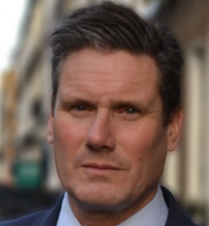
The speech made by Keir Starmer, the Leader of the Opposition, in Liverpool on 10 October 2023.
Now, before I get going – I know what you’re thinking: please, please, please – no more Arsenal jokes.
But conference – I do want to offer my sympathies to Manchester… Not because of that but because I really do feel for any city that had to host that circus last week.
Honestly – what can you say about a Prime Minister who goes to Manchester to cancel Manchester’s trainline?
The self-declared champion of motorists, who had to borrow a shopworker’s car for his photo op. A man who keeps a close watch on the cost-of-living crisis – from the vantage point of his short-haul helicopter.
Conference, I never thought I’d say this but I’m beginning to see why Liz Truss won. Although I still think we’d be better off with that lettuce.
After all, it’s been thirteen years now and what does Britain have to show for it?
Where is their minimum wage?
Where’s their Sure Start?
Crime down by a third.
More students than ever.
Devolution.
The shortest NHS waiting times in history.
Half a million out of child poverty.
Peace in Northern Ireland.
I’m not going to do the whole list. I haven’t got time. But isn’t the contrast stark?
Thirteen years of ‘things can only get better’ versus thirteen years of ‘things have only got worse’.
Conference – this is what we have to fight: the Tory project to kick the hope out of this country. Drain the reservoirs of our belief. That’s why I started with our achievements. I wanted to remind everyone there was a time – and it wasn’t that long ago – when questions such as “is Britain destined for decline?” would have felt ridiculous even to ask.
I have to warn you: our way back from this will be hard. But know this. What is broken can be repaired. What is ruined can be rebuilt. Wounds do heal. And ultimately that project – their project – will crash against the spirit of working people in this country. They are the source of my hope.
Because there are two stories of the past thirteen years. A Westminster of chaos and crisis. Five Prime Ministers in seven years. And then the other side a Britain where working people never let each other down.
In fact, whenever they were asked, they dug deep for this country. Came together for this country. That’s the cruellest cost of these thirteen years of decline. That a government this weak can winnow the confidence of a proud nation. Undermine our foundations with the gnawing rot of despair. A sense that government cannot achieve great things. That Britain cannot achieve great things.
But I believe in this country. I believe in its spirit. In its people, in its businesses, in its communities. I don’t just see the sewage in our streams and our seas. I see the volunteers – people who love their community – standing up to fight for clean water.
I don’t just see the crumbling concrete in our schools. I see the teachers, in the temporary classrooms, still giving our children the education they deserve.
I don’t just see the boards going up in our high streets. I see the businesses – the pubs, the cafes, the retailers still trading. Still finding a way through the chaos. Still serving their community.
That’s the real Britain, conference. Millions of people who’ve looked at the Tory circus and said: ‘fine, we will get on with it ourselves.’ I say – let’s stand with them. Give them a government they deserve. Turn our backs on never-ending Tory decline, with a decade of national renewal.
Do not doubt that the fire of change still burns in Britain. The question is whether it lives on inside Labour. Today we show it does.
Today we turn the page. Answer the question “Why Labour?” with a plan for a Britain built to last.
With higher growth.
Safer streets.
Cheap British power in your home.
More opportunities in your community.
The NHS – off its knees.
A Britain with its future back.
It will require an entirely new approach to politics – Mission Government. New priorities. Totally focused on the interests of working people.
Five national missions all fixed on a single-minded purpose to govern for the long-term. End the Tory disease of “sticking plaster politics” with a simple Labour philosophy that together we fix tomorrow’s challenges, today.
And conference, this new path can only be walked by a new party. A changed Labour Party. No longer in thrall to gesture politics. No longer a party of protest. A party of service.
Rebuilt. Renewed. Reconnected to an old partnership. A bargain. That we serve working people as they drive our country forward.
That’s why we had to move so fast. Why we had to fight so hard to change this party. The bond of respect that comes from service is precious. National renewal depends on it.
That’s why we stood with NATO – an historic achievement of this party. Held out our hand to business. Ripped antisemitism out by the roots. Backed Ukraine.
Country First, Party Second.
Conference, I am shocked and appalled by events in Israel.
I utterly condemn the senseless murder of men, women and children – including British citizens – in cold blood by the terrorists of Hamas.
This party believes in the two state solution. A Palestinian state alongside a safe and secure Israel. But this action by Hamas does nothing for Palestinians. And Israel must always have the right to defend her people.
And conference, these events, the war in Ukraine, they show precisely the test of our era. The world is becoming a more volatile place.
Revolutions in energy, science, technology are reshaping the global economy. The race is on for the new jobs, new industries, new supply chains that will emerge.
Climate change is a recipe for instability – we’ve seen that on our TVs all summer.
Terrorism. The movement of people. Criminal gangs who exploit their vulnerability. They’re all challenges we must confront. And through all this, because of all this democratic rules, democratic values, democratic certainties are under attack.
A new “age of insecurity”. With fault-lines that run right through the living standards of working people. But look, as we’ve seen throughout our history, where there is change, there is also possibility.
Possibility in industry – in winning the race for the jobs of the future.
Possibility in technology – innovations like gene editing that will save countless lives.
Possibility in four nations – standing together, no longer distracted or divided.
And possibility in working people in the parts of our country ignored, passed over, disregarded as sources of growth and dynamism but with the potential ready to be unlocked.
It boils down to this: can we look the challenges of this age squarely in the eye and amidst all the change and insecurity find the hunger to win new opportunities and the strength to conserve what is precious.
Because conference, I tell you, that is what Britain needs and that is what we must become.
People are looking to us because they want our wounds to heal. And we are the healers.
People are looking to us because these challenges require a modern state. And we are the modernisers.
People are looking to us because they want to build a new Britain. And we are the builders.
But they also look out at the chaos – in the world and at Westminster – and want to know can we find that elusive path to an economy that serves their community?
Can we deliver the rock of stability they need to move forward in their lives? Shelter from the storm and a passage to calmer waters.
Because conference, we should never forget that politics should tread lightly on peoples’ lives. That our job is to shoulder the burden for working people, carry the load, not add to it.
This year, I went on holiday with my family to the Lake District. And we were sitting in a pub near Windermere. I was eating fish and chips. Vic had the plant burger.
Anyway, we were sitting there. It was calm, it was beautiful. The Lake District never lets you down. I went there every year as a child with my Mum. Even though she struggled so much to walk she loved the Lakes so it was so special to share it with my kids. If you can believe it, it was sunny. Yes, this summer.
But the reason I remember it, the privilege of it, is because on my first day back from holiday I was in a café, in Worthing, in Sussex.
Talking to people. And what one woman said, really stuck in my mind. She was a single Mum, two kids. And she said to me:
“It’s survival mode. I can’t think ‘oh let’s do something nice’. There’s no long-term planning. No thinking about the future.”
I could see the hurt in her eyes as she told me. That’s what this cost-of-living crisis does. It intrudes on the little things we love. Whittles away at our joy.
Days out, meals out, holidays the first things people cut back on. Picking up a treat in the supermarket just to put it back on the shelf.
Conference, we have to be a government that takes care of the big questions so working people have the freedom to enjoy what they love. More time, more energy, more possibility, more life.
It could be football. Could be fishing. Or just quiet time with your family.
But we all need that, conference. We all need the ability to look forward – to move forward – free from anxiety. That’s what getting our future back really means.
But look – here’s what we can’t do. We can’t take advantage.
Because it’s exactly in moments like this, when people want change, need change, cry out for change that the hope of the easy answer can prosper. And conference – we cannot be about that.
Changing a country is not like ticking a box. It’s not the click of a mouse. Long-term solutions are not “oven-ready”.
If you think our job in 1997 was to rebuild a crumbling public realm. That in 1964 it was to modernise an economy left behind by the pace of technology. In 1945 to build a new Britain out of the trauma of collective sacrifice. Then in 2024 it will have to be all three.
And at a time when our politics feels broken, when our public services are broken, our public finances wrecked, a Tory mortgage bombshell that has blown up the finances of millions.
Nurses, teaching assistants, builders, drivers, shop-workers, carers. People who never before missed a payment in their life. Working harder than ever for the wage in their pocket. And who now find themselves walking a little more slowly past the food bank in their town.
The age of insecurity loaded onto the backs of working people. But there’s no magic wand here. A decade of national renewal. That’s what it will take.
We will need ambition, determination, patience – absolutely.
But also bravery. Because it’s brave to reject the hope of the easy answer. Courageous to choose instead the hope of the hard road.
But if we give Britain the certain destination. If we walk step by step with working people. Bulldoze through the barriers in their way. Lay secure foundations at their feet. Mission Government our guide. Then yes, we can get our future back.
So let’s set the course.
Let’s get Britain building again.
Take back our streets.
Switch on Great British Energy.
Tear down the barriers to opportunity.
Get our NHS back on its feet.
And today – another step along that road. An answer to the outrage that is seven and a half million people waiting, waiting, waiting for treatment in our NHS.
People like Hamza Semakula. A semi-pro footballer, plays for Hendon in the Southern League. Last year he tore his knee ligaments badly. Left with the choice of paying £15,000 to go private or abandoning his career, his love, his joy. Now, Hamza actually crowd-funded his operation in the end. The British people dug deep and got him back on the pitch and he’s back in the goals as well. He’s already scored in the FA Cup this season.
But honestly, how has it come to this? Working people paying for their own healthcare – in a cost-of-living crisis. Pensioners waiting weeks, months, sometimes waiting years just to get the care that they need.
No – the whole point of our NHS is to be the crowd-funded solution for all of us. That’s the fundamental principle and at the next election it’s on the line. The Conservative Party that brought our NHS to its knees, will put it in the ground. We have got to get it back on its feet.
The non-dom tax status is a legal loophole that allows some of the richest people in the world to avoid paying tax in Britain. That’s money we could invest in our NHS – that’s always been our priority. And right now, the biggest challenge is cutting waiting lists.
So we will invest that money in boosting capacity. We will get the NHS working round the clock. And we will pay staff properly to do it.
More operations.
More appointments.
More diagnostic tests.
You will be seen more quickly. In an NHS clearing the backlog seven days a week.
But do not doubt the hard road either. Because if all we do is place the NHS on a pedestal then I’m afraid it will remain on life support. I know some people don’t like the word ‘reform’ but I tell you now there’s no other option.
We must be the government that finally transforms our NHS. We can’t go on like this, with a sickness service. We need an NHS that prevents illness, keeps people healthy and out of hospital in the first place. We must use technology to overhaul every aspect of delivery. Move care closer to communities. Deploy the power of artificial intelligence to spot disease quickly.
Mental health treatment when you need it. We’ll guarantee that.
The 8am scramble for a GP appointment. We will end it.
Dangerous waits for a cancer diagnosis. We will consign them to history.
But here’s the bigger lesson. Because what is true of our NHS is true right across the board. We’re not here to manage the shop. We’re here to make government more dynamic. More joined-up. More strategic. Focused at all times and without exception on long-term national renewal.
Mission Government. It’s not about size. It’s about capacity. A more powerful engine, not a bigger car. A reforming state, not a cheque-book state.
People will say: “don’t rock the boat, we’ve always done it like this, Is this really necessary?”
I’ve reformed a public service before, I know how it goes. But it’s our responsibility to do it. And across our public services, the prize is huge.
Because, if we call time on wasteful police procurement then we can have a community policing guarantee. More police in your town, fighting anti-social behaviour, taking back our streets.
If we ignore appeals for the status quo on private school tax breaks or an outdated national curriculum, then we can have mental health staff in every school. More expert teachers in the classroom. More creativity, speaking skills, confidence. Shatter the class ceiling at source.
And if we want to challenge the hoarding of potential in our economy then we must win the war against the hoarders in Westminster. Give power back and put communities in control. That’s mission government.
But conference – it also has to be something more. A deeper bond. A partnership between people and politics that in our age, after these thirteen years of decline, will be hard to renew.
Some people say to me “it’s about honesty, isn’t it? We were lied to. These politicians are liars.” But do you know, that’s not it. Well – maybe it is for one of them…
But for people like Rishi Sunak its more that they cannot see the country before them. The walls of Westminster are so high. The view that your lives, your services, your future – are just pieces on their board. That is so deeply ingrained in their mindset. They have no way to understand what you’ve been through.
You know, they actually believe what comes out of their mouths.
When your public services were cut to the bone and they said “we’re all in it together”.
When they told you – to your face – that Brexit would only bring benefits to your business.
When they say now, that they’re taking tough decisions for you, in this cost of living crisis.
They’ve convinced themselves that this is what they’re really doing. They can’t see Britain – not your Britain. Can’t accept – that every time your interests were on the line, they made you pay. But when it’s people like them, they look after themselves.
Rishi Sunak and the shallow men and women of Westminster. Unable to see, unable to listen, unable to stand in your shoes and serve this country. And they won’t change. They can’t change. Couldn’t change even in the pandemic when our country came together to follow rules. Rules that they set. And they broke.
Conference, my sister is a care worker. She was a care worker during the pandemic. Fourteen hour shifts, often overnight. Unimaginable pressure. And the reward? A struggle every week – and I mean every week – just to make ends meet.
But it’s not just about that. It’s also about respect. Working people never let each other down. And in the pandemic, the British people didn’t let them down. The bond of respect was there. That’s why we clapped. Britain knew exactly who was serving it, in its time of need.
And for me, that’s the biggest frustration. Not just the pitiful reward this government gave for that service. But also, the countless missed opportunities to deepen that bond. Use it to change our country.
Because I believe this country respects itself. I believe the British people respect each other. And I believe that if people see that respect. See that service in their politics. Then they will commit to the mission of national renewal.
Let me put it this way. At some point in your life, many people here will have heard a nagging voice inside, saying no this isn’t for you. You don’t belong here. You can’t do that. Working class people certainly hear that voice, trust me. In some ways – it’s the hardest class ceiling, of all.
But conference, imagine if instead a whole country said – you do belong. Imagine if a whole country said we back your potential. Imagine if a whole country commits, properly, to unlocking the pride you have for your community.
Then look what we could build. A country where every contribution is equally respected. Where you don’t have to change who you are just to get on.
Where whatever your background you feel secure. Valued. Certain that things will be better for your children. A Britain strong enough, stable enough, secure enough for you to invest your hope, your possibility, your future.
A Britain built to last.
Where working people are respected.
Crime is prosecuted.
Ambulances come.
The minimum wage is enforced.
Infrastructure gets built.
Children feel safe in their classroom.
Business and workers unite in partnership.
Fight together for the jobs of the future.
Jobs that are well-paid and in your town.
And where MPs have only one job – service.
No more bonuses for people pumping sewage into our rivers.
No more pensioners freezing while energy firms make record profits.
No more government contracts awarded via the back-door.
No more cleaners mocked, as they scrub mess off the walls of illegal parties in Westminster.
A future where we believe worker rights are good for growth.
Inequality corrosive.
Communities should have a bigger stake.
Climate change is an opportunity we can’t pass up.
Young peoples’ aspirations must be met.
Britain is respected again around the world.
That’s our future conference.
Let’s get it back.
Because government can be a force for good. We can fight alongside working people in the name of justice and opportunity. That’s why I came into politics.
I’ve looked into the eyes of the people we must serve. At the Crown Prosecution Service. In my work in Northern Ireland. And I’ve seen reflected back the knowledge that government can make or break a life.
It’s that responsibility that drives me on towards the reforms I know we must make. The Britain I know we must build. So let’s get to work. Because there is one barrier so big, so imposing that it blocks out all light from the other side.
A blockage that stops this country building roads, grid connections, laboratories, trainlines, warehouses, windfarms, power stations. An obstacle to the aspirations of millions – now and in the future – who deserve the security of home ownership. A future hidden by our restrictive planning system…
Conference, we must bulldoze through it.
We used to call it the ‘dream of home ownership’, didn’t we? We used to say it glibly on stages like this. But look at Britain now – it has become a dream. It’s out of reach for millions. And if we don’t take action – it will only become more distant. A luxury for the few not the privilege of the many.
I’m trying really hard not to mention the house that I grew up in again. But seriously, that pebble-dashed semi was everything to my family. It gave us stability through the cost of living crises of the seventies. Served as the springboard for the journey I’ve been on in my life. And I believe every family deserves the same.
To have made that aspiration harder for working people, that’s been a disaster for our economy and for the unity of this country.
So today we launch a new plan to get Britain building again. A signal of our determination to fight the blockers who hold a veto over British aspiration.
No more land-bankers sitting comfortably on brownfield sites while rents in their community rise.
No more councils refusing to develop a local plan because they prefer the back-door deals.
No more inertia in the face of resistance – and there will be resistance from people who say – no, we don’t want Britain’s future here.
My message to them is this. A future must be built. That is the responsibility of a serious government. And if we continually wash our hands of this task – we all end up stuck in a rut. Just like now.
So it’s time to get Britain building again. It’s time to build one and half million new homes across the country.
Opportunities for first time buyers in every community. New development corporations with the power to remove the blockages. New infrastructure to support families and communities to grow. Roads, tunnels, power stations – built quicker and cheaper.
And a new effort to re-wire Britain. The National Grid moving faster – a lot faster. Laying the cables our future prosperity needs.
It’s a future with more beautiful cities. More prosperous towns. New parks, new green spaces, new public services – all aligned with our plan.
And conference, sometimes the old Labour ideas are right for new times. So where there are good jobs. Where there is good infrastructure. Where there is good land for affordable homes. Then we will get shovels in the ground. Cranes in the sky.
And build the next generation of Labour new towns.
And no, this doesn’t mean we’re tearing up the green-belt.
Labour is the party that protects our green spaces. No party fights harder for our environment. We created the national parks. Created the green-belt in the first place. I grew up in Surrey.
But where there are clearly ridiculous uses of it, disused car parks, dreary wasteland. Not a green belt. A grey belt. Sometimes within a city’s boundary. Then this cannot be justified as a reason to hold our future back.
We will take this fight on. That’s a Britain built to last.
And here’s why. Because getting Britain building again is critical for economic growth. Our most important mission. Because it’s also a means a way to soften that hard road. Deliver on national renewal. And escape the cost-of-living crisis permanently.
That’s why this Labour Party will fight the next election on economic growth. An economy that works for the whole country is what the British people want. The Tories know that they stood at this crossroads before. They called it levelling-up.
But as soon as they counted their votes, they turned back.
Back to the comfort of the easy answer.
Back to the trickle-down nonsense, that sees wealth trickle-up and jobs trickle-out.
You cannot understate this. Those ideas are finished. Blown away. By a world where tyrants like Putin pay little regard to the niceties of market dogma. But also because in the end they always make working people pay.
You saw it last year.
Tax cuts for the richest.
The pound sinking like a stone.
A wrecking ball to our finances.
Economic shrapnel everywhere.
Family budgets shredded.
A £300 billion bill
The only remedy: Labour stability.
You know, I never thought I would hear a modern Conservative Prime Minister say that 50% of our children going to university was a “false dream”. My Dad felt the disrespect of vocational skills all his life. But the solution is not and never will be levelling-down the working class aspiration to go to university.
But this is the Tory mindset now. Don’t solve problems – exploit them.
So if you are a Conservative voter who despairs of this, if you look in horror at the descent of your party into the murky waters of populism and conspiracy, with no argument for economic change.
If you feel our country needs a party that conserves.
That fights for our union. Our environment. The rule of law.
Family life. The careful bond between this generation and the next.
Then let me tell you: Britain already has one. And you can join it. It’s this Labour Party.
And this is our mission. Every new era of growth must start with an expansion of the country’s productive capabilities– that is an iron law.
But what isn’t an iron law is who that growth benefits. Back in the eighties the Tories gave us a financial “big bang” and we’re still counting the cost. Wealth and opportunity – concentrated in the hands of the few.
Our Labour era will instead unleash the “big build”. And the winner this time will be working people, everywhere.
That’s a Britain built to last.
And conference – it is a new way. Unlike the Tories, we won’t be dragged back to easy answers. The barriers of dogma will not block our path.
That’s why we hold out the hand of partnership to business.
Champion the need for a competitive tax regime.
Understand that private enterprise is the only way this country pays its way in the world.
And at the same time we scrap zero-hour contracts.
We end fire and rehire.
Make work pay with a real living wage.
And say unambiguously this is good for growth.
We say yes to sound money.
Yes to cutting waste and debt.
Embrace the need for stability.
Fiscal responsibility is non-negotiable.
And if investment can kick-start growth.
If investment can save money in the long-run.
Can protect jobs, create jobs, crowd in billions of private investment.
Then yes – we must get on and do it.
Business is ready to join us in this endeavour. I can’t tell you how many conversations I’ve had with leading CEOs who tell me it’s the chopping and changing. The sticking plaster politics. The chaos. That is holding back investment in our country.
That’s why we’ll set up a National Wealth Fund. Work hand in glove with the private sector to rebuild this country. But as we share the risk, we must also share the rewards. So we will make sure that the British people retain a stake in our investments.
This is our mantra. The fight for the future must go hand-in-hand with the fight for every pound. That’s a Britain built to last.
Not state control, not pure free markets. But a genuine partnership, sleeves rolled-up, working for the national interest.
Worker and business. Public and private. Building a bridge from the jobs we must protect today to the opportunities we have to win tomorrow.
That is why the global crises of the last thirteen years have been so painful for Britain. The stand-aside state leaves nobody with the future they want, because there’s no direction. An irresponsibility towards the future, that defies the values conservatives say they support.
You heard the Prime Minister banging the drum again last week. But I say to him, look around Britain. Look at the bills working people are paying now.
They’re more expensive because you didn’t build the gas storage.
You didn’t invest in clean British energy.
You scrapped home insulation.
And you’re doing it all again.
Moving the targets back.
Passing it on to the next generation.
Letting the costs rise because you won’t pay.
Sticking plaster politics.
An approach as riven through the foundations of our security as the crumbling concrete in our schools. The never-ending cycle of Tory Britain. Party first, country second. Drift. Stagnate. Decline.
We have to turn the page on this, conference. Government must steer the ship on industrial policy. That’s a crucial part of any plan for growth. So here is our strategy.
Step one. Our national wealth fund. Standing with business. Ready to invest in the critical infrastructure we need. The battery gigafactories, the clean British steel, the ports that can finally handle large industrial parts. More growth, more demand, more jobs.
Step two. Long-term stability for researchers, investors, innovators. A real boost for life sciences and the automotive industry. And a British jobs bonus that will attract new investment to our industrial heartlands from Bridgend to Burnley. The backbone of Britain, once again powering us towards national renewal.
Step three. A new direction for skills. Because a future must be trained as well as built. And the generation that sacrificed so much during the pandemic – their potential must be backed.
So today we commit to a new generation of colleges. Technical Excellence Colleges. Colleges with stronger links to their local economies. Planted firmly in the ground of young peoples’ aspiration…
But also in the pride, the pull of the badge on the shirt, the ambition you feel when building a legacy for your community.
Training lab workers in Derbyshire.
Automotive Engineers in Wolverhampton.
Computer Scientists in Manchester.
Nuclear Technicians in Somerset.
Builders in Staffordshire.
Toolmakers in Hull.
My Dad would have loved that.
And conference, step four, a new mindset. Because when an opportunity is there to be won, you have to take it.
Clean British energy is cheaper than foreign fossil fuels. That means cheaper bills for every family in the country. But also a chance to make us more competitive across the board.
Countries like America are using this gift to create manufacturing jobs the like of which we haven’t seen for decades. And they’re not the only ones.
So when Rishi Sunak says row back on our climate mission, I say speed ahead.
Speed ahead with investment.
Speed ahead with half a million jobs.
Speed ahead with Great British Energy.
A new energy company that will harness clean British power for good British jobs. A company that will be publicly owned, conference, and that will be based in Scotland.
Because though Great British energy will be a shared mission,
Scotland has the skills. Scotland has the ingenuity. And Scotland is at the heart of a Britain built to last. That’s what the people of Rutherglen voted for.
Conference, I want to thank Anas for his inspiring leadership in that campaign and beyond. And Michael Shanks, who will serve his community with dignity, pride and determination.
Scotland can lead the way to a Labour Government. But be under no illusions. We must earn every vote. And we must understand that the Scottish people are not just looking at us.
They’re also looking at Britain.
The challenge of change remains. But nonetheless, for the first time in a long time we can see a tide that is turning. Four nations that are renewing. Old wounds of division exploited by the Tories and the SNP beginning to heal.
So let the message from Rutherglen ring out across Britain. Labour serves working people in Scotland because Labour serves working people across all these islands.
There’s nothing more important, no distractions, no higher cause. That’s who we stand for. What we stand for. Our argument for Britain.
An old partnership, perhaps. But a flame now re-ignited to face a modern age of insecurity. A Britain once again – united by the solidarity of working people. Staring down the challenges of a more volatile world. Fighting for our future together.
And conference – it will be a fight. The SNP will re-group, of course they will. Once again they will wave away the lessons of history. Try to present nationalism as a bridge to the world.
We have to remind them it can barely provide a ferry to the Hebrides.
As for the Tories, I have to warn you, a party that has so completely severed its relationship with the future, that is prepared to scorch the earth just to get at us. They will be dangerous.
Trust me. Wherever you think the line is, they’ve already got plans to cross it. They will be up for the fight. They’re always up for the fight to save their own skin. And this isn’t over. In fact, it’s barely begun.
So we have to be disciplined. Focused. Ready to fight back. And confident, conference, because we have come so far, already.
We’ve dragged this party back to service. We can do the same for politics.
I grew up working class. I’ve been fighting all my life. And I won’t stop now.
I’ve felt the anxiety of a cost-of-living crisis before. And until your family can see the way out, I will fight for you.
That’s my mission and we will do it.
We will face down the age of insecurity. Together.
Break the stranglehold of Tory decline. Together.
Walk towards a decade of national renewal. Together.
Why Labour? Because we serve your interests.
Why Labour? Because we will grow every corner of our country.
Why Labour? Because we have a plan.
To take back our streets.
Switch on Great British Energy.
Get the NHS back on its feet.
Tear down the barriers to opportunity.
And get Britain building again.
A plan for a Britain built to last.
A plan to heal the wounds.
A plan to turn the page and say, in a cry of defiance to all those who now write our country off:
Britain must. Britain can. Britain will get its future back.
Thank you.