
Blog

  • PRESS RELEASE : Prime Minister drives global work on artificial intelligence at UNGA as UK and US make history with firing from undersea drone [September 2026]

    PRESS RELEASE : Prime Minister drives global work on artificial intelligence at UNGA as UK and US make history with firing from undersea drone [September 2026]

    The press release issued by 10 Downing Street on 22 September 2026.

    The UK has fired a US torpedo from a Plymouth-made undersea drone in a major boost for Euro-Atlantic and maritime security, as both countries join forces on rapidly developing technology to keep people safe.

    • Prime Minister Andy Burnham at the UN General Assembly today to discuss tackling major global challenges with international partners to deliver breathing space and boost security for people at home
    • UK will use the New York summit to drive forward work on some of the most difficult issues of our generation, including harnessing AI for good, the conflicts in Ukraine and the Middle East, and climate change
    • Comes as the Prime Minister confirms the UK hosted G20 leader’s summit will be held in Manchester 
    • Prime Minister also announces UK and US have for the first time fired a US torpedo from a British undersea drone as both countries prepare to go further on next generation technology collaboration with new AI and autonomy partnership

    The UK has fired a US torpedo from a Plymouth-made undersea drone in a major boost for Euro-Atlantic and maritime security, as both countries join forces on rapidly developing technology to keep people safe.

    It comes as the Prime Minister travels to New York today to attend the UN General Assembly and hold his first meeting with the President of the United States, Donald Trump.

    Major global challenges such as AI, the conflict in Ukraine and security in the Middle East are expected to dominate the agenda of the Prime Minister’s meetings in New York over the next 24 hours, as world leaders converge on the city.

    The Prime Minister is expected to use the visit to drive forward global work on AI, both to ensure it is being used as a force for good and to maximise opportunities to use the technology to deliver safety and security for people at home.

    His speech to the UN General Assembly on Tuesday evening is expected to focus on AI, making the case for the international community to harness the technology for good to drive down the cost of living and support a more stable and secure world. 

    As part of using AI responsibly to support people at home, the Prime Minister will announce the launch of work between the UK and US on a new AI and Autonomy partnership. This collaboration will help the UK protect critical national infrastructure, from sea lanes to air space – enabling us to detect threats and deter our adversaries using the latest AI technology developed on both sides of the Atlantic.

    It will see the UK’s Ministry of Defence Rapid AI Delivery Taskforce and the US’s Department of War Chief Digital and Artificial Intelligence Office work together on artificial intelligence and autonomy, accelerating the delivery of trusted, interoperable capabilities that enhance deterrence and both countries’ technological edge.

    This will build on the next generation technology already being developed through AUKUS, the landmark partnership bringing together the US, UK, and Australia to produce a new fleet of cutting-edge attack submarines and undersea autonomous capabilities to deter adversaries long into the future.

    As part of the AUKUS programme, the UK and US successfully conducted a historic live firing of a heavyweight torpedo – jointly developed by the US and Australia – designed to sink ships and deep diving submarines launched from a 12-metre-long undersea Plymouth-made drone named Excalibur.

    The firing, which happened in UK waters last week, was the first time either country had launched a torpedo from an undersea uncrewed vessel, rather than a crewed submarine. This marks a major advance in the future of submarine technology for the UK, US, and Australia, and delivers a significant breakthrough for Euro-Atlantic security and NATO’s undersea advantage.

    Prime Minister Andy Burnham said:

    We are at our strongest when we work with our partners to tackle the most complex shared challenges we face, driven by our values.

    When the global financial crisis hit, the UK brought together the world’s leading economies. As we confront the opportunities and challenges posed by artificial intelligence, we will show that same leadership, ensuring rapidly changing technology is harnessed for good to make our countries safer and stronger.

    That ambition is underlined in our new defence partnership with the United States on AI and autonomy, bringing together the brightest minds to strengthen the protection of critical infrastructure, deter those who threaten our security, and use the enormous potential of AI to our advantage.

    Our work together already shows what can be achieved when our two countries combine our expertise and innovation.

    This week I will be making the case for closer international cooperation on AI, a just and lasting peace in Ukraine, and renewed efforts to bring an end to the conflict in the Middle East because what happens abroad impacts each and every one of us at home.

    During the visit to New York, the Prime Minister is also expected to tell leaders the UK will continue his drive to tackle major global challenges, such as AI, through the UK’s hosting of the G20 next year.
    He will confirm that the flagship Leaders’ Summit will be held in Manchester next November, convening the major global economic players to deliver on our shared goals, drive global growth, and address the most acute global challenges we face.

    After months of scoping host cities, Manchester was chosen earlier this year for its cultural heritage, and preparations will now step up this Autumn, with hundreds of local people expected to be involved in the summit, from showcases to security.

    As well as the Manchester Leaders’ Summit, locations across the UK will host events throughout the year – bringing the G20 to nations and regions across the UK and ensuring the Summit and the year-long Presidency benefit people across the UK.

    The UK will take over the Presidency from the US following the G20 Summit in Miami in December.

    While in New York, the Prime Minister will host US business leaders for breakfast to discuss how his government is making it easier to invest, easier to raise capital, easier to hire the talented people businesses need, and easier to grow.

    In addition to President Trump, the Prime Minister is also expected to meet a series of world leaders to advance UK interests from getting closer to the EU to supporting Ukraine this winter, as well as co-hosting a High Level event on the two-state solution in Israel and Palestine with President Macron, Prime Minister Carney, Foreign Minister of Saudi Arabia, Faisal bin Farhan and the UN Secretary General.
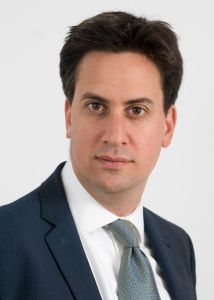
  • Ed Miliband – 2026 Speech on Sudan

    Ed Miliband – 2026 Speech on Sudan

    The speech made by Ed Miliband, the Foreign Secretary, in New York on 21 September 2026.

    Excellencies, colleagues, friends,

    Let me start from the stark truth: More than three years into this conflict, Sudan is the worst humanitarian crisis this century.

    I see three pillars for urgent action:

    Diplomatic: Pushing for a ceasefire and a future transition to civilian government.

    Humanitarian: Working to ensure aid reaches the most vulnerable.

    Civilian protection: Pushing for restraint and protection of civilians together with accountability to tackle impunity and deter further abuses.  

    I think it is important though to begin with the context.

    Right now, over 33 million people require humanitarian assistance – more than the population of London, New York City and Paris combined.

    And unfortunately El Nino is set to worsen hunger in Sudan – driving the numbers people starving ever higher.

    Worse – and I think we need to be frank about this – warring parties are deliberately destroying life-saving aid and attacking humanitarian workers – this month’s attack on a World Food Programme Convoy is but the latest shocking example.

    And I want to highlight that the conflict is evolving in even more lethal ways. 

    Nowhere is this more clear than in the growing use of drones.

    What was once a war concentrated around active frontlines, is increasingly being fought from the air, vastly expanding the deadly terrain.

    It is a sobering fact that in the first five months of this year alone, drone strikes reportedly killed more than 1,000 civilians.

    Hospitals, markets, fuel depots, power stations and humanitarian supply routes have all come under attack.

    Sudan is already amongst the most dangerous places on earth to be a humanitarian worker. Drones are making it more perilous still.

    And of course the consequences are not only humanitarian.

    They are also feeding the illusion – and other have referenced this – that military means can end this war.

    We must be clear that they cannot.

    There can be no military solution in Sudan.

    No amount of new weaponry, new technology, or new external support will change that fundamental reality.

    This growth in drone warfare and the continuing humanitarian crisis demands a step change in our response.

    New drone capabilities do not appear by accident.

    They are procured, financed, transferred and sustained through the networks of multiple countries outside Sudan that continue to fuel this war.

    That is why the renewal of the UN sanctions regime is so important.

    We welcome the efforts of the United States to strengthen the regime and ensure it reflects the realities of today’s conflict.

    And we should all support that ambition.

    The UN Fact Finding Mission Report of 3 September is unambiguous. It points to how external support ‘sustains operations involving serious violations and international crimes’.

    And the Mission ‘calls on states to enforce the Darfur arms embargo and suspend transfers of weapons, drones, components or military assistance’.

    And it further ‘calls on the Security Council to extend the arms embargo throughout Sudan’. 

    So a simple rollover of the embargo is not enough.

    We must use this opportunity to increase the scrutiny, pressure and consequences for those supplying, financing and enabling this war.

    And we must be united in pressing the parties to protect civilians, comply with international humanitarian law and facilitate safe and unhindered humanitarian access.

    In practice, this means an end to the competing visa requirements, work permits and taxation on aid imposed by both sides.

    It means opening key humanitarian routes permanently, including the vital Adré border crossing due to expire this month, and routes into El Obeid and El Fasher, so aid can flow at scale.

    Colleagues, we came together as an international community earlier this year to sound the alarm around El Obeid. That attack did not happen as we feared. But we cannot be complacent.

    The people of Sudan cannot afford further escalation. They cannot afford another year of bloodshed.

    And they cannot afford an international community that fails to deliver and fails to adapt to the new reality of this war.

    We can all issue words of concern – as I am doing – and appeals for peace at grand international gatherings. But they matter little unless backed up with action.

    So let us strengthen practical efforts to de-escalate the conflict, support a ceasefire, and advance a civilian-led political process that reflects the aspirations of the Sudanese people.

    Let us apply real pressure to protect civilians…

    To expand humanitarian access…

    And also to hold to account those who profit from and perpetuate this devastating conflict.

    Thank you.

  • Ed Miliband – 2026 Speech at Accra Reset Event

    Ed Miliband – 2026 Speech at Accra Reset Event

    The speech made by Ed Miliband, the Foreign Secretary, in New York on 21 September 2026.

    Can I just start by saying what a privilege it is to join this incredibly important conversation, and I want to pay particular tribute to President Mahama for this incredibly important initiative with the Accra Reset.

    If you will allow me, I also want to recognise, as I think a number of speakers have, the amazing contribution that former Prime Minister Gordon Brown still makes on these questions. I am incredibly proud to be here alongside him. He is a fantastic asset to the United Kingdom.

    So the Accra Reset begins from a fundamental value that we in the UK believe in, which is international solidarity, and it is based on a partnership of equals, a solidarity based on a partnership of equals.

    It must mean countries shaping their own priorities, their own institutions that reflect the world they serve, and a responsibility shared by all of us.

    And the UK has overhauled its approach to reflect these realities.

    We are moving from donor to investor, and from funding piecemeal service delivery to strengthening whole systems.

    We’re moving from grant funding to much wider plans centred on finance, expertise, science, and technology, and moving from international intervention to backing local leadership and innovation, and that set of shifts speaks to the agenda before us today.

    And the programme today rightly connects health reform with negotiating capacity, investment, private enterprise, and stronger South-North cooperation.

    But to make real progress together, we need change in the following areas, and I just want to briefly set those out.

    First, we need finance at greater scale and on fairer terms.

    There is no shortage of capital in the world. The challenge is enabling it to flow into productive investment, infrastructure, stronger public services, and sustainable growth.

    So the UK will continue to support reform of the multilateral development banks, the smarter use of guarantees and private capital, and action on unsustainable debt and illicit finance.

    And indeed, I will be going to the annual meetings in my role on the board of the World Bank to pursue this agenda.

    Second, we need institutions with greater legitimacy.

    Countries most affected by global decisions must have a stronger voice in making them. The World Bank, the IMF, the United Nations, and the wider development system must better reflect the world of today.

    And third, reform must be measured by real results.

    New initiatives should reinforce effective institutions and strengthen coordination.

    And as the United Kingdom looks towards its G20 presidency, we want to work with Ghana and indeed others represented here to turn shared ambition into practical cooperation.

    Ghana’s leadership of the Accra Reset is already an important contribution, and I do want to say the United Kingdom comes to this conversation not with a finished answer, but with a clear commitment to listen, to build genuine partnerships, and to put our diplomatic, financial, and technical strength behind reforms that are locally led, mutually beneficial, and capable of delivering at scale.

    And if I can end on this note, the real test is not to describe the world differently, but to change it for the better, and that’s precisely the spirit that I approach my role as Foreign Secretary.

    I am clear that Britain needs to be stronger in its values, bolder in its action, and relentless in pursuing alliances with our friends across the world.

    So I conclude where I started with a message of solidarity and with the UK’s unwavering commitment to work with you in a spirit of true partnership and a true partnership of equals.

    Thank you very much.

  • PRESS RELEASE : Prime Minister call with Prime Minister Ramgoolam of Mauritius [September 2026]

    PRESS RELEASE : Prime Minister call with Prime Minister Ramgoolam of Mauritius [September 2026]

    The press release issued by 10 Downing Street on 21 September 2026.

    The Prime Minister spoke with the Prime Minister of Mauritius, Navin Ramgoolam, this afternoon.

    The Prime Minister began by setting out his intention for the UK and Mauritius to work closely together.

    He noted the clear benefits the two countries could bring to each other across a range of shared objectives, including tackling climate change, combatting illicit finance, and boosting growth and trade, as they looked to create opportunities for people at home.

    Turning to the future of the military base on Diego Garcia, the Prime Minister underlined his commitment to working with Mauritius and the United States on a way forward that secures the operation of the base and protects UK national security.

    The two leaders agreed to stay in close contact, with the Prime Minister adding that he hoped the UK Foreign Secretary and Mauritian Foreign Minister Ramful would be able to meet this week at UNGA to further strengthen the relationship between the UK and Mauritius.

  • Ed Miliband – 2026 Speech at New York Climate Week

    Ed Miliband – 2026 Speech at New York Climate Week

    The speech made by Ed Miliband, the Foreign Secretary, in New York on 21 September 2026.

    It is really fantastic to be back here at NY Climate Week, I can honestly say to you, this is my second favourite Climate Week in the world, after London of course.   

    No really, it is fantastic to be here, and look, I think the first thing I want to say is to sound a note of optimism, because despite challenging political times, it is set to be the case that in 2026 we’re going to see $2.2 trillion dollars in clean energy against $1.2 trillion in fossil fuels.  

    I think that deserves a round of applause, ladies and gentlemen.  

    I was here last year as the Energy Secretary. I’m now the Foreign Secretary of the United Kingdom, but I come here as passionate about the cause of New York Climate Week, the cause that we are all fighting for.  

    And I want to make a simple argument to you today, which is that climate and nature loss represents an urgent national security issue and demands action equal to the scale of the challenge, and that it demands a shift in our thinking and a shift in who in government takes an interest and cares about these issues and puts them front and centre.  

    And I think the history on this is instructive, like many people in this room, I’ve been at this some time for the better part of two decades.  

    Because for many years when I was the Climate Change Secretary in 2008, climate change and the destruction of nature were treated as peripheral environmental issues. Yes, they were seen as important, but they were separate from the core business of economic growth, or indeed energy security.   

    And over these last two decades, the penny has dropped about the opportunity that the energy transition offers in terms of the good jobs at good wages that so many people in our different countries want to see.   

    And Russia’s invasion of Ukraine underlined the dependence that so many countries face on fossil fuel markets, the fossil fuel roller coaster, as we call it in the UK. And the situation with Iran, the Iran war has underlined that again. And I think people now see the energy security imperative, the energy independence imperative of clean energy.  

    But having understood the jobs opportunity and the energy security imperative, my argument to you today is: we need to take the next step and recognize the national security imperative too.   

    And I think you all know the picture, and it is gloomy, I warn you, but I’m just going to say some of it to you today because we need to be truth-telling about this.  

    Over 150 million hectares burned globally in the first four months of 2026 alone.  

    Record extreme heat causing widespread loss of life.  

    Nepal’s devastating floods happening due to glacial collapse and the coming El Nino, as Prime Minister Albanese said, is already forecast to be the strongest in living memory.  

    And the nature loss crisis is just as acute, with ecosystems being degraded in every region of the world. 

    That is the conclusion of the UK’s recent nature security assessment, which you can all read.  

    This is why. These facts. What is happening in our world. Is why climate breakdown, in my view, must be an issue for foreign ministers and prime ministers, as well as energy and climate ministers. The security community, not just the activist community, the generals, not just the green campaigners. 

    And once we accept this, several implications follow.  

    First, we must change how we assess risk. Climate and nature must be embedded in national security systems, in threat assessments, and contingency planning. Countries need to pool information because a shock beginning in one country can rapidly travel through supply chains, financial markets, and migration patterns to other countries.  

    Second, we have to become better at managing shocks. These shocks that cross borders, better forecasting and early warning systems, more resilient infrastructure, health and food systems, more effective disaster risk finance and insurance. Acting before the crisis hits, rather than simply picking up the pieces afterwards.  

    Third, and in some ways this is the most important point of all, we cannot avoid some of these effects which we’re already seeing unfolding in our world. But it is up to us how severe they become.  

    That’s why we all have a responsibility, if we care about national security, if we care about keeping our populations safe, to act as countries against the threat of the climate crisis. 

    Since we met last year, the UK has passed world-leading and 1.5 degree-aligned carbon budgets for an 87% reduction in emissions by 2040.  

    We recently announced our intention to invest £400 million in the Tropical Forest Forever facility to support international action to protect tropical forests.  

    We are driving forward with our world-leading clean power plan for clean power, clean power system by 2030.  

    These are just some of the things that we are doing.  

    For us as a government, clean energy, the clean energy mission, is front and centre to our economic policy, our energy security policy, and indeed our national security policy too.  

    And my pledge to you is that the UK will pursue this national security imperative, and I see my work as Foreign Secretary as being about using our extensive embassy network, our expertise to work with others, starting here at New York Climate Week and at UNGA, at this autumn’s annual meetings at the World Bank and IMF at COP31, and in our G20 presidency next year.  

    Let me make three points to end on. First, we can do this, and it’s really, really important to say this. If we don’t say it, nobody else is going to.  

    When I left the Copenhagen climate summit, which didn’t go so well for those of you from your memories, in in 2009 we were heading for a four degree world.  

    Now we’re heading for something like a two and a half degree world, that is still fierce, fearsome, and deeply, deeply worrying, but it shows that the world has made progress. So we can do this.  

    Secondly, we must do this because for our generation we have a unique responsibility, and the unique responsibility is this. Which is we know the scale of the problem, it’s not some theoretical future thing that might happen as it was 20 years ago, we see the climate crisis unfolding, but we have time to do something about it. That is why we must do this. We must act.  

    And finally, we will do this, in my view, because I believe that actually countries all around the world now recognize this threat, and they recognize that we can only solve it acting together.  

    Last year, when I was here, I said, “don’t give up on multilateralism”, and I think the countries across the world are not giving up on multilateralism. So many countries, I mean, so many foreign ministers and others, I mean, know that no country can tackle climate change on its own, but we can do it together.  

    So, friends, this is about what makes our country safe. This is about what makes our economies strong, and this is about what will sustain our planet and our people for future generations to come. Please enjoy New York Climate Week. Thank you so much.

  • PRESS RELEASE : UN Human Rights Council 63 – UK Statement for the Interactive Dialogue on Iran [September 2026]

    PRESS RELEASE : UN Human Rights Council 63 – UK Statement for the Interactive Dialogue on Iran [September 2026]

    The press release issued by the Foreign Office on 21 September 2026.

    UK Statement for the Interactive Dialogue on Iran. Delivered by the UK’s Permanent Representative to the WTO and UN, Kumar Iyer.

    The United Kingdom thanks the Fact-Finding Mission for its report.

    We remain horrified by the dire human rights situation in Iran.

    The Mission’s findings regarding the violent repression of peaceful protests that began in December, including the use of lethal force against those who posed no imminent threat, such as children, are particularly alarming. The crackdown was the deadliest in the Islamic Republic’s history.

    Iran’s abhorrent use of the death penalty, prolonged nationwide internet shutdowns, torture and ill treatment, and restrictions on fundamental freedoms fuel cycles of repression for the people of Iran.

    The report documents civilian deaths arising from the March 2026 conflict – in Minab in Iran, and across the region. Innocent civilians should never be caught in the crossfire.

    The United Kingdom continues to support the work of the Fact-Finding Mission and the Special Rapporteur. Independent documentation of violations is essential to accountability, justice for victims and survivors, and the prevention of future abuses.

    The UK calls on the Iranian authorities to end the use of repression and to respect the human rights and fundamental freedoms of all people in Iran.

  • PRESS RELEASE : UN Human Rights Council 63 – UK Statement for the Interactive Dialogue on Russia [September 2026]

    PRESS RELEASE : UN Human Rights Council 63 – UK Statement for the Interactive Dialogue on Russia [September 2026]

    The press release issued by the Foreign Office on 21 September 2026.

    UK Statement for the Interactive Dialogue on Russia. Delivered by the UK’s Permanent Representative to the WTO and UN, Kumar Iyer.

    Thank you, Special Rapporteur.

    Your report’s findings are stark, and demonstrate that the Kremlin’s system of domestic repression is extending beyond the country’s borders. The UK condemns the continued deterioration in the Kremlin’s dire domestic human rights record. The international community has a shared responsibility to protect and promote the values it upholds.  

    We are concerned but not surprised by your finding that Russia has become one of the world’s most prolific perpetrators of transnational repression and that these practices have intensified significantly since 2022 including as you report, on UK soil. The UK condemns Russia’s use of threats, surveillance, digital repression, cyber-enabled activity and legal mechanisms to target activists, journalists, human rights defenders and anti-war voices, including those in exile.

    The UK reiterates its call for the Russian state to release all those imprisoned on political grounds, including for their opposition to Russia’s illegal invasion of Ukraine. The Russian authorities must uphold its international obligations, and protect fundamental freedom of expression, association, and religion or belief.

    Special Rapporteur, how can States best strengthen protection for those targeted by Russian transnational repression and ensure they can safely engage with international human rights mechanisms?

  • PRESS RELEASE : UN Human Rights Council 63 – UK Statement for the Interactive Dialogue on Nicaragua [September 2026]

    PRESS RELEASE : UN Human Rights Council 63 – UK Statement for the Interactive Dialogue on Nicaragua [September 2026]

    The press release issued by the Foreign Office on 21 September 2026.

    UK Statement for the Interactive Dialogue on Nicaragua. Delivered by the UK’s Human Rights Ambassador, Eleanor Sanders.

    Thank you, Mr Vice-President.

    We remain deeply concerned by the human rights situation in Nicaragua. The report describes a troubling concentration of executive power and erosion of the separation of powers. Proposed constitutional reforms will further centralise power and weaken institutional checks and balances.

    The report also highlights continued restrictions on civic and democratic space. We are concerned by reports of arbitrary detention, enforced disappearances, deaths in custody, and intimidation of political opponents, journalists, human rights defenders, religious leaders and indigenous communities. We are also concerned by reports of transnational repression targeting Nicaraguans abroad.

    We were alarmed by the reported death in custody of Brooklyn Rivera, following prolonged arbitrary detention and enforced disappearance, and call for a full and transparent investigation.

    The UK urges Nicaragua to release anyone arbitrarily detained and restore nationality and political rights to those stripped of them. Nicaragua must uphold freedoms of expression, peaceful assembly, association, religion or belief, and participation in public affairs. We also urge Nicaragua to safeguard judicial independence and re-engage with the UN human rights system, including by granting OHCHR access.

  • PRESS RELEASE : UN Human Rights Council 63 – UK Statement for the Interactive Dialogue on Afghanistan [September 2026]

    PRESS RELEASE : UN Human Rights Council 63 – UK Statement for the Interactive Dialogue on Afghanistan [September 2026]

    The press release issued by the Foreign Office on 21 September 2026.

    NB – UK Statement for the Interactive Dialogue on Afghanistan. Not delivered due to time constraints.

    Mr Vice President,

    The United Kingdom thanks the Special Rapporteur for his report.

    Five years after the Taliban’s return to power, we remain deeply concerned by the continued deterioration of human rights in Afghanistan.

    The Taliban’s systematic restrictions on women and girls have deprived them of opportunities that many of us take for granted: the freedom to learn, to work, to move freely and to participate fully in society. Afghanistan will never reach its potential while half its population is denied its fundamental rights.

    We also note the impact of the Taliban’s repressive policies on children. The consequences of the Taliban’s repressive policies on children will be profound and long-lasting, affecting an entire generation. We fully support the Special Rapporteur’s work to protect children’s rights. 

    Mr President, Afghanistan currently faces a severe humanitarian crisis. More than twenty-two million people require humanitarian assistance. Food insecurity and malnutrition remain widespread, with women and girls among those most acutely affected.

    Special Rapporteur, what more can the international community do to address the worsening humanitarian situation while also protecting the human rights of all Afghans, particularly women, girls and children?

    Thank you

  • PRESS RELEASE : Specialist rape courts rolled out across the country [September 2026]

    PRESS RELEASE : Specialist rape courts rolled out across the country [September 2026]

    The press release issued by the Ministry of Justice on 21 September 2026.

    Victims of rape and sexual offences will get the justice they deserve, as their cases take priority and new specialist courts are rolled out across England and Wales, the Prime Minister has announced today.

    • Courtrooms for specialist rape and serious sex offences to be rolled out across every Crown Court in England and Wales
    • Rape cases will be prioritised in the courts, tackling uncertainty and delays for survivors, with specialist upgrades introduced, including private waiting rooms and entrances for victims
    • New approach will put victims front and centre of the criminal justice system

    Backed by a multi-million cash injection, every Crown Court in England and Wales will get at least one courtroom especially set up to hear rape and serious sexual offence cases over the next two years, helping to hold more perpetrators to account.

    Transforming how the justice system treats the survivors of some of the most serious crimes, the changes are designed to encourage more victims to come forward, providing them with private entrances and waiting rooms as well as facilities equipped to pre-record evidence and observe sentencing remotely.  

    Rape and serious sexual offence cases will also now be prioritised in courts. These trials will be given a fixed date as opposed to being placed on floating lists where they can be moved at short notice and delayed by many months.

    For too long, victims of rape and serious sexual offences have felt they were navigating a system that did not consider their needs for tailored support. In 2025, rape cases took an average of 424 days to complete once they reached the Crown Court, with too many victims withdrawing before their case was heard.

    Today’s changes will mean victims get better support and face fewer delays, as the government continues to take decisive action to tackle violence against women and girls and deliver the justice that victims deserve.

    Prime Minister Andy Burnham said:

    For too long, victims of rape and serious sexual offences have felt let down by our justice system. Prosecution rates for rape remain shamefully low, with many victims waiting years for justice.

    This is not good enough. That’s why we are making major changes to rebalance the scales of justice and put victims first. This includes rolling out specialist courtrooms for rape and serious sex offences.

    These changes are long overdue and will make a significant difference, but focusing on prosecution alone will not be enough. So as well as ensuring victims get justice, we will step up action to prevent these horrific crimes from happening in the first place.

    Lord Chancellor Alex Norris said:

    Victims of rape and serious sexual offences have felt they’ve been left alone facing the criminal justice system for too long. They have been treated as cases to process and not as people to support.

    The funding we are announcing today will provide that support that victims deserve – delivering courtrooms that are designed with victim needs in mind and providing specialist training for staff to handle these cases with care.

    Real action to improve our courts. Real action for victims. Real action to deliver the justice they deserve.

    The changes announced today will also see all court staff get trauma-informed training and a trial to give victims of sex offences a single point of contact to ensure their needs are met during the court process. The new measures also include a new Rape Justice Taskforce, drawing leaders from across the criminal justice system to tackle the rising rate of postponed rape trials and confront the myths that cause victims to withdraw from their own cases.

    The changes follow Charlotte Nichols showing immense strength and bravery in coming forward to tell her own story, calling for these crucial measures to support victims and ensure they receive the justice they deserve.

    Ciara Bergman, CEO of Rape Crisis England & Wales says:

    This important package of measures represents a significant step forward for our justice system, and includes many of the reforms that Rape Crisis England & Wales have been calling for over many years. Taken together, they reflect the urgency of ensuring that courts are fit for purpose and properly meet the needs of victims and survivors, which is crucial to securing justice.

    We’re particularly pleased to see measures that will improve trial efficiency and ensure survivors are better able to participate in, and observe, proceedings. The recognition that suitable separate waiting areas, entrances and exits are essential to prevent survivors from being intimidated and distressed by the presence of perpetrators and their supporters is also significant. This welcome change is both necessary and long overdue.

    Today’s announcement builds on the Government’s pledge to halve violence against women and girls in a decade and make sure the justice system put victims front and centre.

    Earlier this month, the Prime Minister announced that by the end of 2027, all police forces in England and Wales will have dedicated rape and sexual offence investigation teams, helping to make sure more criminal cases are prosecuted. 

    Since coming into office, the government has pledged over £1 billion to support victims of violence against women and girls, announced plans to place domestic abuse specialists in 999 control rooms across every police force in England and Wales, and is rolling out new Domestic Abuse Protection Orders to provide victims with protection for as long as needed.

    The government has also committed to use every lever at its disposal to drive down the backlog of victims waiting years for justice through the Courts and Tribunals Bill, which is set to return to Parliament in October.