Blog

  • John Hutton – 2006 Speech at ILO 2006 Global Compact Policy Dialogue

    johnhutton

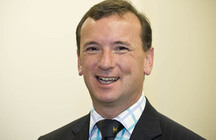
    Below is the text of the speech made by John Hutton, the then Secretary of State for Work and Pensions, to the ILO 2006 Global Compact Policy Dialogue on 6th October 2006.

    This conference comes at a critical time in the development of the global economy. All of us are confronted by unparalleled demographic and economic change. Change that is testing the capacity of traditional political, economic and social systems to respond and adapt.

    The demographic challenge is immense. In the UK there will soon be more people over 80 than under 5. Over the next 25 years the working age population of the EU will fall by 7% while the population aged 65 and over will increase by over 50%.

    The economic challenge is greater than at any time since the industrial revolution. In 2005, the new emerging economies accounted for well over half the increase in global output. As China, India and Russia move towards market capitalism, the global labour force is in effect doubling.

    And one of the effects of this shift in demography and global labour market pressures is to create a new phenomenon: ‘transient’ mass migration.

    ‘Transient’ in the critical sense that compared with previous large scale migration to America at the beginning of the 20th century or the UK in the middle of the 20th century, this early 21st century migration is often characterised by temporary economic opportunism. Yesterday, new official figures found that 2005 saw the largest ever entry of foreign workers to the UK since records began. Since 2004, around 450,000 people have come from A8 accession countries to work in the UK. But rather than bringing their families to settle as many as half of those economic migrants did not stay. They came to work and save money for themselves and their families.

    This transient mass migration is also different in a second way – around four-fifths of A8 migrants are coming to the UK to work in relatively low-skilled occupations.

    We know that recent migration has had a positive impact on our economy – increasing growth rates by between 0.5% and 1%. And with independent research showing that migrants are contributing more than their share of taxes, migrant workers are making a net contribution to the exchequer.

    This transient mass migration partly reflects the strength of the UK economy, the diversity of our labour markets, proximity, cheap travel and critically, the differential in economic opportunity between the countries emerging from the shadow of communism and democratic capitalist economies.

    But it brings real challenges too. For active labour market policies and welfare systems. For communities that are experiencing immigration for the first time and encounter new pressures on local services.

    So managing this shift in the pattern of migration is one of the most important challenges facing our country as a by-product of the globalisation of the economy and the labour market.

    For the indigenous population the impact of this migration can provoke uncertainty and sometimes fear. People are anxious about what this means for their way of life, their future. The fear of losing, of falling behind, is not felt just by those with low skills or no skills. It is felt equally by people who have been through university and gained professional qualifications.

    People want security – rightly so. But they know too that our future as a successful economy will depend on our ability to work through these changes, not turn away from them.

    In the short term the UK faces important decisions about how to manage this transition within Europe following the granting of accession to two new member states, Bulgaria and Romania.

    We will decide our approach to labour market access for these countries soon but it must be based on the principle of managed migration.

    Overall, the new level of mass transient migration creates a new challenge for our welfare system and active labour market policies. Over the past two years 13 million people have moved into a new job. 450,000 of these vacancies have been taken up by economic migrants from Eastern Europe. And yet we still have 5 million people on benefits in the UK. My response is not to say we should pull up the drawbridge but it is to ask the question, ‘how can our welfare system become more effective at helping UK citizens to compete in today’s labour market?’

    In the UK we’ve set ourselves the long-term aim of an 80% employment rate. As we build on our record investment in the New Deal employment programmes and Jobcentre Plus offices around the country, I believe that our system of support will need to radically adapt to meet the challenges of the modern labour market. Support must become more tailored to individual and local labour market needs. Rights must be matched by new expectations and responsibilities on those who are out of work. This will need to happen if we are to realise our ambition to get a million people off incapacity benefit, one million older people and 300,000 more lone parents into work.

    In less than a decade in office we’ve already made real progress. More people in work than ever before. We have reduced the time that the unemployed are spending without work. And the biggest improvements have been in neighbourhoods and cities that started from the poorest position. For the first time in 50 years, we’ve achieved the best combination of high employment, low unemployment and low inactivity anywhere in the G8.

    But we have much further to go. We know from the impact of A8 migration that the UK economy is able to create and support increasing numbers of low-skilled jobs. The vast majority of A8 migrants are young, single and working full time – mostly in administration, hospitality, agriculture, manufacturing and food processing – many are in what are seen as traditionally “hard to fill” jobs. The key question remains: Why are these jobs so hard to fill? What are the barriers that mean some UK nationals are on benefits rather than taking-up low-skill jobs?

    Let me just touch on two things.

    Firstly, inactivity. We know that far too many people on benefits have been inactive and detached from the labour market for some time. For too long society asked little of them and offered even less in support. We have to challenge and break the cycle of dependency and despondency by spreading opportunity and aspiration to the millions left behind. That’s why we are investing hundreds of millions of pounds in a new tailored support programme called ‘Pathways to Work’ for the 2.7 million people who still claim incapacity benefit in the UK. It is about renewing a sense of hope and opportunity for those who have been written off by the welfare system for years.

    Secondly, in-work support. Not withstanding levels of inactivity or geographical immobility, it is clear that there are some low-skilled jobs at the minimum wage which UK nationals are simply not prepared to do – even when the rewards of work are financially greater than the benefits they otherwise receive.

    A low-skilled job with no prospect of training or support offers little hope for that individual to develop. It’s clear that for many this isn’t enough. That other non-financial factors are also important. The attractiveness of the job; the duration of the work or the opportunities that might follow from it.

    Through Jobcentre Plus and our wider welfare to work strategy – we have invested heavily in helping people find work. But it’s clear that our future success will hinge not just on getting people into work – but on supporting them to stay in work and to acquire the skills, confidence and ambition to progress though the workplace. This is the new challenge for welfare. Getting people into work is only the start. Keeping them in work and helping them to progress through the labour market must be our objectives.

    I said at the start that the global forces of economic and demographic change are creating great challenges for our societies. But they also bring the promise of great opportunity.

    As Employment Ministers gather for the G8 in Russia next week, there is a clear path that we must follow. We can not retreat from these global forces; look backwards; try to preserve the status quo; or close our minds to change. We must instead look forwards, embrace these changes and with it lay the foundations for ever greater prosperity. I believe our policy objectives should be clear – decent work for all and an end to poverty. Both are possible. But they will only happen if we embrace these changes. It won’t happen simply if we leave it all to chance.

    If we can rise to this challenge; if we can embrace the strong product market competition that will open new and better jobs; if we can break down the barriers that prevent people from participating in the labour market; and support people to progress through the workplace; Then I truly believe we can transform employment opportunities for many who were previously excluded and take a major step towards our ultimate ambition of true social justice for our people.

  • John Hutton – 2006 Speech at CBI/Real Finance Human Capital Awards

    johnhutton

    Below is the text of the speech made by John Hutton, the then Secretary of State for Work and Pensions, to the CBI/Real Finance Human Capital Awards on 19th October 2006.

    I’m grateful to the CBI and Real Finance Magazine for the opportunity to join you this evening and to offer my support for these – the inaugural – Human Capital Awards.

    The calibre of nominations and breadth of organisations supporting these awards tonight, show clearly just how important good people management is to Britain’s top companies. Important, because investing in people leads directly to tangible results for business. To higher productivity. Better performance. More employment. More wealth creation.

    As a nation, our future economic competitiveness rests crucially on the productivity of our workforce. Government and business have a shared ambition to ensure our people have the skills and aptitude needed for British business to thrive in the face of increasing global competition. For British workers to be able to compete in a truly global labour market.

    Emerging economies accounted for well over half the increase in global output last year. Twenty years ago they produced just 10% of manufactured goods – by 2020 it will be 50%.

    As China, India and the former Soviet Union are making significant strides towards a market economy, the global labour force has in effect doubled.

    All these changes bring new challenges for our economy and society; for business and for Government. They prompt new questions about how our businesses can adapt; and the best way to help UK citizens compete successfully in today’s labour market.

    The Government has asked Lord Leitch to report later this year on the UK’s optimal skills mix to maximise economic growth, productivity and social justice.

    In his preliminary report last year, he found that 20% of the productivity gap with our competitors can be explained by poor skills. And that tackling low skills, by upskilling an additional 3.5 million adults, could deliver an average annual net benefit of 0.3% of GDP.

    We know that a lack of skills can be a significant barrier to employment. But we also know that the lack of skills alone is not preventing people from getting jobs. Around 1 million low qualified people flow onto Jobseeker’s Allowance every year, of whom about 400,000 leave the benefit within the first 13 weeks of their claim. Additionally, each year around 470,000 low-skilled people move from inactivity to employment. But within three months of getting a job, over a fifth of all these people moving into work return to benefit.

    In fact, 70% of all new Jobseeker’s Allowance claims are made by people who have claimed before. Of these, nearly a quarter have no qualifications and 1 in 6 report literacy or numeracy problems. Of course, many of those returning to JSA do so only briefly – they are simply moving between jobs – a sign of a healthy and diverse labour market. But about half of those repeat claimants are spending more time on benefit than in work. So there’s clear evidence that many low-skilled workers are having difficulty in sustaining employment.

    Through Jobcentre Plus and our wider welfare to work strategy – we have invested heavily in helping people find work. But it’s clear that our future success will hinge not simply on getting people into work – it will depend on supporting them to stay there. In today’s labour market, the typical worker changes jobs seven times during a working life. We need to make sure that our welfare delivery system doesn’t pull up the drawbridge of support too quickly. Too often we think the job is done as soon as someone has entered the labour market. But helping individuals to acquire the skills, confidence and ambition to progress through the workplace has to be a core ambition of a dynamic welfare system. This is the new challenge. Getting people into work is only the start. Keeping them in work and helping them to progress though the labour market must be our objective as a Government that believes in promoting social mobility and ending poverty.

    Achieving this, I believe, requires a new approach to skills. One that seeks a much closer alignment between skills and employment needs. That’s based on a simpler, clearer and more coherent system of delivery – that meets the needs of both businesses and individuals.

    Emerging evidence around the impact of adult learning on employment chances suggests that the most effective provision is a package of support involving work experience or labour market contact – that is individually tailored and geared towards local opportunities.

    As we are reforming delivery in health and education, with a clearer more explicit link between funding and the patient or pupil, I believe we need to empower individuals and employers to take responsibility for driving demand in the system and shaping their skills needs. Skills provision must be focused on our economic mission. A demand led system of learning which provides employers with the skills their employees need. That enables employers to be competitive a world market and individuals to get jobs and stay in jobs – meeting individual need at the right point in time.

    As we consider the future of skills and employment support in the UK, I believe that it must be based on two characteristics.

    First, future provision must involve a more integrated employment and skills gateway for customers. Focussed on the needs of the individual and equipped to broker the right opportunities to help people get into and progress through the labour market.

    Second, the creation of a more responsive and integrated system of skills and employment support must be based on a more dynamic market in the provision of skills. We cannot expect business in our economy to compete effectively in ever-more intense domestic, European and global markets, if the market for skills provision is not dynamic and competitive. And it is clear from Sandy Leitch’s first report, that with only 2% of discretionary employer skills spending going to FE colleges, the Government was right to publish its recent White Paper on raising skills in Further Education – which set out the role of further education, its economic mission and the need to be much more responsive to both employers and individuals.

    But all of this hinges on the alignment between skills and employment needs. On the way Government understands employer needs and the dynamics of a competitive economy. And the way employers invest in their people.

    We know that workplace learning increases average job tenure with a consistent and significant impact on earnings and productivity – and more so than adult learning or Government provided training programmes.

    Too often in the past, HR has been left to exist in a separate bubble. It’s been about processes; organising terms and conditions; supporting integration or restructuring programmes. The message coming from these awards tonight is clear. Business must burst that old HR bubble – and fully integrate investment in people at the heart of its corporate objectives.

    In-work training is heavily skewed towards those who already have qualifications. Government has to ensure that workers have a minimum level of competency. We need to build on demand-led programmes like our Adult Learning Option pilot which offers benefit recipients access to training courses focused on local labour market needs. And the Train to Gain service which supports employers in identifying the skills needs of their businesses, matching this with available provision and contributing to the costs of training to help many previously unqualified workers to develop and progress into more sustainable, productive employment.

    Like all developed countries in today’s ever more global market place, the UK faces a skills challenge. But crucially, I believe, it’s also an employment challenge. One that our flexible and dynamic labour market is well placed to meet.

    If Government can shape skills support so it is focused on business and employment needs; And if our businesses can build on the best practice that we will see showcased tonight; Then I believe we can look forward with confidence to a Britain of ever greater prosperity. Where British business can not only compete but thrive in the world marketplace. And where we can combine a strong economy with a fair society, and in the process, help British companies not only meet the challenge of globalisation, but prosper from it.

  • John Hutton – 2006 Speech on Welfare Reform

    johnhutton

    Below is the text of the speech made by John Hutton, the then Secretary of State for Work and Pensions, on welfare reform on 18th December 2006.

    Next year will see the tenth anniversary of this Government in Britain. It will be a defining year for progressives. Gathering behind a new leader, we’ll face the task of renewing our policies to meet the future challenges our country faces.

    As a Government and a nation, we will have to take important decisions that will have a lasting impact on both the quality of life and the security of future generations. Maintaining our nuclear deterrent. Responding to the demographic challenges of an ageing society. Tackling climate change. These are some of the most important issues we must face together as a society. It is the responsibility of Government to lead this debate about our future. It cannot be ducked. In all of these areas, this Government, is providing such a lead.

    People want to know how we are going to cope with the big economic and social changes that are heading our way. They know Government cannot solve all of these problems on its own. But they do expect Government to create the right conditions to make it possible for individuals, families and communities to cope with the changes that are coming.

    These changes are real and dramatic.

    We face increasing competition from the new economies of China , India and Brazil who are competing with us now in the fields of technology and science and not just high volume manufacturing.

    And our society is changing quickly too. We are getting older. Fewer children are being born. The labour market is changing rapidly as a result. On top of this, all of the developed economies of the world face the unprecedented challenge of mass economic migration. Over the last 10 years, the number of working age migrants in the UK has increased by around 1.6 million. Net migration over the next 25 years is projected to account for almost 60% of population growth.

    This means that the role of a modern, active welfare to work strategy will be crucial in continuing our efforts to tackle poverty, in supporting the family, promoting social justice and helping Britain to grow and prosper amidst all the challenges of technological, social, economic and demographic change.

    It doesn’t mean a big state with more and more centralised bureaucracy but an empowering state – one that empowers individuals and communities to respond to the challenges and opportunities of a new century.

    Because making it possible for each individual here at home to be able to exercise their right to work will be essential if we are to ensure that our economy remains competitive and productive and that people have the economic security they need in a rapidly changing world.

    This is therefore a fitting moment to look back on a decade of welfare reform and to look ahead to the challenges of the next ten years.

    Ten years ago, Bill Clinton summarised the challenge facing welfare in America with the phrase “Welfare to work, instead of welfare as a way of life.”

    For me, this captures the essence of the difference between what this Government has sought to achieve – and the legacy it inherited.

    There was no meaningful welfare reform in the 1980s and 90s. Instead welfare was characterised by a culture of passive benefit dependency and deep-rooted poverty. Why? Because millions were written off onto benefit as a means of managing industrial decline – with no expectation of a return to work; Because those who were on benefits were stigmatised not helped or supported; And because people were frequently better off on benefit than in work. This was a completely unsustainable position and a major drag anchor on our economy and taxpayers.

    The effects were stark. While Britain got steadily healthier as a nation, the numbers on incapacity benefit trebled. Unemployment hit three million twice in a decade. By 1997, nearly six million adults in this country were dependent on benefits to survive.

    And with benefit dependency came poverty. The number of children living in poverty doubled. By 1997, one in every three babies born in Britain was born poor. And one in four pensioners suffered the indignity of living below the poverty line.

    Worklessness demoralised families; and decimated many traditional hard working communities. I saw this in my own constituency. Welfare had indeed become a way of life – but it was, in truth, no way to live.

    Ten years on the situation has improved significantly. Today there are more people in work than ever before. Employment is up over 2.5 million since 1997 and up in every region and country of the UK – with the biggest increases in the neighbourhoods and cities that started in the worst position.

    Since 1997, we’ve increased the employment rate for many previously disadvantaged groups. For lone parents – up 11 percentage points; for disabled people – up 9 percentage points; for ethnic minorities – up 5 percentage points and for older workers – up nearly 7 percentage points. That’s over 300,000 more lone parents, 900,000 more disabled people, 1 million more people from ethnic minorities, and 1.5 million more aged 50 or over in work than in 1997.

    The biggest falls in unemployment have been amongst those who have been on benefits the longest. Long term claimant unemployment is down by over 70%; long-term youth claimant unemployment has been virtually eradicated.

    There are more lone parents in work than ever before. The numbers on incapacity benefit are falling not rising. We’ve lifted 2.4 million out of poverty – including 700,000 children. And thanks to the Pension Credit, pensioners are now less likely to be poor than any other group in society.

    None of this has happened by chance. Nor is it simply a direct consequence of economic growth – as important as that has been. The success of Welfare to Work has been a direct result of carefully targeted public investment – some delivered by public agencies like Jobcentre Plus; some by the private and voluntary sectors – but all built on that foundation of unprecedented economic stability and prosperity. The situation has begun to turn around because we were prepared to act rather than sit on our hands and hope that things might get better.

    Reed in Partnership, who are sponsoring this event, are today celebrating the 70,000 th person they have helped to be better off working, since they pioneered New Deal delivery by the private sector in March 1998. A great success for a great example of public and private sectors working together.

    Audrey Hinkins is a single parent who had been unemployed for 18 years before she registered with Reed in Partnership in Tottenham. Supported by her personal adviser, Audrey was able to address the barriers she faced in getting work, build up her skills and confidence, and go on successfully to gain a position with Morrison’s. She’s a real example of the difference our reforms have made.

    Together with our investment in Jobcentre Plus and the New Deal; the creation of Pathways to Work and our reforms of incapacity benefits – we are restoring the balance between rights and responsibilities by promoting work for those who can but ensuring security for those who can’t.

    Our Disability Rights legislation – the most comprehensive of any European country to date – and our Age Discrimination legislation – are breaking down the cultural and discriminatory barriers facing disabled people and older workers.

    The National Minimum Wage and tax credits have helped make work pay so that people are better off in work than on benefit. And they’ve ensured that the biggest increases in hourly earnings have been concentrated amongst the lowest paid.

    And at the heart of this entire process of reform, we have locked in a set of decent, progressive values – of universality, security and equity – underpinned by an equality of opportunity that stretches back to very roots of the Welfare State in seeing personal responsibility as fundamental to tackling poverty and building aspiration for everyone in our society.

    To illustrate the point. Who said:

    “The State in organising security should not stifle incentive, opportunity, [or] responsibility; in establishing a national minimum, it should leave room and encouragement for voluntary action by each individual to provide more than that minimum for himself and his family.”

    It wasn’t Toynbee or Churchill. It was Beveridge – writing in his White Paper on the Welfare State in 1944. That first Welfare State – created by Attlee’s Government – recognised the right to enter the world of work as fundamental to forging a decent society by allowing people to exercise personal responsibility to support themselves and their families.

    Our welfare reforms have sought a modern reflection of the true nature of that original welfare state. Active not passive. A bridge to walk on; Not a platform on which to stay. An empowering force that involves people as part of the solution; Not to see them as part of the problem.

    The challenge now is to sustain a system of welfare built on these values and principles – but delivered in new ways that reflect the needs of our modern society, because Britain is a different country now than it was in 1997 when we came to office.

    Looking ahead to the next 10 years, I believe there are four major challenges to which our welfare system must now respond so that our economy can remain competitive and our society strong and cohesive.

    Firstly, we need to change our view of what a “Labour Exchange” is. This has its origins as a truly Churchillian concept, where labour seeking work could meet employers anxious to hire. But today this accounts for only part of the transaction. Now we not only have to help people back into jobs – we have to try and help people progress up the career ladder as well. So the Labour Exchange of the past must become the skills exchange of the future.

    Helping individuals to acquire the skills, confidence and ambition to progress through the workplace has to be a core ambition for a dynamic welfare system. And in a world where people now have on average seven jobs in a career instead of one, the range of groups who require this new support from the welfare state is rapidly growing.

    As the Leitch Report highlighted earlier this month – our skills shortages don’t just stand in the way of our future economic success – they challenge our social justice ambitions too.

    Survey data shows that adults living in households in social class 1 are roughly four times as likely to reach level 2 or above in literacy than those in households of social class 5.

    It is skills that employers now seek rather than labour. Yet, 40% of lone parents on Income Support and just under 1 million people on incapacity benefits have no qualifications; while more than four-fifths of people in prison have the writing skills of an 11 year old.

    Our skills profile lags behind other OECD countries and our low skilled have lower employment rates than the OECD average. There are 4.6 million people without qualifications and a further 1.7 million with qualifications below level 2. And the demand for low skills is likely to continue falling with some 850,000 fewer low skilled jobs by 2020.

    Meeting this challenge means finding a new place for skills at the heart of a welfare contract for the 21 st century. A new approach to skills, that is based on a simpler, clearer, and more coherent system of delivery – that meets the needs of both business and individuals. The Employment and Skills Commission must be at the forefront of this new approach.

    We need to build on demand-led programmes like our Adult Learning Option pilot which offers benefit recipients access to training courses focused on local labour market needs. And the Train to Gain service which supports employers in identifying the skills needs of their businesses, matching this with available provision and contributing to the costs of training to help many previously unqualified workers to develop and progress into more sustainable, productive employment.

    The second key challenge we face is how to support families.

    As I argued earlier this year – we need to forge a progressive consensus about support for the family, shifting the focus of the welfare system towards the family as a whole – and ensuring that couple families receive equal attention as lone parents in the fight to end child poverty.

    As Lisa Harker’s report last month showed, at the minimum wage, typical couple families need a full-time and a part-time worker to move out of poverty compared with the 3 hours per week a lone parent typically needs to work to be lifted out of poverty.

    We must never under-estimate the strain of trying to make ends meet and bring up kids alone. Yet it is clear that it can often take more for low-income couples to lift themselves out of poverty than it does for single parents.

    Around 40% of poor children live in lone parent households – and the majority of these are non-working. Despite the gains we have made in lone parent employment, lone parents are still far less likely to be in work than married or cohabiting women with children the same age. And the employment rate for lone parents is still far below that in other countries, including Sweden , USA , France and Germany .

    The children of lone parents not in work are over five times more likely to be in poverty than children of lone parents in full-time employment. Reaching our 70% employment aspiration for lone parents would mean helping a further 200,000 children lifted out of poverty, so it is right that we now re-examine how we can reach that goal.

    As Lisa Harker’s report also highlighted, there is a strong ethnic dimension to the fight against child poverty. One in five children in poverty are from ethnic minority communities. And poverty rates among Black African, Pakistani and Bangladeshi children are more than double the rate among white children.

    The ethnic minority employment rate gap has been cut by nearly 2 percentage points in the last three years. But despite this progress, it still stands at 15 per cent. And based on current targets it could take 45 years to close this gap entirely.

    But even closing this gap is not enough on its own. In-work poverty is a particular problem for ethnic minority households. Pakistani and Bangladeshi children in households with at least one earner are more likely to be in poverty than not. And working Pakistani and Bangladeshi households are more likely to be in poverty than workless white households.

    We cannot have a socially cohesive society with such gross unfairness and wide differentials in employment rates. We must look to tackle the poverty of race in Britain today.

    The third challenge continues to be about the poverty of place. We know that in parts of the country there are still significant pockets of poverty and worklessness concentrated in towns and cities.

    Seven of the ten local authorities with the lowest employment rates are in London boroughs. 15 of the worst 20 are in cities. In total, our cities account for almost two-thirds of all those on benefits.

    Take London , for example. It is the wealthiest city in Europe ; productivity 25 per cent higher than the rest of the UK ; and a quarter of the workforce educated to degree level. And yet London now has the highest level of worklessness – and the highest level of child poverty in mainland UK . Nearly half of children in inner London are poor. We can and must improve on this.

    We know there’s a strong link between worklessness, benefit dependency and poverty. But these areas are also often those where the most jobs and vacancies are found. Jobcentre Plus today handles about 600,000 vacancies across Britain covering a broad range of occupations. And there actually tends to be more vacancies in areas with low employment rates than the national average. This is true across a range of occupations – from high skilled professional roles to elementary vacancies.

    Some of the statistics for specific cities are even more striking. In Manchester , for example, the employment rate is 61.5% compared with a national average of 74.5%. The claimant count at 3.5%, is half a percentage point above the national average. And yet, there are 2.5 times as many vacancies per person than the national average, including nearly 6000 more entry level job vacancies notified between November 2005 and October 2006 than a city with the population size of Manchester would expect it if it was in line with the national average for vacancies.

    And there’s a similar story for Glasgow , where the claimant count is 4%, one percentage point above the national average, and the number of entry-level vacancies per person is more than double the national average for vacancies.

    Economic migration from the EU has only served to highlight this issue. If workers from Poland can take advantage of these vacancies in our major cities – why can’t our own people do so as well?

    So we face a real and urgent challenge in going further to break down the barriers to work at a local level.

    But there’s a fourth – and crucial challenge – that is closely linked to this.

    More than two thirds of all new Jobseeker’s Allowance claims are made by people who have claimed before. Some of those returning to JSA do so only briefly – they are simply moving between jobs – a sign of a healthy and diverse labour market. But around half of those repeat claimants are spending more time on benefit than in work.

    What’s more, a quarter of a million new claimants have spent at least three-quarters of the last two years claiming benefits. And about 12% of all Jobseeker’s Allowance claimants have spent six of the past seven years on benefits.

    These repeat claimants pose a fundamental question about the design of the welfare system; for the degree of conditionality; for the contract between those out of work – and the hard-working taxpaying families who are supporting them.

    As Beveridge himself wrote in 1944:

    “The making of insurance benefit without means test unlimited in duration involves of itself that conditions must be imposed at some stage or another as to how men in receipt of benefit shall use their time, so as to fit themselves or to keep themselves fit for service”

    In every other walk of life behaviour has consequences. I believe it has to be true for the welfare state too. Yes – the Welfare State should give people the opportunity and support to overcome the barriers they face. But that can not be a passive one-way relationship. It requires individuals themselves to respond; to meet the responsibility this places on them.

    Welfare has to be built on a coalition of public support. You simply can’t have a welfare state without consequences.

    We know there is a small group of benefit claimants without the major physical or health barriers to work associated with Incapacity Benefit – who live in areas where there is no shortage of vacancies, particularly for low-skilled jobs but who nonetheless remain on benefits for long periods of time.

    This is a key group on which we now need to focus our attention. The vast majority of claimants want to get back to work and take active steps to improve their lives and are keen to get off benefits as soon as possible. And yet we know that the problem of benefit dependency remains a very real one for others, consigning them and their families to poverty.

    So we must be prepared to look at all the options for reform. Ten years on it is time to refresh our approach to the New Deal. We need to be prepared to offer individuals more help and support; to better understand how to intervene with individuals on JSA that have mild mental health or alcohol related problems. We need to address basic skills deficiencies with job seekers so that they are not a barrier to sustaining and progressing through the workplace.

    But if we are to break the cycle of benefit dependency, we need to ask whether we should expect more from those who remain on JSA for long periods of time in return for the help we provide. More active steps to get back into the labour market. More involvement in programmes that could increase the prospect of getting a job. And for those who won’t do so, then there should be consequences, including less benefit or no benefit at all.

    Our welfare reforms must confront head-on the “Can work – won’t work” culture in our country and ensure benefit claimants can compete for jobs alongside growing numbers of migrants who arrive in Britain specifically to look for work rather than to settle for the long term.

    We cannot reasonably ask hard-working families to pay for the unwillingness of some to take responsibility to engage in the labour market. Especially when we know that around half of the children living in poverty in Britain today live in a household where an adult is already in work. Fairness is a two way street.

    Meeting the challenges that I have outlined this morning requires us to be bold in confronting change and in asking the right questions about the direction of our policies for the long term. It means recognising that the policies that were unquestionably right for today – may not be the policies best suited for the challenges of tomorrow. But it doesn’t mean abandoning our values. Quite the opposite – the question is how best to deliver these values of inclusion, opportunity, social mobility, fairness – in a changing Britain .

    That is why my Department is now to undertake a wide-ranging review of our welfare to work strategy – to consider how we can best tackle economic inactivity and promote social mobility through a renewed welfare to work policy and delivery strategy for the coming decade. This will form part of the wider policy review process the Prime Minister initiated in the autumn.

    The review will address the specific challenges I have raised today. How we can tackle the “can work, won’t work” culture. How we can best help local communities deliver local solutions to worklessness. How we can prepare for a fall in the demand for unskilled labour. And how we can best support families and tackle ethnic disadvantage as we seek to eradicate child poverty.

    In answering these questions, the review will cover three sets of issues.

    Firstly, the design of welfare to work policy. The balance between rights and responsibilities; whether and how we should strengthen incentives to work; and whether there is a role for greater conditionality within the system. It will look at the steps we can take to promote social mobility, especially by supporting progression through work and through an integrated approach to skills which builds on the recommendations from the Leitch report earlier this month.

    Secondly, to consider the devolution of welfare – building on the City Strategy and other local initiatives to open up new opportunities for delivering employment services to some of our most disadvantaged communities.

    And thirdly, to examine the delivery of welfare in Britain over the next ten years. How we can build a more effective market in the provision of employment services – with a more customer-focused welfare delivery system that better reflects the Government’s wider public service ambitions of greater choice and empowerment.

    How we can shape a different type of intervention from the centre. One that successfully balances the tension between achieving high quality interventions that are sensitive and responsive to the needs of millions of individuals – and yet still operates within a nationally defined rules structure, regulating quality with clear sanctions and rewards.

    Our success in tackling poverty and worklessness – and our ability to preserve the values of social justice – hinges not on preserving the existing system of welfare delivery but on modernising it; not on standing back and celebrating what we have already achieved with Jobcentre Plus and the New Deal – but on driving forward and building on that success.

    A system of welfare provision that embraces diversity of provision as the norm and not the exception. That looks beyond the old, out-dated caricatures of a public sector built on values and ethics and a private sector somehow devoid of these attributes but efficient and responsive. A dynamic and effective system of delivery where good providers are properly rewarded, whether they come from the public, private or voluntary sectors.

    A system that incentivises and rewards providers for helping more difficult cases and not just focusing on the easiest to help; that stimulates innovation; and empowers organisations to develop local solutions that meet the needs of individuals in their communities.

    This tailoring of welfare is rightly one of the key challenges identified by IPPR’s own project on the foundations of welfare. I welcome this research and will follow it’s conclusions with interest.

    As with pensions reform, the success of long-term welfare policy requires a consensus across and between generations. A public debate is needed about what is fair and right to ask taxpayers to support.

    I believe we must be more ambitious not less if we are to meet the challenges ahead.

    And that must be based on a new contract of rights and responsibilities for the next decade. Increasingly tailored, quality support must be at its core – but so too must a clear expectation that unacceptable behaviour will always carry consequences. It is right for us to offer more help and support to those who need it. But it is right too that people behave responsibly and do not abuse the rules that others willingly observe. When they do there should be consequences.

    We are not individuals making our way in isolation from each other. We are members of a community, dependent on each other; who benefit from each other’s help; and who recognise the mutual obligations that follow.

    We must build a strong Britain – enriched by its diversity but united by the common values of solidarity and social justice – of security and liberty – with tolerance, understanding and respect for others.

    And in doing so, I truly believe we make further progress towards the eradication of poverty and the creation of a society with equal rights and opportunities for all.

  • John Hutton – 2006 Speech to ABI Saver Summit

    johnhutton

    Below is the text of the speech made by John Hutton, the then Work and Pensions Secretary, to the ABI Saver Summit on 23rd November 2006.

    I’m grateful for the opportunity to join you today.

    These annual Saver Summits – now in their fifth year – together with the State of the Nation’s Savings reports – have played a crucial role in driving the debate over how to tackle the challenge of under saving and helping to bring it to the forefront of public consciousness.

    A year ago today, on the eve of the publication of the Pension Commission’s 2nd report, I set out in a speech what I believed to be five key tests for a successful future pensions system. I said it needed to promote personal responsibility; to be fair – especially to women and carers; to be simple to understand; affordable and sustainable for the long term.

    Next week the Government will introduce a Pensions Bill to meet those five tests – and in doing so, change fundamentally the landscape of this nation’s Pensions system.

    Our goal is to promote personal responsibility for dignity and security in old age. And the Pensions Bill will help to do this by creating a simpler and more generous state pension system.

    We will restore the earnings link so that the Basic State Pension will retain its value over time and act as a stable platform upon which people can save for retirement;

    We will simplify the second state pension;

    We will modernise the contributory principle so that more women and carers get a better deal;

    We will take the first steps towards a new system of personal accounts to make it easier for people to save;

    And we will introduce a higher state pension age so that we keep the proportion of adult life spent receiving the state pension stable for each generation.

    Together, these measures will help to secure the long-term financial stability and sustainability of the pensions system.

    The Pensions Bill will make pensions fairer for women and carers – replacing Home Responsibilities Protection with a new deal of weekly credits for carers; reducing the number of years needed to qualify for the Basic State Pension to 30; and introducing a new modernised contributory principle so that for the first time, a life of social contribution will be recognised and rewarded on an equal footing with a life of work.

    Today less than a third of women reaching state pension age get a full state pension. In 2010, as a result of these reforms, it will be over 70%. By 2020, 90%.

    The legislation will go further than the May White Paper in simplifying the State Second Pension to create a more transparent and simpler overall state pension package.

    Instead of the current system where State Second Pension is calculated based on how much someone earns in a year, we will replace this – at the same time as linking the Basic State Pension to earnings – with a fixed amount of money that everyone will receive, based upon the amount of time they have spent working or caring for someone.

    This will mean people receiving £1.40 a week on top of their Basic State Pension for each qualifying year spent either working, caring, or doing a combination of both.

    It will give people a much clearer picture of what they will receive from the state in retirement. And when added together with the Basic State Pension, this simplified entitlement could effectively provide a single State Pension for most contributors.

    So, for example, by the 2050s someone who contributed for most of their life through working or caring would be entitled to around £135 a week from state pensions in retirement – instead of between £90 and £100. And because they could be confident of that entitlement lifting them clear of means-tested benefits they would also be able to plan their private saving.

    The introduction of a new lost-cost system of personal accounts combined with mandatory matching minimum employer contributions and automatic enrolment will give future generations an unprecendented opportunity to take personal responsibility for building that private saving – and helping to embed a new pensions savings culture.

    At least 7 million people are not saving enough for their retirement. Many are from low income households and the majority are likely to be women. It’s an area where existing pension products have not served this potential market well.

    Personal accounts will rectify this. It’s expected that between 6 and 10 million people could save into personal accounts – particularly low to moderate earners who do not currently save in a private pension. By retirement, their pension funds could be worth up to around 25% more because of lower charges. And it’s estimated that personal accounts will generate an additional £4-5 billion of new saving – equivalent to around half a per cent of GDP.

    So by 2050 a regular saver – saving into a personal account from age 25 with total contributions of 8% and on median earnings – could be up to £50 a week better off than if the system continued as it is today. Additionally our changes to limit the spread of means-testing, will help provide the right incentives on which to build personal saving. By 2050 only about a third of pensioners will be eligible for pension credit and only about 6% of these will be receiving the guarantee credit alone – so in the vast majority of cases those receiving pension credit will actually be rewarded for voluntary saving.

    While there will always be specific individual circumstances which will affect people’s savings – fundamentally our package of reforms will mean that people should be better off in retirement by having saved.

    And that is the crucial point. Personal Accounts and auto-enrolment will help to facilitate personal responsibility. The goal of our policy is to give people a good expectation that if they contribute to the state system for most of their career, they will be better off for having saved. Whether they save – will remain the individual’s decision. And it will be crucial that we have clear, generic information to enable people to judge whether or not it will be in their interests to remain in personal accounts.

    Next week’s Pension’s Bill will provide for the creation of a Personal Accounts Delivery Authority – an independent body that will in the first instance advise Government on the design of the operational structure of these accounts and provide support to get the necessary contractual arrangements in place.

    We will seek to use the best experience and skills of the private sector to deliver the scheme – and give a significant degree of autonomy in operational decision making. This is very much a first step. We will outline how we would propose to expand the remit and responsibities of this authority in our Personal Accounts White Paper next month.

    This White Paper will also set out in detail the choice of model to deliver personal accounts. Since May there has been a very helpful debate and discussion, to which the ABI and its members have contributed in a very constructive way.

    The White Paper will set out our views on the best way forward. Today I want to make three things clear:

    Firstly – private sector expertise will be crucial to the success of personal accounts – which is one reason why the new delivery authority is so important. And we envisage that personal accounts will be delivered by the private sector.

    Secondly, that we should strive to incorporate a proper opportunity for savers to exercise choice over the management of their fund and that this will be one of the prinicpal responsibilities of the delivery authority.

    And thirdly, we must guard against ‘mission creep’. The system of personal accounts needs to be focussed on its target market. They are designed in order to fill a gap in the existing market, not substitute for it.

    Because it’s not about one type of provision at the expense of another – but actually about supporting the widest range of suitable options that will allow people to plan and achieve the income in retirement that they want.

    The Pensions Commission recognised the importance of getting this right and floated ideas around restricting transfers between personal accounts and existing pension vehicles; and imposing an annual limit on contributions into a personal account. This is something that ABI have rightly highlighted with their own five tests – and we are looking at this very carefully ahead of the White Paper.

    But protecting existing provision isn’t just about the safeguards put in place to ring-fence personal accounts. Supporting good quality existing employer provision is also about reducing the regulatory burden and making the existing system simpler for employers and providers.

    We have already set out measures which, over the next three or four years, will deliver year on year reductions in administrative burdens. And we will set targets for reducing the burdens arising from requirements for businesses to provide information.

    But we are determined to go further in removing unnecessary regulation and simplifying regulatory burdens wherever we can. That’s why, as well as the abolition of contracting out for defined contribution schemes and the change to allow occupational pension schemes to convert Guaranteed Minimum Pension rights into scheme benefits – we’re taking forwards a rolling deregulatory review. This, I believe, offers the potential for radical change. Not merely to re-write legislation – but a real opportunity to cut red tape and to make it easier to deliver workplace pensions.

    The final but possibly most significant part of next week’s Bill is to legislate for gradually raising the State Pension Age to 68 by 2046. It is a big step to ask one parliament to set a course for forty years. But it is the right thing to do. We need to lock in stability in pensions policy to allow future generations to plan ahead with confidence. We need to be straight with people on this crucial issue so they know where they stand and can plan accordingly.

    Over the last fifty years, there has been a seismic shift in the balance between the proportions of life spent in work and retirement. In 1950, of those men that made it to retirement, the average age for stopping work was 67, and they then had an average of 10 years in retirement. Today not only do the vast majority of men survive to retirement, the average age they retire is actually 64, and at that point they can expect to spend another 21 years in retirement.

    As unpopular as it may be to talk about working longer – the simple fact is that if we aren’t prepared to increase the state pension age, we will simply pass an ever greater and frankly unsustainable burden onto our children and grandchildren.

    We’re not alone in grappling with this issue – the ageing population is a truly global phenomenon for all of the developed countries. In the US the pension age has already started increasing and will reach 67 in 2027; it is increasing from 60 to 65 in Japan. And it has recently been increased in 6 EU countries including Austria, Slovakia and the Czech Republic.

    The UK can not remain immune to this process of change. In fact in the UK people are already working longer. Two thirds of new jobs currently are taken by older workers.

    If we are serious about preparing the country to meet long term demographic challenges, raising the state pension age cannot be ducked.

    The reforms in next week’s Pensions Bill make up an integrated package. We cannot pick and choose from within this package to avoid the tough choices. Those who want to change some element of the reforms need to explain how they could do so without jeopardising those key outcomes of fairness, simplicity and affordability.

    Those who would oppose the increase in the State Pension Age, for example, must do so in the full knowledge of the predicted consequences. If we do not increase State Pension Age, it is the equivalent of a 4p rise in the Basic Rate of income tax in 2050 to pay for a population spending more and more of their lives in retirement.

    We have said we will keep the increase in state pension age under review in the years ahead, particularly in regard to life expectancy in the most deprived areas in Britain, where health and longevity has so far improved more slowly than the richest.

    But when around a quarter of men in Manchester and Liverpool die before reaching 65 it’s clear that the pension age is only part of the picture. Life expectancy is rising for all socio-economic groups – but we need to continue investing more in improving people’s health throughout life – and especially in areas which have traditionally suffered greater deprivation. You don’t deal with differences in life expectancy through the pension system. You do it through more effective public health strategies, early intervention to tackle the route causes of child poverty, effective childcare, education, skills, opportunities to work, the promotion of inter-generational social mobility.

    But we also need to remember in this debate about the State Pension Age that life expectancy is increasing in all parts of the country. In Scotland, for example, where life expectancy has been lower, longevity is now expected to improve faster than in other parts of the UK. And the increase in State Pension Age to 68 will still leave men in Scotland with a longer period of time above the pension age.

    Yet again, this year’s Saver Summit comes at a crucial point for pensions reform. It’s been a period of extraordinary change. In one year we’ve gone from the Pensions Commission report to a landmark Bill and a set of proposals for personal accounts that will transform the opportunities to save for those who – as this summit’s research has highlighted on many occasions – have simply not been saving enough for their future.

    The more traditional approach of the centre left to this problem would have been to compel people to save, to lock their savings into a social insurance fund that they couldn’t see or understand how it related to them.

    Personal accounts will be different. They will help people to save rather than compel them; the accounts will be transparent – it will be their money, not Government’s.

    We will give people choices over which funds to invest and auto-enrolment will secure economies of scale so that individuals will benefit from lower charges. Collective means to realise individual ends.

    The challenge now is to deepen the consensus we have built around the key elements of next week’s Bill – and to ensure the effective design of the new personal accounts. The next twelve months represent an historic opportunity. By this time next year, we will have cemented the path for the long-term future of pensions in this country.

    I look forward to continuing to work with you as we take these steps towards a sustainable, affordable and trusted pensions settlement which will meet the challenges of social and demographic change and enable both this and future generations to save for a long and healthy retirement.

  • John Hutton – 2005 Speech to Women and Pensions Conference

    johnhutton

    Below is the text of the speech made by John Hutton, the then Work and Pensions Secretary, to the Women and Pensions Conference in Manchester on 7th November 2005.

    Good morning everyone. I’m very pleased – although rather surprised – to be here in Manchester to open this Women and Pensions Conference today.

    Can I first of all begin though by taking just a moment to pay tribute to my predecessor David Blunkett. Many of you here will have known David well and worked with him. David saw tackling the issues of inequality as central to the success of any long term pension reform. In every job he has held, David believed in a progressive approach to improving the lives of some of the most disadvantaged members of the community.

    In only a short time as Work and Pensions Secretary he did tremendous work in developing the welfare reform agenda and establishing the National Pensions Debate. I want to build on the foundations he has laid – to take the National Pensions Debate to the next stage – in responding to the Pensions Commission report due in a few weeks time and in building a consensus on a long-term solution to the pensions challenge.

    Developed economies around the world are today all being confronted by the same need to design and deliver modern welfare systems, which are in touch with and responsive to, the aspirations of all their people. But we must also remember that the challenges we face today are reflective of both new opportunities – people living longer, more of us in work than ever before – as well as challenges. How we respond to these challenges – whether on pensions or welfare reform – will have a fundamental bearing on what type of society we want to see develop in our country in the years ahead.

    A Welfare State essentially forged out of the spirit, hope and grief of two world wars, stands as a tribute to an enduring set of progressive values that I hope will last for decades. These values of support for people in times of need; of dignity and fulfilment in old age; of the responsibility to work if able – these decent values, are as relevant and necessary for the next 60 years as they have been for the last 60 years.

    But there are few of us here I believe that could honestly say that a Welfare State designed around the needs, expectations and social norms of mine and my parents’ generation, will not need to change if it is to remain relevant to my children and grandchildren’s generations. The reason we need to make these changes is clear and obvious. Our society is changing and changing rapidly.

    The forces of globalisation and demographic change challenge people’s fundamental assumptions and expectations about many aspects of their lives. In a modern world, where international market forces can impact on the very nature of the work people do; where people can have ten jobs in a career rather than one; the fear and uncertainty of social and economic change risks becoming one of the greatest barriers to our continued prosperity.

    A renewed Welfare State must, first and foremost, provide the support that enables people to make the transition from one job to another – and from one stage of the career to the next. It must help people balance the multiple pressures of work and family life; and to benefit from the opportunities which change creates. And it must always ensure that those who cannot work are properly supported.

    But we should be clear about one other thing as well. We can not tackle inequalities of income in retirement in isolation from tackling inequalities during working life. A renewed Welfare State therefore has a crucial role to play in the way we support people to prepare for their retirement. 100 years ago there were 10 people in work for every 1 person of pension age. Today there are 4 and in fifty years time there will only be 2. And this dramatic change is not confined merely to the UK. Across the EU as a whole, over the next 25 years, the total working age population will fall by 7%; while those over 65 will rise by 51%.

    That’s why, since 1997, the Government has invested in Jobcentre Plus and begun a radical transformation of the Welfare State from a passive one-size-fits-all system to an active, enabling service that tailors help to the individual so that they can acquire the skills and confidence to move from welfare to work. And when they are in work, it is always an improvement to being on benefit.

    By 1997, one in five families had no-one in work and one in three children were growing up in poverty. Inter-generational poverty had become deeply engrained into many of our communities. But now by supporting people in work and providing financial security for those who can’t work, we have helped 2.1 million children and 1.9 million pensioners escape from levels of absolute poverty since 1997.

    Today there are 2.3 million more people in jobs and with around three-quarters of the working age population in work, our employment rate is the highest of any of the G8 countries. But we can and will go further.

    If we are to meet the challenges of supporting an ever healthier – but ever ageing population – our society can not afford to be denied the skills and contributions of all those who can and want to work.

    That is why our aspiration of an 80% employment rate is so important. It’s why I wholeheartedly endorse the Principles of Welfare Reform that David Blunkett published last month; and it’s why I am committed to taking forwards this reform agenda – to build a modern, active and inclusive Welfare State that balances rights with responsibilities; that matches respect of society for the individual with respect for society by the individual; and which above all, helps people to move away from dependency to making their own way in the world.

    Later today, I’m making my first visit to a Jobcentre Plus in Manchester. I’m meeting a local resident who last year suffered severe depression and left work, coming onto Incapacity Benefit. Now, thanks to a local initiative, the leadership of her local city council and support from the Jobcentre Plus she has secured a place on a training course at a local college. With continued advice and support she is seeking to set-up her own business when her course finishes later this year.

    So I truly believe that this agenda must be about helping, supporting and inspiring people – not threatening, forcing or restricting them. It’s about changing the focus of the debate from what people can’t do to what they can. And if we get this right, then we will have the foundations on which we can build a consensus on long-term reform of the pensions system itself – and with which we can look forward to the opportunities of longer and healthier lives with confidence.

    I know that I have much to learn – which is why I was so keen to come here today – to listen and learn from the experts gathered here – and to support the National Pensions Debate in engaging with people from all backgrounds in understanding the issues and contributing ideas. I want to work with you to get these big decisions right.

    I can already tell you that after only a few days in office – I am clear that fairer outcomes for women need to be at the heart of the consensus we seek.

    But this means tackling inequality throughout working life, not just in retirement. Social and labour market policies must go hand-in-hand. It is why it is so important that we build on the steps we have already taken – since 1997 – to tackle past inequality in outcome during working life as well as tackling poverty for today’s pensioners. This is why we have focused on comprehensive measures from early years to extended schools; to extended maternity and paternity leave and flexible working.

    I’m very pleased that Tessa is able to be with us this morning – and I know she will say more about the ways that we can achieve greater equality of opportunity for women – building on the work being done by the Women and Work Commission and going further in tackling a gender pay gap which, while still unacceptable, is now at least at its lowest point for 30 years.

    We have, of course, also taken major steps in tackling pensioner poverty. The UK pension system is today delivering better average retirement incomes than any previous generation has ever enjoyed – with 1.9 million lifted out of absolute poverty since 1997; 1.3 million of whom are women. Pension Credit has been crucial to this – but the State Second Pension has also helped – with the great majority of those accruing entitlement as carers being women.

    Stephen will say more in a moment about the detail of last week’s report and some of the questions that this raises for discussion this morning.

    But I would like to conclude these opening remarks by paying tribute to many of you in the room today who have worked so hard to develop the case for lasting change and to renew our focus on this crucial issue of equality.

    Today I am here to learn from you – to listen to your views and to understand your ideas. Tomorrow I will need to work with you to make the changes that can extend more opportunities to more people, to improve our welfare system and to protect the values that underpin it.

    In particular, I hope we can work together successfully to shape the future of retirement income – a future driven by greater equality, not just in retirement but across our society.

    Thank you.

  • John Hutton – 2005 Speech to IPPR

    johnhutton

    Below is the text of the speech made by John Hutton, the then Secretary of State for Work and Pensions, to the IPPR Conference on 24th November 2005.

    I’m very grateful to Peter and the IPPR for kindly hosting this event – to Gordon, Stephanie and to all of you for joining us this morning.

    It is clear to me that we have reached an important point in the debate about the impact of the demographic and cultural changes facing Britain. And as a nation we need to understand how the impact of these challenges can be managed in ways that support security and dignity for everyone in old age. This is without doubt, one of the most important public policy challenges facing the country.

    Indeed, developed economies around the world are confronted by the same challenge: to design and deliver a modern welfare and pension system that is in touch with and responsive to these changes in society and the aspirations of its people.

    Our response to the challenges and opportunities posed by rapid social, economic and demographic change will influence the future shape of our society for decades to come. And we need to be clear: the forces of change are accelerating not diminishing.

    When our grandparents reached 65 they could expect to live another 11 years. Today, we can expect to live another 19 years beyond 65 and our children another 24 years. In 1950 we spent 18% of our adult life in retirement. We now spend 30%. And if current working patterns continue this figure will rise even further for our children and grandchildren.

    In the face of these statistics we should of course first pause to reflect that this is first and foremost good news, not bad!

    The fact that we can now look forward to longer and healthier lives is a tribute to the great advances that were made during the 20th century in science, technology, health and of course, welfare. And as we look now towards the 21st century, we can anticipate an acceleration of those advances.

    But this tremendous opportunity also brings tremendous challenges. This new world is one in which people can have ten jobs in career rather than one and maybe even several careers; where many more people are self-employed or work part-time; and critically, it poses questions over how we cope in a consumer led world that rationalises consumption today above saving for the long term.

    Part of our response must lie in the workplace. As a society we can not afford to be denied the skills and contributions of all those who can and want to work. That’s why our aspiration of an 80% employment rate is so important and so relevant to the pension reform debate.

    We already spend £5 billion less each year on unemployment benefits compared with 1997. And our demand-led approach to Jobcentre Plus, combined with the skills strategy and our Pathways to Work pilots are making a real and tangible difference in helping people to realise their own aspirations of getting back to work.

    Our welfare reforms will be focused on renewing the welfare state, balancing rights with responsibilities and providing people with the right support to lift themselves out of dependency and move from inactivity to employment.

    Maximising the contribution of all those able and willing to work is an integral part of the way we prepare to meet the challenge of an ageing society. So too, must be the support people receive about savings decisions they make.

    We live in a world which has seen a revolution in consumerism and the ownership of assets. Since 1997 household net wealth has grown by around 50% in real terms – with total household assets, including savings, pensions, life insurance and housing, standing at over £6 trillion.

    We need therefore to agree on a long-term sustainable pensions settlement that can deliver the outcomes people want for their future retirement with clarity.

    We are, of course, not starting from scratch. We have come a long way in laying the foundations for this new settlement.

    Our immediate priority in 1997 was to tackle the legacy of pensioner poverty where, as a result of the short term decisions of the previous Government, the poorest pensioners were expected to live on a mere £69 per week.

    We took decisive action to address this failure. Through the Winter Fuel Payment, free TV licenses and a 7% real terms increase in the Basic State Pension, we’ve helped all pensioners. And by targeting resources through the Minimum Income Guarantee and then the Pension Credit, we have ensured help for the poorest pensioners, lifting nearly 2 million out of abject poverty.

    Now the average pensioner household is £1400 a year better off than under the 1997 system – with the poorest third on average £1900 better off. We have started to change what it means to be old in our society – and figures from the Institute for Fiscal Studies show that we are now in an unprecedented position where pensioners are no more likely to be poor than any other group in society.

    In our second phase of reform we acted to tackle the loss of confidence in the private pensions market. This included dealing with the pensions mis-selling scandal and the impact of the falling stock-market on occupational pension schemes.

    In 1997, less than 2 per cent of pension mis-selling cases had been satisfactorily resolved. By the end of 2002, over 99 per cent of consumers with mis-selling claims had been compensated – with total compensation reaching £11 billion.

    The Pension Protection Fund – working together with the new Pensions Regulator – will improve the security of occupational pension saving for some 10 million members of defined benefit schemes. And the Financial Assistance Scheme offers the prospect of help for those who have lost the most in the past.

    Having put these reforms in place, we must act now to build on this and to lay the foundations for a long-term pensions settlement. Adair Turner was very clear in his first report last year that there is not a pensions crisis today. I agree with him. But the Pension Commission identified 9.6 million people who were not saving enough for their retirement. They agued that the failure to respond to this challenge would lead to a crisis in 25 years time.

    Some have suggested that this crisis will be averted by the growth in housing assets. It is indeed likely to be the case that some people will be able to boost their pensions through accessing housing equity. However, it is at best a partial solution. You would need to release £100K to generate £100 per week pension. Not easy when the average house price is now over £180K. And of course, you still need to live somewhere in retirement.

    Future Governments must not be left to face the kind of problems we had to face on coming into Government. And rather like the individual who can’t put off saving for retirement until tomorrow – we as a society can not afford to put off laying the foundations for the future retirement security that we wish to enjoy.

    There will be no magic wand solution for this pension’s settlement. We will need to piece together a coherent package that builds on our progress in tackling poverty and restoring confidence in private and occupational pensions.

    We will need to build on the steps we have already taken through our programme of informed choice to help people get the information they need to plan for their retirement; to facilitate and regulate low cost private savings tools such as the Sandler suite and the stakeholder pension; and to increase the rewards for people choosing to work for longer – with State Pension Deferral.

    And we will need to consider the proposals Adair makes, together with everything we have learnt from our past experience and from the National Pensions Debate to forge a long-term approach for our collective future and the future of our children and grandchildren.

    If we are to achieve a lasting pensions settlement for the 21st century, I believe that ultimately our long-term package of measures has got to meet five key tests.

    First, does it promote personal responsibility?

    Second, is it fair?

    Third, is it affordable?

    Fourth, is it simple?

    And fifth, is it sustainable?

    Let me spend a moment on each of these in turn.

    Firstly – does it promote personal responsibility? As my predecessors have made clear, the primary responsibility for security in old age has to rest with the individual and their families. An active welfare state must provide a floor below which no-one should be allowed to fall but its primary role must be to enable people to provide for themselves, giving everyone the opportunity to build a decent retirement income that meets their needs and expectations.

    Secondly – is it fair? The system must protect the poorest so that we never again see the pensioner poverty that blighted the lives of millions of pensioners at the end of the last century. It must be fair to women and carers correcting past inequalities and reflecting their changing role in today’s society. And it must be fair to those who have saved – rewarding those who have contributed and incentivising those who can save to do so.

    Thirdly – is it affordable? Clearly any system needs to be affordable to taxpayers and the economy as a whole. As the country ages we will face pressures to spend more on pensions. Already since 1997 we are spending £11 billion a year more on pensioners. We have an obligation to continue to manage public expenditure prudently and responsibly. As Gordon Brown will say this evening, in his speech to the Institute of Directors, there will be no relaxation in our fiscal discipline. We will not put the long term stability of public finances at risk. And we should assess how re-prioritising welfare spending can make a contribution to supporting pension reform.

    Fourthly – is it simple? There needs to be a clear deal between citizens and the state. People need to know what the Government will do for them and they need to be clear about what is expected of themselves.

    Finally – is it sustainable? Any package of reform must form the basis of an enduring national consensus – and one on which people can make decisions about their retirement planning with confidence that it won’t be pulled apart by successive Governments fiddling with the system.

    Our task now is to lay the foundations for a lasting pensions settlement. This means new arrangements that stand the test of time; that won’t be uprooted by successive Governments; that will allow people to plan ahead and make decisions with confidence – whilst being sufficiently flexible to allow it to adapt to unknown challenges in the future and the changing needs of tomorrow’s society.

    Following the publication of the Pensions Commission report next week, I will launch the next stage of the National Pensions Debate. We will continue to talk with people of all ages, in all parts of the country and across all political parties; continue to listen to everyone’s views so that we create ownership of the challenges and the possible solutions.

    But this next stage of the National Pensions Debate will also be very different. Before, we were focusing on diagnosis of the problem and generating ideas. Now we must debate and test these ideas, both those of the Pensions Commission and our own, against the criteria and objectives that will deliver this lasting settlement.

    That is why I have set out my five tests today.

    We must be committed to bringing about this long-term change – but that doesn’t mean rushing to judgement. Nothing ruled in. Nothing ruled out.

    Previous generations of progressive politicians have risen to the challenge of ensuring that the State provides a foundation for security in old age. Lloyd George introduced the Old Age Pension Act in 1908 which provided a guaranteed means tested income for everyone over 70 years old. Atlee, through the 1946 National Insurance Act introduced a contributory State Pension for all. And Barbara Castle in 1975 created the Social Security State Pension Act, which set up the State Earnings Related Pension Scheme.

    These crucial decisions, taken by politicians who see the benefits of long term reform, laid the foundations for our pension system in the 20th Century.

    I believe it is now our turn. To see the scale and depth of the challenge in the way that previous generations of progressive politicians have seen those challenges. This should be our benchmark. To lay the foundations for reform in the 21st Century. To step up to the plate of long term reform in a way that can provide a viable and sustainable set of reforms.

    We, the government, cannot solve the pensions challenge on our own. This requires all of us to work together to build a lasting settlement. So I urge you to work with us as we take the National Pensions Debate forwards and work towards the White Paper in the Spring of next year. Proposals which will pass the tests of personal responsibility, fairness, affordability, simplicity and sustainability. And – with your input and support – pass the most important test of all – securing our future with a lasting pensions settlement.

  • John Hutton – 2004 Speech on Leadership in the NHS

    johnhutton

    Below is the text of the speech made by John Hutton on 15th October 2004.

    Good morning and welcome to this important national conference on how the NHS can become an organisation that practices as well as preaches the benefits of being an equality employer. I want to congratulate the Leadership Centre in taking this particular initiative. And I want to thank all of you for the contribution you are making to help the NHS realise the potential of all its staff – whoever they are and wherever they are from. Because this will not only help to open up new career opportunities and challenges for our employees. It can help to improve patient care and the patient experience as well. This must be our top priority at all times.

    I don’t want to make a long formal speech this morning. I’d prefer instead to listen to what you have to say about how things are going and what more we need to do. But there are a few things I would like to say.

    Our society is still scarred by social and economic disadvantage as well as by health inequalities.  Where a baby boy born in Manchester today will live 7 years less than a baby born in Dorset.  Where those from minority ethnic backgrounds experience more health problems than other sections of society. Where unemployment rates for disabled people are double those of non –disabled people – affecting their health and long term well-being.  The NHS exists to help tackle and overcome some of these fundamental disadvantages. If we are to succeed in overcoming these health inequalities, we have to be serious about tackling race inequality as well because we know there is a connection between the two. We have to do this both in the provision of health care services as well as the way in which we employ people from black and minority ethnic communities.

    In this context it is critically important that the NHS builds equality and diversity into the way it delivers services, supports communities and draws on the talents of the whole population.  I think we are making some progress. Initiatives such as Improving Working Lives and Positively Diverse were designed to bring about real improvements inside the NHS with clear standards, good practice guidance and practical support.

    But there is more we need to do. This work needs sustained focus – on the needs of patients from all communities as our consultation on choice is bringing out and on the way that staff are developed and supported. Alongside this we need strong leadership, clear standards and transparent routine monitoring so that we can chart our progress and benchmark ourselves against the best. And I want the NHS to be the best employer when it comes to equality and diversity issues. I want us to set the standard. I want you to be in the lead. But we have more to do if we want the NHS to be the employer we know it can be.

    Earlier this month I launched Equalities and Diversity in the NHS. This makes the casefor diversity, recognises the progress made, provides many examples of innovative practice, and sets out key challenges and priorities. Every NHS organisation can use it to review its progress in championing greater equality and diversity and to see how it can accelerate this agenda.

    Why is this so important? Let me remind you of the facts.

    The 2001 Census showed that people from black and minority ethnic communities make up 7.9% of the population in England. They make up 8.4% of the total NHS workforce. So far so good. But people from black and minority ethnic communities make up less than 1% of our chief executives and only 3% of our executive directors. Out of over 400 Directors of Nursing only 16 are black. And yet 9.3% of nurses are from black and minority ethnic communities.

    There are some promising signs. We are drawing in talent from a range of backgrounds – 18% of last year’s intake on to the Graduate Management Training Scheme for example came from black and minority ethnic backgrounds as did 12% of NHS non executives. But the bottom line is that too many of our talented people lack opportunities for career progression, feel that their special skills and experiences are undervalued and, critically, experience racism and discrimination. This is unacceptable. This is what we must change.

    Equalities and Diversity in the NHS provides a framework for doing this. At its heart are challenges around leadership and cultural change – the focus of today’s conference.

    We hear a lot about leadership. But leadership can’t just be something we only talk about. It is something we need to do. Good leadership means better services. Better services means meeting the needs of local communities as well as meeting important national standards. We believe that investing now in our leaders of the future will help the NHS meets it challenges on equality and diversity.

    The NHS needs robust and visible leadership and accountability at all levels in respect of equality and diversity. This means creating a working environment that respects and values all staff and fostering an organisational culture to reflect these values in all aspects of work. It calls for changes in attitude and changes in behaviour. It needs real leadership from the most senior levels in organisations.

    The NHS also needs more diversified leadership. There is no quick fix to this. It requires sustained and systematic effort to enable people from diverse backgrounds to take on senior leadership roles, particularly at Board level. This is what the NHS must become committed to.

    A more diverse leadership will be more alert to the talent, skills, experience and enthusiasm of all staff. Experience in other sectors suggests it will encourage new ways of engaging with diverse communities. It should  inspire staff to recognise the importance of affording patients respect and dignity because of their religion and culture when they are at their most vulnerable. A more diverse and representative leadership should encourage people at the start of their careers to consider the NHS as an employer of choice, because it recognises and brings on all talent.

    To support their progress into senior leadership roles, it is vital that BME staff have access to high-quality and credible development opportunities. I am therefore pleased today to mark the launch of the first national leadership development programme for black and minority ethnic staff.

    Developed by the NHS Leadership Centre, the programme will provide leadership and personal development opportunities for BME staff wishing to move into senior positions. It builds on the findings of Getting on Against the Odds – research published by the Centre in 2002 into the barriers experienced by nursing staff from black and minority ethnic communities in progressing into management and leadership roles.

    It is specifically designed for people in middle or senior management positions who want to take on more responsibility as a senior leaders in the NHS.  It is for people who understand leadership issues, and who have the motivation and commitment to engage in a challenging development programme. It looks at the role of senior leaders in delivering service improvement within the context of experiences of black and minority ethnic staff in the NHS.

    The Programme will offer a range of development opportunities for BME and non-BME staff, at different stages in their career. 80 people will be given the opportunity to participate in the programme between January and March next year, rising to 240 people in the following 12 months. We are allocating £1.5 millions to this programme in 2004-2005, with plans to continue funding for a further two years.

    The programme has been developed in collaboration with BME staff across the NHS. At a conference earlier this year, BME staff told the Leadership Centre why this sort of programme is so important to them. You said that when managers were nominating people for training programmes, your names were not put forward. You said that when jobs were advertised, you were not encouraged to apply. You said that when interesting job opportunities arose, they were not offered to you. You said you wanted a high-quality programme that would give you the skills to take on the most senior roles. That would help you manage difficulties you experienced at work as BME staff. That would give you a clear and practical help in progressing in your career.

    You also wanted the chance to learn and develop with non-BME staff. As you felt you did not have access to mainstream programmes, you wanted non-BME staff to come and learn with you. Therefore the Breaking Through programme will offer the option of mixed modules, as well as modules only for BME staff. This has many benefits. This programme will be seen as a mainstream programme by employers and colleagues. It gives non-BME staff the chance to see their organisation and their services from a different perspective. To take new ways of working back into the workplace. To engage with experiences of racism and discrimination and be part of a culture to change those experiences in the future.

    This programme is based on the feedback and input the Leadership Centre has received from BME staff over the last 9 months. As well as influencing the design, BME staff have been involved in selecting the organisations who will provide the programme, and will continue to be involved in developing and shaping the programme over time.

    To support this national programme, the Leadership Centre will also work closely with Strategic Health Authorities and NHS trusts wishing to run their own local development programmes.

    But this programme on its own is not enough. The Leadership Centre will also ensure that all its other programmes address equality and diversity and encourage applications from minority groups. Through NHS Leaders – the first systematic career development and succession planning scheme in the NHS launched earlier this year – we will be able to track talent from diverse backgrounds and help people to reach the most senior positions in the service.

    All NHS organisations should be seeking out and spotting talent amongst their black and minority ethnic staff. All should be developing a culture where staff are supported and developed whatever their background. The Leadership Centre will be working with NHS organisations to ensure that BME staff are put forward for mainstream programmes, that they are offered development opportunities. That their potential and talent is noticed.

    Over the next few years time I hope to see many of you in the audience in the most senior roles, leading our NHS organisations into the future.

    It is fitting that this conference is taking place in Black History month – a time to celebrate the part that black and minority ethnic communities have played in making Britain what it is today. The contributions of staff from black and minority ethnic communities to the NHS is immense. They have played a crucial role in the care and treatment of patients over the years. Without this contribution the NHS would not have achieved what it has and would not be the organisation it is today.

    But your contribution is not just historical. It is on-going. People from Black and minority communities contribute every day to the well-being of our society and to the success of the NHS in particular. I would like to express my respect and admiration to all the staff from black and minority ethnic communities who have put so much into the NHS since its inception in 1948. Often in the face of racism and abuse.

    But we should now look to the future. I hope we can do this with in the knowledge that what must count in the NHS is not who you are or where you are from. But what you can do. What you can offer. How you can help us make the NHS the service we all want it to be. Successful. Growing. Better able to meet the needs of today’s society and all those who live in this country. This is our ambition for the NHS. Help us realise it.

  • Douglas Hurd – 1990 Speech on the Gulf War

    Below is the text of the statement made by the then Foreign Secretary, Douglas Hurd, on the Gulf War on 11th December 1990.

    Mr. Hurd : It is right that the House should debate the Gulf crisis from time to time and that it should require the Government to keep it fully informed, and I have tried to respond to Opposition suggestions on the timing of statements as the situation has developed.

    Today is an occasion to step back from immediate events, to look at the crisis as a whole and to consider what is at stake. One immediate event is wholly welcome, and that is the release of hostages which is now under way. The total British community in Iraq and Kuwait was just over 1,100 at the time of President Saddam Hussein’s last announcement. Aircraft have been chartered from Iraqi Airways to bring our people home and we have taken space on charters organised by others. The community were informed of arrangements by our embassies and announcements over the BBC World Service.

    Ninety-three people arrived early yesterday morning, picked up in Frankfurt by the British Airways aircraft that had been waiting in Amman. A further 11 arrived later in the morning by way of Rome. More than 380 arrived at Gatwick yesterday evening by Iraqi Airways and a further 380 are expected this evening. They will be mainly members of the community from Kuwait who were being taken to Baghdad in two planes this morning by Iraqi Airways. Her Majesty’s Government are bearing the full cost of chartering the Iraqi Airways aircraft. British Airways generously contributed the operating costs of its flight yesterday, leaving the Government to pay for fuel and war risk insurance. Other people are making their own way, using scheduled flights via Amman. The Government will meet the costs if travellers do not have recourse to funds and we shall organise further charters if necessary. We are strongly urging everyone to leave.

    Our embassy in Baghdad will try to establish the exact whereabouts of all who remain. I believe that reception arrangements here have worked well and that co-operation between Government Departments, voluntary organisations and airport authorities has been good.

    In two days from now, Her Majesty’s ambassador in Kuwait will be the last remaining ambassador carrying on his duties in that country. Mr. Weston and his colleague Mr. Banks have been keen to stay at their posts, so long as by doing so they could give somehelp to our community in Kuwait. If, as I hope, that community—or all but a small minority who wish to stay—is able to return—is able to return to Britain by way of Baghdad in the coming days, we shall work out with those two brave men how long they should stay. I thank them again for what they have done.

    I will comment on the advice that we are giving to British communities in the Gulf region outside Iraq and Kuwait. We are talking of some 50,000 people, more than the community from any other country. At the beginning of the crisis we encouraged some thinning out, but many people have since, for understandable reasons, gone back. At the end of last month, we recommended that school children should not travel out to Bahrain, Qatar or the eastern province of Saudi Arabia for Christmas and that families should get together for the holiday in this country. We also advised that those dependants leaving the Gulf for Christmas should not return until the situation became clearer. We look carefully and constantly at that advice. It is our duty to give the communities the best possible advice, a responsibility which weighs heavily on us. We do not want to cause alarm, disrupt people’s lives or separate families unnecessarily. But many British people live in countries which, in the event of conflict, would be at direct risk from Iraqi military action. We keep a close eye on the advice and, because of hon. Members’ interest in their constituents, I shall keep the House fully informed of any changes in our advice.

    President Saddam Hussein is now complying with one of the three main requirements of the Security Council. Attention can now focus on the other two requirements —the unconditional withdrawal of Iraqi forces from Kuwait and the restoration of the legitimate Government. Ten days ago I was in New York to join in the last Security Council debate on the subject. It was a notable and dramatic occasion. The council adopted, with just two votes against, resolution 678, which empowers the international community to use “all necessary means” to secure compliance with its earlier resolutions if Iraq does not leave Kuwait on or before 15 January next year.

    Mr. Tam Dalyell (Linlithgow) rose——

    Mr. Hurd : May I just proceed a little further, and then I will give way to the hon. Gentleman before I leave the subject of the use of force? The phrase “all necessary means” includes the use of force. Resolution 678 is not a call to arms or a timetable for military action. The resolution provides for what it calls a pause of goodwill. That was an idea of the Soviet Government. It gives Saddam Hussein a final opportunity to leave peacefully. We hope he takes it.

    We support the United States initiative to make sure that Iraq’s leaders hear the message loudly and clearly. We agree that, in the effort to avoid war, it is worth going that extra mile. I discussed how that might be done with Secretary Baker and the Foreign Ministers of the other permanent members of the Security Council while I was in New York on 29 November, just after the adoption of resolution 678. President Bush and Secretary Baker will not be bargaining. Their purpose is to speak plainly so that Iraq’s leaders understand exactly what is required of them, not by America or Britain, but by the international community, and the consequences if they continue to defy those requirements.

    There will be no concessions on the requirements of the Security Council, no partial solution or linkage to other issues. In the European Community last week we decided that the same message would be delivered to the Foreign Minister of Iraq after his visit to Washington by the Presidency of the European Community, probably in Rome.

    Mr. Dalyell : Does it bother the Foreign Secretary that one of the two countries that voted against the resolution was one which is nearest and stands to lose most—Yemen —whereas others such as Zaire, where I led the Inter-Parliamentary Union delegation, made it quite clear that the crisis is all about lifting the ban on American aid to Zaire on civil rights grounds, not about the merits or demerits of the Gulf? Will the Foreign Secretary look critically at what the United Nations has done?

    Mr. Hurd : The two members that voted against were Cuba and Yemen. I am not sure that Cuba is situated very close to the conflict. Yemen, as an Arab country, has been closely involved, but is not one of those countries closest to the conflict. As the hon. Member knows, the Arab countries closest to the conflict—Bahrain, Qatar, Saudi Arabia and the Emirates—are absolutely clear and solid on the matter. The hon. Member is not on a good argument.

    Mr. Tony Benn (Chesterfield) : Will the Foreign Secretary give way?

    Mr. Hurd : I shall continue a little and then give way to the right hon. Gentleman in a minute.

    Mr. Benn : I just want to ask the right hon. Gentleman one clear legal question.

    Is it the Government’s view that article 51, plus the resolution passed by the Security Council last Thursday, constitute authority for the use of force by the United States, Britain and others without returning to the Security Council or to the House of Commons?

    Mr. Hurd : Yes, it is. We believed, and Opposition Front-Bench spokesmen agreed, that article 51 and the original request from the Kuwaitis provided a legal basis; the argument was about whether there should be an additional political basis. That has been supplied by resolution 678.

    We continue to read in the media that the unity of purpose in the coalition against aggression is disintegrat-ing. We have read such reports more or less continuously ever since the coalition was formed. Sometimes it is the Arabs in the coalition, sometimes it is the French or the Russians, and sometimes it is the Americans, who, according to the reports, are looking for some compromise that falls short of the requirements of the Security Council. Now, after these weeks, the House can judge for itself and see that that is not true. We are all working for a peaceful outcome. None of us is ready to settle for less than the Security Council requires.

    As for linkage, it is common ground between most of us that we have long supported the idea of an international conference on the Arab-Israel problem. That support continues. A conference is a technique, not an end in itself. It needs willing participants if it is to get anywhere. The initiative—Jim Baker’s initiative—taken by the United States Government with our support was designed to find a basis on which talks could take place between Israel and the Palestinians, with a view to a conference in due course. That was before the invasion of Kuwait. We believe that the Baker plan was a realistic effort. The invasion of Kuwait set back that search for peace and a settlement between the Arabs and Israel, as did the partial support of the PLO for the invasion. We have no intention, however, of forgetting the injustices and insecurity that persist so long as there is no peaceful settlement of the Arab-Israel problem.

    Iraq under President Saddam Hussein has had and could have no useful contribution to make to this search for a peaceful settlement, but once the Iraqis’ aggression against Kuwait has been reversed we can and shall again focus our efforts on the search for a peaceful settlement. I hope that the co-operation in recent months between the different countries of the coalition against the aggression will improve the prospects of success.

    Dr. Norman A. Godman (Greenock and Port Glasgow) : Given the emphasis on the need to find a peaceful settlement, why do the Government and President Bush appear so impatient with sanctions? Surely, even if they take more than a year to work, they are a much more effective, humane and peaceful means of bringing this man down than the sacrifice of even one British service man.

    Mr. Hurd : I am just coming to that argument; it is a serious one and it needs to be dealt with.

    I come now to the pressures that the international community—not just British and America—is exerting on Iraq. More than four months after the aggression, those pressures are all peaceful. The most important of them are sanctions, mentioned by the hon. Member for Greenock and Port Glasgow (Dr. Godman), and the build-up of allied forces representing the so-called military option. There are signs in Iraq that sanctions are having an effect. Basic foodstuffs have been rationed since September. But the Iraqi people are used to hardship. They endured eight years of one of the most bloody and futile wars since 1945 —the Iraq-Iran war. It must be questionable whether sanctions, even if applied over a long period, will undermine the resolve of Saddam Hussein to keep his grip on Kuwait.

    Meanwhile—the point omitted by the hon. Member for Greenock and Port Glasgow—day by day Kuwait is being obliterated from the map. We can read what the hostages are saying as they come back and we can read the Amnesty report and listen to the Kuwaitis. There is no secret about what is happening. Whatever can be removed has been taken to Baghdad. Murder, torture and brutality have been commonplace, as the Amnesty report and later evidence shows. With each day that passes, the likelihood that we shall be able to restore Kuwait to its former position decreases. The Iraqi aim is clear. Iraq is out to eradicate Kuwait as an independent nation. We all welcome the return of foreign hostages from Iraq, as we have just done, but we should not forget the thousands of Kuwaitis who are virtually hostages and prisoners in their own city.

    President Saddam Hussein’s sophisticated war machine will continue to take advantage of the time allowed to improve its military position. There are now nearly 300,000 Iraqi troops and nearly 2,000 tanks in Kuwait, and work continues every day on improving the defences. Every delay risks increasing the casualties in an eventual conflict. Those are sobering facts which the House needs to take into account in assessing the situation.

    Sir Alan Glyn (Windsor and Maidenhead) : What will happen to the Iraqi civilians now in Kuwait? Will they be removed? I refer to civilians, not military personnel.

    Mr. Hurd : If the Iraqi forces withdrew as the Security Council requires, I imagine that the civilians would be wise to follow them.

    Mr. Gavin Strang (Edinburgh, East) : The Foreign Secretary has said that, because of the enormity of what is taking place in Kuwait, the British Government and other Governments are not inclined to allow sanctions to have a proper chance to work. What is happening in Kuwait is very disturbing, but it will be disastrous for the population of Kuwait if war breaks out there. That is the choice. As the impact of sanctions was always to be on the Iraq Government’s overseas earnings from oil, from which they obtain 95 per cent. of their income, it is surely reasonable to allow the sanctions a proper chance to work. That will certainly not happen as a result of the months in which they have so far been applied.

    Mr. Hurd : It depends what the hon. Gentleman regards as a proper chance. By 15 January the sanctions will have been in operation for five and a half months and an assessment has to be made. I have tried to give the House the means by which that assessment will be made. Members will have their own sources of information. People may say that sanctions are producing decisive shortages which may lead to Saddam Hussein changing his mind. That would produce a new situation, but, as I have said, in our our view that is not so.

    In August Her Majesty’s Government committed their forces to the Gulf region for a number of reasons. The first was to defend Saudi Arabia and the other Gulf states. The second was to deter Saddam Hussein from pursuing his military adventure further. Many other countries, including some of our closest friends and allies, have committed their forces with the same intentions. Those two objectives of defence and deterrence have already been achieved without any military action.

    The third reason for sending our troops to the region was to back the United Nations demand—not that of Britain or America—that Saddam Hussein should withdraw from Kuwait. By the middle of January, Britain will have more than 30,000 troops in the area and they will stand beside more than 500,000 others, most of them from the United States and Saudi Arabia itself. My right hon. Friend the Secretary of State for Defence will speak further about that deployment in his winding-up speech. I am satisfied that this accumulation of allied force provides the strongest single hope for a peaceful outcome. Nevertheless—there is no point in having debates such as this if one does not speak plainly—this country faces a risk of war and in that situation every hon. Member is entitled to know on behalf of his or her constituents why that risk is justified. In the age of the sound-bite and the one-minute television interview, this task of communication becomes difficult. Secondary matters crowd in and confuse the issue and immediate questions are put and answered. That is why the House and our debates are so important.

    It is not a question of who should rule Iraq—that is not a matter for us. It is not a matter of the price of oil or access to oil. If that were the issue, everyone would have settled with Saddam Hussein long ago. It is not a matter of an American—let alone a British—desire to impose some permanent presence in the Gulf. As the House knows, we are there because friendly states out of their alarm and anxiety asked us to return. The real issue is a different one and we must keep it clear.

    It has taken the world a long time to create even the beginnings of a system of collective security. In the 19th century, war was commonplace. The nation states of Europe blundered through treaties of alliance and treaties of reassurance into the great war of 1914. After that war, the international community experimented, but half-heartedly, with collective security. But the League of Nations was inadequate at its birth and it failed to act successfully even within its terms of reference.

    Haile Selassie came to Geneva, to the League of Nations Assembly, to plead his country’s cause. The League did not—could not—listen. We did not listen. The Hoare-Laval pact would have placated the aggressor, Mussolini, by giving him part of the country that he had attacked. Are there not echoes there for the House to catch? is it for a repetition of the Hoare-Laval pact that the right hon. Member for Chesterfield (Mr. Benn) is seeking and arguing? Abysinnia was snuffed out. The axis powers saw only weakness —

    Mr. Benn : As the right hon. Gentleman has referred to me, will he give way?

    Mr. Hurd : May I just conclude the point?

    [HON. MEMBERS: “Give way.”]

    I will, of course, give way.

    Mr. Benn : The first speech that I heard in the House was in 1937 when Winston Churchill denounced the Tory Prime Minister for his support for the fascists. The appeasement of the pre-war years was Conservative support for Hitler and Mussolini. There was no appeasement—there was active support for fascism. It does not fall to the right hon. Gentleman, who did nothing about Panama, Grenada, the invasion of the Lebanon or the invasion of Cyprus by Turkey, to accuse those who believe that war would be a catastrophe beyond imagining, and that the United Nations should be an agent of peace, of appeasement, and he should withdraw that.

    Mr. Hurd : I do not remember, but the right hon. Gentleman might remember—or his father and my father might remember—that when it became known that Sir Samuel Hoare, the holder of my office, had put together with the French Foreign Minister, Pierre Laval, an arrangement by which part of Abyssinia would be given to Mussolini, so that the awkwardness of his aggression should be forgotten, the Foreign Secretary was forced to resign and was swept from office.

    Mr. Benn : I have made no such suggestion.

    Mr. Hurd : I asked whether the right hon. Gentleman remembered. Some of the things that the right hon. Gentleman has suggested come close to that.

    Mr. Benn : On a point of order, Mr. Speaker. I am in no way sensitive about my personal position, but when the Foreign Secretary argues, by parallel with the Conservative Foreign Secretary, Sam Hoare, that I have argued that a part of Kuwait should be handed to Iraq, he is misleading the House and the country.

    Mr. Speaker : With any luck, the right hon. Gentleman will be called in the debate and he will be able to make his points then.

    Mr. Hurd : If the right hon. Gentleman is saying that he agrees with us that Saddam Hussein should withdraw completely and totally from the whole of Kuwait, I will withdraw any reference—

    Mr. Benn : Withdraw it now.

    Mr. Hurd : I would certainly withdraw any reference to the right hon. Gentleman. But there are certainly people who have argued that Iraq should be allowed to retain at least part of Kuwait—two islands, an oilfield, and so on. If the right hon. Gentleman is not among those, and if he is in favour of total Iraqi withdrawal from Kuwait, I withdraw my reference to him.

    Mr. Benn : As the right hon. Gentleman knows, I spent three hours with Saddam Hussein. I reported back to the right hon. Gentleman and to the American ambassador. The right hon. Gentleman knows very well, because I told him, that I told President Saddam Hussein that Iraq must comply with the United Nations resolutions, and it is in the early-day motion which I and my right hon. and hon. Friends have tabled. The right hon. Gentleman is doing what Tories always do in a crisis—they smear those who challenge them.

    Mr. Hurd : I withdraw my reference to the right hon. Gentleman —

    Mr. Benn : Withdraw.

    Mr. Hurd : I have already done so. But I hope that it will go out as the clear view of the House that President Saddam Hussein should withdraw not from part but from the whole of his aggression against Kuwait. If that is established as the universal view of the House, that is a major step forward.

    Mr. Benn : But not to war.

    Mr. Hurd : I shall come to that in a minute, though I hope that the right hon. Gentleman is not blurring his position again. I hope that it is established that the withdrawal from Kuwait should be total and absolute.

    For the 40 years of the cold war, the Security Council worked imperfectly and too often it was ineffective. Things have started to change and we have begun to make the United Nations work. All five permanent Security Council members are meeting frequently, talking openly and acting constructively together. We have the same aims. In fact, we have a better chance of collective security than at any other time this century. But there is a subscription to pay —if one may so put it—for collective security, in terms of collective action when aggression occurs. There can be little respect for those who want the benefits of collective security but are not willing to find that subscription.

    Some senior hon. Members have fought in a war, but most of us have not. However, we all have enough imagination and sense of responsibility to know that war must be the last resort. No one should believe—here I agree with points made by Opposition Members—that forcing Saddam Hussein out of Kuwait would be a quick or easy operation. No one should suppose that the aftermath of conflict would be painless or straightforward. We respect the belief held by pacifists that in no circumstances is war justified, even though that means that aggression and evil of all kinds may sometimes be allowed to succeed. The rest of us—probably most right hon. and hon. Members—accept that there are circumstances in which peace-loving nations may, and indeed should, use force to prevent and to reverse aggression.

    We do not argue that in any blithe or careless manner. We prepare the military option, we seek and we gain authority for the military option because in sober judgment we see the experience of that option—the possibility of that option, the existence of that option—as the last and most powerful peaceful pressure on the aggressor.

    The latest Security Council resolution—resolution 678 —is not a bluff. The legal authority to use force has been there for some time and the political authority has now been given by the Security Council. That is the strongest possible expression of collective security.

    Mr. John Wilkinson (Ruislip-Northwood) : My right hon. Friend is right to emphasise the importance of collective security and to stress the need to prepare to use force if Iraq does not withdraw from Kuwait. Will he and my right hon. Friend the Secretary of State for Defence make it equally clear that if war comes, it is likely to be protracted and bloody, and will not only engage British forces already in the Gulf but make it necessary to mobilise appropriate reserves, including air reserves? As it is likely to be largely an air war, the air element will decide the outcome of the conflict. The United Kingdom has very poor air reserves, but the United States has utilised 45 per cent. of its air transport to the Gulf from its reserves. Will my right hon. Friend make a similar commitment at this time?

    Mr. Hurd : My right hon. Friend the Secretary of State for Defence will deal with that point when he winds up the debate. One cannot predict with any exactness the length of a conflict of this kind. I have just said that no one pretends that it will be quick or easy.

    Mr. Harry Cohen (Leyton) : The Secretary of State for Defence said so only last week.

    Mr. Hurd : No, no one has ever pretended that.

    Mr. Cohen : The Secretary of State for Defence said that the operation would be short, sharp and quick”.—[Official Report, 4 December 1990; Vol. 182, c. 167.]

    Mr. Hurd : The existence of the military option is the strongest possible expression of collective security and the strongest possible incentive for Iraq to reverse its aggression. That military option is gaining formidable strength on the ground and in the air and Britain is adding notably to that strength.

    The aim is a peaceful solution. The Iraqis see the array that is now building up against them. They know of the authority that is backing that array, which now comes from so many nations and from the United Nations. Now that it has become clear and is no longer blurred, they have a powerful incentive and reason to comply. Let us keep the message clear and not confuse it with secondary issues. The message is a double one—if the aggressor stays in Kuwait, he will be forced out; if he leaves Kuwait and complies fully with the Security Council resolutions, he will not be attacked.

    There is a peace option. It is in Saddam Hussein’s hands. We are working for peace and will go on working for peace, but the doctrine of peace at any price leads not to safety but to danger.

    Dr. Dafydd Elis Thomas (Meirionnydd Nant Conwy) rose——

    Mr. Hurd : Our policy is clear, firm and reasonable. In commending it to the House, I hope that it will have the backing of all who believe in the possibilities of collective security and a safer world.

  • Douglas Hurd – 1974 Maiden Speech in the House of Commons

    It is a great honour to catch your eye, Mr. Speaker, and to ask indulgence as a new Member speaking for a new constituency.

    Mid-Oxfordshire includes part of the old Banbury division, and part of the old Henley division. It would be impertinent to comment on my hon. Friend the Member for Banbury (Mr. Marten), as he is very much with us, but it is right that I should say something about Mr. John Hay, who represented Henley for 24 years before standing down at the last election. He very kindly came to support me during the campaign, and it was immediately clear how much respect he enjoyed among the people in Wheatley and the surrounding areas, whom he represented so well for so long.

    Mid-Oxfordshire is one of those constituencies which look a good deal more rural than they really are. It contains a successful farming industry, but it also includes many thousands of people who go to work in the city of Oxford every day. It has a good deal of industry tucked away in rather improbable places behind old Cotswold facades. For example, the town of Witney has made itself famous for one industry. It is no good talking to my constituents about an energy policy which is based just on coal, oil, gas and nuclear energy. No energy policy will satisfy the people of Witney unless it includes maximum support and encouragement for the manufacture and use of blankets.

    My constituency also includes the town of Burford. I was reminded of the town when the Secretary of State for Employment was fascinating us yesterday with his description of Cromwell as one of the great forerunners of Socialism. It is true that in the seventeenth century there were in this country Socialists, or Levellers. On Burford Church can still be seen the bullet marks where Cromwell lined up the Levellers against the wall and shot them. The Secretary of State for Employment is lucky to be separated by several centuries from his hero, the Lord Protector.

    In the two years I have known them the constituents whom I represent have shown a keen interest in the affairs of the outside world. That is particularly seen in the degree of support which now exists for a foreign aid programme—something that has impressed me very much.

    Before I say something about that, I should like to deal with a matter of great personal interest to me. I shall try to do so in an uncontroversial manner. As you may remember, Mr. Speaker, I spent four years in a humble capacity in the British Mission to the United Nations in New York. I should like to say a few words about the appointment of the British representative there in the past two weeks. During the four years that I was there under the late Sir Pierson Dixon—the father of my hon. Friend the Member for Truro (Mr. Dixon)—I came strongly to the conclusion that the top permanent job there was one for a professional diplomat. The reason is simple. He does not have to deal with just one Government, with one set of Ministers or officials. He now has to deal with a hundred missions almost in perpetual motion, as well as with the Secretary-General and his staff. If the skills of professional diplomacy are needed anywhere, they are needed in New York.

    That is borne out by the experience of the noble Lord, Lord Caradon, who went there with a great reputation, which he still enjoys, great eloquence and great experience of the United Nations. Yet I wonder whether that experiment was a success. It seemed to me that Lord Caradon was constantly arousing, through no fault of his own, expectations which the Government at home were not always able to fulfil. Now the experiment has been repeated in different, and perhaps less promising, circumstances. The new representative will replace a respected professional diplomat who has been there for a few months and who has worked himself into the job. He will go as the political appointment of a minority Government, with all the uncertainty which that involves. I wonder whether, through no fault of his own—this is no criticism of the distinguished person who has been appointed—he may find himself in a rather difficult and sad position.

    The decision to hive off the Ministry of Overseas Development from the Foreign and Commonwealth Office is a repetition of what was done in 1964. I am a little puzzled why this should be done again. It seemed to me that the foreign aid programme fared pretty well under the guidance of my right hon. Friend the Minister for Bridlington (Mr. Wood) and also under my right hon. Friend the Member for Kinross and West Perthshire (Sir A. Douglas-Home). Indeed, it survived, better than had been usual in the past, the attacks of those wishing to economise in public expenditure. Perhaps it had something to do with the fact that the head of the Department was a member of the Cabinet, whereas in future that will not be the case.

    The argument has been that one needs a separate Department so that one can have a consistent long-term aid programme which is not bedevilled by the short-term comings and goings of foreign policy. That is an essential part of the case. Yet immediately we are up against a controversy over technical assistance to Chile and the suggestion that we should cut off that programme for short-term political reasons. This is the real problem, and it also affected the Conservative Government in respect of Pakistan and Uganda. This is what happens when one comes up against Governments whose actions are in some respects offensive to public opinion in this country. However, aid programmes are supposed to benefit people, not Governments. They are long term, and must be left to the long term if they are to be successful. If they are constantly messed about because of changes in political opinions in this country or in the receiving country, they are not likely to succeed. This is a genuine problem which has faced Labour and Conservative Governments, and I am sure that it is a topic which the Minister for Overseas Development would like to consider.

    I make one final point about the aid programme. It is common ground that most Government expenditure programmes depend on public support. It is also true that in terms of the British foreign aid programme a good deal of progress has been made in recent years, thanks to the efforts of all parties—but support arises only if the programmes, as part of the foreign aid effort, are based on the real world and on what is happening in it. There have been massive changes in the real world in recent months. We now have before us a group of newly-rich States in oil-producing countries. Some, like Iran and Nigeria, have large populations on which to spend their money, but there are others which do not have large populations and which will face difficult problems when dealing with the resources to which they have suddenly become heir. Their decisions have sharply affected the prospects for developing countries, particularly those with no resources of their own. Therefore, it is reasonable that these newly-rich States should be encouraged to share the burden now borne by the aid-giving countries—a burden which we have been carrying for so long. I hope that the Government, either alone or through the EEC, in the dialogue with the Arabs to which the Foreign Secretary referred this afternoon, will make this point to them as strongly as they can. The oil-producing countries should be brought to recognise that with their new riches they carry new responsibilities. This is an important point if we are to continue to maintain progress in this country in persuading our fellow citizens to continue to bear part of the burden.

  • Simon Hughes – 2014 Speech on Data Protection

    Below is the text of the speech made by Simon Hughes at the Manchester Central Convention Centre on 3rd March 2014.

    Thank you Chris (Graham) for your kind introduction and to the ICO for inviting me to speak today.

    Can I begin by congratulating you on your reappointment as Information Commissioner for a further two years and I very much look forward to working with you.

    It is great to see so many people here. I understand from our hosts that this conference was oversubscribed. I think this is both a reflection of the growing importance of information rights to the public and the growing importance of the Information Commissioner’s Office in promoting and protecting those rights.

    I have effectively been given a free rein on what to speak about today. Given this, I thought I would give you my reflections on my first two months as Minister of State for Justice and Civil Liberties and to set out what I see as the priorities in the field of information rights between now and the general election. These priorities include strengthening individuals’ information rights, guaranteeing the effective enforcement of these rights and making progress with the proposed EU data protection Regulation.

    Data protection and the powers of the Information Commissioner

    The whole concept of privacy and personal data has changed dramatically over the past 20 years. Individuals now share personal data on an unprecedented scale and modern data processing allows companies to provide increasingly personalised services to their customers.

    In 2011, the World Economic Forum estimated that individuals around the world send about 47 billion non-spam emails, submit 95 million tweets on Twitter, and share 30 billion pieces of content on Facebook every day. Indeed the ICO’s twitter feed is pretty busy itself, with over 9000 followers and 1700 tweets sent.

    A thriving information economy is essential for enhancing our competitiveness and driving economic growth. This is why the Government has published an Information Economy Strategy which looks at how Government, industry and academia can work together to exploit the many opportunities available in this sphere.

    Linked to this is the need to maximise the economic and social value of data sharing both within government and between the public and private sectors.

    To support this, the Government is embarking on an open policy making process to look at current thinking on data sharing of government held data. We are keen to bring together relevant parts of government with stakeholders who have an interest in the use of data for delivering better public services.

    We recognise that the views and opinions in relation to data sharing are diverse, as are the benefits and potential downsides. But I am confident that we can assuage any fears by making sure that our approach is open, honest and positve. Our ambition with this work is to listen to, and understand the arguments put forward and to work with all sides within and outside of government to reach a workable solution for data sharing that will help deliver necessary changes and result in improvements to public service delivery and the lives of people across the United Kingdom.

    Given the changing nature of how we share and process personal data, it is essential that we provide for strong rights for data subject in order to protect against abuses and appropriate sanctions for those who breach the Data Protection Act.

    As you know, one way we plan to strengthen the rights of data subjects is to make the practice of enforced subject access illegal. This practice has long been considered undesirable by the Information Commissioner and others as it runs contrary to the intention behind the right to subject access in the DPA. The DPA gives individuals the right of access to personal data held about them by a person or organisation by making a subject access request.

    The Government will commence s56 of the DPA as part of a package of reforms to the Rehabilitation of Offenders Act and criminal records disclosure. This will prohibit a person from requiring someone else to produce certain records as a condition of employment, or for providing a service, other than where the relevant record is required by law or where it is justified in the public interest.

    We are also committed to guaranteeing that the ICO has sufficient powers to enforce compliance amongst organisations and to punish those who commit serious breaches of the Data Protection Act.

    On this point, I would like to pay tribute to the Information Commissioner who has been a vigorous campaigner in making sure that the rogue individuals who trade illegally in personal data are brought to justice.

    He continues to argue eloquently for the introduction of custodial penalties for breaches of s55 of the DPA. As you know, this is an issue that has been mentioned as part of the wider Leveson press regulation debate. But, in truth, and perhaps more importantly this issue goes far beyond the issue of press regulation. Serious misuse of personal data by any sector causes significant distress and damage to ordinary citizens and undermines public trust in public institutions and business which in turn can undermine economic growth.

    That is why in the last few weeks we have begun to review the sanctions available for breaches of the Act so we can decide whether to increase the penalties as the law permits.

    The Government is also determined to tackle the scourge of nuisance calls. I know how frustrating nuisance calls are for many people and how they can create fear and anxiety for the elderly and others. Although I have only been a Minister for two months, I have already started to take action against the organisations responsible for making nuisance calls.

    Since 2010, the Government has increased the level of penalties that can be levied against those breaking the law. In 2010, the maximum penalty that Ofcom could issue for silent and abandoned calls was increased from £50,000 to £2 million. Similarly, in May 2011 a maximum penalty of £500,000 was introduced to allow the ICO to issue higher penalties in relation to unsolicited calls and texts under the Privacy and Electronic Communications Regulation.

    But we are determined to do more and, I’m pleased to say, we are doing more. We are working closely with the Department for Culture, Media and Sport, the ICO, OfCom, Which? and others to deal effectively with the root causes of these calls and those organisations that break the law.

    We are positively considering a proposal by the Information Commissioner to lower the threshold at which he can issue civil monetary penalties for breaches of PECR from the very high bar of proving substantial damage and distress to a lower bar of irritation and nuisance. My ministerial colleague Ed Vaizey and I have asked the Information Commissioner, working with OfCom, Which? and others, to consider what would need to be done to set up a common portal for the reporting of nuisances calls. We will publish an action plan in the coming weeks that will set out current and further plans in this area.

    Finally, we have recently conducted a consultation on extending the ICO’s powers of compulsory audit to NHS bodies. This requires secondary legislation which we plan to introduce before the summer recess so that the power can come into effect by the autumn.

    We have chosen the NHS as it is one of the largest data controllers in the UK, processing huge amounts of sensitive personal data on a daily basis. We will work closely with the ICO to monitor the effectiveness of these powers before considering whether we might extend them to other sectors that process large amounts of personal data in their day to day business.

    EU Data Protection Regulation

    Of course, the issue of Data Protection and personal privacy is a global issue. For the past two years, the Government has been working with our European Partners on a new EU data protection framework. This is following the European Commission’s publication of proposals back in January 2012. We recognise that the current legislation needs to be updated to reflect the realities of data processing in the 21st century.

    An immense amount of work has gone in to the negotiations to get the proposed Regulation right over the last 2 years. I would like to pay tribute to my Sarah Ludford, who has worked tirelessly in the European Parliament to scrutinise and improve these regulations. Her hard work has had a considerable effect, and I know that the whole of the Government is grateful for the efforts she has made. I would also like to pay tribute to the important work of the Information Commissioner who has played a pivotal role as vice-chair of the Article 29 Working Party.

    How we achieve a balance between growth and data protection rights is the key question that we have been working to resolve. The UK carried out its own Impact Assessment of the proposals. This concluded that the Regulation in its original form could have a net cost to the UK economy of £100- £360 million per annum.

    The Government wants to see EU data protection legislation that protects the civil liberties of individuals while allowing for economic growth and innovation. We are clear that these should be achieved in tandem and not at the expense of one another.

    It should give everyone the right that their personal data will be protected , whilst allowing for the free flow of data which is crucial to underpinning the digital economy.

    So how do we go about achieving this balance? We have already seen since the draft Regulation was published that there has been a tangible shift in perception as to what the best approach should be to balancing individuals’ data protection rights against the obligations on controllers.

    When the Commission first published the draft Regulation, many concerns were raised about the how prescriptive the text was; that one size does not necessarily fit all; and that the burdens placed on data controllers and of course our regulators, may not always be in proportion to the protection conferred on data subjects.

    There is now a growing consensus in the negotiations around the importance of not placing disproportionate burdens on small and medium enterprises which form the backbone of the European Economy. These SMEs are particularly well suited to taking advantage of the opportunities that technological developments will provide; we do not want to force innovative enterprises to look outside the EU to better realise their ambitions.

    Bearing this in mind, the emergence of the risk-based approach has been a welcome development during the course of the negotiations. This continues to be a key element of our negotiating strategy under the Greek Presidency. This approach should be accompanied by effective enforcement so that data controllers remain accountable for the processing decision they make and the safeguards they put in place.

    The Government continues to support a Directive, rather than a Regulation. This would provide consistency across Member States where it is beneficial but would give Member States flexibility to transpose the legislation with regard to their national traditions and practices.

    I cannot predict what will happen under the Greek Presidency; or whether the European Parliament will be able to come to a conclusion on the text of the Regulation before the European Parliamentary Elections. However, we are clear that the quality of the text should take precedence over a rush to conclude the negotiations. If the negotiations are rushed, we risk a complicated and prescriptive instrument that could damage growth and employment prospects for years to come.

    I know you will be interested in this process as it develops, and I will ensure that the Coalition Government continues to work openly with stakeholders and other member states throughout the development of this legislation.

    Conclusion

    So it is clear that a lot has been achieved over the last few years, but there is clearly a lot more still to do. I am looking forward to working closely with the Information Commissioner and others over the next 15 months on driving forward the information rights agenda. Thank you.