Blog

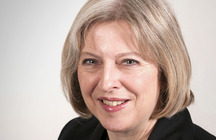
  • Theresa May – 2018 Speech on International Women’s Day

    Below is the text of the speech made by Theresa May, the Prime Minister, on International Women’s Day on 8 March 2018.

    For more than 100 years, International Women’s Day has called on us to stand together and celebrate the tremendous achievements of women in every country around the world.

    This year, it is particularly significant for us here in the UK because it coincides with a very significant centenary, the moment when some women were given the right to vote here in the UK.

    Today, it may seem extraordinary to us that women in this country were not only denied the right to vote until that time, but had to fight so hard for it.

    And yet despite the huge political, social and economic strides that we’ve taken forward since, we know there are areas where things are simply not right.

    Over the past year we have seen something of a watershed moment.

    I am of course referring to the women who have broken the silence on pervasive sexual harassment with the powerful “Me Too” movement;

    Spoken out about instances where – incredibly – a pay difference still exists between themselves and men carrying out the same work.

    And called out the bullying and harassment some – particularly those in public life – face online.

    Much work remains to be done in all those areas, but today I want to turn to another issue.

    Because today everybody gathered in this room is here because we are all united in one single aim: bringing an end to abhorrent and life-shattering domestic abuse.

    Across the country thousands of women endure unimaginable abuse in their homes, there are women who know what that means on a daily basis, often at the hands of those they are closest to, every single day.

    I believe we need nothing short of a complete change across the whole of society in the way we think about and tackle domestic abuse. That’s why today we are launching a consultation on our proposals for new laws, stronger powers and new prevention measures.

    And the trouble is too often women and men – although mainly women – suffer in silence and endure the most terrifying behaviour.

    We’ve tended to always think of it in terms of violence, but sometimes it means other forms of abuse that may not involve physical harm but certainly should be criminal. And so for the first time the Bill will provide a statutory definition of domestic abuse that includes non-physical abuse such as economic abuse. And we won’t let anyone trivialise these forms of abuse.

    The Bill will recognise the devastating impact domestic abuse has on families, by creating a statutory aggravating factor which will allow for tougher sentences in cases involving children. For too long, the approach was taken that children are not affected. It is time we recognise that they are.

    It will create new Domestic Abuse Protection Orders, drawing on the strongest powers from existing orders to allow police and courts to intervene earlier.

    It will establish a Domestic Abuse Commissioner, to hold public bodies to account, and act as a national champion for victims.

    And we will build upon the work I started at the Home Office – putting Clare’s Law – the Domestic Violence Disclosure Scheme which allows anyone to ask if their partner has a violent history – onto a statutory basis; giving victims of domestic abuse the same range of protections in courts as those who have suffered from modern slavery or sexual offences; and further strengthening the ground-breaking offence of controlling and coercive behaviour in a family relationship, which we introduced in 2015.

    I am grateful for the work that so many of you do with the police, and those in the criminal justice system and other public services, to ensure that victims are given the support that they need, when they need it. I know that, for too many years, too many people in power did not take this issue seriously. That is why, as Home Secretary, I commissioned Her Majesty’s Inspectorate of Constabulary to inspect every police force on their response to domestic abuse, ensuring that each force took action wherever the law enforcement response fell short of what it needed to be.

    I also understand just how important it is for those fleeing violent partners to have a safe place to go, and our recent injection of £20 million for accommodation-based services is already providing 2,200 additional beds in refuges and safe accommodation benefiting 19,000 victims.

    But I know there are concerns about our proposals on how supported housing will be funded in the future. So I want to make clear that I am committed to delivering a sustainable funding model for refuges and to ensuring that there is no postcode lottery when it comes to provision across the country. That is why I want to work with all the charities and organisations working on the front line to get your ideas on how we can get this right.

    And we want your input. Those working with those affected and those who have gone through it. You know what will work and what will not.

    This morning I visited Safe Lives and heard first-hand the harrowing accounts of women who have suffered at the hands of abusers.

    And I would like to pay tribute to all those survivors here today and beyond who show such bravery in speaking out, and to all of you working so hard to support victims and raise awareness. Thank you. You do an incredible job, often in very difficult circumstances.

    This is an issue that unites us all – whatever your background or political party. I am grateful to MPs and Peers of all parties for their tireless campaigning on behalf of survivors, and hope that we can work together to build a real consensus around these proposals.

    We need to get this legislation right. We need to hear from the widest range of voices possible: experts, charities, frontline professionals, and as many people affected by abuse, from as many walks of life, as possible. So I urge all of you here today to encourage others to contribute with this consultation.

    Every year many lives are ruined. Children witness appalling scenes and suffer lasting trauma and emotional damage.

    No woman and no child should ever spend their days living in fear, suffering domestic abuse and fearful of speaking out.

    A century ago, women fought for their independence, for their right to be heard. Today, we have come a long way but the fact we are gathered here today to talk about the continued issue of domestic abuse shows we still have a long way to go.

    We also have a great challenge. So, a hundred years on, let’s fight with the same vigour, the same determination. And let’s be the ones to consign domestic abuse to the past.

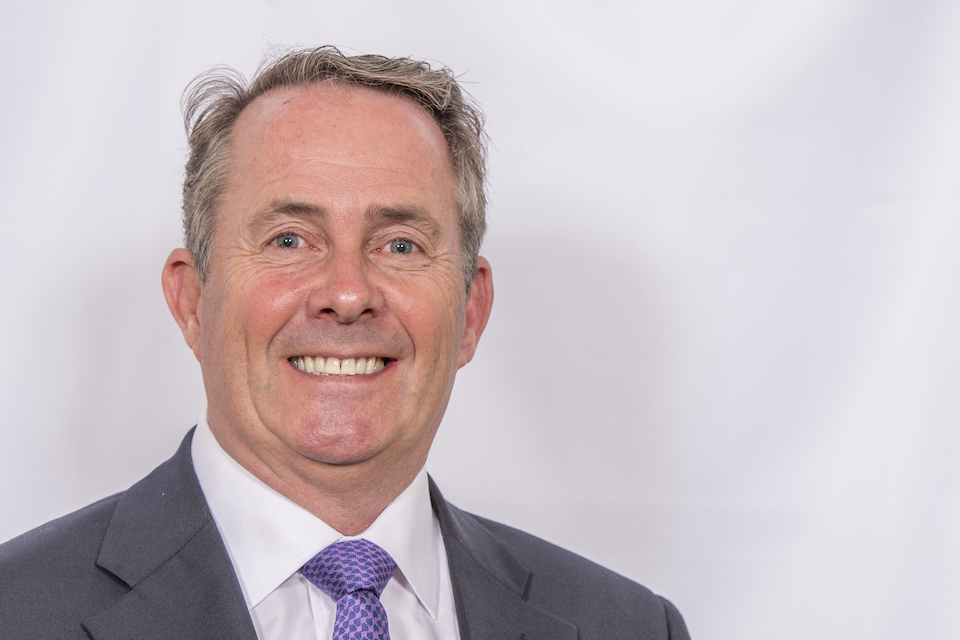
  • Liam Fox – 2018 Speech on UK Exporters

    Below is the text of the speech made by Liam Fox, the Secretary of State for International Trade, on 8 March 2018.

    Good morning.

    It’s a pleasure to be here today at the British Chambers of Commerce Annual Conference, and a privilege to be invited to address the representatives of some of this country’s most distinguished businesses.

    For more than a century and half, the constituent chambers of the BCC have protected and promoted Britain’s businesses.

    In all that long history, the chambers have always been resolutely outward-facing, and eager to support global ventures.

    And that expertise is especially valuable at this pivotal moment for our country.

    If you read some of our national publications, you could be forgiven for thinking we were about to enter some kind of economic black hole. Nothing could be further from the truth.

    We are seeing record foreign direct investment here in the UK; and our outward direct investment stock is now at £1.2 trillion, bringing prosperity at home and abroad.

    Our country’s traditional strengths are prospering just as much as our new ones. We’re seeing record tech start-ups – 8,000 in the last year; but manufacturing order books are also well above their long-term trend.

    Our employment levels are at an all time high and our exports of both goods and services are booming as an increasingly large global middle class is able to access the high quality products that Britain has to offer.

    Investors continue to show their confidence in the UK. When we ask them why they choose the UK they tell us that our legal system is second to none, we have a skilled work force, a low-tax and well-regulated economy, cutting edge tech, some of the world’s best universities, we speak English and we are in a great time zone for global trading. Some black hole.

    In fact, it is a time of historic opportunity.

    There are great prizes for our economy as we leave the EU in this era of globalisation, if we have the courage to grasp them.

    In fact global trade is leading our economy forward: exports rose by over 11% last year, 6 times faster than the economy as a whole. They reached well over £600 billion in 2017 .

    The EU will always be a very important part of that, and this government has been clear that we want a deep and special partnership with the EU.

    But we cannot let the practices and patterns of the past constrain the opportunities of the future.

    In just 10 years the proportion of our exports that go to the EU has dropped by 11 percentage points.

    And this is not a one-off change. Over the next decade or so, 90% of global economic growth is expected to be from outside the EU.

    That could be reinforced as a higher proportion of trade comes from services, and transport costs for goods decrease: both of these trends could reduce the importance of geographic distance.

    In my speech at Bloomberg last week, I spoke about how patterns of global trade were changing, and how shifting global prosperity will change the pattern of demand for goods and services.

    I will not repeat all the arguments here. But if you consider the fact that, by 2060, there are predicted to be 1.1 billion middle class Africans – all demanding luxury food, cars, consumer goods and services – then you can begin to glimpse the potential that the future holds.

    And London is the global financial centre with the closest time zone to the African continent, and therefore a natural choice to finance this growth.

    China is another example. Because the Chinese economic phenomenon is now 40 years old it’s easy to become inured to the statistics, and forget how vast this opportunity is.

    But every year China adds an economy the size of Switzerland to its GDP.

    By 2030 China will have 220 cities with more than a million people. The whole of Europe will have 35.

    Last month the Prime Minister and I went to China, for me the second visit in a month. While I was there I met the mayor of Wuhan, a city of which few in Europe have heard. Yet it has a booming economy and a population larger than London. It’s this kind of dynamism the UK can tap into.

    No one knows the capability of British businesses better than you. Our firms are world-leading repositories of talent, knowledge and expertise.

    But the government is not complacent here; and we can never rest on our laurels. We are building the economic base that will help our country compete on the world market.

    Our firms lead the world on innovation, research and the deployment of new technologies. Nonetheless, we have committed to raising the proportion of our GDP spent on research and development to 3%, which would put us in the top quartile of OECD countries.

    And UK businesses have unbeatable offerings on healthcare, infrastructure and education, that have enabled us to build a trade and development programme that is the envy of the world.

    Nonetheless, our modern Industrial Strategy is making sure we have the right infrastructure, market frameworks, skills base and business support to build a strong economy.

    My department is also working with businesses across the country to increase exports and investment.

    Many are members of the British Chambers of Commerce. Some are represented here today.

    They are the wealth-creators of society. Everything that my department does is designed to help them in that role.

    Department for International Trade advisers based in 108 countries around the world are providing targeted support for those high-value export and investment opportunities that contribute the most to the UK economy.

    And DIT also has an extensive range of resources available to SMEs and new exporters.

    In 2016 to 2017 UKEF provided £3 billion in support, helping 221 UK companies sell to 63 countries around the world. 79% of these companies were SMEs.

    And we are currently piloting a new Global Growth Service, increasing our support for those medium sized businesses with international ambitions.

    I understand that elements of DITs offer to companies is remarkably similar to Export Britain – the BCCs own online resource.

    This allows us almost unlimited scope to work together.

    And of course, DIT will forever be indebted to the BCC for the tireless work that you have done for the UK’s exporters.

    Today is, of course, International Women’s Day. One of this gathering’s key themes is diversity in business, and I am pleased that the BCC takes gender equality as seriously as the government.

    I am proud to lead one of the best-performing departments in Whitehall when it comes to women in senior roles.

    But there is more to do, and the British government is committed to achieving gender equality at all levels of society, and in all walks of life.

    Internationally, we have championed the cause of e-commerce which offers unique opportunities for women, including those in the developing world, to have a future in the global economy.

    It is a future that we all want to see.

    But this country is also facing a wider choice about its own future.

    Because we should not just be looking to maximise our existing opportunities – not when the pattern of global trade is due to change so significantly.

    We have to look for and create new opportunities.

    So our approach should not be premised on simply identifying how much of our current relationship we want to keep, but what we need to prosper in a rapidly changing global environment.

    Before leaving the European Union, the UK’s trade policy is centrally coordinated from Brussels, exclusively in the interests of the EU.

    Soon, we will have more control over our own economic and political destiny than at any time in the past 4 decades.

    This government, and the Department for International Trade, is clear about the kind of Britain that we want to build.

    We want a Britain that is open to the opportunities of the world – a country that treads a path to prosperity based not in protectionism, but in openness and economic cooperation.

    It is a vision that is, I believe, shared by many of you in this room.

    And it’s a vision that can be shared by many overseas, if we have the courage to embrace the opportunities of the future.

    We want to maintain our existing links with partners outside of the EU.

    We’re negotiating our new schedules at the WTO. We’re working to roll-over existing EU trade agreements – and we’re taking the Trade Bill through Parliament to give us the powers we need to do that.

    But we also want to sign new agreements with key partners.

    And we also want to use this opportunity – a seat at the international table for the first time in 40 years – to instil our values in the international system.

    Regulation is a good example of this. Thanks largely to the WTO’s success in lowering tariffs, technical and regulatory barriers to trade have become comparatively more important.

    Yet too often regulatory reform is presented as simply lowering standards.

    This is a straw man invented by those who take a generally anti-trade view. No-one wants a regulatory race to the bottom – least of all the UK, where our comparative advantage lies in quality not price.

    It’s not about high regulation versus low regulation, but good regulation versus bad regulation. Often you can achieve the same aim from regulation through a different route.

    For example, cars made under EU and US regulations have similar safety records, despite very different standards.

    That’s why we should move away from regulatory identity and towards regulatory equivalence – starting, as the Prime Minister said last week, with our future trade relationship with the EU.

    If we can get likeminded countries to follow our lead, the opportunities are enormous – they would increase growth in our trading partners and therefore increase demand for our goods and services.

    For me, the firms represented by these chambers are a source of inspiration.

    Time and again, they have proved themselves infinitely adaptable.

    Time and again, they have proved that they are forward-looking, and willing to rise and meet the challenges and prospects of a new era.

    Time and again, they have driven this country to new heights of wealth and prosperity.

    We are on the verge of a bright, prosperous future. The opportunities are there for the taking. We need only the courage to seize them.

    Thank you.

  • Baroness Sugg – 2018 Speech on Aviation

    Below is the text of the speech made by Baroness Sugg, the Aviation Minister, on 6 March 2018.

    Introduction – impressions of industry

    Good evening ladies and gentlemen.

    Thanks for that welcome.

    It’s an absolute pleasure to join you tonight (6 March 2018), and thank you to Ed and the AOA for inviting me to speak.

    It’s not often you get the opportunity to address so many distinguished figures from across the industry.

    It gives me the chance to talk a little about my first 4 months as Aviation Minister.

    Four busy, but fascinating months.

    I’ve really enjoyed getting around the country – I now spend most of my Fridays meeting organisations of all shapes and sizes.

    I’ve seen how Luton Airport’s investing for the future, and met the apprentices who’ll be part of that future.

    I’ve visited Gatwick and heard about its new flights to places like Buenos Aires and Singapore.

    I’ve seen how excellent surface access to Southampton Airport is making passengers’ journeys so much easier.

    How Newcastle Airport’s just reported record passenger growth.

    And how Heathrow has been consulting on its plans for a possible third runway.

    I’ve been trying to meet as many of you as possible.

    What I’ve encountered over these 4 months has been hugely impressive.

    An ambitious, innovative, and rapidly evolving aviation industry with a clear understanding of its importance to Britain’s future. But also a clear appreciation of its responsibilities too.

    I’ve been struck by the way you’re all competing fiercely. Yet you come together as a single, unified industry to meet common goals.

    And it’s that same sense of shared purpose that I feel as Aviation Minister, and that the department’s aviation directorates feel too.

    We are dedicated to working with you.

    Supporting you.

    Championing you.

    And when there are problems, finding solutions with you.

    Industry success

    As I said, it is great to see so many people here tonight. And you have a lot of shared success to celebrate.

    Record passenger numbers in 2015, 2016, and then again in 2017, with more records broken for Stansted, Edinburgh, Leeds Bradford, Glasgow.

    And many more.

    Investment in airport facilities around the country is continuing.

    Air freight was up 10% last year. Gatwick’s cargo volumes soaring by a quarter.

    And East Midlands forecasting that the annual value of non-EU trade passing through the airport has exceeded £10 billion for the first time.

    Then there’s the proliferation of new routes all over the world, from regional airports, to countries like the USA, Canada and further afield

    All evidence of a dynamic, evolving industry.

    But we cannot take future success for granted.

    Without investment and growth, we’d lose our competitive edge.

    So I and the DfT are right behind you, doing our best to support you and look out for your interests.

    The UK aviation sector is the third largest market in the world, and we want to continue being a competitive and leading global partner.

    In order to do this, we need to keep asking ourselves some fundamental questions.

    How do we maintain our competitive edge in the face of rapidly expanding markets overseas?

    How can we build and sustain a consensus around the need for growth?

    How can we manage the impact of that growth on the environment – particularly carbon emissions and noise?

    How can we harness the power of new technology and data?

    How can we ensure consumers’ interests are protected?

    How can we keep passengers and cargo safe and secure?

    And how do we best forge a new future outside the European Union?

    The government cannot answer these questions alone.

    The only way to address them is to continue the constructive and collaborative approach that we have all developed, and taken, in civil aviation.

    Aviation strategy

    That’s why our new aviation strategy will be rooted in partnership between government and industry.

    It will ask those challenging questions and more.

    It is our shared willingness to do this and think creatively together that will ensure we continue to be a global success.

    The strategy will set a new framework for a safe, secure and sustainable aviation sector.

    With the connections Britain’s economy will need to continue growing up to 2050 and beyond.

    It will consider areas where government can make a real difference – including our borders, which for many passengers are their first experience of coming in to our country.

    I will work with the Immigration Minister, Caroline Nokes, and the Director General of Border Force, Paul Lincoln, who are both with us tonight, to deliver a secure border, that allows swift entry to the country for legitimate passengers and goods, and that demonstrates Britain is open for business.

    Growth and Expansion

    Central to demonstrating this is supporting the growth of aviation through expansion.

    That’s why in October 2016 the government selected a new northwest runway at Heathrow as its preferred scheme for delivering new airport capacity.

    Among the reasons for this decision was the potential for strengthening the links between our network of regional airports and our major international hub.

    In the immediate term we need to follow the recommendation from the Airports Commission to make the best use of the capacity which already exists at all our airports.

    We will soon be setting out how best to achieve this as part of the next steps in our development of the new aviation strategy.

    Airspace

    Another major priority for the strategy is to develop the way that UK airspace is managed, in order to achieve a cleaner, quieter, more efficient aviation sector.

    I was fascinated to visit Swanwick recently and learn more about the work of NATS controllers.

    And also plans for wider airspace modernisation.

    Including a feasibility assessment of potential future airspace demands of airports in Southern England.

    Something that is long overdue.

    The government has confirmed it will implement proposals for.

    A new Independent Commission on Civil Aviation Noise (ICCAN).

    Changes to noise compensation policy.

    And more accurate navigation of flight paths through the use of new technology.

    Environment

    A modern airspace is just one of the ways we can make flying greener.

    Together the government and industry have made important progress in recent years.

    In addition to introducing new noise policies, we’ve also made progress on carbon.

    In 2016, we agreed the first ever sector-based global climate change deal with the goal of carbon-neutral growth for international aviation from 2020.

    New generation aircraft and engines are cleaner and quieter such as EasyJet’s new Airbus A320 NEOs.

    I was pleased to see all this excellent work highlighted when I attended the launch of the ‘Sustainable aviation progress report’.

    Again I was struck by how our industry achieves its goals when it works together.

    Community engagement

    Throughout all this work, we must never forget the communities that we serve.

    A major challenge for us all is to improve engagement with local communities.

    We need to consider those living in areas surrounding airports, and how we explain what we’re doing to make best use of capacity and airspace, and reduce the environmental impacts of flying.

    I know that airports are keen to grow. But in order to do so, we need to ensure you have the support of the communities around the airport.

    That is why community engagement is vital, and I know many airports represented in this room tonight have made significant progress in this area.

    Consumer

    But of course aviation is also about the millions of people up and down the country that take flights every year.

    So we need to continue putting the passenger at the heart of everything we do.

    But about serious issues that affect the travelling public. Issues like those we saw last week when severe weather hit the country.

    I want to thank you for the way you responded.

    To minimise disruption.

    And to advise, help and support passengers whose flights were delayed or cancelled.

    Great service is a powerful tool in keeping passengers coming back.

    It is the human face of the aviation industry that passengers value.

    The personalised care and service provided by airport employees or cabin crew on aircraft.

    And it is for this reason we must redouble efforts to tackle the problems that undermine people’s overwhelmingly positive experience of air travel.

    Dealing with disruptive passengers.

    Providing quick and efficient compensation when justified.

    Making sure there’s support to help disabled or elderly passengers.

    And ensuring we respond when things go wrong.

    The importance of this was brought home late last year with the sad collapse of Monarch.

    Despite how challenging this was for all involved, it clearly showed that by government and industry working together, we were able to successfully deliver the largest peacetime repatriation in UK history.

    I thank those in government, the CAA and across industry, including many of you in this room, that worked tirelessly to bring our citizens home, and who also provided new opportunities for staff who lost their jobs.

    It’s imperative that we learn from this, and listen to the views of those affected.

    So Peter Bucks’ review has been tasked with finding a solution that allows the orderly wind down of an airline as it enters insolvency.

    Ensuring that it can repatriate customers as an integral part of the process.

    Security

    Part of the consumer journey is the interaction with airport security.

    No issue is more important in keeping passengers safe.

    Last week the Home Secretary and I were in Washington talking to the US government and industry from both sides of the Atlantic, about the terrorist threat and how to address it.

    Another example of how we are at our best, coming together to achieve shared goals.

    Security standards in UK airports are second to none.

    The excellent work of our new force of overseas aviation security liaison officers is helping ensure that passengers get improved protection at airports abroad.

    Thanks to your innovation.

    And by hosting overseas delegations who come to see aviation security at its best.

    You are instrumental in raising standards globally.

    As the five terrorist attacks in the UK in 2017 vividly demonstrated, the threat is real.

    Which means we need to keep innovating to try and stay one step ahead.

    And I certainly welcome your continued collaboration.

    Brexit

    Before I finish and let you get on with your dinner, there is of course one last subject I should address – Brexit.

    The Prime Minister set out our ambitious, yet credible, vision for a future economic partnership last Friday.

    And specifically on aviation, she announced the UK’s intention to seek participation in EASA.

    I know this confirmation will be very welcome to everyone in this room.

    The fact it was part of the Prime Minister’s speech shows the importance of aviation and aerospace to our Brexit negotiations.

    And how vital it is that we get a positive deal for the industry.

    A positive deal will be crucial for both the UK and the EU.

    My officials and I are working with the third countries where air services are currently governed by EU agreements, to ensure that new, replacement arrangements are in place after we leave the EU.

    Despite some reports to the contrary, talks so far have been positive and we have made significant progress.

    It is obviously a high priority to provide reassurance for our industry, and I would like to thank you for your engagement and support in this area.

    It has been incredibly helpful to hear all your concerns and priorities.

    And as negotiations progress, we will of course continue to work closely with you.

    Conclusion

    My main messages tonight are.

    I, and the rest of the government will work with you at every stage to address the challenges we face.

    We are committed to ensuring the aviation strategy represents the interests of every airport across the country.

    I’m incredibly proud to be your Aviation Minister, and to champion our world-leading aviation sector.

    So I will do what I can to represent your interests.

    To support sustainable growth.

    Which, with your help, will make Britain a stronger, more competitive and more prosperous country.

    Thank you.

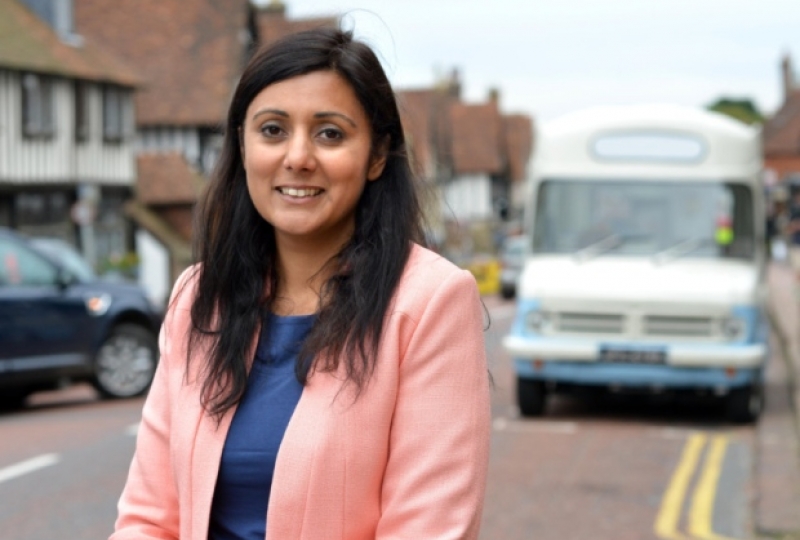
  • Nusrat Ghani – 2018 Statement on Wheelchair Spaces on Buses

    Below is the text of the statement made by Nusrat Ghani, Parliamentary Under Secretary of State at the Department for Transport and Assistant Government Whip, in the House of Commons on 7 March 2018.

    Government believes that where people live, shop, go out, or park their car should not be determined by their disability and recognises the importance of accessible transport networks in supporting disabled people to live independent lives and fulfil their potential.

    In January 2017 the Supreme Court handed down its judgment in the case of Paulley vs FirstGroup PLC, concerning the “reasonable adjustments” which must be provided by bus operators to enable wheelchair users to access the on-board wheelchair space.

    The Supreme Court judgment states that FirstGroup’s policy with regard to use of the wheelchair space was insufficient to meet the requirements of the Equality Act 2010, and that bus drivers should be required to do more than simply request that a person vacates the wheelchair space, including suspending the journey if needed. The judgment did not provide clarity on precisely what action a service provider should require its drivers to take or how the needs of both passengers in wheelchairs and other bus users, disabled or otherwise, should be taken into account.

    In order to understand the implications of the judgment for disabled people, the bus industry and other passengers, and to identify actions for government and others to take to ensure that required adjustments can be provided on buses we established a stakeholder ‘Task and Finish Group on the Use of Wheelchair Spaces on Buses’ (the group).

    The group’s report to ministers stated that:

    Our view is that drivers need to play an active role in ensuring that the wheelchair space is made available for passengers in wheelchairs, which includes requiring other passengers to move where necessary, but that drivers also need more powers than they have currently to enable them to do this effectively.

    The group agreed that that whilst wheelchair users should be granted access to the on-board wheelchair space they may not be the only passengers who rely on using it, but that where other passengers do not have such a need they should be expected to vacate the space in order that it can be occupied by a wheelchair user.

    The group made 4 specific recommendations:

    That the Public Service Vehicles (Conduct of Drivers, Inspectors, Conductors and Passengers) Regulations 1990 (the Conduct Regulations) are amended to enable drivers to remove passengers from the bus who unreasonably refuse to move when requested from the wheelchair space

    The associated guidance is amended to better reflect the behaviours expected from drivers and passengers with respect to use of the wheelchair space

    Further work is conducted to consider how best to raise public awareness of the behaviours expected from passengers with respect to the wheelchair space, for example a public awareness campaign, or improved signage on buses

    That conditions of carriage and disability awareness training best practice guidance are updated to reflect the fact that passengers will be required to move from the wheelchair space should it be required by a passenger in a wheelchair

    I am grateful to the group for their careful consideration of this complex issue.

    Government agrees with the group that the wheelchair space should be available to those who need it and that the balance of measures proposed, supporting bus drivers to facilitate access to the wheelchair space, and creating an environment where the needs of disabled passengers are recognised and respected should help to overcome the barriers still faced by some disabled people when using bus services.

    In accepting the group’s recommendations in principle we will begin a process of further engagement to understand the specific experiences of a range of stakeholders affected by the wheelchair space issue, including wheelchair users, parents travelling with young children, and bus drivers – with a view to bringing forward a package of measures in 2018, informed by the group’s recommendations and our further consideration, to support access to the wheelchair space.

    Disabled people make 10 times as many journeys by bus as by rail, and it is essential that the services they rely upon to access education, employment, social and leisure activities are accessible to them. We hope that in supporting access to the wheelchair space for those who need it we will help many more disabled people to travel with confidence.

    Copies of the Task and Finish Group’s report to ministers and accompanying letter have been placed in the House libraries.

  • Philip Hammond – 2018 Speech on Financial Services

    Below is the text of the speech made by Philip Hammond, the Chancellor of the Exchequer, on 7 March 2018 in Canary Wharf, London.

    It’s great to be here in Canary Wharf, and I am grateful to HSBC for hosting me.

    But I am conscious that holding this event in London risks feeding the prejudice that financial services is just a London business…

    …when, in fact, of course it is a vibrant part of the economy across the length and breadth of Britain…

    …with over two-thirds of financial services jobs outside London…

    … and significant financial services hubs in Edinburgh, Leeds, Bristol, Belfast, Birmingham and Bournemouth, to name but a few.

    On Friday, the Prime Minister set out the UK’s vision for its future economic partnership with the European Union…

    ….in a speech which answered the call to set out “what we want”…

    …while being clear that we understand this is a negotiation, where both sides will need to give and take.

    As the PM said, our task, together with our European partners, is to deliver a Brexit that works…

    …for the UK…

    …and for the EU.

    A partnership that protects supply chains and established trade relationships…

    …that backs businesses, safeguards jobs…

    …and promotes the shared European values that we all hold.

    And the first step will be delivering on the Implementation Period which was agreed as a fundamental part of the deal on Withdrawal issues that we did in December…

    …and which we expect to be formalised at the March European Council meeting.

    This Implementation Period is essential if we – and by “we”, I mean all of us, businesses and citizens, in all 28 countries – are to benefit from a smooth pathway to a future partnership between the UK and the EU.

    Nowhere will this be more important than in Financial Services, where we must work together to avoid the potential risks to financial stability that could arise if we faced a cliff-edge in March 2019.

    But for the Implementation Period to deliver the smooth transition we all want to see, it needs to be effective.

    That means our regulators working together so that businesses – especially regulated businesses – are able to plan on the basis of it.

    Giving full and meaningful effect to what we agreed in December…

    …delivering clarity and certainty to businesses and citizens across Europe.

    The PM was clear in her speech that after we have left the EU, we’ll be outside the Single Market and the Customs Union…

    …but equally, we’ll be free to cooperate closely with partners, including the EU, where it is in our mutual interest to do so.

    Financial services is such an area where we can, and should, collaborate closely.

    …recognising that a future economic partnership will always need to ensure a fair balance of the rights and obligations associated with market access.

    Today I want to build on the vision the Prime Minister delivered on Friday.

    I want to explain why it makes sense, for both the UK and the EU, that we continue to collaborate closely on cross-border financial services.

    I want to challenge the assertion that Financial Services cannot be part of a free trade agreement…

    …to set-out why it is in the interest of both the UK and the EU27 to ensure that EU businesses and citizens can continue to access the UK Financial Services hub…

    …and how this is not a zero-sum game, where any loss of market share in London is automatically a gain to another EU Capital.

    And I want to describe what a future financial services component of a comprehensive trade partnership agreement could look like.

    The UK Financial Services hub is an engine that powers the real economy not just in the UK, but right across Europe…

    Because the fact is that the UK financial services hub is not just a British asset…

    …but a European asset too…

    …supporting businesses, savers and citizens across the EU…

    …serving the whole of our continent, as well as the world beyond.

    And not just serving Europe…

    …but powered by the talent of hundreds of thousands of Europeans who work in it.

    And it is an asset unparalleled in its history, its scale, its complexity, its agility and its connectivity to the economies of Europe and the world.

    A “global public good”, as the IMF described it.

    EU passporting did not create the City of London.

    …nor did some smart regulatory fix or government incentive.

    It is a combination of intangibles: language, legal system, time zone, culture, networks, risk appetite, regulatory approach…

    …all blending together to create an ecosystem…

    …an immensely potent combination of factors…

    …impossible to replicate…

    …or perhaps even to map.

    Of course, having such a significant financial services industry brings to the UK great benefits…

    …but it is not cost free.

    The UK economy bears the related risks and UK taxpayers stand behind those risks.

    As we learned to our very real cost during the financial crisis…

    …when those taxpayers provided support to financial sector firms to the tune of £136bn.

    …and that is not a lesson we will forget.

    So, even as a member of the EU, we have chosen to go higher and faster on regulatory standards at times to protect our taxpayers.

    And because we understand the risks we are taking, our commitment to rigorous and robust regulation will remain undimmed….

    …David Davis was right in Vienna when he said that Britain’s plan is for a race to the top in global standards.

    And because those risks are so significant, it is vital that the citizens of any country bidding to take on a bigger share of Europe’s financial services market have a full and transparent understanding of them.

    The deep pools of capital, specialist skill and regulatory competence in London provide efficient, safe, and high quality services to the EU.

    We manage EUR1.5 trillion of assets on behalf of EU clients;

    Around two-thirds of debt and equity capital raised by EU corporates is facilitated by banks based in the UK.

    78% of European Forex trading and 74% of European interest rate derivatives trading takes place in the UK. These are services that businesses rely on to run their operations efficiently, with the benefit passed on to consumers in all 28 EU countries.

    And we should be under no illusion about the significant additional costs if this highly efficient market were to fragment.

    Costs that would be borne by Europe’s businesses and consumers…

    …costs that industry bodies across Europe are beginning to recognise.

    The consultancy, Oliver Wyman calculates that the wholesale banking industry would need to find USD 30–50bn of extra capital if new regulatory barriers forced fragmentation of firms’ balance sheets.

    And LSEG estimate that the EU’s proposal on location of clearing houses, if implemented, would increase costs to EU27 firms by around $25 billion a year…

    …by fragmenting the market and losing the efficiency of “offsetting” between trades. Already evidence is emerging of market actors reassessing their commitment to Europe in the face of potential regulatory fragmentation.

    For example, Intercontinental Exchange announced plans last month to launch daily gold futures contracts in the US next year, based on metal held in the UK.

    Those who think that the major winners for any fragmentation of London’s markets would be Paris or Frankfurt…

    …Dublin or Luxembourg…

    …should take note!

    The real beneficiaries are more likely to be New York, Singapore, and Hong Kong…

    …cutting Europe’s market share.

    And leaving Europe as a whole, less competitive…

    …and more reliant on distant financial centres, operating under very different rules.

    So it is time to address the sceptics who say a trade deal including financial services cannot be done because it has never been done before:

    …to them I say: “every trade deal the EU has ever done has been unique”.

    The EU has never negotiated the same arrangement twice.

    It has bespoke relationships with Turkey, Canada, Singapore, Korea.

    Every FTA has varying degrees of market access depending on the countries involved…

    …which is not surprising, given the different economies and the different interests reflected in those agreements.

    In the last hour or so the EU has published its draft regulatory guidelines.

    It is clear that a deal based wholly on precedent cannot deliver the depth and breadth of market access that these guidelines envisage.

    Because any trade deal between the UK and the EU must start from the reality of today:

    That our economies, including in Financial Services, are deeply interconnected;

    That our regulatory frameworks are effectively identical;

    That our supervisors and regulators work hand in glove to maintain the stability of our financial systems and have developed high levels of mutual trust;

    And that our businesses and citizens depend on cross-border financial services trade in their day-to-day lives far more than most of them will ever know…

    …when they buy a car…

    …or take out a fixed rate loan…

    …or hedge their fuel costs…

    …or insure an aircraft.

    The EU itself pursued ambitious financial services co-operation in its proposals for TTIP – which it described as a partnership that would be: “more than a traditional free trade agreement”. And in its initial proposals for CETA.

    We know because back then, British and French officials worked hand-in-hand on the proposals, with the Commission.

    Both CETA and TTIP were intended to promote convergence between entirely separate markets… …with different rules.

    And low levels of interconnectedness.

    We can do so much better…

    …given our starting point..

    At the time of the TTIP negotiations, people rightly argued that this was a challenging objective…

    …but it need not be so in a partnership between the UK and the EU.

    Our markets are already deeply interconnected.

    If it could be done with Canada or the USA…

    …it could certainly be done with the UK.

    And there is another reason why it must be done:

    A trade deal will only happen if it is fair and balances the interests of both sides.

    Given the shape of the British economy, and our trade balance with the EU27, it is hard to see how any deal that did not include services could look like a fair and balanced settlement.

    So I am clear not only that it IS possible to include Financial Services within a Trade Deal but that it is very much in our mutual interest to do so.

    But in making that statement, I do not minimise the challenges.

    I recognise that there will be many legitimate concerns…

    …concerns about the policing of rules once we are separate legal jurisdictions…

    …concerns about the legal framework for regulatory and supervisory cooperation…

    …concerns about the implications for Financial Stability and for the operation of Eurozone monetary policy.

    We stand ready to engage on all of these issues…

    …and we have been giving a great deal of thought to how to address these concerns…

    …to ensure that all our economies continue to benefit.

    …rather than simply throwing in the towel and allowing the market to fragment…

    …to everybody’s cost.

    I will set out our initial thoughts…

    …but first, let me say a word or two about financial stability.

    We have come a very long way since the autumn of 2008.

    Working collaboratively across the EU and indeed, beyond with international partners…

    …we have increased the capital requirements of our banks…

    …we have tightened supervision of their operations …

    …and we have put in place resolution plans…

    … to avoid contagion should the worst happen to an institution.

    In the UK we have gone further and ring-fenced the retail banking operations of integrated groups from their wholesale market activities.

    So the risk now to financial stability is not from continued close co-operation and integration…

    …it is from the opposite: breaking up the intense co-operation that has developed between regulators across the EU and the UK.

    Modern Europe is, quite literally, testament to the benefits of tearing down walls.

    Let us not now propose new barriers where there need be none between our successfully collaborating financial services regulators.

    So, building on the Prime Minister’s speech last week…

    …let us consider how we might structure a future partnership in financial services…

    …in a world beyond the single market and passporting.

    A partnership that enables the ongoing delivery of cross-border financial services in both directions…

    …while protecting financial stability…

    …and consumers, businesses, and taxpayers across the UK and EU.

    In my Mansion House speech last June, I set out three principles for a future partnership in financial services:

    A process for establishing regulatory requirements for cross-border trade between the UK and the EU; Cooperation arrangements that are reciprocal, reliable, and that prioritise financial stability; and

    A legal framework that makes this structure durable and reliable for participants in the market and for businesses who use their services.

    Today, I want to describe how the vision of the Prime Minister’s speech could shape those principles into a framework that could be the basis of a future partnership in financial services…

    …as part of a wide-ranging Free Trade Agreement.

    We will start from a unique position…

    …with full alignment on Day 1.

    The challenge is what happens next.

    So the way forward must surely be to bank our Day 1 defacto equivalence.

    …and shape a regime to manage future regulatory change that ensures that…

    …while our rule systems may evolve separately…

    …we deliver fully equivalent regulatory outcomes…

    …maintaining commitments to support open-markets and fair competition.

    As these rules systems for financial services evolve, the United Kingdom cannot simply be an automatic ‘rule taker’.

    Let me explain why.

    We have invested heavily in the current rulebook, and our industry is structured around it.

    And we hope that from Day 1, good sense, sound economics, and a commitment to mutual benefit will be the guiding principle of future rulemaking on both sides…

    …often within the framework of internationally agreed regulatory standards.

    But, because of the size of the UK’s financial services market…

    …around 10 times our GDP…

    …and the complexity of the products traded on it…

    …and the consequent risks our taxpayers bear…

    …we cannot sign up to automatically accept as-yet-unknown future rule changes.

    We must have the ability, if necessary, to deliver an equivalent outcome by different means…

    …maintaining our commitment to ensure access to each other’s markets is on fair and non-discriminatory terms.

    …while protecting UK taxpayers from potentially unacceptable risks.

    At first glance, this may appear to point to a solution based on the EU’s established third-country equivalence regime.

    But that regime would be wholly inadequate for the scale and complexity of UK-EU financial services trade.

    It was never meant to carry such a load.

    The EU regime is unilateral and access can be withdrawn with little to no notice.

    Clearly not a platform on which to base a multi-trillion pound trade relationship.

    But the principle of mutual recognition and reciprocal regulatory equivalence, provided it is objectively assessed, with proper governance structures, dispute resolution mechanisms, and sensible notice periods to market participants clearly could provide an effective basis for such a partnership.

    And although we will be separate jurisdictions, we would need to maintain a structured regulatory dialogue to discuss new rules proposed by either side…

    …building on our current unparalleled regulatory relationships…

    …to ensure we deliver equivalent regulatory outcomes…

    …agreeing mutually acceptable rule-changes where possible.

    And where rules do evolve differently we will need an objective process to determine whether they provide sufficiently equivalent regulatory outcomes…

    …including not only the rules themselves, but also an assessment of the way in which they are enforced…

    …drawing on international standards where they exist, or on additional principles for equivalence where the UK and EU have more developed rules.

    Second, there would need to be continued close supervisory co-operation.

    The EU itself noted in the context of TTIP discussions that “in too many instances, international standards have been implemented in a way that does not allow…the relevant regulators and supervisors to work together”…

    …weakening the resilience of financial markets.

    We must not risk exacerbating that tendency.

    While the UK would cease to be a part of the EU’s supervisory agencies, there is no reason why we could not maintain a very close working relationship.

    Indeed it would be an essential part of supporting the regulatory equivalence that I have described…

    …for instance, through proactive and extensive information exchange…

    …authorised by the data-sharing agreements within the overarching FTA…

    …going far beyond what is available in ordinary third-country relationships.

    It could cover market abuse, transaction reporting, and stability monitoring, as well as prudential concerns about individual firms…

    …and it could involve a version of today’s college structures, covering both day-to-day supervision and resolution in crisis.

    Of course how each party organises its internal governance would be a matter for it.

    Neither party would have a role in the other’s governance processes.

    But we should be able to build on the extraordinary level of supervisory collaboration and trust that already exists between the EU and UK authorities…

    …to establish the most comprehensive supervisory cooperation arrangements anywhere in the world…

    …protecting our respective financial systems and our taxpayers from instability risks.

    We recognise, also, that the supervision of major clearing houses conducting euro-denominated activity is a particularly important and sensitive subject for our EU partners…

    …and we stand ready to discuss a mutually satisfactory way forward in this area.

    The supervisory cooperation that I have described does not involve either party transferring any responsibility for its rules or ceding any sovereignty.

    And that leads me to the third principle.

    As the PM said on Friday, in certain circumstances we may choose not to maintain equivalent outcomes but we will know there may be consequences…

    …we would have to address how this future partnership would work in such circumstances…

    …with clear institutional processes to do so.

    Our concern in a financial services partnership would be to ensure that any such consequences were reasonable and proportionate…

    …applied in a predictable way that allows industry to plan with confidence…

    …and that they were delivered through an independent arbitration mechanism that has the confidence of both parties.

    Such mechanisms already exist within FTAs, including CETA.

    The Prime Minister was clear on Friday that we have decided to leave the EU…

    …and we accept that there will be consequences.

    We do not expect the same relationship we have today across all areas of activity in financial services…

    …trade-offs should be expected…

    …and the industry will change.

    But we should ensure that the future partnership strengthens European stability and prosperity…

    …rather than weakening it.

    The ideas I have set out today suggest a way to move forward…

    …to shape a potential partnership in Financial Services…

    …based on the core concept of fair and non-discriminatory competition…

    …recognising legitimate concerns where they exist…

    …but drawing a distinction between those concerns, and protectionism or political expediency which would undermine that competition.

    What I have set out today is a possible route to a future partnership grounded in logic, pragmatism, and compromise…

    …a partnership that would protect Europe’s financial stability and underpin one of its great competitive advantages.

    And I look forward to constructive engagement with our friends and partners in the EU to take these ideas forward.

    Thank you.

  • Penny Mordaunt – 2018 Speech on Gender Equality

    Below is the text of the speech made by Penny Mordaunt, the Secretary of State for International Development, on 7 March 2018.

    Why are we here today? Why are you here today?

    What made you get involved in your respective organisations?

    What made you want to help? To change things, to make the world a better place?

    Perhaps I should also ask you what made you endure? What made you expose yourself to abuse or ridicule? To overcome fear, to stand up to thugs or threats, or be sassy on social media?

    What made you wake up to this cause? What makes the British people donate so generously or volunteer?

    Maybe it’s that they are angry, or that you are angry at injustice?

    At girls being denied an education? Angry that half of the women in the world have experienced physical or sexual violence?

    Or that in some conflict zones, that rises to almost all women?

    Or that 12 year olds are being forced to marry? Or that young teenagers are becoming mothers or dying in the process?

    Angry because in 18 countries women still need permission from a man to have a job?

    Angry that many who do work often take home less money for the same work?

    And that millions of girls around the world, and 24,000 here in the UK are at risk from FGM?

    Or maybe you are angry at how you have been treated in the past?

    Some of you might be concerned. Concerned that as last year’s news brought from the World Economic Forum on gender pay gap report. That found that the gender gap is widening for the first time in decades.

    Or maybe you are concerned that the Me Too movement is just restricted to the developed world?

    Or maybe you are frustrated at all that talent and potential wasted?

    The McKinsey Global Institute estimates that equality in the job market would yield add an extra £20 trillion to global GDP by 2025.

    But what can’t be measured is the lost ideas, the dreams never realised, the businesses never built, the opportunities missed.

    Maybe you are exasperated that we stand no chance of meeting any of the Global Goals unless we address gender equality.

    Some of you might be hopeful, I know I am.

    When we include women great things happen. When we negotiate peace treaties they are a one third more likely to work. When we serve in services or in the armed forces, these organisations become so much more effective.

    Whatever your reasons for being here today, I think perhaps there is one motive which unites us all – and that is love.

    Love of humanity, and our love of women around the world. A love of freedom, the freedom for every individual around the world to reach their full potential. And of faith, that every human being matters and that every human being can make a difference.

    Whether they are aid workers, charity workers, trustees, governors, academics, teachers, doctors, soldiers, entrepreneurs, artists or mothers, I see love as the motivation for so many trying to make the world a better place.

    And politicians too. In Parliaments, in peace councils, in village councils. And in Westminster too. Love.

    Love is my lasting impression of Jo Cox. Jo and I sat on different sides of the house but we were frequent correspondents. We scribbled hand written notes to each other very frequently.

    She was an opposition back bencher and I was Minister of State for the Armed Forces. But we were trying together to build a coalition across the house on Syria.

    I treasure her letters.

    She was angry, she was frustrated, she was hopeful. And she burned with a love, passion and empathy for those caught up in a brutal conflict.

    And that love and her determination now echo in the work of her memorial fund.

    I am pleased to help that work today by announcing £10 million of new funding in Jo’s memory.

    Jo’s sister Kim will tell you more about social, economic and political empowerment work of the Jo Cox Memorial Fund.

    And it is doing that by ensuring that women are leading that work, and making the decisions that impact their lives.

    In addition, we will support the Jo Cox Memorial Fund in its work to strengthen civil society organisations, to prevent and protect civilians from mass atrocities.

    As part of our new strategic vision, we are pledging £6 million over four years to the UN Data Programme, making every woman and girl count.

    Through this we will be able to accurately understand the needs of women and girls, the challenges they face and monitor how much progress we are making.

    We are also today announcing new support through UK Aid Match, to tackle violence against women and girls in Kenya. And we are launching a new shared approach across the UK Government to gender in Syria.

    This will bring our existing commitment from tackling violence, to empowering women, to engage in the political process together. And mean that the British government places women and girls at the heart of our efforts to bring an end to conflict and bring forth a peace which includes everyone.

    We are launching a new call to action today through our new plan. This is a call to action for everyone, recognising that we all need to take action in everything we do, if gender equality is to become a lasting reality.

    If we succeed, girls, women, men and boys across the globe will be equal, empowered and safe.

    And countries will enjoy prosperity, peace and stability.

    We need to challenge and change unequal power relations between men and women. We need to build the interlinked foundations which will have a transformational impact for girls and women.

    We need to protect and empower girls and women in conflict, protracted crises and humanitarian emergencies.

    We must leave no girl or woman behind.

    We need to integrate gender equality in all our work across the board, and track delivery through results on jobs, on trade, tax systems in the world economy, new technologies, modern slavery, climate change, nutrition, tackling AIDS, infrastructure and peace agreements.

    We need to work across girls and women’s life cycles, on multiple areas simultaneously, with particular attention of adolescents.

    We need to build evidence and disaggregate data. And we need to make that information publically available.

    Today, we are doing a very untypical female thing. We are going to be asking for more.

    Because without more we will fail the world.

    Women’s empowerment, women’s rights, women’s talents and gifts are the entire margin of victory in the fight for prosperity, security and peace.

    Without gender equality, we will never achieve any of the global goals.

    A century ago, Emmeline Pankhurst said that “women have always fought for men and their children, but now they were prepared to fight for their own rights”.

    Today, we must recognise they are the same thing. Without women’s rights, there are no human rights. Her potential is our future.

    Whatever your motives, thank you for being here.

  • Matt Hancock – 2018 Speech on Digital Culture

    Matt Hancock

    Below is the text of the speech made by Matt Hancock, the Secretary of State for Digital, Culture, Media and Sport on 7 March 2018.

    Thanks Gabriele (Finaldi – Director National Gallery).

    It’s a great pleasure to be here and see so many of you at the launch of this important report. And the next step in our exciting journey, linking the great cultural institutions of Britain and our great cultural life, with the most cutting edge, most impressive technology that there is.

    I think that the wonderful view all around us shows how broad, how encompassing culture can be. Here, Venetian paintings from the 15th and 16th century are side by side with innovative digital content.

    We all know from our daily lives that digital technology is breaking down silos within the cultural sector and blurring lines between disciplines in the same ways as in many other parts of the world.

    Increasingly, theatre blends with film; computer programming merges with sculpture.

    We have virtual reality curatorship as a crucial new skill, animated artworks and video games scored by classical music composers.

    If you go to some of the video game development studios they will have fine arts students and computer engineers sitting next to each other, understanding and learning from each other about their deep talents, in order to be able to make a better representation of reality using the best of technology.

    Of course art has always used the latest technology, whether it is Michelangelo investing time and money understanding and analysing the very basis of paint, or the brilliant exhibitions we’ve got in the modern day, using cutting edge virtual reality or computer programming in order to get their art to a wider audience.

    In my previous role as the Minister for Digital and Culture I was very interested in this nexus.

    I firmly believe, and some of you might have heard before, that Britain’s bread will be buttered at the link between cultural brilliance and technological excellence in the years to come.

    And because I was the Minister for Digital and Culture and lots of people used to say to me ‘Why are you the Minister for Digital and Culture?’, I wanted to demonstrate in a very tangible way the links between the two.

    That it’s about the connectivity and the content. Creating the future using the best cutting edge technology: the creativity and the technology and bringing them together.

    I can’t tell you how absolutely thrilled I am to be back in charge of Digital and Culture as well as Sport as Secretary of State, and able to launch the report of this project.

    The other brilliant thing about this project, which I find brilliantly exciting, is that it has been truly consultative in the very best possible way.

    Helen Williams – one of the finest Civil Servants of her generation – she has led the project and not just tried to do the project herself but rather gone and found people who can add value to the project and bought them into DCMS.

    Half a dozen people came to work in DCMS and I want to say thank you to each and every one of them and all the institutions who have lent people: the BBC; the Arts Council England and others.

    A couple of other shout outs. I want to pay a special tribute to Jeremy Silver at the Digital Catapult, because the Digital Catapult is at the digital end of this project and understands the technology side and is a great incubator and a great place for bringing together digital and culture.

    A big thank you to Darren Henley and the Arts Council England. The Arts Council holds the budget, and he has skewed the Arts Council’s budget in the direction of supporting projects that use digital technology to reach new audiences.

    I think that is important because, as the National Gallery has led the country and the world in showing, you can use digital technology to reach new audiences.

    There are many other shout outs that I could give. I acknowledge Tristram Hunt, the Director of the V&A museum, who has also bought this to bear.

    What I hope that this report shows is just what the opportunities are. That it is a ‘how to guide’ for cultural organisations in using the very latest technology.

    And it is a ‘how to guide’ for people involved in technology like Amazon and Cisco, who I can see in front of me, for how to support the nation’s cultural development.

    These two worlds have so much to gain from talking to each other, engaging and supporting each other, in bringing the very best out of each other by linking the creativity with digital technology.

    So a big thank you to organisations, big and small, involved in the digital project. From the National Gallery and Royal Opera House who are setting up collaborative opportunities, all the way to the Royal Shakespeare Company partnering with the BBC and the Arts and Humanities Research Council to share assets and support smaller organisations.

    The future of Digital Culture is reliant on digital partnerships. It’s reliant on you in this room, going out making the case and crucially breaking down boundaries, so that we can forever be using the very best of technology to showcase the very best of British culture and British creativity. And we need to do that more now than ever.

    Thanks very much.

  • Hugo Swire – 2018 Speech on the Maldives

    Below is the text of the speech made by Hugo Swire, the Conservative MP for East Devon, in the House of Commons on 6 March 2018.

    I am extremely grateful to have secured this Adjournment debate on the topical and important issue of the current political situation in the Maldives. On 1 February, the full bench of the Supreme Court in the Maldives ordered the retrial of cases against nine political leaders, including former President Mohamed Nasheed, labelling their trials politically influenced. The Supreme Court also ruled that 12 Opposition MPs, barred from Parliament by the Elections Commission, must be allowed to retake their seats, thus handing the opposition a majority in Parliament, which has the power to impeach the President.

    The Maldives police service immediately announced that it would comply with the Supreme Court ruling. Over the next two days, President Yameen fired the police chief, fired his replacement, and installed a third police chief. On 5 February, President Yameen declared a 15-day state of emergency. Masked security officials broke through the doors of the Supreme Court and physically dragged the chief justice away and threw him in detention. Another Supreme Court justice was also detained and thrown in jail. Former President Gayoom, Yameen’s half-brother, was also detained.

    The remaining three Supreme Court Judges then overruled the 1 February judgment, despite it being unconstitutional for a three-bench court to overturn the decision of the full bench. On 20 February, President Yameen petitioned parliament to extend the state of emergency by 30 days. However, the ruling party was unable to gain a quorum in Parliament. Just 40 MPs attended Parliament; a quorum demands 43, but President Yameen announced the state of emergency extension regardless. The prosecutor general has publicly declared the state of emergency extension to be unconstitutional.

    Despite the state of emergency and a 10.30 pm curfew in Malé, daily anti-Government protests have spread across the Maldives and have now entered their fourth week. Riot police have severely beaten numerous protesters, hospitalising many. A total of 110 individuals have been arrested since the declaration of the state of emergency and 31 of these are being held without trial under state of emergency rules. There are growing divisions in the security services. Some 50 military and police officials are being detained either at their barracks incommunicado or in detention centres. Four Members of Parliament are currently in detention.

    Why should any of this be of interest to the United Kingdom? I would like to make four points this evening; the first concerns radicalisation. President Yameen continues to collude with a network of radical Islamists in the Maldives who are suspected of carrying out 26 murders over the past few years.

    ​Jim Shannon (Strangford) (DUP) rose

    Sir Hugo Swire I give way to the hon. Gentleman— I suspect that I know which angle he is coming from.

    Jim Shannon I think the right hon. Gentleman knows exactly which angle I am coming from. I congratulate him on securing the debate. He will be aware of the religious persecution that is clearly taking place in the Maldives. Some of my constituents went there on holiday. One was imprisoned and sent back home, because he took his Bible with him and read it. It is against the law for someone to read a Bible, be a Christian and practise their religion in the Maldives. Is that not another example of the human rights abuses carried out in the Maldives, in this case, against those of a religious and Christian belief?

    Sir Hugo Swire This is the great dilemma of the Maldives. It is, on the one hand, an Islamic country, but on the other it is host to many hundreds of thousands of people from around the world, on whom it depends and who should be free to practise their own religion, even if they are on holiday.

    Zac Goldsmith (Richmond Park) (Con) President Mohamed Nasheed was the first democratically elected president of the Maldives, and he was elected after years of having been tortured and abused in that country’s jails by his predecessor. He was a great leader, famously closing the political prisons and holding his first Cabinet meeting underwater to highlight climate change. He was a truly progressive, secular leader in a democratic country. Does my right hon. Friend not share my tremendous sadness at how far this country has fallen at the hands of utterly corrupt and malignant forces?

    Sir Hugo Swire My hon. Friend is of course absolutely right and I shall go on to say something about this. I very much see the former President Mohamed Nasheed having a role in the future of the Maldives, along with others who have sometimes been his political opponents. My hon. Friend is absolutely right.

    There have been murders of prominent liberal bloggers and journalists, too. In late September last year Her Majesty’s Government warned that terrorists were “very likely” to carry out an attack on the islands. I understand that this is also the current travel advice from the Foreign and Commonwealth Office. Allegedly, between 200 and 250 Maldivians are either fighting or have fought in Syria and Iraq. US Assistant Secretary of State, Alice Wells, claimed that the Maldives was the highest foreign fighter contributor per capita to the so-called Islamic State.

    Much of the recruiting and radicalisation is promoted by websites such as Bilad al-Sham Media, and Facebook and other social media are more accessible than ever on the remote islands that make up the country.

    My second point concerns the safety of our British tourists. The United Kingdom ranks third in a list of visitors to the Maldives in 2016, behind Germany and China, with 7.9% of market share and more than 100,000 visitors. This was an increase of 9.8% compared with 2015.

    The Maldives economy remains a tourism driven economy in that it contributes more than 25% of the country’s GDP. While the tourism sector supplies more ​than 70% of the foreign exchange earnings to the country, one third of the Government revenue is generated from this sector. Tourism is also known as the leading employment generator in the country. In 2016, tourism contributed 36.4% to the Government revenue. But as a result of the current situation, the Maldives is facing financial ruin, with the tourism industry estimated to be losing $20 million a day since the start of the state of emergency. If the trend continues, it will lead to unemployment and dissatisfaction, to my way of thinking both active recruiting sergeants for radicalisation, and with our tourists spread out over 115 square miles in 105 resorts it is almost impossible to guarantee their safety.

    My third point concerns the Commonwealth. After 30 years of President Maumoon Abdul Gayoom’s rule, it was President Nasheed who introduced democracy into the Maldives. From 1982, it was a welcome member of the Commonwealth family. It was President Yameen who took the country out of the Commonwealth in 2016.

    Ian Paisley (North Antrim) (DUP) I thank the right hon. Gentleman for giving way, and draw Members’ attention to my registered interests on the Maldives. Is the right hon. Gentleman going to draw some attention to the fact that the United Kingdom’s reach on the Maldives has declined somewhat because it has left the Commonwealth? What can we do to rebuild that relationship, working with the ambassador, who is based in Europe? What can we do to rebuild the relationship with the Government for the very reasons the right hon. Gentleman has outlined—to make the country more prosperous and, more importantly, to turn it away from what would be a terrible plight if his predictions came true?

    Sir Hugo Swire Indeed, and two of the surrounding countries, Sri Lanka and India, are members of the Commonwealth. I will say later in my speech that, although I believe much needs to be done before the Maldives comes back into the Commonwealth, its proper place is back in the Commonwealth family.

    President Yameen’s unconstitutional behaviour has seen him arrest three lawmakers and instigate a witch hunt of the families of his political opponents, including wives and children. President Maumoon and the justices at the supreme court have been charged with treason and bribery, and access to lawyers and family has been restricted, with reports of ill-treatment. Following the arrest of President Gayoom, all the leaders of the opposition political parties are under detention, or have been sentenced under similar trumped-up charges. The Government continue to defend their actions, claiming that state-of-emergency powers are applicable only to those who are believed to have planned or carried out illegal acts in conjunction with the 1 February Supreme Court ruling. That has led to increasingly politicised targeting of the opposition by security services.

    President Gayoom’s daughter, Dunya, resigned last week as the state health Minister, and has herself now appealed for support from the international community. I hope very much that she will work with former President Nasheed and other members of the opposition, and that they will come together to chart a democratic future for the country—a future, hopefully, back in the Commonwealth family.

    Nick Herbert (Arundel and South Downs) (Con) My right hon. Friend is making a powerful case. Does he agree that a situation under the guise of a state of emergency in which judges are arrested, the normal business of courts is suspended, Members of Parliament are arrested and Parliament too is suspended makes a mockery of any notion of democracy, and, furthermore, constitutes an affront to human rights? Should not Members on both sides of the House of Commons condemn that action in the strongest possible terms?

    Sir Hugo Swire My hon. Friend is absolutely right. Unfortunately, there can be no pretence that democracy is alive in the Maldives at the moment.

    The Maldives Government also continue to condemn foreign criticism of their actions—no doubt they will now be criticising my right hon. Friend for his intervention—asking members of the international community not to chastise them publicly, and to visit the Maldives to assess the situation on the ground for themselves. However, when a delegation of EU Heads of Missions did visit Malé, the Government refused to meet them. Similarly, members of a delegation from LAWASIA—the Law Association for Asia and the Pacific—were detained and deported on their arrival at the airport in Malé on Tuesday, 27 February, although they had informed relevant Government authorities in ample time of their intention to visit.

    My fourth point concerns the possibility of regional conflict. In recent years, China has been sending more tourists to the islands and investing in the economy. In neighbouring Sri Lanka, we see China building a port at Hambantota, an 11,500-foot runway capable of taking an Airbus A380, and docks where oil tankers can refuel. That has caused understandable nervousness in India, and it is difficult to believe that the Indians will allow the Chinese to gain a similar foothold in the Maldives. It is also reported that the Japanese navy recently spotted a Maldivian-registered tanker, which allegedly is linked to President Yameen’s nephew, transferring suspected crude oil to a North Korean tanker, in violation of UN sanctions on the Democratic People’s Republic of Korea. It would be interesting to hear the Minister’s response to that.

    I have seen the statement put out by the European External Action Service on 6 February and the Foreign Secretary’s statement of 5 February, but will Her Majesty’s Government now go further, building on the calls made on the Government of the Maldives by the International Democrat Union on 21 February? Will they call for the release of, and access to lawyers for, all political prisoners? Will they lobby for a UN-backed mission, led by someone like Kofi Annan, to go to the Maldives without delay? Will they call for free and properly convened elections later this year, to be overseen by an international body? Will they provide support and assistance in the wholesale reform of judges and the judicial system? Will they work with other like-minded countries to counter Islamic radicalisation in the Maldives? Will they raise the issue of the Maldives at the forthcoming Commonwealth Heads of Government meeting here in London in April? Will they ask the opposition parties to provide a list of resorts owned by President Yameen’s circle, so that they can be publicised and boycotted in the event of none of the above happening? At the same time, will they put plans in place to increase targeted sanctions against the Yameen regime if the Supreme Court ruling is not fully implemented?​

    As we exit the European Union, this is a good opportunity for the United Kingdom to show that we have our own foreign policy, and are working with like-minded friends.

  • Penny Mordaunt – 2018 Speech on Somali

    Below is the text of the speech made by Penny Mordaunt, the Secretary of State for International Development, on 6 March 2018.

    I’m delighted to welcome you here today and in particular to His Excellency, Mr Gamal Hassan, the Minister of Planning, Investment and Economic Development of the Federal Republic of Somalia today and our other distinguished guests. I’d also like to thank Mark Lowcock for initiating this meeting, and for all the work his team has done with my officials to bring us all together today.

    I am proud of the UK’s partnership with Somalia. This time last year, Somalia was on the brink of disaster and we realised that we had to step up. Together we have averted a famine and saved thousands of lives.

    Last year’s response was an important success story, both for Somalia and for the international humanitarian system. But the job is not finished yet. The humanitarian situation remains a major cause for concern, and the famine risk remains high.

    We need to sustain and build on our humanitarian response to ensure that we meet the most immediate and urgent needs. Alongside this, we also need to recognise the need for long-lasting solutions to break the cycle of this crisis. That is why we have called this meeting today.

    My Department, and the UK Government, remain committed to working with the Somali authorities, local and international NGOs, UN agencies, and new partners who can help us reach the 5.4 million people in need of humanitarian assistance after some of the worst droughts on record.

    In January I visited Mogadishu and saw first-hand the lifesaving work we are doing together, and I also announced £21 million in UK funding towards the 2018 humanitarian response.

    Today, I’m pleased to confirm a further commitment, bringing our total contribution to £86 million. This includes £24.6 million from the UK Crisis Reserve, which helps us respond to emergency situations. I’m pleased to confirm that £46 million of this will be released before the end of this month, to ensure that funds are available to support early action and intervention. And I would like to thank all of you for your continued support to Somalia and encourage you to step up to the challenge in 2018 as we try and avert a potential famine.

    I hope that this meeting will serve to encourage all of us to sustain our efforts to continue to tackle the drought, and ensure that the famine we helped to prevent last year does not happen again instead, to ensure that funds are available to support early action and intervention. I would like to thank everyone for your continued support.

    I know that the spring rains will be critical in determining how severe the situation becomes this year. But even if the rains are good, humanitarian needs will still remain high. That is why I have asked my officials to keep me updated. As the year unfolds we will consider if additional UK resources are required.

    As we join together to meet the challenges ahead, we must also ensure that we deliver against the Grand Bargain commitments that we all signed up to.

    We must do better at including the most marginalised Somalis and ensuring that we protect the most vulnerable – women and girls and disabled people in particular. This means ensuring that aid is able to reach conflict-affected areas. And I call on the Somali authorities, and international partners, to do all they can to ensure that access for humanitarian aid is not restricted.

    And we must also look forward and beyond the current situation. Drought need not turn into widespread food insecurity and famine. It is vitally important that we balance both the short and long term needs of vulnerable Somalis, and make sure there are stronger links between our humanitarian and development work so we can build resilience and the ability to cope with future shocks. As Somalia’s government makes progress in addressing insecurity, rebuilding its institutions, and creating economic opportunities for its citizens, we will be better placed to break this persistent cycle of crisis.

    And having recently visited, I am optimistic about the future.

    Long term solutions require stability and a real commitment from Somalia itself. We have seen that we can work together to stave off disaster. We are also seeing growing evidence that Somalia is heading towards a future where it can better take care of its own needs, including making good progress on its re-engagement with the IMF and the development banks and raising its own revenue.

    This is why the UK government will continue to play an active role in supporting Somalia to meet all these objectives, including helping develop new ideas for economic recovery and continuing the progress being made towards re-engagement with the international financial system.

    I wish you a very fruitful meeting today and I thank you again for your continued commitment to Somalia.

  • David Gauke – 2018 Speech on Prison Reform

    Below is the text of the speech made by David Gauke, the Lord Chancellor and Secretary of State for Justice, at the Royal Society of Arts in London on 6 March 2018.

    Well thank you Rachel [O’Brien] for that introduction and for the work you and the RSA do on prison reform and the important contribution you make to public policy in this area.

    It is a huge privilege to have been appointed Justice Secretary and I am grateful for the opportunity to set out my thoughts, after two months in post, on our prison system.

    Purpose of prison

    Depriving someone of their liberty for a period of time is one of the most significant powers available to the State and must be imposed with respect for the rule of law and with purpose.

    Prison is the sharp end of our justice system. By imposing this serious sanction, we must be clear about what prison is for.

    I believe its purpose is threefold:

    First, protection of the public – prison protects the public from the most dangerous and violent individuals.

    Second, punishment – prison deprives offenders of their liberty and certain freedoms enjoyed by the rest of society and acts as a deterrent. It is not the only sanction available, but it is an important one.

    And third, rehabilitation – prison provides offenders with the opportunity to reflect on, and take responsibility for, their crimes and prepare them for a law-abiding life when they are released.

    It is only by prioritising rehabilitation that we can reduce reoffending and, in turn, the numbers of future victims of crime.

    Getting the basics right – secure, safe and decent

    And yet it’s clear that prisons don’t always achieve what they are there to do.

    The reasons for this are varied and complex, but I am determined to ensure prisons can fulfil those three purposes I have set out.

    As the Minister for Prisons, Rory Stewart, has made clear, for prisons to be effective, we must get the basics right.

    Getting the basics right means creating prisons that are secure: with the physical integrity of the prison a priority to prevent prisoners from getting out – and drugs, mobile phones and other contraband from getting in.

    It means creating prisons that are safe: with orderly, purposeful and structured regimes, free from violence, intimidation and self-harm.

    And it means creating prisons that are decent: with clean wings and humane living conditions.

    It is clear that some of our prisons have, frankly, fallen below the standards that we expect.

    I want the prison service to have a relentless focus on these fundamentals in the months ahead.

    That’s why I am giving renewed focus to our programme of prison maintenance to drive the much-needed improvements to our estate.

    I will also carry on with my predecessor, David Lidington’s, important work to ensure inspection reports are acted upon.

    Prison staffing

    I am also continuing to push hard on improving not just the number of prison officers, but also how we deploy them.

    Liz Truss, as Secretary of State, committed to raising the number of prison officers by 2,500 by the end of this year.

    I’m pleased to say that we’re on track to deliver those officers, and ended last year with the highest number of officers in post since 2013.

    The reason increased staffing levels are important is that they are allowing us to introduce a new ‘key worker’ model – with prison officers spending much more time, one-to-one, with small groups of prisoners.

    As we introduce this new model, we should start to make a difference in the levels of violence we are seeing, which are currently far too high.

    28,000 incidents were recorded in our prisons last year alone.

    That figure includes 20,246 attacks by prisoners against fellow inmates….

    ….and 7,828 assaults against prison officers by prisoners.

    The violence against prison officers is particularly shocking.

    No prison officer should go to work in fear for their safety simply for doing their job.

    I want to take this opportunity to thank the thousands of prison staff across the country who do incredibly important work each and every day.

    By its nature, the work is often hidden from view but it protects the public and keeps our prisons secure and prisoners safe.

    And I want to thank the families of prison staff.

    As the son of a police officer, I know the worries they carry, and the pride they take, in knowing their loved one is performing such an important public service.

    The drug problem and how it’s been exploited

    Increasing the numbers of prison officers and deploying them in a more effective way will help create more positive relationships between offenders and prison officers.

    But if we are to bear down on the levels of violence we are seeing, we need to deal with the biggest cause of the violence, which is drugs.

    Now, the problem of drugs entering and circulating in our prison system has always been a challenge.

    But the nature of the challenge has changed over the past few years, with the emergence of cheap and highly addictive new psychoactive substances, like Spice, in our prisons….

    ….something exploited by criminal gangs who have capitalised on the control they can exert and the money they can bring in.

    After all, what better place to target than a captive market made up of some of society’s most susceptible and vulnerable groups when it comes to drug use and addiction.

    The economics mean that Spice can sell in prison for many times its street value – bringing in a healthy return for the criminals.

    At the same time, it is relatively cheap to buy in prison compared to other drugs – so is financially attractive for prisoners.

    In exploiting the emergence of new psychoactive substances, prisons have proved a perfect marketplace for the criminal gangs.

    And for our prisons, it has created a perfect storm.

    And while there have always been low-level networks dealing in cigarettes or illegal contraband, the criminal networks and supply chains have recently got larger and more complex….

    …..and new technologies have empowered gangs to be more sophisticated and brazen about the way drugs are smuggled in.

    Many of you will be aware of the kind of things I’m talking about….

    Spice, and other drugs, ordered with a ‘Deliveroo-style’ responsiveness on tiny mobile phones from prison cells and delivered by drones direct to cell windows…..

    the paint used in supposed children’s drawings sent to their parents in prison laced with liquid psychoactive drugs, or the pages of fake legal letters purporting to be from a prisoner’s solicitor soaked in drugs….

    gangs engineering situations where a prisoner, who has been released from prison, deliberately breaches their license conditions so they are sent back to smuggle in more drugs….

    gangs enforcing control by using threats and violence towards prisoners, extorting their families and attempting to corrupt prison staff….

    From the conventional to the cunning, by design or device, through fear or intimidation….

    ….these criminal gangs will stop at nothing to maintain their access to such a lucrative market.

    We need to make prison less congenial for the modern-day Harry Grouts.

    It is clear that the reason drugs are so prevalent in our prisons is in large part because gangs are fuelling demand, boosting the supply and catching prisoners in a cycle of debt and further criminality from which they struggle to break free.

    As I’ve been visiting prisons, the conversations I’ve had so far with prison governors have brought home to me the scale and nature of the criminal gang activity and the impact of drugs in our prisons.

    Governors tell me that it’s not just when the drugs come in that there is an issue, but a couple of weeks later, when they see a spike in violence….

    ….a spike caused by prisoners carrying out attacks on fellow inmates and on staff as a payment in kind to pay back debts they have accrued by taking the drugs.

    And it is not just about attacks on other inmates or staff.

    We are seeing a rise in the incidents of self-harm.

    Last year there were 42,837 incidents of self-harm in our prisons, involving 11,428 individuals. These statistics, together with the figures for assaults I highlighted earlier, are sobering.

    But they only give us half the story….

    Behind all the numbers, is a catalogue of physical and mental injury, of intimidation and of abuse.

    I have been shocked and sickened watching some of the videos filmed by prisoners using illicit mobile phones that are posted on social media.

    They show the terrifying and debilitating impact Spice can have and the drug-fuelled violence and humiliation it unleashes.

    One of these videos shows inmates laughing and joking as the Spice takes over the mind and body of a fellow prisoner. The effect is immediate and shocking. Within a few seconds they are having a fit on the floor.

    Another video shows two naked prisoners believing they are dogs, with makeshift muzzles and leads around their neck, barking at and fighting each other, goaded on by other prisoners.

    Another shows a prisoner climbing into a tumble dryer in the prison laundry room. Other prisoners then turn the machine on and he is spun around inside – a dangerous act of humiliation to ‘earn’ himself some more Spice.

    And I’m afraid, these videos are merely a short snapshot of a grim reality.

    Many of the attacks against prison officers have been linked to Spice.

    Last year for example, a prisoner viciously attacked an officer with a table leg at HMP Northumberland after the officer intervened to break up a fight. The attack left him with bruising and tissue damage.

    The prisoner had no memory of the attack and subsequently described the officer as being a nice man who was thoroughly decent towards him whilst he was in prison.

    Cases like this show starkly how drugs like Spice are leading to violence and undermining efforts to create safe environments and respectful relationships in prisons.

    And it’s clearly not just physical damage that drugs like Spice cause.

    There is an enormous toll on the mental health of prisoners, often exacerbating existing mental health conditions and long-term issues with alcohol and drug abuse.

    Prison staff have a key role to identify and support prisoners with mental health needs. That’s why we are investing more in mental health awareness training for staff.

    We have also increased our grant to the Samaritans to fund the continued delivery of a peer support scheme called ‘Listeners’ which supports prisoner mental health.

    We must ensure offenders have access to the treatment they need to come off drugs and support their recovery – whether that’s in prison or in the community.

    That’s why we have been working with the Department of Health and Social Care and others to improve access to mental health and substance abuse services for offenders, including agreeing a clear set of standards across all the various agencies involved.

    Tackling the drugs problem in our prisons and the gangs beyond prison

    Every prisoner who attends one of these drug agencies will have their own story about what happened to them and it will very often involve, in some way, criminal gangs.

    This government has undertaken many important reforms and cracking down on drugs and criminality has always been and remains a priority.

    But the sophistication and reach of these criminal gangs into our prisons is a relatively recent development.

    It is therefore right that we continue to adjust our approach to tackling it.

    So, today, I am doubling down on our commitment to target organised criminal gangs and cut off their ability to do business in our prisons.

    That’s why I can announce today that we are investing £14 million to tackle the threat of serious and organised crime against our prisons.

    This includes creating new intelligence and serious and organised crime teams.

    Working with the National Crime Agency, they will enhance our intelligence and information-gathering capability across the country to help us identify and stop the gangs’ ability to operate in our prisons.

    This improved intelligence picture is already delivering major successes, including at least 30 successful convictions for drone activity following joint intelligence-led operations.

    And in December, following an investigation by prison intelligence officers and police, 11 gang members were handed sentences totalling over 32 years for using drones to smuggle drugs, weapons and mobile phones into prison.

    To build on that success, I can also announce today that we are installing technology at 30 prisons that will allow officers to quickly download data from illicit phones seized from prisoners.

    This means officers can access information on a phone on the same day it is seized rather than having to send it away to be processed – something that can currently take months.

    If a phone has details about an expected drone drop later that day, officers will be able to know where, how and when and can act on that intelligence and intercept it.

    In doing so, we will be able to collect vital intelligence about the criminals’ contacts and associates, who they are buying from and selling to and the bank accounts they are using.

    This will help us to stop drugs getting in and give the police the intel they need to target the source of the drugs.

    But technology can’t be the only solution to tackling gangs….

    Understanding and managing security risks

    The fact is, there are around 6,500 prisoners who have links to organised crime.

    At the moment, these offenders are spread across the estate and are helping to perpetuate the cycle of crime by drawing fellow prisoners into the clutches of the gangs.

    So, I want to rethink how we categorise prisoners – that means looking again at who goes to higher security-level prisons.

    Rather than just considering their length of sentence and risk of escape in determining which prison an offender goes to – or moves to – I want to look, as well, at their behaviour in prison and their risk of directing crime and violence whilst in prison.

    This would ensure those ringleaders, who ostensibly behave but have others do their bidding, would be cut off from their network and prevent them from operating.

    Incentives of hope over despair – the route to rehabilitation

    Removing the ringleaders also means that prisons can then focus on maintaining an orderly environment and, crucially, get on with helping prisoners rehabilitate so that they don’t re-offend when they leave prison.

    We have to make it absolutely clear to prisoners that the path of further criminality only leads to more punishment and less freedom….

    ….that there is another, better way.

    We also need to recognise that there is a better way for the whole of society.

    Re-offending and the cycle of crime costs society £15 billion a year.

    It creates more victims.

    And, it leads to the perpetuation of unfulfilled potential on the part of offenders.

    If the third and final purpose of prison is for rehabilitation, then we need to look again at what works.

    I believe rehabilitation starts with conformity with the prison rules and a rejection of further criminality, a commitment to change and an embrace of opportunities that help offenders to leave prison as law-abiding, and tax-paying citizens.

    I want to make those the desirable and attainable choices that prisoners make.

    I believe harnessing the power of incentives in our prisons is an important way to do that.

    My experience and the large amount of research out there shows that ‘incentives work’.

    As Secretary of State at the Department for Work and Pensions, I saw how a mixture of positive incentives, support and sanctions can influence behaviour and help people change their lives for the better.

    For example, the incentive of making work always pay more than benefits is a fundamental principle of our welfare system and has helped bring about record levels of employment in this country.

    I believe we can not only make prisons safer and more secure, but also help to break the cycle of reoffending….

    ….supporting and incentivising people to make the right choices that will prepare them to lead crime-free lives when they leave prison.

    An offenders’ experience in prison is too often one of detention and boredom, which leads to drug abuse and despondency, which in turn, leads to debt and despair.

    I am clear that offenders go to prison as punishment, not for punishment.

    So, I want prisons to be places of humanity, hope and aspiration.

    I want prisoners to know that there is a route to a better life….

    ….that there is a life to be had free from the clutches of gangs and free from the intimidation and abuse…

    ….and that the route to that better life is through purposeful activity, through education, through skills and through employment.

    The way I see it is that prisoners have a contract with the state.

    By serving your sentence and conforming to the rules, you are repaying your debt to society.

    If you do that, you will find the State and the prison system backing you up, supporting you, and you will be able to earn greater rights and privileges.

    This is beneficial for prisoners but even more so for wider society.

    So, I want to reset and reinvigorate the system of incentives in our prisons so they work much more in the favour of those prisoners who play by the rules and who want to turn their lives around, whilst coming down harder on those who show no intention of doing so.

    However, prisoners should be under no illusions that a failure to abide by the rules will be met with strong sanctions.

    I am supportive of the steps that have been taken to improve the punishment of unacceptable and illegal behaviour in prisons.

    Just the other month, we introduced a new protocol between the Ministry of Justice and CPS to ensure that, where there is sufficient evidence, we bring to justice prisoners who commit violent attacks against prison officers and other prisoners.

    But for those offenders who see their time in prison as a genuine opportunity to reflect and take responsibility for their crime and to be rehabilitated, to build the skills and behaviour they need to re-join society, I want to create the incentives that will support and encourage them in that effort.

    That means prisoners having the opportunity to earn rights and freedoms, an opportunity to live in a more liberal environment with greater personal responsibility, and therefore have more to lose if they fall foul of the rules.

    After all, incentives are given, and they can be taken away.

    I know that prison governors feel strongly that the current approach to using incentives in our prisons is not working.

    I hear that.

    I also know that governors want more flexibility for what and how incentives are used in their own prisons.

    I agree.

    I believe governors should govern.

    They are the best judge for what will work best in their prison.

    So this is not about me imposing a top-down system or a list of incentives.

    But I do want to give a couple of examples where I think we can more effectively use incentives.

    Prisons are required to provide a minimum amount of contact between an offender and their family whilst in prison.

    I think we could reinforce good behaviour by offering a prisoner extra and additional time to see family members, for example by using technology like Skype, to allow contact they would otherwise be unable to have.

    Another example is giving an offender a better prospect of securing a job after release by providing access to certain training and experience.

    For example, I want to look at the availability and use of “release on temporary license”.

    Specifically, I want to see how we can use ROTL to allow those prisoners, who have earned it, to have a routine where they, with close monitoring, leave prison each day to go to work nearby.

    Work is the best route out of crime

    I have seen how getting and keeping a job can change people’s lives.

    The prison and probation service have an important role to help offenders build the skills and experience they need whilst they’re in prison so they can have the right attitude for work and get a job when they’re released.

    To do that, prisons and probation need to act more as brokers between prisoners and the local community, employers and education and skills providers.

    We will shortly be launching our Education and Employment Strategy that will set out our approach to helping offenders get the skills they need to find a job and avoid the activities that landed them in prison in the first place.

    Cross-government work

    Having a job after release is a crucial factor that determines likelihood of reoffending….

    ….but it is only one of several.

    For someone coming out of prison, having a place to live and access to mental and physical health treatments are also critical.

    In this sense, re-offending is not solely a justice problem for my department, but it is a wider issue about social justice and ensuring that offenders, many of whom have complex backgrounds, are not dismissed as part of society.

    We need a cross-government approach to reoffending.

    That’s why I can announce today that I will be convening a cross-government group of senior Ministers, with the full backing of the Prime Minister, to work across all relevant departments to reduce re-offending and the £15 billion cost of reoffending to society as a whole.

    This approach means that we can target prisoners and ex-offenders with the support they need to find a job, a home, to get help with debt, or to get treatment for a drug addiction or, as I mentioned earlier, a mental health issue.

    I met with my Cabinet colleagues yesterday to discuss this and I am encouraged that there is a consensus on the mission and energy to make real progress.

    Conclusion

    Now I’m clear about what purpose our prisons serve – protection, punishment, and rehabilitation.

    But for prisons to do this well we must get the basics of a safe, secure and decent environment right.

    Only an immediate and relentless focus on maintenance, infrastructure and staffing will allow us to make further progress, and we are acting on that.

    The basics matter because organised criminal gangs have cynically and systematically exploited the rise of a drugs problem in new psychoactive substances that first reared its head on our streets and has found fertile ground in our prisons.

    We are taking action to bolster our defences at the prison gate whilst also going after the organised criminal gangs.

    I want them to know that as a result of the action we are taking, they have no place to hide.

    Through our covert and intelligence-led operations, we will track them down….

    ….removing their influence from our prisons so they can become places of hope not despair, of aspiration not assaults….

    …because my approach is a practical one, based on what works and what’s right….

    ….supporting prisoners to make the right choices and take the right path towards rehabilitation and re-joining society.

    I know that incentives work, and I want to put them to work in our prisons.

    By doing that, our prisons will not only be safer, more secure and more decent, but will support prisoners to do the right thing and turn their back on crime for good.