Blog

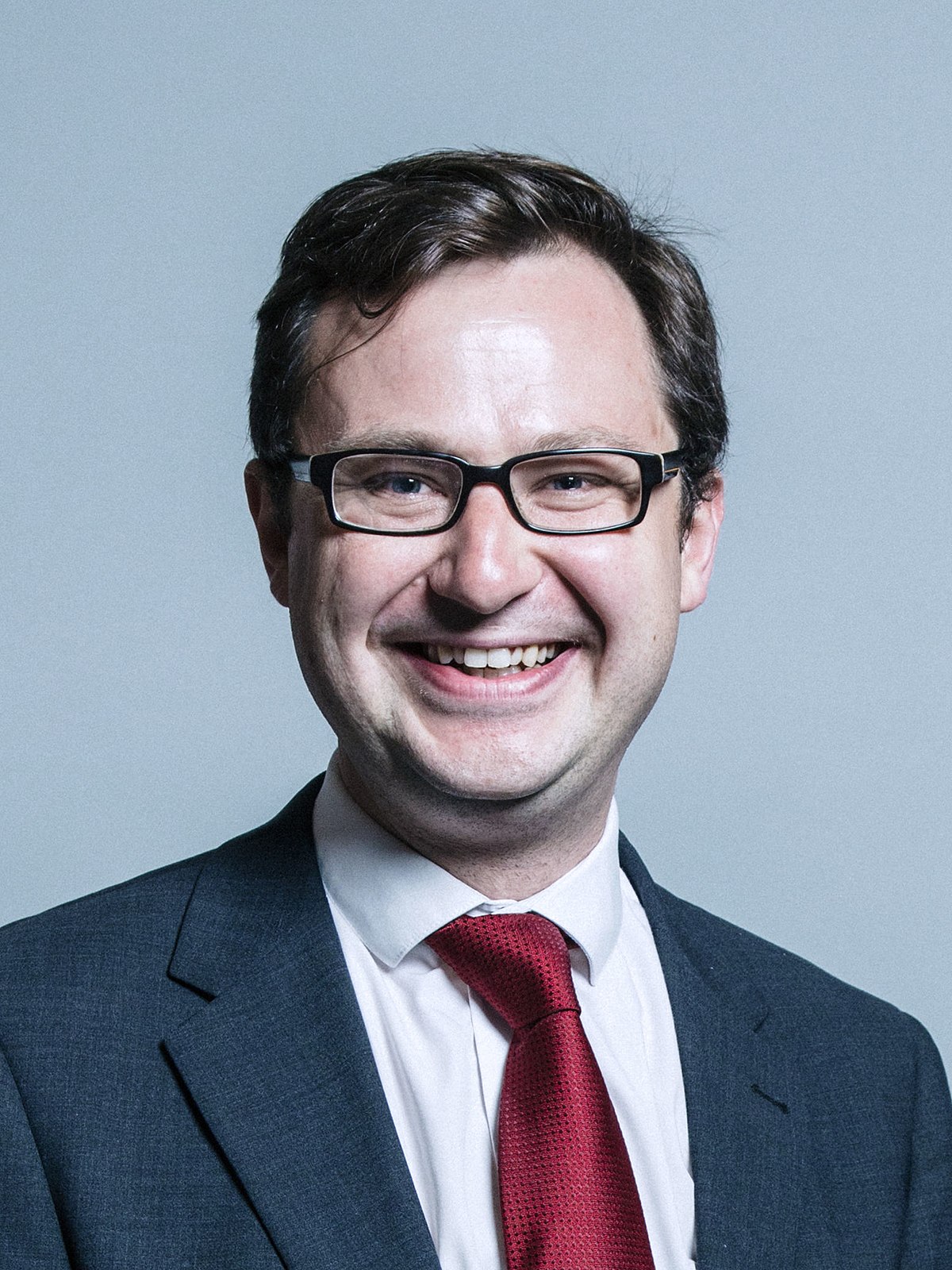
  • Edward Timpson – 2020 Speech on the Retirement Age of Magistrates

    Edward Timpson – 2020 Speech on the Retirement Age of Magistrates

    Below is the text of the speech made by Edward Timpson, the Conservative MP for Eddisbury, in the House of Commons on 7 July 2020.

    I beg to move,

    That leave be given to bring in a Bill to amend section 13 of the Courts Act 2003 to change the retirement age for magistrates from 70 to 75; and for connected purposes.

    Magistrates, or justices of the peace, are ordinary people hearing cases in court in their community, and have been a fundamental feature of our judicial system since 1361. They continue to be chosen from people of good character, commitment, social awareness and reliability—those who can communicate effectively and are capable of making sound choices when sitting in judgment on their peers.

    I had the pleasure of appearing in front of many magistrates while practising on the then Chester and north Wales circuit as a criminal and family barrister in the late ’90s and the noughties. My rose-tinted spectacles remind me that, more often than not, my clients got the rub of the legal green, but I also had to accept that I and the bench did not always have a meeting of minds—in other words, I lost.

    The one constant, however, was the selfless and enduring dedication on display by so many of our fellow citizens to the fair and equitable dispensing of justice. I want to take this opportunity to thank all of them, particularly those who have contacted me about this Bill and shared with me their experiences, for their public service. I should add that their overall number includes at least 10 fellow current Members of Parliament.

    However, the constant reliable recruitment and retention of our magistracy across England and Wales is under serious strain. The number of magistrates has decreased dramatically over the last decade or so, from about 30,000 to less than 13,000, with the number actually sitting thought to be substantially lower. That has had a profound impact on the case backlog, which is now up to nearly half a million in the magistrates courts; on delays, and even on the way justice is delivered. For example, during 2017-18 there were benches of just two magistrates, including for some trials, in nearly 40,000 court sessions—15% of the total. Inevitably, the covid-19 pandemic has both exacerbated the problem and catalysed the urgency of action, with recruitment and training on hold.

    To illustrate this at a more local level, Paul Brearley JP, chairman of the Greater Manchester branch of the Magistrates Association, provided me with details of how the current chronic shortage of magistrates is affecting what is the largest single bench in England and Wales. At its creation in 2014, the bench size was approximately 1,100. As of 24 June this year, the number stood at 792.

    From this figure should be deducted 188 justices who are currently on covid-19-related leave of absence and 47 justices appointed but not yet sworn in, leaving just over 550, or about half of the original number, in active service. During the pandemic, no more justices have been appointed, despite the fact that the retirements have continued—15 since lockdown.​

    Sadly, it is the same story across the country, as other examples I have received from the chairs of the West Yorkshire, north-west Wales and Herefordshire benches bear testament, with the latter seeing a fall from 127 magistrates in 2008 to only 47 in 2020, nine of whom are due to retire in the next 18 months. As we emerge from lockdown, the pressure on our court system has never been greater, and with more police officers on our streets and additional resources for the Crown Prosecution Service, we can expect even more cases, requiring even more capacity.

    The measures introduced by the Ministry of Justice to tackle the considerable and escalating delays are welcome, including extending court hours and widening the use of technology where appropriate. Yet much of this will still rely on the human resources— otherwise known as people—working in our courts to meet ever-growing demand. That is irrefutable proof that we desperately need more magistrates as quickly as possible. Any judicial restoration also needs to ensure that it delivers as great a diversity as possible, especially regarding age, ethnicity and social status. As the former chair of the Magistrates Association, Malcolm Richardson, has said:

    “The magistracy must reflect the community it serves if courts are to be perceived to be procedurally fair, command public confidence and help civic engagement.”

    To that end, I was pleased to hear the Under-Secretary of State for Justice, my hon. Friend the Member for Cheltenham (Alex Chalk), who is sitting on the Front Bench, tell the House only last week that the magistrates recruitment and attraction steering group held its first meeting in February, with a particular focus on increasing diversity, regardless of age.

    Despite such laudable and important efforts, recruitment will not, of itself, fix the problem, because the fact remains that nearly 7,500 magistrates—more than half of all current magistrates—will reach the age of 70 in the next decade, and, under current legislation, will be forced to retire. Losing these magistrates at 70 is a triple whammy. First, they are often the most experienced. Secondly, they represent a high proportion of presiding justices—those in the court chairs—in this group. Thirdly, they are likely to be retired from work and so more able to accept extra sittings, including at short notice. Paulette Huntington JP, chair of the West Yorkshire branch, tells me that her magistrates who have retired at age 70 generally tend to be high sitters as they have more time to give, with many clocking up between 50 and 100 sittings per year, and some even more than that due to the volume of work—well over the minimum 26 required. In contrast, it is proving difficult to entice those with work and family commitments to the bench, with fewer employers seemingly content or in a position to sanction regular absences.​

    While every effort should continue to be made to boost recruitment, simply replacing retiring magistrates would be a significant challenge, and given current shortages would not, in itself, be sufficient. Indeed, this year the number of magistrates recruited is expected to be less than the number who retire, partly due to the need for rigorous selection, mentoring and support of newly appointed magistrates. It is worth noting, too, that these difficulties apply to all jurisdictions—adult, youth, and family. The senior judiciary, including the Lord Chief Justice, the senior presiding judge and the president of the family division, are all aware of the seriousness of the situation, as are, I know, the Minister and the Lord Chancellor.

    It need not be this way. Jurors are now selected up to the age of 75, doubtless to enable justice to be delivered by people with wide experience of life. You may also have noticed, Madam Deputy Speaker, that the head of the Supreme Court is aged 75 and the almost 73-year-old Roy Hodgson seems to be doing a reasonable job at Crystal Palace. So why should magistrates be deemed incompetent simply because they have hit an arbitrary age?

    There are other sound, compelling reasons to apply such logic. First, people live longer. The current retirement age of 70 was set in 1968, when life expectancy was just 72, and it is now nearly 81. Secondly, people work longer. Thirdly, people retire later. As they say, 70 is the new 50. To ensure ongoing competency beyond 70, the recognised and recently updated system for appraisal of all magistrates and retained registrates would need to be extended, but this should not be a block to progress. As John Bache JP, chairman of the Magistrates Association, told me:

    “We are rapidly heading for the perfect storm in the magistrates court. The backlog is increasing while the number of magistrates continues to fall, yet we are discarding those magistrates most able and willing to address this crisis”.

    I know that my hon. Friend the Minister, on behalf of the Government, is very sympathetic to these arguments and is keen to make progress sooner rather than later, so I urge the Secretary of State, the Lord Chancellor, for whom I have the utmost respect, to grasp this nettle now and give the magistracy the opportunity through this Bill, especially at this vital time of greatest need, to do what it has done for over 650 years, and deliver timely, fair justice for the communities it serves.


  • Caroline Dinenage – 2020 Statement on Arts, Culture and Heritage Support

    Caroline Dinenage – 2020 Statement on Arts, Culture and Heritage Support

    Below is the text of the statement made by Caroline Dinenage, the Minister for Digital and Culture, in the House of Commons on 7 July 2020.

    The UK’s arts and cultural heritage are not just beloved in the UK, but are the envy of the rest of the world. Our theatres, live music venues, museums and galleries are incredibly valuable to our economy, bringing in £32.3 billion in 2018 and employing approximately 680,000 people. However, they are much more than that: they are the lynchpins of their local communities, entertaining, enlightening and educating us, and bringing us together through shared experiences.

    The coronavirus pandemic dealt those sectors a body blow, forcing thousands of institutions to close their doors. The Government have already provided substantial financial assistance to see them through the crisis, including loans, business rate holidays and the self-employed and furloughing schemes. Together, those schemes have provided hundreds of millions of pounds of support, saving livelihoods, beloved organisations and institutions. Of course, we have been working extremely closely with the sector and medical experts to try to get things back up and running as soon as it is safe to do so.

    Our battle against coronavirus is not over. With social distancing still in place and crowded venues not possible for the foreseeable future, it was clear that the cultural sector desperately needed help to weather the ongoing storm. The Government have provided it this week, with an unprecedented £1.57 billion rescue package for museums, galleries, theatres, independent cinemas, heritage sites and music venues across the country in the form of emergency grants and loans. It is the single largest one-off investment in UK culture and proof of our commitment to protecting the sectors that do so much to enrich all our lives. It has widely been recognised as exceeding expectations and DDCMS Ministers would like to put on record our thanks to the many people who have worked so incredibly hard on this behind the scenes over the weeks.

    The funding will support the country’s long-standing and rightly famous cultural institutions such as the Royal Shakespeare Company, the Ironbridge Gorge Museum, the Mary Rose Trust, which I visited yesterday, and the National Theatre, but it will also support lesser known but equally cherished cultural and heritage institutions and organisations in regions up and down the country—places that have been cultural anchors for their communities for years. That will include theatres, live music venues and museums, but it will not just be about cultural spaces, as it will include dance companies, orchestras and touring arts groups that do not have their own venues but that still play a key role in our cultural life and, of course, still need support. By protecting these organisations as well, the funding will help to support those working across the cultural sector.

    The package will also see £120 million invested in rebuilding, upgrading and starting new construction work across our cultural infrastructure as part of our ​wider effort to build, build, build after coronavirus. This will help to revitalise historic buildings across the country, creating jobs and protecting livelihoods all across our regions. Another £100 million will be allocated to arm’s length bodies such as the British Library, the British Museum and the British Film Institute. An extra £188 million will be given to the devolved Administrations in Northern Ireland, Scotland and Wales, as the Government support our whole Union; our cultural strength is stronger as a family of four.

    The broader package comes on top of the announcement made last week by the Arts Council to reopen its project grants competition and make an additional £39 million of funding available to support creativity—in particular from freelancers, creative practitioners and independent organisations.

    We all want to see full audiences back in our venues and institutions, enjoying the very best of British culture as soon as possible. We will keep our foot very firmly on the pedal, and are finalising guidance for a phased return of the performing arts sectors as we speak. This package allows us to protect some of our precious cultural assets during an uncertain time ahead. It will help thousands of organisations to make it through this crisis and out the other side for future generations to enjoy. I ask the House to join the arts sector in welcoming this massive rescue package. It is a lifeline to help the sector weather this storm and bounce back even stronger.

  • Matt Hancock – 2020 Statement on the Coronavirus

    Matt Hancock – 2020 Statement on the Coronavirus

    Below is the text of the statement made by Matt Hancock, the Secretary of State for Health and Social Care, in the House of Commons on 7 July 2020.

    We are bringing coronavirus under control. Yesterday’s figures showed 352 new cases, the lowest since lockdown began. That is down from over 5,000 a day at the peak. Two hundred and nine patients are currently in mechanical ventilator beds with coronavirus, down from 3,300 at the peak. The latest number of deaths recorded in all settings in the UK was 16. New figures this morning show that for the last two weeks, the number of people who have died from all causes has been lower than the normal average for this time of year.

    Because we are bringing the virus under control, we have been able to restore some of the things that make life worth living. This weekend, restaurants, pubs and hairdressers were buzzing with activity for the first time in months, and yesterday we were able to ease restrictions for the 2.2 million people who have been shielding across England so that they can now spend more time outdoors in a group of up to six, of course while maintaining social distancing.

    Our plan has always been to lift the national lockdown while taking ever more targeted action to suppress the virus. We are seeing a similar approach in other countries, such as Germany, Spain and Australia, where overnight they locked down Melbourne. Last week, we took difficult but vital decisions about Leicester. Since then, we have been working with Leicester and Leicestershire, and I am pleased to say that together, we have brought down the seven-day infection rate from 135 to 117 cases per 100,000 people.

    In reopening hospitality, we have also introduced contact tracing for customers. This system is working. I want to thank all those who are making the system work, and to pay tribute in particular to three pubs that have taken specific action: the Lighthouse in Burnham-on-Sea, the Fox and Hounds in Batley, and the Village Home in Gosport. They have all closed for a deep clean and staff testing after, in each case, a customer tested positive. They are doing the right thing by their customers and their communities. This is NHS Test and Trace working precisely as intended. Three pubs shut so that others can be open, and I think the whole House is grateful.

    Coronavirus has been the worst global pandemic in a generation. Here, we protected the NHS. We built the new Nightingale hospitals in 10 days. At all times, treatment was available for all. Our medical research has discovered the only drug known to work. We have built, almost from scratch, one of the biggest testing capabilities in the world. We are getting coronavirus cornered, but this is no time to lose our resolve. The virus exists only to spread, so we must all stay alert and enjoy summer safely.

  • Grant Shapps – 2020 Statement on Travel Corridors

    Grant Shapps – 2020 Statement on Travel Corridors

    Below is the text of the statement made by Grant Shapps, the Secretary of State for Transport, in the House of Commons on 6 July 2020.

    It is vitally important that we manage the risk of a second wave of coronavirus and keep the number of cases of covid-19 in the UK as low as possible. Health protection Regulations concerning international travel came into force in all parts of the UK on 8 June. These require people who arrive in the UK from outside the common travel area to self-isolate for 14 days and to complete a passenger locator form. The regulations have helped to reduce the risk of importing cases into the UK.

    For arrivals from some countries and territories into England, where the risk of importing Covid-19 is sufficiently low, the Government consider that it can now end the self-isolation requirement. Therefore, passengers will not be required to self-isolate when they are returning from travel abroad or arriving as visitors to England from a number of exempt countries and territories. Contact information will still need to be provided on arrival except by people on a small list of exemptions.

    The process to date

    We have been guided by the science and worked closely with health and policy experts from across Government to ensure the steps we are taking will minimise the risk of importing covid-19 cases, while helping to open our travel and tourism sector.

    The joint biosecurity centre, in close consultation with Public Health England and the chief medical officer, has developed an approach to assessing the public health risk associated with inbound travel from specific countries and territories. The categorisation has been informed by an estimate of the proportion of the population that is currently infectious in each country, virus incidence rates, trends in incidence and deaths, transmission status and international epidemic intelligence as well as information on a country’s testing capacity and an assessment of the quality of the data available. Data has been used from official sources in each country and modelling by the London School of Hygiene and Tropical Medicine, as well as from Public Health England and the national travel health network and centre. Other data sources may be used in the future.

    This categorisation has informed the Government decisions about relaxation of border measures and has allowed us to establish travel corridors through which passengers arriving in England from certain countries and territories will be exempted from the requirement to self-isolate. Those who have visited or transited through any non-exempt country or territory within the 14 days preceding their arrival will be required to self-isolate for the remainder of the 14-day period since they last left such a country or territory. The decision on these exemptions forms part of the first review of the health protection regulations concerning international travel which apply in England. FCO travel advice should always be consulted before booking any travel.

    The Government are continuing to discuss this approach with the devolved Administrations who will set out their own approach in time. Passengers travelling from overseas to Scotland, Wales and Northern Ireland from outside the common travel area should ensure they follow the laws and guidance which apply there.​
    Countries and territories exemption list

    From 10 July, unless they have visited or transited through any non-exempt country or territory in the preceding 14 days, passengers arriving from the following countries and territories will not be required to self-isolate on arrival in England:

    Andorra, Antigua and Barbuda, Aruba, Australia, Austria, The Bahamas, Barbados, Belgium, Bonaire St Eustatius and Saba, Croatia, Curagao, Cyprus, Czech Republic, Denmark, Dominica, Faroe Islands, Fiji, Finland, France, French Polynesia, Germany, Greece, Greenland, Grenada, Guadeloupe, Hong Kong, Hungary, Iceland, Italy, Jamaica, Japan, Reunion, Liechtenstein, Lithuania, Luxembourg, Macau, Malta, Mauritius, Monaco, New Caledonia, The Netherlands, New Zealand, Norway, Poland, Seychelles, St Barthelemy, St Kitts & Nevis, St Lucia, St Pierre and Miquelon, San Marino, Serbia, South Korea, Spain, Switzerland, Taiwan, Trinidad & Tobago, Turkey, Vatican City State, Vietnam.

    Ireland is already exempt as part of the common travel area, as are the Channel Islands and the Isle of Man. In addition, we will be exempting the 14 British overseas territories. We will keep the conditions in these countries and territories under review. If they worsen we will not hesitate to reintroduce self-isolation requirements.

    In addition, the UK Government will be making a small number of sector-specific exemptions to the border health measures as a result of the first review. From 7 July, certain transport workers who do not come into contact with passengers in the course of their journey to England will no longer be required to complete the ​passenger locator form. This will help pilots, seafarers, and Eurostar and Eurotunnel drivers who make regular crossings without coming into contact with passengers. There will also be additional exemptions for certain groups, including elite sportspersons and essential support staff returning to England or participating in certain elite sports events, and individuals coming to England to work on British film and television productions.

    Next steps

    My Right hon. Friend, the Secretary of State for Foreign and Commonwealth Affairs and First Secretary of State has announced exemptions to the global advisory against all but essential travel. Travellers should review this advice before making travel plans, and purchase travel insurance.

    The Government will keep the requirements and exemptions set out in the regulations under review. The next review of the regulations will be by 27 July 2020. For further information, please visit https://www.gov.uk/uk-border-control.

    I hope this announcement provides good news to the many of us who want to enjoy a holiday abroad this year, visit family and friends overseas or travel to do business and will help protect jobs in the international transport and tourism sectors. The Government continue to work closely with international partners around the world to discuss arrangements for travellers arriving from the UK and will continue this engagement ahead of the changes coming into force.

  • Dominic Raab – 2020 Statement on the Global Human Rights Sanctions Regime

    Dominic Raab – 2020 Statement on the Global Human Rights Sanctions Regime

    Below is the text of the statement made by Dominic Raab, the Foreign Secretary, in the House of Commons on 6 July 2020.

    I have today laid before Parliament, under the powers of the Sanctions and Anti-Money Laundering Act 2018, the Global Human Rights Sanctions Regulations 2020.

    These regulations enable sanctions to be imposed on those who are involved in serious violations or abuses of human rights. This sanctions regime is not about punishing countries or peoples. It is a smart tool allowing the Government to impose both asset freezes and travel bans on specific individuals or entities in order to provide accountability for and deter serious violations ​of human rights around the world and prevent those responsible from coming to the UK or laundering their assets here. These sanctions will help to ensure that the UK is not a safe haven for those involved in serious human rights violations, including those who profit from such activities.

    The regulations allow Ministers to impose sanctions on persons who are involved in activities that would amount to a serious violation of the right to life; the right not to be subjected to torture or cruel, inhuman or degrading treatment or punishment; and the right to be free from slavery, not to be held in servitude or required to perform forced or compulsory labour. The global human rights sanctions regime can be used to target different forms of involvement in such violations of human rights, including those who profit from them. The regulations allow for non-state actors as well as state actors to be designated.

    The introduction of this autonomous human rights sanctions regime will give the UK an additional, powerful tool to support human rights across the world, and underpin global Britain’s role as a force for good in the world.

    Today, I will also publish the first persons to be designated under this new sanctions regime.

  • Michael Gove – 2020 Statement on Historic Records Transfer

    Michael Gove – 2020 Statement on Historic Records Transfer

    Below is the text of the statement made by Michael Gove, the Chancellor of the Duchy of Lancaster, in the House of Commons on 6 July 2020.

    The Constitutional Reform and Governance Act 2010 amended the Public Records Act 1958 and introduced a 20-year rule for the transfer of historic government records to the National Archives. This replaced the 30-year rule in force since 1967. The Act made provision to phase in this change over 10 years, beginning in 2013. The transitional arrangements require the Cabinet Office to transfer records of 1997 and 1998 by the end of this year. The Cabinet Office’s historic records include those of the Prime Minister’s Office. This statement provides an update on the impact of covid-19 on our work in this area.

    Since 2015, the Cabinet Office has made two transfers a year, in July and December. The July opening is discretionary and reflects the Cabinet Office’s commitment to opening as much as possible as early as possible.

    Measures to contain covid-19 have inevitably had an impact on work in this area. It will not, therefore, be possible to transfer records in July this year. Whilst work has continued as normal in many areas across the Department, archival work requires physical access to hard copy files to complete the review and preparation of documents for transfer.

    In addition, the National Archives building in Kew closed to the public and staff on 17 March 2020 and at present is unable to facilitate the transfer of new records.

    I remain fully committed to meeting our obligations under public records legislation. The Department is undertaking an assessment of the wider impact of the covid-19 restrictions on work in this area. We will work with the National Archives and the advisory council on national records and archives and will provide a further update to the House in due course.

  • Kit Malthouse – 2020 Speech on Policing in Devon and Cornwall

    Kit Malthouse – 2020 Speech on Policing in Devon and Cornwall

    Below is the text of the speech made by Kit Malthouse, the Minister for Crime and Policing, in the House of Commons on 6 July 2020.

    Can there be any greater pleasure than to gather together late at night to talk lyrically about such a wonderful ​part of the country, second only in its beauty to the North Wessex downs, which I happen to represent? It is a remarkable part of our heritage and a part of the country that is very well policed and guarded by my hon. Friend the Member for St Austell and Newquay (Steve Double) and his colleagues, but also by the police officers who serve in that part of the country.

    I want to join my hon. Friend by starting with a tribute to Shaun Sawyer and his team in Devon and Cornwall. I know Shaun of old. He was the head of counter-terrorism at the Metropolitan police when I was chair of the Metropolitan Police Authority and deputy Mayor for policing in London. He and his team have done a remarkable job over the past few years, but most particularly over the past few months, when, as my hon. Friend said, they have coped with extraordinary circumstances with aplomb. They have stayed resilient, with low absences and a commitment to keeping their fellow citizens safe in the face of all sorts of hazards—seen and, as we are learning from this pandemic, unseen. It has been a fantastic job all round.

    Among the officers my hon. Friend thanked, I would also like to single out Deputy Chief Constable Paul Netherton, who has been leading the local resilience forum and has done fantastic work in pulling together all the organisations that have been engaged in dealing with the pandemic. We should also thank, as my hon. Friend rightly did, the police and crime commissioner, Alison Hernandez, who has been a voluble voice in the weekly calls I have held with PCCs from across the country, putting the case for her police force with vigour but also with reason and proportion. She serves both counties extremely well and has shown exactly the kind of leadership that one would expect from a police and crime commissioner.

    That has been reflected in all sorts of areas. Obviously we have seen crime reduce very significantly, but personal protective equipment, which one might have expected to be an issue in such a large, rural part of the country, has actually been managed with aplomb. The force has been rated consistently green on the red, amber, green rating scale for PPE, which is very reassuring for everybody.

    My hon. Friend, as usual, puts a powerful case for his force and his county colleagues. He shows a passion and commitment that one would expect from a true Cornishman. I have seen that in previous roles. When I was Housing Minister, I made a wonderful visit to his constituency and those of his colleagues. He dragged me down there, as no doubt he will again, to see the police in action. He rightly pointed out that alongside the new headquarters in east Devon, significant investment is going into Devon and Cornwall policing from central Government, alongside the flexibilities that the police and crime commissioner has used to raise the precept.

    The budget for D and C is moving up to £338.4 million, which is £23.2 million large on last year. That is the biggest funding increase in a decade. As part of that, there will be an uplift in police officers of 141 across the force area, as he rightly pointed out, of whom I am pleased to say 61 have already been recruited to the end of March. Recruitment is going particularly well despite the pandemic, not least because Devon and Cornwall is one of the 22 forces in the country that have adopted the virtual assessment centre that the College of Policing put together in double-quick time so that applicants to ​be police officers were able to go through the process online, rather than face to face. That recruitment will obviously continue.

    I hear what my hon. Friend says about future allocations. No decisions have been made yet on the future allocation of police officers, but we are hoping the decision will come before the summer recess, because one thing that has become clear from forces across the country, including Devon and Cornwall, is that a number want to run ahead of the target. A number have already reached their annual allocation with nine or so months to go, and some wish to recruit beyond their allocation, but they need certainty on what they will get in years 2 and 3 so that they can commit to those bright, shiny, new police officers with confidence. We hope and believe that will help them to do that.

    All that means that the relaxation of the lockdown, which ordinarily would bring significant challenges that are not to be underestimated, has been dealt with extremely well in Devon and Cornwall. The tourism industry is vital to that part of the world. I think I read in the paper that the estimates are that the two counties have lost something like £665 million in income over the two or three admittedly off-season months. That is still a huge amount of money for businesses to bear in losses, and it shows the urgency and the need to restore something of normality to that industry, on which my hon. Friend’s constituents and others rely so heavily.

    As my hon. Friend pointed out, the unique geography and beauty of that region attracts people in numbers from across the world, and we want them to come. I know that the police in that area are standing up strongly to ensure they can enable those people to come safely and sensibly, rather than, sadly, what has happened in other parts of the country, where people have been greeted with hostility. They have been greeted with proportion, sense and good management in Devon and Cornwall, which is exactly what we want to see.

    My hon. Friend laid down a number of challenges to me, first to appreciate the nature of rural crime in his part of the world. Given that I represent a constituency that is about 220 square miles in size—not far off his —and is largely rural, he will be pleased to know I am well aware of the problems that rural crime can create. He will have noticed that in our highly successful manifesto for the election last year, we had a commitment to allocate some of the extra resources to tackling rural crime. While the allocation of police officers in a particular force is obviously a matter of operational independence for the chief constable to decide, nevertheless at the Home Office we can influence some of the priorities across the country. We hope to turn to rural crime relatively soon.

    The funding formula has been a persistent issue for all Members of Parliament, who I think universally claim that it is unfair to their force. That cannot mathematically be correct. Obviously, in any funding formula change there will be losers and winners, yet we seem to have a House of Commons where everybody believes they can be a winner. If there is a review of the funding formula—I cannot give a commitment on that—I would anticipate that there would be a large and vigorous consultation process, in which my hon. Friends here tonight would doubtless participate.

    The current funding formula is old and has been around a long time. We have had one or two abortive attempts at reform, and no doubt we will turn to it in ​time, but before we do so there are important tasks to do—more important to the people we represent—such as fighting the uptick in crime that we have seen across the country in the past few years. Dealing with the county lines problem, which plagues all the constituencies in Devon and Cornwall, is high on our list of tasks to complete first. I am pleased that in the past few weeks, during lockdown, given the drop in volume crime—robbery, burglary and so on—police forces have to been able to concentrate on targeting the villains out there who perpetrate this trade. We have seen some extraordinary results, not least with Operation Venetic, which Members will have seen details of in the newspapers. It broke into a huge international communications network used by the criminal fraternity at a very senior level, and this resulted in 700-odd arrests last week. The data that has been collected from that system in the past few weeks and months means that there will be arrests into the future as we piece together the picture of serious and organised crime, which is delivering drugs into my hon. Friend’s constituency and mine, and damaging our neighbourhoods and, in particular, our young people.

    We will see much more such work, including dealing with murder—we have set that as a National Policing Board priority. We will drive down murder and reach back into the crime types that often result in a murder, such as domestic violence, drugs, serious youth violence and gangs. We will be asking police forces to think about whether they can not just detect someone who commits a murder, but prevent them from committing it in the first place, by finding that route towards the crime.​

    We will see much more of that, too. On acquisitive crime, which I know is a problem in parts of Devon and Cornwall, we have launched our £25 million safer streets fund, which is targeted at particular geographical areas that show they have a problem with acquisitive crime, be it robbery or burglary, but where physical alterations can be made, such as through alley gating, CCTV or better street lighting, which we know can deter crime. The police are then able to concentrate on prolific offenders in both those areas.

    There is a huge amount for us to do before we get there. Happily for my hon. Friend, his police force adopts new innovations with alacrity and works hard to try to innovate for itself. Nowhere is that clearer than in its leadership on modern slavery, which has, unfortunately, plagued both counties in the past few years but on which they have taken a lead across the country and shown the way for many other forces as to how the issue should be tackled.

    On that note, I congratulate my hon. Friend for gathering us all today to talk about these two beautiful counties and my second favourite subject, which we know is close to the hearts of our constituents: the power and efficacy of their local police force. Although we see from time to time in the newspapers heavy criticism of our police force, we all know that if anything untoward happens to us, they will be our first call.

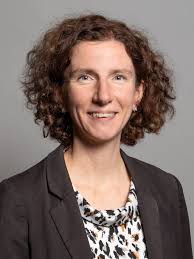
  • Anneliese Dodds – 2020 Comments on Stemming Job Losses

    Anneliese Dodds – 2020 Comments on Stemming Job Losses

    Below is the text of the comments made by Anneliese Dodds, the Shadow Chancellor of the Exchequer, on 8 July 2020.

    The money sunk into the Job Retention Scheme must not have merely served to postpone unemployment.

    The scheme must now live up to its name – supporting employment in industries which are viable in the long term.

    And we need a strategy for the scheme to become more flexible, so it can support those businesses forced to close again because of additional localised lockdowns.

    There is still time to avoid additional floods of redundancy notices.

    As we have seen throughout this crisis, the failure to match soaring rhetoric with meaningful action has consequences for people across the country.

    Despite all its talk, the Government has failed to create a fully functioning ‘test, track and isolate’ system. This has damaged public confidence and in turn harmed consumer demand.

    And despite all its talk, the Government has failed to produce a clear system for local lockdowns. The lack of timely information sharing has led to the imposition of an additional, wide scale lockdown in Leicester.

    I say to the Government, if it does increase taxes during the recovery, and cuts back on the public services we all rely on, this will damage demand and inhibit our recovery.

    Labour is not calling for tax rises – we are calling for growth.

    The Tory manifesto committed to no rises in income tax, National Insurance or VAT and therefore it is for them to set out how any additional spending will be paid for.

    It’s the Chancellor’s job to make sure the economy bounces back from this crisis so there is money in the coffers to protect the public finances.

  • Alex Norris – 2020 Comments on Baroness Cumberlege’s Review

    Alex Norris – 2020 Comments on Baroness Cumberlege’s Review

    Below is the text of the comments made by Alex Norris, the Shadow Health Minister, on 8 July 2020.

    All those affected by harmful medicines and medical devices have been waiting far too long for this moment, but justice is finally near, thanks to a tireless campaigning effort.

    Baroness Cumberlege has overseen the development of an excellent report, and its recommendations can make a difference for medicines and medical device safety. It must now be followed by action.

    The Government needs to immediately apologise on behalf of the healthcare system to all the families who have been affected by Primodos, sodium valproate and pelvic mesh set up a taskforce to implement the remaining recommendations.

  • Steve Double – 2020 Speech on Policing in Devon and Cornwall

    Steve Double – 2020 Speech on Policing in Devon and Cornwall

    Below is the text of the speech made by Steve Double, the Conservative MP for St. Austell and Newquay, in the House of Commons on 6 July 2020.

    I am delighted to bring this debate to the House, to present and highlight the incredible work that Devon and Cornwall police do, and to raise a number of the very particular, in some cases unique, challenges that they face. I am delighted to be joined this evening by colleagues from Devon. It is one of the few occasions on which out-and-out co-operation and unity can be seen between Devon and Cornwall Members of Parliament.

    I place on record very firmly my thanks to Devon and Cornwall police. Day in and day out, week in and week out, throughout the year they do an incredible job keeping the people of our two counties safe. As I am sure we are all aware, the covid-19 pandemic has brought a great number of new challenges to our police across the country. The pandemic has brought unprecedented challenges for our police, as they have had to adapt to new operational and resource pressures, and to a rapidly changing police environment.

    Neil Parish (Tiverton and Honiton) (Con)

    I endorse the fact that it is great to be with Cornwall tonight—not always, but tonight. Seriously, the police are dealing with covid-19 and with lots of tourists coming into our area now. They have a greater challenge than ever, and I very much respect that they police by consent in this country, especially in Devon and Cornwall. Can we ensure that, as our tourists come, they please behave, because that will make the police’s job so much easier?

    Steve Double

    I am very grateful to my hon. Friend. I suspect that not for the first time this evening another Member will make a point that I will go on to make, but I join him in acknowledging the very proactive but sensible way Devon and Cornwall police have approached the pandemic. They have indeed policed with consent, and even though they, I believe, have issued the fourth-highest number of fixed penalty notices in the country—I believe we are currently up to just under 1,000—it has been done in a very sensible way.

    The police have continued, I believe, to enjoy the overwhelming support and respect of the people of Devon and Cornwall in the way they have gone about policing this pandemic. I want to say a big thank you to them, and I pay tribute to them. I also want to place on record my great thanks to both our police and crime commissioner, Alison Hernandez, and our chief constable, Shaun Sawyer, for the clear leadership they have provided during these past few months, as it has really helped the police on the ground to carry out their work so effectively. In my own constituency, I want to thank the inspectors in Newquay, Guy Blackford, and in St Austell, Ed Gard and the Cornwall commander, our very own IDS—Ian Drummond-Smith—for the way that they have provided the pragmatic and sensible approach that we have needed. I just want to say thank you to them all.

    The image of Devon and Cornwall for most people is that of a picturesque, rural and coastal part of the world where people love to visit for their holidays. Policing in Devon and Cornwall is just as challenging as it is anywhere else in the country—in some ways, it is ​more so because of its very unique situation. Let me give colleagues an idea: the Devon and Cornwall police force area is the largest in England, covering more than 4,000 square miles. Our emergency services deal with more than a million calls per year, and their work is cut out because we have more than 13,600 miles of road, the highest in the country, 85% of which are rural. As we all know, rural roads are, in fact, the most dangerous and often the most challenging to police. The force area also has the longest coastline in the country. Cornwall itself has 675 miles of beautiful cliffs, beaches and coves. Devon is not quite so great or quite so beautiful, but, equally, that in itself presents a number of incredible challenges to our police force.

    Simon Jupp (East Devon) (Con)

    I cannot possibly let that stand. Does my hon. Friend agree that the state-of-the-art new police headquarters, based in my constituency of East Devon, is a prime example of the investment that our police need in Devon and Cornwall?

    Steve Double

    Absolutely. Those improvements are very welcome. They represent, I believe, some of the investment that is going into the area, but, as I will go on to say, it cannot end there. We do need continued investment.

    Another factor that is often overlooked when we consider all our public services, but particularly with regard to policing, is the fact that we are a peninsula and therefore not able to share resources with nearby forces or other county areas. That often means that our police are isolated from other assets. I believe that one statistic is that only 10% are within seven miles of another police asset, which in itself presents a number of very great challenges to the way the police operate.

    Selaine Saxby (North Devon) (Con)

    I would like to highlight, as my hon. Friend has done, the excellent work done by Devon and Cornwall police. The force really has managed huge influxes of visitors, so, despite what he says about Cornwall versus Devon, we have seen a huge influx of visitors to Devon in recent weeks, and we simply cannot borrow from our neighbouring forces given our geography and our extensive rural road network. We just need more local police. Unless visitors are going to start to bring their own, we need a more sustainable solution.

    Steve Double

    My hon. Friend makes the point very well. I will come on to talk about that in a bit more detail.

    Before I go any further, it would be wrong of me not to mention the Isles of Scilly, largely because my wife hails from there. She was born and bred there and her family still live there. It is also another unique part of our force area. The five inhabited islands that are 25 miles off the mainland need to be policed by Devon and Cornwall police, and that adds further complexities to their work.

    The Devon and Cornwall police area has a number of very particular challenges. When taken together, it is clear that no other police force in the country has to face this combined complexity. None the less, the Devon and Cornwall police do an incredible job. Devon and Cornwall is the second safest region in England and Wales and has the lowest rate of victim-based crime ​nationally. But what is incredible is that, despite all those challenges, the force provides an excellent service in keeping us safe with lower than average national funding. The Devon and Cornwall force receives 52p per day per person in police funding, compared with the England and Wales average of 61p per person per day, while having to cope with the challenges that our rural peninsula presents.

    In addition to all this, as colleagues have mentioned, we must include the impact of tourism and the summer surge that we see every year. The funding gap is even more significant when we consider that Devon and Cornwall experience the highest level of visitors in terms of overnight stays, second only to London. In fact, I learned during the lockdown that the constituency I have the pleasure of representing has the highest number of overnight stays, at 4.7 million a year, of any individual constituency in the whole of the UK. During the extended tourism season, we experienced a 14% increase in the number of incidents, including an 11.7% increase in recorded crime. This represents the highest seasonal increase in recorded crime across the whole country. The intensity of calls for service seen in the extended summer period places considerable pressure on our services for the rest of the year, as staff seek to catch up on training and annual leave and to address the toll that the summer season pressure takes on their workloads. So the pressure of tourism is not just felt during the peak tourist season; it has an impact on policing across the whole year.

    Anthony Mangnall (Totnes) (Con)

    I thank my hon. Friend for his comments and for securing this Adjournment debate. If he would like to have a vote on whether Devon or Cornwall is better, I would take our odds as a good chance. He is talking about the geographical issues as well as the population influx that we have in the south-west. Would he support what has been done by our police and crime commissioner in the councillor advocate scheme, which gives new mechanisms for people across the area to support their police officers and help to eradicate crime?

    Steve Double

    I am grateful to my hon. Friend for that intervention, because he highlights a point I was going to make. The pressures and the below-average funding that our police face mean that the Devon and Cornwall force is often at the forefront of innovation and finding new ways in which to work and use its resources in the very best, most efficient way. The example he highlights shows a way of working within the community to ensure that effective policing takes place despite having lower than average funding. We should praise our police force for the work that it does but at the same time make the case that it deserves better funding.

    I also want to take this opportunity to mention the excellent piece of analysis that the office of the police and crime commissioner for Devon and Cornwall has put together. It is entitled “Understanding the exceptional policing challenges in Devon and Cornwall from tourism, rurality and isolation”. I am sure that the Minister is familiar with this piece of work. It shows in much greater detail the unique challenges that our police force faces.​

    I want to talk a bit more about funding. The current funding gap between rural and urban police forces needs to be addressed. This is something that I have raised continually since I was first elected five years ago, and I know I was not the first to do so. It is a long-standing issue that needs to be addressed. I would again draw the Minister’s attention to the fact that funding for Devon and Cornwall police is 9p per day less than the England and Wales average, and that when we factor in the adjustment to the population for tourist numbers, it is 13p per day. That situation needs to be addressed, so I seek confirmation from the Minister that any future review of police funding will factor in these different elements and ensure that police funding better reflects the position on the ground and the challenges that the police force actually faces. We need a better funding formula that really reflects the complexities that policing in rural areas, particularly in Devon and Cornwall, faces. The current formula fails to reflect the very high volume of calls for services faced by the police, which cover a very broad nature of incidents. Last year, as much as 84% of Devon and Cornwall police force’s total demand fell under the non-crime categories, many of which occur in rural and remote locations that are very time-consuming to get to, and so are an intensive use of resource. The role that our police officers play in rural areas, more than in urban parts of the country, is much broader than what is captured in the recorded crime figures.

    I would like to make reference to the allocation of police numbers. I believe that all colleagues here will have welcomed the 141 new police officers that Devon and Cornwall was allocated out of the initial 6,000 tranche of the 20,000 new officers that we are going to put on to the frontline. However, we await the Government’s decision regarding how the remaining 14,000 of this 20,000 uplift will be allocated. If we are truly to deliver on the Government’s levelling-up agenda across the board, we need rural areas such as Devon and Cornwall to get a better share of new police officers in future. An allocation model based on population, for instance, would provide a truer reflection of the universal service demands placed on policing, given that the vast majority of all emergency calls do not in fact result in a recorded crime, particularly if such calculations include the increase we face through tourism. We do not want an approach that is largely based on recorded crime or levels of specific crimes such as serious violence, because that is urban-centric and favours inner cities over rural areas. When it comes to allocating the new police officers we are recruiting, I ask the Minister to consider these matters carefully to ensure that new officers are deployed in the best way to meet the challenges our police are facing.

    I again pay tribute to our police officers across Devon and Cornwall for their hard work and dedication as they continue to work to keep us safe. I am grateful to the Minister for taking the time to listen to this case this evening. I hope he understands the unique challenges and circumstances that we face in our two counties. I look forward to working with him positively, going forward, to ensure that we get the results that we need in Devon and Cornwall.