Blog

  • Lisa Nandy – 2020 Speech on the Global Human Rights Sanctions Regime

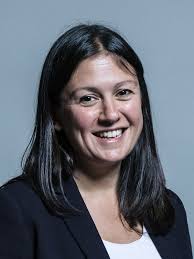
    Lisa Nandy – 2020 Speech on the Global Human Rights Sanctions Regime

    Below is the text of the speech made by Lisa Nandy, the Shadow Foreign Secretary, in the House of Commons on 6 July 2020.

    May I start by strongly welcoming this statement and the advance sight of it? It has been, as Bill Browder rightly said, a long and difficult journey to persuade the Government to take this step. I know that it has been personally frustrating for the Foreign Secretary to be repeatedly challenged by me over recent weeks about the delays when he has spent the last eight years as its champion. For too long the UK has been a haven for those who use corruption, torture and murder to further their own ends. Today, I hope, sends a strong message that the UK is not their home and that their dirty money is not welcome here.

    I pay tribute, too, to Sergei Magnitsky and his family, who have waited far too long for this day. Magnitsky worked for a British company, and it is right that, today, in his honour, we start to clean up the global corruption ​that he exposed and that cost him his life. I also put on record our support for ensuring that some of those responsible for his murder are the first to face consequences. The time for action against Russian Government officials who oppress LGBT people, Muslims and other minorities and who use chemical weapons on the streets of the UK is long overdue. This is a profound act of solidarity with the Russian people over those who have made their lives a misery for far too long.

    I welcome, too, the Foreign Secretary’s action against those involved in the appalling murder of Jamal Khashoggi. I gently say to him that, although today is not the day for sparring across the Dispatch Box, it would be welcome if it marked the start of a more consistent approach from the Government towards Saudi Arabia, and in particular the arms sales from this country that are being used to harm innocent civilians in Yemen.

    Similarly, we are grateful to the Foreign Secretary for including the Rohingya in Myanmar in today’s announcement. I hope that he will use his new remit to consider why the UK investment arm, CDC, continues to invest in those who are complicit in silencing people who speak out against human rights abuses in Myanmar.

    I welcome the inclusion of trafficking in the measures; the former Member for Bishop Auckland would be delighted to see that, as the Government have previously resisted it. I express serious concern, however, that the Foreign Secretary has not yet been able to persuade his colleagues of the need to include corruption in scope. Corruption and human rights abuses go hand in hand and that must be urgently resolved. The former Prime Minister, David Cameron, expressed regret that he had not acted on the issue earlier:

    “I soon realised…the advantages of working together—with other countries—under a common heading…You get extra clout from coming together across the world and saying with one voice to those who are responsible for unacceptable acts: ‘We are united’”

    The Foreign Secretary mentioned the USA and Canada and our desire to stand closely with them. They have included corruption in scope and the UK must follow suit.

    Can the Foreign Secretary confirm that the measures apply to UK overseas territories and Crown dependencies? We must not create a back door that allows the laundering of blood money in the United Kingdom.

    Will all names be published, including those subject to visa bans? I am sorry to do this to the Foreign Secretary, but I refer him to his earlier words. As he put it:

    “If we are dealing with people who are complicit in torture and there is enough evidence to substantiate and justify a visa ban, what possible countervailing reason can there be, whether it is to change their behaviour or otherwise, for not making their name public? Would not making their name public deter others?”—[Official Report, 2 April 2014; Vol. 578, c. 300-301WH.]

    He also tabled an amendment to the Criminal Finances Act 2017 seeking a public register of people who are subject to such orders, and he rightly set out in that amendment to ensure that third parties could refer to the list. We agree with him. There must be a clear mechanism for civil society to refer in line with the criteria. Can he give us an assurance that that will be forthcoming?

    Similarly, will the Foreign Secretary reflect on arrangements in the United States that provide a congressional trigger and allow our Select Committee Chairs to make referrals to the list as well? I can see that ​the Chair of the Foreign Affairs Committee is nodding; I would expect him to agree with that suggestion. I hope that the Foreign Secretary will agree too.

    Finally, as the Foreign Secretary has long championed, we must have transparency in the process. There has been serious concern about the influence of big money on politics. It is essential that there is independent oversight of the list to ensure that nobody can buy their way out of British justice. Will he commit to parliamentary scrutiny of the list and the way that decisions are taken? I know that he will face resistance from colleagues, but we will strongly support him in that endeavour.

    Today is a day that we stand up against corruption and dirty money and for our values with the full support of this House. There can be no ambiguity and no double standards. The UK must lead the way at home and abroad.
  • Dominic Raab – 2020 Statement on the Global Human Rights Sanctions Regime

    Dominic Raab – 2020 Statement on the Global Human Rights Sanctions Regime

    Below is the text of the statement made by Dominic Raab, the Foreign Secretary, in the House of Commons on 6 July 2020.

    Mr Speaker, with permission, I would like to make a statement on the global human rights sanctions regulations. As we forge a dynamic new vision for a truly global Britain, this Government are absolutely committed to the United Kingdom becoming an even stronger force for good in the world: on climate change, as we host COP26; as we champion 12 years of education for every girl in the world, no matter how poor their background; and on human rights, where we will defend media freedoms and protect freedom of religious belief; and, with the measures we are enacting and announcing today, hold to account the perpetrators of the worst human rights abuses.

    I first raised this issue in a 2012 Backbench Business debate. It was a cross-party issue then, as I hope it will be now. I recall co-sponsoring it with the former Foreign Secretary, David Miliband. I also would like to pay tribute to Members from across the House, particularly my right hon. Friend the Member for Haltemprice and Howden (Mr Davis), who sponsored that debate, and the hon. Member for Rhondda (Chris Bryant), who joined me in that initial debate and who has been chivvying me along ever since, normally from a sedentary position.

    Chris Bryant (Rhondda) (Lab)

    I’ve not stopped.

    Mr Speaker

    You better had.

    Dominic Raab

    The idea of taking targeted action against human rights violators has received further cross-party backing since then, from hon. Members in all parts of the House, including five former Foreign Secretaries and the current Chair of the Select Committee on Foreign Affairs. In 2019, it was in the Conservative party’s manifesto as a clear commitment.

    Today I am proud that under this Prime Minister and this Government, we make good on that pledge, bringing into force the United Kingdom’s first autonomous human rights sanctions regime, which gives us the power to impose sanctions on those involved in the very worst human rights abuses right around the world. These sanctions are a forensic tool, which allows us to target perpetrators without punishing the wider people of a country that may be affected. The regulations will enable us to impose travel bans and asset freezes against those involved in serious human rights violations. We are talking about, first, the right to life, where it is threatened by assassinations and extra-judicial killing; secondly, the right not to be subjected to torture or cruel, inhuman or degrading treatment or punishment; and, thirdly, the right to be free from slavery, servitude or forced or compulsory labour. The powers enable us to target a wider network of perpetrators, including those who facilitate, incite, promote or support these crimes. This extends beyond state officials to non-state actors as well. So if you’re a kleptocrat or an organised criminal, you will not be able to launder your blood money in this country. Today this Government and this House send a very clear message, on behalf of the British people: those with blood on ​their hands, the thugs of despots, the henchmen of dictators, will not be free to waltz into this country, to buy up property on the Kings Road, do their Christmas shopping in Knightsbridge or siphon dirty money through British banks or other financial institutions.

    The regulations are just the latest next step forward in the long struggle against impunity for the worst human rights violations. We have deliberately focused on the worst crimes, so we have the clearest basis, to make sure we can operate the new system as effectively as we possibly can. That said, we will continue to explore expanding this regime to include other human rights, and I can tell the House that we are already considering how a corruption regime could be added to the armoury of legal weapons we have. In particular, hon. Members will be interested to know that I am looking at the UN convention against corruption, and practice already under way under the frameworks in jurisdictions such as the United States and Canada.

    Today we have also published a policy note, which sets out how we will consider designations under these regulations, for maximum transparency. As the House would expect, the legislation will ensure that due process will be followed in relation to those designations, reflecting the process rights contained in the Sanctions and Anti-Money Laundering Act 2018. In practice, those people designated will be able to request that a Minister review the decision. They will be able to challenge the decision in the court. And, just as a matter of due diligence, the Government will review all designations at least once every three years.

    In addition to introducing this new legal regime, today we are proceeding directly to make the first designations under the regulations. We are imposing sanctions on individuals involved in some of the most notorious human rights violations in recent years. The first designations will cover those individuals involved in the torture and murder of Sergei Magnitsky, the lawyer who disclosed the biggest known tax fraud in Russian history. The designations will also include those responsible for the brutal murder of the writer and journalist Jamal Khashoggi, and those who perpetrated the systematic and brutal violence against the Rohingya population in Myanmar. They will also include two organisations bearing responsibility for the enslavement, torture and murder that takes place in North Korea’s wretched gulags, in which it is estimated that hundreds of thousands of prisoners have perished over the past 50 years. With those first designations, the Government—and, I hope, the House and the country—make it crystal clear to those who abuse their power to inflict unimaginable suffering that we will not look the other way. You cannot set foot in this country and we will seize your blood-drenched ill-gotten gains if you try.

    In practice, targeted sanctions are most effective when they are done through co-ordinated collective action, so we will be working closely with our Five Eyes partners, including in particular the US and Canada, which already have Magnitsky-style sanctions legislation, and Australia, which is considering similar legislation. We will also strongly support efforts to bring an EU human rights sanctions regime into effect and we stand ready to co-ordinate with our European partners on future measures. In fact, I discussed that in Berlin recently with our E3 partners.​
    Mr Speaker, with your permission I would like to end by paying tribute to the man who inspired these sanctions, Sergei Magnitsky, a young Russian tax lawyer. Between 2007 and 2008, Magnitsky exposed the theft of $230 million committed by tax officials in Russia’s own interior ministry. While others left Russia, understandably fearing for their lives, Magnitsky stayed on to take a stand for the rule of law and to strike a blow against the breath-taking corruption that plagues Russia. That courage cost him his life. He was arrested in 2008 on trumped-up charges of tax evasion and, in a particularly Kafkaesque twist, the very tax investigators that Magnitsky had exposed were the ones who turned up to arrest him. The Public Oversight Commission, a Moscow-based non-governmental organisation, found that while in detention Magnitsky was subjected to physical and psychological abuse amounting to torture. Over the course of his time in prison he developed abdominal pain and acute bladder inflammation, but prison officers cruelly withheld the medical treatment he needed. Eventually, he was transferred to another facility ostensibly to receive medical care. Instead, he was handcuffed and beaten to death by riot police with truncheons. He died on 16 November 2009, aged 37.

    The House will recall that the European Court of Human Rights found Russia had violated its most basic human rights, from the treatment of Magnitsky in prison to the lack of an effective investigation. None of those involved have ever been brought to justice. Perversely, some have been promoted or even decorated with medals. In fact, the only person ever prosecuted for this appalling crime was Sergei Magnitsky himself after his death; Russian’s first ever posthumous trial.

    I pay tribute to Bill Browder, who employed Sergei Magnitsky and has campaigned for justice ever since his death. I hope that today we in this House show our solidarity with the family that Sergei Magnitsky left behind: his wife Natalia and his son Nikita. I can tell the House that they will be watching from my office in the Foreign Office as we speak. Amidst their enduring loss, they can be proud of Sergei’s courage, which inspires us to hold up a torch on behalf of all those who perished or suffered at the hands of those we designate today and to keep the flame of freedom alive for those brave souls still suffering in the very darkest corners of the world. I commend this statement to the House.

  • Jonathan Ashworth – 2020 Comments on Panorama’s Investigation into Cancer Deaths

    Jonathan Ashworth – 2020 Comments on Panorama’s Investigation into Cancer Deaths

    Below is the text of the comments made by Jonathan Ashworth, the Shadow Secretary of State for Health and Social Care, on 6 July 2020.

    These figures should be wake up call for Ministers – we already know that there’s been a drop in urgent referrals for cancer and waiting times for vital scans are soaring.

    There will be tragic consequences if Ministers do not urgently put in place the measures needed to restore cancer services and get people the treatment they need.

    We need a fully-resourced plan to restart cancer services; a strategy that enables us to move between the competing demands of the Covid-19 pandemic and non-Covid related care in the months ahead.

  • Justin Madders – 2020 Comments on Not Publishing Daily Virus Figures

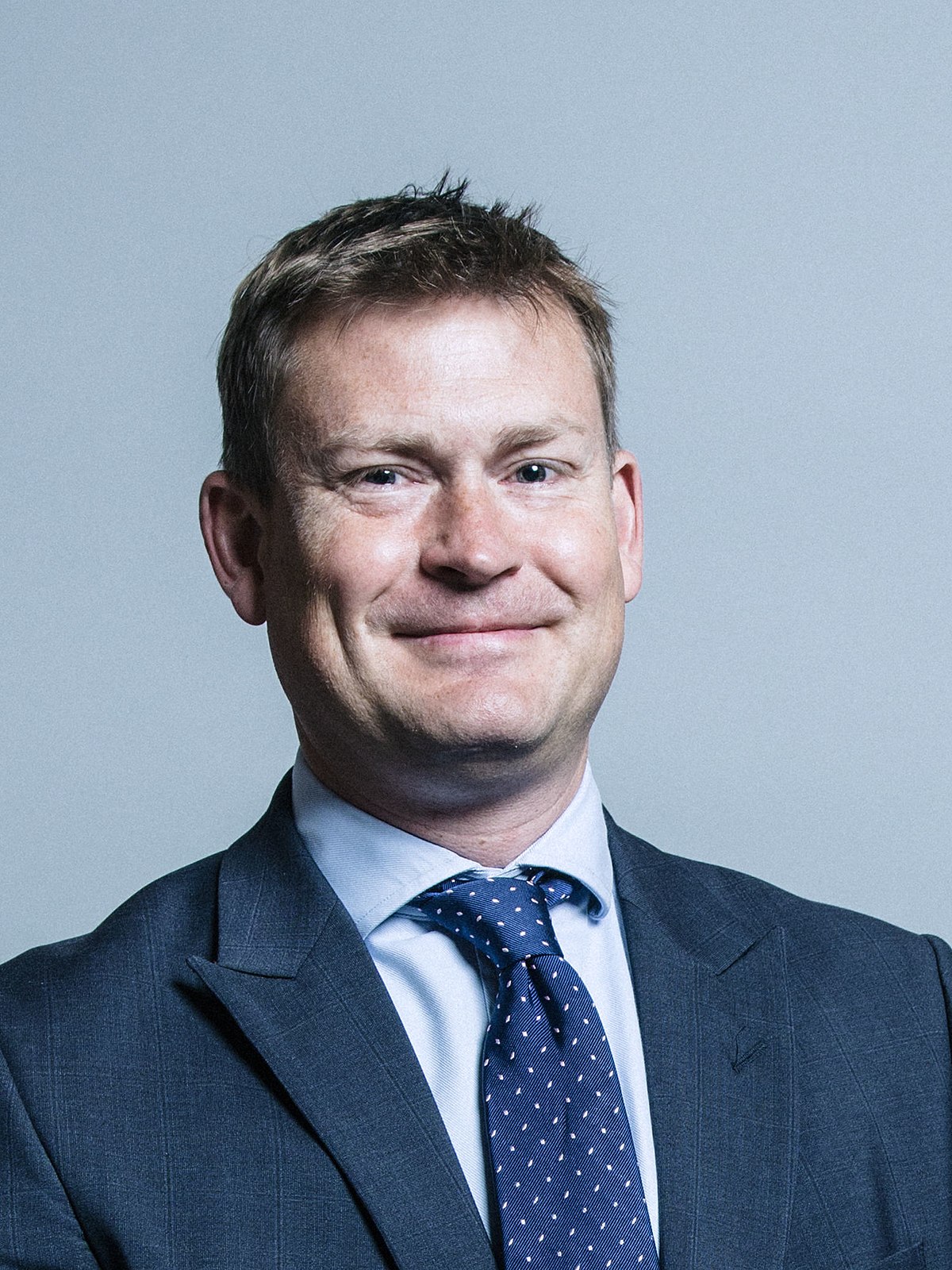
    Justin Madders – 2020 Comments on Not Publishing Daily Virus Figures

    Below is the text of the comments made by Justin Madders, the Shadow Health Minister, on 6 July 2020.

    This is an absolute shambles. It seems that the real reason why the Government stopped issuing figures for the number of people tested each day is because they never hit their 100,000 people a day target and they were too embarrassed to admit it.

    We know that the number of people actually tested is less than a third of the number of tests they state are being completed. It is clear that Ministers are losing control over the testing regime and are failing to not only keep track of the tests but to ensure the results are returned swiftly.

    Ministers need to get to grips with the state of the testing regime and be far more open about where the failings are. As lockdown measures are relaxed it is vital the public have confidence that there is an effective test and trace system in place.

  • Emily Thornberry – 2020 Comments on Government Selling Arms to Saudi Arabia

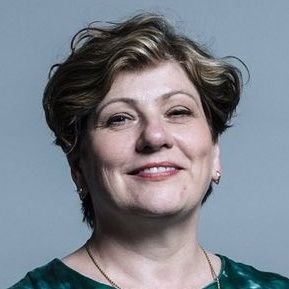
    Emily Thornberry – 2020 Comments on Government Selling Arms to Saudi Arabia

    Below is the text of the comments made by Emily Thornberry, the Shadow International Trade Secretary, on 7 July 2020.

    Even by this Government’s standards, their decision to resume the sale of arms to Saudi Arabia for use in Yemen is morally indefensible, justified on the basis that the air strikes that have killed thousands of innocent men, women and children over the past five years somehow do not represent a ‘pattern of non-compliance’ with international law.

    And announcing this decision the very day after 20 Saudi officials were rightly placed on the Foreign Office’s Magnitsky sanctions list for their part in the murder of Jamal Khashoggi, a journalist killed in part for criticising Saudi conduct in the war in Yemen, is at the very least a case of mixed messages, undermining the government’s claim to be human rights defenders.

    We have demanded that ministers come to Parliament to explain this decision, and we will continue to fight it over the coming months. Because at a time when millions of Yemeni children are facing the mortal threat of starvation and disease, Britain should be working flat out to bring this terrible war to an end, not selling the arms that continue to fuel it.

  • Tulip Siddiq – 2020 Comments on Underfunded Nurseries

    Tulip Siddiq – 2020 Comments on Underfunded Nurseries

    Below is the text of the comments made by Tulip Siddiq, the Shadow Minister for Children and Early Years, on 6 July 2020.

    Long-term Government underfunding left nurseries and childminding businesses on the brink of collapse even before this crisis hit, and thousands of providers now fear closure.

    This call for an urgent review into funding for the childcare sector should spur the Government into action. It has been sleepwalking through this crisis and ignoring the warnings from parents and sector leaders.

    Labour has been warning for months of the dire consequences that early years providers will face without a concrete plan for funding and support in place. The Government must now step in before it is too late.

  • Liz Kendall – 2020 Comments on Prime Minister’s Statement on Care Home Deaths

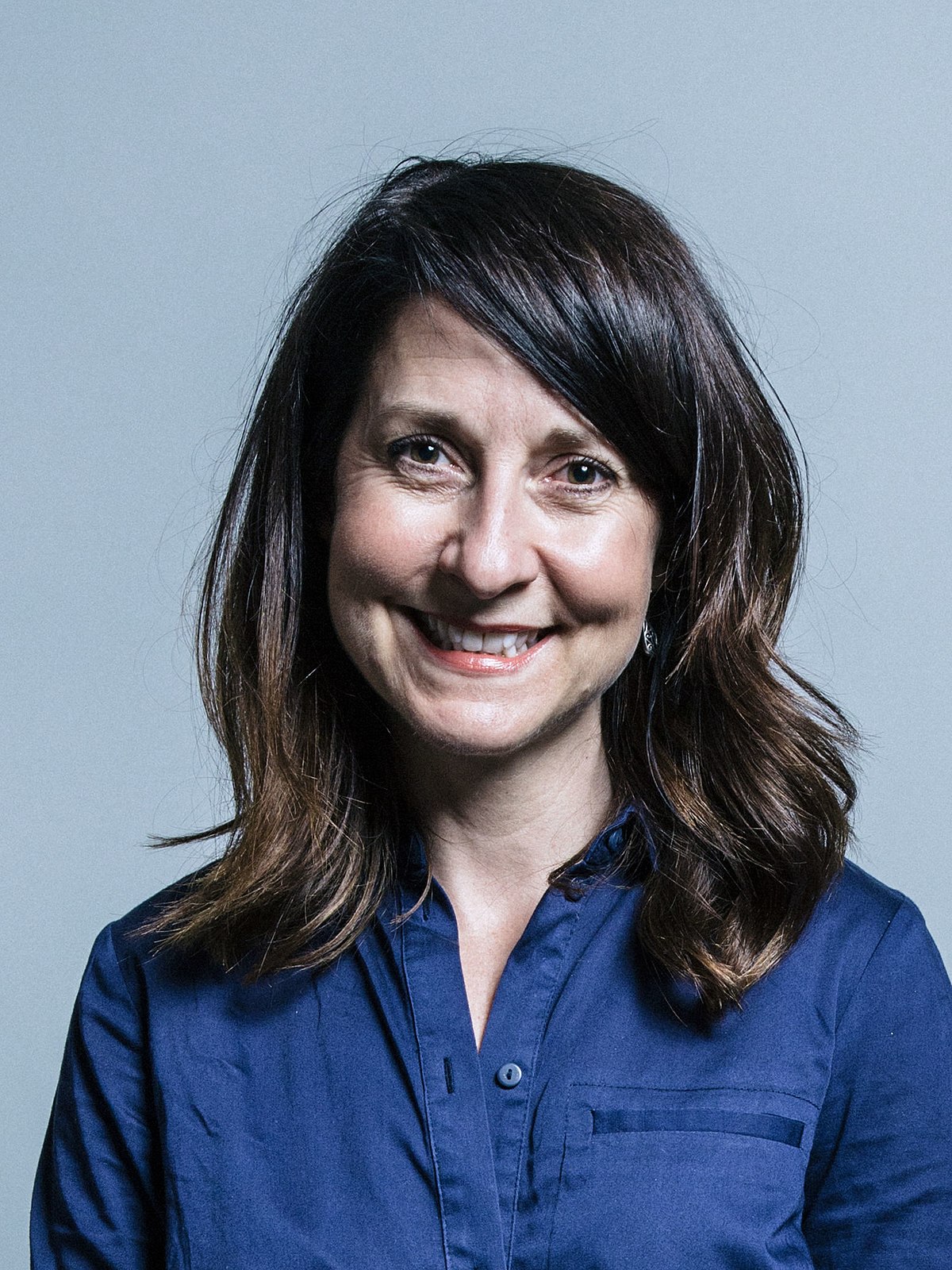
    Liz Kendall – 2020 Comments on Prime Minister’s Statement on Care Home Deaths

    Below is the text of the comments made by Liz Kendall, the Shadow Social Care Minister, on 6 July 2020.

    There have been 30,000 excess deaths in care homes and at least 20,000 of these caused by Covid-19. 25,000 elderly people were discharged from hospitals to care homes without any tests whatsoever and frontline care workers were left without vital PPE.

    Staff who have gone the extra mile to care for elderly people, and experienced things the rest of us can only imagine, will be appalled to hear the Prime Minister’s comments.

    Boris Johnson should be taking responsibility for his actions and fixing the crisis in social care, not blaming care homes for this Government’s mistakes.

  • Ed Miliband – 2020 Comments on Government’s Green Jobs Announcement

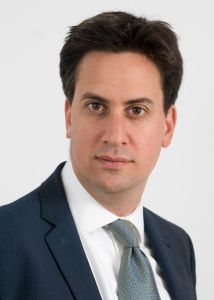
    Ed Miliband – 2020 Comments on Government’s Green Jobs Announcement

    Below is the text of the comments made by Ed Miliband, the Shadow Business Secretary, on 6 July 2020.

    We have consistently called for a recovery which has energy efficiency at its heart, and will welcome any measures which achieve that.

    However, this is not a comprehensive plan. It appears there is almost nothing for the people who rent the 8.5 million homes in the social rented sector and private rented sector, which has the worst energy efficiency standards. That means one third of people are left out.

    It also needs to be part of a much broader and bigger scale strategy for getting back on track for net zero which includes a zero carbon army of young people getting back to work, investment in nature conservation, driving forward renewable energy, helping our manufacturers be part of the green transition and a plan for our transport network.

    The French government has promised 15 billion euros for a green recovery, the German government 40 billion euros. The UK government £3 billion so far. When the moment demands the Government creates the most ambitious green recovery possible, the Government has not so far risen to the challenge.

  • Anneliese Dodds – 2020 Comments on Resolution Foundation Report

    Anneliese Dodds – 2020 Comments on Resolution Foundation Report

    Below is the text of the comments made by Anneliese Dodds, the Shadow Chancellor of the Exchequer, on 7 July 2020.

    This report indicates the enormous long-term costs of mass unemployment to the UK economy. If the Conservatives are serious about adopting Labour’s calls for a focus on ‘jobs, jobs, jobs’, they urgently need to change tack.

    The Government must abandon their ‘one-size-fits-all’ approach to withdrawing the Job Retention and Self-Employment schemes, and develop support for jobseekers using examples like Labour’s Future Jobs Fund.

    They must also increase their ambitions for supporting infrastructure beyond the largely reannounced projects promoted by the Prime Minister last week, which amounted to a tenth of Germany’s package.

  • Jo Stevens – 2020 Comments on People Refusing Vaccine

    Jo Stevens – 2020 Comments on People Refusing Vaccine

    Below is the text of the comments made by Jo Stevens, the Shadow Digital, Culture, Media and Sport Secretary, on 7 July 2020.

    This poll lays bare just how dangerous disinformation online can be.

    The rapid spread of false information about vaccinations could literally be a question of life and death.

    Social media companies must ensure this content has no place on their platforms and Ministers must do more to promote the benefits of vaccines and counter the harmful, dangerous myths which surround them before a coronavirus vaccine becomes available.