Blog

  • Theresa May – 2018 Salisbury Attack Statement

    Below is the text of the statement made by Theresa May, the Prime Minister, in the House of Commons on 14 March 2018.

    With permission, Mr Speaker, I would like to make a statement on the response of the Russian Government to the incident in Salisbury.

    First, on behalf of the whole House, let me pay tribute once again to the bravery and professionalism of all the emergency services, doctors, nurses and investigation teams who have led the response to this appalling incident, and also to the fortitude of the people of Salisbury. I reassure them that, as Public Health England has made clear, the ongoing risk to public health is low, and the Government will continue to do everything possible to support this historic city to recover fully.

    On Monday I set out that Mr Skripal and his daughter were poisoned with Novichok—a military-grade nerve agent developed by Russia. Based on this capability, combined with Russia’s record of conducting state-sponsored assassinations—including against former intelligence officers whom it regards as legitimate targets—the UK Government concluded it was highly likely that Russia was responsible for this reckless and despicable act. There are only two plausible explanations: either this was a direct act by the Russian state against our country; or, conceivably, the Russian Government could have lost control of a military-grade nerve agent and allowed it to get into the hands of others.

    It was right to offer Russia the opportunity to provide an explanation, but its response has demonstrated complete disdain for the gravity of these events. The Russian Government have provided no credible explanation that could suggest that they lost control of their nerve agent, no explanation as to how this agent came to be used in the United Kingdom, and no explanation as to why Russia has an undeclared chemical weapons programme in contravention of international law. Instead it has treated the use of a military-grade nerve agent in Europe with sarcasm, contempt and defiance.

    There is no alternative conclusion other than that the Russian state was culpable for the attempted murder of Mr Skripal and his daughter, and for threatening the lives of other British citizens in Salisbury, including Detective Sergeant Nick Bailey. This represents an unlawful use of force by the Russian state against the United Kingdom. As I set out on Monday, it has taken place against the backdrop of a well-established pattern of Russian state aggression across Europe and beyond. It must therefore be met with a full and robust response beyond the actions we have already taken since the murder of Mr Litvinenko and to counter this pattern of Russian aggression elsewhere.

    As the discussion in this House on Monday made clear, it is essential that we now come together with our allies to defend our security, to stand up for our values and to send a clear message to those who would seek to undermine them. This morning I chaired a further meeting of the National Security Council, where we agreed immediate actions to dismantle the Russian espionage network in the UK, urgent work to develop new powers to tackle all forms of hostile state activity and to ensure that those seeking to carry out such activity cannot enter the UK, and additional steps to suspend all planned high-level contacts between the United Kingdom and the Russian Federation.​
    Let me start with the immediate actions. The House will recall that, following the murder of Mr Litvinenko, the UK expelled four diplomats. Under the Vienna convention, the United Kingdom will now expel 23 Russian diplomats who have been identified as undeclared intelligence officers. They have just one week to leave. This will be the single biggest expulsion for over 30 years and it reflects the fact that this is not the first time that the Russian state has acted against our country. Through these expulsions, we will fundamentally degrade Russian intelligence capability in the UK for years to come, and if Russia seeks to rebuild it, we will prevent it from doing so.

    We will also urgently develop proposals for new legislative powers to harden our defences against all forms of hostile state activity. This will include the addition of a targeted power to detain those suspected of hostile state activity at the UK border. This power is currently only permitted in relation to those suspected of terrorism. And I have asked the Home Secretary to consider whether there is a need for new counter-espionage powers to clamp down on the full spectrum of hostile activities of foreign agents in our country.

    As I set out on Monday, we will also table a Government amendment to the Sanctions and Anti-Money Laundering Bill to strengthen our powers to impose sanctions in response to the violation of human rights. In doing so, we will play our part in an international effort to punish those responsible for the sorts of abuses suffered by Sergei Magnitsky. I hope, as with all the measures I am setting out today, that this will command cross-party support.

    We will also make full use of existing powers to enhance our efforts to monitor and track the intentions of those travelling to the UK who could be engaged in activity that threatens the security of the UK and of our allies. So we will increase checks on private flights, customs and freight. We will freeze Russian state assets wherever we have the evidence that they may be used to threaten the life or property of UK nationals or residents. Led by the National Crime Agency, we will continue to bring all the capabilities of UK law enforcement to bear against serious criminals and corrupt elites. There is no place for these people, or their money, in our country.

    Let me be clear. While our response must be robust, it must also remain true to our values as a liberal democracy that believes in the rule of law. Many Russians have made this country their home, abide by our laws, and make an important contribution to our country which we must continue to welcome. But to those who seek to do us harm, my message is simple: you are not welcome here.

    Let me turn to our bilateral relationship. As I said on Monday, we have had a very simple approach to Russia: engage but beware. I continue to believe that it is not in our national interest to break off all dialogue between the United Kingdom and the Russian Federation. But in the aftermath of this appalling act against our country, this relationship cannot be the same. So we will suspend all planned high-level bilateral contacts between the United Kingdom and the Russian Federation. This includes revoking the invitation to Foreign Minister Lavrov to pay a reciprocal visit to the UK and confirming that there will be no attendance by Ministers, or indeed members of the royal family, at this summer’s World cup in Russia.​

    Finally, we will deploy a range of tools from across the full breadth of our national security apparatus in order to counter the threats of hostile state activity. While I have set out some of these measures today, Members on all sides will understand that there are some that cannot be shared publicly for reasons of national security. And of course there are other measures we stand ready to deploy at any time should we face further Russian provocation.

    None of the actions we take is intended to damage legitimate activity or prevent contacts between our populations. We have no disagreement with the people of Russia, who have been responsible for so many great achievements throughout their history. Many of us looked at a post-Soviet Russia with hope. We wanted a better relationship, and it is tragic that President Putin has chosen to act in this way. But we will not tolerate the threat to the life of British people and others on British soil from the Russian Government. Nor will we tolerate such a flagrant breach of Russia’s international obligations.

    As I set out on Monday, the United Kingdom does not stand alone in confronting Russian aggression. In the last 24 hours I have spoken to President Trump, Chancellor Merkel and President Macron. We have agreed to co-operate closely in responding to this barbaric act and to co-ordinate our efforts to stand up for the rules-based international order which Russia seeks to undermine. I will also speak to other allies and partners in the coming days. I welcome the strong expressions of support from NATO and from partners across the European Union and beyond. Later today in New York, the UN Security Council will hold open consultations where we will be pushing for a robust international response. We have also notified the Organisation for the Prohibition of Chemical Weapons about Russia’s use of this nerve agent, and we are working with the police to enable the OPCW to independently verify our analysis.

    This was not just an act of attempted murder in Salisbury, nor just an act against the UK. It is an affront to the prohibition on the use of chemical weapons, and it is an affront to the rules-based system on which we and our international partners depend. We will work with our allies and partners to confront such a

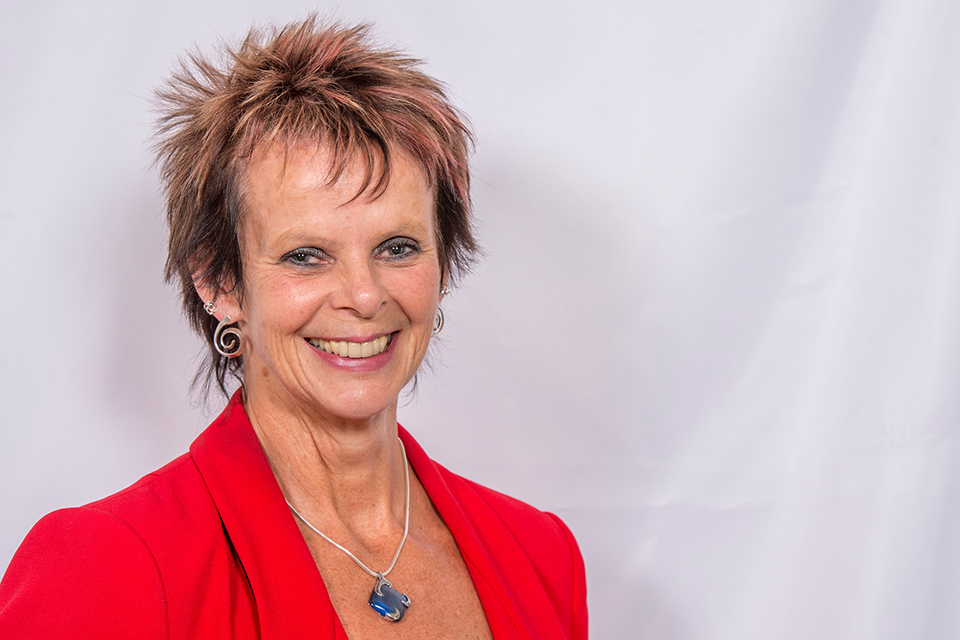
  • Anne Milton – 2018 Speech at the Association of Colleges Governance Summit

    Below is the text of the speech made by Anne Milton, the Minister of State for Apprenticeships and Skills, at the Association of Colleges Governance Summit on 14 March 2018.

    Thank you. I’m very pleased to be here at such a significant time in the development of further education.

    In 25 years at the NHS, having trained as a nurse before entering politics, I saw numerous examples of people who went above and beyond the call of duty. And I have to say that I have seen similar commitment from governors. Commitment, wanting not just to do a good job, but wanting to do a job for those people in your care.

    You give up a great deal of your time. You take on a significant amount of responsibility. And you do it all as unpaid volunteers, for the benefit of your learners and your communities. You do it for the individual people within the care of your college. I can’t say it often enough, but I want to thank you for your dedication to public service. It’s very much valued.

    Let me talk to you about the good and the not so good. I want to give you one example of bad governance, about a college and its board. Some of the people had been on its board for over 20 years. Board recruitment was informal, based on personal acquaintance. The Principal recruited the Chair. There was no strategic vision. The senior executive team hid any bad news from the governors. The board never challenged them. No one had financial expertise. There was no governance support, just somebody to take the minutes. Two years after the Principal’s appointment, the Ofsted rating was inadequate. The board appeared only to realise that there were big financial problems two months before the college ran out of money.

    Happily, you’ll be relieved to know that isn’t a real college but I have heard stories like this that share some similarities. The story draws on real events that have actually happened. And for people like you who care passionately about FE and colleges, that should concern us all – it should trouble us. Trouble us because the governors of colleges like that can simply walk away, but each year hundreds of people will not have received the education and chances that they deserve.

    And on a more cheerful note, a good story about a college with rigorous challenge. Scrutiny and support provided by a governing body that helps to drive excellent provision. Financial expertise used to good effect. People achieving their learning goals, successful careers forged, failure at school forgotten by a new and inspiring learning environment.

    When I visited Nelson and Colne College recently, I was hugely impressed by the innovative approach of Lancashire Adult Learning.

    Parents are enabled to support their children’s learning while developing their own skills. Learning English, learning grammar, understanding the world their children are living in and what school demands of them. Courses for local groups enrich skills in communities. People with learning disabilities are supported to develop skills for everyday living and employability. What a fantastic example of integrated, high-quality, community-based learning.

    And behind all this have been the governors. Their strategic direction and support has transformed what was a failing local authority service into a very successful part of Nelson and Colne College. So it’s no surprise that Lancashire Adult Learning recently won the Adult and Community Learning TES Provider of the Year Award.

    But this is not possible without real drive from the governors. I can wish for all I want as Skills Minister but without high quality, effective governance, my wishes won’t be able to come true. My education and career didn’t follow a traditional university route. I have four children and so this job as Skills Minister matters to me on a very personal level. I share your commitment to a public service because serving the public or creating new and innovative opportunities and creating success for people who didn’t think they would succeed.

    It’s a time of great change for the country as we prepare to leave the EU. You will know first-hand that it’s also a time of change for colleges.

    I appreciate that area reviews have been time-consuming and involved difficult decisions for college leaders and governors. But, as the recommendations from the reviews are implemented, the changes will help make sure that the sector is better placed to respond in the future.

    The government wants this country to have a strong skills system that will help make a success of Brexit. But Brexit aside, we are finding exactly the same skills shortages as many countries face. We’ve introduced what could be seen as an ambitious programme of change. But we want vocational and technical education to be as highly regarded as academic education – if not higher. There is no reason why it shouldn’t be.

    T levels will sit alongside apprenticeships as technical study programmes for entry into skilled employment. The apprenticeship reforms are giving people skills and knowledge. We’re providing close support to employers as they adjust to the challenges of the new world for apprenticeships. We’ve seen levy payers take bold steps in using apprenticeship funding to bring significant changes to their organisations. And I know that many colleges have made great strides in the way they have responded to apprenticeships, helping to make sure that we put quality at the heart of the programme.

    I saw some fantastic apprenticeship provision at Loughborough College. Local schools have been so impressed with the sports coaching provided by Loughborough apprentices that two of the apprentices have been taken on as staff. You can’t get much better than that.

    And alongside this we’re investing in new Institutes of Technology to deliver higher-level technical skills, building on high-quality provision where it already exists.

    I know money is tight. Money is tight everywhere. In the FE sector it is particularly tight. I am amazed how well colleges respond. However my job will always be as a champion in government, lobbying for the important role of colleges to be reflected in the decisions that are taken. I want to ensure that FE providers have the right resources to deliver the reforms needed and the reforms that the Government wants to see. That is why I will be looking in detail at how far current funding and regulatory frameworks support the delivery of high quality provision and also crucially promote social mobility.

    I will do everything I can from my position and I need you to do everything you can – governors as leaders. We need to work together; sharing expertise and for me to make sure that you have the support where you need it. I was encouraged by the recent increase in the number of general FE colleges which have achieved good or outstanding ratings in Ofsted inspections. It’s great to see that the improvement and excellence you are all working so hard to achieve is recognised.

    To support your efforts, we’re already leading a number of initiatives.

    We’re working closely with AoC on the Industry Experts Programme, to attract more industry specialists into FE teaching.

    I think you’ve already heard from the FE Commissioner, Richard Atkins, about his expanded role to provide early advice to colleges in difficulty and help accelerate improvement across the sector. We’ve already funded development programmes for principals, finance directors, governance professionals and chairs of finance.

    But we want to do more. We want to promote good practice in strengthening governance more effectively, with the right balance of challenge and support.

    Last year, the Prime Minister said:

    “The strength of civil society – which I believe we should treasure deeply – does not just depend on the… commitment of countless volunteers… As with other parts of our economy, it also depends on the practices that our charities adopt, and above all on the public trust they command.”

    Charities occupy a special place in the fabric of society. The privileged status of charities carries with it a particular responsibility for trustees to demonstrate sound governance and to ensure public trust and confidence. The recent problems with Oxfam reinforce how important this is, particularly where large amounts of public money and the delivery of important public policy objectives are involved. They also show how important it is that charity boards are transparent and accountable, and that they protect their charity’s reputation.

    We’ll introduce new guidance to ensure that there is clarity about the regulatory expectations of governors as charity trustees and you can expect tough challenge from ESFA if it finds poor governance.

    One key source of guidance may be sitting quite close to you right no – your college clerk or governance manager. I want you to cherish them, respect them and look to them to help drive up the achievements of what you do. They aren’t just there to take the minutes. Like company secretaries, they’re critical to board performance and good governance practice. Do heed their advice and value their expertise. Are you investing in their development? Supporting them to get professional qualifications? Take advantage of opportunities such as the Governance Professionals Development Programme. If you have a strong and experienced clerk, why not encourage them to mentor or coach others?

    We’ve funded the well-received Saïd Business School leadership programme at Oxford University for principals. We want to extend that investment to reflect the importance of non-executive leadership as well. With the Education and Training Foundation, we are working on a tiered programme of development for governors. This will provide comprehensive and tailored support from induction to advanced governance skills. We’ll start to rollout that programme later this year.

    Many boards have found the support they have been able to access from National Leaders of Governance incredibly valuable. We want to build on this success by aligning the scheme more closely with the National Leaders of Further Education programme and other government-funded improvement support, including the Strategic College Improvement Fund. The funding and management for all National Leaders in further education will be brought together within the Department, allowing the Education and Training Foundation to focus on its core role of developing people rather than institutions.

    Governance codes set the standards of good practice for you to meet and indeed exceed. Used well, codes can be a powerful tool for improvement and not just a box ticking exercise. Many boards have adopted the AoC’s own code of governance. But how do you assure yourselves, and those who have a stake in your work, that governance is strong? We want to work with you to identify and pilot the most effective approaches to self-assessment and external assurance of governance. And we’ll add the Charity Governance Code to the options under the college accounting rules.

    As someone who had would could be described as a feminist awakening in later life, I was pleased to see that board diversity is included in today’s programme.

    As we mark the anniversary of votes for women, it’s encouraging that the proportion of female governors is already well ahead of the target for women on company boards – although still less than 50%. But it’s disappointing that women only make up 30% of college chairs. So we still have work to do to close the gap. This is an area where I want to see continued leadership from the sector, focused on all under-represented groups.

    Board diversity isn’t just about a better balance in the representation of people from different backgrounds. It is not about being politically correct – it’s about boards being informed, strengthened and enriched by the best possible mix of skills, experience and perspectives. We’ll continue to work with you, and with others such as local authorities, to support initiatives to attract a broad range of high-quality governors.

    I’d like to conclude with another inspiring example. At the World Skills show last year in Abu Dhabi, I had the privilege of meeting some previous World Skills competitors, one of whom had been under significant pressure from his school to pursue a university education (he had very high GCSE achievement), but instead decided to make the choice to pursue further education in bricklaying. Having achieved a gold medal at World skills, he then joined a construction and development company and was managing multi-million pound projects by the time most students would be graduating. Suffice it to say, the Head teacher had the grace to apologise for his blinkered view, but what a fantastic example of how an FE college can lay the groundwork for a fabulous career!

    I’m grateful to Atholl and the Governors’ Council for inviting me here today. Do not ever limit the ambitions of your college. Get onto the Board the inspiring leaders from local business, younger people, people who are building the futures of their own children so they can bring their expertise to build the futures of the children in the local community. Strong effective leadership and financial management builds strong, effective colleges so that everyone, whatever their background, wherever they come from, has a future they can be proud of.

  • Gavin Williamson – 2018 Speech on Modern Defence

    Below is the text of the speech made by Gavin Williamson, the Secretary of State for Defence, on 12 March 2018.

    The United Kingdom has a proud history on the world stage. We helped defeat tyranny in two world wars and communism in the Cold War. We have shielded the most vulnerable from Kosovo to Sierra Leone. We helped liberate millions from the shackles of oppression and exported democracy, tolerance and justice around the world. In the process, Britain alongside our allies ushered in a period of peace and prosperity across our continent unparalleled in its history.

    Today, our Armed Forces continue to uphold this proud British tradition. They are keeping us safe across the world. Our pilots are destroying terrorist targets in Iraq and Syria and policing Eastern European skies against an increasing threat from Russia.

    Our soldiers stand sentinel with our NATO Allies in Estonia and Poland to deter this threat. We are strengthening the security of Afghanistan and, in South Sudan, helping establish stability and giving democracy the chance to grow and flourish.

    Our sailors are countering international piracy, policing our waters and securing safe passage for the ships that support our global trade.

    Beneath the waves our nuclear submarines go undetected, our submariners on patrol every day of every year providing our ultimate defence against the most deadly dangers to our way of life

    In the last few weeks alone our forces have provided vital assistance in the wake of Storm Emma and are using their expertise to assist the ongoing criminal investigation following the horrific attack in Salisbury.

    I want to thank each and every one of them for the dedication and commitment they have shown our nation.

    Continuing to deliver for the Armed Forces is imperative – especially in a world where the threats are growing.

    When it comes to non-state actors we’re seeing a generational shift with terrorist organisations able to access increasingly sophisticated weapons.

    And state-based dangers are increasing. Back in 2010 we did not believe they posed us a credible threat. With the benefit of hindsight, this can, at best, be described as naive.

    China is pushing for superpower status, restructuring the People’s Liberation Army, pushing towards the Indian Ocean and employing “sharp power” including military, media and economic pressure against any challenger.

    Iran’s proxy military presence in Iraq, Syria and Yemen is well known.

    North Korea has demonstrated an active global cyber capability while its nuclear actions are destabilising the international order, flouting decades’ worth of non-proliferation treaties.

    And then there is Russia.

    At a time when its economy is under pressure, it is still prioritising military expenditure, investing in highly capable equipment across all domains including long-range surface to air missiles, T-90 tanks, new advanced submarines, long-range precision strike systems and ISKANDER ballistic missiles, a new range of BLACKJACK strategic bombers and the new nuclear systems President Putin recently boasted about in his state of the nation address.

    What is also clear is that the Kremlin is ripping up the international rule book. Using its growing hybrid capabilities to subvert, undermine, and influence countries around the world. Its cyber operations are active and brazen. It uses social media to muddy the waters and spread confusion.

    Last year Russia’s military intelligence organisation directed the NotPetya ransomware activity. Overwhelming systems in Ukraine from its power grid to its postal service and causing hundreds of millions of pounds of damage to companies around the world including here in the UK

    But Russia is capable of much more. It is already increasingly using proxies to undermine sovereign states. Its involvement in the Ukraine conflict has cost tens of thousands of lives.

    In Syria, we’re seeing a humanitarian crisis where Russia is using private military companies such as the Wagner Group to reduce their liability and limit criticism on the world stage.

    Meanwhile, Russia is also using its operatives insidiously to interfere in the political processes of other nations.

    Security authorities have compelling evidence to show Russia was involved in the attempted 2016 coup in Montenegro, just prior to that country’s joining NATO.

    And, if we doubted the threat Russia poses to our citizens, we only have to look at the shocking example of their reckless attack in Salisbury.

    But against this backdrop of threats, we shouldn’t forget that our Armed Forces remain truly world class and we are giving them the capabilities to respond

    For example, we know the chemical threat doesn’t just come from Russia but from other actors so we’re evolving the capability to meet that danger.

    I made the decision to offer the anthrax vaccine to our forces at the highest readiness providing them with vital protection against a deadly danger

    And today I can announce we are building on our world class expertise at the Defence Science and Technology Laboratory in Porton Down.

    We are investing £48 million in a new Chemical Weapons Defence Centre to maintain our cutting edge in chemical analysis and defence.

    We’ve brought together Defence’s world-renowned explosive ordnance expertise with chemical, biological, radiological and nuclear specialists.

    And we are continuing to invest and explore new ways and new capabilities to deal with this threat.

    More broadly, our Armed Forces are internationally recognised as having an almost matchless combination of capability and experience, able to field a well-equipped Army division, with armoured brigades, strike brigades, and an air assault brigade, able to project power at distance through an expeditionary air group, based on the state-of-of the-art Typhoon and the new F35 Lightning II that will soon embark on our new aircraft carriers.

    Those carriers, in turn, will form part of a hard-hitting maritime task group including modern destroyers, frigates, submarines and commando forces.

    All this plus the world’s best Special Forces and some of the most advanced intelligence gathering and analytical capabilities in the Alliance.

    These are all the hallmarks of a serious military nation:

    able to conduct first night, first strike attacks with the technology to go into contested air, sea or land space to project power at range from the UK and make a major contribution to deterring threats not just in the Euro-Atlantic area but across the globe.

    Many of these forces are on operations and missions today, we are making a major contribution to the campaign that has crippled Daesh, where we have helped to train over 60,000 Iraqi Security Forces, seen the first UK use of offensive cyber in combat and our airforce is operating at an intensity not seen in more than 25 years

    We’re training the Afghan and Nigerian security forces and even the US Marine Corps.

    And this month we have deployed HMS Trenchant to the Arctic with the US Navy on ICEX 2018 – confirming our ability to operate under the ice.

    Our operational experience and prowess is the reason the UK has played an important leadership role in NATO since its formation.

    The reason we lead a range of international divisions and operations right around the globe.

    And the reason we’re the preferred operational partner for other top tier Western militaries, particularly the US and France who also acknowledge they too must modernise to stay ahead of our adversaries.

    But, after a long period of relative peace, threats are increasing again.

    So we have arrived at a profound moment in our history.

    A crossroads where the choice before us as a nation is simple.

    To sit back and let events overtake us.

    Or step forward.

    Seizing the moment, as we leave the European Union, to shape our vision for a bolder, more prosperous Britain.

    A Britain proud of its past and confident of its future.

    A Britain ready to reassert its right to do global good in a dangerous and unpredictable world.

    A Britain able to protect our security and prosperity at home and abroad

    After all, our Armed Forces are the face of Global Britain, enhancing our international reputation, epitomising everything that is great about our nation.

    We talk about soft power and we must acknowledge the amazing work of the Foreign Office and DFID, but also of business and organisations like the British Council, in promoting Britain’s values around the world.

    Our Armed Forces work with them delivering aid in the wake of Hurricane Irma minesweeping in the Gulf and bringing medical support to fight Ebola in West Africa.

    But let’s be clear soft power only works because hard power stands behind it.

    And that’s what our Armed Forces deliver and why they are so important to our future.

    That’s why this is our moment to retain our competitive advantage and invest in hard power capabilities

    And that is why we have launched our Modernising Defence Programme.

    It will make sure our country can respond to the changing character of warfare and can deter and, if necessary, contest the new threats we face to British interests demonstrating to potential adversaries that their efforts to harm the UK are futile and not worth the costs they will incur.

    So our Modernising Defence Programme will give us a more productive, more lethal, harder-hitting Joint Force able to counter conventional threats and deal with the new challenges of asymmetric conflict. Building on our existing plans for the future of our Armed Forces.

    It will balance routine every day capabilities vital to fulfilling day-to-day tasks with highly sophisticated new equipment, using technology and different approaches to counter the full range of threats to our security and to be able to operate freely in all five domains, land, sea, air, space and cyber

    It will prioritise game-changing technologies giving our service personnel the edge in combat.

    In practice this will mean taking our intelligence, surveillance and reconnaissance capability to the next level, hoovering up information from beneath the waves, from space, from across the increasingly important electro-magnetic spectrum finding out what our enemies are doing in high-definition and providing artificial intelligence – enabling analysis that can stay ahead in a fast-moving world

    It will mean accelerating the development of our innovative 77 Brigade – those reservists and regulars who give us the ability to win the information war – so we create and counter the narratives so central to modern conflict

    It will mean investing in new more advanced and more capable armoured vehicles, more drones as well as stealth fighters and state-of-the-art anti-submarine ships in new autonomous systems – in areas like mine hunting – to enhance the protection we can provide to the Royal Navy and our NATO allies and in offensive cyber developing our capability, working in partnership with GCHQ.

    Today I can announce we will be spending almost £4million with Thales and General Dynamics Land Systems-UK to deliver the Ajax Shot Detection System which can sense enemy gunfire and protect troops using our next generation armoured vehicles.

    But we’ll be going further developing and embedding new approaches to warfighting protecting and enhancing our information networks to give our commanders the edge over our adversaries and pursuing technological ‘big bets’ in big data, artificial intelligence and novel weapons.

    All the while building innovation and risk tolerance into our thinking, planning and operating.

    So that’s my vision:

    A modernised force.

    Fit for the future.

    Delivering the hard power to complement Britain’s soft power.

    Strong, balanced and innovative Armed Forces, equipped with cutting edge capabilities.

    Operating confidently in the new domains of warfare.

    Preparing us for the unpredictable.

    Keeping British citizens safe wherever they are.

    Fulfilling our global ambitions and defending Britain’s national interests.

    Our Modernising Defence Programme will make sure we continue leading in NATO.

    Continue to be a capable and reliable contributor to missions led by close allies and partners but just as importantly continue to act independently or, lead multinational missions when the need arises.

    And this weekend I will be attending a major exercise of the UK-led Joint Expeditionary Force – bringing together the capabilities of nine nations that allow us to respond more rapidly and pack a more powerful punch in times of crisis.

    Our Modernising Defence Programme is also about our prosperity.

    You cannot have prosperity without security.

    What better illustration of that fact than our iconic hosts in Filton today – Rolls Royce.

    The very embodiment of cutting edge, world leading technology, one of our largest suppliers of defence aerospace engines, and a driver of local economic growth, as an employer of more than 22,000 people across the UK.

    Together with thousands of other brilliant British businesses they form an industry supporting one in every two hundred jobs in the UK and providing high-quality training and apprenticeships that in just over a decade generated more than £73 billion in exports.

    Our Modernising Defence Programme will support the growth and competitiveness of the defence sector, helping to create and sustain jobs by transforming our partnership with industry.

    It will allow us to deliver cutting-edge capability more effectively bring more small and medium sized enterprises into the supply chain encourage greater innovation and deliver long-term value whilst we drive a harder bargain for the goods and services we buy.

    Since strong defence underpins our nation’s prosperity, I have invited Philip Dunne to conduct a review to help demonstrate it is far more than an insurance policy, it’s an investment in jobs at home and exports abroad.

    He understands this sector extremely well and also brings an important independent perspective.

    This work on the Modernising Defence Programme, delivering the right capabilities for our Armed Forces, making sure we remain a leading voice on the world stage, supporting economic growth and creating a stronger and more strategic partnership with industry will be substantially completed by the time of the NATO Summit in July, at which point we will be in a position to share some headline conclusions.

    I will be saying more in the weeks ahead about my vision for the Armed Forces we want to create.

    I hope to engage with many of you between now and then, and would encourage you to take part in our public consultation.

    But let’s be clear – after 1990, we believed the world was going to become a safer and better place with every year that passed.

    Just as we have believed there would be only one superpower.

    But, as we have seen increasingly clearly over the last few years, the reality is rapidly changing.

    In every continent of the world there are not just extremists but states willing to undermine our values, ideas, and everything we stand for.

    To deal with this challenge we need to ensure that soft power has the hard power to back it up.

    As we take a new approach to Defence in a post-Brexit world we must work harder to explain why it matters to the nation.

    When I visited the Parachute Regiment recently I was told something that’s stuck with me:

    “Knowledge dispels fear”

    So let’s not give into the demons of doubt

    Instead let us be confident.

    Let us be determined.

    And let us be resolute in our belief that, by using all our power, hard and soft, Britain will continue bringing light to a darkening world.

  • Michael Gove – 2018 Speech on a Green Brexit

    Below is the text of the speech made by Michael Gove, the Secretary of State for Environment, Food and Rural Affairs, on 15 March 2018.

    I want to thank Prosperity UK for organising this conference and in particular, Lord Hill of Oareford, Sir Paul Marshall and Alex Hickman who have been the dynamos who have ensured that today can occur.

    And they, like the team that run Prosperity UK, are determined to bring together individuals from across the political spectrum to develop policies for Britain’s future outside the European Union (EU). Their committee is composed of both those who argued that we should Leave the EU and also those who believed that we should Remain But they are united by the belief that, whatever positions individuals may have been adopted in the past it’s important that all of us now focus on the opportunities of the future.

    And in choosing today to focus on agriculture, fisheries, food and the environmental more broadly, I believe, that Prosperity UK and the people in this room have identified a critical range of areas where Britain has the potential to be an innovator, generating increased prosperity and setting new global gold standards in sustainability.

    I want to set out, in a second, where I believe some of those opportunities specifically lie.

    But first I wanted to say a little about how important it is to me in this Government that when we explore the opportunities of life outside the EU we ensure the hopes and fears of those who voted to Remain are woven into our thinking. And into our actions.

    No decision in our nation’s history has enjoyed such a strong popular mandate as the decision to leave the European Union. 17.4 million people voted to take back control of this country’s trade, taxes and laws.

    But more than sixteen million of our fellow citizens voted to Remain. And there is a special responsibility on those of us who argued for a Leave vote and who are charged with implementing it, to ensure that the underlying reasons why so many people voted to Remain are respected.

    Many people voted to Remain because they understandably feared the economic consequences of leaving. There were warnings that a vote to Leave would trigger an immediate recession and precipitate job losses.

    Others chose Remain because they feared a Leave vote was somehow a vote to turn inwards and backwards. It was a vote for narrower horizons rather than a truly global Britain.

    Others were concerned that a vote to Leave would strengthen the hands of separatists particularly in Scotland or others who wished to pursue an even more populist political platform.

    And, critically, there were many that felt that during the time we have been in the European Union there have been undoubted advances in how we treat each other, and the planet, which have been enshrined in law and underpinned by regulation, and all that would be put potentially at risk by a vote to Leave.

    All of those concerns – for economic justice, cultural open-ness, social harmony and environmental enhancement – are critically important.

    And that is why I am glad that, since the referendum result, this Government has ensured that progress has been made in all of those areas.

    Since the referendum, Britain has recorded the best employment figures in its history, with more than 32.1 million people in work. Employment is just 66.5% in the Eurozone, compared to 74.1% in the UK.

    And for those in work, particularly at the bottom end of the income spectrum, wages have been rising. As the OBR pointed out this week, there has been a 7% real terms increase in pay for the poorest.

    More jobs for working people and better-paid jobs for working people I believe contributes to greater economic justice.

    All this has been underpinned by a shift in our economy towards export-led growth, away from what I believe to be an over-reliance on domestic consumer demand in the past.

    In the last 12 months exports have risen by £64.5 billion – that’s a rise of 11.5%.

    Our service sector continues to thrive with exports up by 10.1% and exports of goods have risen even faster by 12.6% to £344.5 billion, and the manufacturing sector in particular has been making a significant contribution to this growth.

    So far then, the decision to leave the EU, far from precipitating recession, harming food security or hitting working people in the pocket, has promoted economic progress.

    And it has also, I believe, had a beneficial political effect.

    Since the British people voted to leave the EU, support for separatist parties and separation itself has declined. Most notably of course in Scotland.

    The decline in support for separation in Scotland stands in contrast to the increased support for secession in Catalonia and the growing regional tensions that we’ve seen in Italy in their election campaign.

    And indeed it is not just support for separatist movements which has declined in Britain since the referendum.

    Support for populist parties has also collapsed. The United Kingdom Independence Party is now a ghost political movement, like the Luddites or the Whigs, and no populist party of the right, or of the radical fringe, is taking its place.

    Again, by way of contrast, the recent electoral success of the Five Star Movement in Italy, the Alternative for Deutschland in Germany, the Front National in France shows that almost alone in Europe, Britain does not have either a burgeoning populist party in parliament or making progress in the polls.

    The ebbing in support for populist parties in the UK has also been accompanied by a warmer and more welcoming approach by the British people to issues such as immigration.

    The most recent polling on migration showed that the UK was the country in the EU with the most welcoming attitudes towards migrants from outside the EU. We are the most open, global, nation in Europe.

    And that is reflected in university admissions with the number of foreign students applying to study in the UK increasing.

    In 2018 there were 7,300 more applicants from overseas, with 43,500 applications from EU students alone – an increase from the year before.

    Applications from some EU nations such as Croatia, Finland, Germany, Spain, Poland and Portugal have continued to rise in the last few years by as much as 30%.

    The continuing popularity of our world-leading universities with foreign students is a win-win all round. It’s a wonderful example of British soft power, it makes universities themselves more diverse, it generates earnings for the UK economy, and the fees from foreign students can help keep our own costs down.

    So, as well as serving economic justice, Brexit, if we make the right decisions, can serve social justice too.

    The great progressive prize of a green Brexit

    But more than that, Brexit, with the right decisions, can enhance our natural environment.

    Which is why I am so delighted by the range of speakers, and indeed the breadth of issues, at today’s conference. The potential for progressive change is huge.

    But that change can only be made real if we utilise the talents of everyone who cares about the natural world.

    I am very well aware that for many who care deeply about the environment, our membership of the EU coincided with both increased awareness of environmental concerns and improved mechanisms to safeguard the natural world.

    And as I mentioned earlier, leaving the EU, for many, appeared to put those gains at risk, or at the very least raise a question over the prospect of continued progress.

    And it’s because I appreciate the strength of those concerns that we in Defra have moved as quickly as we can to affirm that not only will there be no abandonment of the environmental principles that we’ve adopted in our time in the EU but indeed we aim to strengthen environmental protection measures and to create new mechanisms to incentivise environmental improvement.

    That is why we’re consulting on how to introduce a new environmental protection body and it’s why we’ve outlined policies for the natural world in our 25-Year Environment Plan that, in some cases, are more ambitious than any required by EU membership.

    I recognise that some of the ambitions outlined in the Plan will need legislative under-pinning. And while I can’t say now what will be in future Queens’ Speeches I can state clearly that if we are to honour our pledge to leave the environment in a better state than we inherited it we must also leave the statute book in a better state than we inherited it.

    And in advance of any major legislation, we’re also determined to show at Defra that we’re making progress as rapidly as possible towards meeting the goals that we’ve set for ourselves in our Environment Plan.

    That’s why we’re planning to go further in dealing with the pollution caused by single use plastics, and building on our plastic bag and plastic microbeads bans.

    I am also determined, as I reminded today by the House of Commons, that the UK must do more to clean up our air. I want to create stronger incentives for us to do so, and I will set out our proposals in a clean air strategy later this Spring.

    Because to be frank, as again the House of Commons has reminded us today, we’ve been too slow to act on what is a major public health scandal.

    Again, we’ll being saying more in coming weeks, but we all know that we have to do more to restrict diesel use, to protect urban centres from pollution, to change how some of us heat our homes and we also need to reform aspects of agriculture and industry to ensure our air is properly breathable.

    A strong economy needs a healthy environment

    In acting in this way, I believe that this Government is being true, actually, to the best Conservative traditions. It was Disraeli’s Government that recognised improving public health depended on passing enlightened environmental legislation. His administration introduced laws to safeguard our rivers. The great third Marquis of Salisbury’s Government introduced laws on housing, Macmillan’s introduced laws on Air Quality and Margaret Thatcher’s on a range of environmental issues, all of which reflected a profound appreciation of the inter-dependence of a healthy environment, a healthy population and a flourishing economy.

    I recognise that it’s a stock in trade of some political commentary that you can only really pursue environmental goods at the expense of consumers or business. There are some who say that you can pursue greenery or prosperity but you can’t put a premium on both.

    Indeed that was the line doggedly asserted by the BBC’s Nick Robinson when he interviewed me on the Today Programme for the launch of our 25 Year Environment Plan.

    But, even when that case is prosecuted with all the vigour and talent of a Nick Robinson, I believe, and I believe that history shows, that it’s a false dichotomy.

    The truth, as governments have long understood, is that you cannot sustain economic growth if you erode the natural capital on which all human flourishing depends.

    And, in parallel, sustainable economic growth will generate the income we all then can invest in future, further environmental enhancement.

    It has been economic growth – free market-inspired, capitalist-generated and business-driven – that has helped us to secure cleaner rivers, cleaner and less carbon-intensive energy and to protect natural habitats in the world’s wealthiest nations.

    And unfortunately history tells us that centralised state control, socialist management, and the absence of effective price signals and functioning markets, and indeed the expropriation of private property and collectivisation have led, not just to economic misery but also to environmental degradation. The example of Mao’s China, Soviet Russia and Maduro’s Venezuela, shows that that path leads to poisoned soils and contaminated rivers, toxic air and wrecked habitats.

    Indeed the economic policies pursued by the leaders of the Bolivarian Revolution in Venezuela – Hugo Chavez and Nicholas Maduro – who have such enthusiastic fans here in the UK, naming no names – those policies have involved the grotesquely profligate exploitation of fossil fuel reserves in a manner that has been both economically foolish and environmentally reckless. And that has been accompanied by the immiseration of the nation’s population, provoking not just the migration of millions of refugees but also the devastation of that country’s rural economy.

    So poor, and hungry, have Venezuela’s citizens become under Chavez and Maduro that they were driven to eat the animals in Caracas zoo to keep alive. As a metaphor for how economic failure drives the destruction of the natural world, it is both all too fitting and heart-breaking.

    A post-Brexit long-term economic plan

    But while open and enlightened market economies have done a demonstrably better job in delivering environmental goods than closed command economies, we’ve also got to be honest about where our economic thinking has been deficient in recent years.

    Just as growth in the first decade of this century was over-reliant on debt, on borrowing that we expected the next generation to pay for, so growth over many decades has been over-reliant on exploiting finite natural resources whose depletion inevitably leaves future generations poorer.

    As a Conservative, someone who believes in the careful husbanding of resources, both financial and environmental, and as someone who also believes in the principle of stewardship, the idea that we must hand on our inheritance to the next generation in an enhanced state, I believe we have a responsibility to ensure that our economic model prices in those valuable principles. In other words we have to have truly sustainable economic growth.

    That is why I am such an enthusiast for the idea of natural capital, pioneered by the brilliant economist Dieter Helm, from whom you will be hearing later this morning.

    Dieter developed the idea, the concept of Natural capital accounting, which aims to measure every natural asset – from freshwater to the oceans, oil and gas stocks to fish stocks, woodland to peat – and record how those assets are changing over time, both in physical and financial terms.

    The UK was the first country in the world to establish an independent Natural Capital Committee to advise the Government on how to manage and enhance our natural wealth and that committee has been playing a critical role in the formulation and implementation of our 25 Year Environment Plan. The insights of the Natural Capital Committee have ensured that this government recognised that natural capital is as fundamental to our health and prosperity in our future as our human capital or physical capital.

    Of course it’s important to note that natural capital is just one tool we can use to deliver on our environmental gains. Not everything that we cherish in the natural world can be given a monetary value. We don’t want to protect and restore the environment simply because of its economic value, but because of our moral duty and our emotional attachment. But still, natural capital remains a powerful tool for all of us who care about the natural environment and prosperity in the future to ensure that we take our responsibilities towards the environment seriously, and we can be held accountable for our actions.

    So as we design the economic and environmental policies that will guide Britain after Brexit our aim will be to ensure we incentivise investment in physical, human and, above all, natural capital.

    CAP reform

    The prosperity of our economy, and in particular our food economy, depends on us developing a truly sustainable approach for the future, and in particular towards our landscape.

    So as we escape from the Common Agricultural Policy and develop our own domestic farming policy we have to move away from our current system, which lacks effective incentives for long-term-thinking, to one that promotes investment in our shared future.

    That will mean we pay farmers to improve the quality and fertility of their soil, that means we want to reverse the trends of the past which have led to compaction and run-off, and which have polluted our rivers and choked our fish.

    Supporting those who practice min or no-till cultivation in agriculture is not only better for our rivers and watercourses, it will also help to control and reduced carbon emissions, it will reduce demand for chemical inputs and it will provide a richer habitat for insects and invertebrates.

    And we should indeed, as we revise our policy towards our land and embed natural capital thinking in our approach, move to provide better support for our farmers and land managers who maintain, restore, or create precious habitats for wildlife. Whether it’s supporting those who’re protecting curlews on moorland or who’re ensuring the health of sphagnum moss in blanket bog, the stewards of precious natural assets which Britain has a special role in conserving, need improved support in the future, and that will be at the heart of our environmental, agricultural and economic policy post-Brexit.

    Fisheries

    And as well as reforming the Common Agricultural Policy to reward those who provide habitats on land, leaving the EU also provides us with an opportunity to escape the Common Fisheries Policy and replace it with an approach to managing our marine environment which puts conservation and sustainability at the heart of our approach towards our own territorial waters.

    Effective reform in all these areas will of course depend on also enabling the right sort of technological and scientific breakthroughs. And freedom to innovate in these policy areas should I hope also provide new opportunities for the burgeoning growth and environmental entrepreneurship that we see in Britain. From the appropriate surveillance of fishing activity to the use of artificial intelligence to improve farm animal health, we can demonstrate how we can increase both natural capital on land and at sea and also boost national productivity.

    Agritech

    There is, I am delighted to say, a continued and intense interest in British environmental technology and innovation because we excel in agritech and supporting innovation inf green finance. There were more than 58,000 tech start-ups in the UK in 2017 and more venture capital invested in technology in London than in Germany, France, Spain and Ireland combined.

    A new business starts every 75 seconds, and many have the potential to change how we define prosperity and how we enhance natural capital. New companies like Saturn Bioponics are leading the way with new modular growing systems that allow farmers to increase crop density while making harvesting cleaner and easier, reducing labour costs by up to 50% and producing an almost 100% saleable yield. Overall, Saturn Bioponics have shown that investment in their technology will be paid back between 1-4 years through increased profitability.

    And Government, critically, has a positive role to play in helping to enable this sort of innovation.

    Just this week an investment of £90 million from the Industrial Strategy Challenge Fund was directed towards the Transforming Food Production programme. Investments like this will I believe help to support a technology and data-driven transformation for UK farmers, UK land managers and those who work on or with our environment.

    By supporting farmers with the initial investment we can help their businesses to not only become more productive and to generate more growth, and indeed to provide more high-skilled jobs, we can also drive more high-value export opportunities, and critically we can also ensure that our environment becomes more resilient and even better guardians of our natural environment.

    Across the UK there is a wealth of innovative start-ups redefining what it means to be a farmer or a land manager, and how to farm effectively and sustainably. One company, Hummingbird Technologies uses crop mapping to identify problems in drainage, compaction, nutrition, weeds and pests before they become devastating, and it can pre-emptively detect the presence of particular diseases like potato blight and blackgrass.

    It is also the case that our universities like Harper Adams who have been collaborating with a number of tech companies, have helped to lead the charge in developments in agronomy and agritech, and in particular the world has been paying attention to the way in which Harper Adams through its Hands Free Hectare project has shown the way for a more efficient and environmentally sensitive approach towards agriculture.

    I believe that we can also, as well as demonstrating global leadership in all these areas, also demonstrate it in our approach towards resource efficiency and the treatment of waste. We all know that we need to reduce our reliance on plastic and in particular make sure the incentives are there to move away from the use of virgin products so we all use more recycled material. I recognise that we need to reform the existing producer responsibility scheme, we need to impose appropriate costs on those whose products leave a heavier environmental footprint and we then need to use the money generated from that to invest in dramatically improved recycling facilities in this country.

    In the same spirit, we also need to encourage movement away from diesel and petrol cars towards ultra-low emission vehicles such as those Sir James Dyson is developing. And we also should build on the work that’s being done to develop autonomous vehicles in the future. Their development could help us to further reduce the adverse environmental impact of our current approach towards urban transport.

    Global leadership

    I believe that Britain has the potential now to demonstrate global leadership in all these and more areas.

    And there are opportunities on the months ahead for us to demonstrate, alongside, other nations, our determination to do more for our planet.

    At the forthcoming Commonwealth Heads of Government meeting, and with Canada’s Presidency of the G7, we can play our part to extend protection to more of the world’s oceans.

    At the Illegal Wildlife Trade Summit in London this autumn we can take decisive steps to safeguard biodiversity worldwide, and indeed we can, in the months ahead, develop new approaches to measuring, valuing, and enhancing biodiversity worldwide.

    We can also ensure in the trade agreements that we hope to sign and indeed in the economic partnership that we plan to forge with the EU, that natural capital is protected, that the natural world will be respected and that the highest ethical and environmental standards are upheld.

    Conclusion

    A commitment to the highest environmental standards in everything we do doesn’t involve any long-term economic sacrifice. Quite the opposite. We will only succeed in the world as a food exporter, a centre for tourism, a hub for technology investment and an incubator for wider innovation on the basis that we are an economy and society where quality, integrity, sustainability and a commitment to long-term relationships are guaranteed. We need to build an economy and a society which continually promotes incentives to virtue.

    There are great prizes for our resourceful, resilient, remarkable nation in the years ahead – and I hope, with the help of all the people gathered here for this conference, that we can succeed in the years ahead in building something special in this our green and pleasant land.

    Thank you.

  • Mike Penning – 2018 Speech on Hemel Hempstead Urgent Care

    Below is the text of the speech made by Sir Mike Penning, the Conservative MP for Hemel Hempstead, in the House of Commons on 13 March 2018.

    First, may I say what a privilege it is to have secured this Adjournment debate this evening, and how proud I am of my constituents who for so many years have been fighting the changes and particularly the cuts to healthcare in the Dacorum area where my constituency sits? In particular, I thank Edie and Ron Glatter and the Dacorum Hospital Action Group and its fantastic chair Betty Harris, who is very poorly; they have been fighting this campaign for many years. I also pay tribute to the fantastic work our local BBC radio station, BBC Three Counties, has done over the years, in particular that of the excellent journalist and reporter Justin Dealey; without his work, this debate would probably not have taken place.

    For the national health service to carry on being the world-class service it is today, the public, our constituents, need to have faith not only in the fantastic doctors, nurses and porters and those who run the frontline services, but in the management of our hospitals and health provision. I am sorry to say, however, that the trust and feeling of commitment we need from our health service management in our part of the world are not just broken, but have completely failed.

    I will not go into the history because tonight I want to talk about the urgent care centre, but the history of what has been happening to out-of-hours and urgent care, including A&E, in my constituency has been going on for many years. The previous Labour Administration decided to close the A&E and all acute services at the Hemel hospital after they had already been closed at the St Albans hospital, with all services moved into a Victorian hospital next to a football ground in Watford. We will not dwell on that tonight, however, but will come back to it on another evening.

    As part of the sop to my community, we were given an urgent care centre—24/7, seven days a week, throughout the day and night—and next to it a walk-in GP centre. I was therefore surprised when Ms Fisher, chief executive of the West Hertfordshire Hospitals Trust, phoned me just before Christmas to say that, sadly, the urgent care centre would have to temporarily close on safety grounds at night. I was shocked by that, not least because the A&E in Watford struggles greatly, so the more people we can encourage to use other NHS facilities instead, the better. I said, “This is happening over Christmas which is one of the busy times,” and was told, “Don’t worry, Mr Penning, it’s only a temporary thing and we’ll have it open again just after Christmas.” They then put out a press release headed “Temporary overnight closure of Hemel Hempstead Urgent Care Centre”. Interestingly, that press release is still on their website today. I actually printed it off before I came into the Chamber this evening. As I go through my comments, Members will realise just how false that statement was.

    One of my constituents then contacted Three Counties Radio, and Justin Dealey, its excellent reporter— acquired an interview with the said Ms Fisher, the chief executive of West Hertfordshire Hospitals NHS Trust. It was quite a long interview, in which Ms Fisher indicated:

    “This is a short-term measure which is us acting in the interest of patient safety because, for the next few weeks over the festive period, we are unable to secure GP cover.”

    I think most people would understand that, but not if they knew that the GPs were working in the room next door. But that is a separate issue. Justin went on to suggest that surely Ms Fisher understood that local constituents would have real concerns, and asked her whether she would be concerned if she lived in the area. She said:

    “I completely understand their concerns, but what I want to reassure the residents of Hemel is that if there were to be any permanent change it would be our absolute intention to include people fully”

    in that decision. She went on to say that

    “legally we would be obliged to consult for a permanent change of that nature.”

    That press release was issued not before Christmas this year but in December 2016. We have had no night provision at all in Hemel since then. Everybody has to go for urgent treatment to Watford A&E. Alternatively, they have to dial 111, which is an excellent service, but after they have been triaged they apparently get sent to Watford A&E. Watford has just come out of special measures, and I praise the work that has been done at the hospital but there is still a lot more to be done.

    Jim Shannon (Strangford) (DUP) I thank the right hon. Gentleman for giving way. I sought his permission to intervene on him beforehand. He is outlining very well the issue with the Hemel Hempstead urgent care centre. Does he agree that, although there is immense staffing pressure, closing or scaling back on urgent care units and minor injury units only adds to the pressure on A&Es? There must be more investment in these mid-level centres if we are to prevent the A&Es from crumbling under the weight of the work they have to do.

    Sir Mike Penning I clearly agree with my hon. Friend. It was kind of him to come and tell me that he wanted to intervene on me on behalf of other parts of the country that are facing similar pressures.

    This was not about money. Normally, when our constituents come to talk to us, especially about the health service, it is about money. They tell us that they are really concerned that there is not enough money to provide the services, but on this occasion we were told that this was nothing to do with money. It was to do with the contractual problem with the GPs. We kept on asking what was going to happen, and then—completely out of the blue and still without consultation—we were told that the Government had said that there should be no more urgent care centres and that they should become urgent treatment centres instead. I was repeatedly told that it was the Government saying that this should be done. I asked whether the Government had said that the centre should not be open 24/7. I was told no, but that we had to move to being an urgent treatment centre. In the past couple of weeks, the unit has changed from being an urgent care centre to being an urgent treatment ​centre. Interestingly enough, that means that paramedics and nurse practitioners are running the facility, and in many cases—without being rude to our GPs—they have more skills than a basic GP. I have to declare an interest, in that I was a military paramedic, so I am slightly biased about these things.

    But was there a consultation before that decision was made, not just to close the UCC but to change to a UTC? No, there was not, even though it is a legal requirement to have one. We are now in a consultation, however. I could not believe it when I first heard this, but I have now heard from several constituents that in the actual meetings that took place—not when people were writing in—when different plans and options were being put to my constituents, a member of the clinical commissioning group staff was at the table trying to convince the public what sort of option they should go for. If we are going to consult the public, surely we should trust them and then have the confidence to listen to them.

    What I find really fascinating about what is happening in my part of the world is that people from nowhere near my constituency—from the other side of Watford—are being consulted. They would never come to my facility in a million years—unless they just happen to be in the area—but they apparently have the same rights in this consultation as my constituents, who are again losing facilities hand over fist. Those other views are being taken into consideration because they happen to be part of the trust area. My constituents just scratch their heads and say, “This is illogical.” This facility, even though it is part of the NHS and anybody could come to it, is obviously being used by the largest town in Hertfordshire and the other towns and villages within Dacorum. However, I have no problem with the people of St Albans being consulted over this, because they are clearly part of the process.

    Trust has been severely damaged. A highly paid chief executive of an NHS trust went on the radio—telling an MP is one thing, but going public is another—and tells listeners, “This is temporary. Please do not worry; it will all be okay. By the way, if I did actually change the service, that would be illegal because I have not consulted.” Frankly, when they then did not consult—the UCC is quite clearly never going to open again—that breaks the trust.

    I have raised the accountability issue in the House before. It is absolutely right that my good friend the Minister on the Front Bench does not make decisions about what A&Es and UCCs are open and how many beds there should be. Those are quite clearly clinical decisions that should be based on knowledge and demand in the area—that is not what happened when our A&E was closed—but we seem to have moved from one extreme to another. I am told that if we want to challenge the consultation, the only way is to put the decision to judicial review based on the consultation. We tried that when the A&E was closed and we got a judicial review. The judge was generous and said, “You have a moral case, but you probably don’t have a clinical case. You don’t have a case in law, because the consultation was done.” However, if the consultation was a complete sham or did not take place at all, where do we go?

    I have asked Ministers, I have tabled questions and I have been to see the Secretary of State. At the end of the day, who are these people accountable to? I know that ​we can go to the health committees at the local council, but they do not have the powers to say that an individual or a trust has brought the NHS into disrepute, and yet that is what has happened here. Nobody was twisting the chief executive’s arm to go on the radio and say what she said. We all listened to it—I got a transcript the following morning—and I sat with Justin and said, “Well, that’s it, Justin. We’re okay.” I was not at all happy about the facility being closed over the 2016 Christmas period, but at least we knew that GPs were going to be recruited and that we were going to get there.

    However, the exact opposite has happened. We are not getting the GPs back, and now the facility being open 24 hours a day is only one of the options. I know that the Minister’s notes will say how many people used to go to it at night and so on, but half the problem was that it was never properly promoted. There are access issues at the A&E because so many people are turning up and being triaged when a huge percentage of them do not need to be at an A&E but somewhere else within the NHS. I would argue that they should be at a UCC or UTC or that a GP should come out to them, but that is a separate issue because hardly any GPs make home visits in my constituency.

    I know exactly how things work, because I was a Minister for a while and know about the advice that comes down from the trust and the clinical commissioning group, which will say things that are different from what I have said. However, I can honestly say that if there is one issue in my constituency that absolutely unites every political persuasion on my patch, it is the acute health provision in my constituency. We pushed a coffin on a hospital trolley all the way from Hemel Hempstead Hospital to Watford, to indicate that lives would be lost. We had debate after debate with the ambulance service, which said, “Don’t worry, we can get the ambulances there on time.” It probably could, if it rushed them through on a blue light in the middle of the night—if an ambulance was available. Because of the previous Administration’s botching of the regionalisation of the ambulance service, there are often not that many ambulances available, even though the ambulance depot is on my patch.

    People do not want to clog up A&E; they want to have the confidence that there is somewhere safe that they and their kids can go for treatment. We have no idea what the conclusion of this retrospective consultation will be. We have no faith that even if the conclusions are in agreement with what we want, we will actually get it. Not all my constituents agree with me, but in a treatment centre I would rather have a highly qualified paramedic nurse practitioner than—I have to choose my words carefully here—an ordinary GP, simply because the paramedic nurse practitioner has so much experience in that area. That is where the modernisation of the health service has been so brilliant. But after telling me that the decision was not about money, it is, frankly, disgusting to sit people down at consultation meetings and try to convince them that it would be better if the centre was not open 24 hours a day.

    I hope that the Minister understands how passionate we are about the matter. My constituency is 17 minutes from London and it shares a boundary with yours, Mr Speaker. People in the top part of my constituency all go to Luton and Dunstable—quite rightly so; it is an ​excellent facility—and those in the bottom part of my constituency, or anyone who comes off the M1 and the M25, end up going to Watford for their acute care.

    I want Watford General Hospital to succeed. I think the location of the site is completely ludicrous, and we need a new general hospital for the growing population in our part of the world. I know that you have pressures on housing, Mr Speaker, as we have. But I want the houses, because I want people to have somewhere to live—so many families are struggling at the moment—and if we are to build those houses, we need facilities, such as schools and everything else. When my constituents go to bed at night, they need to know that the urgent care centre is open in case something happens; and that if they cannot cope, we can blue-light them to Watford or to Luton and Dunstable.

    I have tried for weeks and weeks to get this Adjournment debate. My hon. Friend the Minister is lucky, because I had been asking for a 60-minute debate in Westminster Hall. We may yet end up there, but that will depend a lot on what he says from the Dispatch Box.

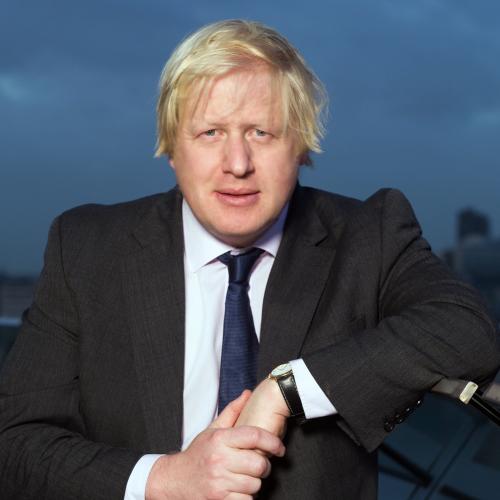
  • Boris Johnson – Statement on Salisbury Attack

    Below is the text of the statement made by Boris Johnson, the Foreign Secretary, on 13 March 2018.

    The first thing is to get over to our friends and partners exactly what has happened, and that’s what we’ve been doing today. As the Prime Minister explained yesterday, this is a brazen attempt to murder people – innocent people – on UK soil. The policeman is still in hospital.

    It’s overwhelmingly likely, or highly likely that the Russian state was involved. And the use of this nerve agent would represent the first use of nerve agents on the continent of Europe since the Second World War.

    Clearly what we’re doing today is giving Russia until midnight tonight to explain how it came to be that Novichok was used on the streets of Wiltshire. If they can come up with a convincing explanation then obviously we will want to see full disclosure of that to the Organisations for the Prohibition of Chemical Weapons in The Hague.

    If not, then clearly we will want to be announcing the UK response, and that would come tomorrow. In the meantime, what we’ve been doing is talking to friends and partners, explaining what we see as the high likelihood of Russian State agency.

    I’ve been very encouraged so far by the strength of the support that we are getting. I think in particular from President Macron of France, Sigmar Gabriel, my German counterpart, and from Washington, where Rex Tillerson last night made it very clear that he sees this as part of a pack of increasingly disruptive behaviour by Russia – the reckless use of chemical weapons that stretches from Syria to the streets of Salisbury. I’ve been encouraged by the willingness of our friends to show support and solidarity.

    It’s important that we wait until the deadline has passed. You’ve got to do this correctly. We’ve given the Russians until midnight to explain how the Novichok could have come to be on the streets of Britain. We cannot exclude that they have an explanation and we will want a full disclosure to the chemical weapons watchdog in the Hague. If not, there is a package of measures that we would use.

    It is very important that people understand the gravity of what has happened and the outrage that the British government feels about the use of nerve agents, use of chemical weapons, against innocent members of the public, against an innocent police officer, on UK soil. We will make sure that our response is, as I told the House last week, commensurate but robust.

  • Philip Hammond – 2018 Spring Statement

    Below is the text of the speech made by Philip Hammond, the Chancellor of the Exchequer, in the House of Commons on 13 March 2018.

    I am pleased to introduce to the House the first spring statement. The UK was the only major economy to make hundreds of tax and spending changes twice a year, and major international organisations and UK professional bodies alike have been pressing for change. In 2016, I took the decision to move to a single fiscal event in the autumn, giving greater certainty to families and businesses ahead of the new financial year and allowing more time for stakeholder and parliamentary engagement on potential fiscal changes.

    Today’s statement will update the House on the economic and fiscal position, report progress on announcements made at the two Budgets last year and launch further consultations ahead of Budget 2018, as I set out today in my written ministerial statement. I will not be producing a Red Book today, but of course I cannot speak for the right hon. Member for Hayes and Harlington (John McDonnell).

    I am pleased to report today to the House on a UK economy that has grown in every year since 2010—an economy that, under Conservative leadership, now has a manufacturing sector enjoying its longest unbroken run of growth for 50 years, that has added 3 million jobs and seen every single region of the UK with higher employment and lower unemployment than in 2010, that has seen the wages of the lowest-paid up by almost 7% above inflation since April 2015 and that has seen income inequality lower than at any time under the last Labour Government. That is solid progress towards building an economy that works for everyone.

    So I reject the Labour party’s doom and gloom about the state of the nation. Every Wednesday, we have to listen to the Leader of the Opposition relentlessly talking Britain down, and every year since 2010 we have had to listen to the right hon. Member for Hayes and Harlington predict a recession—none of which has actually happened. So if there are any Eeyores in the Chamber, they are on the Opposition Benches; I, meanwhile, am at my most positively Tigger-like.

    As I contemplate a country which faces the future with unique strengths.

    Our language is the global language of business.

    Our legal system is the jurisdiction of choice for commerce.

    We host the world’s most global city, and its international finance and professional services capital.

    Our companies are in the vanguard of the technological revolution.

    While our world-class universities are delivering the breakthrough discoveries and inventions that are powering it.

    British culture and talent reaches huge audiences across the globe.

    And our tech sector is attracting skills and capital from the four corners of the earth.

    With a new tech business being founded somewhere in the UK every hour.

    Producing world-class products including apps like TransferWise, CityMapper,

    And Matt Hancock.

    Mr Speaker.

    Today the OBR delivers its second report for the fiscal year 2017-18.

    And I thank Robert Chote and his team for their work.

    It forecasts more jobs.

    Rising real wages.

    Declining inflation.

    A falling deficit.

    And a shrinking debt.

    The economy grew by 1.7% in 2017, compared to 1.5% forecast at the Budget.

    And the OBR have revised up their forecast for 2018 from 1.4% to 1.5%.

    Forecast growth is then unchanged at 1.3% in 2019 and 20, before picking up to 1.4% in 21 and 1.5% in 22.

    That’s the OBR’s forecast Mr Speaker.

    But forecasts are there to be beaten.

    As a nation, we did it in 2017.

    And we should make it our business to do so again!

    Our remarkable jobs story is set to continue.

    With the OBR forecasting more jobs in every year of this parliament.

    And over 500,000 more people enjoying the security of a regular pay-packet by 2022.

    I am pleased to report that the OBR expect inflation, which is currently above target at 3%.

    To fall back to target over the next 12 months.

    Meaning that real wage growth is expected to be positive from the first quarter of 18-19, and to increase steadily thereafter.

    Mr Speaker.

    I reported in the Autumn that borrowing was due to fall in every year of the forecast.

    And debt to fall as a share of GDP from 2018-19.

    The OBR confirms this today.

    And further revises down debt and borrowing in every year.

    Borrowing is now forecast to be £45.2 billion this year.

    £4.7bn lower than forecast in November.

    And £108bn lower than in 2010 which, coincidentally, is almost exactly the total cost of the additional spending pledges made by the Labour party since the general election in June last year; it has taken them just nine months to work up a plan to squander the fruits of eight years’ hard work by the British people.

    As a percentage of GDP, borrowing is forecast to be 2.2% in 17-18.

    Falling to 1.8% in 18-19, 1.6% in 19-20, then 1.3%, 1.1% and finally 0.9% in ‘22-‘23.

    Meaning that in 18-19 we will run a small current surplus, borrowing only for capital investment.

    And we are forecast to meet our cyclically adjusted borrowing target in ‘20-21 with £15.4bn headroom to spare.

    Broadly as forecast at the Budget.

    Mr Speaker,

    The more favourable outlook for borrowing means the debt forecast is nearly 1% lower than in November.

    Peaking at 85.6% of GDP in 17-18.

    And then falling to 85.5% in 18-19, then 85.1%, 82.1%, 78.3%, and finally 77.9% in 2022-23.

    The first sustained fall in debt in 17 years.

    A turning point in the nation’s recovery from the financial crisis of a decade ago.

    Light at the end of the tunnel, another step on the road to rebuilding the public finances that were decimated by the Labour party. And it is one that Labour would again place at risk, because under Labour’s policies, our debt would not fall over the next five years; it would rise by more than £350 billion to more than 100% of our GDP, undermining our recovery, threatening investment in British jobs, burdening the next generation and wasting billions and billions of pounds more on debt interest. There is indeed light at the end of the tunnel, but we have to make absolutely sure that it is not the shadow Chancellor’s train hurtling out of control in the other direction towards Labour’s next economic train wreck.

    Mr Speaker.

    In Autumn 2016, I changed the fiscal rules to give us more flexibility to adopt a balanced approach to repairing the public finances.

    Reducing debt.

    Not for some ideological reason.

    But to secure our economy against future shocks.

    Because we in the Conservative Party are not so naïve as to think we have abolished the economic cycle.

    Because we want to see taxpayers’ money funding our schools and hospitals, not wasted on debt interest.

    And because we want to give the next generation a fair chance.

    But I do not agree with those who argue that every available penny must be used to reduce the deficit.

    And nor do I agree with the fiscal fantasists opposite who argue that every available penny should be spent immediately.

    We will continue to deliver a balanced approach.

    Balancing debt reduction against the need for investment in Britain’s future.

    Support to hard-working families through lower taxes.

    And our commitment to our public services.

    Judge me by my record, Mr Speaker [political content removed].

    Since Autumn Statement 2016, I have committed to £60 billion of new spending.

    Shared between long-term investment in Britain’s future.

    And support for our public services.

    With almost £9 billion extra for our NHS and our social care system.

    £4bn going into the NHS in 18/19 alone.

    And as I promised at the Autumn Budget.

    More to come if, as I hope, management and Unions reach an agreement on a pay modernisation deal for our nation’s Nurses and Agenda for Change staff.

    Who have worked tirelessly since the Autumn in very challenging circumstances to provide the NHS care that we all value so highly.

    £2.2 billion more on education and skills.

    And £31 billion going to fund infrastructure, R&D and housing through the National Productivity Investment Fund.

    Taking public investment in our schools, hospitals, and infrastructure in this parliament to its highest sustained level in 40 years.

    And at the same time we have cut taxes for 31 million working people by raising the personal allowance again in line with our manifesto commitment.

    Taking more than 4 million people out of tax altogether since 2010.

    Freezing fuel duty for an eighth successive year, taking the saving for a typical car driver to £850 compared with Labour’s plans, and raising the national living wage to £7.83 from next month, giving the lowest paid in our society a well-deserved pay rise of more than £2,000 for a full-time worker since 2015.

    Since becoming Chancellor, I have provided an extra £11 billion of funding for 2018/19.

    To help with short-term public spending pressures.

    And to invest in Britain’s future.

    In the longer term, I can confirm that, at this year’s Budget I will set an overall path for public spending for 2020 and beyond.

    With a detailed Spending Review to take place in 2019.

    To allocate funding between Departments.

    That is how responsible people Budget.

    First you work out what you can afford.

    Then you decide what your priorities are.

    And then you allocate between them.

    And if, in the Autumn, the public finances continue to reflect the improvements that today’s report hints at.

    Then, in accordance with our balanced approach, and using the flexibility provided by the fiscal rules.

    I would have capacity to enable further increases in public spending and investment in the years ahead.

    While continuing to drive value for money to ensure that not a single penny of precious taxpayers’ money is wasted.

    A balanced approach.

    Getting our debt down.

    Supporting our public services.

    Investing in our nation’s future.

    Keeping taxes low.

    Building a Britain fit for the future.

    And an economy that works for everyone.

    Updates since the Budget.

    Mr Speaker.

    There is much still to do.

    Since Autumn 2016 we have set out our plan to back the enterprise and ambition of British business and the hard work of the British people.

    A plan to unleash our creators and our innovators.

    Our inventors and our discoverers.

    To embrace the new technologies of the future.

    And to deliver the skills we will need to benefit from them.

    To tackle our long-standing productivity challenges.

    And to say more loudly than ever that our economy will remain open and outward-looking.

    Confident to compete with the best in the world.

    We choose to champion those who create the jobs and the wealth on which our prosperity and our public services both depend.

    Not to demonise them.

    Mr Speaker,

    The shadow Chancellor is open about his ideological desire to undermine the market economy, which has driven an unparalleled increase in our living standards over the past 50 years. We on the Conservative Benches reject his approach outright.

    The market economy embraces talent and creates opportunity.

    Provides jobs for millions and the tax revenues that underpin our public services.

    So we will go on supporting British businesses.

    We are reducing business rates by over £10 billion.

    And we committed at Autumn Budget 2017 to move to triennial revaluations from 2022.

    Today I am pleased to announce that we will bring forward the next business rates revaluation to 2021 and make the triennial reviews from that date.

    We will launch a Call for Evidence to understand how best we can help the UK’s least productive businesses to learn from, and catch-up with, the most productive.

    And another on how we can eliminate the continuing scourge of late payments – a key ask from small business.

    Because Mr Speaker, we are the champions of small businesses and the entrepreneur.

    Since the Budget, we have made substantial progress in our negotiations with the European Union.

    To deliver a Brexit that supports British jobs, businesses and prosperity.

    And I look forward to another important step forward at the European Council next week.

    But we will continue to prepare for all eventualities.

    And today my RHF the Chief Secretary is publishing the Departmental allocations of over £1.5 billion of Brexit preparation funding for 2018-19 which I announced at the Autumn Budget.

    Our Modern Industrial Strategy sets out our plan to keep Britain at the forefront of new technologies.

    With the biggest increase in public R&D spending for four decades.

    Much of this new technology depends on high-speed broadband.

    And today I can make the first allocations of the £190 million local full fibre challenge fund announced at Autumn Budget and confirm £25 million for the first 5G testbeds.

    As our economy changes, we must ensure that people have the skills they need to seize the opportunities ahead, so we have committed over £500 million a year to T-levels—the most ambitious post-16 reforms in 70 years. From next month, £50 million will be available to help employers to prepare for the roll-out of T-level work placements. Last week the Education Secretary and I chaired the first meeting of the national retraining partnership between the Government, the TUC and the Confederation of British Industry. I can reassure the House that there was no beer and no sandwiches—not even a canapé—but there was a clear and shared commitment to training in order to prepare the British people for a better future ahead. Next month our £29 million construction skills fund will open for bids to fund up to 20 construction skills villages around the country.

    We’re committed as a government to delivering 3 million apprenticeship starts by 2020 with the support of business through the apprenticeship levy.

    But we recognise the challenges the new system presents to some small businesses looking to employ an apprentice.

    So I can announce today that my Right Honourable Friend the Education Secretary will release up to £80 million of funding to support those small businesses in engaging an apprentice.

    We publish a consultation on improving the way the tax system supports self-funded training by employees and the self-employed.

    And because we currently understand more about the economic pay-back from investing in our infrastructure than we do about investment in our people.

    I have asked the ONS to work with us on developing a more sophisticated measure of human capital.

    So that future investment can be better targeted.

    Mr Speaker, we’re undertaking the largest road building programme since the ‘70s.

    As Transport Secretary, I gave the green light to fund the new bridge across the River Mersey in 2011.

    And I was delighted to see it open late last year.

    The largest infrastructure project in Europe, Crossrail, is due to open in just 9 months’ time.

    We’re making progress on our plans to deliver the Cambridge-Milton Keynes-Oxford Corridor.

    We’re devolving powers and budgets to elected mayors across the Northern Powerhouse and Midlands Engine.

    We’re in negotiations for city deals with Stirling and Clackmannanshire, Tay Cities, Borderlands, North Wales, Mid Wales, and Belfast.

    And today we invite proposals from cities across England for the £840 million fund I announced at the Budget to deliver on their local transport priorities.

    As part of our plans to spread growth and opportunity to all parts of this United Kingdom.

    And at the heart of our plan for building an economy that works for everyone is our commitment to tackle the challenges in our housing market.

    With an investment programme of £44 billion to raise housing supply to 300,000 a year by the mid-2020s.

    And today I can update the House.

    We are working currently, with my Right Honourable Friend the Housing Minister, with 44 authorities who have bid into the £4.1 billion Housing Infrastructure Fund, to unlock homes in areas of high demand.

    We are concluding housing deals with ambitious authorities who have agreed to deliver above their Local Housing Need.

    And I can announce today that we have just agreed a deal with the West Midlands to have committed to deliver 215,000 homes by 2030-31, facilitated by a £100 million grant from the Land Remediation Fund.

    And my Right Honourable Friend the Housing Minister will make further announcements on the over the next few days on the Housing Infrastructure Fund.

    We will more than double the size of the Housing Growth Partnership with Lloyds Banking Group to £220 million, to help providing additional finance for small builders.

    And London will receive an additional £1.7 billion to deliver a further 26,000 affordable homes, including homes for social rent, taking total affordable housing delivery in London to over 116,000 by the end of 2021-22.

    Mr Speaker, my Right Honourable Friend for West Dorset has outlined his initial findings on the gap between planning permissions granted and housing completions.

    In a letter which I have placed in the Library of the House.

    And I look forward to his full report at the Budget.

    And I am delighted to inform the House that an estimated 60,000 First Time Buyers have already benefited from the Stamp Duty relief I announced at the Autumn Budget. I remind the House that the Labour party voted against this.

    In the Autumn, we published a paper on taxing large digital businesses in the global economy.

    And today we follow up with a publication that explores potential solutions.

    And I look forward to discussing this issue with G20 Finance Ministers in Buenos Aires at the weekend.

    We also publish a call for evidence on how online platforms can help their users to pay the right amount of tax.

    We will consult on a new VAT collection mechanism for online sales.

    To ensure that the VAT consumers pay actually reaches the Treasury.

    And we will call for evidence, too, on how to encourage cashless and digital payments, while ensuring cash remains available to those who need it.

    Mr Speaker.

    This government is determined that our generation should leave the natural environment in a better state than we found it.

    And improve the quality of the air we breathe.

    So we will publish a call for evidence on whether the use of non-agricultural red diesel tax relief contributes to poor air quality in urban areas.

    And following our successful intervention to incentivise green taxis, we’ll help the Great British White Van driver go green with a consultation on reduced VED rates for the cleanest vans.

    And follow up on the vital issue of plastic littering and the threat to our oceans.

    With a call for evidence to support us in delivering on our vow to tackle this complex issue.

    It will look at the whole supply chain for single use plastics.

    At alternative materials.

    Reusable options.

    And recycling opportunities.

    And it will look at how the tax system can help drive the technological progress and behavioural change we need.

    Not as a way of raising revenue.

    But as a way of changing behaviour.

    And encouraging innovation.

    We’ll commit to investing to develop new, greener, products and processes.

    Funded from the revenues that are raised.

    And as a downpayment Mr Speaker, we’ll award £20m now from existing departmental budgets to businesses and universities, to stimulate new thinking and rapid solutions in this area during the call for evidence.

    Mr Speaker,

    We are delivering on our plan.

    With a balanced approach.

    Restoring the public finances.

    Investing in our economy and our public services.

    Raising productivity through our modern industrial strategy.

    Building the homes our people need.

    Tackling the environmental challenges that threaten our future.

    Embracing technological change, seizing the opportunities ahead.

    As we build our vision of a country that works for everyone.

    An economy where prosperity and opportunity are in reach of all.

    Wherever they live.

    Whatever their gender, colour, creed or background.

    Where talent and hard work alone determine success.

    A beacon of enterprise and innovation.

    An outward looking, free-trading nation.

    One that is confident that our best days lie ahead of us.

    A force for good in the world.

    A country we can all be proud to pass on to our children.

    And, I commend this statement to the House.
  • Damian Hinds – 2018 Speech at Association of School and College Leaders’ Conference

    Below is the text of the speech made by Damian Hinds, the Secretary of State for Education, at the Association of School and College Leaders’ Conference in Birmingham on 10 March 2018.

    I’m delighted to have this opportunity to speak directly to school and college leaders here at ASCL – two months into the job.

    Secretary of State for Education is a hugely exciting role to be taking on. But I also feel the weight of responsibility, the enormous responsibility of working with this whole sector – the lecturers, the social workers, and, of course, with teachers and with school leaders like yourselves.

    What you and your teams do is one of the highest callings, the noblest of roles, with an impact on our society, far, far into the future.

    In my first couple of months, I have had the opportunity to visit some of our nurseries, schools and colleges in different parts of the country.

    And, everywhere I’ve visited, I have been so struck by the hard work, the care, the imagination shown by teachers and leaders – their dedication to doing the best for their pupils.

    So, I’m going to begin today with a thank you.

    We have, together, been striving harder than ever to make sure every child in this country gets the very best education – so that when they finish their formal education they have the knowledge, the skills and the qualifications that set them up for life, whatever path they take.

    A core part of our approach has been to hand power back to headteachers, because we know you are the ones best placed to make the right decisions for your schools.

    And thanks to your efforts, and to the dedication of teachers across the country, our schools are improving.

    Since 2010, there are now 1.9 million more children attending good or outstanding schools. More children are studying the key subjects that can keep their options most open. And the attainment gap between disadvantaged children and their more affluent peers has shrunk by 10% since 2011.

    Our national curriculum and the new rigorous GCSEs have put England’s system on a par with high performing countries.

    And we will look to keep raising our game, investing in the vital subjects of the future like maths, coding and modern languages; making sure that the next generation is best prepared to face the challenges and opportunities that lie ahead.

    I know that education is, above all, a people business. Syllabus, technology, structures – these things all matter. But ultimately it is about people: the teacher, the head teacher, the lecturer, the support staff.

    There can be no great schools without great teachers. To motivate children, to make knowledge meaningful, to inspire curiosity. The quality of teaching matters more than anything else; and it matters even more for disadvantaged pupils.

    Right now, we have so many brilliant teachers in our schools – the best generation of teachers yet. And my top priority is to make sure this does remain an attractive and fulfilling profession.

    But, with rising pupil numbers, and a competitive employment market, I do recognise that employment and retention are difficult for schools – and it is not getting easier.

    And, clearly, one of the biggest threats to retention, and also to recruitment, is – as Geoff (Geoff Barton, ASCL general secretary) says – on workload.

    Too many of our teachers, and our school leaders, are working simply too long hours – and too often on tasks that the evidence shows are not helping children to learn.

    We need to get back to the essence of successful teaching; strip away the workload that doesn’t add value and give teachers the time and the space to focus on what actually matters. Trust teachers to teach. That’s in the interests of teachers but it is also in the interests of children.

    As Geoff has set out you, as leaders of your schools, you have the power to drive real change. You are the ones who can help to meet this challenge directly and it is, ultimately, your actions that will make the most difference.

    But I fully understand that you don’t operate in a vacuum, you react to, you respond to, you operate in the context and climate around you. And two of the most powerful forces in shaping that environment are the Government and Ofsted.

    When I talk to teachers one thing I sometimes hear is this question: are we actually all on the same side?

    And that’s why I was so keen that today you would see up here Amanda (Amanda Spielman, Chief Inspector for Schools), Geoff and me together, standing together. Because we are all on the same side, and we all need to take collective ownership of the workload burden on schools.

    Now I do realise, of course, that I am not the first person to talk about this – I’m not the first person probably to stand here and talk about this.

    A lot of work has already taken place, and including in your schools.

    But, clearly, we need to go further.

    The issue of teacher workload is not new. It is one of the great unsolved issue in schools for well over a decade.

    Eight years ago, just before I became an MP for the first time and before the change in government in 2010, I spent a week in a secondary school in my constituency. Now you could make the very legitimate criticism that it wasn’t a typical school and it’s absolutely true that my constituency is a relatively affluent area.

    But this was a comprehensive intake, local authority maintained secondary school.

    I learnt a lot there. I learnt a lot in that week.

    Now I know in the intervening years a lot has changed. But I am also struck by what hasn’t changed in those intervening years; what I hear in schools today, compared to what I heard then, before the change in government in 2010.

    And one of the things that hasn’t changed is how often the subject of workload can come up in conversation.

    Teachers then were also having to spend too much time on non-teaching tasks out of proportion to how much those things would help children improve.

    So as we all know, it isn’t a problem with a quick fix.

    It is not as simple as going around searching for bits of bureaucracy that day by day you can cross off.

    It is a deep-seated, endemic issue and multiple forces play a part in it – and I want to go through some of those now.

    First, I do want to acknowledge the government’s part in this – because the pace of change has been fast these past 8 years, as indeed, to be fair, it was pretty quick in many of the preceding years as well.

    These changes have been important and necessary and we are now seeing their positive impact. As I’ve said, schools and teachers have risen remarkably to the challenge and raised standards. But I recognise that you now need a period of greater stability.

    That is why – beyond those changes already announced and which are working their way through the system – apart from those, for the rest of this parliament there will be:

    – No new additional statutory tests or assessment for primary schools;

    – No further changes to the national curriculum; and

    – No more reform of GCSEs and A levels.

    I will also look at the accountability system and how it can drive unnecessary workload.

    I know that the current accountability regime can feel very high stakes for school leaders – and this does then filter down to all staff.

    Now, I don’t think anybody can argue that we should dispense with accountability – it is crucial. And we must continue to hold schools to high standards – because children only get one chance at their education and they deserve the best.

    But I’m also clear accountability must also lead to the right support, at the right time.

    I want the default assumption to be firmly and increasingly about effective support for headteachers, so that they can receive the tailored help they need to help turn their schools around and move them further forward.

    I also know that schools can at times feel accountable to multiple masters, and even subject to multiple ‘inspections’. That is why I will be making a statement – following consultation with ASCL and others – to clarify the roles of the different actors in the system.

    We do need to ensure that headteachers have clarity about how the system works. We need a transparent, supportive system, where schools know the rules, but they also know the roles, of every player within it.

    That is why I want us to work together – government and the Regional Schools Commissioners, Ofsted, local authorities, teachers and unions – to make this a reality.

    But what about the immediate challenges in schools?

    I think we need to confront the fact that there are practices that have developed and spread based on beliefs about what Ofsted or what the government want to see, or required to see happening in our schools. And that, at their worst, these simply don’t help to improve outcomes for children, but do make life more difficult for teachers.

    And so you hear things like:

    – we need to colour code our marking like this in this way;

    – we need to fill in all these repeated forms or make these data entries about who is making progress and who is not; and

    – we need to give the senior leadership team extensive lesson plans every week.

    Why? Because Ofsted and others demand this of us.

    Yet, Amanda – who you’ll hear from in a moment – and Ofsted are clear that they don’t need all of this. And we’ll hear a little more on that later on.

    School leaders are increasingly rejecting these practices and developing more effective strategies.

    Such as 15 schools in Wigan which replaced various forms of deep marking with verbal feedback instead, leading to a reduction in workload and improvements in pupil outcomes.

    Or Whitley Bay High School which, working with two schools in the North East, have created coherent long-term curriculum plans, making it easier for teachers to share high-quality lesson resources, reducing the time teachers spend making their plans.

    Or Linton Village College which replaced onerous and ineffective whole school data drops, empowering subject leads instead to only collect data when it fits with their subject-specific curricula and teaching.

    I want all school leaders to be able to trust your teachers and make decisions you think, that you know, are in the best interests of children.

    My department has worked with Ofsted on their positive myth-busting work on inspections. And I want to build on this today with the launch of a video, making clear the things that we – and they – do not expect, because there is no evidence that they work.

    We want to demonstrate a clear, united approach on tackling workload. And our key message is that you have our backing to stop doing those things that add to workload but don’t actually help children to do better.

    No one should be asking you for those things, and no one else should be telling you it is what Ofsted or government expect.

    And to anyone who says otherwise – please play them that video.

    I am also working with teachers, school leaders, Ofsted and unions to create an online workload reduction toolkit.

    This will help schools identify what is eating up teachers’ time away from the classroom and offer practical solutions.

    In particular, we need to tackle the propensity of schools to collect more and more data, even when there’s no clear benefit to pupils.

    So I am going to bring together a high level group of sector experts and teachers to look at the kind of data and evidence schools are collecting and look at what, and who, is driving that. And they will work with me on a set of actions, which we will publish by the end of the summer term.

    As part of this, I also want to look at the role of technology, which Geoff also talked about. In so many other walks of life, modern technology has been a time-saver. But I know for many teachers it can sometimes feel like technology has had the opposite effect – actually adding to the work that needs to be done.

    Of course, technology can never replace the role of the teacher in a classroom. And we know that there have been times in the past when technology has been used to promote some of the fads and gimmicks that have spread around the school system – despite a lack of evidence on how this will help children learn.

    My goal is to support schools to use technologies in ways that actually reduce the workload burden, while supporting teachers to deliver great lessons.

    I understand that if we want to really tackle workload, then we also need to look at the broader questions around teacher recruitment and, particularly, retention.

    This needs to begin by setting out an overarching strategy on both.

    So, my Department will develop this plan, working with the profession – including ASCL and the teaching unions – identifying clearly what steps we will take. This strategy will cover areas like workload, professional development, career progression, flexible working and entry routes into teaching.

    In particular, I recognise that teachers need additional support and the highest quality development in the early years of their career, when the learning curve is inevitably at its steepest. This is what can attract more of the best graduates into teaching, set them up for success and keep them in the profession.

    That is why our plans to strengthen Qualified Teacher Status are so important. Our consultation has just finished – with over 2,000 responses – and I’m very grateful to all those of you who took the time to respond.

    We will be taking these plans forward, working hand in hand with the profession, and we will set out the next stage of this process by the summer.

    I also think it is particularly important that we do more to make sure teachers have ready access to high quality teaching materials that they can choose to draw on, with the confidence that they are used and approved by their peers.

    At the heart of great professions is the concept of building on the best practice and body of knowledge that has gone before. And I want to make it easier for teachers to do that throughout their careers.

    That is why, as a starting point, I intend to use our new Curriculum Fund to make it easier for schools and teachers to share and access high quality teaching resources.

    And I will work with the profession to help teachers to access a broad set of quality curriculum and teaching materials that teachers and leaders can adapt for their schools and classes, without having to write them from scratch.

    Finally, we will continue to work on making flexible working more possible, and easier for schools and teachers. The modern world demands this, and if teaching is to remain attractive to the next generation, it is a challenge we will all have to meet.

    As part of this, my department will be launching a new recruitment website that will help schools to recruit teachers and reduce costs – and we will adapt this specifically to help teachers to pursue flexible working, including job shares.

    Conference, I certainly do not think we’re going to fix all of this overnight – but I do promise to stick with it. I commit to you that I will work with all of you, I will work with ASCL, I will work with the other unions, I will work with Ofsted, I will work with the Regional Schools Commissioners, with teachers up and down country – with every part of our education system.

    I think between all of us we have the opportunity to do something materially different here: to change the culture in schools and to reduce workload for the long-term.

    As I said at the start, ultimately education is all about people. And my top priority must be to support you as a profession, helping to build on your successes, and making sure that all children get the world-class education they deserve.

    And I very much look forward to working with you.

  • Matt Hancock – 2018 Speech on the Future of the Media

    Matt Hancock

    Below is the text of the speech made by Matt Hancock, the Secretary of State for Digital, Culture, Media and Sport, at the Oxford Media Convention on 12 March 2018.

    We meet at a time of great change. Over the past generation, we have lived through some of the most radical changes since the invention of the printing press.

    At the heart of the digital revolution is an unprecedented collapse in the cost of gathering and transmitting information.

    And since gathering and transmitting information is at the heart of what you do, it’s little wonder the media is probably affected more than anything else.

    Not everyone thought that this would be the case. Take the American commentator Clifford Stoll, who wrote in Newsweek magazine in 1995: “Try reading a book on disc. At best, it’s an unpleasant chore: the myopic glow of a clunky computer replaces the friendly pages of a book. And you can’t tote that laptop to the beach. Yet some predict that we’ll soon buy books and newspapers straight over the Internet.”

    He said “The truth is no CD-ROM can take the place of a competent teacher, no computer network will change the way government works… and no online database will replace your daily newspaper”.

    Newsweek, of course is now digital only.

    But he wasn’t the only one who underestimated the transformative effect of technology on our media and on our society.

    And last time that the change was this big, the invention of the printing press brought about the fall of the established feudal order, the Thirty Years War, the end of the power of the church, and then ultimately paved the way for the Renaissance and the Enlightenment.

    And I just hope we can make the path smoother this time round.

    The world has changed, and today I want to look to the future.

    I only hope my speech will fare a bit better than Clifford Stoll’s article.

    But Stoll was not all wrong. He went on to say:

    “What the Internet hucksters won’t tell you is that the Internet is one big ocean of unedited data, without any pretence of completeness. Lacking editors, reviewers or critics, the Internet has become a wasteland of unfiltered data. You don’t know what to ignore and what’s worth reading.”

    Sound familiar?

    There are a multitude of challenges facing our media today. Falling newspaper circulations, declining advertising revenues, changing consumption and wholesale disinformation.

    Trusted, sustainable, high quality media is needed now more than ever.

    Yet the established media also face urgent challenges to reflect and represent the citizens they serve.

    I want to take a moment to examine these challenges, through three lenses:

    Accuracy. Sustainability. And diversity.

    And to ask “what is the role of Government in a liberal democracy as we navigate these turbulent times?”

    Accuracy

    The first area I want to look into is accuracy, where we’re seeing real threats to our media; to our society as a whole; is disinformation, also known as ‘fake news’.

    Now let us not pretend that journalism has always been an error free business.

    News is fast paced and mistakes can happen as stories change and new facts emerge. We all know the strapline for over-enthusiastic journalists: not wrong for long.

    But there is a difference between a mistake under the pressure of a deadline and deliberate disinformation designed to disrupt.

    According to last year’s Reuters Institute Digital Survey, only 43 per cent of the UK population felt they could trust the news most of the time.

    We know that some of the problem is state-sponsored. Russia, for instance, persistently deploys its state-run media organisations to manipulate democratic institutions.

    Some of this disinformation comes from people who simply see a business opportunity.

    A recent MIT study showed that falsehoods are 70 per cent more likely to be retweeted than stories verified by fact-checking authorities.

    Clicks of course mean money and so there are financial incentives to publish sensational stories, with little regard for their accuracy.

    A Buzzfeed report showed that two of the most widely shared fake news stories in the whole of 2016 originated from the same small town in Macedonia, where fake news can be a primary source of income.

    Commercial clickbait is in some ways easier to deal with, and the platforms have taken action.

    This toxic combination of political and financial motives is not just concerning, but can also be downright dangerous.

    We saw a number of widely shared fake news stories after the Manchester terrorist attack, including reports of another attack at Oldham Hospital. This caused panic and alarm and added unnecessarily to the workload of our fantastic emergency services.

    We reap massive benefits in this country from our free, open and accessible media. But we must act to deter those who want to take advantage of this to cause harm.

    And this ultimately matters to anyone who believes in our way of life in a liberal democracy.

    From Cicero to Rousseau, thinkers throughout history have underlined the importance of a successful democratic discourse.

    And we should aim for a discourse in which all sides accept objective facts, and then we can dispute what to do about the world we live in. To quote the legendary Guardian editor C.P. Scott “Comment is free but facts are sacred.”

    And this is why fake news is corrosive. It both allows a discourse in which uncomfortable facts are dismissed as fake news, and allows fake news – in other words lies – to underpin political opinions and decisions, even having been debunked.

    Of course fake news has always been around. There’s a quote that Mark Twain is said to have said – “a lie gets half the way round the world before the truth gets its shoes on”. Although even that quote is disputed, so maybe that’s fake news as well…

    But this inherent human behaviour is multiplied by technology, and it corrodes our democratic discourse.

    It’s no good just complaining about it. We must act.

    First things first, this impact of technology underlines the need to support some existing institutions.

    I firmly believe that for all its faults, if we didn’t have the BBC, today we would want to invent it. My God it can be infuriating, and bureaucratic, and desperately in need of more diversity of thought.

    But the BBC is our best bulwark against fake news and I celebrate its role in British public life, and I pay tribute to the stewardship of Lord Hall of Aunty.

    And I want to see the BBC do yet more around the world. I’m delighted at the World Service expansion. We strongly support its foreign language services, like Persian, Pidgin and Pashto, and we want to see it do more.

    Like the civil service, the principle of objectivity is drilled into its culture, and I want public service broadcasters to be more muscular in asserting their judgement and objectivity.

    While more reflection is needed domestically on the BBC’s institutional and subconscious biases, this objectivity is vital. And let’s be clear what objectivity means.

    Objectivity means stating this fact is wrong, and that fact is true, and not giving any airtime to total nonsense at all. Where facts can be established, your duty is to tell the truth.

    Objective reality exists. Your job is to find it and tell it. Have confidence, broadcasters. Your country needs you!

    But our existing institutions are not enough. We must work on technological solutions.

    I welcome recent moves by Facebook and Google to use technology to prevent the spread of fake news online, through algorithms that promote trusted news rather than dubious sources.

    I applaud solutions, like we’ve seen from Twitter, to tackle the use of online ‘bots’ that aim artificially to boost fake news.

    Tech companies are starting on their journey to maturity. The adolescents who moved fast and broke things now accept that they have a responsibility to society, a duty of care to curate an online world of trust, not fakery. But we are in the foothills, and there’s a lot of growing up to do.

    Part of the solution also lies in education. Our schools and our curriculum have a valuable role to play so students can tell fact from fiction and think critically about the news that they read and watch.

    But it is not easy for our children, or indeed for anyone who reads news online. Although we have robust mechanisms to address disinformation in the broadcast and press industries, this is simply not the case online.

    Take the example of three different organisations posting a video online.

    If a broadcaster published it on their on demand service, the content would be a matter for Ofcom.

    If a newspaper posted it, it would be a matter for IPSO.

    If an individual published it online, it would be untouched by media regulation.

    Now I am passionate in my belief in a free and open Internet. But freedom does not mean the freedom to harm others. Freedom can only exist within a framework.

    Digital platforms need to step up and play their part in establishing online rules and working for the benefit of the public that uses them.

    We’ve seen some positive first steps from Google, Facebook and Twitter recently, but even tech companies recognise that more needs to be done.

    We are looking at the legal liability that social media companies have for the content shared on their sites. Because it’s a fact on the web that online platforms are no longer just passive hosts.

    But this is not simply about applying publisher or broadcaster standards of liability to online platforms.

    There are those who argue that every word on every platform should be the full legal responsibility of the platform. But then how could anyone ever let me post anything, even though I’m an extremely responsible adult?

    This is new ground and we are exploring a range of ideas…

    including where we can tighten current rules to tackle illegal content online…

    and where platforms should still qualify for ‘host’ category protections.

    We will strike the right balance between addressing issues with content online and allowing the digital economy to flourish.

    This is part of the thinking behind our Digital Charter. We will work with publishers, tech companies, civil society and others to establish a new framework…

    …that protects users and their rights online, and offers opportunities alongside obligations for businesses and platforms.

    Trusted brands will help us to tackle this important issue.

    Everyone in this room, whether print, broadcast or online, has a part to play in providing reporting that everyone can trust.

    People are increasingly looking for trust in the midst of a sea of uncertainty.

    A sustainable, healthy and trusted press is a beacon for our democracy and that it is what we must keep in our sights.

    Sustainability

    This brings me on to sustainability, the second lens on the future.

    The Internet has been an immense force for good, connecting people around the world.

    And in so doing, it has turned the established order on its head and raised real questions about the sustainability of high quality journalism.

    UK newspaper circulations have halved since 2001. And although digital ‘clicks’ are rising, the average revenue per digital media user is only 8% of a reader in print.

    Local newspapers are particularly under threat, with over 200 closing since 2005. They play a vital role in binding together communities and holding local politicians and authorities to account.

    We need to make sure the fourth estate can survive and thrive in the face of rapidly developing technology, and that it’s appropriately rewarded for the content it creates.

    The role for Government is to work out what’s a public policy goal, and what is the natural impact of a disruptive new technology.

    And I’m clear about this:

    Sustaining high quality journalism is a vital public policy goal. The scrutiny, the accountability, the uncovering of wrongs and the fuelling of debate is mission critical to a healthy democracy.

    After all, journalists helped bring Stephen Lawrence’s killers to justice and have given their lives reporting from places where many of us would fear to go.

    And while I’ve not always enjoyed every article written about me, that‘s not what it’s there for.

    I tremble at the thought of a media regulated by the state in a time of malevolent forces in politics. Get this wrong and I fear for the future of our liberal democracy. We must get this right.

    I want publications to be able to choose their own path, making decisions like how to make the most out of online advertising and whether to use paywalls. After all, it’s your copy, it’s your IP.

    The removal of Google’s ‘first click free’ policy has been a welcome move for the news sector. But I ask the question – if someone is protecting their intellectual property with a paywall, shouldn’t that be promoted, not just neutral in the search algorithm?

    I’ve watched the industry grapple with the challenge of how to monetise content online, with different models of paywalls and subscriptions.

    Some of these have been successful, and all of them have evolved over time. I’ve been interested in recent ideas to take this further and develop new subscription models for the industry.

    Our job in Government is to provide the framework for a market that works, without state regulation of the press.

    We have launched an external review to examine the sustainability of this country’s press, to propose solutions to protect the future of high quality journalism.

    The review will be led by Dame Frances Cairncross. Frances will bring her experience as a journalist, in business and in academia to bear on the thorny and complex questions at the heart of press sustainability.

    Panelists include Peter Wright, a former editor of the Mail on Sunday.

    Polly Curtis, Editor in Chief at the Huffington Post.

    And Geraldine Allinson, who is chair of the KM Media Group.

    The Cairncross review will…

    take a clear-eyed view of how the press is faring in this new world…

    explore where innovation is working well…

    … and explore whether intervention may be required to safeguard the future of our free and independent press.

    The review will take evidence, report and publish recommendations within a year. We’re confident that we will find solutions that can help both the industry and the Government tackle these issues.

    This is not about Government regulating the media, and nor is it about propping up old business models that have stopped being viable.

    Rather, it is about making sure that we don’t wake up in five years’ time to find that high quality journalism has been decimated and our democracy damaged as a result.

    It may be that the market will create new, viable business models for high quality journalism, and indeed some of those new models have already started to appear.

    Just look at the FT, the Spectator and the Economist. Three publications, all founded in the 19th century, reinventing themselves and attracting new readers at a phenomenal rate.

    But high quality news is so important to our democracy that we need these success stories across the board, and to have the right market structures to do so. This is about acting in time, before irreversible damage is done to our news industry.

    Our nation has a distinguished history of a fearless and independent press. I made the decision not to reopen the Leveson Inquiry and not to commence Section 40, so we could focus on these big questions of the future.

    But I do want to see high standards. I want to see IPSO’s low cost arbitration system working, so anyone, of whatever means can get redress. It can’t be right that, in some places, a large front page mistake can still get a tiny page 18 correction.

    For high standards of ethics and high quality media of all forms is critical to our democracy.

    Our broadcasters are also being impacted by these seismic changes. And as Sharon White said last week, young British teenagers recognise the name YouTube more than they do the BBC. That is a striking fact.

    So broadcasters also need to be on a sustainable footing. As we leave the EU, and the relevant directives, we are exploring options for mutual recognition.

    Our goal is to allow for continued transfrontier broadcasting, which is good for Britain, and good for the rest of the EU too. And I look forward to working with all our broadcasters to make this happen.

    Diversity

    This brings me to the third lens through which I want to look at the future of our media: diversity.

    For our media to thrive, be relevant and trusted in the years to come, it needs to serve all of our communities and all parts of our country.

    The future of our media must have diversity at its heart.

    Diversity of gender, of race, of sexual orientation. Of social background and of region. Diversity when it comes to attitude, and disability, and personality type.

    In the inspiring words of Idris Elba, diversity of thought.

    The media has a special responsibility to reflect the nation it serves. There was a time when an Oxford Media Convention could have doubled up as a university reunion.

    Likewise, I could forgive you for being sceptical when you see a white, middle-class man in a suit talking to you about diversity. But this is a moral imperative for everyone.

    And I care about it not just because it is right.

    I care about it because it’s good business sense too: I’ve never seen a decision that can’t be improved by discussion with a diverse group.

    And I care because I care about my country. And a media with one set of assumptions based in one postcode in the capital can’t possibly reflect, represent or serve the country as a whole.

    High quality media is public service, and it’s got to serve the public.

    We’ve seen some good progress in recent years.

    For the first time, diversity, both on screen and off screen, has been enshrined within the BBC Operating Licence. This diversity will help fulfil the BBC’s Charter commitment to distinctiveness.

    We are taking action to make sure people with disabilities affecting sight or hearing can have equal access to video on demand platforms.

    And we have seen the launch and development of Project Diamond, to capture a range of diversity data directly from TV programmes.

    But there is so much more to do. Publishers and broadcasters should be a mirror for their communities, and represent the wide variety of views and perspectives that make this country so great.

    The publication of gender pay gap data has shown that transparency can shine a light on inequality and bad practise.

    I would call on all broadcasters and publications to publish your data on all diversity characteristics, not just those you are compelled to by law.

    Because this isn’t going away.

    Diversity is about regional representation as well.

    Local papers play a crucial role in this and we are working hard to give them the support and sustainability that they need.

    And there is also a role for publicly owned broadcasters, who need to do more to share their considerable benefits more widely across the UK.

    As the BBC has shown with the successful relocation of 2,500 roles to Salford, public service broadcasters can transform communities and build new creative hubs across the UK. BBC Breakfast and Five Live have had a markedly different tone and feel since their move.

    But more than two thirds of UK producers are based in London and the South East, while the vast majority of people live elsewhere.

    This limits the spread of jobs, prosperity, and opportunity outside the capital, and limits the representation of local views and interests on TV.

    I’m delighted that Channel 4 is creating a new National HQ, outside London, and increasing its out-of-London commissioning to over 50%, stimulating our creative economy across the country.

    There’s a huge swathe of interest, and I’m sure they will see some fantastic bids from across the UK.

    This will lead to a greater reflection, both on and off-screen, of the regional diversity of the country, and will support creative clusters across the UK.

    It’s what the public want, and I pay tribute to the vision and leadership of Alex Mahon in making it happen.

    And I hope that others will look to follow her lead.

    Conclusion

    So, our media faces challenges like never before.

    Each way we turn, long held assumptions are turned on their heads.

    But the solutions are within our grasp.

    Technology will not slow down; it will get only faster and smarter.

    Yet the essential human yearning for truth; for a story; for belonging and understanding, will surpass this technological age and endure.

    We face many hurdles. Yet among this turbulence I tell you this:

    There is no place on Earth with more of a chance, with more rich depth or more capability.

    More able to make this work and shape the future.

    The choices we make; the decisions we take as we face foursquare the new challenges and new chances of the age we live in will shape our country and our world for generations to come.

    So let us face them together. And let us rise to the task.

  • Theresa May – 2018 Statement on Salisbury Attack

    Below is the statement made by Theresa May, the Prime Minister, in the House of Commons, on 12 March 2018.

    With permission, Mr Speaker, I would like to update the House on the incident in Salisbury – and the steps we are taking to investigate what happened and to respond to this reckless and despicable act.

    Last week my Rt Hon Friends, the Foreign and Home Secretaries, set out the details of events as they unfolded on Sunday the 4th of March.

    I am sure the whole House will want to once again pay tribute to the bravery and professionalism of our emergency services and armed forces in responding to this incident, as well as the doctors and nurses who are now treating those affected.

    Our thoughts, in particular, are with Detective Sergeant Nick Bailey who remains in a serious but stable condition. In responding to this incident, he exemplified the duty and courage that define our emergency services; and in which our whole nation takes the greatest pride.

    Mr Speaker, I want to pay tribute to the fortitude and calmness with which people in Salisbury have responded to these events and to thank all those who have come forward to assist the police with their investigation.

    This incident has, of course, caused considerable concern across the community. Following the discovery of traces of nerve agent in Zizzi’s restaurant and The Mill pub, the Chief Medical Officer issued further precautionary advice. But as Public Health England have made clear, the risk to public health is low.

    Mr Speaker, I share the impatience of this House and the country at large to bring those responsible to justice – and to take the full range of appropriate responses against those who would act against our country in this way.

    But as a nation that believes in justice and the rule of law, it is essential that we proceed in the right way – led not by speculation but by the evidence.

    That is why we have given the police the space and time to carry out their investigation properly.

    Hundreds of officers have been working around the clock – together with experts from our armed forces – to sift and assess all the available evidence; to identify crime scenes and decontamination sites and to follow every possible lead to find those responsible.

    That investigation continues and we must allow the police to continue with their work.

    Mr Speaker, this morning I chaired a meeting of the National Security Council in which we considered the information so far available. As is normal, the Council was updated on the assessment and intelligence picture, as well as the state of the investigation.

    It is now clear that Mr Skripal and his daughter were poisoned with a military-grade nerve agent of a type developed by Russia.

    This is part of a group of nerve agents known as ‘Novichok’.

    Based on the positive identification of this chemical agent by world-leading experts at the Defence Science and Technology Laboratory at Porton Down; our knowledge that Russia has previously produced this agent and would still be capable of doing so; Russia’s record of conducting state-sponsored assassinations; and our assessment that Russia views some defectors as legitimate targets for assassinations; the Government has concluded that it is highly likely that Russia was responsible for the act against Sergei and Yulia Skripal.

    Mr Speaker, there are therefore only two plausible explanations for what happened in Salisbury on the 4th of March.

    Either this was a direct act by the Russian State against our country.

    Or the Russian government lost control of this potentially catastrophically damaging nerve agent and allowed it to get into the hands of others.

    This afternoon my Rt Hon Friend the Foreign Secretary has summoned the Russian Ambassador to the Foreign and Commonwealth Office and asked him to explain which of these two possibilities it is – and therefore to account for how this Russian-produced nerve agent could have been deployed in Salisbury against Mr Skripal and his daughter.

    My Rt Hon Friend has stated to the Ambassador that the Russian Federation must immediately provide full and complete disclosure of the Novichok programme to the Organisation for the Prohibition of Chemical Weapons.

    And he has requested the Russian Government’s response by the end of tomorrow.

    Mr Speaker, this action has happened against a backdrop of a well-established pattern of Russian State aggression.

    Russia’s illegal annexation of Crimea was the first time since the Second World War that one sovereign nation has forcibly taken territory from another in Europe.

    Russia has fomented conflict in the Donbas, repeatedly violated the national airspace of several European countries, and mounted a sustained campaign of cyber espionage and disruption. This has included meddling in elections, and hacking the Danish Ministry of Defence and the Bundestag, among many others.

    During his recent State of the Union address, President Putin showed video graphics of missile launches, flight trajectories and explosions, including the modelling of attacks on the United States with a series of warheads impacting in Florida.

    While the extra-judicial killing of terrorists and dissidents outside Russia were given legal sanction by the Russian Parliament in 2006.

    And of course Russia used radiological substances in its barbaric assault on Mr Litvinenko. We saw promises to assist the investigation then, but they resulted in denial and obfuscation – and the stifling of due process and the rule of law.

    Mr Speaker, following Mr Litvinenko’s death we expelled Russian diplomats, suspended security co-operation, broke off bilateral plans on visas, froze the assets of the suspects and put them on international extradition lists. And these measures remain in place.

    Furthermore our commitment to collective defence and security through NATO remains as strong as ever in the face of Russian behaviour.

    Indeed our armed forces have a leading role in NATO’s Enhanced Forward Presence with British troops leading a multinational battlegroup in Estonia.

    We have led the way in securing tough sanctions against the Russian economy.

    And we have at all stages worked closely with our allies and we will continue to do so.

    We must now stand ready to take much more extensive measures.

    Mr Speaker, on Wednesday we will consider in detail the response from the Russian State.

    Should there be no credible response, we will conclude that this action amounts to an unlawful use of force by the Russian State against the United Kingdom.

    And I will come back to this House and set out the full range of measures that we will take in response.

    Mr Speaker, this attempted murder using a weapons-grade nerve agent in a British town was not just a crime against the Skripals.

    It was an indiscriminate and reckless act against the United Kingdom, putting the lives of innocent civilians at risk.

    And we will not tolerate such a brazen attempt to murder innocent civilians on our soil.

    I commend this Statement to the House.