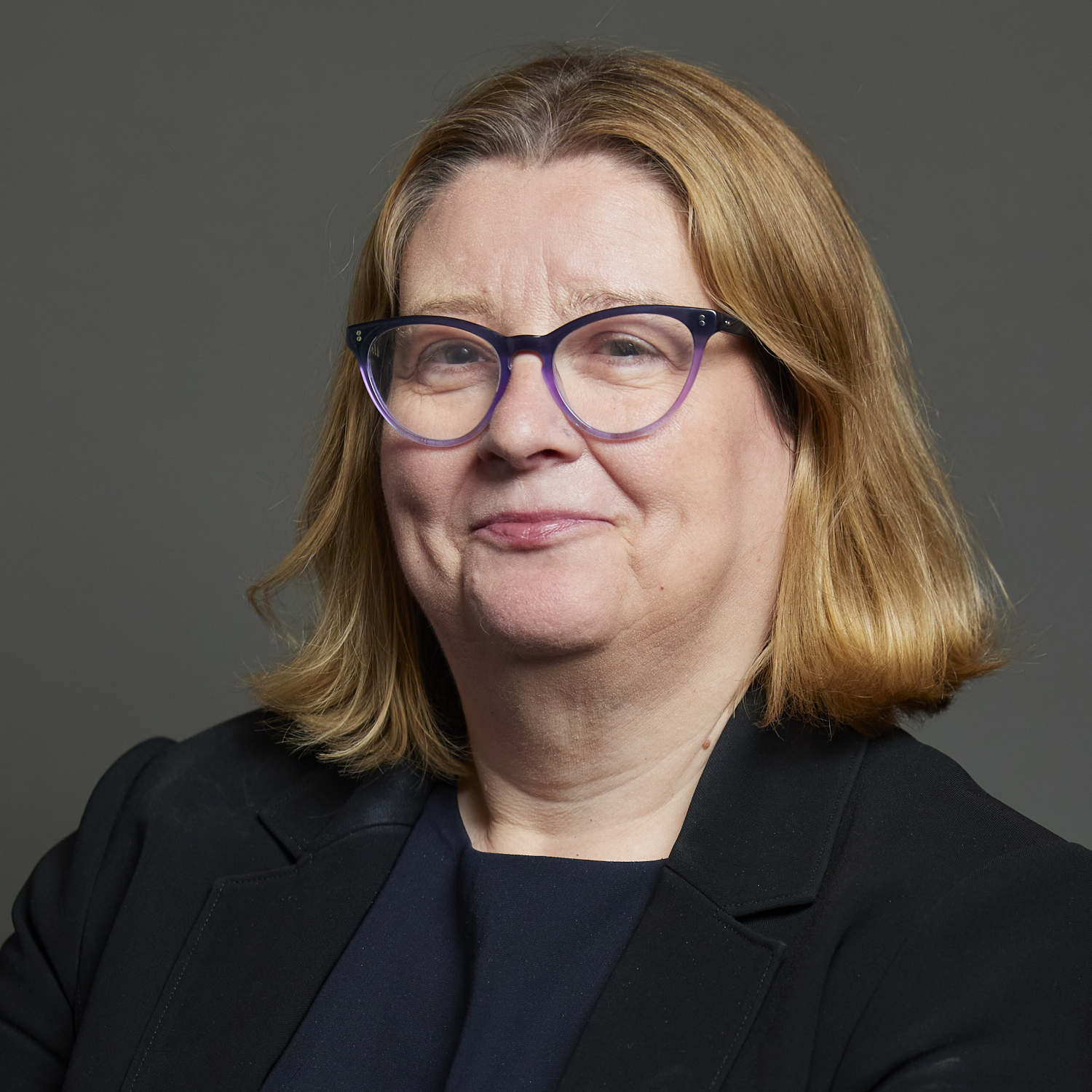
The speech made by Roz Savage, the Liberal Democrat MP for South Cotswolds, in Westminster Hall on 16 June 2026.
I beg to move,
That this House has considered community hospitals.
It is a pleasure to serve under your chairship, Sir Jeremy, and I am grateful to have secured this debate. I want to begin by thanking Jo Posnette and Dr Helen Tucker from the Community Hospitals Association, who have been an enormous help in preparing for the debate. I welcome Jo, who is in the Gallery.
Last year, according to the Royal College of Emergency Medicine, around 15,860 patients died in NHS A&E departments in England while waiting for care that could have saved them. That is roughly 1,300 people every month—nearly 10 times the figure recorded in 2015. Every week, more than 300 people died a preventable death simply because they waited too long. Those numbers are shocking, but behind every number there is a real-life tragedy. Let us remember that human aspect throughout the debate.
I am sure I do not need to point out to colleagues that in rural areas the situation is often even more challenging. The ambulance takes longer to reach people, the journey to A&E is longer and, when services at a community hospital have been reduced to a limited number, as is currently happening in my constituency, there might be no early safety net to catch the patient before a crisis becomes a catastrophe.
Manuela Perteghella (Stratford-on-Avon) (LD)
I thank my hon. Friend for her passionate speech about community hospitals. In my constituency we have a fantastic community hospital with a minor injuries unit, but the unit is open only on Tuesdays, Wednesdays and Thursdays, with reduced hours. It could treat thousands more patients each year. Does my hon. Friend agree that opening minor injuries units for extended hours would help to relieve pressure on A&E departments in acute hospitals?
Dr Savage
My hon. Friend makes a good point. Not everybody can time their minor injuries to fall conveniently within the unit’s opening hours, so I absolutely sympathise with the challenge facing her local hospital.
Jim Shannon (Strangford) (DUP)
I commend the hon. Lady for securing this important debate. I apologise to her and to you, Sir Jeremy, for not being able to stay; unfortunately, I have to be somewhere at 10 o’clock that is about 10 miles away. Like the hon. Lady, I wish to shine a light on the quiet heroes of our health service: our community hospitals. Places like Ards community hospital in my constituency are not just buildings but the bedrock of local care. They are the vital bridge between the high-tech intensity of a major acute hospital and the sanctuary of a patient’s own home. I support the hon. Lady in making the case for community hospitals, because my community hospital does all the things she wants community hospitals to do across this great United Kingdom of Great Britain and Northern Ireland.
Dr Savage
I thank the hon. Gentleman for his perceptive intervention. Community hospitals often do feel more like a home from home. They are more accessible for a patient’s friends and family to visit, and they deliver better outcomes for patients and clinicians alike.
In the south-west, ambulance handovers at acute hospitals took more than 30 minutes in more than half of cases in January 2025—nearly 30% above the England average. A few months ago, I had the privilege to ride in an ambulance for a day. In what ended up being a 13-hour shift we attended only three call-outs. Maybe it was a quiet day—I am definitely not saying I wish there had been more grief out there—but we spent much of the day on the road and/or waiting outside hospitals, which did not seem the best use of a highly qualified ambulance crew and an expensive resource.
It will not be news to anybody in this room that our NHS is under pressure, yet, against the odds, community hospitals continue to perform. The Care Quality Commission reports that between 75% and 92% of community hospitals are rated good or outstanding, which is remarkable given that the number of district nurses working in them fell by around 55% between 2009 and 2024, with underinvestment and the loss of EU staff after Brexit cited as key causes.
John Milne (Horsham) (LD)
I recently met the chief executive officer of the newly combined Surrey and Sussex integrated care board, and urged her to consider the potential for expanding Horsham community hospital on Hurst Road into a neighbourhood hub, including a women’s health unit, to mitigate the lack of a general hospital in the area. Sadly, her first task has been to reduce her staff by more than half. Does my hon. Friend wonder, like me, what happened to the extra £29 billion that the Government invested into the NHS? It does not seem to have got anywhere near Horsham.
Dr Savage
That is a very good question that I hope the Minister will be able to answer. I pay tribute to the absolute heroism of the people who staff our community hospitals; they are delivering an incredible return on investment.
Adam Dance (Yeovil) (LD)
I have had loads of emails from staff who were worried that Crewkerne community hospital was shutting down, because the communication from local NHS leaders has not been good enough—a problem we also had with the maternity unit. Does my hon. Friend agree that communication from NHS leaders needs to be a lot better?
Dr Savage
I absolutely agree that a lot of the frustration felt on the frontline is due to lack of clarity of communication. Community hospitals are institutions, and I pay tribute to the people who work at them, who do more with less, year after year. They deserve better than for services to be quietly wound down.
I invite Members to imagine for a moment that they are 80 years old—it is less of a feat of imagination for some of us than for others—and living in a village outside Cirencester. Maybe they can no longer drive due to poor eyesight. They wake up one morning with chest pain. There is a hospital in town, but the services have dwindled one by one: no A&E, acute ward or surgery, and the theatre may be currently paused. What is actually needed—prompt assessment, a bed close to home and blood tests that do not require a 25-mile journey to Cheltenham on rural roads—may not be available. That is the reality for many people across my constituency right now, and it is getting worse.
Community hospitals have been an honoured part of our healthcare system for over 150 years. Research published in the Journal of Community Nursing in 2024 describes them as bridging
“the gap between primary and secondary care.”
They are person-centred, nurse-led and multidisciplinary settings that help people to recover, maintain independence and enjoy visits from friends and family. They are not a quaint historical relic; they are precisely what the NHS says it wants more of.
The Cirencester community hospital was exactly that kind of place. Since the day surgery unit was suspended last year, I have heard so many moving stories from constituents, their fond memories of being in hospital, and how much that hospital, right at the heart of their community, meant to them when their children, parents or spouses were sick. But over the years the services there have been eroded one by one: first A&E, then acute wards, paediatrics, maternity and blood services. In 2025, the day surgery unit was paused as part of NHS Gloucestershire’s centres of excellence trial. Each change came with reassurances, but each one left residents further from care. My constituents have become deeply and rightly sceptical that a trial closure will ever be reversed.
Alison Griffiths (Bognor Regis and Littlehampton) (Con)
The hon. Lady is making a powerful point about trust and promises being made but not delivered. Twenty years ago, Littlehampton hospital in my constituency closed, with the promise that a replacement health service would follow. In Rustington, there has been a lack of consultation and the hospital has closed; we are hoping it will reopen. Does the hon. Lady agree that consultation, trust and following through on promises are so important?
Dr Savage
I absolutely agree with the hon. Lady’s point. I have been pressing the NHS to find out the criteria by which they will judge the trial closure, but the criteria have not been forthcoming. I am concerned that there is a circular logic: “Well, you’ve managed without that ward for six months or a year, so you can continue to manage without it.”
A constituent described a cardiac arrest at Cirencester, handled with what she called “absolute skill and excellence” by a team of senior staff working together to stabilise the patient before transfer to an acute hospital. She told me that the nursing care on the wards is excellent, and that patients nearing the end of their lives are cared for with compassion and great dignity. That is what we are talking about when we talk about community hospitals, and that is what the trial closure of a ward potentially puts at risk.
Another constituent—a former GP who started practicing in Cirencester 40 years ago, in 1986—told me about a child who, after the surgical ward closed, waited 20 hours in Cheltenham for an appendix operation. Previously, that operation could have been done in Cirencester much more quickly. That is a family sitting in a corridor in an unfamiliar hospital at 2 in the morning, feeling anxious and far from home, because the local service they relied on had gone.
A month or so ago I launched a petition, in collaboration with a local county councillor, to protect community hospitals across the Cotswolds. Within a couple of weeks, well over 3,000 people had signed it, and last week we handed it in at No. 10. The South Cotswolds population is growing rapidly, largely due to the Government’s housing targets. Thousands of new houses are being built around Cirencester, and there are plans for many more housing developments that will swallow up nearby villages. It does not make mathematical sense for communities to grow while the services that support them shrink. The numbers just do not add up.
NHS bodies often describe these changes as reconfigurations—a shift in how care is delivered rather than a reduction in what is available. For a rural resident with no car and negligible public transport, a 25-mile journey to Cheltenham is a significant barrier to care. The Government’s own 10-year plan talks about “neighbourhood health” and care “closer to home”, but Gloucestershire is heading in the direct opposite direction. I would like to hear from the Minister how those two things can be reconciled.
A few miles to the north-west of my constituency, post-natal beds at Stroud maternity hospital were suspended in 2022. That year, the Care Quality Commission rated Gloucestershire’s maternity services as inadequate—a rating they retained on reinspection the following year. The hon. Member for Stroud (Dr Opher), who is a GP, has made the valid point that post-natal care saves money downstream because it is the time when mothers and babies bond, when breastfeeding is established and when families who need extra support get it on a timely basis. If we lose that support, the costs will appear elsewhere later on. Will the Minister provide a timeline, with dates, for the full restoration of maternity services in Gloucestershire, including the Aveta ward in Cheltenham, which is currently closed for labour and births? Will she provide details of the specific workforce support the Government are providing to make that happen?
In other countries, the decline of community hospitals is not seen as inevitable. Other countries are under the same pressures, but they are making different choices. In Sweden, research found that rural GPs value community hospitals because they provide exactly the things that cannot be replicated in a large acute centre, including proximity, continuity and a holistic understanding of elderly patients and others with multiple conditions. Heart failure and pneumonia rehabilitation can be managed closer to home by staff who know the patient and their family.
In Italy, the Government have committed to building or renovating 400 community hospitals using European recovery funds, backed by research from the Emilia-Romagna region showing that they deliver better integration among care sectors, between primary and specialist staff, and between healthcare and the communities it serves. Last October, more than 150 people from 23 countries joined an international webinar co-hosted by the Community Hospitals Association, and the conclusion was consistent: community hospitals anchor care in local communities, support home-based care and help people to live better for longer.
The Government’s NHS 10-year plan commits to shifting care from hospital to community. That sounds like a very good idea, but a Nuffield Trust report published in September 2025 makes a point that needs to be heard: this ambition is not new. Successive Governments have promised to move care closer to home, and most have fallen short, almost always because the community infrastructure needed to enable the shift is simply not there, and nor is the investment. Ireland, which has pursued reform for nearly a decade, had the wisdom to invest up front in new facilities, digital systems and community workforce capacity.
Unfortunately, the Nuffield Trust found that England’s 10-year plan contains no equivalent ringfenced funding. The expectation appears to be that hospitals cut waiting lists and simultaneously release funds to build community capacity. Again, the maths just does not work.
The starting point is already challenging. More than 1.1 million people are currently waiting for community care in England, with the steepest rise among children and young people. A hospital where the theatre has been paused cannot absorb more community care. A maternity unit closed for three years cannot deliver neighbourhood health. A community health system with 1.1 million people already waiting cannot become the landing ground for patients displaced from acute settings unless it is properly resourced to do so. As so often, rural areas pay the highest price when the gap between ambition and delivery opens up. There is no slack in the system and no easily accessible option down the road.
Manuela Perteghella
My hon. Friend is very generous to give way again. In my Stratford-on-Avon constituency, the Ellen Badger community hospital in Shipston-on-Stour served the community for hundreds of years. The Coventry and Warwickshire integrated care board removed the in-patient beds, which were really important in rehabilitating and looking after patients from acute settings before they went home. Those beds were close to their home. Does my hon. Friend agree that the Government must invest in care in community hospitals to relieve the pressure on acute settings?
Dr Savage
I absolutely agree with my hon. Friend’s point. We need a more joined-up approach. From conversations that I have had with nurses in my constituency, I know that those on the pointy end can see very clearly where the bottlenecks in the system are. We need to relieve the pressure on those bottlenecks.
I will conclude with five asks for the Minister. First, will the Government give a clear commitment to protect and properly resource Cirencester hospital as a local health hub, with the operating theatre restored, not paused indefinitely while the trial closure quietly becomes permanent?
Secondly, will the Government give a timeline, with dates, for the full restoration of maternity services in Gloucestershire, including post-natal provision at Stroud?
Thirdly, will the Government give an honest account of how the shift from hospital to community will actually be delivered in rural areas? What oversight will there be? What protections are in place? What prevents the same pattern of managed reduction from continuing in the name of the 10-year plan?
Fourthly, will the Government commit to work with the Community Hospitals Association towards a national definition and dataset for community hospitals in England, so that our 500 community hospitals can finally be planned for, funded and properly valued?
Finally, will the Minister agree to a meeting? I would very much welcome the opportunity to sit down with her, alongside local NHS leaders and the Community Hospitals Association, to discuss the long-term future of Cirencester hospital, its role and resourcing, and its place in the vision of care closer to home, which this Government say they believe in.
My constituents are not asking for anything exceptional. They just want to know that, if they get ill, there is somewhere to go that they can get to. The NHS was founded on that promise, and that promise must be kept.