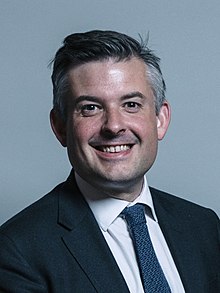
Below is the text of the speech made by Jonathan Ashworth, the Labour MP for Leicester South, in the House of Commons on 24 June 2020.
I beg to move,
That this House expresses thanks to the heroic work of frontline NHS staff who have saved lives throughout the Covid-19 pandemic; pays tribute to the at least 312 NHS and Social Care staff who have died of coronavirus in the United Kingdom; recognises the impact that coronavirus will have upon the NHS to deliver routine care including mental health care without additional Government support; notes that NHS waiting lists are projected to reach 10 million by the end of 2020, that cancer referrals fell 60 per cent during the peak of the coronavirus lockdown and that four out of five children have reported their mental health has got worse during the pandemic; further notes that there is a backlog of NHS care that needs to be tackled and that it is vital to prepare NHS services to deliver safe care alongside care for coronavirus, including preparing for winter and ensuring necessary supplies of PPE and medicine; is concerned that routine testing of NHS and Social Care staff is not currently in place; and calls on the Government to implement a routine weekly testing programme for all NHS and Social Care staff to enable NHS services to safely resume and ensure the continuity of services throughout the winter alongside a functional, national, public test, trace and isolate system.
We have brought this motion to the House today to provide an opportunity for the House to reflect on the Government’s response in handling the pandemic, to thank our brave, hard-working NHS and social care staff for their extraordinary efforts—including, if I may say so, our student nurses who do a tremendous job on the frontline; I hope the Minister praises them and recognises their worth when she gets up to make her remarks—and to pay tribute to and remember over 300 health and social care staff who gave their lives during the pandemic. We have also tabled the motion to put to the Government a constructive, practical suggestion that we now consider necessary to prepare our national health service to meet the monumental growing burden of unmet clinical need and set out what we think is necessary to prepare us in case of a second wave of the virus.
The key to resetting the NHS and the safe easing of lockdown measures announced yesterday is a fully effective system that finds cases, tests cases, traces contacts, isolates, and then properly financially supports those who have been asked to isolate. We believe a key element of that must now be the regular testing, weekly if necessary, of all NHS and social care staff. This is what we are suggesting to the Government today, and we hope they will accept our constructive suggestion and find a way to make it work.
Throughout the pandemic, our concern as an Opposition has been to save lives and minimise harm. We have always thought that that means suppressing the virus, not simply managing its spread, and measures to crunch the virus down, as nations like New Zealand and Iceland have done, and not merely squashing the sombrero. It is why we on the Labour Benches called for a lockdown. Indeed, when I called for a lockdown in March not everybody in my party supported me at the time—many on our side were concerned about the extraordinary restrictions to civil liberties—but we supported the Government when they announced a lockdown and we co-operated with the Government in ensuring that the necessary legislation passed this House.
I also said, however, that a lockdown was a blunt tool. I said it would buy us time while transmission in the community reduced. We always recognised that we could not stay in lockdown forever. Lockdown has huge social repercussions, especially for children. This is not a debate about schools, but I was struck by the words of UNICEF, which warned:
“Children are not the face of this pandemic. But they risk being among its biggest victims.”
We have always understood that there would come a moment when we need to ease out of lockdown, but it has to be done safely.
Of course, nothing is risk-free. We can never entirely eradicate risk, as the chief scientific adviser reminded us yesterday. We cannot be complacent. This virus exploits ambivalence, and the reality is that there are many hundreds of infections every day. Globally, we have passed 9 million cases. The virus is accelerating across the world. There are outbreaks in South Korea and Germany, countries that have been far more successful than we have. The chief medical officer yesterday warned us to expect to continue to be in this situation way through the winter and way into next spring. We all know from our history books that about 100 years ago there was a deadly second wave of Spanish flu. A second wave must surely be a possibility with this virus.
We are tracking towards one of the worst death tallies in the world: over 65,000 excess deaths, with 26,000 excess deaths in care homes. Ministers cannot run away from the realities, no matter how uncomfortable they are. Today, we call on Ministers to outline a plan for the next stage and to prepare us in case of a deadly second wave. Let me deal with the points in the motion about the NHS.
Ministers boast that the NHS was not overwhelmed, that it coped and that 119,000 people were admitted to hospital for covid and they received exceptional care. They are right to make those claims. Thankfully, the desperate scenes in Lombardy hospitals that we witnessed on our TV screens were never repeated here. Naturally, I pay tribute to all our NHS staff involved in that and all the staff who ensured the building of Nightingale hospitals, developed new care pathways, and moved to digital care or returned to the frontline. But let us be absolutely clear: that surge capacity in the NHS, and the wider protection of the lockdown, has come at a cost, because millions are waiting for care. For those millions, this has not been a cosy hibernation, as the Prime Minister told us yesterday. It has been a time of struggle, of suffering and of distress.
Protecting the NHS has been on the back of cancelled operations, delayed treatment, and, arguably, the biggest rationing of services in the 72-year history of the national health service. It has been on the back of shielding some of the most vulnerable in society, who remain anxious and scared today for their personal health and safety as lockdown eases. Let us remember that, when we went into this crisis, we had 4.5 million on the waiting list. We had A&E targets routinely missed. Every winter, we saw the crisis in our hospitals of trolleys lined up in corridors. We have had some of the worst cancer waiting times in history, and now the NHS Confederation is warning that elective waiting lists could hit 10 million by Christmas. Yes, referrals are down, as the Minister for Health, the hon. Member for Charnwood (Edward Argar), recognised yesterday, but that is because of unmet need in the wider community. Indeed, experts are predicting that about 1.6 million are being added to the waiting list every month. That means ever lengthening queues in our constituencies of people in pain waiting for care. The Minister will know that at the end of January, there were 521,000 people waiting for trauma and orthopaedic surgery, including hip and knee replacements, and probably another 42,000 added to the waiting list each week. That means that thousands of our constituents are waiting in discomfort and pain, often when pain-relieving drugs are inadequate.
Tim Farron (Westmorland and Lonsdale) (LD)
I am extremely grateful to the hon. Gentleman for giving way. He is making a very important and well-presented case. In my constituency, at Westmorland General Hospital, the trust closed down the Kentmere ward, which is the adult mental health ward. It is fairly obvious that most Members will have had in their inboxes a lot of people presenting with higher degrees of mental health need than during normal times. That ward was closed down temporarily to take account of the crisis. Does he agree that now is the time, particularly with mental health issues, to look again at those temporary closures and to bring the Kentmere ward and other such wards back into service, to meet the needs of those struggling with mental health conditions?
Jonathan Ashworth
The hon. Gentleman puts his case persuasively. My hon. Friend the Member for Tooting (Dr Allin-Khan), who will be winding up the debate for the Opposition, will, I am sure, want to touch more on the mental health impact of the lockdown. It is undeniable that the lockdown has led to unquantifiable mental health problems festering in society, and statistics show an increase in anxiety and depression. There are particular issues around young people not being able to access child and adolescent mental health services. If services have closed, as happened in his constituency, then, yes, we need a plan to ensure that those services are reopened as quickly as possible.
Another area where we have had access to services restricted is in cancer, and cancer touches everybody. It touches every family. It has touched many Members in this House very individually and personally as well.
Jim Shannon (Strangford) (DUP)
I thank the hon. Gentleman for giving way. What is happening to our cancer services is very important, as he said. Some of the figures are incredible. There are 2.1 million people waiting for breast or cervical screening tests, which is 60% higher than in April 2019. Treatment rates for chemotherapy have fallen by 70%, surgery by 60%, and radiotherapy by 90%. That underlines very critically the severe problems for those with cancer and for those needing treatment right now.
Jonathan Ashworth
The hon. Gentleman is ahead of me in making the points that I was hoping to go on to make. I am not surprised that he has made those points given that he is a Leicester City fan. I am very proud to have Leicester City football club in my constituency— hopefully we will do better next season. He is absolutely right in what he says, because the statistics on cancer are absolutely terrible.
Around 2 million people in England are currently waiting for cancer screening tests or cancer treatment, including chemotherapy. Today, we have a published analysis, which shows that those waiting more than six weeks for diagnostic tests—some of these will be for cancer of course—have increased from 30,000 to 469,000 as a result of the lockdown. Cancer referrals are down 60%, and 1 million people are missing out on breast, bowel and cervical cancer screening. That means that about 1,400 cases of cancer are going undiagnosed every month. In March and April alone, there were at least 500 more deaths from cancer than average, and research from University College London predicts that an estimated 17,915 additional deaths of existing and newly diagnosed cancer patients could occur in England in the next 12 months. That is why resetting our NHS and getting it started again is so vital.
We also know that covid attacks the lungs, so this is an especially frightening time for those with serious asthma, chronic obstructive pulmonary disease and emphysema. One in four people with COPD have had a regular GP or hospital appointment cancelled, or both. Some 24% of people on pulmonary rehab programmes have had their classes cancelled, and 600,000 people with asthma or COPD have missed their annual review. The more we know about coronavirus, the more we know it is also a cardiovascular issue. Those with cardio- vascular problems are the second biggest group of those with an underlying condition dying from covid now, yet about 30,000 elective procedures for heart disease have been deferred. Referrals to stroke units have declined, and excess stroke deaths in care homes are 39% higher than the five-year average. We are making these points not in a spirit of blame, but to re-emphasise the point that lockdown has come with huge costs and will inevitably mean that people will die or develop long-term illnesses unless there is now a plan to get the NHS up, running and working again.
Dr Kieran Mullan (Crewe and Nantwich) (Con)
It is important that we are clear as to exactly what the Opposition are calling for today. The motion asks for “routine weekly testing”, with no ifs, ands, buts or qualifications. Yet the hon. Gentleman said in his opening remarks that he is seeking routine testing weekly if it is necessary. So are the Opposition calling for weekly testing, no matter what? Or are they calling for what he said in his opening remarks, which is the possibility of weekly testing?
Jonathan Ashworth
We are calling for weekly routine testing, as have many organisations and the Chair of the Select Committee on Health and Social Care. He penned an excellent article in The Daily Telegraph today, and I hope the hon. Gentleman has had time to study it, because it is superb. May I also take this moment to pay tribute to the hon. Gentleman, because I know he has returned to the frontline? I am sure all of us, from across the House, are grateful for everything he is doing on the frontline.
The other point I wish to make on this growing burden of unmet clinical need is that there is a social gradient in this, as always; there is a higher mortality rate among those who are poorer and more deprived. Through all these different conditions, the poorer someone is, the more likely they are to become ill quicker and die sooner. So we need urgent action from the Government to tackle this, and we believe that regular testing of NHS staff is a key part of that.
We also need a broader plan to tackle the growing burden of sickness and unmet need. Our NHS will need more resources. We have had years of financial starvation in the NHS. The Government’s funding plan of two years ago fell short of the annual 4% increase that experts said was needed before the pandemic, and the settlement of that long-term plan is surely inadequate post pandemic. We must remember that we entered this crisis after 17,000 bed cuts and years of budget cuts to capital settlements, which have left hospitals crumbling, reliant on out-of-date equipment and grappling with a £6.5 billion repair bill. NHS land and buildings have been sold off. Last year, more than 890 hectares of NHS land was put up for sale. So we will need large-scale investment in the real estate of the NHS to allow health services to reconfigure to treat covid and non-covid patients alike.
Ministers will say that the NHS will get what it needs, but the reality on the ground is very different. I am sure the Minister for Care will have studied today’s Health Service Journal ahead of the debate and will have seen trust chief executives complaining that the cash that they were promised has not been delivered. They need this cash now if they are to restructure any of their services ahead of the winter. I hope that she will update the House on when those chief executives are going to get the cash they were promised by her Department.
We will also need real investment in rehabilitation services for those suffering from covid. The more we know about this disease, the more we know that those coming out of hospital are probably doing so with significant long-term chronic conditions. They are going to need support, be it respiratory, neuromuscular or psychological. Community health services are going to see a huge peak in demand now that many have moved out of the community health sector.
Crucially, to reset services—this comes to the point that the hon. Member for Crewe and Nantwich put to us—we need to ensure that care can be delivered safely, which is why we believe that a mass-testing infrastructure for staff is now so important. We know that around a fifth of covid infections in hospitals are caught in hospital settings. Given the levels of significant asymptomatic and pre-symptomatic transmission, we need a proper targeted testing strategy as well. All healthcare workers should be tested regularly—weekly—because a study from Imperial suggested that that would reduce transmission in healthcare settings by up to a third.
Patricia Gibson (North Ayrshire and Arran) (SNP)
The hon. Gentleman is eloquently outlining the challenges faced by the NHS in the wake of covid-19. Does he join me in welcoming the movement by the Scottish Government to ensure that social care workers who contract covid-19 are given additional funds on top of statutory sick pay, which is completely inadequate, in order to make sure that they do not lose out for testing positively as a result of their job?
Jonathan Ashworth
The hon. Lady makes a very important point, which affects the debate more broadly: those who test positive or are asked to isolate need to be given the financial support to do it, and statutory sick pay in many circumstances will not be enough. There are millions of workers—2 million in this country—who do not qualify for statutory sick pay, and just saying that they can apply online for universal credit is not going to be enough.
We need more radical thinking from the Government. Other countries offer greater financial support to those who are asked to isolate. Other countries even offer hotel rooms to those who are asked to isolate if it is not appropriate for them to isolate at home because of the nature of their housing situation. The Government should be looking into those sorts of things, and I hope the Minister can respond to that.
The point I was making is that regular testing of staff, whether asymptomatic or not, is so important not only for the safety of those staff and patients, but for building confidence in the NHS more generally. The study from Imperial suggested that it would reduce transmission of covid in healthcare settings by up to a third. We believe that this is a constructive suggestion that we are putting to the Government, which they should take on board and explore. It is disappointing that they are seeking to amend the motion to completely strip that out. They are not even prepared to take it away and look into it. They just want to pass a motion congratulating themselves on their handling of the pandemic.
A testing strategy for staff and patients, as we are proposing today, is a demand supported by many across the NHS as key to restarting that NHS work.
“A clear testing strategy is now more important than ever”—
says Chris Hopson from NHS Providers.
We
“need rapid testing available for all staff and patients, whether showing symptoms of COVID-19 or not”—
says Cancer Research UK.
“It’s absolutely essential to regain public confidence that we are able to test our staff regularly”—says Derek Alderson of the Royal College of Surgeons. And, of course—the right hon. Member for South West Surrey (Jeremy Hunt) will not be surprised that I am going to quote him in this debate—it is a position shared by the former Health Secretary, now the Chair of the Health and Social Care Committee, who in today’s Telegraph makes the case with far greater eloquence than I could ever muster:
“Until we minimise the risk of asymptomatic transmission by introducing weekly testing for all NHS and care staff, we are failing in a basic duty of care to the people most likely to die if they get the virus.”
Jeremy Hunt (South West Surrey) (Con)
May I put on record my thanks to the hon. Gentleman for praising me in this House for the very first time that I can remember on record?
Jonathan Ashworth
I praised him plenty of times from this Dispatch Box. The point is that this is a constructive proposal, which is not a party political point. There are clearly many people across the House who support this proposal. The right hon. Member, the former Health Secretary, also prays in aid in his article—I have it here for Members, if they have not had chance to peruse it—both Tony Blair and William Hague. So we now have a Front Bencher praising Tony Blair from the Dispatch Box—that is probably the first time it has happened on the Labour Front Bench for about 10 years.
Andrew Griffith (Arundel and South Downs) (Con)
I am delighted to see that the hon. Gentleman has improved his reading material. I congratulate him on securing the debate, and on his constructive tone. In that vein, in addition to the proposals that he is setting out, will he recognise that we are able to start unlocking the economy today because of the herculean efforts made in areas such as PPE, and the contribution made by the private healthcare sector, which has a valuable role to play as we move towards more of the elective care that we now need?
Jonathan Ashworth
I know that the hon. Gentleman is always keen to support those on his Front Bench. Indeed, he was one of the few Tory Members who actually supported Mr Cummings, tweeting:
“Another media non-story when there are so many important ‘real’ stories of this crisis”.
The Government were slow in getting PPE to the frontline, slow in ramping up testing, slow in going into lockdown, slow in getting tracing going and slow in protecting care homes. I am pleased that the hon. Gentleman recognises my constructive tone, but it does not mean that I will not highlight the failing of this Government in their mishandling of many aspects of the pandemic.
I must now move on, having spent some time in this mutual love-in with the former Health Secretary. I do not want to damage his career any further, although he is probably not on the Prime Minister’s Christmas card list at the moment.
I hope that the Government will engage seriously with our suggestion of regular testing for all NHS staff, because we believe that is a crucial part of an effective test, trace and isolate strategy. The problem is that the testing and tracing is still not as effective as it should be. Of course, we recall that testing and tracing was abandoned on 12 March, and the Government have been playing catch-up ever since. At Health questions yesterday the Secretary of State could not even tell us how many people were being tested on a daily basis. I hope that the Minister will now get us that information.
Local authorities are still not receiving localised data, which is very serious. At Thursday’s press conference—the Prime Minister has now got rid of the press conferences—the Health Secretary casually announced, in response to a question, that Leicester is experiencing one of the highest spikes in the country. Nearly a week later, the local authority still does not have specific postcode data on where the people who have tested positive are. The Secretary of State announced that last Thursday, and today is Wednesday. We do not have that data because the data protection protocols have still not been agreed. This is shambolic. The Government cannot announce that there is an outbreak in a particular part of the country but then not provide the local authority with the data it needs to put in place the necessary measures.
Jim Shannon
Will the hon. Gentleman give way?
Jonathan Ashworth
Given that the hon. Gentleman is a Leicester City fan, I will.
Jim Shannon
I am always pleased to intervene on anyone, but especially a Leicester City supporter.
On systematic testing, the figures from Cancer Research UK are critical, as I am sure the hon. Gentleman is aware. Between 21,000 and 37,000 tests would be required every day across UK cancer services just to catch up. That underlines how important the testing is, and that is just for those who have cancer.
Jonathan Ashworth
The hon. Gentleman is absolutely right, and that is why we have brought forward this debate. I think that we all understand why a lot of elective surgery and treatment had to be paused, but now that the lockdown is being eased, Government Ministers need to tell us how they are going to start treatment again, and how people who have been waiting for treatment, whether for cancer or for heart disease, or for a hip replacement, are going to get that important care.
We have a situation in which GPs cannot carry out tests, book tests or refer patients for tests. If someone goes to one of the Deloitte drive-through testing centres, or one of the centres where that role has been subcontracted to someone else, there is no requirement for the results to be sent back to their GP. GPs do not know who in their local area has been tested positive, because that is not going on their health records. This is shambolic. At the same time, the Government have given a £100 million contract to call centres run by Serco and Sitel, where tracers are complaining that it is chaotic and they have nothing to do. I do not know whether the Minister read the testimony, published in the British Medical Journal, of a clinician working in one of the call centres. They wrote:
“NHS Professionals employed us as clinical tracers, but we were recruited by Capita… Sitel provided access to the tracing applications and systems, and these all required different usernames and passwords. Synergy CRM assigned cases…CTAS captured contact tracing information, RingCentral was used for voice calls, and MaxConnect was used for storing knowledge about contacts. All of these systems were accessed through Amazon Workspace.”
This sounds a complete mess. At the same time, the chief executive of Serco is saying that this is an opportunity for it to “cement” its role in the NHS. Serco should not be an excuse for more NHS outsourcing and privatisation. Serco should be kicked out of our NHS, and local public health officials and GPs should be leading the tracing response.
And, of course, the Secretary of State has failed to deliver on his app, with months wasted and £11.8 million confirmed as down the drain by the Minister in the Lords yesterday. We are now in the dismal situation where there is an app for the Secretary of State himself, but there is not even an app for covid. You really could not make it up, Mr Deputy Speaker.
We believe that it is time for the Government to invest in public health services, to put GPs in the driving seat of testing, to give local authorities the localised data that they need and to begin a programme of routine testing of all NHS staff, whether symptomatic or not. We accept and understand that Ministers will have made mistakes throughout this crisis. It was an unprecedented pandemic, but Ministers have been slow, their response has been disorganised and the scale and nature of the pandemic, even though it was at the top of the risk register, at times underestimated.
However, Ministers can learn from their mistakes. They can take the advice of the former Health Secretary and they can take the advice of their former leader and former Foreign Secretary. They can start putting in place a programme for mass testing, starting with NHS staff, because we need it for our national health service. Our constituents are waiting in pain, agony and distress for treatment. It is time to deliver the care they deserve, and I commend our motion, constructively, to the House.