Blog

  • George Eustice – 2020 Comments on the Appointment of Glenys Stacey

    George Eustice – 2020 Comments on the Appointment of Glenys Stacey

    The comments made by George Eustice, the Secretary of State for the Environment, on 23 December 2020.

    I am delighted to appoint Dame Glenys to Chair the OEP. She has an outstanding reputation of being an independent voice, establishing regulators and being able to hold government to account.

    The Office for Environmental Protection will be a world leader in environmental regulation – setting how government will have to stand up to its pledge to protect and enhance the environment as we build back better and greener.

  • Ursula von der Leyen – 2020 Comments on UK/EU Trade Deal

    Ursula von der Leyen – 2020 Comments on UK/EU Trade Deal

    The comments made by Ursula von der Leyen, the President of the European Commission, on 24 December 2020.

    The UK remains a trusted partner. We will stand shoulder to shoulder to deliver on our common global goals.

    But now let’s turn the page and look to the future.

    To all Europeans I say: it is time to leave Brexit behind.

    Our future is made in Europe.

  • Alister Jack – 2020 Comments on UK/EU Trade Deal

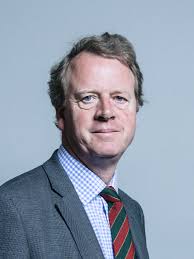
    Alister Jack – 2020 Comments on UK/EU Trade Deal

    The comments made by Alister Jack, the Secretary of State for Scotland, on 28 December 2020.

    We have secured a historic Free Trade deal with the EU that delivers for Scotland and the whole of the UK. This is a deep and wide-ranging deal, covering trade, security, travel, transport, energy, health and social security.

    As Parliament prepares to vote on the deal this week, I urge all Scottish MPs to give it their wholehearted support.

    Outside the EU, the UK can sign our own trade deals around the world, bringing new opportunities for exporters and some of Scotland’s most iconic products.

    For our farmers, the deal avoids tariffs on their world-beating Scotch lamb and beef.

    For our fishermen and coastal communities, the deal delivers what we promised.

    We are regaining control of our waters, we are restoring our status as an independent coastal state and, even during the five year adjustment period, there will be a big overall increase in our share of the catch in our waters.

    As we leave the Common Fisheries Policy, our fishermen will also enjoy near-exclusive access to inshore waters up to the historic 12 mile limit.

    The deal is good news for Scotland and I believe it is now time to move on from the Brexit debate and join forces in embracing our exciting future. Whether Leaver or Remainer in 2016 we need to come to together to make the most of our new opportunities.

    The people of Scotland will expect their MPs to do the right thing on Wednesday and vote for the deal. They will not easily forgive those who reject this Free Trade Agreement or throw their weight behind a no deal Brexit.

  • King William IV – 1836 King’s Speech

    King William IV – 1836 King’s Speech

    The speech made by King William IV in the House of Lords on 4 February 1836.

    My Lords and Gentlemen,

    It is with great satisfaction that I again meet the great Council of the Nation assembled in Parliament. I am ever anxious to avail myself of your advice and assistance, and I rejoice that the present state of public affairs, both at home and abroad, is such as to permit you to proceed without delay or interruption to the calm examination of those measures which will be submitted to your consideration.

    I continue to receive from my Allies, and generally from all Foreign Powers, assurances of their unaltered desire to cultivate with me those friendly relations which it is equally my wish to maintain with them; and the intimate union which happily subsists between this country and France is a pledge to Europe for the continuance of the general peace.

    Desirous on all occasions to use my friendly endeavours to remove causes of disagreement between other Powers, I have offered my mediation in order to compose the difference which has arisen between France and the United States. This offer has been accepted by the King of the French; the answer of the President of the United States has not yet been received; but I entertain a confident hope that a misunderstanding between two nations so enlightened and high-minded, will be settled in a manner satisfactory to the feelings and consistent with the honour of both.

    I have still to lament the continuance of the civil contest in the northern provinces of Spain. The measures which I have taken, and the engagement into which I have entered, sufficiently prove my deep anxiety for its termination; and the prudent and vigorous conduct of the present Government of Spain, inspires me with the hope that the authority of the Queen will soon be established in every part of her dominions; and that the Spanish nation, so long connected by friendship with Great Britain, will again enjoy the blessings of internal tranquillity and union.

    I have given directions that there be laid before you the Treaty, which I have concluded with the Queen of Spain, for the Suppression of the Slave Trade.

    Gentlemen of the House of Commons,

    I have directed the Estimates of the year to be prepared and laid before you without delay. They have been framed with the strictest regard to well-considered economy.

    The necessity of maintaining the maritime strength of the country, and of giving adequate protection to the extended commerce of my subjects, has occasioned some increase in the estimates for the naval branch of the public service.

    The state of the Commerce and Manufactures; of the United Kingdom is highly satisfactory. I lament that any class of my subjects should still suffer distress; and the difficulties which continue to be felt in important branches of Agriculture may deserve your inquiry, with the view of ascertaining whether there are any measures which Parliament can advantageously adopt for the alleviation of this pressure.

    My Lords and Gentlemen,

    I have not yet received the further report of the Commission appointed to consider the state of the several Dioceses of England and Wales. But I have reason to believe that their recommendations upon most of the important subjects submitted to them, are nearly prepared. They shall be laid before you without delay, and you will direct your early attention to the Ecclesiastical Establishment, with the intention of rendering it more efficient for the holy purposes for which it has been instituted.

    Another subject which will naturally occupy you is the state of the Tithe in England and Wales, and a measure will be submitted to you, having for its end the rendering this mode of providing for the Clergy more fixed and certain, and calculated to relieve it from that fluctuation, and from those objections to which it has hitherto been subject.

    The principles of toleration by which I have been invariably guided must render me desirous of removing any cause of offence or trouble to the consciences of any portion of my subjects, and I am, therefore, anxious that you should consider whether measures may not be framed which, whilst they remedy any grievances which affect those who dissent from the doctrine or discipline of the Established Church, will also be of general advantage to the whole body of the community.

    The speedy and satisfactory administration of justice is the first and most sacred duty of a Sovereign, and I earnestly recommend you to consider whether better provisions may not be made for this great purpose in some of the departments of the Law, and more particularly in the Court of Chancery.

    I trust that you will be able to effect a just settlement of the question of Tithe in Ireland upon such principles as will tend at length to establish harmony and peace in that country.

    You are already in possession of the Report of the Commission appointed to inquire into the state of the Municipal Corporations in Ireland, and I entertain the hope that it will be in your power to apply to any defects and evils which may have been shown to exist in those institutions, a remedy founded upon the same principles as those of the Acts which have been already passed for England and Scotland.

    A further Report of the Commission of Inquiry into the condition of the poorer classes of my subjects in Ireland will speedily be laid before you. You will approach this subject with the caution due to its importance and difficulty; and the experience of the salutary effect produced by the Act for the Amendment of the Laws relating to the Poor in England and Wales, may in many respects assist your deliberations.

    I rely upon your prudence and wisdom, and upon your determination to maintain, as well as to amend the Jaws and institutions of the country; and I commit these questions of domestic policy, to which I have deemed it my duty to direct your attention, into your hands, persuaded that you will so treat them, as to increase the happiness and prosperity, by promoting the religion and morality of my people.

  • Emmeline Pankhurst – 1913 Speech in the United States

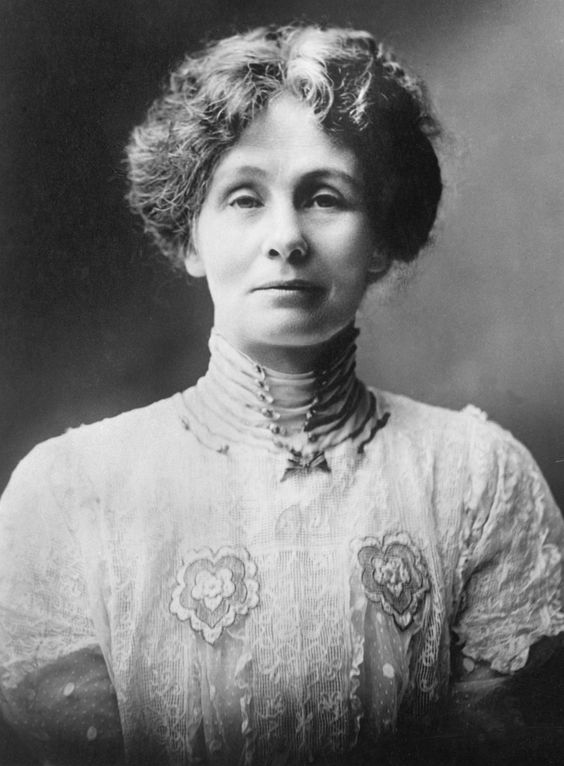
    Emmeline Pankhurst – 1913 Speech in the United States

    The speech made by Emmeline Pankhurst on 13 November 1913.

    I do not come here as an advocate, because whatever position the suffrage movement may occupy in the United States of America, in England it has passed beyond the realm of advocacy and it has entered into the sphere of practical politics. It has become the subject of revolution and civil war, and so tonight I am not here to advocate woman suffrage. American suffragists can do that very well for themselves.

    I am here as a soldier who has temporarily left the field of battle in order to explain – it seems strange it should have to be explained – what civil war is like when civil war is waged by women. I am not only here as a soldier temporarily absent from the field at battle; I am here – and that, I think, is the strangest part of my coming – I am here as a person who, according to the law courts of my country, it has been decided, is of no value to the community at all; and I am adjudged because of my life to be a dangerous person, under sentence of penal servitude in a convict prison.

    It is not at all difficult if revolutionaries come to you from Russia, if they come to you from China, or from any other part of the world, if they are men. But since I am a woman it is necessary to explain why women have adopted revolutionary methods in order to win the rights of citizenship. We women, in trying to make our case clear, always have to make as part of our argument, and urge upon men in our audience the fact – a very simple fact – that women are human beings.

    Suppose the men of Hartford had a grievance, and they laid that grievance before their legislature, and the legislature obstinately refused to listen to them, or to remove their grievance, what would be the proper and the constitutional and the practical way of getting their grievance removed? Well, it is perfectly obvious at the next general election the men of Hartford would turn out that legislature and elect a new one.

    But let the men of Hartford imagine that they were not in the position of being voters at all, that they were governed without their consent being obtained, that the legislature turned an absolutely deaf ear to their demands, what would the men of Hartford do then? They couldn’t vote the legislature out. They would have to choose; they would have to make a choice of two evils: they would either have to submit indefinitely to an unjust state of affairs, or they would have to rise up and adopt some of the antiquated means by which men in the past got their grievances remedied.

    Your forefathers decided that they must have representation for taxation, many, many years ago. When they felt they couldn’t wait any longer, when they laid all the arguments before an obstinate British government that they could think of, and when their arguments were absolutely disregarded, when every other means had failed, they began by the tea party at Boston, and they went on until they had won the independence of the United States of America.

    It is about eight years since the word militant was first used to describe what we were doing. It was not militant at all, except that it provoked militancy on the part of those who were opposed to it. When women asked questions in political meetings and failed to get answers, they were not doing anything militant. In Great Britain it is a custom, a time-honoured one, to ask questions of candidates for parliament and ask questions of members of the government. No man was ever put out of a public meeting for asking a question. The first people who were put out of a political meeting for asking questions, were women; they were brutally ill-used; they found themselves in jail before 24 hours had expired.

    We were called militant, and we were quite willing to accept the name. We were determined to press this question of the enfranchisement of women to the point where we were no longer to be ignored by the politicians.

    You have two babies very hungry and wanting to be fed. One baby is a patient baby, and waits indefinitely until its mother is ready to feed it. The other baby is an impatient baby and cries lustily, screams and kicks and makes everybody unpleasant until it is fed. Well, we know perfectly well which baby is attended to first. That is the whole history of politics. You have to make more noise than anybody else, you have to make yourself more obtrusive than anybody else, you have to fill all the papers more than anybody else, in fact you have to be there all the time and see that they do not snow you under.

    When you have warfare things happen; people suffer; the noncombatants suffer as well as the combatants. And so it happens in civil war. When your forefathers threw the tea into Boston Harbour, a good many women had to go without their tea. It has always seemed to me an extraordinary thing that you did not follow it up by throwing the whiskey overboard; you sacrificed the women; and there is a good deal of warfare for which men take a great deal of glorification which has involved more practical sacrifice on women than it has on any man. It always has been so. The grievances of those who have got power, the influence of those who have got power commands a great deal of attention; but the wrongs and the grievances of those people who have no power at all are apt to be absolutely ignored. That is the history of humanity right from the beginning.

    Well, in our civil war people have suffered, but you cannot make omelettes without breaking eggs; you cannot have civil war without damage to something. The great thing is to see that no more damage is done than is absolutely necessary, that you do just as much as will arouse enough feeling to bring about peace, to bring about an honourable peace for the combatants; and that is what we have been doing.

    We entirely prevented stockbrokers in London from telegraphing to stockbrokers in Glasgow and vice versa: for one whole day telegraphic communication was entirely stopped. I am not going to tell you how it was done. I am not going to tell you how the women got to the mains and cut the wires; but it was done. It was done, and it was proved to the authorities that weak women, suffrage women, as we are supposed to be, had enough ingenuity to create a situation of that kind. Now, I ask you, if women can do that, is there any limit to what we can do except the limit we put upon ourselves?

    If you are dealing with an industrial revolution, if you get the men and women of one class rising up against the men and women of another class, you can locate the difficulty; if there is a great industrial strike, you know exactly where the violence is and how the warfare is going to be waged; but in our war against the government you can’t locate it. We wear no mark; we belong to every class; we permeate every class of the community from the highest to the lowest; and so you see in the woman’s civil war the dear men of my country are discovering it is absolutely impossible to deal with it: you cannot locate it, and you cannot stop it.

    “Put them in prison,” they said, “that will stop it.” But it didn’t stop it at all: instead of the women giving it up, more women did it, and more and more and more women did it until there were 300 women at a time, who had not broken a single law, only “made a nuisance of themselves” as the politicians say.

    Then they began to legislate. The British government has passed more stringent laws to deal with this agitation than it ever found necessary during all the history of political agitation in my country. They were able to deal with the revolutionaries of the Chartists’ time; they were able to deal with the trades union agitation; they were able to deal with the revolutionaries later on when the Reform Acts were passed: but the ordinary law has not sufficed to curb insurgent women. They had to dip back into the middle ages to find a means of repressing the women in revolt.

    They have said to us, government rests upon force, the women haven’t force, so they must submit. Well, we are showing them that government does not rest upon force at all: it rests upon consent. As long as women consent to be unjustly governed, they can be, but directly women say: “We withhold our consent, we will not be governed any longer so long as that government is unjust.” Not by the forces of civil war can you govern the very weakest woman. You can kill that woman, but she escapes you then; you cannot govern her. No power on earth can govern a human being, however feeble, who withholds his or her consent.

    When they put us in prison at first, simply for taking petitions, we submitted; we allowed them to dress us in prison clothes; we allowed them to put us in solitary confinement; we allowed them to put us amongst the most degraded of criminals; we learned of some of the appalling evils of our so-called civilisation that we could not have learned in any other way. It was valuable experience, and we were glad to get it.

    I have seen men smile when they heard the words “hunger strike”, and yet I think there are very few men today who would be prepared to adopt a “hunger strike” for any cause. It is only people who feel an intolerable sense of oppression who would adopt a means of that kind. It means you refuse food until you are at death’s door, and then the authorities have to choose between letting you die, and letting you go; and then they let the women go.

    Now, that went on so long that the government felt that they were unable to cope. It was then that, to the shame of the British government, they set the example to authorities all over the world of feeding sane, resisting human beings by force. There may be doctors in this meeting: if so, they know it is one thing to feed by force an insane person; but it is quite another thing to feed a sane, resisting human being who resists with every nerve and with every fibre of her body the indignity and the outrage of forcible feeding. Now, that was done in England, and the government thought they had crushed us. But they found that it did not quell the agitation, that more and more women came in and even passed that terrible ordeal, and they were obliged to let them go.

    Then came the legislation – the “Cat and Mouse Act”. The home secretary said: “Give me the power to let these women go when they are at death’s door, and leave them at liberty under license until they have recovered their health again and then bring them back.” It was passed to repress the agitation, to make the women yield – because that is what it has really come to, ladies and gentlemen. It has come to a battle between the women and the government as to who shall yield first, whether they will yield and give us the vote, or whether we will give up our agitation.

    Well, they little know what women are. Women are very slow to rouse, but once they are aroused, once they are determined, nothing on earth and nothing in heaven will make women give way; it is impossible. And so this “Cat and Mouse Act” which is being used against women today has failed. There are women lying at death’s door, recovering enough strength to undergo operations who have not given in and won’t give in, and who will be prepared, as soon as they get up from their sick beds, to go on as before. There are women who are being carried from their sick beds on stretchers into meetings. They are too weak to speak, but they go amongst their fellow workers just to show that their spirits are unquenched, and that their spirit is alive, and they mean to go on as long as life lasts.

    Now, I want to say to you who think women cannot succeed, we have brought the government of England to this position, that it has to face this alternative: either women are to be killed or women are to have the vote. I ask American men in this meeting, what would you say if in your state you were faced with that alternative, that you must either kill them or give them their citizenship? Well, there is only one answer to that alternative, there is only one way out – you must give those women the vote.

    You won your freedom in America when you had the revolution, by bloodshed, by sacrificing human life. You won the civil war by the sacrifice of human life when you decided to emancipate the negro. You have left it to women in your land, the men of all civilised countries have left it to women, to work out their own salvation. That is the way in which we women of England are doing. Human life for us is sacred, but we say if any life is to be sacrificed it shall be ours; we won’t do it ourselves, but we will put the enemy in the position where they will have to choose between giving us freedom or giving us death.

    So here am I. I come in the intervals of prison appearance. I come after having been four times imprisoned under the “Cat and Mouse Act”, probably going back to be rearrested as soon as I set my foot on British soil. I come to ask you to help to win this fight. If we win it, this hardest of all fights, then, to be sure, in the future it is going to be made easier for women all over the world to win their fight when their time comes.

  • Tony Blair – 2001 Press Conference with President George W Bush

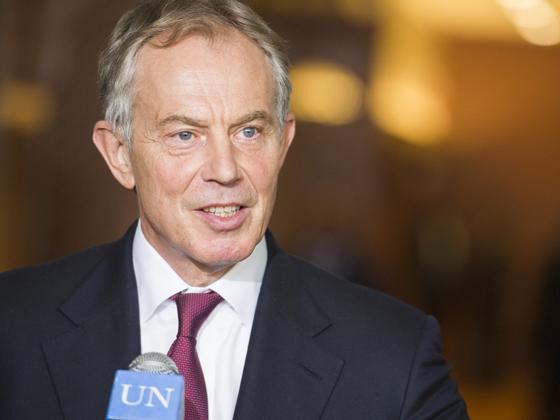
    Tony Blair – 2001 Press Conference with President George W Bush

    The press conference between Tony Blair and George W Bush at RAF Halton on 19 July 2001.

    PRIME MINISTER BLAIR:

    Good evening, everyone. First of all, can I say how delighted I am to have President Bush here — not just here in Britain, but also here staying with us, and Laura, tonight at Chequers. And we’re looking very much forward to hosting them. And I think it is yet another example of the strength of the relationship between our two countries. It is a very strong relationship, a very special one.

    And I know in the discussions we’ve had we’ve ranged over many issues. Obviously, we started with the discussion of the upcoming G-7/G-8 Summit where we agreed how important it is that we get across the strong message to people, the summit is important because it allows us to discuss issues of real importance to people. I have no doubt that we’ll be with people there who will be making their protest, but I hope they do so peacefully, because some of the things we’re discussing at this summit in terms of global trade, in terms of the developing world, are things that are of huge importance not just to the most prosperous countries of the world, but also to some of the poorest countries of the world.

    We touched then on many other issues in the course of our discussion, including, obviously, missile defense, the issue of climate change, and a good discussion on Macedonia, Northern Ireland, the Middle East process, and of course, the state of the world economy.

    And I’m sure you want to ask some questions about those things. But, once again, can I say, George, how much I welcome you and Laura here, how delighted we are to see you. And I know and hope very much this will be a good evening for you, and set you up in the right frame of mind for the summit ahead. (Laughter.)

    PRESIDENT BUSH:

    Thank you. At Camp David, Tony told me that Chequers was a beautiful place, and he was telling the truth. And we’re glad — Laura and I are glad to be here. I appreciate so very much your hospitality and your friendship. America and Great Britain have got a special relationship. We both have pledged to keep the relationship as special as possible, and I’m convinced it will continue to be.

    I, too, look forward to going to Genoa. You know, I am — I can’t wait to make the case, along with Tony Blair, about the need for the world trade in freedom. And for those who want to shut down trade, I say this to them as clearly as I can: You’re hurting poor countries. For those who kind of use this opportunity to say the world should become isolationist, they’re condemning those who are poor to poverty. And we don’t accept it. We don’t accept it.

    We’ve got a lot in common between our countries, most of which are values. We value freedom. We value political dialogue. We value freedom of religion — freedom of the press, for that matter. But we also value the fact that we’re responsible nations, and that we realize there are some who are less fortunate than the great land Tony is the leader of, and our great land, as well.

    So at the summit, we’ll be talking about how best to help the continent of Africa deal with HIV/AIDS, how best to make sure our aid and loans work well, and how best to encourage the habits of freedom, starting with good education.

    So I’m looking forward to it, and I want to thank you for having Laura and me here. It’s a great joy to be in your beautiful country.

    PRIME MINISTER BLAIR:

    Right. We’ll take some questions. We’ll bring you a mike, I think.

    QUESTION:

    Could I ask you both about what you’ve been saying to each other about Northern Ireland, and particularly in view of the President’s comments, whether you feel it’s still possible that the package that Britain and Ireland are going to produce can be even-handed in the continued absence of the commissioning?President reviews the guard
    during his visit to Buckingham Palace July 19, 2001. White House photo
    by Paul Morse.

    And can I also ask you, Prime Minister Blair, about your thoughts on Jeffrey Archer, the former Deputy Chairman of the Tory Party and Conservative MP, starting a four-year sentence tonight for perjury and perverting the course of justice?

    PRIME MINISTER BLAIR:

    I’m afraid, Adam, on the second part, I’ve really got nothing to say on that.

    In respect to the first part, the package that we put to the parties will be balanced because it will deal with all the outstanding issues. It will deal with the issues of the stability of the institutions, how we get a normalized situation — we’ve reduced troop movements and the numbers of troops in Northern Ireland dramatically, but we want to do more — how we make sure, too, that we get a police service that all parts of the community in Northern Ireland can support.

    And then also there is the issue of the decommissioning, the putting beyond use of paramilitary weapons. And obviously there’s got to be action on all those fronts. And so we hope very much the people will respond positively. Because, as I often say to people, you only have to look at the situation in the Middle East to realize what happens when negotiation breaks down, when parties move apart from each other, and how quickly a situation that looked optimistic can become unstable and dangerous.

    And this — this Good Friday agreement, this peace process is the only hope for people in Northern Ireland. And the package has been put forward by ourselves and the Irish government together. And I hope people respond positively and realize that the future of generations of people in Northern Ireland depend on that positive response.

    PRESIDENT BUSH:

    We did spend a fair amount of time talking about Northern Ireland. I’ve reiterated to the Prime Minister that I stood ready to help in any way — a simple phone call away; if there’s anything I can do to help bring peace to the region, I will do so. And make no mistake about it, people shouldn’t have any doubt as to where my government stands. We stand strongly, side-by-side, with Britain when it comes to decommissioning in Northern Ireland.

    RON:

    Q A question for each of you, please. Mr. Prime Minister, does Saturday’s successful test of a antimissile system in the U.S. affect your opinion at all of President Bush’s plans to deploy a missile shield and scrap the ABM Treaty?

    And to you, Mr. President, as we speak, environmentalist ministers are meeting in Germany, trying to find a way to salvage the Kyoto global warming treaty. If the rest of the world proceeds without you, doesn’t it isolate your policies and your country?

    PRESIDENT BUSH:

    Ron’s very good about taking one question and converting it to two. (Laughter.)

    PRIME MINISTER BLAIR:

    Well, first of all, on the subject of missile defense, obviously, we await a specific proposal from the U.S. administration. But I want to say this and say it clearly, that I think President Bush is right to raise the issue of the proliferation of weapons of mass destruction and say that that needs new and imaginative solutions, because it’s a huge threat facing the whole of the world.

    Secondly, I think that that has got to, as I said at Camp David, has got to encompass defensive systems and offensive systems. And I think it’s again sensible and right that we sit down and work our way through that.

    And the third thing is that we welcome very much the approach that President Bush and the administration have taken to consulting allies, and also making it clear that they wish to have a dialogue and a partnership with Russia about this issue.

    And I think that in combination those things are bringing about a situation in which we can have a sensible and rational debate about an issue that is of fundamental importance facing the world. So I hope that in that spirit, you know, we will carry forward the dialogue that we have achieved so far.

    PRESIDENT BUSH:

    Let me comment on that, and then I’ll comment on your other question. The thing I appreciate about the Prime Minister is that he’s willing to think anew as we head into the future. It’s hard for any country to commit to vague notions. But there are some leaders who just out of hand reject any willingness to think differently about security. And Prime Minister Blair is not that way. He’s been very forthcoming. He’s had great questions. He’s been more than willing to listen to the philosophy behind moving beyond a treaty that has codified a relationship that no longer exists.

    ABM Treaty codified a relationship between enemies. Russia is not our enemy. And as we head into the 21st century, we must think about new ways to keep the peace. And the Prime Minister has been very positive. You know, some people just reject new thought out of hand. And that’s certainly not the case. And as time develops, I will stay in touch — as our plans develop, I’ll stay in touch with Tony as to what’s going on. He’s been a great person with whom to consult on this issue.

    The United States is concerned about the emission of CO2. We share the goal of reduction of greenhouse gases. We will be, and are in the process — we’ll be presenting a strategy that may have different means than Kyoto of achieving the same goal. And we’re in the process of developing the strategy.

    People shouldn’t, just because I gave an honest assessment of Kyoto’s chances in the United States Senate and what it would mean to our economy, should not think that we don’t share the same goal. We do. We want to reduce greenhouse gases. Ours is a large economy, generating — we used to generate more wealth than we are today, and as a result, we do contribute greenhouse gases to the atmosphere. And so we’re concerned about it.

    But first things first, as far as I’m concerned. Our strategy must make sure working people in America aren’t thrown out of work. My job is to represent my country. And I’m going to do so in a way that keeps in mind the ability for people to find work and for our nation to be prosperous. And I believe economic growth and sound environmental policy can go hand in hand.

    Mr. Prime Minister, as I assured you, I will come to you with a strategy that conforms to the goals of Kyoto and one that is — that I hope people understand makes sense for our country.

    QUESTION:

    Mr. President, given the very strong relationship which you say exists between yourself and Tony Blair, between Britain and the United States, are you endangering that special, unique, close relationship because Mr. Blair wants to be a bridge between Europe and the United States, and yet, you don’t seem to be offering very much to help narrow the gulf which seems to be opening up between Europe and the United States on key issues?

    PRESIDENT BUSH:

    I will let Tony Blair speak to how he feels my relationship with Europe — I’m not going to — you’ll say my answer is not very objective, but, frankly, after my last trip here, I think the European leaders got to know me and realize that our country will be engaged with Europe in all aspects.

    In the Balkans, I made it clear, we came in together and we’re going to leave together. When it comes to trade, I made it clear that we’re a strong trading partner, and we’ve got to work hard to reduce barriers that prevent us from trading freely. When it comes to defenses within NATO, we’re more than willing to do our commitment.

    And I appreciate Tony’s friendship. I think people will find out that I’m plenty capable of conducting foreign policy for the United States in a way that reflects positively on my nation. And I’m glad to be back in Europe. I look forward to a frank discussion in Genoa. And I’m confident that we’ll find areas to work together on. When we disagree, we’ll do so in a respectful way.

    PRIME MINISTER BLAIR:

    Well, I would just like to add a word on that, if I could, James. First of all, I think that the way the President came to Europe and to Gothenburg and made his presentation impressed everybody who was there. I thought it was a highly successful visit.

    And, of course, there may be differences of the minute, for example, over Kyoto — though, again, I think it is helpful that the United States is saying, look, this is not what we can agree to, but nonetheless, we agree with the aim, we agree with the objectives, and there are proposals that we will make as to how we can get there. Now, you know, we’ve had a very strong position in favor of Kyoto. That is our position, obviously. But the fact is that dialogue there is extremely important.

    But, you know, on a whole range of issues, Europe and America and Britain and America stand together. We’re doing so in the Balkans. We’re doing so trying to sort out the problems of Macedonia. We’re doing so on the issue of world trade. We’re going to do so again on issues like Africa and global health and debt. And where we’re trying to go to the G-7/G-8, and present to the world an agenda for better and more free trade, for help for the poorest nations of the world, for stability in the world economy, which is of dramatic importance not just to our countries, not just to Europe and America, but to the whole of the world.

    This is a passionate belief I have that I held in theory when I was an opposition leader, and has strengthened in practice over the last few years that I’ve been Prime Minister. And that is not merely, is the relationship between Britain and America key — and we are and always will be key allies — but when Europe and America stand together, and when they approach problems in a sensible and serious way and realize that what unites them is infinitely more important than what divides them, then the world is a better, more stable, more prosperous place. When we fall out and diverge, and when people try and put obstacles in the way of that partnership, then the only people rejoicing are the bad guys.

    That is my basic view after these years. And just to make one other point. Since this administration has come to power, on the issue of trade, in particular, we have seen big steps forward in the relationship between Europe and America. These are the important things, as well. There’s a whole range of issues that I was dealing with a couple of years ago which were tough issues here that we’ve got resolved. So I think it’s against that background that we make these judgments.

    QUESTION:

    Mr. President, will you be urging your G-7 partners to do more to bring major economies out of the doldrums? And will you heed the call of U.S. business and labor groups who urge you to discuss negative effects of the strong U.S. dollar in Genoa?

    And, Prime Minister Blair, I’d like your views also on whether Europe is doing all it can to stimulate the global economy.

    PRESIDENT BUSH:

    Well, one of the things I’ll do, Randy, is to share with my colleagues the successes we’ve had at cutting taxes, as well as holding the line on spending. Let me say this — successes we’ve had so far in holding the line on spending. The President is given a veto for a reason, Mr. Prime Minister, and that’s to hold the line on spending. As well as to assure them that our Fed is going to continue to watch our economy very carefully.

    The Federal Reserve is independent from our government, but nevertheless, Mr. Greenspan is sending signals that he’s concerned about the state of our economy. In other words, we’re doing everything we can to, within our own borders, to deal with an economic slowdown. As for the dollar, the market needs to determine the price of the dollar.

    There’s all kinds of folks in our country insisting the dollar be this way or the dollar be that way. The best way to determine the price of the dollar is to let the market determine that price. And that’s my message to business, labor, anybody else who wants our government to intercede in the market.

    PRIME MINISTER BLAIR:

    Well, just shortly on the question of the European economy, obviously, we want to see the European economy strengthen. I think the — quite apart from the impact of the world economy, particularly the U.S. economy, on Europe is the whole issue of economic reform in Europe.

    We now — one of the big changes in the direction of European economic policy over the past couple of years has been that every year now — and next year it will be in Barcelona in March — we hold an annual summit specifically on the issue of economic reform, in order that Europe should be not a fortress Europe, but should be a Europe that is open, competitive, not just within Europe, with the rest of the world.

    Now, I think we’ve still got a lot of structural change to get through in Europe. And certainly we will be raising this obviously in the G-7/G-8, but within the European Union, as well. It’s important that we make big steps forward on that reform agenda, since whatever the state of the world economy, some of the rigidities we still have within our own economies have to be eliminated.

    QUESTION

    Prime Minister, could you tell us whether you support President Bush’s wish to set aside or get rid of the ABM Treaty? And for President Bush, could you tell us whether it is likely that you’ll want to upgrade U.S. radar stations in the north of England for your missile defenses?

    PRIME MINISTER BLAIR:

    Well, in respect to the first part, as I said a moment or two ago, we welcome very much the approach the U.S. administration has taken, which is to say, look, the world has moved on; let us look at what is the right framework for today, and let us do that in close consultation and dialogue with Russia, since it’s a treaty between these two countries. And I think that is the right approach to take.

    PRESIDENT BUSH:

    I’m absolutely convinced we need to move beyond the ABM Treaty, and will continue my dialogue with President Putin in a couple days time. It is important for him to know, once again, to hear me say once again, Russia is not the enemy of the United States. There is no need for us to live under a treaty that codified a period of time in which the world was divided into armed camps. It’s time to work together to address the new security threats that we all face.

    And those threats just aren’t missiles, or weapons of mass destruction in the hands of untrustworthy countries. Cyberterrorism is a threat, and we need to work on that together. There are all kinds of threats that freedom-loving people will face in the near future. And I look forward to discussing all those threats with President Putin, as I have with Tony Blair.

    It’s premature to determine how best to track missiles under a new strategic framework. So, to answer your question about upgrading radars in Britain or in America or anywhere else, it is too early to determine. The problem we face under the current system is that it’s impossible to do enough research and development to determine what will work. Therein lies part of the dilemma for the Prime Minister. He said, what do you want me to support? What are you proposing? And what I’m first proposing to Mr. Putin is that we move beyond the treaty so that we can figure out what does work.

    And I want to remind you all that he was the leader early on who said that the new threats of the 21st century will require theater-based systems that will be able to intercept missiles on launch. Mr. Putin said that. Of course, that’s what I was saying in the course of the campaign, which led me to believe that there was some common ground. And that’s the common ground on which we’re exploring moving beyond the ABM Treaty. And I look forward to reporting back how the conversations go here pretty soon to my friend Tony Blair.

    JOHN ROBERTS

    Q I have a three-part question for you, Mr. President, and a one-part question for you, Prime Minister Blair.

    PRESIDENT BUSH:

    Wait a minute, that’s four questions.

    Q Well, no, it’s essentially one question

    PRESIDENT BUSH:

    Okay, good.

    Q — in three parts. (Laughter.) I’m wondering, sir, how it is that’s it’s taking you so long to make a decision on whether or not to continue embryonic stem cell research. What is the basis of the this compromise that we’ve heard about? And now that Senator Frist has joined Senator Hatch and former Reaganites in supporting a continuation of funding for embryonic stem cell research, do you believe you now have enough political cover on the right to make a decision in the affirmative?

    And, Prime Minister Blair, as some U.S. laboratories, in anticipation of a negative decision, have started the process to move to Great Britain, I’d like to know your position on embryonic stem cell research in the context of the global advancement of science.

    PRESIDENT BUSH:

    I’ll start.

    PRIME MINISTER BLAIR:

    You’re welcome. (Laughter.)

    PRESIDENT BUSH:

    John, this is a very serious issue that has got a lot of ramifications to it, and I’m going to take my time because I want to hear all sides. I want to fully understand the opportunities and to fully think through the dilemmas.

    And so I will make an announcement in due course, when I’m ready. And it doesn’t matter who is on what side, as far as I’m concerned. This is a decision I’ll make. And somehow to imply that this is a political decision is — I guess either doesn’t understand how I — somebody doesn’t understand how I think, or doesn’t understand the full consequence of the issue. This is way beyond politics.

    This is an issue that speaks to morality and science, and the juxtaposition of the both. And the American people deserve a President who will listen to people and to make a serious, thoughtful judgment on this complex issue. And that’s precisely how I’m going to handle it.

    PRIME MINISTER BLAIR:

    If you’ll forgive me, John, I’m not going to get into any of the debates that are happening in your country. We have made our decision here, as you know and as your question implied. The only thing I would say to you about this issue is that it is an extraordinarily difficult and sensitive question for people. And I think, certainly, the best way of resolving it is for people on whatever side of the argument they are to realize that the people on the opposite side aren’t necessarily badly intentioned or badly motivated. They’re just in an immensely difficult situation, taking a different perspective.

    I think if people approach the question with that type of goodwill even towards people with whom they profoundly disagree, then I think the answers are, if not easier to find, then they’re easier to explain. But, as I say, we took opposition here, but your decision is for the President and people in the United States.

    PRESIDENT BUSH:

    I was wondering if anybody has got an extra Pepsodent? (Laughter.) Get it?

    PRIME MINISTER BLAIR:

    Okay. Thanks a lot.
  • Michael Spicer – 1997 Comments on William Hague

    Michael Spicer – 1997 Comments on William Hague

    This text is from the diaries of Michael Spicer, the then Conservative MP for West Worcestershire.

    Monday 5 May 1997

    Masses of phone calling. Twenty names pledge to Michael Howard. Arrive in London. Michael Howard calls at 7.30pm, “come round”. Reveals to me that William Hague will join us if he is to be chairman of the party. We have the makings of a dream ticket. Do we tell Francis Maude, Norman Lamont et al at dinner? No. I leave Howard’s home by pre-arrangement at 9.20pm. I go to a phone box and ask Howard if “all clear”. “Yes, come back”. Hague and I arrive at same time at the Government house. Deal consummated.

    Champagne flows. I return to Daniel Hannan’s flat in Marsham Court to drink more champagne and discuss details of volunteers.

    We are close to victory. Arrange to meet – all of us – at my house in Maunsel Street tomorrow. There are the makings of real stability and continuity at the top of the Conservative Party. Hague would be well placed to follow Michael Howard as leader.

    Tuesday 6 May 1997

    Michael Howard rings at 07.30am, disaster – possibly fatal. Ghastly mistake not to have issued a joint declaration at once. William Hague has rung Michael Howard to say he has changed his mind.

    In retrospect we should have issued a joint statement last night. At the time it was all so certain that the imperative was to achieve the maximum impact at the press conference today.

    It never occured to me that Hague would rat. Decision taken to let the press know. Michael Howard very hesitant about this and angry when it goes high profile in the news. This causes another Tory squabble – what a tragedy.

  • Gavin Williamson – 2020 Comments on Erasmus

    Gavin Williamson – 2020 Comments on Erasmus

    The comments made by Gavin Williamson, the Secretary of State for Education, about the ending of Erasmus and the introduction of a new scheme on 26 December 2020.

    We now have the chance to expand opportunities to study abroad and see more students from all backgrounds benefit from the experience.

    We have designed a truly international scheme which is focused on our priorities, delivers real value for money and forms an important part of our promise to level up the United Kingdom.

    These opportunities will benefit both our students and our employers, as well as strengthening our ties with partners across the world.

  • Luke Pollard – 2020 Comments on Fox Hunting

    Luke Pollard – 2020 Comments on Fox Hunting

    The comments made by Luke Pollard, the Labour MP for Plymouth Sutton and Devonport, on 26 December 2020.

    Fox hunting should be confined to the history books. So why are Ministers giving hunts an exemption from Coronavirus rules the rest of us have to follow?

  • Rosena Allin-Khan – 2020 Comments on Fox Hunting

    Rosena Allin-Khan – 2020 Comments on Fox Hunting

    The comments made by Rosena Allin-Khan, the Labour MP for Tooting, on 26 December 2020.

    Families kept apart for Christmas, people lonely in care homes unable to see loved ones, limited funerals and cancelled weddings…

    Yet fox hunting is allowed to flourish. It’s a disease in itself – we must eradicate it.