Blog

  • NEWS STORY : UK Achieves First Optical Downlink From Space

    NEWS STORY : UK Achieves First Optical Downlink From Space

    STORY

    The Defence Science and Technology Laboratory has announced the UK’s first successful download of data from space using a deployable laser communications ground station, in a development intended to improve the speed and security of military communications. The trial was carried out by Archangel Lightworks for Dstl and involved data being downloaded from a satellite in low Earth orbit to an optical ground station in the Mediterranean region.

    During a 90-second satellite pass, the system downloaded many gigabytes of data using free space optical communications, which transmits information through very low-power, non-visible light rather than radio waves. The Government said the technology could be particularly important for intelligence, surveillance and reconnaissance operations, where large volumes of information need to be moved quickly and securely.

    Luke Pollard, the Minister for Defence Readiness and Industry, said space was crucial to the way the armed forces communicate and that laser communications would increase how quickly and securely satellites could communicate with bases on Earth. Dstl said the work could support several Ministry of Defence capability areas, including the UK’s digital targeting web, and could also be interoperable with the US Space Development Agency standard.

  • NEWS STORY : Energy Bills To Rise As Ofgem Increases Price Cap

    NEWS STORY : Energy Bills To Rise As Ofgem Increases Price Cap

    STORY

    Households are set to face higher energy bills from July after Ofgem raised the domestic energy price cap by 13%. The regulator said the increase reflected higher wholesale gas prices linked to the continuing conflict in the Middle East, with the average annual bill rising from £1,641 to £1,862.

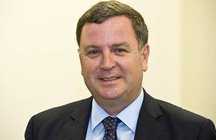
    The increase will affect millions of households on standard variable tariffs and has placed further pressure on the Government over the cost of living. Energy Secretary Ed Miliband (in photo) said the rise was “deeply unwelcome” and argued that ministers were focused on easing the burden on households.

    Consumer groups urged targeted support for those on low incomes and households already struggling with debt. Analysts warned that bills could rise again in October if disruption to energy markets continues, making the price cap decision another difficult economic moment for ministers trying to show that living standards are improving.

  • NEWS STORY : Starmer Faces New Pressure Over Children’s Online Safety

    NEWS STORY : Starmer Faces New Pressure Over Children’s Online Safety

    STORY

    The Government is facing renewed pressure to act quickly on children’s online safety after campaigners whose children died after exposure to harmful online material met the Prime Minister. Ministers have been told to bring forward measures in “weeks, not months” after the consultation on Growing Up In The Online World closed with more than 80,000 responses.

    The options under consideration include restrictions on under-16s using social media, limits on scrolling and overnight curfews for children. Ian Russell, whose daughter Molly took her own life in 2017 after viewing harmful material online, warned against a simple blanket ban, arguing that children would find ways around it and may then be less willing to speak up when things went wrong.

    Sir Keir Starmer said the Government would be “decisive” and had asked ministers to develop a “game-changer” policy. The issue is becoming an increasingly significant test of how far ministers are willing to regulate technology companies, with campaigners arguing that the existing system still leaves children exposed to serious harms.

  • PRESS RELEASE : Ancient Cornish moors gain National Nature Reserve status [May 2026]

    PRESS RELEASE : Ancient Cornish moors gain National Nature Reserve status [May 2026]

    The press release issued by Natural England on 27 May 2026.

    A unique Cornish moorland landscape shaped by thousands of years of history becomes a National Nature Reserve for local people and visitors to enjoy.

    The Mid Cornwall Moors is today (Wednesday 27 May) declared the 14th site in the King’s Series of National Nature Reserves (NNRs), bringing together over 1,100 hectares of moorland, more than doubling the area of land managed for nature in this historic landscape.

    Forming a patchwork of semi-natural habitats, including heath, moorland, mire, and woodland, the Mid Cornwall Moors, creates a network across Cornwall’s distinctive ‘clay country’. Located in the heartlands of central Cornwall, with St Austell to the south, Bodmin to the east, and St Columb Major to the north, the area serves a community living in one of Cornwall’s most rurally deprived regions. The declaration aims to improve access to nature, create opportunities for learning and recreation, and help support the local economy through sustainable farming.

    The reserve is home to rare habitats and species including wet ‘willow carr’ woodland, with the rare willow tit, and raised bogs with sphagnum moss, lesser butterfly orchid, royal fern and the carnivorous round-leaved sundew. Cornish moneywort, which is unique to Cornwall’s tin streaming landscape, also thrives.  

     This declaration celebrates places that have shaped Cornwall’s history, spanning prehistoric tin streaming, Iron Age hillforts and ancient woodland. Iconic sites including Helman Tor, the Iron Age hillfort of Castle an Dinas, and Goss Moor, known locally as King Arthur’s favourite hunting ground, all form part of this nationally significant landscape. 

    The reserve combines land managed for nature and heritage by Natural England, Cornwall Wildlife Trust, Cornwall Heritage Trust, the Gaia Trust and Imerys. It also includes land designated as the Mid Cornwall Moors Site of Special Scientific Interest (SSSI), which is land of exceptional ecological importance. 

    Tony Juniper CBE, Chair of Natural England, said:

    The declaration of the Mid Cornwall Moors as a National Nature Reserve is a powerful recognition of the landscape’s extraordinary natural and cultural heritage. 

    By bringing these landscapes together under one reserve, we are not only helping to restore precious habitats but also creating more opportunities for people to connect with nature, history and the unique character of this part of Cornwall for generations to come.

    Nature Minister Mary Creagh said:

    The Mid Cornwall Moors is a truly special landscape, shaped by thousands of years of history and home to some of England’s rarest wildlife.

    Combining this rich patchwork of habitats as a National Nature Reserve will protect this unique place and provide better access to nature for the people who live alongside it and a boost to everyone who visits.

    Reversing the decline in nature and moving toward ecological recovery requires bigger, better and more joined up areas for nature to thrive. With the support of His Majesty King Charles III, Natural England is leaving a lasting public legacy for people, science and nature by creating or extending 25 National Nature Reserves by 2028. The Mid Cornwall is the 14th NNR in the Series.  Around 1.4 million people live within 5km of a King’s Series NNR.

    Additional quotes:

    Matt Walpole, CEO of Cornwall Wildlife Trust said: 

    The new Mid Cornwall Moors National Nature Reserve reflects the importance of long-term collaboration in creating bigger, better and more connected spaces for nature recovery.

    The inclusion of Helman Tor within the National Nature Reserve recognises decades of work to restore habitats and support wildlife recovery within this special landscape.

    We are already seeing the benefits of working with natural processes through conservation grazing with Longhorn cattle and Tamworth pigs, alongside pioneering wild beaver reintroductions. Helping to create more diverse and resilient habitats for wildlife to thrive and for people to enjoy.

    Cathy Woolcock, CEO of Cornwall Heritage Trust said:  

    The Mid Cornwall Moors National Nature Reserve (NNR) brings together a number of important land areas and celebrates both nature and the incredible time-depth of human history, ranging from hunter-gatherers in the Mesolithic through to miners and farmers in more recent centuries. 

    We are pleased that Castle an Dinas is to be included within the expanded NNR, especially given its direct links to the Goss Moor and the wider landscape in Mid Cornwall. 

    We look forward to collaborating with partners involved with the NNR to better connect Cornish residents and visitors to these most important places in Cornwall’s national story.

    Mark Hewson, who leads Imerys in the UK said: 

    Nature restoration is central to modern mining and is built into the design and management of every pit.  

    Local community involvement has been an essential element of this, and the clear message is that increased access for walkers, cyclists and horse riders is the number one priority.  

    We are very proud to be working with our partners, creating this legacy for people and nature in the heart of Cornwall.

    Matt Edworthy, Director of the Gaia Trust said:  

    It is fantastic for Chark Moor to be included in this new National Nature Reserve along with the other wonderful sites. All are havens for wildlife including locally and nationally rare species and require ongoing management, including careful conservation grazing by cattle and ponies.  

    Sustainable management supports local graziers and businesses, and provides learning and skills development opportunities for local people.

  • Keir Starmer – 2026 Comments on Defence Agreement with Poland

    Keir Starmer – 2026 Comments on Defence Agreement with Poland

    The comments made by Keir Starmer, the Prime Minister, on 26 May 2026.

    Britain and Poland are already close allies and friends, but the challenges Europe now faces demands an even stronger partnership.

    This treaty is the biggest step forward in our defence and security relationship with Poland in a generation, allowing us to confront modern security threats that may be less visible but no less dangerous, and our collective work together will keep our countries safe for years to come.

    It also delivers on my commitment to work more closely with European partners to boost security and opportunity for people at home and stability across our continent.

  • PRESS RELEASE : UK and Poland set to sign major defence and security treaty as PM steps up relationship with Europe to keep nation safe [May 2026]

    PRESS RELEASE : UK and Poland set to sign major defence and security treaty as PM steps up relationship with Europe to keep nation safe [May 2026]

    The press release issued by 10 Downing Street on 26 May 2026.

    The UK is set to sign a new defence and security treaty with Poland to protect British borders, tackle organised crime, bolster collective defences and deepen cooperation with the European Union.

    • Prime Minister to host Prime Minister Tusk of Poland today as leaders sign landmark agreement to confront modern security threats
    • Visit comes as the Prime Minister continues to drive for an ambitious relationship between the European Union and the UK to deliver security and opportunity on both sides.
    • Treaty follows similar agreements with France and Germany, strengthening security across Europe

    The UK is set to sign a new defence and security treaty with Poland to protect British borders, tackle organised crime, bolster collective defences and deepen cooperation with the European Union.

    The Prime Minister will host the Prime Minister of Poland, Donald Tusk, in London today, as the pair prepare to sign the new agreement to strengthen defence cooperation in the face of increasing hostile threats across Europe.

    Poland is one of the UK’s closest defence and security partners, a staunch supporter of Ukraine and vital economic partner, with one of the fastest growing economies in Europe.

    The leaders are expected to discuss the major uptick in hybrid attacks – including Russian-ordered arson attacks in East London, cargo fires in Birmingham and across Europe, as well as cyber-attacks and espionage – and agree to combine expertise to combat accelerating threats.

    The announcement builds on the Prime Minister’s drive to get closer to Europe and strengthen ties with the trading bloc to improve security and opportunity on both sides. It also follows similar treaties with France and Germany.

    The UK and EU’s joint ambition to improve relations to deliver for consumers, businesses and collective European security is expected to be high on the agenda of talks today.

    Prime Minister Keir Starmer said:

    Britain and Poland are already close allies and friends, but the challenges Europe now faces demands an even stronger partnership.

    This treaty is the biggest step forward in our defence and security relationship with Poland in a generation, allowing us to confront modern security threats that may be less visible but no less dangerous, and our collective work together will keep our countries safe for years to come.

    It also delivers on my commitment to work more closely with European partners to boost security and opportunity for people at home and stability across our continent.

    The leaders are expected to sign the new treaty in London today, signifying the historic ties between the UK and Poland, and opportunity for both countries to work closer together in protecting European defences long into the future.

    The defence strand of the agreement is expected to unlock major defence benefits for both sides, allowing forces to combine expertise and industrial capability to lead the development and manufacturing of next-generation complex weapons, ensuring sovereign production chains and supporting high skilled jobs across the UK and Poland.

    That will include the design and development of new air defence effectors, which are sophisticated munitions, strengthening air and missile defence systems, and deepening interoperability across all domains. It is also expected to include the co-production of a next‑generation medium‑range air defence missile.

    The UK and Poland will also step up the use of uncrewed systems to reinforce NATO’s Eastern Flank through next-generation land capabilities. As part of that drive, joint land forces will undertake large‑scale joint exercises to sharpen interoperability across counter drone warfare, electronic warfare, and engineering support, as well as developing land forces that remain at the forefront of future warfighting through the harnessing of disruptive technologies.

    And as part of efforts to outpace the threats of tomorrow, from cyber-attacks to malign information campaigns, the UK and Poland will also accelerate cooperation to disrupt malicious attempts by hostile state actors to sow discord through the sharing of expertise and coordinated responses and exercises – sharpening how both countries can respond in real time.

    As a major migration partner for the UK and frontline state in Europe’s migration system, both countries will discuss how to boost border security and dismantle organised crime groups upstream through a new Joint Action Plan on Irregular Migration.

    The Joint Action Plan will allow both countries to better target smuggling networks and their vulgar use of social media to lure vulnerable people and maximise intelligence sharing to disrupt gangs and their tactics and harness new technologies such as advanced targeting and surveillance capabilities to strengthen both countries’ border security.

  • NEWS STORY : EU Considers Limiting Veto Rights for New Members

    NEWS STORY : EU Considers Limiting Veto Rights for New Members

    STORY

    The EU is considering whether new member states could be denied automatic veto rights for a temporary period after accession, as the bloc looks for ways to continue enlargement without paralysing decision-making. The Guardian reported that the idea is being discussed as the EU prepares for potential future accessions from the Western Balkans, Moldova and possibly Ukraine.

    The proposal is politically sensitive because it could be seen as creating a lower tier of membership. Supporters argue that some form of safeguard may be needed to avoid future blockages in areas where unanimity is required, particularly foreign policy and taxation. Hungary’s repeated use of vetoes has sharpened the debate.

    The discussion reflects the EU’s wider dilemma over enlargement. Leaders want to counter Russian and Chinese influence in neighbouring regions and reward reforming candidate countries, but they also face pressure to ensure that a larger union can still function. Montenegro, which hopes to join before the end of the decade, could become an early test case for any new arrangements.

  • NEWS STORY : EU Strengthens Voting Rights for Mobile Citizens

    NEWS STORY : EU Strengthens Voting Rights for Mobile Citizens

    STORY

    The Council has adopted updated rules intended to strengthen the right of EU citizens to vote and stand as candidates in municipal elections when they live in another member state. The revised directive is aimed at “mobile EU citizens”, who are entitled under EU law to participate in local elections in their country of residence under the same conditions as nationals.

    The new rules are designed to improve information for citizens, simplify registration requirements and prevent people from being automatically removed from electoral rolls in their country of origin when registering abroad. The Council said there were still barriers for many mobile citizens, including unclear information and burdensome procedures.

    The legislation will enter into force twenty days after publication in the EU’s Official Journal, with member states given two years to transpose most of its provisions into national law. The measure forms part of the EU’s broader democracy package and reflects continuing concern about electoral participation, mobility and trust in democratic institutions.

  • NEWS STORY : EU Extends Russia Human Rights Sanctions Until 2027

    STORY

    The Council has extended for another year the EU framework for sanctions against those responsible for serious human rights violations, repression of civil society and democratic opposition, and actions undermining democracy and the rule of law in Russia. The measures will now run until 28 May 2027.

    The sanctions regime currently applies to 72 individuals and one entity. Those listed are subject to asset freezes, while EU citizens and companies are prohibited from making funds available to them. Individuals covered by the regime are also subject to travel bans preventing them from entering or transiting through EU territory.

    The framework was established in 2024 after the death of Alexei Navalny and is intended to give the EU a specific legal basis for responding to domestic repression in Russia. The Council said the EU remained deeply concerned about the deterioration of human rights in the country, particularly in the context of Russia’s war against Ukraine.

  • NEWS STORY : Albania Reaches New Milestone in EU Accession Talks

    NEWS STORY : Albania Reaches New Milestone in EU Accession Talks

    STORY

    Albania has been judged by the EU to have met the interim benchmarks for the fundamentals cluster in its accession negotiations, in a move described by the Council as a significant step on the country’s path towards membership. The eighth meeting of the Accession Conference with Albania confirmed progress on democratic institutions, public administration reform, rule of law chapters and economic criteria.

    The decision means the EU and Albania can begin work towards closing negotiating chapters within the fundamentals cluster. Under the revised enlargement methodology, the fundamentals cluster is opened first and closed last, making progress in this area central to the overall pace of a candidate country’s accession process.

    The Cyprus presidency said enlargement remained a geopolitical necessity for the EU and a priority for the presidency. Albania’s progress comes amid wider debate about how quickly the bloc can expand, how it can preserve decision-making capacity and whether new member states should enter under changed institutional arrangements.