Blog

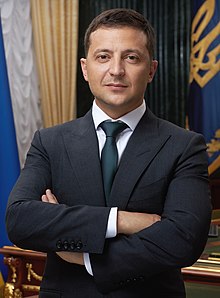
  • Volodymyr Zelenskyy – 2022 Statement on the Situation in Ukraine (05/03/2022)

    Volodymyr Zelenskyy – 2022 Statement on the Situation in Ukraine (05/03/2022)

    The statement made by Volodymyr Zelenskyy, the President of Ukraine, on 5 March 2022.

    Free people of a free country!

    It is already the tenth day of our national struggle. Sincere faith. And round-the-clock work.

    The tenth day is like one infinitely long day. One infinitely long night that does not allow us to have a rest.

    Today is Saturday. Saturday. This word means nothing during the war. Like Monday or Thursday or any other day. They all became the same.

    We still protect the state. We still save people.

    The country does not know weekends anymore. It doesn’t matter what time it is. It doesn’t matter what date it is. And it will be so until victory.

    Late at night I spoke with French President Emmanuel Macron. And with President of Poland Andrzej Duda. Our interaction is constant. Our conversations are daily. I am immensely grateful to each of them. I am immensely grateful to Andrzej for his determination and devotion to our common cause. Protection of people. I am grateful to Andrzej’s wife – Agata. They are friends whom I sincerely consider friends and sincerely wish to everyone.

    We managed to prevent a humanitarian crisis at the border. We managed to organize the situation so that thousands and thousands of Ukrainian women and children were treated decently. Nobody asks about their nationality, faith or how much money they have. In fact, we no longer have a border with Poland. Because we are together on the side of good. We do not have time for borders.

    I am sure that soon we will be able to tell our people: come back!

    Come back from Poland, Romania, Slovakia and all other countries.

    Come back, because there is no more threat.

    We are already thinking about the future. For all Ukrainians. After the war. About how to revive our cities. How to revive the economy. I spoke with World Bank President David Malpass, IMF Managing Director Kristalina Georgieva.

    We have an agreement among the largest financial institutions to support Ukraine. There is already a decision on emergency aid and tens of billions of dollars for the reconstruction of Ukraine after the war.

    And these are only the first decisions. I emphasize these are only the first. I spoke with Turkish President Erdoğan. I spoke with the leaders of Saudi Arabia and the United Arab Emirates. I spoke with President of the European Council Charles Michel and President of the European Commission Ursula von der Leyen. The main topic is EU membership for Ukraine.

    I am grateful to Europeans – hundreds of thousands of people in different cities of our continent. Bratislava, Vilnius, Frankfurt, Lyon, Paris, Tbilisi, Prague. They came out yesterday in support of Ukraine. In support of Europe. They came out for peace to be reached as soon as possible.

    I am grateful to Americans for the unwavering bipartisan majority of ordinary people. We saw the poll. We saw the opinion of ordinary people in America who support ordinary people in Ukraine. Who demand tougher sanctions against Russia for aggression already now. Who support closing the sky now to save the lives of our people. 74 percent of Americans stand for the no-fly zone. 74! The vast majority. What else is needed to make a decision? We are sure that the result is similar in other democratic countries.

    The Armed Forces of Ukraine bravely hold all key areas of our defense.

    They are counterattacking the invaders near Kharkiv – defending the city. They are holding the line in Mykolaiv. Kyiv, Chernihiv region, Sumy region, Donbas. We inflict losses on the invaders they have not seen in their worst dreams.

    The Russian army has not reached the planned frontiers. Yet it has reached almost 10 thousand Russian soldiers killed. 10 thousand. This is dreadful! 18-year-old, 20-year-old boys. Very young, almost children. Soldiers who were not even explained why they were going to fight. For what and why they are in a foreign land.

    10 thousand. Russia could definitely give these people something else. Instead of death.

    The Ukrainian people are resisting even where the invaders managed to pass. Unfortunately. But not for long. I admire every Ukrainian who is not silent. Who protests. Who takes the national flag and shows the Russian military that they will lose. They will definitely lose. Because it is impossible to win against people who stop military equipment without weapons in their hands. Who refuse to take anything from the hands of the invaders. Whose situation is tough and dangerous. But they do not lose their dignity. And will never lose it.

    At the talks in Belarus, the groups agreed on the first step. To bring back at least one percent of humanity from the normal level. Surrounded cities that are being destroyed and experiencing the worst days. Humanitarian corridors must work today. Mariupol and Volnovakha. To save people. Women, children, the elderly. To give food and medicine to those who remain. Our help is already on the way. Everyone who needs help should be able to leave. Those who are willing. Everyone who can defend their city must continue to fight. Must. Because if everyone leaves, then whose city will it be?

    We are doing everything – on our part – to make the agreement work. This is one of the main tasks for today. Let’s see if we can go further. In the negotiation process.

    Let’s pray for our military. Let’s help our civilians.

    Let’s work for peace.

    Glory to Ukraine!

  • Volodymyr Zelenskyy – 2022 Statement on the Situation in Ukraine (06/03/2022)

    Volodymyr Zelenskyy – 2022 Statement on the Situation in Ukraine (06/03/2022)

    The statement made by Volodymyr Zelenskyy, the President of Ukraine, on 6 March 2022.

    Ukrainians!

    Today is Forgiveness Sunday. A day when we always apologized. To each other. To all people. To God. But today, it seems, many have not mentioned this day at all. Have not mentioned the obligatory words: “Forgive me.” And the obligatory answer: “God forgives, and I forgive.” These words seem to have lost their meaning today. At least in part. After everything we went through.

    We will not forgive the destroyed houses. We will not forgive the missile that our air defense shot down over Okhmatdyt today. And more than five hundred other such missiles that hit our land. All over Ukraine. Hit our people and children.

    We will not forgive the shooting of unarmed people. Destruction of our infrastructure.

    We. Will. Not. Forgive. Hundreds and hundreds of victims. Thousands and thousands of sufferings. And God will not forgive. Not today. Not tomorrow. Never. And instead of Forgiveness, there will be a Day of Judgment.

    I’m sure of it.

    It seems everything Russian servicemen have already done is still not enough for them. Not enough ruined destinies. Mutilated lives. They want to kill even more.

    Tomorrow Russia has officially announced the shelling of our territory. Our enterprises. Defense complex. Most were built decades ago. By the Soviet government. Built in cities. And now they are in the middle of an ordinary urban environment. Thousands of people work there. Hundreds of thousands live nearby.

    This is murder. Deliberate murder.

    And I have not heard a reaction from any world leader today. From any Western politician. Reaction to this announcement. Think about the sense of impunity of the invaders: they announce their planned atrocities. Why?

    Because there is no reaction. Because there is silence. Not a word, as if Western leaders have dissolved tonight. For this day. I hope that at least tomorrow you will notice it. React. Say something. We know exactly who prepared this attack. We know exactly how orders will follow the vertical command. We know everything.

    And we will not forgive anything. The Tribunal is waiting for you. And God’s judgment, if you try to hide.

    The audacity of the aggressor is a clear signal to the West that sanctions against Russia are not enough. Because they didn’t understand. Did not feel. They did not see that the world is really determined. Really determined to stop this war. You will not hide from this reality.

    You will not hide from new murders in Ukraine.

    There was a lot of talk about humanitarian corridors. There were talks every day about the opportunity for people to leave the cities where Russia came. Russian military.

    I am grateful to every Ukrainian who stays to defend our cities, even in the encirclement. Our freedom.

    But I also know that there are people who really need to get out. Who cannot stay. And we heard the promise that there would be humanitarian corridors. But there are no humanitarian corridors.

    Instead of humanitarian corridors, they can only make bloody ones.

    A family was killed in Irpen today. A man, a woman and two children. Right on the road. As in the shooting club. When they were just trying to get out of town. To escape.

    The whole family. How many such families have died in Ukraine! We will not forgive. We will not forget.

    We will punish everyone who committed atrocities in this war. On our land. We will find every bastard. Which shot at our cities, our people. Which bombed our land. Which launched rockets. Which gave the order and pressed “start”.

    There will be no quiet place on this earth for you. Except for the grave.

    Today I decided to award orders to the heads of regional administrations and mayors who have excelled in the defense of their communities.

    The Order of Bohdan Khmelnytsky of the Third Degree is awarded to:

    Head of Kharkiv Regional State Administration Oleh Vasyliovych Syniehubov.

    Head of Mykolaiv Regional State Administration Vitalii Oleksandrovych Kim.

    Head of Donetsk Regional State Administration Pavlo Oleksandrovych Kyrylenko.

    Head of Luhansk Regional State Administration Serhiy Volodymyrovych Haidai.

    Head of Chernihiv Regional State Administration Vyacheslav Anatoliyovych Chaus.

    Head of Sumy Regional State Administration Dmytro Oleksiyovych Zhyvytskyi.

    The Order of Courage is awarded to:

    Mayor of Kharkiv Ihor Oleksandrovych Terekhov.

    Mayor of Mykolaiv Oleksandr Fedorovych Senkevych.

    Mayor of Chernihiv Vladyslav Anatoliyovych Atroshenko.

    Mayor of Sumy Oleksandr Mykolayovych Lysenko.

    Mayor of Kherson Ihor Viktorovych Kolykhayev.

    Mayor of Melitopol Ivan Serhiyovych Fedorov.

    Mayor of Nova Kakhovka Volodymyr Ivanovych Kovalenko.

    And I decided to award a special title to our heroes, our hero cities. As it has already been once. When we withstood another attack. But a similar attack.

    Another invasion. But no less brutal invasion.

    Hero cities will be: Kharkiv. Chernihiv. Mariupol. Kherson. Hostomel. Volnovakha.

    Glory to Ukraine!

  • Volodymyr Zelenskyy – 2022 Statement on the Situation in Ukraine (07/03/2022)

    Volodymyr Zelenskyy – 2022 Statement on the Situation in Ukraine (07/03/2022)

    The statement made by Volodymyr Zelenskyy, the President of Ukraine, on 7 March 2022.

    Monday. Evening. You know, we used to say: Monday is a hard day. There is a war in the country. So every day is Monday.

    And now we are used to the fact that every day and every night are like that.

    Today is the 12th. 12th evening of our struggle. Our defense.

    We are all on the ground, we are all working.

    Everyone is where they should be. I am in Kyiv. My team is with me. The territorial defense is on the ground. The servicemen are in positions. Our heroes! Doctors, rescuers, transporters, diplomats, journalists…

    Everyone. We are all at war. We all contribute to our victory, which will definitely be achieved. By force of arms and our army. By force of words and our diplomacy. By force of spirit, which the first, the second and each of us have.

    Take a look at our country today.

    Chaplynka, Melitopol, Tokmak, Novotroitske and Kherson. Starobilsk. Everywhere people defended themselves, although they do not have weapons there. But these are our people, and that’s why they have weapons.

    They have courage. Dignity. And hence the ability to go out and say: I’m here, it’s mine, and I won’t give it away. My city. My community. My Ukraine.

    Every Ukrainian man and woman who protested against the invaders yesterday, today and will protest tomorrow are heroes.

    We shout at the invaders together with you. We stand in the squares and streets with you. We are not afraid with you when the invaders open fire and try to drive everyone away.

    YOU do not back down.

    WE do not back down.

    And the one who repeated: “We are one people” – certainly did not expect such a powerful reaction.

    In the south of our country, such a national movement has unfolded, such a powerful manifestation of Ukrainianness that we have never seen in the streets and squares there. And for Russia it is like a nightmare.

    They forgot that we are not afraid of paddy wagons and batons. We are not afraid of tanks and machine guns. When the main thing is on our side, truth. As it is now.

    Mariupol and Kharkiv, Chernihiv and Sumy. Odesa and Kyiv. Mykolaiv. Zhytomyr and Korosten. Ovruch. And many other cities.

    We know that hatred that the enemy brought to our cities with shelling and bombing will not remain there. There will be no trace of it. Hatred is not about us. Therefore, there will be no trace of the enemy. We will rebuild everything. We will make our cities destroyed by the invader better than any city in Russia.

    Enerhodar. Chornobyl. And other places where barbarians just don’t understand WHAT they want to capture. WHAT they want to control. Your work, your hard work on critical objects is a real feat. And we see it. We are sincerely grateful for it.

    The Ukrainian army holds positions. Well done! It inflicts extremely painful losses on the enemy. Defends. Counterattacks. If necessary – can take revenge. Necessarily. For every evil. For every rocket and bomb. For each destroyed civilian object.

    Today in Makariv, Kyiv region, they fired at the bread factory. For what? The old bread factory! Think about it – to fire at the bread factory. Who should you be to do that?

    Or to destroy another church – in the Zhytomyr region. The Church of the Nativity of the Blessed Virgin built in 1862.

    These are NOT people.

    There was an agreement on humanitarian corridors.

    Did it work? Russian tanks worked instead. Russian “Grads”. Russian mines. They even mined the road, which was agreed to transport food and medicine for people and children in Mariupol.

    They even destroy buses that have to take people out. But … At the same time, they are opening a small corridor to the occupied territory. For several dozen people. Not so much to Russia, as to propagandists. Directly to their TV cameras. Like, that’s the one who saves. Just cynicism. Just propaganda. Nothing more. No humanitarian sense.

    The third round of negotiations in Belarus took place today. I would like to say – the third and final. But we are realists. So we will talk. We will insist on negotiations until we find a way to tell our people: this is how we will come to peace.

    Exactly to peace.

    We must realize that every day of struggle, every day of resistance creates better conditions for us. Strong position to guarantee our future. In peace. After this war.

    Apart from the dead people and the destroyed cities, the war leaves destroyed the aspirations that once seemed very important, but now … You don’t even mention them.

    Almost three years ago, as soon as the election took place, we entered this building, this office, and immediately began planning our move.

    I dreamed of moving from Bankova. Together with the government and parliament. To unload the center of Kyiv and in general – to move to a modern, transparent office – as befits a progressive democratic European country.

    Now I will say one thing: I stay here.

    I stay in Kyiv.

    On Bankova Street.

    I’m not hiding.

    And I’m not afraid of anyone.

    As much as it takes to win this Patriotic War of ours.

    Today I signed a decree to present state awards of Ukraine to 96 Ukrainian heroes – our military.

    Including…

    The Order of Bohdan Khmelnytsky of the second degree is awarded to:

    Major Oleksandr Oleksandrovych Sak. Commander of the mechanized battalion who entered the battle with the battalion tactical group of the enemy and won thanks to a rational approach to combat and non-standard tactics.

    Captain Rostyslav Oleksandrovych Sylivakin. Commander of the mechanized battalion, which successfully fought the overwhelming forces of the enemy, liberating Ukrainian towns and villages in the Sumy region.

    The Order of Bohdan Khmelnytsky of the third degree is awarded to:

    Lieutenant Ihor Serhiyovych Lozovyi. Acting as part of the group, he stopped a column of enemy vehicles numbering about 150 units, which was moving in the direction of the Zhytomyr-Kyiv route. Destroyed.

    Lieutenant Vitaliy Viktorovych Poturemets. He showed exemplary courage and composure in the battle, destroying a column of enemy equipment near the city of Kyiv. He was wounded.

    The Order “For Courage” of the third degree is awarded to:

    Master Sergeant, Commander of the Automobile Platoon Valentyn Viktorovych Baryliuk. Thanks to his brave actions and personal determination, the tank unit received fuel in time and left the encirclement, destroying the enemy on the way.

    All 96 of our heroes are like these five!

    Our gratitude to all the military.

    Our gratitude to the Armed Forces of Ukraine!

    Our gratitude is boundless.

    Glory to Ukraine!

  • Volodymyr Zelenskyy – 2022 Statement on the Situation in Ukraine (08/03/2022)

    Volodymyr Zelenskyy – 2022 Statement on the Situation in Ukraine (08/03/2022)

    The statement made by Volodymyr Zelenskyy, the President of Ukraine, on 8 March 2022.

    Ukrainians!

    We always celebrate this holiday. The holiday of spring. We congratulate Ukrainian women, our girls, wives, mothers.

    Always.

    But not today.

    Today, I just can’t tell you the traditional words. I just can’t congratulate you. I can’t. When there are so many deaths. When there is so much grief. When there is so much suffering.

    When the war continues. A full-scale terrorist war against our people. The people of Ukraine.

    The invaders bombed Sumy again. With air bombs. Our peaceful city that has never threatened Russia in its history! Good, quiet, soulful Sumshchyna! Which is turned into hell.

    Mariupol. Peaceful and hard-working city without any internal malice. It was surrounded. Blocked. And is being deliberately exhausted. Deliberately tortured. The invaders deliberately cut off communication. Deliberately block the delivery of food, water supply. Turn off the electricity.

    In Mariupol, for the first time in dozens of years, perhaps for the first time since the Nazi invasion, a child died of dehydration.

    Hear me, today, dear partners!

    A child died of dehydration. In 2022!

    We have been fighting for the thirteenth day. We destroy the invaders wherever we can. Everywhere. But there is a sky. Hundreds of Russian cruise missiles. Hundreds of fighter jets of the invaders. Hundreds of helicopters. Yes, we destroy them.

    Russia has not lost as much aircraft in the past 30 years as in these 13 days in Ukraine.

    But they still have enough machinery to kill. There are still enough missiles for terror. They still have enough 500 kg bombs to drop them on us, ordinary people. On Chernihiv and Kyiv. Odesa and Kharkiv. Poltava and Zhytomyr. Dozens and dozens of Ukrainian cities. On millions of peaceful Ukrainian people.

    It has been 13 days of promises. 13 days when we are told that there will soon be help in the sky. There will be planes. They will be handed over to us…

    The blame for every death of every person in Ukraine from air strikes and in blocked cities, of course, lies with the Russian state, the Russian military, those who give and those who carry out criminal orders, who violate all the rules of warfare, who deliberately exterminate the Ukrainian people.

    The fault lies with the invaders. But the responsibility for this lies also with those who have not been able to make an obviously necessary decision somewhere in the West, somewhere in the offices for 13 days. Those who have not yet secured the Ukrainian sky from Russian murderers.

    Those who did not save our cities from air strikes. From these bombs, missiles. Although they can.

    Those who do not help in lifting the blockade.

    Hundreds and hundreds of thousands of people in the cities are on the verge of life and death. Literally.

    Not as it sounds in the comments of politicians about providing Ukraine with vital combat aircraft. Vital missile defense.

    Vitally important!

    We have heard many assurances and seen many agreements. In particular, on the creation of humanitarian corridors. To save our citizens in Mariupol. But they didn’t work. All of them didn’t work. Yet. And I have no more time to wait. We do not have. Mariupol doesn’t have time to wait.

    It is the invaders who want our people to die. Not us. We sent columns with humanitarian aid to Mariupol. Everything necessary is there! We sent vehicles to rescue people. Drivers understand everything. They are heroes. Brave people! They understand that Russian troops can simply destroy these vehicles on the road. Just as they did, killing people who were just trying to get to a safe territory from the war zone.

    But if you fire at these vehicles, these people, you should know that it will be before the eyes of the whole world.

    Everyone will be witnesses. And everyone will testify.

    When everyone, I repeat this, everyone who gives and fulfills inhuman orders will be severely judged and convicted.

    We have seen the concrete consent of the Russian side to organize an evacuation corridor from the city of Sumy. And not just for our people. For hundreds of foreigners. Citizens of India, China. These are students who studied in Sumy.

    You know, I was told that the Red Cross, the International Red Cross, forbids us to use the emblem on vehicles carrying out humanitarian missions. The Red Cross prohibits it as if it is their property.

    And this is indicative. This says a lot about the fact that some people, very influential, have decided to give up Ukrainians.

    But we will not allow it. And I will not allow it.

    Our friends. They are next to us.

    I will appeal directly to the nations of the world if the leaders of the world do not make every effort to stop this war, this genocide.

    Of course, we continue to talk to our partners, to the leaders, parliamentarians of all countries who know how to help Ukraine. We have a very busy negotiation period.

    I spoke with Lithuanian President Gitanas Nausėda. The people of Lithuania always stand by Ukrainians in this struggle. We feel this help and appreciate it.

    I spoke with President of the European Council, our friend Charles Michel. I also spoke with Prime Minister of India, Mr. Modi.

    But there are things that are not decided in negotiations, that depend not directly on us, but on humanity, which must win in the leading capitals, must overcome fear, must overcome any benefits.

    And then we will see that the Ukrainian sky is safe and the Ukrainian cities are unblocked.

    We can do this together as people of the world. And if the world stands aloof, it will lose itself. Forever. Because there are unconditional values. The same for everyone. First of all, this is life. The right to life for everyone.

    This is exactly what we are fighting for in Ukraine. Very fiercely, together with our military. This is exactly what these weak invaders want to deprive us of.

    This is exactly what the whole world must protect.

    Glory to Ukraine!

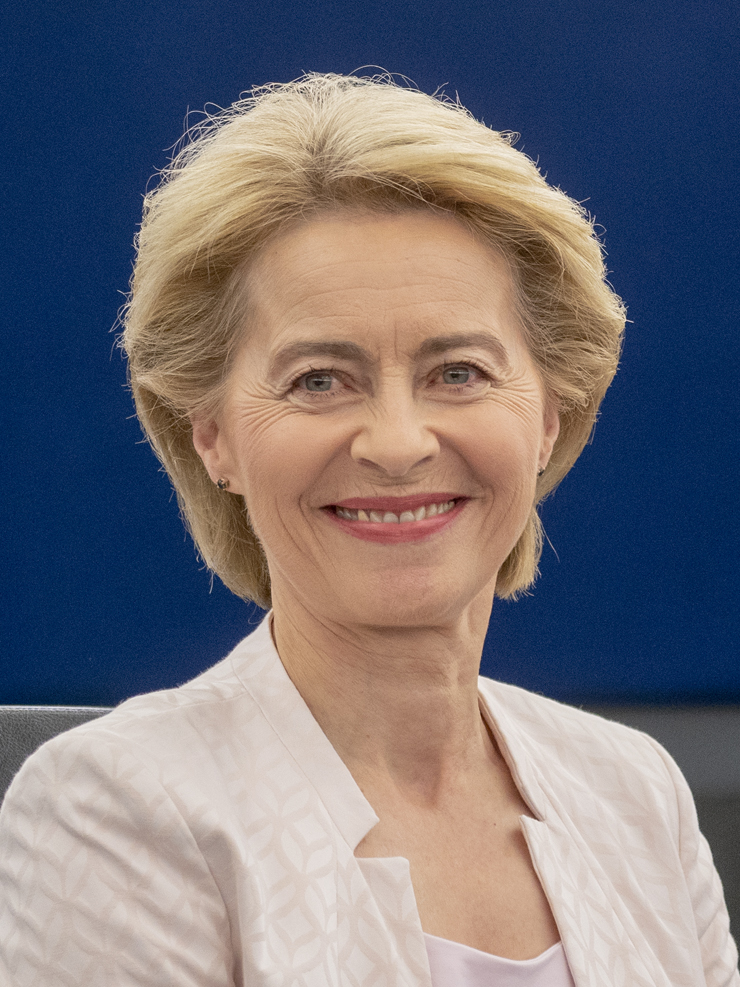
  • Ursula von der Leyen – 2022 Press Conference with Spanish Prime Minister

    Ursula von der Leyen – 2022 Press Conference with Spanish Prime Minister

    The press conference between Ursula von der Leyen, the President of the European Commission, and Pedro Sánchez, the Prime Minister of Spain, on 5 March 2022.

    Thank you so much Prime Minister, dear Pedro,

    I am very glad to be here in Madrid. Spain, indeed, is a key partner for me and I am here to prepare with you the informal Summit that we are going to have next week.

    Indeed, first of all, we discussed today the extremely difficult situation created by Putin’s war. The number of refugees already exceeds 1.2 million people. And the number is likely to increase multiple times in the days and weeks to come. These are innocent women, men and children, who are fleeing Putin’s ruthless and brutal war. They need our immediate assistance. All Member States are showing a big heart and helping as much as they can. And many thanks, Pedro, for the offer that you just did in our discussions, but also here. We know very well that we can count on you, there is a long tradition, and many thanks for that. I also want to commend the frontline countries, like Poland, Romania, Slovakia and Hungary, but also Moldova, for their outstanding solidarity. They deserve our solidarity and support, as do all European countries that welcome refugees.

    The European Union is providing EUR 500 million in a first tranche to help Ukrainians. And we made sure this week that Ukrainian refugees of this terrible war get residency rights in the European Union immediately for at least a year. So this includes not only the access to the labour market but, for example, also access to schools, access to medical care, many things that are now desperately needed. Let me say how proud I am of the European Union today. Our unity, our determination and the solidarity – that is really Europe at its best.

    We have imposed three packages of hard-hitting sanctions on the Russian leadership. Many thanks, Pedro, here too, for the very close cooperation. By this, we are drastically limiting Putin’s ability to finance this atrocious war. But Putin’s war, as you said, and its consequences will also impact our citizens and our economies here in the European Union. We have also discussed that today.

    One of the most critical topics is, indeed, energy. One thing is very clear: The European Union must get rid of the dependency from Russian oil, gas and coal. For that, we have to diversify the supply, we have to get better at energy efficiency, and we have to massively invest in renewables. Because this is a strategic investment in our security of supply, but also in the health of our planet. And I am glad to say that Spain is a real front-runner. With your impressive share of renewables – and in the national energy mix, the renewable energies play the major role. With the large LNG capacities. But also with the impressive know-how and the industrial players in the field of renewables.

    So Spain can and will play an important role in supplying Europe. For that, we must work, indeed, on the interconnections between the Iberian Peninsula and the rest of the European Union. And we have discussed that we will work hard on that. This is one of the major priorities. A second priority, right now, is, of course, that we need to help the consumers, the households and the businesses that have, indeed, problems with the high energy bills. We discussed that intensively and it will certainly be a topic at the informal Summit in Versailles.

    Dear Pedro,

    This war unleashed by Putin is not only atrocious, it is also a fight of our democracies against autocracies. It is a defining moment in our history, and Spain knows very well that democracy is priceless and that we have to stand up for it.

    I am very much looking forward to seeing you at the Summit. And many thanks for hosting me this afternoon.

    Thank you so much.

  • Ursula von der Leyen – 2022 Press Conference with Italian Prime Minister

    Ursula von der Leyen – 2022 Press Conference with Italian Prime Minister

    The press conference between Ursula von der Leyen, the President of the European Commission, and Mario Draghi, the Prime Minister of Italy, on 7 March 2022.

    A very warm welcome, dear Prime Minister, dear Mario. It is wonderful to have you again here, in the Berlaymont. We are going to discuss, of course, the situation in Ukraine, the atrocious war led by Putin, and we will be discussing the new enforcement package that we are working on right now. As you know, we had three packages of hard-hitting sanctions already, but now we have to make sure that there are no loopholes and that the effect of the sanctions is maximised. The sanctions in place are really biting. We see the downward turbulences in the Russian economy. But in view of the evolution of the situation in Ukraine, the Kremlin’s recklessness towards citizens – women, children, men –, we of course are also working on further sanctions that might be warranted.

    Our second topic will be energy. We have to get rid of the dependency on Russian gas, oil and coal. I know that the two of us agree on this. The Commission will be coming forward with proposals tomorrow. There are three main pillars: One is the diversification of supply away from Russia and towards reliable suppliers. This is mainly LNG and pipeline gas. Both have the advantage that the infrastructure is over time hydrogen-compatible.

    The second main element is to repower the European Union. Repower means massive investment in renewables, like solar, wind and hydrogen. We are looking for a focused acceleration of the European Green Deal. This is not only important and good for our strategic investment in our independence, it is also good for our industry and it is good for our planet. This has to be complemented by a third pillar and that is improved energy efficiency: from renovation of buildings to smart industrial processes, to artificial intelligence, for example, to effectively manage smart energy grids – you name it.

    Finally, a main part of our discussion will focus on the protection of consumers. Today’s energy prices are taking a toll on consumers and businesses. We will discuss how to ensure that our electricity market remains efficient despite the high gas prices that have been amplified by Putin’s war. There are two dimensions to that: The immediate one is to shield the most vulnerable consumers and businesses. And the more structural one is to look at our electricity markets given that our energy mix is transforming. Today, we have a certain share of renewables, but a vast share of gas, oil and coal. This will change. With a massive investment in renewables, we will see a wider share and growing share of renewables. We will massively increase their amount and this of course changes the structure of our market. And therefore, we have to look into the market composition. This will also be part of our discussions.

    Again, a very warm welcome here to the Berlaymont, dear Mario.

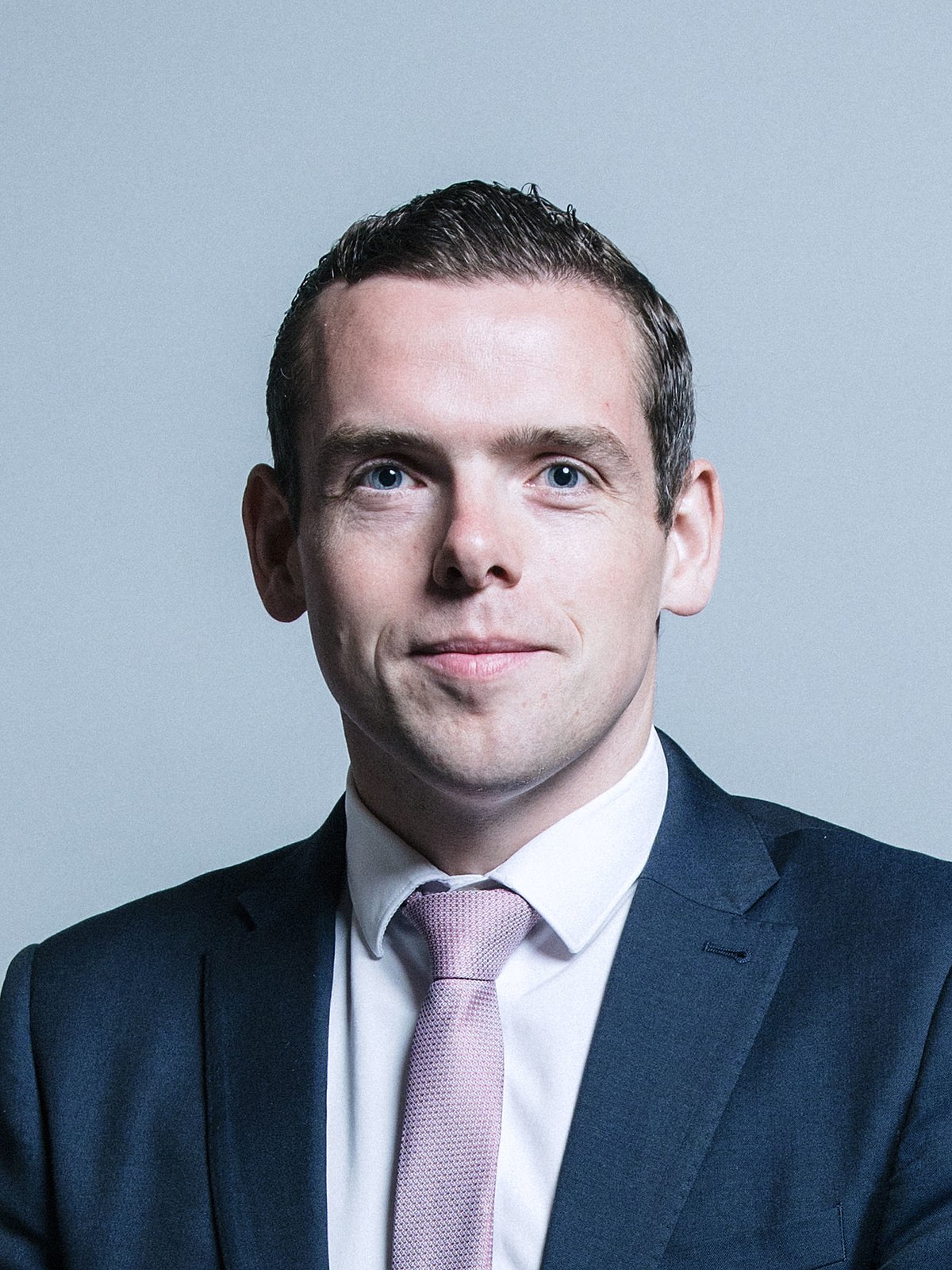
  • Douglas Ross – 2022 Speech on Delivery Charges in Scotland

    Douglas Ross – 2022 Speech on Delivery Charges in Scotland

    The speech made by Douglas Ross, the Conservative MP for Moray, in the House of Commons on 7 March 2022.

    I am delighted to have secured tonight’s Adjournment debate on an important topic for my Moray constituents. The Minister has already put in a great shift at the Dispatch Box today, and I apologise for delaying him further. However, in my article in The Northern Scot this week explaining to my constituents that I was having this Adjournment debate, I said that hopefully we would get to it quicker than last Monday’s, which started at 1.07 am, so we have done a little better already.

    If the Minister wants to blame anyone for being here at this hour, he should blame the Treasury. I originally secured this debate on the use of red diesel at ploughing matches, but I am very pleased that the Minister, who was perhaps worried about what might come out in an Adjournment debate, agreed to change excise notice 75 to ensure that ploughing matches in Moray, across Scotland and in the rest of the UK will no longer be subject to the potential change. I am delighted that we got that without an Adjournment debate—no pressure, Minister, but I now expect everything I ask for this evening to be delivered.

    Alberto Costa (South Leicestershire) (Con)

    I congratulate my hon. Friend on securing this debate. He talks about blaming someone for our being here at this time of the evening. May I ask his view? This is an important debate affecting the good people of Scotland, yet on the Opposition Benches I see no hon. Member from the nationalist party. Does that not demonstrate to the people of Scotland that the important topic that he is raising is simply being ignored by nationalist MPs?

    Douglas Ross

    Well, that is for others to decide, but I am grateful to my hon. Friend, who is a fellow member of the Select Committee on Scottish Affairs.

    Before my hon. Friend and I joined the Committee, it had looked at this issue. I have also secured Westminster Hall debates on it, including one that the Minister responded to 15 months ago, and I have raised it at Prime Minister’s questions. I know that it concerns Members across the House and our constituents, particularly those of us in the north of Scotland and the highlands and islands, and I make no apology for raising it again.

    The surcharges on the delivery of products bought by people in Moray and across many parts of Scotland are punitive and unfair and have been going on far too long. Businesses and couriers are treating my constituents and the people affected with utter contempt. It is completely wrong, and something must be done. To put into perspective how many people the issue affects, a Scottish Parliament briefing paper suggests that 440,000 people in Scotland live in areas affected by the surcharges. To put that into context, the same report says that 87% of adults in the United Kingdom buy online. That figure rose as high as 95% during the pandemic. That means that a big number of shoppers—95% of 440,000 people—are being punished not for what they want to buy, but because of where they want to buy from.

    It is absolutely wrong that the issue is raised time and again, but no action seems to be taken by the businesses or the couriers to deal with the problem. The Scottish Parliament Information Centre’s report says that the additional cost of delivery charges in commonly affected areas, compared with the rest of Scotland, is £45 million. That is £45 million that someone has to pay because they live in Moray, Inverness or one of many areas north of Perth—not the cost of the products, but the cost to deliver them.

    I would like to give some examples from my constituency, and one from slightly further afield, that I have been dealing with as the local MP. I have made it very clear that I want constituents to tell me when they have faced such problems, because I want to stop them. The only way we will stop them is by highlighting the injustice, highlighting the unfairness of the system and trying to get some action. I am glad that some action has been taken. The Advertising Standards Authority has issued several enforcement notices in cases that I have referred to it and in many others. Indeed, the Minister and I discussed that in our previous debate, but let me give just a few examples.

    A constituent in Mosstodloch purchased a wallet with no delivery charge advertised, yet when it came to the checkout online £15 was added. The ASA issued an enforcement notice on that company, because it had advertised no additional charges to mainland United Kingdom. A Findhorn resident tried to order a battery for a strimmer and was told it would be £30 to deliver to the IV36 postcode, which was almost more than the cost of the battery itself. Another constituent in Dyke was quoted £15 to order a tap for his motor home, even though free UK delivery was advertised. Dyke, in Moray, is part of the UK. How do these companies not get it? Why do they think that somehow we are cut off? We are not—we are part of the mainland UK. Therefore, if they advertise “free delivery to mainland UK”, whether for a tap for someone’s motor home or for something else, the person deserves to get free delivery to mainland UK. A constituent from Forres ordered goods worth £89 and the company was offering free delivery on orders over £40. She put in her IV36 postcode and the delivery charge rose to £117. So from free delivery for purchases of over £40, for her purchase of £89 it then became £117. Unfortunately, on this one, the ASA stated that because the company did not say that the free delivery applied to the whole of the UK, it was not able to take action. I would be interested to hear the Minister’s thoughts on that. Free delivery was being advertised, but just because the company did not say it was to the whole of the UK it got away with it.

    Another constituent from Findhorn had ordered £155-worth of specialist pipe insulation. Normal delivery was going to be £9.95, but they entered their IV36 postcode and an additional £40 was added, taking the total delivery cost to £50. In this case, the ASA did issue an enforcement notice, and I am pleased to say that the constituent got a full refund from the company. It accepted that it had done wrong in this case, even though it applied the charge in the first place. Another constituent put in an order for some garden equipment and although free UK mainland delivery was advertised, they were asked to pay a surcharge of £24 for “Scottish highlands”. We are not in the Scottish highlands. There is a Highland Council region, and Aberdeenshire and Aberdeen regions. Moray is a region on its own, yet we are again lumped in with the highlands. Finally, a product was ordered by one of my constituents in Elgin and they were told that the delivery charge was going to be £149.95. They then changed the address to that of a relative in Rothes, which is about 10 miles from Elgin and has an AB postcode, and there was no delivery charge whatsoever. So by travelling 10 miles within Moray one can go from a charge of almost £150 for delivery to having no charge at all. That just highlights issues with both businesses and couriers; they each try to blame each other, but they are both as guilty as each other and are imposing these charges when there is no good reason to do so.

    I was looking at the debate that the Minister and I held in Westminster Hall some time ago, when we spoke about how companies must at least be up front. We might not like the small print but if they are up front about things, in some cases we have to accept it. I do not accept it, but they are also not being up front. Another constituent in Elgin bought a bed for £435 and the order went through and was completed, but several days later she was contacted to say, “Actually, we have looked at your address and there is going to be a £70 surcharge for delivery.” That happened days after the purchase had been accepted by the company and agreed with my constituent. They believed that they were going to pay a certain amount, only then to get a phone call or an email to say, “Actually, we’ve found out where you live, we think it is too far away and we are going to put on another £70.” That is indefensible on the part of these companies and couriers; I am sure the Minister would agree on that, and so something must be done about it.

    I also said I would give one example from outwith my constituency, and I could have chosen literally hundreds. However, the example that I gave in a previous Westminster Hall debate—even previous to the one that I had with the Minister, because I have raised this issue a number of times before—was that it would sometimes be cheaper for me to buy an item in London, and instead of paying a charge to some company for it to be delivered to Scotland, pay for a seat for the gift I had bought, or some other parcel, on my easyJet flight.

    That is no longer the best example that I could give. A resident of Inverness, Jim Oliver, was seeking to help his mother-in-law, who was trying to purchase a gardening tool online. The cost of the gardening tool was £40, but she was going to be charged £2,000 for delivery. [Interruption.] Oh, it gets worse! It gets a lot worse than that. Jim decided to try himself. He typed in the same product name, and the delivery charge came out, not more expensive than buying a seat on the easyJet flight to get it up to Inverness, but more expensive than the world’s most expensive footballer. They could have bought Neymar for less. The delivery charge for a £40 product came in at £2,001,997.

    That was clearly a computer glitch, but I also want to highlight the fact that these companies just do not care. They literally do not care about their customers in parts of Scotland if they allow their system to say, “We will charge you more than the cost of Neymar to deliver this product to Inverness.” That demonstrates the contempt in which a number of these businesses hold our area, and the fact that they have got away with it for so long allows them to continue in the same vein.

    I must give credit to the Advertising Standards Authority for the work that it does in this area. It has seriously tried to tackle the issue, and has been extremely diligent in pursuing cases that I have put to it. It has tried to deal with them by means of enforcement notices—I have given examples in which that has not been possible—but what is an enforcement notice? What does it do? It is a slap on the wrist. Enforcement notices are clearly not stopping other companies following similar practices, they are clearly not acting as a deterrent, and people in Moray and other parts of the north of Scotland are being treated completely differently from people elsewhere in Scotland and the United Kingdom as a whole. We need tougher enforcement from the ASA, and I think we should consider what further powers we could give it to take far stronger action.

    I decided to return to that debate in Westminster Hall and remind myself of the points that the Minister raised in his response. I wonder if he can update us on some of the issues. Back then, he said:

    “The consumer protection partnership chaired by officials in my Department continues to work on the issues.”

    Can he tell us what work the partnership is doing, and what proposals it has advanced to him or to other Ministers? He also noted that

    “Ofcom will be undertaking a review of its future regulatory framework for post”

    —and, presumably, other items—

    “over the next year.”—[Official Report, 9 December 2020; Vol. 685, c. 453WH.]

    That will have reached a conclusion by now. I do not know whether there have been any delays as a result of the pandemic, but can the Minister tell us what the outcome was of Ofcom’s review?

    In the past the Minister and his predecessors have been averse to the idea of legislating in this area, but does he accept that the longer we debate the issue—the more times I return to it, or it is raised by Members from my part or other parts of Scotland—while the current measures are not dealing with the problem, the more important it is to consider legislation? Why do 440,000 constituents in the far north and many other parts of mainland Scotland have to live with this day in day out, week in week out, year after year? For these prices are going up year after year. We read in parliamentary briefings that the cost for many parts of Scotland is going up and up. It was £45 million in 2021; what will it be in 2022 or 2023 if this continues?

    Will the Minister seriously consider potential legislation? In the more immediate term, will he agree to meet me and some of the big companies involved—the couriers and some of the other companies that are most guilty of adding excessive charges for constituents in Moray and many other parts of the highlands and the north? We need to get these companies round the table and explain to them that the problems they are causing and the issues that this causes for local representatives and the Government have to be dealt with. At the moment, they seem to be continuing as if nothing is wrong, although, as I have tried to explain tonight, things are continuing to go wrong. We need a meeting with them and the Minister, sitting round the table, to hear their responses to these concerns and to the cases that I and other elected Members put to them. If they think that they are in the right, we need to hear the reasoning behind that, but if they accept, as I hope they will, that they are in the wrong for imposing these excessive charges, we need to hear what they will do about it. I hope that the Minister’s office will help to bring these people round the table and help to deal with the situation before it is allowed just to go on and on.

    This is simply unacceptable. It was unacceptable when I raised it in 2017 in my maiden speech, it was unacceptable when I raised it with the former Prime Minister at Prime Minister’s questions, it was unacceptable when I raised it with the Minister’s predecessor in Westminster Hall and it was unacceptable when I raised it with this Minister in Westminster Hall. It is still unacceptable now, as I raise it in this Chamber in March 2022, that my constituents are forced to pay these excessive charges simply because of where they live. This is a postcode lottery. It is no longer acceptable to treat people in Moray and many parts of the country so differently from their friends and relatives in other parts of Scotland or the United Kingdom.

    The time for action has long passed. It has not come quickly enough, and we now need firm action from the Government to deal with this issue. Once and for all, we need to deal with the problem that many people have faced for far too long. I hope that, in responding to this debate, the Minister can update us on any actions taken since this was previously raised in this House, tell us what more can be done and give some hope to the people of Moray as they look to the year ahead. It is never too early to mention Christmas, and people will already be thinking about purchases for the year ahead and going into Christmas—[Interruption.] Well, it probably is too early to mention Christmas, but genuinely, people look at purchases and are deterred from buying them, not because they do not want or need the product but because they are unwilling to pay these extortionate costs. The people of Moray and the people of the highlands and islands are watching with interest tonight to see what hope the Minister and his Department can give them that this long-running problem will soon be just a bad and distant memory and that we can look forward to a future when Moray and other parts of Scotland are not affected by these extortionate costs.
  • Victoria Atkins – 2022 Statement on New Prisons

    Victoria Atkins – 2022 Statement on New Prisons

    The statement made by Victoria Atkins, the Prisons Minister, in the House of Commons on 7 March 2022.

    I am pleased to provide an update today on our progress in delivering the biggest prison building programme in over a century. We are committed to delivering 20,000 new prison places to meet demand, cut crime and keep the public safe. These new prison places will create a more secure and modern estate, providing a productive environment to reform prisoners.

    HMP Five Wells

    The first prisoners arrived at HMP Five Wells on 4 February and the prison was officially opened by the Deputy Prime Minister, Dominic Raab, yesterday, marking the completion of the first prison in our programme of six new prisons.

    HMP Five Wells, in Wellingborough, is a purpose-built category C resettlement men’s prison, designed to house around 1,700 men over seven houseblocks, supported by six ancillary buildings. It is built on the site of the former HMP Wellingborough, a category C prison that was closed 10 years ago.

    HMP Five Wells is the first of its design to be built, based on work that brought together the lessons of previous prison builds, practical prison expertise of both staff and prisoners, academia, and international expertise. The new prison’s design has a focus on safety and security and is equipped with security measures that contribute to cutting crime. The prison is designed to facilitate education and skills development, providing an environment to better equip and support prisoners on release and to reduce reoffending.

    Naming and operator of the new prison at Glen Parva

    I can announce today that, following public consultation and a meeting of local representatives, the new prison at Glen Parva will be named HMP Fosse Way. I am grateful for the submissions received by the public to name the new prison. The name HMP Fosse Way has strong links to Leicestershire and reflects the history of the local area—the Fosse Way is a Roman road that runs through Leicestershire and is reflected in the name of a number of local institutions.

    I can also announce today that, following a rigorous evaluation process, Serco has been successful in its bid to provide prison operator services at HMP Fosse Way. This is another important milestone in our ambitious programme of new prisons. HMP Fosse Way will also be a category C resettlement prison holding around 1,700 men.

    Glen Parva’s construction continues to boost Leicestershire’s economy and create hundreds of jobs. As of December 2021, 30% of the on-site workforce were from the local area and over £96 million has been spent locally. We have also invested over £400,000 in recruitment and skills training. Our contract with Serco will provide further economic benefit by providing over 600 long-term jobs once the prison is operational. This significant investment in the local community supports the Government’s ambition to level up the UK’s economy.

    Four new prisons

    Today I am pleased to announce that one of the four additional new prisons will be run by HMPPS. This, added to the expansion of the existing public sector estate, will mean that over half of all the additional capacity planned in the coming years will be run by the public sector. This reaffirms our commitment to a balanced approach to custodial services which includes a mix of public, voluntary and private sector involvement.

    The three other new prisons will be operated by the private sector, which we are confident will provide a high-quality and value-for-money service. As with the competitions for HMP Five Wells and the new prison at Glen Parva, bidding operators for the three new prisons will compete for the contract and HMPPS will continue to provide a “public sector benchmark” against which bids will be rigorously assessed. If bids do not meet our expectations in terms of quality and cost, HMPPS will manage the new prisons.

    These milestones are a significant step forward in our ambitious programme to deliver a future-proof and fit-for-purpose prison estate, with the capacity needed to meet demand, house prisoners safely and securely, and reduce reoffending.

  • Priti Patel – 2022 Statement on the Police and Crime Commissioner Review

    Priti Patel – 2022 Statement on the Police and Crime Commissioner Review

    The statement made by Priti Patel, the Home Secretary, in the House of Commons on 7 March 2022.

    Today, I am pleased to set out to the House a package of measures in support of this Government’s manifesto commitment to expand and strengthen the role of our directly elected police and crime commissioners (PCCs), and those mayors with PCC functions, including the findings from the second part of our internal review into the role of PCCs.

    Our two-part review will ensure PCCs can focus more sharply on local crime fighting, with stronger accountability to those they serve. As set out in the Government’s beating crime plan, PCCs allow the public’s voice to be heard on local policing and crime matters and hold chief constables to account for delivering what communities need. As such, PCCs continue to play a critical role in reducing crime and reoffending.

    Part 1 of the review focused on making it easier for the public to hold their PCC to account for their record on delivering the safer streets that they deserve. In March 2021, I announced a package of reforms that will ultimately help people judge their PCC at the ballot box and we are making good progress in bringing about these important changes.

    Today, I want to update the House on two specific measures from part 1, before I turn to our conclusions from part 2.

    The first gets to the heart of equipping our PCCs with the right tools and powers to work with their partners to tackle crime and anti-social behaviour. Our targeted consultation last year found broad support for “levelling up” PCCs by providing them with a wider functional power of competence so they have parity with the equivalent powers held by fire and rescue authorities and most mayoral combined authorities. By equipping PCCs with this new power, we will make it easier for them to act creatively to reduce crime and to make better use of police resources.

    Secondly, I pledged to consult on changes to the Policing Protocol Order. This is a document that sets out the roles and responsibilities of various people involved in policing, such as PCCs, chief constables and police and crime panels. I am therefore launching a targeted, stakeholder consultation to seek views from our policing partners on how we can refresh this document to provide a “brighter line” on the boundaries of operational independence and to better reflect my role as Home Secretary. If we are going to deliver on our shared mission to cut crime, it is essential that all those involved in policing understand their respective roles.

    Having focused in part 1 on strengthening their role, we wanted to use the second part of our review to ensure that PCCs have the information, levers and tools to help cut crime, drugs misuse and anti-social behaviour. After almost a decade since their introduction, it is time to focus on the “and crime” part of the PCC role.

    I will now give an overview of our part 2 conclusions. All our recommendations are set out in full as an annex (Annex A) and the attachment can be viewed online at: http://www.parliament.uk/business/publications/written-questions-answers-statements/written-statement/Commons/2022-03-07/HCWS664/.

    To cement PCCs’ role in offender management: PCCs are held locally accountable for reducing crime, but to carry out their duties effectively, we must give them the levers to work across their local criminal justice system. We will create a new statutory duty to lock in collaborative working between PCCs and the Probation Service. This step, in conjunction with the other measures we will bring forward, will help align the work of PCCs and local probation services around their shared goal to break the chain of reoffending.

    To improve the way PCCs work in partnership with others to fight crime and support victims: We need to see all public safety partners playing their full part in the fight against crime. It is essential that PCCs can bring local agencies together to tackle the issues that blight their communities—like drugs misuse, anti-social behaviour and neighbourhood crime. We will provide PCCs with the tools to do this by strengthening the guidance that underpins their role in convening partners to fight crime and drugs misuse, in line with Dame Carol Black’s independent review on drugs. We will also give PCCs a central role on local criminal justice boards, support their work on violence reduction units and clarify the local crime prevention landscape through an in-depth review of community safety partnerships in England and Wales. Of course, PCCs continue to play a vital role in supporting victims of crime. The Ministry of Justice Victims’ Bill consultation considered how to expand and strengthen PCCs’ role in relation to oversight of victims’ experiences in the criminal justice system and commissioning support services, and so it was not examined within part 2 of the PCC review, but the work is complementary and aligned. The consultation closed in February, and the Government will introduce the Victims’ Bill as soon as possible.

    To improve public confidence in policing: PCCs play an important role as the voice of victims and use their levers to tackle the issues raised by complainants. To do this well, PCCs must visibly hold the police to account on behalf of their whole community and use their role to help uphold police legitimacy. We will support PCCs by clarifying our expectations in this regard and work with the Association of Police and Crime Commissioners and the College of Policing to ensure PCCs have access to the best possible evidence about what helps foster local confidence in policing.

    To improve PCC’s access to criminal justice data: Without sharing information on a timely basis, local crime fighting activity cannot be delivered in a joined-up way. Local partners often deal with the same cohorts of offenders, but throughout the review, we heard that sharing data can be difficult and inconsistent. We therefore propose to take steps to support a more data-confident culture by issuing new central guidance, supported by examples of local good practice and bolstering the ability of PCCs to more confidently use this information. These steps will help PCCs to better understand how effectively and efficiently their police force is operating within the wider criminal justice landscape.

    If we are to strengthen and expand the role of PCCs in this way, this must be balanced by robust accountability to the public. We are taking further steps to strengthen the checks and balances on PCCs.

    To help ensure there is effective local scrutiny: We want to see police and crime panels acting as critical friends, helping the public to understand how their PCC is doing on the issues that matter to them. The review found that independent members on panels were important, bringing relevant skills, expertise and greater diversity; so we will focus on improving their recruitment and retention. We will also look at whether a regional model of panel support could improve the professionalism, quality and consistency of the support provided to panels.

    To help ensure the public can complain about their PCC if needed and trust that their complaint will be handled fairly and consistently: Police and Crime Commissioners are elected representatives, held to account to the public via the ballot box. The Home Office will further consider the processes for how complaints of criminal misconduct are handled, and the scope to align a new code of conduct with the regime for mayors and councillors in local government. This will also consider how to address the problems of vexatious and political motivated complaints, especially those which stem from disagreements with the political views of the commissioner, or complaints which are nothing to do with policing.

    The public, rightly, expect PCCs to behave appropriately and act with integrity. That is why there is already a high bar in place for PCC conduct. Having explored the options for introducing recall, the review has not recommended doing so, given the stringent disqualification rules in place for PCCs. I will keep this matter under review.

    Now that this two-part review has concluded, my Department will work with our partners to deliver the recommendations, including legislating where necessary, and when parliamentary time allows.

    I would like to put on the record my thanks to the advisory group which supported this review, comprising senior external stakeholders with expertise in the policing and criminal justice sector.

    I am confident that, as a package, our recommendations will better equip PCCs to reduce crime and protect the public, solidify their position within the criminal justice system and make it easier for the public to hold PCCs to account.

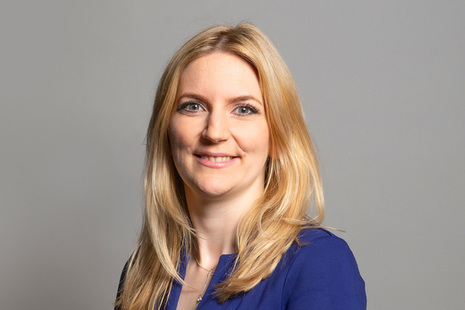
  • Julia Lopez – 2022 Statement on 5G Deployment

    Julia Lopez – 2022 Statement on 5G Deployment

    The statement made by Julia Lopez, the Minister for Media, Data and Digital Infrastructure, in the House of Commons on 7 March 2022.

    Now more than ever, reliable digital connectivity is essential for people and businesses. We have committed to extending mobile geographical coverage across the UK. In order to improve coverage in rural parts of the country, the Government have agreed a £1 billion shared rural network deal with the UK’s mobile network operators to extend 4G mobile geographical coverage to 95% of the UK by the end of the programme. We also want to ensure that people and businesses right across the country can realise the full benefits of 5G as soon as possible. Through our £200 million 5G testbeds and trials programme, we are already seeing the benefits 5G can bring to manufacturing, farming, transport networks and healthcare.

    In order to realise these ambitions, it is essential that the planning system can effectively support the deployment of new mobile infrastructure, as well as network upgrades. The Department for Digital, Culture, Media and Sport, and the Department for Levelling Up, Housing and Communities—formerly the Ministry of Housing, Communities and Local Government—have been consulting on proposed changes to permitted development rights for electronic communications infrastructure in England. Following an initial consultation in 2019 on the principle of the reforms, we published a technical consultation last year on implementing the proposed changes.

    Having reviewed the responses to the consultation, we believe that the proposed changes will have a positive impact on the Government’s ambitions for the deployment of 5G and extending mobile coverage. In considering the reforms, we have sought to ensure that we find the correct balance between facilitating improved connectivity, minimising impact in protected landscapes and ensuring that the appropriate environmental protections are in place.

    The Minister for Housing, my right hon. Friend the Member for Pudsey (Stuart Andrew), and I can announce that today the Government have published their response to the consultation, which sets out that we will make the following changes to permitted development rights:

    Enable the deployment of small equipment cabinets on article 2(3) land—such as national parks, conservation areas and areas of outstanding natural beauty—and allow greater flexibility for installing equipment cabinets in existing compounds, without requiring prior approval from the planning authority, while retaining prior approval for cabinets over 2.5 cubic metres;

    Allow for the strengthening of existing masts by permitting limited increases in the width of existing ground-based masts without the need for prior approval, and greater increases subject to prior approval, on all land. Also allow for limited increases to the height of existing ground-based masts without the need for prior approval outside of article 2(3) land, with greater increases on all land, up to specified limits, subject to prior approval;

    Enable the deployment of building-based masts by permitting these in closer proximity to a highway subject to prior approval outside of article 2(3) land. Permit smaller masts to be installed on buildings without the need for prior approval outside of article 2(3) land; and

    Enable taller new ground-based masts to be deployed—up to 25 metres on article 2(3) land and 30 metres on unprotected land, subject to approval from the planning authority.

    To balance these freedoms, we will introduce new planning conditions that will require operators to minimise the impact of all new development, especially for more sensitive areas, as far as possible. We will also make changes to the procedure for safeguarding aerodromes and defence assets, and technical changes to the definition of small cell systems. Following the consultation, we have decided not to allow any new ground-based masts to be installed without the prior approval of the planning authority.

    Improved mobile connectivity, especially 5G, will ultimately bring benefits to all communities and businesses throughout the country in support of our levelling-up agenda. The reforms will provide operators with the flexibility they require to upgrade existing sites in England for 5G delivery, enhance coverage and meet the growing demands for network capacity. They will also reduce the time, cost and uncertainty involved in upgrading mobile network infrastructure as well as encourage the use of existing infrastructure and promote site sharing to reduce the impacts of new deployment.

    Alongside the Government response, we have also published a new code of practice for wireless network development in England. This will provide updated guidance to ensure the impact of new and upgraded mobile infrastructure is minimised and that appropriate engagement takes place with local communities.

    In order to make these changes, we will shortly make amendments to part 16 of schedule 2 to the Town and Country Planning (General Permitted Development) (England) Order 2015, as amended, through secondary legislation.

    As planning law is a devolved matter, the legislative changes will apply to England only, but we will continue to work closely with the devolved Administrations to ensure that the planning regime continues to support the deployment of mobile infrastructure across the United Kingdom.