Blog

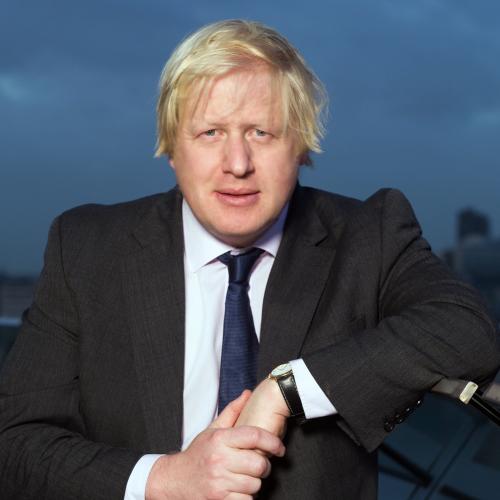
  • Boris Johnson – 2022 Press Conference With President Zelenskyy in Kyiv

    Boris Johnson – 2022 Press Conference With President Zelenskyy in Kyiv

    The text of the press conference between Boris Johnson, the Prime Minister, and Volodymr Zelenskyy, the President of Ukraine, in Kyiv on 24 August 2022.

    Thank you very much Volodymyr and thank you to the people of Ukraine for the incredible honour that you have done me which is a recognition of the efforts of the UK.

    When you rang me at 4 in the morning on that grim day in February and you told me the news that we had been dreading that Putin had been so insane as to invade a sovereign European country,

    I told you then that we were shoulder to shoulder with you and that is as true today as it was in that horrific moment.

    And I can also tell you that when we met in the high security room in Downing Street to try to understand what was happening, we were filled with foreboding.

    We just did not see how this innocent and beautiful country could repel an attack by more than 100 Battalion Tactical Groups, when the suffering and the casualties would be so immense. But you did.

    And like one of those indomitable Ukrainian boxers for which this country is justly famous,

    you came off the ropes and you hit him with an upper-cut that sent Putin’s armies reeling from Kyiv and then a hook to drive them from Kharkiv,

    And it became ever clearer to the world that he had fatally underestimated the grit, the will, and above all the price that you were willing to pay to defend the country you love.

    And I salute the heroic dead, I salute the families of the bereaved and the injured,

    the emergency services who have been called time after time to the scenes of Putin’s atrocities.

    I salute the bravery of the ordinary people of Ukraine who have just got on with their lives.

    The teachers, the students, the children.

    In our country today young people are getting their grades for their exams and of course it has been a tough time for them,

    because we’ve all had to cope with the pandemic.

    But I ask them all to think of the children of Ukraine,

    two thirds of whom have been driven from their homes, two thirds,

    and who have seen nearly a fifth of their schools destroyed or damaged.

    And yet working by candlelight or in makeshift classrooms, 7,500 of them have achieved the highest possible grades.

    And it is our collective mission to ensure those brilliant students grow up to use their qualifications to achieve their dreams in a peaceful, prosperous and independent Ukraine.

    And I believe they will, because out of the ashes of your towns and cities, out of the monstrous scars left by Putin’s missiles, something beautiful is blooming, a flower that the whole world can see and admire and that is the unconquerable will of the Ukrainians to resist.

    And that was what Putin failed to understand.

    He simply had no idea how much Ukrainians love this extraordinary country with its rich black soil and magical golden domes,

    how much they treasure the life, the bustle and the freedom and the Eurovision song contest winning cultural dynamism of Ukraine.

    And just as he fatally underestimated Ukraine, he also underestimated the price the whole world was willing to pay to support Ukraine.

    We have and we well and even though we must accept after six months of war the price is indeed a high price.

    And I have come from a United Kingdom where we are battling inflation that is being driven by the spike in energy prices that is caused by Putin’s war.

    And we face strikes being driven by trade union’s bosses who have the ruinous belief that the best way to tackle soaring energy prices is with ever higher wages when that is simply to pour petrol on the flames

    and of course we are doing everything we can to deal with the pressures people face on their cost of living and to help people through the difficult months ahead.

    And that is why it is so important for you to know now that we in Britain have the strength and the patience to get through these economic difficulties that have been so recklessly driven and exacerbated by the folly and malevolence of one man, Vladimir Putin.

    And like every other European country we are of course working to end our dependence on Russian hydrocarbons and we are building those new nuclear power stations, one a year rather than one every ten years, tens of gigawatts of new wind farms and I can tell you that we in the UK will not for one second give in to Putin’s economic blackmail because the people of my countrycan see with complete clarity what is at stake in Ukraine today.

    Yes of course, it is about you and your right to live in peace and freedom and frankly that on its own is enough,

    but it is also about all of us, all of us who believe in the principles of freedom and democracy and here today now in Ukraine I believe that history is at a turning point and after decades in which democracy has been on the defensive, on the back foot, we have an opportunity to join you in saying no to tyranny, saying no to those who would stifle Ukrainian liberty and independence and we will. And that is why Ukraine will win.

    And we also know that if we are paying in our energy bills for the evils of Vladimir Putin, the people of Ukraine are paying for it in their blood and that is why we know that we must stay the course because if Putin were to succeed, then no country on Russia’s perimeter would be safe and if Putin succeeds it would be a green light to every autocrat in the world, a signal that that borders can be changed by force and that is why the British House of Commons, all parties, stood as one, to applaud Volodymyr Zelenskyy and to support the military, diplomatic and economic support that we are giving to Ukraine.

    And I’m proud that we have already supplied more arms than any other European country, including 6,900 anti tank missiles, 5000 of the NLAWs, 120 armoured vehicles, Starstreak anti aircraft missiles, anti-ship missiles and now the MLRS

    And today I can tell you that more artillery and more ammunition is on its way and 2000 UAVs

    and we are training 10,000 Ukrainian soldiers, alongside our allies, and only the other day I was at Catterick in Yorkshire and I met 400 of your recruits that we are helping to train

    and these were people from all walks of life, people who weren’t soldiers, who had never been to battle before. But the grim reality was that in just a few weeks from now they are heading to that frontline.

    And when I listened to their cheerfulness and their courage, I knew Ukraine will win.

    And in offering this kind of training and equipment,

    I also want to applaud our friends around the world, in the EU, the Poles, the Baltic countries, the Dutch, the Czechs, the French, the Germans, the Italians, they’ve been steadfast.

    But at this juncture it would be right to pay a special tribute to the outstanding global leadership of the United States of America,

    And let me be clear, I believe this commitment by the United States of $40 billion in military support, I think $59 billion all told, has been indispensable to Ukrainian success

    and I thank Joe Biden and his team for what he is doing and to all our friends I simply say this: we must keep going. WE must show that we have the same strategic endurance as the people of Ukraine.

    We know that the coming winter will be tough, and that Putin will manipulate Russian energy supplies to try to torment households across Europe

    and our first test as friends of Ukraine will be to face down and endure that pressure – to help consumers but also to build up our own supplies

    and I believe that as we come through this winter, our position will strengthen and with every week that goes by Putin’s position will weaken. And that’s why now we must continue and intensify our support for Ukraine. The HIMARs the MLRS and all the systems that are proving so effective in Ukrainian hands.

    We cannot afford for one moment to relax the sanctions on Putin, and we must keep up the financial and economic support for Ukraine

    and every day around the world we must fight Putin’s lies – because it is his war that is pushing up the price of food and oil and gas, not western sanctions

    and we must fight any creeping attempt to normalise relations with Putin because it is becoming ever clearer that thanks to the sacrifices of the people of Ukraine, the vaunted Russian offensive in Donbas is failing and therefore this is exactly the moment for your friends to help you strike the Russians just as they begin to wobble.

    We know that Putin’s troops are tiring, that his losses are colossal, that his supply lines are vulnerable.

    We can see how tiny his recent advances have become, and how huge the cost in Russian blood and treasure and tragically in the tears of Russian mothers.

    And we also know that this is not the time to advance some flimsy plan for negotiation with someone who is simply not interested.

    You can’t negotiate with a bear while it’s eating your leg, you can’t negotiate with a street robber who has you pinned to the floor and we don’t need to worry about humiliating Putin any more than we would need to worry about humiliating the bear or the robber.

    All that matters today is restoring and preserving the sovereign integrity of Ukraine.

    And on this anniversary, let us remember that glorious day 31 years ago when on an 84 per cent turnout 92 per cent supported independence.

    And this is now a war for that independence and history teaches us that when a country has a language, an identity, a pride, a love of its traditions, a patriotic feeling that simply grows with every month and year that passes,

    and when a country of that kind is engaged in a war for its very existence, my friends, that war is only going to end one way.

    Ukraine will win,

    and Britain will be by your side.

    You have reminded us of values that the world thought it had forgotten,

    you have reminded us that freedom and democracy are worth fighting for.

    I’m proud to count myself a friend of Ukraine, I thank you for the honour that you’ve done me today,

    and you can count on me and my country in the years ahead.

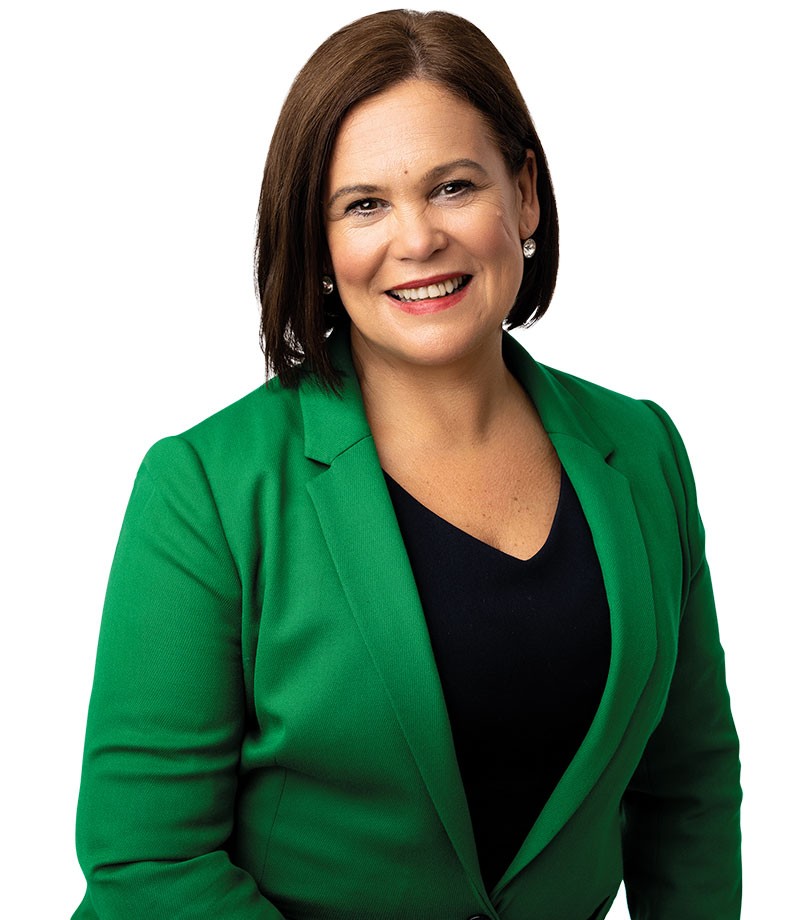
  • Mary Lou McDonald – 2022 Comments on Resignation of Irish Minister Robert Troy

    Mary Lou McDonald – 2022 Comments on Resignation of Irish Minister Robert Troy

    The comments made by Mary Lou McDonald, the President of Sinn Fein, on 24 August 2022.

    This week the nature of the current coalition government, and in particular their failed approach to housing, was laid bare for all to see.

    As each day passed, further revelations about Minister Troy’s behaviour as a landlord came into the public domain. Properties that had failed to be registered with the Residential Tenancies Board, a property without fire certification, RAS arrangements not declared in the Dáil register, other interests not properly declared and the list went on.

    Throughout this period both the Taoiseach and the Tánaiste offered their full support describing Robert Troy as a ‘first class Minister’.

    Indeed earlier today the Tánaiste was still continuing to fight to maintain Mr Troy’s position in government.

    Tonight’s inevitable announcement from Robert Troy casts very serious questions on their judgement and those are questions that will not go away as a result of this action.

    The provision of social and affordable housing has been sub-contracted to the private sector under successive Fianna Fáil and Fine Gael governments.

    The result for ordinary people is exorbitant rents, rocketing homelessness and the fact that the ability to purchase a home has been put well beyond reach of the majority.

    That policy will not change with the resignation of Minister Troy. That policy will only change with a new government.

  • Caoimhe Archibald – 2022 Comments on the Global Energy Crisis and Stormont

    Caoimhe Archibald – 2022 Comments on the Global Energy Crisis and Stormont

    The comments made by Caoimhe Archibald, the Sinn Fein MLA for East Londonderry, on 24 August 2022.

    There are hundreds of millions of pounds locked in a Stormont bank account that can help ease the pressures people are facing, but it cannot be spent because of the DUP’s cruel block on an Executive being formed.

    The DUP’s refusal to form a government has also created uncertainty on the roll out of the £400 payment to support every household in the north.

    So rather than looking for others to blame for their failures, the economy minister should tell his party to stop punishing ordinary workers and families and form a government now. That is the easiest way to get money into pockets.

    As we face an increasingly bleak winter, people rightly want ministers around the table and working together to help workers, families and businesses who are struggling to pay their bills and keep their shutters up.

    Sinn Féin is ready to form an Executive today, to work with others, and put money in people’s pockets to tackle the cost-of-living emergency. That’s our focus.

  • Caoimhe Archibald – 2022 Comments on the Northern Ireland Protocol

    Caoimhe Archibald – 2022 Comments on the Northern Ireland Protocol

    The comments made by Caoimhe Archibald, the Sinn Fein MLA for East Londonderry, on 23 August 2022.

    We are facing an increasingly challenging economic outlook driven by high inflation and spiralling costs for businesses, workers and families.

    The Protocol provides important protections for businesses here from the worst impacts of Brexit, it prevents a hard border on this island, and it protects the all-island economy.

    Economic evidence is showing the Protocol is helping to create jobs and attract investment and our businesses are benefiting from unique access to both the EU and British markets. This needs to be built upon.

    The British government’s intention to break international law and tear up an international agreement by pursuing the Protocol Bill which the Business Brexit Working Group has today said will create a ‘myriad’ of risk for many businesses.

    There now needs to be renewed talks and good faith engagement between the EU and the British government to provide businesses and wider society with certainty and stability.

  • PRESS RELEASE : ‘Workers and families need Executive formed now to tackle cost-of-living emergency’ – Murphy

    PRESS RELEASE : ‘Workers and families need Executive formed now to tackle cost-of-living emergency’ – Murphy

    The press release issued by Sinn Fein on 22 August 2022.

    Sinn Féin MLA Conor Murphy has said Sinn Féin is ready to work with all parties to form an Executive now to put money in the pockets of workers and families who are struggling with the cost-of-living crisis.

    Responding to a poll which found that 9 in 10 households are already cutting back ahead of the winter, the finance minister said:

    “Workers and families are struggling to pay their bills, and they are worried about the difficult winter ahead.

    “They need our help now, and we need an Executive now.

    “Hundreds of millions of pounds to help people cannot be spent because the DUP continues to refuse to form an Executive.

    “Sinn Féin is ready to form an Executive today, to work with others, and put money in people’s pockets to tackle the cost-of-living emergency.”

  • PRESS RELEASE : Today, ten humanitarian corridors have been agreed in the Kyiv, Luhansk and Donetsk regions – Iryna Vereshchuk

    PRESS RELEASE : Today, ten humanitarian corridors have been agreed in the Kyiv, Luhansk and Donetsk regions – Iryna Vereshchuk

    The press release published by the President of Ukraine on 26 March 2022.

    As of March 26, ten humanitarian corridors have been agreed in Ukraine to evacuate people from settlements affected by the Russian invasion. This was announced by Deputy Prime Minister – Minister for Reintegration of the Temporarily Occupied Territories Iryna Vereshchuk.

    In the Donetsk region, the evacuation of people on private transport is planned from Mariupol to the city of Zaporizhzhia.

    According to Iryna Vereshchuk, Mariupol residents can refuel their cars for free in Berdyansk at 87B Melitopolske Highway. At the same time, due to the blockade of buses by the occupiers at checkpoints, there will be no centralized evacuation of Mariupol residents today.

    The Deputy Prime Minister stressed that people can turn to humanitarian headquarters in Berdyansk to get the necessary help and shelter. Their contacts: 3-62-76, 3-52-52, (097) 551-59-17 and (050) 439-75-29. Mariupol residents can also call the call center in the city of Zaporizhzhia: (095) 220-41-11, (067) 220-41-12 and 0800-503-508.

    The following routes have been agreed in the Kyiv region:

    From the village of Plesetske to the city of Fastiv. The meeting place is the village council building at 57 Tsentralna Street.

    From the village of Severynivka to Bilohorodka. The meeting place is 20 Ivana Mazepa Street.

    From the urban-type settlement of Borodyanka to Bila Tserkva. The meeting place is 331 Tsentralna Street.

    From the villages of Chervona Sloboda, Rozhiv and Sytnyaky to Bila Tserkva. The meeting place is a shopping center at 46 Lesi Ukrainky Street, Chervona Sloboda village.

    Evacuation buses will depart from Bila Tserkva, Fastiv and Bilohorodka.

    “Slavutych, Dymer, Ivankiv – we hear you and we know that you need routes (for evacuation – ed.). We are working on it,” Iryna Vereshchuk stressed.

    In the Luhansk region, evacuation buses and humanitarian aid will be sent from the city of Bakhmut. Agreed corridors: from the city of Rubizhne (meeting place – 11 Chekhova Street); from the urban-type settlement of Nyzhne (meeting place – 13 Parkova Street); from the city of Lysychansk (meeting place – GTV, quarter of 40 years of Victory, 324 Sosyury Street); from the city of Popasna (meeting place – 42 Pervomayska Street); from the city of Severodonetsk (meeting place – 28 Khimikiv Avenue) and from the city of Hirske (meeting place – 13 Haharyna Street).

    “According to our information, the occupiers have planned a demonstration action today – they are going to forcibly deport ethnic Armenians, Azerbaijanis and Meskhetian Turks from the city of Kherson to the temporarily occupied Ukrainian Crimea… The Russians understand that they are losing control, so they resort to propaganda – take people to Crimea, which is still under their control. However, these steps are futile and criminal,” said the Deputy Prime Minister.

    Iryna Vereshchuk stressed that Kherson residents are actively and massively protesting against the occupation.

    “Kherson and Kherson residents, you are our heroes!” she said.

  • PRESS RELEASE : Volodymyr Zelenskyy at Doha Forum – 2022 – Europe’s refusal to purchase Russian oil and gas is only a matter of time, so it is necessary to increase energy production in the world

    PRESS RELEASE : Volodymyr Zelenskyy at Doha Forum – 2022 – Europe’s refusal to purchase Russian oil and gas is only a matter of time, so it is necessary to increase energy production in the world

    The press release issued by the President of Ukraine on 26 March 2022.

    President of Ukraine Volodymyr Zelenskyy called on energy-supplying countries, including Qatar, to increase energy production in order to deprive Russia of opportunities for energy blackmail and thus contribute to stabilizing the situation in Europe. He stated this during a speech in the format of a video conference at the Doha Forum – 2022.

    The Head of State addressed the participants of the event: “The topic of this year’s forum in the beautiful, peaceful and respectful city of Doha is the challenges for the new era. But, unfortunately, not everyone on our planet perceives reality adequately and understands that we need to prepare for new times. Russia, as we see, wants a time when peaceful coexistence of nations on equal terms was impossible on earth. Can we allow this?”

    He stressed that after a full-scale attack by Russia, which is 28 times bigger, Ukraine has been defending itself on the battlefield and couldn’t find justice in the world for 31 days already. Russia, on the other hand, is threatening to use nuclear weapons, spreading this fear on the planet and “boasting that it can destroy not only a nation, but also life on earth with nuclear weapons.”

    Volodymyr Zelenskyy stressed the need for real reform of international institutions and UN mechanisms to ensure security.

    “So that someone 28 times bigger does not think he can do anything he wants. And that the nuclear status of the state does not serve as a permit for any injustice against other states,” the President said.

    According to the President, Ukraine is a country of diversity and peaceful coexistence of ethnic groups and religions. More than a million Muslims live in our country, who are now also suffering from Russian bombing.

    “In 31 days of this war, Russian strikes damaged at least 59 buildings of spiritual significance. Mosques, churches, religious educational institutions. More than 200 schools were destroyed or damaged. Dozens of hospitals. Russia does not stop even before the bombing of hospitals! Russian troops purposefully strike at places that ordinary civilians use as shelter,” the President said.

    According to Volodymyr Zelenskyy, during the Russian invasion, about 10 million people, mostly women with children, have already become migrants in Ukraine, and more than 3.5 million Ukrainian citizens have been forced to go abroad in search of security.

    The food crisis will come after the migration crisis, said the President. After all, Ukraine is one of the world’s most important food exporters.

    “Wheat, oil, corn and other agricultural products from our country are the basis of stability and internal security of many countries in different parts of the world… Russian troops mine fields in Ukraine, blow up agricultural machinery, destroy fuel reserves needed for sowing. They blocked our seaports. Why are they doing this? Our state will have enough food. But the lack of exports from Ukraine will hit many nations in the Islamic world, Latin America and other parts of the world. Where some invaders still dream of going to strengthen their old privileges,” Volodymyr Zelenskyy stressed.

    He urged to unite the efforts to prevent food shortages in the world due to the war. In particular, by strengthening the sanctions policy against Russia.

    “All the restrictions that have been imposed on Russia are aimed at only one thing: for Russia to start seeking peace, so that it does not pose global threats. I call on all states to join. Russia must seek peace. It must end the war against Ukraine. It must stop all attempts to break global stability and return to the world the old disgusting habits of those who sought colonies and instilled inequality,” said the President.

    Also, in his opinion, the refusal of European countries to purchase Russian oil and gas is only a matter of time.

    “The responsible states, in particular the State of Qatar, are reliable and reputable suppliers of energy resources. And they can contribute to stabilizing the situation in Europe. They can do much to restore justice. The future of Europe depends on your efforts! I urge you to increase energy production! So that Russia understands that no state should use energy as a weapon to blackmail the world,” the President of Ukraine stressed.

    Volodymyr Zelenskyy called on the whole anti-war coalition to work even harder for Russia to seek peace.

    “So that people in the world can really prepare for new times, for a new era. Instead of thinking about how to adapt to the return of the old horrors: wars of invasion, famine and despair that leads to uprisings,” the President summed up.

  • PRESS RELEASE : The construction of temporary housing is envisaged within the new program of support for IDPs – Volodymyr Zelenskyy

    PRESS RELEASE : The construction of temporary housing is envisaged within the new program of support for IDPs – Volodymyr Zelenskyy

    The press release issued by the President of Ukraine on 25 March 2022.

    President of Ukraine Volodymyr Zelenskyy announced the preparation of a program to support internally displaced persons, which provides for the construction of temporary housing for citizens who have fled the areas of hostilities.

    “Officials are preparing a new support program for our IDPs from the war zones. Regional administrations have been given a clear task to quickly allocate land for the construction of temporary housing for displaced persons. I want to emphasize once again – this is temporary housing. Once we establish peace, we will begin the immediate, large-scale reconstruction of our state. But now people need a temporary home. Their home. And it is better to have a home in Ukraine than somewhere abroad,” the Head of State emphasized.

    According to Volodymyr Zelenskyy, all the details of this support program will be presented by Prime Minister Denys Shmyhal.

  • Liam Fox – 2002 Speech to the 2nd Conservative Mental Health Summit

    Liam Fox – 2002 Speech to the 2nd Conservative Mental Health Summit

    The speech made by Liam Fox, the then Shadow Secretary of State for Health, on 25 June 2002.

    In the children’s story “The Emperor’s new clothes” it required the simple yet definite and courageous view of one individual to challenge the conventional wisdom and open the eyes of the population to their mass denial of reality. In dealing with the issue of mental illness we need a similar reality check asking whether recently adopted trends and measures are effective and relevant or merely rhetoric and fashion.

    The way in which a society treats those least able to play a full role is a measure of how civilised that society is. Sadly, I believe that we accept a level of care for those with mental illness that we simply would not accept for those with other types of illness. If you walk from Westminster up the Strand or into the heart of London and see people, many of whom will suffer from a mental illness, sleeping in the doorways of some of our wealthiest institutions then there is a policy failure that a humane society should not tolerate.

    THE UNSPOKEN EPIDEMIC

    It will come as a surprise to most people that one in four of us will suffer from sort of mental health problem at some point in our lives. One in four. I doubt there is a single person out there who has not experienced the impact of mental ill-health on someone in their life – be it relative, friend or colleague.

    Mental illness is society’s unspoken epidemic, one of its last taboos and so rarely discussed. People regard mental illness as a weakness. They stigmatise those individuals who suffer from it. Why else was Mrs. Rochester locked in her attic? Why else did it take Lorraine Wicks so long to accept her son Joe had schizophrenia in Eastenders, and for him to seek help? If we are to diffuse the stigma surrounding mental health, we must dispel the ignorance of people.

    The spectrum of mental ill-health is incredibly broad. It encompasses the Mum with post-natal depression, the Dad struck by depression after a period of prolonged unemployment and the son or daughter with a behavioural disorder who is underperforming academically and is disruptive in the classroom.

    It is also about the college friend who commits suicide (seemingly for no reason), the soldier returning from an overseas conflict but unable to adjust to the realities of daily life, and the elderly parent slowly being ravaged by the dehumanising erosion of the human spirit known as Alzheimers.

    While the safety of the public must always be at the top of our priorities we need to move the debate away from an obsession with the mercifully few incidents when someone with a mental illness harms someone else and remind ourselves that it is in the interests of that very public safety that we ensure adequate and appropriate treatment for all those who need it.

    THE CURRENT SITUATION

    Sadly, too many politicians seem to pay more attention to the potential dangers psychiatric patients pose, and issues surrounding their compulsory treatment than to the far more important issue of appropriate treatment of all patients. We need to shift the debate away from those rare incidents of violence which end up stigmatising anyone with a mental health problem.

    The situation is currently bleak with widespread staff shortages, acute and day-bed shortages, wide gaps in community provision, and a lack of effective step-down care for those returning to the community.

    It is a situation made worse by the knowledge that while funds are earmarked in the health budget they all too often fail to reach those in need. Cutting the mental health allocation is an easy way of balancing the budget. The mentally ill are least likely to complain, make a fuss or write to the newspaper columns.

    The evidence that the Government does not consider mental health a priority is stark. Buckinghamshire Mental Health NHS Trust has seen £1 million originally earmarked for mental health diverted into other areas. Half of all GP practices in Cumbria offer counselling to patients in need, and there are plans to axe the £78,000 service. The Avon and Wiltshire Mental Health Partnership Trust faces service reductions amounting to £500,000, and the Acupuncture Clinic at the Department of Psychiatry at North Manchester General Hospital is threatened with closure. It costs £60,000 a year to run. It’s quite clear that far from being a priority, mental healthcare is an afterthought for this Government.

    Our inner cities bear more than their fair share of the burden. Those who are homeless, or who have alcohol or drug addictions, frequently also have mental health problems. They end up in our inner cities – where they become invisible amidst the hustle and bustle of city life to those who might otherwise help them.

    But mental ill-health is not just an issue that afflicts inner cities. The crisis in our countryside has also led to an increase in mental health problems – such as the well documented tragedy of farming suicides which has touched my own constituency in North Somerset.

    A HISTORICAL PERSPECTIVE

    Throughout history, mankind has sought to put distance between itself and those deemed mentally ill. In the era of witchcraft, the treatment of the mentally ill consisted of the casting out of devils and theatrical exorcisms. Once civilisation had moved beyond that phase of superstitious fear, the commonly held view, for many centuries, was that insanity was untreatable. Any approach to dealing with the mentally ill had to focus on containment and custody. The mentally ill were hidden from human view in asylums and institutions, with varying standards of care. Locked away out of sight – and literally out of mind – those sent to asylums sometimes lay chained to their beds all day long. The corridors echoed to the screams of the undiagnosed and untreated deranged.

    For many the reason they were there in the first place was often forgotten. Having an illegitimate child was sufficient to have you labelled a ‘congenital imbecile’ or ‘morally defective’. You were condemned to an asylum for the rest of your natural life. Even in the 1960s, there were examples at an asylum in the Scottish Highlands of asylum ‘inmates’ having all their teeth removed to simplify oral hygiene, and false teeth being washed communally in a big bucket.

    For the countless thousands in these appalling institutions, those who were not ill to start with frequently ended up depressed, if not deranged, by the conditions they were forced to live in.

    THE CONSERVATIVE RECORD

    The Conservative Party has always been at the forefront of mental health reforms. It was Lord Shaftesbury who began to turn mental health from an instance of private misfortune to a matter of public concern. He highlighted the atrocious conditions in many of the London asylums, and changes began, albeit very slowly, to occur.

    The reliance on asylums and other custodial institutions was such that by 1954 the population of psychiatric hospital beds peaked at 152,000 – more than twice the current prison population.

    But it was Enoch Powell who took the first decisive step away from this model of care. In his own words, the 1959 Mental Health Act lit a ‘funeral pyre’ beneath the decaying network of asylums.

    He was at his most eloquent on this subject in 1961, in what has become known as his Water Tower speech. He talked of asylums which stood ‘isolated, majestic, imperious, brooded over by the gigantic water-tower and chimney combined, rising unmistakable and daunting out of the countryside’ His goal, broadly speaking, was to move treatment of the mentally ill away from remote asylums and into local hospitals ‘in the community’.

    With the development of new drugs, the possibility of treating patients actually in the community slowly became a reality. Starting with the findings of a committee into mental health chaired by Cecil Parkinson at the request Norman Fowler when the Conservatives were in opposition in the 1970s, policy development culminated in the 1983 Mental Health Act and Kenneth Clarke’s 1990 NHS and Community Care Act.

    CARE IN THE COMMUNITY

    Most people accept that it was right in principle to bring an end to the old asylums and have patients treated close to or within the community. Certainly the concept of care in the community had support right across the political spectrum.

    But, as Virginia Bottomley wrote in a letter to The Times in 1998: ‘In an institution, an individual can be monitored 24 hours a day. In the community, reporting and fail-safe mechanisms are necessary if tragedies are to be avoided. ….. The pendulum has swung too far.”

    That a warning in those terms should have been delivered by such a staunch supporter of the concept of care in the community ought to have set alarm bells ringing in government. But nothing was done.

    Now the suicide rate is rising again. The increasing breakdown of the family unit, homelessness, abuse, and the absence of any sense of community in inner city areas are all contributing to increasing prevalence of mental health problems amongst all ages, and particularly the young.

    This is not to ignore the fact that care in the community has provided many thousands with an opportunity to experience a quality of life far better than what they would have experienced inside restrictive institutions.

    Nor can criticism be laid at the door of medical, nursing and voluntary staff who have made a Herculean effort in the face of the greatest difficulties.

    I would reject completely the criticism of some that care in the community was nothing more than an unfortunate or catastrophic meeting of a desire for financial savings and a naïve passion for the rights of the individual.

    But the pendulum has swung too far- and too fast. Many now feel that care in the community was implemented too quickly, with inappropriate patient selection and in too many places, there was too little investment in training, finance and related areas.

    There has been, at times, too little care, scant support, and a form of community which has exposed the vulnerable- both patients and the public- to danger.

    Individuals were sometimes placed in a complex urban environment that they just couldn’t cope with. They lacked understanding of their condition, and their institutionalised background made them unable to deal with the complexities of modern living. And when they needed help, their cries went unanswered.

    We need a new balance to be struck which ensures the most appropriate treatment and environment for patients. A balance where those that need treatment in a hospital setting receive it and only those able to cope in the community are placed there.

    And we must accept as part of this balance that care in the community has been discredited in the public mind by a series of crimes committed by the mentally-ill who had fallen between the gaps or come off their medication.

    The litany of cases represent some of the most horrifying and frightening crimes of the past few decades – Christopher Clunis stabbing Jonathan Zito on the platform of Finsbury Park, Horritt Campbell attacking nursery nurse Lisa Potts, Michael Stone murdering Lin and Megan Russell on a Kentish country lane, the attack on the late George Harrison in his own home, the Liberal Democrat councillor Andrew Pennington attacked by a man with a sword at a Cheltenham advice surgery.

    A case from my own constituency: Sarah Beynon from North Weston, just outside Portishead, was sent to Broadmoor in August 1995 after killing her father while on leave from a clinic. An enquiry found that staff at the Southmead Hospital did not ensure she took her medication. Risks were taken unnecessarily, and she was not safely contained physically. There was a lack of communication between social workers at the Fromeside Clinic regional secure unit. At Fromeside, she was the only female in a ward of fifteen patients. The monitoring of her condition was often left to nursing staff without specific training.

    But these tragic cases are not just in the past. A 37 year old paranoid schizophrenic woman was ordered last April to be indefinitely detained after an indiscriminate outbreak of violence in which seven people were attacked in Leeds city centre. Formerly an in-patient treatment, she had been asking her doctors to change her medication at the time of the attack. No-one was around to pick up the signs that something was going wrong.

    As Michael Howlett of the Zito Trust told the Yorkshire Evening Post (11 April 2002): ‘People don’t just attack people in the street out of the blue. There’s always a build-up over weeks or months. These incidents are usually as a result of services breaking down and the danger signs not being spotted’.

    However, it is a misapprehension that because it is preferable not to institutionalise people that the community is invariably the place to locate all mental health patients.

    Let me just quote from the Sainsbury Centre’s briefing on in-patient acute care published the other week: ‘We have yet to develop realistic plans to deliver acute inpatient care which is therapeutic and supports recovery. Unless we develop and implement such plans, nationally and locally, we will see an increasing cycle of decline in acute mental health care with increasing user dissatisfaction, incidents and inquiries and the loss of high quality staff – all despite the best efforts of many committed staff. The situation is little short of a crisis and has to be addressed now. In some instances the quality of care is so poor as to amount to a basic denial of human rights.’

    A DANGER TO WHOM?

    Events involving just a few stigmatise the many – and lead others to overlook the danger some mentally ill people pose to themselves.

    The case of Ben Silcock is a good example. Mentally disturbed, it was he who was severely mauled after climbing into the lion enclosure at London zoo.

    Incidences of suicide, particularly in prisons, far outnumber the cases where the mentally ill patient harms someone else. Sadly, around 1,000 schizophrenics commit suicide each year. This contrasts with the 40 murders each year committed by people who have been in contact with mental health services, and who are not necessarily schizophrenics.

    It will always be the duty of government to protect the public from harm, if necessary by detention or compulsory treatment. But politicians must take care to adopt a balanced approach which does not stigmatise and thereby worsen the plight of those who pose no risk to anyone, except possibly themselves.

    WHAT CAN WE LEARN FROM ABROAD?

    Gordon Brown says we have nothing to learn from abroad when it comes to health. That is equally ignorant and arrogant, especially in the area of mental health.

    I was enormously impressed in Denmark during a visit to a psychiatric hospital at the profoundly calm atmosphere and the sense of patients being treated with dignity and respect.

    And some of you may have heard of the Hotel Magnus Stenbock in Helsingborg, Sweden. It is a good example of what might be termed a ‘halfway house’ for those moving between an institutionalised setting and the community. It has 21 single rooms. It offers a balance between private and social space. The hotel is not just about its structure and about the offering of crisis accommodation, but it is also about developing a sense of community, a sense of acceptance and offering a place of safety. It is run by the RSMH, an organisation of mental healthcare users, which runs a million-pound organisation that sustains and nurtures self-help models of care throughout Sweden.

    Perhaps the most striking comment I saw about the hotel was that of a shopkeeper who runs a store nearby the hotel. One might have thought the local population would have objected to the hotel being near them, but on the contrary, he said ‘The proximity of the hotel has not had any adverse effects on business, sometimes the general public are a little wary of users, but they see the staff in the shop are not afraid and are treating the hotel residents the same as all the other customers. It makes them more comfortable. We believe everyone has the right to be treated as a human being and at some point in everyone’s life we all encounter problems, some more severe than others’.

    This is symptomatic of the approach of Sweden and other countries. They regard mental illness as no different from any other illness. They are prepared to innovate. Variety is what matters. We need to offer services which reflect the diverse needs of those with mental health problems, rather than offering a limited range of services which the individual has to fit their mental health problem round. And the RSMH shows how the state does not need to be the only provider.

    MENTAL ILLNESS IN THE YOUNG

    It is amongst the young and old that there is the greatest propensity for others to dismiss the symptoms of mental health. The rate of mental health problems amongst children and the young is alarmingly high – twelve per cent suffer from anxiety disorders and ten per cent have disruptive disorders.

    The signs of mental ill-health are too often dismissed as growing pains yet mental health problems in the young can quickly lead to juvenile crime, alcohol or drug misuse, self-harm and so on.

    These problems affect children in care in particular. For example an Audit Commission report stated that two thirds of young people looked after by Oxfordshire County Council had a diagnosable psychiatric disorder, compared with only 15% living at home.

    It is also surely a cause for concern that a third of young men between sixteen and eighteen sentenced by a court are diagnosed with a primary mental disorder.

    Mental health problems not only make children unhappy but also retard their emotional development and social skills, and blight their education and life chances. The social problems that can consume young people such as school truancy, teenage pregnancies, bullying and school drop-out rates are as much part of the mental health agenda as the developmental and behavioural disorders more frequently cited.

    We have a duty to these children to ensure they receive the appropriate assistance rather than being condemned to a youth spent at the margins of an unwelcoming education system and a fearful civil society.

    The causes of mental health problems amongst the young are diffuse. Genetic influences can make children more likely to suffer from serious mental health problems, but very often it is societal influences that can influence the development of anxiety and conduct disorders. The increasing breakdown of the family unit, homelessness, abuse, and the absence of any sense of community in inner city areas can all contribute.

    Such problems can manifest themselves in behaviour which is often classified as wilful ill-discipline. Preventative work which involves educating schools and helping them to understand the wider implications of bad behaviour is a sensible step, as is involving the families. One difficulty, though, is that any suggestion of mental health problems is immediately seen as attaching a stigma to the child, and this impacts on the extent to which families are prepared to co-operate. They fear their child will be bullied (perhaps exacerbating the problem) and that the school’s attitude to a child who is potentially disruptive may also change. They wrongly feel that they protect their child by avoiding the issue.

    THE ELDERLY- TOO OFTEN FORGOTTEN

    Mental ill-health in the young is the wellspring of what I have described earlier as the ‘unspoken epidemic’. That epidemic is just as widespread amongst the elderly, and just as easily dismissed and ignored as with young people.

    A quarter of those over 85 develop dementia – perhaps the form of mental illness most associated with the elderly. However, between ten and sixteen per cent of those over 65 develop clinical depression. This sort of mental illness is too often ignored, as younger relatives assume the individual is just ‘slowing down’ and ‘getting on’.

    Older people deserve access to mental health services as much as anyone else. It is not enough just to assume that because elderly people have access to care homes, home helps, meals-on-wheels and the like anyway, an extra dimension of care on account of a mental illness they may have, is unacceptable. People are individuals, and they must be treated as such.

    PRISON-THE HIDDEN SCANDAL

    Enoch Powell may have lit a ‘funeral pyre’ beneath mental asylums when his 1959 Mental Health Act began the process of shutting them. But today, some seventy per cent of the prison population has a mental health or drug problem. Where once we hid our mentally ill in asylums, we now, unwittingly, locate many in our prisons.

    The incidence of mental disorders amongst the prison population far exceeds that in the population as a whole.

    It is a troubling thought that anyone who is mentally ill and has a brush with the law could find themselves subject to inadequate treatment in Dickensian surrounding at the beginning of the 21st century.

    Facilities often amount to little more than sick-bays with limited primary care cover. The assessment of a prisoner on his arrival at prison typically takes five to seven minutes. A retired GP or a locum who may have no specialist knowledge of mental health often conducts it. The level of training of staff does not always match the complexity of the conditions prisoners present with.

    Prisoners are thus less likely to have their mental health needs recognised, less likely to receive psychiatric help or treatment, and are at an increased risk of suicide. The number of suicides in 1999 – 91 – is almost double the figure of 51 from 1990.

    As a report from John Reed, the medical inspector of the inspectorate of prisons, states: ‘A period in prison should present an opportunity to detect, diagnose and treat mental illness in a population hard to engage with NHS services. This could bring benefits not only to patients but to the wider community by ensuring continuity of care and reducing the risk of reoffending on release’ (BMJ, 15 April 2000). That this opportunity is not grasped is an indictment of the current system.

    And John Reed has also said: ‘Many [prisoners] are quietly mad behind their cell door and are not getting any treatment. Care for mentally disordered offenders in prison is a disgrace’ (Nursing Times, 25 May 2000).

    The Prison Service must, therefore, as a matter of urgency, consider how to address the mental health needs of the people in their charge. Research is required, in particular, to determine how the prison environment impacts upon mental health. This may include issues such as overcrowding, confinement in cells, and the range of activities available to prisoners.

    A second problem is that prisoners with mental health problems remain within the prison service, and are not diverted to the NHS, as the Reed Report amongst others, recommended. It is inappropriate for prisoners with severe mental illness to be in prison. Sir David Ramsbotham has said ‘In my view mentally ill prisoners requiring 24-hour nursing care should be in the NHS, not prison’ (Nursing Times, 25 May 2000).

    But for diversion to work, an alternative must exist. More beds would be needed in special and medium-security hospitals. In addition, upon completion of sentence, there are insufficient beds in ordinary psychiatric units to discharge prisoners into. This lack of beds clogs the whole system up.

    Of course increasing capacity in the NHS whether for acute hospital beds or secure hospital places will require resources that will have to be contained within the envelope of health spending. Additional research is required to make an accurate assessment of exactly what is required and we shall now undertake this. But it is a question of values and priorities.

    Whether patients are within the criminal justice system or not, it is in everybody’s interest to make sure that their mental illness is properly treated, and in the right setting, before they are released from custody with a treatable condition.

    The Conservatives have already stated that we will spend what is required to provide better healthcare, but that imposes a duty to make the best use of the resources we already have before deciding what more might be needed.

    An NHS which, by its own estimate, wastes some £9 billion a year needs to ask some awkward questions about its use of resources.

    In addition, Derek Wanless dealt with the costs of mental illness and the potential savings of a better system in his recent report.

    He pointed out that MIND estimate the total costs of mental illness at £37 billion a year. Of this, £11.8 billion is lost employment. In 1995 over 91 million working days were lost as a result of mental illness.

    Home Office estimates put the overall cost of crime at £58 billion per year with a significant proportion being carried out by people with a mental illness.

    When asked about the cost benefits of better mental health care, Wanless said “It is difficult to estimate the exact value of potential savings, but it does not seem unreasonable to assume that there might be a 5 per cent reduction in the costs of mental illness and a 2 per cent reduction in the costs of crime…..giving a net saving across government as a whole of some £3.1 billion a year.” (Securing our Future Health: Taking a long term view, Interim report, Derek Wanless, April 2002, pp.115 and 116)

    A NEW AGENDA

    Health policies cannot hope to eradicate the problems of an entire society. That Utopian vision was crushed very soon after 1948. What health policies can do is seek to support those who do suffer in what can be, at times, an atomised and alienating society.

    That is why the Conservative Party is making mental health a central part of its health policy agenda. It is an issue that must become a matter of public concern, and not just a private misfortune. A self-enlightened society is one that realises, as they have done in Sweden and Denmark, that it is to the benefit of everyone that mental illness is treated – and if possible prevented – adequately.

    And perhaps we need to bring back another concept – ‘sanctuary’. We started off with Bedlam, then we had madhouses, Lord Shaftesbury gave us asylums, and then we looked to the community. Now we have to speak of what all these differing environments ought to provide – a sense of sanctuary.

    I recently visited a counselling service in Aylesbury where the described their office as “a place to feel safe.”

    And last week I had the very great privilege of visiting the Hillside Clubhouse in Holloway. The Clubhouse network was something I had not heard of before. I was struck from the moment I walked in the door that the people who used the clubhouse – and who had mental health problems – looked on the Clubhouse as somewhere they could go to feel safe. It offered them companionship, constructive activity and the chance to go and get a paid job in the community. It supported them without compelling them. Everyone found their own level, and progressed at their own pace.

    It was not somewhere they were forced to go, but equally it was somewhere that would keep in touch if they stopped coming along. In short, it offered genuine care in a real community. It was a sanctuary in an ever more complex and difficult society.

    With New Labour’s obsession with celebrity, glamour and the good life, many feel that the vulnerable in our society now have no champions left. Concern about the social welfare of those in society who have no-one to speak up for them is an essential part of any programme for a truly national party such as ours. There can be few more vulnerable groups than those with mental illness.

    We are not taking this stance because it is fashionable.

    We are not doing it because we have identified some interest group or section of the population who we can make politically beholden to us as a consequence.

    We are not doing it because we see some short-term gain to be had by pretending to interest ourselves in ‘soft’ social issues for a few months.

    We are doing it because we believe it is the right thing to do.

    That is what politics ought to be about.

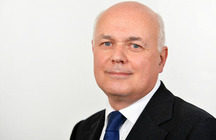
  • Iain Duncan Smith – 2002 Speech on the Mentally Ill

    Iain Duncan Smith – 2002 Speech on the Mentally Ill

    The speech made by Iain Duncan Smith, the then Leader of the Opposition, at the Savoy in London on 25 June 2002.

    Much has happened since I spoke to you nearly a year ago at last year’s annual lunch.

    The Two Cities have been at the forefront of the national outpouring of affection and respect for the Queen during her Golden Jubilee celebrations.

    In May’s Elections Westminster City Council once again showed how successful Conservatives can be when we deliver high quality, good value local services. Simon Milton and his team have certainly played their part in our local government revival in London.

    And in the House of Commons your new MP, Mark Field, has marked himself out as a leading member of that new generation of Conservative MPs that I will make it my business to lead into Government.

    Twelve months that would have sounded fanciful. We had just suffered our second devastating defeat in four years.

    Yet today, our Party is more disciplined and more united than it has been for a decade.

    And Labour, seemingly impregnable back then, have been caught in their own web of intrigue and spin which has seen them lose the trust of the British people.

    This is all a very long away from the new dawn in British politics that Tony Blair promised on taking office in 1997 or from the promises he made at the last Election.

    How has a Prime Minister who said he would follow the People’s Priorities come to view those he claims to represent with such contempt?

    Integrity and politics

    The relationship between government and the governed is the cornerstone of democratic politics. It is usually vigorous and sometimes harsh, but when it reaches the point where the Government considers the people it leads as its enemy the very idea of democracy becomes debased.

    Whether it is smearing Rose Addis as racist or investigating Pam Warren and the survivors of the Paddington Rail crash for their political affiliations, one thing is clear. This Government believes that anyone who is prepared to speak out and contradict its message that things are in fact getting better, must have a political motive for doing so.

    Just last month, a newly-appointed Labour minister – the former Head of the Prime Minister’s Policy Unit summed up Labour’s governing philosophy. He said ‘Third Way triangulation is much better suited to insurgency than incumbency’.

    This is a polite way of saying that defining yourself by the people and things you are against instead of what you are for may win elections but isn’t much use when it comes to running the country.

    It is because Labour have failed to learn that lesson after more than five years in power, that they go after the likes of Rose Addis and Pam Warren with the venom that they do.

    Tony Blair said he would be ‘tough on crime, tough on the causes of crime’, but overall crime has started to rise again and violent crime and street crime are rocketing.

    The best David Blunkett can claim of nearly sixty headline-grabbing initiatives on law and order over the past year is that they are not Jack Straw’s.

    Tony Blair said ‘education, education, education’ would be their priority, but one in ten students in some inner city areas leave school without a single GCSE and indiscipline has become the standard in too many classrooms.

    And the best Estelle Morris can say is that the days of the one-size-fits-all comprehensive are over after David Blunkett abolished Grant Maintained schools.

    Tony Blair said Britain had ‘24 hours to save the NHS’, but five years later a quarter of a million people are having to pay for operations out of their own pockets because they cannot afford to wait any longer.

    And the best Alan Milburn can say about health is that there is now room for partnership with the private sector after boasting that the NHS would remain a state monopoly little more than a year ago.

    And where is the Chancellor in all this? He said National Insurance was ‘a tax on ordinary families’ and dismissed claims during the Election that he would increase it as ‘smears’. Ten months later he increased National Insurance by £8 billion while the state of our public services have declined still further.

    And the best Gordon Brown can do is to adopt a sphinx-like silence. But New Labour is his project too.

    Political discontent and cynicism have been accelerated by five years of a Prime Minister and a Chancellor who neither mean what they say nor say what they mean.

    Five years of seeking to be all things to all people.

    Five years when Labour’s only tangible achievement is to be neither the Party they once were nor the Government they replaced.

    They have poisoned the well for all politicians.

    So we cannot sit back and wait for the public disillusionment with Labour to grow. We have to show that the Conservative Party is changing, that we can deliver action not words.

    We do not have to stop being Conservative to win the next Election, but we do have to start showing how our principles will deliver solutions to the problems people face.

    Some people say it is not the job of the Conservative Party to talk about the vulnerable. I say it is part of our very purpose. It is what brought me into politics. That is why I will never be apologetic about putting the vulnerable at the centre of our strategy.

    Today Liam Fox is talking about giving mental illness a much higher priority within the Health Service. One in four people in this country suffer from mental illness of one form or another. It is our nation’s hidden epidemic and yet it is one our society’s last remaining taboos.

    There is nothing fashionable about championing the mentally ill, but they are the victims of an old consensus that has let them down.

    Too many people with mental illness now languish in prison and the Government plans to detain indefinitely people with personality disorders who have done no harm to others. The mentally ill have a right to be heard and we will give them a voice.

    Because it is vulnerable people – the elderly, the sick and the disadvantaged – who suffer most when public policy and public services fail.

    We have allowed issues like these to be colonised by Labour for far too long. The paucity of their methods and the poverty of their results can no longer go unchallenged.

    But it isn’t good enough for us just to talk the talk, we are going to have to walk the walk. People have to trust our motives, but they have to believe we will deliver.

    It is going to fall to us to tackle the problems of crime, failing schools, family breakdown and poor healthcare. Now, as in the past, we will work to give people back control over of their own lives, to direct power away from government to the places and the people who can use it more effectively. That is why I have set up a Unit to head the most wide-ranging review of our policies and our priorities for a generation.

    Better schools and hospitals, more responsive local government, means giving teachers, doctors, nurses and councillors the power to do their jobs and making them accountable for what they do.

    That is what happens in every other walk of life, it is also what happens in every other country whose standards of public services exceed our own.

    If we do these things people will see the difference. It is about putting people before systems, results before theory, and substance before spin. That is the right way to do things, but it is not Labour’s way.

    Taxation

    Instead of opening their minds to new ideas all they have done is open our wallets.

    The higher taxes announced in the Budget are intended to give us European levels of health spending.

    But European spending won’t give us European standards without reform. I was struck by recent figures which showed that the productivity improvements in the NHS before 1997 have been reversed over the last five years.

    And Tony Blair and Gordon Brown have shut the door on any serious debate reforming the NHS. Instead, they are simply going to give us higher taxes. That is an expensive recipe for disaster.

    In all, taxes will increase by around £8 billion pounds next year, and over half that sum will come from business, the very people who generate the country’s wealth in the first place.

    But this is not the first time Gordon Brown has raised taxes.

    Pensioners were his first target. In 1997, the Chancellor’s withdrawal of the ACT Dividend Tax Credit landed pension funds and pensioners with a £5 billion a year stealth tax from which they are still reeling.

    In 1998, the utility companies had to pay the second half of the £5.2bn windfall tax.

    In 1999, the very smallest businesses, personal service companies, first became aware that their vital contribution to the economy was to be attacked with the IR35 tax.

    In 2000, hauliers, taxi drivers and every single business reliant on road transport felt the anger of ordinary motorists at the highest taxes on petrol in Europe, culminating in the fuel crisis.

    In 2001, right in the middle of a painful manufacturing recession, Labour introduced the Climate Change Levy, a tax on energy which hit manufacturing the hardest.

    Finally, in Budget 2002, Gordon Brown announced half a billion pounds of higher National Insurance Contributions for the self-employed and £4bn more for all other businesses, not to mention £3.5bn extra that will now have to be paid by employees.

    Regulation and competitiveness

    But it’s not just the higher taxes that Labour have levied on business every single year.

    There’s the red tape, the Government’s favourite mechanism for getting business and the public services to do what it wants.

    Just this morning we hear that GPs are wasting two and half million appointments every year filling in repeat prescriptions and filling out sick notes to satisfy the thirst for bureaucracy.

    Businesses will recognise the pattern, as they cope with regulation upon regulation, from new payroll burdens that have turned businesses into unpaid benefits offices, to administrative juggernauts like the Working Time Directive.

    In monetary terms, the Institute of Directors calculates that these burdens have cost business a further £6bn every year, but no-one could ever really know the true cost of time which comes from having to fill in forms instead of creating wealth.

    And yet, despite all these taxes and all this red tape, Peter Mandelson, the architect of New Labour says, “we’re all Thatcherites now”.

    Well I’m a tolerant man and I believe in broad church politics, but I draw the line at heresy.

    Mr Mandelson says we all have to accept that globalisation “punishes hard any country that tries to run its economy by ignoring the realities of the market or prudent public finances”.

    Quite. So why is Labour ignoring one of the most fundamental realities of the free market: that to be competitive, to win orders and create wealth, you have to keep burdens on business to a minimum.

    We have become the fourth richest country in the world because Conservative Governments spent eighteen years freeing labour and capital markets, deregulating key sectors of industry, and slashing red tape and taxes.

    Every new regulation and every increase in business taxation introduced by Labour since then has undermined our long-term ability to compete in the global marketplace.

    Monetary stability and the Euro

    Another feature of the economic legacy that Conservatives passed to this Government was that we won the war against inflation. By 1997, inflation had already been running near to the 2.5% target for four years.

    The independence of the Bank of England has helped to reinforce this anti-inflationary environment and credit should be given to Gordon Brown for that measure at least.

    The real question now is this: do we want to give up those arrangements in favour of interest rates set by the European Central Bank?

    Joining the euro would mean no longer setting interest rates on the basis of what is best for Britain but submitting to a single rate that would benefit the whole of the Eurozone – an impossible task.

    The Prime Minister continues to drop hints about a referendum on the single currency next year.

    At a time when everyone is concerned about the state of their schools and hospitals, when we feel threatened by the rise in violent crime, he should focus on these issues and stop playing games over the Euro.

    Lately there are signs that the Prime Minister is getting cold feet, not because of the five economic tests but because of the only test that really matters to him, the opinion of the public.

    He grasps that a referendum on the single currency would also be a referendum on the breakdown of public trust in his Government.

    He is caught between the rock of the Pound’s popularity and the hard place of his own desire to scrap the Pound. His lack of conviction about everything else is getting in the way of the only conviction he truly holds. Such are the wages of spin.

    If the Prime Minister wants Britain to adopt the Euro, he should have the courage to say so, name a date and let the people of this country decide. If a referendum comes the Conservative Party with me at its head will campaign vigorously to keep the Pound.

    We will join with trade unions and businesses, and supporters of all parties and none who believe that replacing the Pound means away giving control over British interest rates, taxes, and public spending. It ultimately means British people giving away control over our politicians too.

    So not only will we campaign vigorously for a ‘no’ vote. We will not be alone. The Pound is more popular than any political party, because it doesn’t belong to any one political party. And we will fight to keep it that way.

    When Tony Blair entered Downing Street five years ago he had more going for him than any other incoming Prime Minister.

    A landslide election victory.

    The foundations of economic stability and success laid by his Conservative predecessors.

    The goodwill of the overwhelming majority of the British people.

    Never has a Government had so much, but achieved so little.

    With no fixed idea of who they are, they have chosen to define themselves by how they look. And the truth is after five years of lies and spin they are beginning to look pretty shoddy.

    They are no more capable of effective leadership to tackle the issues that undermine our society today than they were of grasping the economic reforms that were necessary in the 1980s.

    Whether it is raising standards in our schools and returning civility to our classrooms; restoring the rule of law to our streets; or dealing with the insecurities of infirmity and old age, it falls the Conservative Party to lead the way once more.

    That means fresh thinking and new ideas on education and health, on crime and policing, on finding new ways for people to share in economic growth.

    It means taking every opportunity to show ourselves as we really are: decent, tolerant and generous people who want the country we live in to be a better place for everyone.

    Above all it means showing that the difference between the Third Way and the right way is the difference between promises and delivery.

    We all know this in our hearts. Our job is to earn the right to prove it.