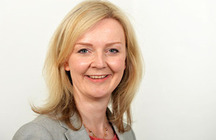
The comments made by Liz Truss, the then Education Minister, on 17 November 2012.
Mandarin is the language of the future – it is spoken by hundreds of million of people in the world’s most populous country and shortly the world’s biggest economy.
The comments made by Liz Truss, the then Education Minister, on 17 November 2012.
Mandarin is the language of the future – it is spoken by hundreds of million of people in the world’s most populous country and shortly the world’s biggest economy.
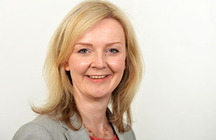
Selections from the interview with Liz Truss, the then Education Minister, and Nursery World Magazine, on 12 November 2012.
On her impressions of the sector
I obviously met quite a lot of people before I got the job, and it’s an area I’m interested in. I’ve got young children myself.
I think that quality has improved. We’ve seen a growing professionalism in the childcare sector as a whole. A lot of the discussions that I’ve had with providers have been that there is an issue with sustainability. Feedback that I get from parliamentary colleagues is that some providers are struggling.
We know there is also an issue with the extent to which parents can afford childcare. My broad feeling is that it is an industry that has changed, but there are a lot of issues. One of the things I’ve been doing is visiting other countries … we’re all facing similar issues. There’s a growing recognition of the real importance of early years both from the point of view of child development and from women’s/parents’ participation in the labour market.
We know we’re in a more competitive world where the quality of our education is really important to our future prospects as a country and I think that early years is rightly being recognised as a really important part of that.
What I want to do is learn from the successes and failures of others and also look at what’s best in our system. There are some very strong aspects to our system – for example, the Ofsted inspection regime.
I think there’s a lot to work with. I think there’s a great deal of interest in new ideas and innovations. It’s a very interesting time to be doing the job.
On the tensions between the needs of the child and the need to get parents into work
The reality is that parents want what is best for their children. People don’t want to go out to work not being happy that their child is being well looked after and being prepared for the future, and they want to know that the child has the best possible quality care. I think that (the two things) are completely compatible and I think they have to be because we don’t want parents to go out to work at the expense of their child’s development and education at all.
What I want to do is make sure that our system focuses on the really important things, which are the safety of the child and the quality of care that the child is receiving so that our regulatory system and our professional qualifications are focused on those two things rather than other things which don’t contribute.
I want to make things simpler and focus on what is important to parents and what is important to our country as a whole. It’s really important that children receive the best possible early education.
On working mothers
The Resolution Foundation has rightly in my view raised the issue of middle income families and second earners who face a particular squeeze in this country, and I am concerned that we have fewer mothers going out to work now than they do in France and Germany, and, if you look at the 1980s and 1990s, we had more mothers as a proportion.
That’s not to say that I want to force mothers back to work. The Department for Education has done a survey that shows that roughly 50% of mothers have chosen to stay at home and 50% would like to go out to work but the circumstances make it difficult, and one of the main issues is the cost of childcare and the availability.
On funding streams
There’s a confusing number of funding streams. The funding isn’t transparent. [That doesn’t] contribute to those two objectives of quality and safety.
At the moment in our system not enough of the £6bn spent by the government is reaching the frontline. We want as much of that money as possible to be going on high-quality provision. We want providers to have an incentive to make sure that their provision is as high quality as possible.
We’re leaking out funding. Quality costs, but we’re also spending money on things that don’t contribute to quality and that is simply a question of getting better value for the money we spend. We’ve got a problem in that some providers are struggling to stay afloat and at the same time we’re pumping quite a lot of money into the system. So the question for me is, how do we make that work better?
On the free entitlement for 2-, 3- and 4-year-olds
I think simplicity and transparency are really important – to say to providers you are going to be rewarded for hiring high-quality staff, for putting on good staff training and development, for making sure that you are following best possible child development practice. We are going to be judging, or the system is going to be judging, the quality of outcomes and the quality of engagement with the child.
On the forthcoming response to the Nutbrown review of early years and childcare education
We need to make sure that it’s not just the people in the nursery and childcare system who understand what’s happening, but also that parents understand what qualifications mean. It’s back to this point about simplicity and transparency.
I want the early years profession to be a really attractive occupation for people leaving school and for graduates. I want it to be something that people want to go into. I think it’s really important that the profession is as outward-facing as possible, and that people understand what the qualifications are and what they mean.
There [need to be] new expectations around salary levels. There is an issue with pay in particular parts of the sector. I think all these things are linked, so I want to give quite a comprehensive response about the regulatory system, and about what we’re going to do about qualifications as well.
I want to build on the Early Years Professional Status (EYPS). It’s been a positive move and I want to build on it. We’ll also be looking at Ofsted and the way Ofsted measures outcomes. That will all be addressed under our response to the Nutbrown Review.
The other aspect is increasing the level of professional discretion and professionalisation, and that means allowing, where there are not issues of quality and safety, providers more say in how they operate.
I think it’s really important that if we say to people you are a graduate leader, that we allow people to exercise that professional judgement, and that’s what parents want – high quality, trusted people who are properly regulated by Ofsted, making decisions about how they run their nursery, their childminding practice.
On lessons from abroad
If you look at countries such as France and Germany, they are managing to get very high quality. If you speak to French parents about the quality of their 0-3s care, it’s very well regarded. They are managing to get high quality and high affordability and the government funding is more evenly spread across providers. So they are managing to use that government funding better, they allow more discretion, they’ve got very strong quality measures. So my question is, how do we get to that kind of system?
I don’t think we should be defensive. Yes, a lot has been achieved, but in order to get to a new level, and we need to get to a new level both for the sake of children and their development and for the sake of parents who are struggling, we need to be flexible.
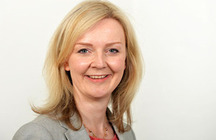
The comments made by Liz Truss, the then Education Minister, on 9 November 2012.
Maths influences all spheres of our daily lives, from working out the change from your shopping to an architect’s calculations in designing the latest London skyscraper.
The irony is that while maths is all around us, it seems to have become acceptable to be ‘bad with numbers’. The habit of simply reaching for the calculator to work things out only serves to worsen that problem.
All young children should be confident with methods of addition, subtraction, times tables and division before they pick up the calculator to work out more complex sums. By banning calculators in the maths test, we will reduce the dependency on them in the classroom for the most basic sums. Children will have a solid grounding in the basics so they can grow up to be comfortable with the maths they will need in their adult lives.
The speech made by Liz Truss, the then Education Minister, in Norfolk on 9 November 2012.
Thank you for those kind words Derek and let me also thank the National Education Trust for inviting me along today. It is a pleasure to be in Norfolk for this very important conference.
It’s no exaggeration to say this is a make or break period in the history of maths in this country.
All around us, the influence of mathematics is shaping our lives in previously unimaginable ways. From our experience of online shopping to the financial performance of investments and pensions, we live in a world entirely framed by maths.
Even in those professions not traditionally associated with mathematics, there’s now a heavy reliance on algorithms and calculations: in journalism to spot the patterns in data; in architecture to use algebra and calculus with confidence; in marketing to make sense of the enormous array of statistics the world creates every day.
That modern orientation towards deduction and logic, that appetite for maths, the appreciation of statistical analysis, technology and probability, opens up tremendous opportunities for young people in this country. But to take full advantage, we need to start exploiting mathematics as urgently as other countries might drill for oil.
In technology, the media, e-commerce, design, engineering, medicine, the environment and beyond, the openings are almost limitless for those young people who are confident with numbers and able to read across into other technologies and industries. Only last week, 17-year-old Nick D’Aloisio rose to prominence after creating an app that uses algorithms to summarise news headlines.
Success stories like Nick’s highlight the incredible opportunities that maths and formal logic can open up, and it’s why this government is so determined to restore the subject to its proper place in the curriculum.
The issue we face is one of a growing mismatch between the demand for mathematical skills in this country, and our ability to supply that demand.
For their part, maths teachers have worked – and continue to work – exceptionally hard to inspire more young people in the subject, but they operate within a desperately limiting system that often turns children off maths.
As a result, the number of gifted young mathematicians coming through the ranks in this country still lags far behind those of other areas: reflected in the fact that we haven’t produced a single Field medallist in the last 14 years, despite producing 6 in the previous 40.
Indeed, according to the Nuffield Foundation, we now have the smallest proportion of 16- to 18-year-olds studying maths of any of the 24 countries measured: well behind nations like France, Estonia, Russia, Australia, Spain, the US, Germany, Ireland, New Zealand and China.
Many of these countries – like Canada where I spent a year in school – spotted the need to promote maths years ago: spurred on by lobbying from employers who wanted stretching, engaging curriculums that promoted the core essentials.
We are now playing catch-up. The support has not been there for maths teachers in this country, nor the iron will and determination to encourage more young people to take the subject after GCSE.
So, what do we need to do to sort it out? Well, first of all, I think we need to promote maths much better to children at primary age. Because it’s at this point that pupils are most likely to develop an affinity for the subject.
Take Alan Turing as an example – albeit a very gifted one. He did not stumble across maths at university, he was obsessed by it as a child: running around the garden fascinated by the mathematical patterns he saw in nature and the recurrence of sequences in plants.
Indeed, all the evidence shows that a thorough grounding in the essentials of maths from an early age directly correlates to improved results later in life. The CfBT has reported on the success that’s been enjoyed by Hungary, Finland, Russia and Japan – all of whom place great emphasis on supporting mathematical competence at primary age.
The government’s draft programme of study for mathematics is designed to recalibrate the primary curriculum and make it much stronger. Our intention is to set out the very highest expectations of primary pupils: making sure they are fully prepared for secondary school and beyond.
So, we are improving the structure of the maths curriculum by removing level descriptors: giving teachers more freedom to focus on what to teach, rather than asking them to label pupils with a level every single week or term.
And we are focussing more heavily on the importance of exploring and understanding. Asking children to select and use appropriate written algorithms and become fluent in mental arithmetic: including requiring pupils to learn their 12 times tables by the end of year 4, instead of year 6.
For too long, children have been leaving school without the necessary confidence in maths thanks to weaknesses in the curriculum. We can’t allow it to go on.
Academics at King’s College have shown us that the number of young people with a poor grasp of basic calculation has more than doubled over the last 30 years. 15 per cent of pupils today fail to achieve the most basic standards – showing they can successfully solve problems involving doubling, trebling and halving – compared with just seven per cent in the mid-70s.
Employers are not happy with this. And we are doing children no favours if we go on pretending it is ok to leave school without the mathematical agility required in the modern world.
So, I am very pleased to announce today that we are removing the use of calculators from key stage 2 tests by 2014.
Calculators can support the teaching of mathematics very effectively – it would be wrong to claim otherwise – but they are no substitute for calculations that can be carried out by a child with a pen and paper, or in their head. Particularly in a test that is designed to check whether a child has mastered the basics.
That doesn’t mean it’s not important for students to become confident users of calculators, we’re not calling for the return of the abacus at the expense of technology, but we need to get the order right.
I’m yet to meet a young person who doesn’t know how to swipe their fingers across an iPad or operate a device like a calculator, but I have met some who struggle with mathematical agility.
To progress at secondary education, children need to have a deeper understanding of what it is they are asking a calculator to do, not just a superficial appreciation of the sequences they’re inputting.
In that sense, it is no more appropriate for a child to rely on a calculator before they understand the maths behind it, than it is for them to rely on a computer’s spell check before they learn to order letters correctly.
By getting the fundamentals right at primary, we have more opportunity to encourage pupils to study maths to a high level; to move from the concrete to the abstract; and to enjoy the subject beyond GCSE.
Before the summer, we announced that the study of mathematics should be a requirement for all young people, up to the age of 19, who have not achieved a good grade at GCSE.
We are now going even further by funding the education charity ‘Mathematics in Education and Industry’ to see how we might engage more students who get a C or above in maths at GCSE, but take it no further. One of the areas they will be looking at is whether they can help teachers support young people by focussing on problem solving rather than pure theory.
In Japan, one of the top performing nations in maths, schools place a lot of emphasis on giving children a problem to solve and then encouraging them to find solutions for themselves.
The British mathematician Timothy Gowers, one of our last field medallists, has been leading thinking in the same area over the last few years: demonstrating that if you ask young people mathematical questions that are open ended, you are likely to grip their interest.
Among the conundrums Professor Gowers suggests are questions like (and I quote):
Studies have shown that British vegetarians have, on average, higher IQs than the general population. Does this show meat is bad for your brain? What other explanations might there be? How informative is an average anyway? And how large a random sample is needed if you want to be convinced that an observation is probably more than just a random fluctuation?
Or:
You are in an airport and walking from the main departure lounge to a distant gate. On the way there are several moving walkways. There is a small stone in your shoe, which is annoying enough that you decide that you must remove it.
If you want to get to the gate as quickly as possible, and if there is no danger of your annoying other passengers, is it better to remove the stone while on a moving walkway, or while on stationary ground, or does it make no difference?
Now, the great strength of this approach, as teachers here will be able to testify, is that it encourages students to think laterally about problems and make links between different mathematical concepts.
It is also tried and tested. Euclid’s treatise on geometry was essentially deductive. While in China, archaeologists have unearthed mathematical brain teasers that date back to the 2nd century BC. Maths in our classrooms should reflect this rich legacy.
The best maths schools, like Lakenham Primary in Norwich; Paston College in North Walsham; New College in Nottingham; Comberton Village College in Cambridgshire and many hundreds of others across the country, have inspiring teachers in place who bring the subject alive.
We are already looking at how similar approaches could be reflected in curriculum assessment by marking students on their ability to analyse open-ended problems and communicate their solutions.
On top of this, we are working with organisations like the Advisory Committee for Mathematics Education to look at other possibilities for new post-16 courses. And we are addressing the gap in abilities at the top end of the spectrum with the support of the Cambridge University Mathematics Programme.
As many here will know, there has been a shortage of students entering higher education with the right maths skills. Cambridge University has been one of the hardest hit by this lack of math-readiness among students. So I’m delighted they’re working with us to help develop an advanced curriculum that can give students a better grounding in key mathematical ideas like trigonometry and complex numbers.
In addition to this, it is hugely encouraging to see the work being done by heads, teachers and sponsors through the opening of schools like the Sir Isaac Newton Free School right here in Norfolk. This opens in 2013.
Rachel de Souza and David Prior have done a terrific job in making this project happen. I would like to thank them in advance for the opportunity they are giving so many young people in the region to excel in maths. In David’s words, “we need a bomb to go off in maths and science” – which I took to be a positive thing.
But of course, when that bomb does goes off, we will need the largest possible supply of excellent maths teachers in this country. And that is why we have made secondary maths a priority for recruitment into initial teacher training. Candidates with a first class degree in maths are now eligible for the very highest level of bursary: £20,000 to support them through their training.
I started by saying how we’ve struggled to keep pace with the demand for mathematics in this country. I want to finish with a word of optimism. If you look at the Asian tigers and our nearer competitors like Canada and Germany, there is a huge reluctance to be beaten in education.
They lionise maths and the teachers of maths. They use exciting textbooks and teaching materials. But if you ask anyone for examples of the very best maths teaching in the world, you will find them right here, in Norfolk, East Anglia and beyond. Schools who are promoting the fascination and depth of mathematics. It’s links to great music, art and literature.
So yes, there is a solid base to build from. We can be optimistic. But we can’t be complacent if we want to build on our tremendous mathematical legacy created by thinkers like Turing.
That is why we need to be more ambitious than any other country. I want a renaissance in maths. I want teachers to be properly appreciated and supported by a curriculum that is fit for purpose. I want them to have the freedom to inspire their pupils.
On the 100th anniversary of Turing’s birth, we are absolutely determined to make sure the ‘supreme beauty’ of maths – to quote from Bertrand Russell – is reclaimed. And to make sure this country can take advantage of the enormous opportunities that this subject is creating in the world around us.
The comments made by Liz Truss, the then Education Minister, on 5 October 2012.
The EBacc has not just arrested the decline in students studying academic subjects – it has spectacularly reversed it.
It is great news that more students are studying important subjects that will open more doors to them for their future.
The EBacc is the platform for young people to go on to A levels and high-quality vocational study, and is helping us compete with leading nations like Canada and Germany who expect all students to study a rigorous academic core.
The maiden speech made by Liz Truss, the Conservative MP for South West Norfolk, in the House of Commons on 8 June 2022.
Thank you for calling me, Mr Deputy Speaker, and may I congratulate the hon. Member for South Down (Ms Ritchie) on her passionate advocacy of the economic development of her constituency? I also congratulate my hon. Friend the Member for East Hampshire (Damian Hinds) on his advocacy of the importance of education programmes.
I am very grateful to be called in today’s economy debate, as I believe that addressing the deficit and powering economic growth are the two most important things that this Government can do. I believe that South West Norfolk, and Norfolk as a whole, have a lot to offer in helping us to achieve those objectives.
The people of South West Norfolk are not afraid of hard work. Indeed, we are a forward-looking and self-reliant county. We are part of the east of England, which is one of the three regions in the country that puts more in the tax pot than it takes out of it. To carry on being a net contributor, however, we need to make sure that we have the necessary infrastructure and skills in our county, and that is what I am going to talk about today.
My predecessor, Christopher Fraser, worked hard on those issues—to secure further funding for the A11 and to protect Swaffham community hospital. He spoke out frequently on the issue of flood defences, which are important for members of our community, some of whom can use their road for only 200-odd days in the year because at other times it is closed due to flooding.
South West Norfolk is famous for some strong characters. Thomas Paine was born in Thetford—a man who started off revolutions on two continents. Boudicca was reputed to have had her base in Thetford as well. She led an uprising against the Romans. Sadly, when she left the county of Norfolk and moved on she was strategically outmanoeuvred at the battle of Watling street. That is not a fault that afflicted one of my other predecessors Gillian Shephard, now Baroness Shephard, who successfully steered many reforms through this House as a Minister for Agriculture and as Secretary of State for Education and Employment.
Agriculture is a huge part of the economy in South West Norfolk. We have the world’s biggest sugar factory in Wissington; we also have some amazing arable production and pig production, and we are still enjoying the bounty of the asparagus crop. I have just been enjoying asparagus in the Tea Room and I hope that it was Norfolk asparagus. If it was not, I will certainly be working to make sure that it is in future. Agriculture faces problems, not least the Rural Payments Agency, which I want to work to reform, particularly the mapping exercise, which has caused many farmers in South West Norfolk utter consternation.
We have two other key market towns in South West Norfolk—Swaffham and Downham Market. I do not know whether hon. Members have heard of the pedlar of Swaffham. He came to London to look for treasure, but he found out that the treasure was in Swaffham all along. I can tell the House that there is much more treasure to be unearthed in Swaffham—its tourism industry and its energy industry. Downham Market is another fine town that used to boast orchards. It is still a centre for agriculture, and now has a number of commuters living in the constituency, who travel to Cambridge, Kings Lynn and London. I shall be wanting to make their lives easier by seeking improvements to that train line.
The constituency stretches from the fens to the brecks and right down to the Suffolk border. In all those areas various business are tucked away. We have innovative businesses producing fuel from cooking oil, high-tech lasers and airport scanning equipment. It is amazing the things one finds. All those businesses tell me the same thing. They are frustrated with dealing with too many Government agencies, a plethora of initiatives, and too much red tape. They also want action on the creaking infrastructure in Norfolk and say that we need more specialist skills. That is why, together with my Norfolk colleagues, I shall be fighting for dualling of the A11 from the fiveways roundabout to Thetford.
I notice that my right hon. Friend the Chancellor mentioned earlier that he wanted to put money where there was a high-level economic return. I can tell the Minister that there is a benefit-cost ratio of 19 for this project, so it is of high value. It will unlock more growth in Norfolk. We also want to see a successful conclusion to the train franchise agreements, and of course broadband rolled out across the county.
The other thing that I will be pushing for is an overhaul of our qualifications system. Like everywhere else in the country, the economy of South West Norfolk has changed. With increased automation, we now have more highly skilled jobs. A typical farm now employs an eighth of the employees that it did 40 years ago, but those employees are in highly technically skilled and business management roles. We need to ensure that we educate people for those jobs. That is why I want to look to our great universities to lead on academic qualifications. I have previously called for maths and science to move from geek to chic. Never has this been more important, and I will be pressing for that.
I also want to see employers lead in on-the-job skills, because people get a passion for work and a sense of craftsmanship from watching someone who cares about it doing the job. I will be fighting for that to make sure that those people, not bureaucrats, are in charge of setting our qualifications.
Thank you so much for giving me the opportunity to make my maiden speech today. I am truly grateful. I know that we have the right policies and that the will is there among those on our Front Bench. We can make not just Norfolk a powerhouse but the whole of Britain a powerhouse for the future of our economy
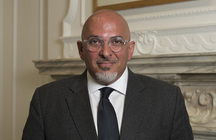
The comments made by Nadhim Zahawi, the Chancellor of the Exchequer, on 29 July 2022.
We know that people are struggling with rising energy prices which is why we have taken action with support over the winter months to help ease the pressure on household budgets.
This £400 off energy bills is part of our £37 billion of help for households, including 8 million of the most vulnerable households receiving £1,200 of direct support to help with the cost of living.
We know there are tough times ahead and we will continue to do everything in our power to help people.
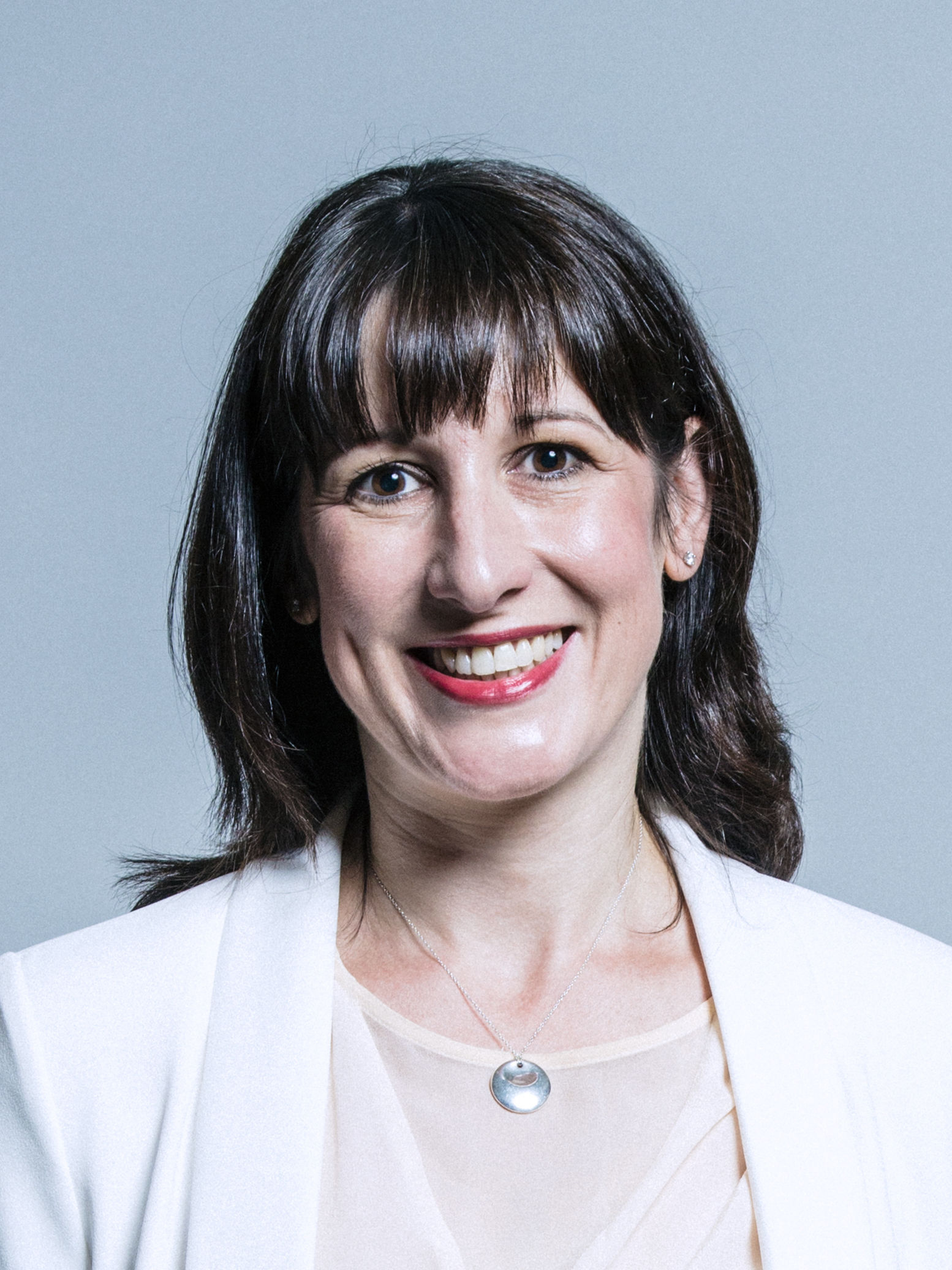
The speech made by Rachel Reeves, the Shadow Chancellor of the Exchequer, on 13 July 2022.
Thank you.
I want to pay tribute to the work of the Economy 2030 Inquiry.
Today’s report strikes not just at the truth that our economic problems are deep-rooted but that they are far more than an abstract question of lines on a chart.
That it is questions of growth, productivity and inequality which underlie the sense that Britain isn’t working for far too many people.
As many of you will know, I’m an economist by trade, spending the best part of a decade at the Bank of England.
But I’m also a politician, so let me spend a few moments on the political situation we find ourselves in.
Because the tables have turned.
On the day the Prime Minister finally announced his intention to stand down, I was in Leeds, meeting business leaders.
What I heard from them was what I have heard repeatedly over recent weeks:
That political instability at the top is a major drag on market confidence – and the last week has shown us something else about this government.
Because any lingering sense that the Conservatives are the party of economic responsibility has been shredded to pieces over the past few days.
Instead of setting out serious plans to help people with the cost of living crisis, just as we hear terrifying estimates of how much energy bills will go up again in October, we are presented with the extraordinary spectacle of a Tory tombola of tax cuts – with no explanation of what public services will be cut, or how else they’d be paid for.
Honesty and integrity matter in politics, not just when it comes to parties and rule breaking but also when it comes to economic policymaking.
The level of unfunded tax cuts being bandied about this week would blow a massive hole in the public finances.
Every single Conservative leadership candidate supported the government’s fiscal rules when they were passed into law in January, but now they are prepared to take a flamethrower to them.
I’ve set out the fiscal rules which will bind the next Labour government.
Rules which I will stick to with iron clad discipline.
Because responsible management of our public finances is the only route to providing the strong foundations we need to reboot our economy, revitalise our public services and re-energise our communities.
They will be paired with an absolute commitment to ending the shocking levels of waste and fraud we’ve seen under this government strengthened by the creation of a new Office of Value for Money, .to make sure every pound of taxpayers’ money is treated with the respect it deserves.
Back in September I said that I am more than happy to take on the Tories when it comes to economic competence because I know we can win. If didn’t know then that they wouldn’t even bother putting up a fight.
It is important that we put this moment in wider context.
Because we face a succession of long-term economic challenges – low growth, flatlining productivity, stagnant wages, and now soaring inflation.
Under the last Labour government, the UK economy grew at an average of 2.1 percent a year, allowing us to deliver the biggest boost to investment in public services in our lifetimes.
But since then, growth has averaged just 1.5 percent a year.
We shouldn’t kid ourselves that this is solely a product of global trends.
The UK had the second lowest productivity growth in the G7 in the 2010s and, as today’s report shows, the UK’s productivity gap with France and Germany has almost trebled since 2008 – equivalent to an extra £3,700 in lost output per person.
Stagnation isn’t inevitable.
Our capacity for innovation, enterprise and old-fashioned hard work remains undiminished.
Britain has huge opportunities if only we have a government that can bring the country together in a spirit of national purpose.
But the only alternative to a high-tax, low-growth, high-inflation economy is a serious plan.
Let me tell you what that involves.
It means addressing our deep-rooted supply-side problems which have contributed to low growth and stalling productivity and are a major factor in the spiralling inflation rates we’re seeing.
In America, Treasury Secretary Janet Yellen has called this approach “modern supply side” economics.
It’s based on the knowledge that government plays a crucial role in bringing about economic growth and tackling the structural challenges that have held us back
My vision for a modern supply side economics for the UK involves three key things.
First, we need to make sure people can realise their potential and play an active role in a growing economy.
For all ministers’ talk of a jobs miracle the reality is we have a hidden worklessness crisis with employment lower than before the pandemic at a time of record vacancies, and a million people missing from the workforce relative to pre-pandemic trends.
That is why my colleague Jonathan Ashworth this week outlined plans from better links between employment and health services, to flexible working, and reforming how our job centres operate to help people return to work where they can.
Fundamental to strengthening our supply of labour is supporting parents to work.
That means urgently addressing the cost and availability of high-quality, affordable and flexible childcare.
Second, we need to support British businesses to thrive – working in partnership to get the economy growing again and provide the good jobs we need.
That will rest on a modern industrial strategy on our plan to use all the tools at government’s disposal to buy, make and sell more in Britain, and on our Climate Investment Pledge – which will help create new markets and leverage in private investment, and drive carbon emissions down.
Today’s Resolution Foundation report argues forcefully – and rightly – that we must play to Britain’s strengths.
We are the second largest exporter of services in the world and pioneers in creative industries.
We should be proud of those strengths.
That is why it is beyond belief that the Tories delivered a Brexit deal that hurts our creative and service industries.
So we will address these flaws building on the deal, ensuring at a minimum we agree the mutual recognition of professional qualifications and negotiate an EU-wide cultural touring arrangement.
And third… we need to support great British entrepreneurs.
Which is why, last month, I announced the launch of a new review, led by a panel including Lord Jim O’Neill to map out how we can build the institutional ecosystem that ensure new and growing businesses have what they need to flourish here in the UK.
This approach – a new, ‘modern supply side’ economics – comprises an ambitious plan for growth grounded in the realities of the world in the 2020s, not in Tory Party fantasy which would result in higher borrowing, increased mortgage rates, and cuts to our schools, hospitals and police.
Labour’s alternative is based on partnership between government and business – working for sustainable growth felt in every part of the country with a serious plan and the determination to deliver it, built on the strong foundations provided by our fiscal rules.
Committed to honesty and integrity, because they are important virtues in public life, and because they are essential to a growing economy with stronger public services and higher living standards for all.
Thank you.
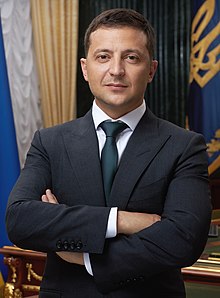
The statement made by Volodymyr Zelenskyy, the President of Ukraine, on 28 July 2022.
Dear Chairman of the Verkhovna Rada of Ukraine,
Dear friend Gitanas,
Dear Mrs. President Roberta Metsola,
Dear deputies, dear government officials,
Dear military,
And all our citizens of Ukraine!
We are citizens of the strongest state in the world. The state that is at war. The state, which at the same time is being reformed. And the state that ensured the most powerful unification of democracies in history.
The state, which on the 155th day of Russia’s full-scale war against us, has the strength to celebrate its day – the Day of Ukrainian Statehood.
We ensured that the values of the free world did not remain mere rhetoric and actually started working to protect civilization. We made the European Union the most united in all the years of its existence, and it is getting stronger thanks to our strength. We ensured that all the tyrants of this world saw the potential of democracy.
This was done by us, the citizens of Ukraine. All of us – military and civilians, diplomats and volunteers, civil servants and businesses, politicians, social leaders and media… Each and every one who worked conscientiously at his and her level for the sake of one thing – for the sake of Ukraine, one’s family and our future.
We, the citizens of a state, which has over a thousand years of history, did it. Over a thousand years of its culture. Over a thousand years of its character – Ukrainian character, unbreakable one. Which endured on our land under the hits of many invaders…
Where have you come, the Russian army blinded by your pathetic ambitions? You’ve come up against us – those who were prepared for this crucial war for independence by dozens and dozens of generations of the Ukrainian people who lived and live here, who fought and fight here, who built and build here and who dreamed and dreams above everything else that there is no someone else’s rule over them and Ukraine. It’s time for this dream to become a reality forever.
This is our time! We will make this dream come true.
We will become not a new legend of heroic resistance, but a state of winners. Not 300 Spartans, worthy of films, books and plays, but the multimillion-strong nation-hero which is worthy of living, worthy of winning and which will teach others in the world how to defend themselves and how to win. We will be remembered not as those who tried, but as those who preserved, strengthened and passed our state to our children so that they could pass it on to their children. A free, strong, modern and efficient state.
We will do it – we, citizens of Ukraine.
Friend Gitanas Nausėda, dear Mr. President! I want to thank you and – in your person – the entire Lithuanian people today, on the Day of our Statehood, for the significant, important, heroic support that Ukraine received. Thank you!
It was not politics for our states – it reflects the equally strong love for freedom of our nations. Nations who walked and keep walking together through European history. Thank you again!
Mrs. Roberta, Mrs. President of the European Parliament! I would like to note your bravery. You visited Kyiv at a time when the invaders’ army was threatening our capital, and you were the first among the heads of EU institutions to do so. At that time we saw our character in your bravery, we saw our person – a person who will always defend the values of Europe and will not betray freedom. I am thankful to you!
I am thankful to all friends and partners of Ukraine – both from large states and from geographically smaller ones yet whose will is not inferior to the will of the largest. I am grateful to everyone who helps Ukrainians destroy evil!
Due to the cruelty of history – after several unfortunate historic turns – our state was not mentioned for some time. Then they’ve been saying that Ukraine is somewhere next to Russia, or is even allegedly a part of it. We know that now they definitely know – Ukraine is the only state in the world that has the bravery to beat Russia. Beat on our land notwithstanding any of its threats.
It is important that we make others fall in love with our Ukrainian indomitability. It is important that we are all a state that functions for the sake of Ukrainian interests and is reckoned with by everyone in the world. It is important that we are a democratic state that is strengthening its institutions even now, especially now – during such a devastating war.
We applied to join the European Union and were granted candidacy with speed and under conditions unprecedented for any other state. This is our development. These are our friends, their help. These are our interests. This is Ukrainian speed – what we became capable of when we freed ourselves from illusions and achieved the greatest national unity in history. Glory to Ukraine!
It is with the same speed that we should come to the beginning of negotiations regarding Ukraine’s membership in the European Union. We will do everything we have to for this. We will synchronize the legislation of Ukraine with the law of the European Union.
A plan for the implementation of all EU regulations and directives as part of the fulfillment of the Association Agreement with the European Union has also been formed. This is actually a joint task for us, for you, dear deputies, and for the Government of our country.
And this corresponds to our new reality. The fact that we have transferred the process of European integration from the sphere of foreign policy to the sphere of domestic policy. This is where real work, real European integration, starts.
Ukraine has always been Europe. Our values have always been European. Our state-building experience of different times is a European experience. And now we have come to the point where our state system is institutionally becoming Europe.
We have started the process of de-oligarchization – a registry is being formed that is ready to put the oligarchs under the power of society.
I have signed a decree on the creation of a competition commission for the selection of candidates for the High Council of Justice, and thanks to this and other steps, we will do everything to ensure that the fundamental judicial reform provides every Ukrainian with access to honest and competent justice.
Today, the new Prosecutor General finalized the appointment of the new head of the Specialized Anticorruption Prosecutor’s Office with his first decision.
And it is an honor for me to announce another very important step now. The European Union has the College of Europe in Bruges and Natolin, which are some of the most prestigious institutions of postgraduate education that prepare professionals to work in institutions of the EU and member states. We are establishing our College of Europe in Ukraine.
A corresponding memorandum has already been signed between the Government of Ukraine and the College of Europe in Natolin. At the first stage, a faculty of European integration will be established in one of the Ukrainian higher education institutions, and later, on its basis, the College of Europe in the framework of the Presidential University will be established.
And although I have been told that this will not be resolved in months, as I have been told many times on other issues, I know that the creation of our College of Europe will not take long. I’m sure it will start working shortly. We already have this experience – to turn into months what was supposed to take years and decades, and into weeks – what was supposed to take months.
Such a College will become not only a professional basis for the European policy of Ukraine as a member of the EU, but also our contribution to the development of European institutions. This is what we, the citizens of Ukraine, are capable of. This is our statehood.
We showed strength in battles and united the world with the best emotions that people have. We fight against the terror of the occupiers, we defend humanity for all nations. We guarantee that the borders of Europe will never again move further west than our eastern state border. And we make our state and public institutions advanced.
And when today, on this Day of Ukrainian Statehood, here, in the Verkhovna Rada of Ukraine, before the eyes of the entire Ukrainian people, I will honor strong people for strong deeds with the Cross of Combat Merit, I want all Ukrainians to feel: we are behind those who defend our country on the battlefield, and behind our backs – the backs of millions of Ukrainians living now – there are those who have been creating Ukrainian history, Ukrainian culture and Ukrainian character for centuries.
We must be worthy of the height of our people, all its generations, and the thousand-year weight of our statehood.
I congratulate you all on the holiday!
I am thankful to our heroes!
Glory to Ukraine!
The statement made by Volodymyr Zelenskyy, the President of Ukraine, on 28 July 2022.
Good health to you, fellow Ukrainians!
Today, we celebrated the Day of Ukrainian Statehood for the first time. And I was happy to see how many people perceived this holiday warmly, congratulated on it, smiled and were proud of Ukraine.
It seems that we should have celebrated such a day for many, many years – it is so logical. But this holiday was established only last year. Well, it is forever now.
During a solemn meeting in the Verkhovna Rada of Ukraine, I presented combat awards to our warriors – “Crosses of Combat Merit”. In particular, to Colonel-General Oleksandr Syrskyi, Commander of the Khortytsia Operational-Strategic Command, Major-General Andriy Kovalchuk, Brigadier-General Andriy Hnatov, Brigadier-General Mykhailo Drapaty, Colonels Yevhen Bulatsyk, Mykola Mishakin and Oleh Fedoriv, Lieutenant-Colonel Pavlo Rozlach, Majors Ruslan Maryshev and Denys Nokhrin, Captain Dmytro Berehovy, Senior Lieutenants Dmytro Linnyk and Anatoliy Tantsyura, Medical Service Lieutenant Yulia Holovna, Sergeant Pavlina Mykolayevych, Staff Sergeant Roman Palamarchuk, Junior Sergeant Oleksandr Rohachevsky, Senior Sailor Olena Zablotska and Private Serhiy Mishchenko. Thank you all for your service and performance in battles!
Today, in the Mariyinsky Palace, I handed out the passports of the citizens of our state to young Ukrainians – boys and girls who were forced to leave their homes due to hostilities, young volunteers, winners of the All-Ukrainian Olympics, children of our warriors who defend Ukraine, children of those who gave life for the independence of the state. An inspiring ceremony that affirms the power of Ukrainian citizenship! The future of Ukraine is in such children, in their sincerity and intelligence. I am proud to be the President of such citizens.
I had the honor to thank one of our greatest friends – Mr. President of Lithuania Gitanas Nausėda for the support and extremely important things that strengthened our defense. President of the European Parliament Roberta Metsola – a principled friend of ours in European structures – addressed the Verkhovna Rada of Ukraine in a special format.
There were important phone conversations. In the morning – with Ecumenical Patriarch Bartholomew. I thanked him for his prayers for Ukraine, for his wishes of victory and peace. In the evening, I spoke with Prime Minister of the Netherlands Mark Rutte – very meaningfully about our future cooperation.
I held another meeting of the Staff of the Supreme Commander-in-Chief. We considered four issues. What can be said publicly now: we analyzed the current state of providing weapons to our defenders, the supply of aid from partners and, in general, the state of implementation of the Defense Plan of Ukraine, which was put into effect on February 24.
Only in the first half of this day, and only in Kyiv, there were four air alarms. The Russian army launched missile attacks on the Kyiv region, Kropyvnytskyi, hit Mykolaiv, continued a series of strategically senseless and brutal onslaughts on Donbas… I thank each and every one who repels this terror.
And I also want to thank the American senators who unanimously approved the resolution calling on the US Department of State to recognize Russia as a state sponsor of terrorism. You can take any day in Ukraine – today or any other after February 24 – to see that no one in the world invests in terrorism more than Russia. This really needs a legal response at the global level. And there is no rational reason why such a reaction should not occur, particularly in the United States.
We continue to accumulate international humanitarian support. I am glad that Demna, the creative director of the Balenciaga fashion house, has become the new ambassador of the United24 state charity platform. He told me that the decision to become a United24 ambassador was related to his personal story, as he had experienced the trauma of being a refugee. Demna will help Ukraine in the direction of reconstruction. Let me remind you that Andriy Shevchenko, Elina Svitolina, Liev Schreiber and Imagine Dragons have already become ambassadors of United24.
We will do everything so that there is no indifference left in the world towards this terrible war that Russia has unleashed against our state and against the very idea of freedom.
We will definitely win!
Congratulations once again on the Day of Ukrainian Statehood!
Glory to Ukraine!