Blog

  • PRESS RELEASE : Two drug suppliers will spend longer in prison – Keith Davis and Andrew Gurney [September 2022]

    PRESS RELEASE : Two drug suppliers will spend longer in prison – Keith Davis and Andrew Gurney [September 2022]

    The press release issued by the Attorney General on 21 September 2022.

    Two prolific drug suppliers will spend longer in prison after their sentences were referred to the Court of Appeal under the Unduly Lenient Sentence scheme by the then Solicitor General Edward Timpson CBE KC MP.

    Keith Davis, 56, from Buckinghamshire, and Andrew Gurney, 51, from Birmingham, were both involved in a professional conspiracy to produce tons of amphetamine sulphate, a class B drug. Davis was also involved in further conspiracies to produce other drugs.

    Both offenders were involved in the construction and operation of a laboratory that was capable of producing 136kg of amphetamine sulphate per week, meaning that around 6 tons of the drug with a wholesale value of £11m could have been produced during the laboratory’s period of operation between June 2020 and April 2021.

    On 10 June 2022, at Kingston upon Thames Crown Court, Davis was sentenced to 5 years and 3 months’ imprisonment for conspiracy to supply and produce a class B drug and conspiracy to transfer criminal property. Gurney was sentenced to 6 years and 3 months’ imprisonment for conspiracy to produce a class B drug and possession of criminal property.

    Following the sentencing, the then Solicitor General referred the sentences of both offenders to the Court of Appeal under the Unduly Lenient Sentence scheme as he felt that they were too low.

    On 21 September 2022, the Court found the sentences of both Davis and Gurney to be unduly lenient. Davis received a new sentence of 10 years’ imprisonment, while Gurney will now also serve a sentence of 10 years’ imprisonment.

    Speaking after the hearing, the newly appointed HM Solicitor General Michael Tomlinson MP said:

    The illegal and dangerous drugs produced and supplied by both Davis and Gurney will have ruined lives, and so I am satisfied with the decision of the Court to order both offenders to serve longer prison terms.

    The new sentences are a better reflection of the seriousness of the crime of drug dealing and supplying at this level.

  • PRESS RELEASE : Russia’s ongoing war of aggression against Ukraine – UK statement – OSCE Forum for Security Cooperation [September 2022]

    PRESS RELEASE : Russia’s ongoing war of aggression against Ukraine – UK statement – OSCE Forum for Security Cooperation [September 2022]

    The press release issued by the Foreign Office on 21 September 2022.

    Ian Stubbs (UK Delegation to the OSCE) says it is unclear whether Russia’s front-line forces have sufficient reserves or adequate morale to withstand another Ukrainian assault.

    Thank you Mr Chair. Over the past weeks, we have seen that the strong will, courage and remarkable military skill of the Armed Forces of Ukraine has not only minimised Russian gains, but also enabled substantive advances through counter attacks in eastern and southern areas of Ukraine.

    As Ukraine continues offensive operations in the north-east of the country, Russian forces have sought to establish a defensive line between the Oskil River and the town of Svatove. This zone is important to Russia, it contains one of the few main resupply routes Russia still controls from the Belgorod region of Russia into Ukraine. Additionally, this line sits along the border of Luhansk Oblast which Russia declared its intent to seize as one of its immediate war aims.

    As Russia digs in and attempts to defend this zone, Ukrainian Forces have now begun to conduct offensive operations east of the Oskil River and reports indicate that they are now in control of Bilohorivka, a village located in the Luhansk oblast. It is increasingly unclear whether Russia’s front-line forces have sufficient reserves or adequate morale to withstand another concerted Ukrainian assault.

    Mr Chair, recent reporting indicates that, despite their purported overall size, sufficient Russian manpower for its invasion of Ukraine remains a key challenge for the Russian military and presents a stark mismatch between ambition and reality. Last July, in this Forum, we discussed the attempts by the Kremlin-linked Russian private military company, Wagner Group, to recruit Russian convicts for service in Ukraine. This has been reinvigorated. A video recently posted online appears to show Wagner owner Yevgeny Prigozhin making a recruitment pitch to prisoners. In the video, Prigozhin emphasises that he is only seeking “fighters for assault units”. In return, prisoners have been offered commutation of their sentences as well as cash incentives.

    Additionally, numerous reports indicate that the Russian military is deploying mobile recruitment offices throughout Russia to attract “contract soldiers” to fight in Ukraine, selling the proposition as “the choice of a real man”. A significant monetary incentive is also being offered to these potential “contract soldiers”.

    It is a telling indication that the Russian leadership has resorted to bribing its citizens and convicts to join the so-called “Special Military Operation” in an attempt to bolster its force levels.

    Separately, Russian military academies are now shortening training courses and bringing cadets’ graduation dates forward. Almost certainly to enable the early release of cadets so that they can be deployed more quickly in support of the Ukraine operation.

    Mr Chair, in sum, the impact of Russia’s manpower challenge has become increasingly severe. The acceleration of officer cadets’ training, the recruitment of “contract soldiers” and Wagner’s demand for assault troops suggests that two of the most critical shortages within the Russian military manning crisis are combat infantry and junior commanders.

    Further to this, President Putin’s decision to impose a partial mobilisation shows he is willing to break his own promises and also sacrifice citizens of Russia for his so-called “Special Military Operation”. This mobilisation is a clear admission that President Putin’s mission is failing. He and his Defence Minister have sent thousands of their own citizens to their deaths, poorly trained, poorly equipped and poorly led. No amount of threats and propaganda can hide the fact that Ukraine is winning this war, the international community are united and Russia is becoming a global pariah.

    Meanwhile, at the FSC, our Russian colleagues would rather we did not focus on Russia’s struggles to resource its illegal war of choice. Last week we saw efforts to distract from these setbacks and shift blame onto others by doubling down on tired old narratives, seeking to justify the unjustifiable, to this Forum and the Russian population.

    These maladroit attempts to obfuscate the truth fool no one. The clear and unambiguous fact is that it is the Russian leadership who decided to conduct its unprovoked and illegal invasion of Ukraine. Russia was warned that such a reckless act would be a strategic mistake, a strategic mistake that would have strategic consequences. The blame for the impact of these consequences lies solely with the Russian leadership and military – no one else.

    Russia’s aggressive actions have brought into sharp focus for many countries what was once unthinkable – Russia’s willingness to invade a sovereign neighbour. In response, the UK, along with others who seek a secure and stable future in the Euro-Atlantic area, is strengthening its defensive capabilities, including though the NATO Defensive Alliance, to protect against Russia’s chosen path of naked aggression.

    Mr Chair, the Kremlin’s conspiracy theories and self-serving propaganda that seek to portray Russia – the aggressor who has unleashed horrendous violence on Ukraine – as the victim, is nothing more than the textbook delusion of an oppressor who has severely miscalculated.

    As our Ukrainian friends have so aptly demonstrated: “Courage is fire, bullying is smoke.”

    Finally Mr Chair, I would note that just yesterday, it was reported that Russia is pressing ahead with plans to carry out a referendum in temporarily controlled areas. Any Russian attempt to hold sham referenda on the sovereign territory of Ukraine would have no legitimacy and will be met with a coordinated response from Ukraine’s partners.

    Mr Chair, the UK stands in solidarity with Ukraine, including through the ongoing provision of military assistance, as Ukrainians defend their homeland and fight for the simple right to a free, peaceful and prosperous future. Thank you.

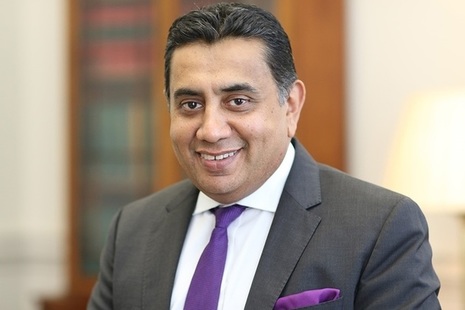
  • Tariq Ahmad – 2022 Statement on Death of Mahsa Amini in Iran

    Tariq Ahmad – 2022 Statement on Death of Mahsa Amini in Iran

    The statement made by Tariq Ahmad, Lord Ahmad, the Foreign Office Minister, on 21 September 2022.

    The death of Mahsa Amini in Iran following her arrest for alleged dress code violations is shocking. We are extremely concerned at reports of serious mistreatment of Ms Amini, and many others, by the security forces.

    We urge the Iranian government to investigate the circumstances of her death with rigour and transparency, and to hold to account anyone responsible.

    We call on Iran to respect the right to peaceful assembly, to exercise restraint and to release unfairly detained protesters. The use of violence in response to the expression of fundamental rights, by women or any other members of Iranian society, is wholly unjustifiable.

  • Alec Shelbrooke – 2022 Speech at the Defence Vehicle Display

    Alec Shelbrooke – 2022 Speech at the Defence Vehicle Display

    The speech made by Alec Shelbrooke, the Defence Procurement Minister, at Millbrook Proving Ground on 21 September 2022.

    It’s my pleasure to welcome you all to this year’s Defence Vehicle Display.

    Especially as this is not just my first DVD but my first official engagement as a defence minister.

    It is an excellent venue to showcase our finest vehicles and equipment.

    I’m not entirely new to Defence, having spent six years as the UK representative to the NATO Parliamentary Assembly and latterly Chairman of the Defence and Security Committee on the assembly.

    So, I am well aware of your many successes as well as some of the challenges you face.

    But the truth is, for all of us here today, this event comes at a time of great change.

    The passing of Her Majesty Queen Elizabeth II has brought with it not merely a sense of deep loss for the wonderful monarch that led by example for more than 70 years.

    But also, a sense of uncertainty, as the values she came to embody – kindness, tolerance, and a belief in democracy – now seem at risk across the world.

    Indeed, even as we speak, Ukrainians are bravely pushing back the invading Russian force, and as we discover the atrocious war crimes committed by the Russians, our resolve must remain resolute.

    If we are to protect our values and safeguard the international order in this new era, we need to strengthen Defence.

    That’s why last year our Integrated Review and Defence Command Paper began transforming our forces to make them more resilient, more persistent and more agile.

    Our Armed Forces are now being instilled with a campaigning mindset, that enables them to be ever present wherever we are needed around the world.

    A mindset epitomised by our new self-sufficient Brigade Combat teams and Ranger Regiments.

    But those documents were also clear that we couldn’t achieve our aims without the very best capability.

    You only need to look to Ukraine and the incredible gains they’ve made in recent weeks to see the difference the most advanced kit can make on the ground.

    I am proud that the UK has played a key role, foremost among European nations, in supporting those efforts, whether it’s our armoured Wolfhounds or Stormer vehicles fitted with anti-air missile launchers.

    And that kind of cutting-edge capability is what we’re all here for today.

    Take a stroll around the exhibition and you will see some of the finest examples of equipment in the land domain on display.

    Not least our Boxers – the cornerstone of our Armoured Brigade Combat Teams – able to swiftly cover long distances no matter the environment nor the weather. And I am pleased to see so many of our partner nations on the Boxer programme here today.

    As well as Boxer, you will find everything from our Challenger 3 main battle tanks in the Off-Road Area, to the latest drones and four-legged robots from our Future Capability Group, and much more besides.

    Whilst we are still learning the lessons from Ukraine, it is clear that we cannot take anything for granted.

    In the coming years, it is vital we continue to build on these successes in order to stay ahead of the curve.

    That’s why we launched the Defence and Security Industrial Strategy, which provided the foundations for a step-change in relations between government, industry and academia.

    What’s crucial about DSIS is the way it finally recognised industry as a strategic capability in its own right.

    The purpose of the Land Industrial Strategy, which was published earlier this year, was to take those partnerships to the next level.

    We’ve seen the success already of our Defence BattleLab in Dorset, which is uniting industry and academia with the facilities they need to test-drive innovative kit.

    And today you will hear about how the Army are taking a major step forward in shaping investment over the next three years in new integrated protection systems for our land forces.

    This funding marks an exciting opportunity for industry to work with our Defence Science and Technology Laboratory to make our vehicles so much stronger and more resilient.

    Whether it’s improved sensors and compact energy storage or new counter munition systems and directed energy weapons.

    This isn’t just a great chance to transform our Army but to drive growth in the economy at the same time.

    The land industrial base already supports around 20,000 jobs across the UK, while our ground combat system exports comprise 7% of total defence exports – which is almost £6 billion over the past 10 years.

    But as more and more nations increase their investment in Defence, there will be more and more opportunities arising to sell kit to trusted allies and increase our share of that £45 billion-plus ground combat systems market.

    This will bring investment back so that we can then reinvest in the continued strengthening of our forces.

    I began by talking about the end of an era. But I firmly believe that if we work together we can not only preserve the mighty values that were the hallmarks of Queen Elizabeth II, but seize the moment to turn this age of challenges into an age of opportunity.

    Speaking of new eras, I’m delighted to hand over to Lieutenant General Sharon Nesmith, newly appointed Deputy Chief of the General Staff.

    Sharon’s appointment comes at a crucial time for Defence and I’m looking forward to hearing her thoughts as someone else who is adjusting to a new role.

    I’m also looking forward to hearing the Director General for Land plans for how DE&S will equip and support our armed forces now and in the future.

    Ladies and Gentlemen, thank you.

  • PRESS RELEASE : World’s first International Plant Health Conference to set global agenda on biosecurity and address challenges in plant health [September 2022]

    PRESS RELEASE : World’s first International Plant Health Conference to set global agenda on biosecurity and address challenges in plant health [September 2022]

    The press release issued by the Department for Environment, Food and Rural Affairs on 21 September 2022.

    The world’s leading authorities on plant health and biosecurity will come together for the world’s first ever International Plant Health Conference (IPHC), co-organised by the Food and Agriculture Organization (FAO) of the United Nations, the Secretariat of the International Plant Protection Convention (IPPC) and Defra.

    More than 500 policymakers, academics and experts from over 74 countries will convene at the Queen Elizabeth II Conference Centre in London to address current and future plant health challenges, including the impacts of climate change, food security, environmental protection, facilitating safe trade, and new pest and disease pathways, such as e-commerce. Held on 21-23 September, delegates will share knowledge and discuss global scientific, technical and regulatory issues, alongside actions to tackle these existential threats to our society, economy and environment.

    The Food and Agriculture Organization (FAO) of the United Nations estimates that each year up to 40 percent of global crop production is lost to plant diseases, costing the agricultural trade over USD 220 billion, whilst invasive insects cause losses of at least USD 70 billion. The risks to food security, international trade, biodiversity and our precious natural environment as a result of current and future outbreaks are all too real. Strengthening global standards of biosecurity, applying the IPPC and international plant health standards, as well as fostering greater international collaboration and raising public awareness and engagement with these challenges will be paramount to safeguard the global economy and environment for generations to come.

    Nicola Spence, United Kingdom Chief Plant Health Officer, said:

    Plant health and biosecurity are fundamental to life on Earth. Plants provide 80 percent of the food we eat and 98 percent of the oxygen we breathe. In a changing climate, ensuring their continued health and vitality will be critical to safeguarding food security, safe international trade and a thriving natural environment for future generations.

    The United Kingdom upholds amongst the highest standards of biosecurity in Europe but there is much more to do to secure our future resilience – here and around the world. I look forward to coming together with international experts from a range of disciplines to discuss how to tackle the varied and mounting challenges facing our precious plant life.

    Jingyuan Xia, Director of Plant Production and Protection Division said:

    Climate change and human actions have altered ecosystems and created new niches where plant pests and diseases can thrive. When combatting pests and diseases, farmers should adopt, and policymakers should encourage the use of, environment-friendly methods such as integrated pest management.

    Applying international plant health standards helps reduce the use of pesticides and poisonous substances, which kill pollinators, natural pest enemies and organisms crucial for a healthy environment. These result in healthier crops with less residues, leading to better human, plant and animal health.’’

    Osama El-Lissy, Secretary, International Plant Protection Convention, said:

    The first International Plant Health Conference is an important advancement of our work in protecting plants from pests and diseases. We are very pleased to partner with Defra who shares FAO’s and IPPC’s common goals. We cannot underestimate the impact that plant pests and diseases have on global food security, livelihoods, the environment and economies.

    To achieve our goals and contribute to food security, protect the environment and facilitate safe trade, I encourage donors and governments to invest in building plant health capacity, research and outreach. Let us keep our collective efforts going and take bold action to sustain the momentum. When we protect plants, we protect our health and our lives.

    Across the three days of the IPHC, plenary sessions will explore a range of scientific, regulatory and technical issues, including:

    • Regional perspectives on tackling ongoing pest and disease outbreaks, including Xylella fastidiosa, fall armyworm and coconut rhinoceros beetle.
    • How to increase the use of electronic phytosanitary certificates to make trade safer, faster and cheaper.
    • The development and adoption of early warning systems for pests and diseases to increase vigilance and preparedness for future outbreaks.

    Moreover, the IPHC aims to promote positive behavioural change through greater public engagement with biosecurity issues. For example, the importance of not bringing home plants, trees, fruit and seeds from overseas, as doing so could inadvertently cause pests, diseases and invasive species to be introduced or to spread in new areas. This aligns with the United Kingdom Government’s long-running ‘Don’t Risk It!’ campaign, which featured on the Animal and Plant Health Agency’s Gold Medal-winning stand at the RHS Chelsea Flower Show 2022.

    Protecting plant health is critical in achieving the United Nations Sustainable Development Goals (SDGs). Healthy plants contribute to achieving food security for all (SDG 2 Zero Hunger) and promotes responsible food consumption and production (SDG 12). Protecting plants helps protect biodiversity and the environment from the impact of plant pests (SDG 13 and 15), and facilitates safe trade, in turn providing decent work and boosting economic growth (SDG 8).

  • PRESS RELEASE : Public call for evidence launched to inform review of ‘wild take’ licensing for falconry and aviculture [September 2022]

    PRESS RELEASE : Public call for evidence launched to inform review of ‘wild take’ licensing for falconry and aviculture [September 2022]

    The press release issued by the Department for Environment, Food and Rural Affairs on 21 September 2022.

    Natural England has today (21 September) launched an eight-week public call for evidence as part of its review into the licensing of ‘wild take’ in England – a practice which involves the taking of birds of prey from the wild for use in falconry and aviculture.

    All wild birds are fully protected under law. However, falconry and aviculture are listed in the legislation as purposes for which licences may be granted in certain circumstances, provided there are no satisfactory alternatives and no negative conservation impacts. Natural England is responsible for determining applications for such licences on behalf of the Environment Secretary. Licences may only be granted on a selective basis and for a small number of birds.

    Falconry and aviculture have been practised in England for centuries and formerly relied on the taking of birds from the wild. However, due to concerns about bird of prey population declines, legal ‘wild take’ for these purposes has not been practised in England for several decades, with the sector relying instead on the use of captive-bred birds.  Now, with wild populations of some bird of prey species recovering – such as the peregrine falcon which has a conservation status of green – there is renewed interest in this activity. This has led to an increase in applications for licences and a need to review the evidence base.

    The review will enable Natural England to streamline its assessment of future ‘wild take’ licence applications and ensure that decisions on whether or not to grant licences are transparent and based on the most up-to-date evidence available. Falconry, aviculture, conservation and welfare groups, academic experts and members of the public are encouraged to submit their views and provide supporting information and evidence on issues including the modern practice of falconry and aviculture in England, potential alternatives to sourcing birds from the wild, the conservation and welfare implications of licensed wild take, and risks associated with the illegal export trade.

    The public call for evidence is open to anyone to respond to and seeks information from all stakeholders with an interest in the future direction of wild take licensing in England. Respondents are asked to provide evidence to support their views where appropriate and to signal if they are willing to be contacted to take part in follow-up interviews and workshops on this topic. You can submit your views here. For further information, please contact wildtakereview@naturalengland.org.uk.

    Natural England is leading this review with support from Defra, working closely with other public bodies/agencies across the UK including APHA, NWCU, and JNCC. Wild take licensing has been temporarily suspended while this review takes place.

  • PRESS RELEASE : Foreign Secretary James Cleverly meets with US Secretary of State Antony Blinken [September 2022]

    PRESS RELEASE : Foreign Secretary James Cleverly meets with US Secretary of State Antony Blinken [September 2022]

    The press release issued by the Foreign Office on 21 September 2022.

    A spokesperson from the Foreign, Commonwealth and Development Office said:

    The Foreign Secretary James Cleverly met US Secretary of State Antony Blinken at the UN’s General Assembly in New York on Tuesday 20 September 2022.

    Both underlined their unwavering, long-term support to Ukraine and to maintaining unity with partners to ensure Putin fails in his illegal war. There must be no impunity for Putin’s hostility.

    The Foreign Secretary also reaffirmed the UK’s commitment to maintaining the rules-based international order, peace and stability across the Taiwan Strait and beyond, as the G7 set out last month.

    He and the Secretary of State discussed the threat to international peace and security posed by Iran’s continued nuclear escalation. Both underlined their commitment to the security of our partners in the Middle East.

    Finally, on the Northern Ireland Protocol, the Foreign Secretary re-iterated the UK’s top priority to protect the Belfast (Good Friday) Agreement and get the Northern Ireland Executive up and running. He explained the Protocol is, however, causing real problems in Northern Ireland which we must fix. The UK’s preference has always been to resolve this through talks.

  • PRESS RELEASE : Foreign Secretary James Cleverly meets with China’s Foreign Minister Wang Yi [September 2022]

    PRESS RELEASE : Foreign Secretary James Cleverly meets with China’s Foreign Minister Wang Yi [September 2022]

    The press release issued by the Foreign Office on 21 September 2022.

    A spokesperson from the Foreign, Commonwealth and Development Office said:

    Foreign Secretary James Cleverly held a first meeting with China’s Foreign Minister Wang Yi at the UN General Assembly on Tuesday 20 September 2022.

    The Foreign Secretary expressed his appreciation for Vice President Wang Qishan’s attendance at Her Late Majesty The Queen’s funeral, and the condolence message from President Xi Jinping.

    Mr Cleverly set out the importance of constructive engagement with China as a fellow P5 member on key issues including foreign and security challenges, climate change and global health, as well a channel to discuss issues where we don’t agree.

    The Foreign Secretary expressed concern over the current tensions in the Taiwan Strait. He also set out the UK’s condemnation of Russia’s unprovoked invasion of Ukraine.

  • PRESS RELEASE : PM meeting with President Gitanas Nauseda [21 September 2022]

    PRESS RELEASE : PM meeting with President Gitanas Nauseda [21 September 2022]

    The press release issued by 10 Downing Street on 21 September 2022.

    The Prime Minister met the President of Lithuania, Gitanas Nauseda, at the UN General Assembly in New York today.

    The leaders agreed on the value of the UK-Lithuania defence relationship and welcomed our close cooperation through NATO and the Joint Expeditionary Force.

    They underscored the importance of likeminded countries working together to counter malign threats, increase our energy independence and end economic coercion by authoritarian states.

    The Prime Minister stressed the UK’s support for Lithuania in its ongoing trade dispute with China.

    The Prime Minister and President Nauseda welcomed the recent news of gains by the Ukrainian Armed Forces. These demonstrate, once again, that Ukraine’s counter-offensive can succeed with proper international – economic and military – support.

  • PRESS RELEASE : Regulator of Social Housing to introduce tenant satisfaction measures from 1 April 2023 [September 2022]

    PRESS RELEASE : Regulator of Social Housing to introduce tenant satisfaction measures from 1 April 2023 [September 2022]

    The press release issued by the Regulator of Social Housing on 21 September 2022.

    Today (21 September 2022) the Regulator of Social Housing published the outcome of its consultation on tenant satisfaction measures. As a result, from 1 April 2023 all registered providers of social housing will need to collect and publish a range of comparable information on areas such as repairs, safety checks and complaints.

    The new TSMs will enable tenants to scrutinise their landlord’s performance, give landlords insight about where they can improve, and provide a source of intelligence to RSH about whether landlords are meeting regulatory standards. They are part of the regulator’s wider programme of work to develop proactive consumer regulation of the social housing sector, following the introduction of draft legislation in Parliament earlier this year.

    The TSM consultation received over 1,000 responses, including around 600 from social housing tenants. The majority of respondents across the sector supported the TSM proposals and considered that the measures would provide rounded information about landlord performance in the sector. RSH has refined the TSMs following feedback to improve some of the measures and increase the transparency they will provide about landlords’ performance.

    Alongside its decisions RSH has published the technical requirements providers will need to follow on the management information and tenant perception surveys. These requirements aim to strike a balance between ensuring consistency between providers and allowing flexibility to maximise tenant participation in surveys and ensure the measures are deliverable across the wide range of social housing providers.

    The new requirements apply to both housing associations and local authorities and will come into force through the new Tenant Satisfaction Measures Standard. All registered providers will need to collect TSM data. Landlords with more than 1,000 homes will have to submit their data to RSH every year. In response to consultation feedback, RSH will carry out a voluntary data submission pilot with smaller providers.

    Fiona MacGregor, Chief Executive of RSH, said:

    The launch of TSMs is an important step in the move to proactive consumer regulation. The new measures will provide a valuable source of data to help ensure social housing landlords provide safe homes of a decent standard and a quality service to tenants.

    Local authorities and housing associations now need to make sure they have the systems and processes in place to start collecting data from April 2023.