Blog

  • PRESS RELEASE : New actions to protect Welsh-speaking communities

    PRESS RELEASE : New actions to protect Welsh-speaking communities

    The press release issued by the Welsh Government on 3 August 2022.

    The Minister for Education and Welsh Language will today provide a preview of the actions which are part of the Welsh Government’s plans to safeguard communities where Welsh is the main language and where there are large numbers of second homes.

    The interventions include encouraging homeowners to give local people a fair chance when selling their property. The Minister will also announce a new Commission for Welsh-speaking Communities, Comisiwn Cymunedau Cymraeg, which will bring together experts to make policy recommendations to protect and strengthen Cymraeg as a community language.

    The Minister will discuss these actions today at the National Eisteddfod in Tregaron, ahead of the publication of the final Welsh Language Community Housing Plan (WLCHP) in the autumn.

    The Minister will share details of the proposed schemes including a voluntary ‘fair chance scheme’, to help sellers make decisions about how they sell property, by allowing properties to be marketed locally only, for a fixed period. The Welsh Government will also work with organisations such as estate agents to address the housing needs of those communities.

    The WLCHP will also include support for social enterprises and community housing co-operatives, as well as steps to protect Welsh place names.

    As part of the Programme for Government and Co-operation Agreement commitments to tackle the negative impact second homes and a lack of affordable housing can have, the Welsh Government has extended the discretionary powers for local authorities to increase council tax on second and long-term empty homes by up to 300%.

    Last month, the Welsh Government and Plaid Cymru announced further plans for new planning laws, a licensing scheme for visitor accommodation and proposals to change land transaction tax in areas with large numbers of second homes, as part of their Co-operation Agreement.

    Jeremy Miles said:

    “For the Welsh language to thrive, we need sustainable communities and good job opportunities in the areas where it is widely spoken.

    Through our Welsh Language Communities Housing Plan, and the Commission for Welsh-speaking Communities we’re announcing today, we and our partners will work together with communities where Welsh is the main language and help them develop plans which protect their identity and our language.

    This isn’t about imposing solutions, so everything we do will be in line with local communities’ aspirations.

    The Commission will help us develop future policies to sustain the language in those communities traditionally considered its heartlands. This isn’t about setting up a new body, it’s a group of experts in a range of fields who will give us a completely candid view about how the economy, policy decisions and demographics are affecting the Welsh language.

    I’ve said many times that the Cymraeg belongs to us all, as does the responsibility for its future. We’ll have to be brave and tackle things together that might be difficult. I’m sure that some of the things the Commission will tell us will be challenging, but that’s important – that’s what will help us find the most effective answers!”

    Dr Simon Brooks, who previously published Second homes: developing new policies in Wales for the Welsh Government, will chair the Commission.

    The members of the Commission are:

    Talat Chaudhri
    Lowri Cunnington Wynn
    Cynog Dafis
    Meinir Ebbsworth
    Delyth Evans
    Dafydd Gruffydd
    Myfanwy Jones
    Shan Lloyd Williams
    Cris Tomos
    Rhys Tudur

    Dr Brooks said:

    “As a Commission, we’ll examine the linguistic reality of Welsh-speaking communities today in order to make policy recommendations which will help safeguard them for future generations.

    The Commission will produce a comprehensive report, bridging policy areas from education to the economy. By looking at these together, we want to help develop answers to the challenges facing our Welsh-speaking communities as a whole. Cymraeg belongs to us all and developing Welsh-speaking communities is crucial to its future as a living language.”

  • PRESS RELEASE : Rural areas and poorer people suffering from ‘sub-par, unreliable broadband’ – Senedd Committee

    PRESS RELEASE : Rural areas and poorer people suffering from ‘sub-par, unreliable broadband’ – Senedd Committee

    The press release issued by the Welsh Government on 1 August 2022.

    The Senedd’s Climate Change, Environment and Infrastructure Committee is warning that people in Wales are being left behind with ‘sub-par, unreliable broadband’ that risks ‘excluding people from modern life’ due to barriers in receiving high-quality superfast internet.

    The Committee’s latest report examined broadband connectivity in Wales and found that, despite improvements over the last few years, many people are still unable to access adequate internet speeds.

    Although superfast broadband availability in Wales is now at 96%, figures from Ofcom show that take-up in Wales is only around 63%.

    Mountainous Wales

    The report found that the provision of superfast broadband across Wales was uneven, with urban areas being the first to benefit from better connectivity but many rural areas still being unable to access a decent internet connection.

    Ofcom estimates that around 15,000 premises cannot get a broadband service of at least 10Mbps download speed and 1Mbps upload speed from fixed or fixed wireless networks in Wales.

    The UK Government’s Project Gigabit is a £5bn project designed to address this issue across the UK with the ‘Gigabit Broadband Voucher Scheme’ created to support rural areas with the installation costs of high-speed broadband.

    But because of the mountainous Welsh topography there is a higher proportion of difficult-to-reach properties in Wales compared to other parts of the UK.

    And according to Lee Waters MS, the Deputy Minister for Climate Change who gave evidence to the Committee, “UK funding has failed to reflect the true cost of deploying in the Welsh landscape”. To address this issue, and despite it being a non-devolved area, the Welsh Government provided top-up funding to the UK Government scheme to “plug the gap” in Wales.

    But from 31 March 2022, the Welsh Government stopped topping-up the gigabit voucher scheme, which has led the Committee to call for the UK Government to raise the amount of support available for individuals and businesses to address the particular needs in Wales.

    The report warned that without meaningful engagement between governments there is nothing to prevent the UK administration creating a scheme that again does not meet the needs of Wales.

    Connections and Cost

    Since March 2020, households that cannot get a download speed of 10 Mbps and an upload speed of 1 Mbps, can request an upgraded connection from BT under the Universal Service Obligation (USO).

    This obliges BT to improve the connection for free if the installation cost is estimated to be below £3,400 for the customer. But if the cost exceeds the £3,400 cap, the customer must pay the excess.

    The Committee expressed serious concerns that this would simply be unaffordable to many people -particularly in the middle of a cost-of-living crisis – and urged the Welsh Government to discuss raising the level of the cap with the UK Government.

    And according to Ofcom, there are an estimated 7,000 ‘hard to reach’ locations where, even with the USO, access to a stable broadband connection wouldn’t be guaranteed.

    Inclusion and Affordability

    The Committee also heard that one of the many reasons for the lack of take-up of superfast broadband by people was cost. Many internet providers offer ‘social tariff’ packages which are only available to people receiving government benefits which allows them to access cheaper internet deals.

    But the report highlights the worrying fact that only 1.2% of those eligible for a ‘social tariff’ had accessed the scheme, potentially leaving thousands of low-income households paying over the odds for their broadband.

    The Committee proposes that action should be taken to increase the number of households enrolling on ‘social tariffs’ by making the process clearer and simpler. Lack of awareness of ‘social tariffs’ was noted as a significant issue with the Committee proposing that their promotion must be improved and consideration should even be given to the automatic enrolment of those eligible.

    In light of the severe cost-of-living crisis, the report warns that there is a risk that superfast broadband access will become a luxury that many will not be able to afford.

    LLyr Gruffydd MS, Chair of the Climate Change, Environment and Infrastructure Committee, said:

    “It is extremely disappointing to hear of many people in Wales still unable to access superfast broadband. Especially since the pandemic, more and more of our lives are lived online, and it’s simply unfair that many in rural areas are expected to put-up with sub-par, unreliable broadband. Everyone in Wales, not just those in urban areas, should be able to access a high-speed internet connection – this shouldn’t be a luxury.

    Many of the issues we examined are non-devolved so we urge the Welsh Government to take on board our recommendations and present the solutions in this report to the UK Government – or the failures we see in this report will be repeated.

    “With living costs rising sharply, the UK Government must urgently look at raising the Universal Service Obligation cap and improving the take-up of broadband services offering a ‘social tariff’. If things don’t change, we will undoubtedly see more people excluded from modern life.”

  • PRESS RELEASE : We must do better to prevent drowning deaths – Senedd report

    PRESS RELEASE : We must do better to prevent drowning deaths – Senedd report

    The press release issued by the Welsh Government on 2 August 2022.

    Clearer leadership is needed from the Welsh Government to prevent drowning deaths in Wales, according to a Senedd report.

    The Petitions Committee has investigated water safety and drowning prevention in Wales after a campaign by Leeanne Bartley from Ruthin saw over 11,000 people sign her petition.

    Leeanne’s son, Mark Allen, died after jumping into cold water at Gorton Reservoir, Manchester, in June 2018. Since then, she has campaigned tirelessly for better water safety measures in Wales and across the UK, including the petitions calling for rescue equipment to be mandatory.

    The report found that drowning prevention measures are hindered by a lack of coordination from the Welsh Government. In fact, the issue of water safety does not fall under one specific minister’s responsibility and straddles various Government departments.

    The Committee has recommended a package of measures to increase awareness of the dangers posed by water and to improve water safety – including allocating a specific minister to lead this work. That would help campaigners deliver one consistent educational message across all of Wales – which experts say is crucial for preventing drowning deaths.

    During the seven months the Committee was investigating the issue, at least three young people died from drowning in Wales. It shows that action is needed urgently, says Committee Chair Jack Sargeant MS:

    “During our inquiry, we heard from the petitioner and other families who have lost loved ones to drowning. We’ve heard about the devastating impact such a tragedy has had on their lives, but also of their steely determination to raise awareness and prevent future loss of life through drowning.

    “Their work is already saving lives – but with clear leadership and coordination from Welsh Government, these campaigns can reach even more people and ultimately, prevent deaths.

    “We must do better as a country, and I hope this report will give a boost to all those working hard to do so.”

    The inquiry heard evidence from Chris Cousens, Chair of Water Safety Wales. He said:

    “Around 50 people a year lose their lives to water-related fatalities in Wales every year. The rate of accidental drowning per head of population here in Wales is around double that of the UK as a whole. The number of accidental drowning deaths, sadly, is also higher than the number of deaths in fires, for example, motorcycle accidents and cycling—three other very high-profile causes of accidental deaths.”

    Water Safety Wales brings together individuals and organisations with an interest in water safety and drowning prevention. It worked with the Welsh Government to develop the Wales Drowning Prevention Strategy 2020-2026, with the aim to reduce the number of water-related deaths in Wales reduced to zero.

    However, it was noted in the inquiry that this partnership with the Welsh Government needs to be formalised and funding arrangements secured to enable Water Safety Wales to deliver this important work.

    The Committee heard about the challenges of installing, maintaining and using throw lines effectively and recognised that they are one of a range of safety measures to consider to mitigate the risks identified in water, and can in some circumstances give a false sense of security.

    Leeanne Bartley says she welcomes the report and its recommendations:

    “The report is even more than we could have asked for when we started the petition – I’m so thankful to the Senedd for hearing our story and listening to us and the other families that have been affected by drowning deaths.

    “But there is still work to be done and I will carry on campaigning – I hope Welsh Government takes these recommendations on board and continues to work with us on water safety.”

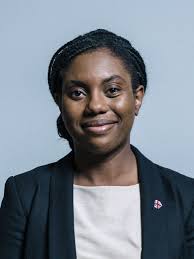
  • Kemi Badenoch – 2022 Comments on Housing

    Kemi Badenoch – 2022 Comments on Housing

    The comments made by Kemi Badenoch as part of her leadership bid, published by the Telegraph as part of a longer article on 16 July 2022.

    We need new homes in the right places. We need them to spread prosperity, give the next generation a stake in the future and allow families to grow. We also need to recognise that pressure on housing comes from increased migration and from families breaking up. Solving these interlinked questions needs honesty and rigour.

    On housing, we’ll never get the homes we need where we need them if we insist on ever-higher inflexible top-down housing targets. We need to bring people with us by delivering infrastructure first and insisting new homes are built to a higher standard and look more beautiful. We need to break the stranglehold of the identikit cartel of land banking house builders.

    But we need to consider the demand side of housing, not just the supply side. People – rightly – recognise that building more homes while doing nothing to bring immigration down is like running up the down escalator. We’ll never get to where we need to with that approach, and we won’t persuade people to accept more homes if it is being done due to immigration failures. If we can bring immigration down to a sustainable level, we can then protect green spaces for our children and precious agricultural land.

  • Kemi Badenoch – 2017 Maiden Speech in the House of Commons

    Kemi Badenoch – 2017 Maiden Speech in the House of Commons

    The maiden speech made by Kemi Badenoch, the Conservative MP for Saffron Walden, in the House of Commons on 19 July 2017.

    It is with humility and excitement that I make my maiden speech representing the constituency of Saffron Walden, the jewel of Essex. I am honoured to serve the people of this beautiful constituency and hope I can repay the faith they have placed in me.

    I am also burdened by the weight of expectation. You see, Madam Deputy Speaker, Saffron Walden has not had a maiden speech since Rab Butler’s in 1929. He held three of the great offices of state, but I am most proud that, as a Conservative Minister, he introduced the Education Act 1944, which gave every British child a statutory right to free secondary education.

    I also pay tribute to my most recent predecessor, the right hon. Sir Alan Haselhurst, who served Saffron Walden with distinction for 40 years. He is well known to many of us here as a former Deputy Speaker and one of the kindest Members to grace this House—the ultimate gentleman. He is much loved in the constituency, and I am forever grateful to him for being a brilliant mentor and helping every day of the campaign, come rain or shine. I am still bowled over whenever I remember that Sir Alan became a Member of Parliament 10 years before I was born. It has been a joy to follow in his footsteps—except when we were out delivering leaflets and I found myself consistently outrun by an 80-year-old man.

    Like you, Madam Deputy Speaker, I am proud to be an Essex girl. Saffron Walden is a great place and was judged the best rural place to live by no less than the Daily Mail. After seven years of Conservative-led Government, unemployment is at an all-time low of 0.7%, and 99% of children go to a good or outstanding primary or secondary school. We also boast the UK’s oldest land college in Writtle.

    The constituency covers rural Chelmsford and the major settlements of Thaxted, Great Dunmow and the medieval market town of Saffron Walden itself. It was called Saffron Walden because of its large saffron crop. The spice was worth its weight in gold and was used in medicine, in perfume and even as an aphrodisiac. Like the saffron crocus, I am not a native of the great county of Essex—I come from more exotic climes. While I may not have all the attributes of this versatile flower, I hope that I will equally take root in the area, bring prosperity to the local people and add some colour and spice to this Chamber.

    Much has changed since then, but more change is needed—change to the rickety network on which mobile phones operate, change to the inadequate broadband service that has left parts of the constituency with little access to the outside world, and change to the railway line that has become synonymous with being late for work. We cannot claim to offer opportunities to rural areas if basic infrastructure is not provided. My constituents are more likely to get to Spain faster than London, because we have Stansted, the country’s fourth-largest airport. It has brought jobs—and noise—and growth to the area on a huge scale, and has cemented my constituency’s position as the epicentre of business, travel and wealth in Essex.

    I am often inexplicably confused with a member of the Labour party—I cannot think why. I am a Conservative. To all intents and purposes, I am a first-generation immigrant. I was born in Wimbledon, but I grew up in Nigeria. I chose to make the United Kingdom my home. Growing up in Nigeria I saw real poverty—I experienced it, including living without electricity and doing my homework by candlelight, because the state electricity board could not provide power, and fetching water in heavy, rusty buckets from a borehole a mile away, because the nationalised water company could not get water out of the taps. Unlike many colleagues born since 1980, I was unlucky enough to live under socialist policies. It is not something I would wish on anyone, and it is just one of the reasons why I am a Conservative. I believe that the state should provide social security, but it must also provide a means for people to lift themselves out of poverty.

    As a woman of African origin, I also believe that there is a lot that Africa can teach us. Sound money is not just a catchy phrase. The lesson of Zimbabwe is salient for us today. Money cannot be printed and redistribution cannot be successful without first creating wealth. Edmund Burke said that society is a contract between the dead, the living and those yet to be born. I say to colleagues who are wavering on tackling the debt and the deficit, “Hold your nerve.” This is part of that contract that we owe to our descendants. To leave our children carrying the burdens of our debt and excesses is morally wrong.

    I believe in free markets and free trade. But there is more to conservatism than economic liberalism—there is respect for the rule of law; personal responsibility; freedom of speech and of association; and opportunity through meritocracy. Those freedoms are being subtly eroded in an era when emotion and feeling are prized above reason and logic. It is those freedoms that I will seek to defend during my time in this House.

    There are few countries in the world where you can go in one generation from immigrant to parliamentarian. Michael Howard spoke of the British dream—people choosing this country because of its tolerance and its opportunity. It is a land where a girl from Nigeria can move, aged 16, be accepted as British and have the great honour of representing Saffron Walden.

    There are some in this country, and this Chamber, who seek to denigrate the traditions of this Parliament, portraying this House as a bastion of privilege and class, that “reeks of the establishment”, as someone said. It is no coincidence that those who seek to undermine the institutions of this island—Parliament, monarchy, Church and family—also propagate a world view that sees Britain, and the values we hold dear, as a force for bad in the world. Growing up in Nigeria, the view was rather different. The UK was a beacon, a shining light, a promise of a better life.

    Often we hear the radical reformer John Bright misquoted as saying that the House of Commons is the mother of all Parliaments. What he actually said was that this country is the mother of all Parliaments. Our political institutions may not always be held in high esteem, but I believe that politics is a mirror held up to society. Yes, it can sometimes be unedifying. Yes, we see human weakness on display. But it also embodies much that is great in our country. When I walk down these corridors and stand in this Chamber, once graced by my heroes, Winston Churchill, Airey Neave and Margaret Thatcher, I am filled with nothing but awe, respect and pride for all that it stands for.

    As Woody Allen said about sex, “If it’s not messy, you’re not doing it right.” The same is true of democracy. It is not always predictable; its results are not always elegant; it can throw up results that no one expected—but we adjust. The British Parliament always has adjusted, and that is why it is the oldest in the world: it takes its lead from the British people.

    We live in difficult times and face historic challenges. People are rightly concerned about what Brexit will mean for the country, for their jobs and for their families. But I do not believe that winter is coming. I believe that the vote for Brexit was the greatest ever vote of confidence in the project of the United Kingdom: that vision of a global Britain to which the Minister referred. It is a project that, as a young African girl, I dreamed about becoming part of. As a British woman, I now have the great honour of delivering that project for my constituents in the greatest Parliament on earth.

  • Kemi Badenoch – 2021 Comments on the National Windrush Monument

    Kemi Badenoch – 2021 Comments on the National Windrush Monument

    The comments made by Kemi Badenoch, the Communities Minister, on 15 October 2021.

    I want to congratulate Basil Watson on being selected to design the National Windrush Monument. The government is very pleased to be sponsoring this commemoration.

    His design will celebrate and honour the contribution of the Windrush generation, right at the centre of our nation’s capital.

    The Monument will become a permanent place of reflection and inspiration for all, reminding us of our shared history and heritage.

  • Kemi Badenoch – 2020 Speech on International Men’s Day

    Kemi Badenoch – 2020 Speech on International Men’s Day

    The speech made by Kemi Badenoch, the then Minister for Equalities, in the House of Commons on 19 November 2020.

    Thank you Madam Deputy Speaker I am pleased to be standing at the Dispatch Box on International Men’s Day. I thank the Backbench Business Committee for granting a debate on this important subject and I thank all the hon. and right hon. Members who have made heartfelt contributions today.

    I also welcome the member for Warrington South to her position as shadow Minister.

    International Men’s Day is an opportunity to celebrate men and boys in all their diversity, and to shine a spotlight on the issues which affect men, from shared parenting to health and wellbeing.

    This Government is committed to levelling-up opportunity and ensuring fairness for all.

    As Minister for Equalities, I want to ensure no one is left behind, regardless of their sex or background. Both men and women in the UK benefit from us having some of the strongest equality legislation in the world. The Equality Hub will consider sex along with factors like race, sexual orientation, geography and socio-economic background so we can ensure we are levelling up across the country.

    This will support data driven policy to reduce disparity across the Union and make the UK the best place to live, work and grow a business.

    Levelling up is the mission of this government and every one of us should be free and able to fulfil our potential. The Member for Carshalton and Wallington mentioned the Coronavirus, which we all know is the biggest challenge the UK has faced in decades – and we are not alone. All over the world we are seeing the devastating impact of this disease.

    We know that men have been disproportionately impacted by Covid, and that after age, sex is the second largest single risk factor.

    However, not all men are the same, and not all men will be affected in the same way. My report into Covid disparities showed, for example that the job you do, where you live, who you live with and your underlying health, all make a huge difference to your risk of Covid.

    We recognise how important it is that each individual understands how different factors and characteristics combine to influence their personal risk. The Chief Medical Officer commissioned an expert group to develop a risk model to do just this, and DHSC are working at pace on how to apply the model.

    As well as the impact on lives, Covid has had a huge impact on Britain’s livelihoods. Those livelihoods which give us pride and a way to support our families.

    Because, of course, men and women do not exist separately and in isolation – we are part of families, businesses, and part of our communities. Which is why our support is targeted at those most in need and looks at how issues are impacting individuals not homogenous groups, so that we ensure a fair recovery for everyone.

    As a Treasury Minister, I am particularly proud of our comprehensive package to protect jobs, which the IMF highlighted as ‘one of the best examples of coordinated action globally.’

    We have given unprecedented support, as this house has heard time and time again, through the Coronavirus Job Retention Scheme (CJRS) and the Self-employment Income Support Scheme (SEISS), to ensure people can get the support they need, especially those in sectors most affected by COVID-19.

    The members for Watford, Ipswich and West Bromwich East spoke passionately about mental health.

    The challenges this year have no doubt taken their toll on many people’s mental wellbeing.

    It is very understandable during these uncertain and unusual times to be experiencing distress or anxiety or to be feeling low – and we know this affects many men. These are common reactions to the difficult situation we all face. Anyone experiencing distress, anxiety, or feeling low, can visit the Every Mind Matters website and GOV.UK for advice and tailored, practical steps to support wellbeing and manage mental health during this pandemic.

    We know that some men are less likely than women to seek help with their mental health and some can be reluctant to engage with health and other support services. This is why I say to every man that the NHS is open for business. We really want to stress this.

    I would urge any man who is struggling to speak to a GP and seek out mental health support delivered by charities or the NHS. Services are still operating and it’s better to get help early.

    The NHS this week launched its ‘Help Us Help You’ campaign – a major campaign to encourage people who may be struggling with common mental health illnesses to come forward for help through NHS talking therapies, also known as Improving Access to Psychological Therapies, which are a confidential service run by fully trained experts.

    I would also like to remind people that the ‘Help Us Help You’ campaigns have sought to increase people coming forward with worrying cancer symptoms, including for testicular cancer and prostate cancer.

    I know the member for Bracknell spoke movingly about his friend who tragically lost his life and urged men to seek the help that they need, as did the member for Glasgow East.

    The current campaign will run throughout the winter to ensure that men feel able to come forward and get tested and treated early.

    I believe the honourable lady asked about rough sleeping. I just wanted to answer her question on what the Government is doing.

    On the 18 July we launched the Next Steps Accommodation Programme which makes funding available to support Local Authorities and their partners to prevent previous rough sleepers from returning to the streets. The programme comprises £161M to deliver 3,300 units of longer-term, move on accommodation in 2020/21. And £105M to pay for immediate support to ensure that people do not return to the streets.

    On 17 September we announced local authority allocations for the short-term funding aspect of this programme. £91.5M was allocated to 274 councils in England to help vulnerable people housed during the pandemic. And recently, on 29 October we announced allocations to local partners to deliver longer-term move on accommodation. More than 3,300 new long term homes for rough sleepers across the country have been approved and this is backed by Government investment of more than £150M. So as she can see there is quite a lot that is being done on this issue which we take very, very seriously indeed.

    Madame deputy Speaker I would like to close by taking a moment to celebrate the contribution men and boys make to our society. The member for Rother Valley talked about men and boys in his constituency feeling like they have been forgotten. It therefore seems opportune to celebrate our fathers and our sons, our brothers and our friends and indeed our colleagues this week, and the progress we have made in supporting them under this Government.

    For example since 2010 we have seen the introduction of Shared Parental Leave, allowing mothers and fathers to share the highs and indeed the lows of caring for their new babies.

    This Government is also committed to making it easier for fathers to take Paternity Leave, as set out in our 2019 Manifesto. And subject to further consultation, we are committed to introducing measures to make flexible working the default for men and women, unless employers have good reason not to.

    As someone who only came back from maternity leave this year myself, I can tell you Madam Deputy Speaker that my husband was able to take paternity leave and it made my return to work much easier, having two ministerial responsibilities as well as my work in my constituency. So this is a policy that I’m very very passionate about.

    Phillip Davies MP:

    Would the member also look to make it easier for absent fathers to actually have access to their children and to speed up the process through the family courts, which is often a tortuous one, which causes so much heartache for so many fathers?

    Kemi Badenoch MP:

    My honourable friend is right and yes, this is something I think we can look into. I also want to recognise the work that he has done to raise awareness of fathers who feel a sense of alienation from losing access to their children. He will be pleased to see that the statutory guidance of the Domestic Violence Bill currently recognises parental alienation as an example of coercive and controlling behaviour – no doubt in part due to his representations on this issue.

    I would like to thank him and my honourable friend for Mansfield again for their tireless work on these issues, and for securing this debate today.

    I therefore pay tribute to my honourable friend, the member for Mansfield, for his vigorous campaign to support boys from white working-class backgrounds.

    He raised many issues about the way the Equality Act is interpreted, as protecting groups when actually what it protects is characteristics which we all have. I think some of his questions, especially about whether we should have a Minister for Women, are above my pay grade! But I think this is something that I will definitely raise with the Minister for Women and Equalities and with the Prime Minister on his behalf as well.

    I want to assure him that the Commission I sponsor on race and ethnic disparities is currently studying how we improve outcomes for these boys in the towns and regions of our country.

    I’d also like to pay tribute to the Equalities Whip, the member for Finchley and Golders Green, who rarely gets the chance to speak these days as a whip, for his successful campaign to get the HPV cancer jab given to men and boys. We’re very proud of the work that he has done.

    I am honoured to have taken part in today’s debate on International Men’s Day to mark the progress we have made, and to highlight what more needs to be done.

  • Kemi Badenoch – 2020 Speech to the Natural Capital Committee

    Kemi Badenoch – 2020 Speech to the Natural Capital Committee

    The speech made by Kemi Badenoch, the then Exchequer Secretary to the Treasury, on 3 November 2020.

    Good morning everyone.

    First, may I say that it’s been a real pleasure to hear from the experts on the Natural Capital Committee today, including Dieter Helm.

    I’ve only been Exchequer Secretary for the past six months but I know the NCC’s work has proven to be invaluable to my predecessors.

    And I wanted to start off by saying a big thank you for all its efforts over the past decade.

    While my role is focused on developing economic policy for this country, increasingly it also involves fighting climate change and safeguarding the environment.

    And I believe a natural capital approach is going to be integral to achieving those goals. That’s going to be particularly the case, as we start our country’s recovery from Covid-19.

    Firstly, because the scientific evidence increasingly points to the fact that biodiversity loss puts us at greater risk of future pandemics.

    Secondly, because we need to find new ways of driving clean growth – so we can build back better, greener and stronger after the pandemic.

    Today I’m going to briefly outline where this government sees the economic opportunities from preserving and protecting our natural capital. Before turning to how we plan to seize them.

    But first I wanted to take this opportunity to talk about some of the NCC’s achievements over the past years.

    As you might know, its advice was instrumental in the development of the Government’s 25-Year Environment Plan, which includes a vision for protecting and improving our natural capital.

    This is going to mark a real step change in the way we safeguard our natural resources.

    It’s down to Dieter and the Committee’s efforts, that very soon, that vision will be given a statutory footing through the Environment Bill.

    But as well as helping to leave a better world for our children and grandchildren, the NCC has made an enormous contribution to instilling natural capital principles into present day decision-making, including in areas of economic policy.

    One of the best illustrations of this is the Committee’s updates to our 2018 Green Book.

    For those of you who aren’t closely involved in government – the Green Book gives our officials a framework against which they can evaluate the costs and benefits of a policy.

    And the NCC’s work has given officials the tools to do this more thoroughly when it comes to policies relating to natural capital.

    But undoubtedly one of the NCC’s biggest achievements has been deepening our understanding of how the environment supports our economy. We’ve seen a fantastic example of that in the way the NCC has helped the Office for National Statistics create some of the most complete natural capital accounts of any country.

    These figures place an economic value on everything from our fossil fuels and agricultural biomass, to the impact that living near a green space has on house prices.

    You don’t have to be a fan of spreadsheets to find these ONS reports fascinating reading. So do take a look if you have a moment.

    However, a natural capital approach is not just about attributing a financial value to rivers, forests and peatlands – although this is a good start.

    It’s about recognising that these resources must be intertwined in our financial system and not stand distinct from it.

    It’s about continually improving our policies so that they drive sustainable growth.

    And it’s about understanding that protecting the environment is integral to both a thriving economy and society for people today and generations tomorrow.

    I think a good example of that point is the value of the carbon capture service provided by the world’s trees.

    According to a report by the Paulson Institute and the Nature Conservancy, that figure could be as much as $262 billion a year.

    That’s a number that left me astonished.

    It underlines that if we fail to protect our forests, we’ll not only find it far harder to prevent global warming… We’ll also end up spending vast amounts more on tackling greenhouse gas emissions. Money that could be spent on schools, hospitals, transport infrastructure or any number of things.

    The chance to become both green and prosperous, is an enticing vision.

    But to echo Dieter’s words in the NCC’s most recent report, it ‘won’t happen by default’.

    That’s why the need to generate green jobs and build clean industries is at the very heart of this government’s recovery agenda.

    You saw a sign of that commitment when last month the Prime Minister announced our plans for a green industrial revolution.

    And over the past months, we’ve made some important progress towards not only safeguarding our natural capital but maximising its economic potential.

    As the Chancellor announced earlier this year, we’re using the £640 million Nature for Climate Fund, to turn an area larger than Birmingham into forest and to restore 35,000 acres of peatland.

    While we’ve also launched our £40m Green Recovery Challenge Fund, to support environmental charities deliver natural capital improvement projects across England.

    This money will not only protect the natural environment for years to come…

    It will generate and protect thousands of jobs, both in more traditional areas such as forestry and timber production and in new green industries of the future.

    We’re not just taking action, we’re thinking carefully about how it should be best focused.

    Just as nature’s processes don’t respect national borders, the government recognises that biodiversity loss is a global problem that requires coordinated action between countries.

    That’s why at the recent UN Biodiversity Summit, the Prime Minister committed to protect 30 per cent of the UK’s land within the next decade.

    And it’s why we will shortly publish Professor Sir Partha Dasgupta’s independent, global review on the economics of biodiversity.

    This important report will not only provide an opportunity to help us better understand how to engage sustainably with nature, while enhancing our collective wealth and well-being…

    It will allow the UK to demonstrate thought leadership on the global stage, just as we did through the ground-breaking Stern Review into the economics of climate change, nearly 15 years ago.

    So, as I’ve outlined, we’re making progress on embedding a natural capital approach.

    But I’m all too aware that government investment, regulation and pledges can only take us so far.

    We also need to encourage the private sector to join the cause.

    There’s already some great initiatives underway.

    HSBC is planning to launch a natural capital asset management company.

    While increasing numbers of landowners are signing up to the Woodland Carbon Code, which aims to build a market for carbon credits from British woodland.

    But we want to achieve even more. That’s particularly the case in areas like water quality, biodiversity and carbon capture.

    We’ve recently taken a major step forward on this front, with the launch of a £10 million fund to help environmental projects generate revenue and attract private sector investment.

    And I know the Committee has given excellent guidance in this respect, arguing for the creation of stable, long-term regulatory frameworks…

    To facilitate the flow of private capital into the natural environment and to reduce the burden on the public sector.

    We’ve taken this on board and we’re continuing to seek ways of encouraging private sector involvement in natural capital initiatives.

    As a final note, I know the Committee has also called for a Natural Capital Baseline Survey to help provide data on the location and condition of our natural capital assets – work that could play an important part in stimulating a green recovery.

    We’ve listened to that request and we’ve made £5 million available to help pilot the idea this year.

    So, I’ll end by once more thanking the Committee for all its work. You have indeed been a strong ally and a critical friend to the Government over the past decade.

    And while the NCC may be winding down, rest assured that our commitment to embedding natural capital principles in our decision-making remains as strong as ever.

    Of course, the task ahead of us isn’t easy.

    But let’s remind ourselves of what we can achieve by harnessing natural capital principles.

    A better environment, both for people today and generations to come.

    A thriving economy.

    And a greener, bolder and more prosperous Britain.

    Thank you.
  • PRESS RELEASE : Executive needed now to hire more doctors – Gildernew

    PRESS RELEASE : Executive needed now to hire more doctors – Gildernew

    The press release issued by Sinn Fein on 5 August 2022.

    Sinn Féin MLA Colm Gildernew has said news that a County Down GP surgery may be forced to close due to a lack of doctors is ‘deeply concerning’ for patients.

    And the party’s health spokesperson said it’s why we need an Executive up and running to start recruiting more doctors to tackle shortages and help ensure people can see their GP.

    Colm Gildernew said:

    “It’s deeply concerning that Priory GP surgery may be forced to close its doors in February 2023 due a lack of doctors.

    “This news will come as a particular blow to the patients who depend on this surgery, particularly vulnerable and elderly people who now face uncertainty on the future of services.

    “The Department of Health must now step in and explore solutions to retain this essential service at the heart of the community.

    “We need to tackle the problems facing our health service and ensure people can see a GP when they need one by getting the Executive up and running today to invest an extra £1 billion in our health service to recruit more doctors to tackle shortages and lengthy waiting lists.

    “The people suffering from the DUP’s boycott of the Assembly and Executive are those patients stuck on a waiting list and those struggling to see their doctor.

    “We are ready to get around the table with others today to do the job we are elected to do, that means making health a priority and working to fix the problems in our health service.”

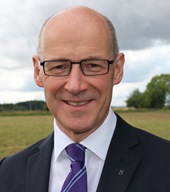
  • John Swinney – 2022 Letter to Nadhim Zahawi on Public Sector Pay

    John Swinney – 2022 Letter to Nadhim Zahawi on Public Sector Pay

    The letter sent by John Swinney, the Scottish Deputy First Minister, to Nadhim Zahawi, the Chancellor of the Exchequer, on 31 July 2022.

    Rt Hon Nadhim Zahawi MP
    Chancellor of the Exchequer
    HM Treasury
    1 Horse Guards Road
    London
    SW1A 2HQ

    31 July 2022

    Dear Nadhim,

    I write to notify you that I have taken on responsibility for the Finance and Economy portfolio whilst the Cabinet Secretary, Kate Forbes, is on maternity leave.

    I look forward to working with you and, while I appreciate there may be some limitations on the business of the UK Government pending conclusion of the Conservative leadership process, I am open to engagement with you through this period. I also appreciate the value of the on-going dialogue between our respective officials.

    There is one urgent issue I would wish to take the opportunity to raise given its importance to the delivery of public services in Scotland. Further to the joint letter from devolved administration finance ministers to you on 15 July, and in light of the UK Government’s subsequent announcements regarding public sector pay, I am concerned that no associated funding is being provided to meet these additional costs.

    Last year’s UK Spending Review, which as you know determines the majority of the Scottish Budget, did not take account of the levels of pay uplift now proposed or indeed the wider effects of inflation. The associated reduction in spending power across public-sector budgets is deeply worrying for our public services and our capacity to respond to the cost of living crisis, which will undoubtedly bring renewed challenges through the coming autumn and winter period. Given our fixed budgets, our restricted borrowing powers and the inability to change tax policy in year, the lack of additional funding for public sector pay deals via the Barnett Formula means the Scottish Government could only replicate these pay deals for public workers in Scotland with deep cuts to public services.

    I would urge you to consider appropriate funding for public sector pay, and would welcome early discussions with you on this matter.

    John Swinney