Blog

  • John Whittingdale – 2002 Speech on the Manufacturing Sector

    John Whittingdale – 2002 Speech on the Manufacturing Sector

    The speech made by John Whittingdale on 1 May 2002.

    Having had the opportunity to tour some of the exhibition this morning, my first and immediate reaction was to say that clearly reports of the demise of manufacturing in the UK are premature. I therefore want to congratulate the MTTA on putting together such a fantastic showcase for your industry. With over 400 companies exhibiting products and technologies, many of which are as advanced as anything available in the world, you have provided a perfect riposte to those who would write off the manufacturing sector in this country.

    Given your importance to the economic health of our nation, I share your surprise – although perhaps not your disappointment – that a Government Minister was not willing to come to Birmingham to be with you. I can only conclude that perhaps he got wind of what you, Mr President, were going to say. However, as the principal Opposition Spokesman for Trade and Industry, I stand permanently ready to step into the Minister’s shoes. I should therefore like to thank you for this opportunity to come to your conference and to respond to your comments on behalf of the Conservative Party.

    Like you, I have many criticisms of this Government when it comes to manufacturing industry. But perhaps I can begin by saying something with which everyone in this room will agree as, we are told, do Ministers. Manufacturing matters. A successful manufacturing sector is essential for a healthy thriving economy. You above all need little reminding of the crucial importance to the UK economy of manufacturing industry: it is responsible for nearly two thirds of our exports, over a quarter of our output and 15 per cent of our jobs.

    The problems afflicting manufacturing therefore pose a challenge for all those concerned about the future prosperity of our nation. Some of these are not new: The competition from countries with labour costs far below our own. The decline in the attraction of industry as a career among those leaving our schools. And the difficulties of an uncompetitive exchange rate.

    Nor I acknowledge did the drop in employment in manufacturing and the fall in its contribution to our national income start with the election of this Government. But there is no doubt that the last couple of years have been exceptionally painful for those in your industry. And it has not been helped by the fact that while you have been mired in recession, the rest of the economy has continued to grow.

    For a long time, the Government gave the impression that it did not care about manufacturing, that as long as unemployment stayed down and living standards stayed up, there was no need to give special attention to any particular sector that was in trouble.

    However, at the end of last year, that changed. The Secretary of State for Trade and Industry in belated recognition of the importance of your success held a manufacturing summit here in Birmingham. It was attended by some 50 delegates including 5 Ministers, 12 trade unionists and just 7 businessmen occupied full time in the actual running of manufacturing companies.

    The outcome was the announcement of £20 million of government money divided between an extension of the Industry Forum and an expansion of the Partnership Fund. The first is essentially a talking shop while the Partnership Fund seeks to bring employers and employees together to solve particular business problems. Among the successes trumpeted on the DTI web-site for the first round of the Partnership at Work Fund is the establishment of an Employee forum at Pizza Express for which the project co-ordinator is a waiter on secondment. I have no wish to knock what I am sure is a worthy project but I think manufacturing industry was entitled to expect a little more.

    Shortly after the summit in January of this year, the Secretary of State for Trade and Industry gave a speech in which she once again stressed the importance of manufacturing. This time she said that the decline in output had been exaggerated because of a flaw in the statistics and that the solution to your problems lies in membership of the Euro. It will not surprise you to learn that I do not agree.

    Of course, British manufacturers find it difficult to be competitive when the Euro has fallen through the floor. But no one would want to lock us into the present exchange rate for all time. And if the Government do wish to enter at a lower exchange rate, they have given no indication of how they intend to bring that about.

    Yet the tragedy is that if the Government really did want to help manufacturing industry, there are several concrete steps that they could take straight away. First of all, they could stop the relentless flow of regulations, which spew from Brussels and from Whitehall.

    Of course, I recognise that all Governments regulate and all Oppositions criticise them for doing so. But this Government has taken the art of regulating to new heights. £15 billion added to business costs since this Government came to power according to the British Chambers of Commerce. Last year, a record 4,642 new regulations: one every 26 minutes. By the Government’s own admission, businessmen had to spend 617,000 hours last year completing information requests from the Office of National Statistics alone. And of the forms sent out, nearly half a million went to firms in the manufacturing sector.

    Every businessman I meet, every business gathering I speak to, the message is the same: that the burden of regulation is rapidly becoming unbearable and that the flow has got to stop. That was one of the messages in your budget submission. Another was the need to reduce the tax burden. Sadly in neither case did the Chancellor appear to listen.

    Even before the Budget, the CBI had pointed out that the cumulative extra tax burden on British business under this Government stood at £29 billion. That adds to your costs and reduces your competitiveness. But of all the extra business taxes that this Government has introduced: the Utilities tax, the petrol tax, the aggregates tax, the tax on pension funds, one stands out for the scale of the damage that it has done to your ability to compete in the world.

    If the Chancellor had tried to come up with a tax designed to hit manufacturing industry hardest, he would have found it difficult to have done better than the Climate Change Levy. Across the engineering sector, it has raised operating costs by just under £90 million. And yet it is likely to have a negligible impact in terms of reducing carbon emissions.

    That is why at the last election, my Party was pledged to abolish it. Sadly we were not given the chance to do so. But we remain convinced that there are far more effective ways of achieving a reduction in greenhouse gas emissions which do not destroy the competitiveness of our industry at the same time.

    Of course, Ministers have repeatedly argued that the effect of the Climate Change Levy is neutral, that it is balanced by a 0.3 per cent cut in employers’ National Insurance contributions. It was not convincing even before the Budget. After the Budget, even that figleaf has been ripped away.

    Listening to the Budget, for fifty minutes you must have been happy. Tax credits for R & D, cuts in corporation tax for small firms, increased spending on education, law and order and the NHS. Then in the last ten minutes, business got clobbered with a tax increase of nearly £4 billion. And what is more a tax on jobs, that will hit every employer, no matter whether they are large or small, profitable or loss-making. Having specifically asked for a cut in employers’ NIC in your budget submission, you have instead have been given a direct increase in your costbase. You have every right to be angry.

    It is perhaps in recognition of that anger that we learn that the Government is shortly to announce a new initiative: the appointment of a Minister for Manufacturing. It is we are told to be Alan Johnson, one of seven junior Ministers in the DTI. In my view, they should all be Ministers for Manufacturing. But until the DTI can make its voice heard against the Treasury, it will do little good.

    After a long and brutal recession, there are at last signs of an upturn in manufacturing in the UK. But if it is to be sustained, it needs to be nurtured by Government not snuffed out. Much of the rhetoric of Ministers I applaud, but it is time it was matched by their actions. It is a criticism which, if I am given the chance, you will not be able to make of me.

  • Michael Ancram – 2002 Speech at the Israeli Solidarity Rally

    Michael Ancram – 2002 Speech at the Israeli Solidarity Rally

    The speech made by Michael Ancram on 6 May 2002.

    I am here today because I am a friend of Israel. That friendship has taken me on a number of occasions to Israel. It has taught me to hear and see for myself. It has shown me the imbalance of so much of the news that we receive here. It has equally shown me the realities, the hurt on both sides that must be mended, the senses of injustice on both sides that must be met.

    It has also taught me that peace and security will be won not by accusation and humiliation but by courage and respect. I am here today because I want to see an Israel living at peace and free from fear. Fear is the enemy of peace, but is the corner stone of terrorism. That is why we must be resolute in the fight against terrorism, because peace depends upon it. And if Israel is to exercise restraint in the pursuit of terrorism then others must demonstrate that they can and will control it.

    Our goal must be the day when Israel can live in true security and peace alongside all her Arab neighbours, each in mutual respect for one another’s sovereignty and right to exist.

    I am also here today because I hate intolerance. Intolerance too is the enemy of peace and we must have no truck with it. In that context I condemn without reservation the acts of anti-Semitism which recently have occurred here at home. They are despicable in themselves, but also because tolerance is their enemy which they seek to destroy. They must never succeed.

    Tolerance is the soil in which peace can grow. Tolerance replaces fear with trust, replaces bitterness with respect, and anger with understanding. None of this is easy. The easiest road is always the one that looks back in recrimination, the one which glories in confrontation. It is the road of despair for there is no peace upon it.

    But there is a road that looks forward with hope. The road of dialogue which in the end is the only lasting road to peace. I learned in Northern Ireland that peace cannot be imposed. It must grow in the hearts of those who must come to agreement, and it is only through talking that this can gradually be brought about.

    It will take courage and determination and generosity, but everything I have learned tells me that it can be done.

    I was in Israel and the territories in February. I saw the escalation of the fear and the violence and the despair. They were dark times – and are still. I know about dark and violent times. I know too that it was often at the darkest hour that the light of hope was born; born from the longing for peace of the people, of those who had suffered, who cried out that enough was enough.

    I believe that this same light of hope is here today. In Israel I saw determined hope. I believe that the route-map for the way forward is there. We are all here today because we long for the end of terrorism in Israel and the dawn of a real and lasting peace. We want to see that journey towards peace and freedom from fear begin again. The chances are now there. We must pray that in the days ahead they are taken.

    We who are friends of Israel will support that drive for peace with all our hearts, and all the help that we can bring to bear.

  • Michael Ancram – 2002 Building True Partnerships in Europe Speech

    Michael Ancram – 2002 Building True Partnerships in Europe Speech

    The speech made by Michael Ancram on 9 May 2022.

    “How times have changed! A few years ago critical questioning of the future shape, direction or structures of Europe would have been condemned as an anti-European act. Either you were for ‘le projet’ or you were against it. There was no middle ground.

    “Today Europe itself is talking about its future. Fifty years on the European Union is facing a sort of midlife crisis; a crisis of identity, a crisis of purpose and a crisis of authority. A crisis acknowledged even by the Laeken Declaration. There is a sudden realisation that not all is well.

    “The pathetically low turnouts in the last European elections. The negative votes in the Irish and Danish referendums. The re-emergence of extreme national politics, particularly in France. The growing popular dissatisfaction with and feelings of alienation from European Institutions. The European economy presents a far from rosy long term picture. There is suddenly a fluttering in the European dovecote.

    “Stopped in its tracks is the arrogance which has so marked the European Commission over recent years. Gone the sense of inevitable and unstoppable progression. Both replaced by confused rhetoric. The same voices which recently contemptuously dismissed American policy as “simplistic” now plead anxiously for the US to resist the ‘unilateralist temptation’.

    “Suddenly there is talk of consultation. The Convention on the future Shape of Europe. But there is little evidence that the fundamental problem, the deficit in the democratic process at a European level, the alienation of people from institutions, has even begun to be addressed, or whether the means for doing so even exist. What is certain is that Europe is uncertain, more uncertain about itself than it has been since its inception.

    “We see a demographic time-bomb in Europe which the EU has failed to address. A growing, technological gap between European countries and the US. A need for greater innovation and deregulation, as growing unemployment threatens the livelihood of millions of people. It is against this backdrop of economic failure that we must begin to consider the structural failures of the EU as it stands today.

    “Over the coming year we in the Conservative Party will be developing a clear strategic view of Britain’s Foreign Policy at the start of the twenty-first century, and defining British interests within the international arena.

    “It is with this in mind that I address the issue of the EU today. We will apply this rigorous process to the EU as well, asking how it fits or should fit with Britain’s and other countries’ national interests. We will address that fundamental question as to the role the EU should fulfil in the 21st century. What should it do, and what should it not do? How can we make it more effective for and more relevant to British citizens?

    “I do not propose to answer those questions in detail tonight. There is much work to be done first. I intend to analyse closely where Europe finds itself today. We will identify those areas requiring rigorous examination and consideration, and where necessary reform.

    “That is why we call today for a fundamental review of the way the EU is currently working. We believe that this is a necessary precursor to genuine constructive reform. If the current EU process is not prepared to undertake such a fundamental review, we will look for alternative and credible ways of doing so. It is an opportunity which must not be missed if we are to reshape Europe to meet the genuine challenges of the new century.

    “The time is ripe for a constructive but realistic debate about the future structures of Europe. It is a debate in which we are happy to take part.

    “The current uncertainty creates above all a crisis of identity. We therefore have to start with the very basic question as to what precisely we mean by Europe.

    “‘Europe’ is a concept. It is a collective, broad-brush description, not a nationality. It is a geographical entity, rather than a “land” with the true sense of belonging that flows from that term.

    “How do we define Europe? Just look at the multiplicity of geographical descriptions and definitions. Northern Europe, Southern Europe, Middle Europe, Eastern Europe, Mediterranean Europe, Central Europe, Slavonic Europe, Scandinavian Europe. I could go on.

    “This multiplicity of descriptions of Europe also hides a massive diversity of languages, peoples, cultures, economies, and histories. Some aspects are shared. Many more are different. One has but to look at the patchwork quilt of the history of Europe. It underlines the infinite diversity in our continent which cannot be straight jacketed by simplistic description.

    “Indeed the history of European unity, until the Second World War, was a history of military subjugation, an empirical aspiration that could never succeed when pitted against the diversity and national sentiment that existed within Europe – and still exists today.

    “The origins of the EU lie in the conflict that wracked Europe between 1939 and 1945. The leaders of the nations of Europe determined it should never happen again. The resulting Common Market was based on consent, around a “bottom up” principle which sought to build links and co-operation at the lowest levels and with NATO’s help it worked. Europe has seen an unprecedented period of peace and has been much the better for it.

    “However, since its inception we have also seen an seemingly inexorable move towards full European unity, as “harmonisation” has stealthily been imposed upon us all.

    “Despite the subsidiarity principle that decisions should be taken at the lowest appropriate level, the impacts of European integration continue to weave their way into the nooks and crannies of everyday life.

    “In the Common Agricultural Policy, for example, a vitally important sector of our national economies continues to be dominated by an inefficient European structure. We see at the same time an increasing incidence of fraud in EU budgets. We see a lack of responsiveness to local needs, inevitable when the minutiae of a system are essentially determined by a supranational authority.

    “The endemic tendency to wish to encompass everything has led to the EU being regarded with a growing sense of distance and irrelevance by vast numbers of its voters. The lack of democratic accountability, compounded by new directives constantly being imposed from above, only serves to add to popular alienation from “Europe”. The need for reform and change is now more pressing than ever.

    “The EU stands at an important crossroads in its development. Recent political events in France stands as a stark warning of the potential outcome of that sense of detachment from a remote political elite felt by millions of people across Europe.

    “In this information age, with more well informed and empowered citizens than ever before, the urgent challenge is to correct the democratic deficit and to bring the real interests of people back to centre-stage.

    “Reform must not be a one-way track. There are a variety of options, each of them with adherents and arguments in their favour.

    “There are those whose sense of disillusionment with the EU and growing supranationalism lead them to support complete withdrawal from the EU, either with the intention of going it alone or as a full member of NAFTA.

    “Diametrically opposed to them, there are those in favour of building an integrated United States of Europe, an “advanced supranational democracy which must be strengthened” – whatever that might mean – , even more closely linked than at present, with a central government presiding over a common foreign and security policy, a common economic and fiscal policy, underpinned by a single currency, and with a common social policy.

    “And there is a third option. A partnership of sovereign nations, bound by the single market and the rules of free trade, but otherwise working at different levels of participation and involvement, tailoring common ventures and aspirations to the national interest and the national modus operandi. A Europe for all seasons, and all national traits and imperatives, which recognises and maximises national strengths in a constructive way.

    “Let me look at each of these options in turn.

    “To withdraw from the EU, either to go it alone or to engage in a NAFTA-like trade area, would be a damaging course, forfeiting authority and benefit. We benefit from our trade with Europe.

    “Europe may well be facing economic problems. It is however certainly not in our interests for these to continue. Moreover our trade is vitally tied up with Europe and affected by European legislation. Norway and Switzerland, as members of the European Economic Area, must comply with European law, but they have no influence over these laws ands regulations. Withdrawal would replicate this weakness for us.

    “On the other hand the supranational approach, suggesting that institutionalised cooperation can achieve everything, and therefore must pool everything, is totally missing the point. More can be achieved through voluntary co-operation than through enforced conformity.

    “In the face of current European uncertainty Tony Blair’s government might appear ambivalent. Far from it. While their language at home may be tailored to create the impression that the Europe of Nations is still an option for them, their language abroad and more importantly their actions within Europe tell a different tale.

    “Regrettably what happened at Nice was both a functional failure and a failure of vision by our Government. Having rejected the vast bulk of extensions to QMV proposed by the French Presidency prior to Nice, most were meekly accepted.

    “A simple accession process, acknowledged by Robin Cook as necessary for enlargement, turned in to a treaty which had little to do with enlargement, which we passionately favour, and everything to do with political integration.

    “The Nice Treaty further alienated people from the institutions of the European Union and may, perversely, as we warned, imperil or delay enlargement.

    “The failure to concentrate on the core objective of enlargement was symptomatic of a government which talks of constructive engagement but fails to come up with actual policies which address the real challenges of an enlarged EU.

    “The rhetoric of integration is also there, on record, for all to see. Speaking in Warsaw in 2000 Tony Blair declared the need for a Europe “strong and united”. In Birmingham last year he was quite open about it, saying that a “more effective common foreign and security policy…is vital”. He obviously learnt little from the farce of trying to achieve a common European line in the aftermath of 11 September.

    “At the same time Jack Straw calls for an ever greater pooling of our sovereignty.

    “Their deeds and words all point, not to a desire to make the EU work for the citizens of its member states, but to their desire to submerge British sovereignty and that of other European countries in an ever more centralised Europe. They may work by stealth, but their agenda remains the creation of a supranational Europe.

    “It is the wrong direction for Europe, and we reject it. It threatens not only the end of popular sovereignty, but also a further divorce of the political process from its legitimacy – the people themselves. It either presages the unacceptable tyranny of the majority imposing common policies on reluctant member countries, or the equally unacceptable tyranny of the lowest common denominator. Neither is acceptable.

    “The coercion of conformity and harmonisation would stifle the diversity that is the very essence of Europe. As a result of a common interest rate, a single currency and a single fiscal policy, inevitable internal tensions would arise. Division and internal discord would ferment from the forcing together of very different economies, bringing in to the open the threat of new axes as the largest members push ahead with their ambitions at the expense of the interest of their smaller partners. We have already had a taste of this when Ireland was reprimanded under the growth and stability pact, whereas Germany for a similar ‘offence’ was not.

    “These tensions will become even more apparent after enlargement. EU enlargement is a project that has always enjoyed the total support of the Conservative Party. But we must also recognise the need to plan properly for it.

    “Already such tensions are beginning to show in the failure to face up to the shortcomings of the Common Agricultural Policy, and in the increasingly sharp exchanges between the accession countries and Brussels as the realisation dawns that the EU has taken insufficient account of their needs with regard to structural funds and agricultural subsidies. This is a salutary warning of the internal divisions we risk if we do not move swiftly to reform.

    “We want to see genuine and constructive reform. We do not see it in Romano Prodi’s ‘advanced supranational democracy’. A supranational European state would undermine the goodwill and genuine co-operation required in Europe. It would be harking back. It would be building a bloc after the era of blocs is ended.

    “It would also be naively ambitious. To attempt to be a superpower bloc, rivalling America, is foolish. America is a sovereign superpower with vast resources. Europe is not. We need America far more than America needs us. We must stick to the partnership of Europe and America. We must reject the anti-American rhetoric of some leading Europeans who want to make it Europe or America.

    “Our constructive approach to European reform will start with the world as it is, not as we might wish it to be. The events of 11 September were a wake-up call. The call to Europe was very clear. It reminded us once again that the comfortable and stable world of cold war blocs was over. Mass equilibrium, based on the doctrine of mutually assured destruction, was ended. The threats were different. The friendships and alliances needed to meet them were different. The world into which the European Union had been born and raised was gone. The European mindset has to change.

    “The message of 11 September to Europe was ‘adaptability and flexibility’. That is why we root our approach to the reform debate firmly on the ground of the Europe of sovereign Nations.

    “We need to use the current debate on the future structure and shape of Europe to look at what is working and what is not. That which is working and is consistent with the Europe of the future should be preserved and strengthened. That which is not working, or is out of date or is no longer consistent with the evolving nature of Europe should be reformed or discarded. Anything less than this rigorous approach will be a sham.

    “The Treaties, the ‘acquis’, the directives, should all be open to re-examination to assess their effectiveness and continuing relevance – and open to change if necessary. A genuine review and reform process cannot object to revisiting those elements which appear either not to be working or not working as well as they should. There can be no sacred cows, no no-go areas, no sealed vaults.

    “Such a ‘keep out’ attitude would prove the enemy of genuine reform. Fortunately there is growing recognition in other European countries that at least some of the treaties may need reform. Only Britain’s Government seem to see the Treaties as untouchable totems of commitment to Europe. It is massively short-sighted. It assumes that once a regulation is in place it will remain effective through all circumstances, and will not be affected by the changing international and economic situation.

    “By adapting to change and revisiting the treaties, the regulations and if necessary the ‘acquis’ and in making a constructive assessment of their continuing relevance and value to people as opposed to institutions, we can hope to move once again towards a ‘bottom-up’ Europe. A Europe that starts with the needs and aspirations of the people of Europe, not the ambitions of its bureaucrats, and which can once again make itself relevant to people’s lives.

    “Relevant does not mean meddling in every nook and cranny of every day life but being a useful engine to increase the economic prosperity and success of European countries. People who currently feel distant from the EU must be convinced of the benefits to them. Our constructive review must ask the central questions. Do these treaties, these directives, this ‘acquis’ still serve the real interests of the peoples of France, Germany, Holland, Belgium, and so on. And above all do they serve the interests of the people of Britain.

    “For instance the Common Foreign and Security Policy. This is a concept that will not work and should be abandoned. The history of the CFSP is a already a trail of failures. Re-buff over Israel, inaction over Zimbabwe, division and delay after 11 September, and the inevitable undermining of NATO. All demonstrate the inflexible, unwieldy nature of the CFSP and show that it is simply not practical.

    “The Rome Treaty preamble demanding ‘ever closer union among the peoples of Europe’ requires further thought. Such wording sits uneasily in today’s world and we should be prepared to consider rephrasing it in a way which better reflects the network, flexible, nature of modern international co-operation.

    “We need to reconsider the role and powers of the Commission in initiating policy, questioning whether this is the most effective, or appropriate, way to operate.

    “Coincidentally it already appears that the Commission is in fact losing power to the Council Secretariat and to a mish-mash of other agencies and committees. Whilst this loss of power by the Commission is not something to be mourned, we need to consider how the structural distribution of powers can be more effectively organised to ensure greater democratic accountability, rather than simply shifting the power around internally.

    “We need also to look closely at those elements of the EU which are working but which can be improved.

    “The Single Market has the potential to bring economic benefit, but there is work to be done to make it function more effectively and fairly. We will continue to work towards the completion of the single market. We will continue to press for further deregulation and improved competitiveness.

    “We must recognise that the world’s economy is now global. In a world of increasingly fierce economic competition, ineffective and burdensome regulations hinder rather than help economic success. Companies today often find they are being sent out to compete in the global marketplace with one hand tied behind their back. The distinction now needs to be clearly made between what is necessary to provide a level playing field, and what is an unnecessary burden.

    “At the heart of EU reform must lie “a democratic process which uphold the rights of all member states, big and small, and guarantees the rights of the people and of every citizen”. These goals, set out by Romano Prodi in April, cannot be reached by the road to integration or his ‘advanced supranational democracy’. Centralisation and integration are inimical to them. Reform can only begin to achieve these goals if it is firmly rooted in the domestic democratic processes of each member state. It could encompass the prospect of the Commission agenda being shaped by national legislatures.

    “Our democratically elected national parliaments can best, certainly better than anything else in the EU, interpret the national interest and represent the will of the people. It is at a national level that people still feel the greatest sense of identity, and sense of belonging. Moreover if genuine accountability is to be created in Europe, and the growing rift between the plans of the European bureaucrats who determine Europe’s agenda and the genuine wishes and will of the people who ultimately pay for the EU is to be ended, then national parliaments must remain the best channel for genuine democratic control.

    “Too often, when the democratic deficit in Europe is mentioned, it is suggested that the simple answer is for the European Parliament be given more powers. This is simply shifting power within EU institutions, not returning it to the people themselves. We must return to the founding principle that the EU is the servant of the people of Europe and the national parliaments that represent them; it is not their master.

    “It is too early to be specific. Genuine reform must be preceded by genuine analysis. We should hope that this will be undertaken by the Convention, although the early signs are not encouraging. There is currently too much grandiose talk of writing a constitution. There is already too much planning for further centralised structures such as a European Diplomatic Service . All of this is the antithesis of resolving the democratic deficit. It will make it deeper.

    “We are open to genuine reform. Not doctrinal reform to a set agenda, but reform to build a more workable Europe to meet enlargement. Not destructive reform, but constructive reform which works for the peoples of Europe. Not theoretical reform, but reform which reconnects people with what Europe means for them.

    “We want to see a Europe that looks outward rather than inward, Taking on the international economic challenges of the world rather than spending so much of its time focussed on internal bureaucratic battles.

    “What I have set out today is not a detailed blueprint, nor at this stage before the in-depth analysis has been done is it intended to be. What it seeks to represent is a broad outline, a framework within which we can work on the more detailed substance of our approach to Europe, and which demonstrates our willingness to engage constructively in this vital debate.

    “We are faced with a great opportunity. An opportunity to sail between the jagged Scylla of withdrawal, and the vortex of Charybdis which is the European Superpower. Both of these are concepts of the 20th century. We are looking towards the 21st century, the globalisation of economics, the new fluidity of relationships, the reality of the American superpower and the slumbering giant of China. We are looking for a Europe which will be better suited to meet these challenges. Our Europe will be agile and supple and cognisant of the national forces within it which are its strength.

    “Ours is a Europe in which the strengths of each member can be deployed to the full, where non-conformity is a strength and not a weakness, where flexibility and differences of emphasis are an advantage and not a hindrance. A Europe where we can go on being British and Italian and French and German and so on, with our rich and diverse histories and culture in the knowledge that it is through this diversity that we will achieve greater strength and genuine goodwill than ever would be possible than through artificial and forced conformity.

    “Partnership rather than incorporation, subtlety rather than stubbornness, and with Britain at the fulcrum. We want a Europe which will work with the grain of the world rather than against it, a Europe in which we can go on being British and doing that which is in the interests of our people.

    “That is the Europe of the true partnership of nations. It is a constructive Europe, a Europe for all seasons, a Europe which can work.”
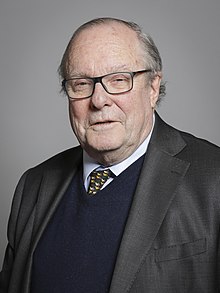
     

  • Iain Duncan Smith – 2002 Speech to the West Midlands Institute of Directors

    Iain Duncan Smith – 2002 Speech to the West Midlands Institute of Directors

    The speech made by Iain Duncan Smith, the then Leader of the Opposition, at Villa Park on 16 May 2002.

    Speaking as I am in Aston Villa territory, I am conscious that some of you will have viewed the recent play-off success of Birmingham City with mixed emotions.

    What I found heart-warming were the headlines plastered all over the newspapers: ‘Blues on the way up’.

    Even West Brom have got in on the act. Not only have they won automatic promotion this season, their supporters topped the BBC’s recent ‘Test the Nation’ IQ quiz.

    At an average of 138, their score was thirty points higher than the English national average.

    Figures were unavailable for politicians and I resist the temptation to speculate.

    Having three sides in the Premiership will provide a multi-million pound boost to the local economy. It is also another sign of this area’s predominance.

    Birmingham is the 12th largest wealth-producing district in Europe. It is a great commercial city, vital not just to the West Midlands but to the whole UK economy.

    And the West Midlands Institute of Directors has an extremely important position.

    I welcome your long-standing efforts to advance the argument for competitive enterprise as the essential building block of lasting prosperity.

    The IoD has a motto: ‘enterprise with integrity’.

    Britain badly needs a Government that practices what you preach.

    When politicians talk about integrity, you probably start counting the spoons.

    But it cannot be right for a Cabinet Minister to be given red carpet treatment when he has lied on national television.

    And it cannot be right that the same Minister misleads Parliament and then refuses even to apologise for it.

    There are few enough opportunities for the public through their MPs to hold the Government accountable in the first place.

    Whatever our political disagreements, if the Government of the day isn’t straight and seen to be so, it is public confidence in our democracy and business confidence that will suffer.

    Integrity matters. And so does an understanding of enterprise.

    This Government talks relentlessly about ‘enterprise’.

    The title of the Budget Red Book was ‘Investing in an enterprising, fairer Britain’.

    ‘Enterprise and fairness’ is one of the Chancellor’s favourite phrases. But what exactly does Labour mean by ‘enterprise’?

    As far as I can see, they mean companies. The private sector. Business, commerce and industry.

    For me enterprise is a much broader concept. It is a culture, a way of doing things. It is about thinking creatively in order to make better products or deliver better services.

    As Bob Michaelson said, what you have in this region is the spirit that created the industrial revolution. This is the spirit of enterprise, and it was no different when it was about 19th century technology than today, when it is about the hi-tech industries of computing and telecommunications.

    Yes, enterprise is about making profits, but it is also about making peoples’ lives better. It should be as much a feature of the public sector as it is of the private sector.

    It’s just as much about building new ways of delivering better public services as it is about building new structures for business.

    This is the real difference between Conservatives and Labour today.

    We are prepared to be enterprising. We are prepared to think differently and creatively to make peoples’ lives better.

    This means holding our hands up and recognising that Britain does not have a monopoly on good ideas in the delivery of public services.

    On the contrary, in the research we have undertaken so far in our policy review, we have found that many other countries have better methods for delivering core public services, particularly healthcare.

    Germany has no national waiting lists.

    Denmark gives people a legal right to treatment within four weeks of seeing their GP.

    Stockholm gives patients the choice of doctor and the hospital they go to. No one can do that in the UK without going private.

    Of course, if Britain could boast similar achievements, we might be justified in ignoring the record of other countries and simply carrying on with what we’ve got, without meaningful reform.

    But the reality is that the quality of the service the public actually receives has deteriorated.

    The NHS has more managers than beds.

    Accident and Emergency waits have grown longer.

    The number of operations is at a standstill.

    We are now confronted with a two-tier Health Service where record numbers of people – a quarter of a million last year – are paying for their own operations, not through insurance but out of their own pockets.

    And all despite this Government increasing NHS spending by nearly a third in real terms.

    Any businessman or woman would question the underlying soundness of an enterprise that produced these sorts of returns on that scale of investment since Labour came to power.

    If you had experienced no appreciable rise in output, and a marked decline in customer satisfaction you would surely look at the underlying approach of your business before committing more investment?

    And if there was clear evidence that your overseas competitors were getting better results, you would surely swallow your pride and have a look at how they did things in other countries.

    Sadly, the Government has done none of these things.

    The result is as depressing as it is unoriginal: a return to tax and spend.

    The Chancellor has embarked on a great experiment to prove that the only thing lacking in the NHS is money.

    And yet we already know that this isn’t true. The evidence is on our own doorstep.

    Taxes will increase by around £8 billion pounds next year with no hint of any real change in the way the Health Service is run.

    Over the next five years Gordon Brown plans to bring average UK health spending into line with what Wales and Northern Ireland spend now. This is the same as France, more than Denmark and Sweden and slightly less than Germany.

    But the treatment of patients is nowhere near as good. Indeed, in Wales and Northern Ireland waiting lists are worse than in England.

    The Chancellor’s only recipe is to spend more generously and police more rigorously the centralised NHS we already have.

    In contrast, Conservatives are prepared to take the genuinely enterprising approach, opening our minds to alternative ideas for reform, looking abroad at examples of where other countries and other systems produce better results.

    The key is to push power down and to place more trust in the people on the frontline.

    If we are to renew the promise of an NHS that delivers the best quality of care to people regardless of their ability to pay, need should be determined by patients working with doctors, not by politicians and civil servants.

    That means decentralising power and making the Health Service genuinely accountable.

    Creating modern public services is a priority for the people who rely on them – particularly the most vulnerable in our society – but it should be a priority for business as well.

    It is certainly a priority for the Institute of Directors. In your Budget submission, the IoD made a range of arguments about the Government’s record on health with which I would strongly concur. In particular, you highlight the galling inconsistency of the Government’s decision to raise employers’ National Insurance.

    As your Budget submission says:

    “Both the Prime Minister and Chancellor have criticised European social insurance schemes for health, on the grounds that they would impose significant extra costs on business. They have then proceeded to introduce an extra tax on business – of just under 0.5% of GDP per annum – in order to pump money into the state run NHS.”

    On countless occasions in the Commons in the months leading up to the Budget, senior Labour Ministers taunted us for even daring to look at other health systems on the continent. They told us that most European health systems relied on some form of social insurance which was ‘a tax on jobs’.

    So what is the £4bn tax on employers’ National Insurance if it isn’t a tax on jobs? Moreover, it is a tax on wealth creation. It says a great deal about what the Government really thinks about enterprise.

    Most importantly, this is the price you pay for a Government that refuses even to countenance other ways of delivering public services.

    That is why genuine health reform is ultimately so important for business, because only fundamental reform offers a way out of the endless cycle where businesses are taxed more to pay more for sclerotic public services.

    And it is an endless cycle.

    This Budget was not the first time Labour have increased taxes on business. They’ve done it every single year since 1997 without fail, it’s just that previously they did it by stealth.

    Almost as soon as Tony Blair first got into office, his Government introduced a £5bn windfall tax on the utility companies, undermining massive investment programmes for some of the most vital infrastructure in the country.

    In their first year, Labour also introduced the tax which Bob Michaelson referred to, the £5bn abolition of dividend credits on pension funds.

    Bob is not alone in criticising this particular tax change. There is currently an Early Day Motion circulating in Parliament criticising the pension stealth tax, stating that it has cut the dividend income on dockers’ pension funds by 33 per cent. The signatories include: Peter Kilfoyle, Jeremy Corbyn and Dennis Skinner.

    Clearly, MPs of all persuasions recognise the harm that this measure has caused.

    As the last Parliament got into full swing, fuel duty soared to record levels, hitting businesses just as hard as everyday motorists.

    Contractors were hit with IR35; National Insurance was levied on benefits-in-kind, and the Climate Change Levy provided extra costs at the worst possible time for energy-intensive industry.

    But it’s not just taxation.

    A recent IoD survey in the West Midlands found red tape to be the greatest obstacle to enterprise in the region.

    The Government’s own ‘Red tape Czar’ shares this view. The Financial Times recently carried an article by David Arculus, the new chairman of the Better Regulation Task Force. He warns of Whitehall ‘drowning companies in a sea of red tape’.

    He recounts his experience of asking one Government department if it could consider giving advice on employment regulation to employers. Incredibly, the department replied that ‘it could not possibly know everything there was to know about employment regulations’.

    But as Mr Arculus says, ‘this is exactly what the government expects of employers’.

    What I find so staggering about this article is that, after five years of Tony Blair saying he would cut red tape, the Government’s own agency for dealing with the problem is absolutely damning in its assessment of Labour’s achievements.

    Quite simply, since May 1997, you have been subject to an unprecedented tide of both red tape and taxation. In that period, business has been burdened with £11bn of new taxes and regulations every single year. Struggling manufacturers, new hi-tech start-ups, care homes for the vulnerable; small, medium and large businesses; they have all been hit.

    Nothing more starkly highlights this Government’s complete failure to understand the nature of enterprise than this unremitting burden on the freedom of business to create wealth.

    As Conservatives we remain committed to free enterprise, where the burdens on business are minimised instead of ramped up at every opportunity.

    But we also know that we have to get the other fundamentals right: sound infrastructure, reliable transport, stable monetary policy and an education system that gives our people the skills to meet the challenges of today’s competitive workplace.

    On all these areas we are making progress in developing policy as part of the review I set up on becoming leader.

    On education, Damian Green has started to reveal our plans for addressing the failings of our worst schools by offering greater opportunities for vocational training.

    On the pressing issue of health reform, we are visiting other countries to see how they provide better services.

    Michael Howard has confirmed our support for an independent Bank of England.

    And I want to reaffirm our commitment to keeping the Pound.

    The Prime Minister has hinted at a referendum on the single currency next year. I gather this afternoon he sent Stephen Byers to brief journalists that he would start the referendum process this autumn. When that news broke the Prime Minster panicked and denied all knowledge. What a way to run a Government, more spin becomes more chaos.

    At a time when everyone is concerned about the state of their schools and hospitals, when we feel threatened by the rise in violent crime, he should focus on these issues and stop playing games over the Euro.

    If the Prime Minister wants Britain to adopt the single currency, he should say so and name a date for the people to decide.

    We will campaign vigorously for a ‘no’ vote because replacing the Pound means giving control of British interest rates, taxes, and public spending to politicians and bureaucrats in Brussels and Frankfurt.

    It would cost us in higher unemployment and lower living standards, and it would mean boom and bust for the British economy and businesses.

    It also means British people giving away control over politicians. Now, people can kick us out if they don’t like us. Inside the euro, it wouldn’t matter how people voted.

    These are the arguments that I believe will prevail.

    We can then get back to the urgent task of making this country fit for the century we are living in.

    The bottom line is that we are opening our minds to new ways of doing things in order to make peoples’ lives better.

    All Labour have done is opened your wallets.

    Britain deserves better.

    It is the business of the Conservative Party to make sure it gets it.

  • Michael Ancram – 2002 Speech to the Scottish Conservative Party Conference

    Michael Ancram – 2002 Speech to the Scottish Conservative Party Conference

    The speech made by Michael Ancram in Perth, Scotland on 17 May 2002.

    It is a particular pleasure to be back among so many old friends addressing the Scottish Conservative Party Conference in Perth again.

    We meet at a time of growing frustration in Scotland. Not with the Parliament. Certainly not with our MSPs who under David McLetchie do such sterling work.

    But frustration with the failure of those who run the Scottish Executive, those Labour and Liberal political inadequates who are undermining Scotland with their incompetence, diminishing Scotland with their pettiness, and burying Scotland in their mediocrity.

    You have a vital duty to perform for Scotland next year. You must chuck them out. You must sweep them away. You must replace them with Conservatives who have the vision to take Scotland forward again. You must win.

    This motion today has been most ably moved by a real winner, my parliamentary colleague Peter Duncan. He is the shining proof that you can and will win.

    Today’s debate has been important and constructive. Constructive in the excellent contributions we have heard. Important because we live once again in a disturbingly unstable world.

    It is a world where the Cold War certainties and the ironic but real equilibrium of the great blocs are gone, replaced by invisible enemies, by unscrupulous regimes and by the threat of weapons of mass destruction and of terrorists capable of using them against us all.

    September 11 woke us up to this. It reminded us of our vulnerability and made us conscious of the need to build and strengthen friendships in the world again.

    I have always believed in loyalty, and trust and friendship.

    Loyalty to those who have stood and still stand by us; trust in those with whom we can do business; and friendship with those whose values we share.

    Immediately after 11 September Tony Blair understood this. I paid tribute to his role in building the international coalition against terrorism, and we gave him our support – as we continue to give support to our brave servicemen and women who he has deployed actively in that fight on our behalf. On this day of reported engagement in Afghanistan today we wish them well.

    But then power went to Tony Blair’s head.

    Building coalitions suddenly turned into his extraordinary vainglorious ‘I can heal the World’ speech to his conference last October.

    Heal the world! He can’t even heal the public services here at home.

    Far from bringing healing, his so-called ‘ethical foreign policy’ has been shot through by betrayal and surrender.

    Blair told his Conference he would heal the scars of Africa, that “if Rwanda happened again today … we would have a moral duty to act there”, and that he would “not tolerate … the behaviour of Mugabe’s henchmen”.

    Brave words which raised hopes in Zimbabwe. Black and white Zimbabweans alike believed that Blair would move to halt the excesses of Robert Mugabe and his thugs and to secure the fair elections which would have got rid if him.

    But as is so often the case, Blair’s promises were only words.

    He went to Africa in January, but he never went near Zimbabwe.

    When the illegal land grabs began, he wrung his hands and did nothing. The same when voter registration began to be rigged last November.

    When we called for real pressure on Mugabe, he and Jack Straw accused us of irresponsibility. Well, whatever happened to their responsibility?

    In the face of murder and torture in Zimbabwe and the stolen election whatever happened to Blair’s ‘moral duty to act’?

    And since the elections in March what has he done? The murders continue, the torture and the violation of human right grows, the land grabs become ever more vicious, and what do Blair and Straw do?

    Where is the active non-toleration he promised? As Zimbabwe bleeds, they dither and they still do nothing. The betrayal continues, and it shames us all.

    There is still just a chance to retrieve something.

    We must build on the targeted sanctions and bring together a wider international coalition including the US, the Commonwealth, the EU, and the neighbouring states in Southern Africa to exert real pressure on the Mugabe regime to hold new free and fair elections under international scrutiny. Only that way can true democracy be restored and the betrayal be ended.

    There is another great betrayal.

    This Government have spent the last six months seeking to betray our fellow British citizens in Gibraltar, to sell out their British sovereignty, just to curry a little favour with Spain. I have little against Spain, but I do mind about loyalty and friendship.

    Blair and Straw together have turned their backs on centuries of loyalty to Britain. They have used the tactics of the bully down the ages, bad mouthing the people of Gibraltar, and issuing veiled threats as to what will happen if the Government does not its way get.

    They have sought to stitch up a shabby backroom deal with Spain to share sovereignty over the rock.

    But sovereignty shared is sovereignty surrendered, and ends up as no sovereignty at all.

    This has from the outset been a misbegotten and dishonourable process. Gibraltarians will have no part of it. And, as I made clear in Gibraltar last Monday, neither will we.

    An incoming Conservative Government will not feel bound by any deal on sovereignty which has not received the freely and democratically expressed consent of the people of Gibraltar.

    The Government is now set on a course which can only end in tears, in confrontation with the Spanish Government or with the people of Gibraltar or with both. They should without delay suspend these wretched talks, turn back from this betrayal and think again.

    And then there is Surrender.

    Surrender to the growing forces of integration in Europe.

    Surrender to the concept of a common foreign policy, so that we no longer know today – for instance on the Middle East – whether there is such a thing as British Foreign policy any more.

    Undermining NATO by our ill advised and headlong rush into the European Rapid Reaction Force without any prospect of securing the resources to make it work.

    Surrendering ever more areas of decision making within Europe. Thirty-one national vetoes surrendered in the Nice Treaty alone.

    Surrender is a word which flows readily from New Labour lips. It will not flow from ours.

    Certainly the ‘ethical foreign policy’ is dead and buried, replaced by sell-out, betrayal and surrender.

    And in the middle of all this poor old Jack Straw. Chased by Hain and Hoon who both want his job, and ignored by Tony Blair who does it.

    Our foreign policies will be based on the world as we find it. We will stop the fantasising and return to the basic principle of building our foreign policy on our national interests and on doing what we do best.

    In the Middle East we have a role to play, particularly with the lessons we learned the hard way in Northern Ireland, in showing how out of the most violent and darkest of situations, dialogue can be restarted and a roadmap of a possible way through to a two state agreement can be produced. Not by military action, nor by international bullying. But through dialogue which must be home grown.

    And there are wider international objectives we must pursue. September 11 created a new bond of friendship and shared values between the US and the UK in the knowledge that we can do things better together than by ourselves.

    This historic relationship has always been one of partnership not subservience.

    That is what we must now work on.

    A renewed Atlantic Charter based on the reality that Europe and America work best in partnership rather than in rivalry, with the UK at the heart of it.

    There are however those in Europe today who believe that the EU will only meet its objectives when it becomes a rival to America with its own Foreign and Security policy.

    They set a false and dangerous choice, one which could drive the US away from us at a time when the US does not so much need us as we need the US. It would be bad for Europe and for us.

    We want to see not Europe or America but Europe and America with us as the natural bridge.

    Europe must change, and Europe knows it. For the first time Europe is actually talking about itself critically, looking to the shape and structure it should take to meet the challenges of the 21st century.

    The growing gulf between people and institutions in the EU underlines the need for change and calls for greater democratic accountability, and so do we. Recent votes in Europe make that process ever more relevant and ever more urgent.

    That process has begun, and we want to be constructively engaged in it. We want to see a fundamental review of Europe to ascertain what is working, what is not, what is out of date and what can be improved. We believe that as the EU prepares with our support for enlargement the time for such a review has come.

    We believe in conducting that review there should be no ‘no-go’ areas, no sealed vaults, no untouchable ‘acquis’. We must be rigorous.

    That which is working in the right direction and is valuable, such as the single market, we must improve and strengthen. That which is not working or is obsolete we should discard.

    The ways forward are there.

    They certainly do not include the ridiculous suggestion yesterday of creating a new powerful presidential position at the top of Europe to give Emperor Blair something to look forward to in his retirement.

    Nor are they the cynical ‘now we see you, now we don’t’ Euro-games being played by the Prime Minster and his favourite side-kick ‘Honest’ Steve Byers.

    Such suggestions and games only increase cynicism and alienation.

    We want to deal seriously with the future of Europe. We want to see an enlarged Europe, a partnership of sovereign nations, working together to strengthen the single market whilst retaining basic rights of national self-determination.

    We want a European Union built from the bottom up, an EU which derives its power from the national parliaments and which is accountable to them.

    We are part of the EU and intend to remain so.

    But we also occupy that unique position from which we can bring Europe and America closer together – and the Commonwealth too.

    We can return to our traditional role of bringing people together, of bringing democracy and free trade to other countries to their benefit and ours.

    And in doing so we can show that we still believe in the United Kingdom of which Scotland is such a crucial part.

    That as so often in the past we are the only party which has pride in our values, in our history and in our future too.

    People instinctively know that in Iain Duncan Smith we have a leader who will always hold that pride and those values high.

    They cannot say the same for Tony Blair.

    So let our message be loud clear. We are proud of our country. We are proud of what we stand for.

    We will stand up for loyalty, for trust and for friendship again.

    We will show that the days of losing are over. That the days of being driven back are behind us.

    We have come out from behind the shadow of our own fear and have found our confidence again. We are on our way back.

    Let us go out from here and win.

  • Michael Howard – 2002 Speech to the Scottish Conservative Party Conference

    Michael Howard – 2002 Speech to the Scottish Conservative Party Conference

    The speech made by Michael Howard on 17 May 2022.

    Introduction

    Creating the right climate for enterprise to flourish is one of the most important goals for any government.

    When enterprise is undermined, it is the weakest and most vulnerable who stand to suffer the most. It is the most vulnerable who lose their jobs first when business has to lay people off to pay the latest tax. It is the most vulnerable who get left behind in pay, or in training, because companies have to spend their resources coping with another batch of red tape instead.

    But a strong enterprise economy helps those in work and those looking for work. And it helps us to fund the public services on which patients, parents and passengers rely.

    Yet that enterprise economy, on which our public services depend, is being undermined. While headline economic indicators have seemed favourable, there are worrying signs beneath the surface. Imbalances are developing in the economy. Problems are being stored up for the future.

    It is the Government itself which must shoulder much of the blame for this.

    Of course, not everything Labour have done is wrong. And where we agree with what they have done, as in the reforms which have taken place in the setting of interest rates, we will not be afraid to say so. Conservatives will not oppose for the sake of opposition.

    Nor will we change things for the sake of change. We understand that it is not in the interests of business or anyone else for economic policy to lurch from one extreme to another, just for the sake of it, whenever a new government gets elected. Where continuity can be achieved it should be nurtured.

    But we won’t be afraid to criticise Labour, either, in Westminster and in Holyrood, when we think criticism is justified.

    Our criticism on the economy is not that Labour have destroyed it single-handedly, or that they have imposed 98 per cent tax rates as they did in the past, or that they are embarking on wholesale re-nationalization.

    Our criticism is that Labour simply don’t understand how business works.

    Criticism of Labour on Enterprise

    The pace of change in the business world has never been faster than it is today. The prizes go to those who respond quickly and flexibly.

    So creating the conditions for enterprise to flourish involves reducing the burdens on business. Which means governments getting out of the way. Interfering less. Limiting the burden of tax. Getting rid of unnecessary red tape. Above all, allowing business to do what it does best: win orders and create jobs.

    And crucially, which firm wins the order and creates the jobs is decided at the margin. It is at the margin that the extra tax or new regulation can determine whether a company takes on an extra worker or lays one off – and, ultimately, whether that company succeeds or fails.

    That is why each additional business tax and each new piece of red tape from Labour is so damaging. On its own each measure may not seem much. But taken together Labour have imposed £6 billion a year of extra business tax, and another £6 billion a year costs in red tape.

    So for all the rhetoric about enterprise, the Government have been slowly undermining Britain’s enterprise culture. Month by month. Measure by measure. Step by step.

    Budget: General Effect on Business

    And the Budget which Gordon Brown announced last month was one such step. One more step in the undermining of Britain’s enterprise culture.

    No Chancellor who understood the needs of business would have introduced that Budget.

    Last year, Labour were elected on a Scottish Manifesto which said: `We must make Britain the best place to do business in Europe…. That means… the right competitive framework to support enterprise, small and large, manufacturing and services’.

    Then, after that promise, in his very first Budget after that election Gordon Brown lumbers business with a £4 billion tax on jobs and another £1.1 billion in business taxes on top.

    It is no good Labour talking the language of enterprise and business and then bringing in a Budget which will do as much to damage the future of enterprise and business as anything else they have done.

    And the timing for Scotland – and for the UK as a whole – could not have been worse.

    Just two days before the Budget, Strathclyde University’s Fraser of Allander Institute published the latest Scottish Chambers of Commerce Business Survey. It showed that the ‘prospects in manufacturing appear to be improving slowly, but there is still some way to go before growth returns’ (15 April 2002).

    In fact, over the last year manufacturing output in the UK has fallen at its sharpest rate for a decade. But just at the time when manufacturing is struggling to emerge from recession, the Government’s reward is a new tax on jobs. This tax is not a tax on profits. It is not a tax on turnover. It is, quite simply, a tax on jobs. A tax which now gives every firm in the land a direct incentive to hire as few staff as possible – and for larger firms to shift employment abroad.

    It is little wonder that the reaction from business has been so hostile. The Director of CBI Scotland said members were `very disappointed’ at the further burdens on business. The Deputy Director of the Scottish Chambers of Commerce said: `This increase in national insurance is likely to become an employment tax’.

    Even before the Budget, CBI figures showed that, of our five trading partners, only one had higher taxes on business. Now the ability of British companies to compete in world markets will be further undermined.

    Month by month. Measure by measure. Step by step. Undermining the enterprise culture in Britain.

    Oil Tax and Scotland

    And as one who represents a Scottish constituency, Gordon Brown of all people should have known the damage which another of his measures in particular will inflict.

    Across the UK, almost 300,000 people work in the oil and gas industry. Many more depend on it for their livelihoods. In fact oil-industry-related employment accounts for around 6 per cent of the total workforce in Scotland, and a much higher proportion in North East Scotland.

    The Government’s oil tax – the 10 per cent supplementary charge on profits – has been condemned by all in the industry, many of whom regard it as a fundamental breach of faith.

    In fact only a year and a half ago the Chancellor said this: `It has been put to me that North sea oil companies earning higher profits from higher oil prices should be subject to special taxes, but… I am determined not to make short-term decisions based on short-term factors. The key issue is the level of long-term investment in the North sea. This will be the approach that will guide Budget decisions in future’ (Hansard, 8 Nov 2000, column 317).

    So much for that pledge. So much for basing decisions on long-term perspectives rather than short-term factors. That is precisely what the Chancellor did not do with his oil tax.

    Chancellors come and chancellors go. But investment decisions last for decades. A Chancellor on the look out for new taxes to fill a back hole in his finances should recognise that this decision will have an effect for years to come. The industry has warned that some new fields, on the margin, may not now proceed, and that the tax could deter long-term investment.

    To remove an amount eventually totalling, on some estimates, £1 billion a year from the industry is bound to have an effect on investment decisions and on jobs, especially at a time of uncertainty in oil prices worldwide.

    Not only that but, despite all the Government’s talk about the importance of consultation, there was no consultation with the oil companies at all.

    Until a couple of years ago, Gordon Brown thought users of fuel were a soft target for his stealth taxes. He was proved wrong. Now he is trying to tax the producers as well. Once again he needs to be sent a clear message: hands off our fuel.

    Other Taxes

    The oil tax is not the only Labour tax rise to hit business in Scotland. The aggregates tax may have a disproportionately negative effect on the Scottish economy.

    And it is as a result of Labour’s policies north of the border that Scottish businesses are now expected to pay nine per cent more in business rates than their English counterparts.

    Public Services

    The great tragedy is that none of these tax increases, whether from Edinburgh or from Westminster, is likely to lead to the real improvement in public services everyone – including business – wants to see.

    Every year the Government promise us better public services in return for higher taxes. But every year we just get the higher taxes.

    Now, as in previous years, the Government claims the extra money is for the NHS. Of course the NHS needs more resources. But it also needs change and modernization. And without both, the Government wont be any more successful this year in keeping its promises to improve the NHS than it was last year or the year before or the year before that. And, more importantly, patients won’t get the standard of health care which they are entitled to expect.

    Anyone in England who doubts this just needs to ask the people of Scotland. Here, spending on health rose by 28 per cent ahead of inflation between 1996-7 and 2001-2. Yet the average waiting time for an outpatient appointment has risen by more than 25 per cent since September 1997.

    What’s more, public sector employers across the UK – nurses, doctors, teachers, police and fire officers – will themselves bear much of the brunt of the rise in National Insurance Contributions.

    This just goes to show the sheer absurdity of the Government’s position. First they refuse to change and reform the public services, so we will not see the improvements that we all want. Next they increase employee contribution rates for many of the very public sector workers that we are relying on to try to improve these services. And, finally, they hit the services themselves with a £1.2 billion tax bill, in the name of raising more resources for those very same services. The British people deserve better.

    Regulations

    Higher taxes are not the only ways in which the enterprise culture is being undermined. Last year 4,642 new regulations were introduced in the UK. Not only is that a record. It is an increase of nearly 50 per cent on the number introduced in 1997. That number includes 494 Scottish regulations – up from 203 in 1999, an increase of more than 140 per cent.

    I defy anyone to claim that introducing 4,642 regulations in one year is justified. Whether or not a valid reason can be found for each one, the cumulative total is undermining the enterprise culture. Measure by measure. Month by month. Step by step.

    Conclusion

    And so the Conservative Party north and south of the border needs to put the case for enterprise. In doing so, our themes will often be the same. So are many of our opponents.

    But the emerging success story for the Conservative Party in Scotland since devolution is how our shared Conservative themes and principles are being applied to the distinct circumstances of this nation. Our parties north and south are working together for success in the contests each of us face.

    The most immediate Parliamentary contest comes next year. This Conference is an important spring board for the Scottish Parliamentary Elections. We are showing how we can apply our Conservative principles to the development of fresh and distinct policies.

    Above all, this Conference is helping to demonstrate how Iain Duncan Smith is changing the Conservative Party, and we are getting back in touch with people’s priorities. That means providing better hospitals, better schools, better transport. It means extending a voice to the vulnerable, and opportunity to those who have been left behind. It means making a real and practical difference to the lives of everyone in our communities.

    Your task and mine, and the task of everyone who speaks for our Party, is to show how we are getting back in touch with the people of Scotland and England alike.

    So that north and south of the border we will have the opportunity to put our policies into effect. And to make a real difference to the lives of the people we serve.

  • PRESS RELEASE : Ihor Zhovkva discussed with the Adviser to the Prime Minister of Portugal the security situation and the implementation of Ukraine’s European integration strategy

    PRESS RELEASE : Ihor Zhovkva discussed with the Adviser to the Prime Minister of Portugal the security situation and the implementation of Ukraine’s European integration strategy

    The press release issued by the President of Ukraine on 5 May 2022.

    Deputy Head of the Office of the President Ihor Zhovkva discussed the security situation and implementation of Ukraine’s European integration strategy with Adviser to the Prime Minister of the Portuguese Republic Fernando Morgado.

    Ihor Zhovkva expressed gratitude for the strong political support of our state, as well as for providing assistance to Ukrainian citizens temporarily staying in Portugal.

    The parties also discussed the possible participation of the Portuguese Republic in the reconstruction of the regions of Ukraine after the war.

    “Portugal’s active participation in the post-war reconstruction of Ukraine will be a significant contribution to the rapprochement of our nations and bring our country even closer to the European community,” said Ihor Zhovkva.

    The Deputy Head of the Office of the President thanked the interlocutor for Portugal’s strict compliance with the EU sanctions imposed on Russia, and expressed hope that they would be further strengthened in order to stop aggression and restore Ukraine’s territorial integrity.

    During the conversation, special attention was paid to the implementation of the European integration strategy of our state.

    Ihor Zhovkva stressed the importance of the European Union’s adoption in the near future of a political decision to grant our country the status of a candidate for EU membership.

    “This would be an important symbolic step of European partners towards the Ukrainian people who today protect the security of the whole of Europe,” he said.

    The interlocutors also discussed further measures of political dialogue at the highest level.

  • PRESS RELEASE : Andriy Yermak discussed US assistance and Ukraine’s efforts to fight Russia with President of the National Endowment for Democracy Damon Wilson

    PRESS RELEASE : Andriy Yermak discussed US assistance and Ukraine’s efforts to fight Russia with President of the National Endowment for Democracy Damon Wilson

    The press release issued by the President of Ukraine on 5 May 2022.

    Head of the Office of the President of Ukraine Andriy Yermak had a meeting with Damon Wilson, an American expert on foreign policy and President of the National Endowment for Democracy (NED) in Kyiv. Andriy Yermak noted the partnership cooperation between Ukraine and the United States.

    “In this difficult time, we understand who our friends and strategic partners are. And, of course, the United States plays an extremely important role in supporting Ukraine,” he said.

    The Head of the President’s Office noted the successful visit to Ukraine of US Secretary of State Antony Blinken and US Secretary of Defense Lloyd Austin, as well as the visit of Speaker of the House of Representatives Nancy Pelosi.

    “And, of course, we are waiting for President Biden,” Andriy Yermak added.

    The Head of the Office of the President stressed that despite significant support from the United States, Ukraine needs more weapons, as the war continues and the whole world sees the situation in the southeast of our country, including Mariupol. According to him, negotiations with Ukraine’s partners take place daily at all levels.

    “People’s lives in Mariupol depend on how quickly we get help. We ask everyone: please save our people, children, wives,” he said, adding that the time is running out and it’s a matter of days already.

    In addition, special attention is paid to the sanctions policy. The Head of the President’s Office stressed that it is important for sanctions to be effective. A special international expert group has been set up for this purpose.

    Andriy Yermak also noted the work with partners on security guarantees for Ukraine, which should not be a repetition of the Budapest Memorandum.

    “Ukraine wants to be sure after the war that this will not happen again. The second Budapest Memorandum is completely inadmissible. We hold daily consultations with our partners on the security future of Ukraine… These should be clear, legally fixed commitments, guarantees,” he said.

    According to the Head of the Office of the President, if there is no effective mechanism in the world to stop the war and prevent its beginning, it is the verdict for the entire world security system, so we need to build a new one.

    The Head of the President’s Office stressed that it is important for Ukraine that this war does not become protracted, because by exhausting Russia, it will at the same time take the lives of Ukrainians and destroy our cities and infrastructure.

    “For us, the protection of our people, Ukrainians, comes first. It is very important for us that our heroes stay alive. That their families stay alive and that our cities are not completely destroyed,” Andriy Yermak emphasized.

    Therefore, according to him, this war should end as soon as possible, but on Ukrainian terms. It is important for the Ukrainian economy to begin to recover and for the citizens of our country, who went abroad to flee the Russian bombing, to return home, because they strive for that return.

    Damon Wilson noted the struggle of Ukrainians and the support of the United States for Ukraine’s efforts in this struggle.

    “Ukraine is creating history, its democratic future right now. The American people support Ukrainians in their struggle for freedom and democracy. And the whole Congress, our people, the whole American politicum stands together with Ukraine. We will do everything possible to support the Ukrainian people so that Ukraine wins this war, de-occupies its territories and restores peace,” he said.

  • PRESS RELEASE : Andriy Smyrnov discussed with Amnesty International delegation the establishment of special international tribunal on Russian crimes

    PRESS RELEASE : Andriy Smyrnov discussed with Amnesty International delegation the establishment of special international tribunal on Russian crimes

    The press release issued by the President of Ukraine on 5 May 2022.

    Deputy Head of the Office of the President of Ukraine Andriy Smyrnov met with a delegation of the international non-governmental human rights organization Amnesty International led by Secretary General Agnès Callamard.

    Agnès Callamard stressed that Amnesty International seeks to focus the attention of as many countries as possible on the problem of the war in Ukraine. In particular, the organization plans to interact with representatives of the media and civil society.

    The Deputy Head of the Office of the President noted that Ukraine needs strong support from the international community in documenting war crimes committed by Russia in our country. According to him, the International Criminal Court is already working on the cases in which evidence of Russian crimes during the war in Ukraine is being investigated, but the inevitability of punishment for top officials of the aggressor country must be inevitable.

    Andriy Smyrnov stressed the importance of establishing a special international criminal tribunal, which will be able to quickly assess the evidence of crimes of Russian aggression against Ukraine.

    “Active multi-level consultations are underway at various international platforms on the need to establish and launch a mechanism for such a tribunal,” said the Deputy Head of the Office of the President.

    He noted that last week the Parliamentary Assembly of the Council of Europe adopted two resolutions calling for the establishment of an international tribunal.

    “Ukraine’s representation at the level of the Ministry of Foreign Affairs, the Ministry of Justice and the President’s Office is involved in the negotiation process with allied countries, with which the model and forms of operation of such a tribunal are being discussed,” Andriy Smyrnov said.

    “Given the obvious signs of aggression, all the evidence that the civilized world has seen, the horrible crimes committed by the aggressor country – Russia, in my opinion, the assessment of this fact should be given as soon as possible. And the entire military-political leadership of the aggressor country must bear severe and unavoidable responsibility for this,” he stressed.

    The Deputy Head of the Office of the President noted that among the issues being discussed is also the location of such a tribunal.

    “We are in favor of it being located in Ukraine. In Bucha, Irpin, Borodyanka or in Kyiv. Ukraine is ready to provide full technical and organizational support for the work of such a tribunal,” Andriy Smyrnov said.

    He stressed that the new tribunal should not be overburdened with a large number of powers in order to avoid conflicts of jurisdiction with other international judicial institutions. However, time must show how quickly the existing international institutions will be able to assess the convincing evidence of Russia’s war crimes against Ukraine and its citizens.

    “Ukrainian society, its citizens tortured by Russian war criminals, all those who have endured any form of suffering as a result of Russia’s war against Ukraine, destroyed Ukrainian business – all are waiting for answers to these questions. And this legal assessment must be given within a reasonable time. Both politically, in a global context, and legally – in the judiciary,” said the Deputy Head of the Office of the President.

    Andriy Smyrnov also informed the Amnesty International delegation about the work of Ukraine’s judicial system in wartime.

    During the meeting, Amnesty International representatives presented the President’s Office with a vine sapling. Human rights activists said the plant was brought from the Syrian region, which was completely destroyed by the Russian army. This is a gift from the Syrian people, which supports the democratic aspirations of Ukrainians.

    Andriy Smyrnov noted that he would personally hand over the vine sapling to President Volodymyr Zelenskyy.

  • PRESS RELEASE : President announced the launch of United24 – a global initiative that will unite people all over the world around the desire to help Ukraine

    PRESS RELEASE : President announced the launch of United24 – a global initiative that will unite people all over the world around the desire to help Ukraine

    The press release issued by the President of Ukraine on 5 May 2022.

    President of Ukraine Volodymyr Zelenskyy initiated the creation of the United24 global project, which aims to unite people all over the world in their desire to help our country.

    The first component of United24 is the fundraising platform of the same name in support of Ukraine. The main goal is to increase the amount of donations for the benefit of our state, to ensure the efficiency and transparency of their distribution.

    “Today, the world’s attention is focused on Ukraine. Our brave struggle against a much larger invader who invaded our land to destroy us, our European values, and in return is strongly repulsed, inspires people in many countries. Foreign governments are supporting Ukraine in this fight by providing military, humanitarian and political assistance. Ordinary citizens help our immigrants fleeing the war – open the doors of their homes to Ukrainians, share bread and clothes, teach our children. Citizens of different countries around the world come to the squares of their cities with blue and yellow flags to express support for Ukrainians and constantly ask: how else can we help?” the Head of State noted.

    According to the President, the United24 project allows everyone to join in supporting Ukraine and provide real assistance to Ukrainian citizens affected by this unjust war.

    “Everyone can make a donation in one click from any country. These can be individual conscious citizens, entrepreneurs, and large technology corporations. We are fighting the enemy every day, fighting for the values of freedom and democracy, and United24 will become the digital service that will unite the entire civilized world to support Ukraine,” said Volodymyr Zelenskyy.

    United24 aims to unite the world to support Ukraine, from governments to international foundations, from industrial giants to fashion brands, from movie and music stars to public and political figures, and citizens from around the world.

    The task of the United24 fundraising platform is to become the main window for collecting charitable donations in support of our state. Assistance will be distributed in three areas: defense and demining, humanitarian and medical assistance, and reconstruction of Ukraine.

    All funds will be directed to the accounts of the National Bank of Ukraine assigned to the relevant ministries. Fundraising reports will be provided by the NBU every 24 hours. The ministries will report on the allocation and distribution of funds once a week.

    The Ministry of Defense, the Ministry of Health, and the Ministry of Infrastructure are responsible for the effective use of donations. Deputy Prime Minister and Minister of Digital Transformation Mykhailo Fedorov has been appointed responsible for United24’s activities by the government.

    Deloitte Ukraine, a consulting and auditing company that is part of the international Deloitte network, is joining the United24 platform. One of the world leaders in the industry, one of the “big four” audit companies, will quarterly review the consolidated report of all ministries.

    The initiative’s team will provide constant coverage of reporting both on the United24 platform and on the official pages of the initiative on social networks.

    Other projects and programs will soon be added to the United24 fundraising platform.