Blog

  • PRESS RELEASE : Prime Minister Liz Truss’s call with President Zelenskyy: 6 September 2022

    PRESS RELEASE : Prime Minister Liz Truss’s call with President Zelenskyy: 6 September 2022

    The press release issued by Downing Street on 6 September 2022.

    The Prime Minister spoke to the President of Ukraine, Volodymyr Zelenskyy, this evening to reiterate the United Kingdom’s steadfast support for Ukraine’s freedom and democracy.

    In her first call with a counterpart since becoming Prime Minister, she reiterated to the Ukrainian leader that he had her full backing, and Ukraine could depend on the UK’s assistance for the long term.

    President Zelenskyy thanked the Prime Minister for the UK’s staunch support and congratulated her on her appointment.

    The leaders discussed the need to strengthen global security and the measures necessary to cut off the funds fuelling Putin’s war machine.

    The leaders deplored Putin’s attempts to weaponise energy, and the Prime Minister said it was vital Russia’s blackmail did not deter the west from ensuring Putin fails. She also underscored the importance of ensuring the UK and our allies continue to build energy independence.

    She praised the Ukrainians’ fight for sovereignty and self-determination and said it was essential Ukraine succeeds and Russia fails.

    The Prime Minister said she looked forward to working with the President in the coming weeks and months and was delighted to accept an invitation to visit President Zelenskyy in Ukraine soon.


  • PRESS RELEASE : Calling on all stakeholders to play their part in making UN peacekeeping the best it can be

    PRESS RELEASE : Calling on all stakeholders to play their part in making UN peacekeeping the best it can be

    The press release issued by the Foreign Office on 6 September 2022.

    Thank you President,

    Let me join others in thanking our Chinese colleagues for a successful and well-run Presidency in the month of August and in congratulating France on assuming their Presidency for September. We wish you the best and you can count on our support.

    I also thank Under-Secretary-General Lacroix for his briefing and his continued leadership of UN peacekeeping.

    President, on behalf of the United Kingdom. I pay tribute to those peacekeepers who lost their lives this year. Peacekeeping relies on the dedication of our personnel. We must do all that we can to support them – to provide the necessary training and equipment, improve awareness of threats, and ensure appropriate medical provision.

    The UK continues to play its part, training thousands of peacekeepers each year. As a top contributor of extra-budgetary funds – donating more than $3.5m in 2021 – we are supporting key reforms in areas such as peacekeeping intelligence, situational awareness and tackling sexual exploitation and abuse. We provided expertise to support the IED review referred to by USG Lacroix earlier today.

    Since 2020, UK peacekeepers deployed in MINUSMA have demonstrated the value of new, proactive approaches to protection of civilians, reconnaissance and civilian-military coordination.

    We are encouraged by the ongoing implementation of the Integrated Peacekeeping Performance and Accountability Framework, which should underpin higher standards of safety and security and mandate delivery. And we continue to support evidence-based assessment of mission performance and integrated planning through the Comprehensive Performance and Assessment System.

    We also remain committed to advancing the participation of women through UK support for the Senior Women Talent Pipeline and the Elsie Initiative Fund, to which we have contributed $7.5m to date.

    President, in the last year peacekeeping operations have faced challenges which hamper mandate delivery and threaten safety and security. Thanks to Brazil, in July we discussed the increasing threat posed by anti-UN disinformation campaigns in contexts such as Mali and the CAR, following the deployment of the Kremlin-backed Wagner Group, as well as in the DRC. And we have seen numerous examples of freedom of movement restrictions and violations of status of forces agreements in Mali, Abyei and elsewhere. As USG Lacroix said, the UN should address rising levels of distrust through better strategic communication, but host governments must also uphold their responsibilities to protect UN personnel and comply with status of forces agreements.

    The UK will remain a strong supporter of the Action for Peacekeeping agenda and A4P+ priorities. We call on all stakeholders to play their part in making UN peacekeeping the best it can be.

  • Liz Truss – 2022 Cabinet Following Appointment as Prime Minister

    Liz Truss – 2022 Cabinet Following Appointment as Prime Minister

    The first Liz Truss Cabinet, announced on 6 September 2022.

    The Queen has been pleased to approve the following appointments:

    • The Rt Hon Elizabeth Truss MP as Prime Minister, First Lord of the Treasury, Minister for the Civil Service, and Minister for the Union
    • The Rt Hon Dr Thérèse Coffey MP as Secretary of State for Health and Social Care. She will also be Deputy Prime Minister
    • The Rt Hon Kwasi Kwarteng MP as Chancellor of the Exchequer
    • The Rt Hon James Cleverly MP as Secretary of State for Foreign, Commonwealth and Development Affairs
    • The Rt Hon Suella Braverman QC MP as Secretary of State for the Home Department
    • Wendy Morton MP as Parliamentary Secretary to the Treasury (Chief Whip). She will attend Cabinet
    • The Rt Hon Ben Wallace MP has been re-appointed as Secretary of State for Defence
    • The Rt Hon Brandon Lewis CBE MP as Lord Chancellor, and Secretary of State for Justice
    • The Rt Hon Nadhim Zahawi MP as Chancellor of the Duchy of Lancaster, Minister for Intergovernmental Relations and Minister for Equalities
    • The Rt Hon Penny Mordaunt MP as Lord President of the Council, and Leader of the House of Commons
    • Lord True CBE as Lord Privy Seal, and Leader of the House of Lords
    • The Rt Hon Jake Berry MP as Minister without Portfolio
    • The Rt Hon Alok Sharma MP has been re-appointed as COP26 President
    • The Rt Hon Jacob Rees-Mogg MP as Secretary of State for Business, Energy and Industrial Strategy
    • The Rt Hon Simon Clarke MP as Secretary of State for Levelling Up, Housing and Communities
    • Kemi Badenoch MP as Secretary of State for International Trade and President of the Board of Trade
    • Chloe Smith MP as Secretary of State for Work and Pensions
    • The Rt Hon Kit Malthouse MP as Secretary of State for Education
    • Ranil Jayawardena MP as Secretary of State for Environment, Food and Rural Affairs
    • The Rt Hon Anne-Marie Trevelyan MP as Secretary of State for Transport
    • The Rt Hon Michelle Donelan MP as Secretary of State for Digital, Culture, Media and Sport
    • The Rt Hon Chris Heaton-Harris MP as Secretary of State for Northern Ireland
    • The Rt Hon Alister Jack MP has been re-appointed as Secretary of State for Scotland
    • The Rt Hon Sir Robert Buckland KBE QC MP has been re-appointed as Secretary of State for Wales
    • Chris Philp MP as Chief Secretary to the Treasury. He will attend Cabinet
    • Rt Hon Michael Ellis QC MP as Attorney General. He will attend Cabinet
    • Edward Argar MP as Paymaster General and Minister for the Cabinet Office. He will attend Cabinet
    • Vicky Ford MP as a Minister of State (Minister for Development) in the Foreign, Commonwealth and Development Office. She will attend Cabinet
    • Tom Tugendhat MBE MP as a Minister of State (Minister for Security) in the Home Department. He will attend Cabinet
    • James Heappey MP has been re-appointed as a Minister of State in the Ministry of Defence. He will be Minister for the Armed Forces and Veterans and will attend Cabinet.
    • Graham Stuart MP as a Minister of State (Minister for Climate) in the Department for Business, Energy and Industrial Strategy. He will attend Cabinet.
  • PRESS RELEASE : Increased sentence for rapist Raymond Pelz after referral to the Court of Appeal

    PRESS RELEASE : Increased sentence for rapist Raymond Pelz after referral to the Court of Appeal

    The press release issued by the Attorney General’s Office on 6 September 2022.

    A rapist who repeatedly abused two young girls has had his prison sentence increased after the case was referred to the Court of Appeal for being unduly lenient.

    Raymond Pelz, now 76, raped and sexually assaulted the two children over a year-long period between 1961 and 1963 when he was 15 years old.

    He was found guilty of two rape and two sexual assault offences on 1 June 2022, at Lewes Crown Court. He received a three-year prison sentence and was placed on the sex offender register for the rest of his life.

    Following the sentencing the then Solicitor General, Alex Chalk MP, referred Pelz’s case to the Court of Appeal under the Unduly Lenient Sentence scheme because he felt the original sentence was too low.

    On 06 September 2022 the Court of Appeal found that Pelz’s sentence was unduly lenient and increased it to 5 years’ imprisonment.

    Speaking after the hearing, the Solicitor General Edward Timpson CBE QC MP said:

    Pelz abused two vulnerable young children and caused incalculable damage to them. The increase in his sentence reflects the harm he inflicted and sends a clear message that sexual violence will be met with an appropriate punishment.

  • PRESS RELEASE : Russell Agius has been appointed as a member of the Judicial Pension Board

    PRESS RELEASE : Russell Agius has been appointed as a member of the Judicial Pension Board

    The press release issued by the Ministry of Justice on 6 September 2022.

    The Lord Chancellor has approved the appointment of Russell Agius as a Member of the Judicial Pension Board for 3 years from 5 September 2022.

    Russell Agius has been advising on pension schemes for over 28 years. He is a Partner at Aon. He spends most of his time advising trustees but also has various corporate appointments. He has carried out secondments with the Department for Work and Pensions, the Pension Protection Fund and the Pensions Regulator.

    The Judicial Pension Board (JPB) is responsible for helping the Lord Chancellor to manage and govern the Judicial Pension Schemes.

    The Commissioner for Public Appointments regulates the appointment of JPB Members and recruitment processes comply with the Governance Code on Public Appointments.

  • PRESS RELEASE : Repeat burglar Kyle Mark Thatcher who attacked elderly woman receives increased sentence

    PRESS RELEASE : Repeat burglar Kyle Mark Thatcher who attacked elderly woman receives increased sentence

    The press release issued by the Attorney General’s Office on 6 September 2022.

    A repeat burglar who assaulted an elderly woman in her home has had his sentence increased to 4 years and 6 months’ imprisonment as it was found to be unduly lenient after it was referred to the Court of Appeal.

    Kyle Mark Thatcher, 30, committed three burglaries in Kent over a two-week period in April stealing thousands of pounds worth of goods. In the final burglary he attacked an 88-year-old woman who had disturbed him – pushing her over and causing an injury to her head.

    At Canterbury Crown Court on 30 May 2022, he was sentenced to a prison sentence of 2 years and 8 months for the three domestic burglaries.

    Following the sentencing, the then Solicitor General Alex Chalk MP, referred Thatcher’s sentence to the Court of Appeal under the Unduly Lenient Sentence scheme as he felt that the original sentence was too low.

    Thatcher’s original sentence was found to be unduly lenient by the Court on 6 September and was increased to 4 years 6 months’ imprisonment.

    Speaking after the hearing, the Solicitor General Edward Timpson QC MP said:

    Not only did Thatcher steal thousands of pounds worth of goods, he also injured a vulnerable woman trying to protect her home and belongings.

    Those who break into people’s homes for their own personal gain need to face the appropriate punishment and the increase in Thatcher’s sentence sends that clear message.

  • PRESS RELEASE : Remarks by H.E. Governor Nigel Dakin CMG at the Queen’s Birthday Parade

    PRESS RELEASE : Remarks by H.E. Governor Nigel Dakin CMG at the Queen’s Birthday Parade

    The press release issued by the Foreign Office on 5 September 2022.

    A tribute from HE the Governor on the occasion of Her Majesty’s 96th Birthday and Her Platinum Jubilee as a nation comes together to celebrate. Delivered on 4 June 2022.

    Good morning, Turks and Caicos, and a particularly warm welcome to all who are with us in the nation’s Capital celebrating not only Her Majesty’s 96th Birthday, but also her Platinum Jubilee – an extraordinary 70 years of unbroken service and making Her Majesty the longest-reigning monarch in British History.

    Before saying another thing, let me commend those on parade today for your turnout, your foot and rifle drill, and most importantly your service. The ‘shine’ our security and emergency services show here on parade ground, belies the necessary ‘grime’ of their day-to-day efforts on behalf of our Territory. We all thank you for your service. Ladies and Gentlemen, please join me in a round of applause recognising your uniformed services.

    Over the last three years I’ve come to understand your respective roles but also how that work impacts on your families and your wider lives. For your families here, supporting you, as they support you every working day of your life, I pass on my personal thanks.

    With the mention of families and children, given this extraordinary 70 year Jubilee, I am going to focus on the early years of Her Majesty’s reign because I hope, even with the distance of time, young people here with us today will be able to appreciate what it must have been like for Her Majesty, as both a child and as a young woman, to assume enormous lifelong responsibilities and then stick to her vows. In this I do think she is a global role-model.

    We often associate hefty responsibilities with those in middle, or later age, but leadership and the burden of service can – and at times must – be shouldered by the young. Given the impact the Pandemic had on youth and youth activities it is so heartening to see the Cadets, Scouts and Cubs here on parade in such numbers and looking so grand. So, Mums and Dads, Uncles and Aunts, brothers, and sisters, let’s recognise our young people with us today, on parade, who carried themselves and their Turks and Caicos Islands Flags with such exuberance and joy.

    None of us know – least of all our children – what their futures hold and our Queen, as a young child, did not expect to be Monarch. Her destiny changed on the unexpected abdication of her Uncle – Edward VIII – when her father George VI, assumed the Throne.

    As a result, the now Queen made her first radio broadcast in the early months of the Second World War when, aged just 14, she recorded a message on the BBC in support of young people across Europe evacuated from their homes: “I can say to you all” – she said – “that we children at home are full of cheerfulness and courage”. “We are trying to do all we can to help our gallant sailors, soldiers and airmen, and we are trying, too, to bear our own share of the danger and sadness of war.”

    Princess Elizabeth’s first solo public engagement was on her 16th birthday, when she inspected the Grenadier Guards at Windsor Castle. During the war, she remained with the Royal Family in London even as Buckingham Palace was bombed. She enlisted becoming the first woman in the Royal Family to join the armed services as a full-time, active member and learned to be a vehicle mechanic.

    At just 18, Princess Elizabeth was appointed a Counsellor of State during the Kings absence as he toured Italian battlefields and for the first time, she carried out some of the duties of Head of State. On Victory in Europe Day, she and her sister Princess Margaret, aged 19 and 14 respectively, joined the crowds in London incognito, Princess Elizabeth with her military cap pulled down over her face.

    In 1947, Princess Elizabeth, then 21, married Prince Philip of Greece. The couple went on to have four children: Charles, Anne, Andrew and Edward. Queen Elizabeth now has three generations of heirs in line for the monarchy. Her son Charles, Prince of Wales, is followed by her grandson, William, the Duke of Cambridge, and the newest heir, her great grandson, George.

    In February 1952, Elizabeth became Queen at just 25, after her father died of cancer. Three million people lined the route from Westminster Abbey back to Buckingham Palace after her coronation ceremony. Britain was slowly emerging from the privations of wartime, rationing and shortages. The sudden accession of a beautiful 25-year-old woman, someone the public had watched since she was an infant, created newfound hope. Prime Minister Winston Churchill talked about “a new Elizabethan age” to shed the sorrows and losses of war.

    To place this in context she became our Queen while we in TCI were still a dependency of Jamaica. It would take a further 10 years before John Glenn would splash down just off Grand Turk following his three orbits of the earth, a further 21 years before TCI had its first Governor and 24 years until JAGS McCartney won the 1976 election.

    She has, as a result, been on the throne during the time in office of 14 British Prime Ministers and 14 US Presidents. She has been Defender of the Faith during the time of 7 Popes – of whom she has met four – and she has seen the baton pass nine times between Secretary Generals of the United Nations while she has been Head of the Commonwealth. A remarkable record of Service and of experience.

    Importantly I think, for us here today, the Queen is a committed Christian and churchgoer and has often spoken of her faith in her speeches and broadcasts. In her 2014 Christmas Broadcast she said: “For me, the life of Jesus Christ, the Prince of Peace, whose birth we celebrate today, is an inspiration and an anchor in my life”. “A role model of reconciliation and forgiveness, he stretched out his hands in love, acceptance and healing. Christ’s example has taught me to seek to respect and value all people of whatever faith or none.

    The longest overseas tour that the Queen has undertaken began in Bermuda in November 1953 and ended in Gibraltar in May 1954. She was away for 168 days. The greatest number of countries that the Queen has visited in one trip is 14. This was during her 1966 trip to the Caribbean which included TCI.

    Looking back many, including myself, are fond of recalling the words Her Majesty said on her 21st Birthday – “I declare before you all, that my whole life, whether it be long or short, shall be devoted to your service.” Isn’t it inspiring to think of a young woman, making such a profound promise, on her 21st Birthday and then living up to that promise – all the way through her life to her 96th Birthday.

    If I were to be presumptuous, and suggest what Her Majesty’s greatest accomplishment is, it would have to be the Commonwealth. Queen Elizabeth, then still in her 20s, threw herself behind a fledgling group her father had initially overseen. The Queen made the Commonwealth a priority and, under her stewardship, it has grown from eight members to 54 members today. In the words of her son, Prince Charles: “As a family of some 2.6 billion people, from fifty-four nations across six continents, the Commonwealth represents a rich diversity of traditions, experience and talents which can help to build a more equal, sustainable and prosperous future”. Helping build a global organisation second only to the United Nations in size, is a remarkable and positive legacy.

    Now, back to the Parade ground. We will be presenting medals today to those on Parade who have served for 18, 25 and 30 years. There are many not on Parade today who will receive their awards separately. To commemorate the Jubilee, those who completed five full years of service, on 6 February 2022, in the Emergency Services and Armed Forces will also receive the Platinum Jubilee medal. It carries on it a Latin Inscription that translates as: “Elizabeth II, By the Grace of God, Queen, Defender of the Faith”. To not unduly keep those on Parade in the sun, many on Parade are already wearing their medal and, I will therefore present to just a representative sample.

    I end on welcoming, for the first time on this Parade and stood beside the Royal Turks and Caicos Islands Police Force, a Force with a 220 year history, the newest addition to those who protect us; those who represent the Officers and Marines of our very own Turks and Caicos Islands Regiment. Not only the first time on this parade, it is also the first time they have worn their new ceremonial uniform which draws on the theme of their green berets and their affiliation with the largest – and to my mind the best – Infantry Regiment of the British Army – ‘The Rifles’.

    The previous British Chief of Defence Staff (the most senior military officer in the UK across the Navy, Army and Royal Air Force) and the present Chief of the General Staff (the most senior officer in the British Army) are both ‘Rifles’ Officers and I’m grateful to them both for the support they have given us, not least in having one of their best Non-Commissioned Officers working permanently with our Marines.

    Presently they number a little over 40 and they are set to grow again in the coming months by around 30 – and given their success we expect further growth next year. The majority are part-time volunteers, but they are consistently operational, in support of our Maritime Police and our Immigration Enforcement Team. They are the only Overseas Territory Military force operational every night, and their contribution is already significant. It would be fair to say their story has only just begun. I am incredibly proud to be able to take the salute at their first Queens Birthday Parade.

    So in celebration of this Platinum Jubilee, may God Bless Her Majesty Queen Elizabeth. May God bless the Turks and Caicos Islands. May God bless all those before me and everything you represent in terms of serving our people and securing our future. With that it only remains for me to say, in the words of the national anthem: ‘Long May She Reign Over us. God Save the Queen’.

    Thank you.

  • PRESS RELEASE : Remarks to TCI’s women in Policing Conference BY H.E. Governor Nigel Dakin CMG

    PRESS RELEASE : Remarks to TCI’s women in Policing Conference BY H.E. Governor Nigel Dakin CMG

    The press release issued by the Foreign Office on 5 September 2022.

    HE the Governor sets out why a support network for women in the police force is not only important in terms of helping change a culture within the Force, but also to support those in the Force from the extra pressures that other aspects of wider culture bring with it. Delivered on 23 May 2022.

    A very good morning to you all.

    I find myself asked to speak about women in policing. It will be self-evident to you that I am neither a women, nor a Police Officer, which makes what I have to say a little more challenging. The risks of being patronising, clumsy or simply irrelevant seem to me to be pretty high.

    So let me start on safe ground. Given I rarely get to address such a large audience, of all ranks, what I can say – with complete confidence – is three important ‘thank yous’ to both female and male Police Officers.

    The first is the way you all policed the pandemic. When Governor’s and Governments have emergency powers, when laws are being brought into play at pace, when a population is, at least initially, very fearful, when curfews are imposed and normal personal liberties suspended, any Police Force, anywhere in the world, could get the balance between policing with consent, and policing through coercion wrong – and some Forces did.

    You – the RTCIPF – did not – and as a result you burnished rather than tarnished this Force’s reputation during that difficult time. I think you will see a longer term benefit to this as you roll out community policing. There are certainly important stakeholders in a variety of different communities who reference this period to me as a very positive example of measured policing.

    Second, my thanks to you for what you do – day in, day out. I receive the emails from 911 that report serious crime, as it is ongoing, and as a result have a very good understanding of the intense tempo of work you and your male colleges tackle – on both land and at sea.

    Sitting in the Cabinet room yesterday to hear a long burst of rapid gunfire linked to the incident at CIBC took me back to a different time, place and career. Please have no doubt that I do understand the courage you display daily – courage the public expect you to display and which I think they may rather take for granted. I do not take it for granted. That you run towards trouble, as others run away, is not lost on me.

    The third thank you is one I give in advance. There’s little more we can do to prepare locally for hurricane season – each year there’s incremental improvement – but this year a post pandemic hurricane strike, as we bounce out of the difficult period of the last two years, stronger economically than we entered it, would be beyond unfortunate.

    So much got put on hold because of the pandemic – Government’s bandwidth, indeed my own bandwidth, was all but overwhelmed in terms of controlling COVID while reigniting the economy and what we all want now is a clear run at delivering a whole range of changes that were delayed, and which the Territory needs.

    However, if that calamity does occur then you – and the other uniformed services – come into your own. You did an amazing job in 2017 and I know the sacrifices you made – and the discipline you showed – in terms of prioritising the needs of a broken Territory, over and above the devastation in some of your personal lives – was remarkable. As I go into this hurricane season I can’t tell you what a reassurance it is knowing I have the RTCIPF, who have been tested on this recently, and not found wanting, stood alongside myself and the Premier and others who will be co-ordinating our response.

    Now to the reason we are here. I’d been in the role of Governor for, I think, less than a month when I attended a ceremony to mark the departure of Commissioner James Smith and the promotion to Commissioner, of Mr Trevor Botting. My predecessor, Governor Freeman, had run the appointment process so this was the first time I was to hear the new Commissioner speak, let alone hear about his priorities. I knew I’d be interested because, being promoted from Deputy Commissioner, he would have seen the Force from a perspective where he was well informed.

    I admit to being surprised, on two fronts. The first was that, of the three or so priorities he identified, one was to support women in the Force achieve their full potential. The second was that this was the one moment where there was spontaneous applause from the floor. There was clearly both a significant issue that could be seen from near the top of the Force, and experienced throughout the Force.

    It made me think of a conversation I’d had some years earlier with a woman in my team – who I’d just given an outstanding appraisal to and we went on to talk about what was holding her back from going- eventually – for one of the top jobs in the organisation. Because to my mind that was a very straight-forward career path for her, from where she was.

    She asked me to imagine how I would feel if every Line Manager I had, between myself (as a man) and the very top of the organisation – were occupied by women? What if every photograph on the wall, of every person who had led the organisation, was a woman. How would it feel – to me as a man – if the objectives of the organisation, determined in a previous century, had been seen as traditional roles that women delivered? And what, if as a result of these three things, the culture that had developed in the organisation was essentially a female culture.

    In this situation – and bear in mind nothing I’ve so far said suggests any individual behaving in a way that was or is inappropriate – how would I see myself in terms of my own freedom of expression, my own ability to bring my whole self to work and most importantly how could I imagine myself at the top – or near the top – of that organisation as compared, say, to a female colleague who was joining alongside me and seemed to be immediately surrounded by leaders and organisational heroes wo looked like her.

    My answer was – of course – that in those circumstances I would have found it very difficult. As a result of that conversation I do recognise – as I almost certainly didn’t recognise at the start of my career – how many advantages I had, that were not because of any talent or work ethic, but bestowed on me because the culture I had joined was a culture that was very much in the image that I saw myself.

    So I think the first thing this network is, is a statement that the Force recognises there is this challenge and that for women in the Force to reach their full potential many things have to change but there certainly has to be a cultural shift. Culture does not change quickly, and embedded cultures – which organisations such as the RTCIPF has – frankly risk changing glacially – unless there is some form of forcing mechanism.

    There will be pioneers within you who have already pushed hard on this agenda, or managed to navigate the present culture, but there’s a saying I rather like – because I‘ve experienced it – which is that it’s ‘the pioneers that take the arrows and the settlers that take the land’.

    In other words a small number of pioneers are almost essential for any serious change to occur but if you want to embed that change you need ‘mass’. You need numbers. You need to grind the problem down, not just seek a rapid individual route through it thinking that you alone can change the overall culture.

    Some of you in this group will relish being pioneers and I applaud you for it – you are more than necessary – and I’m assuming you have taken some arrows on the way – but if this is to work you need, I think, to move forward as a group – steadily and in your own way as an unstoppable force.

    If it helps I’ve seen this work in other organisations and I could use my own as one. When I was appointed in 2019 every single Governor of every Overseas Territory was a man – in fact a white man. Today, 50% of our Governors are women, including one Black woman and one Asian woman. Change came incredibly slowly but it reached a moment where there was a tipping point and then it came quickly.

    Beyond that our Ambassadors in Washington, Canada, Australia, the United Nations, Paris, Berlin, Moscow, Beijing and Ukraine are all women. Just a few years ago that list would have been almost exclusively male.

    So if we get this right, if you get this right, change is going to occur. I am confident that in this audience there has to be a future Commissioner of the RTCIPF. If you don’t believe that – if you don’t believe in yourself – no one else can, so please use this network to reaffirm to yourself that your ability and handwork will indeed get you there.

    But this isn’t just about developing potential leadership. I want us to imagine a future – for a moment – where that change has happened. Let’s imagine a meeting where 50% of the leadership of the Force, say from ASP upwards, are women. In this case would a women’s network be necessary?

    I think it probably would, and let me explain why. To the great credit of TCI, women are in the top roles of Government. When I arrived there was of course a female Premier. The Deputy Governor, the Attorney General, the Chief Justice – who are the people the Territory most relies on – are all women. The Cabinet is 50% women. Most of the Permanent Secretaries are women, including one all of Government relies on – PS Finance – plus the PS’s who have had a particularly high profile during the pandemic: Health, Tourism and Immigration. In fact women do so well at the top of Government that the BBC ran an article on this rather remarkable position we are in.

    But because I work closely with them – and I have my own family – I know there is a whole set of societal and cultural expectations on them that are not – for example – on me. When our children hit an emotional low point it’s Mandy that gets the text or the call, not me – I get the good news, she gets the bad news. When the AG goes home – almost always late – and walks through her front door she stops being the Honourable Rhondalee Braithwaite-Knowles, OBE, QC, and becomes a wife and mother with all the expectations that brings. I could go on – some of the PS’s are single parents for example – but I think you get the point, because many of you live the point.

    However fast gender stereotypes shift they aren’t going to have shifted fast enough for you – during your working lives – to not have to manage a whole set of competing priorities that many of your male counterparts do not have to face so – to answer my own question – I do think this type of support network is not only important in terms of helping change a culture within the Force, but also support those in the Force from the extra pressures that other aspects of wider culture bring with it.

    I suspect a significant challenge you have already discussed, or will have thought about, is how this network, in trying to solve one set of issues doesn’t generate a different set. There is enough division in this Territory without us actively causing more. There will be some male officers who see the formation of this group as a threat. If it allows you to have the confidence to callout and illuminate unacceptable behaviours, that allows disciplinary action to occur, then there is frankly a small group who should feel threatened by this initiative.

    But again I suspect one of the most important things you can do is to not allow this group to cement division, but instead use this group to educate and recruit male allies. There may be more than you suspect not least because there is something in this for many of them. Once stereotypes are broken down, as to who is, and who is not successful in an organisation, it’s not just – in this particular case – women who will benefit, but also men who do not fit a traditional stereotype of what a senior Police Officer should look like, or indeed how such a person should think or behave.

    Beyond the case of ‘fairness’, and being treated with respect at work – and you can make the case on only those grounds – the organisational business case sits squarely around the benefits that diversity of thought brings. If I hadn’t completely absorbed this point before taking on this role – I have now. There is not a paper that has been brought to Cabinet that is not better for having been discussed and contributed to by every member of Cabinet. I think we made some smart collective decisions during the pandemic but none of those would have been made without the contribution of all.

    And we need to be clear when we talk about this sort of diversity that I, for one, am not particularly interested in teams that might increasingly look physically different but all think the same way. So as this network starts to deliver, I’m reasonably confident that – in the wake of your work – a group of men will prosper in the Force, who once might not have prospered.

    That is because, what this group will do is help build a genuine understanding in the Force that ‘diversity of thought, and experience, and inclusion of all staff’ makes the organisation far stronger rather than a Force that is homogenous in its thinking, and a Force where many are excluded. Such a force builds brittleness and weakness. I know which type of Force I want, and the type of Force the Public needs – and I know you do to.

    So I wish this network well. I look forward to tracking progress. It’s important in that regard that you have the four clear objectives that you do, and at some future point I’d be interested in seeing how we measure progress against each.

    You will, I know, forget much I have said but if I can leave you with just one thought it would be to hold in your head the image of a leadership team where 50% or more of those present in the room are women.

    If you can see and hold that image – and support each other towards that sort of future – I believe you will find it is achievable. Sustainable change tends to happen very slowly to start with, and very quickly once a tipping point is reached. I am very confident that you are the people, in this Forces long 220 year history, that are going to be remembered as the generation that made that happen. And if I can support you in that endeavour, I most certainly will.
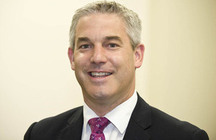
  • Steve Barclay – 2022 Statement on Urgent and Emergency Care

    Steve Barclay – 2022 Statement on Urgent and Emergency Care

    The statement made by Steve Barclay, the Secretary of State for Health and Social Care, in the House of Commons on 5 September 2022.

    Mr Deputy Speaker, with permission, I’d like to make a statement on our support for urgent and emergency care.

    I know that this is an issue that has been of great concern to honourable members and I wanted to update the House – at the earliest opportunity – on the work that we’ve been doing over the summer.

    Bed occupancy rates have broadly remained at winter-type levels with COVID-19 cases in July still high, at 1 in 25 testing positive – that compares with 1 in 60 currently.

    This is without the decrease in occupancy that we would normally see after winter ends and ambulance wait times have also continued to reflect the pressures of last winter, although I am pleased, Mr Deputy Speaker to see recent improvements. For example the West Midlands today is meeting their category 2 time of less than 18 minutes.

    Mr Deputy Speaker, I’d like to update the House on the nationwide package of measures that we are putting in place to improve the experience for patients and colleagues alike.

    First, Mr Deputy Speaker, we have boosted the resources available to those on the frontline.

    We’ve put in an extra £150 million of funding to help trusts deal with ambulance pressures this year and on top of this, we’ve agreed a £30 million contract with St John Ambulance so that they can provide national surge capacity of at least 5,000 hours per month.

    We’re also increasing the numbers of colleagues on the frontline.

    We’ve boosted national 999 call handler numbers to nearly 2,300, about 350 more than September last year and we have plans to increase this number further to 2,500 by December, supported by a major national recruitment campaign.

    By the end of the year, we’ll have also increased 111 call handler numbers to 4,800.

    As well as this, we have a plan to train and deploy even more paramedics and Health Education England has been mandated to train 3,000 paramedic graduates nationally each year – double the number of graduates that were accepted in 2016.

    Second, Mr Deputy Speaker, we are putting an intense focus on the issue of delayed discharge – which is the cause of so many of the problems that we have seen in urgent and emergency care, and I think that’s recognised across the House.

    This is where patients are medically fit to be discharged but remain in hospital, taking up beds that could otherwise be used for those being admitted.

    Delayed discharge means longer waits in A&E, lengthier ambulance handover times and the risk of patients deteriorating if they remain in hospital beds too long – particularly the frail elderly.

    The most recent figures, from the end of July, show that the number of these patients is just over 13,000 – similar numbers to the winter months.

    We’ve been working closely with trusts where delayed discharge rates are highest, putting in place intensive on-the-ground support.

    More broadly, our National Discharge Taskforce is looking across the whole of health and social care to see where we can put in place best practice and improve patient flow through our hospitals. And as part of that of work, we’ve also selected discharge frontrunners who will be tasked with testing radical solutions to improve hospital discharge – and we’re looking at which of these proposals we can roll out across the wider system and launch at speed.

    This, of course, is not just an issue for the NHS.

    We have an integrated system for health and care and must look at the system in the round, and all the opportunities where we can make a difference.

    For instance, patients can be delayed as they are waiting for social care to become available and here too, we have taken additional steps over the summer.

    We have launched an international recruitment taskforce to boost the care workforce and address issues in capacity.

    And on top of this, we’ll be focusing the Better Care Fund, which allows integrated care boards and local authorities to pool budgets, to reduce delayed discharge.

    And in addition, we are looking at how we can draw on the huge advances in technology that we’ve seen during the pandemic and unlock the value of the data that we hold in health and care and that includes through the Federated Data Platform.

    Finally, Mr Deputy Speaker, we know from experience that the winter will be a time of intense pressure for urgent and emergency care.

    The NHS has set out its plans to add the equivalent of 7,000 additional beds this winter, through a combination of extra physical beds and the virtual wards which played such an important role in our fight against COVID-19.

    Another powerful weapon this winter will be our vaccination programmes.

    Last winter, we saw the impact that booster programmes can have on hospital admissions, if people come forward when they get the call.

    This year’s programmes gives us another chance to protect the most vulnerable and reduce demands on the NHS.

    Our autumn booster programmes for COVID-19 and flu are now getting under way and will be offered to a wider cohort of the population, including those over 50, with the first jabs going in arms this week, as care home residents, staff and the housebound become the first to receive their COVID-19 jabs. And over the summer, we became the first country in the world to approve a dual-strain COVID-19 vaccine, that targets both the original strain of the virus and the Omicron variant.

    And indeed this weekend, the MHRA approved another dual-strain vaccine, from Pfizer, and I’m pleased to confirm that we will be deploying that as well, along with the Moderna dual-strain vaccine as part of our COVID-19 vaccination programme, and in line with the advice of the independent experts at the JCVI.

    Whether it’s for COVID-19 or flu, I’d urge anyone who’s eligible to get protected as soon as you are invited by the NHS, not just to protect yourself and those around you but to ease the pressure on the NHS this winter.

    Today, I have also laid before the House a written ministerial statement on the work that we’ve been doing over the summer and I just wanted to draw the House’s attention to one particular feature within that written ministerial statement that has garnered interest in the House in the past.

    In November 2021 the government announced that it would make £50 million available in funding for research into motor neurone disease over 5 years.

    Following work over the summer between the Department of Health and Social Care and BEIS, through the National Institute for Health Research and UKRI, to support researchers to access funding in a streamlined and coordinated way, we’re pleased to confirm that this funding has now been ringfenced.

    The Department of Health and Social Care and BEIS welcome the opportunity to support the MND scientific community of researchers as they come together through a network and link through a virtual institute.

    I commend this statement to the House.

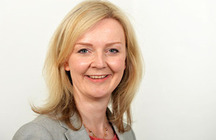
  • Liz Truss – 2022 First Speech as Prime Minister

    Liz Truss – 2022 First Speech as Prime Minister

    The speech made by Liz Truss, the Prime Minister, on 6 September 2022.

    Good afternoon,

    I have just accepted Her Majesty The Queen’s kind invitation to form a new government.

    Let me pay tribute to my predecessor.

    Boris Johnson delivered Brexit, the Covid vaccine, and stood up to Russian aggression.

    History will see him as a hugely consequential Prime Minister.

    I’m honoured to take on this responsibility at a vital time for our country.

    What makes the United Kingdom great is our fundamental belief in freedom, in enterprise, and in fair play.

    Our people have shown grit, courage and determination time and time again.

    We now face severe global headwinds caused by Russia’s appalling war in Ukraine and the aftermath of Covid.

    Now is the time to tackle the issues that are holding Britain back.

    We need to build roads, homes and broadband faster.

    We need more investment and great jobs in every town and city across our country.

    We need to reduce the burden on families and help people get on in life.

    I know that we have what it takes to tackle those challenges.

    Of course, it won’t be easy. But we can do it.

    We will transform Britain into an aspiration nation…with high-paying jobs, safe streets and where everyone everywhere has the opportunities they deserve.

    I will take action this day, and action every day, to make it happen.

    United with our allies, we will stand up for freedom and democracy around the world – recognising that we can’t have security at home without having security abroad.

    As Prime Minister, I will pursue three early priorities.

    Firstly, I will get Britain working again.

    I have a bold plan to grow the economy through tax cuts and reform.

    I will cut taxes to reward hard work and boost business-led growth and investment.

    I will drive reform in my mission to get the United Kingdom working, building, and growing.

    We will get spades in the ground to make sure people are not facing unaffordable energy bills and we will also make sure, that we are building hospitals, schools, roads, and broadband.

    Secondly, I will deal hands-on with the energy crisis caused by Putin’s war.

    I will take action this week to deal with energy bills and to secure our future energy supply.

    Thirdly, I will make sure that people can get doctors’ appointments and the NHS services they need. We will put our health service on a firm footing.

    By delivering on the economy, on energy, and on the NHS, we will put our nation on the path to long-term success.

    We shouldn’t be daunted by the challenges we face.

    As strong as the storm may be, I know that the British people are stronger.

    Our country was built by people who get things done.

    We have huge reserves of talent, of energy, and determination.

    I am confident that together we can:

    Ride out the storm,

    We can rebuild our economy,

    And we can become the modern brilliant Britain that I know we can be.

    This is our vital mission to ensure opportunity and prosperity for all people and future generations. I am determined to deliver. Thank you.