Blog

  • Jamie Wallis – 2022 Comments on Rishi Sunak Becoming Prime Minister

    Jamie Wallis – 2022 Comments on Rishi Sunak Becoming Prime Minister

    The comments made by Jamie Wallis, the Conservative MP for Bridgend, on Twitter on 21 October 2022.

    This has been an incredibly tough decision. But following my calls for PM to resign on Sunday, I promised to make this decision with the country’s security and stability the only consideration – in doing so it’s clear it simply has to be Rishi Sunak.

  • Chris Heaton-Harris – 2022 Comments on Boris Johnson Returning as Prime Minister

    Chris Heaton-Harris – 2022 Comments on Boris Johnson Returning as Prime Minister

    The comments made by Chris Heaton-Harris, the Conservative MP for Daventry, on Twitter on 21 October 2022.

    We need a leader with a proven track record of delivery, the resilience to lead our country, a mandate from the British people and the ability to defeat Keir Starmer.

    That’s why I’m backing Boris Johnson to finish the job he started in 2019.

  • Anthony Browne – 2022 Comments on Rishi Sunak Becoming Prime Minister

    Anthony Browne – 2022 Comments on Rishi Sunak Becoming Prime Minister

    The comments made by Anthony Browne, the Conservative MP for South Cambridgeshire, on Twitter on 21 October 2022.

    For the new PM, we need someone with economic credibility, who is popular with voters, and who hasn’t already been forced to resign as PM. I am backing Rishi Sunak!

  • Antony Higginbotham – 2022 Comments on Boris Johnson Returning as Prime Minister

    Antony Higginbotham – 2022 Comments on Boris Johnson Returning as Prime Minister

    The comments made by Antony Higginbotham, the Conservative MP for Burnley, on Twitter on 21 October 2022.

    Over the last 24 hours my inbox has been inundated with messages. The majority view, and my view, is clear. It’s time to #BringBackBoris.

    He has the mandate to lead our country and our party.

  • Neil Hudson – 2022 Comments on Penny Mordaunt Becoming Prime Minister

    Neil Hudson – 2022 Comments on Penny Mordaunt Becoming Prime Minister

    The comments made by Neil Hudson, the Conservative MP for Penrith and The Border, on Twitter on 21 October 2022.

    I am backing Penny Mordaunt to be Prime Minister as I believe she has the leadership attributes, experience, empathy and compassion to unite our country and lead us through these challenging times.

  • Gillian Keegan – 2022 Comments on Rishi Sunak Becoming Prime Minister

    Gillian Keegan – 2022 Comments on Rishi Sunak Becoming Prime Minister

    The comments made by Gillian Keegan, the Conservative MP for Chichester, on Twitter on 21 October 2022.

    Choosing our next leader is a huge responsibility. The country faces economic challenges & serious times call for serious leadership. We need a Prime Minister with proven credibility & the right skills, experience & judgement. That’s why I am backing Rishi Sunak to be our next PM.

  • Anne-Marie Trevelyan – 2022 Comments on Boris Johnson Returning as Prime Minister

    Anne-Marie Trevelyan – 2022 Comments on Boris Johnson Returning as Prime Minister

    The comments made by Anne-Marie Trevelyan, the Conservative MP for Berwick-upon-Tweed, on Twitter on 21 October 2022.

    I have worked closely with ⁦Boris Johnson⁩ for many years. He can continue to deliver for the country and already has a mandate. It’s time to #bringbackboris.

  • Dean Russell – 2022 Speech on the Protection from Redundancy (Pregnancy and Family Leave) Bill

    Dean Russell – 2022 Speech on the Protection from Redundancy (Pregnancy and Family Leave) Bill

    The speech made by Dean Russell, the Parliamentary Under-Secretary of State for Business, Energy and Industrial Strategy, in the House of Commons on 21 October 2022.

    It is an absolute pleasure to follow the hon. Member for Bradford East (Imran Hussain). I thank him for his contribution and his questions, which I will do my best to cover. If I do not, hopefully, we can cover them separately as we move forward.

    I truly thank the hon. and gallant Member for Barnsley Central (Dan Jarvis) for bringing this important legislation forward. I thank, too, all of the Members who have spoken on this important matter today, including: the hon. Members for North East Fife (Wendy Chamberlain), for Hampstead and Kilburn (Tulip Siddiq), my hon. Friends the Members for West Bromwich West (Shaun Bailey) and for Cities of London and Westminster (Nickie Aiken), my right hon. Friend the Member for Beckenham (Bob Stewart), with his incredibly powerful and moving comments, my hon. Friend the Member for Ashfield (Lee Anderson), my right hon. Friend the Member for Chipping Barnet (Theresa Villiers), and the hon. Member for Motherwell and Wishaw (Marion Fellows). I will come to some of the key points as I progress with my speech.

    I wish to echo the thanks of the hon. Member for Barnsley Central to my predecessors. I often say that anyone who takes on these roles stands on the shoulders of giants. I am very fortunate to be building on the work of my hon. Friend the Member for Loughborough (Jane Hunt), whose work has been phenomenal, and my hon. Friend the Member for Sutton and Cheam (Paul Scully), with whom I have worked closely and whose work has been even more phenomenal in helping us get to this point today.

    My right hon. and gallant Friend the Member for Beckenham and my right hon. Friend the Member for Chipping Barnet both predicted what I am about to say: I am pleased to confirm that the Government support the Bill. I look forward to working with the hon. Member for Barnsley Central in Committee. We have talked a lot about recruitment; he did an amazing job of recruiting many members to his Committee—hopefully more women than men, although I was not keeping count.

    I am pleased to support the Bill from a personal perspective. I am the father to an inspirational daughter; the husband to an incredible and smart wife; the son to a loving and hardworking mother; my sister is a cancer survivor and has dealt with challenges with such kindness and strength; and I am an uncle to beautiful nieces. The Bill is trying to support women and girls for the future to feel true equality in their lives and in the workplace. It certainly signals that to them all.

    The Bill is another example of how Parliament works so well together. When we support and challenge each other, we get the best legislation and we show the country that we are all compassionate and believe in getting the legislation right. That often means that things take a bit more time, but the trouble is the very small number of unscrupulous businesses. We heard moving comments from the hon. Member for Motherwell and Wishaw (Marion Fellows) about how when people think they can get away with things, sadly they do, and in some of the worst instances. Most businesses are honourable and do the right thing, but we have to ensure that there are no holes in the legislation, because those who want to get around doing the right thing will always find those holes. It is right that the legislation takes time and it is fabulous that we are discussing it.

    I know what a crucial issue pregnancy and maternity discrimination truly is and the pernicious effect that it can have on both the immediate and longer term prospects for women in work. More generally, it puts a drag on equality and productivity. We heard earlier about the challenges not just to the workplace and to the economy but to mental health. The Bill will make a difference not just in the workplace but at home, so that people truly have a work-life balance. That means not having to worry about things that they should not need to worry about.

    Nickie Aiken

    It is important to provide women who are pregnant or on maternity leave with workplace protections. Do women trying to get pregnant by undergoing fertility treatment deserve the same employment rights as those who get pregnant naturally?

    Dean Russell

    My hon. Friend has done incredible work on her private Member’s Bill. Officials and I are looking at it very closely. I applaud her for her work not just on that but generally. She is a staunch, hardworking Member for her constituents. That is why I am pleased to be here and to have taken on this important portfolio, for as long as it may last—hopefully years rather than days.

    Irrespective of who is at the Dispatch Box, the Government are committed to ensuring that the UK is the best place in the world to work and grow a business. We need a strong and flexible labour market that supports participation and economic growth. Let me put on record why the Government support the legislation. When we talk about female economic empowerment, we tend to talk about positive facilitative policies: parental leave and pay, flexible working, women on boards and so on—policies looking to drive positive action to achieve better outcomes.

    We are taking huge strides to deliver equal opportunities for women in the UK. They include mandatory pay gap reporting, the largest ever cash increase in the national living wage in 2022 and passing the landmark Domestic Abuse Act 2021. It is pleasing to see that nearly 2 million more women are in work since 2010. The number of women on FTSE 350 company boards is up by over 50% in just five years. The number of women in FTSE 100 company boardroom roles has jumped to 39% from 12.5% 10 years ago. There is a higher percentage of women on FTSE 350 company boards than ever before. As my hon. Friend the Member for West Bromwich West pointed out however, there are some very negative statistics that we need to address.

    Shaun Bailey

    I welcome my hon. Friend to his new position. When it comes to Ministers who should be in position, he is 1,000% one of them and I am so glad to see him in his place on the Front Bench. He has just pointed out that the statistics in other areas are not great: can he give a commitment that the Government are 100% determined to ensure that we get those stats up? The fact that in the legal profession only 28% of partners are women is not good enough. If 60% of employees are women but only 28% make partner, that is nowhere near enough.

    Dean Russell

    I thank my hon. Friend for his kind comments. Equality is not just for the sake of equality: it improves things on every level—the economy, the workplace, the challenge in boardrooms and many other areas. I was pleased to hear my hon. Friend mention that 80% of his office staff are women, because that is a powerful example of how we in this place can lead from the front. We talked earlier about mental health. I have noticed in the past few years how people here have talked much more about mental health, and now it is talked about much more in the workplace and in society. That is a really important example of this House leading. I remember a few years ago in 2015 when I had a small role in helping to support, in a professional capacity, a report by the all-party parliamentary group on women in Parliament. It looked at how we could encourage more women into the workplace and, in particular, more women into politics. We need to have that at the front of our minds at all times.

    On International Women’s Day in March this year, we announced a package of initiatives to help to open up more opportunities to women and to boost the post-pandemic recovery, including by promoting transparency and fairness in pay, ending employers asking about salary history, and supporting women who want to return to the science, technology, engineering and maths workforce. We have an extensive suite of parental leave and pay rights. Parents have access to a range of leave and pay entitlements in a child’s first year, giving working families more choice and flexibility about who cares for their child and when. Our maternity leave entitlement is also generous. To qualifying employed women we offer 52 weeks of maternity leave, of which 39 are paid, which is three times more than the EU minimum requirement. For self-employed women and those who are not eligible for statutory maternity pay, maternity allowance may be available. Both maternity payments are designed to provide a measure of financial security, to help women to stop working towards the end of their pregnancies and in the months after childbirth in the interests of their own and their babies’ health and wellbeing.

    As well as the positive steps we can encourage or require employers to take, we need to clamp down on poor and inappropriate practices, such as waiting for a woman to return from maternity leave and for the current protected period to end, and then—terribly—making her redundant. That is just so wrong. We know that one of the key drivers of the gender pay gap is the time that women stay away from work. Ensuring that women are not needlessly forced out of the workplace is therefore an important way to tackle that inequality and maximise the economic contribution that women can make. As the hon. Member for Barnsley Central explained, the incidence of pregnancy and maternity discrimination, and the poor treatment of pregnant women and new mothers, is still far too high. That is unacceptable, and why the Bill is so important.

    My right hon. Friend the Member for Beckenham—I cannot see him in his place but I am sure he will be listening elsewhere—asked whether the Government will produce guidance on pregnancy and maternity discrimination advisory boards. I will take that back to the Department, but there will be work to ensure that information is communicated far and wide so that both employers and employees are aware of those rights.

    The hon. Member for Barnsley Central and others mentioned the German model. I am conscious that there is always a question whether we can push further and faster and do more. I definitely take his comments on board, but the Government do not think that it is right to follow the German model; I will happily follow up separately with specific details about why we do not agree with going that far. However, there is merit in how the Bill takes definite strides in that direction.

    The personal stories told today have been really powerful. Emily and Natasha have been mentioned; my condolences and thoughts are with them after the challenges that they have faced. I hope that the hon. and gallant Member’s work today will ensure that what happened to them is not repeated. The hon. Member for Hampstead and Kilburn spoke about the discrimination during pregnancy that her friends faced, which was a really powerful way of bringing to life why the Bill is so important.

    My hon. Friend the Member for West Bromwich West asked about cultural change. As he alluded to in his intervention just now, this is a societal thing. We can change things through legislation, but it is often much better to ensure that we change things in society. The Bill should be the backstop rather than being front and centre for businesses—they should just do the right thing.

    My hon. Friend the Member for Loughborough did an excellent job, both as my predecessor and in her comments today. I commend her for ensuring that we have moved in the right direction with the Bill. As the hon. Member for Bradford East said, getting collaboration around the table on amendments—never mind getting a private Member’s Bill agreed by the Government—is an immense achievement, and my predecessor has kept the Bill on the table.

    My hon. Friend the Member for Cities of London and Westminster made the point that it is so essential to ensure that women can continue to pursue their career. Nobody should feel that wanting to have a family should end their career. That should never be the situation in the 21st century, or any century. We need to go full force on this.

    My right hon. Friend the Member for Chipping Barnet spoke about economic activity. She made the point that this is not just about being nice and doing the right thing; it has a substantial impact on the bottom line and on this country’s economy.

    My right hon. Friend the Member for Ashfield—I should call him my hon. Friend, but I am sure he will be my right hon. Friend at some point; he is always right honourable to me—was so eloquent, as always. He always hits the nail on the head. He made the important point that if we retain women we can also navigate the challenges of skills shortages. That is so important, especially when we consider that there are almost 1 million roles available. Let us make sure that we promote all opportunities to all people.

    The hon. Member for Motherwell and Wishaw spoke so eloquently about the challenges that she faced many decades ago. Hopefully, many of them have since been addressed in legislation, but the Bill will take things even further.

    I note the point that the hon. Member for Bradford East raised about tribunal time limits. The Government recognise that there are concerns that in certain circumstances the three-month time limit for bringing Equality Act-based cases to tribunal may not feel long enough. In July 2019 we ran a public consultation on whether the limit should be extended; the positive impact that such a change could have is clear from the responses that we received. The Government response, which was published in July 2021, committed to

    “look closely at extending the time limit for bringing Equality Act 2010 based cases to the employment tribunal”.

    We continue to consider the evidence for doing so, and we understand the positive impact that it will ultimately have.

    In conclusion, these measures will provide invaluable support and protection for parents during what should be an exciting and joyous time—pregnancy and the start of their child’s life—as they juggle work and caring responsibilities.

    The extension of MAPLE to pregnancy in a period of return to work is backed by evidence and analysis. The Government’s and the EHRC’s research, and the work of the Women and Equalities Committee and others, have established that there is a clear need for further work to help parents at these times. We must take steps to tackle the discrimination and poor treatment that some undoubtedly face.

    The Government are pleased to support the Bill. It is wholly in line with our ongoing commitment to support workers and build a high-skilled, high-productivity, high-wage economy. We look forward to continuing to work with the hon. Member for Barnsley Central and, of course, all the new Committee members who are in the Chamber today to support the Bill.

    Dan Jarvis

    With the leave of the House, I will briefly respond to what has been an extremely useful and constructive debate, at the end of what, according to any metric, has been quite a long week in this place.

    There have been some outstanding contributions from Members today. Everyone who spoke added real value to the debate, and I am incredibly grateful to all of them. I also thank the EHRC, the TUC, the Royal College of Midwives, Unison, the Fawcett Society and the Chartered Institute of Personnel and Development, not just for their invaluable support for the Bill but for the important work that they do. Let me, in particular, thank the Minister, who has been remarkably helpful, as was the previous Minister, as was the shadow Minister, and as have been the officials at the Department for Business, Energy and Industrial Strategy, the Clerks, and my very small team in Parliament, Richard Mitchell and Alex Foy, for all the hard work that has gone into the Bill.

    As I have said, this has been an extremely useful debate. A huge number of important points have been made—too many to mention. I think it has been acknowledged that the Bill is timely. We all know that our constituents are facing a cost of living crisis, so this is the right moment at which to introduce such legislation. We should of course recognise the pain and suffering of those who have had to endure the hardship of unfair dismissal.

    There has been general agreement on the fact that raising a family is a difficult, though important, job, but it is made much more difficult when people have to face discrimination in the workplace. I pay tribute to all who have been fighting that discrimination, including the extraordinary women who are fighting for justice in the courts. I also pay tribute to organisations such as Pregnant Then Screwed and Maternity Action for their dedicated work to protect and enhance the rights of pregnant women.

    Whatever happens today, it will still be too late for Emily, Natasha and Sarah, but, as the Minister rightly said a moment ago, their contribution to this process has been incredibly valuable. I hope that they, and all the other people who have been affected, will take some comfort from knowing that they have contributed to—hopefully—a change in the law that will help to give more than 50,000 women a year the security of returning to their job after taking maternity leave. I ask the House to support the Bill.

    Question put and agreed to.

    Bill accordingly read a Second time; to stand committed to a Public Bill Committee (Standing Order No. 63).

    Mr Deputy Speaker (Mr Nigel Evans)

    Congratulations, Mr Jarvis. It has been a privilege for me to chair this particular debate, which has shown the House working at its very best.


  • Imran Hussain – 2022 Speech on the Protection from Redundancy (Pregnancy and Family Leave) Bill

    Imran Hussain – 2022 Speech on the Protection from Redundancy (Pregnancy and Family Leave) Bill

    The speech made by Imran Hussain, the Labour MP for Bradford East, in the House of Commons on 21 October 2022.

    I welcome the Minister to his place and congratulate my hon. and gallant Friend the Member for Barnsley Central (Dan Jarvis) on bringing this important Bill to the House for debate. I know that he has worked closely with civil servants and previous Ministers in the Department for Business, Energy and Industrial Strategy to produce a workable Bill that can pass through the House.

    The Bill before us has cross-party support, as was evident from the contributions. Those of us who have been in this place for any length of time know how difficult it is to get cross-party support—especially on a private Member’s Bill—so that is a testament to his hard work. I know that hon. Members across the House will join me in congratulating him on that.

    May I also thank the previous Minister, the hon. Member for Loughborough (Jane Hunt), who is in her place, for the fantastic work she has done in this area? I know about that from conversations we have had. The right hon. Member for Basingstoke (Dame Maria Miller) is not in her place, but I understand that she has done a considerable amount of work in this area too. I think it is important to record that here.

    I also want to pay thanks to other hon. Members to their contribution to the debate. Before I do, I have to say that I feel the Conservative Whips today will be very pleased with my hon. Friend the Member for Barnsley Central, as he has nominated a number of Members to take the somewhat burdensome task at Committee stage off their hands. He did it in a masterful way; I was sat admiring and learning how it was done.

    I want to genuinely thank hon. Members from across the House. The hon. Member for Loughborough made the point that we are at our best when we come together. It is absolutely right that we come together on matters of huge importance. I thank the right hon. Member for Beckenham (Bob Stewart), who, in his customary style of combining humour, passion and some very serious points, spoke very well. We will all take away his fine point about women being far superior to men. It is certainly a point I would never disagree with. My hon. Friend the Member for Hampstead and Kilburn (Tulip Siddiq) spoke very passionately and gave real-life examples from her constituency that highlighted the broader impact on families and children.

    The hon. Member for West Bromwich West (Shaun Bailey) gave a very passionate speech. He spoke from personal experience but also made the good point that good employers would actually welcome this legislation for all the right reasons. I have already thanked the hon. Member for Loughborough, but she rightly pointed out that this legislation extends to shared parental leave and adoption leave, and quite rightly so. The hon. Member for Cities of London and Westminster (Nickie Aiken) cited constituency examples and spoke of her personal experience, and I think everybody would agree about the importance of the cases she referenced.

    The right hon. Member for Chipping Barnet (Theresa Villiers) quite rightly highlighted the benefits to employers as well as employees. She made a valuable point about the increased productivity that this measure will clearly bring. The hon. Member for Ashfield (Lee Anderson) made a pertinent point, the theme of which ran through all Members’ contributions: it is tragic that we are in the year 2022 and having to address this form of discrimination. It is shocking. Tragically, he is right that the discrimination in the workplace starts way before pregnancy. He highlighted many important points.

    The hon. Member for Motherwell and Wishaw (Marion Fellows) cited a harrowing personal experience with the civil service. It was from the past, but she was visibly still quite moved, naturally and understandably. She gave equally moving examples from her constituency.

    I am very grateful to all the hon. Members who have spoken today. They all spoke well and highlighted the importance of this Bill, which seeks to extend the protections from redundancy afforded to those taking maternity leave, adoption leave or shared parental leave beyond the date on which their leave ends, and to strengthen the protections afforded in pregnancy. As we have heard, these protections are desperately needed.

    Maternity Action, Unison, the TUC and others have found that many employees are still being unfairly dismissed through redundancy. A number of hon. Members rightly cited reports such as the 2015 Equality and Human Rights Commission finding that 54,000 new mothers may be forced out of their job each year by being made compulsorily redundant or being treated so poorly that they have no option but to leave. Rather alarmingly, the Women and Equalities Committee found there is more discrimination and poor treatment of pregnant women and mothers at work than a decade ago, which should shock the House.

    If those figures were not alarming enough, the campaign group Pregnant Then Screwed, which has been referenced by a number of Members, found in 2020 that more than one in 10 pregnant women had either been made redundant or expected to be made redundant, with almost two in three believing their pregnancy and motherhood was a factor. The TUC has reported that some women had been forced to take sick leave or unpaid leave because their workplace was no longer safe for them during their pregnancy and because their employer had refused to make the required adjustments.

    As everyone who spoke before me said, it is frankly disgraceful that, in 2022, there is still discrimination against new mothers and mothers-to-be in the workplace, and that bad bosses feel they can flout employment law with impunity and without consequence or retribution. It could not be clearer that the existing protections for pregnant women fall far below the standard we should expect in this country.

    With more than 15 million women aged 16 and over in employment between April and June 2022, with the female employment rate increasing to 72%—many of whom may choose to take periods of leave to have a family—and with the right to family life being a key human right, protecting those who choose to start and raise a family from unfair dismissal must be a key priority for this House and this Government. That is why Labour’s new deal for working people, published last year, makes a firm commitment to enshrine stronger protections in law to make it unlawful for an employer to dismiss a woman who is pregnant, while also extending statutory maternity and paternity leave.

    I am pleased that not only has my hon. Friend the Member for Barnsley Central introduced this Bill but that the Government support his proposal, even if it has tragically taken us more than three years since the consultation to see this legislation. Although the Opposition Front Bench team support this Bill, we have a number of concerns about the shortcomings of Government policy that will weaken the Bill’s protections. The Minister will know from the tone of my speech that it is made in good faith. The strength of this debate shows the passion on both sides of the House to make this Bill as strong as possible and to afford as many protections as possible.

    I am concerned about the Government’s plans to raise awareness among employers of the changes the Bill will make to regulations. Employers of all sizes must be made aware of their existing statutory responsibilities to those who are pregnant and those who are taking maternity, adoption or shared parental leave, even before we get to the strengthened protections that my hon. Friend proposes. As we have heard, many employers are flouting the current protections either deliberately, knowing they can get away with it, or inadvertently because they simply do not know what protections the law affords to pregnant women and those taking parental leave. It is clear that if we are to make progress, in my view, the Minister should have a hands-on approach to regulation and must ensure that employers are made aware. I hope the Minister is able to confirm today the actions that they will be taking to spread awareness among employers of existing and new protections—that point has been made by several Members today.

    The issue of upholding and enforcing rights also takes me neatly on to my next point about the current backlog in employment tribunals. As has been pointed out, the Bill today and the regulations set to be made by the Minister will not apply a comprehensive blanket ban on making a pregnant woman or those on parental redundant, but only strengthen their chances of making a successful claim of unfair dismissal through the employment tribunal system. As anyone who has tried to hold their employer to account through the employment tribunal system for a breach of employment law will know, the situation is beyond dire. With a backlog of over half a million single and multiple claims, it can be up to two years after a claim is made that someone will have their case heard.

    Faced with such a backlog, it is simply no wonder that such a high proportion of people withdraw their claims. If the Minister intends for the protections afforded by the Bill and forthcoming regulations, he must tackle that backlog as a matter of immediate priority.

    Those made redundant and unfairly dismissed from their employment while pregnant or on parental must also have much greater flexibility in making an employment tribunal claim. That is why the Opposition’s new deal for working people proposes extending the time limit on bringing an employment tribunal claim so that no one is forced into making a hasty claim to a tribunal before allowing ACAS and their trade union to reach a settlement with their employer, so that anyone who has recently had a child does not have to face the additional pressures of making a claim in those hectic first three months when, as everyone will agree, caring for their child comes before their own wellbeing.

    As has been pointed out, the Bill does not propose imposing a blanket ban on redundancies during the new extended period that the Minister must define in secondary legislation. That leaves real concerns that it will not go far enough in stopping discrimination against pregnant women in the workplace and those on parental leave, nor sufficiently protect them from redundancy. There are concerns that it will not be clear enough to employers.

    As the Minister knows, and as was pointed out by my hon. Friend the Member for Barnsley Central, the German model offers a clear and pragmatic standard that the UK can adopt and adjust. My hon. Friend has gone through the German model point for point, so I do not seek to repeat that; it is on the record and Members were here when he made those points. In all sincerity, I would be grateful for a response from the Minister as to why the Government cannot adopt that model, beyond claiming that it would be too difficult to implement.

    The qualifying period to obtain the additional protection offered after a period of leave is also a worry. That point, as I understand it, has not been made here today, but I believe it is equally important, as those most in need of protection are those who are forced to tragically curtail their leave before the sixth week because of personal, often financial, circumstance. These individuals should not be excluded from the extended protections being offered because of their circumstances and their need to curtail their leave. I hope the Minister will look again at this issue when regulations bringing it into effect are being drafted.

    Finally, I wish to raise my concerns around the legislation itself. Although the Bill is the first step in introducing stronger protections for those on parental leave, the journey culminates in the Secretary of State making regulations that apply and specify the protections, and, as far as I can see, there is nothing compelling him to introduce these regulations by a certain date. Having covered this brief for some time, I am more than a little used to the Government promising action and, tragically, not following through on many important issues. For example, the ethnicity pay gap reporting keeps getting kicked into the long grass, and the legislation that mysteriously enters into the “in due course” world never seems to come back.

    Tragically, some private Members’ Bills rarely make it on to the statute book because the Government refuse to make time for them in Committee. I therefore hope the Minister will confirm the date for the Bill to pass through its Committee stage. I know that there may a provisional date, but it would be nice to have that confirmation.

    All these concerns could have been addressed if the Government had only introduced and passed an employment Bill, as they said they would almost three years ago. It was first announced in the Queen’s Speech in 2019 and then pushed back to a point “in due course”—that seems to be when so many of the plans from the Department for Business, Energy and Industrial Strategy will take place—and now seemingly has been scrapped, with no mention of it in the Queen’s Speech earlier this year. An employment Bill would have provided a means for the Government to strengthen protections for pregnant women and those on parental leave years ago, as well as so much more.

    In closing, I want to be clear that we absolutely support the Bill before us today and applaud the work that has been done by my hon. Friend the Member for Barnsley Central. Again, I thank hon. Members from the across the House for the spirit in which this debate has been conducted today and for their powerful contributions. I hope, given the strength of feeling and the sincerity with which we have all spoken today, the Minister will look at making concessions with regards to the points that I have raised, particularly around ensuring that the regulations that are made can be upheld and enforced.

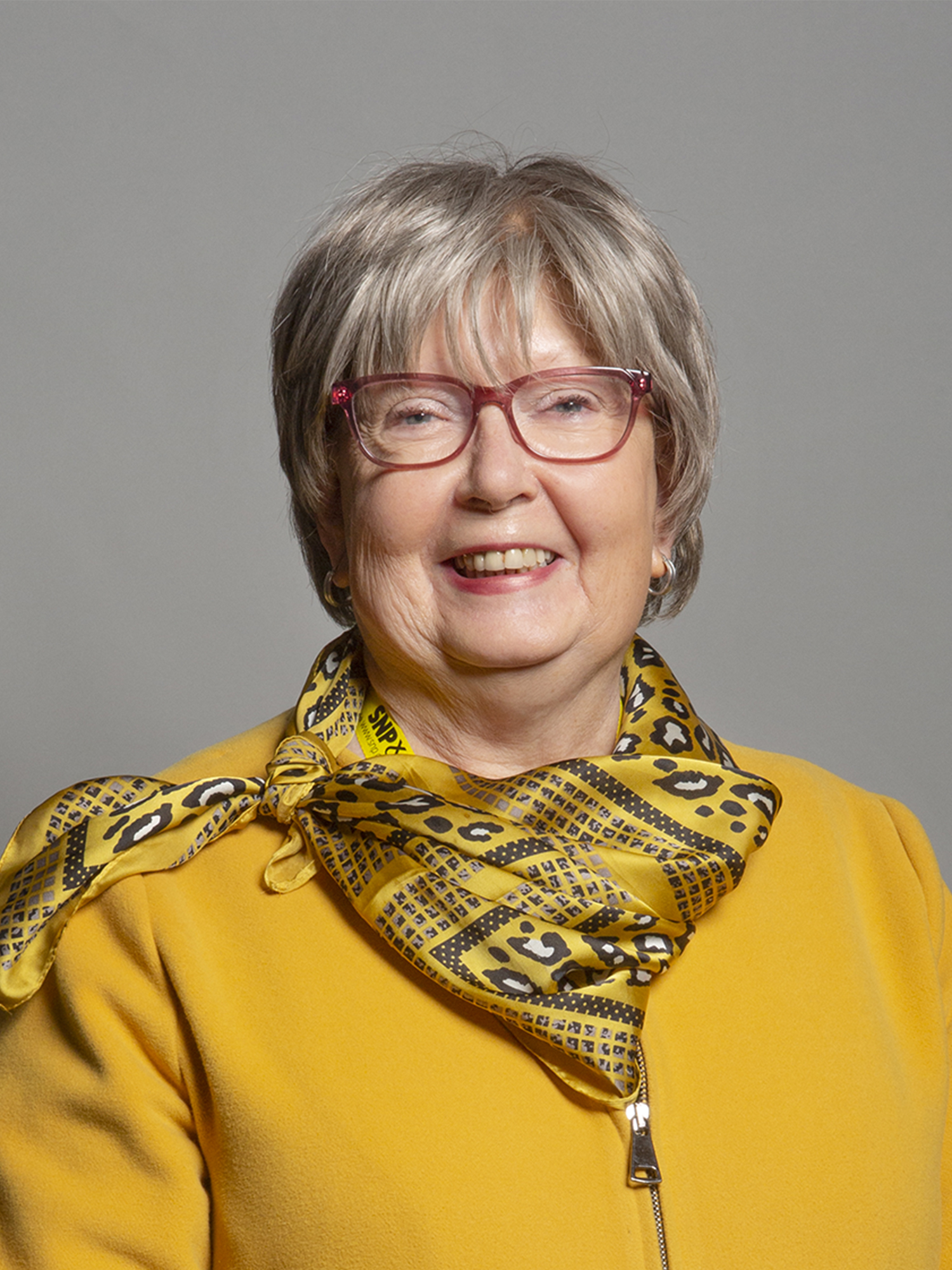
  • Marion Fellows – 2022 Speech on the Protection from Redundancy (Pregnancy and Family Leave) Bill

    Marion Fellows – 2022 Speech on the Protection from Redundancy (Pregnancy and Family Leave) Bill

    The speech made by Marion Fellows, the SNP MP for Motherwell and Wishaw, in the House of Commons on 21 October 2022.

    I never thought I would hear myself say the words, but it is a pleasure to follow the hon. Member for Ashfield (Lee Anderson). It is always good when there is such consensus across the Chamber on Fridays in this place, and I think it is something we could perhaps do with a little more of at other times of the week.

    I congratulate the hon. and gallant Member for Barnsley Central (Dan Jarvis) on his success in the ballot to secure the opportunity to introduce a private Member’s Bill. I admit I am jealous, but I really want to commend him for the choice of subject, especially given the fact, as the hon. Member for Hampstead and Kilburn (Tulip Siddiq) said, that he as a man is introducing this Bill.

    I also commend the right hon. Member for Basingstoke (Dame Maria Miller), who has been congratulated by hon. Members on both sides of the Chamber, for all her previous work to bring forward a similar Bill. I mention my hon. Friend the Member for East Dunbartonshire (Amy Callaghan), who raised the matter in a Westminster Hall debate last year, and my hon. Friend the Member for Ayr, Carrick and Cumnock (Allan Dorans), who had hoped to be here today but unfortunately cannot be. I thank him for giving me some good pointers for my speech. I commend the work of Maternity Action, the maternity rights charity, for its work to advance women’s rights during pregnancy for many years.

    For far too long, women have been discriminated against in many ways—in society generally, in employment particularly and when pregnant specifically. Looking round the Chamber, I can confidently say that I am the oldest woman here. When I was pregnant with my first child in 1974, I was discriminated against in the most horrendous way. I found out that I was pregnant about a month before I was due to start a job in the civil service setting up jobcentres on the east coast of Scotland. The arrangement was that I had to phone and say that I was ready to start, so I had a very pleasant chat with someone—I cannot remember the details; it was a long time ago—and mentioned in the conversation that I was pregnant. They literally said, “Goodbye,” and put the phone down, and I never heard from the civil service again. That was standard operating procedure in those days; the civil service did not do anything wrong that I could chase them up in law for or anything. That was just the end of what might have been a wonderful civil service career.

    When I have told that story to younger people, such as my daughters, my daughters-in-law and my students when I taught at West Lothian College, I got the same gasp that I just heard in the Chamber. We have moved on—my daughter and my two wonderful daughters-in-law have never experienced anything like that—but I am acutely aware of the cultural change that is necessary in this area. Although there are some laws that prohibit direct discrimination against women, there needs to be cultural change to bring people on board.

    I would like to think that with this private Member’s Bill and the Government’s support, we are working our way towards eliminating another form of discrimination against women, especially when they are pregnant. They are vulnerable enough. My daughter is pregnant at the moment and I am pleased to say that she is in secure employment and is unlikely to face that kind of pressure. The Bill is an important step towards achieving that and providing protection for pregnant women against them being treated less favourably than men in similar circumstances—well, there will not be a similar circumstance for men.

    At this point, I must say that I agree entirely with the right hon. and gallant Member for Beckenham (Bob Stewart). In my first public speaking contest—in the days when we talked about sexual equality—I gave a speech saying that I did not want to be equal to men because I thought that women were much better. I have not changed my mind much about that, and it is nice that he has the same view on the matter. It is important to recognise that many hon. Members, some of whom I have mentioned, have supported this work. The cross-party basis on which the Bill is being debated is a wonderful demonstration of how, if we pull together, we can make things better for our constituents and others across the United Kingdom.

    In 2015, the Equality and Human Rights Commission published research, some of which we have heard about already today, showing that one in 20 new mothers are made redundant during pregnancy or maternity leave or on their return to work. That shocking statistic reveals a disturbing level of disregard on the part of some employers for the needs of women. The following year, the Taylor review into modern working practices highlighted further research confirming that the majority of employers expressed a wish and willingness to support pregnant women and new mothers, and the report commented favourably on the finding that more than 80% of employers felt it was in their interest to support pregnant women and new mothers.

    However, women might be less enamoured of the finding that at least one in 10 employers, and possibly as many as one in five, are not willing to support pregnant women and new mothers. We have heard some terrible examples of that today. The detailed findings show a disturbing level of acceptance among employers and managers that discrimination against women on the basis of their decision to bear children or their caring responsibilities is acceptable.

    All the following views were endorsed by at least one third of the employers and managers interviewed. Many of those interviewed claimed to have seen at least one pregnant woman “take advantage” of her pregnancy and regarded pregnancy as putting “an unnecessary cost burden” on the workplace. That is shocking, and it is a cultural attitude that we all must strive to change. Given that those attitudes and views are widely held among employers and managers, is it any wonder that pregnant women and new mothers are so widely discriminated against in the workplace?

    Between employers and Governments, effective arrangements must be put in place to support women and their families through the potentially life-changing process of pregnancy and rearing children. However, under current arrangements women have enhanced protection from redundancy only until they return from maternity leave, and the evidence—some of which I have heard here today—is that that protection is not working. It means only that a woman on maternity leave can be made redundant, but must be offered an alternative job above anyone else being made redundant if another job exists, which can prove a very big caveat, and the current law does not stop employers using pregnancy as an excuse for a piece of cost cutting.

    That is clearly demonstrated by the case of Jessica—not her real name—whose story was disclosed by the campaign group Pregnant Then Screwed. Jessica had a well-paid job, became pregnant and was made redundant on the day she was due to return from maternity leave. The day before she was due back, which was during lockdown, she received a text telling her not to go in to the office but to be available for a video call with a senior manager. During that call, she was told that she was being made redundant. She had been back at work for all of 30 minutes. She is convinced that the firm simply wanted to cut its staff budget and that, by going on maternity leave, she had unknowingly self-selected for redundancy. What a way to treat a member of staff—and what a welcome into the world for her child, with a family now burdened by unaffordable debt and forced to move out of their home, and a mother whose mental health and career were in tatters.

    As an employee of the company, Jessica might have had some chance of arguing her case for discrimination, although the costs and hurdles associated with attempting that would put most people off. On the other hand, Mandy, whose case was highlighted by the Taylor review, had no chance of taking out a legal case, because legal protections in the UK are so heavily and deliberately weighted against workers who are not direct employees. Mandy had worked for a bank on a zero-hours contract for several months. However, when she informed her employer that she was pregnant, her hours were reduced to zero; in effect, she was summarily dismissed with no recourse. Mandy is one of those pregnant women and new mothers who have borne the brunt of the increasing casualisation of the UK workforce. She found out that employment status—whether as a direct employee, self-employed, or through other ways of employing people—is important because that dictates entitlement to key maternity and paternal rights. Those in the growing number of insecure forms of employment can find their rights greatly diminished, reducing or eliminating their entitlements to maternity and parental pay and leave, health and safety protection, time off for antenatal appointments, and rights to return to work.

    I know that this is not covered by the Bill, but it must be highlighted. The “Insecure Labour” report produced in 2020 by Maternity Action spells out some of the implications of casualised or insecure work on women workers, pregnant women and new mothers. Heather Wakefield, the chair of Maternity Action said that the report

    “paints a shocking picture, which requires swift and radical action by Government, employers and trade unions to halt the damaging impact of casualisation on the working lives and wellbeing of pregnant women and new mothers.”

    These cases are not isolated incidents; we have heard plenty about that this year.

    I commend the hon. Member for Barnsley Central. I think that the parts of his speech concerning German law were new to most of us, and they were really interesting and useful. I know that this private Member’s Bill does not go into that, but it can be a really good start. It is really important that we can look at improving working rights altogether, especially for women, but for everyone in the UK.

    I am not an economist, and I do not really want to be, but it does not make economic sense for businesses to discard women who have huge skills and bring so much to the workforce. There is a real economic case for retaining members of staff—it has been proved over and over again—as they can be role models for other young women who want to come in and they can help businesses succeed. They are well worth retaining.

    I do not think I need to say this, but, in case of doubt, I fully support the Bill and would be happy to serve on its Committee. As I have said, I applaud the hon. and gallant Member, and I thank everyone who has spoken so well and so passionately in the debate.