Blog

  • Chris Philp – 2022 Comments on Rishi Sunak Becoming Prime Minister

    Chris Philp – 2022 Comments on Rishi Sunak Becoming Prime Minister

    The comments made by Chris Philp, the Conservative MP for Croydon South, on Twitter on 21 October 2022.

    After a lot of thought I’ve decided to support and nominate Rishi [Sunak] as the next PM. I think he will serve our country’s national interest very well in the months and years ahead, through globally turbulent times. I hope the party unites around whoever wins, in the national interest.

  • Anne-Marie Trevelyan – 2022 Statement on the Transport Strikes Bill

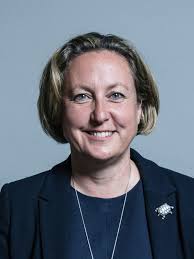
    Anne-Marie Trevelyan – 2022 Statement on the Transport Strikes Bill

    The statement made by Anne-Marie Trevelyan, the Secretary of State for Transport, in the House of Commons on 20 October 2022.

    The Government are today introducing the Transport Strikes (Minimum Service Levels) Bill. This meets the Prime Minister’s commitment to introduce this Bill within her first 30 days of Parliament sitting and delivers on a commitment in the 2019 Conservative party manifesto.

    The Bill paves the way for the introduction of minimum levels of service on transport services, like those already seen in other countries, including France and Spain. The Bill will ensure that specified transport services—which could include, for example, rail, tubes and buses—will not completely shut down when unions impose strikes. This Bill will balance the right to strike with ensuring commuters can get to their place of work and people can continue to make vital journeys to access education and healthcare during strikes.

    The Bill sets out the legal framework for establishing minimum service levels. It will allow relevant employers and trade unions to negotiate and reach agreement between themselves on minimum service levels referred to as minimum service agreements (MSAs), provide for circumstances in which the MSA can be changed and include enforcement arrangements to ensure parties follow due process in their negotiations.

    The Bill also provides for an independent determination process should employers and unions fail to reach agreement on an appropriate minimum service level after three months, whereby if an agreement has not been reached the Central Arbitration Committee will determine the minimum service level.

    The Bill also includes a power for the Secretary of State to set interim minimum service levels by regulations which will apply where neither an MSA has been agreed nor an independent determination reached. These regulations will also be consulted upon and will need to be agreed by both Houses of Parliament before they are made. Under the Bill there will also have to be a minimum three-month gap between these regulations being made and their coming into force.

    The specific details of how minimum service levels would apply to transport services will be set out in secondary legislation following appropriate consultation. A minimum service level would only be applied to an individual transport service once that secondary legislation has been agreed by Parliament.

    The provisions of the Bill extend and apply to England, Wales and Scotland. The Bill’s provisions relate to the reserved matter of employment rights and duties and industrial relations, and the subject matter of the Trade Union and Labour Relations (Consolidation) Act 1992, and do not engage the legislative consent process.

  • Chris Heaton-Harris – 2022 Statement on Progress in Northern Ireland

    Chris Heaton-Harris – 2022 Statement on Progress in Northern Ireland

    The statement made by Chris Heaton-Harris, the Secretary of State for Northern Ireland, in the House of Commons on 20 October 2022.

    During the passage of the Northern Ireland (Ministers, Elections and Petitions of Concern) Act in the House of Lords, the Government committed to laying a written ministerial statement every six months setting out which of our commitments in New Decade, New Approach (NDNA) we have delivered on to date. The first of these statements was published on 23 March 2022. This is the second statement.

    The NDNA agreement facilitated the restoration of the devolved institutions in January 2020 after three years of hiatus. The Government remain deeply disappointed at the continued lack of a fully functioning Executive following the resignation of the First Minister in February and the Assembly election in May, and urges the parties to come together and form a Government in the interests of the people of Northern Ireland.

    The Government have taken action to support the people of Northern Ireland, for instance through the energy price guarantee and the £400 energy bill support scheme payment which will help consumers with their energy costs, as well as the energy bill relief scheme for businesses, the public sector and charity organisations.

    However, the people of Northern Ireland deserve a stable and accountable Government that can act directly on their behalf through the challenging times ahead. The Government’s priority is to facilitate the restoration of the Executive as soon as possible, but if an Executive is not formed by 28 October, Ministers in Northern Ireland will lose office and I will come under a legal duty to call fresh elections to the Northern Ireland Assembly. In law, this must take place within 12 weeks. This action will not be taken lightly, but time is running out for the parties to come together, form an Executive and avoid this outcome.

    In the meantime, the Government will continue to implement its commitments and deliver for people in Northern Ireland. To that end, since January 2020 the Government have:

    published four reports on the use of the Petition of Concern mechanism, with the most recent report published on 20 January 2022;

    passed the Northern Ireland (Ministers, Elections and Petitions of Concern) Act to implement the institutional reforms agreed in NDNA;

    passed the Internal Market Act 2020;

    held a meeting of the Board of Trade in Northern Ireland;

    ensured that Northern Ireland can access the trade deals the UK is striking across the world;

    invited representatives of the Northern Ireland Executive to all meetings of the UK-EU Joint and Specialised Committees;

    changed the rules governing how the people of Northern Ireland bring their family members to the UK, enabling them to apply for immigration status on broadly the same terms as family members of Irish citizens;

    appointed Danny Kinahan as the first Northern Ireland veterans commissioner in September 2020;

    passed the Armed Forces Act, which further enshrines the armed forces covenant in law;

    conducted a thorough review of the aftercare service, the purpose of which was to consider whether the remit of the service should be widened to cover all HM Forces veterans living in Northern Ireland with service-related injuries and conditions;

    marked Northern Ireland’s centenary in 2021 with a £3 million programme of cultural and historical events, including the delivery of the shared history fund and schools planting project;

    brought forward regulations that continue to ensure designated Union flag flying days remain in line with those observed in the rest of the UK;

    recognised Ulster Scots as a national minority under the Council of Europe Framework Convention for the Protection of National Minorities;

    announced £2 million in funding for NI Screen’s Irish language and Ulster Scots broadcast funds, which support a range of film, television and radio programming;

    established a new hub—Erskine House—in the heart of Belfast, increasing the visibility and accessibility of UK Government Departments in Northern Ireland;

    reviewed the findings of the renewable heat incentive inquiry report to consider its implications for the use of public money in Northern Ireland; and

    continued to foster closer ties and better collaborative working across sectors such as tourism, sport and culture, including through the potential joint UK and Ireland bid to host the 2028 European championships.

    The Government have provided a total financial package of £2 billion for New Decade, New Approach. This financial package includes a £1 billion Barnett-based investment guarantee for infrastructure investment and £1 billion in funding across key priorities as set out in the deal. Of the £1 billion in funding, over £750 million has been allocated towards such outcomes as:

    bringing an end to the nurses’ pay dispute in January 2020;

    putting the Northern Ireland Executive’s finances on a sustainable footing by securing additional funding for the Executive in the 2020-21 financial year;

    the creation of a new Northern Ireland graduate entry medical school in Londonderry;

    supporting the transformation of public services;

    supporting low carbon transport in Northern Ireland, enabling the Department for Infrastructure to commit to ordering 100 low-carbon buses to be deployed in Belfast and Londonderry; and

    addressing Northern Ireland’s unique circumstances through projects and programmes that tackle paramilitarism, promote greater integration in education, support economic prosperity, and support the Irish language and Ulster-Scots.

    In addition, in the absence of Executive progress on the matter, the Government have continued to progress the New Decade, New Approach commitments relating to identity and language through the Identity and Language (NI) Bill. This will encourage and promote respect and tolerance for all of Northern Ireland’s diverse identities, cultures and traditions. The Identity and Language Bill, as amended, provides for:

    the creation of a series of national and cultural identity principles, and an office of identity and cultural expression to oversee them;

    the creation of an Irish language commissioner;

    the creation of a commissioner for the Ulster Scots and the Ulster British tradition;

    a duty on the Northern Ireland Department of Education to encourage and facilitate the use and understanding of Ulster Scots;

    the repeal of the Administration of Justice (Ireland) Act 1737; and

    the establishment of a Castlereagh Foundation.

    All provisions in the Bill will be a matter for the Northern Ireland Executive to administer, support and fund.


  • Grant Shapps – 2022 Statement on an Independent Inquiry into Child Sexual Abuse

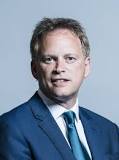
    Grant Shapps – 2022 Statement on an Independent Inquiry into Child Sexual Abuse

    The statement made by Grant Shapps, the Home Secretary, in the House of Commons on 20 October 2022.

    At midday today, the report of the independent inquiry into child sexual abuse was published. This concludes seven years of investigation into areas of institutional failings, across England and Wales, to properly protect and safeguard children in their care from child sexual abuse.

    I would like to thank the chair of the inquiry, Professor Alexis Jay, and her whole team, for their dedicated service in carrying out this inquiry.

    Above all, I want to extend my sincere thanks to the thousands of victims and survivors who have shown exceptional courage in coming forward to share their testimonies and experiences with the inquiry.

    The report provides truly shocking insight on the unimaginable abuse suffered by children, and draws out stark failings by institutions, leaders, and professionals to protect them from harm.

    The report makes recommendations that focus on greater accountability, increasing reporting of this crime, redress for victims, increased focus on bringing the perpetrators of these abhorrent acts to justice, and creating a stronger voice from Government on this issue.

    We recognise that this is a watershed moment, and that it will take time to fully review the inquiry’s findings and recommendations. We will provide a comprehensive response in line with the inquiry’s deadline.

    We are committed to working across Government, and closely with partners in law enforcement, local authorities, the care sector, the third sector, and industry, to continue supporting victims and survivors. We will work together to pursue and bring perpetrators to justice, and to safeguard children and vulnerable people.

    I have today laid a copy of the inquiry’s report in Parliament and will provide a further statement to the House on this landmark report at the earliest opportunity.

  • Jacob Rees-Mogg – 2022 Statement on the Subsidy Control Regime

    Jacob Rees-Mogg – 2022 Statement on the Subsidy Control Regime

    The statement made by Jacob Rees-Mogg, the Secretary of State for Business, Energy and Industrial Strategy, in the House of Commons on 20 October 2022.

    I am announcing today, 20 October 2022, that the Government intend to bring the Subsidy Control Act fully into force on 4 January 2023.

    The Act provides the framework for a new, United Kingdom-wide subsidy control regime. This regime will enable public authorities, including devolved Administrations and local authorities, to deliver subsidies that are tailored to local needs. This Government are determined to seize the opportunities arising from Brexit. We are no longer bound by the EU’s bureaucratic and prescriptive state aid regime.

    The Subsidy Control (Subsidies and Schemes of Interest or Particular Interest) Regulations 2022, which I have laid in draft before both Houses today, will define which kinds of subsidies and schemes should be referred to the new subsidy advice unit, or SAU, within the Competition and Markets Authority. Additional scrutiny of the public authority’s assessment is sensible, given that these will typically be the types of subsidies that have the greater potential to lead to negative effects on domestic competition and investment and/or international trade and investment.

    The Government have consulted, earlier this year, on their proposed approach to subsidies and schemes of interest and of particular interest, and on the terms of the draft statutory guidance. The draft regulations that have been laid today, and the forthcoming guidance, are the fruit of careful reflection on consultation responses, the large majority of which were offered in an open and constructive spirit. I thank all respondents to both consultations.

    Further regulations will also be laid during the autumn. These will concern the Competition and Markets Authority’s information-gathering powers in support of its subsidy control functions; the information requirements that public authorities must publish on our publicly available subsidy transparency database; and the gross cash equivalent rules for valuing subsidies in a consistent and comparable way, no matter in which form they are given.

    The Government also intend that all four statutory instruments will be brought into force ready for the new regime to operate from 4 January.

    More broadly, I wish to highlight some of the other positive features of the subsidy control regime that the Act establishes, and the work my officials are doing to implement it.

    During the passage of the Act, Ministers were clear that improvements would be made to the functionality of the transparency database. Improvements have already been made, and a further programme of enhancements will be completed before the Act comes into force, to make the database even more transparent and easier for public authorities to use.

    The Government are drawing up clear statutory guidance to expand upon and explain the intention behind the provisions included in the Act, among other supplementary guides and educational aides. This will help public authorities to understand the obligations placed on them by the new legislation and design better and less distortive subsidies.

    The Government will also hold a series of in-person and online events in November to inform public authorities of the requirements under the new regime.

    The Government will make three streamlined routes for when the Subsidy Control Act fully enters into force. These are subsidy schemes that will be open to all public authorities, who can use them to give certain categories of subsidies even more quickly and easily, and without the need to assess them against the subsidy control regime’s principles.

    Next year, 2023, will mark the beginning of a new era for subsidy control in the United Kingdom. The Subsidy Control Act strikes a sensible balance between allowing public authorities greater freedom to grant subsidies for useful social and economic purposes, while protecting the interests of taxpayers by means of proportionate rules and reviews.

  • Liam Fox – 2022 Comments on Rishi Sunak Becoming Prime Minister

    Liam Fox – 2022 Comments on Rishi Sunak Becoming Prime Minister

    The comments made by Liam Fox, the Conservative MP for North Somerset, on Twitter on 21 October 2022.

    I will be voting for Rishi Sunak as the next leader of the Conservative Party and our next Prime Minister. He has the judgement to heal our economy and unite our Party. His calm confidence is just what the UK needs.

  • Sajid Javid – 2022 Comments on Rishi Sunak Becoming Prime Minister

    Sajid Javid – 2022 Comments on Rishi Sunak Becoming Prime Minister

    The comments made by Sajid Javid, the Conservative MP for Bromsgrove, on Twitter on 21 October 2022.

    I’m backing Rishi Sunak – he has the leadership our country needs, and the values our party needs.

  • Andrea Leadsom – 2022 Comments on Penny Mordaunt Becoming Prime Minister

    Andrea Leadsom – 2022 Comments on Penny Mordaunt Becoming Prime Minister

    The comments made by Andrea Leadsom, the Conservative MP for South Northamptonshire, on Twitter on 21 October 2022.

    Delighted by this! [in response to Penny Mordaunt confirming that she was standing for the leadership] Penny has the experience, the compassion and the determination to lead our country to a bright future! #PM4PM

  • Alok Sharma – 2022 Comments on Boris Johnson Returning as Prime Minister

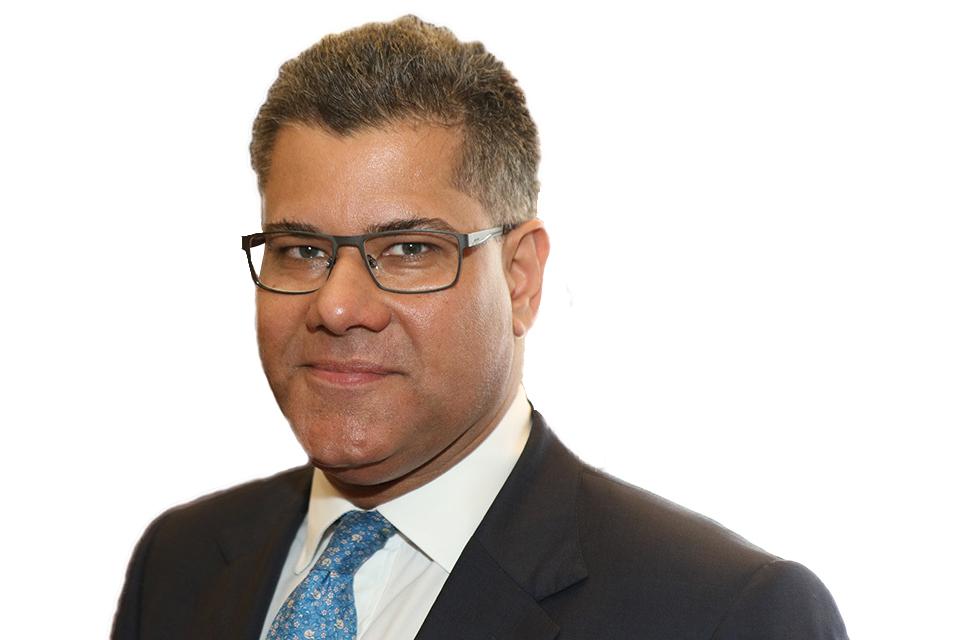
    Alok Sharma – 2022 Comments on Boris Johnson Returning as Prime Minister

    The comments made by Alok Sharma, the Conservative MP for Reading West, on Twitter on 21 October 2022.

    I am backing Boris Johnson – he won a mandate from the electorate in 2019.

    We need to get back to delivering on the Conservative manifesto we were elected on.

  • PRESS RELEASE : Government backs new law to help pregnant women and new parents stay in work [October 2022]

    PRESS RELEASE : Government backs new law to help pregnant women and new parents stay in work [October 2022]

    The press release issued by the Department for Business, Energy and Industrial Strategy on 21 October 2022.

    • new government-backed law to offer pregnant women and new parents greater protection against redundancy
    • new legal powers will help to counter workplace discrimination, particularly when new parents return to work

    Pregnant women and new parents will receive greater protections from redundancy under new legislation backed by the government today (Friday 21 October).

    Under current rules, before offering redundancy to an employee on maternity leave, shared parental leave or adoption leave, employers have an obligation to offer them a suitable alternative vacancy where one exists.

    The Pregnancy and Maternity Discrimination Bill, introduced by Dan Jarvis MP and backed by the government, will enable this redundancy protection to be extended so it applies to pregnant women as well as new parents returning to work from a relevant form of leave. This will help shield new parents and expectant mothers from workplace discrimination, offering them greater job security at an important time in their lives.

    It follows a government consultation on these proposals which found evidence of new parents facing prejudice in the workplace, with an estimated 54,000 women a year feeling they have to leave their jobs due to pregnancy or maternity discrimination.

    Business Minister Dean Russell said:

    Being an expectant or new parent is already a hugely exciting yet anxious time without the added pressure of worrying whether your job is on the line.

    By extending the UK’s world class workplace protections, today’s reforms will help to remove workplace discrimination and provide improved job security for employees at such an important and precious time in their lives.

    The measures will be beneficial to businesses, helping to improve relations with employees and reducing a source of conflict that can be costly and time consuming.

    Alongside these reforms the government is also working with the Pregnancy and Maternity Discrimination Advisory Board to update guidance so that this type of discrimination in the workplace continues to be stamped out.

    Dan Jarvis MP for Barnsley Central said:

    I am delighted that my Private Members’ Bill, the Protection from Redundancy (Pregnancy and Family Leave) Bill has passed its second reading in Parliament and is now a step closer to becoming law.

    At the heart of this Bill are tens of thousands of women pushed out of the workforce each year simply for being pregnant. I’m proud this new legislation will go some way to providing pregnant women and new mums greater protections in the workplace. I want to thank all those who’ve supported the Bill and I look forward to working with them to ensure it passes into law.

    The measures form part of the government’s efforts to ensure more people stay in work and keep more of their pay packet, particularly with global risings costs. It comes at a time when there are more employees on payrolls than ever before – and with unemployment at an all-time low.