Blog

  • Mary Glindon – 2022 Parliamentary Question on Industrial Relations in the Civil Service

    Mary Glindon – 2022 Parliamentary Question on Industrial Relations in the Civil Service

    The parliamentary question asked by Mary Glindon, the Labour MP for North Tyneside, in the House of Commons on 8 December 2022.

    Mary Glindon (North Tyneside) (Lab)

    What assessment he has made of the state of industrial relations in the civil service.

    Chris Stephens (Glasgow South West) (SNP)

    What assessment he has made of the state of industrial relations in the civil service.

    The Minister for the Cabinet Office and Paymaster General (Jeremy Quin)

    The Cabinet Office is not the employer of all civil servants, and Departments are responsible for engaging with recognised trade unions at departmental and local level. The Public and Commercial Services Union is currently in dispute with a number of civil service employers and has called for strike action in several Departments. We remain open to continued dialogue to bring about a resolution.

    Mary Glindon

    Following a ballot of more than 150,000 civil servant PCS members, a massive 86.2% voted for strike action on pay, pensions, job cuts and redundancy terms. The strikes will start next week at the Driving and Vehicle Standards Agency, National Highways and the Rural Payments Agency. Does the Minister accept that responsibility for this situation lies firmly with his Government for imposing an insulting pay deal of just under 3%—a substantial real-terms pay cut—amid a cost of living crisis?

    Jeremy Quin

    As the hon. Lady said, 214 ballots took place and 124 hit the relevant thresholds for strike action. That is something I greatly regret, because it will impact the citizens of this country and how they go about their day-to-day work. We will do our utmost to mitigate that and protect the people from the impact of those strikes, but they should not be taking place and I very much regret that they are. I hope that the hon. Lady and this House will recognise that with inflation at 11%, providing an 11% increase across the public sector would equate to about £28 billion—just under £1,000 per household. So I really regret that the unions have felt it necessary to take this action. Our door remains open; we would like to speak to them. We would rather that this was not taking place, but we have to be realistic about the constraints on public expenditure at present.

    Chris Stephens

    I refer to my entry in the Register of Members’ Financial Interests. With workers in 124 Government departments and public bodies now having that mandate for strike action, a responsible Government would get around the table for meaningful talks with the civil service trade unions. Is that happening? Will the Minister explain how the Government intend to avoid the widespread disruption, and how they plan to bring forward a fair deal on pay, investment in jobs and an end to the attack on terms and conditions for civil service workers?

    Jeremy Quin

    We will do our utmost to ensure that public services continue and that the public do not suffer as a result of these strikes, although inconvenience is inevitable when strike action of this nature takes place. I regret that it is taking place. I hope that the workers involved will not go on strike and will continue to work in the public interest. We really value the work and the services they do, but there has to be a recognition that the scale of demands being made on us is not affordable for the taxpayer at this time. That is sad, but it is a fact.

  • Desmond Swayne – 2022 Parliamentary Question on the Running Costs of the Government Estate

    Desmond Swayne – 2022 Parliamentary Question on the Running Costs of the Government Estate

    The parliamentary question asked by Sir Desmond Swayne, the Conservative MP for New Forest West, in the House of Commons on 8 December 2022.

    Sir Desmond Swayne (New Forest West) (Con)

    What steps his Department is taking to reduce the running costs of the Government estate.

    The Parliamentary Secretary, Cabinet Office (Alex Burghart)

    Since 2010 the size of the central general purpose estate has been reduced by 30%, which has cut annual running costs by £1.6 billion. The “Government Property Strategy 2022-2030”, published in August, commits us to making further estate operating cost savings of £500 million by 2025 by relocating London roles, co-locating in multi-agency hubs, and selling surplus property.

    Sir Desmond Swayne

    The German Government have limited temperatures in public buildings to 19°C. Double that and add 30, and it is a balmy 68° in English money. We could put on an extra layer and do a lot better, couldn’t we?

    Alex Burghart

    I feel that my right hon. Friend could survive in sub-19°C temperatures without an extra layer, but, as he will know, the Health and Safety Executive issues advice on temperatures in workplaces. Regulations suggest that the minimum temperature for indoor working should be at least 16°C, or 13° where rigorous physical effort is required. We have the flexibility to take that action, should we wish to do so.

    Jim Shannon (Strangford) (DUP)

    Could use be made of empty Government properties? Given that bitterly cold weather is hitting the UK with a vengeance this week, have the Minister and the Cabinet Office considered making properties in city centres available to provide warm and dry places for those who are struggling with homelessness?

    Alex Burghart

    As ever, the hon. Gentleman has raised an important issue, and if he has any specific buildings in mind, I shall be happy to meet him to discuss it.

  • Wendy Morton – 2022 Parliamentary Question on Support for Victims of the Infected Blood Scandal

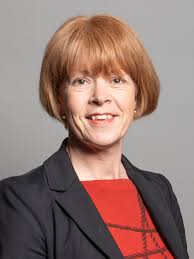
    Wendy Morton – 2022 Parliamentary Question on Support for Victims of the Infected Blood Scandal

    The parliamentary question asked by Wendy Morton, the Conservative MP for Aldridge-Brownhills, in the House of Commons on 8 December 2022.

    Wendy Morton (Aldridge-Brownhills) (Con)

    What steps he is taking with Cabinet colleagues to support victims of the infected blood scandal.

    The Minister for the Cabinet Office and Paymaster General (Jeremy Quin)

    The Government ensured that all infected and bereaved partners who are registered on the UK support schemes received an interim payment of £100,000 in October, thus meeting Sir Brian Langstaff’s interim recommendation in full. That builds on support already provided, but I want to make it absolutely clear that those interim payments are the start and not the end of this process. Work continues.

    Wendy Morton

    As my right hon. Friend knows, there are thousands of victims of this historic blood scandal up and down the country. I know from some of my constituents just how traumatic that is, and how hard they have been campaigning, for a long time, to right what we recognise as an historic wrong. Does my right hon. Friend agree that it is critical for the Government to be ready to respond to the Langstaff report as soon as possible?

    Jeremy Quin

    It is indeed critical, and we commissioned the compensation framework study to ensure that we could be ready to respond quickly to the inquiry’s recommendations. It was a pleasure to meet the co-chairs of the all-party parliamentary group on haemophilia and contaminated blood, from whom we may hear shortly. Work is ongoing, and I hope to give the House a further update as soon as possible on how that work is progressing and how we will continue to take it forward.

    Dame Diana Johnson (Kingston upon Hull North) (Lab)

    I thank the Paymaster General for meeting the Father of the House and me last week. May I remind him how difficult it has been to build trust with this group of people who have been infected and affected and have been treated so badly over so many decades? The Government promised a statement to the House in response to the review by Sir Robert Francis KC of the framework for compensation. Can the Paymaster General specify a date on which we will be given that statement?

    Jeremy Quin

    Let me first acknowledge all the tireless work done by campaigners—those infected and those affected—and by those who supported them in the House and outside, including the right hon. Lady and the Father of the House, my hon. Friend the Member for Worthing West (Sir Peter Bottomley). These are dreadful circumstances, and we are determined to be ready for Langstaff’s report, which, presumably, will be published midway through next year. That is why Sir Robert Francis was commissioned to undertake his study.

    I think that, in part, our actions in making the interim payment—thus meeting the interim recommendations in full—speak for themselves, but I understand the right hon. Lady’s point. I look forward to updating the House as soon as possible about the work we have done and will continue to do, and to updating it further on the progress towards the completion of Langstaff’s report.

  • Michael Fabricant – 2022 Parliamentary Question on Recruiting Civil Servants from the Private Sector

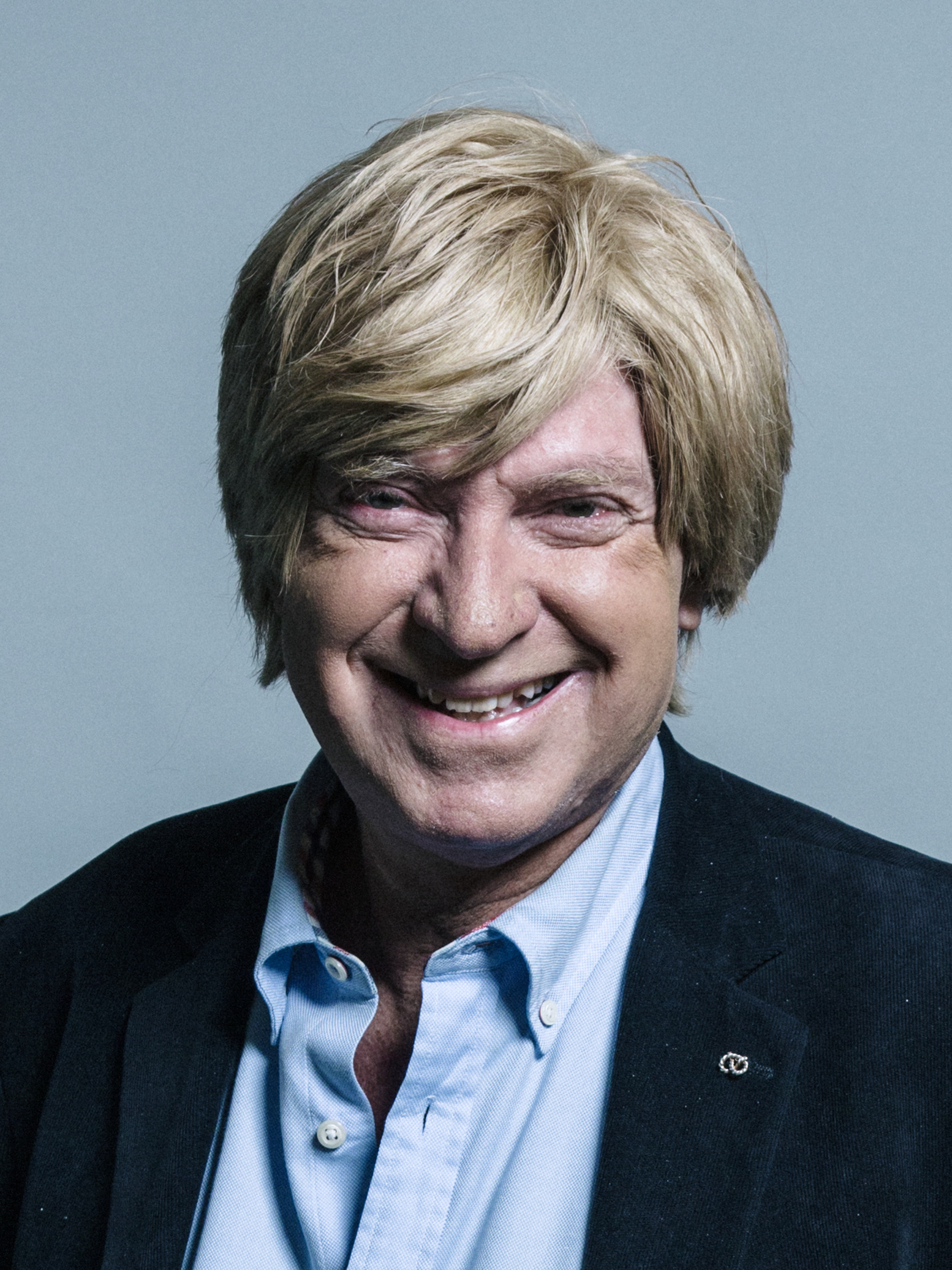
    Michael Fabricant – 2022 Parliamentary Question on Recruiting Civil Servants from the Private Sector

    The parliamentary question asked by Michael Fabricant, the Conservative MP for Lichfield, in the House of Commons on 8 December 2022.

    Michael Fabricant (Lichfield) (Con)

    Whether he is taking steps to increase the number of senior civil servants recruited from the private sector.

    The Minister for the Cabinet Office and Paymaster General (Jeremy Quin)

    We have strengthened the policy of advertising senior civil service jobs externally by default. To increase private sector recruitment and attract a broader range of applicants, new guidance will support Departments working with external search providers to identify new and experienced talent to join our excellent colleagues delivering for the country.

    Michael Fabricant

    But it is not just about senior civil servants. I think middle-ranking and junior civil servants could also benefit from a fresh influx of the dynamism and different attitudes that people from the private sector may enjoy, so why is my right hon. Friend not chasing those people for middle-ranking civil service positions too?

    Jeremy Quin

    My hon. Friend is always the very embodiment of dynamism. I absolutely agree: there is a huge amount of talent that we seek, and I am delighted to say that our focus is not just on the senior civil service. We wish to go and get the very best all the way through. Our apprenticeship schemes have been launched for the next three years, and we want to have 5% of the entire civil service formed of apprentices. That is yet another example of how we are reaching out to all starters to make certain that we get the very best talent.

  • James Sunderland – 2022 Parliamentary Question on Support for Veterans

    James Sunderland – 2022 Parliamentary Question on Support for Veterans

    The parliamentary question asked by James Sunderland, the Conservative MP for Bracknell, in the House of Commons on 8 December 2022.

    James Sunderland (Bracknell) (Con)

    What steps his Department is taking to improve support for veterans.

    The Minister for Veterans’ Affairs (Johnny Mercer)

    The Government are committed to ensuring that our veterans and their families have the support that they need to thrive in civilian life. The Government have established the first UK Office for Veterans’ Affairs and the first Minister for Veterans’ Affairs, who attends Cabinet. As part of the role, the Minister will deliver the veterans strategy action plan, which sets out 60 cross-Government commitments that will make the UK the best place in the world to be a veteran by 2028.

    James Sunderland

    The Minister will know that the all-party group on veterans is leading on a bespoke survey of the experiences of veterans when they deal with Veterans UK. Will the Minister commend that survey, alongside the OVA’s survey, and undertake to take our findings seriously? Does he agree that we must leave no stone unturned in all Government Departments to make sure that our veterans get the best possible support?

    Johnny Mercer

    Certainly, and I pay tribute to my hon. Friend and his campaigning, as well as the work of the APPG and the survey that it has put out on Veterans UK. I have been clear—my position has been unchanged over the years—that there are good people working at Veterans UK. That part of Government has been underinvested in by Governments of all colours over many years, and too many people have an experience that is not acceptable. We are working on that. A £44 million investment in digitising Veterans UK will see a significant improvement in its service, but this is an ongoing conversation. I am more than happy to meet my hon. Friend to make sure that we deliver the service that we all want for our veterans.

  • Afzal Khan – 2022 Parliamentary Question on the Government’s Winter Preparedness

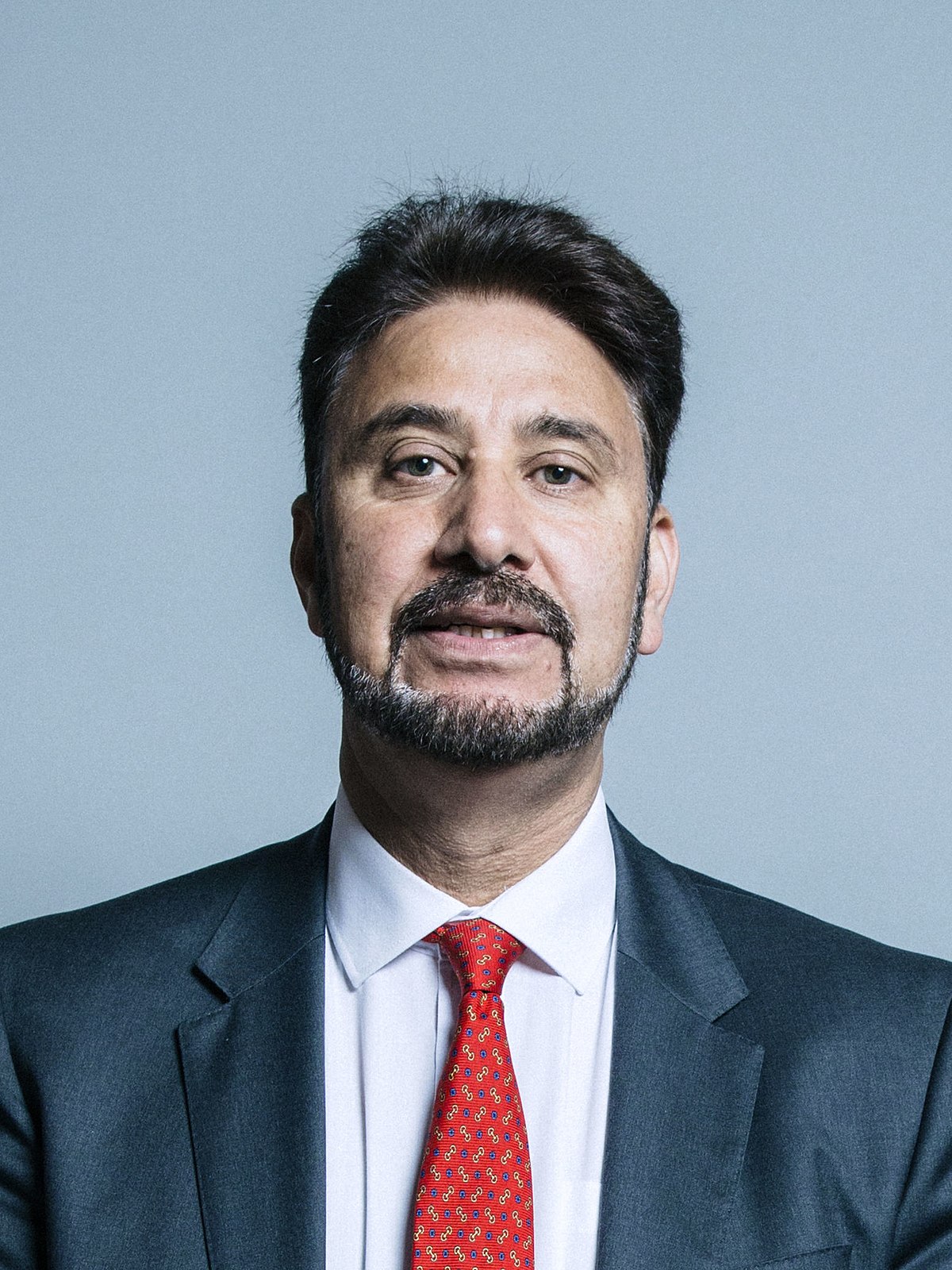
    Afzal Khan – 2022 Parliamentary Question on the Government’s Winter Preparedness

    The parliamentary question asked by Afzal Khan, the Labour MP for Manchester Gorton, in the House of Commons on 8 December 2022.

    Afzal Khan (Manchester, Gorton) (Lab)

    What cross- departmental steps he is taking to help ensure preparedness for winter.

    The Chancellor of the Duchy of Lancaster (Oliver Dowden)

    The Cabinet Office has well-established processes to support Departments and their sectors to ensure the effective delivery of key services over the winter. They are underpinned by comprehensive risk assessments and contingency plans for a wide range of risks, including industrial action and severe weather. The national resilience framework will be the first iteration of our new strategic approach. It will strengthen the systems, structures and capabilities that underpin the UK’s resilience to all risks.

    Afzal Khan

    The UK’s power supply is already stretched to breaking point, with the National Grid telling us that blackouts are now a very real possibility. Over the next few days, temperatures are expected to drop to well below freezing. A blackout in those circumstances could be catastrophic for the most vulnerable in our society. Will the Minister urgently explain to my vulnerable constituents what they should do to remain safe and warm in the event of a power blackout during freezing cold temperatures?

    Oliver Dowden

    The hon. Gentleman raises two important points. First, in respect of the winter weather, the Cabinet Office is keeping a close eye on it. Indeed, I have been briefed on the situation. On the wider situation in relation to energy supply, I am working closely with the Secretary of State for Business, Energy and Industrial Strategy, my right hon. Friend the Member for Welwyn Hatfield (Grant Shapps). He and I have strong confidence about the resilience of the UK power networks and, excepting a very exceptional circumstance, we are confident that we will continue to supply throughout the winter.

  • Lyn Brown – 2022 Speech on the NHS Workforce

    Lyn Brown – 2022 Speech on the NHS Workforce

    The speech made by Lyn Brown, the Labour MP for West Ham, in the House of Commons on 6 December 2022.

    Across north-east London, our population is set to grow by the total of the population of Dover in just the next five years. By 2042, the added population will be the size of Milton Keynes. We have the highest rate of NHS vacancies in London. We simply cannot go on without long-term workforce planning and investment in staff and in services. We have lost a large number of international staff since Brexit, and retention is a massive problem, with an annual staff turnover of almost 17% in the Government’s recruitment campaign for nurses.

    We have the highest spend on agency staff in the region—10% of some staffing budgets goes to agencies. But even with all that money being spent, our operating theatres are struggling to find enough bank and agency staff to fill the gaps. How on earth are we going to tackle the backlog if our theatres cannot be used to full capacity? How are we going to get patients in and out of hospital quickly if their operations are being delayed?

    In Newham, maternity is one of the worst affected NHS services. As we know, high-quality accessible maternity care saves lives, and local need is massive. We have very high levels of poverty, as well as demographic pressures from our rapid population growth. There is a 19% vacancy rate on our maternity wards; almost a fifth of roles have no one to do the job, so non-specialist nurses are filling in for midwives. Surely, that has an impact on the quality of care. Sometimes, even women who have been assessed as having a higher risk cannot be admitted because there are, frankly, not enough fully staffed beds, so they are sent home instead, with an obvious increased risk.

    One of our birth units is being closed repeatedly so that staff can transfer elsewhere and keep hospital services running. Those forced closures took place for almost 10% of the year to August. Surely, that increases costs for the NHS, as lower-risk births end up having to take place in hospital.

    Every part of the NHS is creaking, and we are getting closer to collapse because workforce issues have been neglected. We have known that these problems have been getting worse for years now, exacerbated by austerity. This ain’t just about midwives and doctors; there is a shortage of admin staff, too, which is leading to a higher number of antenatal appointments being missed. So, when patients have to go into hospital even though they could be treated more effectively in less expensive settings, and when appointments are missed and preventive care does not take place, what happens? Costs go up for our NHS. The Government’s failure to recruit and retain enough staff is making our NHS less effective in terms of value for public money and is, let us face it, putting lives at risk, too.

    In north-east London, we have the most diverse integrated care system population and the highest birth rate in the country. We know that if maternity patients do not get the care that they need, the risks are high. We have all heard the terrible statistics about women from black communities being four times more likely to die in childbirth than women from white communities. If we are to address that shameful injustice and end those deaths, Newham is one of our frontlines. But the reality is that our response is being held back and women put in greater danger because our NHS simply does not have the staff. The Government need to understand that many of those difficulties could get even worse without change. As we know, so many of our health and care staff are simply exhausted. They are working all the harder to fill in for vacancies. Often, they are offered less flexible work because the demand on services is so acute and no one can fill in the gaps.

    A decade of austerity and the cost of living crisis have taken a huge toll. Locally, 17% of our skilled and experienced nursing staff are over 55. Many of those who keep our services going—or barely running—do not have many working years left in them. We can see that this is completely and utterly unsustainable. The dedication of our NHS staff, for which we rightly praised them so highly during the pandemic, has its limits. How much closer to collapse will our NHS get if these pressures continue to build? How many more patients will be let down? Frankly, a Labour Government cannot come soon enough.

  • PRESS RELEASE : Jermaine Jenas, Myleene Klass, Georgia Kousoulou amongst public figures backing Online Safety Bill [December 2022]

    PRESS RELEASE : Jermaine Jenas, Myleene Klass, Georgia Kousoulou amongst public figures backing Online Safety Bill [December 2022]

    The press release issued by the Department for Digital, Culture, Media and Sport on 9 December 2022.

    A number of high profile public figures including Jermaine Jenas, Myleene Klass, Georgia Kousoulou, Jo Frost and Laura Amies have today backed the government’s Online Safety Bill in the week the landmark internet safety laws returned to Parliament.

    • A number of high profile public figures have today backed the government’s Online Safety Bill
    • It comes as the government releases latest findings from Ipsos revealing UK adults think social media platforms should be doing more to protect children online
    • Jermaine Jenas, Myleene Klass, Georgia Kousoulou, Jo Frost and Laura Amies amongst celebrities publicly supporting new internet safety laws
    • The Bill returned to Parliament this week with new protections for children

    A number of high profile public figures including Jermaine Jenas, Myleene Klass, Georgia Kousoulou, Jo Frost and Laura Amies have today backed the government’s Online Safety Bill in the week the landmark internet safety laws returned to Parliament.

    It comes as the government releases latest findings from a survey by Ipsos revealing that more than 70 per cent of adults in the UK think social media platforms should be doing more to protect children online.

    The new data coincides with the return of the Online Safety Bill to Parliament this week, following the announcement of vital new provisions.

    This includes greater accountability on larger tech companies to protect young people, including requiring them to publish a summary of their risk assessments concerning the dangers their platform poses to children, alongside moves to boost transparency and accountability through new powers for the regulator Ofcom.

    Ipsos research also found that 69 per cent of people believe that children are not safe when using social media, with 77 per cent of adults worried about children seeing content promoting self harm.

    The draft legislation will go further than before to shield children, whilst protecting free speech. The Online Safety Bill has significant public backing, with more high profile public figures today backing it, from former England footballer Jermaine Jenas to global parenting expert Jo Frost.

    This follows confirmation that the Bill will also include new measures to make significant changes to the UK’s criminal law to increase protections for vulnerable people online by criminalising the encouragement of self-harm and the sharing of people’s intimate images without their consent.

    Former England footballer, broadcaster and parent, Jermaine Jenas says:

    Our support for the landmark Online Safety Bill is so important in ensuring tech companies clamp down on harmful content that can be accessed by children online. As a parent myself, I am keen to ensure that my kids are able to use the internet safely. The Online Safety Bill is a step in the right direction.

    Musician and mum, Myleene Klass says:

    These new internet safety laws are incredibly important to protecting children and young people online. We are all aware of the harmful content that is available online and shared across social media platforms.

    These new safety laws put more responsibility on social media platforms to ensure the removal of this content and enforce them to actually stop underage children from accessing content they shouldn’t be. We need to ensure our children feel empowered, supportive and safe online.

    TV personality and mother, Georgia Kousoulou says:

    As a mum, I’m already thinking about how I will help Brody navigate the online world. I’ve experienced first hand how harmful and damaging online content can be and the online safety bill is so important in preventing this.

    It will hold technology companies accountable for harmful content they are allowing children to see online. I am looking forward to seeing this legislation passed and the effect this will have to make the online world a safer place for everyone.

    Global parenting expert Jo Frost (‘Super Nanny’), says:

    While we understand the importance of protecting our children in the physical world, we must also be sure to recognise the equal importance of keeping our children safe online in the virtual world too. “This is the reason why with urgency we must all come together in strength to support these new internet safety laws to ensure that social media companies are held more accountable for the content children access on their platforms.”

    Child behaviour expert Laura Amies (‘The Toddler Tamer’ from Channel 5’s Toddlers Behaving (Very) Badly), says:

    Given that children learn so much from their environment, those within it and the experiences they have, I believe that it is now more important than ever to do all we can to ensure their safety online.

    As an adult who spends a great deal of my time online, social media in particular, I can not imagine trying to navigate the internet throughout my most formative years and often say how grateful I am to have attended school without a smart phone in my school bag.

    As adults however, it is our responsibility to ensure that we keep online safety at the forefront in a bid to both protect and be able to benefit from the infinite positives that the internet has to offer us.

    The Online Safety Bill returned to Parliament on 5 December in the House of Commons for Report stage.

  • PRESS RELEASE : How open-source intelligence has shaped the Russia-Ukraine war [December 2022]

    PRESS RELEASE : How open-source intelligence has shaped the Russia-Ukraine war [December 2022]

    The press release issued by the Ministry of Defence on 9 December 2022.

    General Hockenhull, Commander Strategic Command, discussed the use of open source intelligence at a RUSI Members Webinar.

    We shouldn’t believe that everything that goes on is always new. Indeed, if we go back to the Foreign Broadcast Information Service from 1941, or the Interdepartmental Committee for the Acquisition of Foreign Publications, we should recognise that this is in a long tradition of exploiting available information. Now this has been scaled at both volume and at pace by the availability of technology, and also the ability of mass to engage in this activity.

    There’s a lot of confirmation and availability bias in some of the things that we’ve learned from Ukraine. Because of this we should caveat those lessons slightly and make sure we’re applying the right diagnostics and analysis to make sure that we’re pulling through the correct lessons.

    This is open source for intelligence, but it’s also open source and broader understanding which is supporting our intelligence making and decision making. If we can fully understand the availability of this information the impact will go beyond just thinking about intelligence or open source.

    Open source fits into a wider set of changes around how we’re using information intelligence. The way in which information and intelligence can be declassified, the way in which it has been shared with the public, builds upon a range of changes that are happening in the intelligence space. Much of that is being driven by what’s happening in open source, but open source is not the only change. The conflict in Ukraine can in some ways be viewed as the first digital war, and much of that digital capability is coming from commercially available services rather than necessarily traditional military capabilities.

    The availability of commercial satellites has enabled an extension of reach in the Ukrainian military’s situational awareness and their ability to conduct surveillance and reconnaissance. We’re seeing artificial intelligence used alongside commercial software applications to increase the speed of action. It’s also increasing utility. We’re seeing an attempt to sense and understand the environment, to decide and orchestrate, to act and then to learn and adapt. Those four stages are about being able to do that with sufficient pace to be able to outpace the adversary, and whoever learns fastest is going to win.

    Open source and its role in intelligence has had a significant range of impacts and I would group these into six categories. The first is adding to anticipatory intelligence. How we’re understanding the posture of forces and the fusion of commercial imagery, tech data and social media analysis, provided significant insight into Russian deployments. This goes all the way back to spring 2021 through the autumn and winter of 21 into 22, showing us what was happening and where it was happening. That anticipatory intelligence is being used not just by sources inside the military but it’s being projected for all to see and for all to interpret.

    The second change would be that the impact of conflict is shifting public confidence. We had the ability to share information around Russian activity widely, whether it was in deployment, when fully deployed and postured for invasion, or indeed at point of invasion and beyond. That widely shared a picture has changed the way the public understand how the conflict has taken place. That’s true, certainly in Ukraine for example, but it’s also true in the wider West. One of the crucial elements of success in Ukrainian conflict has been the commitment of Western nations to provide support. Even if you remember going back to around the 17th of February of this year, Russia started that its forces were redeploying away from the borders. Quickly this was exposed by the open source community which was able to show that not only were troops still in place, but in fact what was happening was a redeployment of force in order to be able to better execute the invasion plan. The public confidence has helped in the utility of being able to share lower classification information with partners.

    The third area is countering Russia’s Information Operations and countering Putin’s own narrative around the war. The pre-conflict deployment and highlighting intent has been important, but also open source has been incredibly important in being able to rebut false flag narratives from the Russians, and indeed, at times has provided the ability to even prebuttal. The fact that the truth was well known meant that as soon as false narratives were put out by the Russians, they were immediately exposed or understood by the public to be a false narrative. That power of information and knowledge has had a really significant impact on the public and been a counter to Russian Information Operations and the false flag operations that were part of the invasion plan. These have failed to be successful, partly, and indeed perhaps largely, as a consequence of the way in which that narrative is able to be exposed as a sham.

    Open source has also proved to be a force multiplier, and we’ve been able to move to an approach which militaries around the world have sought to do for some time. Through open source every platform and every service person is able to act as a sensor. Citizen involvement has meant that practically every citizen and every phone has become a sensor. There are some challenges around the ethical and moral position of this, but in the context of a war of national survival the Ukrainian public are incredibly committed to playing their part and providing the advantage to their decision makers. The second part about the force multiplier is its use of commercial networks. These commercial networks are inevitably driven by a need to keep availability high the people using them, and this means they’re incredibly robust. This offers alternative pathways for information to travel and sometimes goes beyond military communications which can be subject to jamming or disruption. It’s incredibly difficult to overcome these commercial networks and therefore, that force multiplier of sensors, has been a really significant way in which the Ukraine military have been able to generate information advantage.

    The fifth element is in the crowdsourcing and the use of standardised chatbots which has allowed these Ukrainian citizens to report Russian units and locations. The civilian sensor network has been a force multiplier but also, it’s been able to provide a variety of viewpoints around information. Rather than having to take a single piece of information and estimate its accuracy, the mass of information is able crowdsource enabling analysts to draw together alternative views. This has enabled processing and evaluation of the availability of data to provide additional insight. The longer the conflict has gone on, the more adept the Ukrainians have become at harnessing the quantity of information to pull insights from as many sensors as possible.

    Lastly, in terms of impact of the conflict, there’s been an element of lifting the fog of war. I’m a career intelligence officer and certainly, for long periods of my career, it felt like I was responsible for making a jigsaw from the available information. I didn’t have the lid of the jigsaw box or sufficient pieces to make the complete jigsaw. This meant I was responsible for putting the pieces I had in place, and then trying to imagine what the rest of the picture would look like to produce a prediction from those assumptions. Whilst open source doesn’t provide the lid of the jigsaw box, it gives an almost infinite number of jigsaw pieces. The challenge now is that you can make an almost infinite number of pictures as a consequence of the available pieces. It also introduces a challenge in terms of discretion around the information, and we must filter with a view to being able to refine. This is where the combination of open source intelligence and secret sources of intelligence becomes invaluable in being able to see whether we can define greater understanding as a consequence. There has been some great work in terms of battle damage assessment, and we see a variety of authoritative sources available through social media platforms which provide insight and sentiment analysis. These are incredibly important because it offers the ability to understand what’s happening and that has been expanded almost exponentially as a consequence. It also offers the ability to track information operations and assess impact, particularly in Russian information operations. The impact of where things are being picked up, how they’re being proselytised across social media platforms, and tracking and understanding their impact has been really important.

    But for all of those impacts, there are of course some risks. The scale of data is beyond comprehension. That creates enormous opportunity but also creates a real burden in terms of being able to deal with intelligence. 127 new devices are connected to the internet every second across the globe and there is a challenge over the veracity of the available information. With more information comes more opinions, more variation, and there really isn’t very much more truth. We must accept that the Open Source Intelligence community, which has played a spectacular role in the war in Ukraine, doesn’t always get it right. There are moments in time where the community will move off after a particular line of inquiry which turns out to be futile. I’ve had moments where people have questioned me if this is truly happening as a consequence of what’s being carried on social media.

    There are limitations with both the scale, the speed, and the veracity of information. We must determine how much automation and augmentation is necessary to be able to divine truth. In the context of Ukraine, open source has been really strong on what is happening, where it’s happening, and when it is happening. This strength hasn’t been uniform, and there are items where it hasn’t been successful, but I think on the whole it’s aided that understanding of what, where and when. Where it gets into difficulty is when people take that knowledge and want to describe why things are happening and what’s will happen next. The assumptions commentators can make aren’t always supported by events and this is absolutely a risk. These situations are where we need to make sure that we’re applying our secret sources in combination with open source. Defence has traditionally been good on looking at threat. Most often threat is explained as the threat equals the capability plus intent, but I personally don’t believe that’s sufficient. We face an increasingly complex and cluttered set of challenges, and we must be better at understanding the context and being able to place the threat in context. For me the equation should be threat equals capability plus intent, divided by the context when the context is largely benign, or multiplied by the context when it’s more contested. Open source offers us an opportunity to be able to understand context in a deeper, faster, and more responsive manner than we could do in the past. We gain real power, when we can combine that with secret intelligence and what we gain from our global network.

    One of the key things I take away from what’s been happening in Ukraine is the need to go much faster than we’ve gone before in how we exploit open sources. This will need for us to shift our risk calculus, we need to focus on the opportunity cost of not moving fast enough, rather than the challenge over making sure we always comply with legislative policy. We need to make sure that we’re able to move both at the speed of relevance but at the speed of necessity. The situation is changing faster than often our ability to understand it and anything that steps in the way of our understanding we need to burn back. We need to look at how we apply different financial freedoms to a much more dynamic engagement with industry, commercial, and open source community. We also need to shift our approach to our people and understand that there’ll be different ways of exploiting open source on behalf of government. We need to look at alternative methods rather than always seeking to want an in-house capability. We need to look at a range of different partnerships and a range of different metrics, including being able to use commercial partners in some fundamentally different ways. I do think the Pareto principle applies to open source, perhaps at the moment open source contributes somewhere in the region of 20% of our current processes, but the availability and opportunity means that we’ve got to invert this metric. We’ve got to move on from a place where open source is adding colour and flavour and we need to invert the model so we gain our situational and contextual understanding through open source and combine this with our secret intelligence. We’ve been talking about doing this for a number of years but the system is still geared towards exploiting secret intelligence, and using the insights it provides around why things are happening and what’s going to happen next. It’s crucial that we’re able to merge those together, but we are going to need to change our thinking and we’re going to need to shift our approach. We’re going to change our relationship with commercial partners. The power inside government is really going to come through in the cross-referencing, layering and cross-cueing.

    There are a range of lessons coming out of Ukraine and this is one of those moments in time where we must reflect. If we don’t take due cognisance of what’s happening in Ukraine, social media, the commercial world, and inside government, then our system will not be ready and prepared for the next challenge that we face. There is an urgency around the need to change, and I’m going to need the support of the Open Source Intelligence community to help me drive that change into defence.

  • PRESS RELEASE : Natural Flood Management essential in battle against climate change [December 2022]

    PRESS RELEASE : Natural Flood Management essential in battle against climate change [December 2022]

    The press release issued by the Environment Agency on 9 December 2022.

    Sir James Bevan outlined his vision for natural flood management as the Environment Agency published a new report on the £15 million NFM programme.

    Following a report published by the Environment Agency, he outlined his vision for natural flood management to be seen shoulder to shoulder with its programme of crucial bricks and mortar hard defences.

    The report evaluates the impact of the national Natural Flood Management Programme which received £15 million of government funding, including benefits to communities and to biodiversity alongside protecting homes and businesses from floods.

    Across 60 pilot projects the programme created an equivalent of 1.6 million cubic metres of water storage and increased flood resilience to 15,000 homes. In addition, the programme contributed to nature recovery: improving 4,000 hectares of habitat, improving 610 kilometres of river and planting 100 hectares of woodland.

    Sir James Bevan said:

    The warning signs of the climate crisis are stark – and sadly devastating flooding is likely to become a more familiar sight over the next century.

    As we prepare for more extreme weather events, we must use every weapon in our armoury and Natural Flood Management will play an essential role in this.

    By harnessing the power of nature alongside our traditional flood defences, we can not only help keep communities safer, but also create wildlife havens and tackle the climate emergency.

    This week, governments from around the world are coming together for COP 15 to agree on how to halt and reverse nature loss.

    We are facing a biodiversity crisis and a climate crisis that places considerable stress on nature and wildlife. Natural flood management is a key way to address these challenges, by improving resilience to flooding, enhancing biodiversity, storing carbon and helping regulate the local climate.

    Natural flood management helps to slow the flow of water across the landscape – including the re-meandering of rivers, the restoration of wetlands and targeted woodland planting.

    NFM measures include planting trees and hedges to absorb more water, creating leaky barriers to slow water flow in streams and ditches and restoring salt marshes, mudflats, and peat bogs.

    Environment Minister Rebecca Pow said:

    We know that flooding can have a devastating impact on people’s lives, homes and livelihoods. That is why we are investing a record £5.2 billion in flood and coastal defences to ensure more communities are better prepared – and nature-based solutions are a key component of this.

    The additional benefits of Natural Flood Management for people and wildlife are vast – helping us reach our ambitious Net Zero targets, providing vital new habitats and creating areas of natural beauty for people to enjoy for generations to come.

    The £15 million NFM programme involved 85 partners – including Rivers Trusts, Wildlife Trusts, local authorities, Natural England, the Forestry Commission, landowners, universities and local businesses. It was completed this year and has achieved some great successes.

    In Cumbria, an NFM project trailed a variety of measures across different landscapes aiming to slow or store 10,000 cubic metres of water per square kilometre. The team worked with a range of landowners and the Forestry Commission to change overland flow routes, build earth dams and leaky barriers, plant 8,000 trees and create offline flood storage ponds.

    Meanwhile, the community-led Shipston Area Flood Action Group (SAFAG) used NFM measures across the River Stour in Warwickshire to create 700 leaky barriers and ponds to slow the flow of water during heavy rainfall, reducing the flood risk to people and businesses in 17 villages and towns.

    In London a partnership between South East Rivers Trust (SERT) and the London Borough of Sutton is working to install Sustainable Urban Drainage Systems (SuDS) in six Sutton schools. The project will disconnect nearly 4.3 hectares of hard surfaces (such as roads, paths, roofs) from the drainage network flowing into the River Wandle which is helping to reduce surface water flooding and reduce pollution.

    Thanks to £50,000 funding through the NFM programme, the project will provide biodiversity benefits as well as opportunities for outdoor education. It has also helped to unlock a further £40,000 of partnership funding.

    Mark Lloyd, CEO of Rivers Trusts, said:

    Rivers Trusts were delighted to work in partnership with others to deliver many of the pilot projects referred to in this excellent report, which we welcome.  It is clear that natural flood management has a really important role to play in protecting communities from the misery of flooding, while at the same time making a contribution to nature recovery, pollution prevention, soil protection, drought resilience, amenity value and carbon sequestration.

    Our country faces several major environmental threats and we cannot solve them one at a time.  Managing landscapes to store more water provides multiple benefits to society, and can therefore attract multiple sources of funding.  This pilot programme needs to become business as usual urgently and we need to break down the barriers to delivery at scale.

    Sarah Fowler, Chief Executive of the Wildfowl & Wetlands Trust, said:

    Wetlands help us mitigate and adapt to the consequences of climate change, which is why WWT is calling for the restoration and creation of 100,00ha of wetlands in the UK. WWT is delighted to have played a part in the government’s £15 million investment to pilot natural flood risk management.

    This report demonstrates the power of nature, and wetlands in particular, to tackle flooding.  I look forward to WWT working with the Environment Agency, using our expertise in wetland science and wetland delivery, to build natural flood management solutions at scale to manage current and future flood risk. But we need to see a significant increase investment in NFM to meet the scale of the opportunity.

    Through the natural flood management programme, we have learnt about how to deliver natural flood management projects with communities, landowners and environmental charities.

    The report also recognised the importance of long-term monitoring and evaluation of natural flood management, and the need to sustain it long-term, through plans for local nature recovery and new approaches to environmental land management.

    We are using this learning to help us to do more and better natural flood management projects in the future as part of our commitment to deliver the ambitions of the national Flood and Coastal Erosion Risk Management Strategy. The Government has a target of doubling the number of natural flood management projects over the next five years.