
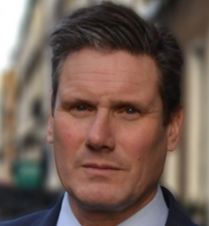
The statement made by Sir Keir Starmer, the Prime Minister, on 28 May 2026.
With characteristic lucidity, Tony Blair has set out his own contribution to the debate about the future of our country and the Labour Party. This is welcome, not least because I respect his opinion. He is one of few people in this country who knows what it is like to serve as Prime Minister and the only other living person to have secured a Labour majority. When he speaks on politics, I find it usually pays to listen.
There is much in his essay to agree with. He is right to point out, as he always has, that ideas and policy are the determining factors in long-term political success. Clearly, we have a very different view about the conflict in Iran and more generally about how to balance our long-standing alliance with the United States alongside a strong and sovereign British foreign policy. But at the strategic level, we also agree that Britain must resist the growing clamour to break with the US. The security partnership is simply too deep and too valuable to our national interest to throw away in a fit of gesture politics. Besides, the current President’s central demand of Europe – that we take more responsibility for our own defence – is not unique to him. It was the position of America before he was President and it will be the position of America after he ceases to be President. There is a good reason for this. It is right: it is long past time for Europe to strengthen its hard power and Britain must play a leading role. That is why we are introducing the highest sustained increase in defence spending since the Cold War. It is why we are building up a distinctively European pillar of NATO. And it is why, amongst many other reasons, we will seek a much closer relationship with our European allies at the upcoming summit with the European Union.
Moreover, now is a good moment to reflect on the Government’s course. As I said when the results came through, I am not in the business of ignoring a message from the voters as stark as the one Labour received at the recent local elections. And the signal is that my Government needs not just to be better, but also to be bolder. On growth, defence, Europe, energy and opportunity, we do now need a bigger response than we anticipated in 2024. In a world that has become even more volatile, that is what our ‘change’ mandate demands.
Nonetheless, it will come as no surprise to hear that I do not agree with everything Tony says about Britain or the Government. And to explain why, it is instructive to return to the 2024 context and the despairing commentary about Britain’s perceived decline. It was a running theme of the campaign. Britain was in an unbreakable trap. A “doom-loop” so fiendish that escape was utterly inconceivable. Higher investment in public services, we were told, could not be achieved without risking the health of the public finances or throttling economic growth. Significantly reducing immigration was equally impossible without much the same effect. The loudly proclaimed truth was simple: any new Government would have to choose between rebuilding the economy, improving public services, or reducing immigration. At best, it was a trilemma.
Today, that hand-wringing commentary continues unabated. But the facts about Britain have changed dramatically. After a decade of austerity, a Labour Government has delivered record public service investment and performance is improving. We are on track to deliver the fastest reduction in NHS waiting times since the service’s creation in 1948. Net migration has fallen from a high of nearly 1 million towards the end of the Tory period of rule, to just 171,000 now. Knife crime is significantly down. The asylum backlog has been slashed by 46% with hotel use also falling. Childcare investment has saved working families an average of £8000 a year. And child poverty is set to fall by over half a million children. That is the biggest reduction in a single term of any British government, ever.
Meanwhile, in challenging global circumstances, the British economy is clearly outperforming our peers. We were the fastest growing economy in the G7 at the start of this year (a situation I was repeatedly told in opposition could simply never occur). Borrowing is on track to come down quicker than any other major economy. There have been six interest rate cuts since the election. Despite the conflict in Iran, inflation fell last month, showing that the fundamentals of our efforts to tackle the cost-of-living are sound. And in every single month that we have been in power, wages have gone up. That is not just lines on a graph. That is not just a ‘doom-loop’ finally escaped. That is more money in the pockets of working people.
Now, I am the first to admit that this ‘escape’ was not cost-free. Along the way we made mistakes – most obviously when setting the level at which to means test the winter fuel payment. We also asked a lot of the British people, particularly businesses who now pay higher national insurance contributions. And while we were right to be clear – both during the campaign and since – that it would take a while to turn the British oil tanker around, I do believe that the mood music in the early part of the Government was too negative. We should have shown the underlying hope of our direction much more clearly.
Yet in the context of where Britain finds itself now, I remain confident we got the big political choices right. And that ultimately is why I disagree with picking out this or that individual policy and saying it shows a lack of coherence. I’ll be blunt – it is simply not a credible depiction of how Government works. Government is not a to-do list. You cannot just tick off the issues, one by one. No, Government is about acting on every major problem simultaneously, balancing them against each other, and trying to get to the best situation for Britain overall. A growing economy needs a supply-side reform agenda, of course it does. But it also needs sound public finances. It needs strong public services. It needs infrastructure investment. It needs a high standing amongst our international peers and the respect of global investors. It needs an immigration system that retains confidence. It needs a robust policy for our national security. You cannot simply pick one priority and ignore all the other ‘action needed now’ crises that cross a Prime Minister’s desk every single day. I expect that was true in 1997 and it was certainly true in 2024 when we inherited a situation as bad as any incoming Government since at least the 1979 Thatcher Government. The question should not be about individual policies. It should be whether or not we have taken Britain forward in a coherent direction, consistent with our mandate? I firmly believe that the evidence suggests we have. Including on economic growth.
However, I also have a deeper, less technocratic disagreement with Tony’s argument. Because he explicitly says that the rise of political populism can be traced back to Labour “moving to the left” after he departed office in 2007. In contrast, the Global Financial Crisis of 2008 is not mentioned at all. I have to disagree with him on this. The first embers of the populist fire are surely economic and I have long believed 2008 to be the moment they were first lit. Yes, Tory austerity then douses them in petrol and makes everything immeasurably worse. But even before that, Britain’s economic model was struggling to deliver higher living standards for enough people or places in our country. And the financial crisis itself, including the necessary bank bailouts, clearly called into question the fairness of the entire economic bargain.
In fact, I would go further: this is the central truth throughout all the years of Tory chaos and crisis. The fundamental problem was not that they simply failed to deliver the right policy mix to get back to a basically sound model. It is that they should never have been trying to do that in the first place, because the status quo was broken. The Great Moderation was done. Too many communities, particularly those still reeling from deindustrialisation, were locked out of wealth creation. And too many people – working class people, especially – were ignored as people who could make a valuable contribution to the success of our country. Carers, drivers, builders, shopworkers, cleaners, technicians – workers who did not belong to the so-called “knowledge economy” were left out of our collective story of aspiration. That is why the pandemic touched such a raw nerve. It exposed, in defiance of that story, just how central those workers were to the real functioning of our country. And yet even then – nothing. The Tory Government just carried on trying to limp back to the broken status quo.
This is what any account of the British economy or the rise in populism must acknowledge. Populism cannot be “bought off” with higher growth and old school redistribution, though the absence of both, as the Tory era shows, will only make things worse. Nor is it just about living standards or economic inequality, though both clearly matter deeply. No, it is a more profound and subtle crisis – its roots are economic, but it also about dignity and respect. Working people and working-class communities want an economy that they have a stake in, a state that respects the value they contribute, and a Government that can help them achieve greater control over an increasingly insecure world. Any economic plan that does not wrestle with this is on a political hiding to nothing. Not just in Britain, anywhere in the western world.
You can try and ignore that. You can double-down on the old ways. But the spasms of political chaos it unleashes, the chilling effect that has on long-term investment, the opportunities it gives to grifters and grievance – that is the surest way to making our country poorer that I can think of. And frankly, we don’t need to think about it. We just have to look around Britain at what the Tories did. The evidence is all around us. The world has changed.
Take, as just one example, the issue rightly dominating headlines over the past few days: Alan Milburn’s interim report on the economic fortunes of our young people. Because his findings bear all the hallmarks of the old status quo’s collapse. Systemic institutional failure. Economic stagnation. Persistent low investment. But also, a story that is fundamentally about dignity and respect. About millions of young people – often poor, working class or disabled – who are so ignored by the established way of doing things in this country, that they do not feel success could ever belong to them.
I saw this first hand with my late brother. He had difficulties learning and I will never forget the way he had to fight, every day, just to be seen. But there are so many others who have similarly seemed invisible to the status quo. I think of children living in poverty arriving at school too hungry to learn. Teenagers without a place to go in their community. And the millions of young people who are still, even in 2026, looked down upon by some people because they didn’t or don’t want to go to university. Amazingly talented and dedicated people who have not been treated with the respect they deserve. This is their Government.
It is why so many of the investments we have made are targeted on young people – in childcare, in new school-based nurseries, in family hubs, in tackling child poverty, in apprenticeships, in technical excellence colleges, in special educational needs education, and in a youth guarantee that will support every young person who can’t find work with a new opportunity to earn or learn. Because it goes back to those three demands: an economy that gives working class communities a stake. A state that recognises everyone’s value. And a Government that uses its power to give people agency and control. They are not just principles that serve as guide to fixing our problems or defeating populism. They are the building blocks of an entirely different Britain. A stronger Britain. A fairer Britain. But crucially, a Britain that is truly built for all. A country where everyone, no matter their background, feels they are respected for who they are. That their children will be backed to go as far as their talent will take them. And that, with hard work, this is what will define their success. Not their class, their race, or the community they grew up in. Not the educational institution they went to. Their talent and their effort.
Personally, I believe that is the most New Labour cause of all – the most Labour cause of all. But it is one that each generation must renew to face the economic and geopolitical conditions of the moment. That is what this Government is doing.
You can see it in our Pride in Place Programme. Yes, on the surface it is investment in communities and the local public realm. But it is also about respect, control and unlocking untapped potential. About giving communities the power to decide what is spent in their area, not bureaucrats in Whitehall or politicians in Westminster.
You can see it in our supply-side reforms to the economy – in planning reform, infrastructure investment, judicial review and in stripping out the regulation that stops us becoming a civil nuclear powerhouse. Yes, it’s about economic growth and getting Britain building. But it is also about making sure the state can unlock opportunity everywhere in the country. That it is strong enough to overcome vested interests and demonstrate control to a public sceptical that Government can deliver for them.
It’s there too in our energy security strategy. Of course, I recognise that Britain cannot unilaterally tackle climate change on its own. But we are a leading G7 economy, our voice, our example and our leadership matters. Moreover, while North Sea oil and gas should and will remain part of our energy mix for generations, it is also clearly a depleting source that has no discernible impact on the global price of oil and gas. Even with our own resources, we are now a net importer of fossil fuels and that is the single biggest driver of soaring energy bills bar none. And so, investing in clean British energy strengthens our agency over those markets. It takes control of our bills on behalf of working people.
Indeed, wherever you look across the Government’s agenda – our NHS reforms, our immigration and asylum reforms, our industrial policy, our radical devolution agenda, our transformative power shifts in favour of workers and renters – it is the same story on repeat. Greater security as the basis for aspiration and growth. No contribution or community ignored. Strengthening Britain’s control over the forces that shape our world.
In fact, even on the issue that Tony Blair most attends to in his essay, you can see those principles in action. Because far from being left behind on artificial intelligence, Britain is at the front of the pack. This isn’t rhetoric. Britain is widely recognised by the leading lights of that sector as being a growing and sovereign AI player. No less an authority than Jensen Huang, the CEO of Nvidia, has said we are on the cusp of becoming an AI superpower. Investment is flowing into the country and not just into London, also into building datacentres in places like Loughton in Essex, Blyth in Northumberland, and former industrial sites on the Castleford side of Leeds. It is improving our public services, particularly the NHS. And as we build this future, we are taking measures that strengthen our sovereignty; making sure we are an AI rule-maker, not a rule-taker. It is our principles in action, once again. Not just passively accepting our economic fate, but actively shaping the future. Taking control. Unlocking the potential of the whole country.
Is there more to do? Yes. Much, much more. Is our welfare system in need of reform? Yes. Is our economy in need of even more growth? Definitely. Do we need bolder policies on everything from the European Union, to protecting our children online, and the difference we can make now in preparation for higher global energy prices in the winter? Yes, and that is all coming.
Are there are difficult choices and constraints? Yes, of course there are. Most of all, the unignorable constraint of economic stability. That can never be taken for granted and never will be with my leadership. Because at the end of the day, strong public finances are also a source of agency, arguably the ultimate source. If we lost control now, after everything the Tories put the country through, not only would working people pay a very heavy price, but the Labour Party would never be forgiven.
One final disagreement with Tony. He argues that this not about a stronger assertion of Labour values. I know what he means. On their own, absent of a plan, values take you nowhere. But Britain does need Labour values, it has needed Labour values for a while. Our plan is guided by them. Our vision is shaped by them. And the future we are building – a country that feels like it truly belongs to us all – must use them as its bricks and mortar.
That is what we are doing.
Keir.