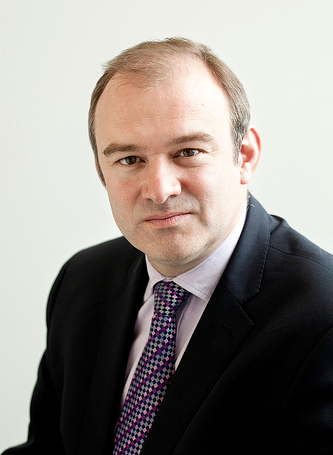
The speech made by Ed Davey, the Leader of the Liberal Democrats, in the House of Commons on 24 February 2026.
I beg to move,
That an humble Address be presented to His Majesty, that he will be graciously pleased to give directions to require the Government to lay before this House all papers relating to the creation of the role of Special Representative for Trade and Investment and Andrew Mountbatten-Windsor’s appointment to that role, including but not confined to any documents held by UK Trade and Investment, British Trade International (BTI) and its successors, the Foreign, Commonwealth and Development Office, the Cabinet Office and the Prime Minister’s Office containing or relating to advice from, or provided to, the Group Chief Executive of BTI, Peter Mandelson, the Cabinet Office and the Prime Minister regarding the suitability of Andrew Mountbatten-Windsor for the appointment, due diligence and vetting conducted in relation to the appointment, and minutes of meetings and electronic communications regarding the due diligence and vetting.
Thank you, Mr Speaker, for your statement ahead of this debate.
The appalling crimes of Jeffrey Epstein and his associates have rightly stunned the whole world. The scale of Epstein’s operation was shocking—selling human beings for sex, turning hundreds of young women and girls into victims and survivors—and those women are at the front of our mind today as we finally seek transparency, truth and accountability.
Andrew Mountbatten-Windsor shamed our country and the royal family, but for too long, Members of Parliament were barred from even raising criticisms of him, let alone properly scrutinising his role as trade envoy, because of the outdated tradition that mentions of any member of the royal family in this House must, in the words of the previous Speaker, be
“very rare, very sparing and very respectful”.—[Official Report, 28 February 2011; Vol. 524, c. 35.]
I encountered this at first hand back in 2011, when I was asked to respond to an Adjournment debate on behalf of Lord Green, who was then the Minister for Trade and Investment. The debate was led by the late Paul Flynn, but even he—an ardent and outspoken republican, as I am sure many of us remember, was not allowed to raise any actual concerns about Andrew himself. Paul called it “negative privilege”, and that is what it was. He said his mouth was “bandaged by archaic rules”, and that had very real and damaging consequences. I am pleased to see the Minister in his place, because I know he was also constrained by those rules when he raised similar issues. In that debate, Epstein’s name was not mentioned once, and there was no chance to debate the substance. Standing in for the responsible Minister, I set out the Government’s position, as it had been for a decade, in support of the prince’s role as trade envoy. Looking back and knowing what we all know now, I am horrified by it. I cannot imagine what it must have been like for the survivors and their families to hear Andrew praised like that, as they did so often all around the world, so I apologise to them, and I am determined to change things.
I was struck by the words of Amanda Roberts, Virginia Giuffre’s sister-in-law, after Andrew was arrested last week. She said this could be a stain on the royal family for the rest of our history, or
“it could be a moment where they, and we, decide that this is the time when cultural change happens.”
As a staunch supporter of His Royal Highness the King and the royal family, I believe we must help to bring about that cultural change now.
Liz Saville Roberts (Dwyfor Meirionnydd) (PC)
The leader of the Liberal Democrats is making a powerful speech. I am sure he will agree that decades of deferential and, frankly, sycophantic treatment by Parliament and state authorities are being exposed as having enabled Andrew Mountbatten-Windsor to behave as though he were untouchable. I am sure he will also join me in calling on the Government to introduce independent oversight of those members of the royal family who undertake official duties, and in requiring transparency and scrutiny of anything paid for by the state from now on, because apparently, they work for us.
Ed Davey
I am grateful for that intervention. We must build a culture of transparency and accountability; I think that is essential. I hope that we as a House will look at ending the archaic “negative privilege” rules that Paul Flynn spoke about, and remove the bandages from our mouths. Today, we are free of those bandages, when it comes to Andrew. Our motion focuses on finally getting out the truth about his role as a special representative for trade and investment.
Jim Shannon (Strangford) (DUP)
First, I commend the right hon. Member and his party for bringing forward the motion, and for the way that he interviewed on TV this morning. Certainly, he speaks not just for this House, but for this nation. We are all greatly shocked at what has taken place, but does he agree that King Charles, Queen Camilla, Edward, Sophie, William and Kate are members of the royal family who need our support at this time? Does he also agree that now is perhaps the time to tell them that we in this House love them, and that this nation loves them? We understand the pain they are suffering, and we support those members of the royal family who are above reproach on this.
Ed Davey
I am grateful to the hon. Gentleman for his intervention, and I think he probably speaks for the whole House. Indeed, the intention of this debate is to bring this House together. The changes that we think are necessary would protect the royal family and strengthen the monarchy, which in some places has been criticised. That is important, and it is why we need these reforms.
The motion focuses on the start of this—on the appointment of the former Prince Andrew to this role back in 2001. We have seen reporting that says that the King, then the Prince of Wales, expressed his concerns about that appointment. More alarmingly, we have read that Peter Mandelson wrote to the then Prime Minister, Tony Blair, as his former Trade Secretary, pushing for Andrew’s appointment—one friend of Epstein lobbying for a job for another friend of Epstein, and a job that might help Epstein enrich himself. We clearly need to get to the bottom of that appointment and the role that Mandelson played in it, and only the papers demanded by this motion will allow us to do that. We need them published as soon as possible, without delay.
There are many questions about Andrew’s conduct in the role, which is now subject to a criminal investigation. As you said, Mr Speaker, we clearly do not want to jeopardise that investigation through anything we say today. We must let the police get on with their work, especially for Epstein’s victims, survivors and their families, who deserve to see justice done at last. However, I would highlight one example of the way that Jeffrey Epstein sought to use Andrew’s role as a trade envoy to enrich himself.
Monica Harding (Esher and Walton) (LD)
My right hon. Friend is talking about Andrew Mountbatten-Windsor’s role as a trade envoy. When I was working overseas for the British Council, Mountbatten-Windsor came to an exhibition I had put on about Dolly the sheep, which was a fine example of British scientific innovation, but he stood up in front of Japanese dignitaries and business people and said, “This is rubbish. This is Frankenstein’s sheep.” Would my right hon. Friend agree with me that that was a very poor example of promoting British trade interests?
Ed Davey
I am grateful for my hon. Friend’s intervention, which shows not only that we need to focus on the scandals we have heard about, but that even greater questions are raised if the trade envoy was actually speaking against British commercial interests. I hope that not just in this debate, but in other debates, and in Select Committees and elsewhere, we will get to the bottom of that issue.
As I was saying, I would like to highlight one example of how Jeffrey Epstein sought to use Andrew’s role as trade envoy to enrich himself. Channel 4 uncovered emails in the Epstein files in which Epstein was trying to meet the Libyan dictator Gaddafi in the dying months of the Gaddafi regime, to help him find somewhere to “put his money”—something that the Minister raised at the time. In other words, Epstein looked at the deadly crisis in Libya and saw a chance to make some money, and he thought his friend Andrew could help. This is what he said in one of the emails:
“I wondered if Pa should make the intro”.
A few weeks later, Andrew wrote back, “Libya fixed.”
Although the Epstein-Gaddafi meeting does not appear to have happened, this shows clearly what these relationships were all about for Epstein: increasing his own wealth and power. The idea that the role of special trade envoy for our United Kingdom may have been used to help him do that—to help a vile paedophile sex trafficker enrich himself—is truly sickening. Again, I pay tribute to the Minister, who tried to raise this at the time, like his colleague, the late Paul Flynn. It shows again why we need to change the rules of this House that govern Ministers and the debate here.
Matt Bishop (Forest of Dean) (Lab)
I thank the Leader of the Opposition for giving way. [Interruption.] Sorry, the leader of the Liberal Democrats—I stand corrected. [Hon. Members: “More!”] It’s coming.
I asked the Chief Secretary to the Prime Minister yesterday in this House about the speed of bringing legislation forward. Victims, Members of this House and Members of the Lords all want this process to happen as swiftly as possible. Does the right hon. Member agree with the Chief Secretary’s comments and that whatever happens with Andrew or anybody else, we must keep pushing to get legislation brought forward swiftly, not in the years to come?
Ed Davey
I am grateful for both the hon. Gentleman’s Freudian slip and his suggestion that we need to speed up action in this area.
Let me begin to conclude. In many ways, this is the first truly global scandal, from the White House and silicon valley to Oslo and Paris. But it is also a deeply British scandal, reaching right to the top of the British establishment. Can there be many people more symbolic of the rot that eats away at the British establishment than the former Duke of York and special trade envoy, and the former Business Secretary, First Secretary of State and ambassador to the United States? Their association with Epstein and their actions on his behalf, while trusted with the privilege of public office, are a stain on our country.
Today, we must begin to clean away that stain with the disinfectant of transparency. Whether it is the President of the United States and his Commerce Secretary, Peter Mandelson and Andrew Mountbatten-Windsor or Epstein himself, their victims and survivors have seen those responsible evade accountability and escape justice for far too long. I hope—I desperately hope—that is ending now, and I hope the House will approve this motion.