Tag: Ed Davey

  • Ed Davey – 2026 Comments on TNT Sports

    Ed Davey – 2026 Comments on TNT Sports

    The comments made by Ed Davey, the Leader of the Liberal Democrats, on 30 May 2026.

    As the Champions League final kicks off today, football fans are being priced out by TNT Sports locking it behind a paywall.

    While the PM has politely asked TNT to make it free, I’m calling on the government to change the law and guarantee these games are always free-to-air!

  • Ed Davey – 2026 Comments on Latest Peter Mandelson Allegations

    Ed Davey – 2026 Comments on Latest Peter Mandelson Allegations

    The comments made by Ed Davey on 27 May 2026.

    The fact that the government is still trying to hide the truth when it comes to Mandelson is an utter disgrace. Responsibility for hiring him lies at the door of the PM.

    Glaring warning signs were ignored, due to a desperate desire to pander to the bully in the White House.

  • Ed Davey – 2026 Speech on the Loyal Address

    Ed Davey – 2026 Speech on the Loyal Address

    The speech made by Ed Davey, the Leader of the Liberal Democrats, in the House of Commons on 13 May 2026.

    I start by giving my sincere thanks, on behalf of all Liberal Democrats, to His Majesty King Charles for his Gracious Speech. We still believe President Trump should not have been rewarded for insulting British soldiers and the Royal Navy, but His Majesty was superb on that state visit.

    I join others in paying tribute to the hon. Members for Bradford West (Naz Shah) and for Harlow (Chris Vince) for their accomplished speeches proposing and seconding the Loyal Address. Like me, the hon. Member for Bradford West worked in a factory. For her, it was crisps; for me, it was pork pies. If we throw in the hon. Member for Isle of Wight West (Richard Quigley), who worked in the soft drinks industry, together we are a meal deal. May I say that the hon. Lady is the real McCoy? She has already had an extraordinary life and career, talking from first-hand experience about how violence against women and homelessness touches millions of people. We are in her debt for that, and for her bravery and courage.

    I also congratulate the hon. Member for Harlow on his speech. I hear he recently ran the London marathon—the House might be shocked to know that I have more experience with crisps than with long-distance running. It is a great pleasure to work with him on young carers and young adult carers, something that we are both passionate about, and I thank him for his leadership as chair of the all-party parliamentary group. As has been mentioned, the hon. Gentleman was a maths teacher for many years, and no doubt had to deal with bad behaviour in the classroom, so he may want to advise the Prime Minister on whether the Health Secretary should be put in detention.

    There is a lot to cover in responding to this Humble Address, but I will start by directly addressing the atrocious acts of antisemitism that British Jews are experiencing at the moment, and the insecurity and fear that the community now feel. Week after week, British Jews are being attacked, intimidated and persecuted—Heaton Park synagogue, Kenton United synagogue, Finchley Reform synagogue, Jewish Futures in Hendon, Hatzola ambulances, and now the Golders Green stabbings. When I visited Western Marble Arch synagogue last week, members of the Jewish community questioned whether Britain is a safe place for them, or whether they must move abroad to be safe. No one should have to ask themselves that question in our country today—no one.

    The independent reviewer of terrorism legislation, Jonathan Hall, is right to call these appalling levels of antisemitism a “national security emergency”. He is also right to say that existing laws must be properly enforced. That is why I welcome the Government’s initiative to bring forward a policing Bill, and I urge them to ensure that police and prosecutors receive the right training and support to pursue antisemitic crimes much more effectively.

    That is why the Liberal Democrats have long called for the Islamic Revolutionary Guard Corps to be proscribed as a terrorist organisation in order to tackle the threat that these Iranian terrorists pose to British Jews. The legislation to proscribe the IRGC—finally confirmed today, I believe—must be a top and urgent priority.

    Jim Shannon (Strangford) (DUP)

    I welcome what the Prime Minister is doing in relation to the IRGC, but he will be aware that some 30,000 individuals who protested on the streets of Iran are in jail. Some of them are on death row, about to be executed for standing up for liberty and freedom. Does the right hon. Gentleman feel that the Government, and the Prime Minister in particular, should be taking action to try to get those people free? Now is the time to act.

    Ed Davey

    The hon. Gentleman is right to mention those in Iran who have been persecuted by the appalling Iranian regime. I am sure that the Foreign Secretary will have heard that and will make as many representations as possible, but I accept that it is not an easy matter, given the regime in Tehran.

    This is the 23rd Loyal Address that I have listened to in this House, and it is the most surreal by far. Everyone in this House and across the country knows that the Prime Minister may soon not be in power—not in place for his own programme and not able to deliver these promises. The votes on this King’s Speech ought to be interesting—a test of confidence in this Government and Prime Minister. The Liberal Democrats will be voting against it, but how many Members on the Government Benches will? By my reckoning, if every Labour MP who has called for the Prime Minister to go voted that way, the Government’s huge majority would be at risk. Let us see if they have the courage of their convictions.

    The Liberal Democrats will be voting against it not just because the Prime Minister is now one of the weakest in post-war history, but because this King’s Speech does not offer the change our country needs. It does not offer the change needed to fix the insecurity that people and businesses are increasingly fearful of. It does not offer change to do with rising prices. People know that inflation in food, energy and fuel is set to rocket, but people do not think the Prime Minister has their backs on the economy. The financial and economic insecurity stalking our country is hitting growth, investment and jobs. We were promised change and a Government with growth as their mission, yet rather than change, we have had continuity from the failures that came before.

    Faced with that calamity, what has the Prime Minister offered on growth? We have been offered an EU reset Bill that fails to reset. With a Prime Minister who knows a thing or two about failed resets, perhaps we should not be surprised. The Prime Minister’s refusal to remove his red lines on a new EU-UK customs union, to go further than his red lines on the single market and to deliver a new deep trading relationship with our European partners with a proper youth mobility scheme all mean that he is consigning our country to higher prices and lower growth and failing to address the economic insecurity plaguing our economy. Instead, we have been given taxes on jobs and the family farm tax.

    Johanna Baxter (Paisley and Renfrewshire South) (Lab)

    Will the right hon. Gentleman give way?

    Ed Davey

    Not at the moment.

    To be fair to the Government, some of our current economic problems stem from President Trump and his reckless war in Iran. Let us be absolutely clear: Trump’s war is stoking the cost of living crisis to new and alarming levels—fuel prices are up at the pump, food prices are set to go up even more, and people’s holidays are threatened. The Prime Minister’s biggest success was not taking us into Trump’s damaging war with Iran when the Conservatives and Reform were urging him to do so, yet because of the Government’s failure to build new and deeper economic alliances with Europe and the Commonwealth, as we have been urging them to do, this country is set to be hit far harder by the inflation caused by the situation in the strait of Hormuz.

    Dr Scott Arthur (Edinburgh South West) (Lab)

    We all recognise the impact that Trump’s war is going to have on our economy. The right hon. Gentleman offers membership of the single market and the customs union as a solution to that, but prices in Edinburgh South West are going up right now. How long, in his estimation, would it take to access the single market and become a member of the customs union?

    Ed Davey

    The hon. Gentleman has obviously not noticed that we are the only party who have put forward a costed package to reduce the cost of petrol and diesel at the pumps—something that could be done immediately. I think he should pay more attention.

    Trumpflation is predicted to be worse here because of the failures of this Government, and indeed the last. Cosying up to this White House was never going to work, and it has not. I suspect that history will show that the Prime Minister’s approach to President Trump was one of his worst mistakes.

    The sad truth is that President Trump is one of the reasons why so many people in our country feel insecure, anxious and fearful about the future. From trade tariffs to the weakening of NATO, President Trump has broken all the certainties British people and businesses used to rely on, yet this Government have been far too slow to realise that and to respond to this new reality. The Conservatives and Reform may not have woken up, but there is no excuse for the Government. It has therefore been left to us. The country can know that my party will champion the new and changing international alliances that are so vital for the British economy and the defence of the United Kingdom.

    Let me try to find an area of agreement. I do welcome the Government’s decision to bring forward an energy independence Bill, although we will scrutinise it line by line and advance our more ambitious ideas. I have long felt that energy independence should be a long-term goal for our country and our allies; even before Trump’s war in Iran, people and businesses were being hit because of our dependence on others for fuel. Energy bills for households are still around a third higher than before Putin’s war in Ukraine. When fossil fuel dictators like Vladimir Putin can hit the pockets of every family and pensioner in our country and tyrannical regimes like Tehran’s can hold our country and the world to ransom, surely it is time to wake up.

    Oil and gas prices have a long history of spiking and hurting our economy. Even when North sea oil and gas production was at its height—now almost 30 years ago—the UK could still be hit because we have always been price takers. While I have always been pragmatic about our North sea oil industry for our economy—not least in Scotland—it is simply fantasy and fabrication for some in this House to pretend that there is a solution in the North sea to high energy prices.

    The best way to cut energy bills is to invest in home-grown renewable power. We will therefore push the Government to go further in the energy independence Bill, just as we did on solar power early in this Parliament with the sunshine Bill of my hon. Friend the Member for Cheltenham (Max Wilkinson)—now reflected in law.

    The Prime Minister, or whoever replaces him, must take up our plan to protect people from Trumpflation on fuel bills and cut fuel duty, rail fares and bus prices to protect British families and businesses right now.

    The Liberal Democrat agenda of greater security for families and businesses begins with greater economic, financial and energy security, but it is also built on greater security for our country. The Government must do far more to bolster our nation’s defences. With Vladimir Putin waging war in Europe and the need to redouble our efforts to support our brave Ukrainian allies to beat Russia, with a wildly unpredictable President sitting in the White House, leading a dangerous and idiotic war in the middle east and undermining NATO at every turn, and with a world order challenged by the rise of China, the case for an urgent and significant rise in defence spending is clearly a strong one.

    It is even stronger when one looks at the state of our defence readiness. The Conservatives failed on the No. 1 task of any Government: to defend our country and back our armed forces. They left our Army at its lowest size since the Napoleonic war, and they left our Navy at its lowest size since the English civil war. Yet this Labour Government have moved at a snail’s pace, failing month after month to publish their own defence investment plan. In contrast, we have called for the immediate launch of defence bonds to raise £20 billion over two years, building on successful models used by Poland, and for a commitment to spending 3% of GDP on defence by 2030 at the latest. We have argued for a new European rearmament bank so that our defence industries will lead the next generation of defence technologies.

    If the history of the last century taught us anything, and if the experience of President Trump has taught us anything, it is essential and urgent that we work with our European and Commonwealth allies to secure and defend our country, our values and our way of life.

    Central to our British way of life is the NHS, to which I now turn. It is important I do so, because I am likely to be the only Opposition party leader to stand up for healthcare in this debate, as the Conservatives are so embarrassed by their record and Reform’s leader has spent decades saying that he wants to get rid of the NHS entirely. The Government would have us believe that they have turned the NHS around after the mess left by the last Government, but when he is not plotting his next leadership bid against the Prime Minister, the Secretary of State would have Labour Back Benchers believe that he is fixing the NHS. If only.

    Now we are told that the Health Secretary is planning to resign tomorrow. This resignation is taking so long that it would give NHS waiting lists a run for their money. Anyone who visits their local hospital knows that the NHS remains in a critical state. Thousands of people are still being treated in hospital corridors every day. We are now even seeing job adverts for people to provide care in corridors.

    Sam Rushworth (Bishop Auckland) (Lab)

    It would be interesting to be reminded of how the right hon. Member voted on Andrew Lansley’s reforms of the NHS, many of which are still creating problems in our NHS today.

    Ed Davey

    The hon. Gentleman ought to know that although there was a long time when the Conservatives were messing up our NHS, Labour has had two years and has absolutely failed.

    Let us turn to Labour’s promises to turn around primary care with more GPs, NHS dentists and community pharmacists. Some areas of the country have been going backwards since this Government came to power. When it comes to people feeling more secure in their lives and their futures, quality healthcare is central. I will not list off our policies for fixing the NHS, except one: care—social care and family care. Not for the first time, I must declare an interest.

    I focus on care because it is the central, radical and transformational change that has to happen if we are to fix our NHS. Two years ago in the debate on the last Loyal Address I raised care with the Prime Minister as the big challenge that the Government had to tackle to rescue the NHS. I welcomed promises back then for cross-party working, but what has happened? Almost nothing. True, the excellent Baroness Casey has been dispatched around the country, on a timetable written in the Treasury, but her report will land just before the election so, once again, nothing will happen for care in this Parliament. That is a betrayal of the elderly and disabled who need better care, of their families and of the NHS. We will not let up in the fight to fix social care and to back people caring for their loved ones at home. We will put forward the changes that our country needs for people to feel less insecure when they face old age and illness.

    Another aspect of our national life where insecurity has got worse and worse is farming and food. British farmers are world renowned. They are the key to ensuring that everyone has high-quality and affordable food on their plates. Yet they have been let down and forgotten time and again. They were let down by the Conservatives, who undermined our food security with bad trade deals and botched funding. The Conservative Government left England as the only country in Europe where farmers are not supported to produce food.

    But somehow the Labour Government have managed to make things worse for farmers, not least with their terrible mess over the family farm tax. That is why we called for the inclusion of a good food Bill in the King’s Speech, to prioritise food security and back British farmers to produce British food. With Trump’s idiotic war in Iran hitting farmers with everything from higher fertiliser costs to higher prices for red diesel, the need for our good food Bill could not be more urgent. If that is coupled with our plans for a much closer trading relationship with Europe, there is a pathway to greater food security and lower food prices, and the Government must seize it.

    There are many ways in which our party believes the Government should tackle the insecurity that people across the country feel right now: from quicker, tougher action on the damage being done by social media to our young people and people’s mental health, to backing the case for more community police officers to keep our communities safer, and having a fair asylum and immigration policy that is genuinely effective against irregular immigration but welcomes people who play by the rules and contribute to our great country; and from tackling the continuing scandals in our water industry to building the affordable and social housing that so many families and young people desperately need, and ensuring that children and families are at the heart of reforms to special educational needs.

    My right hon. and hon. Friends will set out our approach on all those issues over the course of the debate, but I will end by addressing the threat to our country from another source: populist politicians and extremist parties that sow division, play the blame game and make wild promises, and that are a threat to our very democracy. They are exploiting our broken political system, which both the Conservatives and Labour have failed to fix.

    The first-past-the-post electoral system of “winner takes all” was supposed to bring stability. It was supposed to provide majority Governments who could take the tough long-term decisions necessary to deliver for our country on the economy, the NHS and defence. We see how badly it has failed. We have majority Governments, yes, but with six Prime Ministers in a decade—soon, probably seven—we hardly have stability, when so many people now ask, “Is Britain governable?”

    The concentration of power undermines so much and leads to the scandals that undermine the standing of our democracy even more: a twice-sacked Member of the House of Lords is handed our most prestigious ambassador post, despite the Prime Minister knowing his links to a convicted paedophile and sex trafficker; a Conservative Prime Minister consistently broke the rules that he himself set for the rest of us during one of our nation’s most severe crises; and a leader of a political party thinks a £5 million gift from a Thailand-based crypto billionaire does not reek of corruption

    The threat is clear. Under our electoral system, a Reform party that takes its orders from its American boss at Mar-a-Lago could win a majority on less than a third of the popular vote. We must fix our broken political system before it is too late, but the King’s Speech is not up to that historic, vital task. We need a new Magna Carta to enshrine the rights of citizens and protect us from the populist extremists now threatening our country.

    Anna Dixon (Shipley) (Lab)

    The results in the Bradford district were some of the least representative, with Reform taking a majority of seats despite getting only 23% of the popular vote there. Does the right hon. Gentleman agree that, while Reform made gains in seats, it is not what the majority of people in this country support?

    Ed Davey

    I certainly hear the figures from Bradford; the hon. Lady makes the same case that our party makes for electoral reform of both local and national government. In the constituencies of my hon. Friends the Members for Twickenham (Munira Wilson) and for Richmond Park (Sarah Olney), the Liberal Democrats now have every single councillor, but we do not have every single vote, and we would welcome electoral reform in those councils where we are over-represented. I hope the hon. Lady’s Government listen to the voices of Members on these Benches.

    It is clear the country wants change—and, given the battering that the two old parties received at the recent elections, it is clear they are not offering it. Worryingly, many people are looking to the extremes on the left and the right, thinking that if we burn the system down, things will improve. Yet I do not believe the British people want Trump’s divisive, unfair America here, even though that is Reform’s offer of change. I also do not believe the British people want a reheated Corbynista agenda put forward by a Green party that no longer offers serious action to protect our nature and our climate.

    It falls to the Liberal Democrats, then—the only non-populist, non-extremist party left standing—to offer the real change that people crave. Our change is about building things up, not burning them down. Our change is about bringing people, communities and our country together, not dividing and blaming people. From Europe to social care, from energy to defence, from political reform to our environment, I am proud to lead a party that is preparing for government so that our country can be changed for the better.

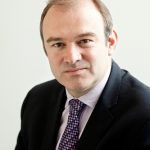
  • Ed Davey – 2026 Speech on Security Vetting

    Ed Davey – 2026 Speech on Security Vetting

    The speech made by Ed Davey, the Leader of the Liberal Democrats, in the House of Commons on 20 April 2026.

    It is 2022 all over again. Back then, when the Prime Minister was in opposition, and when it was Boris Johnson who was accused of misleading Parliament and scapegoating senior officials, the then Leader of the Opposition could not have been clearer; he said:

    “The public need to know that not all politicians are the same—that not all politicians put themselves above their country—and that honesty, integrity and accountability matter.”—[Official Report, 25 May 2022; Vol. 715, c. 298.]

    He promised “change”. He promised to

    “break this cycle and stop the chaos.”

    He promised a Government with

    “more focus on long-term strategy, not the short-term distractions that can animate Westminster.”

    I am afraid that the fact that he has even had to make a statement today shows how badly he has failed—how badly he has let down the millions of people across our country who are so desperate for change.

    The Prime Minister blames his officials. He says that he had “no idea”. He gives every impression of a Prime Minister in office, but not in power. The facts remain, even by his own account, that the Prime Minister appointed Peter Mandelson as ambassador to the United States even after he had been warned about his relationship with Jeffrey Epstein. The Prime Minister announced the appointment before Mandelson had been vetted, despite the clear risk to national security of putting someone unsuitable in that role. One of his top officials, just three weeks into the job, clearly believed that the Prime Minister wanted Mandelson to be appointed regardless of what the vetting process turned up. The Prime Minister has relied on the vetting process to defend his decisions, so why did he ask so few questions personally about the vetting process?

    We all know the truth: the Prime Minister knew that appointing Mandelson was an enormous risk, but he decided that it was a risk worth taking—a catastrophic error of judgment. Now that has blown up in his face, the only decent thing to do is take responsibility. Back in 2022, the Prime Minister rightly accused Boris Johnson of expecting others to take the blame while he clung on. That was not acceptable then, and it is not acceptable now. I hope that the Prime Minister can at least tell the House this. We will be listening very carefully to his answer. Was he given advice by Simon Case, the then Cabinet Secretary, that the necessary security clearances should be acquired before he confirmed his choice for US ambassador? Did the Prime Minister follow that advice—yes or no?

    After years of chaos under the Conservatives, we needed a Government focused on the interests of the people—the cost of living crisis, the health and care crisis, and our national security. We needed a Government with honesty, integrity and accountability. Will the Prime Minister finally accept that the only way that he can help to deliver that is by resigning?

    The Prime Minister

    I set out in my statement the full facts. In September, when the Bloomberg emails came to light, I asked the then Cabinet Secretary to review the process. He told me that the process was as it should have been, and as soon as the information about the security vetting came to light last Tuesday, I asked for the facts to be established, so that I could update Parliament.

    The right hon. Gentleman asks me about the announcement before developed vetting. He has heard the evidence that I have given to the House from the former Cabinet Secretary and from the former permanent secretary. In relation to the advice from Simon Case, when I asked the former Cabinet Secretary to review the process after September 2025, he specifically addressed whether the process had been followed by referencing the Simon Case letter, and assured me that the process was the right process to have followed. In answer to his question, that was specifically looked at by Sir Chris Wormald in the review that was conducted in September last year.

  • Ed Davey – 2026 Speech on the Middle East

    Ed Davey – 2026 Speech on the Middle East

    The speech made by Ed Davey, the Leader of the Liberal Democrats, in the House of Commons on 13 April 2026.

    I thank the Prime Minister for advance sight of his statement, and I join him in what he said about the horrific attack in Southport. Our thoughts are with the families of Bebe, Elsie and Alice and with all those affected.

    “A whole civilisation will die tonight”—

    words I never thought I would hear from an American President. Though Donald Trump thankfully did not follow through this time, those words are a stark reminder of how reckless, immoral and completely outside the bounds of international law this President is. Regrettably, he is no friend of the United Kingdom. He is no leader of the free world. He is a dangerous and corrupt gangster, and that is how we must treat him. Will the Prime Minister advise the King to call off his state visit to Washington before it is too late? I really fear for what Trump might say or do while our King is forced to stand by his side. We cannot put His Majesty in that position.

    Trump’s latest cunning plan, to blockade the strait of Hormuz, will only escalate this crisis and jeopardise the precarious ceasefire. It is right that the UK is not joining him, and I welcome the Prime Minister convening a summit to offer an alternative to Trump’s. We must work with our reliable allies in Europe and the Commonwealth and our partners in the Gulf to bring this conflict to an end and keep open the strait of Hormuz. That is critical for tackling the cost of living crisis, which is getting worse and worse for people in the UK. Petrol prices are now up by more than 25p a litre and diesel up 49p since Trump started this war—cheered on, let us not forget, by the leader of the Conservative party and Reform.

    Does the Prime Minister recognise that families and businesses cannot wait months for the Government to step in and help? Will he use the windfalls that the Treasury is getting from higher fuel prices to cut the cost of living and keep the economy moving, with action to slash bus and rail fares, and to cut fuel duty by 10p today, bringing down the price at the pumps by 12p a litre?

    The Prime Minister

    I thank the right hon. Gentleman for his questions. In relation to the language about destroying a civilisation, can I really be clear with this House? That was wrong. A threat to Iranian civilians in that way is wrong. These are civilians, let us remember, who have suffered immeasurable harm by the regime in Iran for many, many long years. That is why they are words and phrases that I would never use on behalf of this Government, who are guided by our principles and our values throughout all this.

    In relation to the King’s visit, the relationship between our two countries is important on a number of levels. The monarchy, through the bonds that it builds, is often able to reach through the decades on a situation like this; and the purpose of the visit is to mark the 250th anniversary of the relationship between our country and the United States, and that is why it is going ahead.

    In relation to the blockade, let me be clear, as I have been already in the last day or so, that we are focusing our efforts on opening in full the strait of Hormuz because of the damage that the situation is doing to economies around the world, including our own. That is why we have been working with other countries at various levels and will bring them together in a summit later this week. We, the UK, will not be joining the blockade that the President announced.

    In relation to the help that is needed for families and households, obviously we have already put in place help for energy bills and heating oil, but we are keeping this under constant review as the situation evolves. The single most important and effective thing we can do is to de-escalate the situation and work with others to get the strait of Hormuz open, and that is why we are focusing so much of our efforts in that regard.

  • Ed Davey – 2026 Comments on JD Vance

    Ed Davey – 2026 Comments on JD Vance

    The comments made by Ed Davey, the Leader of the Liberal Democrats, on 12 April 2026.

    Has anyone noticed that wherever JD Vance goes, he just makes a mess.

    In Munich he insulted European allies. In Greenland he turned everyone against Trump. And now he’s helped Viktor Orbán lose re-election.

    Maybe better to spend more time on the couch Vice President?

  • Ed Davey – 2026 Comments on Kanye West

    Ed Davey – 2026 Comments on Kanye West

    The comments made by Ed Davey, the Leader of the Liberal Democrats, on 7 April 2026.

    Glad the government has listened and done the right thing by banning Kanye West from coming to the UK to peddle his hatred.

    British festivals should be a place for celebration, not a platform for someone who has praised Hitler and promoted vile antisemitic conspiracy theories.

  • Ed Davey – 2026 Comments on “Corrupt” Donald Trump

    Ed Davey – 2026 Comments on “Corrupt” Donald Trump

    The comments made by Ed Davey, the Leader of the Liberal Democrats, on 24 March 2026.

    Donald Trump is the most corrupt President the US has ever seen.
    Now it looks like he and his cronies may have used insider knowledge to enrich themselves while their war makes everyone else poorer.

  • Ed Davey – 2026 Speech on Andrew Mountbatten-Windsor (former Prince Andrew)

    Ed Davey – 2026 Speech on Andrew Mountbatten-Windsor (former Prince Andrew)

    The speech made by Ed Davey, the Leader of the Liberal Democrats, in the House of Commons on 24 February 2026.

    I beg to move,

    That an humble Address be presented to His Majesty, that he will be graciously pleased to give directions to require the Government to lay before this House all papers relating to the creation of the role of Special Representative for Trade and Investment and Andrew Mountbatten-Windsor’s appointment to that role, including but not confined to any documents held by UK Trade and Investment, British Trade International (BTI) and its successors, the Foreign, Commonwealth and Development Office, the Cabinet Office and the Prime Minister’s Office containing or relating to advice from, or provided to, the Group Chief Executive of BTI, Peter Mandelson, the Cabinet Office and the Prime Minister regarding the suitability of Andrew Mountbatten-Windsor for the appointment, due diligence and vetting conducted in relation to the appointment, and minutes of meetings and electronic communications regarding the due diligence and vetting.

    Thank you, Mr Speaker, for your statement ahead of this debate.

    The appalling crimes of Jeffrey Epstein and his associates have rightly stunned the whole world. The scale of Epstein’s operation was shocking—selling human beings for sex, turning hundreds of young women and girls into victims and survivors—and those women are at the front of our mind today as we finally seek transparency, truth and accountability.

    Andrew Mountbatten-Windsor shamed our country and the royal family, but for too long, Members of Parliament were barred from even raising criticisms of him, let alone properly scrutinising his role as trade envoy, because of the outdated tradition that mentions of any member of the royal family in this House must, in the words of the previous Speaker, be

    “very rare, very sparing and very respectful”.—[Official Report, 28 February 2011; Vol. 524, c. 35.]

    I encountered this at first hand back in 2011, when I was asked to respond to an Adjournment debate on behalf of Lord Green, who was then the Minister for Trade and Investment. The debate was led by the late Paul Flynn, but even he—an ardent and outspoken republican, as I am sure many of us remember, was not allowed to raise any actual concerns about Andrew himself. Paul called it “negative privilege”, and that is what it was. He said his mouth was “bandaged by archaic rules”, and that had very real and damaging consequences. I am pleased to see the Minister in his place, because I know he was also constrained by those rules when he raised similar issues. In that debate, Epstein’s name was not mentioned once, and there was no chance to debate the substance. Standing in for the responsible Minister, I set out the Government’s position, as it had been for a decade, in support of the prince’s role as trade envoy. Looking back and knowing what we all know now, I am horrified by it. I cannot imagine what it must have been like for the survivors and their families to hear Andrew praised like that, as they did so often all around the world, so I apologise to them, and I am determined to change things.

    I was struck by the words of Amanda Roberts, Virginia Giuffre’s sister-in-law, after Andrew was arrested last week. She said this could be a stain on the royal family for the rest of our history, or

    “it could be a moment where they, and we, decide that this is the time when cultural change happens.”

    As a staunch supporter of His Royal Highness the King and the royal family, I believe we must help to bring about that cultural change now.

    Liz Saville Roberts (Dwyfor Meirionnydd) (PC)

    The leader of the Liberal Democrats is making a powerful speech. I am sure he will agree that decades of deferential and, frankly, sycophantic treatment by Parliament and state authorities are being exposed as having enabled Andrew Mountbatten-Windsor to behave as though he were untouchable. I am sure he will also join me in calling on the Government to introduce independent oversight of those members of the royal family who undertake official duties, and in requiring transparency and scrutiny of anything paid for by the state from now on, because apparently, they work for us.

    Ed Davey

    I am grateful for that intervention. We must build a culture of transparency and accountability; I think that is essential. I hope that we as a House will look at ending the archaic “negative privilege” rules that Paul Flynn spoke about, and remove the bandages from our mouths. Today, we are free of those bandages, when it comes to Andrew. Our motion focuses on finally getting out the truth about his role as a special representative for trade and investment.

    Jim Shannon (Strangford) (DUP)

    First, I commend the right hon. Member and his party for bringing forward the motion, and for the way that he interviewed on TV this morning. Certainly, he speaks not just for this House, but for this nation. We are all greatly shocked at what has taken place, but does he agree that King Charles, Queen Camilla, Edward, Sophie, William and Kate are members of the royal family who need our support at this time? Does he also agree that now is perhaps the time to tell them that we in this House love them, and that this nation loves them? We understand the pain they are suffering, and we support those members of the royal family who are above reproach on this.

    Ed Davey

    I am grateful to the hon. Gentleman for his intervention, and I think he probably speaks for the whole House. Indeed, the intention of this debate is to bring this House together. The changes that we think are necessary would protect the royal family and strengthen the monarchy, which in some places has been criticised. That is important, and it is why we need these reforms.

    The motion focuses on the start of this—on the appointment of the former Prince Andrew to this role back in 2001. We have seen reporting that says that the King, then the Prince of Wales, expressed his concerns about that appointment. More alarmingly, we have read that Peter Mandelson wrote to the then Prime Minister, Tony Blair, as his former Trade Secretary, pushing for Andrew’s appointment—one friend of Epstein lobbying for a job for another friend of Epstein, and a job that might help Epstein enrich himself. We clearly need to get to the bottom of that appointment and the role that Mandelson played in it, and only the papers demanded by this motion will allow us to do that. We need them published as soon as possible, without delay.

    There are many questions about Andrew’s conduct in the role, which is now subject to a criminal investigation. As you said, Mr Speaker, we clearly do not want to jeopardise that investigation through anything we say today. We must let the police get on with their work, especially for Epstein’s victims, survivors and their families, who deserve to see justice done at last. However, I would highlight one example of the way that Jeffrey Epstein sought to use Andrew’s role as a trade envoy to enrich himself.

    Monica Harding (Esher and Walton) (LD)

    My right hon. Friend is talking about Andrew Mountbatten-Windsor’s role as a trade envoy. When I was working overseas for the British Council, Mountbatten-Windsor came to an exhibition I had put on about Dolly the sheep, which was a fine example of British scientific innovation, but he stood up in front of Japanese dignitaries and business people and said, “This is rubbish. This is Frankenstein’s sheep.” Would my right hon. Friend agree with me that that was a very poor example of promoting British trade interests?

    Ed Davey

    I am grateful for my hon. Friend’s intervention, which shows not only that we need to focus on the scandals we have heard about, but that even greater questions are raised if the trade envoy was actually speaking against British commercial interests. I hope that not just in this debate, but in other debates, and in Select Committees and elsewhere, we will get to the bottom of that issue.

    As I was saying, I would like to highlight one example of how Jeffrey Epstein sought to use Andrew’s role as trade envoy to enrich himself. Channel 4 uncovered emails in the Epstein files in which Epstein was trying to meet the Libyan dictator Gaddafi in the dying months of the Gaddafi regime, to help him find somewhere to “put his money”—something that the Minister raised at the time. In other words, Epstein looked at the deadly crisis in Libya and saw a chance to make some money, and he thought his friend Andrew could help. This is what he said in one of the emails:

    “I wondered if Pa should make the intro”.

    A few weeks later, Andrew wrote back, “Libya fixed.”

    Although the Epstein-Gaddafi meeting does not appear to have happened, this shows clearly what these relationships were all about for Epstein: increasing his own wealth and power. The idea that the role of special trade envoy for our United Kingdom may have been used to help him do that—to help a vile paedophile sex trafficker enrich himself—is truly sickening. Again, I pay tribute to the Minister, who tried to raise this at the time, like his colleague, the late Paul Flynn. It shows again why we need to change the rules of this House that govern Ministers and the debate here.

    Matt Bishop (Forest of Dean) (Lab)

    I thank the Leader of the Opposition for giving way. [Interruption.] Sorry, the leader of the Liberal Democrats—I stand corrected. [Hon. Members: “More!”] It’s coming.

    I asked the Chief Secretary to the Prime Minister yesterday in this House about the speed of bringing legislation forward. Victims, Members of this House and Members of the Lords all want this process to happen as swiftly as possible. Does the right hon. Member agree with the Chief Secretary’s comments and that whatever happens with Andrew or anybody else, we must keep pushing to get legislation brought forward swiftly, not in the years to come?

    Ed Davey

    I am grateful for both the hon. Gentleman’s Freudian slip and his suggestion that we need to speed up action in this area.

    Let me begin to conclude. In many ways, this is the first truly global scandal, from the White House and silicon valley to Oslo and Paris. But it is also a deeply British scandal, reaching right to the top of the British establishment. Can there be many people more symbolic of the rot that eats away at the British establishment than the former Duke of York and special trade envoy, and the former Business Secretary, First Secretary of State and ambassador to the United States? Their association with Epstein and their actions on his behalf, while trusted with the privilege of public office, are a stain on our country.

    Today, we must begin to clean away that stain with the disinfectant of transparency. Whether it is the President of the United States and his Commerce Secretary, Peter Mandelson and Andrew Mountbatten-Windsor or Epstein himself, their victims and survivors have seen those responsible evade accountability and escape justice for far too long. I hope—I desperately hope—that is ending now, and I hope the House will approve this motion.

  • Ed Davey – 2026 Speech on the Prime Minister’s Visit to China and Japan

    Ed Davey – 2026 Speech on the Prime Minister’s Visit to China and Japan

    The speech made by Ed Davey, the Leader of the Liberal Democrats, in the House of Commons on 2 February 2026.

    With your indulgence, Mr Speaker, I start by paying tribute to my friend Jim Wallace, one of the great Scottish Liberals. I offer our thoughts and prayers to his family and many friends. Jim devoted his life to public service, his Christian faith and the cause of liberalism. But his judgment was not always impeccable, for it was Jim who gave me my first job in politics. We will miss him.

    I thank the Prime Minister for advance sight of the statement. I listened to the Conservative leader, whose position now seems to be to oppose trade with the world’s biggest economies—so much for global Britain. With President Trump threatening tariffs again, just because of the Prime Minister’s trip, and with Vladimir Putin still murdering civilians in Ukraine, now more than ever the United Kingdom must forge much closer alliances with nations that share our values, our belief in free trade and our commitment to mutual defence. China shares none of those.

    The Prime Minister’s main focus should be on the closest possible ties with our European neighbours, our Commonwealth allies and our friends such as Japan and Korea. Once again, he has made the wrong choice. However, unlike the Conservative party, we think he was right to go and engage. But just like with President Trump, he approached President Xi from a position of weakness instead of a position of strength, promising him a super-embassy here in London in return for relatively meagre offers from China.

    The Prime Minister rightly raised the case of Jimmy Lai, whose children fear for his health after five years held in captivity, so will he tell us what Xi said to give him confidence that Mr Lai is now more likely to be released? Did he also challenge Xi on the bounties on the heads of innocent Hongkongers here in the United Kingdom, or the revelation that China hacked the phones of No. 10 officials for years? In other words, did he stand up for Britain this time?

    Yet again, the Prime Minister had to spend time on a foreign trip responding to revelations about the vile paedophile and sex trafficker Jeffrey Epstein’s relationship with Lord Mandelson. The Prime Minister has rightly said that Mandelson should resign from the other place, but since he has not, will he back a simple piece of legislation to strip him of his peerage? Surely this House could pass it tomorrow.