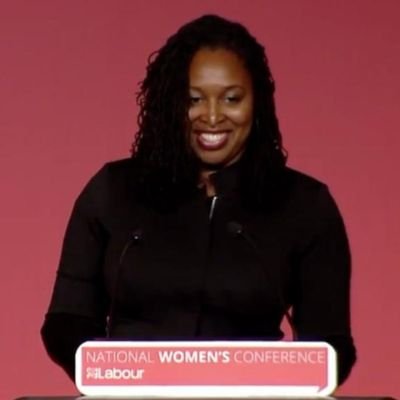
The speech made by Dawn Butler, the Labour MP for Brent East, in the House of Commons on 3 July 2025.
I beg to move,
That this House has considered the matter of mobile phone theft.
I thank the Backbench Business Committee for ensuring that we could have this important debate today. I know that there are many MPs who would have loved to be here today and who have suffered mobile phone thefts.
Ten years ago my bag was stolen when I was at a conference in a Westminster hotel. I used geo tracking and saw it moving slowly over the bridge. I called the police, but they were not interested—as I say, it was 10 years ago. Somebody at the conference had a car, and in true “Starsky and Hutch” style we used it to chase down the thieves. We noticed as we were travelling alongside them that we were probably going to make them very suspicious, so we went ahead of them and stopped. This is probably a lot of detail, but we then pretended to kiss as the thieves walked towards us. I called the police again to tell them that we were about to apprehend the thieves and retrieve my phone. The police then arrived, and when they jumped out of the van we jumped out of the car. The thieves had about 20 mobile phones on them. I recovered my bag and, although they had dumped my stuff along the way, I got all my stuff back. But the thing is, that was 10 years ago, and things have moved on—people understand that there is “Find my phone”, as do the police, so we know that we can recover stolen phones—so now is the time to prioritise this type of theft, which is making our streets less safe. Tourists are being targeted.
I know that the Home Secretary has had a roundtable with mobile phone companies and with the Mayor of London, but if the companies will not take this problem as seriously as they should, we need to force them to do that by law. I went to a good briefing on the Metropolitan police’s Operation Reckoning, which shows its determination. This is a vital way of achieving the Government’s safer streets mission. In Westminster, a mobile phone is stolen every six minutes.
Jim Shannon (Strangford) (DUP)
I commend the hon. Lady on bringing forward the debate. She is absolutely right, but it is about even more than mobile phones. I am not technically minded—I own up to that; I am of a different generation—but today’s young person carries on their mobile phone bank details, family things and personal things that allow access to accounts and whatever else. Sometimes, in the back of their phones they have their debit cards and their driving licence, so when someone gets their phone, they get almost their whole life. As the Minister acknowledged in a previous debate, perhaps today’s young person needs to understand that if they lose that, they lose almost everything financially.
Dawn Butler
I thank the hon. Member for that important intervention; he is absolutely right. A mobile phone is not just for making a phone call anymore; it is an integral part of most people’s lives. It holds data on it, as well as pictures that its owner will never be able to take again. It holds voicemails from loved ones. My friend who had her phone snatched in Egypt had a voicemail from her late mother on her phone. Mobile phones hold so much information that when someone snatches one, they are snatching a part of that person’s life.
Mary Glindon (Newcastle upon Tyne East and Wallsend) (Lab)
Further to the intervention from the hon. Member for Strangford (Jim Shannon), does my hon. Friend agree that public awareness is not where it should be? It worries me to see people with their phones sticking out of their back pockets or people standing and taking photographs around Westminster, knowing how high the incidence of theft is. Somehow the public need to be more aware and more careful with these precious things that hold so much of their lives on them.
Dawn Butler
I thank my hon. Friend for that important intervention. That is the thing: until we ensure that our streets are safe, we must ensure that people are acutely aware of what is happening. I find myself sometimes tapping people on the shoulder and saying, “Excuse me, can you move your phone from your back pocket? You might get pickpocketed.”
I feel that the manufacturers use this as part of their business model. They know that once a phone gets stolen, its owner will go and buy another phone, and phones currently operate on a monopoly. I do not know if anybody has ever tried to switch from an iPhone to a Samsung as I did—oh my goodness; it is like they do not want you to switch over. Even from Android to Android, it is difficult to move over the data. Mobile phone companies know exactly what they are doing. Thank God for USB-Cs, because iPhone chargers used to change with every upgrade, so people ended up forking out more and more money.
We need to hold the manufacturers to account because they make enough money and enough profit. We have to get to a stage where we are putting people and the safety of our citizens first.
London is one of the greatest cities on earth and we want Tories to come—not Tories, but tourists. [Laughter.] Tories are obviously welcome too, even though they are not here today. We want tourists to come to London to sample the art, the culture and the inclusion. We do not want to go around warning them about their mobile phones. Over 700 phones were also stolen from Departments, so the Government should have a vested interest in this because it will cost taxpayers money to replace those phones.
We can redesign mobile phones so that nobody wants to steal them. I do not know if people are old enough to remember—although there are a few in the Chamber today—when car radios used to be stolen out of cars. We combated and stopped that crime by building the radios into the cars so they could not easily be snatched out.
John McDonnell (Hayes and Harlington) (Ind)
I just want to throw something else at the debate around the insurance issue. Many say, “You should be covered by insurance.” My phone was stolen last November. It was classic: I got bumped into in a big crowd and did not realise. I then recognised the theft and did “find my phone”. It was in north London, so I contacted the police, but they do not investigate after an hour because they say it is gone. I said, “I have the personal numbers of the whole of the Cabinet there, so that might cause a bit of a problem.” I then claimed on the household insurance and was covered, but then the insurance company would not renew my cover. That just adds to the problems all the way through. Everyone seems to be making a profit out of it, apart from us.
Dawn Butler
I am impressed that my right hon. Friend has the all the Cabinet’s phone numbers. He is absolutely right; the knock-on effect of this crime is huge. Whether it is the house insurance, the personal stuff or the global crime syndicate, it is huge. I watched a documentary by Dave Fishwick, known through “Bank of Dave”. He spoke to one of the gang leaders and they talked about shoulder surfing, where they liked to watch people and get the details of their phones. They like to get phones when they are already open so that they can then scrape all the data and bank details. Within that hour, as my right hon. Friend said, they could empty out someone’s bank account. Around 30,000 people are also victims of identity theft in this country every single day. This crime, therefore, is not simply about nicking somebody’s phone; it goes a lot deeper than that.
One hundred million second-hand phones go to China and some go to Algeria too. Apple and Google say that they will reconnect phones that have been reported stolen. We should say to them that that admission, in itself, is unacceptable. China has become an illegal electronic recycling hub where, if they cannot get into a phone, they dismantle it and build a new phone using various parts from stolen ones. Those who do not disconnect their ID straightaway are sent threatening messages that talk about killing and raping family members, with some even sent videos of guns that say they are coming to kill them. That is terribly frightening and also why we need to stop this global crime now.
There is a link between neighbourhood crimes and organised criminality. Criminals think that the police do not care about mobile phone thefts because it is just a mobile phone and people can claim it back. I am glad that the Met police is taking this seriously, unlike 10 years ago. I doubt that many heads of criminal organisations will be watching this debate, but I note that 235 people were arrested in January 2024 through Operation Reckoning. On average, people are getting sentences of four to five years, which I think is right, because this is not a crime without consequences.
The Government have a huge role to play in making sure that we say to these criminals that we are serious about holding them to account. However, we must also say to the manufacturing companies that if they will not provide a kill switch for stolen mobile phones, we will force them to do it by law.