This is the third in our ‘issue of the week’ series which are designed to collect information and resources together about specific matters of political debate. Although we are publishing a number of documents every week for each new issue, we will also continually add new resources to these pages to make them as comprehensive as possible over time. We also hope that students will find the topics useful as a starting point for research on matters of political interest.
Some of the interviews below were conducted for UKPOL, but there are also several new speeches that we’ve added to the web-site by Barbara Castle and from other politicians and commentators from the era. Many thanks to the Urban Transport Group for their assistance with this project and also to the National Archives. We have been offered additional resources relating to Barbara Castle which we will add to the web-site in due course.
Particular thanks also to Christian Wolmar, a railway historian who has written a number of books including The Subterranean Railway: How the London Underground was Built and How it Changed the City Forever, Crossrail : The Whole Story and more recently, British Rail : A New History.
INDEX
Introduction
Timeline
Richard Beeching and the Cuts to the Railways
Ernest Marples
Tom Fraser
Closures of Stations and Rail Lines By Year
The Build-Up to a Transport Policy
1968 Transport Act
Was Barbara Castle an Effective Transport Minister?
Further Reading
“Barbara Castle was one of the most notorious or most effective transport ministers in history, depending on your view. She introduced the breathalyser, the 70 mph speed limit on motorways and car seatbelts, but also presided over 2,050 of Beeching cuts in a betrayal of Prime Minister’s Harold Wilson’s pledge to reverse them” – from the book On the Slow Train by Michael Williams
INTRODUCTION
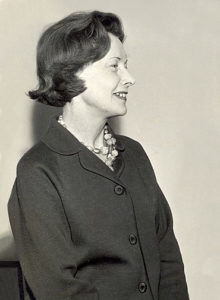
Barbara Castle was a British politician who served as a Member of Parliament for over thirty years and held several high-profile cabinet positions in the Labour government of the 1960s and 1970s. She had been a trail blazer in many ways, she was the youngest female MP in the House of Commons in 1945 and only the fourth woman to hold a Cabinet position. She was a MP representing Blackburn between 1945 and 1979 and then was the MEP for Greater Manchester between 1979 and 1989. Following the election of the Labour Government in 1964 she was appointed as the Minister for Overseas Development, before a surprise move to become the Minister for Transport in December 1965.
Castle followed on in the Transport Minister role from Conservative Ernest Marples, who had commissioned Beeching to write his report on the future of the rail network and her Labour predecessor Tom Fraser. Marples had a strong focus on roads, not least partly due to involvement in a road building company, whereas it has been said by politicians of the time and historians that Tom Fraser didn’t produce a clear direction for the railways. It was a challenging legacy for Castle who had to deliver on a new transport policy in line with the 1964 Labour Party manifesto.
As Minister of Transport in the late 1960s, Castle oversaw the implementation of the Beeching cuts, a series of drastic reductions to the UK’s railway network that resulted in the closure of thousands of miles of railway lines and stations. The goal of the controversial Beeching cuts was to reduce losses on unprofitable lines and to shift investment to more profitable routes, however it also resulted in many rural communities and industrial areas losing their rail connections, and it also made it harder for people to travel for work and leisure. It was against the backdrop though of a railway network which grew in a fragmented way in the late nineteenth century, was used heavily during both war periods and under-invested in, leaving a bloated network which was losing substantial sums of money.
Castle’s railway policy was met with some controversy and criticism at the time because it seemed to go against the promises made at the 1964 General Election to stop some of the major closures. However, defenders of her also note that there were external factors that needed to be considered, not least the rapid growth of car ownership. Barbara Castle wrote in 1984, when the Castle Diaries 1964-1970 were published, her comments on the background of what she faced. On the state of the network, Christian Wolmar said:
“Some of what Beeching closed was inevitable. If you look at the maps there were little lines connecting villages and branches off branches, none of that was ever going to really be very useful in a motoring world”.
Later on, Castle introduced major legislation, the 1968 Transport Act, which was wide in its scope but which did introduce the principle of subsidising some rail lines where there was a social need. She also looked at new ways of encouraging freight to be moved from road to rail and also introduced new passenger transport bodies to try and create more strategic public transport policies at a local and regional level. Opinions on Castle’s performance as Transport Minister are divided, some view her as a strong leader who modernised the country’s transportation system and made important changes to improve efficiency and profitability, while others see her policies as harmful to many communities and industries that relied on rail transport.
TIMELINE
14 October 1959 – Ernest Marples becomes Conservative Transport Minister
27 March 1963 – First Beeching Report published (The Reshaping of British Railways)
15 October 1964 – Labour win General Election and Labour Party manifesto
16 October 1964 – Tom Fraser becomes Labour Transport Minister
16 February 1965 – Second Beeching Report published (The Development of the Major Railway Trunk Routes)
21 December 1965 – Barbara Castle’s diary entry on being asked to become new Transport Minister
23 December 1965 – Barbara Castle becomes new Transport Minister
31 March 1966 – Labour win General Election and Labour Party manifesto
24 May 1966 – Barbara Castle’s diary entry following meeting with rail unions
15 June 1966 – Barbara Castle’s statement on retaining routes for potential re-opening
15 March 1967 – Barbara Castle’s statement in Commons on the Railway Network Map
6 November 1967 – Barbara Castle’s speech in Commons on Government’s Transport Policy
20 December 1967 – Barbara Castle’s statement in Commons on the Transport Bill
6 April 1968 – Richard Marsh replaces Barbara Castle as Transport Minister
25 October 1968 – Transport Act passed (Text of railway section of 1968 Transport Act)
RICHARD BEECHING AND THE CUTS TO THE RAILWAYS
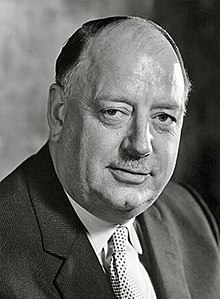
Richard Beeching, Baron Beeching, was a British engineer and businessman who served as the chairman of British Railways from 1961 to 1965. During his tenure, he oversaw the creation of a plan which led to a major restructuring of the rail network, which included the closure of thousands of miles of railway lines and stations, known as the “Beeching cuts”. Although some blame Beeching for savaging the rail network, historians often have a more nuanced view that he was tasked with a specific objective by Ernest Marples and many of his recommendations proved to be useful for the modernisation of the rail industry.
The goal of the Beeching cuts was to reduce losses on unprofitable lines and to shift investment to more profitable routes. Beeching’s report, “The Reshaping of British Railways”, which was published in 1963, identified over 5,000 miles of railway lines and over 2,300 stations as uneconomic, and recommended their closure. As a result, many rural communities and industrial areas lost their rail connections, and it made it harder for people to travel for work and leisure.
It’s also useful to note that Beeching wasn’t the first to suggest cuts, they had already been taking place, it was just that his report laid out with clarity what the future held for specific lines and the network as a whole. HP White writes in Forgotten Railways that:
“In 1963 came the British Railways Board’s publication ‘The Reshaping of British Railways’, which will also be known as the ‘Beeching Report’. It is rightly regarded as a landmark in the story of rail closures, but probably for the wrong reason. It is not generally realised that while the Beeching Report recommended the closure of some 5,000 route miles of passenger services, it did not initiate the closure programme. Between 1950 and 1962, 4,236 route miles had already been closed. What was important was that, for the first time, the approach was a planned one”.
He adds:
“As a result of the association of his name solely with closures, Beeching has been seen as having a purely negative approach to his brief. But in a message to BR employees in July 1962 he expressed the hope that, having talked hitherto largely about cuts, he would soon be able to talk of growth. That he was denied the opportunity was due less to his own inclinations than to Government policies – or rather lack of them”.
The Beeching cuts were mostly implemented by the Labour government of the time, led by Harold Wilson, and were initially supported by Tom Fraser and at first Barbara Castle, the Ministers of Transport. The cuts were met with significant controversy and criticism, as they were seen as detrimental to many communities and industries that relied on rail transport. But, with Castle reluctant to push forward the second Beeching report, it was evident that a change was coming.
Beeching’s report and the railway cuts have had a long-lasting impact on the British railway system and many people still regard the size of the cuts as a major mistake and a missed opportunity to modernise the rail network. Over recent decades there has been a political move towards what is called “Reversing Beeching” and reopening lines and services. The House of Lords have produced a library briefing discussing these potential efforts to reopen lines, with this research document also linking to a speech on this web-site by Andrew Adonis which was made to the IPPR on this subject.
ERNEST MARPLES
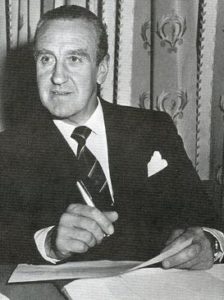
Ernest Marples was a British businessman and politician who served as the Minister of Transport from 1959 to 1964. He played a key role in the restructuring of the UK’s rail network during this period. One of Marples’s most significant actions as Minister of Transport was the introduction of the “Beeching Plan” which proposed the closure of thousands of miles of railway lines and stations in order to reduce losses on unprofitable routes. The plan was named after the chairman of British Railways, Dr. Richard Beeching, who was appointed by Marples.
The “Beeching Plan” was implemented by the Labour government that succeeded Marples’ and led to the closure of more than half of the UK’s railway stations and a third of its railway lines, causing significant controversy and criticism, particularly in the regions that lost their rail connections. To this day, Marples is known by many as one of the villains in railway history, as although some cutbacks to the number of lines and stations were inevitable where usage was particularly low, the fully implemented proposals would have devastated the network.
Marples is also known for his involvement in the construction of the M1 motorway, the first of its kind in the UK, which was completed during his tenure as Minister of Transport. The road construction was also controversial given the personal interests that Marples had. Joe Moran writes in ‘On Roads – A Hidden History’ that:
“Already, though, the flyovers were losing some of their lustre as they became embroiled in political wrangling. Ernest Marples remained a major shareholder in Marples Ridgway, the company he co-founded in 1948 which was involved in much of the early motorway building. When this company won the Hammersmith Flyover contract in 1960, the press challenged him over the conflict of interest. In a nod to the ancient road running along the chalk escarpment from the Dorset coast to the Norfolk Wash, this flyover became popularly known as the Maples Ridgeway. Marples was forced to divest himself of his shares – although probably not, as some history books have alleged, by selling them to Mrs. Marples. One MP asked the minister whether he would see to it that ‘before the opening ceremony the huge Marples nameplates which are scattered all over it, are removed in order that people can see the flyover?’”.
In terms of legacy, Marples’ tenure as transport minister is viewed in a negative light by many due to the severe impact of the Beeching cuts on many communities and industries that relied on rail transport. His promotion of road infrastructure over rail also had a long-term impact on the UK’s transportation system and the environment. However, at the time there were those who supported his plans, including journalist Douglas Haig who wrote in December 1965 that he was the best of the recent Transport Ministers.
TOM FRASER
Tom Fraser was Labour’s Minister of Transport between October 1964 and December 1965, responsible for implementing the transport policy laid out in the 1964 Labour Party manifesto which said:
“Nowhere is planning more urgently needed than in our transport system. The tragedy of lives lost and maimed; growing discomfort and delays in the journey to work; the summer weekend paralysis on our national highways; the chaos and loss of amenity in our towns and cities – these are only some of the unsolved problems of the new motor age. Far from easing these problems, the Government’s policy of breaking up road and rail freight co-ordination, of denationalising road haulage and finally of axing rail services under the Beeching Plan, have made things worse.
Labour will draw up a national plan for transport covering the national networks of road, rail and canal communications, properly co-ordinated with air, coastal shipping and port services. The new regional authorities will be asked to draw up transport plans for their own areas. While these are being prepared, major rail closures will be halted.
British Road Services, will be given all necessary powers to extend their fleet of road vehicles and to develop a first-rate national freight service. Reform of the road goods licensing system must now await the report of the Geddes Committee but, in the interests of road safety, we shall act vigorously to stop cut-throat haulage firms from flouting regulations covering vehicle maintenance, loads and driving hours.
Labour believes that public transport, road and rail, must play the dominant part in the journey to work. Every effort will be made to improve and modernise these services. Urgent attention will be given to the proposals in the Buchanan Report and to the development of new roads capable of diverting through traffic from town centres. Labour will ensure that public transport is able to provide a reasonable service for those who live in rural areas. The studies already mentioned will decide whether these should be provided by public road or rail services”.
The Government had come into power saying that it would review the Beeching cuts and look to form a new policy on how to tackle the losses in the rail industry, halting any major rail closures. Fraser was in the role for just over a year and he had ultimately decided that the general thrust of Beeching seemed correct, a view which had taken hold within the Transport Department. Despite the manifesto, he continued the closures policy, although he decided in June 1965 not to renew Beeching’s contract when his second report soon proved to be too politically difficult for the Government.
One of Fraser’s most controversial decisions was the closure of the Varsity Line between Oxford and Cambridge even though this hadn’t even been listed by Beeching as track which should be shut. Over recent years, work has begun on plans to reopen the line to improve east-west rail links. Charles Loft wrote in ‘Government, the Railways and the Modernization of Britain’:
“Fraser was unable to take decisions and was unduly reliant on his officials, his downfall was precipitated by his commitment to a planned transport policy. Even if such a policy could have been devised so as to justify a halt to the closure programme, it could not have been done quickly enough to satisfy important sections of Labour Party support; and without a new policy the advice that Fraser received on individual closure proposals was unlikely to differ from what Marples had received. Transport planning, it turned out, was at odds with the maintenance of an aura of dynamic change. It was in this respect that Fraser clearly failed to deliver and in which, on the face of it, things were to change with the arrival at the Ministry of Barbara Castle”.
David Henshaw wrote in this book ‘In The Great Railway Conspiracy’ focusing on the closure of the Varsity Line:
“In July 1965, the hapless Fraser – poorly briefed and seemingly disinterested – consented to closure [of the Varsity Line]. During this unhappy period, with lines being put forward [for closure] and processed at a rate of ten a month, this crucial link fell with hardly any national debate, as did others that were soon regretted. Implementation proved difficult, because there was trouble arranging bus services on a local basis, but the greater part of the line closed to passengers in November 1967, with the western end remaining open for freight, and a short section between Bedford and Bletchley for passenger trains. These remaining tenuous threads were to be of priceless value 30 years later, when action was finally taken to begin the long and complex task of reinstating the line”.
He continues:
“By the end of 1965, with the greater part of the Reshaping proposals now processed, there were few realistic candidates left for closure. Why then, did the Labour Government continue the process? According to Roger Calvert of the National Council for Inland Transport, the new and inexperienced administration had been bullied into submission by the powerful anti-rail civil servants at the Ministry of Transport, who were in turn being harassed by the Treasury over the railway’s growing deficit. Labour had, technically, arrived in power with a brief to integrate transport, but the railways were making big losses and Tom Fraser was getting top level advice that further closures were the way forward. In the end, there was no other game in town. He certainly seems to have had little interest in the transport job, and was understandably considered by the rail lobby to be openly road-biased”.
Many of Fraser’s most notable decisions are in relation to the road network, as he introduced the 70mph speed limit, initially as a trial. His year in office was otherwise unremarkable, with many policies from the Conservative Government not being widely changed. This was the challenging backdrop of what Barbara Castle took over when she became Transport Minister, a need to try and create a new transport policy rather than just a continuation of what the Conservatives had been doing. Fraser was widely seen by politicians of the time and railway historians to have struggled with the role, hence why Wilson caused some initial shock, not least to her, by bringing Barbara Castle in to develop a new strategy.
CLOSURES OF STATIONS AND RAIL LINES BY YEAR
Railway line closures by year:
1963 : 324 miles (521 km) [Conservative, Ernest Marples]
1964 : 1,058 miles (1,703 km) [mostly Conservative, Ernest Marples]
1965 : 600 miles (970 km) [Labour, Tom Fraser]
1966 : 750 miles (1,210 km) [Labour, Barbara Castle]
1967 : 300 miles (480 km) [Labour, Barbara Castle]
1968 : 400 miles (640 km) [Labour, Barbara Castle and Richard Marsh]
1969 : 250 miles (400 km) [Labour, Richard Marsh and Fred Mulley]
Details of closed railway stations can be found at http://www.disused-stations.org.uk/.
THE BUILD-UP TO A TRANSPORT POLICY
Harold Wilson had given Barbara Castle the role of Transport Minister as Tom Fraser had struggled in the job and the Prime Minister wanted it to become a priority for the Labour Government. She faced challenges immediately, Fraser had effectively continued many policies from Ernest Marples and she needed to come up with an integrated transport policy which had been promised in the 1964 Labour party manifesto.
TR Gourvish noted in his book ‘British Railways 1948-1973’ the scale of the administrative problems that she faced:
“The Ministry, like the railways themselves, required improved planning mechanisms and a better co-ordination of departments. Castle was apparently shocked to find that she had been posted to ‘a huge, sprawling jungle’ of 7,000 civil servants, patently in need of major departmental reform”.
Philip S Bagwell similarly noted in The Transport Crisis in Britain that “the overwhelming majority of the staff in the Ministry were concerned with road transport”. A few weeks into her new role, in February 1966, Barbara Castle stated her thoughts to how she would develop the Government’s transport policy. She said that:
“The time has come for a radical new railway policy. We had to decide its shape and size, taking into account national and regional plans as well as social needs and also how we should pay for it, so identifying costs which should be borne by the community, giving realistic efficiency targets to British Railways and taking from them the slur of a deficit.
The first requirement was to regard our railways as a valuable national asset, as the French did, and to concentrate on improving them. Labour had never denied that some pruning must be done, but there was no need to go to the other extreme and write off any part of it which didn’t fit in with the ‘superficially defined criteria of profitability’ without making any effort to see whether, by imaginative adjustments, the lines could be made more remunerative”.
Lisa Martineau wrote in her biography of Barbara Castle that car usage was growing and that there were limits to what she could do as Transport Minister, noting:
“Democratising car ownership would mean building new roads and spending more on existing ones, of course; but 90% of passenger traffic and 60% of freight was carried on the roads, and Barbara accepted that you would not get people out of their cars and ‘onto railways which could not take them where they wanted to go’. An accommodation with the car had to be found: ring roads, restrictions on cars in the centres of towns and cities, and subsidised public transport were obvious beginnings”.
There were hints at the excitement of road building for Barbara Castle, when she noted in 1966 at the construction of the Almondsbury interchange that “these are the cathedrals of the modern world”. TR Gourvish comments in his book ‘British Railways 1948-1973’ that after getting to grips with the role, Castle wanted to redefine the Government’s policy:
“When Castle took office, the Board was about to embark on the second stage of its passenger rationalisation programme, a systematic evaluation of all its passenger services in order to weed out those which were ‘suspect in the sense that earnings do not cover direct costs’. But this initiative was put to one side with the change of direction in 1966, which involved the identification of a larger, 11,000-mile network for development and a group of passenger services which would qualify for government subsidy. Castle was certainly expected to be more hostile to closures, particularly by those on the Labour backbenches and in the rail unions who had attacked Tom Fraser for perpetuating the Beeching-Marples approach. One of the myths of railway history is that the new Minister, by championing the cause of the commuter and rural rail user, finally nailed the lid on the Reshaping coffin”.
The closures of railway lines kept coming, with Castle justifying many closures by saying that the cuts were less than Beeching had intended. She did save some lines from closure, but there were others cases such as the railway line from Buxton to Matlock which she authorised the closure of, even though it hadn’t been on the list proposed by Beeching. The debate on the future of the railways continued with the work towards legislation planned for 1968.
Work was beginning on a new model for public transport, including what became regional passenger transport executives who could co-ordinate and organise at a regional level. In a parliamentary debate, prior to the passing of the Transport Act, in November 1967, the Shadow Transport Minister Peter Walker said:
“I turn to the proposals for passenger transport authorities. These proposals have no friends. Local authorities do not like them; industry does not like them, and the bus industry in particular does not like them. Everybody is opposed to them”.
Castle said in response:
“The 1962 Act set up the railways as a separate entity, encouraged them to compete with other forms of nationalised transport and then left the profit and loss account as the sole criterion of success and did not even provide conditions in which the profit and loss account could be balanced”.
Walker had said in his speech that Barbara Castle’s plans involved substantial nationalisation, but the proposals were more nuanced than that. They were an attempt to deliver an integrated transport policy, recognising that roads were now the future of transport for many, but also ensuring that bus and rail services would continue to be an option. Castle would have by nature of her political instincts been in support of more nationalisation as she was on the left of the party and had at other times argued for this approach, but she wanted in transport to be a partnership of public and private.
There was another challenge evident with Barbara Castle’s diary entry following meeting with rail unions which was that it was necessary to keep the workers and the trade unions on side. This proved to be a real challenge, although the rail unions did recognise that things could have been much worse given the backing that Castle was trying to give to the network. Christian Wolmar said that “even today, the unions are strong enough to suddenly make a lot of trouble and part of the problem that the Government has now found itself in is because they haven’t talked properly to the unions”. He added that “Castle realised the importance of winning the unions over and devoted a lot of time to it”.
Castle had by this time “become a media hate figure” according to Joe Moran in ‘On Roads – A Hidden History’, but much of this wasn’t with relation to railway policies, but instead because of her policies with regards to roads. She had introduced the breathalyser, she had effectively made permanent the 70mph road ban introduced by Tom Fraser and introduced compulsory seatbelts in new cars. There were protests about the motorway speed limit by many who felt they should be able to do what they liked in their car on the new motorways and didn’t appreciate being told what to do by a Government Minister.
One controversial decision that Barbara Castle took was the dismissal of railway manager Gerry Fiennes, who had saved the East Suffolk line from closure by cutting costs locally and showing that the line could save money by competent management. He went public with an announcement that lines could be saved, but Castle thought that his book ‘I Tried to Run a Railway’ went too far. David Webster, the Shadow Transport Minister for the Conservatives condemned the dismissal and demanded an inquiry into the decision.
Barbara Castle’s preparatory work in 1966 and 1967 was building up to one of the most substantial pieces of legislation that had been seen since the war, what became the 1968 Transport Act.
1968 TRANSPORT ACT
The text of 1968 Transport Act at legislation.gov.uk and the book ‘The British Railways System’ by Roger Spear et al is a useful detailed guide written for Open University students as to the structure of the railways at the time and the challenges which Ministers faced.
The Transport Act 1968 was a major piece of legislation passed by the UK government that aimed to modernise and reorganise the country’s transportation system. The main architect of the act was Barbara Castle who wanted to not only deliver on the party’s 1964 manifesto but also to have clarity on the future of transport.
The act was substantial in its scope and size, the largest since the Second World War. It aimed to achieve numerous objectives such as delivering a more integrated public transport system by the creation of PTEs and it created the National Freight Corporation (previously known as British Road Services), with the goal of improving the efficiency and profitability of the country’s freight operations.
The Act also allowed for the establishment and development of liner trains, which evolved into Freightliner, which allowed containers to be transported by rail in an attempt to stop some of the move towards transporting goods by road. Despite progress actually being made, Barbara Castle wrote in her diaries that some of her proposals weren’t progressed, noting her successor:
“Dick Marsh never brought them into operation because he did not approve of them, so the experiment in shifting goods from road to rail was never made”.
The Act gave local authorities more powers to plan and provide public transport services, and it established the National Bus Company, which aimed to improve the efficiency and profitability of the country’s bus operations. The creation of PTEs, or Passenger Transport Executives, allowed areas (usually urban) to take control of bus routes in their region as well as working with the rail industry. There had until this point been a general policy to tackle urban transport problems by building new ringroads and flyovers in cities, leading to residential areas being demolished and causing environmental issues.
Significantly, the Transport Act also included provisions for the closure of uneconomic railway lines and stations, with subsidies available for lines which fulfilled a social good for the community. HP White writes in Forgotten Railways that “until at least 1963 subsidy had been a dirty word for all political parties” and so Castle’s subsidy was “a very significant policy change”. Richard Pryke and John Dodgson note in their book The British Rail Problem : A Case Study in Economic Disaster:
“Barbara Castle wanted to eliminate open-ended subsidies and impose some financial discipline on the Railways Board. The solution adopted was to identify those passenger services that were losing money and to cover their estimated deficits through a subsidy. It was hoped and expected that the Board would then be able to break even provided its capital charges were scaled down, and if it were relieved of responsibility for the highly unprofitable freight sundries service”.
They add that:
“The Transport Act of 1968 has failed in its objective: British Rail is once again heavily in deficit, despite the financial reconstruction and the receipt of a large subsidy. In 1969, the railways and their ancillary activities had a net profit of around £20 million, after taking into account the £76 million which they received from the Government. However, by 1971 they were once again in deficit, and in 1973 they sustained a net loss approaching £50 million, despite £94 million of subsidies”.
Lisa Martineau wrote in her biography of Barbara Castle just how sizeable and revolutionary the legislation was:
“Barbara’s labyrinthine Transport Bill was the longest non-financial Bill in parliamentary history and the longest Bill or any sort since the war. The experts and the media, for the most part, were impressed. She had, said the New Statesman, set out ‘to reform practically the whole of the internal transport system …. by a nice blend of traditional socialism and up to date technocratic intervention’. The Bill was often called a pantechnicon – a bazaar and a receptacle containing many miscellaneous objects, as well as a removal lorry – it was ‘stuffed with all the radical proposals for reorganising British transport that have been maturing under that neat crop of fiery hair for the past eighteenth months’ wrote The Times”.
Some were disappointed by the Act in terms of how the road lobby still seemed to be winning the arguments over the future of transport, with David Henshaw writing in the Great Railway Conspiracy:
“The 1968 Act proved a serious disappointment. The Government lost its nerve in the face of concerted opposition from the road lobby and eased the lorry taxation proposals. And the unremunerated railway grants system actually precipitated a fresh round of closures, because there was a cap on the total grant aid, and the level of grant for individual lines proved too generous, leading the Government to refuse aid in many cases. By 1970, the implementation of Dr Beeching’s Reshaping report was more or less complete, but with railway income falling, overall financial viability remained as far out of reach as ever”.
Richard Pryke and John Dodgson note in their book ‘The British Rail Problem : A Case Study in Economic Disaster’ that:
“The moral which the Railways Board appears to have drawn from the Transport Act was not, as the Government intended, that British Rail must do its utmost to cut its costs and trim its investment, but that, if the need arose, more assistance would be forthcoming”.
Overall, the Transport Act 1968 and Barbara Castle’s efforts aimed to modernise and reorganise the country’s transportation system and to reduce losses on unprofitable lines, however it also resulted in significant controversy and criticism for the negative impact it had on many communities.
WAS BARBARA CASTLE AN EFFECTIVE TRANSPORT MINISTER?
Barbara Castle’s period as Transport Minister was one of the most remarkable of anyone who held the role, as there was an ambitious new policy position put together for the future of rail and road. The 1968 Transport Act was in many ways revolutionary in terms of public transport integration, subsidising rail lines and also developing freight services by rail.
However, for those who believe the rail sector was badly damaged following Beeching, they will point to how many stations and miles of railway lines closed during her period in office. Castle, herself not a car driver, was always sympathetic to the needs of those without their own car, but she faced the challenge of a society where car ownership was becoming more common and there seemed to be a shift away from public transport. She once said:
“I refused to be a King Canute trying to force people onto railways which could not take them where they wanted to go”.
Christian Wolmar said that “she didn’t quite understand the impact that cars would have, like everyone else at the time” with not just politicians of the time, but also the Transport Ministry in the 1960s being very much in favour of a car focused future. Wolmar adds though that “it was a breakthrough” that Castle introduced the process of subsidising some rail lines where there were social benefits to doing so, adding that “many politicians today still don’t understand that and they talk about railways paying their way”.
During the initial part of her period in the role, she did though continue the closure programme and she also extended it, closing lines such as Buxton to Matlock which hadn’t been part of the Beeching plan. Although Castle did approve the closures of thousands of miles of rail line, she did ensure that some routes were saved, including York to Harrogate, Manchester to Buxton and the Exeter to Exmouth line.
Outside of the rail network, Castle was also known for other innovations, such as the introduction of the breathalyser which helped to tackle the shock figure in 1966 that 8,000 people had died on the roads. She also was also responsible for requiring seatbelts to be fitted into new cars and extending the 70mph limit on motorways so that it effectively became permanent. In addition to this, she enabled 1,400 miles of the British canal network to be saved in a substantial part for leisure use, despite objections from HM Treasury that it wasn’t commercially viable.
Alfred F Havighurst noted in his 1985 book ‘Britain in Transition – The Twentieth Century’:
“Barbara Castle’s notable Transport Act of 1968 reflected courage and intelligence in dealing with financial deficits and inefficiency in the railway and road haulage. For the nationalised railways this legislation wiped out financial losses which had piled up from the past, transferred unremunerative traffic to road haulage, and provided compensation for services which were still socially desirable though unremunerative. The goal for British Railways was operation without deficits by 1974. Also, the Transport Act completely transformed road haulage in the endeavour to make maximum use of railways in handling freight previously carried on congested highways, to eliminate competition between the railways and road haulage, and, in general to render road haulage safer, more efficient, and more economical”.
Charles Loft wrote in ‘Government, the Railways and the Modernization of Britain’:
“Castle’s reputation as an innovative minister of transport who restored a measure of coordination to transport policy and gave rail a better deal rests primarily on a series of measures contained in the 1968 Transport Act. Although she refused to recreate the BTC, the Act’s provision for Passenger Transport Authorities to coordinate transport in urban areas and its creation of a National Freight Corporation (NFC) to control the former British Road Services, the BRB’s collection and delivery services and various rail freight services, including freightliners, largely satisfied Labour’s desire for coordination. Its provision of subsidies for loss-making rail services and a ‘quantity licensing’ system for road haulage, designed to divert freight from road to rail, combined with her commitment to an 11,000 mile network, rather than the 8,000 implied by the final round of Beeching’s traffic studies, given even a critic such as Henshaw the impression that she successfully challenged the pro-road bias of the Ministry and its Permanent Secretary Sir Thomas Padmore, an impression which owes much to the weight of opposition brought to bear on quantity licensing by the RHA and the Conservatives”.
David Henshaw wrote in this book ‘In The Great Railway Conspiracy’ about the legacy of Barbara Castle:
“Castle has had a mixed press over the years. After the cheerfully road-biased Marples, and ineffective Fraser, she entered the Ministry like a breath of fresh air, standing up to the powerful civil servants and making a serious attempt to find a fair solution to the railway issue. On the other hand, she oversaw some disastrous closures that should never have been allowed. Unlike previous incumbents, her transport politics were hard to place. She rarely used railways, but needed a chauffeur because she couldn’t drive, and apparently had no desire to”.
The individual reader can make up their own mind as to whether or not Barbara Castle was a successful Minister, but she was perhaps unarguably productive and industrious in developing policy directions. Much of what an individual might make of Barbara Castle likely depends on whether they feel she did enough to stop the rail closures that took place in the 1960s or whether her new policy of subsidising unprofitable lines actually meant an end to the closures at least from the 1970s onwards. Looking back though at transport policy in the twentieth century, it would be hard not to look at the 1968 Transport Act as being a revolutionary piece of legislation which contained some radical and innovative new visions for the future.
Jonathan Bray addressed this question and concluded:
“So, 50 years on, what is the legacy and the relevance? You can argue long and hard over whether she was in the end too radical or too pragmatic – or whether the positives are outweighed by the scars that haven’t healed from the lines that closed on her watch (and she would have loved to have the argument with you!). But you can’t fault her for ambition, determination and brio. She showed that you need to go out there and sell radical change (she always had her press people in for the key decisions and led from the front on making the case)”.
FURTHER READING
The Transport Crisis in Britain by Philip S Bagwell
Fighting All the Way by Barbara Castle
The Castle Diaries 1964 – 1970 by Barbara Castle
I Tried to Run a Railway by Gerry Fiennes
British Railways 1948-1973 by TR Gourvish
The Great Railway Conspiracy by David Henshaw
Little Book of Beeching by Robin Jones
Politics & Power – A Biography of Barbara Castle by Lisa Martineau
On Roads – A Hidden History by Joe Moran
The British Rail Problem : A Case Study in Economic Disaster by Richard Pryke and John Dodgson
Forgotten Railways by HP White
On the Slow Train by Michael Williams
British Rail : A New History by Christian Wolmar
EXTERNAL LINKS
Barbara Castle’s Archive at the Bodleian Library
Barbara Castle’s Cabinet Diaries at the University of Bradford
Article by Jonathan Bray – “The best transport secretary we’ve had?”
Christian Wolmar
National Archives