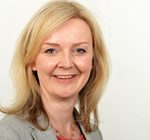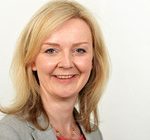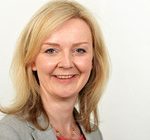
The statement made by Liz Truss, the Secretary of State for International Trade, in the House of Commons on 11 January 2021.
I beg to move,
That this House has considered Global Britain.
I am delighted to open this debate on global Britain when, for the first time in 48 years, we now have full control of our trade policy. Back in 1846, Richard Cobden inspired people in Manchester with his belief that free trade would be
“the greatest revolution that ever happened in the world’s history…drawing men together, thrusting aside…antagonism…and uniting us in the bonds of eternal peace.”
That revolution continues today, as for the first time in nearly half a century we are a sovereign trading nation free to pursue British interests while promoting British values. Our newly independent trade policy will create jobs, grow our slice of the global pie, and unlock great swathes of the world to the best of Britain.
As we recover from covid-19, we need to think radically about how we generate economic growth and how we are going to use our new global platform in 2021 to promote free and fair trade—how we are going to take on those countries that try to cheat and to undermine free enterprise. In 2020, we negotiated trade agreements covering 63 nations and the European Union, and in 2021 we will use this year, including our presidency of the G7, to champion free and fair trade in an era rife with pernicious practices.
We will promote modern rules that are relevant to people’s lives for digital and data trade. We will champion high environmental and animal welfare standards in a science-led approach, and we will push for modernisation of the World Trade Organisation and trade agreements to reflect our values of free enterprise and fair play. We will also build an advanced network of trade deals, from the Americas to the Indo-Pacific, with the UK at its heart as a global services and technology hub. We have already reached deals covering 63% of UK trade, well on our way to our manifesto target of 80% in three years. We want to hit that target and to deepen our existing relationships in areas such as services and technology.
Exports are equivalent to nearly a third of our national income. Trade equals jobs. A job means independence and security, the realisation of our dreams, funding public services and the future prospects of our country. The deals we have done with the EU and our partners across the world, from South Africa to South Korea, mean that our traders continue to enjoy preferential access to world markets.
We have secured arrangements with Turkey that mean that Ford in Dagenham can continue to export its engines tariff-free. We have secured access to the Canadian market for our beef producers, such as the Foyle Food Group in Northern Ireland. We have secured tariff-free access into Mexico for our car exporters such as Jaguar Land Rover, while Scotch whisky—one of our biggest exports—continues to enter markets such as Singapore tariff-free and stays recognised.
All in all, this adds up to £885 billion of trade that we have secured. In addition, we have been able to go further and faster in our deal with Japan, protecting the free flow of data, which benefits industries such as FinTech and computer gaming, regulatory dialogue on financial services and improved mobility provisions, including allowing spouses to travel with businesspeople. We have secured additional protections for our fantastic creative industries, from music to TV, and recognition for geographical indications across the UK, from Welsh lamb to Scotch beef, from Armagh Bramley apples to English sparkling wine, subject to Japanese domestic processes.
This platform allows us to step up this year to show our full potential as president of the G7 and as an independent trading nation. At the G7, we will work to reform the World Trade Organisation, make progress on data and digital trade and promote greener trade. Our new UK global tariff will see around 57% of our imports entering our market tariff-free—more than the 44% that we had under the EU.
Mr Tobias Ellwood (Bournemouth East) (Con)
My right hon. Friend is making a powerful start to promoting global Britain. She speaks of the G7 and the opportunity for us to make our mark in the world. Does she believe that now is the right time to move from the G7 to the G10, and to include Korea, India, and Australia? That would represent over half the world’s GDP in order for us to start looking at the challenges that we face of updating the United Nations, NATO and the WTO, and to make sure that we are in a position to offer a counterweight to China.
Elizabeth Truss
My right hon. Friend makes a very powerful point. Allies such as Australia, South Korea and India will be key to forging that group of democratic nations who can stand up for democracy, human rights and fair and free trade, and, of course, we are very committed to working with them this year.
Our new global tariff, as I said, will eliminate tariffs on more than 57% of imports. In particular, it will eliminate tariffs on 100 environmental goods. In short, our new tariff regime is lower, simpler and greener.
Furthermore, we will be working with our friends and family across the world to drive forward free and fair trade, setting the global standard for trade in the 21st century. We are already in deep negotiations with the United States, Australia and New Zealand, and, this year, we will apply to one of the most dynamic trading areas on earth—the Comprehensive and Progressive Agreement for Trans-Pacific Partnership. Joining is part of our plan to grow our economy by making it far easier for British goods to reach our friends in Asia and the Americas. This high standards agreement would align the UK with some of the world’s fastest growing economies in a free trade area covering nearly £9 trillion of GDP. We will also deepen our relationships with countries such as Canada, Mexico, South Korea and Israel. As well as this, we are working closely with India, the world’s largest democracy, on an enhanced trade partnership, reflecting our mutual interest in technology and innovation. We are also in talks with Brazil and our allies in the Gulf.
Christian Wakeford (Bury South) (Con)
While we are talking about the real opportunities for growing Britain’s trade power across the globe and while my right hon. Friend has touched on the aspect of Israel and the Gulf, let me say that we have rightfully been world leaders in soft power and aid during many generations and this should continue, but that we also need to lead in terms of diplomacy. Will she look at taking this back to the Cabinet to consider what we can be doing to expand the Abraham accords to bring not only peace to the middle east, but further trade and aid to that location as well?
Elizabeth Truss
My hon. Friend makes an excellent point. He is right that trade is the key not just to prosperity, but to peace and co-operation between nations. I want to reassure the House that we will ensure that no country is left behind without the benefits of free and fair trade with the United Kingdom. Later this year, we will be launching an emerging markets trade scheme, which will offer the lowest-income countries a better deal when they are trading with the UK. It will be more generous than the EU scheme and it will help those countries on to the ladder towards prosperity through the enterprise and ingenuity of their people.
We want to encourage British businesses to take advantage of all the opportunities that we have either negotiated or are negotiating. Therefore, we will be loudly and proudly championing exports in key industries from food and drink to services in technology trade. We have a network of trade advisers across the country ready to help our businesses go global and they can be proud to put the Union Jack on their pack, which is one of the most recognised symbols in the world. With our great campaign, we are showing partners worldwide that Britain is ready to trade. In December, the Prime Minister launched our new Office for Investment under the leadership of Lord Grimstone. It will work tirelessly to secure investment in every nation and region across Britain, backing jobs and livelihoods. More than 56,000 new jobs were created last year through foreign investment in the UK, with a further 9,000 others secured. We will also be founding our first new free ports, which will drive enterprising growth in port cities and towns across the country as we turbo-charge trade across the world.
Of course, many are sceptical about globalisation and the benefits of trade. One reason why they are sceptical is that too many unfair practices and cheating have been allowed to undermine real free trade. That is why we are establishing the Trade Remedies Authority, headed by Oliver Griffiths, to protect UK industries from unfair practices. It is not right, for example, that ceramics manufacturers in Stoke-on-Trent can be undercut by goods subsidised by state-owned enterprises, that our innovators can have the fruits of their work taken under forced technology transfer, and that goods can come into this country that have been produced through forced labour in abhorrent conditions. That is why we are pushing the World Trade Organisation for greater transparency and reform of the rules, and by joining CPTPP, with its ambitious digital and data provisions and clear rules, we will pile further pressure on the WTO to reform.
As an independent trading nation, we are setting our own path and rejecting the twin errors of values-free globalisation and protectionism.
Daniel Kawczynski (Shrewsbury and Atcham) (Con)
One thing that incentivises and encourages younger people in our country is their determination to help third world countries that are not as well off as we are. The spending of the Department for International Development has historically been very important, but I very much hope that the Minister will start to explain to the electorate the huge advantages that third world countries will now have as a result of our lowering tariffs on the sort of products that we cannot produce here in the United Kingdom.
Elizabeth Truss
My hon. Friend is right that, of course, the UK global tariff has lower import tariffs than the common external tariff of the EU, but we are going to go even further than that with our new emerging markets trade scheme, which will offer more preferential rates for the lowest-income countries in the world to help their populations trade their way out of poverty, and I agree with him that that is a really important way in which we can bring more prosperity to the world.
As I was saying, we now have the opportunity to set our own path by rejecting the twin errors of values-free globalisation and protectionism. Instead, as the United Kingdom, we are rooting our approach in the fundamental values of sovereignty, democracy, the rule of law and a fierce commitment to high standards. That is why we are bringing together a coalition of like-minded nations to advance high standards worldwide—from food and animal welfare to the environment and data. With fellow democracies such as Japan and Canada, we are championing innovation, a cleaner planet, women’s economic empowerment and much more. We have demonstrated this through the fantastic deal we have struck with the EU to ensure we can keep trading freely with zero tariffs and zero quotas, alongside deals covering 63 countries. No other nation has ever negotiated so many trade deals simultaneously, and I am proud of the results we have achieved.
At this tough time, we need to embrace our future as a confident, optimistic and outward-looking global Britain, delivering jobs and prosperity at home while helping lead the fight for free and fair trade abroad. My hope is that all sides of this House can join me in celebrating how far we have come and the huge opportunity we have in 2021, striking deal after deal with our friends and family worldwide to support our values and full economic potential. This is global Britain in action.