Category: Trade

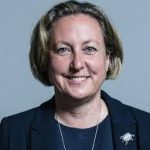
  • Anne-Marie Trevelyan – 2022 Comments on the UK-Ukraine Infrastructure Summit

    Anne-Marie Trevelyan – 2022 Comments on the UK-Ukraine Infrastructure Summit

    The comments made by Anne-Marie Trevelyan, the Secretary of State for International Trade, on 11 July 2022.

    Ukrainian citizens are not only defending their country against Putin’s illegal war – they are trying to rebuild it.

    Restoring public services, unblocking disrupted supply chains and re-open life-saving evacuation routes all need urgent and concerted action. President Zelenskyy is right that these challenges must be shared by countries and businesses around the world.

    I was pleased to confirm the UK’s unflinching support to play our part in these efforts when I met Minister Kubrakov today.

    I heard how families have emerged from bomb shelters to find their properties turned to rubble. So I want to make sure that UK companies can help by providing temporary bridges and modular, prefabricated housing to help – the same type of emergency housing the UK needed after World War Two.

    Longer term, the UK will be providing expertise on the delivery of sustainable and resilient infrastructure through our brilliant UK-based businesses. And we’ll be continuing to work closely with Ukraine to offer them any help needed elsewhere, be it on energy, water, sanitation or public utilities.

    It’s particularly poignant to have held the inaugural taskforce meeting in Poland.

    Poland has been quite literally on the frontline of the efforts to support Ukraine against Putin. The government and its citizens have been extraordinarily generous in their support of Ukraine. It makes the UK even prouder than ever to call Poland a friend, and I’m pleased to have strengthened that friendship today.

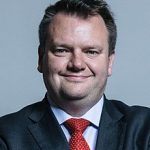
  • Nick Thomas-Symonds – 2022 Speech on Steel Safeguards

    Nick Thomas-Symonds – 2022 Speech on Steel Safeguards

    The speech made by Nick Thomas-Symonds, the Shadow Secretary of State for International Trade, in the House of Commons on 29 June 2022.

    I am grateful to the Secretary of State for her statement and for advance sight of it. The extension of safeguards will come as a welcome relief to the steel sector. It is not anti-competitive to provide a level playing field for our steel industry. I also support the decision to exclude Ukrainian steel.

    Labour backs our steel communities up and down the country. Our steel sector is foundational for our economy; we must support it, now and as we transition to net zero. However, it is regrettable that resolution of the issue has once again gone to the eleventh hour, just as it did when the present Foreign Secretary extended the safeguards last year, and that the Secretary of State did not even attend the Select Committee this morning to face scrutiny.

    Labour has called on the Secretary of State to extend the safeguards, but also to change the law in advance of this latest decision. When the same safeguards were extended last year, Labour called on the Government to introduce emergency legislation, which we would have supported, so that the national interest could be invoked by Ministers in relation to Trade Remedies Authority advice. It is too weighted towards the interests of importers rather than those of domestic industry, and too narrow in scope in that it does not give sufficient weight to issues such as regional employment and support for nationally important industries, and, indeed, the international context for these safeguarding decisions. The United States and the European Union have such measures, and in the case of the EU, the World Trade Organisation has not found the extension of the safeguards to be in breach of its rules. In short, if there is to be a challenge at the WTO, it will be a mess entirely of the Government’s own making.

    Although, of course, I thank the Trade Remedies Authority for its work, there are still issues with its framework.

    Ministers appeared to agree with Labour’s analysis when, a year ago, the Government announced a wider review of the Trade Remedies Authority framework “as an urgent priority”, in the words of the then International Trade Secretary—the present Foreign Secretary, the right hon. Member for South West Norfolk (Elizabeth Truss). Well, it has not been a priority for Ministers. That review has disappeared into the long grass, leaving the country in the position we are in today. Had the review been completed, with wider factors eligible for consideration by the TRA, the Secretary of State would be in a much stronger position, just like other major economies that have steel tariffs in place and have had no problems at the WTO. Ministers knew that this issue of extending the safeguards was coming, but they did not plan for it properly, either in terms of our domestic law or internationally, by working with those countries that have extended safeguards without any problems.

    Let me also put on record that the last-minute rush to extend safeguards in no way makes up for the shortcomings in support for the steel industry from this Government, and that Labour has set out plans to secure the industry’s future for years to come by investing £3 billion in the transition to net zero over the next 10 years.

    May I ask the Secretary of State when that wider review of the Trade Remedies Authority framework will be completed? May I also ask whether she intends to introduce further legislation once the review is completed? Will she publish all the TRA papers relating to this decision, and will she tell us what lessons have been learned from the WTO ruling on the EU safeguards that have been extended? Finally, can she reassure steelworkers and their families that the framework will have been fully reformed before this matter is considered again?

  • Anne-Marie Trevelyan – 2022 Statement on Steel Safeguards

    Anne-Marie Trevelyan – 2022 Statement on Steel Safeguards

    The statement made by Anne-Marie Trevelyan, the Secretary of State for International Trade, in the House of Commons on 29 June 2022.

    With permission, Mr Speaker, I will make a statement on the Government’s final decision regarding the UK’s steel safeguards.

    A strategic steel industry is of the utmost importance to the UK, especially given the uncertain geopolitical and economic waters that we are all charting. Trade remedies are one of the ways that Government can protect their businesses. Trade remedies tackle issues of dumping, unfair Government subsidies or, as in the case of safeguards, give businesses time to adjust to unforeseen increases in imports.

    When we left the EU, the UK rolled over the relevant trade remedies that were already in place. That included safeguards on 19 different categories of steel imported into the UK from the rest of the world. Last year, the Trade Remedies Authority reviewed those measures and recommended keeping the safeguard on 10 categories of steel and removing it on nine. On 30 June 2021, the Government announced that they would extend the safeguard, as recommended by the TRA, on 10 product categories of steel for three years and remove it on four of the remaining nine, but that they would extend the safeguard for one year on five categories of steel to allow further time to review them.

    In March this year, we passed legislation to allow the Government to take responsibility for the conduct of transitional reviews and reconsiderations of any transitional review. In March, I called in the reconsideration of the steel safeguards with the new authority. The TRA has since completed additional analysis for my consideration. I have considered its report and findings and have concluded that there would be serious injury, or the threat of serious injury, to UK steel producers if the safeguards on the five additional categories of steel were to be removed at this time.

    Given the broader national interest and significance of this strategic UK industry and the global disruptions to energy markets and supply chains that the UK faces, we have concluded that it is in the UK’s economic interest to maintain these safeguards to reduce the risk of material harm if they are not maintained. I am therefore extending the measure on the five steel categories for a further two years until 30 June 2024, alongside the other 10 categories. That means that the safeguard will remain in place on all 15 categories, updated from 1 July to reflect recent trade flows.

    The Government wish to make it clear to Parliament that the decision to extend the safeguards on the five product categories departs from our international legal obligations under the relevant World Trade Organisation agreement as it relates to the five product categories. However, from time to time, issues may arise in which the national interest requires action to be taken that may be in tension with normal rules or procedures.

    The Government have therefore actively engaged with interested parties—including those outside the UK—on the future of the UK safeguard, and have listened to the concerns raised, including the needs of the many thousands of people employed throughout our downstream steel industry, who play a vital role in the economic life of the UK. Throughout the investigation, downstream users of steel have raised concerns about difficulties in sourcing some steel products in the UK, particularly those classified under category 12. I have listened to those concerns and am acting to protect this vital part of the economy by increasing the tariff rate quota on category 12A to ensure that it better reflects trade flows.

    The Government have also decided to suspend the safeguard measure for steel goods coming from Ukraine for the next two years. The Government are clear that we will do everything in our power to support Ukraine’s brave fight against Russia’s unprovoked and illegal invasion and to ensure long-term security, prosperity and the maintenance of the world order from which we all benefit. The Government have already removed all tariffs under the UK-Ukraine free trade agreement to zero to support Ukraine’s economy. This decision means that Ukrainian steel will not be subject to the additional safeguard quotas and duty.

    These are unusual times. The aftershocks of the gravest pandemic have combined with the biggest war in Europe since 1945, the spike in energy costs is creating huge stresses on manufacturing, global steel markets are facing persistent overcapacity, and the TRA’s findings provide clear evidence of serious injury or the threat of serious injury to our UK producers. The Government have a duty to use our democratic mandate to the greatest possible effect to protect the interests of the British people and provide leadership in these challenging times. On balance, we have therefore decided that it is in the vital public interest that the Government act to protect the steel sector, which is why we have taken these steps.

    We believe that our approach is in the public interest. The decision has been taken collectively and with reference to the ministerial code, noting the conflict that I have outlined. It has been a finely balanced decision. Steel is a vital industry for the UK and is in constant use in our everyday lives, but the global position for steel production is challenging. The use of unfair subsidies contributes to global overcapacity, putting domestic industries at risk around the world, so the measures that I am announcing today will further support our steel industry and those who work in it. They come on the back of the Government’s having secured an expansive removal of section 232 tariffs on imports of UK steel and aluminium products into the USA, which came into effect earlier this month. The tariff-free volumes that we have secured mean that UK steel and aluminium exports to the US can return to levels not seen since before 2018.

    It is important to remember that safeguards are a temporary, short-term measure. We will continue to work with international partners, alongside other Departments, to support our domestic steel sector for the long term. I hope that the House will support the Government’s stance in defending our strategically important steel sector. I commend this statement to the House.

  • Anne-Marie Trevelyan – 2022 Statement on the UK-Ukraine Infrastructure Summit

    Anne-Marie Trevelyan – 2022 Statement on the UK-Ukraine Infrastructure Summit

    The statement made by Anne-Marie Trevelyan, the Secretary of State for International Trade, in the House of Commons on 22 June 2022.

    On Friday 17 June, we hosted a UK-Ukraine infrastructure summit in London. The summit, with Prime Minister of Ukraine, Denys Shmyhal, and Minister of Infrastructure of Ukraine, Olexandr Kubrakov, brought together Ukrainian Ministers and business leaders for talks on rebuilding Ukraine after the conflict and ensuring its long-term prosperity.

    Discussions identified where UK companies have world-class skills that can support reconstruction efforts—such as digital infrastructure, water and sanitation, energy, homes, and transport.

    During the summit, we signed a memorandum of understanding with Ukraine which set out elements of UK support for reconstruction efforts and established a joint taskforce, which will help build partnerships between UK and Ukrainian businesses to assist the reconstruction of infrastructure in and around Kyiv.

    The taskforce will support greater collaboration between the UK’s world-class infrastructure, energy, and transport companies and Ukrainian public organisations and private sector businesses. This will help plan for the future as well as repairing damaged and destroyed infrastructure, including transport systems, homes, and bridges more efficiently, safely and sustainably.

    The UK has already committed to provide a combined economic, humanitarian, and military support package to Ukraine worth over $3 billion. UK Export Finance has also pledged to retain its £3.5 billion-worth of financial support for trade to Ukraine—helping the country to fund its reconstruction projects and allowing UK exporters and Ukrainian buyers to access the finance they need to trade commercially.

    The UK has introduced one of the largest and most severe packages of economic sanctions against Russia. Measures cover over £4 billion-worth of products that are traded with Russia, 1,000 individuals and 100 entities in key sectors such as defence, crippling Putin’s war machine.

    We also announced changes to trade remedy measures relating to the conflict. This includes reallocating ringfenced market access for steel imports from Russia and Belarus to other countries, including Ukraine.

    The UK will do everything in its power to support Ukraine’s brave fight against Russia’s unprovoked invasion and to ensure its long-term security and prosperity.

  • Anne-Marie Trevelyan – 2022 Statement on the Gulf Co-operation Council Trade Negotiations

    Anne-Marie Trevelyan – 2022 Statement on the Gulf Co-operation Council Trade Negotiations

    The statement made by Anne-Marie Trevelyan, the Secretary of State for International Trade, in the House of Commons on 22 June 2022.

    Today I am formally launching free trade negotiations between the UK and the Gulf Co-operation Council (GCC) from Riyadh, Saudi Arabia, where I am meeting the GCC Secretary General, His Excellency Dr Nayef Falah M. Al-Hajraf, and Ministers from the six GCC member states.

    In line with our commitments to scrutiny and transparency, the Department for International Trade has published, and placed in the House Libraries, more information on these negotiations. This includes:

    The UK’s strategic case for a UK-GCC Free Trade Agreement (FTA).

    Our objectives for the negotiations.

    A summary of the UK’s public consultation on trade with the GCC.

    A scoping assessment, providing a preliminary economic assessment of the impact of the agreement.

    The Gulf Co-operation Council represents Bahrain, Kuwait, Oman, Qatar, Saudi Arabia, and the United Arab Emirates (UAE). These six countries are home to 54 million people and have a collective economy of £1.2 trillion.[1]

    The GCC is equivalent to the UK’s seventh largest export market, and total trade was worth £33.1 billion in 2021. An FTA would be a substantial opportunity for both our economies and a significant moment in the UK-GCC relationship. It will grow the economy, support jobs and the levelling up agenda.

    Government analysis shows that an FTA is expected to increase trade by at least 16%, add at least £1.6 billion a year to the UK economy and contribute an additional £600 million or more to annual UK workers’ wages.

    All regions and nations of the UK are set to benefit from a trade deal with the GCC, supporting the Government’s levelling up agenda. Industries outside of London are expected to benefit most, with the east midlands, west midlands, north-east and Yorkshire and the Humber in line for the greatest proportional gains.[2]

    The GCC countries are undergoing a period of economic change and they all have ambitious vision strategies, which highlight areas for future economic growth and development. Demand for international products and services is expected to grow rapidly to £800 billion by 2035, a 35% increase, which will create significant opportunities for UK firms. Now is the time to strike an ambitious and modern trade deal.

    A strong trading relationship will allow the UK to play to our strengths as a manufacturing powerhouse and a world leader in technology, cyber, life sciences, creative industries, education, Al, financial services and renewable energy.

    UK businesses in these industries have a role to play in supporting the GCC countries as they diversify their economies to move away from a reliance on fossil fuels and towards knowledge-based and green economies. The UAE, for example, has set a target of generating 50% of its electricity from renewable sources by 2050.

    UK goods exporters could benefit from reduced or zero tariffs, making their products more competitive in the GCC market. For example, UK clothing, ceramics and wind turbine parts currently face tariffs of up to 15%. British farmers and food and drink producers can also benefit from new export opportunities for products, including cereals—up to 25% tariff—and chocolate—up to 15% tariff—since the GCC countries import virtually all of their food.[3]

    The UK and GCC countries share an important investment partnership, with at least £30 billion already invested in each other’s economies, and an FTA will help to strengthen this even further. This will support jobs throughout the UK and the GCC countries.

    The UK will continue to uphold our high environmental, labour, food safety and animal welfare standards in our trade agreement with the GCC.

    The first round of FTA negotiations will take place over the summer. As negotiations progress, I will ensure that parliamentarians, UK citizens and businesses are provided with regular updates.

    [1] IMF estimate for 2021, World Economic Outlook April 2022.

    [2] Based on the percentage increases in the scoping assessment.

    [3] Tariffs in these sectors are mostly 5% across the GCC where in some cases individual countries charge higher tariffs on specific products. Note that tariffs on chocolate does not include products containing alcohol.

  • Anne-Marie Trevelyan – 2022 Comments on UK Trade Deal with Gulf Nations

    Anne-Marie Trevelyan – 2022 Comments on UK Trade Deal with Gulf Nations

    The comments made by Anne-Marie Trevelyan, the Secretary of State for International Trade, on 21 June 2022.

    Today marks the next significant milestone in our 5-star year of trade as we step up the UK’s close relationship with the Gulf.

    Our current trading relationship was worth £33.1 billion in the last year alone. From our fantastic British food and drink to our outstanding financial services, I’m excited to open up new markets for UK businesses large and small, and supporting the more than ten thousand SMEs already exporting to the region.

    This trade deal has the potential to support jobs from Dover to Doha, growing our economy at home, building vital green industries and supplying innovative services to the Gulf.

  • Anne-Marie Trevelyan – 2022 Statement on the Singapore Digital Economy Agreement

    Anne-Marie Trevelyan – 2022 Statement on the Singapore Digital Economy Agreement

    The statement made by Anne Marie-Trevelyan, the Secretary of State for International Trade, in the House of Commons on 14 June 2022.

    Today, I am proud to announce that the UK-Singapore digital economy agreement (DEA) enters into force, following the completion of the necessary domestic procedures on both sides. This will allow UK businesses to start benefiting from the provisions contained within the agreement, helping them to trade and grow.

    This groundbreaking agreement is the world’s most innovative digital trade agreement, concluded as it was between two of the most advanced digital trade nations. The UK-Singapore digital economy agreement is deeper and wider than previous trade agreements covering the modern digital economy. Complementing and building on the G7 digital trade principles that we brokered under the UK’s G7 presidency, the Singapore digital economy agreement will serve as an ambitious model for modern trade agreements in future—cementing the UK’s place as a world leader in digital trade.

    By securing open digital markets, prompting the free flow of trusted data, and cutting red tape through overhauling outdated paper-based processes, businesses across the UK can expand into new markets and thrive.

    Now that this groundbreaking trade agreement has entered into force, businesses and consumers across the UK will start to benefit from:

    Support to UK businesses to access Singapore’s digital markets. Digitally delivered services make up around a third of UK services trade globally—this was worth over £361 billion in 2020, and this deal will help strengthen this further.

    Securing and locking-in trusted cross-border data flows, the foundation for today’s modern digital economy—representing up to 26.3% of UK GVA in 2019. This will enable businesses to trade more easily, cheaply, and more quickly, facilitating everything from more efficient manufacturing and supply chains to more reliable infrastructure.

    Cutting red tape by supporting the overhaul of outdated, paper-based trading systems. For example, the agreement contains specific commitments around maintaining legal frameworks that enable the digitisation of trade documents such as bills of lading.

    Keeping our country and citizens safe through deepening our partnership with Singapore in areas such as cyber-security, as well as legally binding commitments covering online consumer protection and personal data protection.

    Supporting our bid to join the comprehensive and progressive trans-Pacific partnership (CPTPP), alongside Singapore and 10 other vibrant trading nations. Membership would mean access to a £9 trillion free trade area with some of the biggest and fastest-growing markets in the world.

    With this agreement coming into force, our economy and brilliant businesses can build back better from the pandemic and start to benefit from easier, quicker, and more trusted access to the valuable Singapore market.

  • Ranil Jayawardena – 2022 Speech at the World Trade Organization

    Ranil Jayawardena – 2022 Speech at the World Trade Organization

    The speech made by Ranil Jayawardena, the Minister for International Trade, on 12 June 2022.

    The peaceful waters of Lake Geneva are far removed from the scenes of chaos and horror broadcast from Ukraine over the past months.

    Yet, as we begin this, the World Trade Organization’s 12th Ministerial Conference, the war in Ukraine should be uppermost in our minds.

    Russia’s invasion is a threat to our democracy and the rules-based order – the foundation of our free, fair and open trading system. Britain will always uphold the values of her people and her allies, she will protect Ukraine’s democratic right to exist.

    Britain believes that free, fair and open trade can prevent yet more lives being destroyed through developing a more sustainable, efficient and resilient food supply chain for the future.

    To get on and do this, I am glad that the British-led Joint Statement on Open and Predictable Trade in Agriculture and Food Products has been endorsed by over 50 WTO members.

    We must work together to learn the lessons of the pandemic, back business to continue to innovate and agree a substantive trade and health package so we are prepared for the future.

    More broadly, Britain believes that the WTO has a crucial role to support the free and fair trade that will support developed economies to renew and developing countries to grow.

    Beyond this Ministerial, we must unite to find a path to reforming the WTO and ensuring a fairer, more stable trading system.

    The rules-based system relies on everyone playing by the rules. The WTO needs to root out those who do not.

    This goes beyond economics. Britain will put the pressing need to protect the environment at the heart of this work. We believe that green trade has a powerful role to play in countering climate change, environmental degradation and biodiversity loss, whilst securing and generating economic growth.

    Your Excellencies, we – together – face significant challenges but I am confident that the spirit to deal with them is strong.

    It is through a multilateral rules-based system of free trade fit for the 21st century that we will address these obstacles and overcome them. This is why – together – we must redouble our efforts, put our divisions aside and harness the power of free, open and fair trade to tackle our modern-day challenges.

  • Anne-Marie Trevelyan – 2022 Comments on Fairness in Trade

    Anne-Marie Trevelyan – 2022 Comments on Fairness in Trade

    The comments made by Anne-Marie Trevelyan, the Secretary of State for International Trade, on 12 June 2022.

    Putin’s brutal war unleashed devastation and disruption on a world already burdened with Covid-19 and facing the omnipresent threat of climate change.

    The UK will continue to show leadership at this critical and fragile time, when we must defend the values that bind us together. Freedom and fairness are now more important than ever if we wish to use global trade to grow our economies, deliver better living standards for communities at home and abroad, and to address some of the world’s most significant challenges.

  • Michael Heseltine – 1993 Speech on Trade, Industry and Deregulation

    Michael Heseltine – 1993 Speech on Trade, Industry and Deregulation

    The speech made by Michael Heseltine, the then Secretary of State for Trade, in the House of Commons on 24 November 1993.

    When I returned to the House not many weeks ago—I thank the hon. Member for Livingston (Mr. Cook) for his kind remarks—someone asked me, “How’s life?” I replied, “A great deal better than the alternative.” As I listened to the hon. Member for Livingston today, I wondered whether I had been a little rash in my judgment.

    The Gracious Speech made clear the importance that the Government attach to a successful outcome to the present general agreement on tariffs and trade round. It was fascinating that not a word was said about that, although it is perhaps the single biggest opportunity facing the entire world, to improve living standards and trading opportunities—not a word about that from the hon. Member for Livingston. However, Conservative Members will welcome the boost which the passage of the north American free trade agreement has already given to the Uruguay round. There must be no doubt that no country will work harder than we will for a successful conclusion to that round.

    The calculations show the excitement of the possibilities. The Organisation for Economic Co-operation and Development claims that a successful outcome could raise annual world income by about $270 billion during a decade. That estimate could well prove to be on the cautious side, once the effects of trade in services and the dynamic benefits of trade liberalisation are taken into account.

    We all realise that the timetable is perilously tight and, frankly, all the Governments of the world must face the understandable criticism that it has taken seven years of negotiation, yet we now face trying to conclude the deals on so many issues with just three weeks to go.

    It is also important to remember that a successful outcome to the GAIT round would not only be welcomed on trade grounds, important though they are; the less-developed and poorer countries in particular stand to gain far more in extra trade and investment than they could ever expect in extra aid from the more prosperous countries.

    Within a more open trading environment, our policy is to enable and assist British-based companies to gain the largest possible share of world trade.

    On any detached analysis, there are growing signs today of success. We heard virtually not a word from the Opposition about the direction in which the economy is moving or about the news, which is more encouraging by the day. Inflation is at its lowest level for 30 years. Headline inflation has been below 2 per cent. for 10 months—the best performance since the 1960s. With the base rate now cut to 5.5 per cent., since October 1990 interest rate reductions have added about £12 billion a year of benefit to business. Investment is rising; manufacturing investment in the third quarter of this year was up by 2 per cent. on a year earlier, a point which also seems to have passed the hon. Member for Livingston by—it certainly passed his colleagues by when they drafted the amendment on the Order Paper.

    Our GDP has been rising for 18 months. It was 1.9 per cent. higher in the third quarter of this year than a year earlier. Perhaps most excitingly of all, exports are at record levels. The volume of manufactured exports going outside the EC was up by 16 per cent. on a year earlier. Characteristically, the hon. Member for Livingston sought to diminish the world trade that this country has achieved by claiming that our share of it had risen under the Labour Government. The only way he can do that is by talking about cash and ignoring exchange rate calculations. In fact, persistently and under all Governments, since the war we have lost our volume share of world trade. Our share has now stabilised, however. The task is to ensure that we build up our export success, to make sure that it increases in the right direction.

    It is particularly encouraging to realise that this is now beginning to happen, given the depth of the recession affecting our principal markets in the European Community. Within the single market, it is this country’s economy that is leading the recovery. There are clear background signs now that we can look forward to persistent growth. Our prime task, which my right hon. Friend the Prime Minister has spelt out with great clarity, is to enhance the competitiveness of our economy.

    Opening the debate on the Gracious Speech, my right hon. Friend the Prime Minister covered many of the essential ingredients of this enhanced competitiveness when he set out our central strategies for education, training, research and development, infrastructure and macro-economic management—to which my right hon. and learned Friend the Chancellor will return tomorrow.

    In the Gracious Speech, my Department, as the hon. Member for Livingston rightly said, has three Bills: the deregulation Bill, the trade marks Bill and the Bill to privatise the coal industry, and the House would expect me to comment on each of them. I wish to make it clear that the deregulation Bill will not be about destroying the environment, imperilling safety or exposing the unsuspecting to fraud and cheating. We believe it is vital to keep red tape to a minimum. I expected that phrase to provoke a response from the Labour party—I thought that its members might have welcomed it. Why? Because those were the words of the Leader of the Opposition to a small firms conference that he held the other day.

    It is all very well for the right hon. and learned Gentleman to come out with these wonderfully ringing words—with which I agree—when he is away from the House and away from the parliamentary Labour party—and when he is not being listened to by his supporters. But when he comes here, he dismisses deregulation, as he did in his remarks on the Queen’s Speech, as almost irrelevant to our national recovery.

    The truth is that the only thing that is marginal, in the context of a party that has lost four elections in a row, is the policy of that party on deregulation. We want to make sure when we regulate that we protect the vulnerable, protect the public, protect our heritage and protect the countryside, but in such a way as to deal best with the real risks and to put the fewest obstacles in the way of wealth creation. We must keep paperwork to a minimum and keep the intrusive nature of bureaucracy under the tightest possible control.

    There are three thrusts to the policy that we intend to introduce. The first is the new regulations; we will ensure that regulators count the cost of their proposals before they publish them. Secondly, there is no point in taming domestic regulators in Whitehall if European directives keep piling on the burden. Last year, we persuaded our European colleagues to put the cost of business into account and to publish it when new European measures are proposed.

    Thirdly, there is the subject matter of the Bill. We are reviewing existing regulations. Under the guidance of Lord Sainsbury, eight task forces from business and the voluntary sector have been examining regulations on the statute book to see whether they can be scrapped, modified or improved.

    Even then, primary legislation can stand in the way of reform. That is why we are introducing a deregulation Bill to cut the red tape and open up the opportunities for business. The Bill will include specific deregulation measures, as well as a means to deregulate in the future. [HON. MEMBERS: “Ah.”] The hon. Member for Livingston was deeply immersed in creating fear, at which he is a past master. A parliamentary process will be involved in our proposals.

    In the same Bill, we will be removing statutory obstacles to market-testing and contracting-out programmes of both Government and local authorities because we want to see better value for money for the taxpayer in all our policies.

    Mr. Bill Etherington (Sunderland, North)

    I am pleased to welcome back the President of the Board of Trade after his illness. He seems to fail completely to comprehend that some Labour Members do not correlate cutting red tape and minimising death and injury in the industry. Why does he fail to comprehend that?

    Mr. Heseltine

    I do so for precisely the same reason that the Leader of the Opposition made it absolutely clear that he wanted to cut red tape to a minimum as well. The hon. Member for Sunderland, North (Mr. Etherington) and other Labour Members cannot understand that in a competitive world we have no choice but to make absolutely sure that every avoidable cost is avoided in our legislative programme.

    It must be recognised that deregulation is not simply about the letter of the law. The law gives rise to a plethora of guidance notes, circulars, inspectors and forms—all the familiar trappings of bureaucracy. Our review covers the impedimenta of legislation, as well as the legislation itself.

    Mr. Anthony Steen (South Hams)

    Conservative Members are finding this speech extremely invigorating, and I hope that we will hear a little more of this wonderful stuff. I wonder whether my right hon. Friend will bear in mind that it is not simply about deregulation—it is about the over-zealous interpretation by officials not only in Whitehall but at local level. It is an attitude problem which we must address from the top.

    Mr. Heseltine

    My hon. Friend is absolutely right, and that is why I referred to the impedimenta of legislation and all the practices that flow from it. We are well aware that many of the changes that we hope to see will not require legislation; they will require changing practices in a new changed culture. The House will have an opportunity to examine our detailed proposals when we introduce the Bill.

    The speech of the hon. Member for Livingston was anticipated, but he is not the only one. Labour Members are already in full cry and, if I may say so, in characteristic vein. This is not the first time that the hon. Gentleman has had an opportunity to indulge in what might be called slightly exaggerated versions of the truth. Indeed, he has a technique. He is a sort of chill factor in the body politic. We are well aware of how he does it because the record is there. He was shadow spokesman for the health service.

    Mr. Robin Cook

    I was very good.

    Mr. Heseltine

    Let me remind the hon. Gentleman, if he needs any reminding, of what he said before the election about Conservatives seeking a health service where organisations were put on the second floor of buildings to discourage people who were disabled and therefore expensive to treat from enrolling, or where casualty patients died because no one could pay for them. The hon. Gentleman knew that that was not true; it was a great distortion of anything that we had in mind, but if he could find people to frighten, frighten them he would, regardless of the facts.

    The Leader of the Opposition had an even more brazen charge. He said that it is all the Government’s fault—we heard that again from the hon. Member for Livingston — because we are simply reviewing our own regulations. Nothing so reveals the fossilised inherent approach of the socialist in practice as that allegation.

    A communications revolution can sweep the world. The globalisation of markets can overwhelm national boundaries. The Asian-Pacific rim can transform the competitive threat. Industry and commerce must change. The one thing that must never change is the good old British regulation. Like the pint and the good old British banger—once a regulation, always a regulation. What a battle cry for the modernised Labour party.

    But who can be surprised? The Labour party is the regulator’s natural ally. About the only things left of the trade union movement are the white collar affiliates of the Trades Union Congress who dream up the regulations, inspect the regulated, regulate the regulators and drown the rest of us under the weight of the burden. That is typical of those socialists in their approach, with their ideas frozen in time and practices set solid in concrete. That is the image that one would think they wanted to portray—no change; and when it is done, leave it there.

    Hon. Members will want to consider carefully whether that argument is applied as consistently by Labour Members as they would have us believe. They may not be prepared to change one dot or comma of the most outdated regulation. Not a hair on the head of the most lowly inspector must be subjected to the wind of change, but when it comes to their fundamental socialist beliefs, which have cost them four consecutive elections, they want us to believe that the whole lot have been flung out the window. They fought against Europe for 30 years. Now they take every nugget of Euro-speak before the red ink is dry on the paper. Nationalisation was once the essence of their industrial strategy. Now it has become the word that dare not speak its name.

    I shall give one example of what can be achieved when the yoke on nationalisation is removed. In 1983, we privatised the ports. In 1989, we abolished the dock labour scheme. The hon. Member for Kingston upon Hull, East (Mr. Prescott) doubtless reacted with a characteristically moderate and balanced judgment. The modesty of his language was exceeded only by the energy with which he rushed around the docks spreading the news of impending disaster.

    I took the liberty of doing a little research. In 1980, less than 4,000 tonnes of cargo went through Hull. In 1992, it was nearly 9,000 tonnes. The figure had more than doubled. The only other difference that I have detected over the years of Hull’s growing success is the absence of the hon. Gentleman, who, I am told, has not visited the thriving new dock company since its inception. Like the scarlet pimpernel, they seek him here, they seek him there. But the first sign of real success in his constituency brings forth in the hon. Gentleman a unique contribution to the political debate—absolute silence.

    Mr. Dennis Skinner (Bolsover) rose—

    Mr. Heseltine

    There is someone who has never known what absolute silence is.

    I can only say that when the hon. Member for Kingston upon Hull, East describes my deregulation proposals as a return to the killing fields, nothing persuades me more that I have got them more or less right.

    Mr. Skinner

    Give way.

    Mr. Heseltine

    Yes, why not?

    Mr. Skinner

    I have a little tablet here that the President can put under his tongue. Is he aware that when he talks about imports into Hull, he is talking about the massive increase in coal imports which have enabled him 475and his fellow Ministers to encourage pit closures? As a result, the 31 pits that he said he would save now look as if they will be closed. He should be ashamed of himself for putting all those workers on the dole.

    Mr. Heseltine

    The hon. Gentleman gives the game away. In the real world, employment in the docks is the preoccupation. He cannot understand that there has been a container revolution and that the efficiency of the ports today makes them competitive. What he would really like to see are the days of old when thousands of men carried the loads in sacks on their backs. Then he could have a national union of sack carriers. Doubtless we would have Members of Parliament sponsored by the national union of sack carriers, paying their funds into the Labour party and shackling the competitive instinct of this country, at which the hon. Gentleman is one of the greatest experts.

    I should be the last person to wish to do the Labour party any sort of injustice. I have said that it would regulate everything. I am prepared to believe that every rule has an exception. I have missed out one area where no doubt the deregulating zeal of the Labour party would be at the forefront of its political agenda: the trade unions would be deregulated. Here we would find a veritable bonfire of controls: strikes, go-slows, no-gos, Labour in power, socialism in practice—all back to an agenda that we drove from the country 14 years ago. The painful sacrifices accumulated over 20 years that have given the country the best industrial relations for a century would be thrown away in a single Act of Parliament.

    On this issue at least let me accuse the hon. Member for Kingston upon Hull, East of no silence. He has made it absolutely clear that Labour would repeal all our trade union legislation. There is nothing to keep. It all has to go. The House will want to contrast that with the charge made by the hon. Member for Livingston that, because we talk to leaders in the construction industry, with a view modestly to changing the regulations to lighten the load on our system, we are indulging in corruption. Yet the Labour party is prepared to sweep from the statute book all our trade union legislation to satisfy its paymasters. What are we supposed to call that? So we shall press on with our deregulation programme as part of our determination to help British industry compete.

    Mr. Malcolm Bruce (Gordon)

    The President of the Board of Trade is making an entertaining speech. Will he tell the House specifically how the regulations will be introduced? Will the House be presented with a detailed Bill that includes the specific regulations, which can be debated, amended and voted on; or will we be presented with an enabling Bill in which each individual regulation will be determined by statutory instrument? If the latter is the case, that is not the way to deal with deregulation.

    Mr. Heseltine

    The good old Liberals are at it again. They want it all ways. Whatever we do, it will be wrong. The hon. Gentleman must contain himself. We will have a Second Reading of the Bill, when he can examine it in great detail. Doubtless he will table some amendments, the scrutiny of which we shall be forced to subject ourselves to. Nevertheless, in the proper, democratic exercise of our duty, the Liberals must have their turn, however small it may turn out to be.

    Mr. Richard Caborn (Sheffield, Central)

    It is good to see the President of the Board of Trade back on form. His speech is entertaining, if in no way factual. I remind him that a great deal of research was done by the Select Committee on Trade and Industry for its report on Europe. Does he recall that the report pointed out clearly to Ministers that the burden of many European Community regulations had been increased by his own civil servants? That was a strong criticism.

    My hon. Friend the Member for Livingston (Mr. Cook) has referred to the increase in regulation. That has arisen directly from the inability of Ministers, particularly those in the Department of Trade and Industry, to control their civil servants, who are adding extensively to EC regulations. Ministers rode on the back of EC regulations that would not have passed through the House had the turnkey of the European Community not been used.

    Mr. Deputy Speaker (Mr. Geoffrey Lofthouse)

    Order. I remind the hon. Gentleman and other hon. Members present that interventions are supposed to be brief. They are not supposed to be mini-speeches.

    Mr. Heseltine

    The hon. Gentleman makes an important point and I thank him for his generous words to me personally. If he wants to help me to a full recovery, he will avoid inviting me to appear before his Select Committee again.

    I now want to say something about the privatisation of the coal industry. The hon. Member for Livingston treated us to a general denunciation of the issues of privatisation, so it may be helpful if first we spend a moment or two looking at the record of privatisation over this decade. We have absolutely no doubt that privatisation drives up standards of efficiency and management, ensures that investment decisions are taken by customers, not Government, leads to increased efficiency and lower costs and encourages innovation, all of which help the privatised companies to get out and become world class players on the international stage.

    Just one sobering statistic—a single sentence—will show why we believe that we have brought about a fundamental and important shift. In 1979, taxpayers paid £50 million a week to subsidise the losses of the nationalised industries. The privatized industries are now paying £60 million a week in taxes to the Exchequer on the profits that they are making. There is no clearer vindication than that of the privatisation policies of the past decade.

    British Steel is now one of the most efficient in the whole world. PowerGen, National Power and the National Grid are international companies. We have a major extension and modernisation of our water and sewerage infrastructure, with a £30 billion investment programme. British Telecom’s prices are down by more than 27 per cent. in real terms since 1984. Domestic and small business prices for gas have fallen by 20 per cent. in real terms since privatisation. British Gas now operates in more than 45 overseas markets.

    The hon. Member for Livingston describes that as the grotesque irrelevance of privatisation. There has been a dramatic transformation of the commanding heights of our economy precisely because they have been privatised. This is the remarkable transformation of great parts of the previously nationalised industries. It is against that background that we believe that the best future for coal is in the private sector. I have no need to repeat the concern shared by everyone in the House for the difficulties experienced by those in the industry.

    Mr. Terry Lewis (Worsley)

    Bloody hypocrisy.

    Mr. Heseltine

    The hon. Gentleman talks of hypocrisy. The Opposition have presided over the run-down of the coal industry every time they have been in office. The figures are startling. In 1948, when the industry was brought into public ownership, there were 958 collieries and 700,000 workers; by 1970, it was down to 300 collieries and 375,000 workers. Everybody knows that the market for coal has been declining persistently for the past half century.

    Another matter has been proved beyond peradventure. Energy markets are too volatile for any kind of central planning system to make sensible decisions for the future. A salient feature of Government forecasts on energy is that they have always turned out to be wrong. It was forecast that oil and gas would become rare and expensive towards the new millennium. In practice, new discoveries are taking place all the time. Production is at a high level and reserves are mounting. As a result, prices are low and look set to remain that way.

    We plan to bring before the House as soon as possible this Session a Bill to privatise British Coal. That would free the industry from the dead hand of state control and allow it to compete within the wider energy market. The Opposition do not see it that way. They have not seen it that way whenever we have privatised an industry and they have always been wrong.

    The hon. Member for Livingston is up to his old tricks and trying to suggest that privatisation will threaten the safety of miners. It is despicable how the hon. Gentleman always finds the most vulnerable sectors of society and cynically exploits their legitimate fears for narrow party purposes. When I became President of the Board of Trade, at my first meeting on the subject, I said that I would do nothing to prejudice safety in the mines. I have never been asked to do anything that would do that and, if I were asked, I would not do it. We have fully accepted the advice of the Health and Safety Commission which was contained in its recent report, which has been placed in the Library.

    I look forward to the day when British coal companies are free to seek—and invest in—world opportunities and to export their skills and experience in the huge international market. Furthermore, looking back over the decades, I have no doubt that, had we privatised the industry earlier, British Coal would have saved more jobs and we would have had a larger and more viable industry than the market can now sustain.

    Mr. Robin Cook

    The President must have missed out a page of his speech. Before he leaves the issue of privatisation of the coal industry, will he answer the question put to him? If privatisation is to work such a wonderful transformation of the coal industry, how many pits will survive to be privatised?

    Mr. Heseltine

    It is an illusion of the Opposition. When they were in power, the pits closed month after month. They never knew, and no Minister will make such forecasts in a market condition where the customer will determine the market.

    My third Bill covers trademarks, which play a critical part for business. The forthcoming trademarks Bill will deregulate procedures. It will open the door to the use of international trade mark registration systems under the Madrid protocol, thereby allowing businesses to protect trade marks overseas in all contracting states by a single application. That will achieve substantial savings for other businesses.

    The Gracious Speech debate and the Opposition’s amendment go wider than the specific legislation that I propose to introduce. I should like to update the House on the position of Leyland Daf because nothing so illustrates the difference in policy as the differing approaches of the Government and the hon. Member for Livingston on that issue.

    The House will remember that the company went into receivership in February this year. The hon. Member for Livingston was on his feet demanding instant intervention. “Bail the company out” was the instant policy. I refused, not least because, having put £3.5 billion into Leyland, we did not seem to have succeeded in doing the trick by bailing the company out with taxpayers’ money. Instead, we backed the entrepreneurial skills of the management, receivers, banks and financial houses to let them find a commercial market solution. The van and truck businesses were able to set themselves up as two independently run companies. Half the jobs were saved, as was the supply and distribution chain. The cost to the British taxpayer was £5 million in regional assistance.

    While my Department was encouraging and helping all that intricate, detailed work to save half the jobs at minimum cost to the taxpayer, the hon. Member for Livingston was not idle. He was leaping about, flying to the continent, and climbing on any old soap box urging me to do what the Belgian and Dutch Governments were doing. It all made good headlines at the time, and nudged the hon. Member up the shadow Cabinet pecking order a bit. But, as always, when the facts come out, they do not fit the scare stories in which the hon. Gentleman trades.

    The Dutch and Belgian work forces were reduced! by virtually the same proportions as ours, but the poor old European taxpayers were £100 million worse off as a result of their Governments’ hasty involvement. That is what the hon. Gentleman really believes in—spend money first and then try to find solutions. That is what the last Labour Government tried, but it costs money and it does not work.

    The news for us is even better. Both Leyland DAF Vans and Leyland Trucks have recovered well. The vans business is maintaining its production volume and has recently announced an £8 million development programme. Leyland Trucks has been able to increase civilian volumes by 30 per cent. and win export markets, and is discussing joint development of a new medium weight truck.

    However, to the hon. Member for Livingston, all that was grist to the mill. Some of my hon. Friends, who do not need to concern themselves with the details of those matters, may have missed a little press release that he put out at the time. It was in characteristic language and was headed: Labour reveals the threatened ‘dossier of disaster’ if Leyland Daf closes”. The hon. Gentleman had identified 6,000 firms that would be pushed into closure by the loss of business. He produced a “dossier of disaster”. Are my right hon. and hon. Friends in the Government in whose constituencies a Leyland van had ever been seen were listed for that hideous impending disaster—6,000 fingers stretched out in blame, reaching to tear the throat from the hapless President of the Board of Trade.

    My poor old right hon. Friend the Foreign Secretary was up to his eyes in it simply because the Rover car company in his constituency had supplied parts to Leyland Daf. Rover would be hit, we were warned. What happened? Rover is selling cars like there was no tomorrow, recruiting extra employees and setting world quality standards.

    It was not just the big fish. Even the junior Ministers were not to be spared the ruthless scourge of the hon. Gentleman’s searing foresight. He said that my hon. Friend the Member for Solihull (Mr. Taylor), the Parliamentary Secretary, Lord Chancellor’s Department, was about to see Land Rover knocked off its perch. What happened? Land Rover has taken on 300 extra staff, and sales of the Discovery have doubled in Japan and Australia.

    What has happened to those 6,000 fingers? They are stuck in the dykes of Labour’s crumbling allegations, as every day the recovery reveals the bankruptcy of its statements. If the hon. Member for Livingston is searching around for another press release, why does he not put out one containing good news stories from the constituencies of his colleagues in the shadow Cabinet? I do not want to impose any unnecessary burden or strain on him. Let us have just a press release of good news stories from his constituency—£20 million investment in NEC semiconductors by 1994; 300 new jobs at VRG International in the next four years; 200 new jobs at Mitsubishi in the next two years; 300 new jobs at Marshall Food Group in the next three years; 400 new jobs at David Hall in the next four years; 400 new jobs at IMTEC. I could continue with the list in his constituency alone.

    So why are there no press releases about all that? Where are all those menacing fingers? They are itching to get to work in the hon. Gentleman’s constituency, with the new technologies, new factories and new British opportunities. What else? [Interruption.] The hon. Member for Livingston said that it was a gross misrepresentation.

    Mr. Robin Cook

    The President of the Board of Trade must not run away with a mishearing. What I said was that it was an excellent representation of Livingston.

    Mr. Heseltine

    That is interesting. It brings me conveniently to the next argument. Why are all those companies in the hon. Gentleman’s constituency? What is it that brings them there? They are all seeking a base in Europe and they are choosing Britain because we are competitive and attractive and they are welcome here. Under this Government, Britain will stay that way, but not under a Labour Government.

    I am sorry that the Leader of the Opposition is not here; he is probably looking after some of his new friends in the boardrooms of England. He is famed for his flirtation and carrying-on with the leaders of our great companies—last week, he was at the Confederation of British Industry conference and, week by week, he is among the thick pile and hushed atmosphere of the City dining rooms. I must make it clear to the leaders of our great companies that it is not their smoked salmon that he is after. He has a different agenda. He has a manifesto of Euro-socialism. Of course, he says that it does not mean all that it says, but it has got his name on it, he is a lawyer and it is printed in English.

    The manifesto may not mean much to the Leader of the Opposition or his hon. Friends, but if one asks the directors in the boardrooms of the international companies deciding whether to invest in our country or not, they have no doubt about what it all means. What is the agenda that we have from the Euro-socialists? The manifesto supports a substantial cut in working time including the prospect of a 35-hour or four-day week. to breathe life into the European social Chapter. It supports European works councils, consultations of workings in multi-national businesses and European sectoral collective agreements … a guaranteed minimum wage and Community measures … to avoid a tax-cutting competition between member states”. We shall not even be allowed to cut the taxes to bring the investment to create the jobs in the constituency of the hon. Member for Livingston.

    There is one other little nugget tucked away in the manifesto for Euro-socialism. It supports a European policy on waste”. Let us start by ripping up the manifesto itself. To what does it actually add up? Every competitive advantage that this country possesses will be thrown away. To pursue the international brotherhood of man is one thing, but to sell the dear old country down the river to get it is another.

    The Leader of the Opposition made much play—[Interruption.] There were a great many more people at the Tory party conference than there are Labour Members present today. The Leader of the Opposition made much play of the need for evidence. He asked, “What is it about the Tories? They make all the decisions and announcements—the only thing that is ever missing is evidence.” He accused us of designing policies, against the facts, without regard for evidence, and as a mere reaction to events. I reject that charge absolutely. We are determined to steer the country to a new competitiveness and a sustained recovery.

    If the right hon. and learned Member for Monklands, East (Mr. Smith) wants evidence, I shall give it to him. We have the highest proportion of our population at work among the major Community countries. Unemployment has fallen by 137,000 this year. Inflation is persistently lower than at any time since 1960. Exports are at record levels. Interest rates are among the Community’s lowest. Industrial relations are excellent. That is the evidence upon which a sustained recovery can be based and on which I invite my right hon. and hon. Friends to vote for the motion.