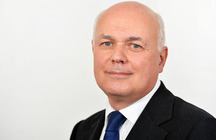
Category: Speeches

  • Michael Howard – 2005 Speech on Council Tax

    michaelhoward2

    Below is the text of the speech made by Michael Howard, the then Leader of the Opposition, on council tax on 21st February 2005.

    I believe that families know best how to spend their cash. They’ve worked hard for it and they deserve to keep more of it.

    Some people say that’s selfish. It’s not. It’s about what’s right and what’s fair.

    It is right to encourage people to take responsibility for themselves and their families. It is fair to reward people who work hard and save for their old age.

    Low tax economies are the most successful economies. And when people pay less tax you have a more cohesive society – because we all do more not just for ourselves but for our communities.

    Mr Blair promised that he had “no plans to increase taxes at all”. But he has put up taxes 66 times – often by stealth.

    Hard working families have been clobbered to the tune of £5,000. Virtually every independent expert agrees that if Mr Blair were to win again – taxes will go up again.

    Under Labour the Council Tax, the most painful of all Mr Blair’s stealth taxes, will hit £2,000 for a typical family.

    It will be particularly hard for the older generation, people who live on fixed incomes.

    Many of them served our country at her greatest hour of need, preserving liberty, freedom and Britain’s independence for future generations.

    Those who have given so much must surely be given their due. The older generations have been air-brushed out of Mr Blair’s Britain, but I will stand up for them. I will increase the value of the basic state pension in line with earnings, making pensioners up to £11 a week better off.

    And today I can announce that the next Conservative Government will take action to relieve the Council Tax burden for millions of pensioners.

    I will give every home where the adults are sixty five and over a fifty per cent Council Tax discount up to a maximum of £500. This will ensure that five million pensioners have their Council Tax bills cut.

    All our plans have been fully costed and are fully funded so that Britain’s economy will be secure for the next generation.

    People deserve to be treated with dignity and respect in their old age. Because I believe that the true test of a society is the way it treats its senior citizens.

    People will face a clear choice at the election: Conservatives who will increase the state pension and cut pensioners’ Council Tax or Mr Blair, who will forget them and raise their Council Tax.

  • Michael Howard – 2005 Speech on Education

    michaelhoward2

    Below is the text of the speech made by the then Leader of the Opposition, Michael Howard, on 14th April 2005.

    My driving ambition is to give people real opportunity – the opportunity to make a success of their life. And education is the key to all opportunity. I know.

    I come from an ordinary family. My parents ran a clothes shop in Llanelli.

    If the teenage Michael Howard were applying to Cambridge today, Gordon Brown would love me. My socio-economic background ticks every one of his politically correct boxes: the child of immigrants; from a small town in Wales; a family with modest means; educated in a State school. And of course, Gordon Brown would hate Tony Blair.

    We didn’t have any special privileges. But we were lucky enough to live in a town with a first class state school. At Llanelli Grammar School, discipline was at a premium. Teachers were respected. We all learnt the basics. Ambition, excellence and hard work were encouraged.

    It was the best start any child could have in life. Fifty years on, I want everyone to have that quality of education. And my goodness we really do have a long way to go.

    Of course we know that in some schools, thanks to the commitment of inspired heads and dedicated, hardworking teachers, standards are rising. But despite all the millions of pounds that have been spent, one in three children still leave primary school unable to write properly.

    Lack of discipline is a real and growing problem. And the whole system lacks ambition. A pass grade for a Maths GCSE is now as low as 16 per cent. You get four out of five questions wrong and you still pass.

    When I travel round the country, perhaps the most heartbreaking sight I see is the children who’ve dropped out of school. Youngsters going off the rails – each of them a story of lost opportunity, but also a warning of the kind of country Britain will become if we don’t change direction.

    Let’s be clear – the quality of Britain’s education system today, will determine our success as a society tomorrow.

    Conservatives will give youngsters the opportunity that comes from learning in well-disciplined schools – where the minority isn’t able to ruin the education of the majority.

    I read stories of ill discipline in our schools with horror. I remember my teachers as people I respected.

    If children don’t learn respect for authority in class they’re much less likely to respect others when they grow up.

    So a Conservative Government will give head teachers back control over their schools.

    They will have the power to expel disruptive pupils. I will not allow the minority to ruin the education of the majority.

    Of course, a child’s future is far too precious simply to be written off if they are expelled from school. Today, too many expelled children simply fall out of education altogether, wasting their potential and, quite possibly, getting into crime.

    So a Conservative government will invest heavily in these schools giving troubled youngsters get the help they deserve: learning the basics; a practical skill so that they can get a job when they leave; drug treatment if they need it.

    School standards and behaviour in the classroom are closely linked. Bad behaviour is often born of frustration.

    If a child leaves primary school unable to read or write or add up properly, how can we expect them to participate in class at secondary school?

    If bright pupils are not intellectually challenged in the classroom, is it any wonder that they get bored and cause trouble?

    And what about those youngsters who know they are not going to make it to university, but just want to learn a practical craft so they can get on in life? How depressing is it for them to have to stick to an inflexible academic curriculum?

    There is overwhelming evidence to demonstrate that traditional teaching methods – phonics, arithmetic, times tables – are the most effective means of teaching children to read, write and add up.

    So a Conservative Government will ensure that teachers are trained in traditional, proven teaching methods like phonics.

    Phonics is the best way to teach children how to read and write. This is important for all children – but it is particularly important for those whose first language is not English.

    A common language is the most obvious binding element in any society. Without it, it is much harder for people to be active members of the community.

    It’s important that people who make their home here learn the language of our nation. Of course people may choose to carry on speaking their family tongue at home – that must be a matter for them. But they do need to learn English properly too.

    Schools should challenge and stretch the brightest – rewarding excellence and ambition. The “all must have prizes” mentality has undermined education standards.

    A Conservative Government will, in its first month, start a top to bottom review of the national curriculum.

    We’ll slim it down so teachers don’t have so much paperwork.

    We’ll review tests, GCSEs and A Levels to restore public confidence in our education system.

    And we’ll root out political correctness, replacing it with the building blocks of knowledge that are essential to give every child their birthright: a decent education.

    That review will be carried out by Chris Woodhead – that indefatigable champion of higher standards and less political correctness.

    People will face a clear choice at the next election: schools with good discipline and high standards with the Conservatives or schools with poor discipline and falling standards under Mr. Blair or the Liberal Democrats.

  • Michael Howard – 2004 Speech to British Chambers of Commerce

    michaelhoward2

    Below is the text of the speech made by the then Leader of the Opposition, to the British Chambers of Commerce on 21st April 2004.

    Thank you for asking me to speak to you today.

    The British Chambers of Commerce represents more than 135,000 firms across the country. You know better than anyone else what is happening to companies at the sharp end. You are a vital voice for British business.

    Business is the lifeblood of our country. You create the jobs that pay our wages. You underwrite our pensions. You generate the goods and the services on which we all depend. And you pay the taxes which fund our public services. Last year British business paid more than £100 billion in tax to the Exchequer. In effect, you paid for the National Health Service in England twice over.

    Sadly, there are still people in Britain today who knock free enterprise and carp about profits. Some commentators portray the misdemeanours of a tiny minority as those of the majority. But that is far from the truth.

    I know because my parents ran a small business. They started it from nothing and built it up. Firms across Britain are run by people like my parents.

    They create them, grow them and nurture them. Not just for the money – though that is of course important. But also because they want to create something new, to leave a mark, to make a difference.

    There is no better system for spreading the fruits of man’s labour than free enterprise. No better system for raising people’s standard of living. And no better system for advancing human achievement.

    But for free enterprise to flourish it needs to be free. Not weighed down by excessive rules, regulations, red tape and tax.

    We learnt that lesson in the 1980s – when the Conservative Government transformed Britain from the sick man of Europe to the powerhouse of Europe.

    All of us here today are no doubt enormously proud of what business in Britain has achieved. And we all want to do even better in the future.

    I for one am hugely optimistic about just how much we can achieve.

    Britain is a great country. We are an enterprising, creative and hardworking people. We can take on the best and we can win.

    Competitiveness

    But I am genuinely concerned that many of the competitive advantages we fought so hard to win are being eroded.

    You all operate in a fiercely competitive global marketplace. Marginal advantages in price, delivery dates or quality decide which firm gets the order and which creates the jobs. The extra burdens of high tax and over-regulation make it much more difficult for British business to compete.

    UK competitiveness has fallen significantly in recent years, according to the World Economic Forum. Five years ago Britain was fourth in the world. Now we are fifteenth – a drop of 11 places.

    The great irony is that while Gordon Brown urges his European counterparts to become more like America, he is actually making our economy more and more like theirs.

    Yes, he was right to give the responsibility for setting interest rates to the Bank of England. But that loss of macroeconomic control seems to have left Mr. Brown and his mandarins with too little to do. So they have put their energies to work in micro-managing the British economy.

    Survey after survey has shown that UK business is feeling the strain of increased regulation and taxation. It is estimated that the additional cost of red tape and tax to British business is £15 billion a year.

    As Sir Terry Leahy, Tesco Chief Executive, said earlier in this year:

    “Like a tide, the level of taxes seems to be forever rising. The water is now above our waist: Tesco National Insurance, corporate, property and employment taxes are now over 50% of our profits”.

    Most independent commentators now predict that taxes will have to rise again if the Government sticks to its current spending plans. That’s the view, among others, of the IMF, the Institute for Fiscal Studies and the ITEM Club.

    Indeed, Madam President, you have expressed concern that “rapidly worsening finances increase the risk that the Government will have to raise taxes in the next 2-3 years”.

    Tax as a percentage of GDP has risen from under 35% in 1996 to over 36% today. It is predicted to reach 38% in 2008. Compare that with America and the Pacific – where the average tax burden is under 30% – and it is easy to see why British competitiveness is under threat.

    And it’s not just the direct burden of tax that hits business. The tax system itself has become much more complex as well. As an example, it’s worth noting that Tolley’s yellow tax handbook has grown by 2000 pages since Labour came to office. So it’s no wonder the President of the Chartered Institute of Taxation has said: “People have difficulty in understanding how the system affects them. Not even MPs understand it”.

    Actually, come to think of it, I’m not sure all my parliamentary colleagues deserve that implied accolade. I’m not at all sure I do!

    In any event, this is a huge indirect burden for business, particularly small firms, who just cannot afford the armies of accountants to help them cope with all the new rules and regulations.

    Regulation

    We now have 15 new regulations every single working day. And you, the British Chambers of Commerce, reckon that the additional cost of new regulation to business has reached £30 billion.

    Last year alone, British business was faced with an additional bill of £9 billion from new regulation. Your Director General has quite rightly said that British business cannot compete with this “millstone” round its neck.

    Not long ago, I went to a small firm that had just been instructed to fit emergency lighting at a cost of many thousands of pounds. That cost had a real effect – they had to lay someone off. Yet the year before, at a previous inspection, no such requirement had been made. In the intervening twelve months, nothing had changed. There had been no accidents and no change in working practices to justify the new requirement. No new machines had been installed.

    I mentioned this at last year’s annual CBI conference. That provoked a letter from Andrew Smith, the Secretary of State for Work and Pensions. He was extremely concerned to hear about this. Do you know why? Apparently I was wrong to blame the Health and Safety Executive for this new burden on a small business … I should have blamed the Fire Service.

    And he asked me to apologise for my mistake!

    Not a word about the unnecessary costs. Or about the lost job. All he was concerned about was that I’d got the wrong Department. As long as that is the mindset of this Government at Cabinet level we shall never tackle the problem of excessive regulation in this country.

    The Public Sector

    There is another concern. In just over five years, the number of public sector jobs has risen by more than 500,000. Yet last year, jobs in the private sector fell – by 130,000. This is unsustainable. How can we possibly continue to afford a public sector which is growing, when the private sector, which pays for it, is shrinking?

    The Chancellor urged you all this morning to exercise wage restraint in the year ahead. And he said he would not tolerate irresponsibility in the public sector. That would certainly be good news for Britain.

    But Gordon Brown’s record in constraining the public sector is not one to be proud of. In the last two years earnings growth in the public sector has outstripped the private sector by more than a third.

    So I am absolutely clear about this. We are following the wrong path.

    The Conservative Approach

    The British economy needs to become more flexible again. We need to get a grip on regulation, cut back on waste, and over time reduce the burden of taxation. That is the Conservative approach.

    First, spending. We will ensure that, over the medium term, public spending does not grow as quickly as the economy. Under a Conservative Government the State would consume a smaller share of GDP than under Labour.

    Second, we will cut waste. We have appointed David James, the man brought in to tackle the fiasco of London’s Millennium Dome, to look at where we can cut waste. And how right we were. Because suddenly – lo and behold – the Government has discovered potential savings of between £10-15 billion. And that’s without really trying. I’m very confident David James will find more than that and we will root it out when we return to government.

    Third, regulation. Civil service recruitment is currently running at 511 new officials a week. On day one of the next Conservative Government we will freeze it. Fewer officials will mean fewer regulations. We will introduce sunset clauses in new regulation. And like America, we will exempt small businesses from many regulations. The result? The total regulatory burden imposed by government will fall each year.

    EU Constitution

    Of course, not all regulation comes from Britain. The single most expensive regulation for British business in the last few years has been the Working Time Directive. According to your calculations, it has cost business more than £10 billion – so far.

    More than 40% of new regulations start in Brussels. And be in no doubt – if Europe were to adopt the proposed European Constitution that burden will go on rising.

    Don’t for a moment imagine that the European Constitution is an esoteric issue about sovereignty – important though that is. It would have a real and practical impact on your business. As Martin Wolf wrote recently in the Financial Times the Constitution “is a machine for ratcheting upwards an already excessive regulatory burden”.

    The Constitution, for example, incorporates the Charter of Fundamental Rights. The rights under the Charter are loosely drafted. They include the right to strike, the right to so-called social protection, and the right for workers to have information and consultation within business.

    It will be up to the European Court exactly what these rights mean in practice. And if past experience is anything to go by, they will lead to yet more burdens on business – burdens British politicians would be powerless to stop.

    There may well be a case for some of these rights. You don’t have to argue for a free for all to be opposed to more regulation at the European level. You can simply take the view that it’s better to argue the issues out here, in Britain, than have them imposed upon us by the majority vote of other countries in Brussels.

    The Conservative Party has consistently demanded a referendum to give the British people the right to say “yes” or “no” to the proposed European Constitution. Yesterday, after days of spin and counter-spin, the Prime Minister came to the House of Commons to announce that, finally, he agreed with us. But do you know what? He was so shame-faced that in a statement lasting some 10 minutes, he couldn’t bring himself to utter, even once, the word “referendum”.

    But in accepting the need for a referendum, Tony Blair has blown apart his ludicrous argument that a “no” vote on the Constitution means Britain would have to leave the EU. So I hope we will hear no more of it. As he finally confirmed in the House of Commons today, rejecting the Constitution would not affect our position as full participating members of the European Union. To pretend otherwise is to distort the argument and deceive the electorate.

    If the British people were to vote “Yes” a Conservative government would accept the Constitution. If the British people were to vote “No”, a Conservative government would veto the Constitution: and we would not agree to any new treaty which establishes a constitution for the European Union. Countries have constitutions and Conservatives do not want to be part of a country called Europe.

    In the House of Commons today Tony Blair clearly implied that if the British people were to vote no in a referendum while he was still Prime Minister, he would follow the precedent set by the Irish Government after the Irish people voted no to the Nice Treaty. Labour would renegotiate the Constitution in some minor way and then force the British people to vote again in a second referendum.

    In other words, if the British people did not vote the way he wanted, Tony Blair would make them vote again until they did.

    The European Union has achieved a great deal. Together we have created a single market of 380 million people. But the EU is failing to face up to the realities of the twenty first century.

    If the Constitution is passed, it will mean business as usual for Europe – greater centralisation, more regulation and less flexibility. It is the exact opposite of what Europe really needs. Far from solving problems it will create yet more.

    Conservatives have an alternative vision for Europe – a positive vision. We want Europe’s member states to have room to breathe. If some countries want to integrate more closely then that is fine – as long as they do not force countries who do not want to, to follow them. Our policy is simple. Live and let live. That is a modern and mature approach – one which will allow Europe to succeed in the twenty first century.

    Conclusion

    Many of you, like me, have probably spent time in America. A love of enterprise is at the centre of American society and I admire many aspects of American life.

    In America, they talk about the American Dream. They talk about the ability of someone born in a log cabin to make it to the White House. As it happens, in America this is the exception, not the rule.

    In Britain it actually does happen. There are countless examples of people from humble beginnings who make it to the top: who live the British Dream.

    So we should talk about it. We should embrace it. We should celebrate it. I want everyone to live the British Dream.

    Britain is a great country full of talented and creative people. We could and should be doing so much better.

    We need a government that does less, but does it better.

    That provides a framework in which people can do the best for themselves and their families.

    That allows them to keep more of the money they work so hard to earn.

    And that does not constantly interfere and regulate and get in the way.

    That is the challenge we set ourselves.

    That is my vision for Britain.

    I hope that it is one that you share and I now look forward to answering your questions.

  • Michael Howard – 2004 Speech to Welsh Conservative Conference

    michaelhoward2

    Below is the text of the speech made by the then Leader of the Opposition, Michael Howard, to the 2004 Welsh Conservative Party Conference on 5th April 2004.

    Bore da I Chi Gyd.

    It’s very good to be back here in Wales.

    I’m very proud to call myself a Welshman. Growing up in Wales gave me the confidence to go out and make my way in the world. We are a confident and ambitious people, loyal and steadfast but also adventurous and bold.

    I want to take this opportunity to thank everyone here who works so hard for the Conservatives in Wales. Bill Wiggin, our excellent shadow secretary of state. Nick Bourne and his team, officially the hardest working Assembly Members in Wales. And our local councillors and activists.

    One of the greatest attractions here in Llandudno is “The Alice in Wonderland Centre”. It was built in honour of Lewis Carroll, who often came here on holiday.

    Labour live in their own version of wonderland.

    They came to power with a golden economic legacy, a huge majority and the overwhelming trust of the British public. People genuinely believed things could only get better.

    Labour could have achieved so much. But they have achieved so little.

    Labour have had seven years to make things better. But what difference have they really made? Far too many children still leave school unable to read, write and add up properly. Too many elderly people still suffer the indignity of mixed sex wards. And too many of our neighbourhoods are still terrorised by young tearaways.

    Labour have let you down.

    In 1996, Tony Blair promised that Labour would not put up taxes.

    But in Britain today, people are paying much more in tax than they did when Labour came to office.

    Gordon Brown – the Clickety Click Chancellor – has imposed 66 new taxes since 1997.

    We’re paying almost £42 a week more in tax for every man, woman and child in the country. That’s £5000 more a household a year.

    And British business is now paying an extra £15 billion a year in taxes and red tape.

    Last month’s Budget made Third Term Tax Rises inevitable if Labour wins the next election.

    But despite all these tax rises, Labour hasn’t delivered the improvements to our public services that they promised.

    Labour have let you down.

    In Britain today, despite a 37.5 per cent increase in health funding, hospital treatments have increased by less than 5 per cent. In Wales, waiting lists have almost doubled#. One in ten people in Wales is waiting for an appointment. Almost 12,000 of them have waited more than 18 months.

    In Britain today, despite a 65 per cent cash increase in education funding, more than a million children play truant from school. And one in three leave primary school unable to read and write properly.

    In Wales, schools are closing and targets are not being met. The party that promised “education, education, education” has delivered “closures, truancy, illiteracy”.

    In Britain today, despite an 85 per cent cash increase in spending on crime reduction, crime is on the increase. Serious violence and anti-social behaviour, once a rarity, are now commonplace. There were a million violent crimes in Britain last year. In Wales, violent crime has gone up by a half and last year more than one in every hundred Welsh homes was broken into.

    So where has all the money gone? All that spending. All that taxing. All that borrowing. What’s happened to it?

    Sadly, so much of it has just been wasted.

    If you seek monuments to Labour’s waste, all you have to do is look around.

    The Dome. £750 million.

    The London Assembly building. £100 million.

    The Scottish Parliament. £430 million and rising.

    The Welsh Assembly building. £55 million and rising, four times more than planned.

    I know that house prices have gone up since Labour came to office. But this is ridiculous!

    And they’re spending another £6 million – on the furniture! They’re certainly not sensible enough to get it from somewhere like Happy Home Furnishers!

    Labour are also spending more and more on bureaucracy. In Britain as a whole they are hiring 511 extra civil servants every week. That’s right, 511.

    In Wales, the cost of employing the civil service has increased by a third, to almost £90 million. That’s enough money to pay for four children’s hospitals or to employ 700 consultants.

    There are now more bureaucrats in the Welsh health department than there are practice nurses in GP surgeries.

    In last month’s Budget, Gordon Brown claimed he was going to tackle waste and bureaucracy. He claimed he would cut the number of bureaucrats by 40,000 over the next four years. The trouble is he’s hired 40,000 more in the last three years! Talk about boom and bust!

    Sometimes, just sometimes, I think that Tony Blair understands why his government is failing. Sometimes, just sometimes, I think he understands why, despite the largest peace time majority in living memory, he has utterly failed to make the changes that our country so desperately needs.

    But however much he understands, he will never succeed. He can’t succeed because when push comes to shove he is a Labour Prime Minister. His party won’t let him. The trade unions won’t let him. And Gordon Brown won’t let him.

    Unlike Labour our party is open-minded, not dogmatic.

    I have spent a lot of time recently outside London – talking to people, listening to people, learning about their concerns.

    They tell me how fed up they feel when they see government wasting the money they have worked so hard to earn.

    They tell me how angry they are when they see criminals treated like victims and victims treated like criminals.

    And they tell me how insecure they feel when they see that Labour has lost control of Britain’s borders.

    Labour have let people down. The Conservatives will stand up for people.

    We want to reward the people who do the right thing – those who work hard for their families, who save for their future, who give back to society.

    We will get a grip on government. We’ll cut waste and regulation. And we will stop Labour’s Third Term Tax Rises.

    Taxes in Britain are too high. We want people to keep more of the money they earn because we believe they are better at spending it than politicians. Goodness knows, we’ve learnt that lesson in Wales.

    And we understand that low tax economies are the most successful economies. They create more jobs, attract more investment, make people wealthier.

    I don’t apologise for my ambition to take less of your money. And I will not be put off by Labour’s scare tactics. As Conservative councils up and down the country have shown, you can have lower taxes and deliver first class public services. Because we know that real improvement in public services doesn’t come just from investment. It comes from genuine reform.

    In most other European countries, people don’t have to put up with what we have to put up with in Britain. It makes me angry that in this country people die of diseases they would not die of if they lived across the channel.

    In Germany, there are no waiting lists.

    In France, people are free to consult whatever doctor they like.

    And in Denmark, people can choose any hospital they want to go to for an operation.

    In Britain today it’s people with money that get better education and better healthcare. Because they have choice. In other countries, every one has choice, which is why their standards are higher than ours.

    I want to give choice to all, not just those with the money to buy it. You shouldn’t have to pay more for choice. I want to end a world where people have to shut up and take what they’re given.

    That is why our patient’s passport is such a sensible and refreshing idea. For the first time, the patient will choose. They can choose their local hospital. Or the hospital nearest their family. Or the hospital that can treat them the quickest.

    Labour hate our proposal. They have attacked it and distorted it. They can’t stand the idea of people having choice. They think people should have to do what they are told. Labour still believe that big government knows best.

    Labour still don’t understand choice. And choice is the key to better standards in our hospitals and in our schools.

    Education is at the heart of our success as a nation. In an increasingly global economy, we need to give our children the best possible education to help them compete in the modern world. So we need teaching that is rigorous, that suits every child’s talents, that helps people to achieve their best.

    The best schools, whether state or private, selective or comprehensive, offer the things which every parent has the right to expect for their child – discipline and the pursuit of excellence.

    No-one can learn – and few can teach – in an atmosphere where shouting, loutishness and violence prevail. So we will make it an absolute priority to give teachers control over their classrooms. Heads will have the final say over expulsions. Schools should be allowed to offer legally-enforceable, tough home-school contracts, giving teachers the clear right to impose discipline.

    Our education passport will give parents a choice as to where their children are educated, and make it easier for popular and successful schools to expand – even to take over neighbouring schools. This will give opportunities to thousands of children. The opportunity to find out what it is that they can do best and develop the talent to realise their dreams.

    People want security in their lives too. They want to know that their children will be well educated. They want to know that their relatives will be cared for if they fall ill.

    And they want to know that they can walk their streets in safety. Labour have lost control of crime. The most important duty of any government is to provide security for its citizens. I understood that when I was Home Secretary. And I am proud of the fact that there were nearly a million fewer crimes when I left office than when I took up my post.

    Cutting crime will be a major priority for us. Using significant reductions in the cost of the asylum and immigration system, we will recruit 5000 more police officers each year – 40,000 more over eight years, 2000 of them here in Wales. It should be the mugger who lives in fear, not the elderly lady walking home from the shops.

    People want our borders to be secure too. I know that Britain has benefited hugely from the immigrant communities that have settled here over the years.

    But immigration must be controlled. And Labour have lost control of our borders. Their policy is a complete shambles. Only this week, we found out – through leaks of course – that Labour have waved through thousands of immigration applications without checks of any kind. Waved them through against the advice of their own diplomats on the ground.

    Officials have been calling for action for more than a year. But Ministers sat on their hands. Officials saw their concerns ignored, their warnings unheeded, their objections overruled.

    It has been a scandal.

    A scandal that officials have had to work under an intolerable burden.

    A scandal that sham applications – from one-legged roof tilers, fake electricians and bogus builders – have had to be rubber stamped.

    A scandal that those who finally blew the whistle have been suspended while the Minister who was responsible clung desperately to office, before finally being forced to resign.

    But perhaps things might turn out OK. I read in yesterday’s papers that Tony Blair will now take personal charge of immigration policy and sort it out. Then I read the date. April the First.

    A chaotic immigration policy helps no one. It doesn’t help those who come here illegally, who fall prey to criminal gangs. It doesn’t help those who use the proper channels, who are shoved to the back of the queue. And it doesn’t help the people who live here because of the pressure it puts on our public services.

    We will get a grip on illegal immigration and those who claim asylum without being genuine refugees.

    We will set up processing centres near people’s country of origin. No one will be able to come here and claim asylum. They will have to apply at one of our centres abroad, where they will be dealt with quickly, fairly and humanely.

    We will take a quota of genuine refugees – probably more genuine refugees than we take now. But we will no longer be obliged to support the tens of thousands of asylum seekers who are not genuine refugees.

    Of course, in a matter of months, we may lose more control of our immigration policy. The European Union is planning to create its own constitution. Tony Blair is already signed up to it. He wants it rushed through “as soon as possible”.

    I think a European constitution is wrong in principle. Nation states make treaties with each other. Countries have constitutions.

    If this constitution is accepted, the EU would gain many of the attributes and trappings of statehood: its own president, its own foreign minister, its own legal system. For the first time, the supremacy of EU law would derive not from Acts of national Parliaments but from a supra-national constitution.

    That is a profound and radical change.

    It is dishonourable to pretend that this is merely a tidying-up exercise.

    It will involve the large-scale transfer of powers to Brussels.

    It is more honest to call this the capstone of a federal state. That’s how the Belgian Prime Minister describes it. Or to call it Europe’s “Philadelphia Moment”. That’s what former French President Valery Giscard D’Estaing said, making a direct comparison with the American constitution.

    They are being straight. Tony Blair is not.

    So let me make it clear. I believe that any proposal for a new constitution must be put to the British people in a referendum.

    Whatever your view, you should have a say. We have had 34 referendums since Labour came to power. On a Welsh Assembly, on a Scottish parliament, even on a mayor for Hartlepool.

    But when it comes to transferring power from Britain to Brussels, Tony Blair says “Trust me”.

    Well, Conservatives say “Trust the People”.

    That is why, here today, with your help, I am launching our nationwide petition calling for a referendum on a European Constitution.

    Sign it. Get your friends to sign it. Get the friends of your friends to sign it.

    Because whatever their views, they should have their say.

    You know, when I became a Conservative as a schoolboy in Wales, people said I was a rebel. You don’t join the Conservatives round here, they said.

    Well, I don’t think of myself as a rebel. Although, whisper it softly, I do prefer soccer to rugby.

    I became a Conservative because of what I believed.

    I believe that the people should be big and the state should be small.

    I believe that people are more likely to succeed when they are not nannied or over-governed.

    And I believe that people want to be the masters of their own destinies.

    That is why I came into politics. That is why I returned to front-line politics. And that is why I believe that we can win the next election.

    Seven years ago, Labour came to power with high hopes and the public’s blessing. They promised that things could only get better.

    But Labour have let you down. Instead of the improvements they promised, they’ve given us seven years of tax, spend, borrow and waste.

    Britain is a great country, full of the most talented and energetic and ambitious people. We could and we should be doing so much better. We need a government that is united in its desire to give power back to people.

    A government that will listen to people. A government that will trust people. And a government that will serve people.

    That has always been our historic mission. Britain needs it now more than ever.

    The battle lines have been drawn.

    We are ready for the fight.

    We are ready to win.

    Here in Wales.

    And across Britain.

    And with your help I know we can do it.

  • Michael Howard – 2004 Speech on Europe

    michaelhoward2

    Below is the text of the speech made by the then Leader of the Opposition, Michael Howard, on 7th June 2004 in Bristol.

    I am delighted to be here in Bristol.

    Yesterday I was in Normandy commemorating the sixtieth anniversary of the D Day landings with war veterans from across the world.

    It was the most humbling experience. And it was a great honour to join them in remembering the extraordinary sacrifices that were made sixty years ago. The price they paid for liberty should never be forgotten.

    Today we are free. But our world remains uncertain and insecure. In such a fast changing environment it is essential that people feel a sense of ownership over, and solidarity with, the institutions which serve them.

    The institution which can best provide that sense of ownership and solidarity is the nation state.

    Without a strong and independent state, no modern democracy is possible. The nation state is what binds people together. It gives people a sense of identity. That is why I am so hostile to proposals which would transfer more power from Britain to the European Union.

    The proposed new European Constitution would mean transferring substantial new powers from the nation states of Europe to the European Union.

    The EU would have its own criminal code for the first time. Europe would be able to tell Britain how to run our police and courts, what rights criminals should have and how to deal with terrorists.

    And because the Constitution would incorporate the Charter of Fundamental Rights into EU law, our asylum laws would be affected too.

    Incorporating the Charter wouldn‘t just affect asylum law, it would give the EU and European Court the power to make new laws about how British businesses are run.

    The rights under the Charter would put the clock back in Britain by making trade unions more powerful and giving them new rights.

    It would be up to the European Court to determine exactly what these rights mean in practice. But if past experience is anything to go by, they will lead to yet more burdens on business – burdens British politicians would be powerless to stop.

    There may well be a case for some of these rights. You don’t have to argue for a free for all to be opposed to more regulation at the European level.

    You can simply take the view – as I do – that it’s better to argue the issues out here, in Britain, than have them imposed upon us by the majority vote of other countries in Brussels.

    It is hardly surprising that over 60 per cent of small and medium-sized businesses think the Constitution would be bad for jobs.

    On top of all this, the EU will have a President and a Foreign Minister to set policy. The EU will have new powers to make treaties with other countries. The European Court could have new powers to review the actions of the British army.

    So I am totally opposed to the European Constitution. Countries have constitutions and I do not want to be part of a country called Europe.

    I want to build a Europe of nation states. I do not want to build a nation called Europe.

    Labour and the Liberal Democrats want to sign up to the Constitution. They would take more powers from Britain and surrender them to Brussels.

    The Lib Dems want to scrap the pound. They support a European army, European wide taxes, a single European foreign policy, and a European asylum policy. In short, they would sign up to anything that comes out of Brussels.

    Not that they have admitted it of course during this election campaign. No – they have been deadly quiet about their European policies. Why? Because they know they are out of tune with what the British people want.

    And what about Labour?

    Tony Blair may claim that he’ll stand up for Britain’s interests. But the reality is rather different.

    Tony Blair used to oppose a European Constitution. But he’s given in on that.

    Tony Blair used to oppose the EU having a single legal personality. But he’s given in on that.

    That’s why, whatever Tony Blair finally agrees, the establishment of a European Constitution is a major strategic defeat for his Government.

    The truth is when Labour begin negotiating the Constitution next week, they will be fighting a massive damage limitation exercise.

    The truth is that Labour have let Britain down in Europe. They have totally failed to stand up for British interests.

    But don’t think that Labour will stop at the European Constitution. They want to go even further in the future.

    Just three months ago, Labour’s Minister for Europe went to Brussels and signed up to a blueprint for a European state. For a government famous for its publicity machine, this was one piece of news that didn’t make its way into the newspapers and onto the TV.

    Not surprising perhaps when you consider the content.

    The document that Labour’s Minister for Europe – Denis MacShane – signed up to calls itself a “political vision for Europe”. It’s not a vision that many people in this country would share.

    It proposes a radical transfer of power from Britain to Europe.

    It commits Labour to:

    – A taxation policy for Europe;

    – A single immigration policy for Europe;

    – A single welfare system for Europe; and

    – The surrender of Britain’s seat at the UN Security Council.

    It looks like a done deal. More power for Europe, less power for Britain.

    Lots of people think that you can only do business with Europe in one of two ways. Either you’ve got to hand over ever more powers. Or you’ve got to give up altogether.

    I take a different view.

    So did Mrs Thatcher. She was told that there was nothing that could be done about the fact that Britain paid more than her fair share of the total EU budget. People said her “you’ll never get our money back from Europe”.

    Well she wasn’t having that. She said no. And look what happened – Britain got her rebate which is still being paid to this day.

    People said the same sort of thing to us about the Euro. They told us – “if you don’t join, you won’t survive on your own”.

    We didn’t accept that. The Conservatives, again, said no.

    The truth is if you stand up for what you believe in, you can get things done in Europe.

    Britain should start by saying ‘no’ to the Constitution.

    Saying ‘no’ doesn’t mean we would have to leave the EU – just as we can say ‘no’ to the Euro without leaving the EU.

    Saying ‘No’ would send a clear message to Europe: we want to control our lives, here in Britain. We don’t want to be railroaded into handing over yet more power to Brussels.

    Second, Britain should put forward an alternative vision for Europe, to counter the federalist vision. Conservatives have a clear vision for Europe. It’s a vision that will help safeguard jobs and prosperity.

    It will put Britain first.

    We want to create a more flexible Europe. Individual countries should be free to integrate more closely if they want to, so long as they do not force other countries to follow them. And, in the light of experience, we should look at taking back powers from Europe that would be better exercised at a national level here in Britain – and in other countries too.

    The enlargement of the EU to 25 member states creates huge opportunities for Europe. But it also means we must change and modernise.

    It is not enough to tinker with the weighting of votes in the European Council, as some people seem to think. Those who say that the way forward is to undermine the voting rights of national governments so that they can be more easily forced into doing things against their will, will not succeed in building a successful and durable partnership among European nations.

    Dealing with the challenge of an enlarged EU requires a change in attitude. We need a Europe that is built on mutual respect, not mutual suspicion. For Europe to be a success in the 21st century it needs to do less but do things better.

    That is the Conservative alternative.

    We will do what we’ve done before. We’ll make clear that not every country in Europe has to sign up to everything that comes out of Europe. Just look at the Euro – some countries are in and some countries are out. And that’s fine.

    Conservative policy is simple. If some countries want to integrate more closely, let them. But they cannot force Britain to join them if we don’t want to.

    And we will take back powers from Europe by tough negotiation – just as we did with the rebate.

    The Conservatives can do all this – we’ve done it before.

    Britain is a great country.

    We deserve a government that has the confidence to get the best deal for Britain. Not a government that gives up at the first hint of trouble.

    No one likes to say no. But sometimes you have to if you’re going to get what you want. Politics isn’t just about being popular – it’s about getting the job done.

  • Michael Howard – 2004 Speech on Gibraltar

    michaelhoward2

    Below is the text of the speech made by Michael Howard, the then Leader of the Opposition, on 17th May 2004.

    I am honoured to be with you today in Gibraltar, just as I was at your National Day in 2002.

    Today is the eighth anniversary of Peter Caruna’s election as Prime Minister of Gibraltar.

    But it was three hundred years ago that Gibraltar became British.

    There are those who would wish to overturn three hundred years of history and separate Gibraltar from the United Kingdom.

    My pledge to you today is a simple one.

    The Conservatives will never surrender Gibraltar’s sovereignty without the specific mandate of the people of Gibraltar.

    Let me read you what it says in our manifesto.

    “An incoming Conservative government will not be bound by any agreement to surrender Gibraltar’s sovereignty which has been reached without the consent of the people of Gibraltar. We will disown this Government’s agreement in principle to share sovereignty with Spain…Britain and Spain should now discuss those matters where agreement can be reached. They do not include the issue of sovereignty”.

    And let me remind the Labour Government what it says in your Constitution, drawn up when a Labour Government was last in power, in 1969.

    “… Her Majesty’s Government have given assurances to the people of Gibraltar that Gibraltar will remain part of Her Majesty’s dominions unless and until an Act of Parliament otherwise provides and furthermore that Her Majesty’s Government will never enter into arrangements under which the people of Gibraltar would pass under the sovereignty of another state against their freely and democratically expressed wishes”.

    Britain’s historic commitment to you could not be clearer.

    But let me read to you what Labour say now, to the people of Gibraltar, in their manifesto.

    Yes, that’s right. Absolutely nothing. Not one word.

    Although Jack Straw did manage to comment that he thought the 2002 referendum was “eccentric”.

    Well then, let us see what the Liberal Democrats have to say to the people of Gibraltar in their manifesto.

    Yes, that’s right. Absolutely nothing. Not one word.

    Although Menzies Campbell, their foreign affairs spokesman, did manage to describe the 2002 referendum as “daft”.

    On the 10th June, people for all over Europe will be going to the polls in the European elections.

    For the first time, the people of Gibraltar have a voice in an election in the United Kingdom.

    We in the Conservative Party campaigned alongside you for you to have that voice.

    Together we achieved a great victory.

    I launched our campaign a fortnight ago in Plymouth, which for the purposes of the European elections is in the same region as Gibraltar, the South West.

    I know that all my friends and colleagues in the South West welcome Gibraltar with both enthusiasm and affection. Our common naval and seafaring tradition has moved forward now to more modern shared interests in the diverse worlds of tourism and financial services.

    So there is still much that unites our two communities.

    We have some excellent MEPs and candidates in the South West, all of whom are passionate in their commitment to Gibraltar.

    Your votes can help send them to Brussels to fight for you. To fight on the 350 telephone code issue. To fight on the pollution Gibraltar faces from mainland Spain.

    To fight about the constant time wasted and “hassle” at the border. To fight on this issue of visiting cruise liners.

    To fight for you.

    Europe needs to go in a new direction.

    I say this as leader of a Party, the British Conservative Party, that has been at the forefront of Britain’s engagement with Europe since the early 1960s.

    I am, therefore, determined that Britain shall remain a positive and influential member of the European Union.

    But I do not want a Europe which is a one-way street to closer integration to which all must subscribe.

    Those member states which wish to integrate more closely should be free to do so. But they should not drag Britain and quite possibly some other member states reluctantly in their wake. We would say to our partners: ‘We don’t want to stop you doing what you want to do, as long as you don’t make us do what we don’t want to do’.

    We do not want to impose on the European Union a rigid straitjacket of uniformity from Finland to Greece, from Portugal to Poland.

    Conservative policy is simple. Live and let live. Flourish and let flourish. That is a modern and mature approach.

    Conservatives will stand up for Britain’s and Gibraltar’s interests.

    We will continue to oppose British membership of the Euro.

    We will negotiate to restore local and national control over British fisheries. The Common Fisheries Policy is emptying our seas of fish and has utterly failed our fishermen.

    We will preserve national control over asylum, immigration and defence policy.

    Ladies and Gentlemen.

    The Conservatives have always been good friends to Gibraltar.

    The Conservatives will always stand up for Gibraltar.

    The Conservatives will not let Gibraltar down.

  • Michael Howard – 2004 Speech to Conservative Party Spring Conference

    michaelhoward2

    Below is the text of the speech made by Michael Howard, the then Leader of the Opposition, to the Conservative Party spring conference on 7th March 2004.

    First of all, I want to thank you for all the hard work you do for our Party.

    It has been quite an eventful few months. I certainly never expected to be where I am today. But I am immensely proud to be standing before you now.

    Proud because no other party in Britain has a longer or greater history. Proud because no other party has done so much for our country. And proud because no other party has the opportunity to achieve so much in the future.

    I also feel a sense of humility, facing this audience. Like all of you, I’m a party worker. In my case, it’s my only job. Most of you here today work hard, both at a day job and as Conservative councillors or volunteers.

    You are the Conservative Party. We are utterly dependent on your commitment, your loyalty and your enthusiasm.

    I want also to pay tribute to Iain Duncan Smith for his brave leadership in difficult times. Our Party owes him a real debt. And it is right that we should acknowledge that today. But now we must look forward as Iain wants us to do.

    In the last four months, we’ve made important changes to the Party.

    We’ve more than halved the size of the Shadow Cabinet.

    We’ve streamlined Central Office.

    And soon we will be moving from Smith Square to more modern headquarters.

    In the last few months, we have gained 20,000 new members.

    We now have more members than both Labour and the Liberal Democrats put together.

    We are the largest party in local government – we now have more women councillors than any other party.

    And today, here in Harrogate, we have almost 1,500 party workers – our largest number ever.

    In short, the Conservative Party is back. Back as the only alternative to this failing and discredited Labour Government.

    We meet at the beginning of a new century. It is a century which will see enormous change. In twenty years time the world – and our country – will look very different.

    And here in Britain the nature of that difference will be determined at the next General Election.

    Today we stand at a crossroads. We have a clear choice about the direction we take. One road leads to an ever bigger role for the State. Higher taxes. Higher government spending. A country in which big government knows best.

    The other road leads to a country in which people pay less tax and have more control over their lives. A country in which individuals have the freedom to determine their own destinies and make the best of their talents. A country in which people are big and the State is small.

    These are the differences – the fundamental differences – which will form the battle lines at the next General Election. Make no mistake. Labour will caricature our position. As they become more frightened, Labour will launch an unprecedented campaign to frighten the British people.

    But we will not be deterred or deflected by Labour’s scare tactics. We will not be deterred or deflected from putting forward our vision for our country.

    We owe it to this great country of ours to show that there is an alternative. An alternative to Labour’s never ending cycle of tax and spend and failure to deliver. That alternative is lower taxes and smaller government: trusting people and giving them control.

    Britain is looking for a new approach. And it is up to us to convince the people that our way – the Conservative way – is a better way.

    Last month Oliver Letwin published carefully considered proposals for public spending.

    We want to concentrate spending on our key public services that so desperately need reform. Health and education. We will invest money in reform, not waste it on an out-dated system. We want public spending to grow less quickly than the economy as a whole. And we want the State to take less of the nation’s income.

    So instead of Labour’s Third Term Tax Rises, a future Conservative government wants to lower taxes.

    And let me tell you why we want to do that. We believe that low taxes give people the opportunity to make their own decisions: decisions to save, to give, to spend, to keep more for their families and their children. People grow in confidence, and grow morally, when the State gives them that opportunity by taking less from them. That is the moral case for lower taxes.

    But there’s another reason to lower taxes. Low tax economies are the most successful economies. They create more jobs, they grow more businesses, and they increase people’s wealth. So we have both a moral and a practical case for lower taxes.

    That is the difference between Labour and the Conservatives. A difference that deserves to be debated in a serious way.

    It is hardly surprising that people are cynical about politicians, when politicians don’t conduct grown up debates. Look at what Labour’s various spokesmen had to say about Oliver’s proposals – after a period of quiet reflection – perhaps as long as, oh, 30 seconds. They said that our plans would lead to “the wholesale elimination of public services”. They claimed that our “real intention is to cut … investment”. They said that our plans are “more extreme than ever”.

    I’ll say this for them. They’re obviously rattled. I read in the papers this morning that Labour has appointed a minister to scrutinise every speech I make – line by line. Well I don’t know who you are – but I hope you’re watching now. Sit back and enjoy the show.

    Don’t get me wrong. Politicians can and should criticise each other’s proposals. Let’s just do it in a grown-up way.

    You know me.

    I am not backward in coming forward.

    I see it as my duty to point out where I think the Government is going wrong. I do it every week in the House of Commons … At Prime Minister’s Questions.

    I do it because it is my duty to hold the Government to account. And I do it because their failures make me angry.

    Everything I have and everything I am I owe to this country.

    Britain is one of the greatest countries on earth, full of the most talented, energetic and hard-working people.

    We are a country of great traditions too. Traditions which should not just be written off in a government press release. We are proud of those traditions and we will respect them. The future of our country must be grounded in those traditions.

    And I am optimistic – hugely optimistic – about that future. I know how much better Britain could be doing.

    Britain is at her best when she aims to be the best. That is my aspiration for our country. But when I look around me today I see so many missed opportunities. And that makes me angry too.

    Angry that a million children played truant last year – over 200,000 more than in 1997. What hope is there for our country when youngsters don’t even go to school?

    It makes me angry that a million people still have to wait for their operations, and that waiting times are getting longer. It makes me angry that at the beginning of the 21st century, thousands of people still have to suffer the indignity of mixed sex wards.

    It is a tragedy that the people most let down are the elderly – the generation that made such sacrifices during the war.

    It makes me angry too that violent crime is at its highest level ever, with almost a million violent crimes committed last year. That gun crime has doubled since Labour came to office. Today it is the eldery woman, walking down the street on her way to the shops, who is fearful, not the mugger lurking in the dark.

    A million on waiting lists. A million off school. A million violent crimes. And a million excuses from this government.

    And it doesn’t have to be like this. You know what the real problem is? When we urgently need action, Labour’s nowhere to be seen. And when we don’t need Labour, you just can’t get away from them.

    Take the economy.

    Gordon Brown loves lecturing our European partners about how they should make their economies more like America. I agree with him. But at the same time, he’s doing just the opposite. He’s introducing more red tape, more regulation and even higher taxes, when business just wants to be left to get on with the job.

    I sometimes think that Gordon Brown is an addict – a tax and regulation junkie. But he cannot bring himself to admit it. There’s a questionnaire that’s been developed by a well known London clinic.

    It’s designed to help people face up to their addictions. So here are some helpful questions to find out just how bad Gordon’s habit really is.

    -Do you use tax and regulation to help cope with your problems?

    -Are tax and regulation affecting your reputation?

    -Have you lost friends since you started taxing and regulating?

    -Have you ever tried to quit or cut back taxing and regulating?

    -Do you need to tax and regulate more than you used to in order to get the effect you want?

    Sadly I think we all know the answer.

    Only recently, I went to see a small firm that had just been instructed to fit emergency lighting at a cost of many thousands of pounds. That cost had a real effect – they had to lay someone off. Yet the year before, at a previous inspection, no such demand was made.

    In the intervening twelve months, nothing had changed. There had been no accidents and no change in working practices to justify the new requirement. No new machines had been installed.

    I mentioned this when I spoke at the CBI’s annual conference. That provoked a letter from Andrew Smith, Labour’s Secretary of State for Work and Pensions. He said he’d been extremely concerned to hear about this. Do you know why? Not because of the cost. Not because someone had lost their job. Apparently I was wrong to blame the Health and Safety Executive for this new burden on a small business … I should have blamed the Fire Service.

    Wouldn’t it be better if we had a government that scrapped regulations – instead of scrapping over who was to blame?

    I criticise Labour’s approach not because I believe that Labour are taxing and spending simply for the sake of it. Almost all politicians go into politics because we care about our country and we want Britain to succeed. We all want the best healthcare. The best education. Safe streets. The disagreements between us – and they are sincere and profound – are on the best way to get there.

    I accept that Labour want the best for our country. They just want to do things in a different way. The wrong way.

    So my criticism of Labour is that they won’t accept that their tax and spend approach, without real reform, just isn’t working. It was actually Gordon Brown who said that “more resources must mean more reform and modernisation”. But that hasn’t happened.

    Labour’s 60 stealth tax rises mean that we are paying £42 a week more in tax for every man, woman and child in the country. British business is paying £15 billion a year more in tax and red tape. The Chief Executive of Tesco has said that “like a tide, the level of taxes seems to be forever rising. The water is now above our waist”.

    These are my criticisms of Labour. They spend without reform. They tax by stealth. They regulate remorselessly. And they have failed to deliver the improvements that our country is desperate to see.

    The Liberal Democrats do not offer a credible alternative. As those of us in this hall who have to fight them every day know only too well, they have a literally incredible approach to politics.

    Their own campaigning document tells them to “be wicked, act shamelessly, stir endlessly”.

    This week they launched their economic policy. They must be the only party that talks about cutting spending and raising taxes.

    So our approach will be different from both Labour and the Liberal Democrats.

    When I was a boy my parents told me “It does not matter what you do when you grow up as long as you do it to the best of your ability”.

    We should be a country which helps everyone to do what they do to the best of their ability, to make the best of their talent and their aptitude.

    Every family should have the opportunities that my family had, and better opportunities still.

    There are countless examples of people from humble beginnings who make it to the top: who live the British Dream. So let’s talk about it. Let’s embrace it. Let’s celebrate it. Let everyone live the British Dream.

    That means creating the conditions for a strong economy and then removing the barriers that hold people back. That’s it. Not initiatives, strategies, targets, commissions, but the energy, enterprise and freedom of our people.

    Our task will be simple but no less difficult for that: to tear down the most unjustifiable and debilitating barrier that divides our nation at the start of the twenty-first century.

    It is the unacceptable divide between the powerful and the powerless.

    Between the controllers and the controlled.

    Between those who can choose, and those who have to make do.

    Between those who get what they pay for. And those who have to take what they are given.

    This shameful divide is not some god-given reality; the natural order of things; an immutable fact of life in the twenty first century.

    Why should people in this country, our friends, our families, our loved ones, die of diseases and illnesses that would not kill them in countries just across the Channel?

    It is not the fault of the people who work in our public services. They are dedicated, hard working and committed. But they work in a system that hinders and hampers them, when it should be helping them. It is the system that needs to change.

    Of course, in this debate, as in so many, it is our very Britishness that thwarts us. For while we may grumble in private, we do hate to make a fuss.

    “Oh stop complaining”, we say. “Pipe down”. “Don’t go on about it”.

    Well sometimes we should go on about it. We should make a fuss. We should complain. And far from piping down, sometimes we should speak up.

    Speak up for the right for everyone to decide where and how their children are educated; the right to decide where and when they get their healthcare treatment. To let the sunshine of choice break through the clouds of state control.

    That’s why we need a Conservative government.

    That’s what we mean when we say that the people should be big and the State should be small.

    That’s what we mean when we say that everyone should be able to share in the British dream.

    That is our vision. That is our plan.

    We know it can be done, and in the weeks and months ahead, we will spell out exactly how it can be done. But the principle is clear today.

    We’re going to give people their liberty by giving them control.

    At the moment, we have a state monopoly system notorious for its bureaucracy and waste. And people have no control over it.

    So we will change the system to give people power.

    The power to choose.

    Today the contrast between how we live our lives and how government is run could not be more stark.

    People want more control over the public services they use.

    Tony Blair sometimes sounds as though he understands that. He sometimes sounds as though he’d like to do something about it. The trouble is he can’t deliver.

    Tony Blair will never be able to deliver the changes that our country needs. He can’t do it because when push comes to shove he is a Labour Prime Minister. His party won’t let him. The trade unions won’t let him. And Gordon Brown won’t let him.

    He’s impotent now with a majority of over 160. What on earth would he be like in a third term? To vote Labour next time is to vote for a government that has run out of steam, run out of ideas and has reached a dead end.

    There is only one party that can deliver.

    And that is the Conservative Party.

    We are the only party that can deliver the change this country needs. The only party that can lead our country along the right road.

    Trust us, Labour say. We will deliver … eventually.

    In 1997 – do you remember Labour’s song? “Things can only get better”.

    Four years later in 2001 it was a different tune: “We’ve only just begun”.

    So what will their tune be at the next election?

    Let me tell you: “Give me just a little more time”.

    But their time is up. People know that this Government has had its day. More of the same just won’t do.

    The fear is in the eyes of Labour now – not this Party. It’s up to us to take our courage in our hands and offer the British people a better way.

    On Thursday the 10th of June we face crucial elections – in local government, in London and for the European Parliament. Many of you here today will be standing as candidates in those elections.

    Be in no doubt about how important they are. And about how hard we must work for them. They are important in themselves. And they are a staging post on our way to the next General Election.

    At these elections voters will have a clear choice.

    A choice between Labour’s Third Term Tax Rises and lower taxes under the Conservatives.

    A choice between top-down public services that cannot improve and a new approach that gives people more control.

    Voters will have to choose between those two visions: big government that knows best or smaller government where people are trusted to take control. It’s a historic choice. It will determine our future for generations.

    So these are the battle lines. That is the task. There is the challenge.

    We will give power to the powerless.

    Control to the controlled.

    We will give everyone the choice which today only money can buy.

    This is our historic mission.

    This is the vision we offer our country.

    This is the fight that we have to win.

  • Michael Howard – 2004 Speech on Immigration

    michaelhoward2

    Below is the text of the speech made by the then Leader of the Opposition, Michael Howard, on 19th February 2004.

    Thank you very much for inviting me to speak to you today. It was good to hear from Simon Woolley from Operation Black Vote, and I thank him for coming. Operation Black Vote is an important organisation which encourages more people from our ethnic communities to take part in politics. We in the Conservative Party support their work and we’re pleased to take part in the MP shadowing scheme run by them.

    I’d also like to thank some other people who are here this morning, in particular Councillor Peter Doyle, who is the Chairman of Burnley Conservative Association, and who has been extremely helpful in organising this visit.

    I am also very pleased to see Yousuf Bhailok from the Muslim Council of Britain. When I was Home Secretary, I supported moves to establish a strong voice for the Muslim community in this country, and I was delighted when the Council was established. I am also grateful to Saladiin Chaoudry, the Consul General of Pakistan, for attending.

    Burnley

    Burnley has a long and proud history. Although it received its market charter at the end of the thirteenth century, it was in the eighteenth and nineteenth centuries that the town truly began to expand – driven by the growth in coal mining, cotton manufacturing and engineering.

    Burnley trebled in size in the first half of the nineteenth century, and in 1886 was officially recognised as the biggest producer of cotton cloth in the world. Burnley cloth was recognised throughout the whole world for the consistency of its quality and reliability. The decline of such industries caused real hardship for many people in Burnley, in common with the residents of other textile towns in Lancashire. It was not just about prosperity, it was also about civic pride.

    There was, alas, nothing very remarkable about this. The fate of Burnley and other local towns rarely attracted national publicity. In Burnley’s case when it did, it was usually for its sporting achievements – when its football team won the FA Cup or topped the First Division.

    All that changed three years ago when Burnley suffered serious disturbances that shocked us all.

    As is often the case, that turned the spotlight on the town and its problems. They are serious problems. The town is home to some of the most deprived local government wards in the country. Four out of ten homes in Burnley are dependent on some kind of state benefit. Four out of ten children are eligible for free school meals. People in Burnley suffer disproportionately from ill health, high levels of teenage pregnancy and low levels of educational achievement. Death rates for cancer, heart disease and chronic respiratory problems are almost a fifth higher than our national average.

    There is too much crime. According to the Burnley Crime and Disorder Reduction Partnership, violent crime, robbery and sexual offences have increased by nearly 50 per cent since 1999. And people here believe that criminals all too often escape punishment. As one teenager, Kerry Barnes, movingly wrote after the disturbances:

    “We have crime all around us, and know it as a fact that the criminals will get less than five months, if they get that. We want more cameras and more police …”

    The Way Forward

    Burnley’s problems are serious. There are no easy answers. I have come here today to listen and to learn from local people and to pay tribute to those who have worked hard to improve matters and to bring the people of Burnley together.

    The people of Burnley want what we all want – the ability to make the most of their individual talents and abilities. That means decent schools, safe streets, good healthcare, and more control over their own lives.

    For too long, there has been a poverty of aspiration in our schools which has failed the people who most need help. In Burnley, while some schools have high standards, others are less good. There is a major problem of over subscription by parents for the best schools. Indeed, a couple of years ago a group of parents tried to set up their own school as an answer to this problem. They were trying to do something which the Conservative Party wants to encourage. Their experiences led them to the same conclusion that I have reached.

    Most parents in Burnley, like parents all over the country, recognise that the chance of a decent education lies at the core of any community. We Conservatives want to give parents more control over their children’s education. If there was a Conservative government, it would be easier for parents to set up their own schools. It would be easier for good schools to expand to cater for the demands from parents. And it would be easier for parents to choose where to send their children to school.

    Education was the ladder that helped me to fulfil my potential. For any community, education that puts discipline and rigour at its core becomes the foundation stone of achievement. It is the first step to living what I call the British Dream.

    Towns like Burnley need effective policing too. The poorest in our society are the ones that suffer the most from crime. Time and again, people tell me that they want to see more policemen on their streets. That is why we are pledged to increase the number of police officers, listening to what Kerry Barnes wants.

    But there is no point having more police officers if they are tied up with red tape – their time spent form filling and box ticking at the police station. Almost half a policeman’s shift is spent in the police station. And it takes three and a half hours of a policeman’s time – and often far longer – to arrest someone. Our police need to be out on the beat – working with their local communities to catch criminals and combat anti- social behaviour.

    We need to free the police from the tyranny of bureaucracy that currently stops them doing their job. I was staggered to discover that detection rates for burglary in England and Wales have halved. They are now just 12 per cent – down from 23 per cent in 1997. And the percentage of convicted burglars going to prison has fallen too. If we are to cut burglary we need to ensure that persistent burglars are caught, convicted and sent to prison.

    Most crimes are committed by a few persistent offenders. They repeatedly flout the law – making people’s lives a misery. Serial offenders need to be caught and taken out of circulation. The criminal gangs, who believe that they can operate beyond the law, need to be faced up to and faced down.

    And as Burnley knows only too well, much crime is drug-related. That is why we are pledged to increase ten-fold the number of drug rehabilitation places and why we will force young offenders on hard drugs to go into rehabilitation.

    The British National Party

    Much of what I have to say today – about the need for decent schools and more effective policing – applies to communities across the country.

    But there is a specific reason why I have come to Burnley. I want to address directly what I see as a stain on our democratic way of life: the British National Party. There are those who say that it is better to ignore their presence on the political stage – that talking about the BNP gives extremists the oxygen of publicity.

    I do not agree. It is important for politicians from mainstream parties to face up to extremists in any form, to tell people why we disagree with them and why they should be defeated.

    Let’s not mince our words. The policies of the British National Party are based on bigotry and hatred. Its approach is entirely alien to our political traditions.

    Their leader, Nick Griffin, has described his party as “a strong, disciplined organisation with the ability to back up its slogan ‘Defend Rights for Whites’ with”, as he puts it, “well-directed boots and fists. When the crunch comes”, he says, “power is the product of force and will, not of rational debate”. He denies the existence of Nazi death camps and has written that he has “reached the conclusion that the ‘extermination’ tale is a mixture of Allied wartime propaganda, extremely profitable lie, and latter day witch-hysteria.”

    I happen to know that he is wrong about that. My grandmother was one of the millions of people who died in those camps.

    In 1998, Griffin was found guilty of distributing material likely to incite racial hatred, for which he received a two-year suspended jail sentence.

    He is not alone in his Party in having criminal convictions. Tony Lecomber, the Director of Group Development, has convictions under the Explosives Act. He was also imprisoned for wounding a Jewish teacher whom he beat up on the day of the BNP’s annual conference in 1990. Other BNP activists have convictions for assault, attacks on bookshops, football violence and distributing racist literature to schoolchildren.

    This is not a political movement. This is a bunch of thugs dressed up as a political party. But they have enjoyed electoral success beyond their wildest dreams. They are organised at the local level and capitalise on scare-mongering and distortion. Now, they have set their eyes on a seat in the European Parliament, something they could only hope to achieve because of our system of Proportional Representation for the European elections. PR always magnifies the opportunities for small, extremist parties, as other countries have found to their cost. That is one of the reasons why I am so resolutely opposed to it.

    Imagine the shame of this great nation if Britain sends a member of the BNP to Brussels.

    Diversity in Britain

    The BNP preaches a message of racism, intolerance and brutality that flies in the face of this country’s history and heritage. For centuries, Britain has welcomed energetic, ambitious and optimistic people from every part of the world. My father was one of them. We are a stronger and better country, rich in our cultural diversity, because of the immigrant communities that have settled here. People of all races and religions are to be found in every walk of life, doing as well as their individual talents and efforts deserve. Many of them came to Britain and had to start again from scratch. But hard work, ingenuity and determination have propelled them forward. They are a credit to our community.

    I do not see our society as a collection of minorities, but rather as a wide spectrum of individuals, all with their own talents, all British. It is in the liberation of these individual talents that society achieves its best.

    Britain has an enviable record of racial integration. Over decades and centuries, this country has successfully absorbed many immigrant communities. They have held on to their traditions and culture while at the same time embracing Britain’s and playing their full role in our national life.

    This country now boasts hugely successful black British and Asian British entrepreneurs, black cabinet ministers and senior black and Asian police officers. Our National Health Service depends in part on the talents of immigrants – many of the East African Asians who came here in the 1970s were GPs who have made a real contribution over the last thirty years, as have the many nurses from ethnic minority backgrounds.

    In fact, we should be making even more progress than we already have. Despite the success stories, ethnic minorities are still under-represented in many of our major institutions. That, I’m sorry to say, includes the Conservative Party. But we’re doing a great deal to remedy this. Our recently-selected candidates for Conservative-held seats include Adam Afriyie in Windsor and Shailesh Vara in Cambridgeshire North West. A number of seats which we expect to win at the next election are being contested by candidates from ethnic minority backgrounds. So we too are making progress and it is very encouraging to see those who would reach the top do so on their own merits, not as a consequence of any kind of quota system.

    Immigration and Asylum

    Britain is refreshed and renewed by the influx of new people from all over the world. Our industries and businesses depend upon skilled labour and expertise which can often be found abroad.

    But people want to know that immigration is controlled. They want to know that the asylum system is being used to protect those genuinely fleeing persecution, and not abused by those seeking a back door into Britain. You cannot have a credible immigration policy if anyone can circumvent it by entering our country illegally, uttering the words “I claim asylum” and be allowed to stay here even if they have no genuine claim.

    I want to see a new approach to immigration and asylum – an approach based on clear principles. No one should be allowed to claim asylum when they reach Britain. Asylum applications will instead be processed abroad, near the claimant’s country of origin, in reception centres run by the British authorities and will be dealt with quickly. And anyone wanting to come here to work will have to apply for a work permit.

    In the last few weeks I have highlighted the mounting concern about the failure of the Government to put in place arrangements to deal with immigration from those countries which will join the European Union on 1st May. The Conservative Party has always supported the enlargement of the EU to take in the former communist countries of Eastern Europe. We continue to do so. If the European Union stands for anything it is healing the divide that has scarred our continent since the Second World War.

    But almost every other country in the EU has quite rightly taken the precaution of putting in place transitional arrangements to deal with immigration from the accession countries. It is still not too late for the British Government to put in place transitional arrangements as well. If we were in government, we would do so.

    The Government has approached this problem in typical fashion. First it failed to address it, then it ignored it, now is it claiming to face up to it. It has called a summit to discuss it only after I raised the issue in Parliament. Yet this is a problem which it has known about for three years and which will be upon us in less than three months.

    It would be a tragedy if the failure to respond to people’s concerns led to a decrease in respect for and tolerance of our immigrant communities. The answer does not lie in the false solace of extremism. The political parties that exist on the fringes of our public life offer a snake oil solution to the problems of our country. Complex issues are presented in simple fashion and brutal policies dressed up as reasonable approaches. People’s fears are played on in an unscrupulous way.

    The events a fortnight ago in Morecambe Bay, which I visited yesterday, threw into sharp relief how our failed immigration policy is contributing to the growth of crime in this country, and how the victims are the very people who most need our help. It is a fact that many of the people coming to this country illegally are at the mercy of criminal gangs. There is now a network of human traffickers and gangmasters, living like parasites off human misery.

    The Government refuses to acknowledge the scale and urgency of the problem. It has shown itself quite incapable of dealing with it. As a consequence, the Government is tolerating a state of affairs in which entire communities live in the shadows, beyond our reach and beyond our help.

    Conclusion

    Everything I have and everything I have achieved I owe to this country. It is a great country and we are a great people with noble traditions. We owe the people who live here and the people who settle here the opportunity to live the British Dream.

    The answer does not lie with a bunch of thugs dressed up as a political party. The answer lies in mainstream politicians listening to people’s concerns. It means acting justly but decisively on issues such as immigration. And it means providing people, in Burnley and elsewhere, with the opportunity to better themselves, by providing them with safety and security and by removing the obstacles that prevent them getting on.

    My task is to show the British people that there is a better way. A better way that gives them back control. A better way that makes it easier for them to fulfil their potential. A better way to make the most of their lives.

    That is the responsibility I shall continue to discharge as my party truly becomes a party for all Britain and for all Britons.

  • Michael Howard – 2002 Speech at British Chambers of Commerce

    michaelhoward2

    Below is the text of the speech made by Michael Howard, the then Shadow Chancellor of the Exchequer, to the British Chambers of Commerce conference on 23rd April 2002.

    Introduction 

    I am very grateful for your invitation to address you today. You timed this Conference well, to come so soon after the Budget – the date of which you obviously knew before everyone else. I am already getting ready to clear my diary for the time of next year’s Conference.

    But this timing has enabled the Conference to concentrate on the main themes of the Budget.

    Today I want to focus on what the Budget showed about this Government’s approach to enterprise, and on the approach the Conservative Party is taking to economic policy.

    Conservative Approach to Economic Policy

    We believe that business should be freed to do what it does best: win orders and create jobs.

    Governments should set in place the conditions which enable it to do so. In part those conditions involve stability. And that means that, in areas of policy where there is room for consensus between the parties, this should be welcomed.

    Sometimes it comes as a surprise to hear a politician say that. It shouldn’t. Politicians should not seek to differ from each other for the sake of difference, criticise for the sake of criticism and adopt different policies in order to be seen to be adopting different policies.

    That is just common sense. Business works in an environment which is uncertain enough as it is. Elected representatives should act as forces for stability, not for further instability. Governments come and go. The last thing you want to see is each new administration arriving with its own ideas and plans, determined to uproot everything that has gone before, and completely oblivious to the lessons learnt by its predecessor.

    So in recent weeks I have pointed to important areas where there is consensus between the parties. One such area is monetary policy – the framework which has been established for setting interest rates and controlling inflation. To the extent that both main parties now recognise the evil of inflation for what it is, and both support the same policy framework for dealing with it, this is a very welcome development.

    Of course the one – rather large – fly in this ointment is the single currency. I do not intend to say any more about this issue today than this: it is perhaps the supreme irony that at the very moment when we reach inter-party consensus on the framework for monetary policy the Conservative Party is the only Party in favour of maintaining that framework. Joining the single currency would mean giving up a successful system in which interest rates are set in Britain on the basis of what is best for Britain for one in which the European Central Bank does its best to set a single rate for the whole of the Eurozone. It’s difficult enough for the Bank of England to get it right for us. It would be virtually impossible for the ECB to achieve this.

    But that argument is for another day. As things stand, we have consensus on monetary policy.

    On fiscal policy, however – the Government’s framework for taxing and spending – the room for consensus is not quite so great.

    I believe that the two fiscal rules which the Government has established have an important role to play in guiding fiscal policy. But I have called for the rules to be buttressed by greater scrutiny and accountability; for a greater focus on the outcome of spending – rather than just the amount which is spent; and for the Government to live up to the principles which it has itself set out for fiscal policy – namely transparency, stability, responsibility, fairness and efficiency.

    It is my belief that the endless series of changes introduced into the tax system in the last few years have taken it far from these worthy principles.

    One of the most serious criticisms that can be levelled against the Chancellor is the increasing complexity of the tax system. The Institute of Chartered Accountants, for example, has said that the tax system has ‘spun out of democratic control’ because of complexity, the number of anomalies and the ‘culture of never-ending change.’

    When even tax accountants criticise the complexity of the tax system, something is going seriously wrong.

    And it is often employers who have to bear the brunt of such complexity and never-ending change. In the case of the Government’s various tax credits, for example, it has often been employers who have faced the task of administering them. And as my colleague David Willetts points out, in terms of credits for families alone, within the space of four years, from 1999 to 2003, the Government will have: abolished Family Credit; introduced the Working Families’ Tax Credit; introduced the Disabled Person’s Tax Credit; introduced a Childcare Tax Credit; introduced an Employment Credit; abolished the Married Couple’s Allowance; introduced the Children’s Tax Credit; introduced a baby tax credit; abolished the Working Families’ Tax Credit; abolished the Disabled Person’s Tax Credit; abolished the Children’s Tax Credit; abolished the baby tax credit; introduced a Child Tax Credit; abolished the Employment Credit; introduced a Working Tax Credit.

    So, since October 1999, the Government will have introduced five new tax credits for families, scrapped four of them and then introduced two new ones which come into force in April 2003. That averages out as a new tax credit for families every six months.

    A Government which is truly committed to creating the conditions for enterprise to flourish would put an end to such destabilising change.

    Budget and Enterprise

    I am afraid, however, that last week’s Budget cast serious doubt over whether we have such a Government at present.

    I find it difficult to recall any previous Budget which aroused such a degree of hostility from the business community in this country.

    I think there are several reasons for that.

    First, the business tax rises we saw in that Budget were in direct contradiction to repeated ministerial statements on the issue.

    Second, the timing of the rises is appalling. They come at a time when manufacturers are struggling to emerge from recession. And, as the BCC pointed out in its Budget submission, at a time when OECD figures show that business taxation is already higher here than in some of our key competitors. In fact recent figures show that, of our top five trade partners, only France has a larger burden of business taxation. The Chambers estimate that business taxation has risen by £29 billion over the last 5 years.

    And third, there is the sheer scale of the increases. They dwarf those other measures in the Budget for which businesses have been calling and which they have welcomed – such as the assistance with research and development.

    In fact, quite apart from and in addition to the £4 billion increase in NICs, the Institute for Fiscal Studies has estimated the net cost to business of the Budget at £1.1 billion, even after the positive measures for business have been taken into account.

    The consequences for enterprise and employment will be very serious.

    The rise in NICs for employers is a direct tax on jobs. The Government has now created an additional incentive for firms to hire as few staff as possible – and for larger firms to shift employment abroad. As a succession of business organisations have pointed out, it directly contradicts everything ministers have said about the importance of job creation and full employment.

    It is of no use to business if the Chancellor spends most of his Budget speech talking about enterprise – a word he mentioned a dozen times – when the remainder is spent outlining measures which will do more to stifle enterprise and job creation than virtually anything else he has done.

    And it is not as though these tax increases are likely to lead to the improvement in public services we all want to see, for the reasons Iain gave when he addressed you yesterday.

    Furthermore, the Government has now admitted that public sector employers will themselves have to pay an additional £1.2 billion as a result of the NIC rise. This just goes to show the sheer absurdity of the Government’s position. First they refuse to change and reform the public services, so we will not see the improvements that we all want. Next they increase employee contribution rates for many of the very public sector workers that we are relying on to try to improve these services. Finally they hit the services themselves with a £1.2 billion tax bill, in the name of raising more resources for those very same services.

    Red Tape and Regulation

    If those tax increases are of concern to business, the final issue I want to address this morning is, I think, of just as much concern.

    Just before the Budget, the London Chamber of Commerce asked a particularly interesting question as part of its regular survey of business. It asked whether the Government had kept its promise, made in 1997, to cut unnecessary red tape.

    97 per cent of businesses surveyed said it had not.

    I referred earlier to consensus. I think it is fair to conclude that a consensus exists amongst business on this issue. And I doubt somehow that this consensus is confined to business in London.

    Indeed, after looking at the Red Tape Audit which the BCC published last month, I know it’s not.

    It is not hard to see why. The latest figures from the House of Commons Library show that 4,642 regulations of all types were introduced in 2001. Not only is that a record. It is an increase of nearly 50 per cent on the number introduced in 1997.

    I defy anyone to defend that number, to claim that introducing 4,642 regulations in one year is justified. Even if a bureaucrat can find a valid reason for each additional piece of regulation, the presumption should be against it. For the cumulative total – however innocuous each one of the 4,642 regulations is – can have a devastating effect on business.

    In fact the Chambers estimate that complying with all the different demands placed on business from regulation has cost business £15.6 billion since 1997. Other estimates have put the figure even higher.

    This, too, is having a direct impact on job creation. To quote one BCC member from Bristol: `Instead of getting myself bogged down with regulations I just don’t employ staff’.

    And to quote the BCC itself, in last year’s submission to the Chancellor: ‘The bottom line is that the sheer quantity of red tape on business is damaging our economy, stifling enterprise, job creation and economic growth’.

    Conservatives too were less responsive to these concerns, and less effective in deregulating, than we should have been. But what became clear to us then is that the desire to over-regulate seems to be embedded in the bricks and mortar of Whitehall. It is clear that only a serious and systematic approach to tackling it stands any chance of keeping it at bay. At least towards the end of our time in office, I believe we were taking this approach.

    It hasn’t been taken since then.

    The BCC is to be applauded for its efforts to encourage the Government to tackle the problem – through your Red Tape Audit, Burdens Barometer, and Think Tank on regulation. I wish you every success in doing so.

    Conclusion

    I hope I have indicated some of the issues which are at the forefront of our minds as we establish our approach to economic policy at this early stage in the Parliament.

    In contrast there has been a worrying trend in Government policy. Ministers seem to display a distinct lack of understanding of how the enterprise economy works, and the effect their actions will have on business and those who work and invest in it. They should not think on taxation that they can treat the private sector as a giant milch cow, from which they can extract, painlessly, endless amounts of revenue without it affecting investment, employment or pay levels. They should not think on red tape that they can impose new initiatives or schemes or regulations without it affecting the ability of business to expand or in some cases even to stay afloat. And they should not think, as in the case of Railtrack, that they can ride roughshod over the interests of investors without it affecting their willingness to invest in government projects in future.

    Any government must understand the importance of the daily decisions taken by thousands of businesses and millions of citizens.

    Politicians should not divert the attention of business from the vital task I mentioned earlier: winning orders and creating jobs.

    As everyone here will recognise, the pace of change has never been faster than it is today. The prizes go to those who respond quickly and flexibly.

    So politicians should engender a climate of economic stability, and should not seek to introduce change for changes sake.

    They should keep the burdens of taxation and red tape to a minimum.

    Instead of being in the way, they should often get out of the way.

    Crucially, which firm wins the order and creates the jobs is decided at the margin. It is at the margin that the extra tax or new regulation can determine whether a company takes on an extra worker or lays one off – and, ultimately, whether that company succeeds or fails.

    That is a lesson which politicians forget all too easily. But it is a lesson which the Conservative Party is determined to remember.

    And if we are ever in danger of forgetting it, I know that the British Chambers of Commerce will keep us up to the mark. I welcome that, and I wish you and your members well. Both you and we have work to do.

  • Michael Howard – 2002 Speech at Conservative Spring Forum

    michaelhoward2

    Below is the text of the speech made by Michael Howard, the then Shadow Chancellor of the Exchequer, at the Conservative Spring Forum on 24th March 2002.

    Before I begin may I just say a few words about Lady Thatcher. The Chairman paid tribute to her yesterday and I don’t want to repeat what he said. We are all devastated by Friday’s news. I was privileged to serve in Margaret Thatcher’s cabinet. I want to say one thing about her great record as Prime Minister. Her reforms were not introduced to protect the privileged.

    The sale of council houses brought home ownership within the reach of people who had only dreamed of it before. The reform of the trade unions helped free every worker from the tyranny of un-elected union bosses.

    With these, and with so many more of the changes she made the result, to borrow a phrase, was to benefit the many, not the few. It is very important that that is not forgotten.

    Lady Thatcher is not with us today but may I say how delighted I am to see all of you here. Throughout this conference we have been talking about how to make people’s lives better. I am not sure that I am setting a very good example by asking you all to come and hear me make a speech on a Sunday morning! But after last night’s escapade we both have an excuse if you fall asleep.

    But our public services are of vital importance, whether we talk about them on a Sunday or indeed any other day of the week.

    And let’s remember those public service workers who are at work this morning and every Sunday morning – in our hospitals, policing our streets, coming to deal with fires or reports of fires in the early hours and doing all the other things we ask them to do on our behalf.

    Their role is crucial to my role as Shadow Chancellor.

    Much of the time, I am expected to talk about the economy. And by definition, a great deal of economic debate seems somewhat abstract and remote from the real world.

    But we all know and understand one essential truth. The economy lies at the very heart of the success of our public services. And vice versa. A strong economy delivers the resources necessary to deliver good public services. But at the same time, weak public services can do serious damage to the economy.

    Hospital waiting lists mean your colleagues are off work much longer than they should be.

    Thousands are made late for work every day by delayed trains.

    Poor schools mean that many school leavers can’t get work because they lack basic skills.

    Of course deteriorating public services affect the economy – because they affect all of us, those who work in them and those who use them and those who rely on others who use them.

    The public services are the beating heart of Britain, and we must improve them.

    Labour’s Broken Promises

    When Iain became leader, and asked me to be his Shadow Chancellor, we both agreed that we would not indulge in opposition for opposition’s sake. We would give credit to the Government where it was due. Indeed only a few days ago I congratulated Gordon Brown on making the Bank of England independent.

    But I can’t find it in my heart to congratulate the Government on the state of the public services in Britain today. I would like to. The country would be better off if I could. And after all, Labour put the public services at the heart of their 1997 election campaign.

    And what an opportunity they had – a huge majority, a strong economy, an appetite for reform. And let’s face it, at that time, the trust of the nation. It was a golden opportunity and they blew it.

    Look back at the promises they made. Things can only get better they said. Twenty-four hours to save the NHS, they said. Well, they have had almost 43,000 hours to save the NHS, and it is still on the waiting list!

    Every year they make these promises, and every year they break them. Can you believe a Government that had its Year of Delivery in 1999? Or a Government that entered its 2001 election campaign promising to put Schools and Hospitals First? What on earth were they doing in the previous four years?

    Now we are told that taxes will have to go up in next month’s Budget to pay for the NHS. But why should we be surprised? Every year Labour has promised better public services in return for higher taxes. But every year they just deliver the higher taxes – forty five of them to date. From industry to individuals, from petrol to pensions.

    You name it, they’ve taxed it.

    This Labour Government is now taking nearly £100 billion more from the taxpayer every year than we took in 1997 – £35 every week for every man, woman and child in this country.

    And the services just get worse.

    I don’t need to spell it out.

    We all know that since Labour renationalised the railways, train delays are up by a third.

    We all know that teachers are leaving in droves. Thousands of trained teachers have quit even before they have started teaching.

    We all know that Labour haven’t met their 1997 pledge to reduce waiting lists. As it happens some of my constituents are luckier than most, they can go to France to get the operations they need. But what a reflection on the state of the NHS that people have to be sent abroad for treatment they want and should receive at home in this country.

    The Need for Reform

    None of this is the fault of the people who teach in our schools, work in our hospitals and try to keep our streets safe, the people to whom I paid tribute five minutes ago.

    Part of the blame lies with the Government’s sheer incompetence – for example the £3 billion allocated to key public services last year which simply wasn’t spent.

    But the biggest problem is that instead of working in a system that helps them work effectively, they work in a system that stops them working effectively.

    And if, even after Labour’s record of failure, anyone still thinks that more taxpayers’ money alone is the answer, they should just look at Scotland. There, spending on the NHS per head of the population is more than a fifth higher than it is in England. And total spending on health in Scotland is already higher – much higher – than the target the Government has set for the UK as a whole.

    And the result? In Scotland, waiting times are rising. In fact in the last three years, the average wait for an outpatient appointment has increased by 10 days. And a third more people die of heart disease and 40 per cent more people die of lung disease than in England.

    That is not the sort of record I want to see – in Scotland, in England, or anywhere.

    There must be a better way. And it’s up to us to provide it.

    Lessons from Abroad

    Last week Gordon Brown said there were no lessons to be learned from abroad. There’s nothing, he said, that other countries can teach us about healthcare.

    Try saying that to people like my 83-year old constituent who was told he’d have to wait 83 weeks for an appointment with a neurologist. Try saying that to the 250,000 people who have had to pay for their operations out of their own pockets because they can’t get them on the NHS.

    How can he say that when we know they do things better elsewhere?

    Gordon Brown has a closed mind. You remember what Henry Ford said about the Model T – you can have any colour you want so long as it’s black. Well, the Chancellor is the Henry Ford of the health service. You can have any policy you want so long as it’s Brown’s!

    There is one promise we can make now to the British people. We will approach these questions with an open mind.

    Where there are lessons to be learned we shall learn them.

    Where there are improvements which can be made we shall make them.

    If there is an alternative that is better we shall pursue it.

    We shall do all we can to provide this country with world class healthcare, world class transport, world class education, and world class standards of law and order. Nothing else will do.

    Challenges to Conservatives

    That means two things.

    First, we must be prepared to reform. Labour promised reform. In fact Gordon Brown said last year: `There will not be one penny more until we get changes to let us make reforms and carry out the modernisation the health service needs’. But he hasn’t delivered reform and we haven’t seen the modernisation.

    We shall deliver them both through more local management, through more choice, through greater diversity of provision.

    And the second lesson is even more important: for Conservatives, reforming and improving our public services must be our priority.

    Now, I know that many people in this country have struggled to pay the extra taxes which Labour have imposed since 1997. And I have always believed that low tax economies are more successful economies.

    But there are times when priorities must lie elsewhere.

    Today, Madame Chairman, is such a time. Our public services have now reached the point of crisis. At a time when the Government has failed patients, passengers and parents alike, reforming and improving these services must be our overriding priority.

    Of course that does not stop us being critical of further tax rises. Taxes have already risen. But without reform, the money is not delivering the improvements in services we all want to see. Labour’s tax rises just aren’t working. More of the same won’t work any better.

    The Conservative approach is different. We will decide what needs to be done to improve the public services, what reforms are needed, what resources these require, and how this should best be financed.

    Then – and only then – will we decide our approach to spending on our public services. So don’t believe any claims from Tony Blair about so-called Tory plans. Our plans are still being worked on. Until they have been announced whatever Tony Blair says about them should not be entered in Hansard. It should be entered for the Booker prize for fiction.

    Conclusion

    Madam Chairman. This Government has been in power for almost five years. Does anyone believe things have got better? And does anyone doubt the reasons why?

    Spin doctors won’t move sick relatives up the waiting list. Focus groups won’t make the trains run on time. Soundbites won’t give people’s children a decent education. When it comes to people’s needs today, New Labour simply have nothing to offer.

    Conservatives must offer something different.

    Of course, we are not pretending that is going to be easy.

    We must examine our priorities.

    We must change the way we go about things.

    We must challenge our thinking.

    But if we have the courage to propose real, practical ways to make our public services better, the prizes will be great.

    We will be able to achieve what Labour promised to achieve. What Labour were elected to achieve. And what Labour have failed to achieve:

    – Health care that is truly the envy of the world.

    – Transport systems that are truly world class.

    – Schools that truly extend opportunity wider than ever before.

    – Safety for the people of our country in their homes and on their streets.

    We must show how we will make people’s lives better. On that we should be judged. And on that we must – and we shall – deliver.