Category: Speeches

  • Nick Gibb – 2015 Speech on Maths Reforms

    nickgibb

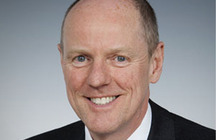
    Below is the text of the speech made by Nick Gibb, the Minister of State for Schools, on 27 March 2015.

    Good morning.

    It’s a pleasure to be here today at the Harris Primary maths conference. This government’s education reforms have been the most radical for a generation. And the growth of the Harris Federation of academies and free schools to a chain of 36 primary and secondary schools has been one of the great successes of the last 5 years. Our approach to deliver greater autonomy for schools through academisation was based on clear evidence from around the world that in the most successful school systems schools are autonomous and accountable.

    The Harris Federation is also part of another of the evidence-based approaches we have put at the heart of our education reforms – mathematics for mastery. In early years teaching, Harris schools use Singapore maths and beyond the early years, Harris primary schools have adopted the effective mathematics curriculum, which combines Singapore and Shanghai approaches, and use maths no problem textbooks.

    As part of the second wave of the Shanghai teacher exchange, last week I was fortunate enough to observe a lesson at the Harris Primary Academy in Chafford Hundred, Essex, led by Lin Lei. In a 35 minute lesson, with all pupils facing the teacher and engaged throughout, Lin taught all of the pupils to carry out complex types of long multiplication through clear explanation of calculation methods.

    Some of you may have already heard me tell that story (perhaps even more than once) since I observed the lesson last week! But I think that reflects something truly positive – that we are undergoing a transformation in our approach to maths and how it is taught in schools.

    That transformation is so important, because our performance in maths had been stagnating over a number of years. From 2005 to 2010, while in opposition I visited hundreds of schools across the country. What I learnt from these visits was that few pupils at primary or secondary school knew their times tables. Long multiplication and long division were rarely taught, with inefficient methods such as the grid method for multiplication and chunking for long division commonplace in classrooms, neither of which are used in the Far East. When I showed visiting members of the Shanghai Municipal Education Commission they were bemused.

    I have also spent time reviewing grade E and F scripts of all 3 main exam boards maths GCSEs. What this exercise revealed was that most of the problems came down to a lack of knowledge of how to carry out basic arithmetic: pupils couldn’t multiply numbers of more than 1 digit. This was a result of the approach to teaching maths.

    For too long we set expectations too low for pupils. An approach of differentiation in primary schools saw classes being taught in different groups, pupils expected to progress at different rates and acceleration on to new topics for those doing well rather than consolidation. An over-emphasis on concepts at the expense of practice, fluency and, through that, understanding meant that too many pupils simply did not know how to perform calculations. Using textbooks became unpopular, with only 10% of maths teachers in England using a textbook for core teaching, compared to 70% in Singapore and 95% in Finland according to TIMSS 2011.

    This stagnation was reflected in our international performance in maths. Coming 24th in the PISA maths tables in 2012 was equivalent to a 3 year difference between the performance of our 15-year-olds and those at the top of the table – in Shanghai. And take up of the study of maths post-15 in England was among the lowest throughout the OECD.

    Education was failing pupils – too often those from poorer backgrounds – and denying them the opportunities that come with the study of maths. Only a solid grounding in the basics of maths will allow pupils to do well at the next level and proceed to further study such as A level. People with an A level in maths go on to earn 7 to 10% more than similarly educated people without the qualification and it opens doors to a whole range of interesting careers. We want to inspire young people to recognise the importance of maths and the opportunities it can offer, and continue studying it to the highest level so that they can compete with the best in the world and succeed throughout their education and careers.

    That is why we have attached such importance to maths, along with STEM subjects more widely. We have introduced the 34 new maths hubs and £67 million announced by the Prime Minister for STEM teaching will improve the skills of 15,000 existing teachers, and recruit an additional 2,500 specialist maths and physics teachers over the next Parliament.

    We have come a long way already. Here we are today talking about mastery – which embodies the idea that every pupil can do well and achieve high standards in maths. Mastery is the model of the high-performing Asian systems such as Shanghai, Singapore and South Korea. It delivers a meticulous approach to arithmetic, whole class teaching and focused 35 minute lessons. Frequent practice allows pupils to consolidate their understanding, and pupils are assisted through immediate and tailored in-class questioning and scaffolding techniques. Homework is frequent, and simply and quickly marked.

    The mastery approach also uses high quality resources and teaching tools – especially textbooks. Great effort and collaboration goes towards perfecting lesson design, with close attention to effective teaching methods. Whole lessons are devoted to thorough teaching of small steps of calculation – the use of the zero, for example in long multiplication.

    We have introduced a new national curriculum, which is more detailed and more demanding, to reflect the mastery approach. Year 1 pupils are introduced to all 4 functions and to basic fractions. In year 2, basic columnar addition and subtraction is studied, with carrying and borrowing in year 3. In year 2 the teaching of times tables begins, and pupils are expected to know all of the times tables up to 12 x 12 by year 4.

    Instant recall of facts like times tables is crucial because the working memory is small and so they need to be committed to long term memory, as explained by Daniel Willingham in his book ‘Why don’t students like school’. Such recall from long term memory is essential to be able to add fractions, and perform long multiplication and division, which pupils will be taught in year 5 and year 6. The year by year approach sets out greater clarity and the focus on fluency in the essentials of maths allows time for pupils to practise more to ensure deep knowledge. We are also expecting the majority of pupils to move through programmes of study at roughly the same pace.

    We have made important changes to testing. The new key stage 2 tests will assess pupils’ mastery of mathematics and the first of these new tests will be taken in summer 2016. At secondary level, reformed maths GCSEs will be more challenging qualifications, sat for the first time in 2017, with teaching beginning in September this year. While A levels will only introduce a small amount of new content, students will be required to have a deeper understanding of the mathematics they are taught. We have also focused on progression to A level, which has increased by 13% since 2010, meaning maths is now the most popular A level.

    There is no doubt that we could not be delivering these reforms to maths without the work and dedication of schools and school groups like Harris and others who are also here today.

    Through the maths hubs programme, you have been taking part in the Shanghai teacher exchange, which provides an important opportunity to learn from teachers in one of the best systems in the world, as you implement teaching for mastery in your schools. The most recent exchange came to an end on Friday, and was a resounding success. Across the maths hubs, schools are also trialling Singapore textbooks, which provide a coherent, structured programme and benefit teachers, pupils and parents.

    The next step to help spread and embed mastery is to develop a cadre of 140 primary mastery experts, who will support 3,500 teachers across primary schools to introduce teaching for mastery of mathematics effectively.

    I am grateful to all of you for being part of these reforms. They are an important example of how we have looked to the evidence of what works to deliver better outcomes to inform our policymaking. I am confident that the reward we reap from this approach will be a better quality maths teaching in our schools, higher standards of attainment among pupils and greater opportunities for them as a result.

    Thank you.

  • Edward Davey – 2015 Speech at the Association of British Insurers

    eddavey

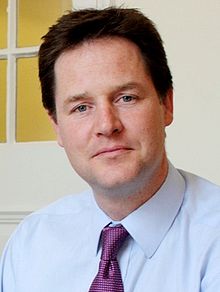
    Below is the text of the speech made by Ed Davey, the then Secretary of State for Energy and Climate Change, at Association of Brfitish Insurers on 24 March 2015.

    Introduction

    Thank you for inviting me here today to your climate change conference.

    You may have noticed. But we’re just a few weeks away from a general election.

    For many MPs this is what Sir Alex Ferguson referred to as ‘squeaky bum time’.

    So maybe it’s appropriate I’m at the Association of British Insurers.

    Businesses can of course take out insurance against the possibility that a change in political conditions will result in a loss.

    But I’ve not yet seen a premium to insure an MP against losing their seat.

    Maybe you’ve missed a gap in the market for political life insurance.

    Though the premia would be high in this General Election – because it’s easily the most difficult to predict in living memory.

    Interestingly though your industry is getting ready for insuring the risks of climate change.

    As you look ahead at the big long-term issues for global insurance, climate change is increasingly one of the biggest risks you’re considering. And I’ve been impressed by the leadership your sector has and is showing.

    So in my speech today I want to look ahead – to one of the immediate challenges the new Government will face – the Climate Change Conference in Paris in December.

    But first I want to begin by reflecting on what has been achieved in this Parliament here in the UK to meet this climate change challenge.

    Consensus on climate change

    In 2010, the Coalition inherited ‘a number of difficulties’ from the last administration.

    The economic crisis being the most pressing.

    But credit where credit is due, on climate change, the 2008 Climate Change Act passed by the previous Government positioned the UK as one of the leading nations for pressing for action.

    And this position is supported by a wide political consensus.

    Labour, the Conservatives and the Liberal Democrats all voted in favour of the 2008 Act.

    It’s a consensus based on hard scientific evidence.

    We are on course, at present, for a world far hotter than the 2 degrees or less rise that scientists tell us should avoid the most catastrophic outcomes.

    Outcomes that will damage our prosperity, our security and our health.

    Only yesterday, public health experts warned that climate change could see tropical diseases such as malaria establish themselves in Britain in a few short decades.

    With climate change, our children and their children will face a harsher and more brutal world.

    That is why the Climate Change Act remains a key feature of the UK’s energy policies today – rightly – because it ensures that, alongside energy security and price, low carbon energy is a core objective.

    So in 2010, the Coalition did have the benefit of the Climate Change Act – and that’s helped people like me – both domestically and internationally – to argue for low carbon policies from a position of strength.

    But there was still a major weakness in the position we inherited.

    The 2008 Climate Change Act may have put in law the objective – a low-carbon economy and a decarbonised energy supply.

    But no long-term, cost-effective policy framework to meet the Carbon Budgets.

    We had a destination – but no credible road-map or vehicles to get there.

    To make matters worse the coalition faced a legacy of under-investment in energy infrastructure – particularly in low-carbon electricity generation and networks.

    No new nuclear for a generation. Renewables generating less than 7% of our electricity needs.

    So radical action has been required, to maintain energy security while we decarbonise – and at the lowest possible cost.

    Progress at home

    The solution has been green growth. With a road map to reduce emissions, and provide much needed economic development and jobs too. And with not just one vehicle, but a garage and a cycle rack full of vehicles for low carbon growth.

    First – in 2011 – our comprehensive Carbon Plan to set the strategy out to 2050. A strategy for the transition to a low-carbon economy based on the meeting the Carbon Budget System of the Climate Change Act. A practical plan.

    And second, this plan came hand in hand with a trebling of the support available to 2020 for low-carbon, as part of the Levy Control Framework. Indeed, one of my proudest achievements was negotiating the Levy Control Framework with the Treasury – because we won that negotiation!

    Third, in 2012, we set up the world’s first Green Investment Bank, dedicated to greening the economy, capitalised to the tune of £3.8bn, which is already transforming the way we look at long term climate friendly investment.

    Fourth, we also remodelled the energy efficiency landscape, primarily with a tough new legal regulation on big energy firms – the Energy Company Obligation – to boost energy efficiency investment, especially for the most vulnerable people and the hardest to heat homes, but also with the UK’s first comprehensive “whole home” assessment system and ‘pay as you save’ mechanism – the Green Deal.

    And, most important of all, Electricity Market Reform – with the 2013 Energy Act. This puts in place the world’s first low carbon electricity market, with long-term financial and legal structures to drive investment in low-carbon power generation.

    And the results of this focus on green growth have been pretty spectacular.

    Average annual investment in renewable power is now running at over twice the level of the last parliament, with 2014 a record year.

    Since 2010, renewable electricity capacity has more than doubled: in fact it’s risen by over 165%!

    Renewables now supply almost a fifth of the UK’s electricity – powering the equivalent of over 14 million homes every year.

    Britain’s low-carbon economy as a whole grew at 7% last year – outstripping growth in the economy as a whole and now supporting 460,000 jobs.

    And the insurance industry has played a vital part in all this – by developing risk management solutions for renewables and other low carbon projects.

    Thanks to green growth, the UK now has one of the least carbon intensive economies in the developed world.

    Over this parliament the UK economy has become almost 13% more carbon-efficient. With more growth not leading to more emissions.

    Proving that going green and economic development can go hand in hand.

    And, as Jeremy Oppenheim from the New Climate Economy Project, explained to you, the global opportunity for green growth is huge.

    And through our actions we have put Britain in the leading pack.

    Greenest government ever

    But the billion dollar question is this:

    What has all this action meant for UK greenhouse gas emissions?

    No other measure matters more for the climate.

    The latest stats show that between 2010 and 2013, UK carbon emission fell by 7%.

    That’s good. But I think we’ll have done even better than that – once we see the full Parliament picture.

    Official statistics setting out the 2014 provisional position will be published in the next few days. Rightly, I am not privy to the detail.

    But if you look at those 2014 indicators already published, they are pointing in the same carbon reducing direction.

    Over the last year energy consumption fell by 7%.

    Coal use for power stations fell by almost a quarter.

    Electricity from wind up by 11%

    The carbon intensity of our economy dropped by almost 6% – even as growth began to pick up over the year.

    So I can confidently predict – 2014 will have been a bumper year for cutting our emissions.

    So – when people ask me – has this been the greenest Government ever? – I answer – unequivocally – yes. Based on the evidence. Based on the stats.

    And better still – by our actions over the last 5 years, the next Government is set to be even greener still. Assuming of course it doesn’t totally mess things up.

    For the 2013 Energy Act puts in place the ‘how’ to the Climate Change Act’s “what”.

    With cross-party consensus, providing stability for investment in the low-carbon economy.

    A beacon for others to follow.

    As the Chief Economist at the International Energy Agency, Fatih Birol, has said:

    “UK energy policies are moving in the right direction and can be an example for many countries to get inspiration from”

    So the Coalition in the UK has put a lot of the policies needed to deliver on our own domestic climate targets.

    But being a green Government in the UK is no good for the global climate, if we can’t take other countries with us.

    And as a proud pro-European I was determined to take the UK’s leadership position and work with other leading nations in the EU – from the Nordics to the Germans – to build greater ambition across Europe.

    So in February 2013, I set up the Green Growth Group – of Ministers from the EU’s Environment Council. My aim was to build consensus and drive more ambitious policy around a low-carbon, pro-growth position.

    This Green Growth Group now boasts 13 member states representing 75% of Europe’s population, 85% of Europe’s GDP and 60% of the votes in the Council of Ministers.

    And it’s partly down to the Green Growth Group that the EU rediscovered its leadership on climate.

    Above all, with the new 2030 energy and climate change package.

    Based on our British blueprint, the 2030 climate framework is ambitious – but it’s also realistic and fully achievable.

    A target to reduce Europe’s domestic greenhouse gas emissions by at least 40% by 2030. At least 40%.

    Backed up by a European-wide renewables target of 27%.

    So combining the British wish for flexibility for member states to judge their own power mix, with a German and Danish demand for a strong long term signal for the industry. Which I thoroughly support.

    It’s not a deal you could strike if you were out of Europe. Or even threatening to leave Europe.

    Frankly, without nearly two years of determined EU climate diplomacy, that 2030 package would not have happened.

    But it has put the EU in a strong leadership position in the run up to this December’s key Paris UN climate summit.

    The second part of the international picture.

    Prospects for Paris

    People ask me. Will Paris be another Copenhagen – when we’re forced to agree to disagree?

    My firm answer is no.

    For the world has changed since Copenhagen. Momentum has definitively shifted.

    Almost 500 climate laws have been passed in 66 of the world’s largest emitting countries.

    Carbon markets have now been put in place in over 36 countries.

    Many of the mechanisms and concepts we will need to implement a global climate deal already exist.

    And all this action is having an impact.

    The IEA estimate that last year, for the first time in 40 years – in the absence of a serious economic crisis – global emissions did not rise.

    Of course, we actually need drastic cuts in emissions. Stopping them growing is just a first stage. But it’s a big plus.

    And for the deal, the signs are increasingly positive: in the EU, in China, in the US – together responsible for over half of global emissions – action is happening.

    In China, President Xi Jinping has embedded climate action directly into the national planning process.

    In the United States, the commitment of the White House to achieve a global climate deal has never been so strong.

    And I’m still hopeful that the new Prime Minister of India, Nahendra Modi, will lead his country to a more climate ambitious position.

    How will the negotiations go?

    Well, the EU’s 2030 Framework has placed Europe at the forefront.

    We have been one of the first to publish our Intended Nationally Determined Contributions – or INDC in the jargon. And it’s easily the most ambitious of any large country or block.

    And yet it is the UK position – fought for by me in this Coalition – that the EU should be ready to commit to go further – if there’s a comprehensive global climate deal.

    That’s why I fought for an EU target of “at least” 40% reduction.

    The words “at least” ensure the 40% target will be the floor of EU action – not the ceiling.

    So I’m pressing for the EU to develop credible options to deliver more, for instance, through using international credits.

    But it will be impossible to increase the EU’s offer – unless we see real ambition – indeed a step up in ambition – from other countries too.

    We have been the first to put our cards on the table – the spotlight must rightly now shift to other countries – as EU Leaders made clear at Friday’s European Council.

    Path to Paris

    So there is so much still to do.

    At Lima we agreed that INDCs would be progression in ambition compared to what is currently on offer.

    But the Lima decision did not set out any formal way of assessing the fairness and ambition of individual INDCs.

    And it is highly likely – probably certain now – that the aggregate of INDCs will not reflect what is needed globally to achieve our below 2 degree objective.

    So we need to use the time available between now and Paris to mobilise global civil society to up the pressure. Carrying out objective assessments. Making judgements about who is and who is not pulling their weight.

    You here at the ABI have been at the forefront of arguing for action on climate change – articulating both the risks to the UK from climate change – as well as the opportunity that low carbon growth provides.

    It is great to see leading insurers teaming up with academics and green groups to press the case for such action with today’s open letter.

    And it great to see institutions like the National Trust throwing their weight behind climate change action.

    But we are looking at an intensive year of climate diplomacy – and we look to the progressive business community and wider civil society to help us in this effort.

    Paris will not be the end of the story.

    A strong, rules based agreement in Paris must include a long term signal of where the international community is headed.

    And a strong mechanism for increasing climate ambition over time – as trust is built, as costs fall and as technological innovations rise.

    We will need to make sure we continue to help the most vulnerable countries adapt to the effects of climate change.

    The UK’s International Climate Fund, worth almost £4bn, is part of the global effort to mobilise $100bn a year by 2020 from public and private sources to help with both mitigation and adaptation in developing countries.

    I can announce today that DECC plans to create a new pilot joint venture with the UK Green Investment Bank worth £200m over three years to assist in investment of the UK’s International Climate Fund .

    It will focus on renewable energy and energy efficiency projects in developing countries; delivering significant emissions reductions and poverty reduction by supporting economic growth, job creation, and the development of reliable energy infrastructure.

    And by working with the Green Investment Bank, we can maximise the commercial viability, impact and effectiveness of UK climate finance.

    And this work has to go hand in hand with reducing incentives for high-carbon energy.

    That is why, in November 2013, I announced that the UK will end support for public financing of new coal-fired power plants overseas.

    And why we are working with the US to change the rules on OECD export credit support to effectively rule out unabated coal.

    One of the long-term issues we also need to tackle is that of stranded assets in fossil fuels.

    We know that in the absence of Carbon Capture and Storage, a great deal of the world’s current fossil fuel reserves are unburnable if we are to limit global warming to 2 degrees.

    Coal reserves, in particular, are a cause of concern.

    Research suggests that over 80% of global coal reserves should remain untouched.

    That is why DECC is supporting the climate analysis work of the Bank of England – including the impact of climate change on the insurance sector expected later in the year.

    We are providing data on emissions pathways and investments to track how investment allocations are already changing. It’s why I’m so keen on the work done by the Carbon Tracker Initiative.

    It’s why we do need to look at disinvestment from coal assets.

    But let me also be clear – we will still need a lot of oil and gas over the next few decades, as we decarbonise rapidly.

    So the policy question is – how, during this historic energy transition from high to low carbon, do we maintain the financial system’s strength, given it’s highly exposed to fossil fuels assets?

    I’m arguing for disclosure. Transparency. Reporting requirements on firms and financial institutions – to force them to set out the future income they expect from their fossil fuel assets. To give long term investors more information on which to base their decisions.

    This will help smooth the transition to a low-carbon economy.

    As Paul Fisher from the Bank of England, said this month:

    “Even though the full impacts of climate change often may not be visible in the short-term, it is well worth insurers being alert to emerging risks, including those from policy makers”

    Not that politically subtle for a central banker!

    So let me conclude by looking at what the General Election could hold here in the UK.

    Conclusion

    I’m pleased to say that the political consensus I spoke about at the beginning remains healthy today.

    The Valentine’s Day pledge by the leaders of the three main UK parties on Climate Change demonstrates this.

    A pledge to stick to the Climate Change Act and its Carbon budgets system.

    To continue the drive towards a low-carbon, energy efficient economy, and ending the use of unabated coal.

    And to work for a legally binding deal in Paris that limits temperatures rises to below the 2 degree threshold that will avoid the worst effects of climate change.

    The next Government will face an intense six months of climate diplomacy.

    But how that Government acts will inevitably impact on our ability to make a difference in Paris.

    And while the Valentine’s Day pledge gives us some confidence, I do see difficulties.

    [political content removed]

    So the General Election does bring uncertainty at a critical time.

    But I remain an optimist.

    With the world-leading platform built by successive UK Governments.

    Especially the significant achievements of the last 5 years, at home and abroad.

    With the wide coalition of the willing. Not just in politics, not just in the UK – but across global civil society. The business community. And here, our financial community.

    I do believe the prospects for a comprehensive and binding global deal to tackle climate change are the best in a generation.

    Yes, the deal won’t be perfect.

    Of course, Paris will not be the last word.

    You bet, we’ll need climate talks after Paris.

    But we cannot let this this moment slip by.

    In Paris, the world has to act. And Britain has to lead.

  • Andrea Leadsom – 2015 Speech to Iraqi Petroleum Conference

    Andrea Leadsom
    Andrea Leadsom

    Below is the text of the speech made by Andrea Leadsom, the Minister of State at the Department for Energy and Climate Change, on 9 June 2015.

    Welcome

    I am delighted to be here today for my first public engagement since being appointed as UK Energy Minister. It has been a steep learning curve over the last couple of weeks, but my previous role as City Minister, as well as spending 25 years in finance prior to becoming an MP, will stand me in good stead. I can certainly tell you now that a key priority for UK Government, and my personal priority as Energy Minister, is energy security: keeping the lights on and the bills down for todays’ consumers, their children and their grandchildren.

    In an increasingly interdependent world, energy security cannot be a wholly domestic issue. Only with strong and stable energy partners across the world can we achieve secure access to energy, a well-functioning energy market and stability to plan for the future. Recent events in Russia and Ukraine have made this clearer than ever.

    Iraq is a key partner, which is why I am pleased to be addressing this prestigious event so early in my new job. In my address I would like to set out how I think we can work together as partners to archive our shared goals of energy security and prosperity and highlight the role that British businesses can play in supporting these efforts.

    So first, Iraq’s Energy Potential.

    The IEA estimates that global oil demand will grow by 14 million barrels a day to reach a total of 104 million barrels a day by 2040. Iraq –a country of immense resource wealth – has the potential to meet a significant proportion of that growth, in fact the highest proportion of any other country by 2040. Because of this huge potential Iraq remains strategically, economically and practically at the centre of any conversation we have about global energy security.

    This makes it more vital than ever that we continue to focus on investment and the future health of Iraq’s energy sector which will help to deliver prosperity for Iraq as a whole. It is great news that Iraqi oil exports have recovered and continue to increase month on month. We will all benefit from this rise in production.

    And second, what can British business do?

    The UK is highly ambitious – we want to be Iraq’s “partner of choice”, we are committed to working with you to make this happen.

    Our biggest energy companies have already committed billions of dollars to Iraq, both in terms of investment and in the provision of technical expertise.

    For example BP is running one of the world’s largest fields in southern Iraq and have goals to increase this even further and triple production. Shell has recently signed a Heads of Agreement to build an $11bn petrochemical plant in Basra, which will be one of the largest in the world and will generate around 40,000 to 50,000 jobs and will contribute significantly to Iraq’s economic recovery, as well as supporting sustainable and inclusive growth.

    Many other British companies also operate across Iraq in all parts of the energy sector, from production to engineering and the supporting supply chains. They have been at the front of technological expertise and advancements and exploring new methods of best practice, continuing to help strengthen Iraq’s energy sector. For example last year Shell and Petronas were able to start production at Majnoon. As well as increasing production to a target of 1.8million barrels of oil a day by 2017, it has begun the vital process of capturing flared gas, as has the Joint Venture at Basra between Iraq’s South Gas Company, Shell and Mitsubishi Corporation. As you will know flaring is a great waste of resource and money, and causes great damage to the environment. This technology can address this, allowing Iraq to make the most of its energy reserves, diverting the gas for local power generation and export.

    The UK Government is very keen to support more British involvement in Iraq’s oil and gas industry. To do this UK Trade and Investment have a programme of strategic engagement in place with BP, Shell and the leading engineering, procurement and construction contractors to help smaller UK companies make the most of the opportunities available and provide the skills and services Iraq needs. For example we have run a “share fair” with BP to introduce more UK companies to the procurement chain associated with the Rumaila project.

    We are also helping smaller companies engage with the larger players in the market. For example, with our industry partners the Energy Industries Council, we sponsored two delegations of UK Small and Medium Enterprises at the Basra Oil and Gas show. I was delighted to hear that as a consequence of our engagement with BP in Iraq, Severn Glocon of Gloucester has been working in country for 2 years from their Basra based engineering support facility. This is great news – and we want to see more of the same.

    I am proud of the role that British businesses are playing and commend the contribution of all our firms involved. So to reiterate, my aim is for the UK to be Iraq’s primary partner of choice in energy.

    Third, how can Iraq encourage further investment?

    Well the importance of international investment into Iraq, both for Iraq as well as for our own energy security, is clear. As we all know strong leadership, vision and cooperation between all parties in the energy sector will create the right commercial environment for investment. The rule of law and strong independent institutions are a key part of this. In Iraq, lower oil prices in particular have highlighted some weaknesses in economic institutions. Tackling these, along with some of the political divisions that risk undermining Iraq’s energy potential, is of great importance. This will give international companies the confidence that their commitments will be honoured and their investments protected and will attract more international companies to invest in Iraq.

    The UK is a firm believer that good governance also ensures that a country’s energy resources benefit its entire people, both today and in the future.

    Good governance includes a strong partnership between the Government of Iraq and Kurdistan Regional Government. We welcomed the budget allocations and energy export deal in December which laid the foundation for increased cooperation. We underscore the importance of both parties continuing to work together, as they have been over recent months, to ensure this deal is allowed to succeed.

    Fourth, diversification will be important for Iraq.

    Iraq’s energy potential is the foundation for a brighter future for the country. A prosperous energy sector will support economic development throughout the country. Revenues from the energy sector could be used for Iraq’s broader development – for example investment in infrastructure, improved services for the Iraqi people, education and healthcare. All parts of the country and population could benefit from the investment and prosperity. In turn, Iraq’s economic development will be vital for its political future and stability.

    In spite of the opportunities that a prosperous energy sector can deliver, the recent fall in oil prices has also demonstrated the vulnerability to market fluctuations when relying too heavily on energy products. Financial discipline is key to weathering the storm of low prices, which I know, has hit Iraq hard. But, longer-term, Iraq will want to consider taking steps towards greater economic diversification. This is fundamental to achieving a prosperous and robust economy and ensuring inclusive and sustainable growth.

    Finally security remains a key issue.

    The UK plans to continue our support as Iraq takes these transformational steps. Tackling Iraq’s challenges, from the fall in oil prices to regional events, is important to us all.

    This is especially true when it comes to tackling the threat which ISIL poses. Together, we face a common enemy of violent Islamic extremists. Only through support and partnership can responses to this threat be effective and inclusive.

    The UK is committed to continue to stand by the people of Iraq, the government of Iraq and the Kurdistan Regional Government in their fight against terrorism and protecting civilians from ISIL’s murderous campaign. The UK airstrikes and other military support show that the UK plays its part in standing against ISIL, but we recognise that this is a generational fight and it will take time and patience.

    We continue to support the Iraqi-led government response to ISIL as part of a global coalition of more than 60 countries. As part of the Global Coalition nearly 800 UK personnel are deployed on operations in the region; helping Iraqis to strengthen and mobilise against ISIL, providing counter- IED training and airstrike, intelligence, surveillance and reconnaissance capabilities. We continue to reaffirm our commitment to unity in tackling ISIL and seek to build on the successful Paris meeting last week. I know that our Ambassador to Iraq, Frank Baker, will speak further on these issues later today.

    So in conclusion.

    Fulfilling Iraq’s energy potential is a priority for the whole of Iraq for the UK and for British companies and more broadly for global energy security. As a friend to all of Iraq, the UK stands ready to provide support and cooperation. We are dedicated to working with all parties in tackling the ISIL threat; this is a priority and a strong unified response set on solid economic foundations will prove most effective. Iraq’s significant energy resources have the potential to drive future stability and prosperity, creating jobs and raising living standards for the Iraqi people and I am confident that Iraq will continue to be a great and responsible energy producer, with benefits for all Iraqis. Unity and cooperation is fundamental to realising these goals so let us work together to guarantee prosperity, stability and energy security for us all.

    Thank you for your attention.

  • Amber Rudd – 2015 Speech to RenewablesUK Offshore Wind Conference

    amberrudd

    Below is the text of the speech made by Amber Rudd, the Secretary of State for Energy and Climate Change, on 24 June 2015.

    Introduction

    Ladies and Gentlemen, I want to start by taking you back 15 years to the year 2000, the first year of the new millennium.

    It was the year the Spice Girls broke up. The year Chris Evans stopped making TFI Friday. It was the year we partied to see in the millennium.

    But what is the significance of this milestone year for us today?

    The offshore wind success story

    Well it’s this.

    At the turn of the century, do you know how much UK electricity offshore wind was providing?

    None. None what so ever.

    Then, at the end of 2000, off the coast of Northumberland, the Blyth pilot project got up and running.

    The UK’s first offshore wind farm. With just two turbines, the largest turbines in the world at the time, producing just 4MW of electricity.

    And from small seeds, orchards grow.

    The last 15 years has seen a phenomenal growth in British offshore wind.

    By the end of this year we are expecting 30 offshore wind farm developments to be contributing to Britain’s energy security.

    Almost 1,500 turbines with the capacity to provide over 5GW of home produced, clean electricity – enough to power the equivalent of almost 4 million homes.

    In the last 5 years alone, the amount of electricity being produced from offshore wind has more than quadrupled.

    In the same period we have seen around £10bn of private sector investment.

    And the industry now supports around 14,000 jobs.

    So you represent one of the 21st century industrial success stories.

    You – we – are world leaders.

    Pioneers. Innovators. The best business minds working with the best engineers, within one of the world’s strongest policy and financial frameworks.

    And working together we now have the most operational offshore wind here in UK waters than anywhere else in the world.

    And that is where 21st century industrial Britain should be – leading the world.

    As our friends over at the Department for Business would say – Britain is Great.

    So today I want to talk about how we build on that success.

    First – deployment and investment – keeping up the pace we have set to maintain our world leading status.

    Second – costs – bringing them down so offshore wind becomes more and more competitive, requiring less and less public support, so the future is sustainable and subsidy free.

    And third – economic benefit – making sure that this success delivers economic benefits throughout the UK – into local host communities, through the supply chain to the wider country.

    But first, let me remind you all why we are doing all this.

    Energy security, global security

    Britain is upgrading its energy infrastructure.

    To replace power stations reaching the end of their natural lives and to replace them with a more diverse, more secure, lower carbon mix.

    The aim is to keep the lights on, and decarbonise on the most cost effective trajectory possible, supporting a diverse mix of low carbon energy.

    Keeping the lights on is non-negotiable. Our modern technological society cannot function without power. And a diverse mix provides the most resilient system.

    Tackling climate change is also non-negotiable.

    The very things that make the British Isles the right place to exploit offshore renewables; makes us vulnerable to climate change too.

    Surrounded on all sides by the sea, with an advanced, open, trade-based economy.

    The physical manifestations of climate change in the future – such as increased flooding – and the economic manifestations – such as resource shortages, and trade wars – both will hit us and hit us increasingly hard if we don’t limit climate change.

    Going for clean energy isn’t fluffy or indulgent: it makes cold, hard economic sense.

    And it makes cold hard business sense: clean energy is a boom market – bringing jobs and investment and growth.

    But it won’t make economic sense if we break the bank doing it – or lose the support of the public.

    That is why it is imperative we control the costs of decarbonisation and limit the impact on people’s bills.

    Decarbonisation must be affordable, sensitive to the impact it has on people’s pockets, sensitive to wider economic circumstances, and sensitive to the local communities where infrastructure is built.

    We have a long term plan, underpinned by carbon budgets, to meet our responsibilities. It’s all set out in the Climate Change Act.

    And this Government is committed to helping see it through.

    We have a plan for Electricity Market Reform, set under the last Government, that will help the cost effective decarbonisation of the power sector, attracting the private sector investment we need.

    That is of course underpinned by the Levy Control Framework that trebled the support available for low-carbon technology.

    That pot is supporting a mixture of low-carbon technologies because both decarbonisation and energy security is best achieved through a diverse energy mix – not over-reliance on one technology or source.

    And the EMR delivery plan sets out what we expect that mix to include by 2020 to meet our objective of generating 30% of electricity from renewables.

    We already have enough onshore wind in the pipeline to hit the middle of the range we need for that technology.

    Without action we are likely to deploy beyond this range.

    We could end up with more onshore wind projects than we can afford, which would lead to either higher bills for consumers, or other renewable technologies, such as offshore wind, losing out on support.

    We need to continue investing in less mature technologies so that they realise their promise, just as onshore wind has done.

    It is therefore appropriate to curtail further subsidised deployment of onshore wind, balancing the interests of onshore developers with those of bill payers, and developers of other technologies.

    So what is the plan for the future deployment of offshore wind?

    Deployment and investment

    The EMR Delivery plan set out a range of 8-15GW reflecting technology and cost uncertainties at the time of publication.

    We expect to see around 10GW by 2020, much more than any country in the world.

    And we are achieving real progress towards that.

    Just last week we saw the opening of Gwynt-y-Mor, the second largest operating offshore wind farm in the world.

    A £2bn project built by RWE, with the capacity to produce enough electricity to power the equivalent of around 400,000 homes.

    Vattenfall’s Kentish Flats Extension will deliver an extra 15 turbines, capable of generating enough electricity to power the equivalent of 35,000 homes.

    And DONG’s Westermost Rough also opens next week, the first windfarm anywhere to use the next generation 6MW turbine on a large scale.

    The UK already has over 5GW operational.

    Over 4GW has already secured support through Contracts for Difference.

    And there is a strong pipeline for possible future projects.

    All this means I am confident that we will double installed capacity in the next 5 years.

    I know that for the sector to grow, developers and supply chain and investors need as much predictability as possible.

    That is why Contracts for Difference were introduced.

    The last CfD auction round was a great success for offshore wind with – East Anglia ONE and Neart na Gaoithe both securing contracts.

    As you would expect, I am considering plans for the next CFD round and will set those out in due course.

    I am determined that our low-carbon future remains on a stable long-term footing and therefore I am determined to ensure that the financial support is sustainable before proceeding.

    Let us be clear. You and I know there is no bottomless pit of bill payer support for low carbon.

    We have a responsibility to keep costs to consumers down.

    Because only by keeping costs down will we maintain public support for the action we are taking to bring down carbon emissions and combat climate change.

    And that means two things:

    First, Government support must help technologies eventually stand on their own two feet, not to encourage a permanent reliance on subsidy. Cost must come down, subsidies must be progressively reduced.

    Second, the public, and particularly host communities, must see the benefits of the moral and financial support they are providing the industry.

    This means that the commitments being made, on community benefits and on UK jobs and UK content in supply chain plans, must be met.

    Cost reduction

    Our decision to proceed with a major expansion of offshore wind in this decade is based on a strategy of investing early in emerging low carbon technologies where the UK has real potential.

    But these levels of subsidy cannot be sustained indefinitely, particularly if we foresee further deployment in the 2020s.

    It is provided now explicitly in order to enable industry to drive down costs, invest and innovate so that offshore wind is well positioned to expand in the 2020s and beyond.

    That expansion must be on the basis of rapidly reducing costs.

    I am very pleased that the industry has been straining every sinew to meet this challenge.

    The Cost Reduction Monitoring Framework shows that costs have already fallen by over 10% since 2011, and more quickly than expected.

    Reaching £100 per megawatt hour is definitely achievable in the near future.

    Every pound saved puts offshore wind in a strong position to contribute even further to our decarbonisation objectives in the next decade.

    And every pound that is spent within the UK economy – creating jobs, strengthening the supply chain – provides added incentive for the Government and the public to back offshore wind.

    Economic benefit

    Home grown capacity is growing.

    Siemens blade factory in Hull, 1000 jobs.

    Mitsubishi Vestas Offshore Wind blade factory on the Isle of Wight, 200 jobs

    Offshore Structures (Britain)’s foundations factory in Teesside, up to 350 jobs.

    These are real and positive signs of an industry maturing and delivering real benefits to UK communities – regenerating, rejuvenating, reskilling.

    Just after I have finished my speech I understand that Dong Energy will be signing an agreement with JDR Cable Systems for inter array cable supply.

    I am not the first Secretary of State to celebrate in JDR winning a contract, but I am delighted they continue to be a successful example of the quality and cost which UK based companies can deliver.

    And we want to see this development of the UK manufacturing base continue. In particular, we want to see investment into priority areas like towers, jackets and cables.

    We have high expectations for the delivery of UK content targets in supply chain plans.

    I welcome Scottish Power Renewables’ intention to deliver at least 50% UK content for their East Anglia ONE project.

    And as the UK industry develops, the opportunity to export goods and skills grows too.

    In 2013/14, the UK Government supported less than a million pounds worth of UK exports in offshore wind.

    Last year that had leapt to £90m.

    The UK may be the No.1 country for offshore wind deployment, but we are not alone in this journey.

    Overseas markets are becoming increasingly attractive.

    Experienced British companies are highly sought after.

    Outside the UK, over 15GW of offshore wind projects are likely to be operating in Europe by 2020.

    This represents a huge commercial opportunity on our doorstep.

    £40bn in component supply and construction contracts will be made available through competitive tender procedures.

    My Department and I are determined to back you.

    And our colleagues at UKTI are geared up to help UK companies bid successfully. So I urge UK companies to check out their new ‘Passport to Europe’ guide so you can access the Government support available to help you export successfully.

    And the opportunity is not just European, it is global.

    The Chinese market is potentially huge.

    Last year the Government supported £12m in offshore wind exports to China.

    And we expect that to grow significantly.

    Conclusion

    So ladies and gentlemen, this is the challenge.

    To maintain the UK’s leading position.

    To reduce costs so support can go further, and offshore wind can begin to compete on a more level playing field, cementing its long-term future in the energy mix.

    To spread the economic benefits ashore through the supply chain, continuing to build home-grown capability and resource.

    And to project this success outward into the growing global market.

    Offshore wind is a significant economic opportunity for the UK.

    But it is also an essential part of our plans for delivering energy security and decarbonisation.

    And as we approach the climate change talks in Paris later this year, thanks to you, the UK’s offshore wind success will be a feather I can wear proudly in my cap.

  • Andrew Jones – 2015 Speech on Formula E

    andrewjones

    Below is the text of the speech made by Andrew Jones, the Parliamentary Under Secretary of State for Transport, at the LowCVP Annual Conference  held on 24 June 2015.

    Introduction

    Thank you for that introduction.

    And good morning everyone.

    It’s a real pleasure to join you today (24 June 2015).

    And to have this opportunity to address such an expert and distinguished audience.

    As both a local councillor in Harrogate, and as an MP, I’ve been a keen advocate for renewable energy and green growth.

    So I was delighted to take on the environmental brief at the Department for Transport following the recent general election.

    And it’s fitting that my first keynote speech on the subject should be here, today.

    Because the Low Carbon Vehicle Partnership has done so much to further the cause of green motoring.

    And I know this conference has always provided an excellent forum for debate and discussion.

    Thriving UK Industry

    I’m fortunate to take on this job at a time of optimism and growth within the industry.

    Just as Britain is thriving again, so is the British motor industry.

    And never have customers enjoyed such energy-efficient products.

    It is thanks to the billions invested by car-makers in greener technologies that last year, average UK new car CO2 emissions fell to a record low: down by nearly a quarter since 2007.

    But although mainstream models have been selling well, the fastest growth is in the ultra low carbon sector.

    So far this year sales of cars eligible for the Plug-in Car Grant have grown more than threefold, while pure-electric car sales have almost doubled.

    That’s a fantastic achievement.

    It’s testament to the work of organisations like the Low Carbon Vehicle Partnership, and Go Ultra Low.

    And also to the relationship between government and industry that’s been nurtured over many years.

    Showrooms are also doing brisk business with hybrid vehicles.

    So far this year, diesel-electric hybrid sales are up nearly 37%.

    When people see how far the industry has come in recent years, I think they are starting to appreciate that our ultimate objective, which is to effectively make every car on the road ultra low emission by 2050, is entirely achievable.

    There are now 26 models eligible for the plug-in car grant – from luxury cars to city vehicles.

    And that choice is only going to increase as demand for clean vehicles grows.

    We are continuing the plug-in car grant with over £200 million during the current parliament.

    Thousands of people – and many fleets – are discovering that owning an ultra-low emission vehicle no longer requires fundamental compromise.

    Whether it’s on convenience, driving experience, or affordability.

    And the government is not just talking about this.

    We’re part of this motoring revolution.

    We’re investing £5 million to add 140 ULEV vehicles to departmental fleets.

    And lots more ultra low vehicles are being used by other public sector fleets.

    Speaking as someone who drove my first electric car just last weekend – a Nissan Leaf built in Sunderland – I must say I was amazed at its performance and refinement.

    Nissan has been among the pioneers of low emission motoring in this country.

    But it’s the sheer diversity and capability of our low carbon vehicle sector that really impresses.

    With companies like BMW, Detroit Electric, Geely and Mahindra investing in UK facilities.

    From taxis to supercars, the range of vehicles benefiting from ultra-low technologies is growing all the time.

    Formula E

    So it came as no surprise that Formula E, the global electric racing series, has also found a natural home in this country – at Donnington Park.

    For decades our motorsport industry has been a global leader.

    7 out of 10 Formula 1 teams are based in this country.

    And around 4,000 businesses supply the UK motorsports industry.

    Employing nearly 40,000 people.

    Many of them high skilled engineers.

    The true value of these businesses to the UK economy is huge.

    Because they also develop cutting edge technologies that can then be transferred to the mass market, making everyday motoring safer, more affordable and greener.

    Now Formula E can do the same for production electric vehicles.

    And help us build expertise in areas like aerodynamics, energy storage, and precision machining of components, that will one day make electric cars the clear choice for the majority of drivers.

    On Saturday, the competition comes to Battersea Park in London.

    The climax to the inaugural season.

    Where the first ever Formula E champion will be crowned.

    And we’ll be using the event through the Go Ultra Low campaign to drive home the core messages on the benefits of electric cars.

    And hopefully persuade some of the spectators to try ultra low motoring themselves.

    What we’re doing

    We have a great opportunity here – not just to make the UK one of the world’s leading market for green vehicles – but also one of the world’s leading producers too.

    That’s why, in partnership with industry, we created the Advanced Propulsion Centre.

    And it is why we’re investing £500 million to support ultra-low emission vehicles.

    And help UK businesses develop products for market.

    We’re delivering £125 million for low emission vehicle research and development, match funded by industry.

    We’re working with you on the Go Ultra Low Campaign.

    And we’re developing the infrastructure to support the market further.

    With fast charging at home, on the street, at rail stations, in town centres, car parks.

    And many more locations.

    Take Bristol, for example.

    Already one of this country’s greenest cities.

    By the end of 2015, Bristol will have gained a new network of 100 electric vehicle charging points.

    For the first time it will be possible to hire electric vehicles as part of the Bristol Car Club fleet.

    And we’re providing the city with a million pounds to trial a number of cutting-edge low carbon buses.

    We’re also supporting other schemes to develop low emission buses and trucks.

    But not all modes of transport can be easily electrified in the near future.

    Sustainable biofuels will have an important role to play in the decarbonisation of transport.

    So to encourage innovation we’ve committed £25 million for a competition as part of plans to support up to three demonstration-scale advanced biofuel plants in the UK.

    We expect to announce the winners later this summer.

    I’m grateful to the Low Carbon Vehicle Partnership and members of the audience for engaging in the work of the Transport Energy Task Force which examined options for incentivising biofuels to 2020 and beyond.

    The task force’s report puts us in a good place to assess how to meet our greenhouse gas targets in transport.

    Now there’s agreement at EU level on Indirect Land Use Change regarding biofuels, I am keen that we provide policy clarity for the industry on our plans as soon as possible.

    Air Quality

    All these initiatives will help us achieve our fundamental goals of reducing carbon emissions, while keeping the population mobile, and building a flourishing low carbon economy in the UK.

    But having come from local government into central government, I’m aware that big concepts like global warming and climate change can seem remote and distant to people’s everyday lives.

    We talk about saving billions of tons of carbon by making transport greener.

    But frankly, that doesn’t always resonate among communities.

    People are more likely to listen to messages and issues which affect them directly, and have some impact on their daily lives.

    Issues like air quality.

    People listen to news reports about the health effects of pollution.

    Yet all too often the local and global aspects of transport emissions are divorced, when in fact they are closely related.

    Ultra low emission vehicles not only help tackle climate change.

    They make our air cleaner too.

    Cutting levels of particulates and other pollutants.

    Reducing levels of particulate matter could help prevent up to 29,000 premature deaths annually.

    While overall air quality has improved as emissions from heavy industry and transport have become cleaner, we are still failing to meet EU limits for nitrogen oxides.

    Concern over the long term impact of diesel emissions has surfaced in regular media reports recently.

    And it’s unlikely to go away.

    So I want to urge the industry to stress the local air quality benefits of ultra low emission motoring.

    And in doing so spread the message to a wider audience.

    Of course we have to take into consideration the emissions produced by generating the electricity for electric vehicles.

    But still, ultra low emission vehicles have a very positive environmental story to tell.

    Indeed, there are resources on the web which compare the full range of emissions for every car which qualifies for the plug-in car-grant.

    The government is working with the EU to bring forward real world vehicle emission testing.

    Something that will certainly help us communicate the wider environmental message.

    But I would welcome your views on this.

    And how we can identify opportunities for further reducing air pollutants from vehicles.

    While of course continuing our work to drive down carbon emissions.

    Conclusion

    This spirit of partnership and co-operation is at the heart of the progress we’ve made in recent years.

    Kick-starting and developing the ultra low market.

    Launching an ever-growing range of desirable ULEV cars.

    And constructing a charging infrastructure.

    We’re on this journey together.

    So I’d like to thank everyone here who has contributed to that success.

    As for the future, well, this is already a fast moving market.

    And it’s going to move faster.

    Particularly here in the UK, where we have big ambitions to be a global leader.

    And as it does so, the partnership we share will become more important.

    We will have to work even more closely together.

    Business and government, hand in hand.

    To make our economy stronger, and our environment cleaner.

    Yes, it will be a challenge.

    But it’s a challenge I’m looking forward to immensely.

    And it’s a challenge I know we will meet.

    Thank you.

  • Andrea Leadsom – 2015 Speech to the Nuclear Industry Association

    Andrea Leadsom
    Andrea Leadsom

    Below is the text of the speech made by Andrea Leadsom, the Minister of State at the Department of Energy and Climate Change, at the Park Plaza Hotel in London on 30 June 2015.

    It is a pleasure to address you today at this important Nuclear Industry Association event to showcase the UK’s new nuclear programme; and to have the opportunity to speak to you all – the people who are instrumental in turning that programme into a reality.

    Your industry is key to delivering our vision of the clean, affordable, safe and reliable energy British consumers and businesses need and vital to keeping the lights on in the decades ahead.

    Here in the UK, we face two big challenges – maintaining energy supplies that British businesses and homes can rely on, and keeping people’s bills as low as possible.

    These cannot be treated as separate issues. That is why this Government’s priority is to set out a single, coherent energy policy that gets us to where we need to be – keeping the lights on, powering the economy with cleaner energy, and making sure people pay less for their bills.

    We need to bring more capacity online over the next decade in order to avoid the narrowing of margins that we have seen in recent winters.

    There should be no doubt that this Government is absolutely committed to nuclear power. We see new nuclear power stations as a vital part of the infrastructure investment needed in our electricity sector to ensure our future energy supply.

    So its an exciting time for me to be overseeing the nuclear portfolio within Government.

    Today I want to outline my plan for the future of British nuclear.

    Nuclear energy plays a critical role in the Government’s security of supply and decarbonisation goals. The UK’s nine existing nuclear power plants generate around 20% of our electricity demand. But all bar one of these power stations are expected to shut by 2030.

    Nuclear power is also one the cheaper forms of low carbon electricity, reducing pressures on consumer electricity bills, relative to a low carbon energy mix without new nuclear, while emitting similar levels of CO2 to renewables over the life of the plant.

    So as we set out in our Conservative party manifesto, we are committed to a significant expansion in new nuclear in the UK.

    Government has prepared the way for new nuclear power stations through a package of reforms and regulatory measures that remove barriers to investment and give developers the confidence to take forward projects that will help deliver secure, low carbon and affordable energy. We have also made sure that operators of new nuclear power stations put in place robust plans and finance for managing their waste and decommissioning right from the outset.

    You will no doubt be aware of the recent progress for UK new build.

    The first new nuclear power station in a generation moved an important step closer last year, as the European Commission announced on 8th October 2014 that it has approved the Hinkley Point C State aid case. We are continuing to work together with EDF to finalise the documentation for the Hinkley Point C project. The power station is expected to start generating electricity from 2023.

    In total, industry has set out plans for five new nuclear projects in the UK, for a total of up to 16 gigawatts of new nuclear capacity, providing around 35% of electricity generation. That level of new build could, by 2030, lead to an estimated 40 million tonnes of CO2 emissions savings, gross private investment of £89 billion (2014 prices), and around 35,000 jobs supported at the peak of construction.

    The Government is clear that the UK remains open for business. We welcome high quality investment from overseas. The nuclear programme represents a tremendous opportunity to establish the UK as a key nuclear country, with – importantly – the potential to export our capabilities to other countries: including in decommissioning, an area in which we are already a world leader. These international opportunities offer prospects of developing our domestic supply chain and realising economies of scale. It is also an opportunity to make the UK an attractive partner for international R&D collaboration.

    Small Modular Reactors are an option we are investigating further. These have the potential to drive down the cost of nuclear energy and make financing easier through shorter construction times and lower initial capital investment requirements, in addition to high-value commercial opportunities. However, since SMRs are in the early stages of development, there are no commercially operational examples that can be used to validate this potential. So Government has initiated work to build a greater factual base on SMRs, following the feasibility study of last year.

    The success of our nuclear programme is dependent on three key elements:

    – working in partnership, and I look forward to working with you to further our ambition for a competitive and vibrant world-class UK nuclear industry.

    – the successful delivery of the new nuclear fleet will be a strong domestic workforce and supply chain. The opportunities are huge. For example, Hinkley Point C will inject £16 billion into the economy – with the potential for British firms to get the majority of the work. Government is working closely with the developers to identify further opportunities for the UK supply chain. Also the standing of the Supply Chain Partnership will help engage UK Small and Medium Size Enterprises (SME’s) on some of the opportunities from the new build programmes.

    In order to deliver this ambitious new build programme on time and on budget, a skilled workforce will be essential. The scale of the industry’s new build aspirations, the length of time since the last new build project and the high average age of the existing nuclear workforce mean that it is essential to take action now to prevent skills gaps developing over the course of the new nuclear programme. Government recognises that this is a significant challenge, particularly with the on-going need to maintain and decommission existing nuclear power stations.

    There are a number of Government initiatives in place to help support industry fill the skills gaps such as Degree Level Apprenticeships, “Trailblazers” – an initiative which showcases talent and leadership in the sector to inspire the next generation of skilled nuclear engineers and the National College for Nuclear. Specifically, the National College for Nuclear will work collaboratively with the wider industry, skills bodies and training providers and will utilise international best practice to develop an industry-wide curriculum.

    Turning now to the vital matter of a geological disposal facility. With plans for 16GW of new nuclear capacity in the UK, government is firmly committed to delivering geological disposal as the safest and most secure means of managing our higher-activity waste in the long term. We need a permanent solution following more than 60 years of producing radioactive waste from various sources including electricity generation from nuclear power.

    Taking forward a geological disposal facility will also support new generations of nuclear power stations in the UK by providing a safe way to dispose of the waste they produce.

    My department and our delivery body, Radioactive Waste Management Limited are currently delivering the commitments set out in our 2014 White Paper, including plans to engage the public further on the important issues of community representation and national geological screening over the coming months.

    So in conclusion, I am confident that the key investment decision on Hinkley C will happen soon which will enable construction to start, and I recognise, of course, that the nuclear sector as a whole places enormous importance on reaching this significant milestone.

    And as the new Minister of State for Energy, I want to assure you that I aim to see the UK nuclear industry flourish as a global leader, so that together we can achieve secure, low carbon and affordable energy that will underpin the future success of the UK economy.

  • Andrew Jones – 2015 Speech on Business Mobility

    andrewjones

    Below is the text of the speech made by Andrew Jones, the Parliamentary Under Secretary of State for Transport, at The Society of Motor Manufacturers & Traders in London on 22 October 2015.

    Introduction

    Thank you.

    I am grateful to everyone for coming today.

    And to the SMMT for hosting this event.

    I want the next 5 years to be remembered as the dawn of the ultra low emission vehicle era.

    The time in which we reach the ULEV popularity tipping point.

    And the signs so far are good.

    Between January and September this year, nearly 21,000 ULEVs were sold in the UK.

    Growth of 140% against last year.

    And sales of plug-in hybrids were up almost 230%.

    The UK is now the fastest growing market for electric vehicles in Europe.

    UK fleets are agents of change

    And best of all, more than two thirds of ultra low emission vehicles bought in the UK were bought by businesses.

    That’s great news.

    Because UK fleets are, and always have been, agents of motoring change.

    Many of the innovations that have made cars greener, safer and more efficient in recent decades were made by manufacturers responding to pioneering fleet managers.

    And today, fleet managers have plenty of choice.

    There are at least 27 different electric or plug-in hybrid cars, and 9 different vans to choose from, from capable city run-arounds and business hatchbacks to SUVs and sports cars, with even more due to the market soon.

    And businesses are choosing them.

    Business sense

    That’s because going ultra low makes business sense.

    The government’s plug-in car grant means that the purchase of an ultra low emission vehicle doesn’t have to cost more than a conventional one.

    The Mitsubishi Outlander Phev is the UK’s best-selling plug-in vehicle, and after the £5,000 grant it is the same price as its diesel equivalent.

    Then there are the ULEV tax breaks and the big savings on servicing and running costs.

    Lex Autolease has proven that driving a BMW i3 for 60,000 miles over 4 years will save nearly £2,800 compared to a non-electric equivalent.

    And for fleets, those savings will multiply.

    A fleet of 10 Nissan LEAFs can save £50,000 over a 4-year operating cycle.

    And by going electric a company car driver can save £6,000 in benefit-in-kind company car tax over a 5 year period.

    Of course, then there are hard-to-quantify – but very real – benefits to corporate image and social responsibility.

    The next level

    This government is grateful to businesses for leading the ULEV charge.

    Our ultimate goal is for virtually every car and van on the road to be zero emission by 2050.

    That’s a challenging target.

    Just as it should be.

    And this government will support businesses so you can continue to be bold in adopting new technology.

    Because when businesses lead the way, manufacturers respond with better range and performance, more charging points and lower costs.

    Government support

    So over the next 5 years, as well as keeping tax low, we are investing £500 million to support the ultra low emission vehicle market.

    We announced in August that we will continue the plug-in vehicle grant at the current levels until at least February 2016.

    And we are expanding the charging infrastructure, too, so the UK now has over 600 rapid charge points, giving the UK the best charging network in Europe and allowing for fast charging at home, on the street, at railway stations, in town centres, service stations and car parks.

    Already, there are thousands more locations where vehicles can be plugged in than there are petrol stations, and the numbers are growing every week.

    The City of Bristol is a great example of how this money is making a difference.

    By the end of 2015, Bristol will have gained a new network of 100 electric vehicle charging points.

    For the first time it will be possible to hire electric vehicles as part of the Bristol Car Club fleet.

    And we have provided the city with a million pounds to trial a number of cutting-edge low carbon buses.

    Public sector fleets

    But if we are entering the era of the ultra low emission vehicle, we need even more fleets to make the change, and in even greater numbers.

    So far, the private sector has been leading the way.

    And now we are going to invest £5 million to support the purchase of ULEVs for public sector fleets.

    The Office of Low Emission Vehicles will support 50 public sector organisations to buy up to 300 ULEV vehicles.

    And today we are also publishing a new business guide to plug-in vehicles, providing all the information a fleet manager might need for the decision to go ultra low.

    Conclusion

    So in conclusion, I can only say – thank you.

    The progress we’ve seen in the ULEV market has been breathtaking.

    The government has lent its support, and British businesses have responded.

    So that today, an unprecedented, irreversible shift is taking place in the automotive market.

    We have arrived at the future of business mobility, and there’s no going back.

    Thank you.

  • Amber Rudd – 2015 Speech on UK Energy Policy

    amberrudd

    Below is the text of the speech made by Amber Rudd, the Secretary of State for Energy and Climate Change, at the Institute of Civil Engineers in London on 18 November 2015.

    Introduction

    There’s a picture from the Government art collection that hangs in the Department of Energy and Climate Change. It’s called “At the Coal Face” by Nicholas Evans.

    Rendered in black and white, it shows a pair of miners with shovels and picks, muscles straining as they work at a seam. It’s a very powerful picture.

    For me as Secretary of State for Energy and Climate Change, it’s a constant reminder that the efforts made to heat and light our homes; to power our businesses and economy; are, and have always been, a very human endeavour. Our energy system is a miracle of human ingenuity, industry and innovation.

    Many decades of engineering brilliance and hard, often dangerous work has produced a system which takes the natural raw material of coal and gas and oil (and now the wind and sun) and moulds them into something that powers our lives.

    Most of us take energy for granted. The lights come on when we want them to and that’s exactly as it should be.

    No government should ever take a risk on security, whether it be keeping our citizens safe or building a more resilient economy.

    This Government is focussed on securing a better future for Britain.

    And that includes energy security.

    Our modern society simply cannot function without power.

    Energy security has to be the number one priority.

    But no responsible government should take a risk on climate change either.

    Because it’s one of the greatest long-term threats to our economic security.

    So the challenge we face is how we make sure that energy remains as the backbone of our economy, while we transform to a low carbon system.

    How do we achieve an energy system that is secure; affordable; and clean?

    Energy Policy in Context

    That picture, ‘At the Coal Face’, is also a historical record.

    Drawn in 1978, the year of the winter of discontent, the decade of the ‘three day week’, for me, it conjures up a Britain from a wholly different age.

    Since then Britain’s energy system has been shaped in two distinct phases.

    The first of these was the break-up of the large nationalised energy monopolies set in train by Nigel Lawson.

    Competition

    In his seminal speech in 1982, he defined the Government’s role as setting a framework that would ensure the market, rather than the state, provided secure, cost-efficient energy.

    This was driven by a desire to create a system where competition worked for families and businesses.

    “The changes in prospect,” said Lawson at the time, “will help us ensure that the supplies of fuel we need are available at the lowest practicable cost.”

    Allowing markets to flourish. Open to trading. Independent regulation to provide confidence to investors. Competition keeping prices as low as possible.

    Of course, the market that was created was not free from all government intervention. Markets never are.

    Intervention was necessary then and will always remain so in an industry that delivers such a vital service.

    But intervention was limited.

    Intervention

    The second phase of modern energy policy began when Tony Blair signed the Renewable Energy Target in 2007.

    What has this left us with?

    We now have an electricity system where no form of power generation, not even gas-fired power stations, can be built without government intervention.

    And a legacy of ageing, often unreliable plant.

    Perversely, even with the huge growth in renewables, our dependence on coal, the dirtiest fossil fuel, hasn’t been reduced.

    Indeed a higher proportion of our electricity came from coal in 2014 than in 1999.

    So we still haven’t found the right balance.

    We need a course correction using the tools we have already developed through Electricity Market Reform.

    We know competition works. It keeps costs low and can deliver a clean and reliable energy system.

    We want a consumer-led, competition focussed energy system that has energy security at the heart of it and delivers for families and businesses.

    We want to see a competitive electricity market, with government out of the way as much as possible, by 2025.

    Getting there will not be easy. The process of privatisation itself spanned five Parliaments.

    Indeed, moving to a new model without risking energy security will require government to continue to intervene. But that should diminish over time.

    We need to start that work now.

    So how do we do that?

    Energy Security

    It may sound a strange thing to say, but fundamentally, I want energy policy to be boring.

    One that people going about their daily lives don’t need to worry about, because they trust that the system produces energy that is reliable and affordable and, indeed, isn’t damaging to the environment.

    Frankly, if at all possible, energy policy shouldn’t be noticed.

    That is why energy security has to be the first priority – it is fundamental to the health of our economy and the lives of our people.

    It underpins everything we need to do.

    Gas

    In some areas the system works well.

    The gas used to heat our homes is amongst the cheapest and most secure in Europe.

    And this is despite the decline in our domestic gas production from the North Sea.

    How has this been achieved?

    Investors, driven by a desire to make a profit, have built new LNG terminals and pipelines that have improved diversity of supply.

    In this case, energy security has been best served by government staying out of the way and allowing markets to find an answer.

    Of course we can’t be complacent. We currently import around half of our gas needs, but by 2030 that could be as high as 75%.

    That’s why we’re encouraging investment in our shale gas exploration so we can add new sources of home-grown supply to our real diversity of imports.

    There are also economic benefits in building a new industry for the country and for communities.

    Our North Sea history means the UK is a home to world class oil and gas expertise, in Aberdeen and around the UK – we should build on that base so that our shale potential can be exploited safely.

    Electricity

    But in the supply of electricity, with falling margins, there’s a greater challenge.

    I am confident the steps we’ve taken alongside National Grid and Ofgem will ensure the security of supply in the next few years.

    But, frankly, it cannot be satisfactory for an advanced economy like the UK to be relying on polluting, carbon intensive 50-year-old coal-fired power stations.

    Let me be clear: this is not the future.

    We need to build a new energy infrastructure, fit for the 21st century.

    Much of that is already in the pipeline – new gas, such as the plant at Carrington, and of course, a large increase in renewables over the next five years and in the longer-term, new nuclear.

    At the same time, we are building new interconnectors to make it easier to import cheaper electricity from Europe.

    These changes are vital. Cheaper energy means lower household bills – something which matters to all of us.

    But this isn’t just about making savings.

    It’s about the long term security of our energy supply.

    And my view is that is best served through open, competitive markets.

    That is why the Prime Minister has been calling for an ambitious Energy Union for Europe – to save hardworking families money and to guarantee energy supplies for future generations.

    So we welcome the report out from the EU today on the “State of the Energy Union” which lays out the steps Europe needs to take to strengthen our partnership.

    And I can say to Europe that Britain stands ready to help make this vision a reality.

    This is an example of where we can achieve more working together than alone, and where Europe can adapt to help its citizens where it matters to them.

    But we do need to do more at home.

    In the next 10 years, it’s imperative that we get new gas-fired power stations built.

    We need to get the right signals in the electricity market to achieve that.

    We are already consulting on how to improve the Capacity Market.

    And after this year’s auction we will take stock and ensure it delivers the gas we need.

    Nuclear

    Gas is central to our energy secure future.

    So is nuclear.

    Opponents of nuclear misread the science. It is safe and reliable.

    The challenge, as with other low carbon technologies, is to deliver nuclear power which is low cost as well. Green energy must be cheap energy.

    But innovation is not just about trying things out in a lab and magically discovering a new energy source.

    It is also about testing things at scale.

    We learn from doing.

    In the 13 years of the last Labour government not a single new nuclear power station was commissioned.

    We are dealing with a legacy of under-investment and with Hinkley Point C planning to start generating in the mid 2020s that is already changing.

    It is imperative we do not make the mistakes of the past and just build one nuclear power station.

    There are plans for a new fleet of nuclear power stations, including at Wylfa and Moorside.

    This could provide up to 30% of the low carbon electricity which we’re likely to need through the 2030s and create 30,000 new jobs.

    This will provide low carbon electricity at the scale we need.

    Climate change is a big problem, it needs big technologies.

    As the former Chief Scientist at DECC, David Mackay, said: “If everyone does a little, we’ll achieve only a little. We must do a lot. What’s required are big changes.”

    Offshore Wind

    That’s why we should also support the growth of our world leading offshore wind industry.

    In the global context this is a technology which has the scale to make a big difference.

    It is one area where the UK can help make a lasting technological contribution.

    On current plans we expect to see 10GW of offshore wind installed by 2020.

    This is supporting a growing installation, development and blade manufacturing industry. Around 14,000 people are employed in the sector.

    This ground breaking expertise has helped the costs of contracts for offshore wind come down by at least 20% in the last two years.

    But it is still too expensive.

    So our approach will be different – we will not support offshore wind at any cost.

    Further support will be strictly conditional on the cost reductions we have seen already accelerating.

    The technology needs to move quickly to cost-competitiveness.

    If that happens we could support up to 10GW of new offshore wind projects in the 2020s.

    The industry tells us they can meet that challenge, and we will hold them to it.

    If they don’t there will be no subsidy.

    No more blank cheques.

    Today I can announce that – if, and only if, the Government’s conditions on cost reduction are met – we will make funding available for three auctions in this Parliament.

    We intend to hold the first of these auctions by the end of 2016.

    Investors have a right to clarity on our objectives. And that is what I am providing today.

    New nuclear, new gas and, if costs, come down, new offshore wind will all help us meet the challenge of decarbonisation.

    The Purpose of Decarbonisation

    But is important to pause and answer this question: ‘what are we decarbonising for?’

    Climate action is about our future economic security.

    As the Foreign Secretary said last week: “In every other facet of life, we assess the risks and where the risk of occurrence is high and the impacts are potentially catastrophic, we act to mitigate and to prevent. Our approach to climate change should be no different.”

    Action on climate change is linked to the action we’re taking now to reduce the deficit. It is about resilience now and in the future.

    But climate change is a global problem, not a local one.

    Action by one state will not solve the problem. It’s what we do together that counts.

    And that is why achieving a global deal in Paris next month is so important.

    A Global Deal

    Paris is a city that is currently in mourning.

    But in a less than two weeks’ time, we will see the leaders of the world gather there in solidarity to seek to achieve the first truly global deal on climate change.

    Since I became Secretary of State I have been working with my counterparts in India, China, the US, Europe and others across the globe to help make sure we come to Paris in the best place possible.

    The commitments countries have made so far are significant and a deal is tantalisingly close.

    This much I know, climate change will not be solved by a group of over-tired politicians and negotiators in a conference centre.

    It will take action by businesses, civil society, cities, regions and countries.

    Paris must deliver a clear signal that the future is low carbon that unleashes the levels of private investment and local action needed.

    Collective action works when you share the burden fairly, but also when each makes a distinctive contribution. We know that in isolation, cuts to Britain’s own greenhouse gas emissions, just 1.2% of the global total, would do little to limit climate change.

    So we have to ask ourselves the important question:

    What is the UK’s role in that global decarbonisation? Where can we make a difference?

    Controlling Costs

    Our most important task is providing a compelling example to the rest of the world of how to cut carbon while controlling costs.

    As I set out earlier, it is not clear we have done that so far.

    The Climate Change Act, which the Conservatives helped create, is a good model that is being copied by other countries

    Long-term time-tables, regular budgets, independent review.

    We are committed to meeting the UK’s 2050 target.

    We are on track for our next two carbon budgets.

    But it’s clear, as the Committee on Climate Change has said, that the fourth carbon budget is going to be tough to achieve.

    We do need to meet that challenge, but we need be pragmatic too.

    We will need action right across the economy: in transport; waste and buildings.

    And we’ll be setting out our plans for meeting the fourth and fifth Carbon Budgets next year.

    But simply meeting the targets we have set ourselves will not be example enough for the rest of the world to follow.

    We need to get the right balance between supporting new technologies and being tough on subsidies to keep bills as low as possible.

    We can only expect bill payers to support low carbon power, as long as costs are controlled.

    I inherited a department where policy costs on bills had spiralled.

    Subsidy should be temporary, not part of a permanent business model.

    Most importantly, new, clean technologies will only be sustainable at the scale we need if they are cheap enough. When costs come down, as they have in onshore wind and solar, so should support.

    For instance, we have enough onshore wind in the pipeline to meet our 2020 expectations.

    That is why we set out in our manifesto that we would end any new public subsidy for onshore wind farms. The costs of solar have come down too.

    Over 8GW of solar is already deployed and even with the costs controls we have proposed we expect to have around 12GW in place by 2020.

    These technologies will be cost-competitive through the 2020s.

    We need to work towards a market where success is driven by your ability to compete in a market. Not by your ability to lobby Government.

    This will only be possible if carbon pricing works properly.

    Despite its flaws, the EU Emissions Trading Scheme is exactly the kind of intervention that should be made at a European level where collective action is more powerful.

    The UK has worked hard with others to get major reforms that are helping restore a more stable and robust price on carbon.

    But I’m determined that we help deliver more this Parliament to restore the ETS to full health.

    In the same way generators should pay the cost of pollution, we also want intermittent generators to be responsible for the pressures they add to the system when the wind does not blow or the sun does not shine.

    Only when different technologies face their full costs can we achieve a more competitive market.

    Coal

    To set an example to the rest of the world, the UK also has to focus on where we can get the biggest carbon cuts, swiftly and cheaply.

    That is hard to do when, after 20 years of action on climate change, 30% of our electricity still comes from unabated coal.

    One of the greatest and most cost-effective contributions we can make to emission reductions in electricity is by replacing coal fired power stations with gas.

    For centuries coal has played a central role in our energy system.

    But it’s the most carbon intensive fossil fuel and damages air quality.

    Gas produces half the carbon emissions of coal when used for power generation.

    Unabated coal is simply not sustainable in the longer term.

    In an ideal world, the carbon price provided by the ETS would phase out coal for us using market signals. But it’s not there yet.

    So I want to take action now.

    I am pleased to announce that we will be launching a consultation in the spring on when to close all unabated coal-fired power stations.

    Our consultation will set out proposals to close coal by 2025 – and restrict its use from 2023.

    If we take this step, we will be one of the first developed countries to deliver on a commitment to take coal off the system.

    But let me be clear, we’ll only proceed if we’re confident that the shift to new gas can be achieved within these timescales.

    Innovation

    Let’s be honest with ourselves, we don’t have all the answers to decarbonisation today.

    We must develop technologies that are both cheap and green.

    This means unleashing innovation.

    Innovation is not just about investing money in new bits of kit.

    Government’s first job is to create the environment for new ideas to flourish by getting rid of the barriers that in the way. Some argue we should adapt our traditional model dominated by large power stations and go for a new, decentralised, flexible approach.

    Locally-generated energy supported by storage, interconnection and demand response, offers the possibility of a radically different model.

    It is not necessarily the job of Government to choose one of these models.

    Government is the enabler. The market will reveal which one works and how much we need of both

    A Smarter System

    Smart meters are a key building block of an approach that could allow that.

    Every home and small business in Britain will get them by the end of 2020.

    And this is sparking some real entrepreneurial innovation.

    Devices providing real-time feedback and apps are being developed that will help people work out where they are wasting energy.

    This isn’t about technology for technology’s sake – it’s about using it to keep people’s bills low – and making the overall system more efficient.

    A fully smart energy system could help us to reduce costs by tens of billions of pounds over the decades ahead. So are now working with Ofgem to assess what we can do.

    For instance, I already have agreed with Ofgem that by early 2017 they will remove the barriers to suppliers choosing half-hourly settlement for household customers.

    This will allow suppliers to offer new Time of Use tariffs so people can get a cheaper deal based on when they use energy, not necessarily how much.

    We are also looking at removing other regulations that are holding back smart solutions, such as demand side response and storage.

    I will shortly be launching a paper setting out some of the possibilities and we will consult formally in the spring to allow action in the autumn.

    Independent Regulation

    National Grid as system operator has played a pivotal role in keeping the energy market working.

    But as our system changes we need to make sure it is as productive, secure and cost-effective as possible.

    There is a strong case for greater independence for the system operator to allow it to make the necessary changes.

    So, alongside the National Infrastructure Commission, we will work with National Grid, Ofgem and others to consider how to reform the current system operator model to make it more flexible and independent.

    Independent regulation is central to a competitive market.

    It’s right that Ofgem is an independent voice championing competition and cracking down when companies have treated customers badly.

    That is also why we are creating the independent Oil and Gas Authority.

    The North Sea still offers significant value for the UK – up to 20 billion barrels of oil equivalent could still be extracted and the industry supports 375,000 jobs.

    But we need to provide clarity to investors in UK oil production

    Today I am launching a consultation on a Strategy to Maximise the Economic Recovery of the North Sea.

    The principle objectives this Strategy is designed to meet have been challenged and amended in the Energy Bill by the House of Lords.

    We intend to overturn this amendment when the Bill is considered in the Commons.

    Innovation in Supply

    This system of independent regulation, alongside some of the changes we made in the last Parliament, creates the conditions for competition and innovation to flourish.

    This has led to greater competition in the supply market.

    There are now 26 independent suppliers and their market share has grown from under 1% in 2010 to over 13% now. And the Big 6 are losing market share every quarter.

    Innovative, new suppliers, which range from start-ups to local authorities, are demonstrating how competition is working for people.

    But the market is still far from perfect which is why the Competition and Markets Authority is undertaking the biggest investigation into the energy market since privatisation.

    Its interim findings were not pretty for the large energy suppliers.

    It remains frustrating to me that the falls in wholesale gas prices have not been passed on to most households.
    This has to change.

    It is also not clear that all business customers are benefiting from competition in a market that lacks transparency. The CMA shouldn’t duck these issues.

    Heat

    Nowhere in the energy system is the need for innovation more acute than in how we use heat to keep warm in our homes and for industrial processes.

    Heat accounts for around 45% of our energy consumption and a third of all carbon emissions.

    Progress to date has been slower here than in other parts of our economy.

    There are technologies which have great potential, such as district heating, biogas, hydrogen and heat pumps. But it is not yet clear which will work at scale.

    So different approaches need to be tested.

    We need a long-term plan that will work and keeps down costs for consumers.

    We will set out our approach next year, as part of our strategy to meet our carbon budgets.

    Energy Efficiency

    Of course, one of the best ways to cut bills and cut carbon is to cut energy use itself.

    That’s why energy efficiency is so important.

    For businesses, energy efficiency can reduce costs, which in turn improves productivity and competitiveness.

    But the tax and policy framework designed to encourage this is complex and we are now looking at streamlining it.

    More than 1.2 million households are seeing lower bills due to energy efficiency improvements over the last 5 years.

    We are committed to ensuring a million more get the same benefits by the end of this Parliament.

    But I am determined that help through the Energy Company Obligation is concentrated on those in greatest need.

    They are the ones who live in damp and draughty homes, and they who need the most help to cut their bills.

    Research and Development

    So as I have said, we need to reinvigorate competition, make markets work for consumers, and build a smarter system.

    Important as these steps are, they are not enough to unleash the innovation we need.

    New technologies at the scale we need don’t appear out of thin air.

    Nuclear power, gas-fired power stations and even shale gas emerged after years, sometimes decades of public support.

    It takes the brilliance of business to commercialise them, but it often takes the patience of Government support to get them off the ground.

    Energy research and development has been neglected in recent years in favour of the mass deployment of all renewable technologies.

    We do not think this is right.

    We cannot support every technology.

    Our intervention has to be limited to where we can really make a difference – where the technology has the potential to scale up and to compete in a global market without subsidy.

    DECC funding for innovation is already supporting the development of transformative technologies here in the UK. In energy storage, in low carbon transport fuels, in more efficient lighting.

    These and many more examples, such as CCS, point to the creation of new industries and new jobs in the UK.

    We must also build on our rich nuclear heritage and become a centre for global nuclear innovation.

    This means exploiting our world leading technical expertise at centres of excellence at universities in Manchester, Sheffield and Lancaster.

    It also means exploring new opportunities like Small Modular Reactors, which hold the promise of low cost, low carbon energy.

    Conclusion

    So ladies and gentlemen, this is the way forward:

    Greater competition.

    Tough on subsidies.

    Concentrating on technologies that will deliver at scale.

    New gas replacing coal.

    Getting new nuclear off the ground.

    Reducing the costs of offshore wind.

    And unleashing innovation to discover the clean and cheap technologies of tomorrow.

    Government should enable, not dictate.

    The market should lead our choices.

    Because that is the way to keep costs as low as possible.

    By 2025, with a new nuclear power station built, offshore wind competing with other renewables, unabated coal a thing of the past, and smart energy coming into its own we will have transformed our energy system.

    But we must remind ourselves why we are doing any of this.

    Energy security provides the foundation of our future economic success. It is the top priority.

    Secure energy so people can get on with their lives.

    Affordable energy so the people that foot the bill, the households and businesses of Britain, get a good deal.

    And clean energy to safeguard our future economic security.

  • David Cameron – 2016 Speech in Bavaria

    davidcameron

    Below is the text of the speech made by David Cameron, the Prime Minister, in Bavaria, Germany on 7 January 2016.

    Well thank you very much Gerda [Hasselfeldt] for the warm welcome that you have given me and let me send my thanks as well to the Minister-President and also to Angela Merkel who I had an excellent meeting with last night.

    It’s a great pleasure to be back here in Bavaria and looking around, I can understand why Bavarians feel they are particularly blessed with this beautiful landscape.

    It has been a pleasure to come, the relationship between Britain and Germany is so strong and so important. We look at the world in so many of the same ways. We know you have to earn money before you can spend it, we know the importance of backing enterprise and business to create jobs, we know the importance of the Atlantic Alliance for our security. We know how important it is, as we enter 2016, that we confront Islamist extremism and terrorism and that we do so together.

    So our relationship is very deep and very strong as members of the European Union, as members of NATO and also the relationship between our parties as parties of the centre-right, has also been very strong and will continue to be strong in the future.

    I really enjoyed the discussions here today and the presentation I was able to make. My aim is very clear – I would like to secure the future of Britain in a reformed European Union but this reform is vital.

    Britain does have real issues with the way that the European Union works today and my negotiation is about dealing with each of those issues. Making sure that we’re in Europe for cooperation and to work together, that we’re not part of an ever-deepening political union, making sure that Europe is adding to the competitiveness of countries like Britain, and indeed Germany, rather than holding back our competitiveness. Making sure there are fair rules for both countries that are inside the eurozone and countries like Britain that won’t join the eurozone but want the eurozone to be a success. Who want to make sure that outside the eurozone there are no disadvantages, that we’re not called upon to support the eurozone financially.

    These are important issues, as is the issue of migration and movement across Europe. Britain supports the concept of free movement. Many British citizens can go and live and work elsewhere in Europe but we want to make sure that the welfare systems – and particularly our welfare system – is not an unnatural draw to Britain because we do feel the pressure of excessive migration that we’ve had in recent years.

    We believe that all these issues can be dealt with. The discussions are going well. They’re hard, they’re tough, these are difficult issues but I’m confident that with goodwill – and there is goodwill on all sides – we can bring these negotiations to a conclusion and then hold the referendum that we promised in our election manifesto and we’ve now legislated for in Parliament.

    In the end, the choice will be for the British people but I want to make sure they have the very best choice of staying in a reformed European Union, giving Britain the best of both worlds.

    A part of Europe for trade and cooperation, working together on the security challenges that we face, helping to keep our people safe, particularly in the difficult and dangerous world that we face. But not joining the Euro, the currency that many have in the European Union, not being part of the Schengen no borders agreement – we’ll keep our own borders in Britain and strengthen those borders. And making sure we address each and every 1 of the 4 issues that I’ve raised.

    I’m even more confident after the excellent discussions I’ve had here in Bavaria with colleagues in the CSU that these things are possible, not just good for Britain but good for Europe. Not simply because other European countries will benefit by Britain continuing to be a member of Europe but I think its important that this organisation shows it has the flexibility of a network and can address concerns of individual members, rather than the rigidity of a bloc.

    I’m confident we can reach good conclusions but it’ll take a lot of hard work. I’ve been very heartened by the goodwill I’ve felt from the fellow sister party members in the CSU here in Bavaria today and let me once again thank you for the warmth of your welcome. I remember coming 7 years ago and its been even more pleasurable to come back again and have these discussions with you.

    Thank you.

  • George Osborne – 2016 Speech on the Economy

    gosborne

    Below is the text of the speech made by George Osborne, the Chancellor of the Exchequer, in Cardiff, Wales on 7 January 2016.

    Scott, thank you and thank you for such a warm Cardiff welcome.

    It’s good to see so many business leaders here today.

    It’s fantastic to be back here again to see the Cardiff Business Club and talk to the people who are helping to drive forward the Welsh economy.

    And it is fitting that we have Cardiff Bay as our beautiful backdrop, in typical sunshine.

    From this Bay, the people of South Wales set off to lead the industrial revolution around the world.

    But by the 1970s, after decades of decline, it was left derelict.

    Today it is thriving again. Audiences flock to the Millennium Centre from all over the world – and get to experience that famous Welsh hospitality when they do.

    Much of the development that underpinned this happened during the 1980s, spearheaded by local people working in partnership with my colleagues Nick Edwards and Michael Heseltine.

    And we owe a particular debt to the late Sir Geoffrey Inkin for driving the redevelopment forward.

    It is an example of the government working with you – the job creators – to deliver for Wales.

    As we look across the Bay, we can all see the Welsh Assembly building on the other side.

    Today I make this offer to the next Welsh government: work with us to make Wales stronger still.

    We have our plan for Wales, one that support jobs, pay and rising living standards.

    And the question for the whole United Kingdom is this: are we going to see through the economic plan that is delivering growth at home and security from risks abroad?

    For I worry about a creeping complacency in the national debate about our economy.

    A sense that the hard work at home is complete and that we’re immune from the risks abroad.

    A sense we can let up, and the good economic news will just keep rolling in.

    To the people peddling those views, I have a very clear warning.

    Last year was the worst for global growth since the crash and this year opens with a dangerous cocktail of new threats from around the world.

    For Britain, the only antidote to that is confronting complacency and delivering the plan we’ve set out.

    Anyone who thinks it’s mission accomplished with the British economy is making a grave mistake.

    2016 is the year we can get down to work and make the lasting changes Britain so badly needs.

    Or it’ll be the year we look back at as the beginning of the decline.

    This year, quite simply, the economy is mission critical.

    We have to finish the job.

    So let me explain, first, how the economy is mission critical here in Wales.

    A lot has been done since 2010.

    70,000 thousand jobs have been created.

    Unemployment has fallen by 30%.

    Superfast broadband has been rolled out to over half a million homes and businesses.

    We pulled the eyes of the world to Newport when we chose to bring the huge NATO Summit here.

    The UK Investment Summit with over 150 global investors that followed soon after saw £240 million of new investment across the UK.

    And we’re seeing results: since 2010 Wales has grown faster than any part of the UK outside of London, and in the latest data employment is rising almost twice as fast as in the capital.

    But ambition for Wales should not end there. I know yours doesn’t; well mine doesn’t either.

    For while we’ve come a long way, we cannot be complacent.

    Wales still faces the decades-old challenge that it lags behind much of the rest of the UK.

    Unemployment is higher, pay is lower, and output is lower. Wales could be doing so much better.

    The government recognises that Wales needs more investment.

    That is why, working with Stephen Crabb, our strong and effective Welsh Secretary, we’ve just announced we’ll boost capital investment by £900 million over the next five years.

    We recognise that Wales needs to be better connected to the rest of the UK.

    So we are electrifying the Great Western Mainline to Swansea and giving the Welsh government early access to the capital borrowing powers to help fund the M4 relief road.

    And by bringing the massive investment in HS2 to Crewe six years early, we will bind North Wales ever more closely into the Northern Powerhouse and the rest of the UK too.

    We also recognise that more decisions affecting Wales should be taken here in Wales.

    The Welsh Assembly already has the power to legislate on health and education; we’ve given them power to set business rates, and, from 2018, the power to set Stamp Duty and Landfill taxes too.

    And soon the Assembly will have unprecedented power to set income tax as well.

    Crucially, this means that the Welsh government is now going to be responsible for how they raise money, as well as how they spend it.

    That will focus attention on who can deliver low taxes for the people of Wales and Welsh businesses, and who can deliver value for money. That is attention I want to see.

    As a UK government we’ve committed to a City Deal for Cardiff.

    This City Deal can transform this city as much as the development around the bay did a generation ago. It’s a deal that will secure Cardiff’s bright future.

    We will support a new infrastructure fund for the Cardiff Capital Region as part of this.

    It demonstrates our ambition for the Cardiff region and I want to see the deal signed by the time of the Budget in March. So let’s get on with it.

    Wales is an incredibly exciting, innovative nation, home to world class research and pioneers of technology. I want Wales to be at the centre of the high tech economy of the future.

    Steven and I have been to Cardiff Uni to see brilliant work on semiconductors with companies such as IQE.

    So today I can tell you that we will establish a new UK national centre – based here in Wales – that will develop the semiconductors that are at the heart of modern technology. It will be part of our network of R&D catapults.

    It will bring together scientists and businesses with expertise in this cutting edge technology. It will create jobs, here. Bring investment here.

    And I’m committing £10 million this year and every year for the rest of the decade, £50 million in total, so that we build the future here in Wales.

    I see it as a down-payment on our side of the deal.

    Here’s a striking fact and a challenge for us all.

    If the growth rate in Wales matched that of the UK average, the economy would be around £6 billion bigger by 2030.

    That is almost £1,900 more per person here than if Wales continues at its current pace.

    And if employment increased by as much in this Parliament as in the last, there would be over 60,000 more people in work in Wales by 2020.

    There can be no room for complacency about Wales’ future.

    And there can be no room for complacency when it comes to Britain’s economic future too.

    We are only seven days into the New Year, and already we’ve had worrying news about stock market falls around the world, the slowdown in China, deep problems in Brazil and in Russia.

    In just one week in December South Africa had three separate finance ministers…a stat no Chancellor likes to read about.

    Commodity prices have fallen very significantly.

    Oil, which was over $120 a barrel in 2012, dipped below $35 earlier this week.

    That is good for consumers and business customers here in Britain, bad news for the oil and gas industry, worrying for the creditors who have lent to it, and a massive problem for the countries that depend on it.

    And all of it adds to the volatility and sense of uncertainty in the world.

    Meanwhile, the political developments in the Middle East, with Saudi Arabia and Iran, concern us all.

    Alongside this short-term turbulence there is a long-term trend economists worry about.

    It is an idea that date back to the depression-era 1930s dubbed ‘secular stagnation’

    And it results in predictions that Western economies might not grow at all.

    The concern is that demographic changes – an aging population – means a rise in global savings.

    At the same time entrepreneurs stop innovating.

    They don’t want to set up companies or expand and so don’t want to borrow those savings to invest.

    But when the demand for borrowing is so weak firms will only take a loan when interest rates are ultra-low.

    And the so called ‘natural’ rate of interest – this is the rate needed to keep the economy growing at a healthy pace – falls permanently.

    Some of the predictions from the 1930s were stark.

    They spoke of “sick recoveries which die in their infancy.”

    Slumps with an “immovable core of unemployment.”

    That’s not been Britain’s story these last few years.

    But think of much of the rest of the western world since the crash.

    Many places have seen stop-start recoveries; others persistent high unemployment.

    Some economists have revived the idea of secular stagnation for the modern age – warning that we will either get stagnation and unemployment, or, where there is growth it will be pinned on asset price bubbles.

    They pose these economics for us what seems like an impossible choice:

    Do you keep rates ultra-low to boost your economy, but accept the risk of bubbles?

    Or do you hike rates to avoid bubbles, and accept an economic slowdown?

    I’m determined to show that this choice is a false one.

    That you can have sustained growth and new innovation and a strong savings culture, and by doing these things lay the foundations for higher living standards for decades to come.

    And our economic plan – which backs investment and the generation of new ideas like the catapult here for compound semiconductors, and puts in place checks on debt and bubbles – is the way to achieve that.

    Economies grow and prosper when there is a security and confidence about the long term. We’re providing that here in Britain with our economic plan.

    So what is our response to the current risks in the global economy?

    It’s not to cut ourselves off, and isolate Britain.

    You don’t avoid the world’s problems by trying to pretend, in the modern age, that we can be completely self-contained.

    No, our problem is that we haven’t had strong enough links with many of the fastest growing parts of the world.

    That is because we were complacent in the run up to the crash. We didn’t go out there and build those links with the rest of the world.

    Well now we are.

    Our determination to be China’s strongest partner in the West is opening up new markets for our businesses and bringing new investment and jobs to our shores.

    We have an excellent relationship with India but we can do more. So we will, and the Indian Finance Minister Arun Jaitley is coming to Britain later this month to make that happen.

    We’re working with the US and the EU to agree a new Transatlantic Trade and Investment Partnership, a big trade deal that could increase the size of our economy by £10 billion per year.

    And with our partners in Europe, we’re seeking ambitious reforms that will make a real difference to the British people.

    What could be more complacent than acknowledging Europe needs to change and can work better for Britain; but then to say: that’s just the way it is in Europe – there’s nothing we can do about it?

    Under the strong leadership of David Cameron, we’re working flat out to get a better deal and then we’ll put it to a vote and the British people will decide.

    There’s also much more we can do at home to strengthen our economy and build for the future.

    Productivity lies at the heart of a healthy, growing economy. Because when output per hour is higher firms can pay their workers more, and return larger dividends to their investors.

    What does that mean? It means more money and higher living standards for families.

    Delivering that requires action to address historic weaknesses in the British economy.

    We have suffered a chronic shortage when it comes to skills for decades – so next year we’re introducing our important new apprenticeship levy on all large firms.

    The levy will fund three million apprenticeships in England – with firms offering apprenticeship able to get out more than they put in. And Wales will get its fair share of the support too.

    It’s a major reform to raise the skills of the nation.

    Another weakness is that Britain has always been too slow to build.

    Late last year I set up the National Infrastructure Commission.

    Its independent group of world-class experts; it’s already hard at work, led by Andrew Adonis.

    Today we are publishing a consultation which set outs the structure and operation of the commission.

    It represents a huge shift.

    The old way – short termism and a failure to think ahead – is out.

    Long term thinking is in.

    And I’m looking forward to receiving the first ideas from the new Commission by the time of the Budget.

    Getting infrastructure decisions right in 2016 is mission critical.

    So too is our plan to boost the wages of Britain’s low paid.

    If we’re complacent, Britain could find itself going the way of some other Western nations and become a society of higher welfare bills, higher taxes to pay them and lower wages as a result.

    We need to do the opposite. That doesn’t happen by itself. It needs a plan and decisive action.

    So we’re reducing welfare costs and ensuring it always pays to work, with major reforms to our benefit system.

    We’re cutting taxes on income – in April the tax-free personal allowance will reach £11,000.

    We’re making further major cuts to corporation tax to give us the lowest rate of any major economy in the world.

    And we’re bringing in the new National Living Wage in April. The new rate of £7.20 will mean a £900 increase in the annual earnings of a full-time worker.

    This is how we build the higher wage, lower welfare, lower tax society Britain needs.

    And we’re going to make sure those wages go further too.

    So we have committed to a big push on competition. Again, competition doesn’t just happen.

    If you’re not active in promoting it, monopolies creep in, vested interests take control.

    Last autumn I asked Treasury economists to look at 10 core markets – things like banking, telecoms, the utilities and insurance – to make sure customers are getting good deals.

    They found a typical household spent close to 40% of their disposable income in these markets.

    But they also found inefficiencies: a lack of competition in some markets, opaque pricing and people paying too much in others.

    The steps we are taking to cut out those distortions mean households could save close to £500 a year.

    And over the course of this Parliament we will go further, removing the obstacles to allow new competitors to enter protected markets.

    I’ll give you some examples. It means online pharmacies that deliver prescriptions to the door; it means giving people choice over their water supplier; and making it easier for places like supermarkets to provide legal services.

    One of the biggest monthly bills many people pay is their mortgage – and an important source of income for people is their savings.

    So it’s no wonder that people are starting to talk about what a rise in interest rates might mean for us all.

    Of course, interest rates are not something for me to set. That’s for the independent Monetary Policy Committee at the Bank of England.

    But inevitably, with the US Federal Reserve having made their decision to raise rates last month, there is a discussion about how and when we begin to move out of a world of ultra-low rates.

    Let’s be clear, higher interest rates are a sign of a stronger economy.

    The job of government is to make sure we’ve got in place the policies to monitor overall levels of indebtedness across families and the wider economy, while backing savings too.

    That doesn’t just happen by itself.

    It requires positive action and a plan, and that’s what we’ve put in place.

    So I’ve created a powerful new Financial Policy Committee in the Bank of England that can check overall levels of debt in the economy, and deal with specific risks such as the buy-to-let mortgage market.

    These steps are not always popular, but they do make our economy more resilient.

    British families have also worked hard these past few years to reduce their debts – and so debt as a proportion of income has fallen.

    But there is more to do to make sure British household finances are sound.

    40% of British adults don’t have a week’s wages put aside to cover an unexpected expense, and almost half don’t have any pension savings.

    Of course, putting money aside is often difficult, every family is different – and it’s up to each one to make their own decisions about when it’s right to borrow and when it’s right to save.

    But that is not an excuse for government inaction and complacency.

    Overall we must make it easier and more attractive for people to save.

    For while there may be a global glut of savings, here in Britain not enough people on lower and middle incomes are saving for their retirement.

    That’s why we’ve got a plan to change that: auto-enrolment – the scheme where employers enrol all employees into a pension – is having a huge impact: there are three million more people are saving into a pension compared to just two years ago.

    We’ve made pension saving more attractive – by removing the restrictions on how people can spend their savings when they reach retirement.

    We’ve massively increased ISA limits – the most popular way for people to save tax-free.

    Last month we launched our Help to Buy ISA – already over 140,000 people have opened an account and are starting to save for their first home.

    And in April we’re introducing our new state pension. It will be far simpler than the current system, more progressive and much fairer to women.

    It’s all part of supporting saving for everyone. And there’s more critical work to do in 2016.

    There’s also work to do to shake the national debate out of that sense of complacency about our economic prospects that I talked about earlier.

    Yes, the British economy has performed better than almost anyone dared to hope. And as an issue, the economy has slipped down the list of everyday concerns.

    But the biggest risk is that we all think that it’s “job done”. Many encourage this, irresponsibly suggesting that we can just go back to the bad old ways and spend beyond our means for evermore.

    Though the year is only seven days old, already we’d had their predictable calls for billions of pounds, literally billions more debt-fuelled public spending.

    They reject all the reforms we propose to deliver better-quality public services for less taxpayers’ money.

    Today I want to issue this warning: unless we finish the job of fixing the public finances, to get Britain back into the black by finally spending less than we borrow, all of the progress we have made together could still easily be reversed.

    That’s why we’ve got to go on fixing the roof while sun is shining.

    The prize for us all if we do is that Britain could become the most prosperous of all the major nations in the world in the coming generation.

    In 2015 we won the support of the British people for our economic plan – and we set out in the Budget and Autumn Statement the means to achieve that.

    We established new fiscal rules to reduce debt and get that surplus.

    We set out department spending plans that mean we live within our means.

    Taken together, it is part of a huge national effort to get our house in order – what the Office for Budget Responsibility describes as the biggest reduction in government consumption outside of demobilisation in over 100 years.

    If 2015 was the year for setting out that plan – 2016 is the year for the delivery of it.

    That is why it is so critical.

    Economic security and sound public finances don’t just happen – they require hard effort and continued application.

    And this year we will require that. You know – as do I – that none of us can see the future.

    We don’t know what exactly will happen to the global economy.

    We don’t know when the next turn of the cycle will come.

    But we do know that we haven’t abolished boom and bust.

    So there is no excuse for inaction. We are in charge of our own destiny.

    We can back infrastructure investment and innovation.

    We can be an outward facing nation – forging new and stronger links with the rest of the world.

    We can continue to support higher pay, lower tax and consumer markets that foster choice and competition.

    We can do more to support savers.

    This plan is what Wales, and the UK, needs.

    And it is why the economy remains centre stage to everything we want to achieve in this country.

    So 2016 is not mission accomplished. But our future is very much in our hands.

    This year is mission critical year.

    Now is the time to make the long term decisions to secure our country’s future.

    And in the forthcoming Budget and beyond, that’s precisely what I’ll do, for Wales and for the whole of the UK.