Category: Speeches

  • Michael Gove – 2015 Speech to the Magistrates Association

    michaelgove

    Below is the text of the speech made by Michael Gove, the Lord Chancellor and Secretary of State for Justice, to the Magistrates Association on 3 December 2015.

    Sometimes it’s the most innocent questions which are the most difficult.

    Just last month I was speaking to a politically engaged but friendly audience and I was asked one straightforward – indeed generous – question which had me – temporarily – incapable of answering.

    For fear of the consequences.

    You were explicit as Education Secretary that you wanted to learn from other high-performing jurisdictions such as Finland and Poland, Singapore and Shanghai, which countries are models for you as Justice Secretary?

    I paused – for what must have seemed an uncomfortably long time – before confessing my terrible secret,

    Well actually, the country I think I can learn most from about justice is England.

    In making my confession I fear I may have been guilty of a double sin.

    Any Scot acknowledging the pre-eminence of England in any field is clearly opening himself to criticism.

    And any politician who wants to make the case for reform must necessarily run a risk if he draws inspiration from England – a country caricatured as hog-tied by traditions, circumscribed by precedents and held back by its old-fashioned institutions.

    But far from believing progress towards a more just society is impeded by too much respect for our traditions, I think it’s enhanced by more respect for our traditions.

    Traditions such as freedom from arbitrary detention and freedom of speech, the presumption of innocence and an adversarial justice system, respect for parliamentary sovereignty and trust in a healthy, independent, locally-rooted and powerful magistracy.

    Which is why it is such a pleasure to be here today.

    Because I want to communicate a very simple message – thank you.

    I am deeply grateful for the service you all give.

    The country owes you all an enormous amount. You choose to use your precious spare time to serve the public. Your dedication, commitment to upholding the rule of law and commitment to justice, make our country a better, safer, fairer place. And the sheer diversity of backgrounds from which you come is a great strength.

    I am a great admirer of our country’s legal professionals.

    Whether solicitors or barristers, judges sitting in courts or tribunals, civil servants in HMCTS HQ or legal advisers in the field, we all benefit from the professionalism of those who have made a career of the law.

    But the rule of law depends on more than just good lawyers, justice rests on more than just a tradition of professional excellence. The involvement of lay people in the administration of justice is critical. The principle that guilt or innocence should be decided in Crown Court trials by a jury of our peers is an essential safeguard of liberty. And the principle that justice should be dispensed from the magistrates bench by representatives of the local community, not employees of the central state, is an equally important guarantor of our traditional freedoms.

    That is why I want to make sure that magistrates play the strongest possible role in the delivery of justice. And I want to work with you and the senior judiciary to look at how we can make the most of the opportunities for reform that lie ahead.

    Last week, you will have seen the Spending Review announcement that my department has received a £700m investment towards reforming and modernising our courts and tribunals system.

    This is the biggest investment in our courts service for a generation. It also comes despite the continuing need for fiscal consolidation. It gives us the opportunity to ensure the magistracy enjoy not just new facilities but new powers. And I want you to be fully engaged in shaping those facilities and those powers.

    Now of course some of you might say – we’ve heard this sort of flannel before – where’s the evidence this guy actually listens.

    Well, all I can say is that, in the six months I’ve been in office so far, when the magistracy has made its views on particular policies crystal clear I have been listening hard.

    Take the Criminal Courts Charge.

    The intention behind the policy was honourable – to make sure that those who impose costs on the criminal justice system make a contribution to those costs wherever possible.

    If you’ve deliberately broken the law, if the taxpayer has to shell out to ensure justice is done, then there can clearly be a case for the court imposing a financial order.

    But whenever I have had the opportunity to talk to magistrates over the last six months the Criminal Courts Charge has been raised and in almost every case it has been criticised.

    I won’t rehearse or repeat all the criticisms now. You know the arguments well. They were very effectively summarised in a typically thoughtful report by the Justice Select Committee.

    So I have today laid in Parliament an amending statutory instrument which will mean that – from the 24th of December – the criminal courts charge will no longer be imposed.

    It is, however, important to stress that I have not taken this decision in isolation from consideration of the whole range of penalties, fines and charges imposed in our courts.

    So, today I can also announce that the Ministry of Justice will be reviewing the entire structure, and purpose, of court-ordered financial impositions for offenders, with a view to considering options for simplification and improvement.

    The current array of sanctions and penalties is complex and confusing.

    I would therefore like to bring greater simplicity and clarity and I would also like to achieve three other goals.

    Firstly, I would like to give the judiciary – including of course the magistracy – greater discretion in setting financial orders.

    Second I would like to explore how we can make financial penalties a more effective tool in helping to deliver improved non-custodial sentences.

    And my third hope is that we can properly – and fairly – ensure that money raised through financial penalties plays an appropriate – and sustainable – role in supporting taxpayers to meet the costs of running the courts.

    This review of course sits alongside the broader programme of reform we are bringing to the courts.

    The central aim of our reforms is to make justice swifter and more certain.

    In nearly every area of life, we’ve come to expect that transactions which used to take weeks can be accomplished in seconds. Cheques and paper documents have been replaced by contactless payment cards and smartphone apps. Protracted meetings and endless correspondence have been supplanted by email and sms exchanges.

    People, businesses and organisations have transformed the way they work and the expectations people have of public services have also altered. If we’re going to serve the public properly, and maintain the precious advantages our legal traditions give us, then we need to modernise the way our courts work.

    HMCTS has already begun to change how our courts work, not least through the increased use of video links, but we must go further, faster.

    We need to make far better use of technology and buildings to provide easier access to a more responsive system – with swifter processes and more proportionate services.

    We also need to explore how technology can help us provide justice in a wider range of buildings that we currently use. Temporary and community courts can help us bring justice closer to people and I would welcome your thoughts about how we can be much more flexible in where we dispense justice.

    We have a duty to offer more convenient, less intimidating ways for citizens to interact with the justice system whilst maintaining the authority of the court for serious cases.

    I know there has been much recent discussion, and indeed much previous work, looking at magistrates’ sentencing powers. I am interested in these proposals and would welcome your views.

    And I would also welcome your views on how we can enhance the power of courts to help rehabilitate offenders.

    I recently visited the US to look at the innovative ways in which the judiciary were taking an active role in overseeing the rehabilitation of the offenders they had sentenced.

    I was impressed by the potential of these “problem solving” courts to contribute to crime reduction and personal redemption.

    I know all of you care a great deal about the rehabilitation of the people who appear in front of you in court and want to play a bigger part in that process.

    The Lord Chief Justice and I have discussed how we can learn from the experience of problem solving courts in other jurisdictions and we are both keen to look at what more we can do in this area.

    But even as I am eager to press ahead with reform, I am, as I said at the beginning of my remarks, aware that change has to be introduced in a way that respects our best traditions.

    It’s a great honour – and a heavy responsibility – to be Secretary of State for Justice and Lord Chancellor in the country with the best justice system in the world. I can make that claim because of the very special quality of the people who administer justice in this country every day. That is why I – and indeed all the citizens of this country – are in your debt.

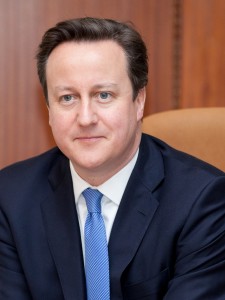
  • David Cameron – 2016 Speech on Estate Regeneration

    davidcameron

    Below is the text of the article written by David Cameron, the Prime Minister, in the Sunday Times on 10 January 2016.

    I believe we are in the middle of a turnaround decade for Britain. And it all comes back to one word: security. I want this to be the decade where we deliver the economic security that working people and British businesses need to flourish; and where our national security is preserved as we strengthen our defences and defeat the scourge of Islamist extremism for good.

    There’s another crucial dimension to our plans: social reform – bringing security to families who currently have none at all. As I said 3 months ago in Manchester, a central part of my second term agenda is to wage an all-out assault on poverty and disadvantage. And tomorrow, I will set out our plan to extend life chances across Britain, and really get to grips with the deep social problems – the blocked opportunity, poor parenting, addiction and mental health problems – that mean so many are unable to fulfil their potential.

    There’s one issue that brings together many of these social problems – and for me, epitomises both the scale of the challenge we face and the nature of state failure over decades. It’s our housing estates. Some of them, especially those built just after the war, are actually entrenching poverty in Britain – isolating and entrapping many of our families and communities. I remember campaigning in London as far back as the 1980s in bleak, high-rise buildings, where some voters lived behind padlocked and chained-up doors. In 2016, for too many places, not enough has changed.

    Of course, within these so-called sink estates, behind front doors, families build warm and welcoming homes. But step outside in the worst estates, and you’re confronted by concrete slabs dropped from on high, brutal high-rise towers and dark alleyways that are a gift to criminals and drug dealers. The police often talk about the importance of designing out crime, but these estates actually designed it in. Decades of neglect have led to gangs, ghettos and anti-social behaviour. And poverty has become entrenched, because those who could afford to move have understandably done so.

    One of the most concerning aspects of these estates is just how cut-off, self-governing and divorced from the mainstream these communities can become. In some places, there is severe social segregation, and it damages us all when communities simply don’t come into contact with one another. And that allows social problems to fester and grow unseen. The riots of 2011 didn’t emerge from within terraced streets or low-rise apartment buildings. As spatial analysis of the riots has shown, the rioters came overwhelmingly from these post-war estates. Almost 3 quarters of those convicted lived within them. That’s not a coincidence.

    As we tackle this problem, we should learn the lessons from the failed attempts to regenerate estates in the past. A raft of pointless planning rules, local politics and tenants’ concerns about whether regeneration would be done fairly all prevented progress. And if we’re honest, there often just wasn’t the political will and momentum in government to cut through all of this to get things done.

    So what’s our plan? Today I am announcing that we will work with 100 housing estates in Britain, aiming to transform them. A new Advisory Panel will help galvanise our efforts and their first job will be to build a list of post-war estates across the country that are ripe for re-development, and work with up to 100,000 residents to put together regeneration plans. For some, this will simply mean knocking them down and starting again. For others, it might mean changes to layout, upgrading facilities and improving local road and transport links.

    The panel will also establish a set of binding guarantees for tenants and homeowners so that they are protected.

    To finance this, we’ll establish a new £140 million fund that will pump-prime the planning process, temporary rehousing and early construction costs. And we’ll publish an Estates Regeneration Strategy that will sweep away the planning blockages and take new steps to reduce political and reputational risk for projects’ key decision-makers and investors.

    There’s a second critical by-product of our plan. Tomorrow a report from Savills will show that this kind of programme could help to catalyse the building of hundreds of thousands of new homes in London alone. This is because existing estates were built at a lower density than many modern developments – poorly laid-out, with wasted open space that was neither park nor garden. So regeneration will work best in areas where land values are high, because new private homes, built attractively and at a higher density, will fund the regeneration of the rest of the estate.

    For decades, sink estates – and frankly, sometimes the people who lived in them – had been seen as something simply to be managed. It’s time to be more ambitious on every level. The mission here is nothing short of social turnaround, and with massive estate regeneration, tenants protected and land unlocked for new housing all over Britain, I believe that together we can tear down anything that stands in our way.

  • John Major – 1990 Autumn Statement

    johnmajor

    Below is the text of the Autumn Statement speech made by John Major, the then Chancellor of the Exchequer, to the House of Commons on 8 November 1990. 

    The Chancellor of the Exchequer (Mr. John Major) With permission, Mr. Speaker, I should like to make a statement.

    The Cabinet agreed the Government’s expenditure plans this morning. I am, therefore, now able to inform the House of the public expenditure outturn for this year; the plans for the next three years; our proposals for national insurance contributions in 1991–92; and the forecast of economic prospects for 1991 required by the Industry Act 1975.

    As usual, the main public expenditure figures, together with the full text of the economic forecast, will be available from the Vote Office as soon as I sit down. The printed “Autumn Statement” will be published next Tuesday.

    In this survey we have had to take some tough decisions in the interests of the economy and the new plans represent a very tight settlement. But it is a settlement which is fully consistent with the Government’s commitments and channels extra resources to the areas where the need is greatest. For this, and other reasons, I should like to pay tribute to my right hon. Friend the Chief Secretary for the skill and persistence with which he has brought the survey to a successful conclusion.

    Since 1984–85, while the economy has grown by nearly 20 per cent., total public spending has risen scarcely at all in real terms. As a result, the ratio of public expenditure to national income has fallen by more than seven percentage points, the largest sustained fall for 40 years. Moreover, in the past three years large budget surpluses have enabled us to repay debt totalling £26 billion.

    Mr. Dennis Skinner (Bolsover) Not any more.

    Mr. Major We shall add to that this year.

    The main objective of economic policy at present must be to bring inflation down, but, as we do so, the short-term prospect is bound to be one of weak activity. [Interruption.] In the past, during similar periods the ratio of public spending to national income has risen strongly. On this occasion it will not.

    Planned public expenditure in the current fiscal year is now expected to be £180.6 billion, rather less than 1 per cent. above the planning total set a year ago. A large part of this extra spending is due to an increase in the financing requirements of the nationalised industries, to a surge of common agricultural policy spending on agricultural market support and to expenditure on the Gulf crisis.

    Notwithstanding this cash overrun, public expenditure remains under tight control. Inflation has been higher than forecast, but it has not been allowed to feed through fully into expenditure. As a result, the ratio of spending to national income in the current year is likely to be slightly lower than projected at the time of the Budget – virtually unchanged from the 1989–90 level.

    The decisions on public expenditure for the next three years have been taken against a more difficult world and domestic economic background than for some time. Activity at home and abroad has begun to weaken and some countries such as Canada and the United States are expected to grow very slowly indeed over the coming year. The outlook has also been complicated by events in the Gulf, with the rise in oil prices and the uncertainty that they have produced. Against that background, our new plans are designed to protect the most vulnerable groups in society against the effects of higher inflation [Interruption.] I repeat, to protect the most vulnerable groups in society and to maintain longer-term policies to improve the working of the economy.

    Mr. Robert N. Wareing (Liverpool, West Derby) rose–

    Mr. Major I shall of course give way to the hon. Gentleman when we come to questions a little later.

    But, beyond that, this is not the year for making substantial additions to plans in other areas. The priority must be to honour existing commitments, within a total for public spending that is affordable and fiscally prudent. For 1991–92, the new planning total has been set at £200 billion, a little under £8 billion more than the previously published figure. The planning totals in the following two years are £215 billion and £226 billion respectively.

    In recognition of the economic uncertainties and the risks arising from the Gulf crisis, these totals include higher reserves than last year’s plans: £3½ billion in the first year; £7 billion in the second year; and £10½ billion in the third. I believe that these increases are prudent. Our plans also incorporate an estimate of privatisation proceeds at £5½ billion a year that is in line with the average outturn in recent years.

    After taking account of inflation, the level of spending next year will be rather less than implied by last year’s plans: that is, the cash additions to the planning total do not fully compensate for the higher level of prices now expected for 1991–92. This restraint is necessary, but it means that many of my colleagues have had to drop or postpone proposals that they would otherwise have regarded as desirable.

    Nevertheless, within this total there are substantial extra resources in three main areas: health, social security and central Government support for local authority services. These additions to plans total some £7½ billion in 1991–92. It has also been possible to make improvements to other key areas including education, public transport, and the environment.

    We have also been able to make savings elsewhere, including defence. I can assure the House categorically that financial constraints will not hinder in any way the United Kingdom’s military contribution to resolving the Gulf crisis. However, the “Options for Change” announced by my right hon. Friend the Secretary of State for Defence on 25 July will produce increasing savings in the defence budget. Over the next three years the new plans provide for a real reduction in defence spending of about 6 per cent., and further reductions should be achieved in later years as my right hon. Friend’s proposals are fully implemented. For the first time in the period since World War 2, we are now able safely to plan on a defence budget that is significantly less than one tenth of all Government expenditure and falling.

    In certain other areas, we have been able to accommodate increases in expenditure by finding offsetting savings. For example, on the trade and industry and employment programmes we have made selective increases while keeping broadly to existing plans overall, and within the Home Office programme, lower prison population forecasts have enabled us to reduce the prison building programme, while considerable resources have been made available for the refurbishment of existing prisons, including Strangeways.

    In July, the Government announced extra support for local authority current spending which will add around £2½ billion to previous plans. Current spending by local authorities has substantially outstripped central Government spending over recent years. This year local authorities in England budgeted for increases of over 5 per cent. in real terms before capping. This has led to community charges which in many authorities are far higher than expected or justified.

    The additional support that we are providing for next year should enable local authorities to finance local services without sharp increases in their charges. My right hon. Friend the Secretary of State for the Environment has already announced that, if required, the Government will make vigorous use of their powers to cap high-spending authorities. I re-emphasise that.

    Nearly £3 billion has been added to the social security plans for next year. This mainly reflects the upratings already announced by my right hon. Friend the Secretary of State for Social Security which maintain in full the real value of benefits paid to 10 million pensioners and 11 million people on income-related benefits. The additions also reflect the substantial extra cost of community charge benefit which will help about one in four charge payers. My right hon. Friend was also able to announce selective increases for poorer pensioners, people in residential and nursing homes and families. These improvements will be financed within the social security programme by savings from restructuring the statutory sick pay scheme, as announced by my right hon. Friend on 24 October.

    As in previous years, the Government have also made very substantial extra provision for health. Between this year and next, spending on the national health service in the United Kingdom will rise by £3 billion, so that the real resources over and above inflation that are available for spending on health will increase by a further 5 per cent. The total real increase in health service spending since 1979 will now be nearly 50 per cent. This has enabled the NHS to employ some 8,000 more hospital doctors and dentists, and over 50,000 more nurses and, of course, to provide for more sophisticated health care than ever before. As a result, more than 1½ million more in-patient and day cases are now treated every year. In the largest sustained programme of hospital building ever seen, nearly 500 major capital schemes have been completed since 1979. The plans that I am announcing ensure that the next three years will see further improvements in services.

    Extra finance is also being provided for public transport. London Transport and British Rail have large long-term investment programmes which will enable them to extend and to upgrade the London underground and to prepare for the opening of the channel tunnel. Between them, they will spend some £¾ billion on safety alone in the next three years. The new plans also consolidate the substantial extra provision for roads that was announced last year and include measures to relieve congestion in London. Investment in public transport in the next three years will be double the level of the past three years.

    Central Government spending on education will be increased by more than £500 million next year, largely to finance the record number of students in higher education. One in five of the 18 to 19 age group will be in higher education, compared with one in eight only a decade ago. The number of higher education qualifications gained, as a proportion of the relevant age group, is higher in the United Kingdom than in Germany, France, Italy and almost every other European country.

    Following the publication of the White Paper on the environment, the new plans provide significant extra resources for environmental research and in support of environmental bodies such as the National Rivers Authority and the Countryside Commission. There is extra provision also for the Government’s programme of action on rooflessness.

    Throughout the past decade, we have sustained a high level of capital spending in the public sector. In total, it will approach £30 billion in the current year. Leaving aside defence, our new plans include an extra £1½ billion a year for investment by central Government and nationalised industries. There is also extra support for local authorities’ capital spending on schools, housing and local transport.

    Taking capital and current together, real growth in total public spending over the three survey years will be less than 2 per cent. a year – well within the trend growth of the economy. As I have said, this is a tight settlement and it means that the ratio of public spending to national income should remain stable at its present level for the next two years. Thereafter, as activity strengthens and inflation remains in check, the downward trend will be resumed.

    I now turn to national insurance contributions. As usual, the review this autumn has taken account of advice from the Government Actuary on the income and expenditure of the national insurance fund, and of the statement on benefits that was made by my right hon. Friend the Secretary of State for Social Security on 24 October.

    The lower earnings limit at which contributions begin will go up next April to £52 a week, in line with the single person’s basic pension, while the upper earnings limit will rise to £390 a week. The upper limits for the reduced employers’ rates will also be increased.

    In addition to those changes, there will be reductions in the contribution rates paid by employers. As my right hon. Friend explained in the House on 24 October, the restructuring of statutory sick pay will add modestly to employers’ costs from next April. It is right that the Exchequer should share these costs. Therefore, the main employers’ contribution rate will fall next April from 10.45 per cent. to 10.4 per cent. and each of the lower rates will be cut by 0.4 per cent. This relief through contributions will limit the impact of the statutory sick pay adjustments on employers of lower-paid workers in particular. The necessary legislation will be laid before the House. The contribution rates paid by employees and the class 4 rates paid by the self-employed will remain unchanged.

    I am publishing today the economic forecast required by the Industry Act 1975, the first since we became members of the exchange rate mechanism. I must emphasise at the outset that the Gulf crisis and its effect on world oil markets make the future unusually difficult to predict. The United Kingdom, along with other countries, has already seen some of the adverse impact on consumer price inflation. The oil price rise is likely also to contribute to the general slowdown in the world economy that was already under way before the Gulf crisis.

    For the Industry Act forecast I am following the practice of international institutions such as the International Monetary Fund and assuming some fall in oil prices from recent levels to around $25 a barrel by the end of 1991. But I must reiterate that the situation in the oil market remains very volatile.

    Despite these uncertainties, however, it is now clear that the tight United Kingdom policy stance of the past two years is bringing about an easing of domestic inflationary pressures. This will make possible both a sharp fall in retail prices index inflation next year and a strengthening of output.

    So far this year, the public sector debt repayment has been running below both last year’s outturn and our expectations at Budget time. Local authority borrowing was particularly high earlier this year as some authorities experienced delays in collecting non-domestic rates and the community charge. Public corporations’ finances have been adversely affected by the slowdown in economic activity and central Government spending has also been higher. Nevertheless, despite this, I still expect a significant debt repayment in the year as a whole of £3 billion. This amounts to ½ per cent. of GDP and represents a strong fiscal stance at this stage of the economic cycle.

    Mr. Skinner What was the right hon. Gentleman’s forecast?

    Mr. Major For the benefit of the hon. Member for Bolsover (Mr. Skinner), we have a stronger fiscal position than Germany, France, the United States and every other member of the Group of Seven, with the solitary exception of Japan.

    Thus our public finances remain strong. Given our membership of the exchange rate mechanism and the counter-inflationary strategy that we are pursuing, it is essential that they remain strong. As I made clear to the House last month, the Government remain committed to the medium-term objective of a balanced budget. That is why we have continued our firm restraint of public expenditure in the current year.

    Turning to demand and output, it is clear that growth has now slowed down sharply. GDP is forecast to grow by 1 per cent. this year. This figure is the same as the forecast I made at the time of the Budget, but the path has been slightly different, and I expect output in the second half of the year to be down on the higher than expected and projected level in the first half.

    This period of weak activity should last until early next year, after which I expect growth to resume; GDP is expected to grow by over 2 per cent. in 1991, though year-on-year growth is forecast to be only ½ per cent.

    Unemployment has been rising since the spring and may continue to rise in the months immediately ahead, but job prospects will improve with a resumption of growth, the more so if employers keep tight control of costs, including pay rises.

    Within domestic demand, growth of consumer spending has now slowed markedly from over 7 per cent. two years ago to under 3 per cent. in the first half of this year. The signs are that it will fall further over the year ahead as consumers continue to adjust to lower growth of real incomes, following the high borrowing of recent years.

    Business investment rose by an unprecedented 45 per cent. in the three years to 1989, taking investment to an historically high level as a share of GDP. It may have fallen slightly in 1990 and is expected to fall a little further next year. A modest downturn from such a high level is unsurprising; indeed, it would be extraordinary if it did not occur at this stage in the cycle. It will still leave investment over 50 per cent. higher in real terms than in 1979.

    The current account has now begun to improve markedly. With low growth of domestic demand, import volumes have shown virtually no growth over the past year and import prices have been falling in recent months as a result of the firm exchange rate. Export growth, on the other hand, has remained strong over the past year so that the United Kingdom’s share of world trade in manufactures has risen for the second year running. The deficit on visible trade has followed a welcome trend and has virtually halved since the middle of 1989. This progress has been partly offset by poor figures for invisibles in recent quarters, although in the past these have, more often than not, been revised up later – at times, substantially.

    I now expect that the current account deficit in 1990 will remain close to the forecast I made at the time of the Budget – at just over £15 billion. With domestic demand and import growth likely to stay low, I expect a considerably improved performance next year, with the deficit falling to £11 billion despite some slowdown in export growth as world trade decelerates. As a proportion of gross domestic product the deficit is expected to fall from 3¾ per cent. last year to 1¾ per cent. in 1991 – a sharp improvement.

    I am now certain that inflationary pressures have been brought firmly under control. The monetary indicators show this clearly. The growth of MO has fallen every month since April and is now considerably within its target range, while growth of the wider measure, M4, and lending have fallen sharply to 14½ per cent. and 15½ per cent. respectively. With demand and output slowing markedly over the past two years, it is clear that inflation will come down next year. The fall in the headline figure will be very sharp as the effects of the past mortgage rate rises, of the high initial level of the community charge and of recent petrol price increases cease to influence the inflation rate by the end of next year. From a peak at the current level of about 11 per cent., I expect RPI inflation to fall to around 5½ per cent. in the fourth quarter of next year.

    In summary, the plans that I have announced today honour our existing commitments and provide additional resources for key areas – notably for the health service, for pensioners and for investment. They are within an overall total we can afford and they avoid the sharp upturn in the share of expenditure in national output which has occurred at similar stages in previous economic cycles. They are, therefore, consistent with the tight fiscal and monetary policies that will lead to a falling trade deficit and to a sharp reduction in inflation. They are, in my judgment, the right policies for building on the economic achievements of the past decade and I commend them to the House.

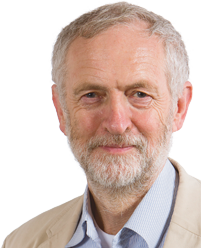
  • Jeremy Corbyn – 2015 Speech at Whittington Hospital

    jeremycorbyn

    Below is the text of the speech made by Jeremy Corbyn, the Leader of the Opposition, at Whittington Hospital on 18 December 2015.

    The NHS is facing its worst crisis since it was founded. The NHS will be over £2 billion in debt by the end of the year.

    The government is failing to meet its own targets: on A&E waiting times, cancelled operations, and cancer treatment times.

    Add in the impact of George Osborne’s social care cuts, which result in longer and needless stays in hospital, and the human consequences are all too clear.

    This week we’ve learned there are some hospitals that are so broke they are having to borrow money to buy medicines for patients and pay wages over Christmas.

    Through all this, NHS staff are doing a fantastic job and I want to thank them for their hard work, dedication and incredible professionalism.

    The Labour Party I lead will hold this government to account for their shocking failure to support and protect the world’s best health care service – our NHS.

  • Denis Healey – 1952 Maiden Speech to the House of Commons

    Below is the text of the maiden speech made by Denis Healey to the House of Commons on 14 May 1952.

    In rising to address the Committee for the first time, I am very conscious of the need for that indulgence which the Committee is accustomed to afford so generously to maiden speakers. I have noticed that long familiarity with this peculiar ritual of the maiden birth has given the Committee the somewhat clinical attitude of a midwife towards a maiden speech. But I can assure the Committee that for the initiate concerned the act of parthenogenesis is quite as painful an experience as any that he is ever likely to endure in his life. And I count myself very fortunate in enduring this agony at a time when the midwife is in a state of twilight sleep induced by an all-night Sitting the night before.

    Although I have chosen to speak on a subject which is bound to be controversial, I hope that I shall not be considered unduly partisan in anything I say, because I agree very much with the right hon. and gallant Member for Kelvin-grove (Lieut.-Colonel Elliot) that opinion on the problem of Germany is divided irrespective of party lines, and I hope I may succeed in steering a course some way between the obvious and the offensive.

    The present policy of the Western world is to prevent a third world war by deterring Soviet aggression. I suggest that this policy will not be possible if the manpower and industrial resources of Germany are lost to the Western side and become available to the Soviet side, because if that happens, the balance of world power would shift to the Soviet side, and a third world war would become inevitable.

    The Western world might lose Germany either through force or through the free choice of the German people themselves. The immediate danger, of course, is that we should lose Germany through force, and it is because of that danger that we of the Western world are committed to build up on the ground in Europe sufficient armed strength to defend Western Germany; that means very heavy burdens on us now, and I fully agree with those hon. Members who have expressed the view that sooner or later the Germans themselves must carry their share of that burden.

    But we can also lose Germany to the Western camp through the free choice of the German people themselves, and we should be very unwise indeed to underestimate that danger when we look at the history of the last 30 years from Rapallo to the German-Soviet Pact of 1939 and watch the activities of the Soviet Union with certain nationalist and right-wing German circles at the present time.

    I do not think that it is sufficiently recognised in this Committee that the destiny of Germany, now that seven years have passed since the defeat of Hitler, is certain to be decided in the last resort by the German people themselves. The victorious Powers are no longer in the position of deciding the destiny of Germany against the wishes of the German people—indeed, Western Germany alone is already, in fact although not in law, the strongest single Power on the continent of Europe—and if and when Germany is united, as in my view is certain and is desirable, Germany will once again be a world Power of the same order as Britain herself.

    The problem we face in the Western world now is not, as once it was, to ensure that Germany will never be powerful again. The time for that has gone, if it ever existed. The problem we now face is how to ensure that a Germany, which is certain to become powerful, works with the Western side by its own free choice and not with the Soviet Union. As I say, it is only the German people themselves who can make that choice.

    No one has realised that better than the Soviet Government because its recent notes, although ostensibly addressed to the Western Powers, were in fact directed to the people of Germany herself. We should be unwise also to underestimate the difficulty of keeping Germany on the Western side. National unity will soon become the over-riding aim of the Western German people, and Germany will go to the side which offers her the best chance of getting national unity on acceptable conditions, and she will leave any side which denies her the chance of unity under conditions which she considers acceptable.

    In the long run, Russia holds all the cards because it is only Russia which can give back to Germany her unity, including not only the Soviet zone but also the provinces lost to Poland. And she would not hesitate to do so if she thought she could get an agreement with Germany.

    Moreover, we have to face the additional difficulty that any agreements we make now with the Western German Government are bound to be provisional. The Germans themselves do not regard the Federal Republic as a permanent affair any more than they regard Bonn as the permanent capital of Germany. Dr. Adenauer has recently stressed this point, greatly to the dismay of the French, that any agreement accepted by Western Germany will have to be negotiated again if and when Germany becomes united, even if unity comes about under the Basic Law, because we cannot bind 70 million people to agreements which were accepted by only a majority of 47 million people.

    On the other hand, the cards which Russia holds are by no means so strong at the present time, because Western Germany is extremely conscious of its weakness and its inability to defend itself. Hatred and distrust of the Soviet Union are the dominating emotions throughout Western Germany, and for that reason the German people would not at this time accept national unity if the price of national unity were the rupture of their lifeline to the West.

    Like the right hon. and gallant Member for Kelvingrove and other hon. Members, I also visited Germany recently and had an opportunity of discussing this question with members of all German parties. I was surprised to find that there was almost unanimity between the Government and the opposition on the fact that a united Germany at this time could not afford to be neutral, nor could Germany accept unity without the guarantee of security.

    The only thing I would suggest, and on which there is disagreement in Germany, is that we should not now commit ourselves to a united Germany having security in the form of a military alliance with the West. One criticism I would make, if it is permitted to a maiden speaker, of the reply to the Soviet note is the reference to the all-German Government being allowed to make “such defensive arrangements as it wishes.” I think that we would be unwise to insist on that, if the phrase means a military alliance. If, on the other hand, it means security against the possibility of a Soviet coup or invasion, we must insist on it, and the Germans would be united in supporting us in insisting on it.

    My conclusion is that, at the present time, German unity will only be acceptable to the German people on conditions that we ourselves would be the first to insist on. Indeed, as the Foreign Secretary has already said, the Western reply to the Soviet note in insisting on these conditions has been welcomed unanimously in Western Germany.

    I am extremely glad that I should be able to make my maiden speech on a day when all the doubts created by Western policy in the last few weeks have been dispersed by the reply to the second Soviet note. There has been a great danger that the Western Powers’ reluctance to enter on a new series of Palais Rose discussions with the Russians will be interpreted in Germany as a reluctance to see Germany united again. I would say that at this moment, above all, we can afford to take the offensive on the question of German unity. We shall gain much and lose nothing by doing so.

    There has been a good deal of discussion in the Committee this afternoon about the dangers in the delay of the carrying out of E.D.C., and there is no doubt that many people are concerned lest the delays inevitably imposed by talks with the Russians on German unity will lose us what is considered to be the last chance of getting an early German defence contribution to E.D.C. Here I come on to ground which may be considered very controversial, but I assure the House I have no intention whatever of being polemic or partisan, and I hope that my contribution will be received as a sincere effort to think the problem out.

    The first point is that if it is really true, as the Foreign Secretary seemed to suggest in his speech, that public opinion is moving so rapidly against E.D.C. that unless we can get the agreement in the bag within the next 12 months we shall lose the chance for ever—if it is a question of now or never—then the agreement will be worthless even if we get it. I apologise if I have misinterpreted the Foreign Secretary’s remarks on that matter.

    The second point is that both the demand for an early German defence contribution and the agreement to treat E.D.C. as the right framework for a German defence contribution—I hope it is not impertinent to remind the Committee of this—were accepted against the will of the British Government of the day and only under very heavy pressure from our Allies.

    The decision taken by N.A.T.O. in 1950 to seek an immediate German defence contribution at a time when almost none of the European peoples wanted it, including the Germans themselves—the only exceptions were the Dutch and the Danes—would never have been taken then had it not been for very strong and insistent—and legitimate—American pressure. The agreement last September to treat the European Defence Community as the right framework for a German contribution would never have been accepted by N.A.T.O. had not our French ally said that they would not accept a German defence contribution in any other framework.

    I hope it is not impertinent to remind the Committee of that fact, because my view is that the present commitment of the Western world to E.D.C. and to an immediate German defence contribution arises out of the panic induced by Korea. It represents a false start in solving the German problem, and we should be prepared to welcome the pause imposed by events in order to get back on the right road.

    On the question of a German contribution, I believe that General Eisenhower was quite right in his immediate and instinctive response to the suggestion when he took up his command, when he said, “I do not want any unwilling soldiers under my command.” It is the case that, for whatever reasons—and for very many varied reasons—at present the majority of the German people, and the overwhelming majority of the Germans of military age, do not want a German defence contribution. Incidentally, the Western Powers have got into appalling difficulties by treating the Contractual Agreement, as the Foreign Secretary said, as a sort of bribe in order to buy unwilling German soldiers. We should have got the agreement through without the slightest difficulty if it had not been tied to the European Defence Community.

    On the other hand—I disagree with some of my hon. Friends on this point—although public opinion in Germany is at present opposed to a defence contribution, public opinion will change very rapidly and very dramatically, possibly within the next 12 months, and once the Germans want to re-arm we shall not be able to stop them even if we want to. In other words, German re-armament in the short run is impossible; in the long run it is inevitable. It is entirely a matter of timing. “Ripeness is all” in the case of the German defence contribution.

    What I suggest we should do is use the time still available to us, before the Germans want to make a defence contribution, in order to consider very seriously and quietly, and not in a panic, what framework will be best suited to contain a German defence contribution. No one can fail to recognise that, although a German defence contribution would bring great gains to the West, it would also carry very great dangers. We must choose a framework which will be strong enough and large enough to attract the Germans and to hold them for good. It is no good trying to force Germany now into a mould which she will crack when she becomes stronger.

    Last September the Western Powers agreed to use E.D.C. as the framework for a German defence contribution only because France would accept no other. However, I suggest that it is becoming quite clear that the French themselves, who were the only people who wanted it in the first place, have now lost faith in E.D.C. as a means of controlling German re-armament.

    E.D.C. can control a German defence contribution only if the non-German components are stronger than the German components. It is already evident that Western Germany alone would be stronger in E.D.C., in fact if not in form, than France, because of France’s great commitments outside Europe in Indo-China, and, indeed, stronger than all the other members of E.D.C. put together. The result is that the French are beginning to realise that E.D.C., which they first saw as an instrument to control Germany, will turn out to be an instrument by which Germany can militarily dominate Western Europe.

    In any case E.D.C. cannot offer a longterm solution to the German problem because, as Dr. Adenauer has said, when Germany is united she will have to renegotiate all the agreements which she has made, whether E.D.C. or otherwise, and it would be very dangerous if we got into a position where the importance of a German defence contribution through E.D.C., once it was set up, became such that we were compelled to oppose German unity for fear of losing that contribution under those conditions.

    There is a French proverb—I shall not try to give it in French—which says, “There is nothing which lasts like the provisional.” That proverb will not be very popular in Germany, and there is a very great danger in creating at this stage vested interests in a provisional solution which cannot possibly last into the future

    The French see only one way out of their dilemma, and that is to get Britain into E.D.C. to balance the power of Germany. But Britain cannot join E.D.C., first, because of its federal structure and secondly, because it has become a cardinal principle of British policy since the war not to accept additional commitments in Europe which might be treated by America as an excuse for reducing American commitments. That principle can be differently expressed as “We should try to avoid accepting new commitments in Europe which we cannot get the Americans to share.”

    The French are quite right in thinking that, if Germany is to be controlled in the future, Britain and America must have a hand in the controlling, but a guarantee from Britain and America to E.D.C. of such a nature as to prevent a German secession would be both impossible to frame and impossible to fulfil. There is only one way by which the French can get what they want, and that is by having Germany re-armed within the only framework in whose integrity Britain and America have a direct and vital interest, and that framework is the North Atlantic Treaty Organisation.

    I see the Foreign Secretary pursing his lips. He is right. That prospect at the moment dismays the French. But surely it is not beyond the resources of the Foreign Secretary’s diplomacy to show the French that, if they really want Britain and America involved in the longterm control of re-armed Germany, they must put Germany into the organisation in maintaining whose integrity Britain and the United States have an absolutely vital and permanent interest.

    I do not suggest that we should now invite the Germans to enter the Atlantic Pact. This is entirely a matter of timing. It will be some time before the Germans themselves want to be re-armed under any circumstances. What I suggest is that we should use that time to strengthen N.A.T.O. so that it is capable of receiving this formidable new recruit. On the other hand, we must have more N.A.T.O. troops in Europe and, in particular, more French troops; and, on the other hand, we must tighten and more closely integrate the structure of N.A.T.O. I personally would not exclude tightening the military structure of N.A.T.O. in S.H.A.P.E. on the technical lines already found practical in E.D.C. That is the only way out of the problem.

    To sum up, the problem of keeping a united Germany in the Western camp and out of the Soviet camp is the most crucial and urgent problem facing the whole of the West for many years ahead. In my opinion, in the panic following Korea, the Western Powers made a false start; but a pause is now imposed by events. It is our duty to make it creative. I am one of those who believe that the ever closer unity of the Atlantic peoples is one of the most fruitful developments of the postwar era. And I am convinced that it offers to us the one real chance of solving the perennial problem of Germany.

  • Margaret Thatcher – 1983 Statement on Falkland Islands Report

    margaretthatcher

    Below is the text of the statement made by Margaret Thatcher, the then Prime Minister, in the House of Commons on 18 January 1983.

    With permission, Mr. Speaker, I will make a statement about the report of the Falkland Islands review committee.

    The House will remember that I announced the setting up of the review committee in July 1982, after consultation with the right hon. Gentleman the Leader of the Opposition and with leading Privy Councillors in other parties. At that time I expressed the hope that the committee would be be able to complete its work within six months.

    The committee has justified that hope. I received its report on 31 December 1982, and I am presenting it to Parliament as a Command Paper this afternoon. Copies are now available in the Vote Office.

    I should like to express the Government’s gratitude to the noble Lord, Lord Franks, and to his colleagues for the amount of time and effort which they have devoted to producing such a thorough and comprehensive report in so short a time.

    The report makes it clear that the committee was provided with all the papers relevant to its terms of reference, including a comprehensive collection of reports from the intelligence agencies. The committee’s report contains a number of references to intelligence matters which would not in other circumstances be divulged. These references are essential for a full understanding of the matters into which the committee was asked to enquire, and the Government have agreed that the public interest requires that on this occasion the normal rule against public reference to the intelligence organisation or to material derived from intelligence reports should be waived.

    The Government have, however, agreed with Lord Franks amendments to certain of the references to intelligence reports with a view to minimising potential damage to British intelligence interests. Lord Franks has authorised me to tell the House that he agrees that, first, all the references to intelligence reports included in the committee’s report as submitted have been retained in the report as presented to Parliament, most of them without amendment; secondly, none of the amendments that have been made alters the sense, substance or emphasis of the reference to the intelligence report concerned, or removes anything of significance to the committee’s account of the matters referred to it or to its findings and conclusions; thirdly, apart from those agreed amendments, no other deletions or amendments have been made to the committee’s report as submitted.

    The report is unanimous and is signed by all the members of the committee without qualification. It falls into four chapters. The first gives an account of the dispute from 1965—when the issue was first brought formally to international attention by a resolution of the General Assembly of the United Nations—to May 1979.

    The second chapter covers the period from May 1979 to 19 March 1982. The third deals with the fortnight from 19 March to 2 April 1982, which included the South Georgia incident and which led up to the Argentine invasion of the Falkland Islands. The fourth and final chapter deals with the way in which the Government discharged their responsibilities in the period leading up to the invasion. There are six annexes, the first of which deals with 10 specific assertions that have been made by some who have commented on the matters in question.

    In the fourth chapter of the report—that is, the one that deals with the way Government discharged their responsibilities—the committee notes a number of points where, in its judgment, different decisions might have been taken, fuller consideration of alternative courses of action might have been advantageous, and the machinery of government could have been better used. That chapter defines and addresses itself to two crucial questions: first, could the Government have foreseen the invasion of 2 April 1982; secondly, could the Government have prevented the invasion?

    The committee emphasises that its report should be read as a whole. At this stage, therefore, I shall do no more than quote the committee’s conclusions on those two crucial questions. On the first question, whether the Government could have foreseen the invasion of 2 April, the committee’s conclusion is: In the light of this evidence, we are satisfied that the Government did not have warning of the decision to invade. The evidence of the timing of the decision taken by the Junta shows that the Government not only did not, but could not, have had earlier warning. The invasion of the Falkland Islands on 2 April could not have been foreseen. I have quoted the whole of paragraph 266.

    On the second question, whether the Government could have prevented the invasion, the committee’s conclusion, contained in the final paragraph of the report, is: Against this background we have pointed out in this Chapter where different decisions might have been taken, where fuller consideration of alternative courses of action might, in our opinion, have been advantageous, and where the machinery of Government could have been better used. But, if the British Government had acted differently in the ways we have indicated, it is impossible to judge what the impact on the Argentine Government or the implications for the course of events might have been. There is no reasonable basis for any suggestion—which would be purely hypothetical—that the invasion would have been prevented if the Government had acted in the ways indicated in our report. Taking account of these considerations, and of all the evidence we have received, we conclude that we would not be justified in attaching any criticism or blame to the present Government.

    May I finish the conclusion of the Franks Committee? It was its conclusion and has nothing to do with the Government. It said: we conclude that we would not be justified in attaching any criticism or blame to the present Government for the Argentine Junta’s decision to commit its act of unprovoked aggression in the invasion of the Falkland Islands on 2 April 1982. I have quoted in full the final paragraph of the Franks report.

    Time will, of course, be found for an early debate, and that will be discussed through the usual channels. The Government will welcome an early opportunity of discussing the matters contained in the report more thoroughly than is possible this afternoon.

  • Margaret Thatcher – 1999 Statement on General Pinochet

    margaretthatcher

    Below is the text of the statement made in the House of Lords by Baroness Margaret Thatcher on 6 July 1999.

    My Lords, my noble friend Lord Lamont has done the House a service by initiating this short debate on a matter of great importance to Britain’s reputation, to Chile’s stability and to the orderly conduct of international relations. I shall try to deal with each of those matters while seeking to avoid remarks about the case itself.

    Britain’s reputation should be of vital importance to the government of the day. Our reputation sustains our interests. The Pinochet case has sullied that reputation. Senator Pinochet came here last September as a long-standing friend of Britain. Though I shall not go into the details, I can say that without President Pinochet’s considerable practical help in 1982, many more of our servicemen would have lost their lives in the South Atlantic. The country thus owes him a great debt.

    After leaving power he was accordingly received here as an honoured guest on a number of occasions. Similarly, on 22nd September last year, when he entered Britain on a diplomatic passport charged with a special mission by the current Chilean President, he was accorded all the privileges of an ambassador, including the protection of the Metropolitan Police Diplomatic Protection Squad.

    However, some weeks later the general was arrested in hospital at dead of night, when under heavy sedation following a serious back operation. There is a widespread suspicion that there had been collusion between the British and Spanish authorities prior to the arrest, when the Chileans were not given the warning they might have expected about the imminent risk. That inhumane arrest was in any case made on the basis of an unlawful warrant. Senator Pinochet was then held for six days illegally under that warrant. Those circumstances left Britain’s reputation for loyalty and fair dealing in tatters.

    Secondly, I want to speak about the situation in Chile—this country’s oldest and truest friend in Latin America. The great majority of Chileans, even the political opponents of Senator Pinochet, feel wounded at the way we and the Spanish have treated them. They are right to do so. Until the Senator’s arrest last October, Chile had achieved three remarkable successes, all of them in large measure due to former President Pinochet.

    First, it had seen the total defeat of communism at a time when that ideology was advancing throughout the hemisphere. As Eduardo Frei, the former Christian Democrat president of Chile put it: “The military saved Chile”. Secondly, Chile has seen the establishment of a thriving, free-enterprise economy which has transformed living standards and made Chile into a model for Latin America. Thirdly, Chile is also remarkable because President Pinochet established a constitution for a return to democracy, held a plebiscite to decide whether or not he should remain in power, lost the vote (though gaining 44 per cent support), respected the result and handed over power to a democratically-elected successor.

    Chile thus enjoyed prosperity, democracy and reconciliation—until we and the Spanish arrogantly chose to interfere in her affairs. So far, the Chileans have behaved with great restraint. But we should not assume that this will continue, particularly if Senator Pinochet, who is not now in the best of health, were to die in Britain or is taken to Spain. Anything that happens then will be the direct responsibility of this Government and, in particular, of the Home Secretary.

    My final point concerns the implications of the Pinochet case for the conduct of international relations, which are essentially based on trust between nation states. This trust has now been shattered by the prospect of the courts in one country seeking the extradition of former heads of government from a second country for offences allegedly committed in a third country.

    Senator Pinochet is, of course, being victimised because the organised international Left are bent on revenge. But on his fate depends much else besides. Henceforth, all former heads of government are potentially at risk; those still in government will be inhibited from taking the right action in a crisis, because they may later appear before a foreign court to answer for it—

    Lord Carter My Lords, perhaps the noble Baroness would be kind enough to give way.

    Baroness Thatcher My Lords, I am nearly at the end of my speech.

    Lord Carter My Lords, I should just like to remind the noble Baroness that this is a timed debate and the limit for each speaker is four minutes. The noble Baroness is now in her seventh minute. I wonder whether she could now bring her remarks to a close.

    Baroness Thatcher My Lords, I am very close to the end and I very rarely take up the time of this House. It will now take me longer because the noble Lord interrupted me in the middle of a sentence.
    Henceforth, all former heads of government are potentially at risk; those still in government will be inhibited from taking the right action in a crisis, because they may later appear before a foreign court to answer for it and—this is where I was when I was interrupted—in a final ironic twist, those who do wield absolute power in their countries are highly unlikely now to relinquish it for fear of ending their days in a Spanish prison. This is a Pandora’s box which has been opened—and unless Senator Pinochet returns safely to Chile, there will be no hope of closing it.

  • Edward Heath – 2001 Personal Statement

    tedheath

    Below is the text of the personal statement made by Edward Heath in the House of Commons on 9 May 2001.


  • Clement Attlee – 1945 Humble Address after Second World War

    Clement_Attlee

    Below is the text of the speech made by Clement Attlee, the then Prime Minister, in the House of Commons on 15 August 1945.

    I beg to move, That a humble Address be presented to His Majesty as followeth: Most Gracious Sovereign, We, Your Majesty’s most dutiful and loyal subjects, the Commons of the United Kingdom of Great Britain and Northern Ireland in Parliament assembled, would humbly convey to Your Majesty our congratulations on the achievement of final victory over Your enemies. The enemy in Asia has followed the enemy in Europe into complete defeat and submission to the will of the victorious nations which have pledged themselves to free the world from aggression. We would rejoice with Your Majesty in the liberation of our fellow subjects in those lands which for more than three years have been subject to the ruthless oppression of the Japanese and in the removal of the peril of invasion from Your Dominions of Australia and New Zealand, Your Indian Empire and the eastern territories of Your Colonial Empire. We would humbly acknowledge the great debt which Your peoples owe to Your Majesty and to Your most Gracious Consort for the courage with which You have sustained them and the sympathy which You have shown them, reaffirming their love and their loyalty during the dark years in which You shared their afflictions. On this occasion of national rejoicing, we would pay especial tribute to Your Majesty’s Forces from all parts of the British Commonwealth and Empire who, fighting side by side with the Forces of Your Majesty’s Allies, have bought with their blood and toil the return of peace to the world. Nor at this time would we forget our gratitude to the Merchant Marine, the Civil Services, the Civil Defence Services and Police, and to all those who in home, office, industry or agriculture have contributed to victory. It is now our most earnest prayer that the clouds of war which have overshadowed Your Majesty’s reign will lift for ever and that the splendour of the victory which, by God’s providence we celebrate to-day, may be matched by the glory of Your peoples’ achievements in the constructive work of peace. We have just returned from giving thanks to Almighty God for the deliverance of this country from the manifold perils which have beset her so long, for the victory vouchsafed to the Forces of the United Nations against the Japanese aggressor and for the surrender of the last of our enemies. It is, I think, altogether fitting that our first action should be to express our loyalty and gratitude to the Sovereign. It is exactly three months to the day since in this House the then Prime Minister, the right hon. Gentleman opposite me, moved a Motion similar to this on the occasion of the end of the German war. In that Address to the King the House pledged its resolute support to the prosecution of the Japanese war. I imagine that few Members on that occasion thought that the end would come so soon. Few envisaged the changed conditions in which this Motion would be brought forward. We have had a General Election which has brought great alterations in the composition of this House. We have had a change of Government; but in the midst of change there are things which remain unaltered. Among those are the loyalty and devotion of the House of Commons to His Majesty. It is the glory of our democratic Constitution that the will of the people operates and that changes which, in other countries, are often effected through civil strife and bloodshed, here in this island proceed by the peaceful method of the ballot box.
    The institution of the Monarchy in this country, worked out through long years of constitutional development, protects us from many of those evils which we have seen arise in other countries. I believe that the peaceful transfer of power from one political party to another, during these last few weeks, so smoothly and with such acceptance, has been a valuable demonstration to the world of the working of real democracy. My right hon. Friend in his speech three months ago, with an eloquence which I cannot emulate, drew a picture of the position of the King as a symbol of unity not only to his subjects in these islands, but to all the many nations which are united in the British Commonwealth and Empire. He spoke with the general assent of all parties in this House and I shall not, this afternoon, attempt to traverse the ground which he covered; but in rendering our congratulations and thanks to His Majesty we pay tribute to something more than the institution of kingship.

    His Majesty the King and his gracious Consort the Queen have shared our anxieties, our tribulations and our sufferings during the war, and the shadow of bereavement has fallen on them as it has fallen on the homes of their people. The King and Queen have throughout set us an example of courage and devotion which will not be forgotten. By this, and by their sympathy, they have strengthened the bond uniting them to their people. This bond is no mere constitutional formality, but the basis of the deep affection and understanding which, I believe, have been strengthened by the experiences through which we have passed.

    However well and skilfully constitutions may be framed they depend in the last resort on the willingness and ability of human beings to make them work. Our British Constitution, in war and peace, works because the people understand it and know by long experience how to operate it. A constitutional monarchy depends for its success to a great extent on the understanding heart of the monarch. In this country we are blessed with a King who, as my right hon. Friend said, combines with an intense love of our country and all his people, a thorough appreciation of our Parliament and democratic Constitution. In the difficult times ahead I believe that the harmonious working of our Constitution, in which the people’s will is expressed by King and Parliament, will be an example of stability in a disordered world. It is, therefore, to my mind, a fortunate thing that this new Parliament, like its predecessor, should, in this Address, have the opportunity of expressing its feeling, and of giving thanks to the Sovereign.

  • Clement Attlee – 1945 Announcement of Japanese Surrender

    Clement_Attlee

    Below is the text of the speech made by Clement Attlee, the then Prime Minister, in the House of Commons on 15 August 1945.

    Mr. Speaker, at midnight last night the terms of the Japanese surrender were announced to the world. The House will, I trust, bear with me while I repeat them, for I feel that it is fit and proper that they should be for ever on record in the annals of this ancient and honourable House. They are as follow:

    “With reference to the announcement of 10th August, regarding the acceptance of the provisions of the Potsdam Declaration and the reply of the Governments of the United States, Great Britain, the Soviet Union, and China, sent by Secretary of State Byrnes on the date of 11th August, the Japanese Government has the honour to communicate to the Governments of the four Powers as follows:

    (1) His Majesty the Emperor has issued an Imperial rescript regarding Japan’s acceptance of the provisions of the Potsdam Declaration.
    (2) His Majesty the Emperor is prepared to authorise and assure the

    signature by his Government and the Imperial General Headquarters, of the necessary terms for carrying out the provisions of the Potsdam Declaration.

    (3) His Majesty is also prepared to issue his command to all military, naval, and air authorities of Japan and all the forces under their control, wherever located, to cease active operations, to surrender arms, and to issue such other orders as may be required by the Supreme Commander of the Allied Forces for the execution of the above-mentioned terms.’—(Signed) Togo.”

    Thus the long, grievous war is at an end, and peace on earth has been restored. To each of us at this time there will come many memories and thoughts; to each of us at this time there will also come the wish to pay our tributes to those who have, in a lesser or greater degree, contributed to this final and complete victory. There will be time and occasion for these, but one feeling, I am sure, predominates in all our hearts, the feeling of gratitude to Almighty God for this great mercy. I think, therefore, that the House will wish forthwith to go to the Church of St. Margaret’s to render thanks, and I propose to submit to the House a Motion to this effect a little later.

    But this departure from our time-honoured procedure involves certain alterations of Business. Instead of taking into consideration the Gracious Speech from the Throne to-day, I suggest that we should, on returning, after Mr. Speaker has read the Gracious Speech, consider an Address of Congratulation to His Majesty which I will propose. Following that, we shall ask the House to consider a Motion to alter the hours of sitting so that we may meet to-morrow at 2.15 p.m. I may say that for the present we propose to continue the arrangements which were in operation towards the end of last Session. To-morrow, after the Sessional Orders have been read and passed, the Address in reply to the Gracious Speech will be moved and seconded, and Debate will arise.

    I must also inform the House that it is the intention of the Government to propose a Motion to take the whole time of the House for Government Business, and to provide for the presentation of Government Bills only. We suggest that the Debate on the Address be adjourned about 6 p.m. to-morrow in order to consider this Motion which, but for the alteration of the arrangements, would ordinarily have been taken as the first Order that day.

    I beg to move, That this House do now attend at the Church of St. Margaret, Westminster, to give humble and reverent thanks to Almighty God on the victorious conclusion of the war.