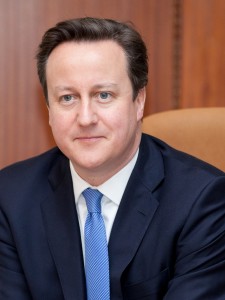
Below is the text of the speech made by Justine Greening, the International Development Secretary, on 3 December 2015.
It’s an absolute pleasure to be able to be part of this event today. It is a big celebration and this room I think is a real fitting place to hold this event.
As Lord Low has just said DFID has been on a journey. And I think the development community has been on a journey, over the last couple of years in particular, as we talked about what we wanted the successors to the Millennium Development Goals to be.
There were lots of things missing from those original goals. They were an incredible step forward but there were things missing. And one of those was the lack of really any recognition of how development fitted with disability. And that was something that we were very keen to fix. The select committee was quite right in flagging up this also as an issue.
And I wanted to start by paying tribute to Lynne Featherstone, who this time last year was the Parliamentary under-Secretary of State. Lynne did a fantastic job of really taking that starting point and starting to get us on the track where we ended up on another step today. So a big thank you to Lynne.
I would like to pay tribute also to the work of Baroness Verma and all of the work our DFID staff have done to shape what I think is this really big step forward for us in the department.
The concept of ‘Leaving no on behind’ underpins, I think, what the Sustainable Development Goals are really all about. And disability is a massive part of that. I wanted to recognise today the huge efforts of the International Disability Alliance and indeed the disability community as a whole… and not only the for the advocacy that you have done…you have done more than that – you’ve actually changed things on the ground to help get us to where we are.
But in the end this work is just starting. We’re really at the beginning of the journey. We’ve taken a decision that we need to start that journey but we’re at the beginning of it and I think we should acknowledge that.
I know for many people in this audience you are the ones that understand, perhaps more than anyone else in the development community, why this issue matters and why it is something that we should be putting at centre stage of our development work.
And we know how many people it affects, something like 80% of people with disabilities live in developing countries. And the barriers that people face aren’t just physical ones, although we know that there are many and that they are immense. But they end up being cultural ones and social barriers too.
So this is a complex set of challenges that we have to address and the consequences of not doing it means that we will have this status quo, that we have currently got, where we know that people with disabilities are more likely to be unemployed, they are less likely to get to school, in some cases they literally won’t be able to participate in life. So it is vital that we make more progress on this.
So what have we been doing? I’ll spend a little bit of time talking about what we have done over the last year. So this time last year we published this Disability Framework which set out the architecture of how we were going to look at disability and how we were going to start thinking about it within our own policy work. One year on I think we have seen some real progress and we have already started making changes. Some of them are not big changes, but they make a huge difference.
Not a particularly big change for us was to say that if we are involved in building schools then they should be able to be accessible for everyone. When you look at how much that might put up the cost it’s literally half of one percent. But it makes a transformational difference. We’re already making those changes.
In fact we’ve been working with Leonard Cheshire Disability that does fantastic work both here in the UK…and I am privileged to have some of that happen in the London Borough that I represent a part of…but also in places like Kenya and Zimbabwe where they have worked on the education agenda.
In Ghana, DFID are now working on putting in extra physicians who are particularly able to provide support to people with mental health and psychosocial impairments.
Through UK Aid Match we have been working with Sightsavers which is enabling us to do very simple operations but ones that make a transformational difference in people lives, and their broader community.
So I think we have come a long way but there is a much, much longer way to go.
So the key for us has been around not just to have disability being part of what we do – but fundamentally mainstreaming it through all of our work. So whatever project we are looking at we look at it through the lens of how can we make progress on development and disability through this particular programme. So that means coming back to looking at some of the physical, practical barriers. It also means looking at some of those broad social barriers.
We need a research agenda on this – which we are now putting in place. We need to properly understand the evidence around how we can make sure that when we’re investing we get the biggest bang for the buck and the most change. Investing in research with people like Leonard Cheshire Disability and University College London. Making sure that on a really simple basis that we are disaggregating data, not just in terms of gender, but also in terms of disability. Then we will understand how our work affects people with disabilities and how broader development work affects people with disabilities.
So we are going to be continuing to challenging ourselves to do more on this. There is a very long way to go I think. Today we are launching our new updated Disability Framework. It sets out that we will drive progress in three core areas:
One is economic empowerment. We have made big progress in DFID on jobs and livelihoods – but we really want to make sure that that has this leave no one behind element of it, and particularly in relation to people with disabilities.
On mental health, which I think just generally is something that the UK itself has been trying to get our own house in order on.
But also critically on this issue of stigma and discrimination. It is such an important area to focus on but it is complex, it’s difficult. But that doesn’t mean that we shouldn’t challenge ourselves to try and tackle some of the underlying reasons why, in spite of all the work that we might do on physical things and practical things that can help, in the end there’s a society piece of this too. So more work there – that’s the third challenge we have really set ourselves.
I want to finish by saying again thank you for contribution to the work that’s being done in the department. So many people here have contributed to where we have got to today.
But really to give you our clear assurance from a DFID perspective that we see this as a fundamental part of how we need to be looking at our development work. It is not a bolt on. It is something that we are mainstreaming throughout everything that we do. We are learning as we do that we need your help to help us go further faster over the coming years. But we’ve made a good start and I hope that is something that we can build on in the future. Thank you very much for inviting me here today.
Below is the text of the speech made by Sir Michael Wilshaw, the Chief Inspector of Ofsted, at CentreForum on 18 January 2016.
Thank you for inviting me to talk to you today.
There will be many who think your ambitions for the future of English education are too bold and too unrealistic. I am not one of them. We simply have to aim high. Unless we can compete with the best jurisdictions in the world, all our hopes for a fair, cohesive and prosperous society will come to very little.
High expectations are essential to those ambitions. As a teacher and later head in some of the toughest parts of London, I had high expectations for each and every child in every classroom.
As I look back, I am proud to say that many of them lived up to those expectations. Most of my former pupils went on to lead successful lives, even though many came from poor backgrounds with limited experience of success. I was as proud of the student from a troubled family who started his own plumbing business as I was of the former pupil who ended up as the first black president of the Oxford Union.
The youngsters in schools that I led did well because we exploited their different talents and provided them with different pathways to success. A great all-ability school ensures that those with potential can be surgeons as well as nurses, architects as well as joiners, technocrats as well as technicians.
The great comprehensive school headteacher knows that a ‘one size fits all’ model of secondary education will never deliver the range of success that their youngsters need.
Some of our international competitors understand this probably better than we do.
Their education systems are more flexible than ours and are much more geared to aligning the potential of the student with the needs of their economies. As a result, countries with excellent academic and technical routes have far lower youth unemployment than we do. Despite 6 years of economic recovery and falling unemployment, youth unemployment in the UK still stands at 12%. In Germany it is 7% and in Switzerland 3.7%.
If our neighbours understand this, why don’t we? Surely we have got to understand that rebalancing our economy means rebalancing our education system as well – a point I’ll elaborate on later.
As Chief Inspector I have high ambitions for every child and every classroom in the country. Every child – not just those who are easy to teach – and every classroom – not just those in prosperous or urban communities.
All improvement is incremental. We know that. And the targets that CentreForum has set will take time to achieve. But setting the course and being clear about the destination are essential if standards are to improve.
You are right to emphasise the importance of a good early years education and mastery of English and maths at primary. If 85% of pupils manage to achieve at least a 4b at Key Stage 2 by 2025, then your expectations for three quarters of our young people to achieve good outcomes at 16 by 2030 should be perfectly feasible.
But what of the quarter to a third of youngsters who cannot achieve those challenging targets? What is to become of them? Even when I was head at Mossbourne Academy in Hackney, which had a great academic reputation, 20% of youngsters failed to reach our targets. Most of them went to a local FE [further education] college, usually a large, impersonal and amorphous institution, and did badly.
As somebody who was motivated by moral purpose, I always felt that I was letting down a significant number of good children who deserved better. Talk to any good secondary head and they would say much the same.
Yes, our ambitions should be bold. But they should be inclusive too. Our responsibilities as educators do not end when students fail to attain our targets. On the contrary, the written off and the ‘failed’ need our help most and we should never forget it.
Our ambition has to be broad if we are to ensure a step change in educational achievement. And it has to be deep. Vaulting ambition cannot succeed if its foundations are shallow. But I’m afraid our foundations in some areas are very shallow indeed. We do not have enough good leaders. We do not have enough good governors. And struggling schools in many areas of the country are finding it extremely difficult to get the good teachers they need.
Reform requires reformers and in many places we simply lack the talented people necessary to make progress happen. We are facing real capacity issues that need to be addressed urgently if we are to maintain our current performance, let alone the accelerated improvement demanded by CentreForum.
Improvements
The start of a new year, however, is a time for optimism. And even though the challenges before us are great, we have much to be optimistic about. We have a far better education system than we did when I first became a head 30 years ago.
People forget how bad things were in the miserable decades of the 1970s, ’80s and ’90s. They forget how many children were failed by political neglect, misguided ideologies, weak accountability and low expectations. They forget how local authorities failed to challenge and support headteachers. They forget how much they conceded to vested interests and how infrequently they championed the rights of children to a decent education.
Before we steel ourselves for the challenges ahead, we should remember how far we have come. Before critics disparage our schools, they should recall our recent history. Ambition has to be sustained by hope. And it’s a lot easier to hope if we remember that standards have improved, and can improve further.
Across the country as a whole, nearly a million and a half more children are in good or better schools than were 5 years ago. The proportion of newly qualified teachers with good degrees has never been higher, while the proportion of the poorest pupils going to university has increased from an eighth to a fifth in a decade.
The most dramatic turnaround, as your report notes, has been in our primary schools. Primary schools are getting the basics right. Literacy and numeracy are much improved. There has been a steady rise in performance at Key Stage 2 – the results last year are the highest on record. And although much work needs to be done, primary schools have succeeded in narrowing the gap between disadvantaged pupils and their better-off peers. So I have every confidence, on the basis of what we know about primary schools, that your targets of 85% of children achieving a level 4B in reading, writing and mathematics will, again, be entirely feasible by 2025.
Ofsted’s greater challenge to the system has helped to bring about some of these improvements. The abolition of the satisfactory judgement and its replacement with ‘requires improvement’ signalled that the inspectorate would no longer accept mediocrity. I also believe that our new proportionate inspections of good schools, the end of inspections by third-party contractors and the recruitment of thousands of serving school leaders as inspectors have helped to refine and improve Ofsted’s oversight.
But for all these improvements, we would be deluding ourselves if we thought the battle to raise standards had been won. There is still much more to do. There can be no let up on educational reform because our international competitors are improving at a faster rate than we are.
There are many challenges facing our education system but 3 are acute:
– the gains made by children in primary schools are often lost in secondaries
– a disproportionate amount of that underperformance is in the North and the Midlands
– educational provision, for the many children who do not succeed at 16 or who would prefer an alternative to higher education, is inadequate at best and non-existent at worst
Stalling secondary schools
As I said earlier, the improvements in primary education have been significant and widespread. Sadly, they are not sustained in many secondary schools. Things often go badly wrong at the very start of Key Stage 3.
Poor transition, poor literacy and numeracy, a lack of monitoring and poor teaching, particularly in foundation subjects, fail to prepare children for exams at Key Stage 4. Widespread, low-level disruption adds to the problem. It means that in many secondaries almost an hour of learning is lost each day because of poor behaviour. Quite frankly the culture of too many of our secondary schools is just not good enough. Instead of fostering a climate of scholarship and deep learning, inspectors see too many secondary schools with noisy corridors, lippy children and sullen classrooms. This, perhaps, explains why the caricatures of comprehensive secondary education are still well embedded in our media and popular culture.
It is no surprise then that 45% of our youngsters fail to achieve the benchmark GCSE grades, and just under 1 in 4 succeeds at EBacc. Yes, more disadvantaged and state school pupils now go to university than ever before. But disproportionately few of them go to our top universities.
According to the Office for Fair Access, teenagers from the richest 20% of families are 6 times more likely to go to the most selective universities than youngsters from the most disadvantaged 40% of families.
The fate of the most able pupils in non-selective schools is particularly depressing. Some 60,000 youngsters who achieved the top levels at Key Stage 2 did not achieve an A or A* in English and maths 5 years later. Indeed, only a quarter achieved a B grade.
According to the Sutton Trust, 7,000 children a year who were in the top 10% nationally at age 11 were not in the top 25% at GCSE 5 years later. These youngsters are drawn disproportionately from the white working class.
One stark fact probably sums up our under-performance at secondary more than any other: the gap in attainment between free school meal students and their peers has barely shifted in a decade.
Unless we raise the performance of disadvantaged pupils in general, and the white working class in particular, we won’t achieve the targets that you’ve set out in your paper.
The North and the Midlands
As I pointed out in my last Annual Report, a disproportionate amount of secondary schools that are less than good are in the North and the Midlands. One in three secondaries in these regions is not good enough. Of the 16 local authorities with the poorest performing secondary schools, 13 are in the North and the Midlands.
It is no coincidence that these regions also account for the largest proportion of schools with behaviour and leadership problems. Three quarters of secondary schools judged inadequate for behaviour and for leadership were in the North and the Midlands.
Let me give you a sense of the scale of the challenge facing us. In 2015, in some of our biggest towns and cities in the North and the Midlands, less than half of our young people achieved 5 good GCSEs.
In Liverpool it was 48%. In Manchester it was 46%, in Bradford 45%, in Blackpool 42%. And in Knowsley, a local authority area without a single good secondary school, only 37% of young people achieved 5 A* to C grades in English and maths.
CentreForum has set ambitious targets for English schools to meet at Key Stage 4. It is going to be a challenge for the average performing school’s students to reach the new minimum acceptable grade 5, assessed between the present C and B grade. How much harder will it be for children in struggling schools, disproportionately concentrated in the North and the Midlands, to reach them from such a low base?
Left behind at 16
No area of the country, however, can really claim to succeed when it comes to provision for those youngsters who do not do well at 16. Nor can we say that we are really delivering high-quality vocational education to youngsters of all abilities who would prefer to take this route.
The statistics show that those who fail to achieve the required grades in maths and English at 16 make little or no progress in FE colleges 2 years later. The 16-19 Study Programme is yet to make an impact on these success rates.
Preparation for employment remains poor and careers guidance in both schools and colleges is uniformly weak.
But my goodness, the country needs these youngsters. Fifty years ago John Newsom warned that by failing them we beggared ourselves. “Half our future”, he pointed out, is in these young people’s hands. We cannot continue to fail half our future. Yet in the intervening half century, what has changed?
Nine out of 10 employers, according to the British Chambers of Commerce, say school leavers are not ready for employment. Six out of 10 firms say the skills gap is getting worse. Leading industrialists like Sir James Dyson complain that they cannot find the skilled workers their businesses need to grow.
Our system is adept at guiding students into higher education. But it still struggles, despite the recent focus on apprenticeships, to inform them about alternatives to university. We simply have to improve the quality of our technical provision and present it as a valid educational path if we are to equip youngsters with the skills they need and employers want.
I can almost sense eyes glazing over when I say this. For over 50 years, I’ve heard so many people bemoan the fact that vocational education is not good enough. So at the risk of switching you off, I’m going to say it again. It is a moral imperative as well as an economic one that we do something now to change direction. We must all make sure that the ambitious programme for apprenticeships does not prove to be another false dawn. And, even more importantly, that the school system prepares youngsters for these apprenticeship places.
This does not mean diluting a strong core curriculum. There should be no trade-off between the quality of academic studies and the pursuit of specialist vocational provision and training.
So I applaud CentreForum’s bold aims for English education. There is no good reason why the vast majority of pupils shouldn’t have mastered basic maths and English at primary and a Grade 5 at GCSE.
However, we should never forget the minority who will never do so, nor the larger number who may pass but who do not wish to pursue a wholly academic path. They too deserve an education worthy of the name. The country cannot continue to fail half its future.
What is to be done?
Yes – the challenges facing our secondary schools and colleges in particular are immense. But these challenges can be met. CentreForum has highlighted how a number of schools are bucking the trend and are succeeding. They show what is possible with great leadership and great teaching.
Yet individual success stories also show how daunting the task is. They stand out because they are so atypical. The question is, how can we scale up improvement? How can individual success be replicated across the board?
Even if we have an answer to that, there is another pressing issue. How can we ensure that we have capacity in the system to bring about essential improvements? Because without the right people to make it happen, our dreams will remain just that.
We need to improve 3 things:
– accountability and oversight
– the way schools of all types work together
– leadership, and the leadership of teaching in particular
Accountability and oversight
For a start, we will struggle to embed reform if oversight remains confused and inconsistent. I have long argued for a middle tier to oversee school performance and intervene where necessary. So the government’s decision to introduce Regional Schools Commissioners to oversee academies is one I support. Unfortunately, their roles and how they fit with other accountability bodies isn’t always clear.
Ofsted is charged with inspecting all schools and colleges. The Education Funding Agency not only funds schools but also intervenes when decline occurs. Individual multi-academy trusts have their own oversight arrangements and then there are local authorities. The latter complain they lack any influence over academies, even though they are still responsible for ensuring all children in their area are safe and receive a suitable standard of education. It is a patchwork of accountability rather than the seamless cover we need.
At the moment, we have a confusing and ill-defined system of oversight and intervention. Problems, inevitably, are shuffled between various agencies. This isn’t fair on parents and it certainly isn’t fair on schools. A symptom of that confusion has been a more than doubling of complaints to Ofsted about schools in the last 3 years. The danger is that only those able to navigate this accountability maze will have their concerns addressed.
Governance, too, is an issue. Three years ago I argued that school governing bodies needed to be far more professional. In that time, not a lot has changed. We need governors chosen for the skills they bring to a school, not because they represent a certain faction. We need governors who will hold schools properly to account, not who are largely concerned with furthering vested interests. And if that means paying for expertise, then we should consider paying them.
As we all know, the key to school improvement is early intervention. But can we realistically expect commissioners, with their current resources, to gather the necessary intelligence on the increasing number of schools under their control? Will they be able to step in when it matters most?
Now, I am not going to argue for the return of all schools to local authority control, far from it. The rot set in in large parts of our education system because local authorities allowed too many schools to decay over many years. But it would greatly simplify matters if all schools were held to account in the same way.
I have no doubt that commissioners will grow into their roles and my regional directors will continue to work alongside them. But, I think we are going to need something more if we are to bring about the kind of improvement we have seen in London.
We need powerful political figures who feel responsible to local people for the performance of local schools. Mayors like Robin Wales and Jules Pipe in London, who see it as their personal responsibility to improve underperforming schools in east London, with impressive results.
Obviously, it is a matter for government whether the recent drive to devolve powers locally should include education. But, even without more formal powers, shouldn’t local politicians take more responsibility for education and expect more of their schools?
Improvement across such a complex system needs strong leadership that is aware of local weaknesses and isn’t afraid to confront vested interests. In such a complex system, parents need clarity about who will stand up for them and their children. In such a complex system, someone with local knowledge needs to ensure that there are good schools for all, not just for those lucky enough to live in the right postcodes.
It can be done. Improvements in London are beginning to radiate across the capital and into surrounding areas as schools and politicians set higher and higher expectations. London has become a nursery for success. I know of outstanding headteachers who have chosen to leave the capital and work further afield.
If it can happen in London, it can happen elsewhere. But it won’t happen by accident or committee. Local politicians in Manchester, Newcastle, Liverpool and Leeds now need to provide the leadership and drive regardless of the powers bequeathed by Whitehall.
A truly comprehensive system
The second issue we have to address is the lingering damage caused by the botched reform of our schools in the ’60s and ’70s. Let me say straightaway that I am not going to argue for selection or a return to grammar schools. But the ideologues who drove the comprehensive agenda confused equality with equity. They took it to mean that one size should fit all.
As a consequence, there was a wholesale dumbing down of standards. It meant aggressive anti-elitism. It meant glittering prizes for all, whether merited or not. It meant scorning attempts to celebrate excellence. It meant paying scant regard to literacy, numeracy and good behaviour. It meant the erosion of headteacher authority by militant unionism.
For those who can’t remember those times, look up the history of Highbury Grove, or Holland Park or Hackney Downs to see what can go badly wrong in schools more interested in ideological conformity than educational excellence. Look up the initiatives that encrusted schools like useless barnacles, such as the SMILE maths programme, which encouraged children to amble up to the filing cabinet, pick out their worksheet and learn at their own speed.
I’m pleased to say that much of that nonsense has gone. There is now a growing awareness of the needs of different pupils. However, as I said at the beginning, the one-size-fits-all approach still lets down far too many, particularly at both ends of the ability spectrum. The most able are not being stretched. The options for those who struggle are limited. And too few children have access to a curriculum that prepares them for the workplace.
There is another, unremarked disadvantage to many comprehensive schools. They expect teachers to do too many things. Some teachers are good at teaching able students; others are better with youngsters with special educational needs. Teachers, like everyone else, are rarely good at everything. Yet many comprehensives treat them as if they are. In smaller secondaries, with limited numbers of staff, they have no choice but to do this.
Teachers may be required to teach a high-flying sixth form group in one lesson and a low-ability Year 7 group in the next. On top of this, they are expected to be pastoral tutors, behaviour experts, playground patrollers and outreach workers. It’s no wonder they become exhausted. It isn’t good for them, the students or the school.
We have a real opportunity to put this right. The raising of the participation age to 18, the increased freedoms offered to school leaders, the incentives for schools to collaborate within academy trusts provide us with a once-in-a-generation opportunity to create a smarter comprehensive system, without the need for more legislation or further structural change.
Let me explain what I mean. If I were running a group of schools, I would include both primaries and secondaries. I would make sure the primary schools were either working closely with local nurseries or taking children from the age of 2 into on-site early years provision. I would work with local health visitors to make sure disadvantaged 2 year olds were taking available places.
I would make sure the secondary schools learnt from what is working well at primary. I would make sure the different phases worked together to understand and track pupil progress. And I would appoint a heavy-hitting senior leader to track free school meal pupils from one phase to the next.
I would include in my federation a 14-19 university technical college that would admit youngsters across the ability range to focus on apprenticeships at levels 4, 3 and 2. It would not be a dumping ground for the disaffected and cater just for the lower-ability youngsters.
Careers advice across the federation would be a priority, with a real focus on Year 9 to ensure that each student, at the end of Key Stage 3, had a clear sense of the different pathways in front of them.
In my ideal federation, English, maths and science teachers would be contracted to work in the partnership and would be obliged to move across the different schools in the consortium. I would encourage extensive business and school links and introduce salary incentives to attract the best leaders to work in the more complex and challenging institutions.
Working in this joined-up way across phases and school types would have 3 powerful effects. First, youngsters would be able to transfer across institutions in the cluster and access high-level academic and technical study.
Second, teachers would have better opportunities for increased specialisation and professional development.
Third, if done transparently and effectively, such federations would allow improvements to cascade through the system because they would be implemented across the organisation and not left to individual schools.
Let me be clear – what I would want to offer is not selection at 14 but maximum opportunity at 14. Above all, I would want all routes through the federation to have equal prestige in the eyes of pupils, teachers and parents.
School leadership
As I said earlier, creating a federation like that would not require legislation or massive structural change. But it would require leadership, imagination and courage. Leadership is the third aspect of the system that I believe is crucial for wide-ranging school improvement. So we have to ask ourselves – do we have enough people with the right skills? And if we don’t – what are we going to do about it?
This isn’t just a question of raw numbers. It is also about the need to identify talented individuals and incentivize them to move to the schools that need them most. As we move to a much more autonomous system, with so much depending on appointing people who know how to use the freedoms given to them, it is vital that we do more to nurture leadership.
All our evidence shows that it is good leadership that makes the biggest difference to school standards. Yet, many areas of the country, especially those with a disproportionate amount of poorly performing schools, simply do not have access to the calibre of leadership required. What’s worse, there is no reliable regional data to highlight what the local situation really is.
Our inspections of the weakest academy chains show that they have the same problems as weak local authorities – poor governance, confusing lines of responsibility, insufficient monitoring and inadequate intervention.
More and more responsibility now rests with chief executives of academy trusts. Yet how many programmes are there to train them in best practice? How are we making sure we identify potential leaders at an early stage of their careers? How are we incentivising them? What programmes are in place to support them? Far too few, I fear.
No organisation in the private sector would have such a haphazard approach to leadership training. Indeed, it’s hard to believe any other service in the public sector has such a laissez-faire attitude to career development. Can you imagine a trainee medic not being aware of the ladder they have to climb if they wish to progress and the training necessary for it? But that is the state of affairs confronting our young teachers.
You highlight in your paper a number of schools that are already achieving your targets. I know many of the headteachers of these schools well. The reason they are good is because they learnt their craft working with successful heads elsewhere. This model needs to be developed nationally. Leaving it to the market will not do. We can’t leave it, for example, to a mediocre academy chain with a paucity of good leaders to model excellent practice from which others can learn. It needs a national programme, bought into by everyone and which harnesses the support of the best heads in the land.
There are, of course, admirable leadership programmes set up by charities such as Future Leaders. But they are too small and piecemeal to address the entire problem. If we are to meet the targets you have set for 2030, we have to expand the best practice you have identified in a few schools across the whole country. If we are to improve our secondary schools we must beef up our leadership programmes. That requires joined-up thinking. It requires a far more strategic approach to leadership training.
Conclusion
I hope it is clear that I am not offering a counsel of despair but a call to arms. I share your ambitions for a step change in the quality of English education. But this will only happen if we address the confusion around school accountability, if we encourage schools of all types to work together in tight partnerships and federations. Most of all, we must stop paying lip service to improving vocational education and get on and do it.
It means we need national politicians to step up to the plate and we need local politicians to take more responsibility for education standards in their area. It means we need joined-up accountability and school partnerships that cater for the needs of all pupils. And it means identifying and developing the next generation of school leaders so that they can create the conditions in which teachers can thrive.
We are right to be ambitious. The conditions are there. We need to act now and we need to act together, because history will not forgive us if we let this moment pass.
Below is the text of the statement made by Iain Duncan Smith, the then Leader of the Opposition, in the House of Commons on 18 March 2003.
The House and the whole country rightly recognise that we are soon likely to be at war. It is a solemn moment in the life of our nation, and our first thoughts and prayers today must be with our troops and their families as they prepare for action. The Opposition recognise the heavy responsibility that the Prime Minister and the Government have to bear. I remind the House that the Prime Minister’s decision comes at the end of 12 years of what was too often indecision by the international community.
I make it clear from the outset that the official Opposition will vote tonight in the same Lobby as the Government. In saying that, I recognise that there are honestly felt and genuinely carried differences of view on both sides of the House about further military action in Iraq. I respect those unreservedly, wherever they are held, and I recognise that they reflect strong differences of view that are felt throughout the country. However, given the differences and the difficulties that they have posed for the Government in general and for the Prime Minister in particular, I say frankly to the House that the official Opposition could somehow have sought to manoeuvre themselves into the No Lobby tonight. After all, we have argued consistently that Ministers have failed to convince the public of their case, and we have sought to hold the Government to account in the House for their mistakes. In particular, we have also pointed out the failures with regard to the humanitarian consequences of war. However, I believe that when the Government do the right thing by the British people, they deserve the support of the House, and particularly of the main Opposition.
Certain issues need to be taken head-on today. The idea that this action would become a recruiting sergeant for others to come to the colours of those who are “anti” any nation in the west is, I am afraid, nonsense. The biggest recruiting sergeant of all has been indecision, and the failure to take action to show that such resolve matters.
There are well-held views that I have respect for, but as I said, we could have sought a way to do something that would have damaged the Government. I understand that the Liberal Democrats will do just that tonight. They are, of course, entitled to their view, but I simply say this to them. One can argue that further military action by our armed forces would be illegal, or that it should be supported. But a political party surely cannot simultaneously argue that military action is illegal but should none the less be supported somehow. Yet that, we gather, is what the Liberal Democrats plan to put as their main case tonight. What is clear is that one cannot have it both ways; one has to make a decision and lead.
We are voting tonight in support of the motion not because we endorse every detail of the Prime Minister’s handling of the matter, certainly not because we are eager for conflict—as the House knows, I served in the armed forces, and I have some knowledge of the horror of the aftermath of conflict—and not just because we want to show our support for our troops. That said, I believe firmly that, as the Prime Minister says, they are entitled to our full support today.
Saddam Hussein is a tyrant who tortures and murders his own people. He poses a threat to the safety and stability of the middle east, and he is in complete breach of his obligations to the United Nations and to the international community. However, the main reason why we will be voting for the motion is that it is in the British national interest. Saddam Hussein has the means, the mentality and the motive to pose a direct threat to our national security. That is why we will be voting tonight to do the right thing by our troops and the British people.
Below is the text of the statement made by Tony Blair, the then Prime Minister, in the House of Commons on 18 March 2003.
I beg to move,
That this House notes its decisions of 25th November 2002 and 26th February 2003 to endorse UN Security Council Resolution 1441; recognises that Iraq’s weapons of mass destruction and long range missiles, and its continuing non-compliance with Security Council Resolutions, pose a threat to international peace and security; notes that in the 130 days since Resolution 1441 was adopted Iraq has not co-operated actively, unconditionally and immediately with the weapons inspectors, and has rejected the final opportunity to comply and is in further material breach of its obligations under successive mandatory UN Security Council Resolutions; regrets that despite sustained diplomatic effort by Her Majesty’s Government it has not proved possible to secure a second Resolution in the UN because one Permanent Member of the Security Council made plain in public its intention to use its veto whatever the circumstances; notes the opinion of the Attorney General that, Iraq having failed to comply and Iraq being at the time of Resolution 1441 and continuing to be in material breach, the authority to use force under Resolution 678 has revived and so continues today; believes that the United Kingdom must uphold the authority of the United Nations as set out in Resolution 1441 and many Resolutions preceding it, and therefore supports the decision of Her Majesty’s Government that the United Kingdom should use all means necessary to ensure the disarmament of Iraq’s weapons of mass destruction; offers wholehearted support to the men and women of Her Majesty’s Armed Forces now on duty in the Middle East; in the event of military operations requires that, on an urgent basis, the United Kingdom should seek a new Security Council Resolution that would affirm Iraq’s territorial integrity, ensure rapid delivery of humanitarian relief, allow for the earliest possible lifting of UN sanctions, an international reconstruction programme, and the use of all oil revenues for the benefit of the Iraqi people and endorse an appropriate post-conflict administration for Iraq, leading to a representative government which upholds human rights and the rule of law for all Iraqis; and also welcomes the imminent publication of the Quartet’s roadmap as a significant step to bringing a just and lasting peace settlement between Israelis and Palestinians and for the wider Middle East region, and endorses the role of Her Majesty’s Government in actively working for peace between Israel and Palestine.
At the outset, I say that it is right that the House debate this issue and pass judgment. That is the democracy that is our right, but that others struggle for in vain. Again, I say that I do not disrespect the views in opposition to mine. This is a tough choice indeed, but it is also a stark one: to stand British troops down now and turn back, or to hold firm to the course that we have set. I believe passionately that we must hold firm to that course. The question most often posed is not “Why does it matter?” but “Why does it matter so much?” Here we are, the Government, with their most serious test, their majority at risk, the first Cabinet resignation over an issue of policy, the main parties internally divided, people who agree on everything else—[Hon. Members: “The main parties?”] Ah, yes, of course. The Liberal Democrats—unified, as ever, in opportunism and error. [Interruption.]
The country and the Parliament reflect each other. This is a debate that, as time has gone on, has become less bitter but no less grave. So why does it matter so much? Because the outcome of this issue will now determine more than the fate of the Iraqi regime and more than the future of the Iraqi people who have been brutalised by Saddam for so long, important though those issues are. It will determine the way in which Britain and the world confront the central security threat of the 21st century, the development of the United Nations, the relationship between Europe and the United States, the relations within the European Union and the way in which the United States engages with the rest of the world. So it could hardly be more important. It will determine the pattern of international politics for the next generation.
First, let us recap the history of Iraq and weapons of mass destruction. In April 1991, after the Gulf war, Iraq was given 15 days to provide a full and final declaration of all its weapons of mass destruction. Saddam had used the weapons against Iran and against his own people, causing thousands of deaths. He had had plans to use them against allied forces. It became clear, after the Gulf war, that Iraq’s WMD ambitions were far more extensive than had hitherto been thought. So the issue was identified by the United Nations at that time as one for urgent remedy. UNSCOM, the weapons inspection team, was set up. It was expected to complete its task, following the declaration, at the end of April 1991. The declaration, when it came, was false: a blanket denial of the programme, other than in a very tentative form. And so the 12-year game began.
The inspectors probed. Finally, in March 1992, Iraq admitted that it had previously undeclared weapons of mass destruction, but it said that it had destroyed them. It gave another full and final declaration. Again the inspectors probed. In October 1994, Iraq stopped co-operating with the weapons inspectors altogether. Military action was threatened. Inspections resumed. In March 1996, in an effort to rid Iraq of the inspectors, a further full and final declaration of WMD was made. By July 1996, however, Iraq was forced to admit that declaration, too, was false.
In August, it provided yet another full and final declaration. Then, a week later, Saddam’s son-in-law, Hussein Kamal, defected to Jordan. He disclosed a far more extensive biological weapons programme and, for the first time, said that Iraq had weaponised the programme—something that Saddam had always strenuously denied. All this had been happening while the inspectors were in Iraq.
Kamal also revealed Iraq’s crash programme to produce a nuclear weapon in the 1990s. Iraq was then forced to release documents that showed just how extensive those programmes were. In November 1996, Jordan intercepted prohibited components for missiles that could be used for weapons of mass destruction. Then a further “full and final declaration” was made. That, too, turned out to be false.
In June 1997, inspectors were barred from specific sites. In September 1997, lo and behold, yet another “full and final declaration” was made—also false. Meanwhile, the inspectors discovered VX nerve agent production equipment, the existence of which had always been denied by the Iraqis.
In October 1997, the United States and the United Kingdom threatened military action if Iraq refused to comply with the inspectors. Finally, under threat of action in February 1998, Kofi Annan went to Baghdad and negotiated a memorandum with Saddam to allow inspections to continue. They did continue, for a few months. In August, co-operation was suspended.
In December, the inspectors left. Their final report is a withering indictment of Saddam’s lies, deception and obstruction, with large quantities of weapons of mass destruction unaccounted for. Then, in December 1998, the US and the UK undertook Desert Fox, a targeted bombing campaign to degrade as much of the Iraqi WMD facility as we could.
In 1999, a new inspection team, UNMOVIC, was set up. Saddam refused to allow those inspectors even to enter Iraq. So there they stayed, in limbo, until, after resolution 1441 last November, they were allowed to return.
That is the history—and what is the claim of Saddam today? Why, exactly the same as before: that he has no weapons of mass destruction. Indeed, we are asked to believe that after seven years of obstruction and non-compliance, finally resulting in the inspectors’ leaving in 1998—seven years in which he hid his programme and built it up, even when the inspectors were there in Iraq—when they had left, he voluntarily decided to do what he had consistently refused to do under coercion.
When the inspectors left in 1998, they left unaccounted for 10,000 litres of anthrax; a far-reaching VX nerve agent programme; up to 6,500 chemical munitions; at least 80 tonnes of mustard gas, and possibly more than 10 times that amount; unquantifiable amounts of sarin, botulinum toxin and a host of other biological poisons; and an entire Scud missile programme. We are asked now seriously to accept that in the last few years—contrary to all history, contrary to all intelligence—Saddam decided unilaterally to destroy those weapons. I say that such a claim is palpably absurd.
Resolution 1441 is very clear. It lays down a final opportunity for Saddam to disarm. It rehearses the fact that he has for years been in material breach of 17 UN resolutions. It says that this time compliance must be full, unconditional and immediate, the first step being a full and final declaration of all weapons of mass destruction to be given on 8 December last year.
I will not go through all the events since then, as the House is familiar with them, but this much is accepted by all members of the UN Security Council: the 8 December declaration is false. That in itself, incidentally, is a material breach. Iraq has taken some steps in co-operation, but no one disputes that it is not fully co-operating. Iraq continues to deny that it has any weapons of mass destruction, although no serious intelligence service anywhere in the world believes it.
On 7 March, the inspectors published a remarkable document. It is 173 pages long, and details all the unanswered questions about Iraq’s weapons of mass destruction. It lists 29 different areas in which the inspectors have been unable to obtain information. On VX, for example, it says:
“Documentation available to UNMOVIC suggests that Iraq at least had had far reaching plans to weaponise VX”.
On mustard gas, it says:
“Mustard constituted an important part . . . of Iraq’s CW arsenal . . . 550 mustard filled shells and up to 450 mustard filled aerial bombs unaccounted for . . . additional uncertainty”
with respect to over 6,500 aerial bombs,
“corresponding to approximately 1,000 tonnes of agent, predominantly mustard.”
On biological weapons, the inspectors’ report states:
“Based on unaccounted for growth media, Iraq’s potential production of anthrax could have been in the range of about 15,000 to 25,000 litres . . . Based on all the available evidence, the strong presumption is that about 10,000 litres of anthrax was not destroyed and may still exist.”
On that basis, I simply say to the House that, had we meant what we said in resolution 1441, the Security Council should have convened and condemned Iraq as in material breach. What is perfectly clear is that Saddam is playing the same old games in the same old way. Yes, there are minor concessions, but there has been no fundamental change of heart or mind.
However, after 7 March, the inspectors said that there was at least some co-operation, and the world rightly hesitated over war. Let me now describe to the House what then took place.
We therefore approached a second resolution in this way. As I said, we could have asked for the second resolution then and there, because it was justified. Instead, we laid down an ultimatum calling upon Saddam to come into line with resolution 1441, or be in material breach. That is not an unreasonable proposition, given the history, but still countries hesitated. They asked, “How do we judge what is full co-operation?”
So we then worked on a further compromise. We consulted the inspectors and drew up five tests, based on the document that they published on 7 March. Those tests included allowing interviews with 30 scientists to be held outside Iraq, and releasing details of the production of the anthrax, or at least of the documentation showing what had happened to it. The inspectors added another test: that Saddam should publicly call on Iraqis to co-operate with them.
So we constructed this framework: that Saddam should be given a specified time to fulfil all six tests to show full co-operation; and that, if he did so, the inspectors could then set out a forward work programme that would extend over a period of time to make sure that disarmament happened. However, if Saddam failed to meet those tests to judge compliance, action would follow.
So there were clear benchmarks, plus a clear ultimatum. Again, I defy anyone to describe that as an unreasonable proposition.
Last Monday, we were getting very close with it. We very nearly had the majority agreement. If I might, I should particularly like to thank the President of Chile for the constructive way in which he approached this issue.
Yes, there were debates about the length of the ultimatum, but the basic construct was gathering support. Then, on Monday night, France said that it would veto a second resolution, whatever the circumstances. Then France denounced the six tests. Later that day, Iraq rejected them. Still, we continued to negotiate, even at that point.
Last Friday, France said that it could not accept any resolution with an ultimatum in it. On Monday, we made final efforts to secure agreement. However, the fact is that France remains utterly opposed to anything that lays down an ultimatum authorising action in the event of non-compliance by Saddam.
Hugh Bayley (City of York): Will my right hon. Friend give way?
The Prime Minister: Very well.
Hugh Bayley: I am grateful to my right hon. Friend. I took the view that Britain should not engage in military action without a second resolution, but the decision of some members of the Security Council to back away from the commitment that they gave in November to enforce resolution 1441 has made me change my mind. Does my right hon. Friend agree that France’s decision to use the veto against any further Security Council resolution has, in effect, disarmed the UN instead of disarming Iraq?
The Prime Minister: Of course I agree with my hon. Friend. The House should just consider the position that we were asked to adopt. Those on the Security Council opposed to us say that they want Saddam to disarm, but they will not countenance any new resolution that authorises force in the event of non-compliance. That is their position—no to any ultimatum and no to any resolution that stipulates that failure to comply will lead to military action. So we must demand that Saddam disarms, but relinquish any concept of a threat if he does not.
From December 1998 to December 2002, no UN inspector was allowed to inspect anything in Iraq. For four years, no inspection took place. What changed Saddam’s mind was the threat of force. From December to January, and then from January through to February, some concessions were made. What changed his mind? It was the threat of force. What makes him now issue invitations to the inspectors, discover documents that he said he never had, produce evidence of weapons supposed to be non-existent, and destroy missiles he said he would keep? It is the imminence of force. The only persuasive power to which he responds is 250,000 allied troops on his doorstep. However, when that fact is so obvious, we are told that any resolution that authorises force in the event of non-compliance will be vetoed—not just opposed, but vetoed and blocked.
Mr. Jon Owen Jones (Cardiff, Central): If it is the case, as the Government continually say, that the French position was so uniquely influential, why did not the Government and the United States pursue the second resolution, which—if the Government have given us a true reflection of the Security Council’s position—would show that the French were isolated?
The Prime Minister: For the very reason that I have just given. If a member of the permanent five indicates to members of the Security Council who are not permanent members that whatever the circumstances it will veto, that is the way to block any progress on the Security Council. [Interruption.] With the greatest respect to whoever shouted out that the presence of the troops is working, I agree, but it is British and American troops who are there, not French troops.
The tragedy is that had such a resolution ensued and had the UN come together and united—and if other troops had gone there, not just British and American troops—Saddam Hussein might have complied. But the moment we proposed the benchmarks and canvassed support for an ultimatum, there was an immediate recourse to the language of the veto. The choice was not action now or postponement of action; the choice was action or no action at all.
Llew Smith (Blaenau Gwent): What does the Prime Minister mean by an “unreasonable veto”? Were the 30 occasions on which the UK has used the veto and the 75 occasions on which the US has used the veto reasonable or unreasonable?
The Prime Minister: We can argue about each one of those vetoes in the past and whether they were reasonable, but I define an unreasonable veto as follows. In resolution 1441, we said that it was Saddam’s final opportunity and that he had to comply. That was agreed by all members of the Security Council. What is surely unreasonable is for a country to come forward now, at the very point when we might reach agreement and when we are—not unreasonably—saying that he must comply with the UN, after all these months without full compliance, on the basis of the six tests or action will follow. For that country to say that it will veto such a resolution in all circumstances is what I would call unreasonable.
The tragedy is that the world has to learn the lesson all over again that weakness in the face of a threat from a tyrant is the surest way not to peace, but—unfortunately—to conflict. Looking back over those 12 years, the truth is that we have been victims of our own desire to placate the implacable, to persuade towards reason the utterly unreasonable, and to hope that there was some genuine intent to do good in a regime whose mind is in fact evil.
Now the very length of time counts against us. People say, “You’ve waited 12 years, so why not wait a little longer?” Of course we have done so, because resolution 1441 gave a final opportunity. As I have just pointed out, the first test was on 8 December. But still we waited. We waited for the inspectors’ reports. We waited as each concession was tossed to us to whet our appetite for hope and further waiting. But still no one, not even today at the Security Council, says that Saddam is co-operating fully, unconditionally or immediately.
Simon Hughes (Southwark, North and Bermondsey): The Prime Minister will carry the House with him in describing the evil of Saddam Hussein and the effectiveness of the threat of force. Can he therefore explain why the diplomacy that has not so far succeeded—not through lack of his effort—should not be continued for a little longer, so that agreement could be reached between all permanent members of the Security Council? Then if force had to be used, it could be backed with the authority of the UN, instead of undermining the UN.
The Prime Minister: We could have had more time if the compromise proposal that we put forward had been accepted. I take it from what the hon. Gentleman has just said that he would accept that the compromise proposal we put forward was indeed reasonable. We set out the tests. If Saddam meets those tests, we extend the work programme of the inspectors. If he does not meet those tests, we take action. I think that the hon. Gentleman would also agree that unless the threat of action was made, it was unlikely that Saddam would meet the tests.
Simon Hughes indicated assent.
The Prime Minister: The hon. Gentleman nods his head, but the problem with the diplomacy was that it came to an end after the position of France was made public—and repeated in a private conversation—and it said that it would block, by veto, any resolution that contained an ultimatum. We could carry on discussing it for a long time, but the French were not prepared to change their position. I am not prepared to carry on waiting and delaying, with our troops in place in difficult circumstances, when that country has made it clear that it has a fixed position and will not change. I would have hoped that, rather than condemn us for not waiting even longer, the hon. Gentleman would condemn those who laid down the veto.
David Winnick (Walsall, North): Does my right hon. Friend agree that a criticism can be made of all the countries that make up the Security Council because it has taken 12 years to reach this point? Why was action not taken earlier? The delay and frustration has only encouraged the Iraqi dictator to act as he has, and there is no justification for further delay.
The Prime Minister: I truly believe that our fault has not been impatience. The truth is that our patience should have been exhausted weeks and months and even years ago.
Mr. Alex Salmond (Banff and Buchan): The Prime Minister says that the French have changed position, but surely the French, Russians and Chinese always made it clear that they would oppose a second resolution that led automatically to war. [Interruption.] Well they publicised that view at the time of resolution 1441. Is it not the Prime Minister who has changed his position? A month ago, he said that the only circumstances in which he would go to war without a second resolution was if the inspectors concluded that there had been no more progress, which they have not; if there were a majority on the Security Council, which there is not; and if there were an unreasonable veto from one country, but there are three permanent members opposed to the Prime Minister’s policy. When did he change his position, and why?
The Prime Minister: First, the hon. Gentleman is absolutely wrong about the position on resolution 1441. It is correct that resolution 1441 did not say that there would be another resolution authorising the use of force, but the implication of resolution 1441—it was stated in terms—was that if Iraq continued in material breach, defined as not co-operating fully, immediately and unconditionally, serious consequences should follow. All we are asking for in the second resolution is the clear ultimatum that if Saddam continues to fail to co-operate, force should be used. The French position is that France will vote no, whatever the circumstances. Those are not my words, but those of the French President. I find it sad that at this point in time he cannot support us in the position we have set out, which is the only sure way to disarm Saddam. And what, indeed, would any tyrannical regime possessing weapons of mass destruction think when viewing the history of the world’s diplomatic dance with Saddam over these 12 years? That our capacity to pass firm resolutions has only been matched by our feebleness in implementing them. That is why this indulgence has to stop—because it is dangerous: dangerous if such regimes disbelieve us; dangerous if they think they can use our weakness, our hesitation, and even the natural urges of our democracy towards peace against us; and dangerous because one day they will mistake our innate revulsion against war for permanent incapacity, when, in fact, if pushed to the limit, we will act. But when we act, after years of pretence, the action will have to be harder, bigger, more total in its impact. It is true that Iraq is not the only country with weapons of mass destruction, but I say this to the House: back away from this confrontation now, and future conflicts will be infinitely worse and more devastating in their effects.
Of course, in a sense, any fair observer does not really dispute that Iraq is in breach of resolution 1441 or that it implies action in such circumstances. The real problem is that, underneath, people dispute that Iraq is a threat, dispute the link between terrorism and weapons of mass destruction, and dispute, in other words, the whole basis of our assertion that the two together constitute a fundamental assault on our way of life.
There are glib and sometimes foolish comparisons with the 1930s. I am not suggesting for a moment that anyone here is an appeaser or does not share our revulsion at the regime of Saddam. However, there is one relevant point of analogy. It is that, with history, we know what happened. We can look back and say, “There’s the time; that was the moment; that’s when we should have acted.” However, the point is that it was not clear at the time—not at that moment. In fact, at that time, many people thought such a fear fanciful or, worse, that it was put forward in bad faith by warmongers. Let me read one thing from an editorial from a paper that I am pleased to say takes a different position today. It was written in late 1938 after Munich. One would have thought from the history books that people thought the world was tumultuous in its desire to act. This is what the editorial said:
“Be glad in your hearts. Give thanks to your God. People of Britain, your children are safe. Your husbands and your sons will not march to war. Peace is a victory for all mankind . . . And now let us go back to our own affairs. We have had enough of those menaces, conjured up . . . to confuse us.”
Now, of course, should Hitler again appear in the same form, we would know what to do. But the point is that history does not declare the future to us plainly. Each time is different and the present must be judged without the benefit of hindsight. So let me explain to the House why I believe that the threat that we face today is so serious and why we must tackle it. The threat today is not that of the 1930s. It is not big powers going to war with each other. The ravages that fundamentalist ideology inflicted on the 20th century are memories. The cold war is over. Europe is at peace, if not always diplomatically. But the world is ever more interdependent. Stock markets and economies rise and fall together, confidence is the key to prosperity, and insecurity spreads like contagion. The key today is stability and order. The threat is chaos and disorder—and there are two begetters of chaos: tyrannical regimes with weapons of mass destruction and extreme terrorist groups who profess a perverted and false view of Islam.
Let me tell the House what I know. I know that there are some countries, or groups within countries, that are proliferating and trading in weapons of mass destruction—especially nuclear weapons technology. I know that there are companies, individuals, and some former scientists on nuclear weapons programmes, who are selling their equipment or expertise. I know that there are several countries—mostly dictatorships with highly repressive regimes—that are desperately trying to acquire chemical weapons, biological weapons or, in particular, nuclear weapons capability. Some of those countries are now a short time away from having a serviceable nuclear weapon. This activity is not diminishing. It is increasing.
We all know that there are terrorist groups now operating in most major countries. Just in the past two years, around 20 different nations have suffered serious terrorist outrages. Thousands of people—quite apart from 11 September—have died in them. The purpose of that terrorism is not just in the violent act; it is in producing terror. It sets out to inflame, to divide, and to produce consequences of a calamitous nature. Round the world, it now poisons the chances of political progress—in the middle east, in Kashmir, in Chechnya and in Africa. The removal of the Taliban—yes—dealt it a blow. But it has not gone away.
Those two threats have, of course, different motives and different origins, but they share one basic common view: they detest the freedom, democracy and tolerance that are the hallmarks of our way of life. At the moment, I accept fully that the association between the two is loose—but it is hardening. The possibility of the two coming together—of terrorist groups in possession of weapons of mass destruction or even of a so-called dirty radiological bomb—is now, in my judgment, a real and present danger to Britain and its national security.
Mr. Robert Key (Salisbury): Does the Prime Minister acknowledge that thousands of scientists and civil servants in this country—hundreds of them my constituents at Porton Down—have been warning of those threats for some years and are hugely relieved that he and his Government are taking this seriously? They will support him, as will I.
The Prime Minister: I thank the hon. Gentleman for that.
Mr. Tam Dalyell (Linlithgow): What could be more calculated to act as a recruiting sergeant for a young generation throughout the Islamic and Arab world than putting 600 cruise missiles—or whatever it is—on to Baghdad and Iraq?
The Prime Minister: Let me come to that very point.
Sir Teddy Taylor (Rochford and Southend, East): Will the Prime Minister give way?
The Prime Minister: Let me deal with this point first. Let us recall: what was shocking about 11 September was not just the slaughter of innocent people but the knowledge that, had the terrorists been able, there would have been not 3,000 innocent dead, but 30,000 or 300,000—and the more the suffering, the greater their rejoicing. I say to my hon. Friend that America did not attack the al-Qaeda terrorist group; the al-Qaeda terrorist group attacked America. They did not need to be recruited; they were there already. Unless we take action against them, they will grow. That is why we should act.
Lynne Jones (Birmingham, Selly Oak): Will the Prime Minister give way?
The Prime Minister: In a moment.
Sir Teddy Taylor: Will the Prime Minister give way?
The Prime Minister: Just give me a moment and then I will give way.
Let me explain the dangers. Three kilograms of VX from a rocket launcher would contaminate 0.25 sq km of a city. Millions of lethal doses are contained in one litre of anthrax, and 10,000 litres are unaccounted for. What happened on 11 September has changed the psychology of America—that is clear—but it should have changed the psychology of the world.
Of course, Iraq is not the only part of this threat. I have never said that it was. But it is the test of whether we treat the threat seriously. Faced with it, the world should unite. The UN should be the focus both of diplomacy and of action. That is what 1441 said. That was the deal. And I simply say to the House that to break it now, and to will the ends but not the means, would do more damage in the long term to the UN than any other single course that we could pursue. To fall back into the lassitude of the past 12 years; to talk, to discuss, to debate but never to act; to declare our will but not to enforce it; and to continue with strong language but with weak intentions—that is the worst course imaginable. If we pursue that course, when the threat returns, from Iraq or elsewhere, who will then believe us? What price our credibility with the next tyrant? It was interesting today that some of the strongest statements of support for allied forces came from near to North Korea—from Japan and South Korea.
Sir Teddy Taylor: The Prime Minister is making a powerful and compelling speech. Will he tell the House whether there has been any identification of the countries that have supplied these terrible biological materials—such as anthrax and toxins—to Iraq? Should those countries not be identified—named by the Prime Minister and condemned?
The Prime Minister: Much of the production is in Iraq itself.
Lynne Jones: A moment ago my right hon. Friend said that the association between Iraq and terrorists is loose, yet last night President Bush told the American people that Iraq has aided, trained and harboured terrorists, including operatives of al-Qaeda. Was President Bush accurate in what he told the American people?
The Prime Minister: First, let me apologise to the hon. Member for Rochford and Southend, East (Sir Teddy Taylor). He was making a point in my favour and I failed to spot it.
Secondly, to my hon. Friend, yes, I do support what the President said. Do not be in any doubt at all—Iraq has been supporting terrorist groups. For example, Iraq is offering money to the families of suicide bombers whose purpose is to wreck any chance of progress in the middle east. Although I said that the associations were loose, they are hardening. I do believe that, and I believe that the two threats coming together are the dangers that we face in our world.
I also say this: there will be in any event no sound future for the United Nations—no guarantee against the repetition of these events—unless we recognise the urgent need for a political agenda that we can unite upon. What we have witnessed is indeed the consequence of Europe and the United States dividing from each other. Not all of Europe—Spain, Italy, Holland, Denmark and Portugal have strongly supported us—and not a majority of Europe if we include, as we should, Europe’s new members who will accede next year, all 10 of whom have been in strong support of the position of this Government. But the paralysis of the UN has been born out of the division that there is.
I want to deal with that in this way. At the heart of that division is the concept of a world in which there are rival poles of power, with the US and its allies in one corner and France, Germany, Russia and their allies in the other. I do not believe that all those nations intend such an outcome, but that is what now faces us. I believe such a vision to be misguided and profoundly dangerous for our world. I know why it arises. There is resentment of US predominance. There is fear of US unilateralism. People ask, “Do the US listen to us and our preoccupations?” And there is perhaps a lack of full understanding of US preoccupations after 11 September. I know all this. But the way to deal with it is not rivalry, but partnership. Partners are not servants, but neither are they rivals. What Europe should have said last September to the United States is this: with one voice it should have said, “We understand your strategic anxiety over terrorism and weapons of mass destruction and we will help you meet it. We will mean what we say in any UN resolution we pass and will back it with action if Saddam fails to disarm voluntarily. However, in return”—Europe should have said—”we ask two things of you: that the US should indeed choose the UN path and you should recognise the fundamental overriding importance of restarting the middle east peace process, which we will hold you to.”
That would have been the right and responsible way for Europe and America to treat each other as partners, and it is a tragedy that it has not happened. I do not believe that there is any other issue with the same power to reunite the world community than progress on the issues of Israel and Palestine. Of course, there is cynicism about recent announcements, but the United States is now committed—and, I believe genuinely—to the road map for peace designed in consultation with the UN. It will now be presented to the parties as Abu Mazen is confirmed in office, hopefully today, as Palestinian Prime Minister. All of us are now signed up to this vision: a state of Israel, recognised and accepted by all the world, and a viable Palestinian state. That is what this country should strive for, and we will.
And that should be part of a larger global agenda: on poverty and sustainable development; on democracy and human rights; and on the good governance of nations.
Mike Gapes (Ilford, South): Will the Prime Minister give way?
The Prime Minister: In a moment.
That is why what happens after any conflict in Iraq is of such critical significance. Here again there is a chance to unify around the United Nations. There should be a new United Nations resolution following any conflict providing not only for humanitarian help, but for the administration and governance of Iraq. That must be done under proper UN authorisation.
Mike Gapes: I am grateful to my right hon. Friend for giving way, and I endorse very strongly what he said about the need for the road map of progress in the middle east. However, the problem is that there is a perception that we are engaged in a bilateral action with just the United States. Could he respond to my constituents and others who believe that, and point out how strong is the support for action at this moment to rid the Iraqi people of the oppressive Saddam regime?
The Prime Minister: I shall certainly do so. The UN resolution that should provide for the proper governance of Iraq should also protect totally the territorial integrity of Iraq. And this point is also important: that the oil revenues, which people falsely claim that we want to seize, should be put in a trust fund for the Iraqi people administered through the UN.
Mr. Simon Thomas (Ceredigion): Will the Prime Minister give way?
The Prime Minister: In a moment. Let the future Government of Iraq be given the chance to begin the process of uniting the nation’s disparate groups, on a democratic basis—
Jeremy Corbyn (Islington, North): Will the Prime Minister give way?
The Prime Minister: If my hon. Friend will allow me to continue for a moment, I shall come back to him.
The process must begin on a democratic basis, respecting human rights, as, indeed, the fledgling democracy in northern Iraq—protected from Saddam for 12 years by British and American pilots in the no-fly zone—has done remarkably. The moment that a new Government are in place, committed to disarming Iraq of weapons of mass destruction, is the point in time when sanctions should be lifted, and can be lifted, in their entirety for the people of Iraq.
Jeremy Corbyn: I thank the Prime Minister for giving way. Can he tell the House what guarantees he has had from the Turkish Government and the Turkish military that they will not use the opportunity of a war in the south to invade the northern part of Iraq and destroy the Kurdish autonomous region and the demands of Kurdish people for their own self-determination? There is a very serious fear that the Turkish army has always wanted to destroy any vestige of Kurdish autonomy.
The Prime Minister: Turkey has given that commitment. I have spoken to the Turkish Government, as have the President of the United States and many others. I have to say to my hon. Friend that it is clear from the conversations that I have had with people in that Kurdish autonomous zone that what they really fear above all else is the prospect of Saddam remaining in power, emboldened because we have failed to remove him.
I have never put the justification for action as regime change. We have to act within the terms set out in resolution 1441—that is our legal base. But it is the reason why I say frankly that if we do act, we should do so with a clear conscience and a strong heart. I accept fully that those who are opposed to this course of action share my detestation of Saddam. Who could not? Iraq is a potentially wealthy country which in 1979, the year before Saddam came to power, was richer than Portugal or Malaysia. Today it is impoverished, with 60 per cent. of its population dependent on food aid. Thousands of children die needlessly every year from lack of food and medicine. Four million people out of a population of just over 20 million are living in exile.
The brutality of the repression—the death and torture camps, the barbaric prisons for political opponents, the routine beatings for anyone or their families suspected of disloyalty—is well documented. Just last week, someone slandering Saddam was tied to a lamp post in a street in Baghdad, their tongue was cut out, and they were mutilated and left to bleed to death as a warning to others. I recall a few weeks ago talking to an Iraqi exile and saying to her that I understood how grim it must be under the lash of Saddam. “But you don’t”, she replied. “You cannot. You do not know what it is like to live in perpetual fear.” And she is right. We take our freedom for granted. But imagine what it must be like not to be able to speak or discuss or debate or even question the society you live in. To see friends and family taken away and never daring to complain. To suffer the humility of failing courage in face of pitiless terror. That is how the Iraqi people live. Leave Saddam in place, and the blunt truth is that that is how they will continue to be forced to live.
We must face the consequences of the actions that we advocate. For those of us who support the course that I am advocating, that means all the dangers of war. But for others who are opposed to this course, it means—let us be clear—that for the Iraqi people, whose only true hope lies in the removal of Saddam, the darkness will simply close back over. They will be left under his rule, without any possibility of liberation—not from us, not from anyone.
Glenda Jackson (Hampstead and Highgate): Will the Prime Minister give way?
The Prime Minister: In a moment. This is the choice before us. If this House now demands that at this moment, faced with this threat from this regime, British troops are pulled back, that we turn away at the point of reckoning—this is what it means—what then? What will Saddam feel? He will feel strengthened beyond measure. What will the other states that tyrannise their people, the terrorists who threaten our existence, take from that? They will take it that the will confronting them is decaying and feeble. Who will celebrate and who will weep if we take our troops back from the Gulf now?
Glenda Jackson: Will the Prime Minister give way?
The Prime Minister: I am sorry. If our plea is for America to work with others, to be good as well as powerful allies, will our retreat make it multilateralist, or will it not rather be the biggest impulse to unilateralism that we could possibly imagine? What then of the United Nations, and of the future of Iraq and the middle east peace process, devoid of our influence and stripped of our insistence?
The House wanted this discussion before conflict. That was a legitimate demand. It has it, and these are the choices. In this dilemma, no choice is perfect, no choice is ideal, but on this decision hangs the fate of many things: of whether we summon the strength to recognise the global challenge of the 21st century, and meet it; of the Iraqi people, groaning under years of dictatorship; of our armed forces, brave men and women of whom we can feel proud, and whose morale is high and whose purpose is clear; of the institutions and alliances that will shape our world for years to come. To retreat now, I believe, would put at hazard all that we hold dearest. To turn the United Nations back into a talking shop; to stifle the first steps of progress in the middle east; to leave the Iraqi people to the mercy of events over which we would have relinquished all power to influence for the better; to tell our allies that at the very moment of action, at the very moment when they need our determination, Britain faltered: I will not be party to such a course.
This is not the time to falter. This is the time not just for this Government—or, indeed, for this Prime Minister—but for this House to give a lead: to show that we will stand up for what we know to be right; to show that we will confront the tyrannies and dictatorships and terrorists who put our way of life at risk; to show, at the moment of decision, that we have the courage to do the right thing.
Below is the text of the statement made by Michael Ancram, the then Shadow Foreign Secretary, in the House of Commons on 17 March 2003.
May I thank the Foreign Secretary for his statement and for giving me early sight of it? His statement is indeed a sombre one. Put bluntly, the talking is over, diplomacy is at an end and tonight we face the grim prospect of war. We are where we are tonight because Saddam Hussein has contemptuously failed to take the final opportunity that resolution 1441 offered him. Hopes that he might accept the inevitable this time and disarm have been dashed. Instead, he has chosen to take the international community to the wire.
There was a chance that a clear, unequivocal and united voice from the international community might yet have persuaded him to disarm or to go. France put paid to that. I hope that in Paris they will reflect tonight on what they have achieved.
There will be many different and deeply held feelings in the House tonight and during the debate tomorrow. It would be very strange if there were not. But while we may not agree with each other, I hope and believe that none of us will do other than totally respect the sincerity with which these views are held.
Saddam Hussein, in possession of weapons of mass destruction, is a threat to international peace and security. No one, not even France, denies that. It is not just a threat within the middle east but to the international community at large, including ourselves. That is why we believe that action to disarm him can no longer be delayed. We will, of course, debate all this tomorrow, and we will vote on it. I do not intend to pre-empt that debate or that vote tonight, but there are questions that I must ask.
What discussions has the Foreign Secretary had with his Turkish counterpart to ensure that action in Iraq will not provoke unrest between northern Iraq and Turkey?
What preparations are in place to ensure a swift delivery of humanitarian aid and relief to the people of Iraq, who have suffered for so long under the heel of Saddam Hussein?
What discussions has the Foreign Secretary had with the Secretary-General of the United Nations in accordance with the motion proposed for tomorrow to ensure that a representative Administration can swiftly be set up in Iraq under United Nations auspices to ensure the speedy rehabilitation of that country?
Again, in accordance with the motion proposed for tomorrow, what steps is the right hon. Gentleman taking to follow up President Bush’s statements on Israel-Palestine and, in particular, to ensure that there is a genuine and sustained momentum towards the two-state solution? What talks has the Foreign Secretary had with other members of the Quartet, including Russia, to make real progress on that front? And what other steps will he take to reassure the Islamic community that military action in Iraq is not an attack on Islam but can bring long-term benefit and stability to the Muslim world?
Our thoughts tonight must be with our armed forces as they face the prospect of conflict. We ask much on their behalf, and our prayers must be with them and their families. They must know that from these Benches they have our unqualified support. We will offer the Government our support in the decisions that must now be made. We will do so because they have reached the same conclusions as us on the threat posed by Saddam Hussein and the legality of taking action. We believe that they are acting in the national interest, and as long as that is the case we will continue to support them. Her Majesty’s Opposition will do what in our hearts we know for our country is right.
Below is the text of the statement made by Jack Straw, the then Foreign Secretary, in the House of Commons on 17 March 2003.
With permission, Mr. Speaker, I should like to make a statement in respect of Iraq and the debate that will be held in the House tomorrow.
As the House will be aware, in the Azores yesterday my right hon. Friend the Prime Minister, Prime Minister Aznar of Spain, President Bush of the United States and Prime Minister Barroso of Portugal called on all members of the Security Council to adopt a resolution—which would have been its 18th on Iraq—to challenge Saddam to take a strategic decision to disarm his country of his weapons of mass destruction as required by Security Council resolution 1441. Such a resolution has never been needed legally, but we have long had a preference for it politically.
There has been intense diplomatic activity to secure that end over many months, culminating in the past 24 hours. Yesterday evening, our ambassador to the United Nations, Sir Jeremy Greenstock, consulted his fellow permanent representatives from other Security Council member states. Just this morning I spoke to my Spanish, American, Russian and Chinese counterparts.
Despite those final efforts, I regret to say that we have reluctantly concluded that a Security Council consensus on a new resolution would not be possible. On my instructions, Sir Jeremy Greenstock made a public announcement to that effect at the United Nations at about 3.15 pm UK time today.
What we know about the Iraqi regime’s behaviour over many years is that there is the greatest chance of their finally responding to the United Nations obligations on them if they face a united Security Council. So, over the months since resolution 1441 was unanimously adopted by the Security Council in early November, the Prime Minister and I, and our ambassador to the United Nations, have strained every nerve in search of that consensus which could finally persuade Iraq, by peaceful means, to provide the full and immediate co-operation demanded by the Security Council.
Significantly, in all the discussions in the Security Council and outside, no one has claimed that Iraq is in full compliance with the obligations placed on it. Given that, it was my belief, up to about a week ago, that we were close to achieving the consensus that we sought on the further resolution. Sadly, one country then ensured that the Security Council could not act. President Chirac’s unequivocal announcement last Monday that France would veto a second resolution containing that or any ultimatum “whatever the circumstances” inevitably created a sense of paralysis in our negotiations. I deeply regret that France has thereby put a Security Council consensus beyond reach.
I need to spell out that the alternative proposals submitted by France, Germany and Russia for more time and more inspections carry no ultimatum and no threat of force. They do not implement resolution 1441 but seek to rewrite it. To have adopted such proposals would have allowed Saddam to continue stringing out inspections indefinitely, and he would rightly have drawn the lesson that the Security Council was simply not prepared to enforce the ultimatum that lies at the heart of resolution 1441: in the event of non-compliance, Iraq, as operational paragraph 13 spells out, should expect “serious consequences.”
As a result of Saddam Hussein’s persistent refusal to meet the UN’s demands, and the inability of the Security Council to adopt a further resolution, the Cabinet has decided to ask the House to support the United Kingdom’s participation in military operations, should they be necessary, with the objective of ensuring the disarmament of Iraq’s weapons of mass destruction, and thereby the maintenance of the authority of the United Nations.
From the outset of this crisis the Government have promised that, if possible, the House would have the opportunity to debate our involvement in military action prior to the start of hostilities and on a substantive motion. The House will have that opportunity tomorrow. Copies of the motion, proposed by the Prime Minister and Cabinet colleagues, have been placed in the Vote Office.
In addition to dealing with military action the motion states that in the event of military operations the House requires that
“on an urgent basis, the United Kingdom should seek a new Security Council Resolution that would affirm Iraq’s territorial integrity, ensure rapid delivery of humanitarian relief, allow for the earliest possible lifting of UN sanctions, an international reconstruction programme, and the use of all oil revenues for the benefit of the Iraqi people and endorse an appropriate post-conflict administration for Iraq”.
In addition, the resolution goes on to endorse the middle east peace process as encapsulated in the imminent publication of the road map. I understand, Mr. Speaker, that you will be specifying the time by which amendments to this motion must be received. My hon. Friend the Parliamentary Secretary, Privy Council Office will make a short business statement immediately after the proceedings on this statement.
To inform the debate, I have circulated several documents to all right hon. and hon. Members today. These include a copy of the response from my noble and learned Friend the Attorney-General to a written question in the House of Lords in which he sets out the legal basis for the use of force against Iraq, as well as a detailed briefing paper summarising the legal background which I have sent to the Chairman of the Foreign Affairs Committee. I have also made available a note summarising Iraq’s record of non-compliance with resolution 1441. A new Command Paper comprising key recent United Nations documents, including the 173 pages of Dr Blix’s paper on “Unresolved Disarmament Issues: Iraq’s Proscribed Weapons Programmes”, which was published on 7 March in the Security Council, is now available in the Vote Office.
The debate tomorrow will be the most important in the House for many years. Some say that Iraq can be disarmed without an ultimatum, without the threat or the use of force, but simply by more time and more inspections. That approach is defied by all our experience over 12 weary years. It cannot produce the disarmament of Iraq; it cannot rid the world of the danger of the Iraqi regime. It can only bring comfort to tyrants and emasculate the authority of the United Nations. It is for these reasons that we shall tomorrow be asking the House to endorse and support the Government’s resolution.
Below is the text of the speech made by Matt Hancock in London on 26 February 2015.
It’s a pleasure to be here at the EEF today, and to be addressing you, the people who’ve designed, built, and welded together the British recovery. I want to begin by thanking EEF for inviting me to speak.
You are tireless advocates for UK manufacturing. Even though no-one knows what your initials stand for, we all know what you stand for: supporting the manufacturing businesses that are crucial for the future of our economy.
The people in this room, you enrich our society by exporting, by investing, by creating jobs.
Your success is mission critical to our vision…
Of a country that pays its way…
– that is more balanced, by sector, by geography…
– here we strive to be the best place in the world to start and grow a business…
– in so doing become the most prosperous major nation upon this earth…
I am proud to be part of a government with this long-term economic plan at its heart, which strains day and night to champion your interests. We will back you, not just with rhetoric – though we will unashamedly do that. We will back you with action.
You told us you needed a more balanced economy, with more growth outside the South East.
We’ve listened and we’re creating the Northern Powerhouse, with jobs growing faster in the North East and North West than in London.
You told us you needed action on energy costs.
We’ve listened and introduced a £7 billion package of support, including compensation for energy-intensive industries to stop industry simply moving overseas.
You told us you needed more high quality, employer-led apprenticeships.
We’ve asked leading companies in aerospace, automotive, life sciences and food, to rewrite the apprentice rulebook. Already young people are starting on these new trailblazer Apprenticeships, rigorous and responsive to employers’ needs.
You told us you needed a modern industrial strategy: custom-made policy support for all industries which require government to take a long-term view.
From the new sector councils, to our Catapult innovation centres, to funding partnerships for the latest technology – in partnership, we are delivering.
And today we publish our Manufacturing Supply Chain Action Plan which sets out our next steps to strengthen supply chains further.
We believe in manufacturing, not because we see you as producers rather than predators, not because you’re a handy source of tax, but because we believe in British business.
I don’t care whether you’re a FTSE giant, a mid-cap mittelstand, or a micro-business you run off your kitchen table, whether you’re based in London or Londonderry, whether you work at a desk, a factory, or drive a white van. What matters to me – what matters to us – is that you provide things other people want to buy. You solve other peoples’ problems.
And my first question is ‘what can we do to make it easier to help you to do business?’
In some areas this means government doing less. Less taxing, less regulating, less spending the country can’t afford.
In this parliament we’ve delivered the most competitive corporation tax in the G20, doubled the annual investment allowance, and taken 400,000 small businesses out of employer NICs altogether with our Employment Allowance.
We’ve taken £10 billion off the cost of domestic red tape and are on track to be the first Government in modern times to reduce the burden of regulation.
I want to thank the EEF in particular for your strong support for our Focus on Enforcement programme in which you tell us how we can improve the way regulations are inforced.
Our action on red tape has included cutting employment tribunals by 80 percent, freeing thousands of firms from unnecessary inspections. It’s part of a wider drive to remove unnecessary burdens.
We’ve even removed the age restrictions on the sale chocolate liqueurs.
Because we all know the sad sight of a group of teenagers, sat on a park bench, off their heads on a box of Thorntons.
Tackling regulatory burdens will also form part of our plans to reform Europe, and address uncertainty over Britain’s unhappy relationship with Europe in the next parliament, once and for all.
And we’ve kept interest rates low and our economy safe by not deviating from our deficit reduction plan. I want to thank you, very personally, for the support you gave us when siren voices insisted we abandon course. You stuck with us and we saw it turn out right.
And you know it’s not enough just to stop at that. It’s not just about government doing less.
There are some things government needs to do more of: on skills, finance, infrastructure and science.
So we are unabashedly interventionist.
Take science. Working alongside business and using the best independent research, we have identified eight great technologies where the UK has the capability to become a world leader: from robotics, to regenerative medicine.
We are backing them and we are doing so alongside private sector investment.
For years Britain had a reputation as a place where ideas were born, but where commercial deployment happened elsewhere. We are ending that, supporting great ideas all the way from the lab to the marketplace.
On finance, we’ve introduced tough new regulations for the City, to clear up the mess from the crash.
And we’ve established the British Business Bank, the first of its kind in the UK, with a mandate to unlock new forms of business finance, including new challenger banks.
The Business Bank also manages our successful Start-Up Loan programme, which has helped start 25,000 small businesses so far.
On skills we have put in place radical long-term reforms.
When we came into government, so-called ‘programme-led’ apprenticeships meant that some apprentices were not required to spend any time in the workplace at all.
We’ve changed the rules so that every apprenticeship must be a paid job, in a real workplace, lasting at least 12 months, and with high quality off-the-job training.
Some predicted that tackling quality in this way would lead to a fall in the quantity of apprentices.
In fact, the number of people doing an apprenticeship has doubled since the election. We have already seen the two millionth Apprentice in this parliament.
I’m proud of this rejuvenation of an ancient concept – in the next parliament we have committed to three million high quality, employer-led Apprentices.
This pro-youth, pro-opportunity agenda is working. Youth unemployment is falling at record rates. Apprenticeships are a partnership between government and business for the betterment of both the economy and society. In that sense they are a metaphor for our wider approach.
Because you are the ultimate source of society’s prosperity, any sensible Government has an obligation to support you to succeed. After all, business, done right is a force for good in society. But businesses in turn have obligations to the free enterprise society of which they are a part.
Markets are free and competitive only in a strong framework – of law and reasonable behaviour. It’s a reciprocal arrangement, something for something.
Here’s the way I see this deal:
– we’ll keep taxes low, but we expect them to be paid in full
– we’ll keep Whitehall off your back, but we expect you to pay your suppliers on time
– when the economy’s in a slump we’ll understand if you can’t manage a pay-rise, but when it’s growing that’s exactly what we want to see
I have huge faith in that partnership because of what it has achieved so far:
– three quarters of a million new businesses, since 2010
– 1.8 million more people in work
– 2 million apprenticeships
– the fastest growth in the G7
– world number one for research citations
– record numbers going to university
– record numbers from the poorest backgrounds going to university
– record numbers of women, young people, older people and people from ethnic minorities all starting their own business
– business investment up
– exports to China up
– wages rising
– energy bills falling
– the deficit halved
Yes there is more to do. But. That is what is at risk if we were to abandon our long-term economic plan. And I want to talk very frankly for a second about that risk.I thought about whether to do so in this speech. It would be better if I didn’t have to. But I come from a small business background. I know from personal experience what it’s like when the economy goes wrong and it affects your business and your family.
And now, I’m privileged to be in a position to try to stop it happening to others.
We will to stand up for small business on late payment. We’ve already legislated to require large companies to publish their payment terms. This transparency will allow us to highlight the best, and also admonish the worst sort of behaviour. It will help us make prompt payment a boardroom subject, as it needs to be.
We must change UK payment culture. Unacceptable payment terms must stop. Why should long payment terms be deemed acceptable business practice here when they are not in many of our major competitors, like Germany?
From this week, all public sector contracts must by law pay on 30 days, and the 30 day terms must be cascaded down the supply chain.
Today I can announce we will go further.
I don’t want to legislate to interfere with a contract law that is used throughout the world. But I am not prepared to take further legislation off the table if payment culture doesn’t improve.
We are rewriting the Prompt Payment Code.
Now it will say that 30 day payment terms are to be the norm of acceptable behaviour in the UK, with 60 days as the maximum in all but exceptional circumstances. This revised Code will have teeth, with a new enforcement body which will be able to eject companies that fail to live up to the new standards, and potentially with the power to levy fines.
I have written to major firms to explain that new transparency measures will make a company’s payment terms a reputational issue. Now I expect all major UK companies to sign up to the tougher new Prompt Payment Code and tackle this problem once and for all.
For ultimately, a contract law people can trust, where agreements signed up to are reasonable, and are then followed, is good for businesses large and small.
We expect the very best of British business because of working with you and believing in you, that is what I see.
Over these past five years we’ve come a long way. Our country is heading in the right direction, thanks to that partnership with you.
Together we will lay the roads and rail our country needs to grow, we will equip our young people with the skills they need to succeed, and we will rebalance the economy so that it is divided not by wealth but by economic specialism.
And while the right policies are important, just as important is a government which understands that business is the ultimate source of our wealth, security and freedom as a nation. That without the entrepreneurial drive to solve other peoples’ problems, and be rewarded for doing so, without the constant transfer of ideas from drawing board, to assembly line, to catalogue and shop window, nothing else is possible.
We understand, and we know that with right support from us, you can make Britain the most prosperous major economy in the world. And in reaching that goal we will always be by your side.
Below is the text of the speech made by Alun Cairns, the Parliamentary Under Secretary of State for Wales, at Cardiff University on 25 February 2015.
Introduction
Noswaith dda.
I’d like to begin my thanking the Wales Governance Centre for hosting this lecture.
The Centre has for many years played an important role in dictating and informing the political and constitutional debate here in Wales.
I would also like to take this opportunity to congratulate Cardiff University’s School of Welsh on their recent academic success.
For over a century, the School has contributed to the cultural life of Wales, producing many an eminent scholar and writer – not least one Saunders Lewis – who I’m sure would have followed our deliberations this evening with great interest!
The School has been ranked best in Wales and 7th in the UK for the quality of its research in the 2014 Research Excellence Framework (REF). Cardiff’s ranking sees it placed above Oxford, Cambridge and Bristol in terms of research excellence.
Congratulations to you Sioned and to all staff and students associated with the school.
Cenedl heb Iaith, Cenedl Heb Galon
I wish to outline this evening my own thinking on how we continue to protect and develop a strong future for the Welsh language.
You will notice immediately that I speak of the language’s future. The Welsh language is our greatest inheritance as a nation.
Despite all the pressures of the modern world, I am resolute that the language has a bright future – but ask whether our energies are being channelled in the right direction and on the right priorities?
The survival of a culture and a language are natural matters for Conservative concern. Yet it would be remiss of me not to recognise the contribution of countless Welsh men and women, from across the political spectrum, who campaigned so tirelessly to preserve our beautiful tongue.
Proud Welshmen such as Gwynfor Evans, Cledwyn Hughes and a whole generation of Welsh language activists. Foremost amongst them the late John Davies Bwllchllan and Meredydd Evans.
It would also be remiss of me too not to acknowledge the proud contribution of my own party, and to pay tribute to the late Lord Roberts of Conwy.
Wyn was one of my mentors and a tireless champion of the Welsh language – and a Welsh Office minister for 15 years – the longest uninterrupted spell of office in one department for any minister in the 20th century.
It is largely thanks to major campaigns from the Welsh speaking community we were able to achieve and establish major milestones in the development of the Welsh Language in modern times.
The establishment of S4C, the passing of the Welsh Language Act and compulsory Welsh language education up to Key Stage 4.
As a result, the foundations were set for the Welsh language to flourish during the latter half of the twentieth century.
And by the turn of the last century, the establishment of the National Assembly further cemented those milestones.
Its mere establishment broke ground on several levels but in language terms, it was the first bilingual legislature in the British Isles and I was proud to have been an Assembly Member from the outset.
Just a decade later came the 2011 Welsh Language Measure, which received unanimous support from Assembly Members – another milestone in the future development of the language.
UK Government’s Record of Support for the Welsh Language
Welsh speakers are rightly entitled to look to the UK Government for support too. That is why I am determined as a UK Government Minister to do all that I can deliver on that basis.
Whilst the Welsh language is a devolved matter, I am still passionately concerned about its future. I would be shirking my responsibility as a Welsh-speaking parent, if I did not contribute to this important debate.
A number of important policy areas remain reserved at Westminster. It is therefore only natural that we as a UK Government should be committed to the Welsh language and do all within our power to support its development.
The Wales Office works closely with other UK Government Departments to ensure they deliver Welsh language services in accordance with their Welsh language schemes.
The Secretary of State for Wales and I meet with the Welsh Language Commissioner on a regular basis to discuss current issues around the Welsh language, including the provision of Welsh language services by UK Government Departments.
I am thrilled to see Meri Huws present here this evening and want to pay tribute to her for the important tasks she conducts on all our behalf. We have developed a close working relationship in recent months, and long may that continue.
I am currently undertaking a review of Government services provided in Welsh to determine how they can better meet the needs of Welsh speakers in a reasonable and proportionate way.
To date, ten Government Departments have adopted Welsh language schemes, in accordance with the Welsh Language Act. These include Departments delivering key public services in Wales, such as the Ministry of Justice and the Department for Work and Pensions. The adoption of schemes has greatly enhanced the opportunities to access Government services through the medium of Welsh.
I was particularly pleased that the Cabinet Office just weeks ago agreed to our calls to adopt a Welsh Language Scheme.
Their role across all government departments and in digitising services will be central to enabling more people to make active use in Welsh a modern world of government services.
I am proud that the Wales Office is playing its own role in understanding more about Welsh speakers’ perceptions of the language.
We have commissioned an independent research project to learn more about the experiences of Welsh speaking users of Government online services. It is hoped that the project’s findings can help better inform the provision of future Welsh language services, and I would welcome your input.
The point I am making through highlighting these major milestones and less significant, but important current actions at Westminster, is to underline that the political and legislative debates have largely been won.
No serious politician or commentator is calling for the repeal of the Act, the Measure, of S4C or is opposed to Welsh language provision across UK Government departments.
It is right and important that the major milestones that I mentioned earlier and the subsequent political changes are recognised as great successes for Welsh Language campaigners. So many fights, often against the odds at times, have cemented those milestones for our nation.
Yet, I needn’t remind you that there was a decrease in the proportion of people who can speak Welsh nationally from 20.8% in 2001 to 19.0% in 2011 in the last Census.
The collapse of Welsh speakers in the Welsh speaking heartlands was particularly worrying.
Carmarthenshire, long a bastion of the language, saw the greatest reduction across Wales – from 50.3% in 2001 to 43.9% in 2011.
Welsh is now a minority language in two of its heartlands, Carmarthenshire and Ceredigion. Only Gwynedd and Anglesey remain where over half the population now speak Welsh.
Beyond the heartlands the situation is slightly more positive.
As expected, Cardiff continues to gain Welsh speakers. Testament to the old adage, “Ar Daf yr Iaith y Dyfodd” (“On the Taff, the language grew”).
Here in our capital, the number of Welsh speakers increased. Significantly, nearly 50 percent of Welsh speakers in Cardiff are aged between 15 and 44 years.
Such has been the growth in Cardiff that it now claims more Welsh speakers than the whole of Ceredigion.
Whilst the growth of the Welsh language in Cardiff and in urban areas is to be welcomed and celebrated, this cannot come at the expense of the “Fro Gymraeg” (The Welsh Heartland).
As vital as those major political and civic developments were for the status of the language, I cannot help but feel that we have reached a point where some of that positive energy, that campaigning hunger in favour of the language, has been lost.
Now that the structures that we fought for so many decades are finally in place, perhaps we have become somewhat complacent.
Yet, the Census data means that we should be campaigning more than ever – but possibly in a different direction.
The key point I am making is that those campaigns served far more than just a demand for the specific change in legislation or for the establishment of a television channel. They also reminded us of the importance of the language; of wider issues associated with it, how fragile it could be and how we had to fight to see it continue and flourish.
The legislative changes were important steps, but alone, or even combined, they didn’t take us to our destination. The campaigns had functions that were much wider than the specific end. They showed us the direction and relevance of that journey.
It is difficult to believe that many of those activists who took part in direct action 30 or 40 years ago are now part of the establishment. And that is a good thing.
But has a vacuum been created as a result?
Safeguarding the Welsh language can only be made a reality by recreating the drive and energy we showed to win those milestones.
We need to recognise that no government can simply legislate life into a language, a fact which was acknowledged by Cymdeithas yr Iaith Gymraeg in their 1972 Manifesto.
So what should that energy be focussed on? How should we fill that Vacuum? What should be the subject of our campaigns?
Here are some of the Challenges we face.
First, education. It is widely acknowledged that Welsh Medium schools provide an unrivalled quality of education. Historically, academic attainment within these schools has been far higher than in English Medium Schools.
When I went to school in Ystalyfera just over 30 years ago, some of my classmates travelled almost two hours from South Gower to get to registration by 9am. The motivation and support for the language by such parents was so deep rooted, they were prepared to put their children through that arduous journey every day in support of the language.
Here in Cardiff, there are now 3 Welsh Medium Secondary Schools and 14 Primary Schools – with similar numbers in Swansea.
Who would ever have imagined that there would be thriving Welsh medium schools in the old Tiger Bay?
Crucially, these schools are playing their part in reaching and attracting children and parents from non-traditional Welsh speaking communities.
In Ysgol Pwll Coch, for example, 19% of pupils come from ethnic minority backgrounds. And the campaign for a Welsh medium school in Grangetown is further evidence of the demand for Welsh Medium Education in non-traditional Welsh speaking areas. And long may that continue.
This is fantastic news that we should rightly be celebrating. Yet, has the deep rooted motivation that gave us the determination to demand these new schools been lost?
The standard of education provided by Welsh Medium Schools needs to be at least as high, if not better than English medium – because we still need to fight.
Sadly, despite the best efforts of dedicated teachers, our education sector in general is lagging behind the rest of the UK and most of the Developed world in the latest PISA results.
This is the challenge.
What a turn up it would be if our campaigning energy ensured that Welsh Medium schools outperformed our counterparts across Europe in future rankings.
Those who take pride in the language tend to find expression for the language in cultural pursuits. We need to create similar opportunities for the language to flourish in other spheres – in technology, engineering, and in digital design for example.
Wales is behind other parts of the UK and Europe in introducing digital programming into the school curriculum – important skills where interchange between languages must be normal.
The demands for the skills and higher standards in education must form part of our campaign for Welsh Language as much as it does for better education. This is a way of channelling our energy and securing better education at the same time, resulting in a broader more sustainable basis in the interests of Welsh Medium education and for Wales as a whole.
Not only can these skills help power the Welsh economy, they can also create new and exciting opportunities to power the Welsh language.
My next point relates to S4C.
S4C has, undeniably, made an enormous contribution towards the creative industries in Wales, and crucially, to promoting the Welsh language. The channel is part of Welsh DNA.
Since it was established in 1982, it is estimated that S4C has invested over £2.2 billion pounds into the Welsh economy.
The channel has been protected from further budget reductions and that funding for S4C would be maintained at the levels set out in the Spending Review.
I hope people will recognise the significance of this protection against a backdrop of demands for savings in other budgets. The Government recognises the significance of this funding – and the importance of the channel.
I should also underline what I said to TAC at their AGM. Viewing figures, whilst not the only measure, are important. Relevance is key.
But specifically returning to the energy point I mentioned, Oscars and BAFTA successes used to be regular occurrences for S4C, along with world beating animation successes.
International achievements were all part of S4C’s hallmarks. What these accolades said about our confidence as Welsh speakers was probably more important than the awards for drama or technical excellence. These successes created a momentum that the language could thrive on.
I was delighted to visit Hinterland being filmed in Ceredigion recently. The excellence shown suggests that we are back on the right track again.
The Welsh Language and the Economy
This leads me to underline that the future of the Welsh language is fundamentally linked to the economy.
Some of you may recall the famous Cymdeithas yr Iaith slogan, Dim Iaith, Heb Gwaith” (famous campaign slogan from the 1970s “No Language, No Work”).
Young Welsh speakers are attracted from the Welsh speaking heartlands to Cardiff and major English cities, attracted by the urban lifestyle and enhanced employment opportunities.
In order to address the steady flow of young people leaving the Fro, there is a need to create employment infrastructure to enable our young people to stay or return to their communities.
Enabling young people, who are predominantly Welsh speakers, to remain in their local communities is absolutely critical if there is any chance of building the vibrant communities we all aspire to. I’ve already mentioned the importance of Education to this and digital technology creates more opportunities to realise this.
The recent decision by S4C to relocate its headquarters to Carmarthen opens up the possibility of strengthening the language in South West Wales, and of stimulating further economic development in the region.
There is no doubt that the use of Welsh language in the workplace has flourished in media companies following the establishment of S4C.
It could be argued that these companies are amongst the very few in Wales where Welsh is the primary language used in the business. Those employed in companies like Tinopolis and Telesgop live and work in local communities, thereby strengthening the every day use of Welsh in their communities.
Providing a robust local infrastructure to enable and support the language is essential. The Language Campaign must also be part of the campaign for better broadband, better mobile links and better skills development enabling more businesses to invest in the Welsh Language Heartlands.
It is encouraging that Welsh Ministers have established two Enterprise Zones in the Welsh speaking heartlands – at Wylfa in Anglesey and at Trawsfynydd, Snowdonia.
Our Universities have a role to play in promoting innovation, entrepreneurship, and potential careers in business, science and technology to Welsh speaking students and young people. I am pleased that the Coleg Cymraeg has grasped this challenge, and has developed the first Entrepreneurship course of its kind through the medium of Welsh.
We must also do more to promote the economic and community advantages of bilingualism to businesses.
The Welsh language has its own brand value that can bring potential commercial benefits to businesses. Whilst the use of Welsh is not widespread amongst Welsh firms, there are international companies that have utilised it as part of their competitive offering to customers, for example, global bands such as Ty Nant Water and Halen Mon use Welsh names to reflect the local origins.
Despite these examples, there needs to be a greater effort in encouraging other businesses to utilise the Welsh language as a competitive differentiator. I welcome the recent work of the Welsh Language Commissioner for highlighting the benefits of bilingual branding.
The growth of bilingual education has made great strides for the language. But as we were educated we must also continue to promote the language at a grass-roots level.
Beyond the classroom, traditional organisations and movements such as the Urdd, Merched y Wawr, Mudiad Ysgolion Meithrin, Young Farmers’ Clubs, the National Eisteddfod and Papurau Bro continue to play a key role in the life of Welsh language communities.
The community vibrancy and activity generated by these organisations and others is absolutely essential to support and develop the Welsh language as a living language in our communities.
These organisations are the ‘drivers’ that breathe life into the language, offering a range of invaluable social and cultural opportunities for young and old through the medium of Welsh.
There is no lack of passion or energy in these groups to promote the language. We must do all possible to help them to reach new audiences.
I was delighted to see at first hand the work of Menter Iaith Caerdydd this afternoon, and to meet with Sian Jobbins and her team.
Promotion v Legislation
And before making my closing comments, I want to return briefly to the political and legislative points I mentioned earlier. As I said, the political and legislative debates have been won and I listed some of the actions that I am pursuing across UK government departments.
You would never believe just how depressingly low are the number of visitors to Welsh language content that is available on GOV.UK. To date, there have been only TWO, yes TWO, Welsh language applications completed for a Carers Allowance and there are several other examples I could share.
Of course Government support for the language can never be purely demand-led.
Yet in seeking to influence other Departments of the need to develop Welsh language services, my job as a Wales Office Minister championing the Welsh language would be all the more easier if I could demonstrate that Welsh speakers were not only crying out, but also using such services.
By far the most visited Welsh language page is the book a practical driving test service, attracting an average of almost 1000 page views a month.
Yet upon reaching the page, almost two thirds of visitors click back from the Welsh to the English version of the page. This implies that two-thirds of all visitors to the Welsh-language page prefer to transact with government in English, despite being aware of the Welsh language version.
This is clearly a challenge for more innovative action on behalf of the government but I think it is fair to say a challenge for all of us to make more use of the provisions that are available.
I do not want to a situation where all our energy for the language targeted at regulation, rather than at efforts to promote Welsh language usage.
I have been consistent in my view that there is a need to keep the role of promoting and planning the future of the language at arm’s length of the Government. It was with some regret that the Welsh Language Board was abolished. The Board’s emphasis was on promoting the language, not regulating the use of Welsh.
Challenging Perceptions
Individual, family and community responsibility as well as governments are central to the language’s future.
And so the final point which I wish to address this evening is that of challenging linguistic behaviour, particularly amongst our young.
Some of you will be familiar with the saying, “Better a slack Welsh than a slick English (“Gwell Cymraeg Crap na Saesneg Slic”).
There is a perception, well founded in my own personal experience growing up in the Swansea Valley, that there is far too much elitism attached to the language – the so called Crachach.
I want to issue a challenge to each and every one of us to do more to embrace and encourage Welsh learners, to be tolerant and supportive, especially those from traditionally non-Welsh speaking communities.
In this positive spirit, I also want to challenge each and every one of us – including myself, to use the language as often as possible.
We know that for historical, possibly cultural reasons, Welsh speakers have been reluctant, or hesitant, to use their Welsh when conducting official business.
It is a sad situation that too many Welsh speakers, especially the younger generation who have studied Welsh at school until they are 16 years of age, still do not consider themselves as Welsh speakers, or lack the confidence to use the language beyond the classroom and the playground.
This is where the Welsh Media has an important role to play in challenging linguistic patterns and building confidence to speaking, and consuming, the language.
I want to see the Welsh language community at the forefront of this innovation – using and developing new ways of attracting new audiences and surely this would lend itself well to the Welsh language, particularly to learners, and to a younger generation.
I want to see us continue to produce bold and exciting content that can appeal to Welsh speakers, such as Golwg 3-6-0 and the BBC’s new ‘Cymru Fyw’ services are trying to do.
I want to see the Welsh language flourish in social media spaces, on twitter, facebook, and Maes-e.
I want to see the language thrive on Local TV – a platform which can take programming even closer to local communities.
And why stop there? Now that we have the technology – why should Welsh speakers, including Government Ministers, give two separate interviews, one in English to Wales Today and one in Welsh to “Newyddion?
Isn’t it high time we considered dubbing or subtitling Welsh language interviews on English language news and current affairs programs – thus further normalizing the use of Welsh and boosting its prominence?
Perhaps I’ll leave that one for another day!
Conclusion
I have given my personal commitment, and that of the UK Government, to support the Welsh language.
I have also issued a challenge this evening to all Welsh people and to all who love Wales to champion our unique tongue.
As Welsh speakers we have a strong record in succeeding winning campaigns. Those campaigns until recently have largely focussed on legislative demands. It is now time to focus our unused energy to – * Demand the highest standards in education, not only in traditional subjects but also in matters demanded by the new economy.
* Ensure that the language to be at the forefront of technological advances in science engineering and technology.
* Deliver the best modern infrastructure links to our Welsh heartlands to diversify the economy and to enable Welsh speakers to stay or to return to their home communities.
All these are important for economic reasons but in our Welsh Heartlands, they are arguably more important because they are also the means of securing the future of the Welsh language.
Saunders Lewis in his famous ‘Tynged yr Iaith’ lecture warned of the impending death of the language.
It is time we spoke of the life of the language and activated ourselves to ensure its survival.
And so, on the eve of yet another mouth-watering 6 Nations fixture, may those stirring last lines of our national anthem ring out from this lecture theatre, and throughout Wales –
Below is the text of the speech made by Stephen Crabb, the Secretary of State for Wales, at the International Politics Building, University Campus, Aberystwyth University on 11 March 2015.
Thank you Professor McMahon.
Diolch yn fawr iawn.
Rydw i’n falch iawn i fod yma heno ym Mhrifysgol Abersystwyth.
It’s great to be back here this evening at Aberystwyth University.
Aberystwyth is, for some, the true capital of Wales, and without any question a unique centre of Welsh learning, culture and the arts.
It provides the setting for one of our successful broadcasting exports of recent years, Y Gwyll / Hinterland, which tapped into the international interest in the Nordic Noir crime genre and has helped to give the Welsh language a new wider profile as the living modern European language it is – as well as showcasing the town here itself.
But I got a glimpse of the shape of things to come for Aberystwyth 14 years ago when Malcolm Pryce published his quirky, off-beat English language crime novel ‘Aberystwyth Mon Amour’ set here in the town but in an alternate reality. My Welsh teacher at the time sent me an early copy, sensing rightly that I needed something different from our recurring grapples with the challenging mutations and sentence structures of Wales’s mother language.
Back in the real word, Aberystwyth University is of course one of Wales’s historic universities and, nearly a century and a half since it was founded, it now has a global reach – with a reputation for academic and research excellence. The International Politics department, where we are this evening, is truly renowned throughout the world.
I have had the pleasure of supporting the department’s Parliamentary Placement Scheme for a number of years, and I can genuinely testify to the quality and drive of the Aber students who have spent a part of their summers working in my House of Commons office. And it’s been a delight seeing them go on to successful careers in the Law, public policy and public relations.
The university’s alumni network is impressive indeed.
I recall on a visit to Rwanda 4 years ago meeting the civil servant, who had responsibility for the entire education service of that country, whose eyes lit up when he heard that I was from Wales and asked me if I knew Aberystwyth. And of course it turned out that he is one of your alumni, having undertaken his postgraduate studies here.
It is fair to say a deep love of Aber and a deep love of Wales have stayed with him ever since – and this is a hallmark of the thousands who pass through the university each year.
Aberystwyth was also the home for many years of the historian and broadcaster Dr John Davies who taught here at the University and who sadly died last month.
His Hanes Cymru, A History of Wales, probably did more than any other book to influence my own thinking about Wales – and Welsh nationhood. It is 8 years now since the English language version was published…
…8 years which have seen some profound changes to the economic and political context in which that nationhood is expressed and given life and meaning.
And that is really the theme of my talk this evening.
Introduction:
I last spoke at Aberystwyth University almost exactly 3 years ago, when I addressed the Centre for European Studies on the case for overseas aid in an age of austerity.
A great deal has changed since then and I now have the enormous privilege of serving as the Secretary of State for Wales in these latter stages in the life of this Coalition Government.
As this remarkable, historic Parliament draws to a close I would like to look back tonight on some of the political and constitutional changes of the last five years and what they have meant for Wales; but also to look forward, to consider what I think are the main challenges for effective governance of this nation of Wales.
Wales as seen from Pembrokeshire: A Personal Reflection
But I would like first to offer some personal reflections on Wales.
Wales as seen from Pembrokeshire: A Personal Reflection
I am a Welshman through and through. Brought up in Pembrokeshire – in the heart of the constituency I now represent – this beautiful historic county located on one of Britain’s western extremities, reaching inwards to the rugged Welsh hinterland but looking outwards too across the wild north Atlantic, had an important influence in my formative years and in framing my outlook on Wales and, indeed, the wider world.
Pembrokeshire has played more than a walk-on part in the unfolding drama of Welsh and British history.
It was of course home to St David, Wales’s 6th century patron saint and national icon. A man of remarkable faith and devotion who founded a prolific number of churches, and who by the 10th century had become associated with the long-running struggle for greater autonomy for the Welsh Church but also – more politically – the struggle of the Welsh people – the Cymry – against the people that some now describe not-quite-correctly as the English.
Pembrokeshire was also the birthplace of Henry Tudor, the future King Henry VII, a son of the upstart Anglo-Welsh family who pulled off that improbable feat of ending the Wars of the Roses and founding a royal dynasty – during the process of which some of the key constitutional, legal and religious ties between Wales and England were forged – ties that shaped profoundly Wales’s place within the Union and which still exist today.
Pembrokeshire was also the 12th Century birthplace of the chronicler Gerald of Wales. Described by some as the most learned man of his age, his works tell us much about Welsh history and geography, and the cultural relationship between the Welsh and the English in the Middle Ages.
Reading Gerald one is never quite sure whose side he is on – the Welsh or the Norman overlord – he had mixed parentage after all – but he too shared that passion for greater autonomy for the Welsh Church – to see the bishopric of St Davids freed from, and elevated to the same status as, Canterbury. In an age that predated the political structures of the unified nation state, this ecclesiastical cause was maybe the closest we have to an ambition for Welsh devolution.
My county is famously divided by the so-called Landsker Line, a boundary of cultural and linguistic division that has existed for nearly a thousand years and marked with a chain of castles. The line that divided places like Crymych and Mynachlog Ddu in the North from the lowland villages like Jeffreyston and Bosherston with their English names and Norman churches.
The imaginary line remains a clear demonstration of how communities a few miles apart in Wales can have different histories, different cultural backgrounds and which may even want different things from the way in which they are governed.
This cultural and linguistic diversity is part of the rich tapestry which makes Wales such a fascinating place.
And it has helped forge my own Welsh identity: a Welsh identity which sits comfortably alongside and within the equally strong identity which comes from membership of a wider family – that is, the family of nations which make up our United Kingdom.
Having a Scottish parent helped, of course.
The Union was in my very DNA.
And for those who want to understand a bit deeper my own journey from being sceptical and hostile to Welsh devolution, as one who saw it as a binary opposite and threat to my proud Unionism, I would point firstly to my own background in Pembrokeshire. This county voted strongly against devolution in the 1997 referendum. At the referendum 14 years later Pembrokeshire – like the rest of Wales except Monmouth – returned a clear majority in favour of full law-making powers for Wales.
It’s quite some journey we have all been on in recent years…
…not so much a road to Damascus moment for me, but a process of reflection and thinking which started with John Davies’s English version of Hanes Cymru in 2008 and culminated in a visit to the Scottish Parliament at Holyrood last year as the Referendum storms raged around us…
…a process of understanding the depths of ancient aspirations among Britain’s constituent nations – that desire for a greater autonomy; but also understanding and appreciating afresh the security and benefits that derive from pooled risk and cooperation which provided the very foundations of our Union in the first place – the most successful political union the world has seen.
And so my conclusion from this was that devolution within the framework of a strong United Kingdom offers perhaps the best and only way to satisfy these potentially competing tectonic forces.
And by happy coincidence I have found myself in a position in recent months to contribute to the debate about what successful devolution should look like for Wales in the years ahead – participating as neither the unrepentant devosceptic nor with the wide-eyed zeal and emotion you might expect of a new convert, but rather as a pragmatic and rational devolutionist – which I believe is the right approach for any Secretary of State for Wales.
The role of Secretary of State for Wales:
In working in the Wales Office since 2012, first as Parliamentary Under-Secretary, then as Secretary of State, I have followed in the footsteps of some illustrious predecessors – most notably for me Lord Crickhowell, who as Nicholas Edwards and MP for Pembrokeshire, was the longest serving Secretary of State for Wales, in post from 1979 to 1987.
Last year marked the 50th anniversary of the creation of the post of Secretary of State for Wales which some had believed could be a difficult milestone to reach following the devolution to the new elected Assembly of much of the Welsh Secretary’s previous executive role.
‘Why not have just one job for all three territories since almost all of the old executive functions have been devolved?’ asked many observers quite reasonably.
To mark the 50th anniversary I invited all living former Secretaries of State for Wales to a function at Gwydyr House last October – including Peter Hain, William Hague, Lord Crickhowell, Lord Hunt. I was also delighted that Lord Morris of Aberavon came along too. John Morris, born a few miles from here and another one of your distinguished alumni, had been Secretary of State back in 1974-79. His autobiography is important reading for anyone wishing to understand Wales’s stop-start devolution process.
After enjoying the drinks reception John promptly gave a TV interview in my room at Gwydyr House roundly declaring that the Secretary of State post was out of date and should be got rid of.
But also there that night was a former Welsh Secretary from the devolution era – Paul Murphy who will be standing down from Parliament in a fortnight. Paul used his speech last week in the annual House of Commons St David’s Day debate to urge strongly that the position of Secretary of State for Wales should be retained in the next Parliament – and that devolution actually makes the role more important not less.
I don’t believe we should get hung up on the architecture of government or on Cabinet job titles, and I am not someone who believes that because the Secretary of State position has been around 50years that means it should necessarily be here for another 50.
But if the last 5 years – especially the last year – has showed us anything it is that there is still a crucial role to be played by the territorial Secretaries as we seek to achieve lasting and effective devolution arrangements within the United Kingdom. If the positions didn’t exist right now, you would have to invent something very much like them.
But from day one of this Coalition Government, the importance of a full-time Welsh, Scottish and Northern Ireland Secretary at the Cabinet table has been recognised – and in a broader sense than that envisaged immediately for the posts following devolution in 1999.
One can describe the role of Secretary of State in this Government as being to
– Act as a bridge across the devolution divide into Welsh Government
– Be the voice of Wales at the UK Cabinet table
– Be the principal face of UK Government within Wales
– And, in the Prime Minister’s own words, to “be a champion for the economic recovery in Wales”.
When I was appointed the Prime Minister was very clear that he expected his Welsh Secretary to speak up and be heard in the interests of Wales. When it comes to the usefulness of a Welsh Secretary within the Government machine, this PM is a believer.
I was of course extremely fortunate to come into the role at a unique moment for our constitution and at a fascinating time for Wales. A good time to try to make things happen for Wales.
Personally, 3 key highlights stand out from the last 8 months:
First, the NATO Summit in September, the largest gathering of world leaders ever to come to the UK. Wales was centre of the world stage. Our international profile could not have been higher and the Summit was a stunning success. The Prime Minister took a very clear-sighted decision to use the branding of Wales – as a nation – for the Summit rather than just that of a particular city which had been the pattern with previous NATO summits. He saw it rightly as a unique opportunity for Wales to put its best foot forward and it was a great example of partnership working between 10 Downing Street, the Wales Office and Welsh Government.
We followed this two months later with the UK investment summit, where over 150 global investors came to Wales to see first hand why Wales is such a great place to invest – again using the same model of partnership working.
The second highlight was resurrecting and landing the deal with Welsh Government to electrify the mainline to Swansea and the entire Valley Line rail network: part of £2bn of investment this Government is putting into Britain’s railways; the biggest investment in rail infrastructure since Victorian times. Isambard Kingdom Brunel himself would be proud!
But the South Wales electrification issue had become something of a devolution test case – whether two administrations of different party colours could work together to deliver major strategic infrastructure or whether devolution boundaries, compartmentalised budget lines, bureaucratic wrangling… and just old fashioned lack of political trust would determine that this would be a huge missed opportunity for Wales.
It proved to be a moment for the role of the Welsh Secretary and the Wales Office to come into its own.
The third highlight I would point to is the announcement, earlier this month, by the Prime Minister and Deputy Prime Minister of a landmark package of devolution for Wales. A foundation from which we will build a new devolution for Wales which is clearer, stronger and fairer than the current settlement. I shall say more about that St David’s Day package in a few moments.
The Coalition Government: 5 Years of Achievement:
So we are ending this Parliament showing powerfully, I believe, that devolution can work in the strategic interests of Wales. But also having forged a new vision of what devolution should mean for the future.
The current Parliament has certainly been an historic one for our United Kingdom:
…with the first post-war coalition Government, formed to take on a huge economic challenge: the biggest economic crisis in seventy years and the biggest budget deficit since World War II.
… with the structure of the United Kingdom itself in jeopardy like never before with the rise of Scottish nationalism and last September’s referendum on full independence.
…and with a new political reality in the relationship between the UK and Welsh Governments, with administrations of different political colours at either end of the M4 for the very first time.
When we formed the Coalition in 2010 there was no shortage of naysayers who said that “it wouldn’t last”; that coalition Government would be inherently unstable; and that mutual suspicion would override the need for good government.
They could not have been more wrong.
Coalition: a radical reforming Government:
What no-one really foresaw either was just how radical the government would become in terms of the constitution, devolution and decentralisation. This radicalism has come to the fore both as a response to external events – like the Scottish Referendum and the recognition of the need to rebalance our lop-sided economy away from an ever more powerful London and the South East; and because it is inherent in some of the key political philosophies and traditions within both parties of the Coalition.
But back in 2010 the primary focus was the economic crisis. We set out a plan, agreed across the Coalition, to reduce the deficit, restore order to our national finances and set in place the foundations for healthier, more balanced growth.
Five years later that plan is bearing real fruit for Wales.
There is no question the economy has turned a corner. The UK is the fastest growing major economy. And Wales is the fastest growing part of the UK.
This year already real wages are rising and households are benefitting from record low inflation. Our economy is rebalancing, with the decline in manufacturing reversed and a strong business-led recovery. Wales now has the fastest rate of business creation in over a decade.
A rebalanced economy will need 21st century infrastructure in order to thrive. So we are putting right the chronic underfunding in infrastructure by previous governments, investing a greater share of our nation’s wealth in infrastructure than in the whole period of the last Government.
Investment in the electrification of Wales’s railways I mentioned earlier. Investment in broadband so that homes and business in Wales can access some of the fastest broadband speeds in the world. And major energy infrastructure projects that will help provide cleaner and more secure energy for the future.
But for me, economic growth is never an end in itself. I believe growth should be an enabler of social renewal and that this is the real test of economic policy.
So, turning around a culture where worklessness had become the norm in too many communities in Wales has been a key achievement of this Coalition. In 2010 when we came into office there were 200,000 people in Wales who had never worked a day in their lives. There were 92,000 children growing up in homes where no-one was working.
We now have 46,000 fewer workless households in Wales than there were in 2010 and, crucially, 39,000 fewer children where neither mum nor dad goes out to work.
And so Wales is on a pathway of recovery, economically and socially. There is a mountain to climb – let no one pretend we are not still rooted to the bottom of the UK economic league table – but we are determined to keep creating the right conditions for growth in Wales. And I believe the economic plan we have put in place represents Wales’s very best chance of closing the prosperity gap with the rest of the UK.
But we have shown as a Coalition that making the economy the core focus – the overriding mission – in our programme has not prevented progress on a number of other fronts, including fixing the problems in Welsh devolution.
A Strong Track Record on Devolution:
By the latter stages of the last Government, the truth is that Wales was being treated as an afterthought within Whitehall.
Communication between the administrations in London and Cardiff had become informal, and were often conducted through party rather than proper government channels.
The devolution structures were not built to last. And they took no account of different political parties in Government at either end of the M4.
And the Welsh devolution process itself was in deep freeze… still relying on the clunky, laborious Legislative Competence Orders (the infamous LCOs!) to transfer powers piecemeal to Cardiff Bay.
Everything was sort of stuck.
The Coalition Programme for Government changed that. It put us on the front foot. It included three clear commitments on Wales. First, we completed the final LCO – on housing – within the first few months of taking office.
Second, and much more importantly, we delivered the 2011 Assembly referendum. A referendum which saw a resounding yes vote to the Assembly gaining full law-making powers. This was a game-changer for many of us who remained doubtful as to whether the people of Wales had truly warmed to devolution.
Third, following the referendum we established the Commission on Devolution in Wales – known now to us all as the Silk Commission – to look at the financial and constitutional arrangements in Wales.
The Commission produced two reports. The first looked at fiscal devolution, and recommended tax raising powers for the Assembly, and borrowing powers for Welsh Ministers, for the first time. The Wales Act 2014 which I helped take through Parliament implemented almost all of the Silk I recommendations.
It is a small but ground-breaking piece of legislation, devolving power to the Assembly over stamp duty land tax and landfill tax; allowing the Assembly to trigger a referendum on the devolution of some income tax; fully devolving business rates; and allowing the Welsh Ministers to borrow to help fund capital projects.
The Silk Commission published its second report a little over a year ago, with wide-ranging recommendations for modifying Welsh devolution and improving inter-governmental relations. When I came into post that report was in danger of beginning to gather dust on a shelf.
Meanwhile, the devolution settlement was under pressure like never before with the UK and Welsh Governments arguing about competencies at the Supreme Court. These cases, especially the UK Government’s defeat over Agricultural Wages last July, blew wide open the true nature of the Welsh devolution settlement: unclear, vague, silent on many key subject areas, unstable, not built to last – a payday for lawyers.
Finally, add into the mix the seismic shift in Scottish politics and the independence campaign last year which raised the temperature of the debate in Wales and it meant that the question “Where does this leave Welsh devolution?” demanded an answer.
The St David’s Day Announcement:
The morning after the Scottish referendum on 19th September the Prime Minister said that he wanted Wales to be at heart of a new debate about devolution in the United Kingdom.
The truth is that even before the referendum campaign was over, we knew that the devolution debate would not be the same ever again and that we had to act to correct the problems in Welsh devolution.
So I took the decision to use this unique constitutional moment to bundle up all of the long-running devolution controversies in Wales and seek to bring together all political parties in Wales to consider these issues in a pragmatic and positive way.
So began our St David’s Day process which aimed to achieve agreement on a clearer, stronger and fairer devolution settlement for Wales.
We started by examining the Silk II recommendations to identify which recommendations had political consensus, and to agree a set of commitments to announce by St David’s Day on the future of Welsh devolution. But we also looked at the issue of fair funding for Wales and considered how the current changes in Scotland might also impact on Welsh devolution.
The final package, announced by the Prime Minister and Deputy Prime Minister two week ago at the Millennium Stadium in Cardiff, was an important moment for Wales.
At the heart of the package the Prime Minister announced are three key elements, the building blocks to reset the devolution settlement in Wales; to seek to put an end to the ceaseless never-ending debates about powers and who does what; and to deliver clear and stable devolution for Wales for the longer-term:
First, to deliver more clarity, a new model of devolution in Wales.
In Scotland, where there is the so-called Reserved Powers model, the default position is that everything is devolved except those things that are reserved to Westminster.
In Wales, it has been the reverse. Nothing has been devolved except those specific things which Westminster legislates to let go of.
But as we saw at the Supreme Court, the current settlement is vague and incomplete. It results in confusion about where exactly the boundary of devolution is.
The St David’s Day agreement will change this. Introducing a reserved powers model creates a much more stable platform to enable greater clarity about the responsibilities of Parliament and the Assembly, and of both Governments. It will make governing Wales more transparent, and easier for the people who elect us to understand.
Second, along with changing the foundations of Welsh devolution, the St David’s Day agreement also devolves wide-ranging additional powers to the Assembly.
These include decisions that affect the day to day lives of people in Wales – over whether new wind farms should be built; whether licenses should be granted on fracking; what the speed limits should be on Welsh roads; how taxis and buses in Wales should be regulated; whether 16 and 17-year-olds should vote in Assembly and local government elections; and what the Assembly should call itself.
Many of these new powers are based on those recommendations in the second Silk report on which there was political consensus. It is, if you like, a baseline of commitments by all four main political parties in Wales going into May’s General Election.
It says to the people of Wales that whoever forms the next Government, this is a baseline for Welsh devolution to change in the next Parliament.
It is of course not the end of the story. Political parties can, and will, set out their own proposals on devolution in their party manifestos.
But the St David’s Day agreement sets the framework within which each party can make its proposals. And it provides the firm foundation from which we can move forward on a new Wales Bill in the next Parliament.
Third, and crucially so far as wider Welsh politics is concerned, we’re proposing what’s known as a “funding floor” to protect the level for funding provided to Wales relative to equivalent funding for England.
I’m sure that some of you here this evening are familiar with the nuances of the Barnett Formula. But for those whose eyes glaze at its mere mention, let me just say that the introduction of what is known as a Barnett Floor is really significant, because it will ensure that Wales always receives more money than England, to compensate for greater socio-economic needs.
It is true that Wales is not currently underfunded. “Convergence” – the process by which relative Welsh funding levels slide down to those of England, is not happening at present. Indeed the opposite is happening. And Welsh funding is currently over 15% higher than equivalent funding in England; a level Professor Gerry Holtham concluded was fair when his Commission looked at Welsh funding issues some five years ago.
But we have taken this decision now to introduce a funding floor, to guarantee that Wales always receives a fair level of funding. Because I know that this is the one “devolution” issue that resonates with the people of Wales out on the doorsteps.
And so I am hugely proud to be part of a Government which has finally addressed this long-running sore in Welsh politics. A funding settlement that will provide certainty for Wales and enable the Welsh Government to plan for the future and grow the economy.
The St David’s Day announcement will also enable the Welsh Government to issue bonds to borrow for capital expenditure. This comes on top of the package of tax and borrowing powers the Government is devolving to Wales through the Wales Act 2014.
But there is still some unfinished business.
Welsh Government’s Reaction:
The First Minister’s reaction to this historic announcement has been disappointing, especially as he participated in the process so constructively. He has described our commitment to a funding floor as a “vague promise”.
There is nothing vague about the Government’s commitment. Let me be clear. There will be a funding floor. We will agree the precise level of the floor, and the mechanism to deliver it, alongside the next Spending Review. It is only sensible to take these decisions in the context of UK-wide spending decisions.
This is precisely what the Welsh Government asked for in discussions about funding which took place as part of the St David’s Day process.
So why is the First Minister now so lukewarm?
Well, it comes back to the unfinished business I mentioned a moment ago.
In committing to a funding floor we are removing the last roadblock put in place by the Welsh Government to calling a referendum on income tax devolution – part of the package of tax and borrowing powers in the new Wales Act.
The Welsh Government does not want to be responsible for some of the income tax raised in Wales; for raising significantly more of the money it spends; for linking its decisions on spending to the money that it would take from taxpayers’ pockets. For that entails a whole new level of accountability. The kind of accountability which is the hallmark of any mature government answerable to a strong legislature.
Instead it prefers to continue its existence as essentially a large spending department, where the excuse for any element of under-performance or non-delivery is always, always that the funding is never enough.
So my challenge to the Welsh Government is simple: it’s time to step up.
The Assembly has shown it is now a mature, responsible legislature, passing laws on a whole variety of new and innovative subjects, such as organ donation. And the St David’s Day agreement has reflected this by devolving to the Assembly full control over how it conducts its business, what it should call itself, how big it should be, what the electoral system should be for Assembly elections and who should be eligible to vote in those elections.
The Assembly will be responsible for its big decisions.
It is now time for the Welsh Government also to demonstrate it is a mature Government, ready to accept taking tough decisions about raising revenue, not merely spending it.
In introducing a funding floor to protect against the way the Barnett formula operates for Wales, we have made clear that we expect the Welsh Government will call a referendum on income tax powers in the next Parliament. It means that people can go into that referendum knowing there is a funding guarantee for Wales.
That is responsible devolution and that is real devolution.
Moving towards some responsibility over income tax is the next step for Wales.
Future Challenges:
We are living in remarkable times. The nature of politics is changing, both in the UK and internationally.
There are many future challenges in ensuring Wales is governed well and meets the global challenges of the twenty-first century.
For me, three challenges are particularly relevant to Wales.
Local Decision-Making:
First, we are witnessing a decisive shift in the way people view government. They no longer want “big” government, deciding what’s best for them. They want decisions to be taken more locally, and to feel part of the decision-making process.
I believe in stronger devolved government and stronger local government – devolution down as far as possible, to the most appropriate local level.
That is what we’re doing in England. We’re creating a ‘Northern Powerhouse’, an initiative spearheaded by figures such as the Chancellor George Osborne and Lord Heseltine to deliver radical decentralisation from Westminster to the North of England.
It is about rebalancing the UK economy, reviving the economic and civic strength of the Northern cities to provide jobs, investment and prosperity.
Greater Manchester is blazing the trail, with a devolution package including skills, transport and housing, with a combined authority led by a directly elected mayor. It will also be the first English region to gain complete control of its Health budget – a £6 billion budget.
And it’s not just the Northern cities. We are decentralising powers to local councils and city regions right across England, and across the NHS in England. And in areas which are not devolved, we’ve devolved powers in England and Wales – establishing directly elected Police and Crime Commissioners for example.
We are now in a new age of politics. An age where people are demanding more say at the local level over decisions that affect them directly. This, I believe, is a direct consequence of globalisation. An age where people reject the old notions of one size fits all politics, and look for solutions more tailored to local circumstances.
This is 21st century devolution. Devolution in a digital and global age.
But the localism powers that we devolve to the Welsh Government seem to go no further. Powers are gathered and gripped tightly at Cardiff Bay with precious little sign of devolution downwards and outwards to the communities across Wales.
Welsh Government seems to want to collect powers as someone would collect stamps: for display purposes only. They’re not used. And they’re not devolved down further within Wales to the local communities that could put them to good use.
Devolution should be about empowering communities not institutions.
This is an important part of the devolution debate which has barely even started in Wales where the last 15 years have been dominated by discussion around a 20th century model of devolution.
I want to see powers flowing down to the cities and local communities of Wales, just as they are in England, so that local communities can take decisions on matters that directly affect them, and the diversity of Wales can be fully and properly expressed in the way that we are governed.
The New Pragmatism:
The second challenge is to harness for Wales the new pragmatism that is emerging in politics.
A pragmatism where old ideologies are set aside to work together for the common good. And where the old blinkered vision of party politics is replaced by mutual understanding and compromise to get the job done.
This does not mean surrendering long-held principles. But it does mean being open to ideas and views, and working together for common goals.
The Northern Powerhouse work I described earlier is an excellent example of councils in cities like Manchester, Liverpool and Leeds working closely and co-operatively with Westminster for the common good.
I want this pragmatism to become the hallmark of a new politics in Wales too.
We are not living in an ideological age.
I want the traditional tribalism of Welsh politics to become a thing of the past so that we can focus on how the new powers which will be devolved to Wales can be used to best practical effect – and, in so doing, replace the never-ending debate about devolution with the right focus on economic growth and jobs that Wales needs.
I have endeavoured to apply this principle to my own work as Secretary of State for Wales. But the new pragmatism requires a shift in thinking by all politicians in Wales.
Wales has suffered from too much ideology in the past – from the Right and equally from the Left. Those who pride themselves on being steeped in Welsh socialist dogma should take no pride when travelling through some of our Welsh communities.
A Presumption of Power:
There should be more to devolved government than free prescriptions and charges on plastic bags. The new powers being devolved under the St David’s Day package provide a toolkit to be used for the renewal of Wales. They are powers for a purpose. Powers to be seized boldly and used wisely for the good of Wales.
A New Way Forward for Wales:
But the St David’s Day process has demonstrated that political parties can work together for the common good of Wales. Parties with very different philosophies about the future constitutional make-up of the UK have worked together to agree a set of commitments that form the building blocks for a new devolution settlement for Wales.
I want to see a new Wales Bill introduced early in the next Parliament to deliver a stronger, clearer and fairer devolution settlement for Wales as soon as possible.
But I believe this May’s General Election will not be the only decisive moment for Wales’ future. In fact, I believe the next Assembly elections in May 2016 have the potential to be just as transformative for Wales. Because in 2016, there is the opportunity for a new Welsh Government to take the reins, to make the most of the new powers being devolved to it; to use them sensibly to grow the Welsh economy, create jobs and improve Wales’s public services; and, crucially, to accept the need for greater accountability to the people that elect it.
Conclusion:
We are living in an age of dramatic political and constitutional change – and we haven’t even mentioned the European Union yet.
But the priority of most people remains constant. It is about quality of life, the quality and security of their jobs, and the future for their families.
We need to get the political and constitutional fabric of this country right, so that Governments – both at the UK and the devolved level – can get on with the job of delivering economic growth and a secure future.
I would like to see the focus of future political debate in Wales not to be about which powers should rest where, but instead how these powers are used for the people of Wales.
Politicians, and political parties, should not be shy to forge new alliances, new partnerships, if it helps deliver for the people of Wales.
This is devolution with a purpose.
This is the new pragmatism.
A new politics to enliven democracy in Wales.
An enduring settlement which works for Wales today, tomorrow and for generations to come.
Epilogue:
Finally, I will turn back to Gerald of Wales, who tells a story of the old man of Pencader. King Henry II spoke to the old man whilst journeying to Cardigan Castle to receive homage from the local ruler, Lord Rhys. He wanted to know how the locals viewed the political situation and what they thought about the future.
The old man replied that although Wales might be attacked, even defeated, by her neighbours the English, the country would only ever really be destroyed by divine anger. More importantly, it was the Welsh themselves who would answer for their fate.
As the old man said:
“this nation …will never be [totally] destroyed by the wrath of man, unless at the same time it is punished by the wrath of God.”
And he went on to say:
“I do not think that on the Day of Direct Judgement any race other than the Welsh …. will give answer to the Supreme Judge for all this small corner of the earth.”
Below is the text of the speech made by Stephen Crabb, the Secretary of State for Wales, to the National Assembly for Wales in Cardiff on 24 June 2015.
Diolch yn fawr, Madam Presiding Officer.
May I begin by saying what a privilege it is to be here in this wonderful Senedd building for this debate on the new UK Government’s first legislative programme – a One Nation programme that seeks to strengthen the whole United Kingdom.
This is my first opportunity to participate in Assembly proceedings and I am pleased to bring with me the very good wishes of my two Parliamentary Under-Secretaries of State at the Wales Office – both formerly of this parish and who will be known well to you all.
It is almost a year since I was appointed Secretary of State for Wales.
At that time members of both the UK Coalition Government and the Welsh Government, not least the First Minister, were engaged in the campaign to encourage Scotland to stay within the United Kingdom.
I appreciate that not every Member of this place who went up to campaign in Scotland was on the same side of the argument. But I will never forget, a few days before the vote on one of my visits up there, standing in the Parliament at Holyrood with Ruth Davidson as school groups were taken on guided tours around the chamber, and reflecting on the remarkable moment we were in.
I was struck with the thought that whatever the outcome of the vote that Thursday, there was absolutely no doubt that the place of that Parliament would become ever more important in the life of the Scottish nation, and that the authority and role of that Parliament as a law-making body and as a forum of national debate and argument and resolution would only grow.
And I believe that is the destiny of this National Assembly too.
To be a Parliament
This Senedd is, after all, a place that my own children visit on their school and Urdd trips to learn about democracy in Wales;
– it is the place where the First Minister and I stood side by side with Cardiff schoolchildren and watched that remarkable fly-past to mark the close of the NATO summit last September;
– it is the place where members of the French community gathered with Wales’ senior Rabbi and the Secretary General of the Muslim Council of Wales days after the Charlie Hebdo terrorist atrocities in Paris – a place of grief and solidarity;
– and it is to this Senedd where communities from across Wales come to protest over changes to their hospital services.
Because a Parliament without protests is barely a Parliament at all.
Increasingly and unquestionably, this is an important gathering place: a place of deliberation and decision making, a symbol of Welsh national life.
And I stand here this afternoon recognising that this very procedure I am complying with – to come here and speak about Her Majesty’s Gracious Speech – envisaged and legislated for in the days when a strong law-making Assembly for Wales seemed a long way off – is something of an anachronism. An overhang from another era.
Madam Presiding Officer, I know this is something you and I have spoken about on numerous occasions and so you will be pleased to hear that I intend to abolish this procedure as part of the forthcoming Wales Bill which was announced in the Gracious Speech last month.
I am sure you will find a far better use for this seat.
But I will return to the Wales Bill shortly.
Queen’s speech
Madam Presiding Officer, the mission statement of this new UK Government is to help working people, to champion social justice and to unite all the peoples of our nation.
Through the Queen’s speech last month we announced our legislative programme to build on the important work we started five years ago to improve the lives of everyone in our country and I would like to summarise what I believe this means for Wales.
Queen’s speech: Helping working people and social justice
Firstly, I am proud to be part of a Government that has overseen remarkable falls in unemployment across the UK and particularly here in Wales since 2010. It is absolutely central to our programme in this Parliament to see that continue, and so we will bring forward our Full Employment and Welfare Benefits Bill to help more people seize the work and life opportunities that new employment brings.
Nothing is more important to me than seeing Wales share fully in the fruits of the UK economic recovery.
Since 2010, there are 34,000 fewer children in Wales growing up in homes where no parent works. That is absolutely transformative for those lives – for those individuals and families growing up seeing a role model go out to work and bringing home a wage, smashing down the barriers to social mobility.
And so in this Parliament we will continue to reform welfare, encouraging employment by capping benefits, requiring young people to earn or learn and rewarding ambition by helping unemployed people become the next generation of entrepreneurs.
We will continue to reward hard work by helping people keep more of the money that they earn. Through the Finance Bill we will raise the tax free personal allowance to £10,600 next year and to £12,500 by the end of this Parliament. And let’s be clear about what that means…. people on the lowest incomes paying less tax: more money going back to the people who need it most.
We will also legislate to make sure that those people working 30 hours a week on the Minimum Wage do not pay any income tax at all and we will pass law to ensure there are no rises in income tax rates, VAT or National Insurance for the duration of this Parliament.
Key to our plan to help working people are the measures we will bring forward to back businesses in Wales, – who are the real job creators and the true heroes of this economic recovery.
There are around 230,000 SMEs in Wales today, up 26,000 since 2010, and I want to see that number rise well past a quarter of a million by 2020, with each new start up delivering new jobs, opportunities and new wealth for our nation.
And so through the Enterprise Bill we will cut £10 billion from the cost to business of regulation, helping firms to grow and create jobs and making sure that Britain remains one of the most competitive economies in which to do business.
Queen’s speech: One Nation
Aside from measures that will strengthen our support for working people and deliver social justice by breaking down cycles of dependency, our legislative programme will also strengthen the ties that bind the different parts of our United Kingdom together.
There is no question that one of the key strategic political challenges of our times, alongside the need to rebuild our national finances and reduce the deficit, is the constitution and how we hang together as a family of nations.
And so an absolutely core objective of the Government in Westminster is to seek to strengthen the United Kingdom as One Nation.
That means meeting the challenge of nationalism head-on, because we believe passionately in the Union – for all the benefits and the pooling of risk and opportunity it offers us all – and we know that this United Kingdom hasn’t had its day.
Decentralisation and devolution
But it also means delivering on devolution, not because we think we should meet nationalists half-way, but because a core part of our philosophy is recognising, especially in the 21st century, that as the forces of globalisation shape and reshape our world, the key to economic success for developed nations will be to push power downwards and to decentralise.
It means recognising that the old-style model of a highly centralised, Victorian nation state does not provide the dispersal of power and decision-making needed in an age when information, knowledge and capital move at lightning speeds.
Coupled with that is increased recognition, which there has been for decades now, that we simply cannot carry on with the UK economy becoming evermore lopsided, with London and the South East being the primary generator of wealth and growth for the UK – and increasingly looking like a city-state in its own right.
As a Government we will continue to respond to the urgent practical need to rebalance our economy, so that wealth is created and distributed much more evenly and fairly across the United Kingdom
Wales Bill
And so we will honour the commitments we made to Wales, Scotland and Northern Ireland in the last Parliament. In Scotland, we will follow through on our promises to devolve substantial further powers to the Scottish Parliament in line with the recommendations of the Smith Commission. In Northern Ireland, we will take forward the Stormont House Agreement to help create a more prosperous, stable and secure future for people there.
And crucially for this chamber, we will implement the St David’s Day Agreement to set about fundamentally re-writing the devolution settlement for Wales to make it clearer, stronger and fairer. This was an explicit commitment in our manifesto and one which we will deliver on – in full.
Back in October, when I was asked by the Prime Minister in the hours after the Scottish referendum to look again at the Welsh devolution settlement, I know there were some in this chamber who doubted where the St David’s Day process would lead.
But from the moment the ink was dry on the Powers for a Purpose document we published for St Davids Day, I assembled a team of officials at the Wales Office to begin drafting the new legislation. And so I intend to publish the Wales Bill in draft this autumn for pre-legislative scrutiny, before introducing it to Parliament early next year. It will be what we call a ‘carry-over Bill’ which will need to complete its passage during the second year of this Parliament and receive Royal Assent by early 2017.
And to those voices who express concern that the Wales Bill isn’t moving as fast as the Scottish legislation – let’s be absolutely clear about the scale of what we are doing here. This is no mere appendix to the existing arrangements for Wales or some kind of bolt-on extra – what we are embarking upon is a fundamental re-writing of the devolution settlement, the most far reaching and significant package of powers ever devolved to Wales. And I have been clear from day one that I will take the time necessary to get this legislation right.
Because when we talk about a clearer, stronger and fairer model of devolution – which is at the heart of our St David’s Day package – we mean clearer, by clarifying responsibilities through a new reserved powers model; stronger, by providing this place and Ministers with new powers and competencies; and, crucially, fairer, by taking forward our commitment to implement a funding floor in the expectation that the Welsh Government will call an income tax referendum.
Madam Presiding Officer, I am proud to be the first Secretary of State for Wales to go to the Treasury, argue the case for Wales and secure that historic commitment to a funding floor.
But I believe now it is time that the Welsh Government demonstrates its own commitment to the whole package by making progress on the income tax raising powers that are already available to it.
There is no other Parliament in the world that does not have responsibility for raising money as well as spending it.
In 1773 the Sons of Liberty smashed up the tea ships in Boston Harbour with the rallying cry “No taxation without representation”. Well, here in Wales we have something of a reverse situation: representation and full law-making powers but without responsibility for significant taxation. At the root of the emergence of democracy was that conjoined relationship between legislating and the raising of money in support of that legislation – which forms the core of democratic accountability.
Madam Presiding Officer, this is a package of devolution for Wales. And if anybody here thinks that somehow this package can be broken up, or that you can play political cat and mouse with any part of it, then they risk gravely misunderstanding what it is we are trying to achieve here, and what the opportunity is for us in Wales.
The opportunity to establish a devolution settlement, which might not go as far as Plaid Cymru or some others may like, but that is, I believe, reflects the centre of gravity of where Welsh public opinion is at to fulfil the outcome of our own Referendum in 2011 when – by a majority of two to one – the people of Wales said yes to a full law-making Assembly. By recognising too that support for independence and break-up of the Union is at a near record low in Wales.
Because I firmly believe the Welsh public are hungry for us to move forwards a nation and for this place – this National Assembly, this Parliament – to become a true forum of debate, resolution and a sense of purpose and action, the articulator of our national ambition for economic growth, wealth creation, educational achievement, first-class health outcomes for it to provide solutions on all the issues that really matter to the people it serves, not a vehicle for a never-ending conversation about more powers, or the generator of some dull consensus that settles on mediocrity where funding is always deployed as the great national excuse for not achieving our potential.
It may come as something of a surprise to you Madam Presiding Officer that during the recent election campaign, not once on any doorstep across Wales was I asked about more powers or devolution.
Actually we all know what the voters wanted to talk about.
And the disconnect and gulf between their concerns and what the Welsh commentariat focuses on every single day is enormous.
Localism
And because all the while we in Wales spend talking about devolving more powers to the Assembly, we risk missing out on the exciting opportunities that are transforming the economic and social prospects of other parts of the United Kingdom.
We in Wales are in danger of being hung up on an old 20th century model of devolution. While all across the rest of the United Kingdom we are seeing localism and decentralisation, sub-national devolution, flourishing in ways very few people predicted could be delivered from Whitehall. And our new Decentralisation and Localism Bill announced in the Gracious Speech will take that radical approach to a new level.
And, Madam Presiding Officer, when I see strong Labour-run Councils striking deals with the Chancellor of the Exchequer and the Treasury in places like Manchester and Newcastle, or in Glasgow – all these metro areas with populations that are not dissimilar to Wales, unlocking their potential to drive forward new innovation, growth and productivity for their regions, I don’t want to see Wales get left behind.
Because that same spirit of decentralisation, empowerment and pushing powers downwards to communities should be a characteristic of this place too.
And so the Cardiff City Deal will be a litmus test of two things for us politicians from Wales:
It will reveal whether we in Wales understand the decentralisation agenda and the exciting opportunities it presents for economic and civic renewal here in Wales. And crucially, it will also be a test of our political pragmatism.
We are a small nation and I believe we pack a much bigger punch when we work together. I don’t believe the old-school tribal warfare of Welsh politics has served Wales well over the years and I don’t believe it is actually what most Welsh people want from their politicians – that is certainly a message I get loud and clear from the business community who want to see pragmatism and collaboration become a hallmark of Welsh politics. And that approach is certainly one I am trying to deliver during my tenure as Welsh Secretary.
And so after the Wales Bill has been passed, the burden will fall to this place to press ahead with the dynamic localism agenda that is transforming the economic prospects of cities, regions and counties in England.
But I can announce today, that as a first step, we will devolve decision making on applications for all onshore wind farms down to the local level though the Energy Bill and related legislation… including here in Wales.
This change will give local people a greater say on whether wind farms should be built in their areas. And in line with the spirit of the St David’s Day Agreement it will then be for this Assembly and the Welsh Government to determine how these applications should be treated in future and whether they should stay at the local level.
Conclusion
I believe that every single one of us in this Chamber shares a common vision for Wales: a Wales that is confident, outward-looking and punching well above its weight in the global economy.
The UK Government is embarking upon an exciting legislative programme to help make that aspiration a reality, but for Wales to truly succeed this must be a shared enterprise at both ends of the M4.
I don’t want to see Wales fall behind. And so I come here today to say that it is time we put an end to the incessant discussion about further powers that has characterised Welsh politics for the last 16 years.
I reject the notion that devolution is some never-ending journey. The people of Wales have rejected independence and they are tired of the political disconnect that they see between the issues that matter to them and the seemingly never-ending debate about devolution they see us in engaged in.
And what will consolidate the role of this Assembly in Welsh national life will be more than just changing its name to a Parliament (which you will have the power to do in the future); more than any package of new competencies devolved from London to Cardiff; more than enabling 16 and 17 year olds to vote in Wales (which again you will have the power to do in future), and more even than putting an end to the Secretary of State turning up here each year to debate the Queen’s speech it will be when people in all parts of Wales – especially those that feel most distant from Cardiff, in North Wales and in the West, recognise that this Assembly is absolutely crucial to tackling the central issues that matter to their lives – not just a forum for grievance but a cockpit of resolution and action.
Madam Presiding Officer, I believe the new Wales Bill, announced in Her Majesty’s speech last month, supported by fair funding and new tax powers, will provide the opportunity for Wales to move on from the debate about powers and to look outwards and upwards.