Category: Speeches

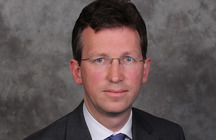
  • John Glen – 2018 Speech at Green Finance Summit

    Below is the text of the speech made by John Glen, the Economic Secretary to the Treasury, at the Green Finance Summit on 17 July 2018.

    I’m delighted to address you all this morning for the second annual Green Finance Summit.

    Ladies and gentleman – no one doubts the strength of the public will to fight climate change.

    In such a time of friction and division, it comforts me to know this cause unifies our country across party political lines…

    …as it continues to stand as one of the greatest challenges of our age.

    How we manage our relationship with our oldest partner – the natural world – will be the test of our times.

    As we know, up until recently, government and philanthropy have driven the debate and funded the growth of green finance.

    But there is only so far that this approach can take us….

    We have witnessed over the past 25 years a deeper – and genuine – engagement by the private sector in green finance…

    …through the development of sophisticated financial instruments…

    …and innovations to mobilise green capital.

    All of this has helped propel the UK to the forefront of the global green finance market…

    …with almost $25 billion of green bonds listed in London in seven currencies…

    During my tenure as Economic Secretary to the Treasury, I am determined to push this agenda…

    …for responsible capitalism…

    …and for leveraging market forces to tackle the challenges we face as a collective.

    Today I want to speak to you about three things.

    Firstly – to take stock of how we arrived at the status quo.

    Secondly – my vision for the future of green finance – one that is sustainable, mainstream, and culturally embedded.

    Finally – how the work of the recently announced Green Finance Institute will be crucial in achieving this vision.

    While I understand that there may be an increased number of political cynics in the room – which is not necessarily surprising given current events…

    …I want to reassure you that this government’s commitment to stimulating a robust environment for green finance…

    …is not mere political pageantry or a passing fad.

    I am proud that the UK was at the forefront of setting a legislative mandate for combatting this challenge through the 2008 Climate Act.

    But for too long, tackling climate change has been left to government, with the private sector largely left by the wayside…

    …and as a believer in the sanctity of the free market…

    …I am glad to see it taking a long-awaited place at the table…

    …rising to meet the burgeoning appetite of markets and investors…

    …to embrace green finance and responsible investing.

    But green finance has yet to reach its full potential…

    …as I believe it is largely untapped.

    The conversation has been dominated by a few specific areas, such as green bonds.

    And whilst there will always be a place for them, more lies further afield…

    …in the breadth, and depth of global capital markets.

    New instruments are gaining traction.

    Take green loans, now accessible to a greater range of entities, and the emerging green mortgage market.

    And the capacity for green securitisation is enormous.

    It unlocks institutional investor capital to smaller projects that otherwise would be excluded from accessing capital.

    Green funds are emerging from the fray with retail funds in particular becoming more engaged.

    And of course this is being led, as ever, by a growing investor and consumer appetite.

    A recent survey by Eon found 54% of UK consumers would definitely consider taking out a green loan to fund home energy efficiency improvements, with nearly a fifth citing energy efficiency as the most important factor when choosing a property.

    A 2017 survey by Morgan Stanley’s Institute for Sustainable Investing found that 86% of millennials are interested in sustainable investing.

    Such demand will no doubt see an increasing number of asset managers and lenders broadening their offer on green products.

    The figures will speak for themselves: at the end of 2017, only 17% of Europe’s sustainable investment funds were categorised with an environmental focus.

    By the end of this year, we expect this number to have risen substantially, along with increased allocations of investments dedicated to fighting climate change.

    As the needle shifts from fringe to mainstream, from curiosity to permanent action…

    …I think we will continue to see a growth in product offering.

    We may have solved the financing needs of the Paris agreement, but we are not here to discuss this today.

    We are here to discuss how much further we need to go.

    My vision for the next twelve months and beyond is an explosion of the momentum …

    … to the point where ‘green finance’ becomes simply – ‘finance’.

    We are seeing this happen.

    For example, most of the top European insurers are committed to divesting from coal – pulling out a staggering USD 20 billion of investment.

    Long-term climate change risks have been pushing pension funds to take action on their investment choices.

    And the global green bond market continues to exceed expectations – the market is up 78% on 2016 to reach $155 billion of issuances.

    Just yesterday I celebrated the largest green bond listing on the London Stock Exchange, of $1.58 billion, by the Industrial and Commercial Bank of China, the world’s largest bank.

    While green and sustainable equity capital raised at the London Stock Exchange rose at a rate of 197% year-on-year.

    And the Green Finance Taskforce, members of whom I welcome today, published a landmark report in March to help set the trajectory for UK green finance policy.

    I want to quote a line from the report which I think cuts to the nub of the issue:

    “the sheer scale of capital required dictates that this cannot be driven through either public or private sectors working alone…we need an international alignment of interests, incentives and policies”.

    The momentous challenge facing us all requires a fundamental change of thinking…

    …keep our ambitions limited to short-termism…

    …or seek to hit targets or arbitrary timelines.

    It is incumbent that whilst aiming for tangible results…

    …we support an organic shift in the rationale of the market.

    It is not enough that markets simply react to investor appetites.

    A sustainable and long-term shift in mindset needs to happen…

    …and the market needs to realise green finance is critical for long-term strategies.

    This cultural pivot must happen at an institutional level – and it is already in train.

    Because there is no doubting that the social impetus to transition to a low-carbon economy is there.

    The whole market must now be brought along in parallel.

    This calls for collaborative action…

    …between governments, between public and private, and between sectors of our economy.

    We have already seen so many successful advancements in this regard…

    …from Barclay’s new green mortgage, offering consumers finance that aligns with their values…

    … to international central banks forming a network to “green” the global financial system.

    Executed well, green finance will not only help achieve our climate targets…

    …but support long term economic resilience…

    …and ensure the continued vitality and relevance of financial services.

    Which is why the Chancellor’s announcement last month of the new Green Finance Institute is so important.

    As he set out at Mansion House, we are working with the City of London to fund a permanent centre to champion green and sustainable finance.

    The Institute will capitalise on the UK’s inherent strength: a magnet for capital and expertise.

    My goal for this new venture is fourfold:

    One – to provide strengthened purpose and branding to UK green finance.

    The Institute will stand as a quality mark, a sign of the UK’s green finance expertise under one unified brand.

    Two – to demonstrate our international leadership.

    We already lead the world in this market, from attracting over $24 billion in international green bonds, to ensuring we remain partner of choice on green finance for some of the world’s biggest economies.

    Three – driving innovation

    As I set out earlier, it is not enough to live on the successes of the past…

    … in order to ensure this market continues to grow, we must keep innovating.

    Building on such strengths as FinTech and local currency finance.

    And finally – setting the future agenda

    The Institute will be a focal point for government-industry collaboration, working together to open up to new markets and drive forward future policy.

    That’s why this morning I’m delighted to announce the City of London are establishing an Advisory Board to set out the shape and strategy of the Institute…

    …which will be chaired by, Sir Roger Gifford…

    …who brings his extensive experience in green finance to the role.

    Members of the Board will be drawn from our domestic firms, as well as international financial leaders..

    Because it’s not enough for the UK to lead…

    … we need to make sure we’re taking everyone along with us…

    …as we explore the opportunities this country voted to explore as Global Britain.

    To conclude this morning., I want to share a quote with you:

    “The…benefit of knowledge obliges you to act ethically. Complacency is not illegal, though it may be equally disastrous”.

    Here was Churchill – speaking of the threats faced by Britain and the world in 1940 by a different kind of enemy.

    From his immortal oratory, I couldn’t help but draw an analogy with the threat we now face.

    We all know too much about what faces us – and responsibility is the natural corollary.

    I am reassured by the ambition…

    …of government – as a steward of the environment…

    …and of a body politic – committed to the climate.

    But it is by reaching for the invisible hand of the market…

    …that green finance can endure…

    …and sustain itself for the benefit of the collective good.

    Thank you very much indeed.

  • Liam Fox – 2018 Speech on Global Trade

    Below is the text of the speech made by Liam Fox, the Secretary of State for International Trade, on 18 July 2018.

    Good morning everyone and thanks to the Federation of Small Businesses for the opportunity to hold this gathering this morning.

    In my first speech as Secretary of State for International Trade I set out the case for an open and liberal trading environment.

    In that speech, in Manchester, with its iconic associations to free trade, I referenced Adam Smith, one of my political heroes – and not just because he was also Scottish and went to Glasgow university.

    It was just over 240 years ago, on 9 March 1776 that he published the Wealth of Nations.

    It set out the principles for the emerging world of global commerce at the end of the eighteenth century with a vision of what trade could produce in terms of prosperity and opportunity.

    He countered the dominant mercantilist viewpoint – revolutionary in its time – and the case he set out is just as relevant today.

    Indeed, he reminds us still, that the essential element of a successful trading system is mutual benefit.

    David Ricardo took these principles of free trade forward when, in 1817, he published the theory of comparative advantage.

    Building on Smith a generation before, Ricardo described the economic reality of the gains from trade and demonstrated how free and open trade is profitable to all.

    When countries trade with each other, both sides benefit – even if one side is better at everything. It’s counter-intuitive but it is true nonetheless.

    Ricardo talked of wine from Portugal and wool from England. Now Americans can buy iPhones built in China but designed in America – or the British can invest our pensions in a fund that trades stocks in London but has a back office in India. Everyone benefits.

    Yet, although the principles of free trade are the same today as set out by Smith and Ricardo, the way we trade has changed beyond recognition.

    Today, we stand on the verge of an unprecedented ability to liberate global trade to the benefit of all our citizens, with technological advances and burgeoning innovation dissolving away the barriers.

    And Smith, nearly a quarter of a millennium later, is repeatedly vindicated. Time and again we find a strong positive correlation between economic openness and growth.

    During the 1990s, per capita income grew 3 times faster in the developing countries that lowered trade barriers than in those that did not.

    That effect is not confined to the developing world, either. The OECD Growth Project found that a 10 percentage-point increase in trade exposure was associated with a 4% rise in income per capita. So free trade works.

    Trade, specialisation and innovation, largely as a result of globalisation, has been of huge and sustainable benefit to the world economy. This in turn has spawned a productivity revolution through increased competition, economies of scale and global value chains.

    When this is combined with the effect of liberal values of meritocracy, democracy and the rule of law, it can create a tidal wave of innovation and creativity.

    It is no coincidence that the United Kingdom and the United States are among the most innovative economies, while those with more authoritarian regimes are only now beginning to catch up as centralised planning gives way to individual creativity.

    In the twentieth century, one of the products of the influence of the UK, US and others was the creation of the WTO.

    From the founding in the aftermath of the Secord World War of the General Agreements on Tariffs and Trade, the WTO emerged as the home of the rules-based international trading system, and the repository of those free trading values that have underpinned global growth and facilitated more formal trade agreements.

    And as we have heard when such agreements are reached, the positive effect on businesses, industries and economies can be remarkable.

    Let me give you just one example.

    The EU-Korea free trade agreement came into effect in July 2011. In the year before the deal was agreed, the UK beer and cider industry – commodities close to my heart in the West Country – sold almost nothing to Korea. Exports were under £2 million.

    By 2016, however, sales to South Korea have exploded to over £65 million, and companies from large multinationals to SMEs we are able to embrace the opportunities that it bestowed. That is the scale of what can happen and that can happen multiplied many times over.

    Making the moral and political case for free trade

    Globally, as free trade has blossomed, poverty levels have fallen to their lowest in history: bringing industry, jobs and wealth where once there was only deprivation.

    Trade liberalisation gives consumers greater choice, and the competition it unleashes brings higher quality and standards at lower prices for everything from food and drink to toys and cars. Free trade provides developing countries at the same time the opportunity to embrace the international trading system, to integrate into global value chains, and ultimately to grow their economies.

    But, as Smith found, it would be a major mistake to assume that the case for free trade is so self-evident that it does not require steadfast champions.

    We have seen the way in which trade agreements such as TTIP produced significant anti-trade protest across Europe, including in pro- free trade countries such as Germany.

    Protestors successfully exploited public anxiety, based largely on lack of information and perceived, not actual, risks.

    So, we must be willing to confront the myths and distortions that are often perpetuated by those opposed to the principles of free trade.

    At the same time, we must ensure the right mitigations are in place – in reskilling and training – for those displaced by unavoidable technological change.

    To make the case for free trade relevant, we need a narrative that transcends the whole political spectrum.

    We can begin by pointing out that global free trade has enabled us to take 1 billion of our fellow human beings out of poverty in just one generation. It is one of the greatest achievements in the whole of human history.

    And it is hard to imagine an international aid programme that would or could ever have been so effective.

    History of protectionism

    Yet, the benefits of free trade have not always been well understood.

    And – perhaps more damaging – the perils of adopting a protectionist course have not always been apparent.

    We saw this in the trade wars of the late nineteenth century. The ‘Long Depression’ of the 1870s onwards saw country after country trying, and failing, to protect themselves from global competition through tariff barriers and closing off their markets.

    And we saw the same story again during the Great Depression.

    Whether in Germany through draconian exchange controls, in America with Smoot-Hawley tariffs or in Britain and the Commonwealth with the Ottawa Agreements, we saw history repeat itself.

    Again, countries reacted to domestic economic problems by attempting to cut their markets off from international competition.

    So let’s be clear. Protectionism saps trade, disrupts supply chains and raises import costs. It creates uncertainty for businesses and consumers, and sows the seeds of hostility and mistrust between nations. It is not a history we need to repeat.

    Bank of England statistics

    On the other hand, it is a testament to our ability to learn from our history – and the robustness of our international cooperation – that we did not repeat these mistakes during the most recent economic crisis.

    Even at the height of the global problems in November 2008, the G20 reaffirmed its commitment to ‘a shared belief that market principles, open trade and investment regimes, and effectively regulated financial markets foster the dynamism, innovation and entrepreneurship that are essential for economic growth, employment and poverty reduction.’

    Unlike the Great Depression – where trade in global goods remained 20% less than its peak for most of the following decade – global output recovered in just two years.

    Now we all know there are a number of long-standing jokes about the indecisiveness of economists.

    There’s no such thing as a one-handed economist: it’s always on the one hand this, on the other hand that. Or if you laid all the economists in the world end to end, they still wouldn’t reach a conclusion.

    But the effect of protectionism is as close to settled science as anything in economics will ever be: it means reduced productivity gains and lost economic growth. Long run historical trends suggest that a 20% reduction in trade holds back productivity by around 5%.

    Yet now, despite all our collective experience, it seems we may be moving in the wrong direction. As the Governor of the Bank of England Mark Carney said in a speech earlier this month, trade tariffs recently announced between the US, its NAFTA partners, China and the EU have the potential to double bilateral tariff rates – and may already be having a dampening effect on global export orders and manufacturing output. A prolonged trade war would cause lost growth and higher inflation.

    As I have said repeatedly in a trade war there are no winners there are only causalities for now. The social, political and security implications are impossible to predict.

    How the world of trade is changing. Global trade – a snapshot

    We are at an important juncture in the history of free and open trade, and of the established international order.

    In many ways, the picture is a positive one. After several years of relative stagnation, the growth in global trade is once again outpacing the rise in global GDP.

    This growth has been driven by those economies that will shape the future of trade, and continues to mirror the rebalancing of global commercial activity: Asia made the biggest contribution to trade growth of any region in 2017, accounting for 51% of the increase in merchandise exports, and 60% of the increase in merchandise imports.

    Now this growth is partly cyclical, as the global economy continues its rebound from the dark days of the financial crash and ensuing recession experienced by many large economies.

    Yet it is also a reflection of how globalisation and new technology continue to facilitate trade, and the irrepressible growth of the digital and knowledge economies – sectors which hardly existed even two decades ago.

    But even as we gather under London’s blue skies, there are trade clouds gathering on the horizon.

    The 19th Report on G20 Trade Measures, prepared jointly by the WTO, OECD and UNCTAD, warned explicitly of ‘a worrying trend of an increase in trade-restrictive measures’.

    Its research showed that the pace at which trade restrictive measures were being implemented across G20 countries in the seven months to May this year had doubled in comparison to the six months before that, with 39 new measures being recorded.

    These measures now cover one and half times the value of trade in comparison to restrictions enacted over a similar period in 2016/17.

    It would be easy to for us to say that this is just a blip, brought about by the recent US and Chinese measures.

    But when we also see that the average number of trade remedy investigations instigated per month is at levels only last recorded in 2013, the trend becomes clear.

    One conclusion is that, since 2008, the world’s largest and most advanced economies, constituting the G20, have been falling prey quietly to the siren call of protectionism.

    Morally, as well as economically, we cannot allow that to happen.

    Those nations that have benefitted the most from free and open international trade – not only in terms of economic growth, but in the living standards of their citizens – should not pull up the drawbridge behind them and deny those same rewards to more recently developing nations.

    Why this matters

    And why do we think this matters? Why should a UK consumer, small business, or even an exporter, concern themselves with the rise in protectionism and trade restrictive measures in other parts of the world?

    Part of the reason is that no company, however small, can rely solely upon the products of one nation.

    Global value chains have been the secret behind the consumer revolution of recent decades – they are the reason that we can today buy a flat-screen television for a fraction of the cost of a decade ago, or that we can get fresh fruit and vegetables in our supermarkets of all types year-round.

    They have also meant that production costs at every stage, from coordination and logistics to assembly and packaging, have fallen, making it easier and cheaper to divide up the entire process.

    On the whole, firms no longer specialise even in a single product. Instead they often specialise in tasks – from assembly, shipping or retail, for example.

    At its heart, this is the natural conclusion of Ricardo’s comparative advantage.

    Most trade, at some estimates as high as 70%, is now in ‘intermediates’ – services, components and materials that make up final products for consumption.

    To complicate the picture still further, the UK is the centre of robust intra-industry trade. This means that we import and export the same products, to account for varying tastes in consumer preferences between different countries.

    Think BMWs and Citroens being bought here, while similar cars from the Sunderland plants are exported across Europe.

    Put simply, this country’s exports and our ability to satisfy consumer demands are reliant upon free and open access to imported goods.

    Evidence of this can be found if we examine the UK’s Trade in Value Added – a relatively new trade statistic jointly developed by the OECD and the WTO that attempts to measure these cross-border trade flows more accurately than traditional measurements have.

    The analysis is experimental, yet it has clearly shown that more than a fifth of the content of UK exports are themselves imports, in one form or another.

    And this suggests that, as a nation, we are well integrated into global supply chains. Moreover, it shows that the UK’s broader economic health, from our domestic markets to our world-class exports, is largely predicated upon free and open access to the global economy.

    In such an environment, where the components of a single consumer item may come from several countries, and cross and re-cross international borders before they are assembled, it is easy to see how small tariffs can quickly add up.

    This brings us back to our original problem.

    Globalisation affects the lives of every single person in Britain today, and the commercial viability of every business. If a trade war really does break out, the subsequent hike in tariffs, even between just a few large economies, could have catastrophic consequences for global trade.

    And the impact of this, let’s be clear, would be felt by every single British citizen, and billions of others across the world.

    Changing patterns of global trade

    In the future, these consumers will be most prevalent in those hugely growing markets that are radically redefining the patterns of global trade.

    I often repeat the fact that the IMF estimates that, in the next 10 to 15 years, 90% of global economic growth will originate from outside the European Union.

    The thriving economies of South and East Asia and, increasingly, Africa, are, and will become, ever more important as their newfound prosperity drives demand for the more goods and services.

    The sheer scale of the change that is underway is often difficult to grasp from here in Europe, a region which has long enjoyed economic and political dominance.

    So twice this year I have been in the Chinese city of Shenzhen. When Britain handed Hong Kong back to China in 1997, not exactly a lifetime ago, Shenzhen had a population of 5.2 million. Today it has a population of over 12.5 million.

    By 2030 China is expected to have 220 cities with more than 1 million inhabitants, 220. The whole of Europe will have 35.

    And on top of the vast Asia-Pacific growth it is predicted that there will be 1.1 billion middle class African consumers by 2060. The world is seeing a stunning and profound change.

    Such a shift, not just in global demographics, but in the rise of the collective wealth of developing countries, will determine where the golden economic opportunities of the future will be – and where we must be too, if we are to provide jobs and prosperity of the future.

    If we are to navigate the changes that the next decade will bring, we will have to fully accommodate these changes and recognise the emerging pattern of our own trade too.

    56% of Britain’s exports now go outside the EU, compared with only 46% in 2006. What is more, while our EU exports are still dominated by goods, our non-EU exports are evenly split between goods and services. Yet it’s services that present the greatest opportunity to expand Britain’s trade.

    We, as a nation, must re-orientate ourselves to where we can prosper in a rapidly changing global environment.

    Engagement model

    Our decision to leave the European Union is a decision to embrace this new world – not retreat from it. To be more open to free trade – not less. To fight protectionism – not to put up new barriers that would stifle our prosperity.

    It was agreed at the European Council meeting in March that the UK could formally begin negotiating new trade agreements from April 2019.

    For the first time in over 40 years we will be able to determine who we trade with, and on what terms.

    To ensure we make the most of this unique opportunity, it makes sense to start thinking about our negotiating priorities for the future, and thinking about them now.

    In the House of Commons on Monday, I set out how Parliament, the Devolved Administrations, the public, businesses and civil society will be able to engage in a trade policy that benefits the whole of the UK and ensure that we meet our commitments to an inclusive and transparent trade policy.

    We committed to working closely with the Devolved Administrations on an ongoing basis to deliver an approach that works for the whole of out United Kingdom.

    Because everyone, from every part of the UK, must have the opportunity to engage and consult.

    Scrutiny of our future trade arrangements is vitally important as we take powers back from the EU into UK law, and begin negotiating our own new free trade agreements.

    With other nations

    That is why today I am announcing four public consultations on our post-Brexit trade negotiations.

    Our intention is to seek free trade agreements with the United States, Australia and New Zealand. These are crucial strategic and economic relationships that must continue on a sound footing after Brexit.

    UK exports to Australia and New Zealand are growing at 14.8% and 16.8% respectively, a faster pace than our global average, and far outstripping export growth to the EU.

    The United States is the UK’s single largest trading partner and foreign investor, accounting for over £100 billion worth of UK annual exports. As we saw during President Trump’s visit, the UK is very keen to further our already excellent trade and investment relationship, and I look forward to continuing these discussions during my visit to Washington next week.

    While there are many other markets the UK will look to for new agreements in the future, our shared values and strength of trade with the US, Australia and New Zealand make them the right places to focus our initial attention.

    However, we must go further. The government is determined not only to seek deals with key bilateral partners, but to break new ground: putting the UK at the heart of the world’s fastest growing regions.

    That is why I am also announcing a fourth consultation on potentially seeking accession to CPTPP – the Comprehensive and Progressive Agreement for Trans-Pacific Partnership.

    This covers markets across the world – from Canada to Chile, Mexico to Vietnam. It reduces 95% of tariffs, along with other barriers to trade.

    The eleven members of CPTPP accounted for £82.5 billion of UK trade in 2016, more than the Netherlands, France or China. It covers a diverse range of economies, many of which have been – and are projected to continue to be – a major source of global economic growth.

    These consultations are about how we position ourselves as Global Britain. To build the export markets, investment opportunities and trading relationships of the future.

    Trade affects us all – whether it is through the prices and availability of product on our supermarket shelves, to the resources available for our public services, to the jobs and investment on which we all rely.

    So, I believe it is vital that everyone has their say to ensure these deals work for the whole of the UK – and I strongly urge anyone and all organisations with an interest to take part in these consultations.

    Opportunities for the UK

    Because our trading future, as our United Kingdom, is bright.

    We require an economic outlook that allows us to take advantage of the substantial opportunities that Europe will continue to bring, but without limiting our ability to adapt to a changing and growing world beyond the European continent – as the Prime Minister has repeatedly made clear.

    And when we leave the European Union, we will be able to do just that. We will be able to enter into meaningful trade agreements with partners across the world, leading the charge towards greater liberalisation where we can play to our strengths – in financial services, digital and investment.

    We will have the freedom to negotiate in areas such as services, tariffs, quotas, and conformity assessments.

    We will take up our independent seat at the WTO and continue to champion the rules-based international trading system.

    We have a once in a generation opportunity to set our own course.

    It is where the world is growing fastest that demand for British services and goods will offer the most potential growth for our exporters and investors.

    Since the Department for International Trade was created, my ministers and I have undertaken 188 visits overseas. No matter where we have travelled, we have found the same phenomenon.

    For UK export goods – from top end fashion, to high-quality cars, to our luxury food and drink produce, to high-end manufacturing – the demand is growing.

    For professional services too, from accountancy to law or education or life sciences or financial services, the growing demand in places like Asia and Latin America will need more of the skills where we are already world class.

    In the knowledge economy, we already have what others want and need.

    The demand is out there for what Britain is able to sell. And we must play our comparative advantage.

    We must set our sights on this brighter future.

    We are at a historic crossroads. Britain has decided to leave a European orbit to embrace a global one, retaining our close links with our European partners while understanding our global potential.

    It is an exciting time that we should approach with confidence and optimism, secure in the knowledge that our own belief in free trade and the benefits it has brought are not our history but our road map to the future.

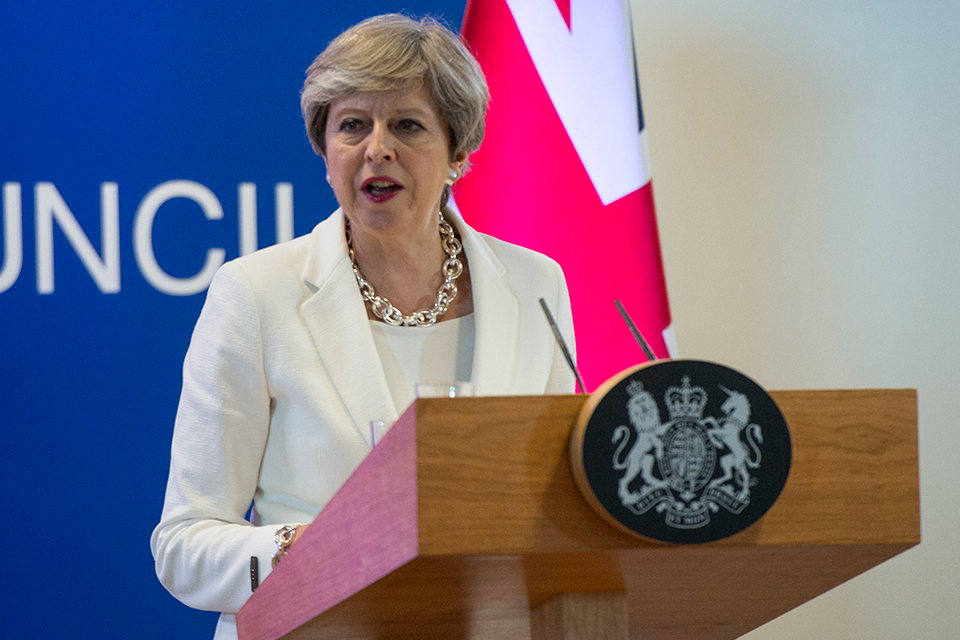
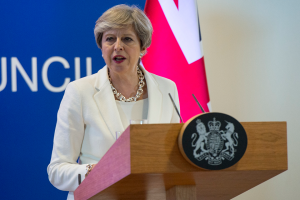
  • Theresa May – 2018 Speech in Belfast

    Below is the text of the speech made by Theresa May, the Prime Minister, in Belfast on 20 July 2018.

    When I became Prime Minister just over 2 years ago I spoke of the precious bond between England, Scotland, Wales and Northern Ireland.

    A union not just of nations, but of peoples bound by a common purpose, whoever we are and wherever we are from.

    I also reminded people that the full name of my political party is the Conservative and Unionist Party.

    And that name carries a profound significance for me.

    The party I lead has a belief in the Union of England, Scotland, Wales and Northern Ireland as a central tenet of our political philosophy.

    And as Prime Minister of the United Kingdom of Great Britain and Northern Ireland, it is my duty to serve the whole UK and to govern in the interests of every part of it.

    And that defines the approach I have taken in government over the past 2 years.

    And, as we leave the European Union, I have made protecting and strengthening our own precious Union, by making sure the deal we strike works for every part of the UK, an absolute priority.

    Northern Ireland in the UK

    My belief in our Union of nations is rooted not just in history, but in our collective achievements.

    Time and again we have stood together as one to overcome challenges and do great things.

    This year, when we commemorate the centenary of the Armistice, we will remember the sacrifice of brave people from here and indeed the whole island of Ireland.

    And at the end of the Second World War, Churchill famously said that without Northern Ireland ‘the light which now shines so strongly throughout the world would have been quenched’.

    After that war, a great national institution – our National Health Service – was established across the United Kingdom, a symbol of solidarity in our Union.

    Today our NHS stands alongside other pillars of our national life.

    Our parliamentary democracy and our commitment to the rule of law have been admired and imitated around the world.

    These are the results of our common endeavour as a Union.

    They are the signs which signify its depth and fundamental strengths.

    Right across the UK, far more unites than divides us.

    Our sense of community and shared values. Our diversity and tolerance.

    And perhaps the greatest strength of our Union is its potential for the future.

    What together we can achieve in the years ahead as an outward looking United Kingdom.

    As we pursue our Modern Industrial Strategy, government working with business and academia to boost productivity, invest in science and research, and create more good jobs in every community, making the most of rapidly changing technology.

    As we leave the European Union, and go out to strike new trade deals around the world, open up new markets for the great products and services of our innovators and entrepreneurs.

    As we face the challenges of the future together and draw on the talents and resources of every part of our United Kingdom to overcome them.

    And that of course includes Northern Ireland.

    Its cultural landscape is dynamic, vibrant and wholly original.

    Northern Ireland is a TV and cinema powerhouse, supported by UK government tax policies to support the film industry.

    Over 2 million visitors come to Northern Ireland each year as tourists – to experience its vibrancy and beauty.

    It is home to great universities, great small businesses, a burgeoning cybersecurity sector.

    Northern Ireland makes a major contribution to our Union, and it also derives great benefits from being an integral part of the UK.

    Every family and every business benefits from the strength and security that comes from being part of the world’s fifth largest economy.

    The rest of the UK is by far Northern Ireland’s biggest market, accounting for over half of its sales.

    Today, unemployment is half the level it was in 2010 and employment is at a near-record high.

    The prosperity generated by a country with global interests, and the principle of pooling and sharing our resources that defines the UK, supports public services that people in Northern Ireland rely on.

    I believe in the partnership of our four great nations in one proud Union and I want it to endure for generations to come.

    So a government I lead will never be neutral in our support for the Union.

    We will always make the case for it.

    I believe a clear majority of the people of Northern Ireland will continue to have confidence in a future for them and their families that lies within a strong United Kingdom.

    But I also respect the fact that a substantial section of the population here identify as Irish and aspire to a future within a united Ireland.

    I will always govern in the interests of the whole community in Northern Ireland and not just one part of it.

    We are absolutely committed to parity of esteem, and just and equal treatment irrespective of aspiration or identity.

    We want to work with all parties, and right across society to build a stronger, more inclusive and more prosperous Northern Ireland that truly works for everyone.

    That is why I have met all the main parties on this visit, and why I keep up a regular dialogue with them.

    The bright future I want to help build for Northern Ireland is one in which everyone, regardless of their community background or political aspirations, is able to live happy and fulfilling lives and to go as far as their talents and hard work will take them.

    I want to say, too, that I share your concern about the episodes of serious disorder in Belfast and Derry/Londonderry last week.

    This government – like the communities here – has been absolutely clear in condemning this activity, which is a matter of deep concern for everyone who wants to see a peaceful and prosperous Northern Ireland.

    This violence is not representative of the wider community and I pay tribute to the brave officers in the Police Service of Northern Ireland and the emergency services and others in the community who worked tirelessly to keep people safe.

    We are all committed to making sure that Northern Ireland continues to move forward.

    Belfast Agreement

    The principles that define Northern Ireland’s place as an integral part of the United Kingdom, along with its unique relationship with Ireland, are of course enshrined in the Belfast Agreement and its successors.

    The Belfast Agreement, reached 20 years ago, is a landmark in the history of our islands.

    It was overwhelmingly endorsed by referendums here in Northern Ireland and in Ireland.

    Successive UK and Irish governments, together with all the parties in Northern Ireland, have worked tirelessly to bring about the historic achievement of peace.

    Leaders like David Trimble and John Hume, Ian Paisley and Martin McGuinness, have made history.

    And my predecessors as Prime Minister have played their part.

    Sir John Major helped to start the peace process.

    Tony Blair helped bring it to fruition, making power-sharing – which for so long had seemed a prize beyond reach – a reality at last.

    Gordon Brown oversaw the devolution of policing and justice powers.

    And I saw first-hand as a member of his cabinet how hard David Cameron worked on the Stormont House and Fresh Start Agreements.

    I think everyone who has the honour and responsibility of holding the office of Prime Minister of the United Kingdom feels a special responsibility to the people of Northern Ireland.

    The historic achievement that the Belfast Agreement and its successors represent is something we should all be proud of.

    I am determined to protect it and to uphold the rights it enshrines.

    The fact that the current Deputy Chief Constable of the PSNI, Drew Harris, will shortly become Commissioner in An Garda Siochana is an amazing symbol of the progress made over the last twenty years.

    And we will continue to work with our friends in the Irish Government, who have been our close partners in that progress including at next week’s British and Irish inter-governmental conference.

    Power-sharing devolution

    The UK government’s support for the constitutional principles set out in those agreements, and for the full range of political institutions they established, is steadfast.

    So it is a matter of frustration and regret that after enjoying the longest period of unbroken devolved government since the 1960s, Northern Ireland has now been without a fully-functioning Executive for over 18 months.

    I commend the Northern Ireland Civil Service for the work they are doing to deliver public services in Northern Ireland in the absence of an Executive.

    And I want to see the Assembly and Executive back up and running, taking decisions on behalf of all the people of Northern Ireland. They deserve no less.

    So, in full accordance with the three stranded approach, we continue to do all we can to see the re-establishment of devolution and all the institutions of the Belfast Agreement.

    But an agreement cannot be imposed.

    That needs to come from within Northern Ireland.

    A first step has to be the resumption of political dialogue aimed at finding a solution.

    And that should begin as soon as possible.

    Until then, the UK government will of course fulfil our responsibility to ensure good governance and stability in Northern Ireland.

    But interventions from Westminster are no substitute for decisions taken here.

    Effective and enduring devolved government is the right thing for Northern Ireland and it is best for the Union.

    Principles of the Belfast Agreement

    The Belfast Agreement did not just establish a set of institutions, it also defined the principles that underpin their legitimacy for people across the community.

    The principle that it is the ‘birthright of all the people of Northern Ireland to identify themselves and be accepted as Irish or British, or both, as they may so choose.’

    And the consent principle, that it will always be for the people of Northern Ireland to decide ‘without external impediment’ what their constitutional future should be…

    …with the UK government always giving effect to the democratic choice of the people of Northern Ireland, ‘freely and legitimately given’.

    These principles are the bedrock of peace and stability in Northern Ireland and it is the duty of the UK government always to respect and uphold them.

    Doing so is not just the guiding force behind our approach to government in Northern Ireland, it is also at the heart of our approach to Brexit as well.

    In leaving the European Union, as we are doing, we have a duty to ensure that the outcome we achieve works for the whole UK, including Northern Ireland.

    For all of us who care about our country, for all of us who want this Union of nations to thrive, that duty goes to the heart of what it means to be a United Kingdom and what it means to be a government.

    Our job is not to deal with Brexit in theory, but to make a success of it in practice for all of our people.

    And nowhere is the need for practical solutions more vital than here in Northern Ireland, the only place where the United Kingdom shares a land border with an EU Member State that is also a co signatory to the Belfast Agreement.

    No hard border

    I have said consistently that there can never be a hard border between Northern Ireland and Ireland.

    I said it in my letter triggering Article 50, in my speech at Mansion House and many times besides.

    During the referendum, both campaigns agreed that the border between Northern Ireland and Ireland must remain ‘absolutely unchanged’.

    Indeed you only have to speak to businesses near the border, as I did yesterday, to see that the notion of a hard border is almost inconceivable.

    Thousands of people who cross and re-cross between the UK and Ireland in the normal course of their daily lives cannot be subject to a hard border as they go to work, visit a neighbour, or go to the supermarket.

    Neither would it be feasible for firms whose supply and distribution chains span the border.

    Many people in communities like Fermanagh and Newry remember the customs border posts, approved roads and security installations of the not-too distant past.

    They recall the administrative burdens on business, the disruption caused to lives and livelihoods.

    In the Northern Ireland of today, where a seamless border enables unprecedented levels of trade and cooperation north and south, any form of infrastructure at the border is an alien concept.

    The practical consequences for people’s day to day lives are only part of the story.

    Because the seamless border is a foundation stone on which the Belfast Agreement rests, allowing for the ‘just and equal treatment for the identity, ethos and aspirations of both communities’.

    Anything that undermines that is a breach of the spirit of the Belfast Agreement.

    An agreement which we have committed to protect in all its parts and the EU says it will respect.

    Both sides in the negotiation understand that and share a determination never to see a hard border in Northern Ireland.

    And no technology solution to address these issues has been designed yet, or implemented anywhere in the world, let alone in such a unique and highly sensitive context as the Northern Ireland border.

    Some argue that the right approach is for the UK to declare that we will not impose any checks at the border after we have left.

    If the EU required the Irish Government to introduce checks, the blame would lie with them.

    As I said at Mansion House, this is wrong on two levels.

    First, this issue arises because of a decision we have taken.

    We can’t solve it on our own, but nor can we wash our hands of any responsibility for it.

    So we must work together to solve it. Second, like any country sharing a land border with another nation, we have a duty to seek customs and regulatory relationships with each other to ensure borders work smoothly.

    And in Northern Ireland, that presents a particular challenge.

    The protection of the peace process and upholding our binding commitments in the Belfast Agreement are grave responsibilities.

    Not to seek a solution would be to resume our career as an independent sovereign trading nation by betraying commitments to part of our nation and to our nearest neighbour.

    No new border within the UK

    The reality is that any agreement we reach with the EU will have to provide for the frictionless movement of goods across the Northern Ireland border.

    Equally clear is that as a United Kingdom government we could never accept that the way to prevent a hard border with Ireland is to create a new border within the United Kingdom.

    To do so would also be a breach of the spirit of the Belfast Agreement, and for exactly the same reason that a hard border would be.

    It would not be showing ‘parity of esteem’ and ‘just and equal treatment for the identity, ethos and aspirations’ of the Unionist community in Northern Ireland to cut their part of the United Kingdom off from the rest of the UK.

    I do not think any member state would be willing to accept that, in order to leave the EU, a nation must accept such a threat to its constitutional integrity.

    We made the choice to join as nation states.

    We must be free as nation states to make the choice to leave.

    The Joint Report that we agreed in December was very clear on this.

    We were both explicit that Northern Ireland is an integral part of the United Kingdom, consistent with the principle of consent in the Belfast Agreement.

    And the report is also clear about the need to preserve the integrity of the UK’s internal market, which is vital to businesses the length and breadth of our country – not least here in Northern Ireland.

    Yet the Commission’s proposed ‘backstop’ text does not deliver this.

    Under their proposal, Northern Ireland would be represented in trade negotiations and in the World Trade Organisation on tariffs by the European Commission, not its own national government.

    The economic and constitutional dislocation of a formal ‘third country’ customs border within our own country is something I will never accept and I believe no British Prime Minister could ever accept.

    And as MPs made clear this week, it is not something the House of Commons will accept either.

    We remain absolutely committed to including a legally operative backstop in the Withdrawal Agreement.

    But it must be one that delivers on all the commitments made in the December Joint Report.

    Our White Paper

    Those 2 imperatives, to see no hard border between the UK and Ireland, and no new border that cuts Northern Ireland off from the rest of the UK, are realities we have to contend with as we find a way forward.

    Doing so means we must rule out the free trade deal on offer from the EU that excludes Northern Ireland, and creates a border within the UK.

    The other alternative, membership of the Customs Union plus an extended version of the EEA, would mean continued free movement, ongoing vast annual payments and total alignment with EU rules across the whole of our economy, and no control of our trade policy.

    That would not be consistent with the referendum result.

    In order to move the negotiations on our future relationship forward we needed to put a credible third option on the table.

    To work for the UK, it needs to honour the Belfast Agreement, deliver on the referendum result and be good for our economy.

    And for the EU to consider it, it needs to be a proposal that they can see works for them as well as us.

    I believe that the White Paper we published last week, following the agreement reached at Chequers, is that proposal.

    It is firmly rooted in the vision for our future relationship that I set out in my speeches at Lancaster House, Florence, Munich and Mansion House.

    But it also addresses the questions that the EU has raised in the intervening months and explains how the new relationship would work.

    It is a principled and practical Brexit that respects both the constitutional and economic integrity of the UK and the autonomy of the EU.

    It also comprehensively addresses our shared commitments to Northern Ireland and Ireland.

    It is the right Brexit deal for the United Kingdom.

    It delivers on the referendum result.

    It takes back control of our borders, with an end to free movement.

    It takes back control of our money, with no more vast annual sums paid to the EU.

    It takes back control of our laws, ending the jurisdiction of the ECJ in the United Kingdom.

    It promotes jobs and prosperity.

    The whole of the UK will be outside the Customs Union and Single Market, free to sign trade deals with countries around the world.

    We will have regulatory freedom over our services sector, which accounts for 80% of the UK economy.

    And we will leave the Common Agricultural Policy and Common Fisheries Policy, gaining the freedom to design new policies that work for our rural and coastal communities.

    It will also protect and strengthen our Union by ensuring there is no hard border between Northern Ireland and Ireland and no border in the UK.

    It does that by proposing a free trade area in goods and agricultural products between the UK and the EU.

    Our previous proposal that we could achieve frictionless trade by maintaining ‘substantially similar’ regulatory standards did not prove to be a negotiable position.

    The EU would not accept such an unprecedented solution to break down all barriers without having shared rules.

    So we needed to make a stronger commitment.

    That is why we have put the new offer of a common rulebook in goods and agricultural products on the table.

    Some people are concerned about us maintaining common standards with the EU even in this limited area.

    I understand that concern, but I think it is in the national interest in a way that it wouldn’t be for say financial services.

    Let me explain.

    First, the rules that cover goods have been relatively stable over the last 30 years.

    Second, many of the relevant standards are set by international bodies which we will remain a member of after we leave the EU.

    Third, the many UK businesses that trade with the single market will continue to meet these rules anyway whether or not the government makes a promise to.

    Making a formal commitment allows us to establish a free trade area that will be good for our whole economy.

    It will deliver friction-free trade in goods with our nearest trading partners in the EU.

    Businesses will be able to import and export goods across the EU frontier without impediment.

    The just-in-time supply chains that underpin high skilled manufacturing jobs across the country will be able to continue without disruption.

    And it will ensure we remain one United Kingdom, with a UK internal market, on good terms with our nearest neighbour.

    The Belfast Agreement will be protected in full.

    Not just by avoiding a hard border but by a legal guarantee that there will be no diminution of the rights for citizens set out in the Agreement.

    By upholding the Common Travel Area and associated rights, so there is no question of any new restrictions on movement between the UK and Ireland or access to public services.

    And by guaranteeing the protection in full of the range of North-South and East-West co-operation provided for in Strands 2 and 3 of the Agreement.

    This is the right deal for the United Kingdom and I believe it is the basis for a new deep and strong relationship with the EU.

    The White Paper represents a significant development of our position.

    It is a coherent package.

    Early in this process, both sides agreed a clear desire to find solutions to the unique circumstances in Northern Ireland through a close future relationship.

    We have now developed our proposals and put an approach on the table which does precisely that.

    It is now for the EU to respond.

    Not simply to fall back onto previous positions which have already been proven unworkable.

    But to evolve their position in kind.

    And, on that basis, I look forward to resuming constructive discussions.

    Conclusion

    I firmly believe that we can complete what we have started.

    We can negotiate a new relationship with the EU that works in our mutual interest.

    One that honours the referendum result, gives us control of our money, our borders, and our laws.

    One that sets us on course for a prosperous future, protecting jobs and boosting prosperity.

    One that safeguards our Union and allows the whole UK to thrive in the years ahead.

    A brighter future for Northern Ireland – where we restore devolution and come together again as a community to serve the interests of the people.

    And a brighter future for us all, where we put aside past divisions and work as one to meet the challenges and seize the opportunities that lie ahead.

    I am passionate about that brighter future and the possibilities that are within our grasp.

    As I said on the day I launched my campaign to become leader of the Conservative and Unionist Party:

    ‘the process of withdrawal will be complex, and it will require hard work, serious work, and detailed work.’

    The government has done that work.

    The White Paper is our plan for the future.

    It is the way to the stronger and brighter tomorrow that I know awaits the whole United Kingdom.

    Now we must have the courage and the determination to seize it.

  • Penny Mordaunt – 2018 Speech at Global Disability Summit

    Below is the text of the speech made by Penny Mordaunt, the Secretary of State for International Development, on 24 July 2018.

    It is wonderful to have you all here today, especially you your Excellency and the first lady of Ecuador. Here at the London Olympic Park – host to the world’s largest Paralympic Games in 2012 and the spiritual birthplace of the first-ever organised sporting event for disabled athletes in 1948.

    I am delighted to be here today co-hosting this event with Government of Kenya and International Disability Alliance.

    Thank you all for joining us today – and in particular, thanks to the Disabled Person’s Organisations and people with disabilities, who have led this Summit from conception to delivery.

    Today, we have come together to work as partners and collectively step-up our efforts to improve the lives of people with disabilities around the world.

    We are here to tackle the root causes of stigma, discrimination and abuse; to work towards inclusive education and employment for all. And to harness the power of technology, innovation and assistive devices for people with disabilities across the world.

    Today we focus on moving from words to action; working together as partners; and holding ourselves and each other to account for our promises.

    We are all starting from a low base – and the UK recognises we also have work to do as well and that is why today we will launch a range of dedicated policy and programming to champion the rights of the most marginalised and vulnerable people with disabilities.

    We will launch ‘AT Scale’, a partnership for assistive technology (with partners such as USAID, WHO, UNICEF and GDI Hub) to transform access and affordability for life-changing Assistive Technology (AT) such as wheelchairs, prosthetics, hearing aids and glasses.

    Access to AT is a critical enabler for inclusive education, economic empowerment and participation in communities. But at present only 10% of the 1 billion people in the world who need assistive products and services have access to them.

    Our ambition is that 500m people globally will be being reached by essential assistive technology by 2030.

    We are launching a DFID Scale Up on Inclusive Education – with a new education policy that has a clear promise for the most disadvantaged children. Through strengthening education programming; we commit to support countries including Ethiopia, Rwanda, Pakistan, Tanzania, Zimbabwe and Jordan.

    In Ethiopia, we will transform and develop 687 Inclusive Education Resource Centres (IERCs) nationwide by 2022 to promote the inclusion of 24,000 children with disabilities.

    In Rwanda, we will train 12,000 teachers of English and Maths in inclusive education teaching methods.

    In Tanzania, we will support important reforms in primary and lower secondary schools to improve learning outcomes for all children particularly for girls and children with disabilities.

    We are also launching the Disability Inclusive Development Programme – a new six-year cutting-edge innovation and scale-up programme to find out what works, for whom, when and why.

    Through a ground-breaking consortium, led by Sightsavers, several UK International NGOs and Summit co-hosts, International Disability Alliance, the programme will deliver tangible outcomes to improve the lives of people with disabilities.

    This includes improved educational attainment and health outcomes, jobs and livelihoods and reduced stigma and discrimination.

    By 2024 we aim to enable up to 100,000 women, men, girls and boys with disabilities to access health services; up to 45,000 people with disabilities to increase their incomes; 10,000 children with disabilities to go to school and access education as well as reaching millions of people through interventions to tackle stigma and discrimination.

    We are also committed to a DFID scale up on disability inclusion over the next 5 years and we will be publishing a new disability framework later this year, setting out how we would put disability at the heart of our work. And the legacy today will be a ten point Charter for Change which I would like us all to sign up to. This plan for action will be published and fully accessible. Progress will be monitored regularly and we will all be held accountable for our pledges. Empowering people with disabilities does not just affect the individuals – it leads to better decisions and more effective outcomes for communities, for nations and for the world.

    Unless every one of our citizens can reach their full potential our nations never will. Let today be the start of our journey.

    Now is the time.

  • Theresa May – 2018 Speech at NHS 70 Reception

    Below is the text of the speech made by Theresa May, the Prime Minister, at a reception on 4 July 2018 to mark the 70th anniversary of the NHS.

    I am delighted to welcome you all to Downing Street to help mark what is a very special birthday of a very special institution.

    In my line of work there are not many ideas from 70 years ago that are unquestionably supported today, but that is undoubtedly the case with our National Health Service.

    In a world that has changed almost beyond recognition, the vision at the heart of the NHS – of a tax-funded service that is available to all, free at the point of use with care based on clinical need and not the ability to pay – still retains near-universal acceptance.

    And that tells us a lot.

    Not just about the principles behind the NHS, powerful though they are.

    But also about the people who, for 70 years, have turned those principles into practice on daily basis.

    People like you.

    There are the doctors, nurses, midwives and all the other health professionals on the front line – and the staff who support them, from porters to ward clerks to receptionists.

    Across the country there are thousands of GPs, dentists, optometrists and others providing care under the NHS umbrella.

    Then there are the patient advocacy groups, the volunteers, the researchers…

    Many of you here today have been a part of the NHS family for 40 years or more.

    That’s an amazing achievement, and I know Jeremy – a man who knows a lot about long service – will be presenting you with commemorative badges to mark that later this evening.

    Others among you are, through your innovations, shaping the future of the NHS and of healthcare itself.

    Some of you are just setting out on what I hope will be long and rewarding careers.

    Yet all of you share one common trait.

    Every day, you get up and go to work so the NHS can continue to do what it has done every day for 70 years – provide the British people with some of the best healthcare in the world.

    I want that to continue.

    But for that to happen we must recognise that the NHS conceived by the likes of Beveridge, Willink and Bevan was created to serve a very different country in a very different time.

    Today, thanks to the NHS, people are living longer – but that brings with it an increase in dementia and other conditions associated with old age.

    Childhood obesity risks burdening the next generation with a lifetime of ill-health.

    And our understanding of mental health has progressed significantly – it can no longer be treated as somehow “less serious” than physical ailments.

    The NHS of yesterday was simply not designed or equipped to deal with these kind of issues.

    The NHS of tomorrow must be.

    That’s why, last month, I set out the priorities that will guide our long-term plan for the future of our NHS.

    A plan that will put the NHS on a sustainable path for generations to come.

    At its heart is new investment: an extra £394 million per week in real terms by 2023/24.

    But, important though that is, we all know that good healthcare is about more than money.

    So I have asked the NHS itself to draw up a 10-year plan to make sure every penny of the new funding is well-spent, and that leaders are accountable for delivery.

    Frontline staff like you will be involved in the plan’s development, so it delivers for patients and for the Health Service.

    I know that you got into medicine and healthcare because you want to make a difference, you want to help people get better or manage their conditions.

    Yet too often we see bureaucracy getting in the way of care, with process being put before patients.

    So the plan will highlight what changes we could make so that you can concentrate on putting patients first.

    I know that there is fantastic, innovative work going on right across the country.

    That the answers to many of the challenges we face can already be found in the best of what the NHS does today, for example in bringing different teams together to provide care closer to home.

    So the plan will make it easier to share this best practice, letting everyone learn from what works and avoid what doesn’t.

    I know that your dedication to your work is total.

    But I also know that, sometimes, you can be frustrated by staff shortages, and that you rarely enjoy the flexibility or work/life balance that many people now take for granted.

    We have already removed the cap on the number of foreign doctors and nurses who can come here each year, to relieve some of the immediate pressure on staff numbers.

    The plan will go further, investing in the workforce and introducing modern working practices so that the NHS is not just one of the biggest employers in the world, but also one of the best – managed in a way that works for patients and staff alike.

    Finally, I know that those of you who have worked in the NHS for many years will have already seen enormous changes in medicine.

    In the past 40 years alone we’ve heralded the arrival of synthetic human insulin, IVF and the HPV vaccine.

    More change is coming.

    As we stand here today, scientists are working to harness the power of genomics, Artificial Intelligence and more.

    Healthcare does not stand still – and nor should the NHS.

    So the plan will help the Health Service embrace the technology of tomorrow so it is fit to face the challenges of the future.

    Everyone in this garden, everyone in No 10, everyone in this city and beyond will have their own story of what the NHS has done for them.

    And that’s because it’s not the Labour Health Service or the Conservative Health Service – it is the NATIONAL Health Service.

    It belongs to all of us.

    It is there for all of us.

    For 70 years it has been a great British achievement of which we can all be proud.

    In the years to come I want to make it greater still.

    And, whether you are just starting out or have already given a lifetime of service, I look forward to working with you to make that happen.

  • Sajid Javid – 2018 Statement on Amesbury Nerve Agent Incident

    Below is the text of the statement made by Sajid Javid, the Home Secretary, in the House of Commons on 5 July 2018.

    With permission Mr Speaker, I would like to make a statement regarding the events that have been unfolding in Amesbury and Salisbury.

    This morning, I chaired a meeting of the government’s emergency committee COBR covering the ongoing investigation in Amesbury.

    I have been separately briefed by the Security Services and the counter terrorism police.

    As many of you will now know, a 45 year old man and a 44 year old woman were found to be unwell at a property at Muggleton Road in Amesbury on Saturday.

    Both are British citizens.

    Paramedics attended the scene and admitted the pair to the A&E department at Salisbury District Hospital. Here they were treated for exposure to an unknown substance.

    Further testing by expert scientists in chemical warfare at the Porton Down laboratory confirmed this to be the nerve agent of the type known as Novichok.

    This has been identified as the same nerve agent that contaminated both Yulia and Sergei Skripal. The pair are currently in a critical condition and I’m sure the whole House will want to join me in wishing them a swift and full recovery.

    I would also like to express my sincere thanks to the emergency services and staff at the Salisbury District Hospital for their tireless professionalism and for the dedicated way they are providing it. I understand that there will be some concerns about what this means for public safety. In particular, I recognise that some local Wiltshire residents will be feeling very anxious. Let me reassure you that public safety is of paramount importance.

    Public Health England’s latest assessment is that based on the number of casualties affected, there is no significant risk to the wider public. Their advice is informed by scientists and the police as the facts evolve. Dame Sally Davies, the Chief Medical Officer, has confirmed that the risk to the public remains low and has asked that the public follow the advice of Public Health England and the police.

    She has also advised that people who have visited the areas that have been recently cordoned off should wash their clothes and wipe down any items they may have been carrying at the time. She has also urged people not to pick up any unknown or already dangerous objects such as needles or syringes. This is not new advice and it follows on from what was said in March.

    We have a well-established response to these types of incidents and clear processes to follow.

    All the sites that have been decontaminated following the attempted murders of Sergei and Yulia Skripal are safe.

    All sites which have been reopened have undergone vigorous testing and any items that may have harboured residual amounts of the agent were safely removed for disposal.

    We have taken a very robust approach to decontamination and there is no evidence that either the man or the woman in hospital, visited any of the places that were visited by the Skripals.

    Our strong working assumption is that the couple came into contact with the nerve agent in a different location to the sites which have been part of the original clean-up operation.

    The police have also set up two dedicated phone numbers for anyone with concerns relating to this incident.

    Salisbury District Hospital remains open as usual and is advising people to attend routine appointments unless they are contacted and told otherwise. We are taking this incident incredibly seriously and are working around the clock to discover precisely what has happened, where and why.

    Be assured that we have world-leading scientists, intelligence officers and police on the case. Local residents can expect to see an increased police presence in and around Amesbury and Salisbury. All six sites that were visited by the pair before they collapsed have been cordoned off and are being securely guarded as a precaution.

    An investigation has started to work out how these two individuals came into contact with the nerve agent. Around 100 detectives from the Counter Terrorism Policing Network are working to support this investigation, alongside colleagues from Wiltshire Police.

    Obviously this incident will invoke memories of the reckless murder attempts of Sergei and Yulia Skripal earlier this year. This is the leading line of enquiry.

    However, we must not jump to conclusions and we must give the police the space and time to carry out their investigations. The police’s work will take time.

    But we are ready to respond as and when new evidence comes to light and the situation becomes clearer. Following the events in Salisbury earlier this year, we rapidly worked with international partners at the Organisation for the Prohibition of Chemical Weapons (OPCW) to confirm our identification of the nerve agent used.

    Through a process of extensive, impartial testing and analysis, our findings were confirmed correct beyond doubt. The use of chemical weapons – anywhere – is barbaric and inhumane.

    The decision taken by the Russian government to deploy these in Salisbury on March 4 was reckless and callous. There is no plausible alternative explanation to explain the events in March other than that the Russian state was responsible.

    And we acted accordingly.

    The British government and the international community immediately and robustly condemned this inhuman action. In light of this attack, the UK expelled 23 Russian diplomats from our shores. And we were joined by 28 of our closest international allies in this action – from the United States to Ukraine – who expelled over 150 of the Russian-state’s diplomats.

    We have already seen multiple explanations from state-sponsored Russian media regarding this latest incident. We can anticipate further disinformation from the Kremlin, as we saw following the attack in Salisbury. And as we did before, we will be consulting with our international partners and allies following these latest developments.

    The eyes of the world are currently on Russia, not least because of the World Cup.

    It is now time that the Russian state comes forward and explains exactly what has gone on so that the most appropriate course of action can be taken. Let me be clear, we do not have a quarrel with the Russian people. Rather, it is the actions of the Russian government that continue to undermine our security and that of the international community.

    We will stand up to actions that threaten our security and the security of our partners. It is completely unacceptable for our people to be either deliberate or accidental targets. Or for our streets, our parks or our towns to be dumping grounds for poison. We will continue our investigations as a matter of urgency, and I will keep the House and the public updated on any significant developments.

    I commend this statement to the House.

  • Damian Hinds – 2018 Speech to Children’s Services Sector

    Below is the text of the speech made by Damian Hinds, the Secretary of State for Education, in Manchester on 5 July 2018.

    It’s great to be able to join you here today and to have this opportunity to speak to so many of you.

    Particularly so in Manchester because today the country is celebrating the 70th birthday of the NHS – which, of course, was launched not far from here by the then Health Secretary Aneurin Bevan, at Park Hospital in Manchester, now Trafford General Hospital.

    Today the nation is saying thank you to all those people who make the NHS what it is – the doctors, nurses, paramedics, support staff. We can never pay them sufficient tribute.

    But standing here today, there are many more people, who deserve greater acknowledgement and thanks for dedicating their lives to public service.

    You and your teams have an enormous impact on our society and some of the most vulnerable people in it, an effect that stretches far in to the future.

    And I wanted to begin my remarks today with a heartfelt thank you to your teams, from the office staff to the frontline workers. Thank you for your commitment, your hard work and your dedication. Thank you for all the patience, empathy and resilience that is required to do jobs like yours.

    Of course, many jobs can be challenging, intense, long hours, but few jobs come with quite the same kind of stakes as yours. The weight of responsibility when you are charged with protecting and supporting some of the most vulnerable people in our society; the unique pressure of making decisions that will not just affect one child, but whole families. Whole communities.

    I’m well aware that, at times, our social workers witness life at its bleakest, humanity at its most desperate… They glimpse worlds that many of us never see – and, perhaps, try not to see.

    But, then, they and you also bring a lot of hope in to people’s lives. So many children and families depend on you for your support.

    Which, of course, you do not always receive a lot of thanks for.

    Indeed, I know when it comes to social work, celebrating the successes can never be quite what it is in other workplaces. Not because they aren’t hard-won but because success is rarely something you will hear heard shout about, success is what to many families feels like normal.

    And, of course, there are no headlines about the children being protected thanks to your efforts, the families who get the support they need to stay together, the children who you find good homes for and good schools for.

    But as a society, we do owe you a debt of gratitude – a debt I want to acknowledge today.

    One of the things that has come across to me since starting this job and speaking to social workers, teachers, staff at my own Department for Education, is that you come to feel responsible for an enormous and diverse family: concerned with child protection and nurture, education and character development, worrying about the preparation for and transition to adulthood and will the child of today be ready for the world of tomorrow.

    The same questions we ponder as parents for our own children.

    And for children growing up in 2018: on one hand, you look at life expectancy and technology, opportunities for travel, record employment – in some ways it seems young people have more opportunity than ever.

    At the same time, we have to recognise that there are unique pressures on children growing up now that didn’t exist a generation ago, as they navigate a virtual world as well as a real one. One in ten children and young people have a diagnosable mental health condition, which is a shocking statistic.

    For those children with disadvantages that start from birth, or even before, it is much more difficult. They depend on our support from their earliest years, right through to adulthood.

    And, yes, we have made significant progress on behalf of these children:

    We introduced 15 hours of free early education a week for the most disadvantaged two-year-olds, which 72% of eligible two-year-olds now take up;
    We are trialling new projects to support parents to read at home with their children to help with early language and literacy;
    Our £200million Innovation programme in children’s social care projects is helping us find new and better ways of supporting vulnerable children;
    Our Pupil Premium has made sure there is more support for those children who start school behind throughout their time at school;
    And we’ve seen the attainment gap between disadvantaged children and their more affluent peers at GCSE level shrink by 10% since 2011;
    And we’re doing more to support care leavers when they finish school, including a £1,000 bursary for care leavers starting an apprenticeship.
    But of course there is a great deal more to do.

    Yes, there are examples of high performing Local Authorities and schools that defy the odds, with children succeeding despite a difficult start in life.

    But, children in need across the piece still have some of the worst outcomes at every stage of their education – in early years, they are two thirds as likely as peers to meet the required standard, by GCSE they are just a quarter as likely as peers to achieve good grades.

    And these groups also struggle later in life. Many of them end up leaving education early and experience joblessness. Too many end up on a pathway to welfare or even prison.

    We must be more ambitious for the most vulnerable kids, helping them to overcome the difficult starts and disadvantages. That is what progress for our country should mean.

    I have the same aspirations for the most vulnerable, disadvantaged children in our society, as I do for anyone.

    Whether they have special educational needs, whether they are in care, or come from a troubled home, I want every child to be able to do their best.

    So, high ambitions, high expectations for every child. I’m going to talk about a number of priority areas for achieving this today.

    To begin with, I wanted to say a few words about the workforce. Nadhim will be saying more about this later.

    But I’m also going to stress my personal commitment to the people who actually deliver the care, on the front line. I’m determined to help you recruit, retain and develop the best, building on our great schemes like Step Up and Frontline to help recruit bright graduates, but also supporting existing social workers to get the skills and knowledge they need through new qualifications, continuing professional development, our leadership development programme.

    People are by far our best asset in this effort – it’s the people on the frontline who have the most significant impact on children’s lives and I’m committed along with Nadhim to championing this profession.

    I want to turn now to one of the profession’s most fundamental responsibilities. A responsibility that we all share – that of keeping children safe.

    We know the devastating consequences when we fail in this most sacred of duties. We need no reminders of the individual children whose names are indelibly written on our collective conscience.

    Driving improvement is about those few terrible cases, but it is also about the many: the estimated one in five children who will have had some contact with children’s social care by the age of five.

    In response, Ofsted now have a better framework for inspection, based on a better understanding of risk. The Government have also been quick to intervene directly where the standard of care has simply not been good enough.

    And I’m pleased that since June last year, 12 local authorities have improved their Ofsted rating from inadequate to requires improvement or good under Ofsted’s Single Inspection Framework, following intervention.

    We know that Children’s Services Trusts are improving services – Children’s social care services in Doncaster are now ‘Good’, having improved by two Ofsted judgements since the Doncaster Children’s Services Trust took over services in 2014.

    But, of course, we shouldn’t be waiting for failure when we could instead prevent it. And that’s why our new £20million improvement strategy for children’s social care is helping councils share best practice and deliver peer-to-peer support.

    And if safeguarding is a fundamental responsibility, I’m clear that it is also a shared one, which is why yesterday we announced our revised statutory guidance Working Together to Safeguard Children This puts in place a stronger and more collaborative local approach to safeguarding children and promoting their welfare.

    We will now see a more integrated system where the police and health services work with local authorities and with schools and early year’s providers.

    I mentioned the poor outcomes for Children in Need and we have launched a review, to understand precisely why this happens, and what works to improve them.

    We know Children in Need are more likely to have mental health needs but as I’ve said this is a wider problem, affecting too many children. And we’ll soon be publishing further detail on our £300 million plans to improve mental health services for all children and young people – including reducing waiting times and mental health leads in schools.

    I also want to talk in some detail about our efforts on behalf of children with Special Educational Needs and disabilities.

    Right now, around 15% of children have special educational needs. These are often the already vulnerable and disadvantaged children who are much more likely to be identified with these needs. Half of children in need are identified with special educational needs.

    And, let’s be clear, our ambition for these children is exactly the same as it is for all children – we want them to be able to do their best in school and in college and reach their potential, and, afterwards, to find employment and lead happy and fulfilled lives.

    Since 2014, we introduced major reforms to support these children – and I want to thank you and your teams for helping to deliver these reforms.

    You have now reviewed over 98% of SEN statements, transferring children to Education, Health and Care plans where appropriate. The next step is to focus on driving up the quality of these plans.

    And you can see many examples of local authorities, schools and colleges who are taking innovative approaches to working with these children and achieving great results. For example, Ofsted and CQC local area inspections have reported that:

    In Gloucestershire, the local authority is successfully developing post-16 internships through strong collaboration with local colleges and employers. As a result, young people who have SEND are increasingly successful in gaining high-quality work experience.

    And in Wiltshire, the proportion of 19-year-olds with SEN support with qualifications at level 2 including English and mathematics is rising, and an increasing number of young people who have SEN and/or disabilities are getting and sustaining paid employment.

    However, the experiences of children and their parents is clearly inconsistent across education, health and social care – with too many parents still saying it’s a fight to access services for their child.

    Ultimately, the gap in outcomes between children with SEND and other children is still far too wide. In particular, when they leave school, young people with an EHC plan are still twice as likely to be out of education, employment and training.

    This needs to change. And I do recognise here that both Local Authorities, schools and colleges are feeling the pressure when it comes to budgets.

    While we had record investment in the education for children with complex SEND at £6 billion this year – it’s clear that budgets are under pressure. And, frankly, this is difficult – I can’t say today that I have all the answers. But I am listening to your concerns.

    And, today, I want to set out some key ways I believe we can work together, in terms of both addressing the pressure on budgets and delivering the best for children with SEND.

    Firstly, on the role of mainstream schools in meeting special educational needs.

    We know there has been a steady movement of children with special educational needs out of mainstream schools and into specialist provision, alternative provision and home education.

    At the same time, rates of exclusion have begun to rise after a period of having calmed down.

    And I hear too many stories about off-rolling, with schools finding ways to remove pupils, outside of the formal exclusions system. And of what is, essentially, pre-emptive exclusion, where parents looking at secondary schools are actively or in some way subtly discouraged from applying to a particular school for their child.

    And I want to be clear right now: this is not okay. SEND pupils are not someone else’s problem. Every school is a school for pupils with SEND; and every teacher is a teacher of SEND pupils.

    And all schools and colleges – alongside central and local government – have a level of responsibility here, it cannot just be left to a few.

    Nor should we forget that a significant consequence of this trend away from mainstream schools into specialist provisions is extra pressure on council’s high needs budgets.

    Children, young people and parents should – and do – have a strong say in all of this, and I am clear that specialist provision can be the right choice for those with more complex needs.

    But mainstream schools and colleges – with the right support and training – should also be able to offer strong support for many more children and young people with EHC plans, as well as high quality SEN Support for those without plans.

    So I want to both equip and incentivise schools to do better for children and young people with SEND.

    This includes working with Ofsted to make sure our accountability system sufficiently rewards schools for their work with pupils who need extra support, and to encourage schools to focus on all pupils, not just the highest achievers.

    Second, I want to look at how my department, working with the Department for Health and Social Care and NHS England, can support local authorities and NHS Clinical Commissioning Groups to more effectively plan and commission SEND provision.

    In addition, I will be asking Ofsted and the Care Quality Commission to design a programme of further local area SEND inspections to follow the current round, due to conclude in 2021; and for their advice on further inspection or monitoring of those areas required to produce a ‘Written Statement of Action’.

    And thirdly, I want to increase our efforts to help young people with SEND access opportunities that will help them find employment – building on the work we’re already doing such as the supported internships programme.

    SEND is a huge priority for my department – and we’ll be saying more about all of this in the coming months.

    Another place where we need to raise our ambition, a place where the children with these different additional needs often end up together – in Alternative Provision.

    Here again, we know there are amazing examples of outstanding Alternative Provision settings going above and beyond to help children in challenging circumstances to achieve their potential.

    But, still, the quality varies greatly – too often expectations for pupils are set too low and when they reach the age of 16, they are not well set up to move on to further study, further training or a job.

    Earlier this year I published a roadmap for reforming Alternative Provision that will see us focus on sharing best practice across the sector.

    I also launched the AP Innovation Fund, and I look forward to announcing successful bids very soon.

    I’m committed to improving the Alternative Provision offer for all pupils.

    At the same time, I am clear that pupils should only be placed in alternative provision when it best meets their needs.

    Moreover, I am clear that permanent exclusion should only be used as a last resort.

    Which is why, earlier this year, we asked Edward Timpson to carry out a review in to exclusions, in particular looking in to why certain groups of pupils – including those with SEND and particularly ethnic minority pupils – are more likely to be excluded than others.

    I know that, after opening his call for evidence, Edward received over 900 responses from parents, schools, local authorities and other organisations. He has also been talking to experts in local authorities and schools. We expect him to report back by the end of the year.

    The final point I want to make this afternoon is around the importance of supporting care leavers when they leave school.

    It can be a very lonely, very frightening time. And we share a responsibility to act as a corporate parent, making sure that care leavers get the support they need to make a successful transition from care to independence and adult life.

    We know care leavers often say they don’t know what support they may be entitled to. That is why we are introducing the local offer – one document, designed by each local authority together with their care leavers, setting out their legal entitlements, and also any discretionary support that the local authority provides, such as exempting care leavers from paying Council Tax or free access to all of the Council’s leisure services.

    We hope that the local offer will create a ‘race to the top’ with authorities comparing and contrasting their local offers with those of other councils and asking the question ‘if that council is offering council tax exemptions, why can’t we?’

    However, I fully appreciate that councils can’t do it all by themselves. Nadhim will be talking later about our care leaver covenant that we will launch in the autumn – which is all about how central government departments, businesses and wider civil society can all make a specific offer of support to care leavers.

    We can talk about the cost to society – both economic and social – if we pay insufficient attention to those children who have the most difficult starts in life and the biggest barriers to overcome.

    But, in the end, this what you do is about doing what’s right. It is a moral right that these children should have the opportunity to reach their potential, as well as every other child.

    That means not tolerating low expectations. It means setting our ambitions high and all of us working together – government, councils, schools, the health service, police – encouraging innovation to figure out what works, celebrating success and spreading best practice.

    It is not easy – but we need to stick at it. So all children have the highest standard of education, training and care…so they can gain the knowledge, skills and resilience needed to build happy, fulfilled, independent lives.

    I commit to working together, to make sure every child can do their best.

  • Philip Hammond – 2018 Speech to European Business Summit

    Below is the text of the speech made by Philip Hammond, the Chancellor of the Exchequer, on 24 May 2018.

    Thank you for inviting me to speak at this conference, and to address this distinguished group this afternoon.

    It’s apt that I speak today on the anniversary of another momentous event for European unity and shared values.

    Sixty-two years ago today – as a war-torn Europe rebuilt itself – countries across our continent came together to form a positive vision of a tolerant, free Europe…

    …where talent and hard work was recognised…

    …and established a new pan-European partnership.

    I am not speaking about the Treaty of Rome, or the formation of the European Economic Community…

    …but of the first Eurovision Song Contest.

    And I can tell you that today, the Eurovision Song Contest is one of the very few issues that generates as much debate and strength of feeling in the UK as the European Union itself does.

    But we all take part in it…

    …and we all accept the rules of it. Even when we lose.

    And today, I want to reflect on the enduring shared values of our continent…

    …and on the shared opportunities, and the shared challenges that lie ahead.

    And this summit…

    …bringing together leaders from both government and businesses…

    …comes at an important time for our continent:

    Because while the global and European economies have recently enjoyed a period of relative strength…

    …we cannot take this for granted…

    And the geopolitical context is increasingly uncertain…

    …whether it’s the presence of an emboldened and re-arming Russia on Europe’s eastern doorstep…

    …the ongoing escalation in tensions across the Middle-East…

    …or uncertainty around the policy of Europe’s largest trading partner, the US, on trade and tax reform.

    And governments across Europe…

    …and indeed around the world…

    …are having to manage a rising tide of sentiment among our electorates, against the conventional wisdom of free trade, globalisation, and the benefits of the liberal market economy…

    …an argument that as leaders in government and business we must make all over again;

    These are challenges that face all of us across this continent…

    …challenges we must confront if we are to deliver the security, prosperity and higher living standards for our citizens for which we all strive.

    But my message this afternoon is that there are significant shared opportunities too…

    One such opportunity that I spend a lot of time talking about, is presented by the coming technological revolution…

    …a revolution that will shape people’s lives and have far-reaching implications for our economic model…

    …and will have a long-term impact on all our economies, far bigger in scale than the United Kingdom’s decision to leave the European Union.

    Of course, such profound change brings with it major challenges…

    …such as evolving our tax and regulatory systems…

    …our competition policies, so they are fit for…

    …for the digital age…

    ensuring that our people have the skills they need to prosper in a world of increasing automation;

    and convincing them that everyone can share in the proceeds of this technological change and the economic growth that can flow from it….

    At a time of unprecedented scepticism of our liberal market economic and political model…

    That requires collaboration and cooperation.

    And if we want European values and interests to prevail in this debate we must ensure that Europe speaks with one voice.

    Of course, as Chancellor of the Exchequer of the United Kingdom, my most immediate priority is our negotiation with the EU…

    …but the point is, that the challenges and opportunities facing our economies and societies are shared challenges and common opportunities…

    …And our shared values and shared history….

    …go back far beyond our membership of the European Union…

    …or even Eurovision…

    …and they will continue far beyond the timeframe of Brexit.

    And our continent’s shared commitment to economic openness, democratic values and human rights…

    ….and our shared belief in the power of the liberal market economy to deliver rising living standards for all of our people…

    …remains unshakable.

    With our different history, culture, and outlook, the British people decided that the deep political integration to which the EU institutions increasingly aspire, was simply not right for Britain…

    …but the British people have not, and never will, turn their backs on free, open and fair trade with our European neighbours. That is an established part of our economic culture – going back to Hanseatic times and earlier.

    Britain is leaving the political institutions of the EU; but it is not leaving Europe

    And British prosperity is, and always will be, closely bound to European prosperity.

    So Europe’s success – and the success of the Euro as a currency – is very strongly in Britain’s interest, and we will not do anything which jeopardises that success.

    Our economy is recognisably a European-style economy…

    …with high levels of consumer and worker protection, a highly developed social welfare system and strong environmental standards…

    …and it is the clear wish of the British people, regularly demonstrated, to keep it that way…

    …as we build a new deep and special partnership with the European Union.

    We have made significant progress since Article 50 was triggered, just over a year ago…

    …both in our own internal debate about what Brexit should mean…

    …and in our negotiation with the EU.

    The first stage in the negotiations successfully settled many withdrawal issues, including the UK’s financial obligations, in December.

    And in March we reached agreement on a transition period, running until the end of 2020…

    … during which businesses can operate exactly as before…

    …ensuring only one set of changes, at the end of that period, that businesses have to navigate.

    We are now focussed on our future customs relationship, and our future economic partnership, and I’ll briefly say a bit about both.

    I know that for business getting clarity on our future customs relationship is a top priority…

    …and so it should be a top priority for European governments too.

    EU27 businesses export more services to the UK than to any country outside the EU.

    Almost 80% of Irish poultry exports go to the UK…

    …one eighth of German automotive exports…

    …10% of all French cheese exports.

    And here in Belgium, almost half of the total tonnage handled at the port of Zeebrugge last year, went to, or came from, the UK – up from just a third in 2011.

    Over 1 million cars were transported between Europe and the UK via Zeebrugge…

    …up 80% on seven years ago.

    The UK is exploring two possible future customs models…

    …both are “works in progress” with more work to be done…

    …but we are confident that, building on the work we have done already on these models…

    …we can develop a solution that responds to the concerns of business…

    …minimises frictions and burdens at and behind the border…

    …avoids new barriers in Ireland…

    …and sustains our trade with the EU27.

    And beyond customs, we seek a comprehensive future economic partnership …

    …a partnership that protects the supply chains and established trade relationships that I have just talked about…

    … safeguards the jobs and businesses that depend on them on both sides of the Channel…

    …and promotes the values we share across the continent of Europe.

    And of course, in doing so, we don’t have to start from scratch.

    The UK and EU27 are in a unique positon:

    …with deeply interconnected economies and supply chains…

    …a starting point of common regulatory standards and regimes…

    …and unrivalled collaboration in everything from trade, security and defence…

    …to people to people exchange, education, science, technology, culture and many other shared areas.

    There are a range of possibilities for the shape that our future relationship could take…

    …and those of you who follow UK media, as I know many of you do, will recognise there is a range of views in the UK about those options.

    And we will set out in the coming weeks more detail on the British Government’s ambition for a mutually beneficial future relationship between the EU and the UK…

    …in the context of our vision for the UK’s future role in the world.

    For example, we’ll seek a comprehensive system of mutual recognition to ensure that, as now, products only need to undergo approvals in one country to show that they meet regulatory standards across Europe;

    We’ll explore the terms on which the UK could maintain a continuing relationship with EU agencies, such as those for chemicals, pharmaceuticals, and aerospace, so that they continue to benefit from UK expertise and we can deliver such a system of single approvals;

    On services we have the opportunity to establish a broader agreement than has ever been done before, including continued recognition of professional qualifications, and a labour mobility framework that enables travel to provide services to clients in person.

    We seek a bespoke partnership in financial services, that will enable the ongoing delivery of cross-border financial services in both directions, while protecting financial stability and maintaining fair competition.

    I believe it is very much in our mutual interest to maintain access to London’s financial services market for Europe’s business and citizens.

    We manage in the UK more than EUR1.5 trillion of assets on behalf of EU clients;

    Around two-thirds of debt and equity capital raised by EU corporates is facilitated by banks based in the UK. 78% of European Forex trading and 74% of European interest rate derivatives trading takes place in the UK. These are services that businesses rely on to run their operations efficiently, with the benefit passed on as lower prices for consumers in all 28 EU countries…

    …and more competitive exports to the rest of the world.

    And we should be under no illusion about the significant additional costs if this highly efficient market in London were to fragment.

    Costs that would be borne by Europe’s businesses and consumers.

    And more prosaically, while we are working through the spectrum of issues in relation to our future relationship…

    …we are also making progress with the introduction, application and transformation of the many technical systems and processes that underpin the trade relationship between the UK and EU so that we are ready for exit whatever our future relationship.

    But reaching a vision of a deep and comprehensive future relationship will only be possible if both sides want it.

    A deal only works if it works for both parties as we say: “it takes two to tango”.

    And I am saying this to you this afternoon, because I fear that many EU opinion-formers in government and in business, see the Brexit challenge as simply one for the UK to resolve.

    And I understand the temptation to say “let the brit’s sort out what they want – and then come back to us”.

    But this has to be a two-way conversation.

    Because the final deal won’t be determined simply by what Britain wants…

    …it can’t be just about British prosperity and British jobs…

    …it must also be about European prosperity and jobs.

    And if EU27 Member States don’t want to have a close future economic, security, technical relationship with the UK…

    …then it won’t happen.

    So we need a frank conversation about our shared appetite for such a future close partnership.

    Do we both want it? Or don’t we?

    If we do, let’s focus on making a deal that works.

    Personally, I passionately believe that all of us in this room, and across Europe, should be interested in an outcome that properly reflects the 45 years that we have spent together as members of the EU…

    …that reflects our shared history and shared values…

    …and looks forward to the challenges and the opportunities, which we will face so much more effectively by working together.

    There is no denying that there are a range of complex issues to resolve…

    …but I believe that with the political benefits articulated by the Member States; with the economic logic, articulated by the voice of business…

    …we can make the case for a close future partnership – the UK, the EU; governments and businesses…

    …working in the common interests of all of our citizens.

    Ensuring Europe’s voice in the world…

    …a strong voice for the values that reflect the lessons of our Continent’s long and turbulent history…

    …at a time when others sometimes appear tempted to forget those lessons…

    …to step away from those values.

    So let us resolve today to work together to ensure that all of Europe remains an open, outward looking free-trading Continent…

    …attracting talent and capital from around the world.

    Let us build a future partnership that we can be proud of…

    …one that will stand the test of time

    …and that will support the prosperity, security and living standards of our children, and our children’s children.

    The voice of business a decisive influence as we take this debate forward…

    …and I look forward to the common sense, pragmatism and economic logic of business playing a crucial role as we shape our future relationship

    Thank you.

  • Sajid Javid – 2018 Speech to Police Federation

    Below is the text of the speech made by Sajid Javid, the Home Secretary, at the Police Federation conference on 23 May 2018.

    Good morning and thank you Calum.

    Now this conference has quite a reputation.

    A reputation for giving speakers a difficult time.

    For asking questions that sometimes no one wants to answer.

    For having the toughest crowd of any speech in the political calendar.

    Anyway, at least that’s what the Prime Minister told me!

    Now most Home Secretaries get a bit more run-up time than I’ve had before standing on this stage.

    They have time to prepare themselves, cement their views, to hone their points and to maybe think of a few jokes.

    I haven’t had that luxury.

    I’m still in my first full month on the job.

    So there’s still a lot for me to learn.

    I know that you might be sceptical about what I’m about to say.

    You’ve seen Home Secretaries come and go –

    I think I’m the 40th Home Secretary since the Federation was founded 99 years ago.

    They’ve come from every point on the political spectrum.

    But one thing we’ve all had in common is that not one of us, not one Home Secretary, has ever served as a police officer…

    Not one.

    And I’ve been told I’m the first Home Secretary with a police officer in my immediate family.

    Now I can’t blame you if you’re sitting there thinking to yourself –

    “this guy may talk a good game, but he’s just like every other politician.”

    And I’m sure some of you, right now, are thinking that there’s no way I can understand policing.

    The work you do, the difference you make, the challenges that you face.

    That I just don’t – and that I won’t – get it.

    But that’s where you’re wrong.

    My family grew up on a road in Bristol described by one national newspaper as “Britain’s most dangerous street”.

    One journalist referred to it – and I quote – he called it a “lawless hellhole where murder, rape, shootings, drug pushing, prostitution, knifings and violent robbery are commonplace”.

    But to us, it was just home.

    All my parents wanted for me and my brothers was for their boys to do well – to work hard and to play by the rules.

    But today I’ve got a confession.

    When I was younger, I was in a gang.

    A gang of two.

    It involved me and one of my brothers.

    I was ten, he was eight.

    Our gang was called The Crime Busters.

    Our mission was to find crime and to bust it.

    Our equipment: two knackered old bikes and two cheapo walkie-talkies.

    We had a passion to find and fight crime on Britain’s most dangerous street.

    One of us used to patrol the streets the other one used to hang out at a phone box in case there was an incident and he had to call 999.

    We didn’t get very far the walkie-talkie had a distance of about three metres.

    I hope your equipment is a bit better.

    Years later, that brother is still a crime buster, only this time, for real – as a Chief Superintendent – having started as a PC some 25 years ago.

    Over the years, I’ve heard what he has to say about policing.

    I know the tricky situations that he’s been in.

    He’s been hospitalised more times by being assaulted on duty than I care to remember.

    I remember him missing Christmas once after having his jaw dislocated.

    I’ve seen the impact the job has on family life.

    And as you would expect from a brother, he doesn’t shield me from the truth.

    Long before I was a politician, he took me out on a ride-along in the back of his police car in Bristol city centre.

    I thought it would be an interesting insight into his job.

    But I wasn’t prepared for the abuse he and his colleague received that night:

    Teenagers giving them the middle finger, swearing and spitting.

    And worst of all, at one point when his car approached the lights and slowed down…

    …one teenager leaned over and yelled at my brother –

    “You Paki bastard”.

    That was the first time it really hit me just how hard and horrible it can be being a police officer.

    I asked my brother why the police spent so much time in that neighbourhood given that they clearly weren’t welcome.

    And you know what he said?

    “It’s where we’re needed most”.

    Only five words…

    …but five words that have summed up for me everything that makes our police officers so special.

    That sense of duty is what drives you in everything that you do.

    From physically taking on violent criminals, to breaking bad news to bereaved families.

    You are there.

    From handling tragedies like Grenfell, to providing security and peace of mind at events like the Royal Wedding.

    You are there.

    There is no greater testament to your bravery and the honour of police than the roll call of those who have fallen in the line of duty in the past year.

    We are deeply indebted to these officers who made the ultimate sacrifice serving the public…

    … and we must take this moment to remember them and the families they have left behind.

    So, I would like to pay tribute to PC James Dixon and PC David Fields.

    And PC Steven Jenkins who fell ill whilst on duty and then passed away.

    This week, we also remember the extraordinary acts of bravery from police in the aftermath of the Manchester Arena terrorist attack.

    We remember those officers who ran in to help and protect the many innocent people who found themselves caught up in that attack.

    We remember DC Elaine McIver who lost her life in the attack whilst off-duty.

    And we must also remember those officers who got to London Bridge following that attack in just eight minutes. Saving countless lives.

    I am also hugely grateful to Detective Sergeant Nick Bailey…

    …one of the first at the scene at Salisbury who put himself at great risk so that he could help others.

    You see, every single day, you make the brave decision to pull on that uniform and go out to work….

    … not knowing what you’ll have to deal with on your shift.

    People call policing a ‘job like no other,’ but you simply call it ‘the job’.

    For me, this world of policing yes it may be new – but this is my fifth job in government.

    And in every single role that I’ve had in government I have seen the importance of the police.

    When I was Culture Secretary, I saw how much harder the job was made because of social media.

    As Business Secretary, I knew that a strong police force creates the environment that we need for our economy to prosper –

    Everything from defending property rights to tackling fraud.

    As Communities Secretary, I saw first-hand how you work in some of the most challenging places, where the underlying problems are not of your making.

    And in my life before politics, I saw many places in the world where the public suffered from the absence of a professional police force.

    I saw how bad things could become when the police are ineffective, corrupt, or too politicised.

    That’s why I see the police as one of the institutions we can be – and are – most proud of in our country.

    But I’m not arrogant enough to stand here today, stand in front of you, after three weeks in the job and tell you how to do yours.

    What I will say is that I am listening and that I do get it.

    I get that there’s increased demand.

    Yes – traditional crime is down by a third since 2010 – a big credit to your hard work.

    But more crimes – like hate crimes and sexual offences – are being reported than ever before.

    There’s also been a recent increase in serious violence – including homicides, knife and gun crime.

    I am absolutely determined to put an end to the appalling violence that is terminating young lives so soon.

    The threat from terrorism has also escalated and evolved.

    And crime is increasingly taking place online.

    The internet has emboldened criminals to break the law in the most horrifying of ways…

    … with platforms that enable dangerous crimes and appalling abuse.

    Since becoming Home Secretary, I’ve spoken to frontline officers about your experiences of crime and policing.

    You’ve told me that you feel stretched, overburdened and not sufficiently rewarded.

    I know how frustrating it is when your days off get cancelled – at very short notice.

    And I know your work can take its toll on your mental and physical health.

    You deserve to be respected and valued, but all too often what you get is abuse.

    So let me say this.

    I want you to have the resources that you need.

    Since 2010, we have prioritised strengthening the economy and this involves making some difficult funding decisions throughout government.

    All of us have played our part in bringing down the deficit.

    So we must all continue to live within our means…

    …I recognise that we need to prioritise public investment in policing.

    We’re giving PCCs the flexibility to increase council tax contributions to policing.

    This has helped deliver a £460m increase in total police funding this year.

    We’re now investing over £1bn more in policing than we did three years ago, including money raised through council tax.

    But we need to think more about the long term funding of the police.

    So, my pledge to you is this:

    I will prioritise police funding in the Spending Review next year.

    But this isn’t all about money.

    You have a job like no other.

    You never know what you’re going to be faced with.

    It might be a murder case, child abuse or a serious car accident.

    And it’s not surprising that dealing with all that takes its toll on you.

    And has you have rightly said, throughout this conference, and as Calum rightly said, we need to protect the protectors.

    The government has already pledged £7.5m for a new national police welfare service – it is a step, one step, in the right direction.

    But together, I want us to totally transform the welfare provision for officers.

    When you’re out in public trying to do your duty, you should be protected.

    That’s why I’m backing the Assaults on Emergency Workers Bill…

    …which will include tougher penalties for those who attack police officers and other emergency service workers. That’s why I’m supporting changes to the rules on police pursuits.

    To make it clear that a criminal is responsible for their decision to drive recklessly, not the police.

    That’s why I’m making sure that you have the right kit and the right technology to do your jobs effectively.

    It makes no sense that where many of you change your personal mobiles every two years, at work you’re using some technology that dates back to the 1990s.

    That’s why we’ve recently improved fingerprint technology…

    … which will allow officers across the country to use smart phones to identify people faster than ever before. That’s why I also support the roll out of body worn cameras…

    …which not only capture the evidence first hand but has also made people think twice before assaulting you. And I fully support those officers who want better protective equipment like spit and bite guards.

    I find it absolutely ridiculous that anyone should object to you restraining those who physically abuse you.

    And of course, tasers are also an important tactical option for officers dealing with the most serious and violent criminals.

    If you don’t feel that you’re getting the tools you need to do your job, I want to know about it.

    But you don’t just need kit – you need powers.

    And to help you tackle violent crime.

    I will be bringing forward new laws which will make it harder than ever before to buy and possess guns, knives and acid.

    And as Home Secretary, I will continue to look at what other powers you need to do your jobs more effectively.

    That means looking at Stop and Search.

    Some of you don’t feel comfortable using it.

    And that’s not how it should be.

    I have confidence in your professional judgement.

    So let me be clear,

    I support the use of Stop and Search.

    You have to do your job and that means protecting everyone.

    Evidence shows that if you’re black, you’re more likely to be a homicide victim than any other ethnic group.

    If Stop and Search can mean saving lives from the communities most affected, then of course it has to be right.

    I am new to my job.

    I don’t claim to be a policing expert and I’m not going to claim to have all the answers.

    But as much as possible, I want to hear from you.

    I want to hear about your experiences working on the frontline.

    No doubt you’ll tell me much more about them as I get out and about and meet many more of you in the weeks and months, and hopefully years, that lie ahead.

    And I know that Nick Hurd the Policing Minister has already spoken to all 43 forces, officers in all 43 forces and will be continuing to do that.

    I’ll also be setting up a much more formal Frontline Review to get your feedback and learn what you really think. Your ideas and responses will inform what actually happens in policing.

    Because I so understand that no-one knows more about policing than you do.

    But I also know that the public demand – and quite rightly expect – a high standard of support from their local police.

    And ultimately, I want to reach a place where every member of the public is served by a force which is at least rated ‘good’.

    But currently, nearly a third of forces are not.

    And there is a big gap in efficiency between the top and the bottom.

    So I want standards to be raised and to be more consistent.

    I want any bad behaviour to be rooted out.

    I want victims to get better treatment.

    I want to see more collaboration and sharing best practice – at whatever level makes the most sense.

    And I want the Federation to lead by example.

    Showing greater transparency in the publishing of accounts and expenses, and continuing to show leadership on implementing reforms.

    And I don’t want any of you to believe that some changes belong in the “too hard to do” box.

    I want you to be bold and ambitious and to change the bits which don’t work – or put pressure on your bosses to make it happen.

    It’s often said that British policing is the envy of the world.

    Everyone in this room wants to keep it that way.

    Let’s reset the relationship between the government and the police.

    I will give you the tools, the powers and the back-up that you need to get the job done.

    For those of you who stand on the frontline, be in no doubt, I will be standing with you.

    Thank you.

  • John Major – 1993 Speech to Conservative Central Council

    Below is the text of Mr Major’s speech to the 1993 Conservative Central Council meeting, held in Harrogate on 6th March 1993.

    PRIME MINISTER:

    Yesterday this Conference paid its tribute to Nick Ridley.

    He was an original. A one-off. And whatever he did he faced the world square on and never once flinched.

    The Commons was the poorer when he left it. And the Party is the poorer for his loss.

    Mr Chairman, in the last two years events have thrown at this country everything they could.

    Abroad – we’ve had the Gulf War, the Yugoslav war, a world recession that gets worse abroad as it gets better here. There have been plans from Europe that we’ve had to water down or reject. At home we have had our share of world recession, a difficult general election, and conflicts on Europe that strike deep at the instincts of many in our Party.

    Mr Chairman, on these issues it’s right that we should have vigorous debate. When people feel strongly they should express their views. Argue their case. Fight their corner.

    But once we have taken our decisions on how to proceed, then I believe we should all support those decisions. The British people put us back in power to carry on with the full range of our policies. They gave us five years to beat inflation, create growth and jobs, improve choice, fight crime and maintain the unity of the United Kingdom.

    Mr Chairman, that is what I want to see this Party and this Government do. And I want to see us do it now – and I want to see us do it together. It is in difficult times like these that the Conservative Party most needs to be united – and to stay united.

    At the last election we had one of the biggest leads in votes ever recorded. But only a 21 seat majority – now, sadly, for the moment only 20. So these are difficult days. We no longer have a cushion of 100 seats, and those who want us to be successful know what that means. Let me say it bluntly – disunity is a luxury we cannot afford.

    Mr Chairman, none of us should forget the scale of the responsibility placed upon us. On April 9th last year, 14 1/4 million people turned to us – people of all ages, all walks of life, from all corners of Britain. Every one different. Each with their own personal hopes and fears. They all trusted us with the hard job that lay ahead.

    We must live up to that trust. That does not mean responding to every short-term whim. It does not mean avoiding difficult decisions. It does mean holding fast to the long-term course that will bring us prosperity, growth, and jobs, even in the teeth of short-term difficulties.

    Those short-term problems have often caught the headlines. But they have not prevented progress towards our long-term objectives. So let me put it all in perspective. Let me remind you of what we have done in the last eleven months – smack in the middle of a world recession.

    I’ll start with the Health Service. Remember what Labour said about health. They said if we won it would be the end of the Health Service. One year on, we have more National Health Service Trust hospitals and more GP fundholders providing better care to more patients than ever before.

    The end of the Health Service? One year on, it’s not the NHS that’s falling apart; it is Labour’s scares that have fallen apart. Remember that truly disgraceful election broadcast? That was the one in which Robin Cook predicted the end of the NHS. Well today the Health Service is moving on – and Robin Cook has been moved on. Out on his Jennifer’s ear – and deservedly so.

    As hospitals have become self-governing – running their own affairs – so have schools. Over 500 have chosen the new freedom to become Grant Maintained. They have moved out of the hands of local authorities and into the care of governors and parents.

    And we’re promoting subject teaching in primary schools – so much more important than vague topic work and generalised themes. So it’s maths, geography, science and history lessons. And putting emphasis right from the start on standard English and on the 3Rs.

    That, Mr Chairman, is the right Tory agenda – and we have put it in place in the first year. We’re supporting good teachers and putting the spotlight on the bad. Publishing the exam results of every school.

    Mr Chairman, those results should never have been hidden in the first place. Now we’ve brought them into the open. And they will never be hidden again.

    And, one more thing, Mr Chairman. When we talk of publishing the facts, I must say this to those teacher unions that are threatening to boycott tests – you are wrong. Life is a test. You do pupils no good by hiding them from reality.

    To teach children what they need to know, we must find out what they don’t know. Tests are an essential part of good schooling. Tests are here to stay. And I hope the teacher union leaders get that message loud and clear from this Conference. And, before I leave education, here’s something for the history books.

    By 1996 nearly a quarter of a million extra students will be in college – the biggest expansion ever. And when they are there they won’t have to join the activities of the National Union of Students – because we are ending the NUS closed shop.

    That’s the right Tory agenda – and all in the first year. And it is not only the NUS monopoly that is going – remember Neddy, that hangover from the 1960s, that corporatist relic?

    Well, that’s gone, too. Unlamented. We have scrapped it. And not before time. We are giving new freedoms to members of Trades Unions. And new powers for every individual to act in court to stop wildcat strikes. All part of the right Tory agenda – and in hand in the first year.

    And the Tory programme to promote ownership is rolling forward, too. We have introduced a new incentive for personal pensions. One that will help millions enjoy their retirement in comfort and security.

    In housing, we are back on course for the home-owning democracy. We have a new scheme to help tenants become homeowners by treating rents as mortgage payments. We’re giving leaseholders the right to buy their freeholds. And later this spring Michael Howard and his team will launch a new campaign to spread the Right to Buy.

    That’s the right Tory agenda – this Government’s agenda. Never mind the news – that’s the reality.

    All that sounds like a full menu for a full Parliament. Yet all I have done is to give you a selection of starters. Your starters for 5, 10, 20 years, years in which we will indeed – build a stronger and better Britain.

    Fine words, you say. But fine words butter no parsnips. What about jobs? I know that the main thing so many people seek above all is a worthwhile job. That is why, from April, we will have in place the most comprehensive package to help people back to work that we have ever seen in Britain: youth training, Training for Work, Restart, Job interview guarantees, business start up schemes. Schemes that will help up to 1 1/2 million of our fellow citizens keep in touch with the world of work.

    And those schemes all have one thing in common. Every one was opposed by the Labour Party. How can they defend that? They call for help for unemployed people and then vote against it.

    We want our training schemes to lead to full-time jobs. It’s permanent jobs that people want. The only way to get people permanently back to work is to help the economy grow. To improve our skills. To promote our exports. To widen our manufacturing base. And to make it worthwhile to start new companies.

    That’s the road back to jobs. Permanent jobs. Jobs with prospects. And that’s the road we are travelling. The outlook for our economy is good. Interest rates down. Inflation down. Strikes down. Manufacturing productivity up. Retail sales up. Exports up. That’s what’s happening. And that’s the way back to work for Britain. The only way.

    The prospects for the Nineties are good. It’s been slow, frustratingly slow. But we are on our way. And don’t just take it from me. Over the next two years Britain is forecast to have the highest rate of growth in Western Europe.

    If we have confidence in ourselves others will have confidence in us. And when confidence grows jobs must follow. Some people still haven’t quite grasped the progress we’ve made.

    So let me put this way. 1954 – that’s 39 years ago, the year Roger Bannister ran the 4 minute mile – that was the last time the January inflation rate fell to 1.7%.

    And 1956 – 37 years ago, the year Jim Laker took 10 Australian wickets for 88 at the Oval and, no, drat it, I wasn’t there! – that was the last time mortgage rates for first time buyers were as low as they are, now.

    So, for goodness sake, let’s not belittle what we’ve done. Let’s not run our prospects down. Let’s leave that to the Labour Party. Day after day they attack us for ‘talking the economy up’. What a crime. What a dreadful thing to do. Trying to instill confidence.

    Well, it’s about time we got after them for talking the economy down. When did you last hear John Smith say a good word about Britain?

    And another thing, is there anyone here who’s ever seen Gordon Brown smile? No one. I thought not. Is there anyone anywhere who’s ever seen Gordon Brown smile? Is there anyone who wants to see Gordon Brown smile? And by the way, has anyone yet seen Gerald?

    Mr Chairman, there’s something else that is absolutely crucial to business confidence – the certainty that Britain will help determine policy in Europe, and not be dragged along behind a policy made by others. We should remember what we have achieved for Britain in Europe this year. We have every right to be proud of it.

    We have completed the biggest free trade area the world has ever seen. We have reformed the Common Agricultural Policy after years of squabbling. We have put a ceiling on EC spending right until the end of the century. We have opened up the Community to new members. And we are changing the course of Europe – away from centralism and returning powers to member states.

    That is the classic British agenda for Europe. It is not the federalist agenda. On crucial issues we are making sure the final say sits where it should be – right here in Britain. So let’s not fear the future in Europe. Let’s go out and shape the future of Europe. Shape a market of 340 million, where businesses can compete, export and invest wherever they like – where future generations will have opportunities we never dreamed of to work and to travel.

    And we must shape a wider Europe. That’s what we decided at Edinburgh – to bring in new member nations, first from Scandinavia and later from central Europe. And we won agreement – against all expectations – that our old friends, the Poles, the Hungarians, and the Czechs would eventually join us.

    Do you remember how as the Iron Curtain fell we welcomed them to our Party Conference two years ago? Well, we are still working on their side. And now – in time – we look forward to them joining the European Community, too – as a result of our influence.

    The present Community is but a fragment of Europe. Our long- term vision is a Europe without trade barriers, a vast continent of free democracies, from the Urals to the Atlantic and from the Baltic to the Mediterranean.

    A Europe full of trade and free of war. We won’t achieve that speedily – but isn’t that what we should work for for future generations? So let me tell you what’s at stake. I know the concerns and passions aroused by arguments over our future in Europe. I see them in the House of Commons whenever we debate the Treaty of Maastricht.

    I understand the instincts and the patriotic feelings that motivate many in our Party who have doubts about the Treaty. I understand, and share, their pride in Britain’s great past. But we have to build a great future. So let me tell you, clearly and frankly, that I believe the fears of those who resist our European policy are mistaken.

    Mistaken because they underestimate what we have achieved in our negotiations in Europe.

    Mistaken because they have failed to focus on our wider vision of Europe.

    Mistaken because if we step aside from what we have agreed there would be an enormous economic price to pay.

    There would be an immediate blow to economic recovery. International investors, who have poured money into Britain, £100,000 million in the last five years, would turn their backs on us.

    Those investors want access to the European market. And if we sidelined ourselves they would no longer be certain that that would be the case. That is why the price of standing aside from the agreement we freely made would be heavy. As Douglas Hurd told you yesterday, it would be £50 billion off our national production over the next five years. I wonder how many jobs that would cost?

    And then there is that Social Chapter – another threat to jobs. Surely no-one in this Party – for any reason – would give houseroom to that. Where we want to be is on the inside track to prosperity, and outside the grasp of bureaucracy and socialism. Inside Europe and outside the Social Chapter.

    I know our Party. I cannot believe that anyone, when they have considered all the facts, could want to let slip those opportunities before us.

    Let me tell you what I believe. To do so would be to take a conscious decision to become irrelevant in Europe. That would be a decision not only for our time, but for our children’s also. It would be the surest possible way to impoverish our country and damage our standing in the world – almost beyond repair.

    So let us put aside the fears and hesitations that hold our Party back. We may have our differences. But they are as nothing to the things that unite us.

    So let us take the chance we have today – to mould Europe in our own image. Don’t let us shirk that challenge. In a thousand years of history we never have. And we must not now.

    Mr Chairman, I want British industry to win not just in Europe, but around the world. I want a different attitude to industry at every level in this country. I want people to see that making things matters. I want more that matters to be made in Britain.

    Our exporters need to know that the Government supports them. And where we can help to open doors and free up markets we will always do so. That’s why in the Autumn Statement we committed £700 million extra to help British companies win new orders. And when our businessmen travel abroad I expect all our embassies to work with them. Cultural exchanges are fine – but I want export deals as well.

    Mr Chairman, exports are booming. Leaving the factories faster than journalists leaving the Daily Mirror. Mirror, mirror, on the wall – are there any journalists left there at all? In the battle for exports I want Government out there in the field foursquare behind our businesses.

    A few weeks ago, I spent the morning in India, lunched in the desert in Oman, and had dinner in a palace in Saudi Arabia. And that day, as a result of months of effort by business and Government working together, we won orders for British goods worth billions and safeguarded thousands of jobs. These days there are no easy exports. The world is too competitive for that. More competitive than ever before.

    Those countries that once were captive markets are now manufacturing themselves or challenging us as rivals. The countries on the Pacific Rim have developed massive industries of their own. China is set to become a huge manufacturing power in the century to come. Against that background, we need to help British companies carve out a bigger place for Britain. But before we export, we have to manufacture. And we have to manufacture quality.

    That’s why we need to build up craft skills and practical training in every part of Britain. End once and for all that senseless prejudice against the best of our brains going into commerce and industry. That prejudice is damaging – and we can no longer accept it.

    Mr Chairman, by helping business I don’t mean artificial subsidies to industries. I mean setting the right economic structure for business. I mean pursuing the right policies for business. I mean having the right curriculum in our schools. I mean reforming vocational training. I mean lifting burdens from the back of businesses.

    Of course, we need some regulations. But there are people in Brussels, in local councils and, yes, in Whitehall who seem to have a mania to hold back the future in a mesh of pettifogging detail.

    So I have told every Department of State: scrap unnecessary regulation. It’s a simple message. Red tape means lost jobs. And that doesn’t only apply to large companies like ICI. It applies to the smallest businesses and local services too.

    You know what I mean. Health and safety enthusiasts bent on eliminating every conceivable – and inconceivable – risk. Local councils badgering good nursery schools when they’d be better employed helping them.

    The food safety people who tell us that what we’ve been eating for generations will certainly kill us if we don’t stop instantly. Well we’ll certainly die a good deal sooner if we do stop eating instantly. Mr Chairman, it’s all gone way over the top. Well, I’d rather it went in the bin.

    Isn’t it barmy? Would Drake have been in time to meet the Armada, and would Nelson have made Trafalgar, if an inspector had been on hand to say ‘Hold everything – we haven’t checked the ship’s biscuits!”

    Mr Chairman, I said earlier that one of the reasons we were elected was to keep up the fight against crime. Vandalism; burglary; car theft. Crimes against property; crimes of violence; crimes involving drugs.

    The fear of crime lies deep in the instincts of law-abiding people. They find it hard to understand how others move outside the law, careless of the interests of their neighbours, preying on the property of others, even threatening their lives. I said last week that we need to understand less and to condemn a little more. That was not a simple cry for retribution.

    My point was this. Unless society sets rules and standards and enforces them, we cannot be surprised if others flout them. It’s true we mustn’t exaggerate the problem. Compared to many others in the world, Britain is still a safe country.

    But those who point to that and say ‘do nothing’ are wrong. I say to those people: even if the problem here is smaller, it’s still far too big. And every single victim of crime in this country will agree with that.

    That’s why this Government has done so much to step up crime prevention and crack down on crime. There are too many violent offences – that’s why we have increased penalties against them, especially for those thugs who go out carrying firearms.

    There is too much drug dealing – that’s why we’ve taken powers to confiscate the assets of those who sell drugs and wreck the lives of young people. There have been too many lenient sentences – that’s why we’ve given the Attorney General power to refer sentences to the Court of Appeal. And one final example – it is intolerable that some offenders charged with a crime go out and commit another while they’re on bail. I want to see those further offences reflected in the sentences they receive.

    Mr Chairman, there can be no doubt about where this Party stands in the fight against crime. And no doubt about the support we have given to those who fight it. We have given our police forces better pay and more resources than any Government in history. Now we must help them get even better results in everything they do. That is why we are now reviewing the effectiveness and the organisation of British police. I want our police to the most modern and the most efficient crime-fighting force in the world.

    Mr Chairman, the issue of crime runs deep. To catch and to punish is to deter. But we want to prevent crime too. So we must go to the roots of why some young people do what they do. Too many children have been denied the proper guidance they need in their own homes and schools. Of course, the authority of the family comes in here.

    And, yes, the churches – they may have a legitimate role to criticise, but they certainly have a role to play. And there’s another factor that goes right home in every sense. And that’s too much violence in videos and on television. What we watch is the single biggest influence on many people’s thinking.

    We’re an open society. We can’t censor television. But we can say to parents – control what your children watch. And we can say to those who make and distribute films and videos – think whether a relentless diet of violence won’t have a serious effect on the young. And we can say to television programmers – don’t just be careful when you show it, be careful what you show.

    Mr Chairman, Government alone cannot change behaviour. Concepts of right and wrong are something for all of us. But there are some things Government can do – and we will.

    First, truancy. It is stark staring obvious to me that if children are staying out of school, they are not learning what they should be and they are probably learning what they shouldn’t. For too long the facts on truancy have been hidden by a conspiracy of silence. So from this autumn in our new league tables we will make all schools publish openly their levels of attendance.

    We will find out where the problem is worst. We’ll target it and tackle it. I want our children in class. Not in trouble. And, Mr Chairman, we are taking another step. This morning Ken Clarke told you about his new proposals to set up secure centres for that hard core of youngsters who go on offending and reoffending, devoid, it seems, of any sense of fear or guilt about what they do.

    Some say we shouldn’t respond. They say it’s a relatively minor concern. I don’t agree. I say that not to respond would be a double dereliction of duty. A dereliction of duty to the public at large. And, worse, a dereliction to those children. Because we let children down if we don’t set boundaries and enforce them. For their own good and for the good of their communities we must take those persistent young offenders off the streets.

    It is a clear-cut idea, carefully worked up over these last few months, targeted directly at an obvious gap in the law. How strange – but how very revealing – that in a matter of minutes it was condemned out of hand by the new model Labour Party. When I heard that, it sounded just like the old unreconstructed Labour Party to me.

    When the test came they failed it – so let’s give them another chance. We’ll set them another test. Eleven times in all Labour have voted against the Prevention of Terrorism Act. I find that unbelievable.

    And so, I suspect, do the people in the battle against terrorism who are putting their lives on the line to protect the lives of others. Terrorism is the biggest crime of all. So for Labour let it be the biggest test of all. So no hedging, no weaving, no messing about. Let them vote with us next week – or pipe down about crime.

    Mr Chairman, I’ve reminded you of some of the things we have done in these last few months – and set out some of our plans for the future. As always this Party is a reforming Party. And as a nation we need to reform. Because we live in a rapidly changing world. Change can be frightening. We must manage it carefully. Nurture it to our national advantage. Our watchword is – to hold on to the best of the past and to create the best for the future.

    Mr Chairman, last March it was at this Central Council that we launched the General Election campaign – the election that no-one thought we could win. We took our message to every part of our country. It was the roughest, toughest campaign for years. But we won it.

    And how did we win? By sticking to our principles. By keeping our nerve. By standing together. And, above all, by staying together. United. That’s how we won – and that’s a lesson we must never forget.