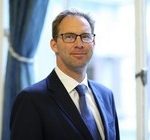
Category: Speeches

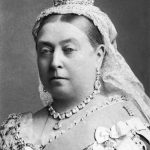
  • Queen Victoria – 1898 Queen’s Speech

    Queen Victoria – 1898 Queen’s Speech

    Below is the text of the Queen’s Speech given in the House of Lords on 8 February 1898.

    My Lords, and Gentlemen,

    My relations with other Powers continue to be friendly.

    The negotiations between the Sultan of Turkey and the King of Greece have been brought to a conclusion by the signature of a Treaty of Peace between them, under which the territorial relation of the two Powers is practically unchanged.

    ​The question of an autonomous Government for the Island of Crete has occupied the attention of the Powers. The difficulty of arriving at an unanimous agreement upon some points has unduly protracted their deliberations, but I hope that these obstacles will before long be surmounted.

    Intelligence, which is apparently trustworthy, has been received of the intention of the Khalifa to advance against the Egyptian army in the Soudan, and I have therefore given directions that a contingent of British troops should be despatched to Berber to the assistance of his Highness the Khedive.

    I have concluded a Treaty of Friendship and Commerce with His Majesty the Emperor of Abyssinia.

    The Report of the Commission which I appointed in December, 1896, to inquire into the condition of certain of my West Indian Colonies has conclusively established the existence of severe depression ​ in those Colonies caused by a heavy fall in the price of sugar, which is mainly attributable to the reduction in the cost of production and the great increase in its extent during recent years.

    But this fall has been artificially stimulated by the system of bounties to the producers and manufacturers of beetroot sugar maintained in many European States. There are signs of a growing opinion in those States that this system is injurious to the general interests of their population; and communications are now in progress between my Government and the Governments principally concerned, with a view to a Conference on the subject, which I trust may result in the abolition of the bounties.

    In the meantime, measures will be proposed to you for the relief of the immediate necessities of the West Indian Colonies, for encouraging other industries and for assisting those engaged in sugar cultivation to tide over the present crisis.

    On the North-Western Borders of my Indian Empire an organised outbreak of fanaticism, which spread in the summer along the Frontier, induced many of the tribes to break their engagements with my Government, to attack military posts in their vicinity, and even to invade a settled district of my territory. I was compelled to send expeditions against the offending tribes for the punishment of these outrages, and to insure peace in the future. A portion of the Afridi tribes have not yet accepted the terms offered to them, but elsewhere the operations have been brought to a successful close.

    The courage and endurance exhibited by my troops, British and Native, have overcome the almost insuperable difficulties of the country in which they were operating; but I have to deplore the loss of many valuable lives both amongst my own troops and those whose services were voluntarily and loyally placed at my disposal by the Native Princes of my Indian Empire.​

    Papers on this subject will be laid before you.

    The plague, which appeared more than a year ago in Western India, returned in the autumn; and, although the mortality is less alarming than it was at this time last year, it is still such as to cause anxiety. No effort will be spared by my Government in the endeavour both to limit its extent and to mitigate its effects; and I am confident that they will receive the loyal assistance of my Indian subjects in this arduous task. I rejoice, on the other hand, to inform you that the famine, which prevailed for many months over several large districts, may now be said to be at an end excepting within a small tract in Madras; and that there is reason to anticipate a prosperous year, both for agriculture and commerce, throughout my Indian dominions.

    Gentlemen of the House of Commons,

    The Estimates for the service of the year will be laid before you. They have been framed with the utmost desire for economy; but in view of the enormous armaments which are now maintained by other nations, the duty of providing for the defence of the Empire involves an expenditure which is beyond former precedent.

    My Lords, and Gentlemen,

    A measure will be introduced for the organisation of a system of Local Government in Ireland substantially similar to that which within the last few years has been established in Great Britain.

    Proposals having for their object to secure increased strength and efficiency in the Army, and for amending the present conditions of military service, will be submitted to you.

    Bills for enabling accused persons to be heard as witnesses in their own defence, and for cheapening and improving ​ the procedure of Scottish Private Bill legislation, have been before Parliament on many previous occasions. I trust that in the course of the present Session a final decision may be given upon these important questions.

    A Measure for facilitating the creation of municipalities in the Administrative County of London will be brought before you.

    A Measure for the Amendment of the Vaccination Law will be recommended to your earnest attention.

    Proposals for the prevention of certain recognised abuses in connection with Church Patronage, for the constitution of a Teaching University for London, for the Amendment of the Law relating to Prisons, for dealing in part with the subject of Secondary Education, for amending the Law relating to the Mercantile Marine Fund, for guarding against fraud in the management of Limited Companies, for the better ascertainment of the rights of landlord and tenant on the termination of an agricultural tenancy, and for preventing the adulteration of drugs and food, will be laid before you in case the time at your disposal should permit you to proceed with them.

    I heartily commend your momentous deliberations to the care and guidance of Almighty God.

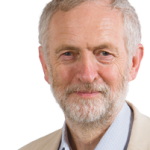
  • Jeremy Corbyn – 2020 New Year’s Message

    Jeremy Corbyn – 2020 New Year’s Message

    Below is the text of the speech made by Jeremy Corbyn, the Leader of the Opposition, on 31 December 2019.

    2019 has been quite the year for our country and for our Labour movement. And now we are not just entering a new year, but a new decade. And the period ahead could not be more important. It will be crucial if we are to stop irreversible damage being caused by the climate crisis and the particular effects it has on people in the global south. If we are to stop the pain plaguing our country, food banks, poverty and people struggling to get by. If we are to protect our precious NHS.

    It won’t be easy. But we have built a movement. We are the resistance to Boris Johnson. We will be campaigning every day. We will be on the frontline, both in Parliament and on the streets. Protecting our public services. Protecting healthcare free at the point of use. Protecting our communities, in all their brilliant diversity. And standing up for internationalism, global solidarity and co-operation, and working with movements and parties seeking social justice and change all over the world.

    And make no mistake, our movement is very strong. We are half a million people and growing, we are in every region and nation of our country. We’re not backed by the press barons, by the billionaires or by the millionaires who work for the billionaires. We are backed by you. We are by the many, for the many. 2020 and the years ahead will be tough and no-one is saying otherwise. But, we’re up for the fight, to protect what we hold dear and to build to win and to transform. The fight continues. There is no other choice. So if you’re with us already, I can’t wait to meet the challenges ahead together, but if you’re not, join us, join Labour today.

  • Boris Johnson – 2020 New Year’s Message

    Boris Johnson – 2020 New Year’s Message

    Below is the text of the speech made by Boris Johnson, the Prime Minister, on 31 December 2019.

    That distinctive sound you may have heard at midnight as the bongs of Big Ben faded away was not the popping of champagne corks or the crackle of fireworks from your neighbour’s garden.

    Rather it was the starting gun being fired on what promises to be a fantastic year and a remarkable decade for our United Kingdom.

    As we say goodbye to 2019 we can also turn the page on the division, rancour and uncertainty which has dominated public life and held us back for far too long. We can start a new chapter in the history of our country, in which we come together and move forward united, unleashing the enormous potential of the British people.

    Of course the first item on my agenda is to fulfil the will of the electorate and take us out of the European Union. This should have happened already, but we were thwarted by a Parliament determined to use every trick in the book to stop us leaving the EU.

    Now we have a new Parliament, elected by the people to deliver the people’s priorities, which will finally respect the referendum and deliver Brexit.

    So we’ll get Brexit done before the end of this month. That oven-ready deal I talked about so much during the election campaign has already had its plastic covering pierced and been placed in the microwave.

    We got down to work immediately after the election. The necessary legislation has already begun its passage through Parliament and, once MPs return to Westminster, we’ll waste no time in finishing the job. At long last we will take back control of our laws, borders, money and trade.

    Then we can finally spend 2020 getting on with delivering on the people’s priorities: boosting the NHS with the biggest cash injection in its history, renewing schools, backing scientists, building better infrastructure, controlling immigration, making our streets safer, cleaning up our environment, and making our Union stronger.

    The loudest message I heard during the election campaign is that people expect us – expect me – to protect and improve the NHS. The NHS is a wonderful British invention, there for us and our families when we are ill, whatever our background and regardless of ability to pay.

    So the NHS will always be my top priority. One our first actions will be to pass a bill enshrining in law a record funding settlement for the NHS, providing an extra £34 billion a year. We will undertake the largest hospital building programme in living memory, delivering 40 new hospitals and 20 upgrades. We’ll ensure there are 50,000 more nurses, 6,000 more GPs, and 50 million more GP surgery appointments.

    I also want to make this country the best place on earth when it comes to quality education and cutting-edge science. It’s great that we have started to climb back up the international school league tables – now let’s make it to the very top. We will support hardworking teachers by boosting per pupil funding in primary and secondary schools and we will transform this country’s approach to science and research, making the UK an engine for the ideas of the future.

    Our vision is clear: to unite and level up across the whole United Kingdom – spreading opportunity more fairly – with better infrastructure, superb education and high technology.

    We will do all of this while keeping your taxes low, freezing rates of income tax, VAT and National Insurance.

    It is thanks to you, the people, that we are on the path to a brighter future. It was your decisiveness at the ballot box, your determination to drive an electoral bulldozer through the deadlock and paralysis, that has unblocked parliament and delivered a people’s government dedicated to serving you.

    I know that many of you do not consider yourself natural Tories and may only have lent me your vote. I am humbled by your support and will work every day to keep it. I am also acutely aware that there are millions of people who did not vote for me and were disappointed by the result.

    If you are one of them, I want to reassure you that I will be a Prime Minister for everyone, not just those who voted for me. I know that you love this country no less, simply because you voted for another party or wanted to Remain. More than that, I want to work with you, as friends and equals, as we build the future this United Kingdom deserves.

    So let’s together make the 2020s a decade of prosperity and opportunity. State of the art healthcare. Great schools in every community. Our cities and towns more connected than ever before – not just in London and the South East but in the Midlands, the North and across the country. New trading relationships with nations around the world, generating jobs and growth. British scientists and engineers transforming the way we live – curing incurable diseases and making transport cleaner, greener and quieter.

    It’s a fantastically exciting agenda. Let’s get to work.

  • Boris Johnson – Text of 2019 Christmas Speech

    Boris Johnson – Text of 2019 Christmas Speech

    Below is the text of the speech made by Boris Johnson, the Prime Minister, for Christmas 2019.

    Hi folks, Boris Johnson here, taking a moment to wish you all a merry little Christmas.

    It’s that special time of year when, whatever has gone before, we can take an opportunity to celebrate all that is good in the world and to spend time with our friends and family.

    Christmas Day is, first and foremost, a celebration of the birth of Jesus Christ. It is a day of inestimable importance to billions of Christians the world over.

    I hope you are all enjoying a wonderful break with your loved ones, sharing gifts and tucking into some delicious food.

    Of course, as many of us are enjoying a break at this time of year, let’s not forget all those who have selflessly put their celebrations on hold.

    On behalf of the whole country I want to say a huge thank you to our amazing NHS staff, many of whom will be working throughout the holidays to take care of us. Thank you also to our police, and all those public servants working tirelessly this Christmas.

    I also want to express my personal gratitude to the wonderful members of our Armed Forces currently on deployment – and therefore to their friends, family and children back home who will have an empty chair at the table when they tuck in to their Christmas dinner.

    Today of all days, I want us to remember those Christians around the world who are facing persecution. For them, Christmas Day will be marked in private, in secret, perhaps even in a prison cell.

    As Prime Minister, that’s something I want to change. We stand with Christians everywhere, in solidarity, and will defend your right to practice your faith. So as a country let us reflect on the year, and celebrate the good that is to come.

    Folks, I hope you enjoy the next few days.

    Try not to have too many arguments with the in-laws, or anyone else.

    And whoever you are, wherever you are, and however you’re celebrating, have a very happy Christmas, and I’ll see you all again in the New Year.

  • David Amess – 2019 Speech on Southend City Status

    Below is the text of the speech made by David Amess, the Conservative MP for Southend West, in the House of Commons on 20 December 2019.

    For a moment, I was tempted to say, “Before the House adjourns for the Christmas recess, there are a number of points that I wish to raise,” but we have a title for this Adjournment debate. The House will not be surprised to hear that I am going to describe how, as the Prime Minister said just six weeks ago, Southend will become a city.

    Before that, I want to mention three newly elected colleagues. Little did I think that the daughter of my first constituency chairman, when I was elected the Member for Basildon in 1983, would be sitting here now. I think that the parents of my hon. Friend the Member for Derbyshire Dales (Miss Dines) are looking down from heaven, so proud that she has been elected.

    I have had another big surprise. You will remember, Mr Deputy Speaker, that Ken Hargreaves, who was my best friend here, was the Member for Hyndburn. Peter Britcliffe used to run his office and stood twice for the seat, and his 24-year-old daughter, my hon. Friend the Member for Hyndburn (Sara Britcliffe), has been elected. I am sure that Ken Hargreaves is looking down from heaven with great pride.

    Then there is probably the most extraordinary election result of all. Just three months ago, I was invited to Durham University. The motion was, “That this House has no confidence in Her Majesty’s Government.” I opposed the motion. We will not dwell on it, but for various reasons two parliamentary colleagues pulled out at the last minute, so a replacement had to be found, and that replacement was my hon. Friend the Member for Bishop Auckland (Dehenna Davison), who has been elected at the age of 26. This is an extraordinary occasion for me. If I had more time, I would mention the 46 and 109 new colleagues, but I need to concentrate on the Minister.

    I am not messing around. We have got it from the Prime Minister that Southend is going to become a city—and it will become a city. My hon. Friend the Member for Rochford and Southend East (James Duddridge) is present and we are absolutely united as to why Southend should become a city. It will not cost a thing, but I say to my hon. Friend the Minister that the enhanced status and ability to attract new investment will mean a great deal to the people I represent. That is why we want it.

    How does a place acquire city status? Well, there needs to be a contest. We had a contest in 2011, 2002 and 2000. It usually takes place around a royal event. Now, the Duke of Edinburgh is going to be 100 in 18 months’ time and I am working on other royal events to see how we can fine-tune the timing. It would be great if it happened next year because it will be the centenary of the mayoralty of Southend, which runs between 2020 and 2021. Now that we have moved on from the horrible atmosphere we had in this place, we have to be positive. And what could be a more positive way to start than by Southend being declared a city?

    Jim Shannon (Strangford) (DUP)

    I congratulate the hon. Gentleman on his hard work to ensure that Southend will achieve city status. Southend has many great things: ​a strong city centre, churches, a representative council, good education provision and excellent amenities. Like Lisburn in Northern Ireland, it will achieve city status and it is important that it achieves its goal. Well done to the hon. Gentleman for his hard work. I have supported him the whole time I have been in this place, and look forward to Southend getting city status. I might even get an invite to Southend when it gets city status; I hope so.

    Sir David Amess

    I thank the hon. Gentleman, whom I regard as my friend, for his support.

    Let me run through the list of reasons why Southend should become a city. First, there is the Music Man Project, which was the inspiration of David Stanley. He did not leave people with learning difficulties just to be looked after. He has absolutely transformed their lives through the power of music. The House can imagine my pride when these people with learning difficulties first performed at the London Palladium and then at the Royal Albert Hall, where my right hon. Friend the Member for Portsmouth North (Penny Mordaunt)—who was the Defence Secretary at the time—watched from the gallery. And it gets better: we have just sent a mission to Broadway and will now be taking our show, performed by people with learning difficulties, to Broadway. That is one reason why Southend should be a city.

    Next, Leigh-on-Sea was voted the happiest place in the United Kingdom. Well, I was not so happy knocking on doors in the cold and dark there recently, so I suppose I am the one exception. We scored high for community spirit, opportunities to develop skills, good restaurants and shops. It is also the 150th anniversary of Southend rugby club. How good is that—to keep a rugby club going for 150 years with volunteers?

    The marina, which will probably be in the constituency of my hon. Friend the Member for Rochford and Southend East, is going to be fabulous. That is another reason that Southend should be a city. We have the longest pier in the world. You cannot build piers today, but there we are. A number of politicians have felt that they were walking on water. When they come to Southend, they really do walk on water—on the longest pier. We are also reinventing and reinvigorating the trains there.

    During the election campaign, one or two issues were raised, but they can all be built into the case for Southend getting city status. All colleagues think that Southend airport is fantastic and very convenient. We are building a business park there, which will be excellent for regeneration. However, I have to say that it does cause nuisance and upset among people, especially when the two Amazon flights take off at 2.30 am and 4.30 am. There is also a difference in noise levels between easyJet and Ryanair, and an issue with air quality. We cannot keep having talks with the airport about section 106, so I want those matters changed.

    Donkey’s years ago, when I was the MP for Basildon, I had a public row on TV with the chairman of British Rail. I was clapped when I came through the Division Lobby, and they said, “Good on you, David! He needed to be told.” Our railway was called the “misery line”, so we changed the owner. I wanted Richard Branson to have it, but we ended up with c2c, and I am disappointed. The card reading machines take ages, as I found this morning; it is stupid. The ticket machines are far too low down, and when the sun is glaring on to the glass, ​you cannot see the screen. I am sick to death of being redirected every other week from Fenchurch Street to Liverpool Street. We need something done about that.

    Although I say to Conservative Members that we should forget renationalising British Rail, I am one of the few who was there when we privatised all these industries, and it was under the Blair Government that power was taken away from this place. We now need to make these organisations accountable, because that is where the problem is. We, the elected politicians, earn a third of the money that umpteen people in these unelected positions earn, and they need to be made much more accountable.

    I turn to the national health service. The chief executive of the NHS said at the start of the campaign, “Don’t weaponise the NHS,” but what happened? It was weaponised, with all this rubbish about selling it to America, and particularly in my area and that of my hon. Friend the Member for Rochford and Southend East. I was at Southend Hospital this morning doing my impersonation of Santa Claus, and I met one of our wonderful consultants, Paul Guyler. The reorganisation of services between Basildon, Broomfield and Southend cannot continue unless they are clinically led. They are clinically led, but we need people to put their heads above the parapet, and we need the ambulance service to reassure us that when they are moving patients around, there will not be delays that could result in disaster.

    On the environment and water quality, I think that the Thames estuary is getting cleaner all the time. I was standing on Bell Wharf recently, and a seal popped out of the water and starting clapping me—I thought, “There’s someone else who’s pleased with my re-election as a Member of Parliament.”

    I turn to parking. I think, Mr Deputy Speaker, we have reached a stage in our lives where we know what all the problems are; it is the solutions we ask for. Perhaps all my new colleagues will come up with some new solutions. I represent a tiny urban area, and parking is a real issue. I am delighted to see in the Gracious Speech that the Government are going to put money in for potholes.

    My hon. Friend the Minister should know that I am inviting ambassadors and anyone who is the head of a foreign embassy in this country to visit Southend. We have already had them from them Taiwan and Qatar. We are having them from India, the Maldives and all over the world. They want to invest in Southend, and that is another good reason why we should be a city.

    There was very good news from the hospital that I visited this morning. I am pleased to announce that the hospital has decided to invest in a new surgical robot to undertake prostate cancer surgery. We had a launch here with the new charity Prost8. This will change the lives of so many gentlemen who are diagnosed with a prostate issue. It was so good that our new Speaker decided to go public, just as the former Prime Minister did, about being diagnosed with diabetes. Sometimes it is forgotten that we are human beings, and we suffer all the happiness and tragedies of other people. He will be a role model in that.

    I am also pleased to announce to the Minister that we are going to offer patients across mid and south Essex out-of-hours emergency interventional radiology treatment, which is another good thing to happen. My hon. Friend ​the Member for Chelmsford (Vicky Ford) is no longer in her place, but the hospital in her constituency is going to have a new MRI scanner, which will help an awful lot of people.

    I want to mention a few of the local authority’s projects. A successful procurement process has led to a partnership between the Better Queensway scheme and Swan Housing, in the constituency of my hon. Friend the Member for Rochford and Southend East. There is the second phase of The Forum, a partnership with South Essex College, supported by £6 million of funding from the local enterprise partnership. I have already mentioned the pier. A wheeled sports facility opened in the summer, and the SUNRISE project is a great example of co-design and co-production in the creation of ideas for a new London Road entrance to the high street.

    The bid is working very well indeed. I have mentioned the airport business park and the 21-hectare site which will include the development of HQ-style office buildings. A planning application for the Seaway development has been submitted, and work is ongoing with Homes England and other partners to support the delivery of a significant pipeline of new housing across the borough. Digital infrastructure investment through CityFibre will ensure that Southend becomes a gigabyte city, and that all its households will have access to full fibre by 2022.

    I could go on and on, but I am anxious to ensure that my hon. Friend the Minister has a little time in which to respond.

    Jamie Stone (Caithness, Sutherland and Easter Ross) (LD)

    Inverness, which is not in my constituency but which is in the highlands, became a city some years ago, and it has been a great success. Part of that success has been the establishment of the Inverness tartan. May I point out that Cornwall has its own tartan, and Suffolk has its special gingham plaid? I strongly suggest to the hon. Member, in the spirit of Christmas good wishes—and I salute his excellent speech—that he think about a Southend tartan.

    Sir David Amess

    What a brilliant idea. I was not expecting that Christmas present. I thank the hon. Member very much indeed for his suggestion.

    I know that the House has become tired of hearing me ask for city status for Southend—[Interruption.]—a little weary—but I am not going to shut up until it happens, so someone must stand up at that Dispatch Box and tell me when the competition will begin. I shall raise the matter at the next Prime Minister’s Question Time. We have achieved a wonderful majority. We may have forgotten how to govern, but we are the Government now. We have five years in which to make the most of the trust that we have been given by the British people, so let us start with Southend being made a city.
  • Anne McLaughlin – 2019 Speech on the Loyal Address

    Below is the text of the speech made by Anne McLaughlin, the SNP MP for Glasgow North East, in the House of Commons on 19 December 2019.

    I have been returned to Parliaments often enough to know that in the first few days it is supposed to be friendly, collegiate and jovial. There is barely a human being on the planet who I do not wish well, but I cannot feign joviality simply because some Conservative Members get irritated and would rather we in the SNP cheered up or just shut up. I cannot feign it when I represent many people who have long since lost the energy or reason to smile because of what successive Tory Governments have put them through. I cannot pretend that there is anything collegiate about this place when I have sat through debates in Committees, spoken up for constituents and talked about the real pain and distress that many of them have felt because of UK Government policies, yet the policies are still railroaded through and their pain and distress are ignored and intensified. There is nothing collegiate about that, so I will not be feigning anything. I will just be sticking up for my constituents and for Scotland.

    During this long debate, I was softening, because I am a very soft-hearted person, until the hon. Member for East Worthing and Shoreham (Tim Loughton) got up to speak. I am going to pick up on just two of the many things he said that absolutely enraged me. The first was when he talked about somebody—I missed who it was—who had posted the number for the Samaritans in response to the Conservative Government getting their big majority. If he does not understand that thousands of people are in a really bad way and are very distressed that they will have to go through another five years of even worse policies and the impact they will have on them, he does not understand even his constituency.

    The hon. Gentleman then talked about how the absolute priority must be letterboxes. Now, I am a letterbox anorak as much as anybody else in here, but he talked about how he was constantly damp and frozen during the election campaign and how he had to deal with all these horrible letterboxes, and he said that had to be an absolute priority. I am sorry, but I have loads of constituents who are constantly damp and frozen because they cannot afford to heat their homes, and he will have plenty of them as well. If they had heard him say that, they would feel extremely let down by him.

    I will be collegiate about my predecessor. Paul Sweeney was a tough opponent, mainly because we agreed on so much and shared so many political interests. He is passionate about urban regeneration, restoring civic pride and the built heritage of Glasgow, particularly Glasgow North East, from where he hails. He considered it a huge honour to represent the area he grew up in. Politics can be really tough. It is not just a job we lose, and it is not just us who lose our jobs, so I wish him and his team well for the future.

    I would like to redress a terrible faux pas that I made when the results of the election were announced in Glasgow. I paid tribute to my opponents’ campaigners and completely omitted to mention my own team. This has been pointed out to me once or 25 times in the past week, so now, from the bottom of my heart, I thank not just the voters of Glasgow North East, whom I do thank, but my brilliant campaign team, who were determined to move heaven and earth to get me elected—and they did. If it is not stretching it a wee bit too much, can I just say that one of them, Esther, celebrates her birthday today? Happy birthday, Esther.​

    What is in the Queen’s Speech for the constituents of Glasgow North East? [Interruption.] “Hee haw” I hear my colleagues say. Let us look at some of the issues facing some of my constituents. What is in the Queen’s Speech for people being forced to use food banks as they wait weeks for universal credit—support to which they are entitled—to arrive? Nothing. What is in the Queen’s Speech for the WASPI women, who should not have to be fighting but whose fight will continue, alongside many of us, until justice is done? Nothing.

    What in the Queen’s Speech for people such as my constituent Donna from Carntyne, who is due to give birth in March but will do so alone because she does not earn enough for this heartless Government to allow her Tunisian husband to join her? Donna was a residential childcare worker—not highly paid but highly valued and absolutely necessary. She did that work by day and DJed by night and she still did not meet the minimum income threshold. What is in the Queen’s Speech for her? Absolutely nothing.

    What is in the Queen’s Speech to help to stem the rising number of drugs-related deaths in Scotland—I refer to measures over which the Scottish Government have no control? Absolutely nothing. What is in the Queen’s Speech for EU citizens living in my constituency who have been stuck in limbo for the last three years? Nothing but more fear, more uncertainty and more hostility.

    What is in the Queen’s Speech for children, often born here, whose parents cannot afford the £1,000-plus fee to apply for citizenship? Nothing, although now that the High Court has ruled these charges on children to be illegal, I look forward to the Government’s response. Finally, what is in the Queen’s Speech to help communities to transition to be greener and more sustainable? Nothing.

    Let me elaborate on some of the aforementioned. I assume that information on the green energy deal to aid communities to become greener and more sustainable will be forthcoming at some point. I urge the Government to be very careful about how whatever it is they plan to do is implemented. Nothing should discourage people from participating but, unfortunately, the last attempt by the Government to do this, the last green deal, left many people penniless and mistrusting. Putting right what happened to those people will go some way—some way—to lifting the suspicion that many now feel.

    Not long before losing my seat in the 2017 election, I was made aware of the issue of green deal mis-selling in the Barmulloch and Balormock areas of my constituency. A constituent who I have come to know very well— Mr Dougie Wilson—turned up at every surgery to update me on what was by then coming to light. That started me on a road that I am still on—a road that I stayed on, in solidarity with the 60 constituents affected by this, when I lost my seat. I am a little further along in terms of getting justice for people, but truth be told we have got nowhere near as far as we should have done because of the shambolic response from previous Governments. If this truly is a clean slate and fresh start, as the Prime Minister alluded to, I urge the Government to do what the SNP Government have to do as part of their day job, which is to mop up the mess left behind by the last UK Government.

    Let me read something that one of those constituents said to me. This is important. May is 84 years old and she is widowed. She was told by a company approved by ​the UK Government that the cost of her green deal products would be nominal, that she should not worry, it was a Government scheme and they would pay the bulk; she would have pennies to pay. That was followed up by, “Hurry up and sign, or you will lose out.” This is what she said to me:

    “When I got the paperwork with the figures on it I was so shocked I had an asthma attack. I was very distressed and panicked to see that I had somehow signed up to a loan of £10,000 with interest of £8,000. I am from a generation of people who save up if they want something. Other than my mortgage, I have never taken out debt, and although that sum might seem low to some people, it was horrifying to me.

    At the time, I did not say anything because I was too shocked, too embarrassed. I am 84 years old, I felt stupid for not knowing what I was signing. I felt ashamed and I felt vulnerable. I did not feel in a position to complain. I thought I had no choice and I blamed myself. I don’t blame myself any longer.”

    She does not blame herself any longer because she has the support of the fantastic Green Deal Action Group in Glasgow North East, which is made up of 60 of her neighbours, all of whom have different mis-selling stories to tell, all of whom this Government have heard from, but most of whom have been ignored or fobbed off. Let me be clear: they will not be getting fobbed off any longer. Apologies, cancelled credit agreements, refunds and compensation are what I am asking for. This is an issue that affects people not just in my constituency, but across Scotland. I am very grateful to those of my colleagues, particularly on these Benches, who carried on the fight and formed the all-party group on green deal mis-selling, for which I provided the secretariat.

    I said that there was nothing in the Queen’s Speech on drug deaths. Last year, in Scotland, we lost 1,187 of our citizens to drug-related deaths. The Scottish Government have set up a drugs death taskforce, which is made up of a range of experts, including those with lived experience. They are looking at the changes that they can make, but some changes cannot be made without the permission of the UK Government. The Scottish Government want to allow injecting drug users to use a safe and supervised health facility so that, if they go into overdose, someone is there to get help, but they—the grown-up, democratically elected Government of Scotland—are not allowed to do that.

    I join the calls of my hon. Friend the Member for Glasgow Central (Alison Thewliss) who has led the charge on this in the way that only she can. I join in her calls for the devolution of powers to enable Scotland to provide safe injecting facilities, and I will say more about that on a future occasion, but I am one of those people with lived experience of drug addiction. I lost a family member to a heroin overdose. He died, yes, because he injected heroin, but also because when he went into overdose, instead of calling for medical assistance his friends took fright and fled the scene because they were scared that they would be arrested. It is absolutely clear to me that he could still be with us today if those facilities had been available, as he would have been allowed to feed his terrible addiction in relative safety. Disappointed as I am not to see anything in the Queen’s Speech to help people in that position, I will work with other families, with drug users in Glasgow North East and with campaigners such as Faces and Voices of Recovery UK to fight for whatever measures are necessary to preserve lives and to make those lives worth living.​

    I said at the start that I would not feign joviality. I talked about the fact that no matter what we say and no matter how good a point we make, the UK Conservative Government are not listening, but that will not stop me, because I learned a very valuable lesson when I was elected in 2015. I met a group of women in Springburn in my constituency, and they were excited because two days earlier they had watched me speak in a debate on benefit sanctions. I told them how I felt that I had wasted my time and that I was banging my head against a brick wall because it changed nothing as nobody on the Government Benches was listening. They told me never to think like that. Yes, they want us to change things for them, but they told me that just knowing that someone who understood what they were going through was in this place, speaking up for them and fighting on their behalf, and being able to see and hear me do that meant so much to them. It made them feel that they were not voiceless.

    So I will fight for the justice that my constituents need and deserve, but even if this Government are not listening, never again will I feel like I am wasting my time. Speaking up for the constituents of Glasgow North East is what I will do every day until the day we all walk out of here for the last time and head home to Scotland to build the socially just, compassionate and independent Scotland in which they deserve to live. We know that it will happen. This Government may be in denial, but deep down they know it, too. Independence is coming very soon, and Members should be sure of that.

  • Karl Turner – 2019 Speech on the Loyal Address

    Below is the text of the speech made by Karl Turner, the Labour MP for Kingston upon Hull East, in the House of Commons on 19 December 2019.

    It is a real honour to be called in this important Queen’s Speech debate, and it is a pleasure to follow the hon. Member for East Worthing and Shoreham (Tim Loughton). I agreed with some of what he said, but there was an awful lot that I disagreed with entirely, not least the mention he made of the former Speaker. For me, John ​Bercow was somebody who jealously guarded the rights of Back Benchers and more junior Members in this House to hold the Government to account, whether they were on the Government Benches or the Opposition Benches.

    If you will indulge me, Mr Deputy Speaker, I want to make brief mention of some colleagues who are not here today. Some from my own region include Nic Dakin, who loyally represented Scunthorpe, Melanie Onn who represented Great Grimsby, Caroline Flint, who was a great colleague and a loyal servant to this House and her constituents, and Paula Sherriff. There are too many to mention all of them, but I just want briefly to say that I have rarely spoken in this House without having the privilege of looking over to the Bench there and seeing the Beast of Bolsover. I have known Dennis Skinner since I was a young child and I remember him fondly. He shared a flat with my predecessor, John Prescott, who I am glad to say is recovering from a period of ill health; he is doing well. This House will miss the likes of Dennis Skinner, and it would have been remiss of me not to pay tribute to him in this way.

    I welcome some of the things in the Humble Address, some of which were taken directly from the Labour party’s socialist manifesto. However, those people in east Hull who lent their vote to the Conservatives did not give the Government permission to flog off our NHS to Donald Trump’s America. Nor did they give their permission for environmental standards and consumer protections to be thrown away in the withdrawal agreement. They did not give the Government permission to deliberately and savagely erode their hard-fought and hard-won employment rights. It is clear from the Queen’s Speech that the Government intend fully to take away the employment rights of those hard-working people in my constituency.

    There has also been mention of facilitating a situation whereby transport workers will be prevented from taking strike action. I declare an interest as a loyal member of the Rail, Maritime and Transport parliamentary group in this House. People who get up in the morning and go to work do not need fewer rights in the workplace. They need better, stronger rights in the workplace and, my word, they are really going to need them as we move forward with this particular Government. It was a real shame that this Government did not address the social injustices in east Hull. People who get up in the morning, get on a bike, pedal to their place of work and work hard for very long hours tell me regularly in my surgeries that they often resort to using food banks. It is true not just in east Hull but across the country that there are more food banks than there are McDonald’s restaurants. When I was elected in 2010, that simply was not the situation. It simply was not true, but it is now.

    What the Government have not done in this Queen’s Speech is address the issues that concern people in my constituency. They include the bedroom tax, which is incredibly unfair and affects the most vulnerable people in my constituency the hardest. The Government have not addressed the unfairness of universal credit, or the fact that people are still really struggling to navigate that new system of welfare. They did not address an awful lot of things in the Queen’s Speech. It is true that people in my constituency lent their vote to the Conservatives on this occasion, but they will not make that mistake again because the proof of the pudding is ​in the eating, and we know from this Queen’s Speech that it is going to get a lot worse for people who live in east Hull. I am here to defend and work hard to protect those vulnerable people, and I promise my constituents in east Hull that I will be doing that at every single opportunity I get.

  • Patrick Grady – 2019 Speech on the Loyal Address

    Below is the text of the speech made by Patrick Grady, the SNP MP for Glasgow North, in the House of Commons on 19 December 2019.

    I have a wee sense of déjà vu, Mr Deputy Speaker, because in the last Queen’s Speech debate I spoke immediately after the right hon. Member for Bournemouth East (Mr Ellwood). By the luck of the draw, here we are again. He raises important points about the state of the modern world. None of his arguments seems to me to be a very compelling case for pulling away from one of the biggest and most successful international unions in the shape of the European Union, which the Conservative party is now determined to do. That, I suppose, will define much of the debate in the coming days and weeks.

    Let me start by congratulating all new and returning Members, particularly those who have arrived in increased numbers on the Scottish National party Benches. In particular, I want to pay tribute to my friend Stephen Gethins, who was not successful in holding North East Fife but who still has very much to contribute to Scotland before and after we achieve our independence.

    Today is a day of great constitutional importance. A woman with a significant constitutional role has outlined a vision for the future of her country, and the Scottish Parliament has endorsed that by passing the Referendums (Scotland) Bill, supported by the First Minister of Scotland, by 68 votes to 54. It is funny, because we have had this coincidence of Queen’s Speeches on days of important constitutional significance up in Scotland several times now. Each time, it demonstrates the contrast between the narrow, backward vision of the Conservative Governments and the progressive, outward view of the Scottish Government.

    This is the second Queen’s Speech in three months and the third election in four years. I think that Black Rod must be breaking records for the amount of time that she is spending walking up and down the corridor. However, just because the Conservatives have secured a stable majority of seats in England and Wales, that does not mean that there is not chaos ahead. We may now have a battering ram Parliament through which the Tories think they can push through any policy they please, but the effect outside this place will undoubtedly ​be further unpredictability for business and economic uncertainty and increased hardship for the poorest and most vulnerable members of our society.

    The Bills outlined today do not seek to build a new caring, sharing socio-economic consensus or to earn the trust of voters in the north of England who might have lent their votes to the Prime Minister’s party. Hidden behind the rhetoric and the spin is a hard-right reborn Thatcherite ideology that wants to strip back the functions of the state, liberalise the economy at the expense of workers’ and environmental protections, sell off the NHS in a Trump trade deal and scrap whatever vestiges of democratic accountability are left in the UK’s unwritten constitution—including, it seems, the Fixed-term Parliaments Act 2011. Whatever its flaws, the power to hold snap elections should not rest with the prerogative of the Prime Minister and the standard length of terms must be defined in legislation.

    Of course, half of the laws outlined today will be subject to the English votes for English laws procedure. We hear about the great one nation Government, and they are governing for one nation in at least half of the Bills that they are proposing. The Governments much reduced number of Scottish MPs and the incredibly reduced number of Scottish MPs from the other Unionist parties will not have very much to do. The EVEL process is a complete waste of time and should be scrapped immediately.

    The Conservatives may have won in parts of the UK where they have never won before, but Scotland wants no part of this. The agenda presented in the Tory manifesto and in today’s Queen’s Speech has been comprehensively rejected by voters in Scotland. I am proud to have been re-elected in the constituency with the highest share of the remain vote in Scotland in the 2016 referendum, which also had the fifth highest in the whole of the United Kingdom. That determination to protect Scotland’s right to remain a member of the European Union has been reinforced by the result last Thursday, and that must also mean the right to decide a different future for our country, a future that could deliver the vision outlined in our manifesto and in the alternative Queen’s Speech that the SNP has published today. That is an open, welcoming and inclusive vision of a country that plays its part in meeting the highest global ambitions to tackle the climate emergency, that provides not just refuge but jobs and livelihoods for those fleeing war and famine elsewhere, and that wants everyone who can contribute to our society to make their home here. It is of a country that meets its commitments to international aid and delivers them through a dedicated Government Department, which also seems to be at risk in this Queen’s Speech.

    In Glasgow North over the past six weeks, people on the doorsteps said time and time again that they wanted to stay in the European Union. They also wanted an end to the misery of the last nine years of Tory rule. They were inspired by the SNP’s commitments to a proper step change in NHS funding, to building a social security system based on dignity and respect, and to releasing funds for many such vital public services by scrapping the abomination of nuclear weapons on our shores. If this Tory Government refuse to listen and ignore Scotland as so many UK Governments of whatever colour have done over the years, they do so at their own peril.​

    Throughout my lifetime, the result of the general election in Scotland has not affected the result across the UK. The Prime Minister has always been chosen by voters in England and Wales. Until 2015, however, the majority party elected in Scotland to Westminster was, for whatever reason, committed to itself one day being part of a Government of the United Kingdom. Although there was a stark democratic deficit, which led to the campaign for and creation of Scotland’s devolved Parliament, it was fair to say that the majority was bound to accept the UK result. Since 2015 however, the majority of Members returned to this place by constituencies in Scotland have a different view. We believe that if the United Kingdom cannot and will not deliver on the priorities of our constituents, we must have the opportunity to choose an alternative path.

    There are no Liberal Democrats here, but they were complaining earlier about proportional representation. They were in government with this lot for five years and they completely failed to deliver on that pledge so they cannot complain now when the system works against them—

    Mr Ellwood

    We had a referendum.

    Patrick Grady

    Which, incidentally, voters in my part of the world supported.

    Our belief has been reinforced by the mandate we have won this election. I am immensely grateful and hugely privileged to have been elected to represent Glasgow North once again. I accept that not all voters will agree with everything I have said today, and we all have a responsibility to listen to, respect and act on behalf those who did not support the majority party, but if that applies in constituencies it must apply to the Government as well. If the Conservatives are so convinced of the case for their precious Union, what do they have to be afraid of? The United Kingdom that people voted to be part of in 2014 has already fundamentally and materially changed, and by 31 January it will definitively no longer exist if the Government achieve Brexit.

    We heard from the Government, the Prime Minister and, indeed, the right hon. Member for Bournemouth East about this one nation Government, but what nation is that? The Prime Minister is supposed to be the Prime Minister of a United Kingdom made up of four distinct constituent territories each with their own traditions and experiences of nationhood. If he wants to govern in the interest of just one nation, that is up to him. It is a small, isolationist and reactionary vision harking back to an imperial glory that never really existed in the first place. Scotland’s vision is internationalist. Our independence is defined by our interdependence on the global family of nations and institutions, of the United Nations and the European Union. The real separatists are the people who want to take us out of those institutions and to reduce our commitments to tackling global challenges, move us out of alignment with the highest agreed standards on social wellbeing and the environment, and ignore rulings of the United Nations General Assembly and the International Court of Justice on the Chagos islands, for example.

    As I said earlier, and as I said at the SEC Centre in Glasgow last Thursday, Scotland wants no part of that. Whether the Prime Minister likes it or not, one day ​soon Scotland’s future will be back in Scotland’s hands, and we will continue our work, as we always do, towards those early days of a better nation.

  • Tobias Ellwood – 2019 Speech on the Loyal Address

    Tobias Ellwood – 2019 Speech on the Loyal Address

    Below is the text of the speech made by Tobias Ellwood, the Conservative MP for Bournemouth East, in the House of Commons on 19 December 2019.

    It is a pleasure to follow the hon. Member for Swansea West (Geraint Davies). I may not agree with everything that he said, but I certainly stand with him on the call for us to do as much as we can to tackle climate change. We will host a huge event next year and the world will be watching. I would love us to be able to be more ambitious on the targets we set for 2050, but that will be for the Government to decide.

    I repeat the thanks I gave on election night to the good people of Bournemouth East for returning me to Westminster. I see that my right hon. Friend the Member for Bournemouth West (Conor Burns) is in his place. It is an honour to represent the finest seaside town in the country. For those of us who have endured months—indeed years—of political gridlock and political turbulence, this new Parliament and new Government see the paralysis replaced by optimism, purpose and vision; an invigorated Parliament and Government with a clear and decisive election result for us to work on. The result reflected a nation that was tired of parliamentary gridlock, frustrated with Brexit and yearning for strong resolute leadership. The result also confirmed a rejection of far-left socialism, irresponsible public spending, big Government and a further delay to Brexit. However, after a tough decade, there were also clear calls for increased but responsible investment in our public services, particularly health and education—this has been reflected in the Queen’s Speech—as well as greater support for councils in tackling housing and homelessness challenges, and more determined efforts to deal with climate change, as we touched on.

    I believe that the size and manner of this historic win will see us embark on a new period of British politics. Mercifully, without the threat of another general election, we will have a Government with a large majority giving clarity over Brexit and a fiscal envelope to responsibly increase Government spending. To put it another way, we have the time, the mandate, the energy and the aspiration to lead Britain towards a new era of British patriotism, opportunity and prosperity, allowing the divisions of the nation to begin to heal. If people such as Tony Blair on one side and Michael Heseltine on the other are saying that they have lost the argument and that they recognise that we must move forward, it is time for the nation to move forward, too.

    Much has been said about one nation Conservatism, the political philosophy that stemmed from Disraeli’s social mission to improve the lives of all people, not just those from business or privileged backgrounds. It is worth emphasising what that means. It is the military equivalent of the higher officer’s intentions—how our individual decisions and missions are knitted together to give a stronger and greater effect. Our party wins elections because it is willing to change, advance and adapt, while still being anchored to its core values.

    The adjective “conservative” does not imply that something is progressive or reforming, but let us to go back to what Edmund Burke, one of the founding voices of Conservatism, said. He spoke of the need to reform in order to conserve what is important to us: ​community bonds and shared values. It is for that reason that I was so cheered by the Prime Minister using his first speech outside No. 10 to thank those who lent us their support, saying that it would not be taken for granted. As the geographical footprint of our party changes, so must its attitude, with a commitment to turning that endorsement into longer-term or permanent support.

    I am sure that most Prime Ministers can look back and proudly point to key achievements that may define their time in office, but as our great history shows, occasionally in British politics, a true giant emerges who not only solves the crisis, but reunites the nation and invigorates a new sense of purpose and national pride, leading us into a brighter chapter where we can hold our heads up high. We saw this with Peel, Disraeli and Churchill, and I believe that the stage is set for something potentially very big now: a new era of one nation Conservatism. That is not a repeat, a rehash, or a play on previous moulds. It is not simply a soundbite to mollify a wing of the party—it is a tailored political philosophy relevant for today.

    The phrase “one nation” is used a lot—it has been used today and it was used during the campaign. Given that it will form the backbone to strategy and policy thinking and to the implementation of the Gracious Speech, I would like to add some detail. First, it is about someone’s belief in a sense of duty to better themselves and support themselves, their family, their community and their nation, with a Government promoting life chances and choice, wherever and whoever someone is. Secondly, it is a belief in business, where hard work is rewarded. Economic liberalism is the best vehicle for prosperity. Encouraging the entrepreneurial and generational growth is what one nation Conservativism is about. There are consequences for indolence, but we support those who may stumble or require help, through no fault of their own, and we temper excessive greed.

    Thirdly, it is about fiscal responsibility. We invest in public services and infrastructure, but we do so wisely. We identify and tackle inequality, but we are dependable in managing the nation’s finances. Fourthly, it is about a belief in strong but small government—the rule of law with empowered localism and a strong and engaged society. Finally, it is about active global leadership—a nation able not only to defend itself, but to stand up and defend our interests abroad. That is why we participate actively in NATO, stay close to the United States and invest in overseas aid.

    We would be naive to think, however, that the time that we have spent debating Brexit has not impacted on that global reputation. We have some work to do to re-engage, so I am pleased to see in the Queen’s Speech a commitment

    “to promote and expand the United Kingdom’s influence in the world”.

    As the first line of the security review in 2015 reminded us:

    “Our national security depends on our economic security, and vice versa.”

    We face an increasingly unpredictable and unstable world. On the one hand, threats are becoming more diverse and complex, eroding the international rules-based ​order, but on the other, we are seeing a rise in populism, protectionism and isolationism, and a reticence to stand up and defend the erosion of the rules-based order. There has been little effort to review the outdated Bretton Woods organisations that have served us well since the second world war, but which now need reviewing. We have entered a chapter of real change, with resurgent nations, creeping authoritarianism, technological advances moving conflict into the cyber-world and space, and climate change pressures leading to mass migration. Sadly, terrorism and extremism have also not been defeated, as we saw with the London Bridge attacks.

    As the Chief of the Defence Staff touched on in his Royal United Services Institute speech this month, technology is providing new ways to conduct political warfare. Why conduct a kinetic attack when such economic harm can be brought about through the theft of intellectual property, cyber-attacks, satellite disruption or information and propaganda operations, such as election interference?

    It is right that we conduct a full defence and foreign policy review. I have long called for a grand Government strategy that better co-ordinates our international-facing Ministries—perhaps under the leadership of a deputy Prime Minister who co-ordinates the Foreign and Commonwealth Office, the Ministry of Defence, the Department for International Development and our trade Ministries—to truly leverage and co-ordinate our respected soft and hard power and our status as a country, traditionally with the ability and the desire to shape the world as a force for good.

    I do not apologise for repeating what I have said many times in this House: our defence posture matters and we must invest more in our armed forces. I hope that the review will praise the professionalism of our brave service personnel, but 2% is not enough. It is the NATO minimum. We do not strive to have the minimum or the average—we strive to lead. We cannot do that on just 2%, but I agree that the review should include procurement. Our Storm Shadow missile, for example, has a stand-off range of 250 km—it is our most potent air-to-ground weapon—yet we insist that it is fired only from a $100-million stealth fighter, when in some circumstances, such as over Afghanistan, a propeller aircraft costing one fifth of the price could do exactly the same job.

    I encourage the security review to look at the long term, at what is coming over the horizon. I mention China directly; in our lifetime, it will overtake the United States as the world’s single dominant power. This year alone—indeed, in every year over the last five years—its navy has grown by the size of our navy. Its air force is moving into fifth-generation capability and it has the largest army in the world. In our lifetime, the RMB is likely to challenge the dollar as the global reserve currency. The BeiDou constellation of satellites will also challenge GPS, in terms of being used by other nations, and the China club of nations that are indebted to China grows every year.

    In 2000, global debt to China was just $500 billion. Today it is $5 trillion, $1.3 trillion of which is from the United States. Left unchecked, the trajectory of China’s technological, economic and military capabilities will extend far beyond the accepted norms of currently recognised international standards. Chinese tech giants such as Alibaba, Tencent and Huawei are able to operate in this country, but our equivalents, Apple, Facebook, ​eBay and so forth, cannot operate in the same circumstances in China. Those companies are state-funded and are moving ahead technologically faster than any of ours. We need to avoid the dangerous, bipolar world that we are heading towards.

    There is a huge opportunity for leadership and a vacuum to be filled not just in Britain but on the international stage. We need to think carefully in post-Brexit Britain about how we define ourselves militarily, politically and economically and how we upgrade the Whitehall machine to advance, modernise and improve our statecraft. As the Prime Minister said, we are seeing a realignment of British politics and of the Conservative party as we have ventured into territory long seen as Labour strongholds. The opportunity for our party and this Government to rise to the occasion and take us forward as a modern, fiscally responsible and progressive one nation party is one that we will not see again for a long time. I hope that we can present an optimistic, inclusive agenda, replace division with unity, lead the nation forward and again be a force for good on the international stage.

  • Geraint Davies – 2019 Speech on the Loyal Address

    Below is the text of the speech made by Geraint Davies, the Labour MP for Swansea West, in the House of Commons on 19 December 2019.

    It is a great pleasure to follow the hon. Member for Clacton (Giles Watling). The Queen’s Speech introduced by the right hon. Member for Maidenhead (Mrs May) stated:

    “My government’s priority is to secure the best possible deal”,

    and mentioned working with the devolved Administrations and business. That was then dropped to become, “My priority is to secure a deal by 31 October, do or die”, and now we have 31 January.

    Hon. Members know that we have a different system for referendums—they are one person, one vote, which decided the referendum in 2016—compared with elections for constituency MPs. Under the one person, one vote system, other than generating a significant Conservative majority, this election also generated 16.5 million votes for remain parties, and 14.5 million for leave parties, which is 2 million fewer. If we consider the number of parties that do not agree with the deal that is being railroaded through, which includes the Brexit party, that is 18.1 million people who do not agree with the deal as it stands. Nevertheless, this deal will be hammered through on the basis of an election that was thrust on us on a cold, dark night, and that disadvantaged poorer people who do not have cars and so on.

    The election was engineered in such a way because the Conservatives realised that they could unite the smaller pro-Brexit vote, divide the remain vote, secure a majority, and hammer Brexit through on the back of a ​few slogans such as “get Brexit done”, and “oven-ready” convenience food. We all know that living on oven-ready convenience food is not particularly good for our health, but we are where we are. I am sad that we have lost so many good Labour MPs, and our next task is to ensure that people’s jobs, livelihoods and environments, and workers’ rights, are secured in this deal through democratic scrutiny. I fear that that will not happen, that those things will not prevail, and that we will end up with a Brexit that will make us all poorer, weaker and more divided.

    Given that, it is incumbent on the Government to deliver a Queen’s Speech that counteracts the negative economic impacts of Brexit by making as its centrepiece a re-engineering of our economy to deliver the white heat of technology focused on sustainability, given that we have a climate crisis—a new green economic renaissance. Sadly, we did not see that in the Queen’s Speech. We saw “get Brexit done”—whatever that means—and, yes, we will have some trade deals, but there will be no scrutiny. Instead, we will stand alone, weak against China and weak against the United States, as we turn our back on the European market.

    We should have accelerated our ambition to be carbon-neutral by 2050, and put in place a fiscal strategy to deliver excellent green technologies and products that would form an export base for a new economy. I welcome the fact that we will host the COP26 summit, which will give us an opportunity to showcase ideas. I very much hope that the Budget will focus on fiscal strategies and incentives for investment to push that agenda forward.

    As the chair of the all-party group on air pollution, I welcome the legally binding targets in the Queen’s Speech. The devil, however, will be in the detail. It is important that we meet the World Health Organisation target on particulate matter—the target to reach PM2.5 down from the 15 micrograms per cubic metre we have in London now to 10 micrograms per cubic metre by 2030. Microparticulates will penetrate unborn babies and we are seeing dreadful public health problems in Britain. The latest estimate on premature deaths from air pollution is approximately 62,000 people a year, at a cost of £20 billion a year. It is therefore very important that we focus on this issue. People doubted much of the economics in the Labour manifesto, but according to the Royal College of Physicians the cost of air pollution is £20 billion a year. If we saved £3 billion—a fairly modest saving—that income stream could service, at a 5% interest rate, a borrowing of £60 billion to invest in green manufacturing.

    We need a transition towards the electrification of all our trains and buses sooner rather than later. We need to incentivise, through scrappage schemes, the switchover to electric cars for normal consumers. It is unfortunate that the roll-out of much of the electric grid is in the hands of BP, which has a vested interested in slowing it down in order to sell more petrol and diesel. We need to re-engineer our duties to incentivise people towards a sustainable future and for the Government to invest in public transport alternatives. There are a lot of technological opportunities. Our subsidy focus should move from fossil fuel to renewable energy—whether wave, wind or solar—and towards the manufacture of associated products.

    Bob Stewart

    Everyone talks about electric cars, but we should also be talking about hydrogen, which is a very clean fuel. Hydrogen could power cars and trains, too.

    ​Geraint Davies

    I completely agree with the hon. Gentleman. Hydrogen is a major part of the mix for the future in terms of transport. He makes an excellent point. There are opportunities for solar tiles on public buildings or even roads. New technology can make buildings net contributors and help us to move towards carbon neutrality before 2050. The latest projections are that there will be a 1.5° increase in global temperatures by 2030, and not 2040 as previously thought. We need to look again at such ideas as the Swansea Bay tidal lagoon, which was rejected by the Conservative party on the grounds that it would have been done through the private sector and backed by very expensive private equity loans. This should be public sector investment, with low interest rates over a 120-year timeline, in light of the fact that 80% of all identified fossil fuels are unexploitable if we are to avoid irreversible climate change.

    The Government need to stop their ambitions in relation to fracking. Fracking is worse than coal for climate change, because methane is 85 times worse than carbon dioxide for global warming. There has been a suspension of fracking. I hope that suspension will become permanent, because fracking is certainly the wrong thing to do and the wrong signal to send. On plastics, the Queen’s Speech states that we will stop exporting polluting plastics to non-OECD countries. We need to do much more than that. We need to stop the production of single-use plastic. We need to tax plastic to incentivise consumers and producers towards sustainable alternatives.

    On NHS funding, the funding targets enshrined in the Queen’s Speech are not high enough. They are not ambitious enough in relation to our European counterparts. Those on the Government Front Bench should remember that poverty is a major driver of mental and physical ill health, so one of the best ways of sorting out the problems of the NHS is to confront the poverty that current Government policies are creating.

    On the political future we face, I fear that the nature of politics in Britain will deteriorate. I say that because some of our finest public institutions—the BBC, the civil service, our universities—are under fundamental threat. They hang together and support our fundamental values of freedom, democracy and human rights. Through frustration, people voted for Brexit, which is rolling forward without a clear conclusion. They voted to leave in order to have a future, but if they lose their jobs they will be very unhappy.

    It is very important that the Government keep their word and reach out from London and the south-east to rejuvenate other areas, including Wales. I am here to represent Swansea. The simple fact of the matter is that we in Wales make up 5% of the population, have 11% of the railway, but receive only 1.5% of rail investment. It takes me three hours to get from London to Swansea. It takes about two hours to get to Manchester. With HS2, that journey will take about one hour and 10 minutes. Investors will ask themselves the question: where am I going to invest? We need our fair share of investment in Wales and we need rejuvenation.

    I stood on a mandate to remain in the EU, which would be good for Swansea and Wales, but I realise that we are heading towards an imminent Brexit. I also stood on a mandate to invest in green technology. I hope that a fairer share of investment in a green renaissance ​can be taken forward, upping our game on the global stage so that out of the ashes of Labour’s defeat we can build a greener future for all.