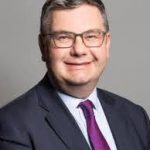
The speech made by Nigel Phillips, the Governor of the Falkland Islands, on 1 June 2021.
Mr Speaker, Honourable Members. Whilst it has only been a year since I last delivered my Annual Address, it seems a very long time ago, not least because less than three months earlier COVID-19 had been declared a global pandemic.
I say now, as I did then, that it is impossible to deliver a speech such as this without acknowledging the uncertainty and upheaval that has been caused by the coronavirus. There is nowhere in the world that has been unaffected by the impact of the pandemic, and the Falkland Islands is no different.
While we have been able to control the number of positive cases, this has been in no small part due to the cooperation of the community in complying with strict quarantine and self-isolation measures. Although we have not experienced lockdown in the same way as many other countries, the Falkland Islands is a place that embraces freedom in all its forms, and I know that these restrictions have made life difficult.
The welfare of our people has been paramount throughout the course of the pandemic, but government has also needed to act decisively to support our local businesses, which have required financial stimulus over the past year, in particular our tourism and agriculture sectors.
Despite the pandemic, progress against The Islands Plan 2018-2022 has been maintained. We have had to be pragmatic in our approach to delivery, finding new solutions to existing challenges exacerbated by the global situation.
While this is the last Budget of the current Legislative Assembly, it retains the hallmark of the past three years, which is an energy and an optimism for delivering a brighter future for the Falkland Islands.
Indeed, today provides an opportunity to reflect on the many developments made during the past year, a year in which we have continued to work towards building an even more prosperous social, economic and political foundation for current and future generations. So, I will turn first, to providing the fiscal context for this Budget, which will set the scene for the next twelve months and beyond.
Fiscal context
Mr Speaker, despite the very challenging economic backdrop, we have continued to enjoy a Budget surplus. Through this we have maintained our strong financial position and this has enabled us to provide a full suite of COVID-19 stimulus and support packages.
From our job retention, self-employment and unemployment schemes, to our agricultural subsidies and tourism incentives, we developed and delivered a range of COVID-19 recovery measures to provide relief for businesses, families and individuals.
Through careful financial decision-making, we achieved excellent performance across our externally managed investment funds. This, together with revenues from fishing and taxation, has meant that government finances have not only remained robust, but have enabled further investment in our capital and service delivery plans.
Overall, the Falkland Islands economy has largely recovered from the hiatus of 12 months ago, with some obvious exceptions, namely the continued suspension of land and sea-based international tourism.
This coming year – 2021/22 – will see an estimated operating budget of £78.3 million and projected capital expenditure of £53.5 million, compared to £30 million in 2020/21. This includes investments in the new port facility, the Bennett’s Paddock housing development, refurbishment of KEMH and transport infrastructure, including a new FIGAS aircraft. The government’s ability to plan, finance and deliver the key aspects of its ambitious capital programme, are as a direct result of ongoing efforts to improve financial forecasting, as well as maintaining a keen focus on continued fiscal prudence.
Indeed, this careful and effective approach to managing the public purse has recently resulted in the government being given an A+ credit rating by S&P Global Ratings. This achievement supports a wider framework for longer-term investment and highlights our ability to effectively manage future financial risks and opportunities.
So, turning now from the economic outlook, to developments within international politics, which have seen a year of significant change.
Political context
While we have not been able to travel this year, this does not mean that our overseas relationships have faltered. Instead we have made the most of technology to continue developing constructive dialogue and relationships with partners and politicians around the world.
Changes resulting from Brexit, have seen the introduction of tariffs for our fishing exports in particular, but the government continues to work closely with the United Kingdom to make sure that the impact of these changes is not overlooked. I would like to acknowledge the Falkland Islands Government Office in London– or FIGO – in particular, for the efforts of the Representative and his team in these discussions.
Speaking of the UK, I would like again like to express my thanks for the support shown by the UK Government during the pandemic. We have only been able to develop our on-island testing capabilities and to roll out a hugely successful nationwide vaccination programme with their help. These efforts have helped to protect our population and keep people safe, and I know that we are all truly grateful for this.
I’ve said before that constructive relationships between countries are not just about institutional engagement, but also interactions between people, human connections. One such example here in the Falkland Islands, is the continued support for the Humanitarian Project Plan.
In March 2021, an agreement was signed to request the International Committee for the Red Cross (ICRC) to return to the Islands, to carry out further forensic work to identify soldiers buried in the Argentine cemetery near Darwin. We anticipate this taking place in August. Since the project began in 2017, the Falkland Islands Government has reaffirmed its commitment to helping ensure the success of this work, which has led to the DNA identification of 115 individuals. This very human endeavour continues to shine a light on the compassion and understanding of the community.
A community which will go to the polls, in November, for the next General Election. As a nation which embraces self-determination and democracy, I have no doubt that the voter turnout will be high and the hustings will be spirited! I look forward to seeing which candidates come forward to throw their hat into the ring, in the months ahead.
Which would seem a suitable moment to also acknowledge the efforts of MLA Roger Edwards and MLA Barry Elsby, who will both be retiring from politics this year. Thank you both for your political service, which I understand spans 16 and 10 years respectively.
The Islands Plan 2018-2022 – update on capital investments and initiatives
While this is the final Budget of the current Legislative Assembly, The Islands Plan is still set to run until 2022. As the blueprint for the future development of the Falkland Islands, this means there are a number of capital commitments included within the Budget for 2021/22. There are £29.07 million in new funds for capital projects this year, which contribute to an overall programme valued at £120 million between 2019 and 2024. Considerable work has taken place to extend the capital programme into a ten-year plan, which will allow government to manage both immediate and longer-term plans, as well as ensure there is suitable provision to deliver key priorities.
The largest, single development within the programme will be the new port facility, which will deliver on this Assembly’s pledge to support the future expansion of key industries, as outlined in The Islands Plan. In April 2020, the government signed a contract with BAM Nuttall Ltd to deliver the project, and, since then, great progress has been made. There has been extensive stakeholder engagement, ground and site investigations, and a series of surveys conducted to help inform plans. It is anticipated that the Detailed Design stage will start in September. The interim power station has also now been delivered, with three high-speed engines to support the existing system. The Detailed Design for the new power station is due before the end of 2021 and, in realising this plan, the government is reaping the benefits of work already done to identify an
Housing projects at Sapper Hill are also progressing at pace, with 22 new houses now complete. A further four units are under construction on Brandon Road and government is currently negotiating a contract to deliver a further 40 houses over the next 3-4 years. The recent completion of Prince Philip Street – the link road with Ross Road East – will also support the release of plots at the Bennett’s Paddock site.
Speaking of roads, the National Infrastructure Plan was updated in December 2020, supported by significant investments in equipment and plant at Pony Pass Quarry. Our Public Works Department has delivered another eight kilometres of blacktopping on the MPA Road, which means that including the existing surface, there is now asphalt from Stanley up to the south side of Fitzroy Ridge. Over the next 12 months the plan is to complete a further 4km, working from that point of Fitzroy Ridge towards the Frying Pan. Works have also continued on Camp roads, with an ambitious season planned for next summer, on the East and West.
Alongside investment in improving roads, the government recognises the need to strengthen other vital linkages within Camp. A five-year programme of improving ramps and jetties is now in train and a new VHF two-metre radio network launched in May; further improvements to Islands-wide 2G coverage are also included in plans for this year.
Aviation services have had another busy 12 months, with December marking the arrival of the first new aircraft since 1992; it is named for Sir Miles Clifford who was instrumental in establishing FIGAS in 1948. Another new aircraft is currently under construction, although COVID-19 has impacted on delivery and it is expected to arrive next year.
FIGAS’ first female pilot took to the skies this year and another newly qualified pilot has also joined the team and is now training locally. Both colleagues are vital additions to the service which saw a record-breaking season, having supported the delivery of the TRIP domestic tourism scheme. FIGAS transported 1,621 passengers in January, followed by 1,779 in March – most of whom I am sure were very happy holidaymakers and I sincerely thank FIGAS for their efforts.
We have also continued to invest in projects that support the health and wellbeing of our people, most notably Tussac House and the expansion of KEMH, which I will provide more detail on later.
Finally, before I move on from the capital programme, it’s important to acknowledge that having kept coronavirus at bay, we have pressed on with determination during that time. This would not have been possible without the ‘backroom’ support involved in this work, such as improvements made within procurement to address barriers in the local supply chain and undertaking training to help Islands-based businesses to respond to tender opportunities. All of which serve to further develop local opportunities for local people.
Agriculture
As I have said on previous occasions, agriculture is critical to the identity and culture of the Falkland Islands. During COVID-19, the government has worked very hard, in partnership with farmers, to develop schemes to support the sector during this challenging time.
One such example is the Wool Producers Support Scheme, which saw just under 4,000 bales of wool purchased by the government for £2.77 million, which were held in storage until international markets reopened. Almost all of the wool has now been sold at an overall cost to the government of £750,000, slightly outperforming our estimates. We have subsequently seen wool markets recover since the middle of 2020, with prices returning to the levels seen prior to COVID-19.
Still with a focus on wool, this year we established a new accreditation scheme for wool. The Responsible Wool Standard is a global industry tool that recognises farming best practices, including animal welfare and sustainable land management. It supports a fully traceable wool supply and provides consumers with the confidence that our products have been both ethically and responsibly produced. We hope that our first accredited wool will be available for buyers to purchase in 2022.
This year we took the difficult decision to cancel the mobilisation of an export team for the FIMCo meat processing plant due to COVID-19, which had a direct impact on both the business of FIMCo and local meat producers. To mitigate this, a number of actions were taken, including the development of a Meat Producers Support Scheme and provision of government land for temporary grazing purposes. FIMCo are now delivering a mini export season, where they will process as many animals as possible, using local labour and resources.
Marine and fisheries
As the largest contributor to the Falkland Islands Gross Domestic Product (GDP), fisheries remain a vital component of our economy. As such, this year, the government worked closely with fishing companies to ensure that vessels were able to operate safely and meet necessary COVID-19 public health requirements in order to protect our people, and which continues to be our primary concern.
I am therefore pleased to report that our catch numbers were superb this season. The total Ilex catch was 153,000 tons, the best since 2015; Loligo also attained a record high for the first season, with more than 59,000 tons caught in two months, the same quantity as for the whole of 2020. 2020 also saw a catch of 43,376 tons of hake, which is the second highest catch of the past decade. Good news all round.
Tribute should also be paid to the efforts of the Department of Natural Resources, who worked with industry to develop innovative solutions to reduce bycatch, such as the compulsory introduction of discharge tanks for trawlers to reduce seabird interactions and net-binding trials. The team’s Marine Mammal Observer programme is also working well and has seen mortality reduced to a negligible level.
Work continues on implementing an early Individual Transferable Quota (ITQ) renewal process, with final policy matters due to be considered in the first quarter of the new financial year. Meanwhile, the approach to Ilex licence applications and allocation was adjusted for the 2021 fishing season, in order to align with national objectives and further develop the economic value of our fishery.
Finally, the restructured Maritime Authority has recruited a new team, who will work closely with Fishops, to support shared oversight of activity in Falkland Islands waters. While both organisations were separated in order to facilitate regulatory independence, they will continue to collaborate on matters such as improved safety standards.
Oil
Mr Speaker, last year I referred to the Sea Lion project being paused, this was due to the dramatic decline in oil prices, which affected the industry worldwide. Additionally, the onset of COVID-19 significantly impeded our ability to travel, which was incredibly disruptive for a sector which moves large numbers of employees around the globe.
However, I am happy to report that the government has continued to work closely with Premier Oil over the past year. This includes during the period in which they combined with another British company, Chrysaor, to form Harbour Energy. Harbour was listed on the London Stock Exchange on 1 April 2021, and government officers are now in discussion with the new management regarding the Sea Lion project.
We also used the intervening time to progress parts of the regulatory framework, and the long-awaited Offshore Minerals Ordinance is now advancing well through the legislative drafting process. When enacted this will bring in new environmental provisions and the implementation of the latest offshore safety standards, modelled on those in the UK. These are both critical in terms of ensuring that we have a robust capability to responsibly regulate future hydrocarbon development.
Meanwhile, the project planning process has now resumed in order to help define likely timelines and priorities. We are hopeful that the current recovery in the oil price to almost $70 per barrel, will be maintained, and in turn will create the conditions needed to support the successful execution of the Sea Lion project.
Economic development and environment
This year has seen the government pivot its focus to protecting the population and minimising the impact of the pandemic in social and financial terms. As a result, in terms of overall economic development, significant effort was put into the design and implementation of a raft of financial support and stimulus packages.
These have been refined over time, with early packages of support intended initially to reinforce the strong public health actions which the government took in early 2020. Subsequent to this, a second set of measures announced in April had the objective of assisting private sector employees, businesses and households adjust to the economic effects of COVID-19. Four of these schemes will continue to be in effect until at least the end of September, and the Government is working with those industries where the impact of the pandemic continues to be felt keenly, such as across tourism. I hope that the success of the TRIP scheme which saw an uptake of 95% of the population will have gone some way to helping sustain businesses in the short-term.
Outside of the ongoing global public health situation, the government recently signed an agreement to proceed to the next stage of the long-awaited LIDAR project. Although the outputs of this work will not be fully appreciated for some time, it is a step in the right direction. The effects of rotor weather systems on our airlinks with the outside world can be significant and by working in conjunction with the Met Office and the Ministry of Defence, we hope to be able to support better routine forecasting that will in turn lead to an improvement in flight planning in due course at Mount Pleasant Complex.
The government’s Policy and Economic Development Unit has also produced and published a range of analytical reports this year to help inform future policy developments. Our ‘State of the Economy’ report features data on income inequality for the first time this year, which will help inform future strategic-decision making by providing baseline data and international benchmarking analysis.
On the topic of data-gathering, later this year will see the launch of our nationwide public census. As people will know, this is a huge piece of work, but a critical one in terms of providing a picture of all the people and households living in the Islands, as well as helping government to take decisions on planning and funding public services, including education and healthcare. I await the results with great interest.
Speaking of community engagement, I understand that the response to the recent consultation on the development of an Environmental Strategy for the Islands was outstanding. Anecdotally, we know that the environment is a topic people feel very passionately about, this was clearly demonstrated by the fact that over 300 individuals provided feedback, including adults and young people.
Not only is this a heartening figure, it gives the government a much stronger mandate for developing proposals which are truly in step with what our community wants and expects. I said last year that, locally and globally, people have increasingly high expectations that we will effectively manage and protect our environment, and in the last 12 months I think we have seen this priority rise to the top of the agenda.
The establishment of a new Environment Department in October last year has helped us to sharpen our focus on ensuring that we consider the environment in everything that we do across government. It has also provided additional resource to support the modernisation of a range of environmental legislation and detailed policy work to help further consideration of the best ways in which we can protect and conserve our natural environment in a sustainable and balanced manner for the benefit of all Islanders.
I am also pleased to note that joint work with British Forces South Atlantic on waste management is starting to have a positive effect. 2019’s successful glass recycling scheme was followed by a mixed metal can collection programme, which is the first of its kind for the Falkland Islands and part of plans to support more sustainable living.
Other projects are also in train, including a new landfill and waste transfer station, and a modern incinerator plant. Further planning and design work is currently underway to support these vital investments.
The government will also continue to take advantage of opportunities to present the perspectives of the Falkland Islands internationally. With the current uncertainties surrounding COVID-19, we may not be able to travel, but our intention is to use the opportunities as they arise to not only to listen to the experiences of others but also to share information as to the role of our community as responsible custodians of our natural environment.
In so doing, the government will seek to promote the Falkland Islands as a hub for environmental research in the South Atlantic, particularly in light of our efforts to facilitate this vital work during the pandemic, working with various research organisations, such as the British Antarctic Survey.
Tourism and sports
As previously outlined, we have been unable to receive international tourists since the pandemic began and, as such, have focused our efforts on supporting our people to enjoy domestic tourism pursuits. However, the suspension of global travel has also meant that our athletes have not been able to compete on the international stage.
But a year which required us all to remain closer to home has not meant that our plans for improving sporting opportunities have stalled. This includes the refurbishment of the Stanley Leisure Centre swimming pool, which reopened to the public at the end of last month, after extensive enhancement works. These included not only new pool lining and tiling, but an upgrade to the entire pool plant and the construction of a new sauna. I know this is an important community asset and I hope that people are enjoying having the pool back on-line. In April, the government signed a Development Agreement with the National Sports Council, which will see plans for a new sports facility to progress to the next stage. The agreement signals the start of a two-year project, led by the National Sports Council, to design and deliver this exciting new project for the Islands.
The initial phase of work will focus on the concept design for the sports centre and it is envisaged that this will include a bespoke new building and all-weather football pitch. This will benefit Islanders for generations and I am excited to see it make good progress.
Health and wellbeing
I would now like to turn to health and wellbeing, with a focus on the investments made in this budget and progress on some important initiatives. I will refer to COVID-19 specifically later in my address.
Improving the health and wellbeing of our community is always a key priority for the government and this is reflected by the significant level of investment in this and previous Budgets for service improvements.
It will not have escaped people’s notice that the hospital is currently undergoing significant refurbishments, with a new mammography unit now up and running, and a new CT scanner and new operating theatre set to follow before the end of next year.
Plans are also in place to develop improved dental services and, in September, ExCo approved the establishment of an orthodontic service. Equipment orders have also been placed for new dental chairs, specialist x-ray equipment and other technical apparatus.
Progress has also been made in relation to Tussac House, and in March we announced that the construction contract for the new facility had been awarded to a local company. Now that the groundworks are complete, construction will begin in October and end by April 2023. The government’s new mental health strategy has now been drafted and will go before ExCo in the middle of the year, together with an implementation plan. It has long been an ambition of this Assembly to ensure parity of esteem between physical and mental health, and this new strategy is an excellent step towards making this a reality.
Our welfare policies have also been subject to detailed review and work is well underway to reform the way in which people can access the range of means-tested benefits to which they are entitled. It is expected that these changes will come into force later in this year. Our safeguarding mechanisms are also now stronger than ever and the Assessment and Safeguarding Adults Ordinance 2020 established a clear legislative framework for vulnerable adults, including a multi-agency Adult Safeguarding Board which met for the first time in November. I am sure that we can all agree that protecting the most vulnerable in our community is the hallmark of a good society.
Education
Mr Speaker, the government’s commitment to improve early years provision for young children has made strong progress in the past 12 months. Both Bright Beginnings and Stepping Stones will be opening the doors to their new buildings soon, and the Childcare Subsidy Scheme has been secured in ordinance and regulation this year. We have recently refreshed the Community Development Scheme and 67 Falkland Islanders are receiving support to develop their skills and qualifications, as part of our pledge to support lifelong learning.
Falkland College has gone from strength to strength in its first year of opening, with student enrolments doubling and an ever-expanding range of courses on offer. Next door, the new library has also been warmly welcomed by the community and is proving extremely popular. Both schools and Stanley House have been included in the 10-year capital programme for improvement, including an extension to FICS. The Education Directorate will shortly start working with Public Works to agree a plan to deliver this essential expansion for our students.
As part of efforts to ensure a coherent education system across the Islands, Executive Council recently approved the establishment of a single School Governance Committee. The existing school managers generously gave of their time to secure this change which will provide a holistic and effective approach to governance across the board.
Speaking of reasons to be cheerful, in March of this year, we marked the 125th year of Camp Education with afternoon teas held at Fox Bay and Stanley House, and a birthday barbecue at Port Howard. There was even a parade of horses as a nod to the mode of transport used by the earliest travelling teachers. Camp Education is a fundamental part of what makes the Falkland Islands so unique and so I was very pleased that this special anniversary was warmly celebrated.
That said, this has undoubtedly been a difficult year for our young people and, in particular, for those undertaking further and higher education overseas. However, the Education Directorate has worked tirelessly to support students and families, both at home and aboard and I want today to acknowledge their efforts. I have little doubt they will translate into some excellent outcomes and exciting future career opportunities.
Safety and security
I would now like to address the topic of public safety and island security. The Royal Falkland Islands Police Force has continued to drive forward with its improvement plans including dedicated liaison officers for FICS and IJS, as well as a new community police officer. There is also now an overseas territories crime and intelligence single record database in place to support more modern data collection.
The force has also done a great deal of work to recruit and retain representatives from the local community, including the development of a new career pathway, improved inhouse criminal investigation training and the appointment of three new reserve police constables Turning now to the Falkland Islands Defence Force, which received Royal approval in April for its new unit motto ‘Faithful in Defence’ at a reception to mark its centenary year. I am sure you agree that this is a remarkable achievement and a just tribute that recognises the force’s long-standing service and commitment to the Falkland Islands.
Building on its strengths, FIDF has continued to participate in joint exercising and training opportunities with BFSAI throughout the year and also provided excellent support to KEMH in establishing the Stanley Vaccination Centre as part of the Islands-wide vaccination programme. These successes also attracted a good intake of new recruits who started their training in March. I wish them all the best.
The Fire and Rescue service has seen a number of changes in personnel, but have maintained an effective service throughout, thanks in no small part to the support and dedication of their retained firefighters. These changes have not impacted on their work within the community, including their hugely popular Santa tour around Stanley and annual charity fire engine pull.
It has also been a busy year for the prison service with the highest inmate population ever seen and some very challenging individuals requiring detention at Her Majesty’s pleasure. To support this volume of work, temporary funding was also secured for an additional prison office to ensure that staffing levels remained safe and resilient. Alongside this, a multi-service training centre was also established, using existing resources, to support officers in building their skills.
While the pandemic has put pressure across all of government, it has been particularly challenging for Customs and Immigration, who have seen their workload exponentially increase due to changing travel requirements and documentation. I would like to acknowledge the hard work of the team and thank them for their continued efforts.
This year also saw the highest ever number of Permanent Residence Permits and Falkland Islands Status applications, with more people choosing to make the Falkland Islands their long-term home. This is ahead of the immigration regime changes which are due to come into law later in 2021, and which will modernise and streamline processes.
One process which came to an end in November, was the final stage of the Demining project. It was a truly wonderful day, although tinged with sadness at having to say goodbye to a team of courageous men, who worked in all weathers to make our home safe once again. It was also very moving to receive messages from well-wishers all around the world, including His Royal Highness, the Duke of Cambridge.
Legal and regulation
I would also like to highlight the headway made in terms of the legislative programme for this Assembly. I have already mentioned the Childcare Subsidy Scheme and good progress has been made on the implementation of the Maritime Bill, which has safety at its heart. Another substantial piece of work for the Law and Regulation Directorate was the single constituency referendum in September. The logistics of running this exercise, with the challenges of rurality and remoteness, are not to be underestimated. However, things ran seamlessly and I am sure it will be the same for the General Election.
Later in December, legal colleagues held a pair of workshops to evaluate the public’s understanding of sentencing guidelines. This was the first time that the team had run such an initiative and it resulted in helpful feedback to aid future refinements.
And of course, I must highlight the additional work that COVID-19 brought to our drafters, with a raft of new regulations and frequent revisions, including quarantine requirements and travel directions. Thank you all for your hard work and unerring attention to detail.
Civil service
Turning to our civil service, the past year has been distinguished by the appointment of a number of key positions, including that of Chief Executive. Last month we welcomed Andy Keeling to the Falkland Islands Government, together with his wife Anya, and at the same time bid farewell to Barry Rowland, who has been at the helm for the past four and a half years.
Barry’s tenure coincided with a remarkable period in our history and the level of activity in the Public Service in response has been evident to all. As I said at his leaving reception, I am sure he and his wife Lynn will take many happy memories from their time here and I know we all wish them both every success in the next chapter of their lives. Andy definitely has challenges ahead of him, but it is also a very exciting time to take over the reins of government.
In November we introduced a new two-year Management Trainee Programme to help identify and support the next generation of leaders across government. The programme offers rotations across different areas of the organisation and is designed to provide a consistent approach to job training and study in preparing participants for future supervisory roles. There are currently two Falkland Islanders participating in the scheme and I understand they are enjoying the experience.
Government has also continued to strengthen its approach to project and programme management, and these measures have supported the development of our ambitious ten-year capital programme. We have also taken the opportunity to review our Major Incident Plan, including a strategic threat assessment. While this work was always planned, the onset of COVID-19 brought this need into sharp relief. In the course of our response to the coronavirus, government recorded over 1,500 actions, policies and decisions, which is why we need to have an effective and efficient approach to managing crisis situations.
Partnerships and COVID-19
Mr Speaker, as we’ve seen around the world, the pandemic has strained every society. I am proud to say that in terms of the Falkland Islands, I have been incredibly humbled by the way in which partners have come together amid the crisis.
I’ve said before that government could not fulfil its aims without the input and support of partner organisations, but never was this more true than during the past year. The huge response by the community, private industry and colleagues across BFSAI and the UK government has continued to impress me; often it has felt as if we were one team. Thanks to teamwork we have been able to establish on-island testing for COVID-19, have rolled out our incredibly successful nationwide vaccination programme, and have increased the hospital’s capacity to care for patients with new equipment, expertise and medical supplies.
We have worked with industry sectors to develop our financial support schemes, at times having to take difficult decisions, but confident that the best resolution could only be reached through open and honest conversations, resulting in a shared understanding.
Through the FCDO we have established useful dialogue with a range of embassies around the world to try and assist non-nationals with repatriation logistics and legal documentation. By working with local businesses and the military we had a successful polar expedition season and for the first time welcomed two Lufthansa charters into the Islands.
Collaboration across and between government departments helped to ensure that we continued to learn lessons and address incidents as they arose, creating resilience and enabling more dynamism in our response to emerging issues.
In fact, the entire basis of our success in managing the coronavirus and its subsequent impacts on our community and economy has been down to teamwork. Never has partnership working and cooperation been more important, and if I could have one wish as we recover from the pandemic, it is that the spirit of teamwork and solidarity remains long after life has returned to normal.
Wrap up
I would like to end by looking forward, because that is the reason why we set a Budget, and we evaluate our successes and challenges, in order to build a better future. In addition to the many aims and ambitions I have outlined today, there is much that we have to look forward to in the year ahead.
We will, in the not too distant future, welcome the RSS Sir David Attenborough into Falklands waters (including of course, Boaty McBoatface, part of its fleet of autonomous underwater vehicles). A vessel that is flagged to the Falkland Islands and which will provide a cutting-edge new research platform for work in the polar regions.
In 2022 we will mark the 40th anniversary of the Falkland Islands war. Preparations for this landmark occasion are already taking shape, under the strapline ‘Looking Forward at Forty’. In celebrating our liberation, we will reflect on the sacrifices made by those who fought for our freedom, but also on the progress that we have made since that freedom was restored. While the past year has certainly been an unprecedented one, I think the way in which the nation has acquitted itself during the most testing of times, is tribute to the fundamental spirit of the Falkland Islands.
We are community that honours our past, but also looks forward to the future – even in times of uncertainty – and it is that resilience and positive outlook that will stand the Islands in good stead in the year ahead.