Category: Speeches

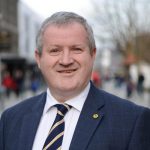
  • Ian Blackford – 2021 Speech to SNP Conference

    Ian Blackford – 2021 Speech to SNP Conference

    The speech made by Ian Blackford, the SNP Leader at Westminster, to the SNP Conference held on 28 November 2021.

    Conference,

    As always, it is a pleasure to address you as our party’s Westminster leader.

    And given that we are gathering in late November – let me take the chance to wish each and every one of you a very happy St Andrew’s Day on Tuesday.

    But just as I think of Saint Andrew – who history tells us made his way right across Europe on small boats – my thoughts naturally turn to the truly heart-breaking events in the Channel.

    Because Andrew may well be Sainted today, but in his own time, I have little doubt that he too may have been de-humanised and branded a ‘travelling migrant’.

    If the horror of these deaths is to stop – we must see these desperate people for who they truly are.

    They are human beings – exploited by smugglers and too often abandoned by the powers that be.

    Human beings need humane solutions – they need our help.

    All of us – whether nationally or locally – must urgently work together and provide safe and legal humanitarian routes so that these horrors, just off our coast, finally end – once and for all.

    Friends, before I get any further on, I should probably admit that I began preparing for this speech about an hour or so before Boris Johnson stood up at the CBI conference.

    For those few who don’t know by now, that was the speech where the Prime Minister of the United Kingdom compared himself to Moses, impersonated a car, completely lost his way halfway through and ended it with a rant on Peppa Pig.

    Now – I hate to disappoint – but I can’t promise that this speech will reach anywhere near those levels of strangeness.

    But Conference, as much as it might be tempting to keep poking fun at a Prime Minister who is forever producing an omnibus of omnishambles – there is also something deeply worrying about what is happening.

    I think all of us have a sense of just how damaging and dangerous it is that chaotic governance now defines Downing Street.

    That would be bad enough in normal times, but it is unforgivable in the middle of a pandemic.

    Because let’s be clear, what we are all now witness to is a Prime Minister who is – day by day – deeper and deeper out of his depth.

    It was previously said that the Prime Minister’s office was no place for a novice.

    Well, it is no place for a negligent either.

    And I know the Labour leader is fond of repeating these days that “the joke isn’t funny anymore”.

    But he clearly doesn’t get that Scotland never found the joke funny in the first place.

    All this time, we’ve always known – our country can do so much better than this.

    And conference, in the absence of actions from others in holding this Prime Minister to account, it is once again our job to act as the real opposition.

    On Tuesday, the SNP will use our opposition day to put down a motion of censure against this Prime Minister.

    Because unless this Prime Minister is censured, unless he faces consequences for his disastrous actions, he won’t just think he’s gotten away with the mess he has made of the last few months, he will think he can do it all over again.

    But Friends, not alone have the last number of weeks exposed a Prime Minister and a Westminster government collapsing in their own chaos – the lid has also been lifted on the scale of their sleaze.

    Because while chaos and confusion is one thing – deliberate corruption is quite another.

    And I’m afraid corruption is the only proper word – the only honest word – for what has been going on.

    It is sometimes worth reminding ourselves that Boris Johnson has now headed up this Tory government for little over 2 years.

    In that time there has been, a Cash for Honours scandal, a Cash for Contracts scandal, a Texts for Tax Breaks scandal – there’s even been a Cash for Curtains scandal.

    Month after month, scandal after scandal – and still no independent investigation to hold those responsible to account.

    No wonder people have come to the conclusion that the Tories think it’s one rule for them and one rule for everybody else.

    I’m proud to say that our own Pete Wishart has spoken truth to power and brilliantly uncovered corruption that has – far too often – been hidden in plain sight.

    The most blatant example is in the House of Lords – a relic of an institution stuffed so full that it’s now second only in size to the Chinese People’s Congress.

    So not alone a communist sized parliament but communist levels of corruption to go with it.

    Since 2010, the Tory party has made 9 of its former party treasurers’ members of the House of Lords.

    They all – very curiously – happen to have one thing in common.

    Every one of them has handed over at least £3 million to the Conservative Party.

    So – in fairness – the system seems fairly simple.

    Pay £3 million pounds – get your ermine robe.

    It’s as blatant and as brazen as that.

    And it is just one more example of a system that is broken beyond repair.

    That is why our country must have the chance to escape that crippling corruption.

    Because with independence – we can do so much better than this.

    Friends,

    All of these recent scandals might hurt the Prime Minister in the polls – but putting politics aside for a second –

    I genuinely worry that, ultimately, it also distracts from the very real issues that are beginning to bite.

    In the real world – away from the political circus at Westminster – people are suffering a Tory cost of living crisis.

    Inflation is running at 5% and the threat of mortgage interest rate hikes is a real worry on the horizon.

    Rising day to day costs and rising household bills are the main focus for most families.

    And as usual – it is those who can least afford it who are paying the biggest price.

    That is especially true for 2 million pensioners in poverty – who have been let down by another broken Tory manifesto promise with the scrapping of the triple lock.

    And while all of these political stories on sleaze have been going on – the political decision to cut Universal Credit is hitting homes hardest.

    This week, the Joseph Rowntree Foundation confirmed that the £20 a week cut means 3.6 million families will be worse off this winter.

    Because not alone was the cut to universal credit the wrong policy, it came at the worst possible time.

    It was decision made months before the rapid rise in inflation kicked in.

    David Linden has passionately led our campaign to save the Universal Credit uplift and week in, week out he has held the UK government’s feet to the fire.

    So – if it is even possible that the Tories are feeling any sense of pressure or remorse for the political mess they have been making for months, they should take this chance to make some amends.

    They should do the right thing, reverse the cut to universal credit and put £1000 back into the pockets of those who desperately depend on it.

    I fear though, that instead of changing course, the Tories will double down on their decisions.

    Maybe it is little wonder then that the phrase “winter of discontent” is once again part of the political parlance.

    But as we all know, Scotland has been discontent with Westminster control for many more winters than this one.

    In fact, it is 66 winters ago – 1955 – since our country last voted for a Tory government.

    Because – to put it simply -Westminster’s choices are not our choices.

    We know though that democracy is the only solution to that deep discontent and disconnect from Westminster decisions –

    And we are confident too that democracy will soon have its day.

    And Conference,

    There is an important point to be made about the perfect storm of economic vulnerability that I’m describing – because we should be very clear that it isn’t all a consequence of Covid.

    Even though the B word – Brexit – seems to have mysteriously disappeared from mainstream media across the UK

    – in Scotland we know that the consequences of Brexit are very much here and they are hurting.

    The Covid crisis can no longer camouflage the deep damage that Brexit is doing.

    Only this week, Philippa Whitford drew our attention to £2 billion in investments which has fled to the Belgian region of Flanders as a direct result of UK-based businesses shifting their bases there because of Brexit.

    That is one region in Europe – just think of the scale of damage when you multiply that loss elsewhere.

    And yet despite that damage, Scotland has yet to receive a single penny in compensation from Westminster and they are even failing to fully replace EU funding.

    In contrast, the EU is giving Ireland 1 billion euros to mitigate the damage of Brexit – showing the solidarity of the European Union to smaller countries and showing, once again, that independence works.

    And we know all too well that the pattern of Brexit is exactly the same pattern of broken promises that seems to be official Tory party policy.

    Judging by the recent newspaper headlines in the North of England, they’ve become wise to their game too.

    From HS2, to Carbon Capture, Social Care, the Triple Lock on pensions – one promise after another has been broken.

    I could add Boris’ bridge to Ireland onto that list but I don’t think anyone – least of all the Chancellor – ever took it seriously enough in the first place.

    But after that litany of broken promises, the Tories will have to forgive the public’s cynicism about their so-called Union Connectivity review.

    The only thing they believe it will achieve is to make their list of broken promises that little be longer.

    People know its only real purpose is a blatant attempt to bypass Scottish democracy.

    Conference,

    This is the political place we now find ourselves and it is this context that needs to bring clarity to our future choices.

    Now we all know there were plenty of – to put it mildly – mistruths told, sold and spread during the 2014 referendum.

    But it’s become clear that the biggest lie of all was the unionist claim that staying in the United Kingdom would be the safer choice.

    Because that idea – the stability of the status quo, the stability of the United Kingdom, has systematically fallen apart.

    For years now, what we are experiencing is a United Kingdom in constant crisis.

    And it’s a crisis that comes with a real cost.

    The cost of living, the cost of Brexit, the cost of Tory cronyism and corruption.

    The cost of having a man like Boris Johnson as Prime Minister.

    Those are now the crises of the United Kingdom – and they are the costs we all pay for being part of this union.

    Friends,

    Independence is now the pathway to safety and stability – it offers an escape from the constant crisis of Westminster control.

    Built on the solid foundations of our own democratic decisions, independence offers the opportunity to build the post-pandemic future we all wish to see.

    The chance to build a new Scotland, that finally takes its natural place amongst the nations of the world.

    We got a brief glimpse of that when the representatives of those nations visited Glasgow earlier this month.

    Because we all know it was our First Minister who led the way at Cop 26.

    From passionately promoting a just transition to championing climate justice – she worked tirelessly for a green future at home and abroad.

    Mature, measured, and thoughtful leadership – the leadership we need now and exactly the kind of leadership that will win our future.

    Just imagine what she will do as our first democratically elected leader in an independent Scotland.

    Conference, that is the future now in front of us.

    That is the opportunity now in front of us.

    A nation in waiting – and a future that is fair, green and European.

    In our landslide victory in May – only 7 months ago – the people of Scotland gave us the democratic right to choose our own future.

    If Boris Johnson tries to deny democracy – he is destined to fail.

    The democratic right to a referendum is secure and our First Minister will lead us through that campaign.

    Our independence movement has faced a long road, but journey’s end is now in sight.

    A new Scotland, an independent Scotland is within our grasp.

    Let us deliver it.

    Thank you, Conference.

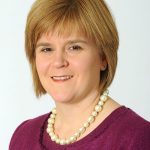
  • Nicola Sturgeon – 2021 Speech to SNP Conference

    Nicola Sturgeon – 2021 Speech to SNP Conference

    The speech made by Nicola Sturgeon, the Scottish First Minister, on 29 November 2021.

    Good afternoon everyone.

    Welcome to the SNP’s annual conference – an occasion much enjoyed by party members across the country.

    Sadly, we are meeting online again.

    Given current circumstances, this is sensible – but I hope, in spring, we’ll be together in person.

    Our debates and discussion – if not always the conference karaoke – are much better when we meet up, and I can’t wait to see you all again.

    Of course being forced to take a political conference online is a mere inconvenience compared to the sacrifices made by so many over these past two years.

    Life today is much more normal than it was when I spoke to you a year ago.

    We have come so far and – while it has not been easy – a spirit of solidarity with, and compassion for, each other has helped us through.

    Now, as the emergence of the new Omicron variant has reminded us, we must harness that spirit again as we prepare for a winter that might be tougher than most of us have ever experienced.

    In recent weeks, we have had much in Scotland to feel thankful for.

    Compared to many countries across Europe, Covid cases here have been stable – indeed they have been declining slightly.

    To be frank, that’s a much better position that I had dared hope for a couple of months ago.

    But there are big and very real challenges ahead over the winter months.

    Cases are rising in countries all around us.

    We know that colder weather, forcing us indoors, coupled with festive socialising will create increased opportunities for the virus to spread.

    And, most seriously of all, the Omicron variant is causing profound concern here and across the world

    So we must not drop our guard. This is a time to be more vigilant, not less.

    In the past few days, the new variant has led the Scottish Government to impose tighter restrictions again at our borders.

    A number of countries have been added to the travel red list.

    Travellers from these countries must go into managed quarantine.

    And we are asking all travellers – no matter where they are travelling from – to isolate until they get a negative result from a PCR test that they must do on day 2 after their arrival.

    We are also asking close contacts of any confirmed cases of Omicron to isolate.

    That none of this was even contemplated just a few days ago, is a reminder of how fast this virus can move and change.

    We must, all of us, therefore redouble our efforts to stop it in its tracks.

    The good news is that we know how to do that. We’ve done it before.

    So today, before I talk to you about politics, I want to ask again for your help.

    Over these next weeks of winter, we need to pull together and look after each other.

    I promise that the government will do our job.

    That means getting all of you who are eligible vaccinated with boosters as fast as possible.

    Thanks to teams across the country, Scotland is already the most vaccinated part of the UK – but we will not let up. Instead we are working to speed up.

    And while I still hope it will not be necessary, if difficult decisions need to be made to keep us safe, we will not shy away from them.

    Steering the country through this winter is my priority. It is my duty.

    But no government can fight a virus alone.

    We all need to play our part.

    That was true before the detection of Omicron, and it is even more so now.

    If all of us increase our compliance with the protections already in place, we will help slow transmission.

    So I am asking everyone to please, take the time now to think afresh about the basic steps you can take to keep yourself, your loved ones and the country safe.

    Wear a face covering in indoor public places.

    Keep following hygiene advice – wash your hands and surfaces.

    Open windows if you have people round – ventilation really helps.

    Work from home if possible.

    And please, please – if you haven’t done so already – get every dose of vaccine you are eligible for, including flu.

    I know there is a concern that the vaccines might be less effective against Omicron than against other variants.

    We don’t know yet if that’s the case.

    But even if it is, getting vaccinated will still matter.

    Less effective does not mean ineffective.

    You will still be much more protected with vaccines than you will be without.

    So if you could be fully vaccinated right now and you have chosen not to be, you are putting your own life at risk.

    You may say that’s your choice – though it is one I really struggle to understand.

    But it’s not just your own life you are risking.

    You could be risking the life of everyone you come into contact with.

    Vaccines save lives.

    And don’t just take my word for that.

    A World Health Organisation study published last week demonstrates that life saving power.

    Hundreds of thousands of people across the world who would otherwise be dead from Covid, are alive today only because of vaccines.

    Here’s what the WHO said about us:

    “In countries like Scotland, where vaccination rollout was early and uptake was high, a larger share of lives were saved”.

    It found that in Scotland, without vaccines, around 32,000 people over the age of 60 would have died from Covid this year.

    86% of these deaths were prevented by vaccines.

    That’s 27,000 people alive today who would not be if we had no vaccines.

    For all I know that might include my mum and dad, or yours. Or indeed many of you.

    So, for goodness sake, get vaccinated – with your 1st, 2nd and, if eligible, your 3rd and booster doses as soon as you can.

    If you don’t do it for your own sake – though you really should – do it for those you love.

    Being vaccinated is the most precious gift we can give this Christmas.

    But there is one more, really important festive effort I am asking everyone to make.

    And, once again, the emergence of Omicron makes this even more vital.

    Lots of people with Covid don’t have symptoms – they might never know they have the virus and so spread it inadvertently.

    That’s why we’ve been asking everyone to test with lateral flow devices twice a week.

    But from now, through the festive period, we are asking you to test much more.

    Please – even if you are feeling fine – test yourself on each and every occasion you intend to mix with people from outside your household.

    That means before you go to the pub, or to a restaurant, or to someone’s house, or even to a shopping centre.

    And if the test shows up positive do not go.

    Instead, get a confirmatory PCR test and self isolate until you get the result of that.

    If you don’t have a supply of tests, order them now through NHS Inform or pick them up from a local pharmacy or test centre.

    They are free so get as many as you need and keep your supply topped up.

    If we all do this, we will slow the spread.

    And we will maximise our chances, not just of a more normal Christmas but a safer Christmas too and, let’s all hope, a much brighter new year.

    Friends,

    I talked earlier about the government’s responsibility in leading the fight against this virus. It is a solemn duty.

    But I am all too aware that the heaviest burden in tackling the virus has been carried by those working in our NHS and in social care.

    If we all follow the advice on fighting Covid we will be helping them, as well as ourselves.

    That really matters. Health and care services are under more pressure now than ever before.

    The staff who care for us in our times of need are exhausted – physically and in many cases emotionally.

    Words will never adequately express my gratitude to them.

    But words are not enough.

    I am proud that NHS staff in Scotland have been awarded the highest pay rise in the UK.

    And that we have promised to increase investment in the NHS – already at record levels – by a further 20 per cent over this term of Parliament.

    I can confirm today that our budget on 9 December will deliver a significant down payment on that commitment.

    In the years ahead, this extra funding will help build new capacity in the NHS and improve the way care is delivered through, for example, a network of elective treatment centres.

    And at the heart of our plans for reform is the establishment of a National Care Service.

    Just as the National Health Service became in the aftermath of the Second World War, this new National Care Service, if we get it right – as we must – will be a fitting legacy from the trauma of Covid.

    So our plans to build and secure a sustainable future for our health and care services are bold, and rightly so.

    And to help right now, we have committed an additional £300 million for winter support.

    This money is supporting the immediate recruitment of 1,000 extra NHS workers.

    It is helping increase the pay of social care staff – giving those earning the living wage a rise of over five per cent.

    And it is funding more care home places and care at home packages to ensure that older people don’t languish in hospital when they would be better cared for elsewhere – and in the process free up hospital beds for those who do need them.

    Friends,

    The frontline of the NHS is so often primary care and general practice.

    Good access to GPs and other primary care services is essential for patients – but it also helps reduce unnecessary pressure on hospitals.

    I know how hard GPs and practice staff are working just now.

    Face-to-face appointments are resuming – although phone and video consultations will continue to play an important part in any modern healthcare system.

    And we know demand is increasing due to the direct impact of the pandemic and the backlogs caused by lockdown.

    So GPs and those who support them are working overtime to meet patient needs.

    I want to thank them for all they do.

    Of course, we must do more than say thank you, and we will.

    That’s why I can announce today funding of £30 million to help GPs further increase primary care services in their communities

    GPs will be able to use this funding – which will be delivered in December and April, in two equal instalments – in ways they judge will deliver the greatest impact for patients.

    That might be through extra GP sessions or additional practice nurse time.

    In short, it will allow practices to target investment where it is most needed to improve access to primary care and help ensure patients get the care they need as close to home as possible.

    Friends,

    Tackling the pandemic, supporting and protecting the NHS and social care – these duties will be the focus of the Scottish Government each and every day as we navigate this winter and beyond.

    That is what people across Scotland expect, having placed their trust in us – once again – to govern and lead our country.

    However, as we emerge from the darkness of winter into what we all hope will be a brighter spring, with Covid more firmly in the rearview mirror, it will be time to look ahead with optimism and consider the kind of country we want to rebuild.

    We should embrace that opportunity with relish. I certainly do.

    As you know, I’ve just marked seven years as First Minister.

    In some ways, I find it impossible to believe that so much time has passed – but then, of course, I look in the mirror and see the evidence of what I am sorry to say seems more much than seven years!

    Being elected to lead this country is a privilege and it is a serious responsibility.

    Seven months ago, the people of Scotland gave me and all of us in the SNP a job to do when they re-elected us so emphatically.

    They voted for us in historically high numbers, and told us to get on with the job.

    I intend to repay that trust – to lead Scotland not just through Covid, but into and through the process of recovery and renewal.

    The duty and responsibility of being First Minister weighs heavily on me every single day – as it should.

    But it is not a job I do out of duty alone.

    I do it because I relish the opportunities that lie ahead for Scotland.

    And I know that to harness these, Scotland needs a government – like ours – with ambition, aspiration and real confidence in this country.

    We already have a track record of delivery.

    We are laying the foundations for a stronger future.

    When people ask me what I’m proudest of so far in my time as First Minister, I always point to our transformational – and I use that word deliberately – our transformational support for children.

    Today, for example, we’ve announced that the 200,000th baby box has been delivered in Scotland.

    A practical, tangible and powerful manifestation of our commitment to every child – no matter their family circumstances – having an equal start in life.

    And then there’s the doubling – yes, doubling – of state funded early years education and childcare.

    Every 3 and 4 year old – and 2 year olds from the most vulnerable backgrounds – are now entitled to the same number of hours in early years settings as older children get in school.

    This policy saves parents thousands of pounds a year. But much more importantly, it gives children the best start in education.

    In my first conference speech as SNP leader, I said this would the most important infrastructure investment of my first full term as First Minister – and in August this year, we marked its delivery.

    We have also created, from scratch, a new social security system.

    It has measures to tackle child poverty – the root cause of the poverty-related attainment gap in education – at its heart.

    All of this is underpinned by a new income tax system – just like Social Security Scotland, built entirely from scratch, and with the progressive principle embedded from the outset.

    And – also with an eye to the future – we have set up the new Scottish National Investment Bank.

    This is the first development bank of its kind anywhere in the UK, and it is already making investments to drive our journey to net zero and build a more sustainable future for this and future generations.

    We don’t see the full benefits of transformational policies like these overnight.

    But they and many like them are already changing the future of tens of thousands of children, and of the country as a whole.

    So we have much to be proud of. But we have so much more still to do.

    It is that combination of delivery and ambition that drives the SNP’s success.

    The fact is governments don’t get re-elected – and certainly not with the level of support we won in May – unless we have improved people’s lives and offer a clear and credible vision of what’s possible for the future.

    Most of our opponents seem incapable of accepting the basic point that our success is hard earned – it is not an accident or a fluke.

    So they end up dismissing as irrelevant the choices voters have made.

    Or even worse – as with the current assault on devolution – they seek to over-turn those choices.

    They act like they think the ambitions of people across Scotland have got out of hand and need to be reined in by those who know better.

    The SNP will not let that happen.

    We’re not here to see the aspirations of people in Scotland reined in or diminished.

    We want to raise those ambitions ever higher.

    We dedicate ourselves to that every day.

    And we recognise that working with others who also want to move Scotland forward will help us all achieve more.

    That’s why we struck a Co-operation Agreement with the Scottish Green Party.

    Putting our differences aside to co-operate where we agree won’t always be comfortable, for either us or the Greens – but it is not meant to be.

    Forcing each other out of our comfort zones so we can raise the bar of achievement higher is the whole point.

    In my view this kind of collaborative working is exactly what most people want.

    But given the challenges all countries face, it is also what we need.

    Scotland is about to enter a new world.

    A world of possibility but also of urgency.

    I hope soon, a post-pandemic world.

    And, certainly, a world we must adapt to ensure that our planet remains habitable in the years, decades and centuries to come.

    We can’t escape these challenges, and nor should we want to.

    Inherent in them are massive opportunities waiting to be grasped.

    The big question for Scotland is how we best equip ourselves to do this, and ensure that the ambitions of all those who live here can be realised in this new world.

    These ambitions are not unreasonable or out of reach.

    A higher standard of living.

    Good jobs for the future.

    A clean environment.

    Better health.

    Sustainable public services.

    And for Scotland as a whole – the ability to harness our vast resources in line with our own priorities and values, and contribute as an equal partner to building a better world.

    To meet those ambitions in this new world we must lay secure foundations on which a better country can be built.

    That’s what the SNP is endeavouring to do.

    In this task we are working in partnership as far we can.

    But this current Westminster government is not a willing partner.

    Instead of helping to lay those foundations, it is undermining them.

    And let us be clear about this – this UK government is not just seeking to block Scottish democracy and deny Scotland the choice of moving forward to independence.

    That would be bad enough.

    But worse than just standing in the way of progress, it is trying to force Scottish democracy into reverse.

    Make no mistake about it:

    Boris Johnson’s government is actively eroding the power of our democratically elected Scottish Parliament.

    It has already transferred funding from the Scottish Parliament to Westminster.

    It has torn up the convention that the UK Parliament should not pass laws in devolved policy areas without Holyrood consent.

    And it has passed a law – the Internal Market Act – that the Labour First Minister of Wales has called, and I quote, ‘a smash and grab’ on the devolution settlement.

    This crystallises the choice Scotland faces.

    If we don’t choose to move our Parliament forward and make it stronger with independence – the Tories will drag it backwards and make it weaker.

    This assault on the Scottish Parliament is of course reflected in the Tories’ wider disdain for democracy.

    Whether it is threatening to rip up anti-lobbying rules when one its own was found guilty, or restricting the right to judicial review, or undermining the independence of the Electoral Commission, the message is clear.

    Whenever the checks and balances of democracy get in its way, this UK government will try to overturn them.

    That is dangerous.

    But don’t just take my word for it.

    Ken Clarke – a former, very senior Tory Cabinet minister – has warned, quite extraordinarily, that the UK is ‘dangerously close’ to being an ‘elected dictatorship’.

    Friends,

    During the run-up to the independence referendum in 2014 the head of the No campaign dismissed the idea of Boris Johnson becoming Prime Minister as a ‘scare story’.

    We’ve been reminded over these past few weeks – and in many different ways – just why anti-independence leaders were so keen to rubbish the prospect of Boris Johnson entering Downing Street.

    The reality of it has been everything many people back then feared.

    But it’s not just about him as an individual.

    The much bigger problem is a Westminster system that enables someone like him to become Prime Minister in the first place.

    That is not a secure foundation on which Scotland can build a better future.

    Our future must be built on a platform of democracy, fairness and economic prosperity.
    That’s what we are seeking to build now.

    And it is why we want Scotland to become independent.

    In the here and now, as well as working in partnership with the Greens inside the Holyrood chamber, we are seeking to extend participation in democratic decision-making outside it too.

    We are pioneering Citizens’ Assemblies and will soon establish one for under 16s – so that the generation who will live with the impact of decisions we take now are more involved in making them.

    This cooperative, inclusive approach to politics offers a more secure basis from which to move a country forward.

    Just as our foundation must be democratic, so too must fairness permeate every stone.
    A fairer, more equal society isn’t just morally right – though it is.

    Evidence shows that the most successful independent countries of Scotland’s size are also more equal.

    A sense of social cohesion and solidarity provides the basis for long-term prosperity.
    The Tory government’s decision last month to cut Universal Credit by £20 a week could not be further removed from that ideal.

    That decision – especially at a time of price inflation and tax rises – was cruel and shocking.

    It was condemned by each of the UK children’s commissioners; by the social security committees of all four UK parliaments; by all three devolved governments; by countless campaigners; and even by former Conservative Cabinet Ministers.

    But the cut went ahead regardless and in Scotland it will push 60,000 families and 20,000 children into poverty.

    The Scottish Government is taking a different approach.

    We are determined to lift children out of poverty.

    Of the £2 billion a year that the Scottish Government invests to support people on low incomes, over £670 million is already targeted at children.

    Through the range of new payments delivered by Social Security Scotland, low income families receive, in the early years of each child’s life, £5,000 of additional financial support.

    At the heart of this is the Scottish Child Payment – the only payment of its kind anywhere in the UK, designed solely to lift children out of poverty and give them better lives.

    The Scottish Child Payment currently provides low income families with £10 per week for every child under age 6.

    Over 105,000 children are already benefiting.

    Next year, it will be extended to all children in low income families under the age of 16.

    At the election, we committed to doubling the payment to £20 per child per week within this term of Parliament.

    Our co-operation agreement with the Greens committed us to achieving this as quickly as possible.

    Friends,

    I am very pleased – indeed proud – to announce today that our budget on 9 December will fund the doubling of the Scottish Child Payment immediately from the start of the new financial year.

    The Scottish Child Payment will increase to £20 per child per week – four times the amount originally demanded by campaigners – from April.

    That means the doubled payments will reach over 100,000 children under age 6 in just four months’ time.

    And when we extend the Scottish Child Payment to all under 16s at the end of next year, over 400,000 children and their families will be eligible.

    This is, without doubt, the boldest and most ambitious anti-poverty measure anywhere in the UK.

    Delivering it isn’t easy. It will involve hard choices elsewhere in our budget.

    But it is a choice we in the SNP – in partnership with the Greens – are opting to make.

    Poverty scars too many childhoods.

    It deprives too many children of the chance to make the most of their education and enjoy life to the full.

    And it robs of our country of far too much potential.

    Eradicating child poverty is essential if we are to build the strongest foundation for Scotland’s future.

    And that is what we are determined to do.

    Democracy and fairness are key to building a better Scotland.

    So too is a strong, sustainable economy.

    Scotland is blessed with natural economic advantages.

    We have unrivalled energy resources.

    We are at the cutting edge of the industries of the future, and are home to some of the world’s best universities.

    Our food and drink industry is an extraordinary international success story.

    We are a highly skilled and educated people with a history of enterprise and innovation.

    Through the Scottish National Investment Bank, the National Manufacturing Institute and the Young Persons Guarantee, we are building for the future.

    But just as on child poverty, a UK Government that Scotland didn’t vote for us is undermining the strong foundations we are seeking to build.

    This UK government has taken Scotland out of the EU; out of European Single Market; and out of the Customs Union – all against the wishes of the majority who live here.

    The Brexit it has imposed upon us is already damaging our economy and restricting opportunities for our young people.

    All of that is bad enough – but there may well be much worse to come.

    The Tories appear to have embarked on permanent conflict with the European Union.

    Instead of building bridges they are burning them.

    They are threatening to rip up the Withdrawal Agreement that Boris Johnson himself hailed as fantastic and ‘oven-ready’.

    And in so doing, they risk a trade dispute with the EU that will set back our recovery from the pandemic and do untold damage to our economy.

    This may suit a Tory Party that sees EU-bashing as a vote winner.

    But it would be a disaster for Scotland.

    Years or even decades of arguments with the EU is a recipe for instability and economic weakness.

    In the post-pandemic world we will need more co-operation between independent countries, not less.

    And the only way for Scotland to build those relationships on a secure basis is through independence.

    Nowhere is co-operation more essential than in tackling the climate emergency.

    As a rich developed nation, Scotland shares a responsibility for a climate crisis which is already wreaking havoc in some parts of the world.

    Just as we have helped cause the problem, Scotland has a moral duty to be part of the solution.

    And whether independent or not, Scotland, with an SNP government, will always show leadership on this most pressing of issues.

    That means leading by example – which we did, and were recognised as doing, throughout COP26.

    It means making the investments needed for our transition to Net Zero – our forthcoming budget will set out the next steps we intend to take.

    It demands accelerating our move away from fossil fuels, but doing so in a fair way which protects the livelihoods of those working in oil and gas and secures a low carbon energy supply.

    That’s why we are establishing the North East Just Transition fund.

    These transitions are not easy but they demand leadership, urgency and rational decision-making.

    And here, again, we have a UK government that too often hinders rather than helps our progress.

    In the run-up to COP, the Tory government made two inexplicable decisions which passed none of these tests of leadership, urgency and reason – decisions which will undermine efforts to tackle the climate emergency.

    Firstly, it cut Air Passenger Duty for short haul flights within the UK.

    And, second, it refused to give priority backing to the obvious site in the North-East of Scotland for Carbon Capture and Storage.

    This is a decision that will cost Scotland jobs and make our journey to net zero even more difficult.

    It should be reversed.

    But we should not be reduced to pleading with a UK government to do the right thing.

    With independence, we won’t have to.

    Friends,

    My task as First Minister, above all, is to do whatever I can to keep Scotland safe.

    That is my first duty – and during this pandemic it is the heaviest duty imaginable.

    I will always seek to discharge my responsibilities as First Minister with energy and commitment and to the very best of my ability.

    But keeping a country safe is not just about the short term.

    It is also about building the strongest possible foundation on which to build our future.

    I defy anyone to look at the broken, corrupt, self-serving Westminster system that we are currently part of and conclude that it provides a secure basis for the future of Scotland.

    So I would not be discharging my duty to the people of Scotland if I did not seek to keep the promise on which we were elected – to offer the people of Scotland the choice of a better future through independence.

    Friends,

    Next year, Covid permitting, as we emerge from winter into spring, the campaign to persuade a majority of people in Scotland that our future will be more secure as an independent nation will resume in earnest.

    In the course of next year, I will initiate the process necessary to enable a referendum before the end of 2023.

    And just as importantly, our party will set out afresh the positive case for independence.

    We will outline the opportunities and advantages that independence will open up.

    The opportunity to repair the damage of Covid – including the fiscal challenges it has created for all countries – in a way that aligns with our values and priorities as a nation.

    To use our financial and human resources to tackle poverty and give young people a better life.

    To use our vast natural resources to help safeguard our planet and secure green jobs for the future.

    And to rejoin the European family of nations, so that we can expand not narrow our horizons, and grow our trade across the whole of the continent.

    We will also be candid about the challenges the transition to independence will present, and set out clearly how we can and will overcome them.

    And then, friends, we will ask the people to decide.

    Now, what the UK government’s response to this will be is not up to me, but my message to Prime Minister is this:

    If you have any respect at all for democracy – and if you have any confidence whatsoever in your argument against independence – you too will let the people decide.

    Friends,

    Let us make our case with confidence.

    Often in Scotland, we talk about becoming independent as if it’s something unusual, something that no country has ever done.

    The reality is very different. In the last 60 years or so, more than 100 countries have become independent.

    Very few – if any of them – have the resources and advantages of Scotland.

    The fact is independence is the normal state of affairs for countries the world over.

    The self government it encapsulates is the building block for the progressive internationalism that we stand for.

    And for countries of Scotland’s size, the simple truth is this: independence works.

    Our neighbours across north-west Europe are all wealthier than the UK, more equal than the UK and have lower levels of poverty than the UK.

    With all the resources and talents we have available to us, I simply do not believe that Scotland can’t match – perhaps even surpass – the success of Denmark, Norway, Ireland, Austria and the many other prosperous independent countries that are all around us.

    I do believe, more than ever in this new world we are facing, that the best way to secure a better Scotland is to take our future into our own hands.

    An independent Scotland will be an outward looking, welcoming nation.

    A country that celebrates diversity and works with others to shape a better world.

    We will be a partner with our closest friends in the rest of the UK, and an EU member committed to values of equality, democracy and human dignity.

    For people today and for generations to come that is a future worth standing up for.

    It is a future worth campaigning for.

    And it is a future worth winning.

    So let us put our shoulders to the wheel of winning and building that better Scotland.

    Thank you.

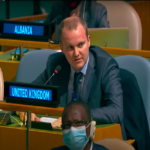
  • Fergus Eckersley – 2021 Statement on UK’s Position on Jersualem

    Fergus Eckersley – 2021 Statement on UK’s Position on Jersualem

    The statement made by Fergus Eckersley, the UK Political Coordinator at the UN, in New York on 1 December 2021.

    The United Kingdom’s position on the status of Jerusalem is clear and long-standing: it should be determined in a negotiated settlement between the Israelis and the Palestinians. The final determination of Jerusalem must ensure that the holy city is a shared capital of Israel and a Palestinian state, granting access and religious rights for all who hold it dear. The United Kingdom opposes unilateral action in Jerusalem absent a final status settlement and remains supportive of the historic status quo.

    The UK recognises that Jerusalem and the holy sites at Haram al Sharif/Temple Mount hold particular significance for many groups around the globe, especially the three Abrahamic faiths of Christianity, Islam and Judaism. The UK welcomes language in the resolution reaffirming the special significance of the holy sites and the City of Jerusalem for these three religions and calling for respect for the historic Status Quo.

    However, the resolution adopted today refers to the holy sites in Jerusalem in purely Islamic terms, without recognising the Jewish terminology of “Temple Mount”. The UK has made clear for many years that we disagree with this approach, and while we welcome the removal of the majority of these references, we are disappointed that we were unable to find a solution to the final instance. On principle, the United Kingdom has therefore moved our vote today from a “yes” to an “abstention”. If the unbalanced reference had been removed, the UK would have been ready and willing to vote “yes”.

    The United Kingdom is clear that this should not be understood to be a reflection of a change in UK policy towards Jerusalem, but instead as an important signal of our commitment to recognising the history of Jerusalem for the three monotheistic religions.

  • Boris Johnson – 2021 Comments on Pharmaceutical Conference

    Boris Johnson – 2021 Comments on Pharmaceutical Conference

    The comments made by Boris Johnson, the Prime Minister, on 2 December 2021.

    With scientists around the world working tirelessly to learn more about the Omicron variant, we have never been more indebted to the extraordinary power of Life Sciences.

    Today I am bringing global industry leaders together to discuss our renewed efforts against Covid-19, while ensuring we are better equipped to tackle future healthcare challenges.

    As we press ahead with our goal to become a science superpower, the new investments made today will help us forge life-changing breakthroughs against other diseases, such as cancer and dementia, while creating hundreds of high-skilled jobs across the country.

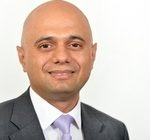
  • Sajid Javid – 2021 Comments on Purchase of 114 Million Doses of Vaccine

    Sajid Javid – 2021 Comments on Purchase of 114 Million Doses of Vaccine

    The comments made by Sajid Javid, the Secretary of State for Health and Social Care, on 2 December 2021.

    Thanks to the Vaccines Taskforce, we have an excellent track record of securing the vaccines the country needs to keep this virus at bay.

    These new deals will future proof the Great British vaccination effort – which has so far delivered more than 115 million first, second and booster jabs across the UK – and will ensure we can protect even more people in the years ahead.

    This is a national mission and our best weapon to deal with this virus and its variants is to get jabs in arms – so when you are called forward, get the jab and get boosted.

  • Sajid Javid – 2021 Comments on Adult Social Care

    Sajid Javid – 2021 Comments on Adult Social Care

    The comments made by Sajid Javid, the Secretary of State for Health and Social Care, on 1 December 2021.

    The pandemic has been an important turning point for social care, putting into the spotlight the incredible work the sector delivers day in and day out and highlighting the urgent need for change.

    This ten-year vision clearly lays out how we will make the system fairer and better to serve everyone, from the millions of people receiving care to those who are providing it.

    We are investing in our country’s future – boosting support to help people live at home with their families for longer and ensuring that health and care work hand in hand so people get the help they need.

  • Sadiq Khan – 2021 Comments on TFL Funding

    Sadiq Khan – 2021 Comments on TFL Funding

    The comments made by Sadiq Khan, the Mayor of London, on 30 November 2021.

    I agree with the Government and Mayors across the country when they say other regions should have “London-style” transport services.

    But the irony is that a failure to provide enough operational and capital funding for TfL means that it won’t be long before London itself will no longer have “London-style” transport services.

    Instead, we’ll be forced to move into managed decline – leading to run-down services reminiscent of the 1970s and 80s.

    This is no exaggeration.

    If the Government continues to starve TfL of funding, bus services would have to be reduced by almost a fifth, and Tube services would need to be cut by nearly 10 per cent.

    In practice, this could mean more than 100 bus routes being withdrawn and less frequent Tube timetables on a number of lines and branches. TfL is even having to look at potentially closing a whole Tube line to achieve the savings it may need to make.

    And that’s not all.

    There would also be an increase in road and tunnel closures due to a lack of money to maintain London’s key transport infrastructure.

    This combination of deteriorating public transport services and an increase in road and tunnel closures would cause wide-spread disruption and gridlock across the capital.

    Not only would this have a devastating effect on passengers, but it would put the national economic recovery at risk.

    Because there can be no national economic recovery without a London recovery, and there can no London recovery without a properly funded public transport network in the capital.

    On 11 December, the existing temporary funding deal between TfL and the Government comes to an end.

    So it’s time to remove short-term political thinking and to come together to call on the Government to provide the long-term funding TfL urgently needs.

  • Sadiq Khan – 2021 Comments on Homelessness in London over Christmas

    Sadiq Khan – 2021 Comments on Homelessness in London over Christmas

    The comments made by Sadiq Khan, the Mayor of London, on 1 December 2021.

    Since becoming Mayor, I have made tackling rough sleeping a personal priority. From City Hall we are doing everything we can with the resources at our disposal to keep rough sleepers safe and I’m confident Londoners will once again show their generosity by backing my winter fundraising campaign and helping to support young Londoners who find themselves homeless.

    Even so, the generosity of Londoners alone cannot end rough sleeping in our capital. This time last year we were hailing the remarkable success of the ‘Everyone In’ programme for saving the lives of hundreds of vulnerable Londoners. Despite seeing what can be achieved when we work together, ministers now appear unwilling or unable to confront the appalling reality that hundreds of young Londoners could spend this Christmas sleeping on the streets.

  • Anne Marie Morris – 2021 Speech on Patient Access to Medicines and Medical Devices

    Anne Marie Morris – 2021 Speech on Patient Access to Medicines and Medical Devices

    The speech made by Anne Marie Morris, the Conservative MP for Newton Abbot, in the House of Commons on 30 November 2021.

    I rise to address the challenging issue of access for patients to medicines and medical devices. We all believe absolutely passionately that we should have access to doctors and nurses, good hospitals and operating theatres, but I think the pandemic has shown beyond question that access to medicines and medical devices goes hand in hand, and without that we do not have the NHS that I think we all believe everyone deserves.

    What is the problem? The problem, I shall explain, is as follows. When a medicine is approved, it goes through two processes: first, with the Medicines and Healthcare products Regulatory Agency, which checks whether or not a drug is actually safe and does effectively what it says on the tin; and then it goes to a separate process run by the National Institute for Health and Care Excellence, which looks at cost-effectiveness and value for money. The theory goes that, once those two hurdles have been passed, the medicine is then accessible to anyone. It is very clear in the NHS constitution, which explains that there is a legal right for people to have NHS NICE-approved drugs if it is right for their particular circumstances. Indeed, the NICE guidelines say that there should be automatic adoption, if clinically appropriate and relevant, within 90 days of approval. So where is the problem?

    The problem is partly in the system and partly in the words. The words in the constitution are effectively caveated: people can have a medicine if it is right for their particular circumstances. Likewise, according to the NICE guidelines, it will be automatically adopted if clinically appropriate and relevant. The challenge is that, in the current system, NICE will approve medicines for the condition for which they are most cost-effective, so in this country we do not have the ability to approve a medicine for multiple conditions—multiple indications, in the jargon. It is what is most cost-effective that gets approved, and others do not, and there is not a system, either than paying privately, to ensure that the medicine that has been approved for the condition for which it is most cost-effective is available to those with other conditions, but that medicine may in fact still be the only possible solution.

    Assuming we get over that hurdle, there is a second hurdle, because not only must NICE have approved the drug, but it has to go on the approved list of drugs locally in the local health authorities—now integrated care systems. The problem is that to get on those formularies, somebody has to put it on those formularies. Currently, while in theory under the NHS NICE guidelines there is a system, it does not actually happen. There is currently a drug for multiple sclerosis, and research shows that people are still waiting after 150 days for it to go on the formularies in something like 25% of the local health systems across the country. So the system, fundamentally, does not work.

    What does this result in? It results in a postcode lottery. If someone has type 1 diabetes, it is absolutely crucial that they monitor their condition. There is a device, a flash monitor, that is state of the art, and research shows that the uptake across the country varies between 16% and 65%. What is most worrying is that those parts of the country with the greatest levels of deprivation have the lowest levels of uptake. We all think we have access to medicines for cancer given that we now have the highly innovative and very welcome cancer drugs fund. However, that drugs fund is only relevant when the particular drug is approved for a particular type of cancer. So there will be some drugs—Avastin, for example—which those with the appropriate cancer can get through the CDF, but those with a different type of cancer or who do not fit the profile again have to pay for it privately, costing £252 to £1,088 per cycle, which is every three months.

    Sadly, NICE does not approve much for those with skin conditions. For those with mastocytosis—blotches on the skin and boils causing vomiting and diarrhoea—the only solution is usually NICE-approved food allergy drugs, but they are approved for NICE allergies not skin conditions so they have to be paid for privately. For cystinosis, the accumulation of amino acids, which gives rise to kidney problems and kidney damage, the drug Procysbi has been approved by NICE but, bizarrely, there seems to be no uptake of that to date at all. That is important because that drug is, unlike the existing drug, a slow-release drug and therefore mums and dads do not have to keep waking up their kids in the middle of the night to give them the next dose, which, as we can imagine, takes a real toll on family life.

    For those with an obesity problem there is a good solution in Saxenda, but that is approved for diabetes. So those whose obesity does not give rise to diabetes will not get access except by case-by-case approval. I am pleased to say that Imperial has finally accepted and approved.

    How are we going to resolve some of these issues to make sure there is no longer a postcode lottery? First, let us look at the simple case of those drugs that are deemed to give the most health benefit and are therefore in theory approved and people can get hold of them. What can we do to make sure they do actually finally appear on those formularies and how can we then make sure the system for take-up is actually in place? One of the problems is that there is nobody sitting in these health bodies who monitors NICE drugs coming up, and therefore no one who looks to see whether in their health community they may be of benefit.

    Jim Shannon (Strangford) (DUP)

    I congratulate the hon. Lady on securing a debate on this topic. As she says, this is about NICE-approved products as well as drugs. One of those products is cognitive rehabilitation therapy, an important intervention for those with dementia, enabling them to live independently for longer. However, despite being listed in the NICE recommendations there is a barrier to delivery. Occupational therapists and other staff in memory clinics do not have the capacity to deliver programmes that are National Institute for Health Research and Alzheimer’s Society-funded. Does the hon. Lady agree that the NICE recommendations must address not just drugs but also products?

    Anne Marie Morris

    I could not agree more. It is crucial to realise we are talking not just about medicines and drugs but also devices and, as the hon. Gentleman says, the processes, which are often the connection between the medicine, the device and the patient.

    Within these health bodies, there is no training and nobody specifically focused on monitoring innovation, and there is no obligation to prescribe. Even more peculiarly, for these drugs there is an agreement between the industry and the NHS, the voluntary payment scheme or VPAS, under which manufacturers that are members of the scheme effectively agree with Government when the medicine or device is approved that it will be supplied at a well-discounted price. In addition, there is an agreement that sets a cap so that if, as it happens, more prescriptions are written for that particular drug, it is agreed that the extra cost that the NHS has incurred will be reimbursed by the manufacturer.

    So if there is excessive prescribing—we assume that is why there is an attempt to limit how much goes on to formularies—why is that a problem when we have the VPAS scheme? It is a problem because the scheme does not the pass the benefit, other than the reduced price, down to the local health authority. The money is put into a separate pot, and that pot is then used generally to support the NHS writ broadly; it is not ringfenced, either for medicines or to be used, as it could be, to support local health authorities—integrated care systems—when their budgets are put under pressure, which is why they do not want too many things on their formularies. This would help them pay the price.

    It seems to me, Minister, that there are some solutions here. You will be aware that I raised three of them in proceedings on the Health and Care Bill. To deal with the imperfections of the current arrangements, if those drugs that were approved by NICE—we are talking about the most cost-effective drugs—were mandated to be on formularies within 28 days automatically, so no one had to decide whether they went on or not, that would be a good system. It would also ensure that the decision was in the hands of the clinician and not of the bureaucracy of the health authority.

    It seems to me, Minister, that the second suggestion I made—

    Madam Deputy Speaker (Dame Rosie Winterton)

    Order. It is quite important not to address the Minister directly; he should be addressed through me.

    Anne Marie Morris

    Thank you for the correction, Madam Deputy Speaker.

    My second proposal is that there should be an innovation officer specifically appointed to look at and manage these issues. Failing all else, there should be a final provision that specifically puts an obligation on the health authority to provide any NICE-approved medicine. Then, as a matter of practicality that is not a matter for the Health and Care Bill, there should be a new arrangement under which the NHS would agree that this pot, rather than going into the general NHS coffers, is put aside specifically to reimburse local authorities.

    What about the second category—those drugs that are approved by NICE but not used for the most cost-effective indication? That is called off-label prescribing. We know that a drug in that category does what it says on the tin and we know that it is cost-effective, but it is not sufficiently cost-effective to have got a tick in the box from NICE. Access then is a matter for negotiation between the integrated care system, the NHS and the manufacturer. Often, the starting point will be the list price, but bear in mind that that list price is a lot more than the NHS is paying. The result is that in different health authorities and different hospitals, different patients are offered different costs to be able to access the drug.

    There is a real problem on top of all this. To ensure that there is no gaming of the system between access to private healthcare and state healthcare, someone cannot mix the two—quite rightly, we do not want gaming of the system so that people can effectively jump waiting lists—so there is an agreement to enable people to do a bit privately and then jump straight back into the NHS. If there is an episode where someone takes a drug and pays for it privately, technically they cannot then have the ongoing monitoring of their cancer—screening and so on—on the NHS. Individual health authorities recognise that that is rather absurd when we are talking not about a private patient with health insurance but about someone for whom the only way to get the drug is to pay for it, but that recognition is not universal.

    So what is the solution for this one?

    We need to look at NICE, supported by NHS England, accepting multi-indication approvals. That means a drug company can take a drug and apply, at the same time, for the drug to be approved for different health issues that have different ranges of health benefit. Clearly, the NHS will say, “Hold on a minute. I am not going to pay the same price for something which delivers less health benefit.” That means we need a system of differential pricing, so that a different amount is paid by the NHS for the drug, depending on the use to which it is to be put. That is entirely possible. It is done all over the world.

    The Office of Health Economics put out a report, an international study, just this month on “Payment Models for Multi-Indication Therapies”. It concluded:

    “Inflexible uniform pricing does not optimally support innovation and access. The most important consequence is lost treatment opportunities for patients.”

    I respectfully suggest that the NHS and the Department of Health and Social Care might sensibly look at that. I also suggest, given the clear importance of payment support through industry, that as we move to the next iteration and renegotiation of VPAS, the agreement under which the industry agrees reduced pricing for mass purchase above a certain cap, it will reimburse the Government. That renegotiation needs to include provision for the multi-indication approvals process and differential pricing. 2023 is not very far away and I urge the NHS and the Government to take it forward very quickly. Meanwhile, there should be agreed standard pricing which is effectively paid for and underwritten by the pot set aside as a result of the cap.

    There is one final area that needs to be addressed: drugs approved by NICE through a managed access agreement. For some treatments—typically gene therapy, where you are taking body fluids out, effectively changing the genetic make-up, and then putting them back in again—a hub needs to be set up in a hospital. Often, when drugs are approved, exactly how they are going to be delivered is not approved at the same time. Those drugs and processes need to be agreed not just in principle, but together with a package that ensures they can be implemented. As things stand, it can often take three years and much argument before hubs are established and the funding can then flow.

    In summary, I ask for a number of things. First, my three new clauses to the Health and Care Bill would require local health system formularies to include NICE-approved drugs within 28 days. Secondly, there ought to be included in the Bill an absolute obligation to provide NICE drugs. It would then be for the individual health authority to work out how to provide them, but there should be an underpinning payment mechanism provided by the NHS. Thirdly—again, I have tabled a new clause on this—we need an innovation officer to ensure the system runs smoothly and that the things that would give best benefit are put on those formularies.

    Fourthly—forgive me, Madam Deputy Speaker, there are eight of these—I would like the Government to look very closely at a multi-indication approval system, fifthly, at a differential pricing system and, sixthly, at an appropriate VPAS agreement for 2023. My last asks are about how the money is used. Seventhly, the pot of money, an accumulation of money paid by industry because more of the drug was prescribed, should be made available to local health systems, the integrated care systems, to cover the costs that are not in their mainstream budget. Finally, we should put in place a formal delivery mechanism for every managed access treatment to ensure that it is not just a promise, but actuality. I wonder whether it might therefore be appropriate for this Minister, the life sciences Minister—the Under-Secretary of State for Business, Energy and Industrial Strategy, my hon. Friend the Member for Mid Norfolk (George Freeman)—and the innovation Minister, Lord Kamall, to meet me, because all three have a critical role, given their involvement in access, industry and licensing. I wonder whether it might be possible to persuade them to accept my three amendments to the Health and Care Bill.

    It might also be helpful if these matters were raised with the National Audit Office, which could review the current system and look at whether it offers value for money. That would be a very good use of their time. I am sure that the doughty hon. Member for Hackney South and Shoreditch (Dame Meg Hillier), who chairs the Public Accounts Committee, might also be interested in looking at this issue. After all, value for money is critical.

    In conclusion, we have a world-beating system but, as it currently stands, it does not provide value for money for all. It does not serve the best interests of all patients, and it does not serve the best interests of delivering the UK life sciences strategy. Indeed, I have one constituent who moved house from Devon to Southampton so that he could get a medical treatment.

  • Sajid Javid – 2021 Statement on Covid-19

    Sajid Javid – 2021 Statement on Covid-19

    The statement made by Sajid Javid, the Secretary of State for Health and Social Care, in the House of Commons on 30 November 2021.

    The UK’s covid-19 vaccine programme continues to protect the nation against the virus. We continue to make the vaccine accessible to all those eligible and urge everyone to take up the vaccine and booster offer without delay. Over 17 million people have now received their covid-19 booster vaccine or third dose, ensuring the protection they have secured from their first two doses is maintained over the winter months.

    On 29 November, in response to a request from the Secretary of State for Health and Social Care for urgent advice in the light of the omicron variant, the independent Joint Committee on Vaccination and Immunisation (JCVI) published advice on the covid-19 vaccination programme. Additional data regarding the omicron variant will take some time to accrue and the JCVI has advised that waiting for such data before acting risks a suboptimal delayed response. Therefore, the JCVI has advised the following:

    Booster vaccination eligibility should be expanded to include all adults aged 18 years to 39 years.

    Booster vaccination should now be offered in order of descending age groups, with priority given to the vaccination of older adults and those in a covid-19 at-risk group. Booster vaccination should not be given within three months of completion of the primary course. This interval replaces the previous advice which was for a six-month interval.

    Severely immunosuppressed individuals who have completed their primary course (three doses) should be offered a booster dose with a minimum of three months between the third primary and booster dose.

    All children and young people aged 12 to 15 years should be offered a second dose (30-micrograms) of the Pfizer-BioNTech covid-19 vaccine.

    Her Majesty’s Government have accepted this advice and all four parts of the UK intend to follow the JCVI’s advice—the JCVI advice on the UK vaccine response to the omicron variant is on www.gov.uk.

    The overall intention of the measures advised is to accelerate the deployment of covid-19 vaccines to provide additional protection in the event it is needed as we come to better understand the risks posed by the omicron variant. There are currently no data to indicate that omicron infection is associated with a change in the pattern of susceptibility to serious covid-19 (hospitalisation and death). Persons of older age, or who are in covid-19 at-risk groups are likely to remain at higher risk from serious covid-19; therefore, vaccination should be prioritised accordingly. The JCVI will continue to review the programme and options for maximising health benefits alongside the rapidly evolving data on the omicron variant of concern.

    With deployment of the extended booster vaccination offer and additional doses to children and young people imminent, I am now updating the House on the liabilities HMG have taken on in relation to further vaccine supply via this statement and the departmental minute containing a description of the liability undertaken. The agreement to provide indemnity with deployment of further booster doses to the population increases the statutory contingent liability of the covid-19 vaccination programme.

    Given the urgency with which we required JCVI advice and now deployment, we regret that it has not been possible to provide 14 sitting days’ notice to consider these issues in advance of announcing the planned extension to the booster programme in the UK.

    Deployment of effective vaccines to eligible groups has been and remains a key part of the Government’s strategy to manage covid-19. Willingness to accept the need for appropriate indemnities to be given to vaccine suppliers has helped to secure access to vaccines, with the expected benefits to public health and the economy alike, much sooner than may have been the case otherwise.

    Given the exceptional circumstances we are in, and the terms on which developers have been willing to supply a covid-19 vaccine, we along with other nations have taken a broad approach to indemnification proportionate to the situation we are in.

    Even though the covid-19 vaccines have been developed at pace, at no point and at no stage of development has safety been bypassed. The MHRA approval for use of the currently deployed vaccines clearly demonstrates that these vaccines have satisfied, in full, all the necessary requirements for safety, effectiveness, and quality. We are providing indemnities in the very unexpected event of any adverse reactions that could not have been foreseen through the robust checks and procedures that have been put in place.

    I will update the House in a similar manner as and when other covid-19 vaccines or additional doses of vaccines already in use in the UK are deployed.

    HM Treasury has approved the proposal.