Category: Speeches

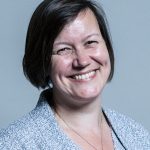
  • Barbara Keeley – 2021 Speech on the Medical Cannabis Bill

    Barbara Keeley – 2021 Speech on the Medical Cannabis Bill

    The speech made by Barbara Keeley, the Labour MP for Worsley and Eccles South, in the House of Commons on 10 December 2021.

    I thank my hon. Friend the Member for Manchester, Withington (Jeff Smith) for introducing this important Bill that could improve the lives of so many people. As we have heard, it could particularly help families with children affected by serve treatment-resistant epilepsy, for whom cannabis-based products may be the only treatment that works. I pay tribute to my hon. Friend the Member for Middlesbrough (Andy McDonald) for his powerful appeal on behalf of the Bill.

    My constituent Zoe Kirkman contacted me several years ago when she was seeking treatment for her son Riley, who experienced severe seizures up to 30 times a day that were very distressing for both him and the rest of his family. Ms Kirkman told me she was worried that he could die at any moment as a result of a seizure. These are the fears of parents and that is what drives them.

    Riley’s condition has led to his missing a lot of education and being out of school a lot. As she could not access cannabis-based treatment for Riley on the NHS, Zoe Kirkman was forced to purchase THC and CBD products privately. As we have heard, many families are in a similar position, left with no choice but to pay hundreds of pounds a month—in some cases thousands—for private prescriptions. THC products work better for Riley, but Zoe Kirkman told me that there was little support alongside the prescriptions when they were purchased privately. The fact that parents are pushed into private prescriptions with little support must have some weight with us.

    Thankfully, the cannabis-based treatments that his mother bought have reduced Riley’s seizures significantly and allowed him to stop taking a lot of his medications. However, he is still out of school because his school cannot include the cannabis-based treatment in his rescue package, as it is not prescribed on the NHS. For the same reason, Riley cannot access respite care, which would help him, at St Francis children’s hospice. Will the Minister say why schools and respite-care facilities such as hospices cannot be allowed to administer the oils that make such a difference to children such as Riley? Zoe Kirkman tells me that if Riley has a seizure because of a gap in the treatment, it can take weeks for his condition to settle down again.

    In July 2018, I wrote to the then Home Secretary to raise Riley’s case. I received a belated response from a Home Office Minister in January 2019—more than six months after my initial letter—saying that following the changes to the law in November 2018, he hoped Riley would be receiving the treatment he needed. Of course, he is not receiving that treatment. The campaign group End Our Pain estimated that, a full three years on from the rescheduling of cannabis-based products to schedule 2 to the Misuse of Drugs Regulations 2001, just three children living with severe epilepsy have received an NHS prescription. As we know, two of them were at the centre of the 2018 campaigns. We have heard that a number of times in this debate and it is right that we focus on the fact that there have been just three prescriptions, and ask why.

    When the Health Committee ran its inquiry on medical cannabis in March 2019, it heard from Peter Carroll, the campaign director at End Our Pain—we heard about him in earlier speeches—who said:

    “What has happened is that hopes have been correctly raised, because this offers a lot of hope and benefit to a lot of people, but we have now moved across to implementation and the honest reality is that it is a disaster…The families…should be getting prescriptions…and watching their children…hopefully…improving day after day.”

    After the Government raised hopes with the change in the law, it is a great pity that they have not increased access to medical cannabis for those who need it in line with the findings of the review that they commissioned in 2018. I hope that the Minister will explain why.

    While I accept that we still need more research and studies into the effectiveness of cannabis-based products for treatment-resistant epilepsy in children, the Bill would offer important measures to increase the number of doctors who could prescribe such products and widen access to them through its proposed commission.

    I asked Zoe Kirkman what she hoped for. She told me it was a purer form of the medication, because the products available to purchase contain a lot of synthetic ingredients and she worries that they could have long-term side effects for Riley. I hope that, through the Bill, Zoe Kirkman and Riley, and many families like them, will finally be able to access the treatment they need through the national health service.

    The Bill contains a proportionate set of measures, with a commission to propose an assessment framework for cannabis-based medicines and their suitability for prescription and to make recommendations of measures to overcome the barriers that we have heard about in CCGs and other NHS structures to accessing cannabis from the NHS for medical reasons.

    We have had a lengthy debate about different forms of trials. The commission could consider evidence from observational studies and from other countries as well as conventional control trials. My hon. Friend the Member for Manchester, Withington made an important point about evidence that could be weighed from EU countries—it is time that we started to think about that. It could also consider the important register of GPs who may prescribe cannabis-based medicines and permit them to do so. That would help to avoid the side effects of the cannabis-based products that Zoe Kirkman is currently forced to buy as the only option available. Most importantly, Riley would be able to attend school and have respite care when he needs it.

    Let us end the years of pain. As my hon. Friend said at the end of his excellent speech, if not this Bill, what else?

  • Elliot Colburn – 2021 Speech on the Medical Cannabis Bill

    Elliot Colburn – 2021 Speech on the Medical Cannabis Bill

    The speech made by Elliot Colburn, the Conservative MP for Carshalton and Wallington, in the House of Commons on 10 December 2021.

    I join others in congratulating the hon. Member for Manchester, Withington (Jeff Smith) on securing time for us to debate the Bill today. He is clearly very passionate and knowledgeable about this issue, and I learnt a huge amount from his opening speech, for which I am extremely grateful. I also pay tribute to the hon. Member for Middlesbrough (Andy McDonald) for his moving testimony. It is characteristic of sitting Fridays that we tend to work more collegiately across the House. My hon. Friend the Member for North Devon (Selaine Saxby) said that it is not a question of whether we do but of how we do, and I entirely agree with her.

    I am really here today at the behest of a constituent who asked me to come to the House and share his experiences, but before I delve into those, it may be helpful for me to give some of my own perspective. Before coming to this place, I too was employed in the NHS, although not as a frontline practitioner; I was not a doctor or a nurse. I worked for the sustainability and transformation partnership, the footprint of the new integrated care systems in south-west London. Along with commissioners across six south-west London boroughs, I looked at all the services that those boroughs provided, and this was a topic that arose during that time. It was obvious to me, when I spoke to colleagues, that there was almost a nervousness, almost a—confusion, I suppose, is the word I am looking for; it is a bit hard to describe—about commissioning medicines of this type.

    I thought it might be helpful for the Front-Bench team to hear a bit about the experience of frontline commissioning, but, as I said earlier, I am really here at the behest of one of my constituents to share his story. I hope the House will indulge me if I go into a bit of detail, because I did find this very profound, and I hope that other Members will agree with me. My constituent sent me an email, in which he wrote:

    “I would like to explain to you a little of my life which unfortunately has been plagued with intractable chronic migraines and the fallout from such.

    Although suffering all my life with Migraine attacks, 5 years ago I was diagnosed with severe chronic migraine which after a long wait I was prescribed 9 different medications to try and bring the migraines under control, none of which worked only causing nasty side effects.

    Having…sickness constantly with added migraine pain—1 was left diagnosed with intractable chronic migraine with attacks 6 days out of 7, putting me out of work and putting me in a state of deep depression.

    I was fortunate to meet a Dr. who was testing the benefits of Cannabis in neurological cases and after a discussion I decided to follow her strict advice and started self-medicating Cannabis which unfortunately meant sourcing off the black market, something that I’m not in any way proud of but the impact of using cannabis for my ailment was profound.

    Within three days of my first use, my migraine frequency dropped significantly as did…the usual nausea which accompanies my attacks. Within a week, I felt for the first time somewhat normal, depression had lifted, I was able to start work again almost immediately (I was open and honest with my employer who welcomed me back into the workplace and to this day has been extremely supportive).

    Summarising my experience, I went from someone who saw no hope in any way with modern medicine to someone who almost overnight got their life back.

    I have one son—aged 12 who has got his father back, and my wife although extremely anti-drugs (a doctor who works in the dental profession) has seen the relief I experience, especially after seeing me for many years hiding in a dark room, in pain, hiding from the world most days to someone who now is relishing in family life.”

    My constituent went on to say:

    “The stigma of the word Cannabis is something that I have had to deal with”.

    This, he said, included

    “seeking out black market providers which in its self I would not want anyone to go through”,

    and I think all Members would agree with that.

    Lia Nici

    On that point, which I was going to raise later, quite often the issue is semantics. There is a fear about the word “cannabis”, be it medical or not, and we need to get over that. One of my concerns about the Bill is the use of the broad term “cannabis”. I think that my hon. Friend’s constituent has been fighting with that issue.

    Elliot Colburn

    My hon. Friend has taken the words right out of my mouth. When talking to Carshalton and Wallington residents, I have found that there is a sense of stigma, and a stereotype, associated with the word “cannabis”.

    Christian Wakeford

    Earlier this week, we started talking again about drugs from a public health perspective. We need to tackle the stigma of not only drugs, but alcohol addiction. No one chooses addiction. There are many things that we can do, including removing the exclusion of addiction from the Equality Act 2010, and properly funding addiction and rehabilitation services, but, again, this comes down to the financing.

    Elliot Colburn

    My hon. Friend is absolutely right.

    Ben Everitt (Milton Keynes North) (Con)

    My hon. Friend is being very generous with his time. A point that occurred to me earlier is that one of the problems that we have when we debate this issue in Parliament and elsewhere is the conflation of national drugs policy and policy relating specifically to medicinal drugs—in this case, specifically medicinal cannabis. In many ways, it is deeply unhelpful when those two matters are conflated, because people come at them with strong opinions. However, the case study that my hon. Friend is outlining today shows the relationship between the two, and I am grateful to him for bringing that to the attention of the House. May I make a plea to everybody here—I hope that he agrees—not to fall into the trap of conflating the two issues, because although they are very important and we should have a discussion about both, they are vastly different?

    Elliot Colburn

    I totally agree. Indeed, I had no intention of opening the can of worms around recreational use, decriminalisation, legalisation, or whatever term we might want to use. I hope that my hon. Friend can rest easy in the knowledge that I will not go there, as they say.

    My constituent said that he would not want to put anyone else through having to seek out black market providers, and that somewhere in the back of his mind was always the worry of being prosecuted, but to him the benefit outweighed the risk tenfold.

    Lia Nici

    The case that my hon. Friend is outlining highlights real concerns about the side effects of smoking recreational drugs, including potential mouth cancer, potential throat cancer and potential psychosis, as well as the unpleasant social activities. I have had constituents who have had to live next door to people who take recreational cannabis, and it really is not a pleasant situation to be in—and then we get into the issue of potential secondary smoking and all those kinds of things. That is why constituents such as my hon. Friend’s should not have to go through that route.

    Elliot Colburn

    I totally agree. It might be of some use to the House if I read a little more of my constituent’s reflections, as he went on to say:

    “Then came along the introduction of Drug Science and their Project Twenty 21, this gave me the ability to seek professional help, to be able to get a prescription to legal Cannabis flower to which I vape as a preventative and when needed as a pain killer. I still get migraines but luckily now I have a medicinal way to cope and quell most of the side effects, literally giving me my life back.

    Although this does sound like a fairy tale, with a happy ending, there is a darker side to this.

    Currently the expense and experience of being with a private clinic and private dispensary/pharmacy is quite strained, adding anxiety and stress into the situation. We rely on the ability of both the clinic’s and Dispensary’s to keep us in prescription which does not happen and is quite literally floored. Medication is imported into the UK, its very often caught up in customs and the added issues with Covid has broken supply chains.

    Dispensary’s are often out of product and the clinics are not kept abreast of this so many re-writes of prescriptions have to happen and thus costing time to get the needed medication and cost for re-writes. This all breaks down to us the patients being without medication, sometimes up to a month, putting us back at square one (prescriptions have to be written monthly).

    On top of the supply and demand issues, quality is also something that has been with issue, many reporting to Yellow Card unusable medication due to sub-standard product and often mould that cannot be used – with no way of a refund or quick turnaround of a re-stock.

    Without a shadow of a doubt this would never happen under the NHS but as we have no other choice in the matter its either suffering under private clinics or unfortunately breaking the law and turning back to the black market.

    There are many thousands like me in this position, I’m but a single drop in a large ocean of people with similar experiences, I would like to draw your attention to this so you may air this as unfortunately the situation is not getting better. I understand that the primary concern is for children with epilepsy though there is a much larger footprint of people benefiting from medical cannabis and this should whole heartedly be pulled into the NHS to better control and support patients.

    I would be grateful if you could keep this all”—

    he refers to all of us in this place—

    “in the back of your mind so you have some real world information from one of your local constituents of the big picture surrounding medical cannabis, it’s time for this to be pushed forward as it was supposed to have been back in 2019…

    Luckily medical cannabis has given me my life back, I hope others can benefit in the future but it needs to be under the protective umbrella of the NHS.”

    I thank that constituent for sharing what was obviously a harrowing story, and for permitting me to raise it on the Floor of the House this afternoon. I am sure colleagues will agree that that was incredibly brave, so I am very grateful to that person for allowing me to do so.

    We have heard many constituents’ stories during the debate, although we have explored just two elements of them—childhood epilepsy and the migraines that my constituent has suffered. I would like quickly to bring in one more, which is the exploratory research being conducted on the use of CBD for fibromyalgia and other treatment-resistant neuropathic pain.

    I know the suffering that those conditions can cause, especially when there is so little known or understood about them; I have many family members who have been diagnosed with fibromyalgia or similar conditions. Again, I have seen the benefits that CBD can bring, but I agree with colleagues about the need for robust research. I do not think it is a question of whether we will get there, but a question of how. I hope that the Minister has been able to take on board the experience—

    James Daly

    Does my hon. Friend agree that the law is very clear that medical professionals can prescribe non-licensed cannabis products, but the question is why clinical commissioning groups are not funding that? That is what we have to address, to force them to fund it.

    Elliot Colburn

    I totally agree with my hon. Friend. I have experience of working in what we might call a super CCG, which is now an integrated care system, looking at commissioning at a strategic level across six London boroughs, which is by no means a small footprint—we commissioned services for more than 1 million people when I was there, including for four of London’s biggest hospitals. I agree with the shadow Minister, the hon. Member for Tooting (Dr Allin-Khan), that practitioners were screaming from the rooftops that they wanted to be able to give such prescriptions and, indeed, felt confident about that. I will not say that they all were—a lot of the colleagues I used to work with in the NHS were not—but a significant amount were confident. From a commissioning perspective, when we were sat in our offices in Wimbledon, talking about commissioning services and looking at the health of the six south-west London boroughs we were tasked with dealing with, there was a clear sense of nervousness and even confusion among commissioners. That obviously needs to change and there needs to be some way to support commissioners to make the positive decisions to deliver the funding. I hope that when the Minister responds we will hear a little bit about what the Government can do about that.

    In bringing my remarks to a close, I emphasise that the constituent experiences we have heard about in this debate, including from the constituent who was kind enough to allow me to read out their story, have been profound. That should be in the back of all our minds when we discuss this issue, because there are real-life implications that we do not always see when we pore over the details of text. I look forward to hearing from the Minister what we can do to unlock some of the issues we have explored in this debate.

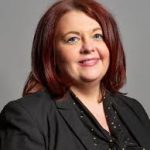
  • Rosena Allin-Khan – 2021 Speech on the Medical Cannabis Bill

    Rosena Allin-Khan – 2021 Speech on the Medical Cannabis Bill

    The speech made by Rosena Allin-Khan, the Labour MP for Tooting, in the House of Commons on 10 December 2021.

    I must begin by paying tribute to my hon. Friend the Member for Manchester, Withington (Jeff Smith), a fantastic campaigner who is working across party lines and with affected families up and down the country to make a real difference, both for those who are unable to obtain the treatment they need and for those who are left paying huge sums of money for private prescriptions. I also pay tribute to my dear and hon. Friend the Member for Middlesbrough (Andy McDonald), whose bravery in speaking today adds powerful testimony to this debate. I know 100% that his story echoes those of the people we are fighting for in this debate.

    The objectives of this Bill, for me, are clear and simple, but I fear, listening to some of the contributions today, it has been misunderstood. It would be a huge step forward for patients who need access to medical cannabis, and it creates a register of general practitioners trained in medical cannabis who are allowed to prescribe it, in addition to the specialist doctors who are already able to do so. Inclusion on the register is on an opt-in basis for GPs. The Bill importantly creates a commission to propose a framework for the assessment of cannabis-based medicines and their suitability for prescription in England, to sit alongside existing Medicines and Healthcare Products Regulatory Agency processes for conventional pharmaceutical drugs.

    I think it is very clear that what the Bill is asking for is a step forward with an end in sight for the pain, anguish and heartache, not to mention bankruptcy, experienced by many families. No one is saying that there should not be a robust examination of all evidence, but we are saying that there are current mechanisms in place to protect people on the medication and that, while we wait for some extremely timely processes, there are families who cannot wait and who are very clearly benefiting from the medication. It is very important that we recognise that.

    The commission is also tasked with recommending any other measures to overcome barriers to access on the NHS, which has been mentioned. Those changes would be welcome, as they would certainly help to reduce many of the barriers patients currently face when attempting to access medicinal cannabis. Progress in making cannabis-based medical products available to those who need them has been extremely slow. As we have heard today, there are people who have transitioned from childhood to adulthood while waiting for further progress on something that is important. The impact of continued seizures means that there is developmental delay for young people—the children we are talking about—and their ability to achieve their full potential in life. We cannot ignore that.

    Labour welcomed the fact that the Government accepted the therapeutic use of cannabis in 2018, but it still remains too difficult for suffering patients to obtain the treatment that they need. Despite that change in the law over three years ago, the vast majority of people who would benefit from cannabis-based medical products are still unable to access them through the health service. The campaign group End our Pain believes that only three prescriptions have been granted through the NHS. That is surely nowhere near the levels that this House, patients and the wider medical community would have anticipated.

    Andy McDonald

    My hon. Friend is making a wonderful summary and presentation. Is she as frustrated as I am by some of the contributions that have been made today, which seem to suggest that we need to start again when having this debate? We have been through this process. The law has been changed to allow the prescription of these products, yet all we have are three. Is it not really frightening that we are now challenging the original decision to change the law? That is what has happened today.

    Dr Allin-Khan

    Absolutely. I thank my hon. Friend for his contribution. To take any further step backwards from the progress we have made in a cross-party collegiate manner would be a travesty. We would be letting down families across the country.

    Lia Nici (Great Grimsby) (Con)

    The way the discussion is going at the moment is that we are talking about going backwards. The reason my hon. Friends are having those discussions is that the law has already changed, and I do not believe we need to legislate. We need to say, “We need to get these medicines that are approved already on the NHS.”

    Dr Allin-Khan

    I thank the hon. Member for that contribution. That is exactly right. The Bill seeks to move that forward, not frustrate the process. I welcome any intervention that underscores that.

    Lia Nici

    When we talk to members of the public and our constituents about the debates we have, we explain that we learn a lot by having this exchange of views. It is wonderful. Every school and business should have such debates in this collegiate way. It is not that we are against the Bill, but that we believe the law is already in place. We just need action on NHS funding and to get more of these approved, tested medicines on the lists.

    Dr Allin-Khan

    In three years, we have had three prescriptions on the NHS. In three years, we have seen people in fear of not having roofs over their heads because they cannot afford to give life-changing medication to their children.

    James Daly

    Will the hon. Member give way?

    Dr Allin-Khan

    I will make a bit more progress and then I would be absolutely delighted to give way.

    The situation that we face, whereby only three prescriptions in three years have been allowed, pushes more and more patients into the hands of private providers, who, as we have heard, are charging extortionate amounts of money each month for treatment. For the vast majority of people, that is simply out of reach.

    Let me add something that I was not originally going to say: I, too, am a science geek. I have a biochemistry degree and I worked in medical research before even going to medical school. I understand the importance of robust, evidence-based medicine, but I can also tell hon. Members that people searching in a very desperate way for things that will improve the quality of their life, or even keep their children alive, might also go to places where absolutely no thought is given to the purity of a drug. They may seek alternatives that are increasingly more dangerous for their children. It is important to recognise that.

    Christian Wakeford (Bury South) (Con)

    As another science geek with a chemistry degree, in which I specialised in drug design and synthesis, I completely agree with the hon. Member’s point. That is part of the concern. It is about having not just the product right now, but the right product, and about making sure that we have efficacy and safety. I completely appreciate all these points. That is why I do not necessarily agree with the perspective on the commission, but I have a lot of sympathy for clauses 1 and 2, which will go some way to help. However, the main stumbling block is the financing. We have already legalised the product. Every time it falls down, is it because it has not been licensed? Maybe, but finance seems to be the stumbling block at every single level.

    Dr Allin-Khan

    I do not need to tell the hon. Member, who has mentioned his CV—as many of us scientists have today—the cost of not investing in these young people. Think of every time a young person who would benefit from this drug goes into intensive care with seizures, every time they have alternative, expensive sedatives keeping them alive on a ventilator or the fact that they do not fulfil their potential, cannot go on and work and cannot give back to the economy. It is a false economy not to invest in this.

    Colum Eastwood (Foyle) (SDLP)

    Does the hon. Lady agree that it would be much better if we had less sympathy from Government Members and we got them to stop talking the Bill out and come with us to vote it through?

    Dr Allin-Khan

    I could not agree more; my hon. Friend puts the point across perfectly. If anyone is planning on talking the Bill out today, please will they ask themselves who benefits from that and whether they would feel proud of frustrating a process for many children and families that would mean that they did not have to go through, frankly, the hell that we have heard described?

    James Daly

    The hon. Lady is being extremely generous with her time; she will please forgive me for intervening, but I want to call on her expertise. The specific intent of Parliament was to allow medical professionals to prescribe non-licensed cannabis-based products. It cannot be any clearer than that; that is where the law is now. I agree with the point that was made—the fact that there have been only three prescriptions is ridiculous. However, perhaps she can address this question: the medical professionals who are considering such matters can see the evidence that we have talked about—it has been incredibly well articulated by all hon. Members—so why are they not referring those matters on and saying, “This patient needs this treatment”?

    The other question that I want to ask—very inarticulately—is about the two-stage process of the clinical referral and then the money within the CCG. Is the problem that it is getting through the first bit—the clinical referral—but the money in the CCG is stopping it? I wonder if she could address those points in her remarks.

    Dr Allin-Khan

    My understanding and my belief, unless someone has an alternative proposal, is that clinicians are often screaming from the rooftops in the knowledge that their patients need this medicine. We are where we are, however, with only three prescriptions having been granted in three years. This Bill seeks to improve that and move us forward.

    Families being forced to pay for treatment from private providers creates an unjust two-tier health system. A founding principle of our health service is that we do not believe that people’s access to treatment and services should be based on their ability to pay—it is as simple as that. The barriers in accessing medicinal cannabis are causing exactly that situation. We would not tolerate that for any other medication, so we should not tolerate it here. The Government must speed up and improve the availability of medical cannabis on the NHS and guarantee that patients across the country can access those products where appropriate.

    We have all heard the testimonies of children who receive no respite from their seizures and of patients whose chronic pain has become a constant of their lives. Working in hospitals, I regularly meet those people and their families, who beg me and other doctors to help their loved ones. Witnessing their suffering never gets any less upsetting, especially when we know that there are options to alleviate it. Unrelenting pain can be so devastating for all involved. It is imperative that we listen to those who would benefit from access to cannabis-based products and allow them to guide our future thinking.

    We have a voice in this place. I commend hon. Members from both sides of the House for using their voice today to speak up for those families who cannot be here to make the case themselves. Hon. Members have been begging, but we should not have to beg to do the right thing for the people who we serve.

    Tonia Antoniazzi

    Some of the voices that we have heard in the House today have talked about an unlicensed drug. The children who we have been talking about have been taking unlicensed drugs. I went to The Hague with two different families—two mothers—to pick up a prescription there before they could get it here. We walked into a pharmacy and picked it up, just as I would pick up my inhaler from Boots. There should be no fear. This is an over-the-counter drug in places such as the Netherlands, not an awful unlicensed drug that it is impossible to get. Does my hon. Friend agree that we need to break down that barrier and move on?

    Dr Allin-Khan

    As usual, I could not agree more with my hon. Friend, who makes a passionate and fair point.

    The Bill serves as an opportunity to move forward in a way that even the sceptics could support. I say again that anyone who is planning to talk out the Bill should take a long hard look at themselves in the mirror and ask themselves what they are doing. They need to walk a mile in the shoes of the families who are worrying about whether their child will be alive the next day.

    Last month, we had two debates on the issue in a matter of days. I would like to think that that demonstrates the collective will in the House to make progress, but that will and the warm words it brings are not enough for the thousands of people who should have benefited from those prescriptions in 2018 and since. We now need further action, and I wholeheartedly believe that the Bill would go some way towards achieving that. I trust that the Government believe that too.

  • Selaine Saxby – 2021 Speech on the Medical Cannabis Bill

    Selaine Saxby – 2021 Speech on the Medical Cannabis Bill

    The speech made by Selaine Saxby, the Conservative MP for North Devon, in the House of Commons on 10 December 2021.

    On sitting Fridays, I often find that we have much in common with Opposition Members and that, when we work together, such as through all-party parliamentary groups—the hon. Member for Gower (Tonia Antoniazzi) referenced such work—we are divided only by how, rather than whether, we will get there. I recognise what an emotive topic this is and send my deepest sympathies to the hon. Member for Middlesbrough (Andy McDonald), who shared his story. I am grateful not to have such a case in my inbox, because this is an incredibly emotional issue.

    When we hear about individual cases of children and families with drug-resistant epilepsy who have found relief from whole-plant extract medical cannabis, all we want to do as human beings is help. Most of us came here to make people’s lives better, and we all want to expedite such things as far as is possible. I am a mathematician by training—I will not draw on medical GCSEs and A-levels—and, as I do not have such a case and therefore an emotional tie, I would like to use logic and talk through what the Government have done to make progress in the area before looking at the specifics of the Bill and how we have, hopefully, started to make some progress.

    In November 2018, cannabis-based products for medicinal use, known as CBPMs, were rescheduled under the Misuse of Drugs Regulations 2001 from schedule 1 to schedule 2, as detailed in the excellent opening speech by the hon. Member for Manchester, Withington (Jeff Smith). I thank him for bringing the matter to the House to enable us to speak on it again. The change followed advice in July 2018 from the UK Government’s chief medical adviser and the Advisory Council on the Misuse of Drugs, both of whom said that the rescheduling of such products would facilitate the development of clinical evidence.

    I have not been in this place that long but, for most of my two years here, we have been in a global pandemic. Again, my heart goes out to the families tied up in this, but the pandemic has slowed down medical trials and treatments for a huge number of people. My hon. Friend the Member for Crewe and Nantwich (Dr Mullan) referenced the need for research in the area. In the last 12 months, 18 trials of cannabis-based products for medicinal use have come forward, and six are now complete. Things are therefore moving, although perhaps not at the pace that we would like.

    Since the change in the 2001 regulations, doctors on the General Medical Council’s specialist register have been able to prescribe an unlicensed CBPM if clinically appropriate for their patients. As we have heard, the law allows GPs to prescribe these products under the direction of a specialist as part of a shared care arrangement. Currently, all the CBPMs prescribed by specialist doctors are, as we have discussed, unlicensed medicines, which unlike licensed medicines have not undergone rigorous tests for quality, safety and efficacy. As has been said so passionately, such unlicensed medicines are treatments of last resort, and patients at that stage in their treatment pathway will be under the care of a doctor with specialist knowledge in their field and all the treatment options to take responsibility for such prescribing.

    As we know, access to medical cannabis has been debated at length in both Houses. However, while it is understandable that these campaigns continue for greater access to unlicensed cannabis-based products for medicinal use funded by the NHS, as detailed so beautifully by my hon. Friend the Member for Dover (Mrs Elphicke), these products have not had their safety, quality or efficacy assessed or assured by the Medicines and Healthcare products Regulatory Agency or their clinical and cost-effectiveness assessed by the National Institute for Health and Care Excellence, otherwise known as NICE, which is the basis for NHS routine funding.

    It is critical to progressing public funding decisions that manufacturers of those products invest in those clinical trials and prove that the products are safe and effective so that more of our constituents are able to access them. The National Institute for Health Research remains open to receiving good-quality proposals for research in this area. The latest clinical guidelines from NICE demonstrate a clear need for more evidence on the clinical and cost-effectiveness of the unlicensed medicines.

    Sally-Ann Hart (Hastings and Rye) (Con)

    On the NICE guidelines and the clinical evidence, does my hon. Friend agree that all medication, whether cannabis-based, heroin-based or cocaine-based medication, must have rigorous testing through clinical trials so that we understand the possible side-effects and everyone—GPs, all doctors and patients—has full knowledge in making the ultimate decision on whether a drug should be prescribed?

    Selaine Saxby

    I agree with my hon. Friend: it is vital that we fully understand the side-effects of these drugs that we know, when used in the wrong way, have clinical downsides.

    The Government continue to support the establishment of clinical trials with NHS England and the National Institute for Health Research, but they have been clear that the law enables lawful access where deemed clinically appropriate. The most significant barrier to access on the NHS is the lack of evidence on the quality, safety, and clinical and cost-effectiveness of these products. That sounds uncaring, but I want to revisit the black-and-whiteness behind the terrible emotion tied up with these individual cases.

    I understand that the Royal College of General Practitioners is supportive of the Government’s position that, until the evidence base has developed further, GPs should not be asked to initiate prescribing these products independently of a specialist. I suspect that trust in doctors in this particular area is well placed, which in my mind makes clauses 1 and 2 hard to support.

    There is indeed clear merit in understanding, then overcoming any barriers to accessing unlicensed cannabis-based medicines on the NHS. That is why in March 2019 the then Health Secretary commissioned NHS England and NHS Improvement to review NHS systems and processes and identify and recommend any actions necessary to addressing barriers to clinically appropriate prescribing of unlicensed cannabis-based medicines on the NHS.

    The findings of that review were reported in August 2019 and the majority of recommendations have now been implemented. Since this work has been undertaken recently and the recommendations acted on, I find it hard to support clause 3 of the Bill, as so much has already been achieved by non-legislative means. I very much hope that trials will progress to enable more families to access this treatment, and I take this opportunity to thank the hon. Member for Manchester, Withington for introducing his Bill.

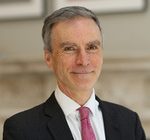
  • Andrew Adonis – 2021 Comments on Funding for TFL

    Andrew Adonis – 2021 Comments on Funding for TFL

    The comments made by Andrew Adonis on Twitter on 11 December 2021.

    London makes huge net contribution to national taxation, billions in excess of the current TfL deficit. So it’s absurd to call it “unfair” to taxpayers to maintain TfL through the pandemic. TfL is economically & socially vital not just for the capital but for the country at large.

  • Sadiq Khan – 2021 Comments on ULEZ Expansion

    Sadiq Khan – 2021 Comments on ULEZ Expansion

    The comments made by Sadiq Khan, the Mayor of London, on 10 December 2021.

    This shows how bold action reaps rewards on air quality and climate change. Just one month after expanding the world’s first Ultra Low Emission Zone, we have seen a significant reduction in the number of older, more polluting vehicles driving in our capital. This is vitally important because toxic air is an invisible killer, responsible for one of the biggest public health crises of our generation.

    In central London, the ULEZ has already helped cut toxic roadside nitrogen dioxide pollution by nearly half. But pollution isn’t just a central London problem. Everyone should have the right to breathe clean air, which is why expanding the ULEZ was a crucial step. The high compliance rate means that millions of Londoners are already benefiting from cleaner air.

  • Michael Gove – 2014 Comments on Expansion of Free Schools

    Michael Gove – 2014 Comments on Expansion of Free Schools

    The comments made by Michael Gove, the then Secretary of State for Education, on 19 June 2014.

    Free schools are giving thousands of children from ordinary backgrounds the kind of education previously reserved for the rich and the lucky.

    Thanks to our free school programme, many more parents now have a new school in their neighbourhood offering high standards and tough discipline. Free schools put teachers – not bureaucrats and politicians – in the driving seat, as they are the ones who know their pupils best.

    As part of our long-term economic plan, we are determined to deliver the best schools and skills for our young people, and free schools are achieving exactly that.

  • Michael Gove – 2014 Comments on New School Food Menus

    Michael Gove – 2014 Comments on New School Food Menus

    The comments made by Michael Gove, the then Secretary of State for Education, on 17 June 2014.

    These new food standards will ensure all children are able to eat healthy, nutritious meals at school.

    We now have a clear and concise set of food standards which are easier for cooks to follow and less expensive to enforce. Crucially we have achieved this without any compromise on quality or nutrition.

    There has been a great deal of progress in providing healthy school meals in recent years and these new standards will help deliver further improvements.

  • Michael Gove – 2014 Statement on Schools in Birmingham

    Michael Gove – 2014 Statement on Schools in Birmingham

    The statement made by Michael Gove, the then Secretary of State for Education, in the House of Commons on 9 June 2014.

    With your permission, Mr Speaker, I should like to make a statement on schools in Birmingham.

    Keeping our children safe – and ensuring our schools prepare them for life in modern Britain – could not be more important – it is my central mission.

    Allegations made in what has become known as the Trojan Horse letter suggested children were not being kept safe in Birmingham schools.

    Ofsted and Education Funding Agency have investigated those allegations. Their reports, and other relevant documents, have today been placed in the Library of the House. Let me set out their findings and my actions.

    Ofsted states that “headteachers reported… an organised campaign to target.. schools…in order to alter their character and ethos,” with “a culture of fear and intimidation”.

    Headteachers who had “a record of raising standards” reported they had been “marginalised or forced out of their jobs”.

    One school leader was so frightened about speaking to the authorities that a meeting had to be arranged in a supermarket car park.

    Ofsted concluded governors “are trying to impose and promote a narrow faith-based ideology in what are non-faith schools”, specifically by narrowing the curriculum, manipulating staff appointments and using school funds inappropriately. Overall, Ofsted inspected 21 schools. Three were good or outstanding.

    Twelve schools were found to require improvement.

    The remaining 6 are inadequate and are in special measures.

    Let me explain why.

    At one secular primary school, terms such as “white prostitute” unsuitable for primary children’s ears, were used in Friday assemblies run exclusively by Muslim staff.

    The school organised visits to Saudi Arabia open only to Muslim pupils.

    Senior leaders told inspectors that a madrassah had been established and been paid for from the school’s budget.

    Ofsted concluded the school was “not adequately ensuring that pupils have opportunities to learn about faith in a way that promotes tolerance and harmony between different cultures”.

    At one secular secondary school, staff told officials the call to prayer was broadcast over the playground using loudspeakers.

    Officials observed lessons had been narrowed to comply with conservative Islamic teachings – in biology, students were told “evolution is not what we believe”.

    The school invited the preacher Sheikh Shady al-Suleiman to speak despite the fact that he is reported to have said:

    Give victory to Muslims in Afghanistan… Give victory to all the Mujahideen all over the world. Oh Allah, prepare us for the jihad.

    Ofsted concluded that “governors have failed to ensure that safeguarding requirements and other statutory duties are met”.

    At another secular secondary school inspectors described “a state of crisis” with governors reportedly using school funds to pay private investigators to read the emails of senior leaders, Ofsted found a lack of action to protect students from extremism.

    At a third secular secondary school, Ofsted found students are “vulnerable to the risk of marginalisation from wider British society and the associated risks which could include radicalisation”.

    And at a secular primary Ofsted found, that “pupils have limited knowledge of religious beliefs other than Islam”, and “subjects such as art and music have been removed – at the insistence of the governing body”.

    Inspectors concluded that the school “does not adequately prepare students for life in modern Britain”.

    Ofsted also reports failures on the part of Birmingham City Council.

    They found that the council did not deal adequately with repeated complaints from headteachers. School leaders expressed “very little confidence” in the local authority and Ofsted concluded that Birmingham has not exercised adequate judgement. Indeed the chair of one of the schools found to be inadequate, Tahir Alam, was in a business relationship with the former Lead Member for Children and Young People.

    Mr Speaker, these findings demand a robust, but also a considered, response.

    It is important that no one allows concern about these findings to become a pretext for criticism of Islam itself, a great faith which brings spiritual nourishment to millions and daily inspires countless acts of generosity.

    The overwhelming majority of British Muslim parents want their children to grow up in schools that open doors rather than close minds.

    It is on their behalf that we have to act.

    There are, of course, questions about whether warning signs have been missed.

    There are certainly questions for Birmingham Council, Ofsted and the Department for Education.

    I have today asked Birmingham Council to review their history on this issue, and the Chief Inspector has advised me that he will be considering the lessons learnt for Ofsted.

    I am also concerned that the DfE may not have acted when it should. I am asking the Permanent Secretary to investigate how my department dealt with warnings both since the formation of this government in 2010 and before.

    We all must acknowledge there has been a failure in the past to do everything possible to tackle non-violent extremism.

    But let me be clear, no government and no Home Secretary has done more to tackle extremism.

    In the Prime Minister’s Munich speech of 2011;

    In the Home Secretary’s own review of the Prevent Framework;

    And in the conclusions of the government’s Extremism Task Force last year.

    This government has made clear that we need to deal with the dangers posed by extremism well before it becomes violent.

    And since 2010 the DfE has increased its capacity to deal with extremism. We set up Whitehall’s first ever unit to counter extremism in public services with help from former intelligence and security professionals. That unit has developed since 2010 and we will continue to strengthen it.

    Ofsted now train inspectors to understand and counter extremist Islamist ideology. And inspections of schools at risk, like those in Birmingham, are carried out by the most senior inspectors – overseen by Sir Michael Wilshaw himself.

    But there is – of course more to do – and today’s reports make action urgent.

    First, we need to take action in the schools found inadequate.

    Academies will receive letters saying I am minded to terminate funding agreements.

    Local authority schools are having governors replaced.

    We have already spoken to successful academy providers who are ready to act as sponsors.

    We need to strengthen our inspection regime even further.

    The requirement to give notice of inspections clearly makes it more difficult to identify and detect danger signs.

    Sir Michael Wilshaw and I have argued in the past that no-notice inspections can help identify when pupils are at risk.

    I have asked him to consider the practicalities of moving to a situation where all schools know they may receive an unannounced inspection.

    I will also work with Sir Michael Wilshaw to ensure, as he recommends, that we can provide greater public assurance that all schools in a locality discharge their full statutory responsibilities and we will consider how Ofsted can better enforce the existing requirement that all schools teach a broad and balanced curriculum.

    I have talked today to the leader of Birmingham Council and requested that it sets out an action plan to tackle extremism and keep children safe.

    We already require independent schools, academies and free schools to respect British values.

    Now we will consult on new rules that will strengthen this standard further, so that all schools actively promote British values.

    And I will ask Ofsted to enforce an equivalent standard on maintained schools through changes to the Ofsted framework.

    Several of the governors whose activities have been investigated by Ofsted have also been active in the Association of Muslim Schools UK – which has statutory responsibilities in relation to state Muslim faith schools.

    So we have asked AMSUK to satisfy us that they are doing enough to protect children from extremism and we will take appropriate steps if their guarantees are insufficiently robust.

    I have also spoken to the National College for Teaching and Leadership and we will further strengthen the rules so that from now on it is explicit that a teacher inviting an extremist speaker into a school can be banned from the profession.

    I will, of course, report in July on progress in all the areas I have announced as well as publishing the findings of the report of Peter Clarke, who is investigating the background behind many of the broader allegations in the Trojan Horse letter.

    The steps we are taking today are those we consider necessary to protect our children from extremism – and protect our nation’s traditions of tolerance and liberty.

    Mr Speaker, the conclusions of the reports today are clear.

    Things that should not have happened in our schools were allowed to happen.

    Our children were exposed to things they should not have been exposed to.

    As Education Secretary, I am taking decisive action to make sure those children are protected.

    Schools that are proven to have failed will be taken over, put under new leadership and taken in a fresh new direction.

    Any school could now be subject to rigorous, on the spot inspections – with no advance warning and no opportunities to conceal failure.

    And we will put the promotion of British values at the heart of what every school has to deliver for children.

    What we have found was unacceptable. And we will put it right.

    I commend this statement to the House.

  • Michael Gove – 2014 Comments on Extremism in Schools

    Michael Gove – 2014 Comments on Extremism in Schools

    The comments made by Michael Gove, the then Secretary of State for Education, on 9 June 2014.

    We have to ensure children are safe in our schools. Evidence uncovered in Birmingham clearly indicates that schools have used the notice they have been given of inspections to evade proper scrutiny. Sir Michael Wilshaw will now examine the practicalities of moving to a position where all schools know they may face an unannounced inspection.

    Our children need to be protected in schools, kept safe from the dangers of extremism and guaranteed a broad and balanced curriculum. This change will help provide parents with the reassurance they need.