Category: Speeches

  • Volodymyr Zelenskyy – 2022 Statement on the Situation in Ukraine (10/03/2022)

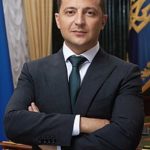
    Volodymyr Zelenskyy – 2022 Statement on the Situation in Ukraine (10/03/2022)

    The statement made by Volodymyr Zelenskyy, the President of Ukraine, on 10 March 2022.

    Ukrainians!

    Information about the victims of yesterday’s bombing of the maternity hospital and the children’s hospital in Mariupol appeared last night. We lost three people, including a child, a girl. The number of wounded is 17. These are children, women, medical workers.

    You know, this topic was mentioned on Russian television. It was on their talk show. But not a word of truth was said. The Russians were lied to that there had been no patients in the hospital and no women or children in the maternity hospital. The Russians were lied to that “nationalists” had allegedly taken up positions there. They lie confidently, as always.

    War crimes are impossible without the propagandists who cover them up. I want to tell them one thing: you will bear responsibility just as all those who give orders to bomb civilians. We will find all the property of the propagandists and their associates. We will do our best to confiscate it wherever it is. You love a rich life. Love prosperous countries. You will not have this anymore. And this is just the beginning.

    You will definitely be prosecuted for complicity in war crimes. And then, it will definitely happen, you will be hated by Russian citizens. Everyone whom you have been deceiving constantly, daily, for many years in a row. When they feel the consequences of your lies in their wallets, in their shrinking possibilities. In the stolen future of Russian children.

    War is never isolated. It always beats both the victim and the aggressor. The aggressor just realizes it later. But it always realizes and always suffers.

    Today, we are once again providing humanitarian corridors for our cities. The buses have already departed, the trucks are already on their way – with food, water, medicine.

    Mariupol, Volnovakha, Izyum, Sumy and the region. Cities and towns of the Kyiv region – Bucha, Borodyanka, Irpin, Hostomel… My heart is broken by what the invaders did to our cities, to our state! And by what they want to do to our people who need urgent help.

    Russian troops have already created a humanitarian catastrophe in Ukraine. But for them it is part of the plan. They want to humiliate our people. Make them take bread and water from the hands of the invaders standing on their knees. So that Ukrainians can save their lives just by going to the occupied territories or to Russia. That’s why they are blocking Mariupol, that’s why they are blocking Volnovakha, blocking other cities.

    The invaders specially organize this torture to give their propaganda channels new material. Just for that. Monsters.

    Despite everything, updated information was received every hour yesterday about people whom we managed to evacuate to the free territory of Ukraine. In total, more than 60,000 of our citizens were rescued yesterday plus those who did not have time until night and continued the evacuation in the morning.

    I spoke today, in particular about that, with German Chancellor Olaf Scholz. About the torture of our cities, our people. I spoke with French President Macron.

    I felt in a conversation with Prime Minister of the United Kingdom Boris Johnson that our anti-war coalition will soon become much stronger. Consequently, the pressure on Russia for peace will also be much stronger. For us, specifics in relations with world leaders, with European leaders are very important.

    We are really fighting for our independence! For freedom, for equality for all on the continent! That is why we want to see from partners the decisions based on reality, not on declarations or abstract considerations.

    These days, the EU leaders will convene to discuss Russia’s war against Ukraine. To discuss our application for EU membership. We are waiting for a concrete signal. We look forward to strong support. Because it will be fair, real, human, European.

    We know exactly the position of every leader. We know exactly who stands with us and who thinks that the European Union is just accounting, profits, expenses and nothing more. We will work, we will persuade. Life will convince them.

    Ukrainians! Our defenders!

    We all have been defending our state for the 15th day. We endured. The Ukrainian army is repelling attacks in key directions. Thanks to our military, National Guards, border guards, police, territorial defense and everyone who joined the defense of the state, we have not become slaves, and will never become!

    Because this is our spirit, this is our destiny. Pride for our Armed Forces of Ukraine is boundless!

    After the war, after our victory, we will rebuild everything that was destroyed.

    Very quickly and with a very high quality. A special state program for reconstruction will be created for each affected city. I have already instructed the government to start the elaboration.

    Chernihiv and Sumy, Okhtyrka and Zhytomyr, Izyum, Mariupol and all our beautiful cities to which evil has come will not see a single trace of the Russian invasion.

    The best architects, the best companies, the best projects. For every city! I want to say this on the example of Kharkiv. Our Kharkiv, which is now experiencing the worst suffering since World War II.

    Saltivka, Oleksiivka… Perhaps most Ukrainians know nothing about these names. But the people of Kharkiv will hear. Freedom Square will be such that everyone, all of us, all Europeans will be there! Poltava Way, Belgorod Highway, Myronosytska Street, Regional Children’s Hospital, Kharkiv Oncology Center, Karazin University, Labor Palace, Korolenko Library.

    We will rebuild everything! I promise you personally. Kharkiv residents will see that Ukraine stands with them. And it really does.

    Glory to Ukraine!

  • James Cleverly – 2022 Statement on Ukraine

    James Cleverly – 2022 Statement on Ukraine

    The statement made by James Cleverly, the Minister for Europe and North America, in the House of Commons on 15 March 2022.

    I beg to move,

    That this House has considered the situation in Ukraine.

    Seven days ago, President Zelensky inspired us with his address to Parliament. This weekend, he was visiting wounded soldiers in hospital, leading from the front. We owe it to President Zelensky and the people of Ukraine to do our utmost to help them in their brave fight; we owe it to ourselves to stand up for security and stability in Europe; and we owe it to the world to keep the flame of freedom burning and to show that aggression does not pay.

    In response to the unprovoked attack, the world has shown immense unity in standing up to Vladimir Putin, but we need to keep up the pressure. Our objective is clear: Putin must lose in Ukraine. We are doing this by cutting off the funding for his war machine, by providing weapons that the Ukrainians need to defend themselves and by isolating Putin on the world stage. The United Kingdom has been at the forefront of the international response, with a tough sanctions package and strong support, including defensive weapons and humanitarian aid. We will now enhance our work with allies to respond to Russia’s aggression.

    We need to be strong to get peace. That is why we are building on efforts to cut off the funding for Putin’s war machine through sanctions. Today, I can announce that we will go further than ever before by hitting more than 360 more people complicit with Putin’s regime. They range from former President Dmitry Medvedev and Defence Minister Sergei Shoigu to Putin’s propagandist Maria Zakharova. After today, we will have designated more than 1,000 individuals and entities under our Russian sanctions regime.

    We are using our new powers under the Economic Crime (Transparency and Enforcement) Act 2022 to maximise impact. That would not have been possible without the extraordinary efforts of colleagues across this Parliament to get the legislation through the House so quickly, which shows our collective determination to lead by example in punishing the Putin regime.

    Chris Bryant (Rhondda) (Lab)

    The Minister is right that we are sanctioning a lot of people, but actually we name the people who are sanctioned, and then other people do the sanctioning by not engaging with them on a financial basis, not buying or selling properties and all the rest of it. At the moment, it is phenomenally difficult to find out from the Foreign Office sanctions list who is and is not sanctioned. For instance, I gather that it was announced last week that Members of the Duma were sanctioned, but they are still not on the Foreign Office website list, as far as I can see. I wonder whether there is a way of making the information far more readily available to the wider population.

    We need to deal not just with the people who have £20 million houses, whom we have all heard of, but with the people who have £750,000 flats in London, bought with Russian dirty money—the many relatives of Abramovich and his ex-partners, for instance. Each one of them needs to be dealt with, and each one of those properties needs to be seized.

    James Cleverly

    The hon. Gentleman makes an important point about ensuring that we give due publicity to the people, institutions and entities who have been sanctioned. I will ensure that the Department listens to his suggestion.

    In December, we brought our G7 partners together in Liverpool to warn Putin that invading Ukraine would have massive consequences. We have followed through on that pledge. We have worked with our allies to cut off sectors of the Russian economy by targeting its defence companies, trade and transport sector, and by kicking banks out of the SWIFT financial system. We have led the way with our financial sanctions, targeting 10 Russian banks, and we have hit over £300 billion of Russian bank assets. All this amounts to the toughest sanctions package of any country. We will work with all our allies and encourage them to keep ratcheting up their efforts as well.

    We will continue to provide lethal military aid to Ukraine. We were the first European country to send defensive weapons; we have already donated more than 3,600 next generation light anti-tank weapons and are now supplying Javelin missiles.

    James Gray (North Wiltshire) (Con)

    Does my right hon. Friend agree that one of the lighter moments in an otherwise extremely bleak military picture in Ukraine was the destruction of Russian tanks, using—one has to presume—British NLAW missiles?

    James Cleverly

    My hon. and gallant Friend makes an important point. We have heard anecdotally that Ukrainians are shouting “God save the Queen!” as they fire those weapons at the tanks that have been sent to destroy them. I am very proud that we play an incredibly important part.

    Jamie Stone (Caithness, Sutherland and Easter Ross) (LD)

    I thank the Minister for giving way; it is very courteous of him. Is it not true that part of the reason we are where we are today is the historic long-term running down of our armed forces? The situation today sits very ill with the proposal to reduce the British Army by 10,000 men and women. Finally, we have all read in today’s Telegraph that inflation will reduce the size of the armed forces over the years ahead.

    James Cleverly

    The sad truth, I think, is that Vladimir Putin has been plotting this expansionist idea of his for quite some time. I do not agree that it is necessarily linked with domestic defence policy in the UK, but we can absolutely be proud that British military technology, assisted by British military training, is helping the Ukrainians in their time of need and in their ferocious defence of their homeland.

    Daniel Kawczynski (Shrewsbury and Atcham) (Con)

    My right hon. Friend has told us that the United Kingdom has taken the lead on our continent in freezing the assets of Russians. During his discussions with representatives of the European Union, have they been able to furnish him with an explanation of why they, as an entity, have failed to keep pace with Britain in that regard?

    James Cleverly

    I am often encouraged to do a “compare and contrast” between the United Kingdom and our international friends and partners, but the simple truth is that there has been greater, tighter and closer co-ordination in response to Putin’s aggression in Ukraine than I could ever have imagined, and we will continue to work together extremely closely. We are proud of the fact that the UK Government have had a dramatic and detrimental impact on Russia’s finances, choking off Putin’s ability to fund this aggression, but we intend to go further, and we will do so in close co-ordination with those international friends and partners.

    Clive Lewis (Norwich South) (Lab)

    As someone who lost his guts, or at least his lunch, quite a few times when helicopters were having to jig because of the threat of Singer missiles—given to our allies at the time, decades earlier—may I ask whether the Minister can assure us that the Government’s measures are sufficient to ensure that our weapons do not end up on the black market in the hands of the wrong people at a future date? Will he also confirm that our weapons—the NLAWs and other pieces of aggressive equipment—will not end up in the hands of far-right neo-Nazis, many of whom we know to be making their way to Ukraine now from around the world?

    James Cleverly

    Our priority, and the purpose of the defensive weapon support that we have provided, is to help the Ukrainians to defend themselves against the attacks of Russia. Obviously we hope that this conflict will come to a swift conclusion, but until then we will continue our support for the Ukrainians as they defend themselves. What happens at the end of this conflict, in terms of securing munitions, will be something on which we will work with the Ukraine Government and our national friends and partners, but at the moment our priority, quite rightly, is to help the Ukrainians to defend themselves against Putin’s attack.

    Dr Julian Lewis (New Forest East) (Con)

    May I ask my right hon. Friend about this distinction between defensive and offensive weaponry? The fact is that when a friendly nation finds itself under attack, all the weaponry with which we supply it is defensive. I should have thought that if we cannot intervene ourselves—and there are good reasons why we cannot—there is no reason at all why we cannot help the Ukrainians with their airspace problem by facilitating the necessary aircraft deliveries which they have requested.

    James Cleverly

    My right hon. Friend has made an important point about munitions systems being inherently defensive when a country is under attack. He has also made an important point about airspace management, and I will come to that later in my speech. I intend to make some progress now.

    Since 2014, we have worked to train more than 22,000 Ukrainian troops under Operation Orbital. As well as helping Ukraine to defend itself from attack on the ground, we must help it to defend itself against attack from the skies. That is why we will be sending more supplies, including Starstreak ground-based air defence anti-aircraft missiles. We and our allies need to do everything possible, within the UN charter on self-defence, to help Ukraine to defend itself, which is why I was with my right hon. Friend the Prime Minister this morning discussing with and working with our Nordic and Baltic allies to increase defensive support as part of the UK-led joint expeditionary force. We must be robust in supporting our NATO allies living under the shadow of Russian aggression, so the UK, as NATO’s biggest European contributor, is doubling the number of troops in Estonia and Poland.

    As Putin inflicts ever greater misery in Ukraine, we continue our humanitarian and economic support. We have pledged almost £400 million, which includes the supply of more than 700,000 medical items directly to Ukraine and more than 500 power generators to keep essential facilities such as hospitals running. We have also brought 21 critically ill Ukrainian children to the UK to receive life-saving cancer treatment. We are providing more humanitarian aid than any other European country. The British people have also risen to the moment by showing their own huge generosity of spirit. In the short time since our homes for Ukraine scheme was launched, more than 80,000 people have signed up for it.

    Alec Shelbrooke (Elmet and Rothwell) (Con)

    It may be helpful for my right hon. Friend to know that according to a Sky newsflash, the figure is now more than 100,000.

    James Cleverly

    That is lovely. It is not usually nice to be wrong at the Dispatch Box, but I am incredibly proud that the figure I quoted, which was accurate a few hours ago when this speech was written, has now been made obsolete by the enormous generosity of spirit of the British people. I think that that shows us at our best. The Disasters Emergency Committee’s appeal has now reached over £150 million, which we are supporting with our largest ever match-funding pledge of £25 million.

    Wera Hobhouse (Bath) (LD)

    I do not doubt the generosity of the people of this country, but I am still worried about the generosity of the Government. May I give the Minister an example? A young Ukrainian family, related to one of my constituents, have thankfully made it into Poland, but although their visa appointment was over a week ago, they are still waiting for the outcome. Meanwhile, their hotel bills are rising and they are even considering returning to Ukraine—to a war zone. How humane is that response from the Government? Can they not make these decisions much more quickly?

    James Cleverly

    The Prime Minister, the Foreign Secretary and other members of the Government have made it clear that our intention is to be generous and to welcome Ukrainians with open arms. We are trying to facilitate that as quickly as possible, and the Home Secretary has spoken at the Dispatch Box about measures that she has put in place for that purpose. If the hon. Lady will pass on the details of the people whom she has mentioned, we will see what we can do to help, but I assure her that the generosity of spirit of this country will be felt by the Ukrainians who are fleeing persecution and attack from Vladimir Putin.

    As well as supporting Ukraine directly, we are deploying our diplomatic efforts internationally. We are rallying the 141 countries that voted to condemn Russia’s actions at the United Nations to do even more. We have seen many of those countries support our sanctions worldwide, from Switzerland to Singapore, and we are working to draw more countries into the orbit of those that are prepared to stand up for the sovereignty of Ukraine. We are working with partners to reduce the economic dependency on Russia across the world, from the Indo-Pacific to Africa and the Gulf, through trade and British international investment. Everything we do will further isolate the Putin regime which has made Russia a global pariah.

    Ultimately, we will hold Putin accountable for his crimes. We will work with prosecutors at the International Criminal Court to help them to obtain the information that they need, and we will not relent in our mission to see that justice is done.

    Sir Bernard Jenkin (Harwich and North Essex) (Con)

    Has my right hon. Friend seen the recent reports that the Russian navy is now massing off Odesa in a typical Russian tactical manoeuvre to open a new front? Is this not in fact a new opportunity to demonstrate to the world the unacceptability of Putin’s disgusting war and to invite open and international condemnation of his actions?

    James Cleverly

    My hon. Friend is absolutely right. We need to continue working internationally to enhance the coalition of nations that have denounced Putin’s actions and to increase the pressure on him to bring this war to a conclusion rather than opening up another front and increasing the suffering of the people in Ukraine.

    We must be realistic that there will be a cost to the UK and to our allies of imposing these tough sanctions, but the cost of doing nothing is so much higher. We saw what happened in 2014 when the free world did not do enough to contain Putin’s aggression. He came back more aggressively, and that is why we cannot allow him to impose a settlement on Ukraine that vindicates his aggression. If we fail to stand up to Putin and fail to support Ukraine in its hour of need, we will live to regret it.

    Simon Hoare (North Dorset) (Con)

    We know what a successful sanctions regime will look like: withdrawal, peace restored, etc. Who will determine—and when—whether the sanctions policy has worked, and what is the next step thereafter?

    James Cleverly

    My hon. Friend is right to draw our attention to that. The simple truth is that the sanctions have to be successful and we have to keep applying the pressure until they are successful.

    Mr Jonathan Djanogly (Huntingdon) (Con)

    On that point, as we mount up the sanctions, we will be freezing more and more oligarchs’ and Russian assets, but we will not be selling them. We are not sequestrating them, so we are going to end up with a pile of assets. Are we at some point going to use those assets for the benefit of the Ukrainian people, or are we just going to wait until the war is over and hand them back, which I do not think would be as popular?

    James Cleverly

    Ultimately, what we are looking to do with these sanctions is choke off the supply of funds for Putin’s war machine. We have to be very focused on what the sanctions are for. This is about bringing this conflict to a conclusion.

    Mr Khalid Mahmood (Birmingham, Perry Barr) (Lab)

    Just a single point on sanctions: what action will we take when people break those sanctions on Russia and take supplies? I am thinking particularly of the crude oil being taken by India. What action should we take in those circumstances against people who are still supporting Putin, with his money flowing into the country?

    James Cleverly

    Ultimately, the enforcement of our sanctions regime is a task for Her Majesty’s Treasury. We will of course work across Government and internationally to ensure that the sanctions packages are robust and have the desired effect of ending this war in Ukraine. That is why the UK is working so hard and that is why, together with our allies and partners, we will ensure that Putin loses in Ukraine.

  • Robin Walker – 2022 Statement on Education

    Robin Walker – 2022 Statement on Education

    The statement made by Robin Walker, the Minister for School Standards, in the House of Commons on 14 March 2022.

    Today, I am providing an update to the House on three elements of this Government’s work to enable every child to fulfil their potential by ensuring that they receive the right support, in the right place, at the right time. This is in advance of the forthcoming Schools White Paper, which will demonstrate how our education system can deliver on the Government’s priorities of building back better after the pandemic and levelling up across the country.

    My update today addresses our work on tutoring, the Oak National Academy and with the Education Endowment Foundation.

    I can now confirm to the House that over one million courses have been started by children across the country through the National Tutoring Programme. Of these, around 532,000 were provided through the school-led tutoring route, which provides funding directly to schools giving them greater flexibility to source their own tutors, whether external or staff already working in the school.

    We are building on this success by transferring, this academic year, up to £65 million to school-led tutoring from the academic mentor and tuition partner pillars of the programme. This will give schools even greater autonomy to deliver high quality tutoring to as many children and young people as possible, reflecting the Department’s continued focus on following the evidence of what works.

    To support schools further and meet increasing demand, the eligibility criteria for recruiting academic mentors into schools has been updated, with minimum A level requirements replacing the requirement for a degree, along with increasing the rate of pay for all graduate mentors looking to enrol and support the programme.

    Alongside, we are giving schools working with tuition partners increased discretion to determine the size of groups receiving tutoring; our advice remains that three pupils per tuition group is optimal, but we are raising the maximum group size to six pupils to allow greater flexibility where needed, such as for phonics where pair work is required.

    This Government will continue to build on the success of the National Tutoring Programme this year, in particular the school-led route. Schools, tutors and other stakeholders have continued to provide feedback to the Department over the course of the year—in particular regarding the need for a programme that is as simple as possible—and we are exploring all options to make sure that feedback is reflected in the programme next year.

    Tutoring is vital for providing extra help to pupils. But the heart of their education will of course come from the outstanding teaching they receive in their classrooms.

    We want to empower teachers to focus on delivering the best possible lessons, and support schools by giving them access to resources and approaches that have proved their effectiveness.

    Oak National Academy has been one of the great achievements coming out of the education system’s response to the pandemic. Over 500 teachers from over 50 schools, trusts and partners worked together, delivering over 140 million lessons.

    Building on this success, we will now establish a new arm’s length curriculum body incorporating Oak, working independently of Government and collaboratively with the sector.

    Curriculum design is complex, and we want to share the very best practice so teachers can draw inspiration from examples of evidence-based, carefully sequenced curriculum design.

    Under the framework already provided by our excellent national curriculum, the curriculum body will lead the creation of curriculum maps and resources which will be freely available to all teachers, parents and children.

    Instead of each teacher reinventing the wheel, they will be able to access content, for free, that continuously evolves and improves through feedback from teachers across the country—reducing workload and of course improving lessons and curriculum expertise. The resources will be entirely optional and will not be mandated by Ofsted.

    At the heart of this body will be collaboration and partnership, with the sector and with providers of resources. The curriculum body will work closely with teachers to ensure it is meeting their needs, including those supporting children with additional needs. We are committed to building on the “by teachers, for teachers” approach that has been a key success factor for Oak National Academy.

    The body will continue work with the Education Endowment Foundation (EEF) to ensure its resources are informed by the best available evidence and align with best practice.

    With the same motivation to use evidence where we can, we will permanently put evidence at the heart of the teaching profession by re-endowing the EEF. As independent evidence guardians in the system, the EEF will continue to generate and spread world-leading education evidence. This work will include leading an ongoing cycle of reviews of the underpinning frameworks for teacher development to make sure they are always based on “what works” to improve pupil outcomes. The EEF will keep these frameworks updated in line with the best available evidence from this country and abroad, giving an independent badge of assurance to our teacher development programmes.

    We will also continue to work with the EEF to scale up and spread effective teaching practice in literacy and numeracy to ensure pupils have the best chance of catching up following the pandemic.

    Further details on the endowment will be confirmed in due course.

  • Chris Philp – 2022 Statement on Online Safety and Cyberflashing Offences

    Chris Philp – 2022 Statement on Online Safety and Cyberflashing Offences

    The statement made by Chris Philp, the Parliamentary Under-Secretary of State for Digital, Culture, Media and Sport, in the House of Commons on 14 March 2022.

    I wish to inform the House that the Government are legislating through the Online Safety Bill to create an offence related to the behaviour known as cyberflashing.

    It is important that we effectively criminalise this behaviour, which usually involves a person sending an unsolicited photograph or film of genitals—be it their own or another person’s—to another person or persons. Photographs and films can be sent in a variety of ways, including on peer-to-peer platforms, on dating or meeting apps, and social media. The recipients of such unsolicited images can experience significant humiliation, alarm, or distress.

    The Government plan to implement the Law Commission’s recommendation for how this offence should be constructed as laid out in the Law Commission’s “Modernising Communications Offences” report, published in July 2021. This will involve inserting a new section 66A into the Sexual Offences Act 2003 to create a new criminal offence of intentionally sending or giving a photograph or film of any person’s genitals to another person with the intention that that person will see the genitals and be caused alarm, distress or humiliation, or for the purpose of obtaining sexual gratification and reckless as to whether the recipient will be caused alarm, distress or humiliation.

    We hope it will address increasing public concern expressed about behaviour of non-consensual sending of images of genitals, especially over electronic networks, and the harms associated.

    I would like to express my sincere thanks for all the work that the Commission has carried out as part of this review over the past four years.

  • Lisa Nandy – 2022 Speech on the Ukraine Sponsorship Scheme

    Lisa Nandy – 2022 Speech on the Ukraine Sponsorship Scheme

    The speech made by Lisa Nandy, the Labour MP for Wigan, in the House of Commons on 14 March 2022.

    We were so relieved to hear that the Secretary of State was going to announce a scheme to allow Ukrainian refugees a route to safety after weeks of delay, but a press release is not a plan, and we are really deeply concerned about the lack of urgency. Yesterday, he went on TV to claim that Ukrainians could be here by Sunday, but he has just told us that they will still need a visa under the current application process. These are 50-page forms that have to be completed online, asking people who have fled with nothing to find an internet café to upload documents they do not have—water bills and mortgage documents—to prove who they are. The Home Office has been incredibly slow in issuing these visas. As of this morning, only 4,000 have been issued. We are lagging way behind the generosity of other countries. We could simplify this process today. We could keep essential checks but drop the excessive bureaucracy. He knows it; why has it not been done?

    For weeks the British people have been coming forward in large numbers to offer help. It has been moving and heartwarming to see the decency and spirit on display in every corner of this country. But what exactly will the Government be doing, especially in relation to matching families to sponsors? On the Secretary of State’s tour of the TV studios, he suggested several times that people who are willing to sponsor a Ukrainian family need to come to the Government with the name of that family, and they will then rubber-stamp it. He cannot seriously be asking Ukrainian families who are fleeing Vladimir Putin, and who have left their homes with nothing, to get on to Instagram and advertise themselves in the hope that a British family might notice them. Is that genuinely the extent of this scheme? Surely there is a role for the Secretary of State in matching Ukrainian families to their sponsors, not just a DIY asylum scheme where all he does is take the credit. Will he please clarify what the Government’s role is going to be?

    There has been a lack of urgency in getting people here and there is still a lack of urgency in ensuring that we support them when they do get here. Earlier today, my right hon. Friend the Member for Normanton, Pontefract and Castleford (Yvette Cooper) and I spoke to council leaders, who stand ready and willing to help. Why has not anyone from the Secretary of State’s Department picked up the phone to them? Last week, I spoke to charities that he will ask to act as sponsors. They are acutely aware that the people who are coming will be quite unlike previous refugees.

    Two million people are on the march—children alone, mums with very young kids and older people. The brutal reality of what is happening in Ukraine is that working-age people have stayed behind to fight. Those leaving will have healthcare needs, and they will need school places, maternity care and social care. One council leader told me today that his city, which traditionally plays a major role in welcoming refugees, has only nine secondary school places available. Has it not occurred to the Secretary of State until this point to pick up the phone to leaders such as the one I spoke to before he went into the TV studios and promised the earth?

    These charities and council leaders are the same people who stepped up during covid. They spin gold out of thread every single day, and what is keeping them awake at night right now is how we do right by people and keep them safe. It was only a few months ago that the Home Office placed a child into a hotel in Sheffield that it had been told was unsafe without even bothering to tell the council, and he fell out of a window and died. Will the Secretary of State ensure that every council is contacted by close of play today? Will he work with them to do the vetting checks that are needed? They are experts in safeguarding children. Will he not only trust them, but support them?

    Will the Secretary of State put a safety net in place, in case a placement breaks down? His Department confirmed over the weekend that families left homeless in that situation will not be able to claim their housing costs under universal credit. Surely that cannot be true. Surely we are not going to ask people who have fled bombs and bullets to lie homeless on the streets of Britain.

    I suspect that the Secretary of State has felt as ashamed as I have to watch how this Government have closed the door to people who need our help. He shakes his head, but people have been turned back at Calais. They have been left freezing by the roadside with their children. We have had planes leaving neighbouring NATO countries packed to the rafters, except those to London, because this Government have turned people away. The British people who have come forward have shown that we are a far better country than our Government, but unless he gets a plan together—a real plan, not just a press release—all he is effectively announcing is plans to fail the people of Ukraine twice over. He said today that they have our total admiration, and they do, but they need more than that; they need our total support.

  • Michael Gove – 2022 Statement on the Ukraine Sponsorship Scheme

    Michael Gove – 2022 Statement on the Ukraine Sponsorship Scheme

    The statement made by Michael Gove, the Secretary of State for Levelling Up, Housing and Communities, in the House of Commons on 14 March 2022.

    With permission, Mr Speaker, I will make a statement on our Government’s response to help those fleeing the conflict in Ukraine.

    This Government and this House—indeed, everyone in the UK—continue to be in awe of the bravery of the people of Ukraine. They are victims of savage, indiscriminate, unprovoked aggression. Their courage under fire and determination to resist inspires our total admiration.

    The United Kingdom stands with the Ukrainian people. My right hon. Friend the Defence Secretary has been in the vanguard of those providing military assistance. My right hon. Friend the Foreign Secretary has been co-ordinating diplomatic support and, with my right hon. Friends the Chancellor and Business Secretary, implementing a new and tougher than ever sanctions regime. The Foreign, Commonwealth and Development Office and the Home Office have also been providing humanitarian support on the ground to Ukraine’s neighbours, helping them to cope with the displacement of hundreds of thousands of people—but more can, and must, be done.

    To that end, my right hon. Friend the Home Secretary has already expanded the family route. She has also confirmed that from tomorrow Ukrainians with passports will be able to apply for UK visas entirely online without having to visit visa application centres. As a result, the number of Ukrainians now arriving in this country is rapidly increasing and numbers will grow even faster from tomorrow.

    We also know, however, that the unfailingly compassionate British public want to help further. That is why today we are answering that call with the announcement of a new sponsorship scheme, Homes for Ukraine. I thank my right hon. Friend the Home Secretary and officials in the Home Office, in my own Department and across Government for their work over the course of the past days and weeks to ensure that we can stand up this scheme as quickly as possible. In particular, I thank my noble Friend Richard Harrington, now Lord Harrington of Watford, whose experience in ensuring that the Syrian refugee resettlement programme was a success will prove invaluable in ensuring that we do right by the people of Ukraine.

    The scheme that Lord Harrington has helped us to design draws on the enormous good will and generosity of the British public, and our proud history of supporting the vulnerable in their hour of greatest need. The scheme will allow Ukrainians with no family ties to the UK to be sponsored by individuals or organisations who can offer them a home. There will be no limit to the number of Ukrainians who can benefit from it.

    The scheme will be open to all Ukrainian nationals and residents, and they will be able to live and work in the United Kingdom for up to three years.[Official Report, 15 March 2022, Vol. 710, c. 9MC.] They will have full and unrestricted access to benefits, healthcare, employment and other support. Sponsors in the UK can be of any nationality, with any immigration status, provided they have at least six months’ leave to remain within the UK.

    Sponsors will have to provide accommodation for a minimum of six months. In recognition of their generosity, the Government will provide a monthly payment of £350 to sponsors for each family whom they look after. These payments will be tax-free. They will not affect benefit entitlement or council tax status. Ukrainians arriving in the United Kingdom will have access to the full range of public services—doctors, schools, and full local authority support. Of course we want to minimise bureaucracy and make the process as straightforward as possible while doing everything we can to ensure the safety of all involved. Sponsors will therefore be required to undergo necessary vetting checks, and we are also streamlining processes to security-assess the status of Ukrainians who will be arriving in the United Kingdom.

    From today, anyone who wishes to record their interest in sponsorship can do so on gov.uk; the webpage has gone live as I speak. We will then send any individual who registers further information setting out the next steps in this process. We will outline what is required of a sponsor and set out how sponsors can identify a named Ukrainian individual or family who can then take up each sponsorship offer. Because we want the scheme to be up and running as soon as possible, Homes for Ukraine will initially facilitate sponsorship between people with known connections, but we will rapidly expand the scheme in a phased way, with charities, churches and community groups, to ensure that many more prospective sponsors can be matched with Ukrainians who need help. We are of course also working closely with the devolved Administrations to make sure that their kind offers of help are mobilised. I know that all concerned want to play their part in supporting Ukrainians, who have been through so much, to ensure that they feel at home in the United Kingdom, and I am committed to working with everyone of good will to achieve this.

    Our country has a long and proud history of supporting the most vulnerable during their darkest hour. We took in refugees fleeing Hitler’s Germany, those fleeing repression in Idi Amin’s Uganda, and those who fled the atrocities of the Balkan wars. More recently, we have offered support to those fleeing persecution in Syria, Afghanistan and Hong Kong. We are doing so again with Homes for Ukraine. We are a proud democracy. All of us in this House wish to see us defend and uphold our values, stand shoulder to shoulder with our allies, and offer a safe haven to people who have been forced to flee war and persecution. The British people have already opened their hearts in so many ways. I am hopeful that many will also be ready to open their homes and help those fleeing persecution to find peace, healing and the prospect of a brighter future. That is why I commend this statement to the House.

  • Amanda Milling – 2022 Statement on Executions in Saudi Arabia

    Amanda Milling – 2022 Statement on Executions in Saudi Arabia

    The statement made by Amanda Milling, the Minister for Asia and the Middle East, in the House of Commons on 14 March 2022.

    We are shocked by the execution of 81 individuals on 13 March. The United Kingdom strongly opposes the death penalty in all countries and in all circumstances, as a matter of principle. The UK ambassador has already raised the UK’s strong concerns with the Saudi national security adviser and the Saudi vice-Foreign Minister. We will continue to raise UK concerns with Saudi counterparts through our ministerial and diplomatic channels and seek further clarification on the details of these cases.

    No aspect of our relationship with Saudi Arabia prevents us from speaking frankly about human rights. Saudi Arabia remains a Foreign, Commonwealth and Development Office human rights priority country, including because of the use of the death penalty, and restrictions on women’s rights, freedom of expression and freedom of religion or belief. We regularly raise concerns with the Saudi authorities through diplomatic channels, including Ministers, our ambassador and our British embassy.

    Crispin Blunt

    Mr Speaker, thank you for granting this urgent question, which recognises the execution of 81 men on one day as of profound concern to this House and to our country, which has so many shared interests with the Kingdom of Saudi Arabia. Does my right hon. Friend agree that this represents a new low for human rights and criminal justice in the kingdom, coming only a week after the Crown Prince promised to modernise the Saudi justice system? A decade ago, as a Justice Minister, I supported Government-to-Government work to help Saudi Arabia modernise its justice system, as we worked to build a strong and positive partnership with the kingdom. Can my right hon. Friend confirm that emptying death row in this way is not the kind of modernisation anyone would have had in mind when we signed off support to Saudi Arabia in happier times?

    Does my right hon. Friend recognise the exquisite difficulties that this has presented to our Prime Minister? What assurances will she be seeking from Saudi Arabia in respect of human rights on her next visit there? Will she at least seek an assurance that executions of those arrested for crimes alleged to have been committed when they were children will cease? Will she make clear to the Crown Prince how appalled friends of the kingdom are, particularly in the light of the state’s assassination of Jamal Al-Khashoggi, only three years ago?

    Does my right hon. Friend think that these events have been the behaviour of a friend?

    Amanda Milling

    The UK’s relationship with Saudi Arabia is of great importance, ranging from national security to economic interests, but the nature of that relationship does mean that we can speak frankly about human rights. As I said in my opening remarks, the United Kingdom strongly opposes the death penalty in all countries and in all circumstances as a matter of principle, and Saudi Arabia is well aware of the UK’s opposition to its use. We have raised these concerns with the authorities through a range of ministerial and diplomatic channels. We have also raised concerns with the Saudi authorities about the juvenile death penalty application.

    The UK has always been clear about the fact that the murder of Khashoggi was a terrible crime. We condemn his killing in the strongest possible terms, which is why we sanctioned 20 Saudi nationals involved in the murder under the global human rights regime.

    Mr Speaker

    I call the shadow Minister, Bambos Charalambous.

    Bambos Charalambous (Enfield, Southgate) (Lab)

    We on this side of the House are appalled by, and utterly condemn, the execution of 81 Saudi men on Saturday. This massacre was the largest execution in Saudi Arabia’s history. We do not believe that the timing of the executions—while the world is focusing its attention on atrocities elsewhere—was coincidental. Referring to the killings, the Interior Ministry stated that it

    “won’t hesitate to deter anyone who threatens security or disrupts public life”.

    That demonstrates just how low the bar is for execution in the kingdom, where individuals can be sentenced to death for protest-related offences or for exercising their right to free speech.

    This mass execution comes in a week when the Prime Minister reportedly plans to travel to Riyadh to meet Crown Prince Mohammed bin Salman. We have seen what happens when human rights abuses go unchecked. I therefore ask the Minister these questions. What steps are the Government taking to ensure that human rights are at the forefront of any future trade deals with Saudi Arabia? Will the Prime Minister be expressing Parliament’s outrage at this massacre when he meets the Crown Prince? What assurances will the Government be seeking to ensure that such mass executions carried out by a friendly country never happen again?

    Amanda Milling

    As I have said, we were deeply shocked by the executions of the 81 individuals on 13 March. As I have also said, no aspect of our relationship with Saudi Arabia prevents us from speaking frankly about human rights, and we regularly raise our concerns about human rights with Saudi authorities through diplomatic channels, including Ministers and our ambassador, and at the embassy. Saudi Arabia remains an FCDO human rights priority country, particularly because of the use of the death penalty but also because of restrictions on women’s rights, freedom of expression and freedom of religion or belief.

    I am not going to speculate in respect of the Prime Minister’s visits.

    John Redwood (Wokingham) (Con)

    Does not this bad news reinforce the urgency of the UK producing more of its own oil and gas to reduce dependence on these powers? Could not that include onshore gas where the local community of people are willing? Would not that be speeded up if they were given a royalty?

    Amanda Milling

    It is important for all partners to work together to ensure that there is stability in energy markets, and OPEC also has a key role to play in this regard.

    Mr Speaker

    We now come to the Scottish National party spokesperson, Alyn Smith.

    Alyn Smith (Stirling) (SNP)

    I have a deep personal interest in Saudi Arabia. I grew up in Saudi Arabia—we spent much of the 1980s in Riyadh—and I am a friend of Saudi, with all the political issues that it has. I am glad to hear the Minister say there is a frank dialogue with the Saudis on judicial matters, but—I say this gently—it does not seem to be having much effect on the Saudis themselves. Friends speak bluntly to friends, and executing 81 people in public by beheading, whatever their alleged crime, is an atrocity and there need to be consequences beyond harsh criticism. I know the Minister will not speculate on the visit of the Prime Minister, but may I modestly suggest that she can relay the House’s concern that his visit should not go ahead and that there should be a consequence? Also, we have a programme of judicial and justice co-operation with the Saudis. Surely that has to end, or at least be suspended, given the deep concern of all in this House over each and every one of these cases.

    Amanda Milling

    I am afraid that, if I am going to get asked multiple times about the Prime Minister’s visit, colleagues are going to be disappointed because, as I have said, I am not going to speculate about that. As I have also said, our relationship with Saudi Arabia means that we can speak frankly about human rights matters. I have said from the outset that we were shocked by the execution of these 81 individuals and our ambassador has raised the strong concerns of the UK Government with the Saudi national security adviser and with its vice-Foreign Minister.

    Fay Jones (Brecon and Radnorshire) (Con)

    What happened in Saudi Arabia was a gross violation of human rights and it places a strain on global relationships, which are crucial right now. Does the Minister agree that no country found to be complicit in human rights abuses such as those we are currently seeing in Ukraine should receive a penny of UK taxpayers’ money in international aid?

    Amanda Milling

    This goes back to the fundamental point that human rights violations are something that we do raise where we see them. We are not ashamed to do so and we will not stand back from raising them where they are seen to happen.

    Nadia Whittome (Nottingham East) (Lab)

    The UK Government have given the Saudi regime an estimated £20 billion in arms sales since the start of the war in Yemen, despite clear breaches of humanitarian law. It is extremely likely that British weapons have been used to kill civilians. In the light of the executions on Saturday, will the Prime Minister cancel his planned visit, and will this Government do what they should have done long ago and end arms sales to the Saudi regime?

    Amanda Milling

    As I have said before—I suspect I will be saying it a few times—I am not going to pre-empt the Prime Minister’s travel plans. In terms of arms exports, we take our strategic export control responsibilities very seriously and we examine every application on a case-by-case basis against strict criteria. We would not grant an export licence if we thought it was inconsistent with the strategic export licensing criteria, including respect for human rights and international humanitarian law.

    Bob Stewart (Beckenham) (Con)

    As a boy, I witnessed two executions, one a beheading, in what is now called Yemen. I am vehemently against the death penalty. Can I ask the Minister if the Foreign, Commonwealth and Development Office has any idea what percentage of the Saudi population is actually in favour of capital punishment?

    Amanda Milling

    I am afraid I do not have the answer to that specific question, but let us be really clear: the United Kingdom strongly opposes the death penalty in all countries and in all circumstances as a matter of principle.

    Hilary Benn (Leeds Central) (Lab)

    In 2018, the Saudi Arabian Government told the United Nations that

    “if the crime committed by the juvenile is punishable by death, the sentence shall be reduced to a term of not more than 10 years detention”.

    However, the following year, six young men sentenced to death for childhood crimes were executed, as was Mustafa al-Darwish in 2019, having recanted a confession that was extracted under torture. The Minister says that we can speak frankly to the Saudi Arabian Government. Will she frankly say to the House of Commons now that the promise the Saudi Arabian Government made to the United Nations that it would not execute minors for crimes committed when they were children was not made in good faith?

    Amanda Milling

    As I said, the Government have raised concerns with the Saudi authorities regarding the juvenile death penalty. We monitor these cases very closely, and we routinely attempt to attend the trials. In April 2020 the Saudi human rights commission announced a moratorium on discretionary death sentences for crimes committed by minors.

    James Gray (North Wiltshire) (Con)

    I strongly support the Minister’s reluctance to speculate on the Prime Minister’s travel arrangements, but does she agree that, should the Prime Minister happen to find himself in Saudi Arabia in the near future, it would be a good opportunity to say to the ruling party, in the strongest possible terms, that these events are a human rights outrage?

    Amanda Milling

    I am grateful to my hon. Friend for giving me the opportunity to reiterate that I will not speculate; he understands why. Diplomats and Ministers clearly have frank conversations with Saudi Arabia about human rights. As I said at the outset, we were absolutely shocked by the executions at the weekend.

    Mr Alistair Carmichael (Orkney and Shetland) (LD)

    The Minister may be shocked, but she should not be surprised, because this sort of thing has happened before. Actions speak louder than words. If the Prime Minister goes to Saudi Arabia in the next few days, we would be sending a very clear signal that, no matter what we say, we are not really bothered about this sort of thing.

    It has been reported that we have a judicial co-operation memorandum of understanding with Saudi Arabia. Will the Minister commit to publishing it, along with the related human rights risk assessment made by the Government?

    Amanda Milling

    The key point is that, given our relationship with Saudi Arabia, we are able to have frank conversations about human rights. We are opposed to the death penalty in all countries under all circumstances. As I said, Saudi Arabia remains the Foreign, Commonwealth and Development Office’s human rights priority country, particularly because of its use of the death penalty.

    Dr Julian Lewis (New Forest East) (Con)

    Saudi Arabia has, at best, an ambiguous relationship with revolutionary Islamism. Can the Minister confirm that, in seeking to lessen our dependence on one source of oil and gas, we will not end up creating dependency on another unreliable and sometimes hostile regime?

    Amanda Milling

    The key point is that it is important that all international partners work together to ensure the stability of energy markets.

    Andy Slaughter (Hammersmith) (Lab)

    Mass executions are particularly grotesque and barbaric. There is no due process in the Saudi justice system, in which there is widespread use of torture, and 75% of executions are for non-lethal offences. Will the Minister specifically answer the case of Abdullah al-Huwaiti? He was a juvenile when the alleged offence was committed, and he is on death row awaiting execution. She has known about the case for months. What representations has she made to the Saudi authorities? What does she intend to do about it now?

    Amanda Milling

    I have been clear about our opposition to the death penalty. We have raised a number of cases with the Saudi authorities, and I will happily follow up on that particular case in writing.

    Brendan O’Hara (Argyll and Bute) (SNP)

    The Greek writer Aesop once said that a man is known by the company he keeps. That applies equally to states. This week, while the Prime Minister’s former friends in Moscow were committing atrocities in Ukraine, his existing friends in Riyadh were executing 81 people. It is obvious that the oft-repeated words of condemnation mean nothing. Is it not time that this country, rather than cosying up with such regimes, completely resets its relationship with regimes that do not share our values and that feel, because of their wealth, that they can continue to trample over basic human rights with impunity?

    Amanda Milling

    What I would say, actually, is that given our relationship with Saudi Arabia, we are able to have frank conversations about human rights.

    Andy McDonald (Middlesbrough) (Lab)

    Will the Minister confirm whether there is a memorandum of understanding on judicial co-operation between the United Kingdom and Saudi Arabia? If so, will she publish it?

    Amanda Milling

    As I say, I think I have set out quite clearly the various ways in which we raise human rights with the Saudi Arabian authorities.

    Caroline Lucas (Brighton, Pavilion) (Green)

    May I press the Minister? Does she not see any contradiction between rightly ending dependence on Putin’s Russia for fossil fuels and then seeking to replace them by going cap in hand to another murderous tyrant, who executes his own people and to whom we sell arms that are being used to kill civilians in Yemen? Is she aware of reports in the US that Saudi Arabia is pressurising President Biden to repay access to oil by supplying more military support for its war in Yemen? Can she assure us that this Government would not tolerate a “more arms for oil” deal with that murderous regime?

    Amanda Milling

    In terms of energy, following the Russian invasion of Ukraine, we are having to phase out Russian oil, which is absolutely the right thing to do. It is important that all partners work together to ensure the stability of the markets.

    Mr Tanmanjeet Singh Dhesi (Slough) (Lab)

    There seems to be a bit of a pattern developing here. When the Deputy Prime Minister visited Saudi Arabia in June, the regime subsequently executed Mustafa al-Darwish, a child defendant convicted of protest-related offences. Now, days before the Prime Minister is due to go and speak business with the Saudi monarchy, the regime has executed 81 people. Does the Minister agree that the Saudi monarchy sees this UK Government as a soft touch—as people it can ignore—because Ministers do not possess the backbone to stand up for British values and for human rights, and the regime can therefore act with impunity and continue with its bloodshed?

    Amanda Milling

    As I have said on a number of occasions, it is because of our relationship with Saudi Arabia that we are able to have very, very frank conversations about human rights. We were shocked by the executions at the weekend. We do raise our concerns; the ambassador has raised concerns with the Saudi national security adviser and the Vice Foreign Minister.

    Mike Amesbury (Weaver Vale) (Lab)

    Is the Saudi Arabian public investment fund a right, proper and fit-for-purpose owner of Newcastle United?

    Amanda Milling

    The Saudi Arabian public investment fund is a significant investor, having invested billions in the UK and other western markets. It operates across a range of sectors. We welcome the purchase of Newcastle United, a sign that the UK remains a great place to invest.

    Debbie Abrahams (Oldham East and Saddleworth) (Lab)

    Our foreign policy, including our trade deals, must be underpinned by human rights and the rule of law. Does the Minister agree that it is arguably their absence from our current foreign policy and from our current international dealings that has led President Putin to feel that he can absolutely ignore all of that and do what he wants in Ukraine?

    Amanda Milling

    Let us be really clear. The international community and the UK have been absolutely clear throughout that the Russians’ invasion of Ukraine was unprovoked, unjust and illegal, and we will do everything we can to limit Putin’s ability to wage war. On human rights, let us be clear: we call out human rights violations where we see them.

    Joanna Cherry (Edinburgh South West) (SNP)

    I am puzzled as to why the Minister is so shifty about the existence of this memorandum of understanding on judicial co-operation—

    Mr Speaker

    Order. Can I just say I am not comfortable with the use of the word “shifty” in the House, especially when it is a straight accusation to the Minister? Whatever we might think, I am sure that the hon. and learned Lady, with her good language from her court days, can come up with a nicer way of putting it.

    Joanna Cherry

    I am happy to put it more politely, Mr Speaker. I am puzzled as to why the Minister is so evasive in respect of the persistent questioning about the existence of this memorandum of understanding on judicial co-operation. If it does not exist, why does she not just say that it does not exist? If it exists, why can we not see a copy? Why can she not tell us whether there is a human rights risk assessment and publish that?

    Amanda Milling

    I do not know about being described as shifty, but I have been really clear about what we do as a UK Government in terms of raising human rights with the Saudi authorities. Saudi Arabia remains a human rights priority country and, as I say, Ministers and the ambassador all raise concerns about human rights.

    Clive Efford (Eltham) (Lab)

    It is one thing for the morally bankrupt premier league to accept money from Saudi Arabia but it is another for the UK Government to turn around and say they welcome its investment. Our frank talking to Saudi Arabia has amounted to nothing more than diplomatic finger wagging and created no change whatsoever in Saudi Arabia’s attitude. In response to this atrocity, can we expect any change at all in the relationship between the UK and Saudi Arabia?

    Amanda Milling

    As I have said on a number of different occasions during this urgent question, the relationship with Saudi Arabia is of great importance and covers a range of national security and economic interests. It is because of that relationship that we are able to have frank conversations about human rights.

    Chi Onwurah (Newcastle upon Tyne Central) (Lab)

    I am wearing the colours of my football team, Newcastle United, and it is important to say that in utterly condemning this atrocious, horrific massacre, I speak for many, many of my constituents and Newcastle United fans. Does the Minister agree that whereas football fans have no control over or influence in the ownership of their beloved clubs—especially in a premier league awash with dirty money—the UK Government have both control over and influence in who they trade with and engage with? The Minister has said what she is not going to do, but what is she going to do with that control and influence? Is she going to make it absolutely clear that sportswashing is not an option?

    Amanda Milling

    With regard to Newcastle United, we never had a role at any point in the club’s prospective takeover, which has been a commercial matter for the Premier League.

    Kerry McCarthy (Bristol East) (Lab)

    This is all incredibly depressing. I remember trying to ask questions in 2012, when I was shadow Minister for international human rights, about David Cameron’s visit to Saudi Arabia. The responses were like something out of “Yes Minister”: I kept being told that nothing was off the table or that a wide range of issues were discussed. It went on and on and I never got an answer, but we now hear that two years ago he went camping with Lex Greensill and the Saudi crown prince, which says a lot about what was probably discussed then.

    If the Prime Minister does go to Saudi Arabia next week—I hope he does not—will he raise the case of Abdullah al-Huwaiti, as mentioned by my hon. Friend the Member for Hammersmith (Andy Slaughter)? He was 14 years old at the time of the crime and was sentenced to death last week.

    Amanda Milling

    I am trying to think of another way to suggest that I will not be speculating on the Prime Minister’s travel plans this week, next week or next month.

    Peter Grant (Glenrothes) (SNP)

    Despite the Minister’s protestations, nobody in this Chamber believes that we would see the same weak response from the Government if the murders had taken place in, for example, Iran. Saudi Arabia is Britain’s single biggest weapons customer and Britain is Saudi Arabia’s second biggest arms supplier; is it not the case that, whether it is weapons for murderers in Saudi Arabia or peerages for Russian oligarchs in London, for this Tory Government money talks louder than human rights ever will?

    Amanda Milling

    I have been pretty clear that the Government were shocked by the execution of these 81 individuals at the weekend. I have also been clear that the UK opposes the death penalty in all countries and under all circumstances as a matter of principle, and Saudi Arabia is well aware of the UK’s opposition to the use of the death penalty.

    Dame Diana Johnson (Kingston upon Hull North) (Lab)

    The Saudi authorities have said that these executions were carried out in compliance with Saudi law. Given that we know that the Saudi justice system falls far short of international standards, including obtaining confessions through torture and the use of the special criminal court for the prosecution of human rights defenders and political activists, what recent discussions have the Government actually had with the Saudi authorities about the failings of the Saudi justice system and about the cases of those who are in jail for trying to exercise their fundamental human rights?

    Amanda Milling

    As I have said, we regularly raise concerns about human rights, but, specifically, Lord Ahmad, the Minister responsible for human rights, raised them during his visit to Saudi Arabia earlier in February.

    Mike Kane (Wythenshawe and Sale East) (Lab)

    Pope Francis recently said that the death penalty is an attack on the inviolability and dignity of the human person, and is inadmissible in all cases. Following on from what the right hon. Member for Beckenham (Bob Stewart) said, 1.7 million Catholics live in Saudi Arabia—8% of the population. King Salman has a cordial relationship with the Church, and the Crown Prince recently visited the Archbishop of Canterbury to talk about inter-religious dialogue. What pressure can we put on civil society groups to explain to the royal family there that many of their people do not believe in the death penalty and give them an understanding as to why we do not believe in it?

    Amanda Milling

    The UK Government and partners do raise human rights issues and also our opposition to the death penalty. As I have said, the UK strongly opposes the death penalty. Saudi Arabia remains a human rights priority country, which is, in part, because of its use of the death penalty, but also because of its restrictions on women’s rights, freedom of expression and freedom of religion and belief.

    Allan Dorans (Ayr, Carrick and Cumnock) (SNP)

    Last week, the Minister for Defence Procurement was in Riyadh at the World Defence Show, actively promoting UK arms exports to the Saudi regime. Does the Minister agree that, in light of the weekend’s mass executions, the UK Government should cease all arms trade with a regime that shows no sign of respecting human rights?

    Amanda Milling

    Regarding arms exports, as I have said in an earlier answer, we do have very strong criteria by which we examine every application, and we will not grant an export licence if it is inconsistent with the strategic export licensing criteria, including in respect of human rights and international humanitarian law.

    Jeff Smith (Manchester, Withington) (Lab)

    The Minister has said many times now that the Government make representations and have frank discussions. Can she point to a single example of any impact or effect of those representations?

    Amanda Milling

    Let me provide one example in terms of what happened this weekend: the UK ambassador has already raised our strong concerns with the Saudi national security adviser and the vice-Foreign Minister. We do raise our concerns with the Saudi authorities, and Lord Ahmad raised human rights concerns during his visit last month.

    Patricia Gibson (North Ayrshire and Arran) (SNP)

    To what extent does the Minister personally think that it is appropriate to continue to sell arms to the brutal Saudi regime, which has no regard for the human rights of even its own people, publicly crucifying men after beheading them for homosexuality and stoning to death any woman deemed to have committed adultery?

    Amanda Milling

    I think I have answered the question in relation to arms exports on a number of occasions, so I refer back to previous answers.

    Margaret Ferrier (Rutherglen and Hamilton West) (Ind)

    The European Saudi Organisation for Human Rights said that, in the cases that it has been able to document, the charges involved “not a drop of blood”, even under Saudi rules used to establish criteria justifying executions. Opacity in the Saudi judicial system and witness intimidation lend further secrecy to the nature of the charges against the executed, many of whom are believed to have been Shi’as. What material steps, not conversations, are the Government taking to show Saudi Arabia that they will not tolerate these barbaric abuses?

    Amanda Milling

    As I have said, we were shocked by the executions. We have raised our concerns and, through our ministerial and diplomatic channels, we will seek further clarification on the details of those cases.

    Jim Shannon (Strangford) (DUP)

    May I thank the Minister for her reply, declare an interest as chair of the all-party parliamentary group for international freedom of religion or belief and express concern over the restrictions on religious beliefs in Saudi Arabia? These executions are deplorable and they shock the people of the United Kingdom of Great Britain and Northern Ireland. Has the Minister made any representations to her Saudi counterparts to review the rationale behind this mass execution? Can we apply any diplomatic pressure to urge a reconsideration of executions carried out in that way, which makes them appear as a spectacle rather than the murderous, sombre, sober and shocking events they truly are?

    Amanda Milling

    I am grateful to the hon. Gentleman for his question and I know how passionately he campaigns on all matters of freedom of religion or belief. As I have said, the UK ambassador has raised our strong concerns about the executions at the weekend; through ministerial and diplomatic channels, we will seek further clarification on the details of those cases.

  • Bridget Phillipson – 2022 Speech to Association of School and College Leaders Conference

    Bridget Phillipson – 2022 Speech to Association of School and College Leaders Conference

    The speech made by Bridget Phillipson, the Shadow Education Secretary, on 12 March 2022.

    Thank you to Pepe, Geoff, Julie and your team for making me feel so welcome today.

    Geoff, I know you have been a reassuring voice of calm and reason these last two years cutting through the chaos and providing invaluable support to school and college leaders in these difficult times.

    Your weekly bulletins have made life that bit smoother for headteachers and principals, during a period like no other and you have done so with a positivity that must have been severely tested.

    I look forward to working with you and ASCL in the coming months and years.

    When the story of this pandemic is written, NHS workers, and those who developed vaccines so fast, will deservedly get many of the accolades.

    But I believe alongside them there should be a proud place, for those who work in our schools and colleges – the headteachers, principals, senior leaders, teachers, lecturers, support staff.

    It is you who have kept young people going throughout extraordinary and difficult circumstances.

    – Who have helped with their wellbeing.

    – Stepped in when free school meals were not being paid.

    – Undertaken extra safeguarding checks for the children most at risk.

    – Moved lessons online.

    – Provided technology for those without.

    – Supported the most vulnerable.

    – Turned your schools into testing centres.

    – Coped with a never-ending exam fiasco.

    – Kept going when staff absences got above 10, 20, 30% – in some cases more.

    You have absorbed the stress of the community, comforted bereaved families, provided a safe space for reflection and through it all, given each teacher and each group of children the best chance of continuing to learn.

    You deserve our heartfelt thanks. You have been true heroes.

    Thank you.

    Sadly, your life has been made so much more difficult and more stressful, by having to deal with a chaotic patchwork of promises and guidance, often at the last minute, often too late to pre-empt every school and college in the country having to make up their own policies.

    When clear, focused, government leadership was needed in response to the pandemic there was a vacuum.

    No plan, no direction. No ambition.

    And when a clear, focused plan for recovery was needed – again, nothing.

    Sir Kevan Collins’ plan was rejected out of hand by a Chancellor who told us he had “maxed out” on support for our children, and education ministers who didn’t make the case for investment in our children’s future.

    Time and again, for this government, our children are an afterthought.

    So I take on my role at a time when we need to raise our sights as a country.

    Ambitious Leadership is the theme of this conference and now is the time for it.

    I know so many of you have reflected deeply on the last two years, and want something better for young people.

    If we are to come back stronger after the pandemic, then part of the renewal is to ask bigger and bolder questions.

    When forty percent of teachers leave the profession within four years, we need to ask how we can make this profession so rewarding and stimulating, that teachers want to stay.

    When take up of the creative arts has plummeted, we need to ask questions about the balance in the curriculum.

    When one in three children leave primary school below the standards we want them to reach in English and Maths, and a third leave school without vital qualifications, we need to ask how we redouble our efforts to ensure every child leaves education both ready for work and ready for life.

    When five years after leaving school, more than a quarter of disadvantaged children end up outside sustained education, employment or training, we need to ask why we don’t have a better model for tackling inequality and creating opportunity.

    The biggest question of all is how can we enable every young person to both achieve and to thrive.

    For me that’s about seeing every individual as both extraordinary and multi-dimensional – the capacity to inspire, collaborate, create, think, perform, talk, is the great wonder of humanity.

    We see that emerging in the early years classroom, captured in the early learning goals that span basic skills, understanding of the world, and social and emotional development.

    Yet as children grow up, that balance changes. School becomes more, not less, narrow.

    And that narrowing turns too many young people off learning – which is a problem for their future, and for all of our futures.

    We must retain the breadth of the early years throughout a child’s journey through education.

    Our world is increasingly polarised by seemingly binary choices. Debate quickly becomes dogmatic, along those fault lines.

    Education is no different.

    But I have no time for these false choices.

    I make no apology for being determined to see young people achieve academically, and just as important, I want them to thrive in life.

    Supporting children to develop the literacy and numeracy skills they need is central to education.

    And so is supporting them to become ambitious, creative, confident young people who enjoy music, arts, sport, and culture.

    As someone who loved studying history, I celebrate the incredible work of our teachers and lecturers who bring knowledge alive for the next generation.

    Knowledge is essential, but so is the ability to apply that rich knowledge to the real world, so young people learn communication, collaboration and problem solving skills, and understand the difference they can make.

    That is why Keir Starmer has announced Labour’s Council of Skills Advisors, to support us in ensuring every young person receives a rounded education that instils a love of learning while equipping them with the skills they need for work and for life.

    Because children need to achieve so they go on to succeed, and they also need to thrive as human beings so they can flourish as adults.

    We want children to be happy and to be successful.

    The increasingly narrow focus, often designed to hit what many feel to be arbitrary benchmarks, is not beneficial to young people, and not beneficial for our society or our country.

    We need to get behind you – the school leaders – who I know want to nurture creative subjects, enrichment opportunities and a rounded education, but often have to go against the grain of the accountability structures currently in place.

    That is why we must ensure that school improvement and school accountability work better together – with peer to peer learning in particular, recognised for its value, encouraged, and developed between schools and leaders.

    In a week that marks thirty years since Ofsted was created, we should remember the remarkable improvements in schools and colleges in that time.

    The “long tail of underachievement” we saw when inspections started has now largely gone.

    The fact that 85% of schools are good or outstanding, in Ofsted terms, is testimony to the huge efforts and hard work of school leaders and teachers across the country over these last three decades.

    Here in this room, you have put your shoulders to the wheel to achieve that, and I thank all of you.

    But I want to highlight too the political choices – the focus, the investment, the ambition, and the sense of priority and urgency – which the last Labour government made, after years of Conservative neglect, and which unlocked and enabled that achievement.

    So what next?

    Let me be clear. Labour believes that inspection has been part of that success.

    An independent schools inspectorate, with chief inspectors not beholden to ministers, unafraid to speak their minds, is a sign of a mature and confident education system.

    But to be supportive of Ofsted’s role, is not to believe it cannot be better.

    For one thing, it is hardly surprising if the Ofsted we need tomorrow is different from the Ofsted we needed 30 years ago.

    For another, the way inspections operate makes teachers, leaders and lecturers too often feel punished rather than supported.

    Getting the best out of people means respecting their professionalism, and supporting improvement, as well as challenging their performance.

    And of course, the way in which schools are funded, managed, and structured, has changed entirely in that time.

    Multi-academy trusts have become central to how many schools are run and how they perform, but inspection of them is missing.

    At the same time, and in too many cases, local authorities have responsibilities that matter, but without the powers to deliver.

    All of that has to change.

    Ofsted should be a critical friend to every good leader and every good teacher.

    The sort of friend who tells you the truth from which others might flinch.

    Yet Ofsted still operates in a way that is often too high stakes, and where the risks of a ‘bad’ inspection outweigh the rewards of a good one.

    A cat and mouse game between inspectors and schools, with no incentive to have an honest professional dialogue, to accept weakness and work to address it, are the unhelpful features of such an adversarial system.

    That should concern the government as much as it concerns schools.

    So change needs to happen.

    Labour is not in the business of disrupting good schools.

    We need a focus on supporting and improving struggling schools and spreading best practice.

    So the way we assess performance has to fit the educational landscape of today and tomorrow, not yesterday .

    We have to be clear what inspection is for:

    For children, to ensure they get the start they deserve, the chance to achieve and to thrive.

    For teachers, to learn and develop, ensuring they are supported to deliver those opportunities every child needs.

    For parents, so we have independent and trusted information about the performance of our child’s school.

    For the system as a whole, that responsibility sits at the right level, with multi-academy trusts properly accountable for the provision within schools.

    The triggers for intervention and the way the whole system operates need to be more in line with those purposes:

    – We need to see more of a focus on the schools that need support to improve.

    – We need inspections of every part of the school system that can be a locus for improvement and a force for change.

    – Inspections where the intensity of the experience is reasonable and proportionate.

    – That point teachers to the support they need to improve.

    – That consider the broad context for schools and recognise when progress is being made.

    – And we need assessments that celebrate what’s great as well as identify what’s not.

    I said that this is the year Ofsted turns thirty.

    It’s time for Ofsted to turn a corner.

    And we need wider change.

    Labour has already started to set out the direction in which we want to take our schools and our colleges.

    We have announced a National Excellence Programme for schools and we will pay for that by ending the tax exemptions for private schools.

    It will mean:

    – a teacher recruitment fund, to recruit and train over six and a half thousand new teachers, filling vacancies and skills gaps,

    – establishing an Excellence in Leadership programme, to support new headteachers throughout their first years on the job,

    – and a teacher development programme, to enable all leaders and teachers to access continuing professional development.

    Because we believe that investment in our young people, includes investing in you.

    And I have to say, the contrast with yesterday’s announcements from the Secretary of State is stark.

    So little to offer a profession that has given so much, and a generation that has lost so much.

    We see things very differently.

    We believe in supporting children’s recovery from the pandemic, because their future is going to be all of our futures.

    It matters for the children who have been deprived of opportunities during lockdown.

    And it matters for the country we want to build.

    The evidence is very clear about the longer-term damage that will be caused to our economy, to wider society, and to the opportunities and life chances of our young people, if we don’t invest now and get this right.

    That’s why this is such a priority for Labour.

    Labour’s Children’s Recovery Plan means small group tutoring, breakfast clubs and activities for every child, quality mental health support for children in every school, professional development for teachers, and targeted extra investment for those young people who struggled most with lockdown.

    The drumbeat of news about the failures of the government’s National Tutoring Programme shows all too clearly the perils of ministerial arrogance, of not bothering to listen to school leaders about what works.

    In this recovery, we also need to pay special attention to the early years.

    We knew this long before Covid but now we need to redouble our efforts.

    Children who joined reception classes in September will have lived more than half their lives under the pandemic.

    In many cases, they have not had the chance to explore, socialise, develop vital skills, in nurseries or play groups, all of which will matter right throughout school, and right throughout their lives.

    As we move on from the pandemic we need not just to get children’s recovery right, but to put education once more at the heart of our ambition for Britain.

    Because what’s clear is that for this government it isn’t there.

    You heard the paucity of their ambition yesterday.

    The Conservatives are failing a generation of our children, and they’re not even ashamed of it.

    Our future depends on unleashing the ingenuity, problem solving, community-building, ability of our people.

    The only way we will build the Britain we want to see, bringing opportunity to every corner of our country, is by harnessing the creativity, know-how, technology and innovation to create the high skilled jobs of the future.

    And to do that education has to be world class.

    Keir Starmer has staked out the three guiding principles of this national renewal: security, prosperity, and respect.

    Education is crucial to each.

    A good education, with strong foundations in the basics, provides the platform of security for young people.

    An education that fosters creative thinking, and ensures every child leaves education ready for work and ready for life, is the route for individuals and nations to become more prosperous.

    And respect is about how we respect the worth of every person – ensuring that whatever your background, whatever your needs, you are given the opportunity to think big, to spread your wings, to seize opportunities.

    Ultimately, education is about opportunity.

    So when Keir asked me to become shadow secretary of state for education, I was honoured and delighted.

    Because my own life has been a lesson in the power of education.

    My local state school in the North East completely transformed my life.

    My mam brought me up on her own, so times were often hard for her as a single parent in the 1980s.

    We didn’t always have it easy but in other ways I know I was lucky.

    I had a family where I was supported to read, where education was valued and encouraged, and I look back now and feel how fortunate I’ve been.

    I went to a school where my teachers were fiercely ambitious for me and my friends, because they believed in the value and worth of every single one of us.

    They had high expectations and saw no reason why either our ambition or our achievements should not meet them.

    So I was lucky. But life should not come down to luck.

    Too many children are held back by virtue of where they’re born, their circumstances and family background.

    My priority will be to see that change.

    Government should not temper, but match, the ambition of our young people.

    I will bring that sense of ambition and those expectations with me to government, to champion every child’s learning and wellbeing, delivering enriching childhoods, which support every young person to succeed.

    I want every child to benefit from a brilliant education which instils in them a love of learning carried throughout their life.

    Because when I meet parents and pupils, teachers, and lecturers headteachers, principals or employers there is a clear consensus about what needs to happen next.

    They all want us to be more ambitious.

    To offer young people a rounded education, one that develops all their human faculties – a rich mix of knowledge, skills and abilities – one that gives young people the chance to shape their life rather than having life done to them, one that delivers academic success alongside enriching experiences.

    It is that which will give every child the chances they deserve, and it is that which will make a world class education a reality.

    Thank you for all your extraordinary efforts over these last two turbulent years.

    I look forward to working with you all, to make the change we need, the reality we see.

    Thank you.

  • Caroline Nokes – 2022 Speech on International Women’s Day

    Caroline Nokes – 2022 Speech on International Women’s Day

    The speech made by Caroline Nokes, the Conservative MP for Romsey and Southampton North, in the House of Commons on 10 March 2022.

    It is an absolute pleasure to see you in the Chair, Madam Deputy Speaker. International Women’s Day is a day to celebrate and, this year, I have doggedly looked for things to celebrate, perhaps with a grim sense of determination. I will start by focusing on a few positive things, such as a young boy who, in his school assembly on Monday, said to me, “Tomorrow’s International Women’s Day. What are you doing to celebrate?”. That is how far we have come—even 12-year-old boys wish to celebrate alongside us. I thank Hugo for asking me what I was going to do. I told him that I would speak in today’s debate and celebrate international women.

    I want to celebrate female entrepreneurship in this country. This morning I have been at No. 11 Downing Street to hear the brilliant women of the British Beauty Council talking about their new project to launch jobs in STEM—science, technology, engineering and maths—and beauty, focusing on the fact that science and beauty go hand in hand. We have to make sure that brilliant women in this country study science subjects and go on to fabulous careers in scientific areas. We heard from an amazing woman, Tumi Siwoku, who spoke about her journey into the beauty industry via science-based A-levels. She was meant to study medicine and become a doctor, but her act of rebellion was to make sure that she went into beauty—and, my goodness, I love rebellious women. They are the ones who push boundaries, break down barriers and do the unexpected.

    I also want to talk about the female entrepreneurs I met this week at somewhere far more traditional—Goldman Sachs. They are absolute leaders in their fields, and I want to talk specifically about a very young woman, Thuria Wenbar. She is the chief executive officer of e-Pharmacy, and she talked about her excitement at launching menopause products over the counter. She is still in her 20s, but she was talking about the menopause, and that shows how far we have come. It also pays tribute to the work of my hon. Friend—and she is my hon. Friend—the Member for Swansea East (Carolyn Harris), who has done so much to break down the taboo and stigma around the menopause. Thuria spoke absolutely unashamedly of her determination to create prosperity and jobs for other women. She spoke about bias—her personal bias—in employing more women in her organisation, and that is one bias we do not wish to break.

    I would like to pay tribute to the Under-Secretary of State for Health and Social Care, my hon. Friend the Member for Lewes (Maria Caulfield), who has done so much work on the menopause and women’s health. We can look forward in a few short weeks to the female health strategy coming forward, and I would like to say that, in her role as the Minister for patient safety and primary care, she has been a breath of fresh air. Staying on that theme, I also look forward to the Secretary of State for Digital, Culture, Media and Sport making a real difference with her forthcoming online safety legislation. That could be a real game changer for young women, and indeed men, for whom the online harms they currently face every single day can spill over into real life. I have no doubt about her mission and determination to bring forward a fiercely effective piece of law.

    There are other colleagues I want to celebrate. My hon. Friend the Member for Sevenoaks (Laura Trott), who is here, has done so much brilliant work on botox. It seemed really trivial this morning to be talking about the beauty industry, lipstick and botox, but her private Member’s legislation—the Botulinum Toxin and Cosmetic Fillers (Children) Act 2021—makes it illegal to give botox to under-18s. We need to be protecting young women from the dangers of injectables and cosmetic procedures that can go horribly wrong and alter their looks forever, and we need to be protecting young women from that “Love Island” identical face, which actually looks pretty awful. I would also like to celebrate the brilliant female scientists who made vaccines for covid possible.

    But, actually, today I do not want to celebrate at all; I want to talk about International Women’s Day and the women we have seen in war who have been impacted by the Putin invasion of Ukraine. There are those killed by the war, those reporting on the war whether as a journalist or a citizen journalist via social media, and the doctors in the hospitals tending to the sick and the wounded, including the maternity hospitals that we have seen bombed.

    I want to talk about one specific woman, Yaroslava Antipina. I do not know her—I had never heard of her before the war started—but she is keeping a daily diary of her life in war, and I know from what she has written that she wants to have her life back. She wants to be able to drink coffee in peace with the people she has met on Twitter. She has fled her home, and I wonder what it would feel like for all of us if we had been forced out of our homes and made to live again with our mothers in a different part of the country. She has taught me that, in Ukraine, International Women’s Day is a holiday—there is a great idea, and perhaps we could introduce that here—but it is not a holiday from war. She wears a sweatshirt that says “Superwoman”, and she genuinely is one.

    Yaroslava wants to be able to buy jeans, but she does not know whether the shops will be open, or whether the small shop she has gone to today will be open between 12 noon and 3 pm, so she has launched “operation jeans”, because she just wants to have a spare pair of trousers to wear. She has established her regular no make-up war look, and she posts photographs of it. I want to imagine what that would be like for each and every one of us coming into this Chamber with no make-up. That is why I referenced cosmetic procedures and the British Beauty Council, because we take all that for granted, and if we were her, we might have to accept that, for the conceivable future, everything will look different and our faces will look different.

    Yaroslava talks of “this” life and “that” life. This life is the present, her reality; and that life was what she had before—freedom, and her coffee with friends, her jeans, her lipstick and her life in Kyiv. While we celebrate International Women’s Day here, we have to recognise that, just as Yaroslava has a “this” and a “that” life, there is a life here and a life there: here there are no bombs, there are jeans in the shops and we can drink coffee whenever we want; and there they have none of those things. There are little girls in bomb shelters singing the song from “Frozen”, female doctors dodging bombs to treat the sick, female MPs staying defiantly in Kyiv—their capital—and a former Miss Ukraine brandishing her assault weapon in army uniform. There are women on the borders of Ukraine with their children, having left their husbands, their fathers and theirs son behind to fight. So on International Women’s Day this year, I cannot celebrate, but I have to have hope that, as the women of influence in this country, we can make sure that we do better.

  • Colleen Fletcher – 2022 Speech on International Women’s Day

    Colleen Fletcher – 2022 Speech on International Women’s Day

    The speech made by Colleen Fletcher, the Labour MP for Coventry North East, in the House of Commons on 10 March 2022.

    It is a pleasure to follow the right hon. Member for Basingstoke (Mrs Miller) and I associate myself with her comments, especially those regarding the women and children of Ukraine.

    Disagreements are par for the course in this place. We are often divided, yet occasionally there are issues that bring us together, unify our sense of purpose and drive us towards collective goals that can deliver a brighter, fairer and more equal future. This is one such issue and the tenor and tone of today’s debate is testament to that unanimity.

    Ensuring that we can debate International Women’s Day is so important. It gives us a chance to reflect on where we are as a society and on the progress we have made to date on gender equality. Equally, however, it helps to highlight how much further we still must go to achieve true equality and it marks a call to collective action and shared responsibility for delivering and accelerating gender balance.

    Although it is clear that we have come a long way and made significant progress in recent decades, we still have a mammoth task ahead of us to achieve full gender equality. The gender pay gap still exists, women continue to face workplace discrimination, misogynistic abuse is rife, violence against women and girls persists, and women still fall behind men in healthcare and education. While those inequalities remain, the need to mark International Women’s Day is stronger than ever.

    Of course, that is particularly true given the impact of covid-19, which hit women disproportionally hard and which analysis suggests could have put gender equality back decades. At the height of the pandemic, a report looked at the impact of covid-19 on women in my city of Coventry. It found that pre-existing inequalities in debt, violence, healthcare, employment and childcare had been exacerbated. It warned that unless a gender-sensitive approach was taken to rebuilding the country and economy, decades of progress towards achieving gender equality could be reversed, so I call on the Government to review the impact of their policies on women and to ensure that the recovery from the pandemic is an equal recovery with women at its heart.

    Although International Women’s Day provides an opportunity to shine a light on such inequalities, it is also a time to celebrate the social, economic, cultural and political achievements of women. In Coventry, one initiative from the Godiva Trust will see residents pay tribute to women who are special to them by helping to decorate some trees placed around the city. People are being invited to attach messages to the trees’ branches to celebrate the lives of inspiring women. That made me think about the inspirational women who have touched my life and who my message would be about. I am privileged to say that there have been many influential women in my life but I pay special tribute to my mum and my two sisters.

    My mum was my single biggest inspiration. Without her influence, without her leading the way and showing me that the only thing that limits people in this world is their imagination, and most of all, without her love and support, I would not be where I am today. When she entered politics some 50 years ago—I think that is actually when I entered it too—little did I know that it would become such a large part of my life and would lead me to be right here, the 414th woman ever elected to this place.

    While my two sisters did not follow the same path, politics none the less plays a part in their lives. They support me, share my concerns and experience my highs and lows. They give me my sense of resilience and we share a mutual trust and an unconditional love. They are my biggest critics and my staunchest defenders. I know that they are proud of me, as I am of them.

    As we mark International Women’s Day, let us pay tribute to those closest to us: our carers, mothers, grandmothers, sisters and aunts. They are the often-unsung heroes who nurture and guide us, who shape our futures through their sacrifices and selfless actions, and whose very presence contributes to who and what we are today, even if we do not always recognise it. Let us pay tribute to the women whose achievements are so great, yet so often and so easily overlooked—the women whose achievements epitomise the spirit of International Women’s Day.