Category: Speeches

  • Bank of England – 2022 Monetary Policy Statement for May 2022

    Bank of England – 2022 Monetary Policy Statement for May 2022

    The statement made by the Bank of England on 5 May 2022.

    Monetary Policy Summary, May 2022

    The MPC sets monetary policy to meet the 2% inflation target, and in a way that helps to sustain growth and employment. At its meeting ending on 4 May 2022, the MPC voted by a majority of 6-3 to increase Bank Rate by 0.25 percentage points, to 1%. Those members in the minority preferred to increase Bank Rate by 0.5 percentage points, to 1.25%.

    Global inflationary pressures have intensified sharply following Russia’s invasion of Ukraine. This has led to a material deterioration in the outlook for world and UK growth. These developments have exacerbated greatly the combination of adverse supply shocks that the United Kingdom and other countries continue to face. Concerns about further supply chain disruption have also risen, both due to Russia’s invasion of Ukraine and to Covid-19 developments in China.

    UK GDP is estimated to have risen by 0.9% in 2022 Q1, stronger than expected in the February Monetary Policy Report. The unemployment rate fell to 3.8% in the three months to February, and is likely to fall slightly further in coming months, consistent with a continuing tightening in the labour market and with a margin of excess demand at present. Surveys of business activity have generally remained strong. There have, however, been signs from indicators of retail spending and consumer confidence that the squeeze on real disposable incomes is starting to weigh on the household sector. The level of GDP is expected to be broadly unchanged in Q2.

    Twelve-month CPI inflation rose to 7.0% in March, around 1 percentage point higher than expected in the February Report. The strength of inflation relative to the 2% target mainly reflects previous large increases in global energy and tradable goods prices, the latter of which is due to the shift in global demand towards durable goods and to supply chain disruptions.

    The Committee’s updated central projections for activity and inflation are set out in the accompanying May Monetary Policy Report. The projections are conditioned on a market-implied path for Bank Rate that rises to around 2½% by mid-2023, before falling to 2% at the end of the forecast period. Fiscal policy is assumed to evolve in line with announced Government policies. Wholesale energy prices are assumed to follow their respective futures curves for the first six months of the projections and remain constant beyond that, in contrast to futures curves, which are downward sloping over coming years. There are material risks around this assumption.

    In the May Report central projection, CPI inflation is expected to rise further over the remainder of the year, to just over 9% in 2022 Q2 and averaging slightly over 10% at its peak in 2022 Q4. The majority of that further increase reflects higher household energy prices following the large rise in the Ofgem price cap in April and projected additional large increase in October. The price cap mechanism means that it takes some time for increases in wholesale gas and electricity prices, and their respective futures curves, to be reflected in retail energy prices. Given the operation of the price cap, consumer price inflation is likely to peak later in the United Kingdom than in many other economies, and may therefore fall back later. The expected rise in CPI inflation also reflects higher food, core goods and services prices.

    Underlying nominal earnings growth has risen by more than projected in the February Report and is expected to strengthen in coming months, given the further tightening of the labour market and some upward pressure from higher price inflation. Companies generally expect to increase their selling prices strongly in the near term, following the sharp rises in their costs, with many reporting confidence that they will be able to rebuild at least some of their margins.

    Nonetheless, in the May Report central projection, UK GDP growth is expected to slow sharply over the first half of the forecast period. That predominantly reflects the significant adverse impact of the sharp rises in global energy and tradable goods prices on most UK households’ real incomes and many UK companies’ profit margins. Although the unemployment rate is likely to fall slightly further in the near term, it is expected to rise to 5½% in three years’ time given the sharp slowdown in demand growth. Excess supply builds to 2¼% by the end of the forecast period.

    With monetary policy acting to ensure that longer-term inflation expectations are anchored at the 2% target, upward pressure on CPI inflation is expected to dissipate over time. Global commodity prices are assumed to rise no further in the central projection, global bottlenecks ease over time, and the weakening in demand growth and building excess supply lead domestic inflationary pressures to subside.

    Conditioned on the rising market-implied path for Bank Rate and the MPC’s current forecasting convention for future energy prices, CPI inflation is projected to fall to a little above the 2% target in two years’ time, largely reflecting the waning influence of external factors, and to 1.3% in three years, well below the target and mainly reflecting weaker domestic pressures. The risks to the inflation projection are judged to be skewed to the upside at these points, given the risks of more persistent strength in nominal wage growth and domestic price setting than assumed.

    The MPC’s remit is clear that the inflation target applies at all times, reflecting the primacy of price stability in the UK monetary policy framework. The framework also recognises that there will be occasions when inflation will depart from the target as a result of shocks and disturbances. The economy has recently been subject to a succession of very large shocks. Russia’s invasion of Ukraine is another such shock. In particular, should recent movements prove persistent as the central projections assume, the very elevated levels of global energy and tradable goods prices, of which the United Kingdom is a net importer, will necessarily weigh further on most UK households’ real incomes and many UK companies’ profit margins. This is something monetary policy is unable to prevent. The role of monetary policy is to ensure that, as this real economic adjustment occurs, it does so in a manner consistent with achieving the 2% inflation target sustainably in the medium term, while minimising undesirable volatility in output.

    Recent developments have exacerbated materially both the near-term peak in CPI inflation, and the prospective negative impact on activity and medium-term inflationary pressures. Nevertheless, given the current tightness of the labour market, continuing signs of robust domestic cost and price pressures, and the risk that those pressures will persist, the Committee voted to increase Bank Rate by 0.25 percentage points at this meeting.

    Based on their updated assessment of the economic outlook, most members of the Committee judge that some degree of further tightening in monetary policy may still be appropriate in the coming months. There are risks on both sides of that judgement and a range of views among these members on the balance of risks. The MPC will continue to review developments in the light of incoming data and their implications for medium-term inflation.

    The Committee reaffirms its preference in most circumstances to use Bank Rate as its active policy tool when adjusting the stance of monetary policy. As Bank Rate is now being increased to 1%, and consistent with the MPC’s previous guidance, the Committee will consider beginning the process of selling UK government bonds held in the Asset Purchase Facility. The Committee reaffirms that the decision to commence sales will depend on economic circumstances including market conditions at the time, and that sales would be expected to be conducted in a gradual and predictable manner so as not to disrupt the functioning of financial markets. The Committee recognises the benefits of providing market participants with clarity on the framework for any potential sales programme. The Committee has therefore asked Bank staff to work on a strategy for UK government bond sales, and will provide an update at its August meeting. This will allow the Committee to make a decision at a subsequent meeting on whether to commence sales.

  • Jeremy Quin – 2022 Speech at the Defence Procurement, Research, Technology & Exportability (DPRTE) Conference

    Jeremy Quin – 2022 Speech at the Defence Procurement, Research, Technology & Exportability (DPRTE) Conference

    The speech made by Jeremy Quin, the Minister for Defence Procurement, on 5 May 2022.

    It’s a pleasure to be here in Farnborough this morning and I want to start by thanking all of you for everything you do for our forces.

    In my view the Defence sector is the jewel in the crown of our country’s economy – maintaining hundreds of thousands of jobs, developing rich skills bases and boosting our global influence.

    And while your immense contribution often goes unsung, the world has been reminded of that value in recent months as a result of Putin’s illegal and unprovoked war.

    The UK, as you all know, has been at the forefront of efforts to support Ukraine and, as the Prime Minister announced to the Ukrainian parliament on Monday, we will be delivering £300m more in military aid in the coming days, making us the biggest supplier in Europe.

    But delivering and maintaining this equipment has been a huge logistical feat and it wouldn’t be possible without an agile and resilient supply chain.

    Which is where all of you come in.

    Firms like yours have helped build, maintain and transport the thousands of anti-tank and anti-air missiles which have helped protect Ukrainian towns and cities.

    Of course, this is just one of a number of recent supply chain successes.

    You came to the fore during Op PITTING, providing the logistical backbone and equipment for the largest ever peacetime airlift.

    And you showed your mettle throughout the pandemic, from manufacturing ventilators to helping establish Nightingale hospitals.

    But you will be aware that the challenges we face in Defence procurement are growing quickly in this new era of constant competition and rapid technological advancement.

    The current cost of living crisis has placed the emphasis on value for money for the taxpayer as never before.

    And those reminders of the failures of Russian kit – tanks stuck in the mud for days, soldiers’ cheap handheld radios discarded – have underlined the need for resilience.

    That doesn’t just mean building equipment to last but ensuring we have access to the specialist parts required to maintain and repair those platforms at all times.

    More than anything though, we need to make the whole acquisition process simpler and quicker, so that we can spend less time hacking our way through red tape and more time delivering on what counts.

    So how can we respond to these multiple challenges?

    Well, a year ago we published DSIS, the Defence and Security Industrial Strategy, which set out to transform the way we do business while also attracting the best suppliers into our supply chains, including non-traditional and smaller firms.

    Today I want to take the opportunity to remind you of those key pillars of DSIS that we believe will help transform procurement.

    First, in this age of rapid technological advance, we are injecting pace and clarity into our processes so we can deliver capability at the speed of relevance.

    We are reforming the Single Source Contracts Regulations and the Defence and Security procurement rules – making them more flexible and more agile for buying the right capability.

    And we are giving industry more notice about the kit we’re going to need, so you have the time to upskill and invest in the right areas.

    Shipbuilding is a case in point – we’ve just announced a new strategy which will create jobs and boost skills with a 30-year pipeline of 150 government vessel procurements, backed by £1.7 billion a year specifically for Royal Navy shipbuilding.

    Meanwhile, we are rolling out a Category Management system which will take a pan-Defence approach to buying goods and services instead of MOD organisations operating on an individual level – cutting costs and delivery times.

    But we recognise the best way to improve procurement is by improving our relationships with those with whom we do business.

    That’s why we have also strengthened the Defence Suppliers Forum by broadening and deepening the industry membership.

    That’s why we are using our National Security Technology and Innovation Exchange to give industry and academia the world-class facilities they need to succeed.

    And that’s why we are making it easier for you to export, developing our government-to-government frameworks to better support Defence exports while unplugging bottlenecks in our own system.

    The second pillar of DSIS, a critical pillar, is innovation.

    This government is determined to reverse the long-term decline in R&D in this country.

    So we’re ring-fencing £6.6bn for Defence R&D to produce game-changing capabilities that help the UK become a global science superpower. We’re already seeing successes across every domain and in all corners of the UK.

    The Army BattleLab in Dorset is enabling Defence personnel to work with academic institutions and private sector companies to trial cutting-edge tech.

    The new AI centre in Newcastle – which I had the pleasure of opening a couple of months ago – has a team of scientists exploiting the latest developments in the use of Defence AI.

    While the National Cyber Force in Lancashire will strengthen our already significant capability in the digital domain.

    But to really succeed, we need to be tapping into the talents of our SMEs – the backbone of our economy. Last month’s inaugural report from the Joint Economic Data Hub showed that more than a fifth of Defence procurement spending is with SMEs.

    We believe we must up that contribution further if they are to help spearhead our innovation revolution.

    That’s why in January we published the SME Action Plan, which sets out plans to improve engagement with SMEs in the defence supply chain by speeding up technology pull-through and providing focused investment to support innovation.

    We’ve also created a specific SME working group within the Defence Suppliers Forum, which is increasing access to opportunities and improving how we measure and report SME engagement.

    And our Defence and Security Accelerator (DASA) is helping turn private sector innovation into military capability, with Defence Innovation Loans to SMEs to help commercialise their products.

    These relationships are being further strengthened at a local level through our new network of Regional Defence and Security Clusters which allow industry and government to share ideas and work together, thus promoting collaboration and commercialisation into the supply chain.

    And the pilot cluster in the Southwest is already proving a hit, with 140 organisations signed up, including 90 SMEs, 45 of which have never previously worked with Defence.

    Critically, getting innovation right will also help strengthen great British companies in the export markets, where the clamour for Defence services in an ever more competitive world is growing louder.

    The third pillar for DSIS that is critical to our procurement approach is social value.

    At the start of this speech, I mentioned the enormous benefits Defence brings to every part of the country.

    We need to ensure that with every Defence procurement we are asking the wider strategic question of what else we can gain as a country alongside excellent kit.

    We recognise that our onshore Defence industry has a strategic value in its own right.

    To ensure we get the most from our new model we have established a Social Value Centre of Expertise, which will drive added value for Defence and the wider economy by embedding social value in acquisition.

    So those are three DSIS pillars that are designed to make our procurement and supply chains faster, more innovative and more socially valuable. But given that today’s theme is about building back better together, let me finish by turning the tables on you.

    After all, I’m sure many of you in the room have enterprising and innovative solutions to some of the challenges I set out. And perhaps even more answers to those I have not.

    So, as you go off and make the most of today’s conference, please do consider how you would get more out of your partnership with government.

    What more can you do to collaborate on research and development with us?

    How can we encourage companies with niche skills who might not be part of the existing Defence supply chain to come on board?

    How could you contribute to a Defence and Security Cluster in your area?

    What more support would you like to see from government on exports?

    How do we keep manufacturing lines open through the lifespan of a platform so we can ramp up production when called upon?

    Those are just a few questions that we’re going to be grappling with in the coming years and I’d love to hear from you your answers.

    If recent events have taught us anything, it’s that success from battlefield to boardroom rests on us working together.

    So thank you for coming and listening today and I look forward to working together with you and to continue to keep together our country safe and secure.

  • George Banton – 1922 Speech on Old Age Pensions

    George Banton – 1922 Speech on Old Age Pensions

    The speech made by George Banton, the then Labour MP for Leicester East, in the House of Commons on 4 April 1922.

    I hope that the House will allow me the indulgence which is usually accorded to a Member who addresses it for the first time. I take the opportunity of speaking upon this particular Resolution, because I have within the past few weeks had some experience in dealing with old people employed in a large concern with which I am connected. These old people number between 20 and 30, and range in age from 84 down to 70 years. The firm were anxious to give these old veterans of labour a rest, and they were willing to make their latter years as comfortable as possible. They investigated the cases, and they were willing to be generous, but they found that the standard of life at which these men had been living would be diminished seriously if the allowance given to them did not exceed £1 per week. They would have been willing to grant more than 10s., but it was argued that every shilling granted above the 10s. would be subsidising the Government. They did not feel disposed to take the money of that particular firm to subsidise the Government. They were put in this dilemma—to maintain these old men at an economic loss, or reduce their standard of living, which was a necessity they did not wish to face, or let them go to the guardians, and by going to the guardians they, as ratepayers, would have had to bear the cost, and it would have been a greater cost to the community than if they had been allowed the old age pension without these restrictions which are at present imposed. The question is whether it is possible for the Labour Benches to indicate some means by which they could economise so as to recompense in some way for the extra amount that would be called for.

    If hon. Members who talk upon this subject were acquainted with some of the great number of people who cannot maintain themselves upon the meagre allowance granted to them, and who have therefore to call upon the Poor Law for aid, they would realise that if these people were kept from the Poor Law a great economy to the State would result. That is one consideration, quite apart from any humanitarian feeling. It is said that all Members of the House are sympathetic towards the claims of the poor. We do not claim to have the monopoly of sympathy, but on public bodies I have heard of sympathy so many times that I am rather chary of giving credence to what is expressed. We want to extend our sympathies to those who need it most. Our old people need it most. The seconder of the Amendment reminded us that there were injunctions laid down that we should clothe the naked and feed the hungry, but that there was no injunction that we should grant old age pensions. One of the earliest injunctions laid upon mankind was that we should honour our fathers and our mothers. The State would show appreciation of that very old injunction by conceding the request of the Labour party, and allowing the old age pension to all, irrespective of their incomes. It has been suggested that that would not be wise, because millionaires might participate. I should not be surprised if millionaires, composed as they are to-day, did participate. They are of that particular kind which will take what is available from whatever source it comes, and they would most likely go for their 10s. a week, or they might make arrangements to have the money forwarded quarterly by the Chancellor of the Exchequer. At any rate, I would not penalise the needy old people because of the few millionaires.

    It is also suggested that we might make changes in the law more beneficial than this proposal to the poor. I have just been returned by an electorate which is not small, and I have made much of a point regarding the old people employed by the best employers of labour. There are many good employers of labour who are willing and anxious to help their old workpeople, but they do not feel justified in subsidising the Government. We are often charged with fighting for class legislation. We repudiate that charge. We find that in the granting of pensions there is class legislation at present in operation. When I read the list of pensions that this House has granted, I find there are some people participating in the generosity of the public to the extent of many thousands a year, but I have never read that there have been any inquiry into any recipient’s income, or any investigation as to whether the income would maintain them. The pensions seem to be granted “for services rendered.” I submit that the old people for whom I am pleading have rendered services to the State.

    Mr. JAMESON

    Why!

    Mr. BANTON

    They have rendered services to the State. An old writer has told us that there are; the soldiers of the ploughshare as well as soldiers of the sword. These poor old people have served their country. I notice that one hon. Member opposite shakes his head. I do not desire to raise any class antipathy, but I would appeal to the kindly sympathies of the House to realise that in the lower walks of life there are men and women who have served the State to the best of their ability.

    Mr. HAILWOOD

    On a point of Order. May I ask whether—

    Mr. DEPUTY-SPEAKER (Sir E. Cornwall)

    It is usual when a new Member makes his first speech, to allow him to do so without interruption.

    Mr. BANTON

    I appeal to the best that is in the House. I do not wish to arouse the worst. I claim that hon. Members should extend their sympathy to many of the best of our people. There are thousands and tens of thousands in the ranks of the middle class whom this comparatively small dole would enable to end their last years in decent comfort. A poor woman came to me within the past fortnight. She was 74 years of age, and had been at work. In ignorance of the law she had been drawing 12s. to 14s. a week in addition to the 10s. a week from the State. The State discovered what she had done, and sent notice to her of the crime she had committed. The threat was held over her of punishment and she feared coming before the magistrates. On her behalf I interposed with the pensions officer, and here I may say that the officials in the Pensions Department I have always found sympathetic. But there the law stood. This woman received a demand made for the restoration of over £17. Her pension has been stopped, and the old lady is now in the workhouse. That is only one case that has come under my observation in the past few days. If hon. Members were only made more directly acquainted with the poverty of many of the most deserving of our people I am sure there would not be so much difficulty about changing the law. At the beginning of my speech I referred to 20 men. They are at work to-day. There are out of work strong, able-bodied men who are walking the streets. From the economic point of view it would be far more desirable to let the old men take their well-earned rest and to allow the strong and able-bodied to take their places. From the point of view of political economy it would mean a great saving to the public purse. I support the Resolution and I hope the House will realise that the old people deserve better treatment. We do not want to wait until the dreamed-of time when everything will be flourishing.

  • Tom Myers – 1922 Speech on Old Age Pensions

    Tom Myers – 1922 Speech on Old Age Pensions

    The speech made by Tom Myers, the then Labour MP for Spen Valley, on 4 April 1922.

    I beg to move

    “That, in the opinion of this House, the recommendation of the departmental committee on old age pensions in favour of the repeal of the provisions in the Old Age Pensions Acts as to calculation of means should be adopted and the Old Age Pensions Acts amended accordingly, thereby enabling applicants for and recipients of the old age pension to derive the full benefit of their thrift and personal provision for old age, and to receive assistance from friends, employers, and organisations, without reduction of or disqualification for the full pension.”

    In submitting to the House this Motion on behalf of the party with whom I am associated in this House, I would ask permission to make one personal reference, and one only. From the date of the inception of the Old Age Pensions Act to becoming a Member of this House, I served continuously as a member of an old age pensions committee. Perhaps what is more to the point, I was a member of a small sub-committee which was entrusted with the responsibility of adjudicating upon the appeals that were made by old age pensioners against the decision of the Committee. From that experience one could justify every syllable of the proposal before us. Fortunately we are strengthened in our attitude by the Report of the Departmental Committee, which has gone into the whole question of old age pensions. We upon this side of the House, and particularly the party with whom I am associated, have long held the view that an advance in the amount given for old age pensions, and a reduction in the age at which these pensions are made available, could both be justified having regard to existing circumstances.

    The proposal, however, which we make on this occasion does not make any suggestion in the direction either of reducing the age or increasing the amount. What we do most emphatically say is that the method of administration of the present Act of Parliament and the hardship it imposes upon many a recipient of the old age pension is of such a nature that some very drastic alteration is essential. In a word, we would make the birth certificate of the applicant for an old age pension the sole test upon which the decision is made. Anyone who comes and presents evidence of the fact that he is of the stipulated age to receive an old age pension, that, I say, should be and could be, the sole test imposed. The evils of the existing system are legion. The first one is the irritation which is caused to a large number of old age pensioners. Most old people look forward for a considerable period to the time when they will be entitled to their pension, which will go to relieve their family, frequently, from a responsibility which they have voluntarily undertaken. No sooner is their application presented, and they are looking forward to its being honoured, than they have a visit from a strange individual. This individual enters the household of these old people—I believe he looks upon this duty as a very unpleasant one, but he has to carry out the law—with a view of ascertaining what are the means of income of these would-be pensioners. But the annoyance and irritation, and even worse, that is caused to many of these old people is well known to those who have been entrusted with the responsibility of administering the Act.

    Questions are directed to these old people to ascertain their income and they cover a wide field. I could give instances where the old people have been primed before the visit of the official so that they may prevent disclosures being made as to their income. Any system or any method which drives old people to that expedient in order to protect their livelihood stands condemned from that point of view alone. Questions are asked about any extra meal they may be given by some friend. I have also heard of instances where inquiries have been made from the old people as to how many fowls they had, what their upkeep cost, and what was the egg-producing capacity per week, and then an average was struck between the cost of the upkeep and the market value of the produce, the amount being put down as part of the income of the old people. Then inquiries are made as to what they made out of their allotments, what they are receiving from friends, what voluntary assistance they get from relatives—these and similar inquiries are made by officials who have the backing of the law. Here and there are people who have at least some small accumulation. Even then the thing is inequitable, for it is very difficult to defend a system which permits cases like this. One person, say, has £400 in the bank, and there is 5 per cent interest calculated, or £20 per year, to be included in the income. Another person has £100, the interest on which is £5, but in this case he draws upon his little capital to augment the £5, so as to keep body and soul together. Every penny of that which is taken from the capital is included as income against that person. This is not so in the other case. This is one of the factors in the interpretation of the Act which cannot be justified.

    But the principal objection to the administration of this Act is the penalty which it imposes upon thrift. We have had during this past fortnight voluminous correspondence and communications from all sorts of voluntary organisations in the country—those organisations that we have been taught in days gone by to support and to be associated with—trade unions, friendly societies, and the like, where life-long contributions have been made by men and women in the hope and belief that at the back-end of their days they would reap the advantage of those contributions of a lifetime. But when the old age pensioner goes round he is informed that if he has a few shillings per week superannuation allowance from a trade union, or a few shillings a week from a friendly society, or some allowance from a benevolent employer after long service at a factory or from a colliery company—if such a person happens to have free coal allocated after a long life at the colliery, or a free house—all those considerations are at once seized upon by the Pensions Department and a penalty is imposed upon the Old Age Pension arising therefrom. These are factors which are objectionable to all self-respecting people, and they are having the effect of stopping those avenues of generosity which in the past have been so much in evidence.

    There is another point. Is an old age pension a test of poverty, or is it a reward for service? Do we grant it because people at the age of 70 are poor, or because they have rendered service to the community? The present administration of the law makes an old age pension a poverty test. The Report of the Departmental Committee is very definite upon this point. It says:

    “The existence of the means limit really introduces the old pauper taint and brands the Old Age Pension as a compassionate grant.”

    That ought not to be so, and we say very emphatically that if the birth certificate was made the claim for an old age pension being granted, great economies would be effected. If the birth certificate were made the test we could dispense with the Old Age Pension Committee, and all that would be necessary would be merely to check the age of the applicant, and we could effect all those economies which now involve so much expense by the employment of an army of officials, who at present do little more than impose a sort of inquisition upon these poor old people.

    With regard to our Motion, the principal argument which will probably be urged against it will be that there is no money to be had, and the country cannot afford it. We heard that story in the past, when old age pensions were advocated in the first instance. We heard it then at the street corner, and it was only when the pressure of public opinion made the claims as the old people irresistible that old age pensions were granted. There is just as strong a feeling to-day for the removal of those limitations as there was in the old days for the institution of the principle of old age pensions. We shall be told by the Government that there is any amount of sympathy for this proposal, but that there is no money to back it. We cannot accept sympathy without something practical behind it. Sympathy is useless unless backed by something of a substantial character.

    I am not going to accept any argument advanced from the point of view that we cannot find the money while we are able to point to avenues of expenditure of a much less desirable kind. If we seek such avenues of expenditure they are legion. While we are expending large sums upon the fighting forces which are very largely futile and all of them wicked, while we are expending the national substance on wicked and futile objects and upon our fighting forces, I decline to listen to any argument which is supported only by the statement that no money can be found for this purpose. We have to look at this question from the point of view of every old person in the country, whether they have a little accumulation of wealth or none at all, because when they reach the age of 70 they have made a definite contribution towards the well-being of the State. Even if they are wealthy people who can meet the test we are entitled to assume that people who do not want the old age pension will not apply for it.

    On the Old Age Pension Committees we have plenty of experience in regard to men waiting until they were 72, 73, and even 76 years of age before applying for an old age pension. We are entitled to assume that that state of things will prevail even if our proposal is put into effect. I appeal to the House, having regard to the tremendous volume of opinion in the country in favour of this proposal, to take a broad view and declare an old age pension to be a reward for service to the State, and not a poverty test. Let us encourage those who have served their country well to believe that the country is going to stand by them in their old age.

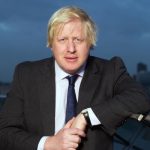
  • Boris Johnson – 2022 Comments on Links Between UK and Japan

    Boris Johnson – 2022 Comments on Links Between UK and Japan

    The comments made by Boris Johnson, the Prime Minister, on 5 May 2022.

    As two great island democracies, and the third and fifth largest economies in the world, the UK and Japan are focussed on driving growth, creating highly skilled jobs and ensuring we remain technology superpowers.

    The visit of Prime Minister Kishida will accelerate our close defence relationship and build on our trade partnership to boost major infrastructure projects across the country – supporting our levelling up agenda.

  • Ursula von der Leyen – 2022 Speech on Social and Economic Consequences of Russian Invasion

    Ursula von der Leyen – 2022 Speech on Social and Economic Consequences of Russian Invasion

    The speech made by Ursula von der Leyen, the President of the European Commission, on 4 May 2022.

    Madam President, dear Roberta,

    Honourable Members,

    Next week, we will mark Europe Day. The 72nd birthday of our Union. This Europe Day will be all about the Union of the future – how we make it stronger, more resilient, closer to its people. But the answer to all of these questions, we cannot give alone. The answer is also given in Ukraine. It is given in Kharkiv, where Ukrainian first responders venture into the combat zone to help those wounded by Russian attacks. It is given in small towns like Bucha, where survivors are coping with the atrocities committed against civilians by Russian soldiers. And it is given in Mariupol, where Ukrainians are resisting a Russian force, which greatly outnumbers them. They are fighting to reaffirm basic ideas: That they are the master of their own future – and not some foreign leader. That it is the international law that counts and not the right of might. And that Putin must pay a high price for his brutal aggression.

    Thus, the future of the European Union is also written in Ukraine. And therefore, today, I would like to speak about two topics. First about sanctions and second about relief and reconstruction. Today, we are presenting the sixth package of sanctions. First, we are listing high-ranking military officers and other individuals who committed war crimes in Bucha and who are responsible for the inhuman siege of the city of Mariupol. This sends another important signal to all perpetrators of the Kremlin’s war: We know who you are, and you will be held accountable. Second, we de-SWIFT Sberbank – by far Russia’s largest bank, and two other major banks. By that, we hit banks that are systemically critical to the Russian financial system and Putin’s ability to wage destruction. This will solidify the complete isolation of the Russian financial sector from the global system. Third, we are banning three big Russian state-owned broadcasters from our airwaves. They will not be allowed to distribute their content anymore in the EU, in whatever shape or form, be it on cable, via satellite, on the internet or via smartphone apps. We have identified these TV channels as mouthpieces that amplify Putin’s lies and propaganda aggressively. We should not give them a stage anymore to spread these lies. Moreover, the Kremlin relies on accountants, consultants and spin doctors from Europe. And this will now stop. We are banning those services from being provided to Russian companies.

    My final point on sanction: When the Leaders met in Versailles, they agreed to phase out our dependency on Russian energy. In the last sanction package, we started with coal. Now we are addressing our dependency on Russian oil. Let us be clear: it will not be easy. Some Member States are strongly dependent on Russian oil. But we simply have to work on it. We now propose a ban on Russian oil. This will be a complete import ban on all Russian oil, seaborne and pipeline, crude and refined. We will make sure that we phase out Russian oil in an orderly fashion, in a way that allows us and our partners to secure alternative supply routes and minimises the impact on global markets. This is why we will phase out Russian supply of crude oil within six months and refined products by the end of the year. Thus, we maximise pressure on Russia, while at the same time minimising collateral damage to us and our partners around the globe. Because to help Ukraine, our own economy has to remain strong.

    With all these steps, we are depriving the Russian economy from its ability to diversify and modernise. Putin wanted to wipe Ukraine from the map. He will clearly not succeed. On the contrary: Ukraine has risen up in unity. And it is his own country, Russia, he is sinking.

    Honourable Members,

    We want Ukraine to win this war. But we also want to set the conditions for Ukraine’s success in the aftermath of the war. The first step is immediate relief. This is about short-term economic support to help Ukrainians cope with the fallout of the war, like we do with our macro-financial assistance package and with direct support to the Ukrainian budget. In addition, we recently proposed to suspend all import duties on Ukrainian exports to our Union for one year. I am sure the European Parliament will put its weight behind this idea. But this is not enough for the short-term relief. Ukraine’s GDP is expected to fall by 30% to 50% this year alone. And the IMF estimates that, from May on, Ukraine needs EUR 5 billion each month, plain and simply, to keep the country running, paying pensions, salaries and basic services. We have to support them, but we cannot do it alone. I welcome that the United States announced massive budgetary support. And we, as Team Europe, will also do our share.

    But then, in a second phase, there is the wider reconstruction effort. The scale of destruction is staggering. Hospitals and schools, houses, roads, bridges, railroads, theatres and factories – so much has to be rebuilt. In the fog of war, it is difficult to come up with a precise estimate. Economists are talking about several hundred billion euros. And costs are rising with each day of this senseless war.

    Honourable Members,

    Europe has a very special responsibility towards Ukraine. With our support, Ukrainians can rebuild their country for the next generation. That is why today I am proposing to you that we start working on an ambitious recovery package for our Ukrainian friends. This package should bring massive investment to meet the needs and the necessary reforms. It should address the existing weaknesses of the Ukrainian economy and lay the foundations for sustainable long-term growth. It could set a system of milestones and targets to make sure that European money truly delivers for the people of Ukraine, and is spent in accordance with EU rules. It could help fight corruption, align the legal environment with European standards and radically upgrade Ukraine’s productive capacity. This will bring the stability and certainty needed to make Ukraine an attractive destination for foreign direct investment. And eventually, it will pave the way for Ukraine’s future inside the European Union.

    Slava Ukraini and long live Europe.

  • Volodymyr Zelenskyy – 2022 Speech to the Parliament of Albania

    Volodymyr Zelenskyy – 2022 Speech to the Parliament of Albania

    The statement made by Volodymyr Zelenskyy, the President of Ukraine, on 3 May 2022.

    Dear Mrs. Speaker of Parliament!

    Dear Mr. Prime Minister!

    Dear ladies and gentlemen, deputies!

    The people of Albania!

    Yesterday, Muslims around the world celebrated Eid al-Fitr, which marks the end of Ramadan, the holy month of fasting for Islam. And I congratulate you on this holiday.

    I wish you what all Ukrainian men and women wish for each other – peace.

    During this month, the Muslims of Ukraine and our entire society have not seen a single calm and peaceful day. That’s how we live after February 24. Exactly like that. Russia has turned all our days into a mortal danger.

    Yesterday, a 14-year-old boy died as a result of a missile attack on our Odesa, our southern city. A 17-year-old girl was also wounded. Every day we have such a reality.

    Every day Ukrainians lose children because of Russian strikes. And more than 600 children have fallen victim to this Russian invasion. 220 children were killed and 406 were injured.

    Today is a farewell ceremony for journalist Vira Gyrych who was killed by a Russian missile at her home in the capital of our state, Kyiv. The missile hit her house. An ordinary multi-storey building near the downtown of the capital.

    The Russian army is firing at our cities and villages with artillery and aircraft. Does not spare missiles.

    In our largest city in the east of the country, in the city of Kharkiv, a fifth of all houses was destroyed. This is more than two and a half thousand houses.

    They were burned, destroyed or damaged by Russian shelling.

    Once one of the most developed cities on the shore of the Sea of Azov – the city of Mariupol – is completely destroyed. There are no undamaged buildings. None, imagine!

    This half-million city has been under siege by the Russian army since early March. They didn’t allow water, food, medicine – nothing and no one. And they didn’t stop bombing it. This is literally a scorched city. But you can take any Ukrainian city or village where the occupiers came and there will be very similar messages.

    About destruction and about murders. About tortures. About forced deportation of people to Russia. About total looting of everything on our territory.

    Older people who survived two occupations – the Nazi occupation during World War II and now the occupation by the Russian army – say they did not see such atrocities 80 years ago.

    Now they saw the Russian military shooting children in the face. Now they saw ordinary people – peasants who had been taken prisoner – being forced to lie on the ground day and night in sub-zero temperatures. It turns out that the Russian troops have a special method of “fighting” the escape of prisoners in the cold season: they are forced to pour water into their shoes, put the shoes on and lie on the ground in the cold.

    People stopped feeling their feet, their toes froze. But the occupiers did not even allow them to stand up, let alone to warm up.

    In the areas liberated from the Russian army, we constantly find graves of tortured people. They have their hands tied, traces of shots on their arms and legs, and broken ribs. Many were shot in the back of the head.

    Often the occupiers did not even allow the bodies of those killed to be buried. Bodies are found in forests, fields, basements, wells.

    Retreating from our land, the Russian army left the dead just on the streets as well.

    Russia was offered to cease fire at least on Orthodox Easter. There was no answer. It was also offered on Pesach – there was no answer. Russia has also ignored the sanctity of the month of Ramadan.

    Just think about it: 86 religious sites were destroyed or damaged by shelling. These are churches, mosques, houses of worship. The Russian army is not trying to protect even the facilities of the Russian church from its shelling!

    This is a complete abandonment of morality. Complete rejection of universal values. Complete non-recognition of life as an unconditional value.

    And they do not want to stop in Ukraine. They want to go further.

    In an attempt to revive the worst-level tyranny seen in the twentieth century, Russia has become the greatest threat to the entire free world.

    And I am grateful to every nation that is fighting this tyranny with us.

    Because only if we stop Russia now in Ukraine will we be able to save Europe from the coming of a new era – the era of non-freedom.

    Save it from what your people had to go through, in particular.

    Ladies and Gentlemen!

    The people of Albania!

    I am grateful to you for not hesitating who to support in this struggle. You are definitely on the side of freedom and truth. Thank you for concrete steps for Ukraine. For defense assistance. For supporting sanctions on Russia. For taking care of our people and hosting our children, especially in Durrës.

    This attitude of yours towards Ukrainian men and women in difficult times reminds me of St. Mother Teresa. An Albanian woman whose life has become a symbol of humanism for everyone in the world.

    She taught people that good daily efforts can defeat evil and bring them closer to the holiness that people will remember from generation to generation.

    I believe that by working together with all Europeans in this way – by our daily good efforts, we will be able not only to stop this war waged by Russia, but also to protect Europe in the future from the recurrence of such a threat.

    As the sixth package of sanctions against Russia’s aggression is being discussed in the European Union, we must all insist that it includes an oil embargo and a real blockade of any schemes that Russia uses to deceive the free world and ignore sanctions.

    Russian banks must be completely disconnected from the global financial system.

    However difficult it may be, it is necessary to deliberately restrict trade with the Russian Federation. Because if not today, then tomorrow Russia will consciously use trade ties to hit your market when it wants some political concessions from you. You need to deprive it of this tool in time.

    I ask you to close the ports for Russian ships. And limit the arrival of Russian tourists. Because you can never know who came to you… Maybe the killers who were in Bucha? Or maybe the tormentors of Mariupol? Or maybe someone who is already working to undermine your country?

    I am grateful to Albania for its cooperation within the United Nations platform. Especially now when your country is a non-permanent member of the UN Security Council.

    We need to do a principled thing and stop using UN funds to sponsor Russia. If it violates the UN Charter, threatens the world’s food security and destroys peace in Europe, it has no right to receive a single cent from the UN.

    Since 2014, when Russia seized our Crimean peninsula and started the war in Donbas, the UN has purchased goods and services from it for at least two and a half billion dollars. This is simply unfair. Wrong.

    Decades ago, Ukraine and Albania chose the path of democracy and European integration. We did not deviate from this path. Together we are committed to the development of freedom and a united Europe. And I believe that when the time comes to decide on Ukraine’s accession to the European Union, your vote will be able to sound in our support.

    I am sure that right now everyone in the world is showing their true character.

    Someone is big in size, but very small when you have to be bold. And someone is small on the map, but its cordiality is one of the greatest.

    Thank you, Albania!

    Thank you for your support. Thank you for your cordiality.

    Glory to Ukraine!

  • Volodymyr Zelenskyy – 2022 Statement on the Situation in Ukraine (03/05/2022) – 69 days

    Volodymyr Zelenskyy – 2022 Statement on the Situation in Ukraine (03/05/2022) – 69 days

    The statement made by Volodymyr Zelenskyy, the President of Ukraine, on 3 May 2022.

    I wish you health, Ukrainians!

    Our defenders!

    We finally have the result, the first result of our evacuation operation from Azovstal in Mariupol, which we have been organizing for a very long time. It took a lot of effort, long negotiations and various mediations.

    Today 156 people arrived in Zaporizhzhia. Women and children. They have been in shelters for more than two months. Just imagine! For example, a child is six months old, two of which are underground, fleeing bombs and shelling. Finally, these people are completely safe. They will get help.

    And I am grateful to all those on whom the rescue of these people depended. Who agreed and who helped. I am grateful to everyone who ensured the physical transportation of people through the humanitarian corridor.

    Of course, we will continue to do everything to get all our people out of Mariupol and Azovstal. It’s difficult. But we need everyone who stays there: civilians and military. There was not a day when we did not address this issue, when our people did not try to solve this issue.

    Yes, we managed to achieve a ceasefire for almost three days in order to make the humanitarian corridor work.

    Currently, Russian troops are not adhering to the agreements. They continue massive strikes at Azovstal. They are trying to storm the complex. But I have been told many times that no one can be saved. That it is impossible. And today 156 people are in Zaporizhzhia. This is not a victory yet, but this is already a result. And I believe that there is a chance to save our other people.

    Apparently, the Russian military has reacted extremely nervously to our success today. Various Ukrainian cities have once again become targets for Russian missiles and Russian strikes. Lviv, Vinnytsia, Kyiv region, Dnipropetrovsk region, Odesa, Kharkiv region – such a scale of today’s shelling clearly does not indicate that Russia has any special military purpose. Strike at Zakarpattia? What exactly can it give Russia? They are trying to vent their powerlessness. Because they can’t beat Ukraine.

    But they can – so far – burn children’s attractions in Gorky Park in Kharkiv or destroy a bridge. Or a grain warehouse or a house with people.

    The more such strikes, the farther Russia is from civilization. From what is called civilizedness.

    Today we also have another tragic news. A terrible road accident took place in the Rivne region. A bus, a car and a fuel truck collided. As of this time, 17 people died. But there may be more casualties.

    My sincere condolences to all those who lost their loved ones. I commissioned to provide all the necessary assistance to the victims.

    I am grateful to the Prime Minister of the United Kingdom and the great friend of Ukraine, Boris Johnson, for his support of Ukraine and our defenders. Today Boris addressed our parliament and our people. These were very important words, warm, friendly, powerful. This is a very sincere gesture. I am also grateful to Britain for the new package of support for our country, which the Prime Minister announced today.

    I also addressed the Verkhovna Rada of Ukraine today. For the first time during a full-scale war. I emphasized the main thing – and the main thing not only for me, but also for the whole of Ukraine. I am sure we must maintain maximum unity. Because our success depends on unity. Not only political success, but also the defense of the state, the strength of our people, our society.

    I continued the very useful practice of addressing the parliaments of our partner countries. Today (addressed – ed.) the Parliament and the people of Albania. Thanked for the support, including defensive support. Noted the cordiality with which the people of Albania support our people. Other such addresses are also planned.

    I also spoke with representatives of the largest global companies – in the CEO Wall Street Journal club (this is a very influential club. Three trillion dollars is the total turnover of companies whose leaders are in this club). About how to put pressure on Russia to end the war. About how to rebuild Ukraine after the war together. About what the post-war model of the Ukrainian economy can be. I believe that such economic diplomacy is one of our most important tasks.

    I spoke today with Polish President Andrzej Duda. I congratulated him and the entire Polish people on the national holiday – the Constitution Day of Poland. We discussed further cooperation, concrete steps and support for our defense.

    I informed him about the current situation in the areas of hostilities. About what is happening in Mariupol. About the evacuation of Ukrainians. And about what else we can do together to help protect our state and our common freedom – freedom of Ukrainians and Poles, all Europeans.

    Traditionally, before delivering the address, I signed decrees awarding our heroes. 185 servicemen of the Armed Forces of Ukraine were awarded state awards, two of them posthumously. Two more of our defenders were awarded the title of Hero of Ukraine.

    Eternal glory to all our heroes!

    Eternal memory to everyone who gave life for our state!

    Glory to Ukraine!

  • Volodymyr Zelenskyy – 2022 Statement on the Situation in Ukraine (02/05/2022) – 68 days

    Volodymyr Zelenskyy – 2022 Statement on the Situation in Ukraine (02/05/2022) – 68 days

    The statement made by Volodymyr Zelenskyy, the President of Ukraine, on 2 May 2022.

    Ukrainians!

    Our defenders!

    The 68th day of our strong defense is coming to an end. The 68th day of self-destruction of Russia. Self-destruction in every sense of the word. If this country once had what is called a reputation, now Russia does things on a daily basis that simply preclude any adequacy.

    Yesterday, for example, Russia’s foreign minister openly and without hesitation said that the biggest anti-Semites were allegedly among the Jews themselves. And that Hitler allegedly had Jewish blood. How could this be said on the eve of the anniversary of the victory over Nazism? These words mean that Russia’s top diplomat is blaming the Jewish people for Nazi crimes. No words.

    Of course, there is a big scandal in Israel today as regards these words. However, no one hears objections or excuses from Moscow. There is silence. Hence, they agree with what their foreign minister said. After the Russian missile attack at Babyn Yar in Kyiv, after the Menorah damaged by shelling at the site of the mass executions in Drobytsky Yar near Kharkiv, after the deaths of ordinary people who survived the Nazi occupation and Nazi concentration camps from Russian shelling, such an anti-Semitic thrust by their minister means Russia has forgotten all the lessons of World War II.

    Or maybe they never studied those lessons. So the question is will the Israeli ambassador stay in Moscow knowing their new position? Will relations with Russia remain as usual? Because it’s not accidental. The words of the Russian foreign minister – a “great connoisseur of Hitlerism” – are not accidental.

    It is no coincidence that the Russian occupiers are creating so-called “filtration camps” on Ukrainian land through which thousands of our Ukrainian citizens are passing. Where our people are killed, tortured and raped. It is no coincidence that the occupiers capture civilians and take them hostage or deport them as free labor.

    It is no coincidence that they are waging a so-called total war to destroy all living things, after which only the burned ruins of entire cities and villages remain.

    To do this, one must completely reject the moral and achievements of the victors of Nazism. But if such people are in the Russian leadership, it does not mean they can judge others in Europe or in the world according to themselves.

    If they send tens of thousands of their citizens to die in a foreign land and do not even take the bodies of those killed from the streets, roads, fields, it does not mean that everyone else is like them.

    If there are people among them who come from Ukraine but support the extermination of Ukrainians and everything Ukrainian, it does not mean that everyone else has abandoned normal human morality.

    Today, Russian troops launched another missile strike at Odesa. Destroyed the dormitory. A 14-year-old boy was killed. A 17-year-old girl was wounded, she has a shrapnel wound. What is it? For what? What did these children and the dormitory threaten the Russian state with? And that’s how they fight. That’s all.

    A gymnasium founded over a hundred years ago burned down in Lysychansk, Luhansk region, due to Russian shelling. It was built by the Belgians for this city. It withstood two world wars. But, as we see, this gymnasium turned out to be a terrible threat to modern Russia.

    220 Ukrainian children have been killed by the Russian army since February 24. And we still don’t know about everyone, because we don’t have access to the temporarily occupied areas of our state. 1570 educational institutions were destroyed or damaged by shelling. It’s in a little over two months!

    That is why the whole free world united so that no one justifies Nazism, kills children or destroys peaceful cities as Russia does.

    Today in Kyiv I met with the Minister of Foreign Affairs of Denmark. We discussed the whole range of issues of our bilateral relations, especially defense, financial and political cooperation. I see progress in implementing the agreements reached during the talks with the Prime Minister of Denmark. I am grateful. I received good signals.

    Plans to rebuild Ukraine after the war were also discussed. And support for our movement towards the European Union. I am grateful that Denmark resumes the work of its embassy in our capital. This is already the 29th foreign mission that returned to Ukraine.

    We are working on new sanctions against Russia. We expect a new package from the European Union in the near future. This package should include clear steps to block Russia’s energy revenues. We truly believe in this. So that the terrorist state is not given a billion euros a day for fuel.

    But it is also worth preparing for the next sanctions steps now. In any case, we will have to block all export-import operations with Russia. Because that’s what they make money on in Moscow. And they do not even understand that international law and peace in Europe must be respected.

    We continue to do everything to save our people from Mariupol. The evacuation operation continues. Tomorrow we also expect movement through humanitarian corridors from Berdyansk, Tokmak, Vasylivka.

    The Armed Forces of Ukraine heroically repel the occupiers’ attempts to advance. Kharkiv direction, Donbas, the south of the country – everywhere the situation remains extremely difficult. But I am grateful to each and every one of our defenders who are holding the defense.

    I have just signed a large decree to award our military. 438 servicemen of the Armed Forces of Ukraine were awarded state awards.

    The title of Hero of Ukraine was awarded to Senior Lieutenant Dmytro Ruslanovych Todorov for his personal courage and extraordinary efficiency in the battles against the occupiers in the Donetsk region.

    Eternal glory to everyone who stood up for our state!

    Eternal memory to all who died for Ukraine!

    Glory to Ukraine!

  • Volodymyr Zelenskyy – 2022 Statement on the Situation in Ukraine (01/05/2022) – 67 days

    Volodymyr Zelenskyy – 2022 Statement on the Situation in Ukraine (01/05/2022) – 67 days

    The statement made by Volodymyr Zelenskyy, the President of Ukraine, on 1 May 2022.

    Ukrainians!

    Our defenders!

    Today we finally managed to start the evacuation of people from Azovstal. After many weeks of negotiations, after many attempts, different meetings, people, calls, countries, proposals. Finally! There was not a single day when we did not try to find a solution that would save our people.

    Today, for the first time in all the days of the war, this vital corridor has started working. For the first time there were two days of real ceasefire on this territory. More than a hundred civilians have already been evacuated – women and children first of all. Who were fleeing hostilities there. At Azovstal.

    Given all the complexities of the process, the first evacuees will arrive in Zaporizhzhia tomorrow morning. Hopefully this doesn’t fail. Our team will meet them there. I hope that tomorrow all the necessary conditions will be met to continue the evacuation of people from Mariupol. We plan to start at 8 am.

    I am also grateful to all those who participated in the preparation of the rescue of people and who ensure this humanitarian corridor. I am grateful to everyone who held negotiations. To Iryna Vereshchuk as the coordinator of this process.

    I am grateful to our intelligence. Our team – David, Andriy. And also to the partners who joined and managed to help. In particular, from the UN and the International Committee of the Red Cross.

    We will continue to do everything to evacuate our people from Azovstal, from Mariupol in general. The organization of such humanitarian corridors is one of the elements of the ongoing negotiation process. It is very complex. But no matter how difficult it was, more than 350,000 people were rescued from the areas of hostilities.

    I discussed key issues of assistance to our state with Speaker of the US House of Representatives Nancy Pelosi who visited Kyiv together with a US Congress delegation.

    We are grateful to all partners who convey such important and powerful signals of support for Ukraine to the world and to Russia by visiting our capital in these conditions and at such a difficult time.

    Mrs. Pelosi and I had four hours of very substantive negotiations, as they say, multifaceted. In particular, on defense supplies, macro-financial assistance, sanctions policy, political cooperation with the United States.

    I thanked for the revival of the historic Lend-Lease program, which once helped protect freedom in Europe and can certainly do so a second time. We discussed specific areas – how Lend-Lease can work to strengthen our state as much as possible and help in the struggle for freedom.

    I also thanked for the preparation of a large package of aid to Ukraine worth 33 billion US dollars.

    We discussed how we can strengthen sanctions on Russia in a way that most effectively encourages it to end the war and limits Russia’s ability to circumvent existing and future sanctions. I felt the support of our initiatives.

    I awarded Mrs. Pelosi with the Order of Princess Olga for her significant personal contribution to strengthening our cooperation and sincere participation in the defense of freedom.

    Today, Russian troops continued to strike at the territory of our state. The targets they choose prove once again that the war against Ukraine is a war of extermination for the Russian army. They targeted the warehouses of agricultural enterprises. The grain warehouse was destroyed. The warehouse with fertilizers was also shelled. They continued shelling of residential neighborhoods in the Kharkiv region, Donbas, etc.

    They are accumulating forces in the south of the country to try to attack our cities and communities in the Dnipropetrovsk region.

    What could be Russia’s strategic success in this war? Honestly, I do not know. The ruined lives of people and the burned or stolen property will give nothing to Russia. It will only increase the toxicity of the Russian state and the number of those in the world who will work to isolate Russia.

    The Armed Forces of Ukraine respond to all the attacks of the invaders. And they will continue to respond until the occupiers leave our land.

    I am grateful to all our defenders. To everyone who has been defending the state since February 24 and since 2014.

    In just 67 days of the full-scale war, 143 our warriors have already been awarded the title of Hero of Ukraine. More than 10,600 defenders have been awarded state awards of Ukraine.

    Eternal glory to all who stood up for the state!

    Eternal memory to all who gave life for Ukraine! Thank you.

    Glory to Ukraine!