Category: Speeches

  • Kit Malthouse – 2022 Statement on the Metropolitan Police Service

    Kit Malthouse – 2022 Statement on the Metropolitan Police Service

    The statement made by Kit Malthouse, the Minister for Crime and Policing, in the House of Commons on 29 June 2022.

    May I start by expressing my condolences to the family of Zara Aleena? We were all shocked by her horrific killing in the past few days, and our thoughts and prayers are with her loved ones.

    With permission, Madam Deputy Speaker, I would like to make a statement about the Metropolitan Police Service, following the decision yesterday of Her Majesty’s inspectorate of constabulary and fire and rescue services to place the service in the “engage” process, which has been described as a form of special measures.

    The public put their trust in the police and have every right to expect the country’s largest force to protect them effectively and carry out their duties to the very highest professional standards. The public expect the police to get the basics right. Although very many Metropolitan police officers do exactly that, it is clear that the service is falling short of these expectations and that public confidence has been severely undermined.

    The Government support the action that the inspectorate has taken to escalate the force into special measures and address where it is falling short. The public also elected a Mayor to bring governance and accountability in their name, and I now expect the Mayor of London, as the police and crime commissioner, to act swiftly to ensure that he and the force deliver improvements, win back public trust and make London’s streets safer. We expect him to provide an urgent update explaining how he plans to fix this as soon as possible.

    Now is not the time for the Mayor to distance himself from the Met. He must lean in and share responsibility for a failure of governance and the work needed to put it right. Over the past three years, this Government have overseen the largest funding boost for policing in a decade, and we are well on the way to recruiting an extra 20,000 police officers nationally, with 2,599 already recruited by the Metropolitan police, giving them the highest ever number of officers.

    By contrast, as many Londoners will attest, the Mayor has been asleep at the wheel and is letting the city down. Teenage homicides in London were the highest that they have ever been in the past year, and 23% of all knife crime takes place in London, despite its having only 15% of the UK population. The Mayor must acknowledge that he has profound questions to answer. He cannot be passive and continue as he has. He must get a grip.

    There are many areas of remarkable expertise and performance in the Met, and, in many areas, the Met is understandably the best in the world. However, there have been persistent Met failures on child protection, and, earlier this year, following the catalogue of errors found by the independent panel, which looked at the investigations into the murder of Daniel Morgan, the inspectorate issued a damning report on the Met’s approach to tackling corruption. There have been exchanges of extremely offensive messages between officers, and, of course, we had the truly devastating murder of Sarah Everard by a serving officer.

    It is reported that the inspectorate has raised a number of further concerns in its recent letter to the Metropolitan police. It makes for sorry reading, I am afraid. The inspectorate reportedly finds that the force is falling short of national standards for the handling of emergency and non-emergency calls, and that there are too many instances of failure to assess vulnerability and repeated victimisation. An estimated 69,000 crimes go unrecorded each year, less than half of crimes are recorded within 24 hours and almost no crimes are recorded when victims report antisocial behaviour against them. The inspectorate has also found that victims are not getting enough information or support.

    Other concerns are thought to include disjointed public protection governance arrangements; insufficient capacity to meet demand in several functions, including high-risk ones such as public protection; and a persistently large backlog of online child abuse referrals. The inspectorate also highlights an insufficient understanding of the force’s training requirements, and the list is not exhaustive. This has all undermined public confidence in the Metropolitan Police Service, and we have not heard enough from the Mayor about what he plans to do about it. Blaming everyone else will just not do this time. [Interruption.] I am glad that hon. Members find this amusing, but I am afraid this is not funny.

    As I have already said, it is vital that policing gets the basics right and that there is proper accountability for those in charge. Every victim of crime deserves to be treated with dignity, and every investigation and prosecution must be conducted thoroughly and professionally, in line with the victims code. Recent reports of strip searches being used on children are deeply concerning and need to be addressed comprehensively. We have a cherished model of policing by consent. The police force is a service—a public service—and the public must have confidence in it. Plainly, things have to change.

    The Government are working closely with the policing system as a whole to rewire police culture, integrity, and performance. Last October, my right hon. Friend the Home Secretary announced an independent inquiry to investigate the issues raised by the conviction of Wayne Couzens for the murder of Sarah Everard. In the same month, the Metropolitan police commissioned Baroness Casey of Blackstock to lead an independent and far-reaching review into its culture and standards. We also welcome the College of Policing’s new national leadership standards, which are aimed at ensuring continuous professional development. Policing is a very difficult job and demands the highest possible training standards.

    The process to recruit a new Metropolitan Police Commissioner is well under way and the Government have made it crystal clear that the successful candidate must deliver major and sustained improvements. The whole country, not just London, needs to know that our biggest police force is getting its act together. The Mayor of London, supported by his deputy mayor for policing and crime—a role that I once had the privilege to hold—is directly responsible for holding the commissioner and the Metropolitan police to account. Notwithstanding what Opposition Members think, the Mayor needs to raise his game. He has an awesome responsibility which he has hitherto neglected, in my view.

    This is not an insurmountable problem, but it is extremely serious. Trust has not been shattered beyond repair, but it is badly broken and needs strong leadership to fix it. Through the police performance and oversight group, the Government look forward to seeing the Metropolitan police engage with the inspectorate and produce a comprehensive action plan to sort this out, and be held to account by City Hall.

    The national system for holding forces to account and monitoring force performance is working well. Sunlight is the best disinfectant, and every public service must be held to account. I am grateful to the inspectorate for its work. It now falls to the Metropolitan police and to the Mayor of London to make things right. Given my admiration of so many who work in the Met, it is with some personal sadness that I commend this statement to the House.

  • Nick Thomas-Symonds – 2022 Speech on Steel Safeguards

    Nick Thomas-Symonds – 2022 Speech on Steel Safeguards

    The speech made by Nick Thomas-Symonds, the Shadow Secretary of State for International Trade, in the House of Commons on 29 June 2022.

    I am grateful to the Secretary of State for her statement and for advance sight of it. The extension of safeguards will come as a welcome relief to the steel sector. It is not anti-competitive to provide a level playing field for our steel industry. I also support the decision to exclude Ukrainian steel.

    Labour backs our steel communities up and down the country. Our steel sector is foundational for our economy; we must support it, now and as we transition to net zero. However, it is regrettable that resolution of the issue has once again gone to the eleventh hour, just as it did when the present Foreign Secretary extended the safeguards last year, and that the Secretary of State did not even attend the Select Committee this morning to face scrutiny.

    Labour has called on the Secretary of State to extend the safeguards, but also to change the law in advance of this latest decision. When the same safeguards were extended last year, Labour called on the Government to introduce emergency legislation, which we would have supported, so that the national interest could be invoked by Ministers in relation to Trade Remedies Authority advice. It is too weighted towards the interests of importers rather than those of domestic industry, and too narrow in scope in that it does not give sufficient weight to issues such as regional employment and support for nationally important industries, and, indeed, the international context for these safeguarding decisions. The United States and the European Union have such measures, and in the case of the EU, the World Trade Organisation has not found the extension of the safeguards to be in breach of its rules. In short, if there is to be a challenge at the WTO, it will be a mess entirely of the Government’s own making.

    Although, of course, I thank the Trade Remedies Authority for its work, there are still issues with its framework.

    Ministers appeared to agree with Labour’s analysis when, a year ago, the Government announced a wider review of the Trade Remedies Authority framework “as an urgent priority”, in the words of the then International Trade Secretary—the present Foreign Secretary, the right hon. Member for South West Norfolk (Elizabeth Truss). Well, it has not been a priority for Ministers. That review has disappeared into the long grass, leaving the country in the position we are in today. Had the review been completed, with wider factors eligible for consideration by the TRA, the Secretary of State would be in a much stronger position, just like other major economies that have steel tariffs in place and have had no problems at the WTO. Ministers knew that this issue of extending the safeguards was coming, but they did not plan for it properly, either in terms of our domestic law or internationally, by working with those countries that have extended safeguards without any problems.

    Let me also put on record that the last-minute rush to extend safeguards in no way makes up for the shortcomings in support for the steel industry from this Government, and that Labour has set out plans to secure the industry’s future for years to come by investing £3 billion in the transition to net zero over the next 10 years.

    May I ask the Secretary of State when that wider review of the Trade Remedies Authority framework will be completed? May I also ask whether she intends to introduce further legislation once the review is completed? Will she publish all the TRA papers relating to this decision, and will she tell us what lessons have been learned from the WTO ruling on the EU safeguards that have been extended? Finally, can she reassure steelworkers and their families that the framework will have been fully reformed before this matter is considered again?

  • Anne-Marie Trevelyan – 2022 Statement on Steel Safeguards

    Anne-Marie Trevelyan – 2022 Statement on Steel Safeguards

    The statement made by Anne-Marie Trevelyan, the Secretary of State for International Trade, in the House of Commons on 29 June 2022.

    With permission, Mr Speaker, I will make a statement on the Government’s final decision regarding the UK’s steel safeguards.

    A strategic steel industry is of the utmost importance to the UK, especially given the uncertain geopolitical and economic waters that we are all charting. Trade remedies are one of the ways that Government can protect their businesses. Trade remedies tackle issues of dumping, unfair Government subsidies or, as in the case of safeguards, give businesses time to adjust to unforeseen increases in imports.

    When we left the EU, the UK rolled over the relevant trade remedies that were already in place. That included safeguards on 19 different categories of steel imported into the UK from the rest of the world. Last year, the Trade Remedies Authority reviewed those measures and recommended keeping the safeguard on 10 categories of steel and removing it on nine. On 30 June 2021, the Government announced that they would extend the safeguard, as recommended by the TRA, on 10 product categories of steel for three years and remove it on four of the remaining nine, but that they would extend the safeguard for one year on five categories of steel to allow further time to review them.

    In March this year, we passed legislation to allow the Government to take responsibility for the conduct of transitional reviews and reconsiderations of any transitional review. In March, I called in the reconsideration of the steel safeguards with the new authority. The TRA has since completed additional analysis for my consideration. I have considered its report and findings and have concluded that there would be serious injury, or the threat of serious injury, to UK steel producers if the safeguards on the five additional categories of steel were to be removed at this time.

    Given the broader national interest and significance of this strategic UK industry and the global disruptions to energy markets and supply chains that the UK faces, we have concluded that it is in the UK’s economic interest to maintain these safeguards to reduce the risk of material harm if they are not maintained. I am therefore extending the measure on the five steel categories for a further two years until 30 June 2024, alongside the other 10 categories. That means that the safeguard will remain in place on all 15 categories, updated from 1 July to reflect recent trade flows.

    The Government wish to make it clear to Parliament that the decision to extend the safeguards on the five product categories departs from our international legal obligations under the relevant World Trade Organisation agreement as it relates to the five product categories. However, from time to time, issues may arise in which the national interest requires action to be taken that may be in tension with normal rules or procedures.

    The Government have therefore actively engaged with interested parties—including those outside the UK—on the future of the UK safeguard, and have listened to the concerns raised, including the needs of the many thousands of people employed throughout our downstream steel industry, who play a vital role in the economic life of the UK. Throughout the investigation, downstream users of steel have raised concerns about difficulties in sourcing some steel products in the UK, particularly those classified under category 12. I have listened to those concerns and am acting to protect this vital part of the economy by increasing the tariff rate quota on category 12A to ensure that it better reflects trade flows.

    The Government have also decided to suspend the safeguard measure for steel goods coming from Ukraine for the next two years. The Government are clear that we will do everything in our power to support Ukraine’s brave fight against Russia’s unprovoked and illegal invasion and to ensure long-term security, prosperity and the maintenance of the world order from which we all benefit. The Government have already removed all tariffs under the UK-Ukraine free trade agreement to zero to support Ukraine’s economy. This decision means that Ukrainian steel will not be subject to the additional safeguard quotas and duty.

    These are unusual times. The aftershocks of the gravest pandemic have combined with the biggest war in Europe since 1945, the spike in energy costs is creating huge stresses on manufacturing, global steel markets are facing persistent overcapacity, and the TRA’s findings provide clear evidence of serious injury or the threat of serious injury to our UK producers. The Government have a duty to use our democratic mandate to the greatest possible effect to protect the interests of the British people and provide leadership in these challenging times. On balance, we have therefore decided that it is in the vital public interest that the Government act to protect the steel sector, which is why we have taken these steps.

    We believe that our approach is in the public interest. The decision has been taken collectively and with reference to the ministerial code, noting the conflict that I have outlined. It has been a finely balanced decision. Steel is a vital industry for the UK and is in constant use in our everyday lives, but the global position for steel production is challenging. The use of unfair subsidies contributes to global overcapacity, putting domestic industries at risk around the world, so the measures that I am announcing today will further support our steel industry and those who work in it. They come on the back of the Government’s having secured an expansive removal of section 232 tariffs on imports of UK steel and aluminium products into the USA, which came into effect earlier this month. The tariff-free volumes that we have secured mean that UK steel and aluminium exports to the US can return to levels not seen since before 2018.

    It is important to remember that safeguards are a temporary, short-term measure. We will continue to work with international partners, alongside other Departments, to support our domestic steel sector for the long term. I hope that the House will support the Government’s stance in defending our strategically important steel sector. I commend this statement to the House.

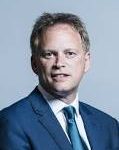
  • Grant Shapps – 2022 Statement on the European Train Control System

    Grant Shapps – 2022 Statement on the European Train Control System

    The statement made by Grant Shapps, the Secretary of State for Transport, in the House of Commons on 29 June 2022.

    I am pleased to announce over £1billion investment in the East Coast Digital Programme, which aims to introduce the European Train Control System (ETCS) to the Southern section of the East Coast Mainline.

    European Train Control System, also known as digital signalling, brings signalling onto a screen in the train’s cab. This provides drivers with continuous real time information, for example maximum allowable speeds, and removes the need for line-side signals. Trackside sensors are retained to track the train on the network and support adaptive decision making, through assessing and understanding that particular train’s characteristics such as speed and braking distance. This investment will fund the fitment of trains and lineside technology on the stretch of line from London King’s Cross to Stoke Tunnel, just North of Peterborough, as well as the integration of this technology into the network and its operating companies.

    This will be the first deployment of European Train Control System on a mixed-use mainline in the UK rail network, increasing punctuality and reliability for both passenger and freight services across the whole line. Trains will be able to run closer together safely, enabling more services to run on the same stretch of track. Fewer signalling failures and faster recovery from any delays will make the service more reliable for the customer.

    This programme of work presents a unique opportunity to enable a positive step-change in technology on the network, with a move away from systems of signalling that emerged from Victorian times, and towards a high-performing digital alternative. As the rail sector continues to recover from the pandemic, it is vitally important that capacity and reliability are both increased in a financially viable way as demand returns.

    This large upfront investment in the rail sector also presents an opportunity for savings in the long run, as maintenance of these assets is more affordable across the whole life of the signals. Furthermore, this programme will create approximately 5,000 highly skilled jobs in the rail industry.

    Initial enabler projects have already begun, including the fitment of trains and some infrastructure on the Northern City Line, with works to continue through the 2020s.

    This major investment is symbolic of this Government’s ongoing commitment to modernising our railways, making them fit for the 21st century. Deployment of this innovative technology for the first time on a mixed-use mainline in the UK will deliver improvements for the user, support the creation of a financially sustainable railway and also grow and level up the economy by delivering an upgrade to this vital economic artery which stretches along the spine of this country.

  • Grant Shapps – 2022 Statement on the Road Safety Investigation Branch

    Grant Shapps – 2022 Statement on the Road Safety Investigation Branch

    The statement made by Grant Shapps, the Secretary of State for Transport, in the House of Commons on 29 June 2022.

    I wish to inform the House that my Department has today published its response to the Government consultation on establishing a Road Collision Investigation Branch.

    This Government are committed to improving road safety and reducing the number of people who are killed or seriously injured on our roads each year. I am pleased to announce that the Government intend to bring forward new measures to enable the creation of the branch, which, following discussions with stakeholders, will be named the Road Safety Investigation Branch.

    This independent, safety-focused branch will learn the lessons from road collisions and other incidents, including those involving self-driving vehicles, by carrying out independent investigations and making recommendations to prevent future incidents, make our roads even safer and save lives across the country. The branch will also provide vital insight into safety trends related to new and evolving technologies, which will help to ensure road safety policy keeps pace with new developments.

    We expect to include measures to enable creation of the branch in the forthcoming Transport Bill.

  • Sajid Javid – 2022 Statement on a Plan for Digital Health and Social Care

    Sajid Javid – 2022 Statement on a Plan for Digital Health and Social Care

    The statement made by Sajid Javid, the Secretary of State for Health and Social Care, in the House of Commons on 29 June 2022.

    I would like to inform the House that “A Plan for Digital Health and Social Care” has been published today. This document sets out how we will build a more digitised, more efficient and more personalised health and care system.

    Earlier this year, I made a speech setting out my four priorities for reform in health: prevention, personalisation, people and performance. We cannot deliver the change We need to see, unless we embrace the opportunities from digital technologies.

    We are now embarking on a transformative programme of reforms that will make sure the NHS is set up to meet the challenges of 2048, not of 1948, when it was first established, and also to make the vital changes that are so urgently required in social care.

    On 13 June we published a strategy for a data-enabled health and social care sector, “Data Saves Lives”, which draws on lessons learned about the power of data from the response to the covid-19 pandemic. Data Saves Lives includes a range of commitments that will help connect systems and details how we will use data flowing through the digitised health and social care system to continually improve services while maintaining the highest standards of privacy and ethics.

    The long-term sustainability of health and social care is dependent on having the right digital foundations in place, and so digital transformation is crucial in achieving and delivering these reforms.

    This plan sets how the delivery of health and social care will change, taking forward what we have learnt from the pandemic, and from tech pioneers across the world. The aim is something that we can all get behind: a health and social care system that will be much faster and more effective, and delivers more personalised care.

    Digital is not, and will not, be the only means of access to health and social care services, but through it we can ensure that the needs and preferences of individuals are reflected in the services we provide.

    Health and social care organisations and partners from industry can use the plan to help shape their strategies to digitally transform services for their populations.

    The NHS app will be at the heart of these plans. We saw during the pandemic how people grasped the opportunity to have healthcare at their fingertips.

    I am determined to make this app the front door to NHS services, and this plan shows how we will add an array of new features over the coming months and years, with new functionality and more value for patients every single month. My vision is one in which the app is an assistant in your pocket and a permanent feature of how we do healthcare in this country.

    With digitised services and a connected system that supports integration and harnesses the power of data, technology can create a transformed health and social care system that is more responsive to the needs and preferences of all people, identifies and reduces health disparities and delivers improved outcomes for everyone.

    We have already made huge progress. Over 28 million people now have the NHS app in their pocket, over 40 million people have an NHS login, and most NHS trusts have an electronic patient record system in place. This is on top of unprecedented investment in the digitisation of adult social care, including £150 million of funding for digital adoption that we announced in our recent White Paper.

    This plan sets out the next chapter of this story of digital transformation. It sets out a vision of how we will build a more connected and much more efficient system.

    The opportunities offered by digital transformation are huge, with benefits over the next decade running to billions of pounds in efficiencies, economic growth and private investment.

    That plan includes a raft of other initiatives, £2 billion of funding to support electronic patient records to be in all NHS trusts, and help over 500,000 people to use digital tools to manage their long-term health conditions in their own homes.

    Just as we are putting the right technology in place, we also need to make sure that people are confident and supported in using it. The plan also shows how we will relentlessly focus on digital skills, leadership and culture as well as building patient trust, at all levels, so we can make transformation durable right across the board.

    This agenda matters more than it did when this pandemic began. I am determined to use the power of technology and the skills, leadership and culture that underpins it, to drive a new era of digital transformation. So that our health and care system, and our country, will thrive long into the future, delivering vast benefits for patients.

    I will deposit a copy of the plan in the Libraries of both Houses.

  • Nadine Dorries – 2022 Statement on Newsquest and Archant Merger

    Nadine Dorries – 2022 Statement on Newsquest and Archant Merger

    The statement made by Nadine Dorries, the Secretary of State for Digital, Culture, Media and Sport, in the House of Commons on 29 June 2022.

    On 18 March 2022, local news publisher Newsquest Media Group Ltd acquired Archant Community Media Ltd.

    On 26 April the Department for Digital, Culture, Media and Sport wrote to Newsquest Media Group Ltd and Archant proprietor, RCapital, to inform them that I was “minded to” issue an intervention notice. I outlined that public interest grounds specified in section 58 of the Enterprise Act 2002 may be relevant to the transaction—in particular, the need for, to the extent that it is reasonable and practicable, a sufficient plurality of views in newspapers in each market for newspapers in the United Kingdom or a part of the United Kingdom.

    In line with the statutory guidance on media mergers, the “minded to” letter invited further representations in writing from the parties. I have now come to a final decision, which needs to be made on a quasi-judicial basis, on whether to issue an intervention notice.

    In light of the new information provided to me by the parties to the merger, I have decided not to intervene in the merger. The information provided by the parties addressed my concerns regarding the potential grounds for a public interest intervention, including the need, to the extent that it is reasonable and practicable, for a sufficient plurality of views in newspapers in each market for newspapers in the United Kingdom or a part of the United Kingdom.

    Officials have written to Newsquest and RCapital to inform them that, without prejudice to my ability to intervene if new or additional information comes to my attention, I do not intend to intervene in the merger on media public interest grounds.

  • Nigel Huddleston – 2022 Statement on Short-term Holiday Letting in England Inquiry

    Nigel Huddleston – 2022 Statement on Short-term Holiday Letting in England Inquiry

    The statement made by Nigel Huddleston, the Parliamentary Under-Secretary of State for Digital, Culture, Media and Sport, in the House of Commons on 29 June 2022.

    The Government are today publishing a call for evidence looking at short-term and holiday letting in England. This call for evidence will improve the evidence base on the tourism sector, gathering views and information on a range of issues related to short-term lets. This will improve the Government’s understanding of the benefits and challenges of the increase in short-term and holiday letting in England in recent years, and will help us to determine whether there are options the Government should pursue through a formal consultation, in line with commitments set out in the tourism recovery plan which was published in June 2021.

    The guest accommodation sector has changed significantly over the last 15 years, both within England and across the world. In particular, there has been a major expansion in the number and range of accommodation suppliers operating in the market, driven by the growth of online platforms. While such platforms provide a new route to market for many forms of guest accommodation, it is the increase in short-term letting of residential premises through them that is perhaps the most notable development.

    The sharing economy has brought many benefits, both to the tourism sector and the wider economy, but also to individual homeowners by creating an additional income stream, and to consumers by broadening the range of available accommodation. However the Government also recognise that the rise in short-term and holiday letting has prompted a range of concerns. These include the impact on the housing market and local communities, particularly in tourism hotspots, and a sense that new entrants in the market are not being held to the same health and safety standards as traditional operators of guest accommodation such as hotels and bed and breakfasts. Many other countries and cities have introduced measures in recent years in response to some of these issues. As the tourism sector recovers from covid-19, the Government believe that now is the right time to assess the picture in England.

    The call for evidence will allow us to collect information on this important issue, and if necessary develop proportionate, evidence-based policy options for a possible future consultation. I am also cognisant of commitments in the levelling-up White Paper to explore proposals for introducing a national landlord register in England, and my Department will continue to work closely with the Department for Levelling Up, Housing and Communities to ensure the Government are joined up in identifying the right solutions for each sector.

    The Government are keen to hear from all interested parties, including hosts, guest accommodation businesses, online peer-to-peer platforms, enforcement agencies and tourism representative bodies. I will place a copy of the call for evidence in the Libraries of both Houses.

  • Trudy Harrison – 2022 Speech on Hammersmith Bridge

    Trudy Harrison – 2022 Speech on Hammersmith Bridge

    The speech made by Trudy Harrison, the Parliamentary Under-Secretary of State for Transport, in the House of Commons on 28 June 2022.

    I congratulate the hon. Member for Putney (Fleur Anderson) on championing Hammersmith bridge once again, and on securing the debate. I also note the contributions by the hon. Members for Hammersmith (Andy Slaughter), and for Richmond Park (Sarah Olney). I have listened carefully to them, and I appreciate that the subject is of keen interest to their constituents. I understand the impact of the bridge’s closure to motor vehicles on many of the people in constituencies around Putney, and throughout south and west London.

    As the hon. Member for Putney is aware, the bridge is owned by the London Borough of Hammersmith and Fulham and, as such, the borough has the responsibility for maintaining the bridge. The decisions on its repair lie with the borough. The bridge is a unique wrought iron structure, and has served generations of Londoners for nearly 200 years. It is deeply concerning that the bridge has had to close, first to motor vehicles in 2019 and then to all users in 2020. Of course the safety of those using the bridge was and remains the greatest priority. That is why my Department has done everything in its power to assist the London Borough of Hammersmith and Fulham and Transport for London with the project, and to facilitate the full reopening of the bridge to all users, including motor vehicles.

    I turn to the progress that has been made and some of ways that we have assisted. In 2019, we established the Hammersmith bridge taskforce, led by Baroness Vere of Norbiton, and it has met several times. The taskforce brings together all the key stakeholders whose input is required to deliver successful outcomes for pedestrians, cyclists, river traffic, and, eventually, motorists. The taskforce has been instrumental in organising stakeholders to work together in developing a clear course of action to enable the bridge to open.

    The hon. Member for Richmond Park (Sarah Olney) asked about the prior information notice that was issued by Hammersmith and Fulham. That PIN was issued on 25 May, with a deadline of 10 June. It was then extended to 15 June. Meetings with interested parties are taking place over the next few weeks to gauge interest and to seek feedback on the proposals. This is a crucial step in the process, and in developing an understanding of the market’s appetite and of the options being considered by the London Borough of Hammersmith and Fulham.

    On the timelines, since the establishment of the Hammersmith bridge taskforce, the project has made significant progress. Thanks to Government funding—some £4 million was provided on 31 October 2020—the bridge was able to reopen on 17 July 2021, albeit on a limited and controlled basis, to pedestrians, cyclists and river traffic. The next stage of the project—reopening the bridge to motor vehicles—is under development by the London Borough of Hammersmith and Fulham. Providing a schedule for full reopening is part of the development process. Whether to impose tolls is a decision for the London Borough of Hammersmith and Fulham. We expect the borough to engage with residents as it deems appropriate, so that it can understand any implications, as the hon. Member for Richmond Park set out.

    Sarah Olney

    Can the Minister bring any influence to bear on her colleague in the other place, Baroness Vere, so that she reconvenes a taskforce that will enable the whole issue of tolls to be properly, widely and publicly discussed with the relevant stakeholders?

    Trudy Harrison

    I will now set out exactly what is happening. Much good progress is being made. Following the complete closure of the bridge in 2020, the Department for Transport provided £4 million of taxpayers’ money, which enabled a comprehensive investigation of the overall structure and condition of the bridge. Through that investment, we had pretty much world-leading engineers working to develop a complete picture of the issues facing the bridge. Those works determined that the bridge was in a better condition, thankfully, than first thought, and that led directly to the bridge reopening, albeit on a temporary and controlled basis to pedestrians, cyclists and river traffic.

    Andy Slaughter

    I am in a state of despair, listening to the Minister. The cost of reopening this bridge could be £160 million. Hopefully, it will be less, but it is of that order. It is about the same as building a whole new Thames bridge, and it is fantasy for the Minister to say, “The Government are providing £4 million,” and “The Government have done this or that.” All the initiative so far has been taken by Hammersmith and Fulham Council—whether that is on the memorandum of understanding, on the proposals for the cheaper Foster COWI bridge, or on the stabilisation work—to get the bridge open permanently again to pedestrians. This is a strategic route through London. The Government must step up to the plate. I know that this is not in the Minister’s brief, but please could she take this issue seriously? It is affecting hundreds of thousands of people all across London and the south-east.

    Trudy Harrison

    I reject the characterisation of my Department as not taking this seriously. The hon. Gentleman will know that when one is potentially spending more than £100 million on a new bridge, much consideration and engineering knowledge will need to go into things such as a review by the Case for Continued Safe Operation Board. The board monitors the condition of the bridge, and has enabled it to stay open to pedestrians, cyclists and river traffic. I am relieved to say that since that reopening, no further closures on safety grounds have been necessary.

    The commitment to this project did not stop at the initial £4 million investment—not at all. In the TfL extraordinary funding and financing settlement of June 2021, we committed to sharing the cost of reopening the bridge. We have committed to that funding with the London Borough of Hammersmith and Fulham and TfL. We reiterated that commitment in a subsequent settlement, agreed in February 2022. That commitment ensures that the Government will fund up to one third of the cost of opening the bridge to pedestrians, cyclists, river traffic and—depending on those costs—buses and motor vehicles as well.

    The first part of that commitment has already been delivered. Earlier this year, the Department approved the full business case from LBHF for the stabilisation works on the bridge. Those works will ensure that the bridge will remain open to pedestrians, cyclists, and river traffic permanently, with no risk of further temporary closures due to unsafe conditions.

    The approval of the business case was a condition of the Government’s releasing their third of the funding for stabilisation. I am pleased to say that in May this year, my Department provided the borough with almost £3 million to allow the works to progress unimpeded by financial concerns. That brings the total investment to date to nearly £7 million.

    It is thanks to the excellent work and diligence of my Department, TfL and the London Borough of Hammersmith and Fulham that the works are already well under way. At long last, the residents of this part of London can see tangible progress being made. The borough is now managing the works, and will be providing my Department with regular updates on progress.

    The next stage is to strengthen the core and renovate other structurally significant parts of the bridge. The strengthening phase of engineering works will build on stabilisation works; on its completion, the bridge can open to all users, including buses and motor vehicles. LBHF is required to submit a further business case to my Department and to TfL; in that business case, we would expect to see that the proposed method of strengthening is viable, offers value for money and minimises disruption to current users of the bridge. That is essential. The business case will also set out the final cost estimate for strengthening the bridge and, once approved, will allow my Department to release its third of the funding.

    Fleur Anderson rose—

    Trudy Harrison

    Sorry; unfortunately, I cannot give way due to time. All three parties will work together over the coming months to ensure that an HM Treasury Green Book-compliant business case is developed and submitted for approval as soon as possible.

    In closing, I re-emphasise that reopening Hammersmith Bridge to all users is and remains a Government priority. Restoring full access to this vital south-west London artery will improve the lives of thousands of residents, commuters and businesses who have, as we have heard this evening, been long deprived of a convenient route across the Thames. I also restate my Department’s commitment to funding up to one third of the cost, on approval of an appropriate business case.

    I thank hon. Members for their contributions, and for their dedication in highlighting the issues that the continued closure of the bridge causes for their constituencies and others in the surrounding area. I reassure them that we are working tirelessly to deliver the full opening of the bridge.

  • Fleur Anderson – 2022 Speech on Hammersmith Bridge

    Fleur Anderson – 2022 Speech on Hammersmith Bridge

    The speech made by Fleur Anderson, the Labour MP for Putney, in the House of Commons on 28 June 2022.

    Thank you for calling me, Mr Deputy Speaker, and I thank the Members who are present for this important Adjournment debate.

    Here I am again, and talking about Hammersmith bridge again. It has been closed to vehicles for three long years, and that closure is still having a huge impact on the everyday lives of residents in Putney, Roehampton and Southfields, and much more widely across south-west London.

    I last held an Adjournment debate on the closure—and, hopefully, the reopening one day—of the bridge in April 2021, and I have raised it in the House several times since then. Since that debate there have been welcome stabilisation works to make the bridge safer, and it has reopened to pedestrians above and river traffic below. However, I am here again because there has still been no agreement on the building of a temporary vehicle bridge, on any date by which the restoration of the bridge will be complete, or on when—and residents are crying out “When?”—the bridge will fully reopen. I hope to hear much better news from the Minister this time than last time, and I know that plenty of people in Putney and across south-west London are listening to the debate and also want those answers.

    The Government have been dragging their feet, and the taskforce has had no task and no force. Responding to my last debate, the then Parliamentary Under-Secretary of State for Transport, the hon. Member for Redditch (Rachel Maclean), simply said:

    “The buck stops with Hammersmith and Fulham.”—[Official Report, 14 April 2021; Vol. 692, c. 442.]

    That was a very disappointing end to the debate. I will be describing all that Hammersmith and Fulham Council is doing now, because it is the council that is responsible for the bridge, and explaining why it is the Government who need to do more.

    It is Hammersmith and Fulham Council that made the assessment of the danger in the first place, has made the business case for the stabilisation works and funded those works up front, and has drawn up the memorandum of understanding between the council, the Government and Transport for London, the three parties that will be responsible for the funding. However, Transport for London does not have the funds to restore the bridge because of reduced fees and other payments as a result of covid, so it comes down to the Government. What have the Government done, what will the Government do, and when will the bridge reopen?

    Let me first say something about the impact of the closure. It has resulted in between 500 and 4,000 vehicles a day coming through Putney High Street. Local residents complain constantly of increased travel times for journeys by bus and car, of increased congestion and pollution and of accidents on the roads, especially involving children near the schools on the most affected roads.

    We want more safe cycle routes in Putney, and in Wandsworth we have one of the highest “propensity to cycle” ratings. However, the increased traffic and traffic jams make cycling more dangerous and put people off cycling. In meetings that I have held with potential cyclists, most people say they feel that Putney Hill, Putney High Street and Putney Bridge are very dangerous roads. That in turn means worse air quality, because if there are fewer cyclists on the road there are more vehicles, which add to the congestion. As you will know, Mr Deputy Speaker, each year more than 4,000 Londoners die prematurely as a result of air pollution, and more than 500,000 people in London boroughs suffer from asthma and are vulnerable to toxic air.

    Recently, for Clean Air Day, I undertook readings using an ultra-fine particle counter—lent to me by Imperial College—along Putney High Street and the Lower and Upper Richmond Roads, the main diversion routes from the bridge. The readings were exceptionally high, even from inside homes along those roads. Residents have shown me the black soot that builds up in their homes, and companies tell me about the impact that the poor air quality is having on their business.

    The Putney Society is concerned about this as well, and it has sent me the following statement about the impact of the bridge closure:

    “Congestion is at an all time high with roads leading towards Putney Bridge clogged up before 7 am in the morning, with traffic jams continuing well into the evening. Prior to the Bridge closure in 2019 Putney already suffered from one of the most polluted High Streets in the country. And despite positive measures such as the introduction of cleaner buses and the ULEZ zone, our pollution levels continue to exceed UK legal limits, in part because of additional traffic resulting from the Bridge closure. Around 60 constituents die prematurely each year because of this pollution, and we now face the prospect of this continuing for several more years until Hammersmith Bridge is fully repaired.”

    The statement continues:

    “The extra traffic has affected thousands of people. Aside from the impact of pollution on residents’ health, children and students have suffered disrupted journeys to their school or college; workers, especially those travelling from Roehampton, have faced significantly lengthened bus journeys and businesses have had delayed deliveries. And the most vulnerable people, who require access to healthcare, whether appointments or vital emergency treatment, face delays in getting an ambulance or reaching nearby hospitals. Why? Because ambulances can no longer take a short hop across the Bridge to Barnes or beyond but now spend much, much longer in traffic”.

    Andy Slaughter (Hammersmith) (Lab)

    My hon. Friend is making an excellent speech, particularly in drawing attention to the fact that the closure of Hammersmith bridge is having a sub-regional and regional effect. It is much wider than just the immediate locality. Does she find it surprising that the Government have dragged their feet all the way along the line on this, first by asking Hammersmith to find all the funding, then £64 million and now a third of the cost, which is more than double what they would propose for similar schemes? Does she agree that until the Government are prepared to take their responsibilities in this matter seriously, we are not going to see progress?

    Fleur Anderson

    I absolutely agree with my hon. Friend. We have just had a debate on Government failure, and this is Government failure 101. Not keeping a major transport route open in our capital city and letting it stay closed for so many years—and who knows how much longer—is a Government failure. They need to step up with the funding, and I will be outlining more information about that.

    Hammersmith bridge is a very unusual bridge, and this is why it requires special attention from the Government. It is a grade II listed structure and part of Great Britain’s engineering heritage. It is also one of the world’s oldest suspension bridges, and only five years younger than the Brooklyn bridge in New York. It is unique, having been built out of cast iron, wrought iron and wood. No Government, surely, would allow the Brooklyn bridge to stay closed, so why let Hammersmith bridge do so? It has suffered from over seven decades of deterioration and corrosion. This corrosion, along with the fact that the bridge was designed for the needs of the 19th century, is what makes Hammersmith bridge one of the most expensive bridges in Britain to repair. When warnings of its possible imminent collapse forced its closure, I perfectly understood that the engineers faced huge challenges.

    Transport for London has estimated that the repair bill could be between £141 million and £161 million. By comparison, the cost of repairing other Thames bridges is far smaller. For example, Chiswick bridge cost £9 million to repair, and Albert bridge cost £9.7 million. In those cases, Transport for London largely funded the works, paying between 85% and 100% of the costs. The responsible council was not left to foot the bill in the way that Hammersmith and Fulham Council is being asked to do. The bridge is a special case, both historically and financially, and it needs a different funding package from the Government.

    Overall, there needs to be a change in bridge policy in London. Lambeth Council has five bridges, but is responsible for none of them. Southwark bridge and London bridge are managed by a trust. Two railway bridges are managed by Network Rail, but Hungerford railway bridge is managed by Westminster. The policy is all over the place. I think it might be time to look at the inequity of bridge responsibilities in London, because it is clear that the system is failing us over Hammersmith bridge. But we are where we are, and there is currently an agreement that the Government, Transport for London and Hammersmith and Fulham Council will fund it.

    The Mayor of London has repeatedly sought to meet the Transport Secretary to discuss this and a range of London transport funding issues, but these requests have all been refused. Twenty meetings with Transport for London have been cancelled by the Department for Transport or the Treasury since the last TfL funding deal was agreed. The last time the Transport Secretary and the Mayor of London spoke and discussed Transport for London funding was on 30 May 2021. That is shocking to hear, as Londoners are being let down by this Government. We need them to work with the Mayor, and I hope to hear more of that from the Minister later. We are talking about a national transport route, and the Government must lead the way in funding and reopening it. If a toll is going to be made necessary because the Government will not fund the bridge, has the impact on Putney residents been factored into that business case?

    What has Hammersmith and Fulham Council done? Can we say that the buck stops with it? Last November, the council submitted a full business case to the Department for Transport for the stabilisation works, at a cost of £8.9 million, which was £21 million less than the TfL stabilisation plan, so this is a major saving to the taxpayer. To speed up the repair programme, the council decided in December to make the cash available up front, rather than wait for the DFT and TfL governance processes to sign off their shares, as that process is simply too cumbersome. That enabled works to begin several months early. The DFT did not sign off on its one-third share until 22 March this year, many months later, showing that the Government are dragging their feet. The phase 1 stabilisation programme was able to get under way on site in February. It will stop the risk of collapse and prevent future closures to pedestrians, cyclists and river traffic, which I, of course, welcome. On 7 March, Hammersmith and Fulham Council signed off a further £3.5 million investment so that it could crack on with all the essential expert studies required to obtain Government and TfL funding through the full business case. That includes essential concept design work, geotechnical studies, crowd loading assessments and traffic modelling. I understand that the council and the DFT officials are working together on completing the business case, but when will that be done? Will funding be ready to go as soon as that is completed and approved, so that we do not have any more delays?

    The latest investment of £3.5 million by the council to deliver those essential studies has again been paid for by the council up front, rather than having to wait for the DFT and TfL governance processes to kick in. This signing off of money, at its own risk for the council, in order to expedite bridge works is a situation that the council says cannot continue. I understand that the impasse is now the memorandum of understanding, which would confirm the one shares payable for the council, the DFT and TfL, but that it has not been signed. The latest draft version was sent by the council to the DFT on 14 September 2021, but it has not yet received a response from Ministers or their officials. So I hope that I will not hear, “The buck stops with Hammersmith and Fulham Council” from the Minister again. The Government need to recognise the huge impact of this closure on people in Putney and beyond, and they need to take far more proactive and urgent action.

    I shall finish with some questions for the Minister. When is the next meeting of the taskforce? When will Secretary of State sign the memorandum of understanding to enable the next phase of the works to continue as fast as possible? What is the hold-up on that? Has an assessment of the impact of a proposed toll, or of any other financial proposals, on routes through Putney been carried out? Would the Government consider underwriting the full works? When will the building of the temporary bridge start? How long will it take? Is there a deadline from Ministers for the completion of this project, as we would certainly like to see that there is and that it is as soon as possible? I ask again, and I will keep asking, what have the Government done, what will they do and when will Hammersmith bridge reopen?

    Mr Deputy Speaker (Mr Nigel Evans)

    Sarah Olney has asked permission from the mover of the motion and the Minister to make a short contribution in this debate. Both have agreed and I have been informed.

    Sarah Olney (Richmond Park) (LD)

    Thank you very much, Mr Deputy Speaker. I thank the hon. Member for Putney (Fleur Anderson) for securing this debate and I thank the Minister and you for allowing me to contribute briefly to it. As I am sure everybody knows, the closure of Hammersmith bridge has had an enormous impact on my constituents. I wish to raise two issues, following on from the excellent speech of the hon. Member for Putney outlining the situation. The first is that on 25 May 2022, the London Borough of Hammersmith and Fulham issued a prior information notice, announcing its intention to seek external funding for its third of the cost of strengthening Hammersmith bridge. As the hon. Lady asked, does that mean tolls? We are desperately seeking further information on that important point from the Department. I am not against tolls. If they are required to get the bridge open, there may be public support for that in Richmond Park, but it needs detailed consideration by all parties, including the London Borough of Richmond upon Thames. Any tolls would weigh heavily on my residents, and we need a full exploration of all the factors. For instance, would tolls mean that people continue to use Putney and Chiswick bridges and avoid Hammersmith bridge and the tolls? Tolls are not unknown on London bridges, but not within the lifetime of anyone here.

    My residents would also want to know who will have to pay the tolls. Might there be exceptions for Richmond residents, or will the exceptions just be for buses and emergency vehicles? We need more information. I urge Baroness Vere, the Minister responsible, to reconvene the taskforce so that the issues can be urgently discussed by local stakeholders, including the London Borough of Richmond upon Thames.

    The hon. Member for Hammersmith (Andy Slaughter) made the point about the strategic issue involved. In Richmond, planning permission for housing developments, school place planning and healthcare planning are being affected. Will my residents have access in the long term to services, including schools and healthcare, on the north side of the Thames? It is really urgent. We know that jointly Transport for London, the Department for Transport and the London Borough of Hammersmith and Fulham are committed to reopening the bridge, but without the funding to do so, their commitment is not worth very much. When it comes to five and 10-year planning for education and healthcare, we do not know whether services on the north side of the Thames will be accessible to people in Barnes. That is a real issue for parents who are thinking about schooling for their children. Will they be able to cross the bridge and access schools in Hammersmith and further afield? I thank the hon. Lady for bringing the debate to the House, and you, Mr Deputy Speaker, for allowing me to contribute.