Category: Speeches

  • William Wragg – 2022 Speech on the Resignation of Lord Geidt

    William Wragg – 2022 Speech on the Resignation of Lord Geidt

    The speech made by William Wragg, the Conservative MP for Hazel Grove, in the House of Commons on 21 June 2022.

    It is a pleasure to be called to speak in the debate.

    The motion in the name of the Leader of the Opposition is deeply flattering to me—presumably—and to the Committee that I have the great pleasure of chairing. I appreciate the Opposition’s confidence in us, but would gently encourage them to have more confidence in themselves rather than deferring entirely to my Committee.

    In the exposition with which he responded to the deputy Leader of the Opposition, my right hon. and learned Friend the Paymaster General remarked that the motion was unconstitutional, and I have to say that perhaps it is. However, I increasingly find that the Government themselves advance all sorts of propositions that could be described as unconstitutional in the first place, not least the assertion by some members of the Cabinet that we now have a quasi-presidential system of government. That, I imagine, would be news to Her Majesty. I might ask whether the reading of choice in the Cabinet is indeed Dicey and Bagehot nowadays, or perhaps something a little lighter.

    The Public Administration and Constitutional Affairs Committee has not requested these powers, but I understand the sentiment behind them. It is the imperative to appoint a new adviser to the Prime Minister on ministerial interests, which, if I am to decipher what my right hon. and learned Friend said earlier, is something that they are keen to do.

    I will, if I may, briefly reflect on what happened last week. Lord Geidt appeared before the Committee on Tuesday. He went through an astonishing transformation, it seems, over the course of that week—those who may have been a little critical of his appearance on Tuesday were regarding him as a great national folk hero by Wednesday. I am sure that he was touched by that change of heart. None the less, he certainly had a difficult time, not on the basis of him as an individual—a man of flawless reputation, I might advance, with a distinguished record of public service not least to Her Majesty—but probably because he was defending a sticky wicket. He found the need to bring clarification to the motivation behind his resignation in a letter to me on Friday. It is clear that Lord Geidt is not a political creature, but that is exactly the kind of quality that is needed in the independent adviser.

    It should not go without challenge in this House when Ministers appear in the media, but some unhelpful perceptions have been created. I am afraid to say that the Secretary of State for Digital, Culture, Media and Sport was wheeled out on the radio on Friday—presumably for the nation’s entertainment rather than its edification. Her appearance was quite astonishing. I agree with her on one thing though. Let me paraphrase what she said. “Never heard of him”, she said. That is quite right. I do not think that the independent adviser to the Prime Minister on ministerial interests should be heard of, because the sort of the work that they undertake should be done thoroughly, but discreetly. It should never capture the public imagination—I think that that is more of a reflection of the times in which we are living, which, largely, are of our own making.

    I would further question why my right hon. Friend, the Secretary of State for Digital, Culture, Media and Sport, felt the need to observe that Lord Geidt had been complaining about the amount of work that he had to do. Well, we know what could be done about that perhaps. All I would say in praise of my right hon. and learned Friend on the Treasury Bench is that he is a complete contrast to the Secretary of State for Digital, Culture, Media and Sport, and I welcome his sensible and considered approach to these matters and indeed the emphasis that he placed in, I think, the urgent question last week, which was that it was vitally important to have such a position filled.

    On the question of whether people care, I think that, yes, they do care. The British public are, on the whole, capable of having two thoughts in their minds at once. Yes, they are able—by their own painful experience quite often—to understand the cost of living crisis. Yes, they are entirely able to have empathy and grave concern about the situation in Ukraine, but they are also able to judge the Government on whether they think that they behave—not perfectly, because that is not what people expect—with at least an adequate degree of propriety. I say to colleagues that we might gently remember the Standards Committee report from the autumn, which I thought would have shown that, for many, this was an area of interest that the public thoroughly understood.

    I shall conclude briefly, the House will be relieved to know, as this matter does not really need a great deal more from me. Why do we have an independent adviser? It comes from a 2006 recommendation from the Committee on Standards in Public Life. There are practical reasons why these advisers are necessary. It is that they can give objective advice to the Prime Minister of the day. In fairness to the Prime Minister of the day, or the Prime Minister at any time, they have a difficult role in forming a judgment on close colleagues and, indeed, even friends. They need to be able to draw upon and be able to back up their decision with that advice.

    I completely support the idea that the Prime Minister has ownership of the “Ministerial Code”. It is his code, and it is right that it should be so. We should not be upsetting that constitutional principle. However, we need to make sure that there is an adviser, with the Prime Minister as final arbiter, in a way that allows for that transparency in the difficult decisions that they make.

    So, although personally deeply touched by the Opposition’s confidence in me, and indeed in the illustrious members of my Committee, I am afraid that I will not actively support their motion, which I know will upset them dearly. But as the right hon. Member for Ashton-under-Lyne (Angela Rayner) and I go back an awfully long way, to the time when she was union representative at Stockport Council and I was a mere humble councillor for the Hazel Grove ward, I trust that she will take what I have said in the spirit that it is intended. I look forward to hearing the rest of the debate.

  • Michael Ellis – 2022 Speech on the Resignation of Lord Geidt

    Michael Ellis – 2022 Speech on the Resignation of Lord Geidt

    The speech made by Michael Ellis, the Minister for the Cabinet Office and the Paymaster General, in the House of Commons on 21 June 2022.

    I thank the right hon. Member for Ashton-under-Lyne (Angela Rayner) for choosing today’s motion. It is a great pleasure, as always, to appear on the other side of the House from her, and I will endorse the opportunity she gave to call her a friend likewise.

    The Government remain steadfast in their absolute commitment to upholding standards in public life and the critical role of the ministerial code in supporting those standards. It is on account of that commitment that the Government cannot support today’s motion, for the simple reason that it attempts, by proxy, to change the British constitution by the back door; what it does, without consultation or consideration, would be unreasonable. What would be unreasonable is for any Opposition party to say all this on what is, as they know, a national strike day, when many Members are hindered from attending this House, because Labour Members are on the picket lines for a strike caused by Labour’s union backers.

    I have set out repeatedly and exhaustively in recent weeks that the Government fully recognise the importance of the ministerial code and its role in maintaining standards in public life. What we wish to do, therefore, is to protect the code. It sets out the Prime Minister’s expectations of his or her Ministers, detailing the standards of conduct in public life expected of those who serve government and the principles that underpin them. The code has performed this role for successive Prime Ministers since it was first published by the Conservative Prime Minister John Major as “Questions of Procedure for Ministers” in 1992, 30 years ago. Throughout that time, it has been an evolving document. It is customarily issued—it is customarily released or re-released—when warranted, by the Prime Minister of the day to reflect changes and to update the guidance. So this business about what is said in the foreword of the document is, frankly, a red herring. What is said in the foreword is very often a reflection of the current affairs at the time the document was released. What it is not is a reflection of the contents of the document, which are as they were before.

    Since 2006, recognising the need for independent support on the application of the code, the Prime Minister of the day has appointed an Independent Adviser on Ministers’ Interests to provide independent advice on how Ministers manage their interests and to assist with the investigation of alleged breaches of the code. But if Labour’s motion were to succeed, it could mean in the future a Labour-chaired Committee choosing one of the Prime Minister’s advisers or a Conservative-chaired Committee choosing a future Labour Prime Minister’s advisers. That would lead to dysfunction and, frankly, gridlock, and it would be entirely impractical and unconstitutional. It simply would not work.

    David Linden

    The right hon. and learned Gentleman spoke about the fact that the code was designed under John Major in the 1990s, although John Major’s Government were not exactly without scandal and sleaze, so perhaps it is time to revisit that. Given his knowledge of history, can he think of any Prime Minister who has lost not one but two advisers on the ministerial code since the days of John Major?

    Michael Ellis

    There are exceptions in every case and, of course, we know that in the past 30 years Prime Ministers of all political parties have decided for themselves when Ministers have their confidence and when they do not. The Government are very grateful to all those who have served in the role of independent adviser since 2006. It is a challenging role, and increasingly so today. Let me repeat my particular thanks to Lord Geidt for his contribution to the office, but the Prime Minister has also made it clear that the resignation of Lord Geidt and the issues that he and PACAC raised last week demand a moment of reflection. They demand some consideration. Frankly, we think it is right to step back and take some time to consider what we have heard from the former independent adviser and from this House. This is a complex matter and one that touches on Executive functions and the royal prerogative in relation to the appointment of Ministers. As I have said before to this honourable House, we cannot have a situation where we expect any Prime Minister of any political party not to have confidence in a Minister that he or she has serving in their Cabinet. It is crucial that each Minister has the confidence of the serving Prime Minister.

    Sarah Owen (Luton North) (Lab)

    The Paymaster General talks about exceptional times, but unfortunately this is not exceptional behaviour from this Prime Minister. This is not the first time that we have heard allegations that the Prime Minister has sought to spend hundreds of thousands of pounds of taxpayers’ money on his girlfriends. Just look at his time as Mayor of London. Does the Paymaster General not agree that this is a pattern of behaviour and the role of any new ethics adviser should be, for a start, to get the Prime Minister out of the gutter and find some ethics in the first place?

    Michael Ellis

    I am not going to dignify that with a response.

    Geraint Davies

    The Minister mentioned that the ministerial code and the guidance change with the times, but is it reasonable to delete references to integrity, objectivity, accountability, transparency, honesty and public interest? Obviously, these are enduring values and they cannot just be airbrushed out by a PM who chooses to break all the rules for his own self-interest.

    Michael Ellis

    I respectfully advise the hon. Gentleman to read the document he is quoting. First, those lines were only included in the foreword of the document since August 2019. They are still within the body of the document. What it says in the foreword is very often topical and should not be taken as inclusive of every item that follows in the substantive document.

    Sir Robert Buckland

    Further to that, are not the Nolan principles set out in annex A to the ministerial code? All this nonsense about their removal is factually wrong. However, will my right hon. and learned Friend commit today to do the process of the appointment of a successor to Lord Geidt as soon as reasonably practicable?

    Michael Ellis

    My right hon. and learned Friend is absolutely right about the code. I think it is annex A, and it may even be 1(c), although I may be wrong. The foreword is a topical document and how and by whom Lord Geidt is replaced are being worked through in detail.

    The Government have only very recently made a number of significant changes to the remit of the independent adviser and to the ministerial code, and those changes were made in response to recommendations from the Committee on Standards in Public Life, as the former Attorney General, my right hon. and learned Friend the Member for Kenilworth and Southam (Sir Jeremy Wright), mentioned only a few moments ago. They represented the most substantial strengthening of the independent adviser’s role and office during the lifetime of that post. The role has been strengthened and increased substantially. I will not run through all the details of those changes again. In the light of last week’s events, it strikes us as reasonable to not rush in, but pause and reflect on how to do it properly.

    Mr Alistair Carmichael (Orkney and Shetland) (LD)

    If the changes that the Government recently brought forward are so significant and substantial, why do they feel it is necessary to have a pause for reflection again now, so soon?

    Michael Ellis

    Those are two different things, as the right hon. Member knows. We are talking about strengthening the role of the independent adviser, on which we had time to reflect and which we then did.

    In no way do I suggest that the Government do not regard the role with the utmost importance; we do. In no way do I suggest that something of this importance will be left unaddressed; it will not. All I suggest is that we take a period of time to assess how best to perform that function. I appreciate that the motion allows a limited period of time, as it does not take effect until the independent adviser role has been unfilled for two months, but that timing presents two issues.

    First, two months, with a deadline of 14 August, is simply an unduly short period to recruit for a role of such significance and sensitivity. Secondly, the motion allows for no time to think about how the role is delivered. By proposing the creation of a sort of shadow adviser on Ministers’ interests, the motion simply demands the same model again without consideration of any alternative options. It also unwisely, if I may say so, innovates to expand the remit of an existing Committee without considering the impact that that will have on the operation of the ministerial code. As I said, the Government think that the time is right to reflect on this matter more carefully.

    Mr Carmichael

    Will the Minister give way?

    Michael Ellis

    In a moment; I will just make some progress.

    Let me move on to the detail of the motion, which is constitutionally rather important. It is predicated on a misplaced worry about the Government’s intentions, and that anxiety has created a jumble of misguided ideas. First, the creation of the new specialist adviser position stands directly at odds with the principle of separation of powers and the necessary distinction between Members and Ministers of the Crown. It would be an extraordinary shift of power from the Executive to the legislature, which would upset the long-established balance in that aspect of the United Kingdom’s constitution. It would be a reckless change that has not been thought through.

    Her Majesty’s Government would not dream of appointing advisers to this House—that is for the House to do, and Mr Speaker would rightly protect the legislature’s independence—but the Opposition want the legislature to interfere with the independence of the Executive by appointing one of its own advisers. Effectively, that is a recipe for gridlock and confusion.

    It is a fundamental constitutional principle that the Prime Minister of the day, as head of Her Majesty’s Government and the sovereign’s principal adviser, has sole responsibility for the overall organisation of the Executive and for recommending the appointment of Ministers. The Prime Minister, not Parliament, advises Her Majesty on the appointment of her Ministers. In turn, the Government of the day are accountable to the Commons and must command its confidence. That is our system. The ultimate responsibility for decisions on matters of ministerial conduct is therefore, quite properly, the Prime Minister’s alone, who draws his authority from the elected House of Commons. As an elected politician, those are matters for which he or she is accountable to Parliament and, ultimately, the electorate.

    Flowing from those arrangements, the ministerial code is the Prime Minister’s document. It belongs to the Prime Minister and sets out the standards of behaviour that he expects from his Ministers. Likewise, the appointment of others to advise on the ministerial code is a matter for the Prime Minister. It would be similar to me appointing an adviser to the Leader of the Opposition, which would, of course, be absolute nonsense and would not be accepted by the Opposition.

    Lloyd Russell-Moyle (Brighton, Kemptown) (Lab/Co-op)

    As a member of PACAC, I would of course welcome being able to have further advice, but the Minister seems to have misinterpreted that issue. The motion proposes to appoint an adviser not to the Prime Minister, but to a Committee that can make independent judgments on the conduct of different areas of the Executive. The International Development Committee has an independent auditor who reports to it on the functions of the Department. Other Committees have independent people who report to them on the functions of the Executive. There is no suggestion in the motion that it would be an adviser to the Prime Minister, or that it would take away from the Prime Minister’s responsibility to do the hiring and firing. The Minister has misread the motion, has he not?

    Michael Ellis

    The intent of the motion, as the hon. Gentleman well knows, is to stymie the Prime Minister’s power to have his own Ministers. [Interruption.] He knows full well that that is the intention behind this reckless motion, which seeks by proxy to turn those constitutional principles on their head, and would surely be a recipe for constitutional gridlock and confrontation. Hon. Members should perhaps consider for a moment what would happen under this new regime when the Prime Minister of the day disagrees with the parliamentary adviser. If the Prime Minister were to disagree with that adviser, he would be put under pressure to not have one of his own Ministers.

    Andy Carter (Warrington South) (Con)

    I heard the point made by the hon. Member for Brighton, Kemptown (Lloyd Russell-Moyle). Could the Minister clarify that, if that Select Committee should wish to appoint an adviser, it does not need a motion of the House to do so?

    Michael Ellis

    Clearly, it is for that Select Committee to decide how it conducts its own affairs, but certainly as far as this motion is concerned, it would be unconstitutional. Rather than allowing the Executive to reflect on the role of the independent adviser, this motion is preoccupied—as I think the House knows—with immediate and short-term considerations seeking to capitalise on a current vacancy, which the Opposition are seeking to do for politically expedient reasons, without taking full account of the constitutional implications. The now repealed Fixed-term Parliaments Act 2011 is a prime example of what happens if one alters critical parts of the constitution without care.

    According to the motion, referring back to what the hon. Member for Brighton, Kemptown (Lloyd Russell-Moyle) said, it would be for the Public Administration and Constitutional Affairs Committee to appoint an individual to the new position of adviser on Ministers’ interests—not “adviser on the Committee’s interests”, but “adviser on Ministers’ interests”—and it would be for PACAC to refer matters that that Committee believes warrants consideration to its new adviser. With or without PACAC, that adviser would be able to instigate consideration of a matter, so the motion is an attempt to give the impression that powers have been transferred from the Executive to the legislature.

    Given its novel character, perhaps it does not come as a surprise that the proposal stands in direct contradiction to the principle acknowledged in the code of conduct for MPs and the associated guide to the rules. That current document, which the House has approved, clearly states that

    “Ministers are subject to…guidelines and requirements laid down by successive Prime Ministers in the Ministerial Code”.

    The guide to the rules clearly recognises that those requirements

    “are not enforced by the House of Commons”.

    The Opposition are seeking to reverse that agreement by the House.

    The challenge to constitutional norms is not confined to the operation of the Executive. The motion also proposes to change the way in which Parliament and its Committees conduct their work.

    Jackie Doyle-Price (Thurrock) (Con)

    My right hon. and learned Friend is absolutely right when he quotes the code of conduct. However, without an ethics adviser to the Prime Minister, we as Members of this House are held to higher standards of behaviour through the code of conduct than Ministers are, including the Prime Minister. What can my right hon. and learned Friend tell us about how, going forward, the Prime Minister and the Government intend to ensure we can expect all Ministers to be held to the highest possible standards, just as we in this House are?

    Michael Ellis

    I can certainly say to my hon. Friend that those sorts of questions are being worked through now in detail.

    As I said, the challenge to constitutional norms is not confined to the operation of the Executive. The motion specifies that

    “the Adviser may advise the Public Administration and Constitutional Affairs Committee on the appropriate use of its powers to send for persons, papers and records”.

    The power of Select Committees to send for persons, papers and records is delegated to Select Committees from Parliament itself, and exercised by Members of this House as directly elected representatives. Although Select Committees already have the ability to appoint specialist advisers, introducing a requirement to appoint an adviser whose remit includes advising the Committee on how to use its powers would be different, unusual and undesirable. Although Select Committees may wish to draw on the advice of experts from time to time, this expertise does not ordinarily extend to advising Committees on how to use their historical powers to gather evidence.

    Geraint Davies

    I am listening carefully to the right hon. and learned Gentleman’s argument, but does he accept we are in unusual territory? The conduct and behaviour of the Prime Minister himself have been called into question, supported by the evidence. It would therefore seem inappropriate for the Prime Minister to appoint his own ethical adviser. Given that we have an independent judiciary, does the right hon. and learned Gentleman not think we should investigate the possibility of an independent appointment through the judiciary to enforce ethical standards in our democracy?

    Michael Ellis

    I am in the business of protecting our judiciary from becoming politicised, which would be a danger with the hon. Gentleman’s suggestion.

    Select Committees already have a vital role to play in scrutinising and holding the Executive to account, which is why the Standing Orders provide the power to send for persons, papers and records. The creation of this new position would not augment the powers held by Parliament and its Committees but would serve to undermine the fundamental principle of the separation of powers.

    As I have outlined, the House has previously acknowledged that Ministers are necessarily subject to an additional set of standards over and above that of Members. Providing a role for Parliament to initiate investigations into potential breaches of the ministerial code would be constitutionally irregular and would pre-empt the review that is currently being undertaken.

    Lloyd Russell-Moyle

    Is it not the case that a number of Select Committees already conduct pre-appointment hearings for people directly appointed by the Prime Minister? Those Select Committees can already say whether they recommend or do not recommend appointment. The Prime Minister can go against a Committee’s recommendation if he wishes, but it will be on the public record. There will be a paper trail so everyone knows what has happened, and light and fresh air will be let in to abolish the darkness of corruption. Would this proposal not do that if it were implemented?

    Michael Ellis

    No.

    The creation of an adviser with the power to initiate consideration of a potential breach of the ministerial code is different, and we can safely predict it would open the door to a wave of frivolous and vexatious complaints. We have to think about that and the reputation of this House because, now and across all future Administrations, there would be no downside in political opponents throwing in complaints like confetti. The Opposition of the day would not face tit-for-tat complaints, because they are not Ministers.

    As we saw with the failed Standards Board for England in local government, a culture of petty complaint would undermine not strengthen confidence in democracy, which is precisely why such arrangements need to be thought through, to consider and avoid the unintended consequences that will ultimately afflict both sides of the House.

    Sir Robert Buckland

    My right hon. and learned Friend is being generous in taking interventions. I agree about the importance of balance between the Executive and the legislature. May I press him on the need for a mechanism to appoint a successor to Lord Geidt? I understand that he cannot give us dates or commitments, but can I have an assurance that a successor will be appointed as soon as practicable?

    Michael Ellis

    What I can say to my right hon. and learned Friend is that the matter is being given very careful and full consideration. I hope that answers the point.

    John Penrose (Weston-super-Mare) (Con)

    I am gravely concerned about what I have just heard. A number of us were given to understand, before the debate began, that the Government were willing to say that there is a strong commitment to finding a replacement for Lord Geidt in short order. I have not heard the Minister say that. Will he please make that very clear right now?

    Michael Ellis

    I do apologise if I have not made that clear; I thought that I had. I can confirm that that is the position.

    Let me conclude by reassuring hon. Members that it is the Government’s intention to act swiftly. I emphasise that to hon. Friends around the House. We will act swiftly to undertake a review of the arrangements in place to support the ministerial code and ensure high ministerial standards. During that period, the process of managing ministerial interests will continue in line with the ministerial code, which sets out that the permanent secretary in each Department and the Cabinet Office can provide advice to Ministers and play a role in scrutinising interests. The latest list of ministerial interests was published just two weeks ago, and the Government’s publication of transparency information will of course continue unaffected.

    Joanna Cherry (Edinburgh South West) (SNP)

    I want to clarify what the Minister said in that last passage. His own Back Benchers seem very keen to establish on the record in Hansard that the Government have given them some sort of undertaking that they will act swiftly to appoint an adviser, but what the Minister said there was that he would act swiftly to institute a review. Which is it? Are the Government going to act swiftly to institute a review, or to appoint an adviser? I think that might affect how his Back Benchers vote this evening, so he needs to be clear.

    Michael Ellis

    It is very kind of the hon. and learned Lady to be interested in how the Back Benchers vote, but she ought to be concerned about her own party in that regard. The reality of the matter is that I have made my position perfectly clear: the position will be dealt with in good time. The how and when are being worked on—[Interruption.] I cannot be any clearer than that.

    Simon Hoare (North Dorset) (Con)

    May I gently say to my right hon. and learned Friend that he will appreciate that, whether we like it or not, this issue of ethics is proving to be a bit of an Achilles’ heel with the Government. It is in the interests of the Government to have a replacement to Lord Geidt as quickly as possible. I have heard what he has said in response to a number of interventions, and so it may be me, but could he say once again for the record that an adviser in this important area of the mechanism of government will be appointed as swiftly as possible? A review of the terms of reference is ancillary.

    Michael Ellis

    Whether it be the phrase “as soon as reasonably practicable” or “as soon as possible” is somewhat immaterial, but I think I have made it clear. I am trying to emphasise that, while the how and when are to be worked out, the Government will work with every possible expedition.

    On this motion, I would say it is in the Government’s interests and intentions to bring their review or the arrangements into play efficiently and in good time. As my hon. Friend says, it is in the Government’s interests, but it is also in the interests of the whole House, because the matter of ethics and standards is of relevance to all of us. Frankly, Labour’s high moral tone is perhaps not quite appropriate when its members find themselves under police investigation in Durham—

    Angela Rayner

    Your Prime Minister broke the law!

    Michael Ellis

    My friend intervenes from a sedentary position, but was she or was she not having an Indian meal in Durham? It is something of a korma, korma chameleon, one might say.

    Karin Smyth

    If we could return to the matter in hand, we are trying to establish whether the Government are swiftly moving to instigate a review, or swiftly moving to appoint. When Lord Geidt came before the Public Administration and Constitutional Affairs Committee in May 2021, he told us that his name had been “alighted on” by the Prime Minister. Can the Paymaster General tell us whether the Prime Minister will be alighting on a new name, reviewing the alighting on of a name, or reviewing an open application process? Can he give us a little bit more about that?

    Michael Ellis

    The Prime Minister intends to appoint a new ethics adviser. We will announce how that is to be done, who it is and how it works in due course, but it has to be done properly to ensure that Parliament and the public have confidence. This motion pre-empts that review process and unnecessarily seeks to hold the Government to an entirely arbitrary timetable. We firmly believe that it is better to undertake this work with proper diligence and attention than to conclude it in haste, without proper consideration of the issues raised by Lord Geidt and the Public Administration and Constitutional Affairs Committee. It is for those reasons that the Government would oppose the motion.

    David Linden

    The Minister’s repeated reference to “in due course” has piqued the interest of those of us familiar with the work of Sir Humphrey Appleby. Will he go a little further and define what “in due course” means? For example, would it be before the conference recess, or the summer recess? [Interruption.] Maybe his Parliamentary Private Secretary is telling him right now.

    Michael Ellis

    I think that the hon. Member knows what “in due course” means, and, if he does not, he will have to work it out.

    Labour chose this debate on a day when the Labour rail strike is in progress. It is utilising its valuable time in the Commons not to discuss policy—Labour Members do not discuss policy because when they do, they lose—as it would rather talk about personality, and I am surprised that it chose this debate at this time when half of its Members are apparently on the picket lines.

  • Angela Rayner – 2022 Speech on the Resignation of Lord Geidt

    Angela Rayner – 2022 Speech on the Resignation of Lord Geidt

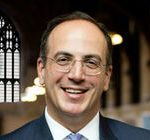
    The speech made by Angela Rayner, the Deputy Leader of the Labour Party, in the House of Commons on 21 June 2022.

    I beg to move,

    That the following Standing Order be made:

    “(1) Following any two month period in which the role of Independent Adviser to the Prime Minister on Ministers’ Interests remains unfilled, the Public Administration and Constitutional Affairs Committee shall appoint a specialist adviser, entitled the Adviser on Ministers’ Interests, whose role shall be to advise the Committee on the effectiveness of the Ministerial Code and on any potential breaches of that Code.

    (2) The Adviser may initiate consideration of a potential breach of the Ministerial Code, and shall consider any such potential breach referred to him by the Public Administration and Constitutional Affairs Committee.

    (3) When considering potential breaches of the Ministerial Code, the Adviser may advise the Public Administration and Constitutional Affairs Committee on the appropriate use of its powers to send for persons, papers and records in order to secure the information needed to consider any such potential breaches.

    (4) The Adviser shall submit a memorandum to the Public Administration and Constitutional Affairs Committee reporting conclusions relating to a potential breach of the Ministerial Code.

    (5) The Adviser shall have leave to publish any memorandum submitted to the Committee under paragraph (4) which has not been published in full and has been in the Committee’s possession for longer than 30 sitting days.”

    What a pleasure it is to open this debate, especially as it is with the Minister for the Cabinet Office and Paymaster General. I will call him my right hon. and learned Friend now because I see him more often these days than I see my friends. It is always a pleasure to stand opposite him. Hopefully, he will be able to give us some answers today, so that we can build on that friendship.

    The truth is that, to lose one ethics adviser is an embarrassment, but to lose a second, just days after the Prime Minister’s anti-corruption tsar walked, too, means that it has become a pattern—a pattern of degrading the principles of our democracy; a pattern of dodging accountability; and a pattern of demeaning his office. The Prime Minister has now driven both of his own hand-picked ethics advisers to resign in despair—twice in two years. It is a badge of shame for this Government and it should be for the rogue Prime Minister, too. If he was capable of feeling any shame, Lord Geidt has described the resignation as a “last resort” that

    “sends a critical signal into the public domain.”

    Well, he has certainly sent that signal, Madam Deputy Speaker. In his damning resignation letter, Lord Geidt spoke of the “odious” and “impossible” position that he had been put in. He said that the Prime Minister had made a “mockery” of the “Ministerial Code” and that he would play no further part in this. It was not about steel at all; it was about this Prime Minister’s casual and constant disregard for the rules. Lord Geidt could not stomach it any longer, and I do not blame him. To this Prime Minister, ethics is a county east of London.

    The truth is that the Prime Minister behaves as though it is one rule for him and another for the rest of us, because that is what he thinks. Scandal after scandal has hit him and his Government. His previous adviser on ministerial interests, the respected Sir Alex Allan, resigned when the Prime Minister chose to excuse the Home Secretary despite the fact that she had breached the ministerial code by bullying civil servants. Sir Alex could not stand by and condone bullying, and the Prime Minister was more than happy to. After losing his first independent adviser, it took five months to appoint a new one—five months during which ministerial misconduct was left unchecked, creating a huge backlog of sleaze and misconduct by Tory Ministers. Lord Geidt himself complained about this backlog.

    This House should not tolerate a repeat performance. We cannot endure another five months with no accountability in Downing Street. We cannot endure another five minutes of it. Since Lord Geidt resigned, the Government have refused to confirm if or how his ongoing investigations will continue. I hope my new right hon. and learned Friend the Minister can tell us today whether the investigation into the shameful allegations of Islamophobia experienced by the hon. Member for Wealden (Ms Ghani) will now be concluded. She was due to meet Lord Geidt on the day that he resigned, but the Government have been silent on the issue and have failed to say anything about what will happen when any further suspected breaches of the ministerial code occur.

    Take, for example, reports that the Prime Minister, while Foreign Secretary, tried to make an inappropriate appointment to his own office. He reportedly spoke to his aides about a taxpayer-funded position—just another case of dishing out jobs to those close to him. Lord Geidt has suggested that such allegations are ripe for a new investigation, and I agree. As everyone knows, I love a letter, but who should I write the request to? There is no ethics adviser in place to hold Tory Ministers to the standards the British public expect. We all know that Ministers will not do it themselves. Under this Government, more rule-breaking is simply inevitable, unfortunately. Lord Geidt has already said that his role was “exceptionally busy”.

    Sir Jeremy Wright (Kenilworth and Southam) (Con)

    I happen to agree with the right hon. Lady that there should not be a long gap before the appointment of a new independent adviser, but let me put something else to her. Two weeks ago, when she opened a debate on a similar subject, she prayed in aid extensively the Committee on Standards in Public Life, of which I am a member, as she knows, and she did so rightly, in my view. Does she accept, though, that she cannot do that today, because her motion does not accord with what the Committee on Standards in Public Life has said? We believe that the ministerial code must remain the property of the Prime Minister because that is how it derives its authority, and it therefore makes sense that the adviser should give advice to the Prime Minister and not to any Committee of Parliament, however eminent. How is it that the Committee on Standards in Public Life was so right two weeks ago but wrong now?

    Angela Rayner

    I commend the work of the Committee on Standards in Public Life and its report, which I absolutely agree should be implemented in full, but that is not what has happened: it was cherry-picked in what the Government have done with the changes to the ministerial code. This is an emergency measure because we cannot carry on for months and months without the adviser being present, as I am sure the right hon. and learned Gentleman agrees. I hope the Minister comes to the same conclusion. I have written to him and had a response today in a written answer about when the appointment will be made. I understand the right hon. and learned Gentleman’s position and what he is saying, but I say categorically that I absolutely agree with the report and want to see it implemented in full.

    Aaron Bell (Newcastle-under-Lyme) (Con)

    I have sympathy with the thrust of the right hon. Lady’s motion in that we do not want a long delay, and I am sure the Government have sympathy with it, too—I am sure the Prime Minister would like to appoint as soon as possible—but the rest of her motion seeks to create a new Standing Order. Traditionally in this House, the Procedure Committee would advise on Standing Orders, so would she be amenable, should the Opposition motion pass today, for the Procedure Committee to look at this as a matter of priority, given the timelines involved?

    Angela Rayner

    I thank the hon. Member. The thrust of what I am trying to do today, and hon. Members need to understand this, is just to have some probity, standards and ethics we can all agree on. One of the things I think is very damaging, and this has been very damaging for all hon. Members of this House, is conduct that the public out there see as inappropriate not being scrutinised and dealt with. This does not just affect the Prime Minister; it affects each and every one of us in this place, so I am happy to continue further dialogue to ensure we get to such a point. However, this is about making sure that something happens now, because we have seen conduct and standards from this Prime Minister that, quite frankly, I have never seen before from any Prime Minister of any political persuasion.

    David Linden (Glasgow East) (SNP)

    In response to the point made by the hon. Member for Newcastle-under-Lyme (Aaron Bell), I accept that the Procedure Committee does have a role—and I was a member of the Procedure Committee—but given that Brexit was supposed to be about Parliament taking back control, there is absolutely nothing at all disorderly about the motion on the Order Paper for Parliament to take control and set up its own Standing Order. The right hon. Lady is right: the problem is that the Prime Minister’s behaviour will almost certainly start to be interpreted as a plague on all our houses, and that is why Parliament must support this and must vote for this motion tonight.

    Angela Rayner

    This is about us trying to make sure that we do take back control, and also that we gain the respect of the public. Quite rightly, when they elect us and bring us into this place, they expect us to have the highest standards. Especially when we create the laws that they have to follow, they expect us to have the highest possible standards.

    Liz Saville Roberts (Dwyfor Meirionnydd) (PC)

    Of course, the resignation of yet another ethics adviser will do little to quieten public concerns that there is something very rotten at the heart of this Government. Next week, I will be presenting a ten-minute rule Bill that would make lying in politics illegal and give our constituents confidence that we are serious about forcing a change of culture within our political system. Does the right hon. Member agree with me that the present culture is corroding trust in politics and democracy?

    Angela Rayner

    I absolutely agree with the right hon. Member that trust is being corroded in politics, and I do not like that. I do not like that for any of us hon. Members in this place, because I believe that the vast majority of Members who come to this place do so for great public service. Therefore, when hon. Members do not behave to the standards I think the British public expect of us, that actually makes it difficult for all of us. The hon. Member for Glasgow East (David Linden) mentions the procedures of this place, and sometimes it is challenging for the public when they see people “inadvertently mislead” the House. The public do not always see it as “inadvertently misleading” the House, and therefore they do not understand exactly why we have such a debate on that matter.

    Geraint Davies (Swansea West) (Lab/Co-op)

    Would my right hon. Friend accept that the debate between an independent appointment and an appointment by the Prime Minister has been cast into a different light by partygate, by the appointment of somebody’s girlfriend for £100,000, by the breach of international law with the Northern Ireland protocol and even by what has happened on steel tariffs? Therefore, there is a compelling case for independence or at least for Parliament to decide on those issues, not the Prime Minister, who people, frankly, do not trust for good reasons.

    Angela Rayner

    Absolutely. During Lord Geidt’s time as ethics adviser, he was swamped—swamped—with allegations of ministerial misconduct. During his session with the Public Administration and Constitutional Affairs Committee, referring to the ministerial code, Lord Geidt said that

    “as you look through the calendar, a great deal of the year has potentially had the Prime Minister in scope.”

    It is astonishing that we are in these circumstances, but we are where we are.

    The Prime Minister’s official spokesperson has refused to confirm when the independent adviser will be replaced, or even if the independent adviser will be replaced at all. It is pretty clear that, if the Prime Minister had his way, he would dispense with the nuisance of transparency and the annoyance of accountability altogether.

    Sir Robert Buckland (South Swindon) (Con)

    I agree with the right hon. Lady about the need to appoint a new adviser but I have looked carefully at her motion, which talks about an adviser. What would the status of that adviser to the Committee be? Would they be an employee of this House? If they were an Officer of this House, there would be an obvious conflict between their duty to Parliament and any involvement they might have in Government affairs. Does she not see that that is quite a problem that needs to be addressed by her and the motion?

    Angela Rayner

    I do not see the wording of the motion creating a conflict or causing problems in that way. It will allow us to have the scrutiny and probity that we need, because the Government at the moment are not forthcoming in giving us the assurances that I have tried outside this place to get on whether we are going to get a new adviser. That is the thrust of what I am trying to do today. I can see that Members are passionate about this issue, and I am happy for them to work with us to try to get there. I am sure that my friend the Paymaster General would be willing to do that as well. We all want to see standards in public life, and Ministers of the Crown in particular need to have that authority when dealing with matters of office so that the public can have confidence in them. That is what this motion is about today.

    David Linden

    Does the right hon. Lady understand the irony of Conservative Members complaining about a conflict of interest when the Prime Minister’s own chief of staff, whom he appointed, is simultaneously an MP, the Chancellor of the Duchy of Lancaster and the chief of staff—a role that is traditionally undertaken by a civil servant?

    Angela Rayner

    This is part of the problem. We all need to have confidence that processes are being followed and that there is accountability. Nobody is above the law in this country, but the Prime Minister seems to think that he can be. It is astonishing that we are in those circumstances.

    Karin Smyth (Bristol South) (Lab)

    I thank my right hon. Friend for introducing this debate. I think the point she was making very well earlier in response to questions from Conservative Members who have been good lawyers in their previous life is that the thrust of what she is trying to do today is to suggest that we all in this place want to do better, and that we are willing to look at ways to do better. If the thrust of this motion does not meet that high standard, it is open to Conservative Members who have experience and expertise in this area to suggest other ways of doing this, perhaps by bringing forward amendments, and to work with the Opposition in that way. I think she is saying that that is something she welcomes.

    Angela Rayner

    The last time the Paymaster General was sent here to defend the indefensible, he claimed that the Prime Minister’s recent changes to the ministerial code represented

    “the most substantial strengthening of the role, office and remit of independent adviser since the post was created in 2006.”—[Official Report, 16 June 2022; Vol. 716, c. 429.]

    He must think I was born yesterday. Removing any reference to honesty, integrity, accountability and transparency is not strengthening standards; it is cherry-picking parts of the recommendation and watering it down before our very eyes. Within hours of the Paymaster General saying those words at the Dispatch Box, No. 10 was already refusing to repeat his commitment to that system—a system that the Prime Minister himself had put in place just weeks before.

    Now the Government do not even deny the plans to abolish the role of the independent adviser entirely. Today, the Minister answered my written question about his plans to fill the post and said that the Government were “taking time” to consider the matter. Just how long does he expect us to give him? Should we expect half a year of sleaze and scandal without accountability? For more than a year, the Prime Minister used Lord Geidt as a human shield, citing his independence and integrity as the Government desperately staggered from one scandal to the next. Now the Culture Secretary takes to the airwaves to mock and belittle him. That is what they do to decent people. Conservative Members who continue to prop up this Prime Minister and keep his self-preservation society afloat would do well to note that. That is where this House must come in.

    Labour’s proposal today would put this Prime Minister into special measures, where he needs to be. If he fails to appoint a new independent adviser, the Public Administration and Constitutional Affairs Committee will have the power to appoint one. We will give the Committee the proper powers to launch investigations, to send for papers, persons and records, to report on breaches and to make its judgments public. This Prime Minister has ridden roughshod over the rules. He will not show any regard to ethics, but this House can do that today. The motion before us is a limited, simple measure to address any refusal by the Prime Minister to enforce the ministerial code by allowing Parliament to step in.

    Of course, we would like to go much further, which is why we backed the package of recommendations from the CSPL as the first step in our plan to clean up politics. We want to see full independence granted to the adviser to open his or her investigations—without that, it is left to the whim of the Prime Minister. As I said, the Prime Minister cherry-picked the CSPL recommendations and conveniently chose not to introduce this crucial one. While he maintains the power of veto over the independent adviser, there is an inherent risk that he will overrule his own adviser. Today, it is time to show the Prime Minister that he is not above the rules and for this House to draw a line in the sand. If the Prime Minister will not appoint an ethics adviser, we must do so. I commend this motion to the House.

  • Maria Caulfield – 2022 Speech on Access to GP Services

    Maria Caulfield – 2022 Speech on Access to GP Services

    The speech made by Maria Caulfield, the Parliamentary Under-Secretary of State for Health and Social Care, in the House of Commons on 21 June 2022.

    It is a pleasure to close this debate after a wide range of speeches. First, I will put my hands up and acknowledge that there are challenges and difficulties in primary care and dentistry. We heard that from Members from Scotland, Northern Ireland and Wales, which shows that all the devolved areas of healthcare are facing exactly the same challenges.

    I start by thanking all those in primary care and dentistry for going above and beyond, and not just during the covid pandemic but as we are coming out of it, whether that was dentists providing urgent treatment under difficult infection control measures, or GPs delivering millions of vaccinations while continuing to see patients. We are now seeing not only the routine number of patients we would usually see, but the two years’ worth of patients who stayed at home and protected the NHS, as we asked them to do.

    Despite the Opposition’s protests, we are making progress and record numbers of patients are being seen—higher than ever before. We are seeing 1.3 million patients per working day in primary care. That is a 44% increase since last year, and 63% of those are seen face to face. As my hon. Friend the Member for Wantage (David Johnston) said, that is 2 million more face-to-face appointments than this time last year.

    There are record numbers of GPs, despite what Opposition Members have said—nearly 36,000 full-time equivalents, which is 1,400 more than in March 2019. We are going further, with 4,000 more trainees taking up GP training this year, providing more GPs for the future. We have delivered 30 million extra GP appointments, as part of our manifesto commitment to deliver 50 million more GP appointments. As an indication of the scale of the record numbers of patients coming through the system, we are seeing 11,000 cancer referrals a day, which is a record high.

    How are we supporting GPs? We had the £250 million winter access fund, which helped deliver a cloud-based telephony system that some practices took up, which is transforming how patients can get through to their practices. If practices did not take up that offer, NHS England is rolling out the system across the country, so I urge them to look into it because it delivers better capacity, allowing patients to get through to make their appointments. It bought extra hours to pay for staff to do more shifts and see more patients, and it paid for more physical space in practices.

    We have delivered 13,000 of the additional 26,000 roles pledged in our manifesto—paramedics, practice nurses, primary care pharmacists, physios and OTs working in primary care. We are tackling the bureaucracy that GPs face, and laid a statutory instrument to address fit notes to allow professionals other than GPs to return people to work. We have developed the pharmacy consultation system, whereby 111 or GP receptionists can refer people directly to a pharmacy for first-line care. We are developing a renewed GP contract, opening up access at weekends and in the evening. We are expanding community pharmacy with our work on Pharmacy First to deal with minor ailments, blood pressure checks and discharge medicine services.

    We are also tackling the infrastructure problem through the Levelling-up and Regeneration Bill whereby health and local government will work hand in hand to tackle the issues my hon. Friend the Member for North East Bedfordshire (Richard Fuller) raised. We are also delivering—

    Daisy Cooper

    Will the Minister give way?

    Maria Caulfield

    No, I will not.

    We are also delivering zero tolerance to abuse through the Police, Crime, Sentencing and Courts Act 2022. Labour talk the talk, but it was those of us on the Government Benches who voted to double the maximum sentence for those who abuse our emergency care workers. Labour actually voted against giving the Bill a Third Reading. That tells us all we need to know.

    With the time I have left—

    Holly Lynch

    Will the Minister give way?

    Maria Caulfield

    I will not give way. Members did not—

    Hon. Members

    Give way!

    Madam Deputy Speaker (Dame Eleanor Laing)

    Order. If the Minister is not giving way, she is not giving way.

    Hon. Members

    Frit!

    Maria Caulfield

    I am not frit, but I am conscious that another debate follows this one. I did not want to play politics, but if Opposition Members want to, I will give them politics.

    The Labour party is against everything and for nothing. We have not had one suggestion from Labour or the Lib Dems. They are full of complaints without a single solution. We know that the shadow Secretary of State was busy over the weekend deleting his past misdemeanours, but he cannot delete Labour’s misdemeanours with the NHS. As Davina McCall would say, let’s have a look at their best bits. There are the PFI contracts that they mysteriously introduced—£1.4 billion a year is still going to private investors because of the deals made under a Labour Government. Full Fact confirmed that £57 billion will be spent in total on those PFI deals.

    Moving on to the 2004 GP contract negotiations, evening and weekend cover was taken away, handed to primary care trusts and given to private companies. Changes to the law in 2007, voted for by Labour Members, allowed bigger businesses to buy up GP practices, resulting in the evidence we saw on “Panorama” last week. The top hit is the 2006 Labour dental contract—

    Wes Streeting

    Oh, here we go.

    Maria Caulfield

    The hon. Gentleman may say, “Here we go,” but Opposition Members acknowledged this afternoon that the Labour contract was causing the problems. We are getting on with dealing with that.

    My hon. Friend the Member for Waveney (Peter Aldous) asked what progress is being made. We put the negotiations to the BDA on 24 March and made a final offer—[Interruption.] They don’t want to listen, Madam Deputy Speaker; they don’t care. We put the final offer to the BDA on 20 May, and we are waiting to hear back. We are reforming the dental contract, which perversely disincentivises dentists to take on NHS work.

    To correct the hon. Member for Portsmouth South (Stephen Morgan), he did not host that dental summit; it was my right hon. Friend the Member for Portsmouth North (Penny Mordaunt), who invited me. The summit came up with a solution, and I am meeting her team so that we can work on that and take it forward.

    In addition to the dental contract, we are reforming how we take on dentists from overseas. We consulted the GDC, which recently ran a consultation, and we will be laying legislation to give it powers to allow dentists to come here more easily—[Interruption.]

    Madam Deputy Speaker

    Order. I can hear what Members are saying, and it is just not right. It is simply rude when we are supposed to be listening to the Minister.

    Lloyd Russell-Moyle (Brighton, Kemptown) (Lab/Co-op)

    And I think she could do better.

    Madam Deputy Speaker

    Order. You are not saying anything while you are sitting down—nothing! I call the Minister.

    Maria Caulfield

    Thank you, Madam Deputy Speaker. Labour Members do not want to hear about the work that the Government have been doing. They are just too busy criticising.

    My hon. Friend the Member for Sleaford and North Hykeham (Dr Johnson) also mentioned the work that we are doing on centres for dental development. We are already working in places such as Cornwall to start training more dentists in those areas. In Norfolk and Norwich, we have met representatives from the university. The meeting was led by local MPs who brought people together to set up centres. We have also been working in Lincolnshire as well.

    We are empowering the dental workforce by changing and upskilling dental technicians, dental nurses, and dental assistants to be able to take on more work. We are also tackling the issue of clawback.

    You would think, Madam Deputy Speaker, that this is just an issue in England. If we look at Labour-run Wales, we find that the Community Health Councils have acknowledged that Wales is also facing a crisis of access to GPs, and that patients are waiting more than an hour to get through on the phone only to find that there are no appointments left.

    The number of dental practices in Wales has fallen—from 1,500 in 2019 to 1,389 last year. In the past year alone in Wales, there was a 71% drop in courses of dental treatment. Why is that happening under a Labour Government? [Interruption.] I have given the answer. Opposition Members are too busy talking, Madam Deputy Speaker. They do not want to hear the answers.

    Opposition parties need to be honest with the public. Whether we are talking about Scotland, Wales or Northern Ireland, we are all facing the same challenges. [Interruption.] No! There is a Labour-run Government in Wales and an SNP Government in Scotland. [Interruption.] The Opposition continue to play politics, but we are getting on with the business of reforming and making those changes. They have no solutions, no answers and no ideas. It is this Government who are delivering the changes. We are being honest with the British public that we will face challenges, but we are making the changes to improve access to both dental and primary care services.

  • Feryal Clark – 2022 Speech on Access to GP Services

    Feryal Clark – 2022 Speech on Access to GP Services

    The speech made by Feryal Clark, the Labour MP for Enfield North, in the House of Commons on 21 June 2022.

    I thank Members from across the House for their contributions this afternoon. I want to praise some of the powerful contributions we have heard during the debate.

    My hon. Friend the Member for Sheffield Central (Paul Blomfield) raised the absolutely ridiculously long waiting lists for NHS dentists in his constituency. It is worrying to hear that pregnant constituents cannot even register with a GP, let alone see one. Shockingly, he mentioned the children in his constituency, one of whom has had to wait 35 months to see an orthodontist. He rightly pointed out the issues with the dentist contract, which is disincentivising dentists to take on NHS patients, and reminded us of the last Labour Government’s commitment to reforming it.

    We heard from the hon. Member for Waveney (Peter Aldous), who set out the NHS dentistry crisis in his constituency. He rightly set out that many dentists are simply not drawing down on the £50 million Government funding that the Minister says is being used. He set out, in comments I really welcome, the issue of our crumbling primary care assets. I thank him for raising the issue of the NHS app and I could not agree with him more. When are the Government going to move the app into the 21st century? Finally, he mentioned that patient choice is really important. I welcome those comments.

    We then heard from my hon. Friend the Member for Lancaster and Fleetwood (Cat Smith), who mentioned the huge number of constituents who are frustrated with their current lack of access to primary care. She mentioned her constituent Dr Mark Spencer, who set up Healthier Fleetwood to tackle health inequalities. I, too, send my thanks to him. She also mentioned that demand is not being met in primary care, and she rightly mentioned the Government’s financial illiteracy, with patients being forced to go to A&E instead of having their demand met in primary care.

    On dentistry, my hon. Friend set out how children in her constituency cannot access NHS dentists and the shocking experience of constituents who are resorting to DIY dentistry, as was raised by many hon. Members. She rightly set out that the Government are getting it very wrong. She also set out the Government’s shocking record on GP recruitment and the exodus of NHS dentists. Most shockingly, she mentioned the number of children aged zero to 10 years old who are admitted to hospital for tooth extractions in her constituency in just one year: 30 in Lancaster and 40 in Wyre, of whom 30 were aged five or younger. If that is not a wake-up call for the Minister, I do not know what is.

    So many shocking incidents and examples—too many to mention—were raised today, and I thank all hon. Members for sharing their constituents’ experiences. Primary care is in crisis—I know it, Members across the House know it, and the public know it—but the Government continue to bury their head in the sand.

    As we have heard from right hon. and hon. Members, our postbags are packed with letters from constituents who are desperate for someone to listen to them. There is the person who cannot get an appointment to be prescribed the medicine they need to manage their chronic pain. There is the person with MS who cannot get an appointment to be referred to a specialist whom they desperately need to see. There are the patients in Wakefield, where every day a child under 11 is taken to A&E for tooth extraction because they cannot see an NHS dentist.

    We have heard Ministers come to the Dispatch Box time and time again to lay the blame of primary care’s problems at the door of the pandemic. No doubt, it has had an impact, and we should pay tribute to our amazing NHS staff who have done admirably in the face of an immense challenge, but blaming everything on the pandemic will no longer cut it.

    Going into the pandemic, the Government’s preparations were “wanting and inadequate”—not my words, but those of the Culture Secretary. When the argument is not even washing with the Cabinet, how does the Minister expect the public to believe it? After a decade of Tory mismanagement, we went into the pandemic with record waiting lists and staff shortages of 100,000. It is not just that the Tories did not fix the roof when the sun was shining; they dismantled the roof and removed the floorboards. The impact of that became plain for all to see.

    The Government promised to recruit an additional 6,000 GPs by 2025, yet we now have more than 1,500 fewer full-time equivalent GPs than when records began in 2015—that was in the Minister’s response to one of her colleagues in April. Given that we have heard from the Royal College of General Practitioners that the average cost of GP appointments is £40 and that an A&E visit is £359, that is not just an access problem but financially untenable. Even the Secretary of State admitted that the target is beyond reach. With a fifth of GP practices having closed or merged since NHS England was formed in 2013, the pattern is becoming clear. The Government have been completely incapable of delivering for more than a decade, creating not a covid backlog but a Conservative backlog.

    On dentistry, the situation is a national scandal. Over a third of adults and half of children do not have access to an NHS dentist and, with paying to go private simply not an option for most, we have children being admitted to A&E for tooth extraction on a daily basis and others choosing to take matters into their own hands with DIY dentistry, as we have heard from hon. Members on both sides of the House. In Wakefield, as of 2020, almost a quarter of children have tooth decay before the age of three—double the national average of 11%. How on earth can that be tolerated in 21st-century Britain? Thanks to this Government’s complete inability to come up with a solution, we are not just facing a return to Dickensian Britain; we are already there.

    I am sure that the Minister, when she responds, will roll out her usual line about the crux of the issue being the 2006 dental contract, and how this is all Labour’s fault. I am sorry, but after 12 years of Tory Government that simply will not wash. The issue of access is only getting worse, with figures obtained by the British Dental Association showing an overall drop of 22% in the number of patients seen by NHS dentists in England from March to April. In the Minister’s own constituency the figures was 34%. How can she expect dentists across England to have confidence in her when she clearly does not even have the confidence of those in her own patch? If that is not evidence that dentists are leaving the NHS or cutting their commitment, having no confidence that her promised reforms will ever be delivered, then what is? If her idea of tackling the problem is to run scared from even talking to dentists at a conference, then there really is no hope.

    This must change. We need a Government who listen. We need a Government who act. Quite frankly, we need a Government who care. This Government have run out of road, have no ideas left and are holding our country back. A Labour Government will give our NHS the staff, equipment and modern technology it needs to deliver for patients. It is time for the Conservative party to move out of the way and let us get on with the job.

  • Mary Kelly Foy – 2022 Speech on Access to GP Services

    Mary Kelly Foy – 2022 Speech on Access to GP Services

    The speech made by Mary Kelly Foy, the Labour MP for the City of Durham, in the House of Commons on 21 June 2022.

    There are many issues that my constituents are experiencing when trying to access GP services, but I will focus my remarks on the crisis affecting dentistry across England and the impact that is having on people in Durham. I want to start by paying tribute to the dentists, dental nurses and other key workers in practices in County Durham and across the country.

    Sadly, despite the brilliant work of dental workers, NHS dentistry is on the brink of collapse. Whether in Bowburn, Brandon or Pity Me, my constituents are struggling to access the dental services they need and deserve. Four in five people who contact Healthwatch say they have found it tough to access timely dental care, while tooth decay, as we have already heard, is currently the most common reason for hospital admissions among young children. In County Durham, 245 children under the age of 10 were admitted to hospital for tooth extraction between 2020 and 2021. Thousands of children are currently in pain, distracted as they learn, in pain as they eat and struggling to sleep because they cannot access vital treatment. Let that sink in.

    Why is it so difficult to access NHS dental appointments? Because dentists are being driven away from NHS dental services en masse. A recent poll of dentists in England found that 45% had reduced their NHS commitment since the start of the pandemic, while 75% were likely to reduce their NHS commitment in the next 12 months. Alongside that, an alarming 87% of dentists say they have experienced symptoms of stress, burnout or other mental health problems in the past year. In total, 3,000 dentists have moved away from NHS work completely since the start of the pandemic.

    As the British Dental Association has said,

    “This is how NHS dentistry will die”.

    The warning is not sensationalist; it is the reality that dentists and their patients in Durham are facing. This crisis is entirely avoidable. It is certainly not the fault of our rail workers striking today, as the Secretary of State would like us to believe—utterly disgraceful. What planet is he on when he talks about record funding? That is certainly not the case for NHS dentistry, which has faced cuts unparalleled to the rest of NHS services. In real terms, the Government’s net spend on general dental practice in England was slashed by over a quarter between 2010 and 2020, while the Government’s £50 million injection into dentistry will fund less than 1% of the appointments we have lost since March. In fact, the British Dental Association estimates that it would take £880 million a year to restore dental budgets back to the level when Labour left office.

    Let us be clear: these issues will hit the poorest in our society the hardest. For many, the fees for private dental treatment are simply unaffordable. As one desperate constituent put it to me, “I can’t afford private treatment, so what on earth am I supposed to do?” There will be terrifying delays for children, adults and the poorest among those in County Durham, and I am sure across the whole country. Children in deprived areas are already three times more likely to have hospital extractions, while oral cancer, which kills more people than car accidents in the UK, is significantly more likely to affect those in our poorest communities. Dentists are frequently the first to spot health problems. Without access to regular appointments, our least well-off constituents will continue to be more likely to develop serious health problems than the wealthiest in society.

    I take this opportunity to remind the Minister that it is the Government’s job to reduce health inequalities, not widen them. As elected representatives, we are responsible for protecting and improving access to key public services for our constituents. It is time the Government stopped treating dentistry as an afterthought and urgently took action to widen NHS dentistry. For my constituents in Durham, this crisis in healthcare is very much at the forefront of their minds.

  • Holly Lynch – 2022 Speech on Access to GP Services

    Holly Lynch – 2022 Speech on Access to GP Services

    The speech made by Holly Lynch, the Labour MP for Halifax, in the House of Commons on 21 June 2022.

    In the time that I have this afternoon, I will focus on the incredible difficulties my constituents have had in accessing NHS dentistry. As others have said, the pandemic has intensified problems in our dental healthcare system, but the architecture for those problems was in place long before the pandemic. We have heard from the British Dental Association that more than 43 million dental appointments were lost between April 2020 and April 2022, including more than 13 million appointments for children.

    Helen Hunter, chief executive of Healthwatch Calderdale, which serves my constituency, has argued that the pandemic has made

    “a significant problem even worse”.

    At a national level, dentistry is now the No. 1 issue raised with Healthwatch. Almost 80% of people who get in contact with the organisation say that they find it difficult to access dental care, with the General Dental Council saying that almost a quarter of the population—24%—report having experienced dental pain in the last 12 months.

    Healthwatch Calderdale has been relentless in its campaigning on this issue. In August last year, it contacted every dental practice across Calderdale to establish whether it was willing to accept new NHS patients, whether it would register a child and whether it was offering routine appointments. Every dental practice told Healthwatch that it could not currently register a new NHS patient of any age. When neighbouring Healthwatch Kirklees did the same, it had the same outcome.

    As others have said, having people get in touch with us, as MPs, because they cannot find a dentist is one of the most difficult issues that we are asked to contend with from a local casework perspective. As things stand, there is simply nothing we can do to help people. We speak to the CCG, we call the dentists, we speak to NHS England and we write to Ministers, but the capacity is not there because the system is so broken, and no amount of pleading from local MPs can fix it for someone in need.

    One constituent rang more than 30 dental practices, each of which told them that it was not accepting new NHS patients. My constituent could find no available practices in Halifax and none across Calder Valley. There was not even a dental practice available in Huddersfield or Bradford. We have already heard a passionate argument from my neighbour, my hon. Friend the Member for Bradford East (Imran Hussain). People are encouraged to look further afield, but those practices are overwhelmed with their local demand, so going further afield does not solve the problem. When we have made representations on behalf of patients in Halifax, we have been advised to search for practices in Leeds, Barnsley and Wakefield. Members can imagine making that kind of journey to get to a dentist. Parents of children, for example, are asked to book appointments that do not impact on the school day. For them to be asked to travel 20 miles to try to speculatively get an appointment is just not good enough.

    I recently met Rachel Dilley, chief operating officer of Town Hall Dental, which has dental practices in Calderdale, to gain a better understanding of the problems that they are experiencing. Town Hall Dental has had to set up a charity alongside its private and NHS work to help to fund dental treatment, check-ups and the vital oral cancer checks that dentists undertake. That is all necessary, but it goes underfunded. I commend Town Hall Dental for its charitable and fundraising work, but that should not be necessary.

    In my desperation to get Government to act, I started a petition on my website for constituents, calling on the Government to improve NHS dental care provision in Halifax, so that residents can access care easily and locally. The petition has more than 500 signatories, and I will be presenting it in the Chamber in the days to come.

    One local parent said to me:

    “I have been making weekly phone calls to all Calderdale dentists in an attempt to (at the very least) get my children into a dentist as I value oral health greatly. However, I am yet to be successful in my goal which is becoming quite time consuming, as I now have a three year old daughter that has never even visited a dentist and 4 other children who have been without a check up in 5 years. That is half a decade with zero dental care.”

    Another constituent got in touch to tell me that, since they had had no luck finding a nearby practice that would take NHS patients, they were forced to make a five-hour round trip to the Berkshire dentist that they had been registered with prior to moving to Halifax.

    Such long waiting periods are also undermining what is functioning within the system. One constituent had to wait five years just for braces. When they finally got their braces, the orthodontist informed my constituent that they would need four teeth taken out. Having tried everywhere to find a dentist, my constituent told me,

    “if I don’t find one, I won’t be able to keep my braces on.”

    It is just madness. Another of my constituents, who was already dealing with mental health challenges, had been in pain and needed urgent medical treatment. Her friend got in touch to tell me that she was sent to A&E and advised she needed to see a dentist. She ended up seeing an NHS dentist in Elland for treatment, but they would not see her on the NHS and told her she had to pay for private treatment. Her friend could not believe that that could be allowed to happen, saying:

    “How can this be the case when a young lady with mental health issues and no savings, in a medical emergency, needs to seek help from me, her friend to pay for urgent dental treatment”?

    During the pandemic, I organised a roundtable discussion with local dentists, who shared with me the perverse ways in which NHS contracts are broken down into units of dental activity. The UDA system is just not functioning. If we needed any further confirmation, data from the BDA reveals that around 3,000 dentists in England have stopped providing NHS services since the start of the pandemic. Perhaps even more worryingly, for every dentist leaving the NHS entirely, 10 are reducing their NHS commitment by 25% on average. A BDA survey from May 2022 shows that 75% of dentists plan to reduce the amount of NHS work they do next year, with almost half planning to change career, seek early retirement or enter fully private practice.

    That is where the current, broken contract system has got us. I urge the Minister, if she believes in being able to see a dentist on the NHS, to scrap the current system, start again and find a way to make the contracts work. One third of people see a dentist privately, but 71% of those people say they do not do so through choice. As the cost of living crisis continues to affect families, more and more people will be priced out of private treatment by inflation and rising bills and living costs.

    My hon. Friend the Member for Washington and Sunderland West (Mrs Hodgson) earlier described this as an existential crisis, and it very much is. I say to the Minister, “Please, please fix it.”

  • Margaret Greenwood – 2022 Speech on Access to GP Services

    Margaret Greenwood – 2022 Speech on Access to GP Services

    The speech made by Margaret Greenwood, the Labour MP for Wirral West, in the House of Commons on 21 June 2022.

    People are struggling to get GP and dentist appointments, and this is a crisis of the Government’s own making. In their 2019 manifesto, the Conservatives promised 6,000 more GPs in England by 2025 but, in his evidence to the Health and Social Care Committee last November, the Secretary of State said when asked about this target:

    “I am not going to pretend that we are on track when clearly we are not.”

    Dr Richard Vautrey, chair of the BMA’s GP committee, said at the time:

    “The bottom line is we are haemorrhaging doctors in general practice. While more younger doctors may be choosing to enter general practice, even more experienced GPs are leaving the profession or reducing their hours to manage unsustainable workloads.”

    Recent statistics show there are now fewer than 6,500 GP practices in England, compared with more than 8,000 in April 2013. As of April 2022, there were the equivalent of 1,622 fewer fully qualified, full-time GPs in England than in 2015. All this has happened on the Conservatives’ watch.

    The lack of access to GPs has implications for patient safety. We know early diagnosis is important, but it cannot happen if people cannot see a doctor. People who cannot get an appointment, or who face long waits to get one, are at risk of not getting the referral they need, which can lead to health problems down the line. Those who are able to get an appointment but are seen by a GP who is suffering stress and burnout due to the pressures of the job are also put at increased risk.

    A poll of nearly 1,400 GPs by Rebuild General Practice in March found that 86% of those surveyed say they do not have enough time with patients, and it found that GPs are seeing, on average, 46 patients a day. This is a matter of great concern, as the safe maximum number of daily appointments, as recommended by the BMA, is 25. Doctors are seeing nearly twice the safe maximum number, which is bad for patients and unfair on very hard-working GPs.

    People in Wirral West tell me they have ended up going to A&E because they cannot get an appointment with their GP, which puts more pressure on an already stretched A&E. A recent study by the Royal College of Emergency Medicine showed that, in 2021, an average of 1,047 people a day were waiting more than 12 hours in A&E from their time of arrival, which is wholly unacceptable. People need to be able to access GP services when they need them, both for their own health and to keep the pressure off A&E.

    The Conservatives are overseeing an exodus of dentists from the NHS, which is forcing people to choose between paying to go private and going without dental care at all. Research by the British Dental Association shows that around 3,000 dentists in England have stopped providing NHS services since the start of the coronavirus pandemic, and that for every dentist quitting the NHS entirely, 10 are reducing their NHS commitment. It also shows that 43 million NHS dental appointments have been lost since the start of the pandemic, which is equivalent to well over a year’s worth of NHS dentistry in pre-covid times. This enormous backlog continues to grow.

    The British Dental Association is clear:

    “NHS dentistry is facing an existential threat and patients face a growing crisis in access, with the service hanging by a thread.’

    A constituent, a dentist in Wirral, has told me that people from Manchester and Lancashire are calling the practice to ask if they can register. The Government have told me that there are no geographical restrictions on the practice a patient may attend, which completely misses the point. Services should be available locally. Who wants to travel for an hour, two hours or longer when they are in desperate pain and need to see a dentist urgently?

    Shockingly, 50 children in Wirral under the age of 11 were admitted to hospital for tooth extraction last year. That is bad enough, but the figure is much higher in many parts the country. The Conservatives’ failure to fix this crisis is putting the oral health of children at increased risk. No child should have to end up in hospital because they are unable to get the dental treatment they need.

    The Government need to come forward urgently with a plan to fix the crisis in GP access and dentistry. Failure to do so has serious and painful implications for patients.

  • Imran Hussain – 2022 Speech on Access to GP Services

    Imran Hussain – 2022 Speech on Access to GP Services

    The speech made by Imran Hussain, the Labour MP for Bradford East, in the House of Commons on 21 June 2022.

    For many people living in Bradford, being unable to get an appointment with their GP for days or weeks, or being unable to see an NHS dentist at all, is one of the most depressing issues they face—if not the most depressing. Although such a scandal in our healthcare system is of course unacceptable anywhere, the harm that it is causing in Bradford, where we face especially stark health inequalities and where people are dying a decade earlier and facing a higher rate of preventable diseases, is particularly damaging.

    It seems that the Government either do not understand or just do not care. Earlier, the Secretary of State opened for the Government. According to him, we have had record levels of investment, the Government are now planning many initiatives, and any concerns were entirely a result of the two years of covid. Of course, everybody in this Chamber would accept that the NHS, GPs, dentists and all the health services faced pressures during covid. I do not think anyone is denying that. The Secretary of State said to the shadow Minister, “You supported us during that period”. Of course we did. We were a responsible Opposition and of course we ensured that any pressures during a very difficult period could be alleviated. But to say that the issues have suddenly resulted from that period is simply untrue, and Ministers know that it is untrue.

    The second assertion—those who were in the Chamber will recall that I pressed the Secretary of State about his record investment in the NHS—was that of course there was record investment, but let us look at that investment. Let me go to my district, to Bradford, and see the record investment that Ministers and the Secretary of State want to boast about. Frankly, they live in some parallel universe, because we do not see the effect that they come here and tell us about. In Bradford, one of the most deprived districts—more than 50% of the deprivation in my constituency is in all the top 10 deprivation indices—child poverty is now at a record high because of those on the Government Benches. Nearly 50% of children in my constituency today live in poverty because of the draconian, ideological cuts made by this Government over the past decade. I have said this in the Chamber many times: people who live in the inner cities are likely to live 10 years less than if they live in the leafy suburbs, which are far more affluent and, frankly, get more investment.

    What does the record investment that the Secretary of State and Ministers tell us about equate to in Bradford terms? They tell us that, on average, we will get £4 per patient more than the rest of the country, even though we have the levels of deprivation, poverty and health inequalities that I have gone through. But actually the situation is worse, because even that £4 of investment that they tell us we are getting is fudged figures and smoke figures, because in real terms, if inflation was to be counted, we are getting £3 million less than we had before this Government came to power. On average, we have more than 2,800 patients per GP, whereas the national average is 2,100 patients per GP. If anywhere should be seeing this record investment, it should be in places such as Bradford, but are we seeing it? How does that equate? The hon. Member for St Albans (Daisy Cooper), who is no longer in her place, talked about the stark reality on the ground. This is why I say that Ministers are living in a parallel universe, because the stark reality on the ground is not as they see it. Most people simply cannot get GP appointments. People start ringing first thing in the morning and are on hold for hours on end. Many people will then have to wait until the next day. Getting through to a GP practice on the phone takes days on end.

    Sarah Owen (Luton North) (Lab)

    When the Minister comes to her feet, I am sure she will say that X number of people have been able to access a GP, but have they been able to access their own GP? We have heard time and time again from health professionals how important continuity of care is. Does my hon. Friend agree that this is not just about seeing any old GP—it is about someone seeing their own GP?

    Imran Hussain

    I absolutely agree with my hon. Friend, who makes the point that I was coming on to raise. Her Luton constituency is not dissimilar to mine. With a single GP having 2,800 patients, it is obvious why those patients are not getting to see their GP. I could spend a long time in this Chamber going through constituency cases that I have recently dealt with. Indeed, I have done that in the past and those cases are on the record. Let me cite just one case today. An elderly lady in her 90s had to go to hospital and was then told to go to see her GP. Her son tried day after day to make a simple GP appointment for her. She had multiple health needs. My office had to intervene and even we were unable to secure a GP appointment for her. People are having to go through this ping-pong of not getting a GP appointment and then going to A&E as they have nowhere else to turn.

    I am grateful because I did ask the Health Secretary about Bradford and urgent treatment centres, and he did favourably say that he would arrange a meeting with the Minister for Health, the hon. Member for Charnwood (Edward Argar), who joins us now, at precisely the right time. I look forward to that meeting because that is a way through and I am grateful for that offer. But the reality remains that the Government’s promise—or the points the Secretary of State made earlier today—is not apparent on the streets. People continue to suffer, they cannot get GP appointments and they have nowhere else to turn. That point has been made eloquently by a number of Members.

    At least, after days and weeks of trying, people are able to get an appointment with a GP. Many Members have talking about issues with joining an NHS dentist. There is more chance of finding gold bricks on the street, or of finding the parallel universe that Government Ministers live in, than there is of getting on to the list of an NHS dentist. People simply cannot get NHS dentists, and we have heard accounts today of how they are being forced to carry out DIY operations at home, without anaesthetic or any medical care—I have come across such cases in my own constituency—because they have no other option. Frankly, as the fifth largest and richest economy in the world, it is shameful that people are having to resort to DIY treatment at home. Again, that is happening on this Government’s watch.

    I have been in this place since 2015, and every time we have a debate about NHS dentists or GPs, Tory Members refer back to the Labour Government of 12 years ago. I remember that when I was growing up, under a Thatcher Government, GP practices were back-to-back houses on terraced rows without adequate facilities. The last Labour Government brought in record investment, gave us state-of-the-art health centres, and reduced health inequalities and child poverty. That was all under a Labour Government, but Tory Members cannot pretend that the Labour Government of 12 years ago are somehow responsible for the issues we face today. The Whips are not in their place, but I say to the Tory Whips, “Please do your Members justice and remove that line from the long-standing script you have for them”, because it is becoming embarrassing when Tory Members stand up and say, “12 years ago, there was a Labour Government, so it must be all their fault.” They can use that line for a year or two, but unfortunately, in nobody’s world can they use it for 12 years. Tory Members need to start understanding that.

    Can we expect any more from this Government? This is a Government who believe people choose to be poor—they have said so in this very House and on TV. This is a Government who believe people should work extra hours and do more, and that those who are forced into poverty are not forced, but have chosen poverty. The reality is that this is a Government who could not care less about people in Bradford who continue to suffer. [Interruption.] The Minister chunters from the Front Bench; she will have time to address those points when she responds.

    Maria Caulfield

    I would be interested to hear the hon. Gentleman’s opinion on the position in Wales, which was set out in the Secretary of State’s opening remarks. Wales faces exactly the same pressures, and its waiting times are actually worse than England’s. What is the hon. Gentleman’s reason for why the Welsh Labour Government are in exactly the same position as this Government?

    Imran Hussain

    Again, the first defence is “Labour 12 years ago”; the second defence is “Labour in Wales”. The point about Labour in Wales has already been appropriately addressed, but the Minister’s job is to address those issues in England. Rather than address those issues, she thinks that saying “What about Labour in Wales?” somehow provides a cover, an umbrella, and a defence against the incompetence that exist across our health sector. That does not wash with the British public, because they have not been asleep for the past 12 years. They have noted the devastation that the Tory Government have caused in our communities, and the back-door privatisation and ideological agenda they have brought to our health service. I have said it before, and I will say it again: people will repay them with interest at the ballot box.

  • Rebecca Long-Bailey – 2022 Speech on Access to GP Services

    Rebecca Long-Bailey – 2022 Speech on Access to GP Services

    The speech made by Rebecca Long-Bailey, the Labour MP for Salford and Eccles, in the House of Commons on 21 June 2022.

    According to the Association of Dental Groups, only a third of adults and half of children in England have access to an NHS dentist. As we have heard, the top reason for children being admitted to hospital is tooth extraction. It is 2022, not 1922. Back in 1947, when the NHS and NHS dental services were brought about by the then Labour Government, many of us naively thought that they would be around for ever, that we would always be able to access those services when we needed them. Unfortunately, we now see the return to the poverty-linked ill health that we saw in the 1940s.

    As MPs, we hear heartbreaking stories. There was the Salford man with a badly infected tooth who could barely afford to live, let alone pay for private dental treatment. He could not find an NHS dentist who would take him on. He said to me that, had it not been for the fact that he was on anticoagulants, he would have pulled his own teeth out with a pair of pliers. There was the Salford woman with countless abscesses all over her jaw, and no money to go private. She was in acute pain and putting her life at risk from a spreading infection. She had been trying to get on an NHS waiting list for a dentist for over five years. There was also the Salford mother living on the breadline, yet forced to borrow and scrape together the money to go private. She told me that she had to pay £100 just to get on a dentist’s list. There are thousands of stories like this.

    Recently, I asked the Government what data they held on the number of people trying to access an NHS dentist in Salford, such as the stories I had heard from my constituents. The Government confirmed that they held no data for my constituency or even across Greater Manchester. Frankly, that is staggering.

    So what is at the heart of the decline of NHS dentistry? The British Dental Association details that chronic underfunding and the current NHS dental contract are to blame for long-standing problems with burnout, recruitment and retention in NHS dental services.

    On funding, in real terms, net Government spend on general dental practice in England was cut by over a quarter between 2010 and 2020. The £50 million that the Government have announced—as we have already heard today, it is difficult to access that at the best of times—will not even touch the sides given the amount of funding cut from NHS dentistry.

    On the contract, the system in effect sets quotas for the number of patients a dentist can see on the NHS and caps the number of dental procedures they can perform in any given year. If a dentist delivers more than they have been commissioned to—say, to try to help a desperate patient in need of urgent care—that dentist is in effect punished. Not only are they not remunerated for the extra work done, but they have to bear the cost themselves of any materials used, laboratory work and other overheads.

    It is no wonder that morale among NHS dentists is now at an all-time low, and we are facing an exodus of dentists from the NHS. We are seeing NHS dentistry deserts popping up all over the country, where constituents such as mine in Salford can only dream of trying to get on an NHS dentist’s patient list. Around 3,000 dentists in England have stopped providing NHS services since the start of the pandemic. Staggeringly, for every dentist quitting the NHS entirely, 10 are reducing their NHS commitment by 25% on average, and 75%—75%—of dentists plan to reduce the amount of NHS work they do next year.

    It is clear that we face a dental crisis and that the Government must urgently address it. There are a number of actions that I hope the Minister will take. First, they must reform the NHS dental contract with a decisive break from units of dental activity, a greater focus on prevention and the removal of perverse incentives.

    Secondly, the Government must provide adequate levels of protected NHS dental funding to ensure investment in new and existing NHS dental services, and they must guarantee the long-term sustainability of NHS dentistry for all who need it.

    Thirdly, NHS dentistry must be given the status it deserves. That means sitting right at the heart of local NHS commissioning, rather than being treated as an afterthought—a luxury service, as it were, which is how many seem to perceive it.

    Finally, the Government must build and properly fund historic public health commitments to prevention. As we have heard—from Conservative Members, actually—this is a crisis in NHS dentistry, but many of the factors that contribute to this crisis are directly related to poverty, people’s diets and the amount of money they have to spend as a family on oral health and hygiene.

    We are in the midst of a cost of living crisis as well as a dental crisis, and the Government need to be doing far more to support families to make sure that they have enough to live on and a decent range of food that provides them with the nutrition they need in order to have healthy teeth. We naively thought that poverty-related ill health, rotting teeth and gum disease had been consigned to the history books when NHS dentistry was established in 1948, but this Government wind the clock back day after day and those afflictions are now back with a vengeance. NHS dentistry hangs by a thread. The Government have a moral duty to stop the rot today because rotting teeth come from a rotting Government. I hope that the Minister will change my mind.