Category: Speeches

  • Jesse Norman – 2022 Speech at the Atlantic Future Forum

    Jesse Norman – 2022 Speech at the Atlantic Future Forum

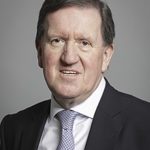
    The speech made by Jesse Norman, the Minister of State at the Foreign Office, in New York on 29 September 2022.

    National and Economic Security Policy in a Geopolitical Age: the UK’s approach

    Thank you very much indeed, Samira, who can follow that extraordinary exchange we had just had between Eric Schmidt and General Sir Patrick Sanders. What an education that was in itself and what a delight it is to listen to and speak to you on this fascinating topic.

    I am responsible in the British government for the diplomatic interface with the technology of the kind we are talking about, it could be defence and security, or it could be other kinds and I will touch upon them a little bit later in my talk. Ladies and gentlemen, as you have heard and know this is not a world or a time for a grand strategy. We face a strained international order, characterised by state competition and mounting security threats as well as the kinds of non-state actors we have seen in recent years. As societies and economies have become more complex and more interconnected, new vulnerabilities have emerged and been exploited and they in turn damage the integrity of the open economic system which has underpinned our prosperity since the 1990s. We should think not in terms of two geographies, Europe and the Far East but also a third in the Middle East and that it going to impose new stresses and strains on that system.

    Russia’s invasion of Ukraine has brought that reality into the sharpest relief as we have just been hearing. This weaponisation of connectivity – whether grain or gas – has driven soaring global energy prices and plunged millions of the world’s most vulnerable into hunger and famine. Many miles from the theatre of war potentially into hunger and famine . As Eric said this is the first broadband war, this is not just in technologies but in mind-set and leadership. Technology has been central to the response. But this comes in both directions, but the unity and resolve in Great Britain and United States, European Allies and others in responding to such an act of aggression has been very striking. We have imposed major macro-economic cost on President Putin, frustrated his war machine and strengthened Ukrainian leverage and power. And we know it caught Russia off-guard: our sanctions have already seen Russia facing its first external debt default potentially for a century. Above all, it demonstrated that the ‘political west’ has the economic weight to defend global stability and promote the values we cherish – openness, sovereignty and freedom.

    Now this systematic competition that we have described is intensifying, and is growing in complexity. The geopolitical order is being superseded or placed within a wider new global order of opinion and connectivity and narrative. Our mission on economic security is clear and crystallising – at home and with partners, and I propose to touch on three aspects of that mission.

    The first is learning from our Russia/Ukraine experience in order to do more to resist aggression and coercion. That means for us focusing on deepening co-operation with G7 allies to build a new economic security mechanism; what the Prime Minster has called an ‘Economic NATO’ that will improve our collective ability to assess, deter, and respond to threats from aggressive powers, including economic coercion. In the simplest terms if the economy of one partner is being targeted by an aggressive regime we should be prepared and we will be prepared through this new mechanism to support them.
    Having such defensive economic measures alongside traditional measures of resistance in a state of readiness builds credible asymmetric deterrence to aggression including threats of military force. It underscores our commitment to a world in which respect for international rules and sovereignty is the bedrock of good relations, good business and healthy society.

    Secondly, we must build our own resilience to shocks – this has been a big theme of the last 24 hours – whether they are organic or come from outside. The most urgent part of this task is to build redundancies and to end our dependence on authoritarian states who would weaponise our very openness and integration and connectivity to hurt us. We have shown unprecedented resolve in this respect – divesting away from Russian energy supply is a signal of upmost importance in showing our willingness to bear short term economic costs in defending a sovereign free state from unprovoked aggression.

    We are also getting ahead in other possible areas of strategic dependence. Whether it is vital new technologies or the critical minerals that will power those technologies and support then. We are working to strengthen trusted supply chains that can be relied on whatever the geopolitical weather. Supply chains that can operate on a cost basis that allows them to be effective, wide spread and support our wider aims. That will mean helping allies pursue and consolidate strategic advantage – a practice of “friend shoring” across key sectors. And as we think to our friends, there is no closer or more trusted bond than that between our two countries the United Kingdom and United States of America. It is often said that democracies are slower to respond to threats but more resilient over time. We must change that, we must be quicker to respond and more resilient. We must be highly rapid in our response in a highly changing environment as Eric Schmit has pointed out.

    Finally, we must learn in this new world to “play offence” even better than we are at the moment. That means not to abandon but to practice and exemplify the values we are defending. That is to promote the liberal international trading order, whose transformative benefits we have seen for many decades across the world. And to be a dynamic, reliable and a trustworthy partner. This applies to the terms of trade. We are at a globally high standard. The free trade agreements we are developing are of the highest quality when it comes to transparency and trust. And our new independent trade policy allows us to do more for emerging economies including through the Developing Countries Trading Scheme – a scheme that will offer 65 developing countries greater opportunities from exporting to the UK.

    It also means extending our collective economic offer to the world – in the sectors that matter most to them, and without the strings of coercion we have seen our adversaries use. At the highest level, the G7 Partnership for Infrastructure and Investment (PGII) is an important leap forward. PGII will mobilise $600bn of reliable finance for infrastructure investment in low and middle-income countries over the next five years. What it shows is that combating future adversaries is not just liberties as a value itself but it is something we must turn our strength to and our capacity to innovate in support for the global good – in a whole range of sectors from vaccines to the next generation of energy production and many others. And these are sectors I will be focusing my team on within government in the coming months.

    Ladies and gentlemen, the war of the future is the war of hearts and minds as well as weapons. If it was ever thus, it is more so now than it ever before. But we need to build and maintain that trust. And we will. Thank you very much indeed.

  • Brandon Lewis – 2022 Speech at the Lord Chancellor Swearing-in Speech

    Brandon Lewis – 2022 Speech at the Lord Chancellor Swearing-in Speech

    The speech made by Brandon Lewis, the Lord Chancellor, at the Royal Courts of Justice on 29 September 2022.

    I would like to thank the Lord Chief Justice for that warm welcome. I look forward to working with yourself and other members of the Bench during my time in office. As I look forward to working in Cabinet with you, Mr Attorney – and I would like to congratulate you on your re-appointment.

    You bring with you not only your background as a respected barrister, but also your experience serving in the role during your predecessor’s time on maternity leave. I have no doubt that you will carry out your duties as a Law Officer with both the diligence and dedication that you are renowned for.

    And I’m also delighted to welcome my esteemed colleague, Michael Tomlinson, to his new role as Solicitor General.

    As the Lord Chief Justice has described, your role is historic and vital to our democracy – providing essential support to the Attorney and overseeing the work of our prosecuting authorities.

    I know you will bring the same commitment and enthusiasm to the role as you have throughout your parliamentary career.

    It is a huge honour to become Lord Chancellor and join such a long – if slightly daunting – list of names that includes Cardinal Wolsey, Sir Francis Bacon and Ken Clarke. The patron saint of statesmen and politicians himself goes before me – Sir Thomas More is also one of my predecessors.

    Like me, Sir Thomas was fortunate enough to be the Member of Parliament for the fantastic, stunning constituency of Great Yarmouth. He was famously beheaded for treason – so I’m hoping I cannot match that similarity!

    Today is, of course, the culmination of a years-long journey for me. From being called to the bar in 1997. To getting elected as a councillor in 1998 and leading Brentwood Borough Council. All the way through to the point where I entered Parliament in 2010, my first ministerial posting in 2012 and the four departments in which I’ve served since.

    I hope to bring all of that experience to this job, but I recognise that the English legal system does have about 900 years more experience than I do! Throughout that time it has evolved to offer a crucial mix of flexibility and reliability that guarantees citizens’ rights and allows businesses to thrive and grow as well.

    As we continue to pass it down through the generations, I hope to play my part in being both a good steward and a trustworthy custodian of English Law. That is why I take my responsibility to respect its enduring principle, the Rule of Law, so incredibly seriously.

    The idea that everyone is equal before the law and that public authorities must act lawfully is the foundation of our society. It guarantees freedom and fairness in a modern democracy like ours. And we must always be aware that it is not guaranteed and therefore must be protected.

    Judges are at the forefront of that work to safeguard the Rule of Law in our justice system, and I will do all I can to defend their judicial independence. I’m clear that the work of our judiciary matters…

    …As does the work of our world-leading legal professionals, who are also represented here today. Together they not only deliver justice, they each play a crucial role in the evolution of the law and making sure that it continues to meet the needs of our country.

    What this adds up to is a legal system that works. It is not just crucial to our success as a nation, it is one that is also recognised internationally, which is why the world looks to us to be its counsel and its courtroom.

    In fact, in 2019 English law was trusted to govern some £250 billion of global mergers and acquisitions, and in 2021, over half of the cases heard in our Commercial Court were international in nature.

    We lead Europe in legal services and globally we’re second only to the United States. In terms of what this means for UK plc, the figures speak for themselves.

    Our legal services sector contributes over £29 billion gross value added to our economy each year, employing some 350,000 people. I want to make sure that justice continues to drive our economic growth as we recover from the pandemic and rise to the cost-of-living challenges that we see ahead of us.

    We’ve maintained our world-leading position because of the flexibility of our system and our willingness to embrace change. I’m clear that if we want to remain an attractive legal centre then we must continue finding those new and better ways to provide legal services.

    As Lord Chancellor, I will do all I can to support legal innovation – so that our legal services can be transformed, not just for the benefit of businesses and the public, but for our legal profession too.

    I want to see a modern justice system that is built around the people who use it. One where we do more online, with the right guidance and support.

    Whether that’s through making a claim or resolving a dispute. So that we can save time, cost, and stress to people seeking justice and reduce the burden on those who work in the system.

    And we’ve got to be agile enough to ensure that English Law provides clarity for businesses through a period of constant change – in particular when it comes to digital and emerging technologies such as blockchain and smart contracts.

    These technologies offer the opportunity for us to transform how our businesses operate, with more transparent and efficient ways of working.

    I’m very much aware that we have already begun a process of modernising the courts to make sure that they are in good working order for the digital age.

    As part of my duty for the efficient and effective running of the courts and tribunals, I intend to see through this ambitious and innovative programme.

    I am also cognisant of the fact that COVID-19 was an extraordinarily difficult period and time for the justice system, the judiciary and our hardworking court staff who played a huge part in keeping things moving. I want to thank you for your hard work and determination to meet those challenges head on, including through innovation that was delivered at rapid pace.

    While the knock-on effects of COVID-19 continue to be felt today, it is thanks to your dedication that we drove down the Crown Court backlog by around 2,000 cases from its peak in June 2021. This is a huge achievement – but there is still substantial work to be done. The family court sat to its highest ever level in 2021, and in the immigration and employment tribunals we have reduced the caseload from its peak during the pandemic.

    As Lord Chancellor I am hopeful to see an end to the disruptive strike action that risks undoing the progress we have all worked so hard to achieve, and that is delaying justice for hundreds of victims – and causing the backlog to start to increase.

    I’m pleased to have reached agreement with the leadership of the Criminal Bar Association today. They will be re-balloting their members quickly following new proposals for further reforms to criminal legal aid. These are generous and I would encourage CBA members to consider them carefully and positively.

    I would like to say something about prisons and probation, for which I am also responsible as Secretary of State for Justice.

    Prison and probation officers – some of whom were involved in the State Funeral procession – play a huge role in our justice system and are so often the hidden heroes of our society.

    I want to also take the opportunity this morning to thank them for their immense efforts throughout the pandemic – and for their continuing hard work – to keep our prisons and the public safe.

    I will continue to prioritise the creation of secure and modern prison places – ones that champion rehabilitation by equipping offenders to become active in the jobs market. This in itself will keep the public safe by preventing reoffending, but it will also help us play our part to drive the government’s agenda for economic growth.

    I also want to explore options for reforming the Probation Service, which is vital in steering prison leavers towards better futures.

    And I am determined to make public protection the overriding factor in parole decisions – so that we can be assured of the confidence of both victims and the public.

    Mr Attorney, I want to finish by thanking you all for your warm welcome and reiterating my dedication to the oath I have sworn today. As I step into this ancient role, I am very, very much aware of my constitutional responsibilities, as well as my duty to the judiciary, the courts, tribunals and to justice more broadly.

    I look forward to working with all of you as we each play our part in the justice system – to cherish and protect the ideals on which it was built and to carry on building it around the people who are using it every day. Thank you.

  • Nick Boles – 2022 Article on Now Supporting the Labour Party

    Nick Boles – 2022 Article on Now Supporting the Labour Party

    A section of the article in the Guardian newspaper on 29 September 2022. Nick Boles was the Conservative MP for Grantham and Stamford from 2010 to 2019.

    Liz Truss and Kwasi Kwarteng possess a level of intellectual self-confidence usually found among undergraduates. They always have. Since 2010, when all three of us were first elected as Conservative MPs, they have known what they believe – and have viewed those who didn’t agree with them, or didn’t share their unshakeable certainty, with amiable contempt.

    ….

    In the past few days, the values of sterling and government bonds have registered the alarm felt by international investors about the UK’s prospects. But the British economy is resilient and there is a limit to how much permanent damage even these two headstrong ideologues will be able to do.

    In two years’ time, voters will be given a choice. By then I expect that there will be millions of former Conservative voters who will have tired of being lab rats in Truss’s and Kwarteng’s ideological experiments. They will look for leaders who are prudent, responsible and steady. Who don’t think they know everything. Who listen, and are in touch with people’s everyday concerns. I predict that they will conclude, as I have done, that it is the Labour leader, Keir Starmer, and his shadow chancellor, Rachel Reeves, who best fit the bill.

  • Sadiq Khan – 2022 Statement on the Government’s Fiscal Statement

    Sadiq Khan – 2022 Statement on the Government’s Fiscal Statement

    The statement made by Sadiq Khan, the Mayor of London, on 23 September 2022.

    The measures in this Budget are not only unfair, but will put public finances on an unsustainable footing, which risks harming our economy for years to come.

    As the country grapples with the worst cost of living crisis in decades, the Chancellor has today prioritised massive unfunded tax giveaways for the wealthy, rather than helping those households that are really struggling.

    There is not enough in today’s Fiscal Statement to help those families and businesses who need support the most.

    Today was a missed opportunity from the Chancellor who could have made a real difference to millions of Londoners by providing free school meals to all primary school children, uplifting Universal Credit and ensuring that the most vulnerable receive a basic amount of free energy. He should also have given me the power to freeze private rents in London, which would save people £3,000 over two years.

    Instead the Government has chosen to bring in an swathe of tax cuts that they admit will disproportionately benefit the most wealthy in society. Londoners who are struggling to make ends meet will be disappointed at the lack of immediate help today.

  • Sadiq Khan – 2022 Comments Following Disorder Outside Iranian Embassy

    Sadiq Khan – 2022 Comments Following Disorder Outside Iranian Embassy

    The comments made by Sadiq Khan, the Mayor of London, on 26 September 2022.

    The scenes that took place last night were completely unacceptable. The selfish minority who attempted to hijack a peaceful protest must be brought to justice.

    The right to protest is a cornerstone of our democracy, but violence and attacks on our police and communities will never be tolerated. I am in close contact with the Met Commissioner and the police have my full support in pursuing those behind the disorder.

    On behalf of all Londoners, I wish all the officers injured a swift recovery and urge anyone with information on those involved to call the police on 101 or Crimestoppers anonymously.

  • Sadiq Khan – 2022 Comments on Samson Kambalu Artwork on Fourth Plinth

    Sadiq Khan – 2022 Comments on Samson Kambalu Artwork on Fourth Plinth

    The comments made by Sadiq Khan, the Mayor of London, on 28 September 2022.

    I’m delighted that Samson Kambalu’s inspiring sculpture has become the latest to take its place on the Fourth Plinth. Our world-renowned sculpture prize entertains, educates and inspires. Samson is shining a light on an often overlooked part of our country’s history and I’m sure it will encourage discussion about the fight for freedom and equality. As we continue to fight against racism and stand-up for equality across our city and country, it is a message that remains just as important today.

  • Leo Docherty – 2022 Speech on the Russian Sham Referenda in Ukraine

    Leo Docherty – 2022 Speech on the Russian Sham Referenda in Ukraine

    The speech made by Leo Docherty, the Minister of State at the Foreign, Commonwealth & Development Office, in Vienna on 29 September 2022.

    Vladimir Putin’s sham referenda must be seen for what they are. A brazen and desperate attempt, to justify an unprovoked and illegal land grab, of sovereign Ukrainian territory.

    They are a clear violation of international law and the UN Charter. And wholly illegitimate.

    That is why the United Kingdom will never recognise the supposed results. Nor any Russian attempt to illegally annex Ukrainian territory.

    We have seen Vladimir Putin use this playbook before, in Crimea. As then, Russia will try to claim that these latest votes were free and fair.

    But no amount of Russian lies can hide what we all see plainly: A sham. A propaganda exercise. Without a shred of legitimacy. Conducted down the barrel of a gun, by soldiers accompanying ballots door-to-door, forcing Ukrainians to vote.

    For 7 months, in an attempt to destroy Ukrainian identity, Vladimir Putin’s forces have ruthlessly used violence and torture against civilians – and forced deportations – to exert control.

    Sham referenda held under such fear and harassment can never be free, nor fair.

    As highlighted by my Foreign Secretary last week, we know Vladimir Putin planned to rig the outcomes. Russia has no choice but to fabricate the results. These regions voted overwhelmingly to join an independent Ukraine in 1991, and for President Zelenskyy in 2019.

    Earlier this week, the United Kingdom announced sanctions against those behind these bogus votes, including 33 officials and collaborators deployed by Russia to conduct them.

    This latest Russian deception, and Putin’s decision to partially mobilise Russia’s population, only serve to highlight one thing: his invasion is failing.

    His war machine is depleted. His supply of volunteers willing to fight in Ukraine has been exhausted. Partial mobilisation will only send many more thousands of innocent Russians to die in Putin’s war-of-choice. A war which he could end right now.

    Vladimir Putin’s nuclear threats are irresponsible and will not work. Ukrainians are highly motivated. The international alliance is cast-iron strong. We and our allies are clear that any use of nuclear weapons by Russia would be met with severe consequences.

    The United Kingdom’s approach will not alter. We will be steadfast in support of Ukraine – and its right to defend its sovereign territory – for as long as it takes.

    We call on all participating States to join us in unequivocally rejecting the results of these illegitimate referenda, and any Russian attempts to illegally annex Ukrainian territory.

    If we allow Russia to change sovereign borders by force, then the core principles on which the OSCE was founded – of sovereign equality; the inviolability of frontiers; and respect for territorial integrity – lie in tatters.

    And all of our borders become less secure.

    This is about freedom and security for the people of Ukraine. But also about freedom and security across Europe and the World.


  • James Cleverly – 2022 Speech on the Indo-Pacific Tilt

    James Cleverly – 2022 Speech on the Indo-Pacific Tilt

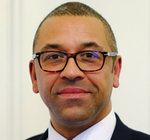
    The speech made by James Cleverly, the Foreign Secretary, in Singapore on 29 September 2022.

    Huge thank you for giving me the opportunity to speak with you this afternoon – and it has been a bit of a whistle-stop tour, Japan, Korea and here in Singapore.

    Our High Commissioner highlighted the fact that I laid down an early marker that I was interested in international relations in my first speech in Parliament. But actually, my interest pre-dates that quite significantly.

    Because I’ve always loved maps. And I particularly loved the maps that I grew up with as a child.

    Perhaps because the maps that I looked at when I was a child had my house right in the centre. And the reason is, because I grew up just literally metres east of the Greenwich meridian.

    So, there was me, in the middle, and on one edge of the map there was the west coast of the United States of America, and on the other edge of the map were the Pacific islands. Literally on the periphery.

    So, perhaps, now, it is no surprise to you that I much prefer globes. Because, because globes remind us that there is no middle, there is no edge, there is no centre, there is no periphery. Every country is at the centre of its own world. And that we are all connected, that we all share opportunities, but we also have a duty to share the challenges.

    And I’m going to talk, in this speech perhaps more about challenges than opportunities. But I want you to understand – I am an optimist at heart. I know that the opportunities are many, and they are great.

    But the challenges that we all face are diverse, and they are significant.

    Disease, and ill health. Terrorism, and war – epitomised most recently by Russia’s brutal, illegal, and unjustified invasion of Ukraine.

    We see food insecurity, energy insecurity, economic insecurity, and of course the ongoing march of climate change. And climate change is the spectre that looms over us all and it amplifies all the challenges that we face. And these challenges cannot be solved by any one country alone, nor can they be solved by any one region alone.

    So when we look at our maps, or indeed our globes, we have a choice. We can either see a world divided, or we can seek to explore those things that bind us together. And we can choose to recognise that geography matters less – and it is our values that make us neighbours.

    We can see the countries which choose to be committed to trade and commerce, to those which stand up to oppression and coercion, those which seek to tackle climate change, those which look to innovation and technology to make the future better than the past.

    And those countries form a grid, form a network, they form partnerships. The UK is committed to overcoming the challenges that I described by reinforcing those grids, strengthening those networks, building more and deeper partnerships.

    The High Commissioner highlighted the fact that I’ve only been in the job for three weeks. Immediately prior to that, I was the Secretary of State for Education – for nine weeks. I’m hoping to outlast that appointment.

    But I tell you something, the three weeks that I’ve had have been pretty intense. But it has given me the opportunity to meet with world leaders and my foreign affairs counterparts. I’ve had the privilege of meeting world leaders and my international counterparts from across the globe.

    Firstly, sadly, at the occasion of the funeral of Her Late Majesty Queen Elizabeth II. Then in the heady, speed-dating environment that is the UN General Assembly in New York. Where more than 190 countries come together to discuss ways to strengthen global resilience, improve food security, and boost international investments.

    Now the UK is part of many networks – NATO, the Commonwealth, G7, G20 to name but a few. But we are looking to build on those pre-existing networks, to improve our partnerships. And our relationship with the Indo-Pacific is central to tackling those issues that I’ve just described, and our relationship with this region will be a driving force for a positive vision of growth and security in all our countries.

    Last year, in our Integrated Review, we set out our ‘Indo-Pacific Tilt’, underlining the strategic importance that we place as the UK upon this region. And it’s a region critical to our economy, to our security and to our ambition to support open societies.

    Let me describe the region in a couple of statistics. At least 1.7 million British citizens live across the region. Our trading relationships are worth over 250 billion dollars and they’re growing. In the decades to come it will be the crucible of solutions to many of the pressing global challenges that we face – from climate and biodiversity to maritime security and geopolitical competition linked to our rules and norms.

    Now the Integrated Review is a document. And it’s easy to put words on a page, or put lines in a speech. But I want to make it clear that we are committed to making the Indo-Pacific Tilt more than just a slogan, make it more than just rhetoric. That’s why we applied for, and secured, ASEAN Dialogue Partner status. The UK recognises the centrality of ASEAN to the region and the essential contribution it has made to peace, prosperity and security.

    And we take our responsibility to support those efforts seriously.

    This includes working with partners to ensure that other initiatives complement, rather than conflict with, the central role of ASEAN.

    We were the first European country to secure a Comprehensive Strategic Partnership with India. And we intend to be the first European country to accede to the CPTPP. It will give the region access to the UK’s world-class financial services sector as well as, as well as the world’s sixth largest economy. That’s why engagement between the UK and Indo-Pacific needs to cover the broadest spectrum of activity.

    So let me highlight the areas where we think this relationship matters.

    We all want to provide jobs for our young people and opportunities for our businesses. The UK is pursuing a low-tax, high growth economic strategy to deliver exactly this. And we are also working closely with countries in the Indo-Pacific to drive prosperity and growth through new trade opportunities.

    We have signed Free Trade Agreements with Australia and New Zealand – and we are working intensely to agree one with India soon.

    We have also signed free trade deals with Singapore, Vietnam, the Republic of Korea and Japan, and bilateral partnership agreements with the Republic of Korea and Indonesia.

    Within six months, we negotiated a Digital Economy Agreement with Singapore. It sets the standards in removing friction and increasing confidence in digital trade. And just last week, over 20 of our top tech companies were here in Singapore: and when they went home, they took with them new customers, investors and signed a number of joint ventures. And we are keen to do more. Our focus is on strengthening collaboration in science, technology, research and development – just as we have done here in Singapore.

    But we cannot talk about economic cooperation without also talking about climate. And the importance of our relationships in the region to accelerate the world’s transition to net zero. I felt that strongly in the conversations that I had at the Partners in the Blue Pacific initiative at the UN General Assembly.

    And earlier today I met the head of our new regional hub of British International Investment here in Singapore. BII, as we call it, is the UK’s development finance arm. And through it we intend to spend up to £500 million in the region over the next five years. We will work with public and private partners in the region to support quality, green infrastructure projects in Indonesia, in Vietnam, in the Philippines, in Cambodia, and in Laos. We have also committed up to £110 million to the ASEAN Catalytic Green Finance Facility, to boost renewables, to boost clean transport, and to boost other sustainable infrastructure projects.

    Secondly, our focus on defence and security. The Indo-Pacific Tilt also means recognising that security and prosperity in the Indo-Pacific are indivisible from Europe’s. We welcomed the condemnation of Russia’s violations of the UN charter and the decisions by many countries in the region – including Singapore, Japan, and the Republic of Korea – to impose sanctions on Russia for its aggression. Russia’s violation of the UN charter sets a dangerous precedent for the whole world.

    Peace and stability in this region matters in the UK. 60% of global trade passes though shipping routes here in the Indo-Pacific, so security here has a direct impact in households in the UK. And we are working with partners in the region to promote maritime security and uphold the UN Convention on the Law of the Sea. It is 40 years old this year but it still continues to play an essential role and supports ASEAN’s own security strategy.

    The UK has lots to offer as a defence partner. Our Prime Minister has committed to increase defence spending to 3% of GDP by 2030.

    Alongside the US, we are bringing world-leading submarine technology through our AUKUS partnership to support Australia’s defence and security capabilities, and this will bolster regional peace and stability.

    And the UK is working with partners across the Indo-Pacific to strengthen cyber security and secure critical national infrastructure.

    Including with ASEAN through their dedicated centre here in Singapore.

    Thirdly, partnership through our values. The UK and many Indo-Pacific countries are committed to shared values. Our commitment to sovereignty and territorial integrity, and freedom from economic coercion. Our shared beliefs in the value of democracy and open markets.

    The UK is committed to working with partners, old and new, in defence of those values. Which is why we support ASEAN’s efforts to restore peace and democracy in Myanmar. And it’s why we have worked so hard to respond robustly to Russia’s invasion of Ukraine.

    Because as I said in the Security Council chamber last week… if Ukraine’s sovereignty and territory are not respected, then no country can feel itself truly secure. This region’s commitment to those values has been on show at the United Nations in recent months, where it stood shoulder-to-shoulder with other countries around the world to condemn Russia’s invasion.

    The international rules-based system doesn’t only protect our freedoms and security. It protects fair trade, and it protects us online.

    And when we join the CPTPP, as I hope we soon will,

    we will approach this work and our membership in the spirit of cooperation, looking to protect people’s interests and freedoms.

    Now it would be impossible to give a speech in this region and not mention China. And I was pleased to meet Foreign Minister Wang Yi in New York last week. It’s important to talk even where we disagree. Actually, especially when we disagree.

    Because China is a major global actor and driver of growth. It has lifted literally millions of people out of poverty. But, the lessons I take from watching China across my lifetime, is that when China departs from global rules and norms, when it aligns itself with aggressive countries like Russia – its standing in the world suffers. Now China will always have a choice about the direction that it wants to take.

    But one thing that is certain is that the UK Government will always stand up for our sovereignty and economic security – and that of our partners.

    And no UK Government will ever turn a blind eye to repression, wherever it occurs.

    All of the achievements that I’ve outlined today are products of partnership. And the UK is working with friends and partners to address the challenges that we face but also to seize the opportunities ahead of us. And we are well on our way to becoming the European partner with the broadest, most integrated presence in the Indo-Pacific. I am here to make it clear that the Indo-Pacific Tilt is here to stay. It is permanent.

    We have gone from strategy to delivery. From economic theory to signing trade deals. From security discussions to deploying our Carrier Strike Group. From talking about our values to standing together in the face of Putin’s invasions. And if you take nothing from this speech other than what I’m about to say, then I would be comfortable with that. Because what I’m about to say, is that the UK will remain a committed, reliable partner to this region. Thank you.

  • Nadhim Zahawi – 2022 Comments on the Inaugural UK Islands Forum

    Nadhim Zahawi – 2022 Comments on the Inaugural UK Islands Forum

    The comments made by Nadhim Zahawi, the Chancellor of the Duchy of Lancaster, on 29 September 2022.

    The inaugural UK Islands Forum has been a wonderful way to bring together people from across our islands discuss our shared challenges and seize new opportunities to work more closely together.

    The talks I’ve led in Orkney have left me in no doubt that this Forum is an innovation that is being embraced by islands from across the UK, and it was fantastic that our colleagues in the devolved governments were part of the discussion.

    There is clearly a strong appetite to continue working together on issues from the deployment of renewable technologies to the importance of creating strong partnerships between the public and private sector to drive forward investment. I look forward to seeing the real difference this makes to our island communities and beyond.

  • Kemi Badenoch – 2022 Speech at the Atlantic Future Forum in New York

    Kemi Badenoch – 2022 Speech at the Atlantic Future Forum in New York

    The speech made by Kemi Badenoch, the Secretary of State for International Trade, in New York on 28 September 2022.

    Thank you and good afternoon everyone.

    How wonderful it to be at the Atlantic Future Forum.

    This a superb event organised by the Royal Navy and our teams from the Department for International Trade, the Ministry of Defence and of course the Foreign, Commonwealth and Development Office.

    It is particularly poignant being on HMS Queen Elizabeth given the events of the last few weeks.

    To say it’s been emotional would be an understatement. For everyone in the UK, young or old Her Late Majesty had been ever presence of force in British Life. Many of us here were more than her subjects we were Her Majesty’s Ambassadors, Her Majesty’s Civil Service, Her Majesty’s Armed Forces, Her Royal Navy, Her Government.

    Our late sovereign was also, of course, a stateswoman, who devoted herself to deepening the special relationship.

    So it is a particular privilege to stand on this vessel which she named at Rosyth Dockyard 8 years ago, as we begin the Carolean age in the service of His Majesty.

    And talk about an important aspect of the US and UK’s shared future and by that I mean…our economic partnership.

    I lived briefly in the US, and learned very quickly that Americans and New Yorkers especially, like to cut to the chase.

    So, I’m going to get straight to the point:

    Right now, there’s a global growth slow-down underway.

    And if you’ll forgive the pun, we need all hands on-deck to get the world economy’s wheels spinning again.

    And that’s why in the UK we’re going for growth in a big way. And in fact some of you may have heard some major reforms we announced on Friday, to achieve this:

    But before I go into what we are doing, it would be odd not to address the elephant in the room.. and the financial instability in markets over the last few days.

    You would by now have heard the Bank of England taking short-term measures to provide stability – as is their job.

    My colleagues, including the Chancellor, continue to work very closely with our institutions to support them in their aims while maintaining their independence. And we must look at all of this in the context of the fundamentals, which are that the UK economy is strong and we have a plan – a Growth Plan to cut taxes, promote enterprise and cut red tape for business.

    So what are some of the things we’re doing?

    We’re keeping corporation tax at the lowest in the G20 at 19% not cutting keeping.

    We’re creating low tax investment zones around the country, to make it quicker and easier to build and get things done because the regulatory environment has not kept pace with our economic needs.

    We’re accelerating critical infrastructure projects in sectors like transport, energy, and telecoms…to ensure we invest in our future and deliver for the next generation.

    We’re also going to be spending 3% of GDP on defence by 2030. Something I know looking at all of the uniforms in the room is especially relevant to all of you here today.

    We’re rolling out significant financial services reforms that will make the UK an even better place to do business and much more.

    There is radical change happening on our side of the Atlantic. It’s the kind of radical change that we’ve not seen for 40 years.

    We know it is bold.

    We know it comes with risk.

    But in these volatile times, every option, even the status quo is risky.

    And the Prime Minister, my predecessor but one in my role as Trade Secretary gets trade and knows that our global economic relationships have got to be at the heart of this work.

    Right now, US-UK trade is booming. Sadly, not enough people know this or hear the message enough. So I want to make sure they do and I’ll continue to bang the drum.

    But it’s the investment story that’s even more interesting.

    Increasing numbers of American firms are realising that backing the UK is a great move.

    I could make your eyes glaze over by trotting out an endless list of statistics! Don’t worry I’m not going to do that today

    ….. but the numbers speak for themselves:

    US businesses already invested £479 billion pounds into in our economy –To put that figure into context it’s more than Sweden’s annual GDP.

    Every day just under 1.5 million Britons go to work for an American firm.

    And in the year to March alone, American investment created 27,000 British jobs.

    I know to some extent I’m preaching to the choir here.

    Because I don’t have to look far around this room to spot businesses that are boosting their UK operations.

    In fact, Lockheed Martin and Raytheon, are just some of the American firms here today that have said they will do precisely that. And we look forward to working with them.

    Undoubtedly, factors like good infrastructure, our legal system and a lack of red-tape, are part of the UK’s attraction.

    But there’s another reason too. We are fast becoming the world’s innovation destination.

    Just like Manhattan, we’re an island full of dynamism and ingenuity.

    We’re the nation with big ideas.

    We’re Europe’s unicorn factory.

    And the first quarter of this year our tech start-ups attracted more global investment than anywhere bar the US…..and partnerships between UK and American firms are pushing forward progress…..

    For instance, there’ s a really interesting story taking place right now involving a firm in Cambridge called PhoreMost and a business named Polaris Quantum Biotech from North Carolina.

    Together, they want to cut the time it takes to create cancer therapies. That’s not only a great business partnership, it’s literally a life-saving collaboration.

    But I want to do even more to make sure American ambitions collide with British ideas or vice versa.

    So here’s my elevator pitch. The UK is pro-ambition, pro entrepreneur, pro-growth and home to top-flight talent fizzing with extraordinary ideas.

    And we are more determined than ever before to turn the country into the place to come if you want your business to succeed.

    Of course, we mustn’t pretend everything is perfect or easy. We know that, sometimes trading our way to growth can be more difficult than it needs to be.

    But it’s because the US and UK are close that we can fix problems wherever we find them.

    Look at the way we recently solved the Section 232 tariff dispute on UK steel and aluminium exports and reached an understanding on the Airbus-Boeing dispute.

    Very soon, Americans will be able to pick up a leg of Welsh lamb at their local store for the first time in decades, after a long-standing rule was removed.

    That’s obviously big news for British farmers. And it’s arguably even better news for Americans who get to tuck in on some of the finest grass-fed lamb in the world…

    And, of course, we’re delighted that bourbon is fully back on the drinks menu, in Britain, following the Section 232 resolution.

    I know that behind the scenes we’re working hard to resolve issues and make it quicker, easier and cheaper for our firms to do business.

    The UK also sees the huge potential to develop our relationships with individual states as another huge opportunity.

    In May, under the stewardship of my predecessor, Anne-Marie Trevelyan, who is also here today, we signed a Memorandum of Understanding on trade and economic cooperation with Indiana – a state that already buys $1.4 billion worth of UK goods every year.

    North Carolina followed in July.

    And I know the DIT team is working hard on continuing Anne Marie’s legacy with me and securing more this year…so watch this space.

    Given we’re anchored not far from the Statue of Liberty, I want to end by saying a few words about trade as a force for progress and a force for good.

    Free markets and fair trade are very personal to me.

    Too many people trot them out as cliches and platitudes, but a world without these freedoms is not just poorer it’s also more dangerous.

    I grew up in Nigeria. And I saw first-hand what happens when a nation can’t trade or worse embraces protectionism.

    Not long ago, the government there banned rice and tomato not tomayto tomato imports to support local industry. The result was not a boom in production, but supply shortages, price rises and people smuggling in tomatoes like they were diamonds.

    I will never forget the sight of my mother a university professor stuffing her suitcase with Tesco Value Rice when she visited me in London because it was cheaper there than back home for her.

    One of the many reasons I’m so frustrated by the trope that Brexit was the UK retreating from the world, is because it is completely untrue. I voted to leave the European Union and I saw Brexit as a once in a generation opportunity for the UK to embrace the world and trade was and still is at the heart of that.

    So I want to make sure that we use our freedoms to build better and fairer trading relationships with emerging economies.

    When trade is open and free and everyone plays by the rules, we will win and developing countries gain an alternative to authoritarian regimes.

    But at a time when weaker economies are being exploited by those who don’t share our values, it’s not enough to talk about why free and fairtrade matters, we need to show why too.

    Last month, my department launched the Developing Countries Trading Scheme. It’s one of the most generous initiatives of its type in the world and it’s going to give a boost to businesses in 65 countries by cutting red tape and lowering tariffs.

    It’s early days but I’m already hearing how the scheme is giving entrepreneurs in countries like Bangladesh the opportunities they need to grow their businesses. And closer to home, I’m very much focused on exploring how trade can support the reconstruction of Ukraine.

    Of course, the UK-US trading relationship couldn’t be a better illustration of capitalism’s power to influence, unite and act as a counter to protectionism and authoritarian regimes.

    And We’re already using trade to tackle some of the biggest issues facing the world.

    At last year’s G7 we renewed our Atlantic Charter; originally signed by Churchill and Roosevelt pledging UK and US economic and security collaboration.

    Through our Future of Atlantic Trade dialogues, we’re working on critical issues, such as developing and diversifying our supply chains in response to the war in Ukraine and the pandemic.

    We’re deepening our ties in the Indo-Pacific through our AUKUS pact.

    Our response to the Indo Pacific region’s rapid growth and China’s growing assertiveness, is another shared challenge.

    And I know we’re both committed to opposing economic coercion, and the unfair trade practices that choke competition and penalise countries that follow the rules.

    President Ronald Reagan once said: ‘Free trade serves the cause of economic progress and it serves the cause of world peace.’

    And the UK-US economic partnership is the clearest possible example of why free trade and free markets are not just integral to our growth but to the freedoms we share.

    Next month, we’ll mark the 75th anniversary of the General Agreement on Tariffs and Trade – the forerunner of today’s multilateral system.

    Our nations helped to forge that deal after WW2, following long negotiations.

    At GATT’s heart was an acknowledgement that free and fair trade would be key to our future.

    Again today, we face unprecedented challenges.

    Again, at times, we may have differences…

    But just like the American and British teams who gathered round the negotiating table three quarters of a century ago.

    I know we are committed to deepening our transatlantic economic partnership.

    Building our businesses’ bonds of commerce.

    And demonstrating, unequivocally, how through free trade we can together create a better world. Thank you.