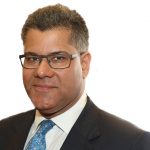
The speech made by Elliot Colburn, the Conservative MP for Carshalton and Wallington, in the House of Commons on 9 November 2022.
I beg to move,
That this House is concerned by reports of increased militarisation and human rights violations in Sri Lanka, particularly during the country’s current economic crisis; calls upon the Government, as a key stakeholder of the International Monetary Fund (IMF), to propose conditionalities on any IMF financial assistance for Sri Lanka during the current economic crisis, including that Sri Lanka carries out a Strategic Defence and Security Review to reduce its military spending and remove the military from engaging in commercial activities, that Sri Lanka meets the criteria required for Generalised Scheme of Preferences Plus, and that Sri Lanka re-engages with the United Nations Human Rights Council process and fully implements resolution 30/1; and calls upon the Government to implement targeted sanctions against individuals who are credibly accused of committing war crimes during the Sri Lankan Civil War.
I begin by thanking the Backbench Business Committee for making time for this important debate. I thank in particular my right hon. Friend the Member for Chipping Barnet (Theresa Villiers), the hon. Member for Richmond Park (Sarah Olney), the right hon. Member for East Ham (Sir Stephen Timms) and my hon. Friend the Member for Wycombe (Mr Baker), as well as the dozens of other colleagues who sponsored the application for this debate. I declare an interest as chair of the all-party parliamentary group for Tamils and as a Member of Parliament representing thousands of Tamil constituents in Carshalton and Wallington. I thank those constituents who reached out to me to talk more about the situation in Sri Lanka, as well as the various community groups we have heard from in the APPG since the Parliament was reformed in 2019.
It has been more than 13 years since the civil war came to an end, and the origins of that conflict stretch back several decades. It resulted in well over 100,000 deaths from all sides. However, it was the final months of the conflict in 2009 that saw things take a particularly bloody turn for the worse. During that period, the Sri Lankan military deliberately targeted thousands of civilian lives, committing grotesque genocidal acts, war crimes and crimes against humanity, largely against the Tamil population of the island.
The culmination of these atrocities was the Mullivaikkal massacre. In 2009, a strip of land in Mullivaikkal was designated as a so-called no fire zone. These were designated areas where civilians were told to gather to avoid being harmed. However, nothing could have been further from the truth. Sri Lankan Government forces entrapped tens of thousands of civilians in the zone and committed heinous war crimes. After providing an initial death toll of 40,000, the United Nations found evidence suggesting that as many as 70,000 were killed. Local census records indicate that at least 146,679 people are still unaccounted for and are presumed to have been killed. By examining different sources, including the United Nations, census figures and World Bank data, the International Truth and Justice Project has found that the highest estimate of those killed during that final phase could be as large as 169,796. Most of those deaths were as a result of the Sri Lankan Government forces shelling civilian buildings, including hospitals. There were also reports of civilian bunkers being targeted with grenades, people being run over by military vehicles and surrendering civilians being stripped naked and executed.
Siobhain McDonagh (Mitcham and Morden) (Lab)
I commend the hon. Member on his brave and accurate speech. Would he agree with me that all the things he has cited about the bombing of hospitals, the bombing of people on the beach and the targeting of Tamils fits the definition of genocide?
Elliot Colburn
I am grateful to my constituency neighbour for that intervention, and I absolutely agree with her. One of the shocking things we have heard—she will know this as a member of the APPG—is that those credibly accused of committing these war crimes have been, have recently been or still are serving at the top level of Sri Lankan society. That is absolutely shocking, but I will come on to some more of that in my speech.
Mr Tanmanjeet Singh Dhesi (Slough) (Lab)
I thank and congratulate the hon. Member for securing this important debate, because many of my constituents are extremely concerned about the safety and wellbeing of their loved ones, given the reports of increased militarisation and human rights violations, particularly when the country is going through a severe economic crisis. Does he agree that, as friends of Sri Lanka, we all have a duty to stand by that country in its time of need and impress upon its new Government the need to promote peace, justice and a brighter future for all, regardless of people’s background, colour or creed?
Elliot Colburn
I absolutely agree. I am very glad that the Government have decided to support the motion today, so that we can get to work on bringing everyone back around the table, because we have seen so little progress on implementing UN resolutions so far. There is a lot of hopelessness out there, particularly among the Tamil community, that any progress will be made. We need to get on top of this and use our position as a friend of Sri Lanka to do just that. I am grateful to the hon. Member for his intervention.
If I may, I will talk a little bit more about some of the violence and atrocities used during the end of the conflict. Rape and sexual violence against Tamil women and, in some reports, against Tamil men during the final stages of the armed conflict and in its aftermath are also considered to be greatly under-reported. That is according to an investigation by the Office of the High Commissioner for Human Rights into Sri Lanka. Several witnesses have spoken about women being taken away towards the jungle by soldiers, allegedly for sexual abuse, as they crossed over into Government-controlled territory.
An investigation by Human Rights Watch reported on one woman’s experience. She said:
“The army made us strip completely in front of the children. All the women were made to walk around the soldiers in a circle. The soldiers were laughing at us. All the women were then raped in front of everyone. My daughter and I were raped in front of her children. I was raped in front of my grandchildren. After about two hours, the soldiers asked a naked boy and girl, who didn’t know each other, to hug each other at gunpoint. As they hugged due to fear, they were shot in front of our eyes.”
These atrocities did not take place during a medieval skirmish hundreds of years ago; they took place in a Commonwealth country in 2009. Many of my constituents and those of other Members in this place have suffered to this day because of the crimes that they saw or were subjected to. The physical and mental scars are still there. Thirteen years later, these families are still waiting for peace, justice, truth and accountability.
I am pleased that last month the UN Human Rights Council adopted resolution 51/L1 on Sri Lanka, which will extend and reinforce the capacity of the Office of the High Commissioner for Human Rights to collect, consolidate, analyse and preserve evidence that may be used in future war crimes trials. The Sri Lankan Government have rejected this resolution, as they have previously, instead claiming confidence in their domestic mechanisms, which 13 years on from the end of the war are yet to produce any results for the victims of the atrocities. The new resolution certainly is a step in the right direction to achieving justice and accountability, but—with respect—we have had resolutions before. International action at the Human Rights Council on its own is not enough. The resolution falls short of providing a mechanism to truly investigate war crimes and pursue criminal accountability.
Specific resources need to be raised to build cases against those who are accused of war crimes and to prosecute them. Criminal accountability should be pursued by referral to the International Criminal Court. Those who commit war crimes should not enjoy immunity because the state in question is unwilling or unable to prosecute them. Furthermore, the UK should follow other allies around the world, particularly the United States, in introducing a targeted sanctions regime for those who are credibly accused of committing war crimes and human rights abuses in Sri Lanka.
That should include notable Sri Lankan individuals, such as Shavendra Silva, a current army commander. General Silva stands credibly accused of committing war crimes and crimes against humanity during the final phases of the conflict. The accused war criminal was head of the notorious 58 Division during the conflict. In his experience as a commander, he oversaw the unit committing grave violations of international law. Under his command, hospitals were repeatedly bombed and widespread sexual violence occurred, as well as the torture and executions of surrendering Tamils. Eyewitnesses also demonstrated that he was present at the Wadduvakkal bridge, where, according to the available evidence, he oversaw hundreds of surrendering Tamil military and political leaders and their families being subjected to summary execution and arbitrary detention, as well as enforced disappearance.
Margaret Ferrier (Rutherglen and Hamilton West) (Ind)
I congratulate the hon. Gentleman on securing this important debate. The implementation of vague laws to facilitate arbitrary arrests and the restriction of movement on citizens is something we see in countries with poor human rights records. Such laws in Sri Lanka make it much harder for those wrongly arrested to challenge detention. Does he share my concern that access to justice is being actively hindered, which leaves activists at too great a risk?
Elliot Colburn
I am grateful for that intervention. I absolutely agree with the hon. Member, but I would add an extra layer to that. The difficulty in Sri Lanka is not just that people are being held on false pretences and false charges, but that a gravely high number of people are still missing. We do not know where they are or where they are being held, so we cannot help them. If they are still alive, there is no way to help them. That is the grave situation that islanders are facing at the moment.
The UN High Commissioner for Human Rights recommended that states, including the UK, sanction Silva and other alleged perpetrators in Sri Lanka, as the United States did in 2020. Another individual worth noting is Kamal Gunaratne, who is the current Defence Secretary in Sri Lanka. In February 2009, he led the final assault from the south on the beaches at Mullivaikkal as the 53 Division commander. The assault involved repeated attacks on civilian hospitals, makeshift hospitals and food distribution points, and resulted in tens of thousands of civilian casualties. He was also in charge of displaced persons while hundreds of thousands of civilians were held in arbitrary detention after the end of the war, and he was commander of the Joseph army camp, which was notorious for torture.
By sanctioning those two individuals and many others, the UK Government would support UN and US action in demonstrating that alleged perpetrators of mass atrocities are not welcome in the UK. Members of the APPG for Tamils have raised this issue multiple times in the Chamber, as well as privately and through other channels with the Foreign, Commonwealth and Development Office, so I hope that the Minister will today provide an encouraging update on the Government’s position regarding the sanctioning of individuals credibly accused of war crimes.
Jim Shannon (Strangford) (DUP)
I thank the hon. Member for bringing forward this debate. I am minded of the fact that although the officers give the commands, the soldiers who carry them out are also accountable. When it comes to having their time in court, which we hope they will, does he agree that it is important to do everything to catch those soldiers as well? The generals can be caught, because they are big names, but the soldiers need to know that they cannot get away with it either.
Elliot Colburn
I absolutely agree with the hon. Member. I hope that the UK sees that the new resolution passed by the UN Human Rights Council about collecting evidence should indeed include the specific soldiers who committed those atrocities as well.
The past atrocities that occurred in Sri Lanka are only one of the reasons we are having this debate. The second part of the motion is about the current economic and political instability there. The country is suffering its worst economic crisis since gaining independence in 1948. It defaulted on $51 billion of external debt in mid-April and is in talks with the International Monetary Fund for a $2.9 billion bailout.
Due to a shortage of hard currency to pay for imports, there have been shortages of basic necessities, including medicines, cooking gas, fuel and food, so 3.4 million people are now in need of urgent humanitarian help on the island. UN agencies working in Sri Lanka announced yesterday that they had raised $79 million to feed those in need, but the increasing number of those in need means that another estimated $70 million is needed.
In July, the new President imposed a state of emergency after his predecessor fled the country and resigned from his post following massive anti-Government protests about the Government’s mishandling of the economy, which threw the country into further instability. The FCDO updated its travel advice over the summer to advise against all but essential travel to the island, due to the political and economic instability. The causes of Sri Lanka’s financial crisis are multifaceted.
Theresa Villiers (Chipping Barnet) (Con)
Does my hon. Friend share my concern that military spending in Sri Lanka is higher now than it was at the height of the civil war? Surely that expenditure is contributing to the debt crisis that the country is facing.
Elliot Colburn
I am grateful to my right hon. Friend for that intervention; she has been a doughty champion in this place for the Tamil population for many years and I thank her for lending her expertise to this debate. I hope to come on to that point later.
The failure to include Tamils in economic activity, a large defence budget that supports a disproportionately large military—as my right hon. Friend mentioned—corruption and, of course, poor fiscal policies have led Sri Lanka’s economy to the brink of bankruptcy. For Sri Lanka to be rescued, it needs to reduce its military spending, which stands at $1.86 billion per annum. That makes it one of the largest militaries in the world and costs more than its health and education budgets combined.
The militarisation of the country is also firmly linked to the deteriorating human rights situation on the island. The Prevention of Terrorism Act has been used to target predominately Muslim and Tamil communities, resulting in arbitrary detention, sexual torture and enforced disappearances. In fact, Sri Lanka has the second highest number of UN-registered enforced disappearances in the world, most of whom are Tamils.
Furthermore, the Sri Lankan military is engaged in commercial activities in the north-east, including tourism, farming and fishing, which stifles the local economy and prevents Tamils from contributing to economic activity in any meaningful way. That needs to be stopped to allow for regional economic regeneration. Sri Lanka also needs to conduct a strategic defence and security review, similar to the one that the UK completed in 2021, to ensure that its military size reflects its security requirements.
All of Sri Lanka’s projections for emerging out of the economic crisis are predicated on the country retaining its generalised scheme of preferences and trade concession. That annual trade concession is worth more than $500 million and has boosted Sri Lanka’s exports to EU member states over the years. However, Sri Lanka has failed to meet the key labour and human rights requirements for receiving that preferential treatment, and the EU recently issued a warning that it is set to lose its concession if it continues to ignore its obligations.
Matt Rodda (Reading East) (Lab)
I am grateful to the hon. Member for securing the debate and raising such important matters. Does he agree that it is vital for the UK Government to demonstrate support for Sri Lanka’s fair and just development through our trade policy with Sri Lanka and how we secure our trade agreements?
Elliot Colburn
The hon. Member has taken my next words out of my mouth, so I am grateful for that intervention. For Sri Lanka to meet those requirements, it needs to re-engage with the UNHRC and address human rights abuses past and present. Sri Lanka is seeking its third IMF bail-out since the end of the war in 2009. Bail-out conditions set by the IMF in the past have focused on economic reform alone, and have not prevented Sri Lanka from sliding into yet another balance of payments crisis. To elevate the country out of the cyclical crisis it finds itself in, it is vital that the measures taken this time around are comprehensive and address some of the root causes of the issues that it faces.
As a key stakeholder at the IMF, the UK Government should propose conditions on any IMF financial assistance for Sri Lanka during the current economic crisis, including that Sri Lanka should carry out a strategic defence and security review to reduce its military spending, remove the military from engaging in commercial activities, meet the criteria for GSP+, and re-engage with the UNHRC process. I appreciate that the IMF does not have powers to impose such conditions on its own, but the UK, as penholder, can have significant influence in the discussions before any bail-out is agreed.
John McDonnell (Hayes and Harlington) (Lab)
One issue that we consistently raise, in addition to human rights abuses, is the level of corruption in Sri Lanka. One way we have been able to expose and tackle that corruption is through elements of the excellent media in Sri Lanka, but over the past 12 months—over a longer period too, but intensively over the past 12 months—we have seen harassment of journalists and the closure of the free media that exists. One condition that should be attached to any form of aid that goes into Sri Lanka—or any relationship that we have in the future—is that corruption is tackled as a result of a free media unharassed by Government.
Elliot Colburn
I absolutely agree with the right hon. Member’s point about the importance of a free press. What he describes is having an effect beyond the borders of the island. A prominent Tamil news outlet, the Tamil Guardian, has been repeatedly engaged in battles with social media companies about its content. Because of the investigations that have been taking place, the Sri Lankan Government are actively trying to force action by social media companies worldwide. In the UK, the Tamil Guardian has had its content taken offline because of complaints from the Sri Lankan state. That cannot be right.
I am conscious that I have been speaking for quite a while, so I will bring my remarks to a close so that we can hear from other Back Benchers—
Ed Davey (Kingston and Surbiton) (LD) rose—
Elliot Colburn
First, though, I gladly give way.
Ed Davey
The hon. Gentleman is making a speech with which I totally agree. I just want to check something, because it is really helpful that we have all-party agreement on this. For all the reasons he set out, does he not agree that we need to review the generalised system of preferences that are given to Sri Lanka? It is not meeting the conditions that it is supposed to meet. It is time, I think, to withdraw those preferences.
Elliot Colburn
I totally agree with the right hon. Gentleman. Indeed, we have set out in our motion—I am glad that it will pass unopposed—that that is what the UK Government should be doing.
I look forward to hearing from the Minister what engagement the FCDO has had with the IMF and the UNHRC on this matter. The human rights and economic situation in Sri Lanka is increasingly deteriorating. I hope that I have demonstrated succinctly why the UK needs to show international leadership on these issues, not just for our constituents who are still affected by the events that have taken place—and continue to take place—on the island, but to fulfil our international responsibility to a Commonwealth partner in dire need. I look forward to hearing Members’ contributions to the debate.
Ed Davey (Kingston and Surbiton) (LD)
I thank all those involved in securing the debate. I declare an interest as a vice-chair of the all-party group for Tamils.
It is a pleasure to speak in the debate, not least to represent my constituents in Kingston and Surbiton from the Tamil community. They have been appalled, as we all have, by the devastating economic situation that has unfolded in Sri Lanka over the past year or so. As the hon. Member for Carshalton and Wallington (Elliot Colburn) said, that was a direct result of the economic mismanagement and corruption of the Sri Lankan Government. Their unfunded tax cuts and huge defence spending are all related to the appalling crisis that is hitting Sri Lankans from all communities.
However, I want to focus on the impact on the Tamil community. There are an estimated 5 million Tamils in Sri Lanka today, and they have endured the recent economic crisis after a whole series of what can only be described as acts of oppression—indeed, in many cases, genocide—from the civil war to the poor treatment they face now. With human rights abuses, abuse of the free press and abuse of the judiciary, the Sri Lankan state continues to target Tamils in some of the most unfair ways imaginable.
I am sure that other right hon. and hon. Members have constituents who have come from Sri Lanka who can testify personally to the abuses they have faced at the hands of the Sri Lankan police and military and security forces. Given that we know that from people who are now our own citizens and can bear witness to it in the way that the hon. Gentleman spoke about, this country has a duty. We have, more or less, a pretty good history of defending human rights around the world, and we must continue that by standing up for Sri Lankan Tamils.
I want in particular to focus on the generalised scheme of preferences in relation to trade. I am delighted that that point appears in the motion, and I really hope that the Minister will respond to it. It is an area that I have looked at in some detail. As a trade Minister between 2010 and 2012, I led a campaign at the EU to prevent Sri Lanka from being awarded what the EU calls GSP+ trade benefits. The evidence that I looked at showed overwhelmingly that Sri Lana was in blatant breach of most of the conditions that it was supposed to have met to be given those benefits, in particular with regard to various human rights conventions. I am pleased to report that, back then, the UK was successful in stopping the Colombo Government getting those valuable rights.
Regrettably, in 2015 and 2016, the UK Government strongly supported the position of other EU member states and, together, they granted those trade benefits to Sri Lanka. It worried me at the time, looking in from outside—I was temporarily not in the House—that there was no debate about the fact that Sri Lanka was still clearly in breach of the framework of conditions around GSP+. That was not taken into account and was not highlighted in debate.
When I have engaged on this issue, not just in this country but at the EU, I have heard officials say that the argument for giving Sri Lanka those benefits is that it enables the EU and the UK to exercise some influence—that, due to the existence of the trade benefits, they can monitor whether the Sri Lankan Government are abiding by the conditions or making progress towards meeting them. I have never found that argument terribly convincing, but it is very convenient. People say, “We know they’re in breach, but they’re going to make some progress, so we’ll forget the conditions existed.” That is not good enough.
Let us give some credit and imagine that international monitors, from either the UK or the EU, were in Sri Lanka and engaging. Is there any evidence that that influence has resulted in any change in the Sri Lankan Government’s performance in respect of those conditions? I am afraid that, once again, the overwhelming evidence is that it has not. The Sri Lankan Government just continue as before; in fact, if anything, the situation has deteriorated. I am afraid that the argument that is sometimes made—“It’s okay, let’s have these conditions. We have a relationship; we can use that”—is just not working. We can only conclude that Sri Lanka has to be stripped of these trade benefits.
Some might argue that there is an economic crisis and it is the wrong time to do that. I am not against IMF support as long as it has real conditions, whether on human rights or with respect to the Sri Lankan Government agreeing to an independent mechanism of accountability for their actions, as we have all argued for—perhaps media rights could be included in the list of conditions, too—but I just think that, on GSP+, we have to send a real signal. Until they properly implement the United Nations Human Rights Council resolution, we cannot continue as we have been since 2015-16.
It might be argued that we should go further, and I think we should. The draconian Prevention of Terrorism Act that the Sri Lankan Government have implemented, and enforced primarily against Tamils and Muslim Sri Lankans, must be repealed. The Minister might not have heard this or been briefed on it, but I hear reports that the Sri Lankan Government are thinking of repealing the Act but of replacing it with a system based on the Chinese system of managing these issues. That would be a backward step as the Chinese influence in Colombo increases, and it would not help the Tamils whatever.
The Government must move beyond words; we need some real actions, such as those outlined in the motion. I have written to both the Foreign Affairs Committee and the International Trade Committee; it is time for a joint inquiry in this Parliament into the interaction between the UK’s foreign policy and our international trade. If we have learned anything from the last year, particularly from Sri Lanka but more broadly as well, it is that these two areas must be joined up given the challenging geopolitical situation now facing us. We could helpfully debate many other countries in this regard, but that would be outwith the scope of the debate.
Specifically on Sri Lanka, we must consider the whole series of foreign policy tools. The Magnitsky sanctions regime must be applied, with their full force applying to people such as the Rajapaksa brothers; there is a lot of evidence in the international community from what remains of the free press in Sri Lanka of corruption and their having implemented shocking policies on the country, and that they were responsible for overseeing the heinous atrocities and war crimes, particularly in 2009. The case for acting is made stronger because some of our closest allies have already acted: the United States of America has not been as squeamish as the UK Government, and we do have to move.
For me, what the UK Government have done at the UNHRC is a case of the glass being half empty. Resolution 51/1 was welcome, but it was not tough enough. The Minister might say that in the negotiations in Geneva words had to change in order to bring more people on board to support it. The UK was the penholder, however, and can the Minister enlighten the House about the diplomatic arguments: why was the resolution so weak? In such debates in the chambers of the UN, we have to stand up for what we believe in, and a very strong case can be made on Sri Lanka: we can have tougher resolutions, and they need to be tougher.
I hope the UK Government will go further and will work through the UN for those stronger mechanisms. We should be promoting the case for Sri Lanka’s Government to be taken to the International Criminal Court. I welcomed the new Prime Minister’s commitment a week ago that his Government support the ICC; sometimes his predecessors seemed to wobble on that, so I was pleased he made that commitment. But we must move beyond words, and instead campaign to use the International Criminal Court proactively against war criminals such as the Rajapaksa brothers.
I look forward to hearing other Members’ contributions. It is very good that we have come together to talk to our Government, and I hope the Government will hear that there is impatience in all quarters for stronger action given what is happening in Sri Lanka and what has happened for years now. We must flex our muscles on this.